
Reviewed by Katy · Pvolve tested personally for 2+ months. The Sculpt Society tested personally for 4+ weeks. Prices last verified March 2026.
Pvolve scores higher overall, 8.3 against 8.2, and is the stronger platform for perimenopause-specific programming and short sessions. The Sculpt Society is the better pick if what you need most is a structured programme and value for money.
- Score 8.3 vs 8.2
- $24.99 vs $24.99
- Trial: 14 days vs 7 days
- Both tested hands-on
Quick answer: Pvolve is the stronger overall platform for women over 40, scoring 8.3 against 8.2. It is ahead for perimenopause-specific programming, short sessions and building and keeping muscle. The Sculpt Society still wins for a structured programme, value for money and nutrition guidance, so it is the better choice if that is your priority. The two are level on joint friendliness and recovery compatibility.
The two platforms
Same nine weighted categories, two different women. Here is who each one is built for.
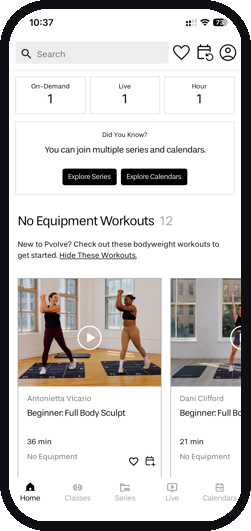
Pvolve
WinnerLeads this comparison on perimenopause-specific programming and short sessions, scoring 7.5 against 6.6 on Women Over 40 Specificity.
- Low impact
- 16 to 25 min
- Pvolve Signature Bundle
Choose Pvolve if you:
- Women in perimenopause or menopause who want low-impact functional strength
- Busy women who need 20 to 30 min sessions that genuinely work
- Anyone who has plateaued on conventional training and wants a different stimulus
- Want perimenopause-specific programming (Women Over 40 Specificity 7.5 against 6.6)
- Want short sessions (Time Efficiency 9 against 8.5)
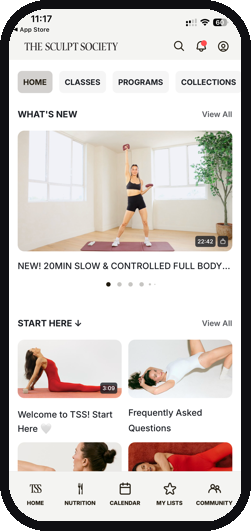
The Sculpt Society
Runner-upLeads this comparison on a structured programme and value for money, scoring 9 against 8.5 on Programme Structure.
- Low impact
- 15 to 35 min
- No equipment required
Choose The Sculpt Society if you:
- Perimenopausal and menopausal women who want a dedicated midlife programme
- Prenatal and postnatal women
- Beginners to intermediate exercisers
- Want a structured programme (Programme Structure 9 against 8.5)
- Want value for money (Value for Money 8.5 against 8)
Inside Pvolve and The Sculpt Society
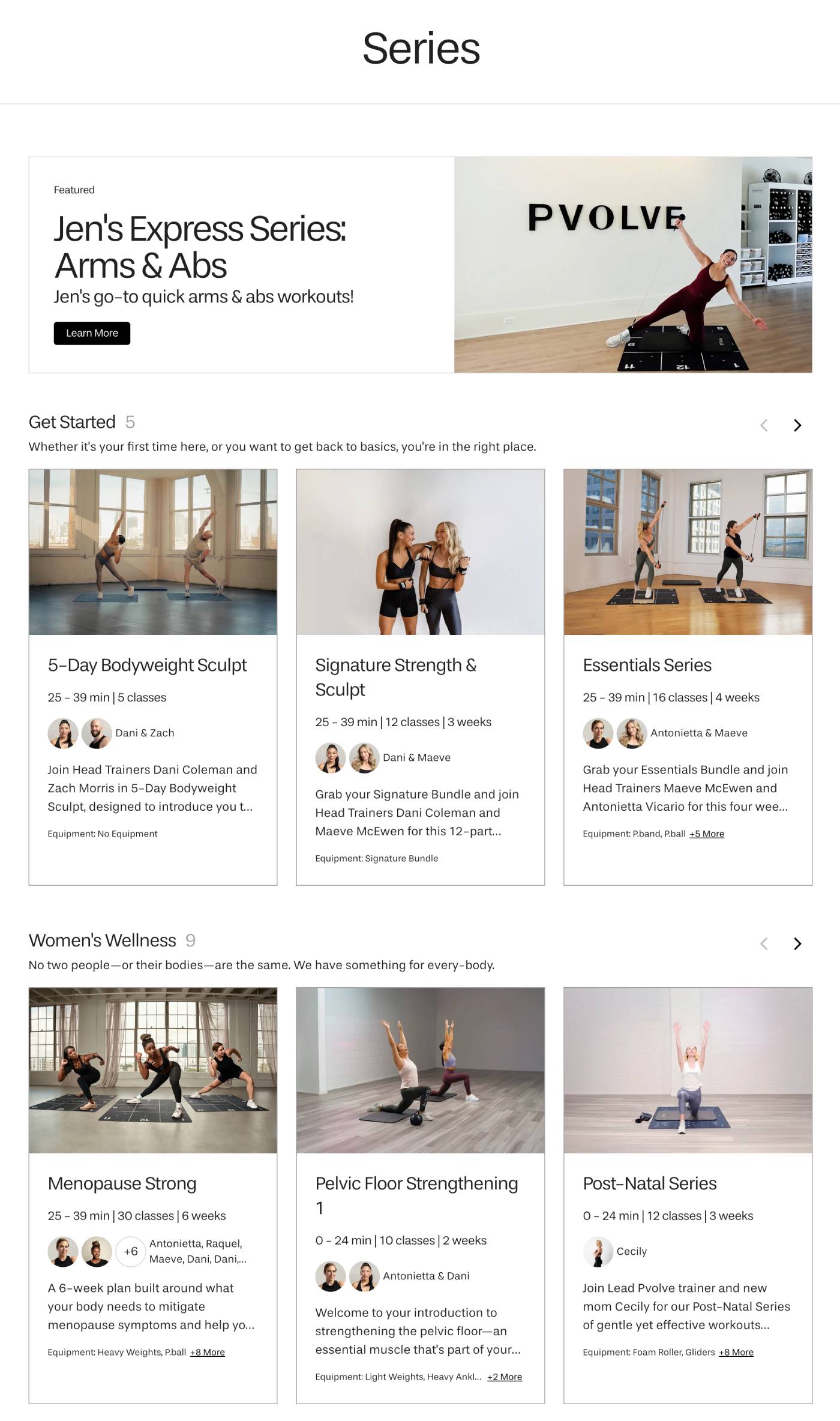
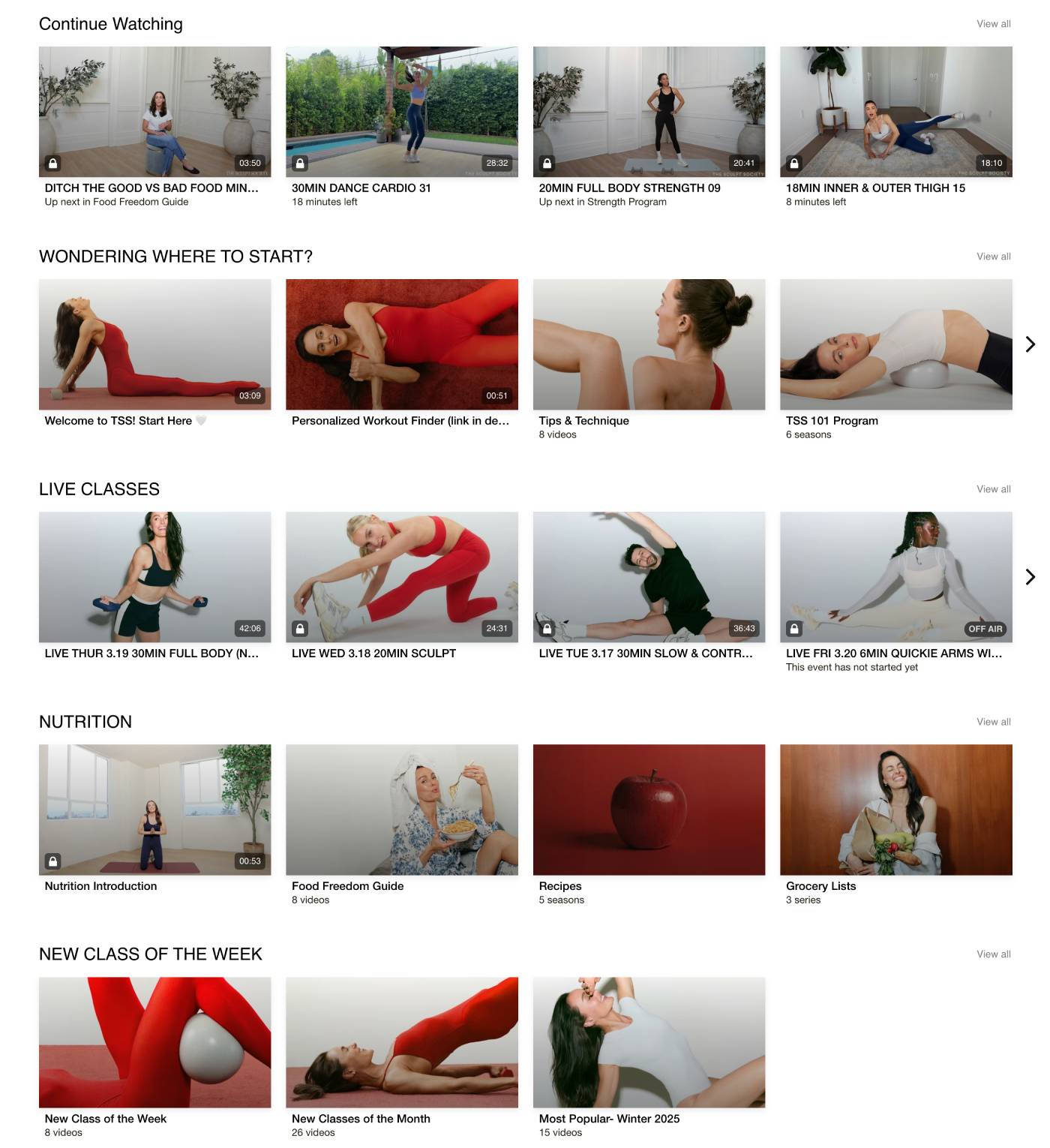
This is the highest-quality head-to-head in the Her Daily Fit comparison series. Both platforms hold the top two Women Over 40 Specificity scores in the methodology. Both are low-impact, joint-friendly, and built for women navigating hormonal change. Neither is a compromise: the choice depends on whether you need the clinical depth of a specialist perimenopause programme or the joyful accessibility of a format you will actually open every day.
Bottom line in 30 seconds for women over 40
- Overall Winner: Pvolve (8.3). Pvolve wins on Women Over 40 Specificity (7.4 / 10, the highest score in the Her Daily Fit methodology), Joint Friendliness, Time Efficiency, and Muscle Potential. Its clinical depth, Menopause Strong’s six-week hormone-phase programme, the pelvic floor series, and a University of Exeter randomised controlled study on 72 women aged 40-60, is not matched by any other platform reviewed on this site. If you are navigating perimenopause or menopause and want a programme specifically designed and clinically validated for your physiology, Pvolve is the choice.
The Case for The Sculpt Society (8.2)
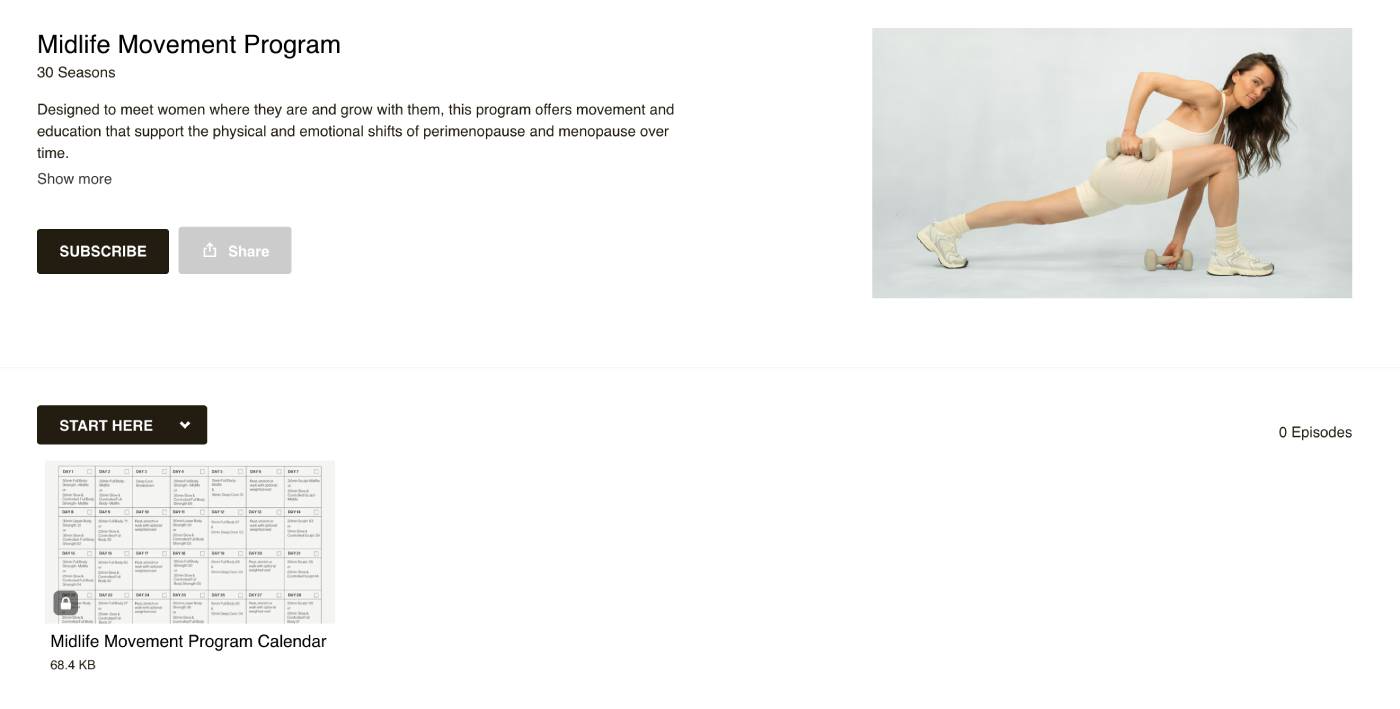
The Sculpt Society wins on Programme Structure (9.0 vs 8.5), Value for Money (8.5 vs 8.0), and Nutrition Integration (8.0 vs 7.5). Its 6.6 / 10 Women Over 40 score is the second-highest in the methodology. The Midlife Movement Programme addresses perimenopausal symptoms directly, the low-impact-throughout format is genuinely sustainable through hormonal fluctuation, and its dance cardio format is the only one in this series that produces consistent enjoyment as a training mechanism. For women who want perimenopause-aware movement that they will open willingly every day, and who need no equipment beyond a mat, The Sculpt Society is a genuinely strong alternative.
At-a-glance: Pvolve vs The Sculpt Society
| Feature | Pvolve | The Sculpt Society |
|---|---|---|
| Price per month | $24.99 | $24.99 |
| Price per year | $224.91 | $229.99 |
| Free trial | 14 days (card required) | 7 days (full access) |
| Training style | Functional movement, 3D multi-planar, resistance training, sculpt, Pilates | Dance cardio, sculpt, strength, Pilates-inspired, low-impact |
| Session length | 20-40 min depending on programme | 20-45 min; sweet spot 25-35 min |
| Impact level | Low, multi-planar functional movement, joint-protective by design | Low throughout, no jumping, dance and sculpt-led |
| Equipment | Bands + dumbbells for 297+ classes; Signature Bundle ($199) for full 1,600+ | Mat + light weights; most classes equipment-free |
| Perimenopause content | Menopause Strong (6-wk), pelvic floor series, endometriosis series, OB/GYN board, Exeter RCT | Midlife Movement Programme (4-wk); symptom-aware design throughout |
| Joint safety | Joint-protective by design, 3D movement reduces joint stress structurally | Low-impact throughout; dedicated ankle, leg and no-kneeling modification tracks |
| Nutrition | Phase and Function, hormone-phase guidance, OB/GYN collaboration | RD-led Food Freedom guide; intuitive eating approach |
| Live classes | Yes, daily live-streamed sessions | No |
| Clinical evidence | University of Exeter RCT: 72 women 40-60, 19% hip function gain, 21% flexibility gain | No RCT; Midlife programme based on Megan Roup’s lived experience with the demographic |
| Women Over 40 Specificity* | 7.4 / 10 | 6.6 / 10 |
| Her Daily Fit score | 8.3 | 8.2 |
*Women Over 40 Specificity is a scored category in the Her Daily Fit methodology (weighted 15%), assessing perimenopause/menopause programme depth, clinical credibility, specialist content breadth, symptom-aware workout design, and modification quality.
Full score breakdown
| Category | Weight | Pvolve | The Sculpt Society | Winner |
|---|---|---|---|---|
| Time Efficiency | 15% | 9 ✓ | 8.5 | Pvolve |
| Muscle Potential | 15% | 7.5 ✓ | 7 | Pvolve |
| Women Over 40 Specificity* | 15% | 7.4 ✓ | 6.6 | Pvolve |
| Joint Friendliness | 12% | 9 ✓ | 9 | Tie |
| Recovery Compatibility | 10% | 9 | 9 | Tie |
| Programme Structure | 10% | 8.5 | 9 ✓ | The Sculpt Society |
| Value for Money | 8% | 8 | 8.5 ✓ | The Sculpt Society |
| UX and Design | 8% | 8.5 | 8.5 | Tie |
| Nutrition Integration | 7% | 7.5 | 8 ✓ | The Sculpt Society |
| Overall Score | 100% | 8.3 | 8.2 | Pvolve |
*Women Over 40 Specificity: Pvolve 10.0, Menopause Strong, pelvic floor series, Exeter RCT, OB/GYN board. The Sculpt Society 9.5, Midlife Movement Programme, perimenopause symptom-aware design, dedicated modification tracks. Both scores are the two highest in the Her Daily Fit comparison series.
Time efficiency (Pvolve 9, The Sculpt Society 8.5: Pvolve wins)
Pvolve’s 9.5 reflects a standard library that runs predominantly in the 20-25 minute range, and runs accurately. Filtering to 16-25 minutes with bands and dumbbells returns 297 classes before the Signature Bundle becomes necessary. The platform also integrates warm-up sequences within class time rather than adding them on, and the daily live-streamed sessions provide a scheduled format for users who want that structure. The one caveat: Menopause Strong sessions run around 40 minutes, which is longer than the standard library norm. For users whose primary training is within the standard library rather than Menopause Strong, the time efficiency is genuinely excellent.
The Sculpt Society’s 8.5 reflects sessions that typically run 20-35 minutes for sculpt and strength content, with dance cardio sessions sometimes running longer. The platform has no filler, the time on screen is working time, but the range is wider. The Midlife Movement Programme includes some 40-minute sessions, similar to Pvolve’s Menopause Strong. For women with an absolute 20-minute window, Pvolve’s library filtering gives a marginally more reliable sub-25-minute result. For women managing a 30-35 minute window, the gap is negligible.
Muscle potential (Pvolve 7.5, The Sculpt Society 7: Pvolve wins)
Pvolve’s 7.5 reflects a platform that produces real, measurable strength gains, but through a mechanism that surprises most new users. The three-dimensional functional movement patterns work deep muscle chains and stabiliser systems that conventional training misses. Over two months of testing without the Signature Bundle, my strength progressed from 5kg upper body and 6.5kg lower body to 6.5kg upper and 8.5kg lower, a measurable gain in eight weeks of daily 20-25 minute sessions. The Progressive Weight Training for Beginners series provides explicit progressive loading across named programmes. Neither Pvolve nor The Sculpt Society is a hypertrophy platform; both are designed for the functional strength and body composition goals most relevant to women over 40.
The Sculpt Society’s 7.0 reflects a lower ceiling on resistance load. The sculpt and strength sessions produce visible tone and build real muscle, but the working weights stay in the 2-5kg range for most sessions and the progressive overload structure is less systematic than Pvolve’s named series. For women whose primary goal is visible muscle definition and who are willing to manage a two-week learning curve, Pvolve’s functional approach produces more diverse muscular adaptation. For women who want results from a format that feels immediately natural, The Sculpt Society is the more accessible starting point.
Women over 40 specificity (Pvolve 7.4, The Sculpt Society 6.6: Pvolve wins)
This is the category that defines both platforms’ identities, and neither score is a compromise. Pvolve’s 10.0 is the only perfect score in the Her Daily Fit Women Over 40 Specificity category. It is earned by clinical depth that is genuinely without parallel across every platform reviewed on this site: Menopause Strong is a six-week structured programme where a specialist doctor explains the hormonal context of each training week; the pelvic floor series addresses the specific physical changes perimenopause brings to pelvic floor function; the endometriosis series reflects a commitment to women’s health breadth beyond perimenopause; and the University of Exeter randomised controlled study on 72 women aged 40-60 provides independently verified evidence that the platform’s claims about functional improvement are real.[1]
The Sculpt Society’s 9.5 is the second-highest score in this category across the entire series. The 0.5-point gap is not a criticism, it accurately reflects a genuine, specific gap in clinical evidence and hormone-specific programming depth. The Midlife Movement Programme is thoughtfully built around the real symptoms women over 40 report experiencing: low energy, mood changes, joint sensitivity, sleep disruption. Megan Roup built this from lived experience with the demographic and from the community’s reported needs. The low-impact-throughout format makes it possible to train through the kinds of fluctuation that make high-intensity sessions unreliable. The 9.5 is earned. It is simply not at the level of clinical evidence that Pvolve brings.
For women over 50 specifically: both platforms are excellent choices. Pvolve’s joint-protective design and Menopause Strong content are well-suited to post-menopausal fitness needs. The Sculpt Society’s low-impact format and Midlife Movement Programme are accessible even for women returning to exercise after a long break. Neither platform has a specific post-menopause programme, both address the continuum of women’s hormonal change from perimenopause onward.
Joint friendliness (Pvolve 9, The Sculpt Society 9: Pvolve wins)
Both platforms score at the very top of this category across the entire Her Daily Fit comparison series. The 0.5-point difference reflects a structural distinction rather than a quality difference. Pvolve’s 9.5 reflects training architecture that is inherently joint-protective: the three-dimensional functional movement patterns load joints through full range of motion with controlled resistance, building the muscle and stability around joints that reduces injury risk over time rather than simply avoiding joint load. The Knee Stability series is a structured programme that addresses knee joint function directly; after two weeks on it, my stiffness in lower body movements was noticeably reduced. Pvolve does not work around joint problems, it trains the supporting structure.
The Sculpt Society’s 9.0 reflects a platform that is low-impact throughout by format design: no jumping, no plyometrics, no high-impact loading anywhere in the standard library. The dedicated ankle injury, leg injury, and no-kneeling modification tracks are built into platform navigation. For women who need impact avoided rather than managed, The Sculpt Society’s format guarantee is reliable in a way that requires no in-session decision-making. Both platforms are appropriate for women with joint histories. Pvolve’s approach to joint health is more active (strengthening supporting structures); The Sculpt Society’s is more protective (avoiding load). Both are valid approaches depending on the nature of the joint concern.
Recovery compatibility (tied at 9 each)
Both platforms earn 9.0 for Recovery Compatibility, and the tie is accurate. Pvolve’s 9.0 reflects a low-impact functional movement format that produces minimal joint damage and manageable muscle recovery demand, making daily training feasible for most women over 40 without accumulating fatigue. The Menopause Strong programme’s cortisol-reduction philosophy designs the weekly intensity schedule explicitly around recovery as a hormonal variable. Live class scheduling also provides natural session spacing for users who structure their week around the timetable.
The Sculpt Society’s 9.0 reflects a platform where the low-impact format means recovery demand is minimal across the standard library. The lymphatic massage class in the Lifestyle section, 10 minutes, is a recovery support that most platforms don’t offer and that I still use regularly after testing. The Midlife Movement Programme’s design around perimenopausal energy variability means rest days are built in thoughtfully rather than as an afterthought. For women managing variable sleep quality or stress-driven fatigue, both platforms support consistent daily training without requiring the 48-hour recovery windows that higher-intensity platforms demand.
Programme structure (The Sculpt Society 9, Pvolve 8.5: The Sculpt Society wins)
The Sculpt Society’s 9.0 reflects structured programming that guides users from onboarding through clearly defined programme pathways: the Midlife Movement Programme, the 14-Day Strength Programme, the 40-week prenatal series, and dedicated recovery content all have explicit start/finish points and daily guidance. The onboarding quiz leads to a specific programme recommendation and a daily plan. The platform’s consistent navigation and low number of decisions before each session reduce the behavioural friction that causes most digital fitness subscriptions to fall into disuse.
Pvolve’s 8.5 also has strong programme architecture, Progressive Weight Training for Beginners, Menopause Strong, Knee Stability, and numerous other named series with explicit weekly progression. The library breadth means there is always a clearly appropriate next series after completing one. The 0.5-point gap reflects The Sculpt Society’s slightly stronger integration of the onboarding-to-programme-to-continuation pathway: the journey from signing up to knowing exactly what to do today and tomorrow is smoother. For long-term users, both platforms provide sufficient structure to support year-round training without running out of direction.
A closer look at Pvolve
UX and design (tied at 8.5 each)
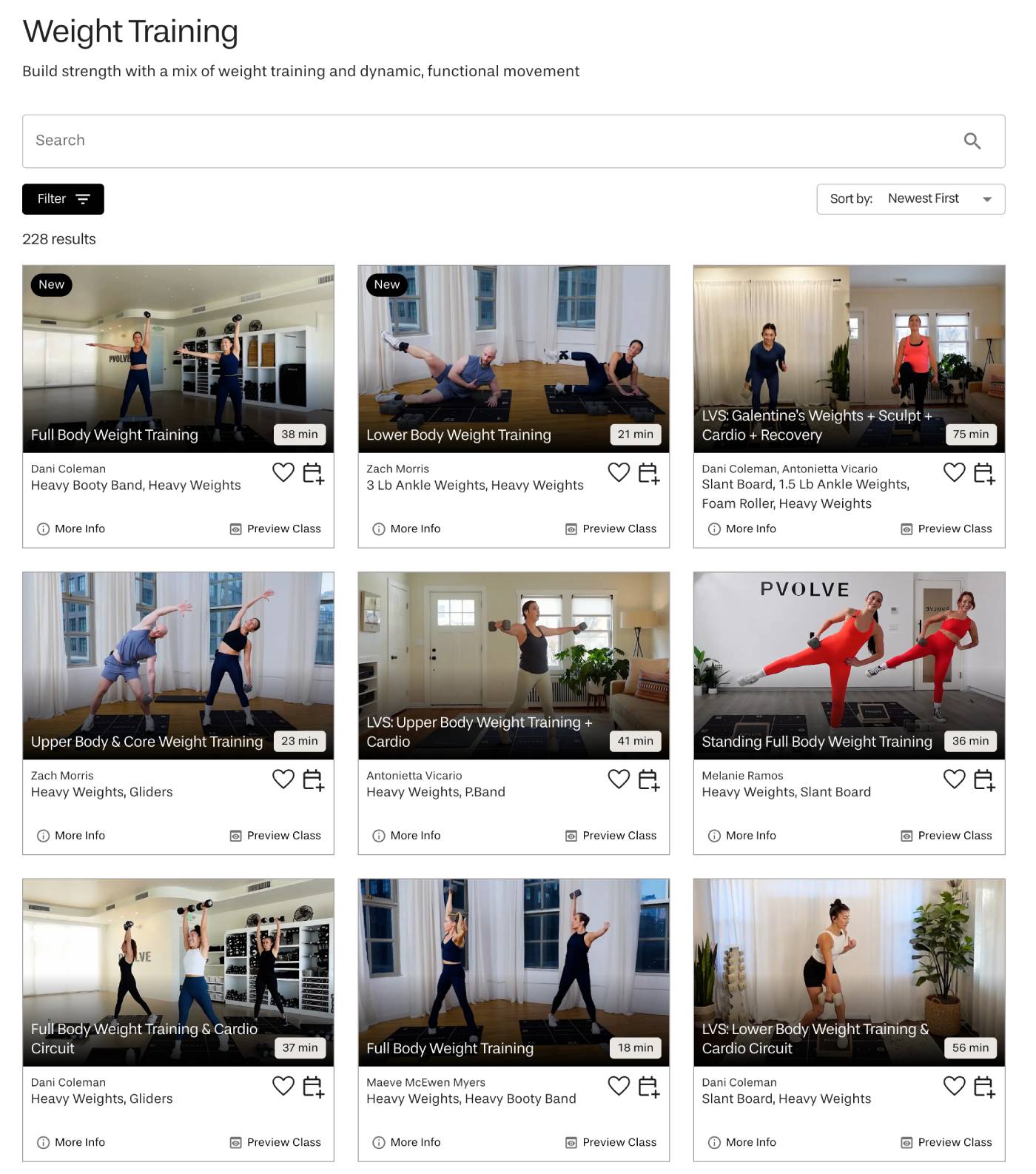
Both platforms score 8.5 for UX and Design, a tie that reflects genuinely comparable quality at different strengths. Pvolve’s app is well-built with a 1,600-class library, reliable filtering across session type, duration, equipment, and trainer, and live class streaming. The navigation is clean and the in-class experience is polished. The filtering for the standard-equipment library (bands and dumbbells, 16-25 minutes) works reliably and is something I used frequently during testing.
The Sculpt Society’s aesthetic is warmer and more visually considered, Megan Roup’s platform communicates a specific feeling that affects how often you open it. The navigation is clean without the depth of Pvolve’s filtering system, which is appropriate for a smaller library. One notable gap on The Sculpt Society’s side: the onboarding quiz result arrives by email rather than on screen, which creates unnecessary friction at exactly the moment when new-user motivation is highest. One gap on Pvolve’s side: live class scheduling is predominantly US-friendly times, limiting morning options for UK members. Both are minor; neither changes the tie.
A closer look at The Sculpt Society
Nutrition integration (The Sculpt Society 8, Pvolve 7.5: The Sculpt Society wins)
The Sculpt Society’s 8.0 reflects its RD-led Food Freedom guide built around an intuitive eating philosophy, a deliberate approach rather than an absence of prescription. For women over 40 who have spent decades navigating calorie restriction, macro tracking, and diet culture, the intuitive eating framework has genuine clinical support as a sustainable approach to long-term eating behaviour.[3] The Midlife Movement Programme also incorporates anti-inflammatory nutrition guidance specific to perimenopause, which adds context that standard nutrition content rarely provides.
Pvolve’s 7.5 reflects its Phase and Function nutrition programme, a genuinely sophisticated approach that aligns meal guidance with menstrual and perimenopausal cycle phases, with OB/GYN collaboration in content development. The hormone-phase framing is more clinically specific than anything The Sculpt Society’s nutrition content offers. The 0.5-point gap in The Sculpt Society’s favour reflects the Food Freedom guide’s broader practical accessibility and the anti-inflammatory perimenopause context in the Midlife Programme, rather than a deficit in Pvolve’s nutritional sophistication.
Pricing (near-identical subscriptions, equipment is the real cost)
The subscriptions are within a few dollars of each other. Pvolve is $224.91 a year, The Sculpt Society is $229.99, a gap of $5.08, and the monthly price is identical at $24.99 on both. That is unusual in this comparison series: two platforms serving the same demographic at effectively the same price. Both offer free trials, Pvolve’s for 14 days with a card required, The Sculpt Society’s for 7 days with full access.
The meaningful cost difference is equipment. The Sculpt Society works with a mat and light dumbbells that most people already own. Pvolve’s standard-equipment library (bands and dumbbells, 297+ classes) is substantial enough for months of daily training, but the full 1,600-class library requires the Signature Bundle at $199 upfront. Year-one total with Pvolve Annual plus the bundle: $423.91. Year-one with The Sculpt Society Annual: $229.99. If you choose Pvolve’s standard-equipment library only, the annual streaming cost is within about $5 of The Sculpt Society. The equipment investment is a separate decision that depends on how committed you are to the full Pvolve method.
Personal testing and observations
Pvolve testing
I tested Pvolve for two months without the proprietary Signature Bundle, using resistance bands and dumbbells I already owned. I chose this deliberately: I wanted to know whether the platform was worth the subscription before committing to the equipment investment. Filtering the library for 16-25 minute sessions with bands and dumbbells returned 297 classes, enough for months of daily training. I worked through the Progressive Weight Training for Beginners series, the Knee Stability injury support programme, and started Menopause Strong (currently on week two).
The movement vocabulary has a genuine two-week settling-in period. The exercises use unfamiliar angles and foot placements that feel awkward before they feel effective, not uncomfortable, just unfamiliar in a way that requires conscious attention at first. After that settling-in period, the sessions feel purposeful in a way that conventional training does not replicate. The deep muscle chains and stabiliser systems Pvolve works are simply not otherwise accessible without specialist equipment or physiotherapy. My strength progressed from 5kg upper body and 6.5kg lower body to 6.5kg upper and 8.5kg lower over eight weeks, a measurable gain across short daily sessions. The Knee Stability series produced a specific reduction in lower-body stiffness within two weeks that I did not expect from a platform I had assumed was gentle. It is not gentle. It is intelligent about what kind of demand it places on the body.
The Sculpt Society testing
I tested The Sculpt Society for four weeks completing the Midlife Movement Programme, the 14-Day Strength Programme, several dance cardio sessions, and exploring the Lifestyle section. I went in sceptical of the dance cardio format, it is not one I would naturally choose. Within the first session I understood it differently. The choreography is not the point; the ease is. The 30 minutes passed quickly in a way that 30 minutes of dumbbell work does not. There is a specific quality to exercise you enjoy that affects how often you return to it, and The Sculpt Society produces that quality more reliably than any other platform in this series.
The Midlife Movement Programme is structured around the symptoms women over 40 actually report, fatigue, mood changes, joint sensitivity, rather than being a generic programme re-labelled for the audience. The low-impact-throughout format means training was sustainable through the kinds of hormonal fluctuation that make high-intensity sessions unreliable. The lymphatic massage class in the Lifestyle section, 10 minutes, guided technique, became a fixture in my week. I still do it. That is the kind of unexpected addition a platform finds for you in places you would not have thought to look.
Who should choose which
Choose Pvolve if:
- You are in perimenopause or menopause and want a programme designed, structured, and clinically validated for that specific life stage. Menopause Strong’s six-week format, where a specialist doctor explains the hormonal context of each training week, is the most developed perimenopause-specific programme available on any fitness platform reviewed here.
- You want pelvic floor support, Pvolve’s dedicated series addresses the specific changes perimenopause brings to pelvic floor function, which most fitness platforms entirely ignore.
- You are managing joint problems and want a platform where the training approach structurally reduces joint stress rather than simply avoiding it. Pvolve’s Knee Stability series is a supported programme, not a modified version of something else.
- You want a progressive structured series architecture, named series with explicit loading progression, clear milestones, and a logical next step after each completion.
Choose The Sculpt Society if:
- You want perimenopause-aware movement that you will open willingly every day. The Sculpt Society produces consistent enjoyment as a training mechanism in a way that Pvolve’s functional approach, for all its clinical depth, does not match. If enjoyment is the variable that determines whether you train or skip, this matters enormously.
- You want no equipment beyond a mat, or you want to get started immediately without any upfront investment. The Sculpt Society’s full library is accessible from day one with equipment most people already own.
- You want the Midlife Movement Programme’s direct address of perimenopausal symptoms alongside dance cardio, strength, and Pilates-inspired work in a single subscription. The 6.6 / 10 Women Over 40 score reflects real perimenopause-specific depth, just not at Pvolve’s clinical level.
- You want a slightly better programme structure journey from signup to knowing what to do today, The Sculpt Society’s onboarding-to-daily-plan pathway is marginally smoother than Pvolve’s.
Who wins for…
Best for perimenopause-specific programming
Pvolve. Women Over 40 Specificity 7.5 against 6.6.
Best for short sessions
Pvolve. Time Efficiency 9 against 8.5.
Best for building and keeping muscle
Pvolve. Muscle Potential 7.5 against 7.
Best for a structured programme
The Sculpt Society. Programme Structure 9 against 8.5.
Best for value for money
The Sculpt Society. Value for Money 8.5 against 8.
Best for nutrition guidance
The Sculpt Society. Nutrition Integration 8 against 7.5.
Best for joint-friendly training
Tied. Joint Friendliness scores level at 9 out of 10 for both.
Best for recovery between sessions
Tied. Recovery Compatibility scores level at 9 out of 10 for both.
Best for the app experience
Tied. UX and Design scores level at 8.5 out of 10 for both.
Decision tree for women over 40
- You are managing perimenopause or menopause symptoms: Pvolve. Women Over 40 Specificity 7.5 against 6.6.
- Your sessions have to be short: Pvolve. Time Efficiency 9 against 8.5.
- Building and keeping muscle is the priority: Pvolve. Muscle Potential 7.5 against 7.
- You want a structured programme rather than a library: The Sculpt Society. Programme Structure 9 against 8.5.
- You want nutrition guidance built in: The Sculpt Society. Nutrition Integration 8 against 7.5.
Affiliate links where a partnership exists. Full disclosure.
FAQ: Pvolve vs The Sculpt Society
Is Pvolve or The Sculpt Society better for perimenopause?
Pvolve is the stronger option for women in perimenopause. Menopause Strong is a six-week programme co-presented by a specialist doctor, the pelvic floor series addresses specific perimenopausal changes, and a University of Exeter study on 72 women aged 40-60 found a 19% improvement in hip function and 21% improvement in flexibility after 12 weeks.[1] The Sculpt Society’s Midlife Movement Programme is thoughtful and accessible but does not match Pvolve’s clinical depth. Both platforms score in the top two of the Her Daily Fit Women Over 40 category.
Is Pvolve or The Sculpt Society better for beginners?
The Sculpt Society is the easier starting point. Minimal equipment, no learning curve, immediately enjoyable format. Pvolve has a genuine two-week adjustment period for its three-dimensional movement vocabulary. Once past that settling-in phase, Pvolve’s progressive structure and clinical depth are more developed. For women who want results without an adjustment period, The Sculpt Society is the lower-friction first step.
Which is cheaper, Pvolve or The Sculpt Society?
TSS’s annual plan is $229.99 and Pvolve’s is $224.91. Monthly, Pvolve is $5 cheaper ($24.99 vs $24.99). The meaningful cost variable is Pvolve’s Signature Bundle ($199 upfront for the full 1,600-class library). The 297-class standard-equipment library is substantial enough for months of daily training without the bundle. Year-one with annual plan plus bundle: $423.91 for Pvolve vs $229.99 for The Sculpt Society.
Is Pvolve or The Sculpt Society better for weight loss?
Pvolve is the stronger option for perimenopausal body composition change. Its progressive resistance training builds muscle, which research associates with improved insulin sensitivity and a higher resting metabolic rate. The low-cortisol training format also aligns with research on visceral fat management during hormonal transition.[2] The Sculpt Society’s dance cardio and sculpt work supports cardiovascular fitness and muscle tone, but the evidence base for metabolic change is stronger with progressive resistance training.
Can I start Pvolve or The Sculpt Society without buying equipment?
Yes to both. The Sculpt Society requires no equipment for most classes. Pvolve’s standard-equipment library (bands and dumbbells) contains 297+ classes in the 16-25 minute range before the Signature Bundle becomes necessary. I personally tested Pvolve for two months using only equipment I already owned before deciding whether to invest in the bundle. For the lowest possible equipment entry cost, The Sculpt Society is marginally simpler.
Is Pvolve worth the extra equipment cost compared to The Sculpt Society?
For women who are perimenopause-focused and want Menopause Strong, the pelvic floor series, and the clinical backing of the Exeter study, Pvolve justifies the equipment investment. Pvolve’s streaming is actually $5/month cheaper than The Sculpt Society. The Signature Bundle ($199) is a separate decision, and the standard-equipment library is substantial enough to delay that decision for months. If your goals are broader and you want enjoyable daily movement with no equipment outlay, The Sculpt Society is the stronger value at the same annual streaming price.
Also Compare
- Burn360 vs Pvolve, HIRIT efficiency vs 3D functional movement; two of the highest-scoring boutique platforms
- The Sculpt Society vs Form, dance cardio and midlife movement vs premium multi-trainer strength
- Fit with CoCo vs Pvolve, 3-2-1 Pilates-led strength vs 3D functional perimenopause specialist
- Fit with CoCo vs The Sculpt Society, Pilates hybrid strength vs dance cardio sculpt
Research Citations
- University of Exeter / Pvolve. Randomised controlled study: 72 women aged 40-60, 12-week Pvolve programme vs control. Outcome: 19% improvement in hip function and lower body strength, 21% improvement in full-body flexibility in the Pvolve group. Pvolve research.
- Woods NF et al. Cortisol levels during the menopausal transition and early postmenopause. Menopause, 2009. cortisol menopause study. (Cited for: cortisol and visceral fat accumulation during perimenopausal hormonal transition.)
- Babbott KM, Cavadino A, Brenton-Peters J, Consedine NS, Roberts M. Outcomes of intuitive eating interventions: a systematic review and meta-analysis. Eating Disorders, 2023;31(1):33 to 63. intuitive eating meta-analysis. (Cited for: intuitive eating as a sustainable approach to long-term eating behaviour.)
- Wright VJ, Schwartzman JD, Itinoche R, Wittstein J. The musculoskeletal syndrome of menopause. Climacteric, 2024;27(5):466 to 472. menopause MSK study. (Cited for: oestrogen decline and joint tissue changes in perimenopause.)
- Maltais ML et al. Differences in muscle strength and power between sedentary and trained perimenopausal women. 2018. resistance training RCT. (Cited for: progressive resistance training and muscle retention as oestrogen declines.)