
Reviewed by Katy, Sweat tested personally across a 4-week period using the onboarding quiz and recommended programme. Peloton tested personally without Peloton hardware (App One tier) across strength, yoga, and the menopause content collection. | Updated March 2026
A broad, polished class app with genuine live accountability and one of the few real dedicated menopause collections, strong on low-impact variety, though it has no nutrition and no guided progressive overload Sweat is the other side of the choice: a large, well-structured women’s fitness app with strong strength programming, community and postpartum content, but no menopause-specific material at all.
- Score 7.3 vs 7.3
- $15.99 a month for App One vs $19.99 a month
- $159 a year for App One vs about $119.99 a year
- Trial: 30 days vs 7 days, monthly plan only
Bottom line in 30 seconds for women over 40
- Sweat wins overall (7.3 against 7.3) because it leads on nutrition guidance and a structured programme. Nutrition Integration 6.5 against 2.
- Peloton wins on joint-friendly training and short sessions. Joint Friendliness 9 against 6.5.
Inside Sweat and Peloton
At-a-glance comparison
| Feature | Sweat | Peloton App |
|---|---|---|
| Her Daily Fit score | 7.3 / 10 | 7.3 / 10 |
| Monthly price | $24.99/month | $12.99/month (App One) |
| Annual effective cost | $134.99/year (annual plan) | ~$155.88/year (no annual plan on App One) |
| Free trial | 7 days | 30 days |
| Menopause programme | None dedicated | Dedicated menopause collection |
| Women Over 40 score | 4.7 / 10 | 6 / 10 |
| Joint Friendliness score | 6.5 / 10 | 9 / 10 |
| Programme Structure score | 8 / 10 ★ | 6.5 / 10 |
| Nutrition Integration score | 6.5 / 10 | 2 / 10 (lowest in series) |
| UX and Design score | 8.5 / 10 ★ | 7.8 / 10 |
Her Daily Fit scoring breakdown
| Category | Weight | Sweat | Peloton App | Winner |
|---|---|---|---|---|
| Time Efficiency | 15% | 7.5 | 9 | Peloton |
| Muscle Potential | 15% | 8 | 7.5 | Sweat |
| Women Over 40 Specificity | 15% | 4.7 | 6 | Peloton |
| Joint Friendliness | 12% | 6.5 | 9 | Peloton |
| Recovery Compatibility | 10% | 7.5 | 8.5 | Peloton |
| Programme Structure | 10% | 8 ★ | 6.5 | Sweat |
| Value for Money | 8% | 8 | 7 | Sweat |
| UX and Design | 8% | 8.5 ★ | 7.8 | Sweat |
| Nutrition Integration | 7% | 6.5 | 2 | Sweat |
| Overall (weighted) | 100% | 7.3 / 10 | 7.3 / 10 | Peloton (by 0.2) |
The arithmetic tells the story of this comparison directly. Peloton wins four high-weight categories, including Women Over 40 (15%), Joint Friendliness (12%), and Time Efficiency (15%), generating 1.35 + 0.18 + 0.225 = approximately 0.66 weighted advantage in those wins. But Peloton’s 2.0 on Nutrition Integration (7% weight) versus Sweat’s 6.5 creates a 0.315 weighted-point loss, and Sweat’s 3.5-point Programme Structure advantage (10% weight) creates a 0.35 weighted-point gain. The categories where Peloton dominates are important, but the Nutrition score functions as a structural floor on how high Peloton’s overall score can rise.
Time efficiency (Peloton 9, Sweat 7.5: Peloton wins)
Peloton’s 9.0 on time efficiency reflects high-quality, consistently scoped sessions. Peloton content is designed at an instruction level that is unusually efficient, the warm-up sequences are appropriately timed, the main work is clearly structured, and the cool-down does not drag. Sessions typically run 20 to 45 minutes for strength and yoga content, with the menopause collection sessions often running 30 to 35 minutes, a practical length for a busy day.
Sweat’s 7.5 reflects session-length variability across the library and the navigation overhead for users who do not use the daily plan. For Sweat daily-plan users, the time efficiency gap with Peloton narrows significantly in practice.
Muscle potential (Sweat 8, Peloton 7.5: Sweat wins)
Sweat’s 8.1 reflects the breadth of progressive strength content across multiple coaches, particularly FIERCE with Kelsey Wells, which uses progressive loading with barbells, dumbbells, and resistance bands. Peloton’s 7.5 on muscle potential reflects a platform that prioritises cardio, yoga, and general strength conditioning over specifically progressive overload-based muscle development. Peloton’s strength sessions are well-designed and improve functional fitness effectively, but the progressive loading structure across programmes is less systematic than Sweat’s dedicated strength programmes. resistance training RCT.
Women over 40 specificity (Peloton 6, Sweat 4.7: Peloton wins)
Peloton’s 8.0 on Women Over 40 Specificity is one of the higher scores in this category across the comparison series. The primary driver is Peloton’s dedicated menopause content collection, a curated set of strength, yoga, meditation, and mobility sessions specifically designed for women managing perimenopause and menopause symptoms. The collection reflects meaningful investment in this demographic and provides genuinely relevant content for the Her Daily Fit target audience.
Peloton’s instructor modification culture is also well-developed: most Peloton instructors offer impact modifications and intensity adjustments within classes, and the instruction quality at this level is among the best in the comparison series. For a woman managing variable energy, joint sensitivity, and sleep disruption across her training week, Peloton’s content adapts gracefully.
Sweat’s 6.5 reflects no dedicated perimenopause content, its advantage over truly general platforms is the breadth of lower-impact options that allow navigation to appropriate content. menopause muscle loss. Platforms that acknowledge perimenopausal physiology in their content design, as Peloton does, provide more relevant programming for this demographic.
Joint friendliness (Peloton 9, Sweat 6.5: Peloton wins)
Peloton’s 9.0 on joint friendliness is well-earned. The platform’s strength, yoga, and menopause content is designed with joint modifications built into the instruction, not as an afterthought, but as a consistent feature of how Peloton instructors teach. Low-impact alternatives are offered in real time during sessions, and the filtering for joint-appropriate content is more systematic than Sweat’s unstructured library navigation. The menopause collection in particular is joint-considerate in its design, with minimal impact content and explicit attention to the connective tissue vulnerability common in perimenopause.
Sweat’s 6.5 reflects the same issue discussed throughout the comparison series: its BBG and HIIT content includes high-impact sessions that are not systematically separated or labelled for women with joint concerns. The gap from 6.5 to Peloton’s 9.0 is one of the larger single-category differences in this comparison and represents a real, practically significant difference for women with knee, hip, or shoulder sensitivity.
Joint safety becomes increasingly important as women move through perimenopause. ACSM position stand.
Recovery compatibility (Peloton 8.5, Sweat 7.5: Peloton wins)
Peloton’s 8.5 reflects strong recovery content infrastructure, yoga, meditation, and stretch sessions are well-developed parts of the platform, and the menopause collection includes restorative content designed specifically around the higher recovery needs of perimenopausal women. Rest and recovery are treated as core training components rather than optional extras. Sweat’s 8.0 reflects good programme-level recovery design in its dedicated programmes, marginally behind Peloton’s recovery content depth.
Programme structure (Sweat 8, Peloton 6.5: Sweat wins)
Sweat’s 10.0 is the highest programme structure score in the series. Peloton’s 6.5 reflects the reality that the Peloton App, despite its excellent content, does not provide an adaptive personalised daily plan in the way Sweat does. Peloton’s programme infrastructure for app-only users is essentially a class library with category filtering, discovering the right sequence of sessions over a week requires more active planning than Sweat’s onboarding quiz and daily plan system. habit formation study. Peloton’s score would be higher for users of its complete hardware ecosystem, but for app-only users the structural scaffolding is limited.
Value for money and pricing (Sweat 8, Peloton 7: Sweat wins)
| Plan | Sweat | Peloton App One | Peloton App Plus |
|---|---|---|---|
| Monthly cost | $24.99/month | $12.99/month | $24.99/month |
| Annual plan | $134.99/year | No annual plan | No annual plan |
| Effective annual cost | $134.99/year | ~$155.88/year | ~$299.88/year |
| Free trial | 7 days | 30 days | 30 days |
Peloton’s App One at $12.99/month is the lowest monthly price of any app-based platform in the comparison, but without an annual plan it costs approximately $155.88/year, more than Sweat’s $134.99/year annual plan. Peloton’s 30-day free trial is substantially longer than Sweat’s 7 days and is a meaningful advantage for users who want extended time before committing. Peloton’s 7.0 on value reflects the App One content being genuinely strong for $12.99/month, but is penalised by the absence of an annual plan that most competing platforms offer.
A closer look at Sweat
UX and design (Sweat 8.5, Peloton 7.8: Sweat wins)
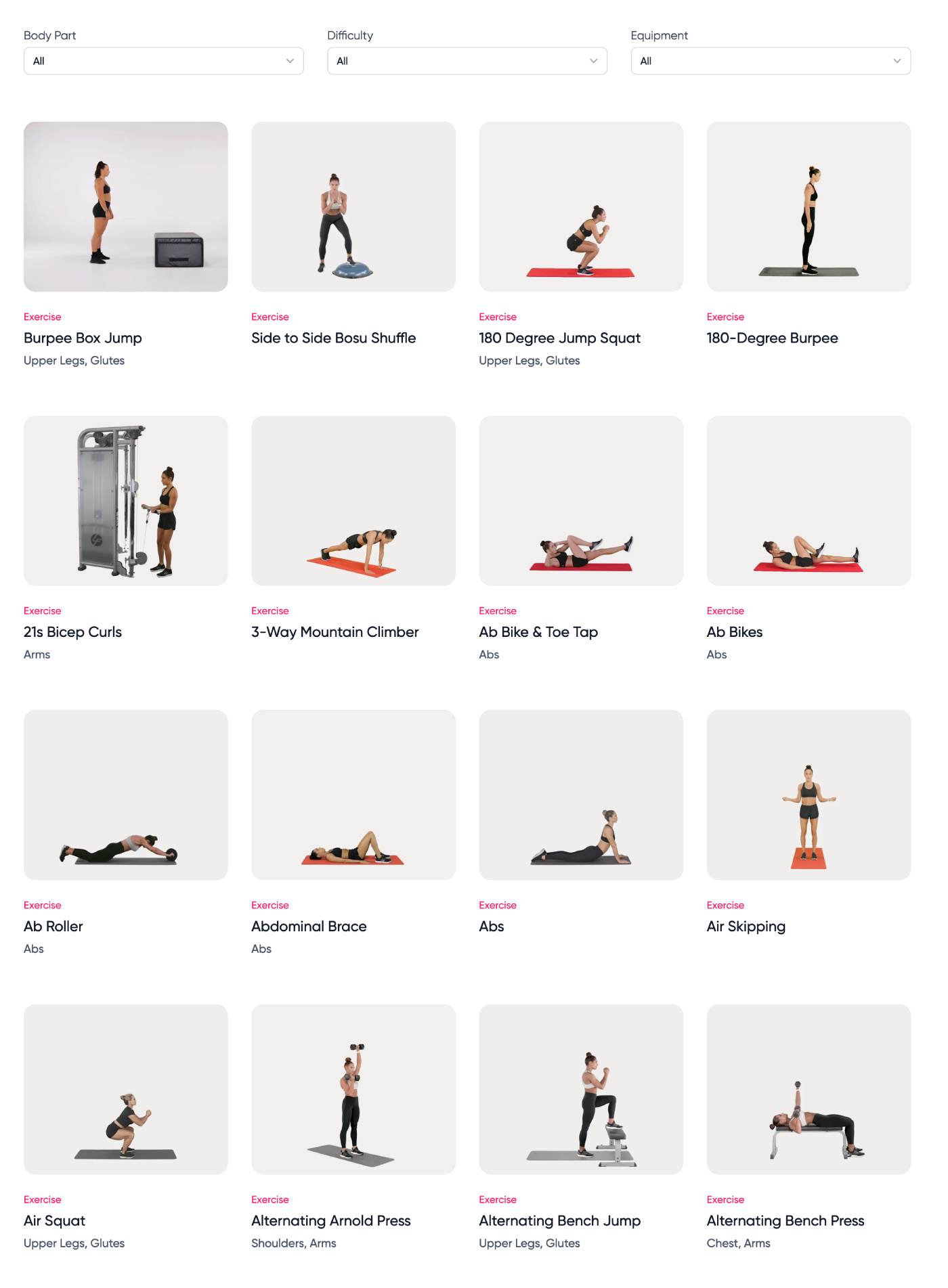
Sweat’s 9.5 (best in series) versus Peloton’s 7.8 is the widest UX gap in the comparison. Peloton’s app for non-hardware users is functional and well-produced in terms of video quality and instruction, but the underlying app architecture is designed around the hardware ecosystem, the class library navigation, community features, and metrics are optimised for Peloton bike and treadmill users. For app-only users, the UX lacks the adaptive daily plan and progress tracking that defines Sweat’s interface advantage. Peloton’s 7.8 is a respectable score but reflects a product not fully optimised for the app-only use case.
A closer look at Peloton
Nutrition integration (Sweat 6.5, Peloton 2: Sweat wins)
Peloton’s 2.0 on Nutrition Integration is the lowest score in this category across the entire Her Daily Fit comparison series. The platform includes essentially no nutritional content, no meal plans, no recipe library, no nutritional guidance. Nutrition is simply absent from Peloton’s product offering. This is a deliberate product decision, not an oversight, Peloton has chosen to focus on fitness content and hardware, and has not pursued nutritional integration as part of its platform strategy.
Sweat’s 6.5 is not a strong nutritional score, but it does include a functional recipe library and meal guidance for a general fitness audience. The comparison here is not between two nutritional offerings, it is between a limited nutritional offering (Sweat) and effectively no nutritional offering (Peloton). For women who view nutritional content as an integral part of a fitness platform, Peloton is simply not a fit. For women who are happy to source nutritional guidance elsewhere, Peloton’s nutrition absence does not affect their use of the platform in practice.
The nutritional needs of active women over 40 are well-documented and differ meaningfully from general population guidelines. protein intake review.
Personal testing and observations
Sweat testing
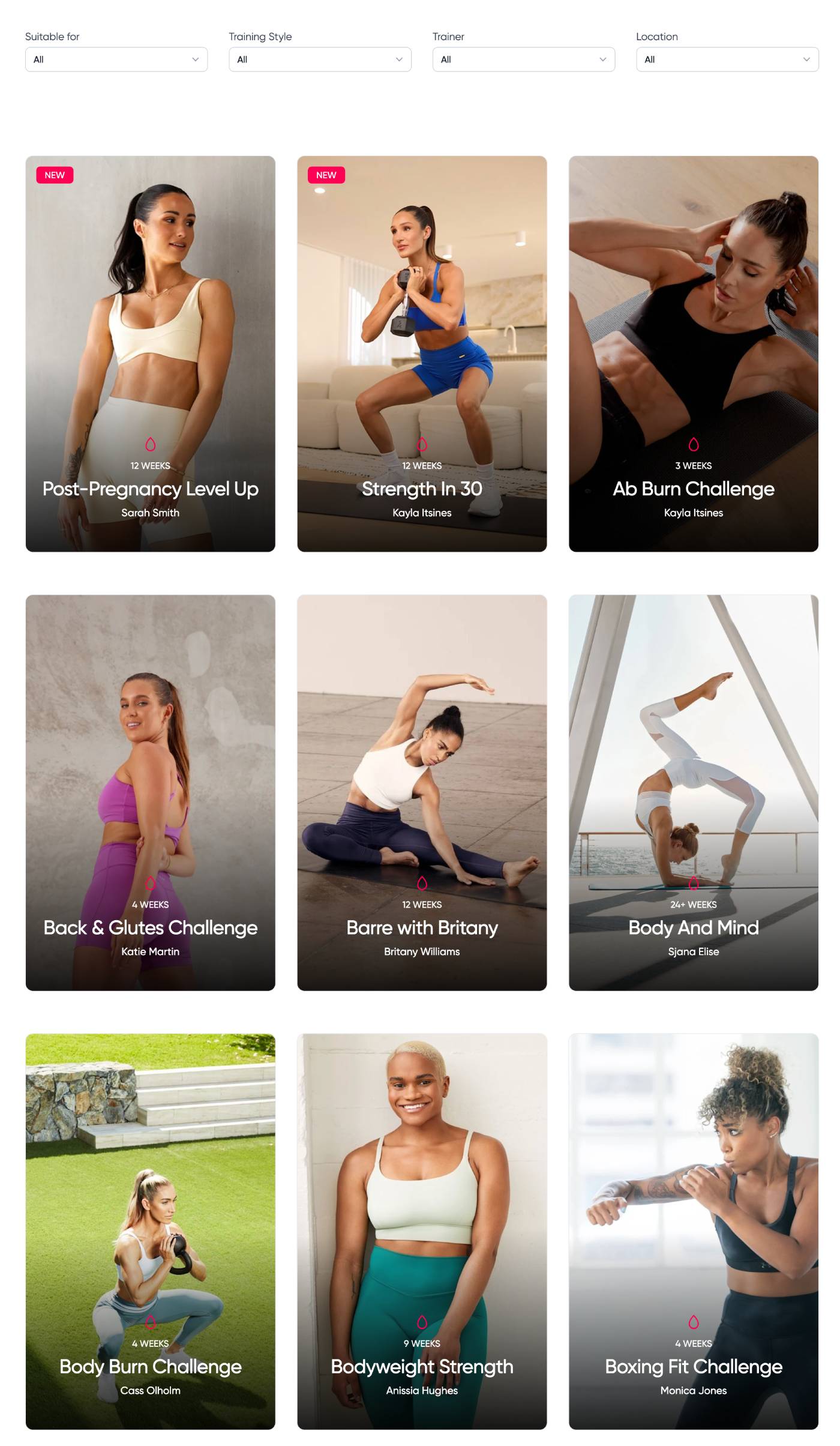
I tested Sweat across a four-week period using the onboarding quiz and the platform’s recommended daily plan. The programme structure remains Sweat’s clearest advantage in daily use, beginning each day knowing exactly what session is planned, at what duration, and with which coach removes a consistent friction point. The FIERCE programme with Kelsey Wells provided the strongest muscle stimulus of the test period.
Peloton testing
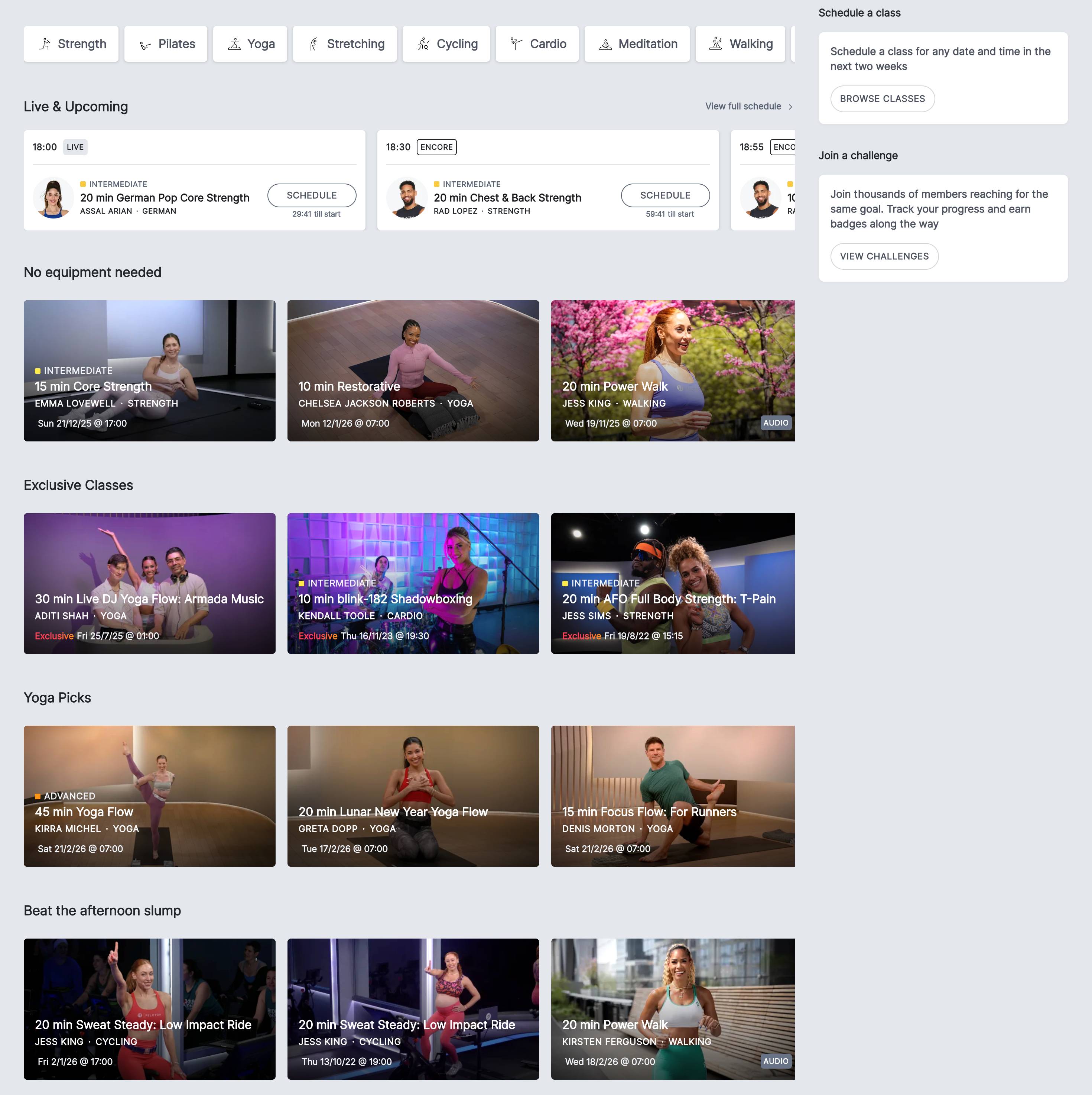
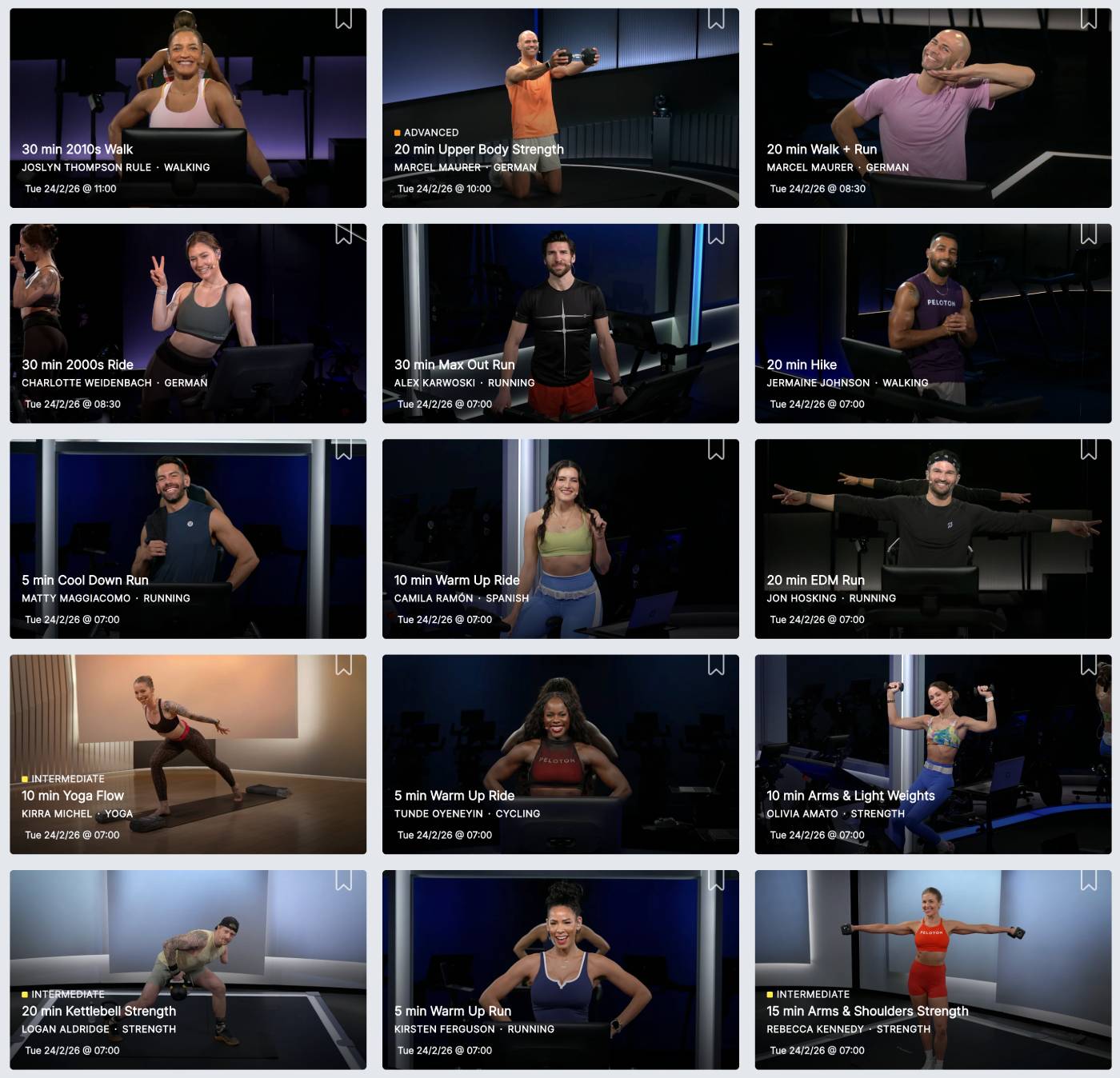
I tested Peloton without hardware across the App One tier, covering the strength library, yoga content, and the dedicated menopause collection. The content quality is immediately evident, Peloton’s instructors are among the most experienced and well-produced in the at-home fitness category. The menopause collection specifically was the most compelling dedicated content of this type encountered across the comparison series: sessions that directly addressed fatigue, joint sensitivity, and the mind-body component of perimenopause in a way that went beyond relabelling standard yoga or strength sessions as “menopause-friendly.”
The programme structure gap is real in practice. Without Peloton’s bike or treadmill data, the app experience for non-hardware users is essentially a class library with excellent content but limited personalisation. Deciding which sessions to take each week required more active planning than Sweat’s daily plan system, a genuine adherence risk for users who benefit from structural scaffolding. The 30-day free trial is the longest in the comparison series and makes the case for trialling Peloton alongside an alternative platform before committing.
Who should choose which
Peloton
WinnerA broad, polished class app with genuine live accountability and one of the few real dedicated menopause collections, strong on low-impact variety, though it has no nutrition and no guided progressive overload.
- $15.99 a month for App One
- $159 a year for App One
- Trial: 30 days
Choose Peloton App One if:
- You prioritise joint-safe, perimenopause-aware content with the best instructor modification quality in the comparison series. Peloton’s menopause collection is the strongest dedicated perimenopause content available on any general-audience fitness platform reviewed on Her Daily Fit.
- You are happy to self-direct your training week without an adaptive daily plan.
- You do not need nutritional content from your fitness platform and will source that separately.
- You want to try the platform risk-free, the 30-day trial is the most generous in the comparison series.
Sweat
A large, well-structured women’s fitness app with strong strength programming, community and postpartum content, but no menopause-specific material at all.
- $19.99 a month
- about $119.99 a year
- Trial: 7 days, monthly plan only
Choose Sweat if:
- You want best-in-class programme delivery with an adaptive daily plan that removes weekly training decisions.
- You value the $134.99/year annual plan savings versus Peloton’s month-to-month cost.
- You want Apple Watch and Apple Health integration with comprehensive progress tracking.
- You benefit from social features and community engagement.
- Nutrition content is part of what you want from a fitness platform, even basic guidance is better than none.
Which Is Better for Women Over 50?
For women over 50, the choice between Sweat and Peloton depends heavily on your joint situation and equipment comfort. Peloton’s cycling is extremely low-impact on knees and hips, which makes it a popular choice for women over 50 managing arthritis or post-surgical recovery. Peloton also offers strength, yoga and walking content beyond the bike. Sweat is more accessible without hardware but its programming is less tailored to over-50 needs. If joint protection and equipment-assisted cardio are priorities, Peloton wins; if you want flexibility and no upfront investment, Sweat is the practical choice.
Who wins for…
Who wins for time efficiency
Peloton. 9 against 7.5.
Who wins for muscle potential
Sweat. 8 against 7.5.
Who wins for women over 40 specificity
Peloton. 6 against 4.7.
Who wins for joint friendliness
Peloton. 9 against 6.5.
Who wins for recovery compatibility
Peloton. 8.5 against 7.5.
Who wins for programme structure
Sweat. 8 against 6.5.
Who wins for value for money and pricing
Sweat. 8 against 7.
Who wins for uX and design
Sweat. 8.5 against 7.8.
Who wins for nutrition integration
Sweat. 6.5 against 2.
Decision tree for women over 40
- You are managing perimenopause or menopause symptoms: Peloton. Women Over 40 Specificity 6 against 4.7.
- You have joint sensitivity or an injury history: Peloton. Joint Friendliness 9 against 6.5.
- Your sessions have to be short: Peloton. Time Efficiency 9 against 7.5.
- Building and keeping muscle is the priority: Sweat. Muscle Potential 8 against 7.5.
- You want a structured programme rather than a library: Sweat. Programme Structure 8 against 6.5.
- You want nutrition guidance built in: Sweat. Nutrition Integration 6.5 against 2.
- Budget is the deciding factor: Peloton. $24.99/month against $12.99/month.
Frequently asked questions
Is Sweat or Peloton better without a bike or treadmill?
Sweat wins overall (7.8 vs 7.6) for app-only users, with better programme structure, UX, and value. Peloton App One wins on joint friendliness (9.0 vs 6.5), women-over-40 specificity (8.0 vs 6.5), and time efficiency (9.0 vs 7.5). The decision depends on whether perimenopause-specific content and joint safety (Peloton) or programme structure and technology (Sweat) matters more to you.
Does Peloton have a menopause programme?
Yes. Peloton has a dedicated menopause content collection on the app, strength, yoga, meditation, and mobility sessions designed for perimenopausal and menopausal women. It is accessible without Peloton hardware on App One ($12.99/month). This collection is the primary reason Peloton scores 6 / 10 on Women Over 40 Specificity.
Why does Peloton score only 2.0 on nutrition integration?
Peloton includes no meal plans, recipes, or nutritional guidance in its app. Nutrition is simply absent from the platform. The 2 / 10 is the lowest nutrition score in the Her Daily Fit comparison series. If nutrition integration is important to you, Peloton is not the right platform, Form (8.0), BODi (8.0), and The Sculpt Society (8.0) all deliver significantly better nutritional content.
Which is cheaper, Sweat or Peloton App?
Sweat’s annual plan ($134.99/year) is cheaper than 12 months of Peloton App One ($155.88/year). Peloton App One is cheaper monthly ($12.99 vs $24.99). Peloton offers a 30-day free trial versus Sweat’s 7 days. If you plan to stay long-term, Sweat’s annual plan is more cost-effective.
Is Peloton App worth it without the bike?
Yes, for the right user. Peloton App One at $12.99/month provides excellent strength, yoga, Pilates, meditation, and menopause-specific content. The instruction quality is among the best in the category. The main limitations are the absence of nutritional content (2.0 score) and the limited programme structure for app-only users (6.5 vs Sweat’s 10.0).
Which has better joint-friendly workouts, Sweat or Peloton?
Peloton is significantly better for joint-friendly workouts: 9 / 10 vs Sweat’s 4.7 / 10. Peloton’s sessions are designed with modifications, the menopause collection is joint-considerate, and there is less unexpected high-impact content. Sweat’s BBG library includes plyometric content that requires careful navigation for women with joint sensitivity.
Research citations
- Maltais ML, Desroches J, Dionne IJ. (2009). Changes in Muscle Mass and Strength After Menopause. Journal of Musculoskeletal and Neuronal Interactions, 9(4), 186 to 197. menopause muscle loss.
- Westcott WL (2012). Resistance Training is Medicine. Current Sports Medicine Reports, 11(4), 209 to 216. resistance training RCT.
- Chodzko-Zajko WJ et al. (2009). ACSM Position Stand: Exercise and Physical Activity for Older Adults. Medicine & Science in Sports & Exercise, 41(7), 1510 to 1530. ACSM position stand.
- Rhodes RE et al. (2019). Habit and physical activity: Prediction, progression, and practice. Psychology of Sport and Exercise, 42, 69 to 79. habit formation study.
- Lonnie M et al. (2018). Protein for Life: Review of Optimal Protein Intake for Ageing Adults. Nutrients, 10(3), 360. protein intake review.