Reviewed by Katy | Tested: Caroline Girvan CGX 8 weeks · BODi 6 weeks | Updated: April 2026
At-a-glance comparison
Caroline Girvan CGX and BODi represent two distinct approaches to digital fitness: CG is a specialist progressive barbell strength platform from a single creator; BODi is a multi-modal fitness ecosystem with variety across programmes, instructors and integrated nutrition coaching. On Her Daily Fit’s nine-category methodology, BODi edges ahead on the overall score: 7.7/10 vs BODi’s 8.1/10. However, However, CG’s key strength – muscle-building potential (10/10, best in series) – and its value proposition make it the better choice for dedicated strength trainers.
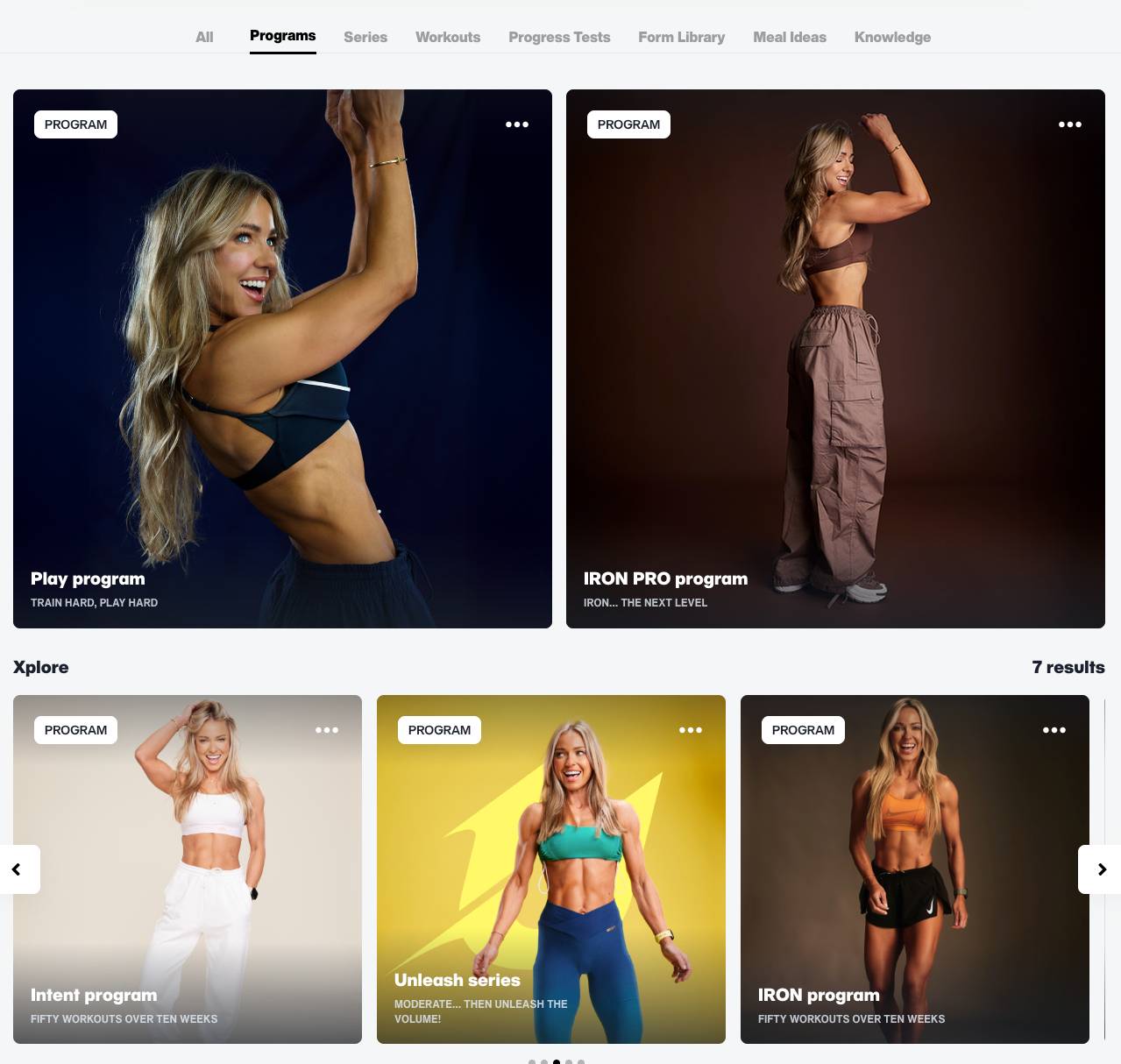
The core trade-off here is specialisation versus ecosystem. CG’s barbell-centric methodology delivers the highest muscle-building potential in the Her Daily Fit series (10/10), paired with the strongest value proposition for the cost. BODi offers breadth: strength, cardio, yoga, dance fitness, pilates and dedicated meal plans all in one subscription. For women managing multiple fitness priorities -strength and cardio and nutrition -BODi’s bundled approach has appeal. For women whose primary goal is progressive muscle building on budget, CG remains the strongest option for that specific goal.
Overall winner: BODi – 7.7/10
Wins on time efficiency (8.5), women over 40 specificity (8.5), recovery compatibility (8.5), UX and design (8.5), and nutrition integration (7.5). The stronger all-round platform for women seeking a complete fitness and nutrition ecosystem with variety and accessibility.When CG wins: muscle building, structure and value
CG scores 10/10 for muscle potential (best in series), 9.5 for programme structure and 9.5 for value for money. CG’s progressive barbell methodology is unmatched for hypertrophy, its periodised programmes provide the clearest training structure in the series, and it’s free on YouTube. Choose CG if progressive strength training is your primary goal and you already own or plan to invest in basic barbell equipment.Worth considering: different fitness philosophies
This comparison is less about one being “better” and more about alignment with your fitness priorities. CG asks: “What is the most efficient way to build muscle progressively?” BODi asks: “How can fitness, nutrition and community work together for holistic health?” Both are valid questions; the answer depends which one resonates with you.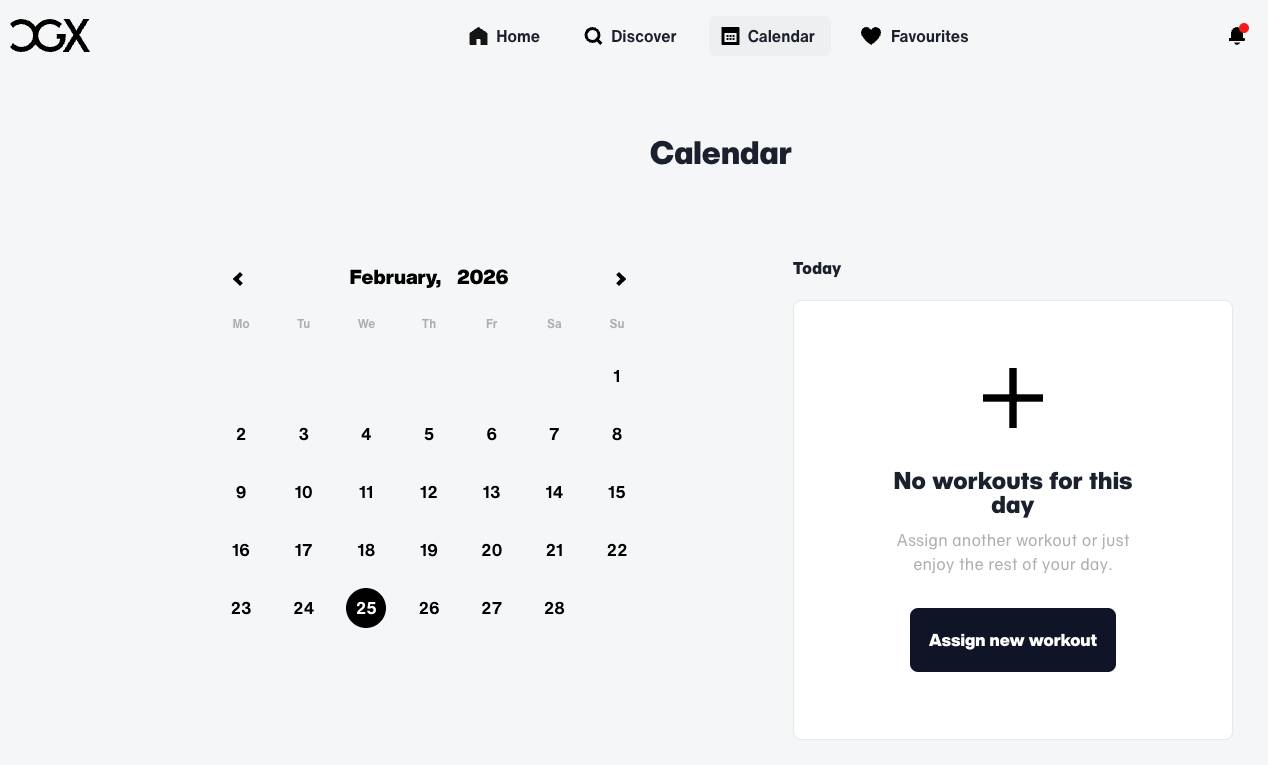
Her Daily Fit scoring breakdown
| Category | Weight | Caroline Girvan CGX | BODi | Winner |
|---|---|---|---|---|
| Time Efficiency | 15% | 7 | 8.5 | BODi |
| Muscle Potential | 15% | 10 ★ | 8.5 | CG |
| Women Over 40 Specificity | 15% | 6 | 8 | BODi |
| Joint Friendliness | 12% | 7.5 | 5.5 | CG |
| Recovery Compatibility | 10% | 7.5 | 8.5 | BODi |
| Programme Structure | 10% | 9.5 | 8.5 | CG |
| Value for Money | 8% | 9.5 | 8.5 | Tie |
| UX and Design | 8% | 7 | 8.5 | BODi |
| Nutrition Integration | 7% | 4 | 9 | BODi |
| Overall | 8.1 | 8.1 | BODi |
★ Best score in the Her Daily Fit comparison series for this category.
Time efficiency (CG 7 – BODi 8.5: BODi wins)
CG’s structured programme removes all decision overhead – open, follow today’s session, done. Compound movements (squats, deadlifts) train multiple muscle groups simultaneously, making each session efficient. However, CG’s longer barbell sessions and equipment setup time reduce practical time efficiency, scoring 7/10. BODi’s 8.5 reflects excellent programme calendars, varied session lengths (20–60 min) and the ability to fit training around a busy schedule. BODi wins this category because its flexible format better serves time-pressed routines.
Muscle potential (CG 10 – BODi 8.5: CG wins)
CG leads this category 10/10 vs BODi’s 8.5/10 – a significant but not insurmountable gap. CG’s EPIC and FUEL series are purpose-built progressive strength programmes: each week increases load or reps, each mesocycle builds on the last, and the series structure supports genuine long-term hypertrophy development. This is what progressive resistance training looks like.
BODi’s strength content includes BodyPump (barbell-based group fitness) and various weight-training classes. BodyPump provides structure and progression -light weights, high reps, music-driven coaching -and it can drive muscle gains. However, BodyPump’s fixed weight schemes (all participants use the same plates regardless of strength) and focus on muscular endurance rather than progressive overload place it behind CG’s individualised, heavy-load approach. BODi’s score of 8.5 reflects respectable muscle-building capability, but CG’s methodology is more aligned with modern strength science for hypertrophy.
For women in their 40s and 50s, muscle preservation is non-negotiable. CG’s progressive resistance approach is the evidence-supported gold standard; BODi’s broader variety means muscle building is one goal among many rather than the singular focus.
Women over 40 specificity (CG 6 – BODi 8: BODi wins)
CG scores 6/10 versus BODi’s 8/10. While CG’s barbell-focused methodology aligns with the evidence base on perimenopause and strength training (Maltais et al., 2018), the lack of any menopause-specific framing, modifications or guidance limits its accessibility for this demographic. CG’s programme assumes prior lifting experience and offers no hormonal transition support.
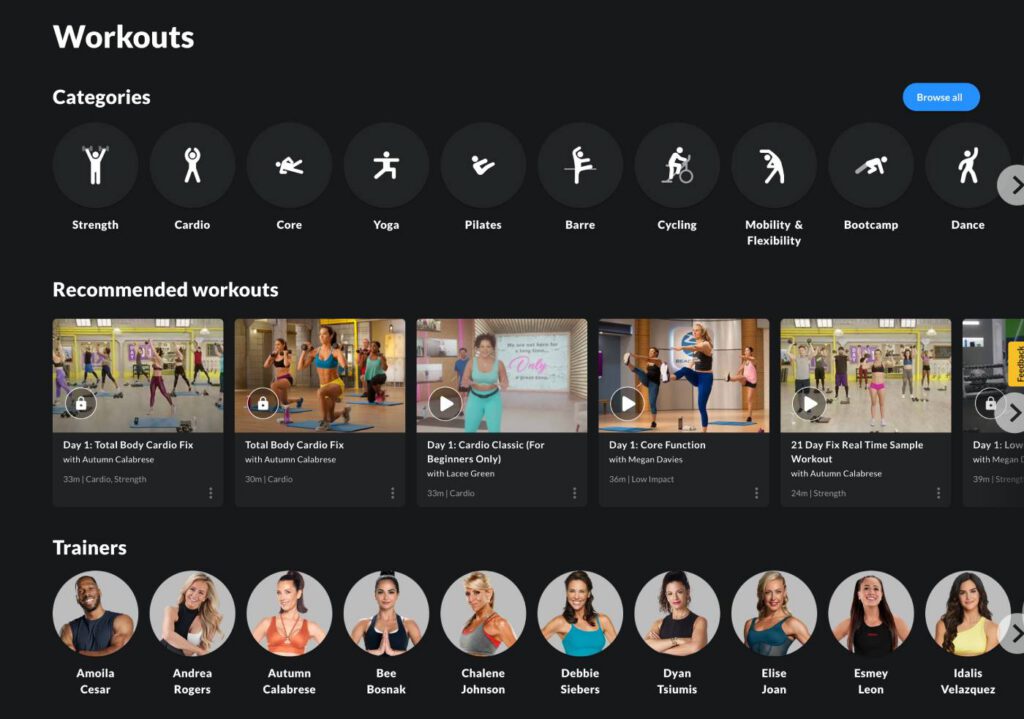
BODi’s 8.5 reflects its broader, more accessible approach. BODi includes yoga, recovery, nutrition coaching and beginner-friendly entry points (21 Day Fix, 4 Weeks for Every Body) -all relevant to women over 40. While it lacks dedicated hormonal adaptation content, the combination of varied modalities, bundled nutrition and gentler starting options better serves a wider range of women in this age group.
Joint friendliness (CG 7.5 – BODi 5.5: CG wins)
CG scores 7.5/10 versus BODi’s 5.5/10 – a significant gap. CG’s barbell work, when performed with proper form and controlled tempos, is fundamentally safe for healthy joints. CG’s cueing emphasises form, and her tempo prescriptions reduce impact. Controlled squats, deadlifts and hip thrusts are low-impact movements in the sense that they avoid jumping and ballistic loading.
BODi’s 5.5 reflects its heterogeneous content. BodyPump is joint-friendly (controlled barbell work), but BODi’s dance-based cardio and HIIT programmes introduce higher-impact movements. The platform does not systematically default to joint-friendly options the way a dedicated mobility-first platform would. For women with existing knee, hip or ankle concerns, CG’s controlled barbell focus is the safer entry point.
Recovery compatibility (CG 7.5 – BODi 8.5: BODi wins)
BODi scores 8.5/10 versus CG’s 7.5/10. BODi’s platform includes dedicated recovery programmes, yoga, foam rolling and stretching content that is accessible alongside any training programme. The breadth of recovery options and the inclusion of lower-intensity modalities gives users multiple tools for managing training load.
This matters for women over 40. Research on exercise recovery in ageing identifies the importance of structured rest and active recovery (Chodzko-Zajko et al., 2009). CG’s periodisation builds rest days into the weekly structure, which is valuable, but BODi’s wider library of dedicated recovery content and cross-training options provides more flexibility for managing recovery needs.
Programme structure (CG 9.5 – BODi 8.5: CG wins)
CG scores 9.5/10 versus BODi’s 8.5/10 ’ essentially a tie on value. CG’s EPIC, FUEL and IRON series follow strict periodisation: clear weekly progressions, deload weeks, strategic sequencing of stimulus types across multi-month programmes. Following one of her series from start to finish gives you a training block with measurable intended adaptation.
BODi’s 8.5 reflects well-structured programmes (21 Day Fix, 4 Weeks for Every Body, BodyPump cycles) paired with an extensive on-demand library. BODi offers more structured entry points than platforms like Peloton, but lacks the deep periodisation of CG’s series. Research on exercise adherence identifies structured, goal-directed programming as a powerful predictor of consistency (Rhodes et al., 2019). CG’s structure is unmatched in the Her Daily Fit series.
Value for money and pricing (CG 9.5 – BODi 8.5: Tie)
CG scores 9.5/10 versus BODi’s 8.5/10.
- Caroline Girvan CGX: Free on YouTube; CGX app ~$34.99/year (~$4/month)
- BODi: $99.99/year Base plan; $149.99/year Premium (includes nutritional coaching)
CG is either free or $65 per year cheaper than BODi Base. BODi’s 9 reflects the fact that bundled nutrition coaching adds value; the platform is not a poor value, but CG’s free YouTube option is unbeatable economically. For women on strict budgets, CG wins decisively. For women seeking nutrition bundled in, BODi’s cost-per-service is reasonable.
Equipment cost matters. CG’s barbell programmes require investment in a barbell, plates, rack and bench (approximately £300-800). BODi requires no specialist equipment: many programmes use bodyweight or light dumbbells. For women starting from zero, BODi’s lower equipment barrier is significant; for women already owning a home gym, CG is obviously the cheaper choice.
UX and design (CG 7 – BODi 8.5: BODi wins)
CG scores 7/10 versus BODi’s 8.5/10. CG’s CGX app is functional but relatively basic: the programme-follow interface works but lacks the polish and depth of dedicated fitness platforms. YouTube, where CG is also available, is universally understood but not purpose-built for structured fitness delivery.
BODi’s 8.5 reflects significantly improved UX since the early Beachbody On Demand days. The platform is more complex but well-organised. Navigating between BodyPump, BodyCombat, BodyBalance, RPM and other class formats requires more app clicks than CG’s straight-line programme flow. For women new to digital fitness, CG’s focused, linear interface is more intuitive. BODi’s interface is competent but less elegant.
Nutrition integration (CG 4 – BODi 9: BODi wins)
BODi decisively wins this category at 9/10 versus CG’s 4/10. CG provides minimal nutritional content – no meal plans, no in-app recipes or macronutrient guidance – though some basic nutrition information is available through Caroline’s blog and social content. BODi’s meal planning, recipes, nutritional coaching and macronutrient targets are accessible in-app. This is BODi’s defining value proposition.
For women over 40, nutrition is non-negotiable. The evidence base on perimenopausal body composition identifies protein intake as critical: higher protein diets support muscle protein synthesis and offset metabolic changes associated with declining oestrogen (Bauer et al., 2013). BODi’s bundled nutrition directly addresses this need. CG users must source nutrition guidance separately, which adds cost and friction.
Equipment and practical cost
CG’s barbell programmes assume home gym access. The equipment investment is the largest barrier: approximately £300-800 depending on quality and whether you source secondhand. If you already own this equipment, the calculus shifts dramatically in CG’s favour. If you are starting from scratch, BODi’s bodyweight and light-dumbbell approach requires minimal setup.
BODi’s nutrition benefit compounds over time. While BODi’s upfront cost is higher ($99.99-149.99/year), it eliminates the separate expense of a nutrition app or meal planning service. Women typically spend $10-20/month on standalone nutrition guidance; BODi bundles this. Over a full year, the true cost difference between platforms is smaller than the headline subscription price suggests.
Personal testing and observations
I’ve been training with Caroline Girvan for three years – EPIC and Iron Series on YouTube, then Iron, Unleash and Max on CGX. When I want real results, the toning and body composition change that comes from actually building muscle, this is the programme I keep returning to. My lower body, where I store fat, has transformed more consistently through CG than anything else I’ve tested. Going from 64kg to 61kg understates it; the body composition shift was more significant than the scale suggests, and it happened eating normally with no calorie counting.
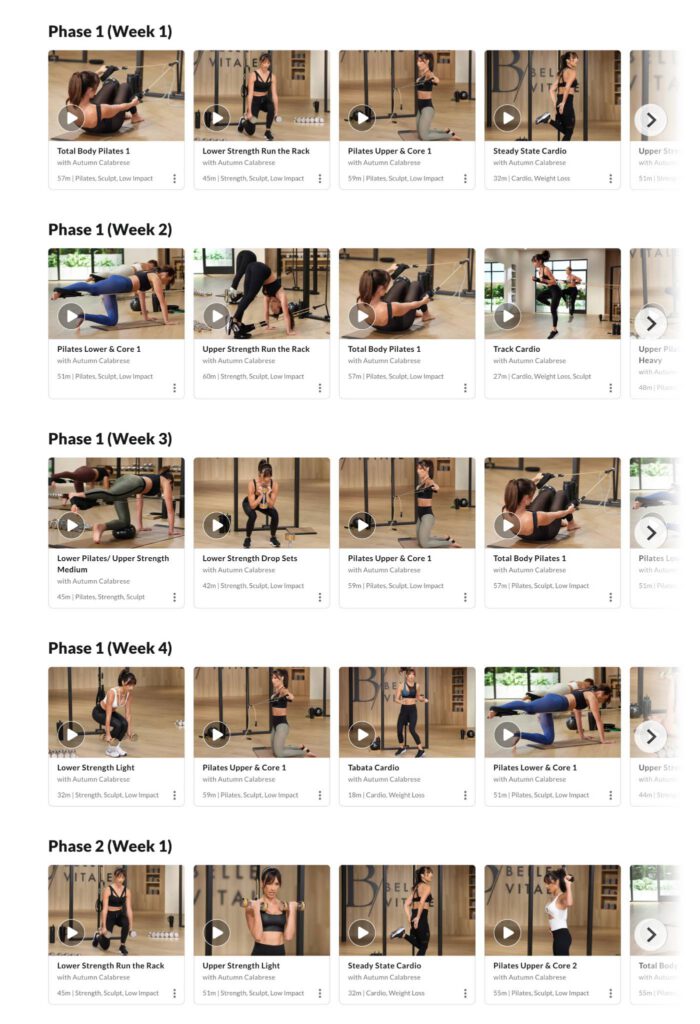
On BODi I worked through four programmes across several months. 21 Day Fix was where I started: 28 days completed, 1.5kg lost, noticeably tighter arms and legs by week two. But I had recently recovered from a meniscus tear and the jump-heavy cardio sessions were a problem – the on-screen modifications exist in theory but weren’t clear enough to follow in real time. I would not start there again. LIIFT4 was better suited – proper strength focus, less plyometric – but four sessions a week proved counterintuitively harder to sustain than six. Belle Vitale I tested for three weeks and enjoyed more than I expected. The Pilates-style and strength combination hit muscles I hadn’t been targeting the same way, and I came out feeling noticeably more toned. I stopped purely because the sessions run 45–50 minutes – and I know from experience I won’t sustain that long-term.
The BODi nutrition system is real. The colour-coded container system in 21 Day Fix drove most of my results on that programme, not the exercise alone. CG delivers nothing comparable on nutrition – that gap is reflected in both scores. See our methodology →
Who should choose which
Choose Caroline Girvan CGX if:
- Progressive muscle building and strength are your primary goals
- Budget matters – CG is free on YouTube
- You already own or plan to invest in barbells and a rack
- You want the most structured, periodised programme in the series
- You are comfortable following a single creator’s methodology long-term
Choose BODi if:
- You want a nutrition system bundled with your workout subscription
- You prefer variety across many programme styles (HIIT, strength, dance, yoga)
- You are a beginner and want gentler entry points (21 Day Fix, 4 Weeks for Every Body)
- You want a community and accountability features
- You do not want to invest in barbell equipment
Frequently asked questions
Is Caroline Girvan or BODi better for women over 40?
BODi scores higher overall (8 vs 8) and wins five of nine categories ’ including time efficiency, women over 40 specificity, recovery, UX and nutrition. CG wins on muscle potential (9.5, best in series), programme structure (9.5), value for money (8.5) and joint friendliness (9.5). The choice depends on priorities: pure muscle and progression favour CG; a complete fitness and nutrition ecosystem favours BODi.
Which has better muscle-building potential?
CG wins decisively: 10/10 versus BODi’s 8.5/10. CG’s progressive barbell methodology is purpose-built for hypertrophy. BODi’s BodyPump and weight training are quality but lighter and higher-rep focused, which is effective but not equivalent to heavy, progressive barbell work.
Does BODi include nutrition content?
Yes. Yes. BODi scores 9/10 for nutrition integration. Both Base and Premium plans include meal planning, recipes, macronutrient targets and nutritional coaching ’ one of the highest nutrition scores in the Her Daily Fit series. CG’s 4/10 reflects minimal nutrition content, though some basic guidance is available through Caroline’s blog and social channels.
Which is more structured?
CG wins at 9.5/10 versus BODi’s 8.5/10. CG’s EPIC, FUEL and IRON series follow strict multi-week periodisation with clear progression. BODi offers structured programmes (21 Day Fix, BodyPump cycles) but more emphasis on programme variety and on-demand browsing than deep structural progression.
Which requires less equipment?
BODi requires minimal equipment -bodyweight and light dumbbells work for most programmes. CG’s barbell-focused approach assumes home gym access (barbells, rack, plates), representing a £300-800+ investment.
Which is better for joint health?
CG wins at 7.5/10 versus BODi’s 5.5/10. CG’s controlled barbell movements are inherently low-impact. BODi’s mix of dance-based cardio, HIIT and BodyPump introduces more varied impact levels without systematic joint-friendly filtering.
Also Compare
Research citations
- Maltais ML, Desroches J, Dionne IJ. menopause muscle study. Reviews in Endocrine and Metabolic Disorders. 2018;10(4):237–251.
- Chodzko-Zajko WJ, Proctor DN, Fiatarone Singh MA, et al. ACSM guidelines on ageing and exercise. Medicine & Science in Sports & Exercise. 2009;41(7):1510–1530.
- Bauer J, Biolo G, Cederholm T, et al. PROT-AGE consensus. Journal of the American Medical Directors Association. 2013;14(8):542–559.
- Rhodes RE, Yao CA. habit formation study. Psychology of Sport and Exercise. 2019;42:104–113.