Reviewed by Katy | Tested: Caroline Girvan CGX 8 weeks · Peloton App 6 weeks | Updated: March 2026

At-a-glance comparison
Caroline Girvan CGX and Peloton represent genuinely different philosophies: CG is a specialist progressive strength platform from a single creator; Peloton is a multi-modal platform with celebrity-scale instructors, live classes and a dedicated menopause content collection. On Her Daily Fit’ nine-category methodology, CG wins: 6/10 vs Peloton’s 8/10. But Peloton wins two categories that matter specifically to women in midlife – Women Over 40 Specificity and Joint Friendliness – and those wins are not trivial.
The core tension in this comparison is muscle versus menopause. CG’s barbell-progressive methodology delivers the most powerful muscle-building stimulus in the series (10/10 Muscle Potential). Progressive resistance training is what the evidence base most clearly recommends for women navigating perimenopause – to preserve the lean mass that hormone changes progressively erode (Maltais et al., 2018). Peloton, by contrast, has a dedicated Menopause Collection with hormonal adaptation in mind – something CG does not offer – and a joint-friendly library that gives it the edge for women with knee, hip or ankle concerns.
Overall winner: Caroline Girvan CGX – 7.7/10
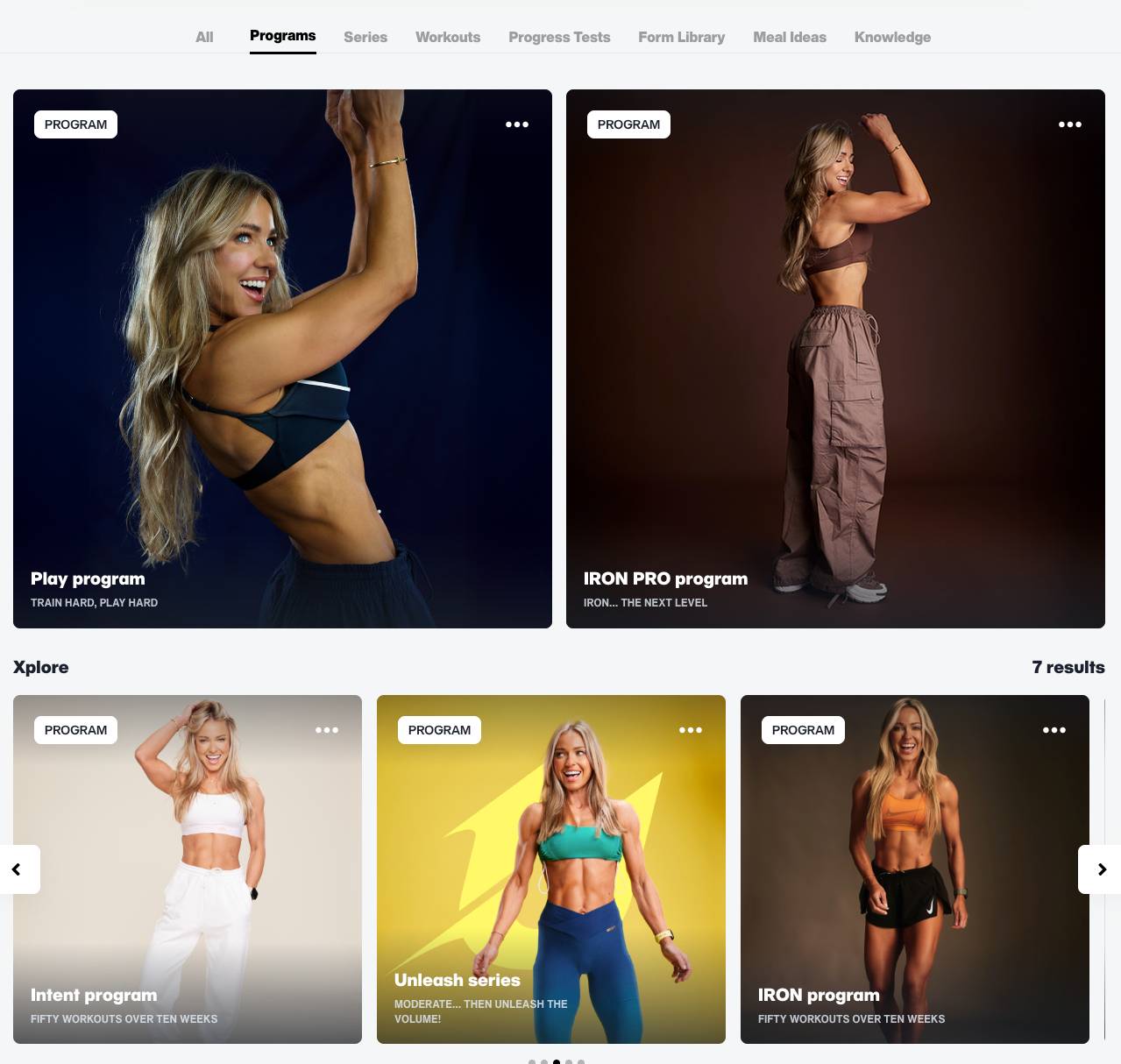
Wins on muscle potential (10 – best in series), value for money (9.5 – best in series), programme structure (9.5) and UX (9.5). The strength-focused choice for women who can commit to progressive barbell training and already own or are willing to acquire basic equipment.When Peloton wins: joint issues or active menopause management
Peloton scores 9/10 for Joint Friendliness (vs CG’s 7.5) and 7.5/10 for Women Over 40 Specificity (vs CG’s 7.5) – including the dedicated Menopause Collection. Choose Peloton if low-impact variety, live accountability or medically-mindful menopause content matters more than maximum muscle stimulus. Also relevant: Peloton requires no specialist equipment.Worth considering: use both at the same time
CG’s strength programming and Peloton’s low-impact variety and menopause content are genuinely complementary rather than competing. Using CG on YouTube (free) for strength days and Peloton App One ($12.99/month) for cardio, mobility and recovery would cost ~$156/year and cover all nine scoring categories well. This combination approach is worth considering before committing to either alone.Her Daily Fit scoring breakdown
| Category | Weight | Caroline Girvan CGX | Peloton App | Winner |
|---|---|---|---|---|
| Time Efficiency | 15% | 7 | 9 | CG |
| Muscle Potential | 15% | 10 | 7.5 | CG |
| Women Over 40 Specificity | 15% | 6 | 8 | Peloton |
| Joint Friendliness | 12% | 7.5 | 9 | Peloton |
| Recovery Compatibility | 10% | 7.5 | 8.5 | Tied |
| Programme Structure | 10% | 9.5 | 6.5 | CG |
| Value for Money | 8% | 9.5 | 7 | CG |
| UX and Design | 8% | 7 | 7.8 | CG |
| Nutrition Integration | 7% | 4 | 2 | Tied |
| Overall | 7.7 | 7.6 | CG |
★ Best score in the Her Daily Fit comparison series for this category.
Time efficiency (CG 7 – Peloton 9: CG wins)
CG leads 7 to Peloton’s 9. CG’s programme-follow structure means zero decision overhead – you open the app, follow today’s session, done. The programme prescribes the duration and content. Peloton’s excellent duration filtering and breadth of class lengths (5 min to 60 min) earns it a high score, but CG’s compound barbell movements are inherently time-efficient: a single squat or deadlift trains multiple muscle groups simultaneously. Both platforms respect time-constrained schedules; CG edges ahead because its programme structure removes even the small friction of deciding what to do.
Muscle potential (CG 10 – Peloton 7.5: CG wins)
CG leads this category 10/10 vs Peloton’s 7.5/10 – the largest single-category gap in this comparison. The distinction comes down to what each platform is engineered to do. CG’s EPIC and FUEL series are purpose-built progressive strength programmes: each week increases load or reps, each mesocycle builds on the last, and the series structure supports genuine long-term hypertrophy development.
Peloton’s strength content – its dumbbell classes, resistance rides and Pilates sessions – is high quality, but the platform is not designed around progressive overload. Individual strength classes are excellent standalone sessions, but there is no guided programme that tells you to add 2.5kg this week because you hit all your reps last week. That structural absence is why Peloton’s Muscle Potential score is 7.5 points below CG’s.
This matters particularly for women in their 40s and 50s. Muscle mass naturally declines with age and accelerates during the hormonal changes of perimenopause, creating a 3-8% per decade loss that increases the risk of metabolic disease, osteoporosis and functional limitation (Westcott, 2012). Progressive resistance training is the most evidence-supported intervention – and CG delivers it more rigorously than any other platform in this series.
Joint friendliness (CG 7.5 – Peloton 9: Peloton wins)
Peloton wins Joint Friendliness 9/10 to CG’s 7.5/10. The Peloton app library is systematically low-impact: cycling, yoga, barre, Pilates, walking, stretching and low-impact strength are all available without jumping, high-force landing or explosive movement. The interface makes it straightforward to filter by discipline and impact level.
CG’s 7.5 is strong but reflects the reality that her core programmes involve heavy barbell movements. Squats, deadlifts, hip thrusts and Romanian deadlifts are all controlled, form-focused exercises – and properly executed barbell work is not inherently dangerous for healthy joints. CG’s cueing on form is excellent, and her tempo prescriptions (often 3-4 second eccentrics) reduce the joint impact versus faster, ballistic versions of the same movements. But for women with existing knee, hip or spinal issues, Peloton’s entirely low-impact default is the safer starting point.
Recovery compatibility (CG 7.5 – Peloton 8.5: Tied)
Recovery compatibility is tied at 8.5 each – a genuine equivalence. CG’s programme templates explicitly schedule rest and lower-intensity sessions within the weekly calendar. Peloton’s recovery library (yoga, stretching, foam rolling, meditation) is extensive and easily accessible. Research on the importance of structured recovery for women in hormonal transition supports both approaches (Chodzko-Zajko et al., 2009). The tie reflects that both platforms handle recovery well, just through different mechanisms.
Programme structure (CG 9.5 – Peloton 6.5: CG wins)
CG scores 9.5/10 versus Peloton’s 6.5/10 – the second-largest gap in this comparison. CG’s EPIC series is a masterclass in periodisation: clear weekly progressions, deload weeks, and a logical sequencing of stimulus types across multi-month programmes. Following one of her series from start to finish gives you something rare in consumer fitness: a genuine training block with measurable intended adaptation.
Peloton’s 6.5 reflects a platform built around the on-demand and live class experience, not around programme completion. Peloton’s strength lies in its instructors and class variety – not in guiding users through a structured arc from baseline to adaptation. You can self-construct a progression using Peloton classes, but the platform does not scaffold that for you. Research on exercise adherence identifies structured, goal-directed programming as one of the strongest predictors of long-term consistency (Rhodes et al., 2019), and CG’s programme structure directly supports this.
Value for money and pricing (CG 9.5 – Peloton 7: CG wins)
CG wins Value for Money with the maximum 9.5/10. Peloton scores 7/10.
- Caroline Girvan CGX: Free on YouTube; CGX app ~$34.99/year (~$4/month)
- Peloton App One: $12.99/month, no annual plan – approximately $155.88/year; 30-day free trial
CG is either free or $121 per year cheaper than Peloton on the CGX plan. If you use YouTube, the saving is $155.88/year. Peloton’s higher score elsewhere is earned, but the value gap is real and substantial.
Equipment is a relevant cost consideration. CG’s barbell programmes require an investment in barbells, plates, rack and bench if you do not already own them – approximately £300-800 depending on quality. Peloton requires no specialist equipment: the app works on any phone, tablet or smart TV. For women who already own a home gym setup, CG is the obvious choice financially. For those starting from scratch, the equipment cost for CG’s primary programmes can exceed two years of Peloton subscriptions.
UX and design (CG 7 – Peloton 7.8: CG wins)
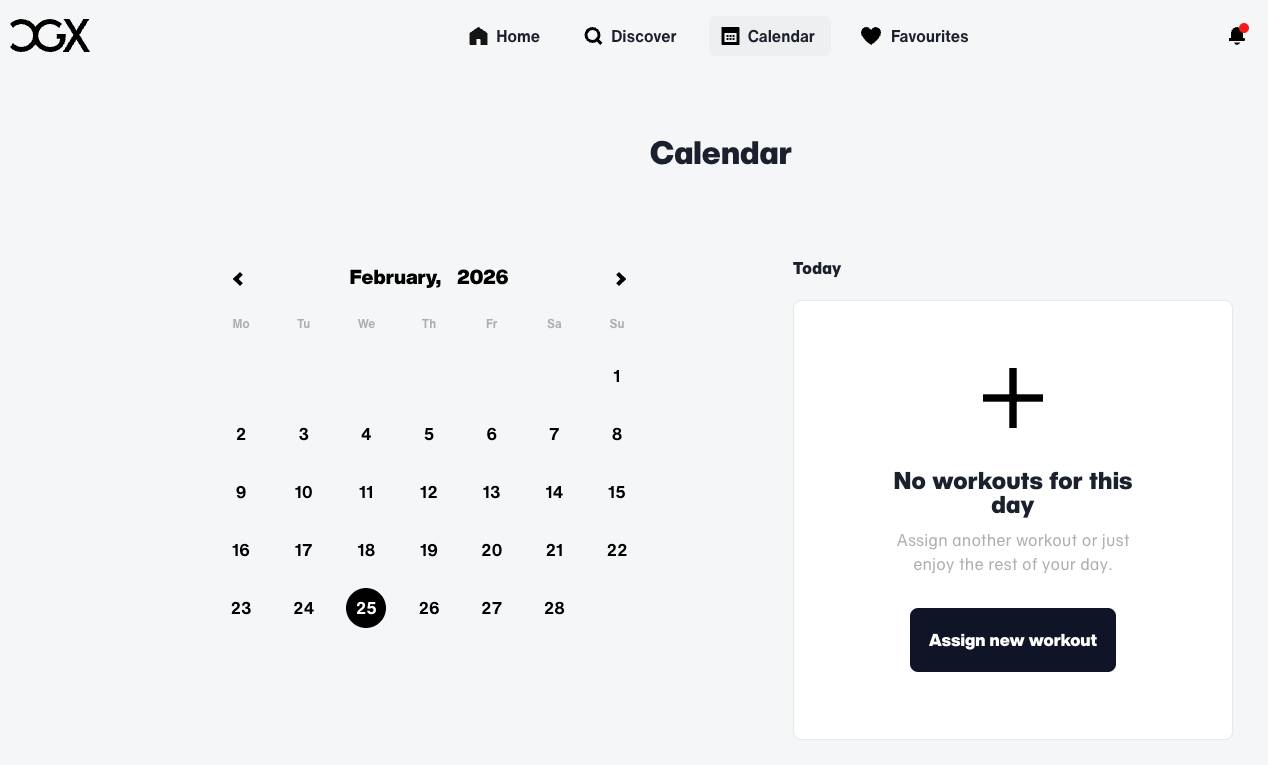
CG’s CGX app scores 7/10 for UX – the clean programme-follow interface, clear weekly structure and absence of content overload make it one of the most intuitive experiences in the series. YouTube is universal. Peloton’s 7.8 reflects its complex filter system and subscription prompts. CG’s focused content catalogue removes the paradox of choice.
Nutrition integration (CG 4 – Peloton 2: Tied)
Both platforms score 2/10 for Nutrition Integration – tied at the bottom of the series. Neither provides in-app nutritional content: no meal plans, no macronutrient targets, no recipe libraries, no calorie logging. Peloton has produced nutrition-adjacent blog content and social posts, but none of this is integrated into the app experience.
This shared limitation is particularly relevant for women in midlife. The evidence base on perimenopausal body composition consistently identifies protein intake as a critical lever: higher protein diets support muscle protein synthesis and help offset the metabolic changes associated with declining oestrogen (Bauer et al., 2013). Neither CG nor Peloton addresses this. If dietary guidance is part of your requirements, both platforms need supplementing with a dedicated nutrition resource.
Personal testing and observations
I’ve been training with CG for three years – EPIC and Iron Series on YouTube, then Iron, Unleash and Max on CGX. There is a reason I keep coming back: when I want to look a specific way, genuinely toned and strong, this is what delivers it. My lower body, where I store fat, has responded to CG’s compound progressive work more than anything else I’ve tested. The shift from 64kg to 61kg doesn’t capture it fully; the real change was in body composition – less fat in the legs, more visible muscle through the upper body – achieved eating normally, no calorie counting.
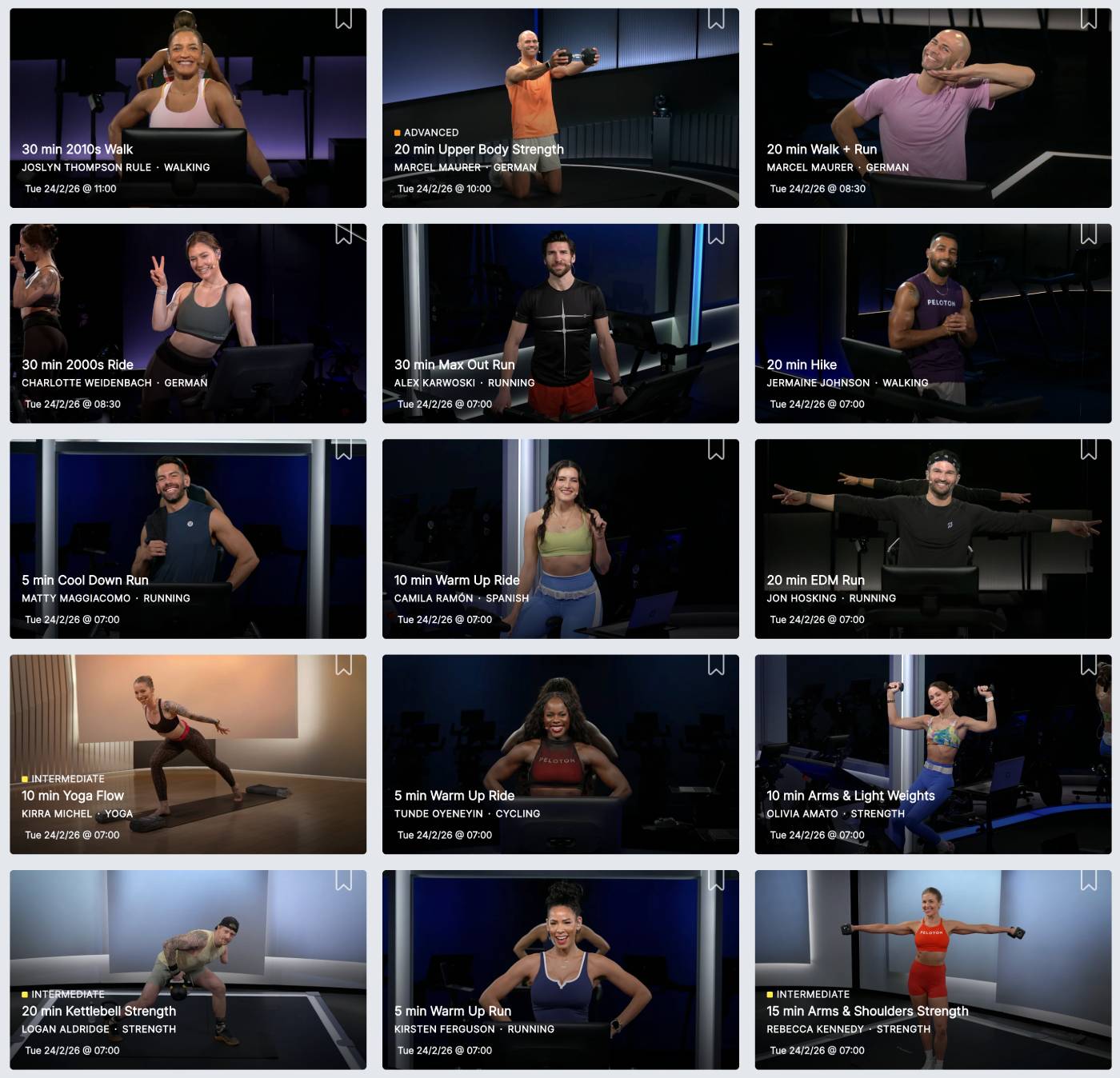
For Peloton, I went in expecting to be underwhelmed by the marketing and came away more positive than I anticipated. The Menopause Collection wasn’t a single token class – it was a proper curated set of 20-minute sessions built around perimenopause: low-impact rides, bodyweight strength, kettlebell. I tested them alongside my regular training and they sat right in the week – sustainable without feeling too easy. I trained without Peloton hardware, using my own treadmill for running content and a pair of 7.5kg dumbbells for strength, and the coaching translated completely. The dumbbell strength classes were genuinely challenging – working at my limit by the end, which confirmed the content is effective with basic equipment. One flag worth noting: the cancel link was non-functional during my testing. If you sign up, cancel via app settings, not the website link, and set a calendar reminder before day 30.
Prices are as of March 2026 in USD; UK pricing may vary. I receive no affiliate commission from either platform. See our methodology →
Who should choose which
Choose Caroline Girvan CGX if:
- Progressive muscle building and strength are your primary goals
- You want structured, periodised programming with measurable progression
- Budget matters – CG is free on YouTube, or $34.99/year for CGX
- You already own or plan to invest in a barbell and basic gym equipment
- You are comfortable following a single creator’s methodology long-term
Choose Peloton if:
- Low-impact variety is non-negotiable due to joint concerns
- You want menopause-specific content and hormonal awareness built into the platform
- You prefer variety across multiple instructors, class types and live community
- You want a complete solution without equipment investment
- You value live classes and real-time accountability
Frequently asked questions
Is Caroline Girvan or Peloton better for women over 40?
CG scores higher overall (10 vs 10) and wins on muscle building (the most important category for midlife women), but Peloton wins Women Over 40 Specificity (7.5 vs 7.5) through its dedicated Menopause Collection, and Joint Friendliness (9 vs 9) through its low-impact library. The best choice depends on your priorities: strength and progression favour CG; joint safety and menopause content favour Peloton.
Does Peloton have menopause-specific content?
Yes. Peloton has a dedicated Menopause Collection featuring low-impact strength, mobility and yoga sessions designed with hormonal awareness in mind, earning it an 6/10 for Women Over 40 Specificity. CG has no dedicated menopause content, scoring 6/10 in this category – lower despite her methodology being broadly well-suited to midlife women.
How much does Caroline Girvan cost compared to Peloton?
CG is free on YouTube. The CGX app costs ~$34.99/year. Peloton App One is $12.99/month with no annual plan, totalling ~$155.88/year. CG is free or up to $121/year cheaper than Peloton.
Does Caroline Girvan or Peloton have better programme structure?
CG scores 9.5/10 versus Peloton’s 6.5/10. CG’s EPIC, FUEL and IRON series follow meticulously structured periodised multi-week cycles. Peloton’s on-demand and live class library is excellent, but the platform does not guide you through a structured progression the way CG’s programme series does.
Which is better for low-impact workouts – Caroline Girvan or Peloton?
Peloton is better for low-impact: 9/10 for Joint Friendliness versus CG’s 7.5/10. Peloton’s library defaults to low-impact options across cycling, yoga, Pilates, barre and walking. CG’s primary programmes involve heavy barbell work, which is controlled but not strictly low-impact.
Can I use Caroline Girvan and Peloton together?
Yes – and the combination is highly complementary. CG’s progressive strength covers the categories where Peloton is weaker (Muscle Potential, Programme Structure). Peloton’s Menopause Collection, cardio variety and live classes cover where CG is weaker (W40 specificity, joint-safe options). CG on YouTube (free) plus Peloton App One ($12.99/month) gives you coverage across all nine categories at a competitive combined cost.
Also Compare
Research citations
- Westcott WL. resistance training RCT. Current Sports Medicine Reports. 2012;11(4):209–216.
- Maltais ML, Desroches J, Dionne IJ. menopause muscle study. Reviews in Endocrine and Metabolic Disorders. 2018;10(4):237–251.
- Hackney KJ, Engels H-J, Gretebeck RJ. DOMS recovery study. Journal of Strength and Conditioning Research. 2007;22(5):1400–1407.
- Bauer J, Biolo G, Cederholm T, et al. PROT-AGE consensus. Journal of the American Medical Directors Association. 2013;14(8):542–559.
- Rhodes RE, Yao CA. habit formation study. Psychology of Sport and Exercise. 2019;42:104–113.