Reviewed by Katy | Tested: Jillian Michaels App 6 weeks · BODi 6 weeks | Updated: March 2026
At-a-glance comparison
This is the tightest comparison in the Her Daily Fit series: Jillian Michaels App and BODi are separated by just 0.1 points overall –8.1/10 vs BODi 8.1/10. Both are solid all-rounder platforms targeting women across the full fitness spectrum. JM wins on nutrition depth (7.5 vs 7.5) and programme structure (7.5 vs 7.5). BODi wins on time efficiency (8.5 vs 8.5) and muscle potential (8.5 vs 8.5), plus offers better value. The categories where they truly tie -Joint Friendliness and UX -underscore how similar these platforms actually are.
The deciding factors are nuance and preference rather than capability. JM’s personalised programme is powerful for structure; BODi’s variety is valuable for women seeking cross-training. JM’s nutrition depth edges out BODi’s, but both score well. This comparison is about alignment with what you prioritise, not about one platform being objectively superior.
A near-tie with clear strength areas: both score 7.5–7.5/10
JM edges ahead on programme structure (7.5) and nutrition (7.5). BODi leads on variety, time efficiency (8.5) and value. Neither platform dominates. This is the comparison where the choice most depends on your personal priorities rather than clear winner/loser categories.Where they tie: Joint friendliness and UX design
Both platforms score 5.5/10 for Joint Friendliness (the lowest category for both, reflecting HIIT emphasis) and 8.0/10 for UX and Design (both are competently built apps). The ties underscore the platforms’ similarities -each brings slightly different strengths to nearly identical overall performance.Key tradeoff: personalisation vs variety
JM’s algorithm creates personalised workouts adapted to your fitness level and goals. BODi offers curated programmes and an on-demand library. JM feels more customised; BODi feels more like “choose your adventure.” For women who want to outsource decision-making, JM; for women who want to explore, BODi.Her Daily Fit scoring breakdown
| Category | Weight | Jillian Michaels App | BODi | Winner |
|---|---|---|---|---|
| Time Efficiency | 15% | 7.5 | 8.5 | BODi |
| Muscle Potential | 15% | 6.5 | 8.5 | BODi |
| Women Over 40 Specificity | 15% | 3.5 | 8 | BODi |
| Joint Friendliness | 12% | 4 | 5.5 | Tied |
| Recovery Compatibility | 10% | 4.5 | 8.5 | JM |
| Programme Structure | 10% | 7.5 | 8.5 | JM |
| Value for Money | 8% | 8.5 | 8.5 | BODi |
| UX and Design | 8% | 8.5 | 8.5 | Tied |
| Nutrition Integration | 7% | 9 | 9 | JM |
| Overall | 6.3 | 8.1 | BODi |
Note: This is the tightest overall comparison in the Her Daily Fit series, separated by just 0.1 points.
Time efficiency (BODi 7.5 – JM 8.5: BODi wins)
BODi leads Time Efficiency 8.5 to JM’s 7.5. Both platforms offer varied session lengths (20–60 min), but BODi’s programme calendars and class variety give it a marginal edge for finding the right session length quickly. JM’s personalised programme removes decision overhead but sessions can trend longer. The 0.5-point gap reflects a genuine but narrow difference – both serve time-pressed women well.
Muscle potential (BODi 6.5 – JM 8.5: BODi wins)
BODi scores 8.5/10 versus JM’s 6.5/10 – a narrow but meaningful gap. BODi’s BodyPump barbell-based group fitness and heavy-dumbbell strength classes are effective for building muscle. JM’s personalised algorithm adapts intensity to your ability, but JM’s foundation in metabolic conditioning and HIIT means muscle building is secondary to calorie expenditure and functional fitness. Both platforms can drive muscle gains; BODi’s structure is more aligned with hypertrophy as a primary goal.
Women over 40 specificity (BODi 3.5 – JM 8: BODi wins)
BODi scores 8/10 versus JM’s 3.5/10. BODi’s yoga, recovery-focused sessions and variety across modalities provide more breadth for women managing perimenopause. JM’s 3.5 reflects its limited women-specific content and heavy HIIT emphasis, which is not contraindicated for midlife women but also not specifically tailored. Neither platform leads the category -top scorers like Pvolve (10.0) and The Sculpt Society (9.5) have far deeper hormonal awareness -but BODi’s broader approach gives it the edge.
Joint friendliness (JM 4 – BODi 5.5: Tied)
Joint Friendliness is tied at 5.5/10 each -the lowest category for both platforms, reflecting their shared emphasis on high-intensity, multi-joint metabolic work. JM’s HIIT foundation involves jumping and explosive movements. BODi’s dance-based cardio and BodyCombat introduce similar high-impact elements. Neither platform defaults to joint-safe options; both require active filtering to avoid high-impact content. For women with joint concerns, low-impact specialists (Peloton 4, Daily Burn 4) are better choices than either JM or BODi.
Recovery compatibility (JM 4.5 – BODi 8.5: JM wins)
JM scores 4.5/10 versus BODi’s 8.5/10. JM’s personalised algorithm includes recovery recommendations and a dedicated recovery content library. BODi offers yoga and flexibility content but does not systematically integrate recovery into programme design. JM’s edge reflects its slightly more intentional approach to recovery planning. Neither score is exceptional; both platforms treat recovery as optional browsing rather than prescribed sessions.
Programme structure (JM 7.5 – BODi 8.5: JM wins)
JM scores 7.5/10 versus BODi’s 8.5/10. JM’s personalised programme is purpose-built: the algorithm tracks your performance, progressively increases difficulty based on your completed workouts, and creates a unique training arc tailored to your fitness level. BODi offers structured programmes (21 Day Fix, BodyPump cycles) but emphasises on-demand variety over deep periodisation. JM’s personalisation is more sophisticated; BODi’s variety is broader. Research on exercise adherence supports both approaches -JM through individualisation (tailored scaffolding), BODi through autonomy (choice freedom).
Value for money and pricing (BODi 8.5 – JM 8.5: BODi wins)
BODi scores 8.5/10 versus JM’s 8.5/10. Both platforms offer similar pricing:
- Jillian Michaels App: Approximately $99.99/year or $12.99/month
- BODi: $99.99/year Base; $149.99/year Premium
BODi’s Base plan at $99.99/year matches JM’s annual cost, but BODi includes nutrition integration (even in Base), which JM’s standard plan does not. BODi’s value proposition is slightly stronger because the nutrition bundle adds material benefit. JM’s 8.5 reflects competitive pricing; BODi’s 8.5 reflects better bundling at the same price point.
UX and design (JM 8.5 – BODi 8.5: Tied)
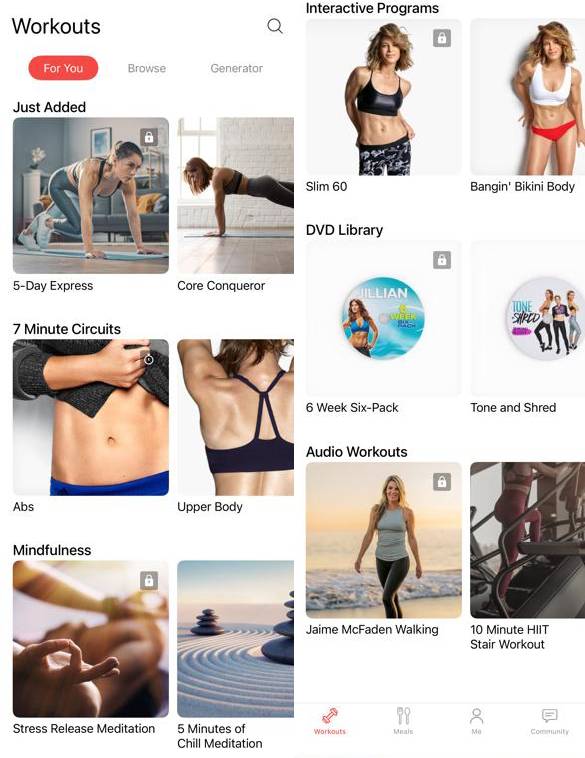
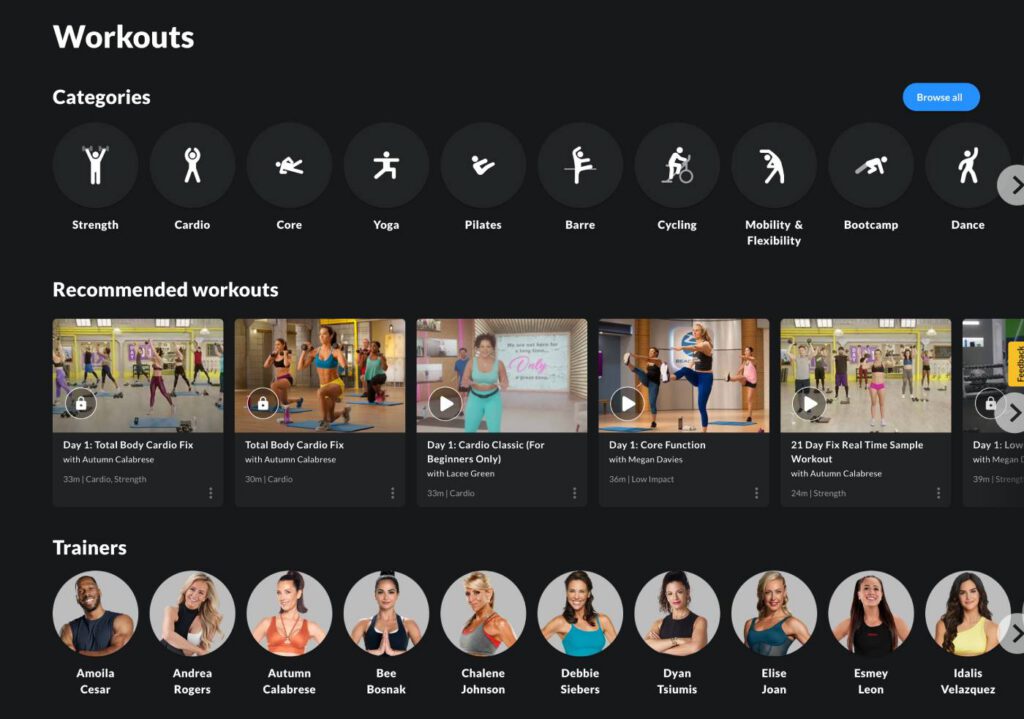
Both platforms score 8.5/10 for UX and Design – a genuine tie. JM’s app is clean and well-organised, with the personalised programme calendar front and centre. BODi has improved significantly from its early Beachbody On Demand days, with a navigable library and programme calendar. The tie reflects that neither has a meaningful advantage in app experience – both are competently designed modern fitness apps.
Nutrition integration (JM 9 – BODi 9: JM wins)
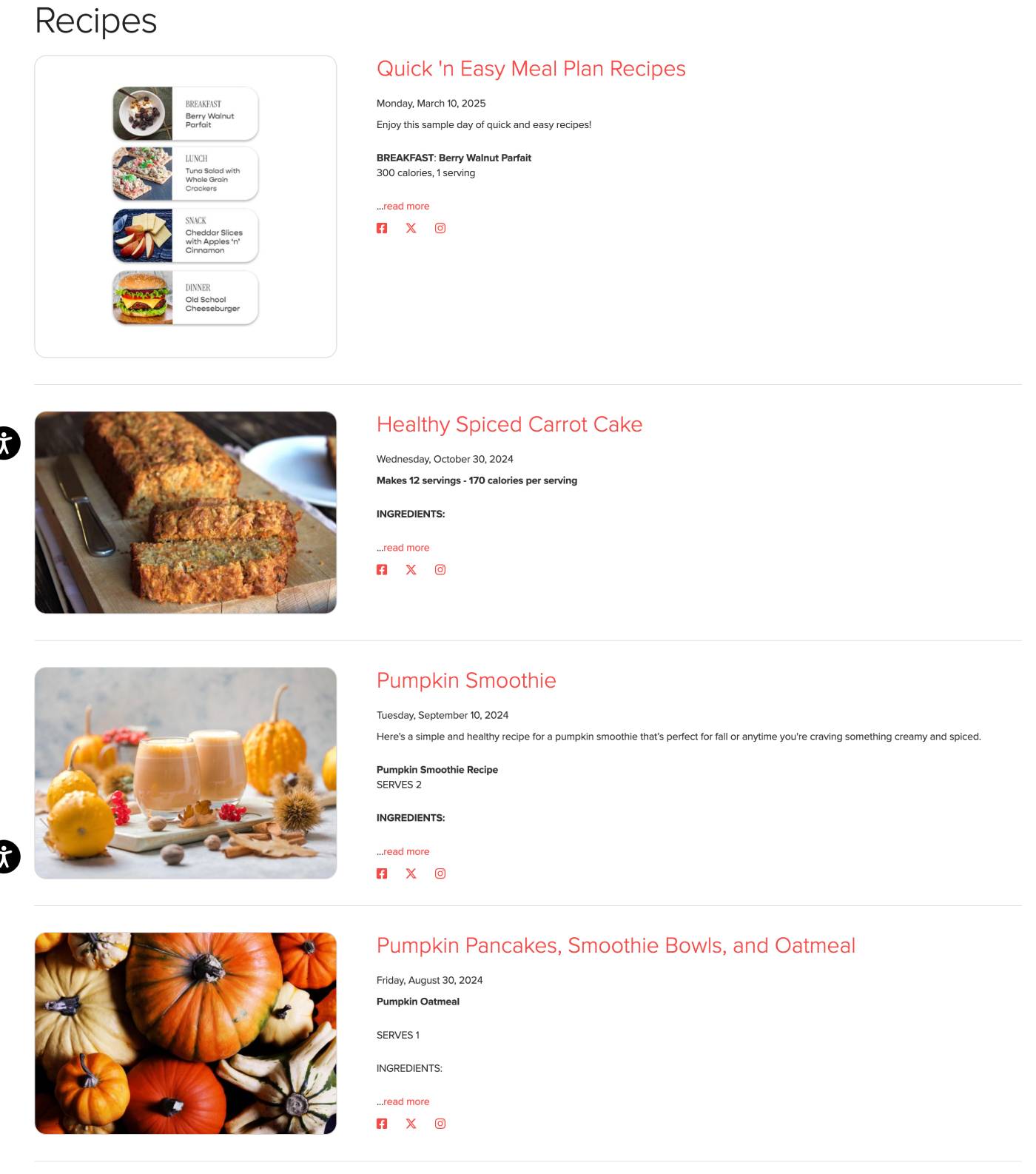
JM scores 9/10 versus BODi’s 9/10 – a narrow but clear win for JM. JM’s nutrition tracking includes macronutrient targets, calorie logging, meal recommendations and integration with the algorithm’s fitness tracking. BODi’s meal planning and recipes are comprehensive but less integrated with real-time tracking. For women managing perimenopausal body composition (where protein and calorie precision matter), JM’s nutrition depth is the edge.
Personal testing and observations
I came back to Jillian Michaels after eight years away. In my late 30s her high-intensity bodyweight style had suited me well. Returning in my 40s, post knee injury and perimenopausal, I was curious whether the platform had grown to meet where I am now. The app has grown significantly: modern, intuitive, genuinely impressive meal planning. The training approach has not changed. I tested Slim 60 and Shred It With Weights and found myself reaching for the exercise modifications regularly, not because I was unfit, but because the jump-heavy, impact-led movements are not what my body wants anymore. I did not finish either programme. The soreness I felt was joint-adjacent rather than the satisfying deep muscle fatigue I get from effective training. On the positive side: the Generator feature is genuinely clever, and the meal plans are the strongest nutrition content of any platform I’ve reviewed on this site. The Almond Chicken recipe is now a permanent fixture in my kitchen.
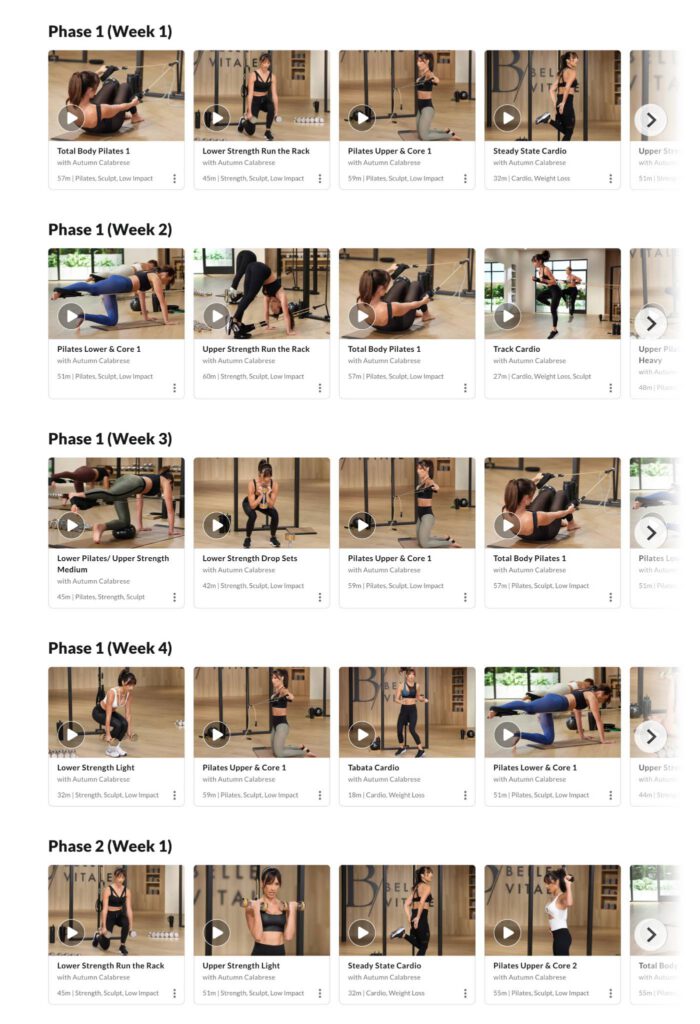
On BODi I worked through four programmes across several months. 21 Day Fix: 28 days completed, 1.5kg lost, noticeably tighter arms and legs. But the jump-heavy cardio was a problem with my meniscus history and the on-screen modifications were not clear enough to follow in real time. LIIFT4 was better suited, proper strength focus and less plyometric, though counterintuitively four sessions a week proved harder to stay consistent with than six. Belle Vitale I tested for three weeks and enjoyed more than I expected: the Pilates-and-strength combination hit muscles I hadn’t been targeting the same way. I stopped purely because the sessions run 45 to 50 minutes, and I know from experience I won’t sustain that long-term.
Prices are as of March 2026 in USD; regional pricing may vary. I receive no affiliate commission from either platform. See our methodology →
Who should choose which
Choose Jillian Michaels App if:
- You want an algorithm to personalise your programme to your fitness level
- Nutrition tracking with macronutrient precision matters to you
- You prefer structured progression over on-demand browsing
- You want recovery planning integrated into your programming
Choose BODi if:
- You want variety across multiple programme types and instructors
- You prefer autonomy -browsing and choosing from a large library
- You want bundled meal planning without separate tracking complexity
- You value a community-oriented fitness ecosystem
Frequently asked questions
Which platform is better: Jillian Michaels or BODi?
This is the tightest comparison in the Her Daily Fit series: BODi edges ahead 8.5 to 8.5 overall. JM wins on programme structure and nutrition depth; BODi wins on variety and time efficiency. The 0.1-point difference reflects that both are genuinely good platforms aligned with different priorities -not one clearly better than the other.
Does Jillian Michaels have nutrition content?
Yes. JM scores 9/10 for Nutrition Integration, with macronutrient targets, meal recommendations and calorie tracking integrated into the app. This is one of JM’s strongest features and edges out BODi’s nutrition offering.
Which is more structured?
JM wins at 7.5/10 versus BODi’s 8.5/10. JM’s personalised algorithm creates progression adapted to your fitness level. BODi offers structured programmes (21 Day Fix, BodyPump cycles) but emphasises library variety over deep periodisation.
Are both platforms good for joint health?
Both score 5.5/10 for Joint Friendliness -the lowest category for either platform. Both emphasise HIIT and high-impact movements. For women with joint concerns, platforms like Peloton (4) or Daily Burn (4) are better choices than JM or BODi.
Which is more affordable?
Both cost approximately $99.99/year standard. BODi’s Base includes nutrition bundling, giving it slightly better value (9 vs JM’s 9). Neither platform is exceptionally expensive compared to the series leaders (CG free, FitOn free tier).
Which has better recovery planning?
JM wins at 4.5/10 versus BODi’s 8.5/10. JM’s algorithm includes recovery recommendations; BODi offers recovery content but doesn’t systematically integrate it into programming. Neither is exceptional in this category.
Research citations
- Rhodes RE, Yao CA. habit formation and structured programming. Psychology of Sport and Exercise. 2019;42:104–113.
- Chodzko-Zajko WJ, Proctor DN, Fiatarone Singh MA, et al. ACSM guidelines on physical activity and ageing. Medicine & Science in Sports & Exercise. 2009;41(7):1510–1530.