Reviewed by Katy | Tested: Sweat App 5+ weeks · BODi 6 weeks | Updated: March 2026
Inside Sweat and BODi
At-a-glance comparison
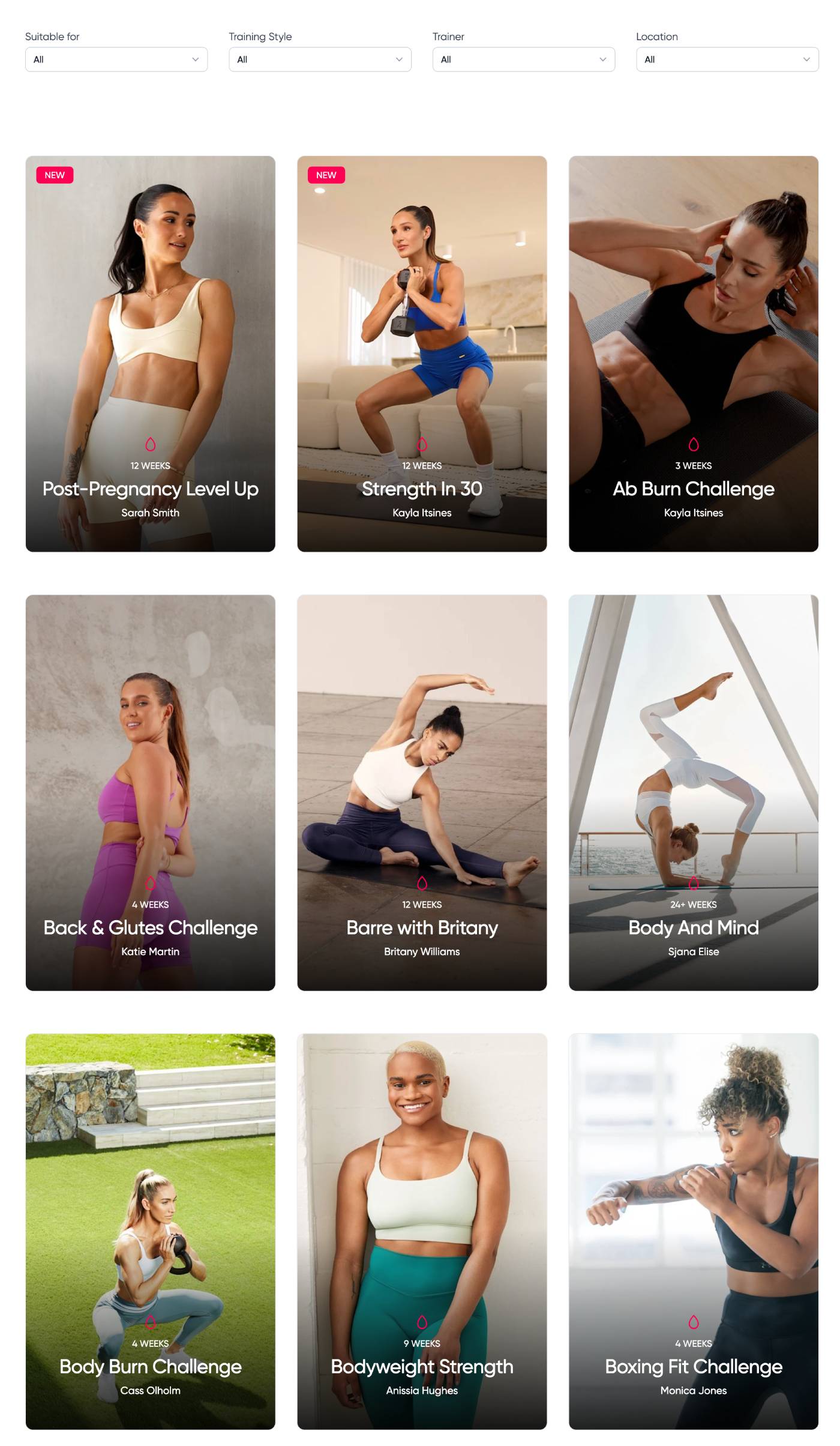
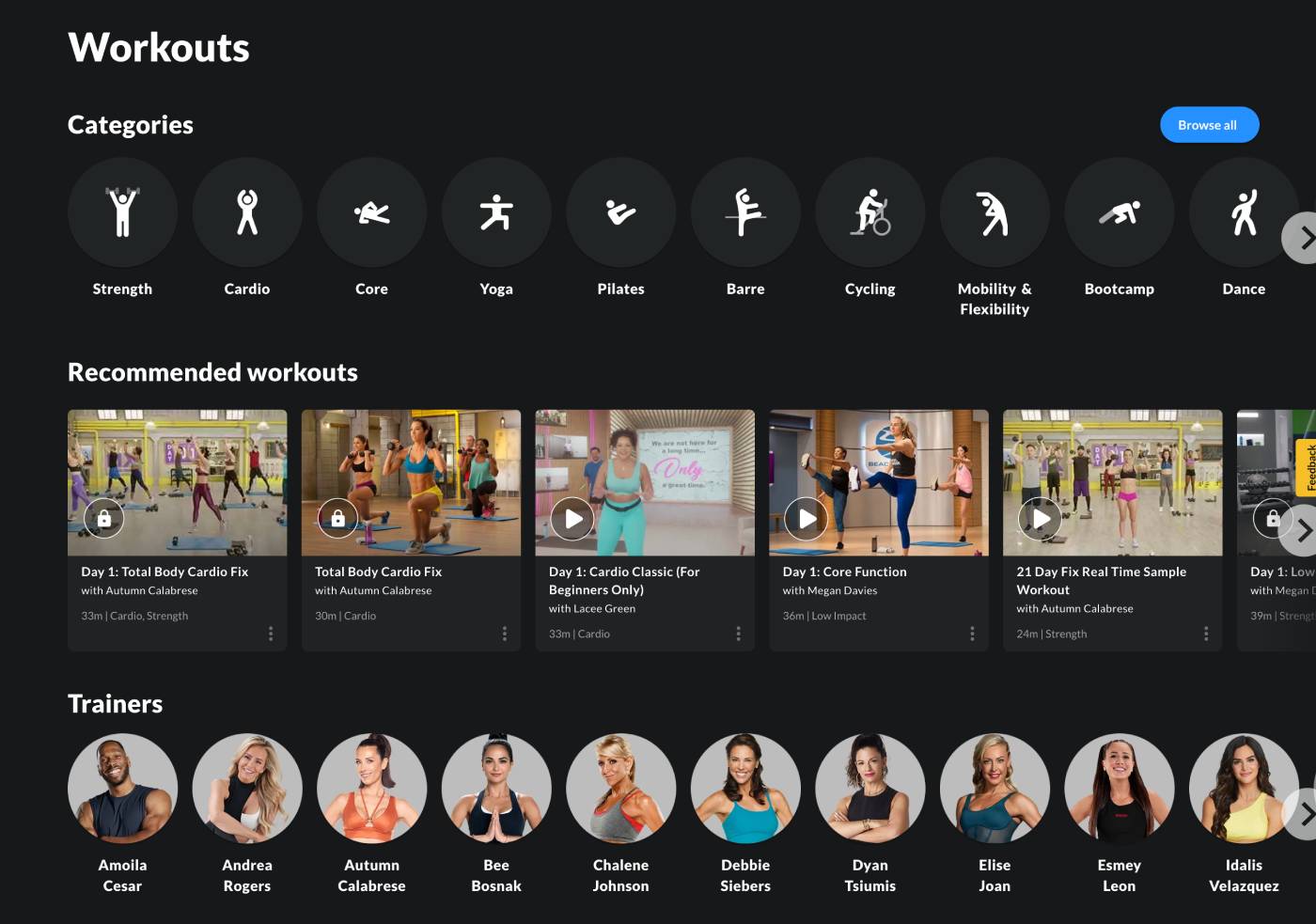
Sweat App and BODi occupy different ends of the fitness-app spectrum: Sweat is a lean, structured strength-and-HIIT platform built around progressive weekly programmes, while BODi – Beachbody’s rebrand – is an enormous content library that bundles in nutrition guidance alongside iconic programmes like Insanity, P90X and 21 Day Fix. On raw scores, Sweat wins: 7.4 vs 7.3/10. But the story is more nuanced than the gap suggests.
BODi is the only platform in the Her Daily Fit comparison series to include a full nutrition system in its subscription – and for women in perimenopause who know that body composition is as much about eating as exercise, that matters. Sweat, meanwhile, holds the series record for Programme Structure (10.0/10) and UX (9.5/10). If you want the best-organised workout app available, nothing in this series touches it.
The critical caveat: neither platform scores well for Women Over 40 Specificity – both hit 6.5/10, the only tied category in this comparison. Neither has dedicated perimenopause or menopause programming, which means women with those specific needs should look at Pvolve or The Sculpt Society before settling here.
Overall winner: Sweat App – 7.4
Sweat wins on programme structure (best in series at 10.0), UX (9.5), muscle building, recovery and joint friendliness. It costs $44 less per year than BODi. Choose Sweat if your priority is a structured, well-tracked progressive programme.When BODi wins: nutrition plus workout in one subscription
BODi is the right choice if you want a nutrition programme (portion containers, recipe library, supplement guidance) bundled with your workouts. Its breadth of content is unmatched in this series, and the $19/month price point makes it cheaper than Sweat month-to-month.Caution: neither platform prioritises perimenopause
Both Sweat and BODi score 6.5/10 for Women Over 40 Specificity – the same tied score. Neither includes dedicated menopause programming or medically reviewed perimenopause content. If hormonal transition support is your primary concern, this comparison ends in a draw for the wrong reasons.Her Daily Fit scoring breakdown
All scores are from independent Her Daily Fit assessments using nine weighted categories. The weighting reflects what matters most to women in their 40s and 50s: time, muscle, hormonal relevance, joints and recovery together account for 67% of the total score.
| Category | Weight | Sweat App | BODi | Winner |
|---|---|---|---|---|
| Time Efficiency | 15% | 7.5 | 8.5 | BODi |
| Muscle Potential | 15% | 8.1 | 8.0 | Sweat |
| Women Over 40 Specificity | 15% | 6.5 | 6.5 | Tied |
| Joint Friendliness | 12% | 6.5 | 5.5 | Sweat |
| Recovery Compatibility | 10% | 8.0 | 6.0 | Sweat |
| Programme Structure | 10% | 10.0 ★ | 7.5 | Sweat |
| Value for Money | 8% | 8.0 | 8.5 | BODi |
| UX and Design | 8% | 9.5 ★ | 8.0 | Sweat |
| Nutrition Integration | 7% | 6.5 | 8.0 | BODi |
| Overall | 7.4 | 8.1 | Sweat |
★ Best score in the Her Daily Fit comparison series for this category.
Time efficiency
BODi wins this category with 8.5/10 against Sweat’s 7.5/10. The BODi library includes dozens of 20-30-minute programmes designed for time-pressed schedules, and the sheer breadth of options means you can always find a workout that fits a narrow window. Iconic programmes like 80 Day Obsession and 21 Day Fix have built their following partly on the promise of fitting results into a daily 30-minute slot.
Sweat’s time-efficiency score reflects a slightly longer average session across its trainer-led programmes. Kayla Itsines’ Strength in 30 does exactly what the name suggests – but some of the more advanced Sweat programmes assume 40-45-minute sessions. That is still efficient by most standards, but BODi’s shorter-format content gives it a genuine edge here.
Muscle potential
Sweat edges the Muscle Potential category 8.1 to 8.0 – the narrowest margin in the entire comparison series. Both platforms provide meaningful progressive overload opportunities. Sweat’s strength programmes follow structured periodisation with dumbbell-based compound movements, while BODi includes dedicated hypertrophy-focused content such as Body Beast and the newer LiveToFail strength programmes. In practice, either platform can drive meaningful muscle maintenance in women over 40, who face progressive muscle loss of 3-8% per decade after age 30 according to research on resistance training and ageing (Westcott, 2012).
For women coming to either platform from a lower fitness base, both will produce visible results. For women with an existing strength foundation, Sweat’s structured periodisation gives it a marginal long-term advantage – the programme adapts predictably, and progress tracking across sessions makes it easier to apply progressive overload intentionally.
Joint friendliness
Sweat leads 6.5 vs BODi’s 5.5. BODi’s flagship legacy programmes – Insanity, P90X, and T25 – are genuinely high-impact, involving jumping, plyometrics and rapid direction changes. Filtering the library for low-impact options requires manual effort; there is no joint-safe programme pathway. Sweat also includes HIIT content, but its broader programme mix skews more toward controlled resistance training, and Strength in 30 in particular is manageable for women with mild joint sensitivity.
Neither score is strong in absolute terms. Both platforms fall well short of the joint-friendliness benchmark set by Pvolve (9.5) and The Sculpt Society (9.0). Women with significant joint issues should consider those platforms as a primary option and return to Sweat or BODi once they have rebuilt a joint-safe foundation.
Women over 40 specificity
This is the only category in this comparison to end in a tie: both Sweat and BODi score 6.5/10. Neither platform offers dedicated perimenopause or menopause programming, medically reviewed hormonal transition content, or community spaces specifically for women navigating midlife health changes.
BODi’s nutrition system gives it partial credit here. The 21 Day Fix portion-control method and the broader Beachbody nutrition guides are not menopause-specific, but they do address the body composition challenges that accelerate during perimenopause – particularly the shift toward fat storage and away from muscle retention. Research on muscle and hormonal change in midlife women consistently identifies nutrition as central to outcomes alongside resistance training (Maltais et al., 2018). BODi’s integration of eating guidance acknowledges this, even without targeting it explicitly.
Sweat similarly lacks dedicated content but includes a range of trainer voices – Kelsey Wells, Chontel Duncan, Britney Dawn – who address general female health goals. The tie reflects a genuine equivalence: different partial solutions to the same gap.
Recovery compatibility
Sweat leads decisively here: 8.0/10 versus BODi’s 6.0/10. Sweat integrates recovery into its programme architecture in a way BODi does not. Every Sweat programme includes scheduled rest days, recommends low-intensity cardio as active recovery between sessions, and the app’s calendar view makes it clear when you are supposed to train and when you are supposed to rest. That structure matters for women in perimenopause, whose recovery capacity shifts with hormonal fluctuation – having a platform that builds rest in rather than leaving you to figure it out reduces overtraining risk.
BODi’s 6.0 reflects a platform where recovery content exists – there are dedicated recovery, yoga and stretching programmes in the library – but it is not systematically woven into the weekly programming cadence. If you are following 80 Day Obsession or 21 Day Fix, the calendar does include rest and recovery days. But the broader library approach means many users self-direct their recovery, which is less reliable. For women whose joints and sleep are already disrupted by hormonal change, the difference between a platform that schedules recovery and one that makes it optional is meaningful.
Programme structure
Sweat holds the series-best score here: Programme Structure 10.0/10. BODi scores 7.5.
Sweat’s perfect programme structure score reflects a platform engineered around weekly planning, progress tracking and workout logging. Every Sweat programme provides a rolling weekly calendar, each session within a structured periodised block, with weight and rep logging that informs future sessions. The habit-formation architecture is among the most sophisticated in the consumer fitness space – research suggests that structured scheduling and implementation intentions are among the most reliable predictors of exercise adherence (Rhodes et al., 2019).
BODi’s 7.5 reflects a tension inherent to large libraries: the sheer volume of content can undermine the structure needed to follow a single programme consistently. The platform has improved its scheduling tools significantly in recent years, and flagship programmes like 80 Day Obsession include clearly periodised calendars. But the temptation to drift between programmes remains – and BODi’s content breadth makes that temptation harder to resist.
A closer look at Sweat
UX and design
Sweat scores 9.5/10 for UX and Design – the second-best score in the series for this category. BODi scores 8.0.
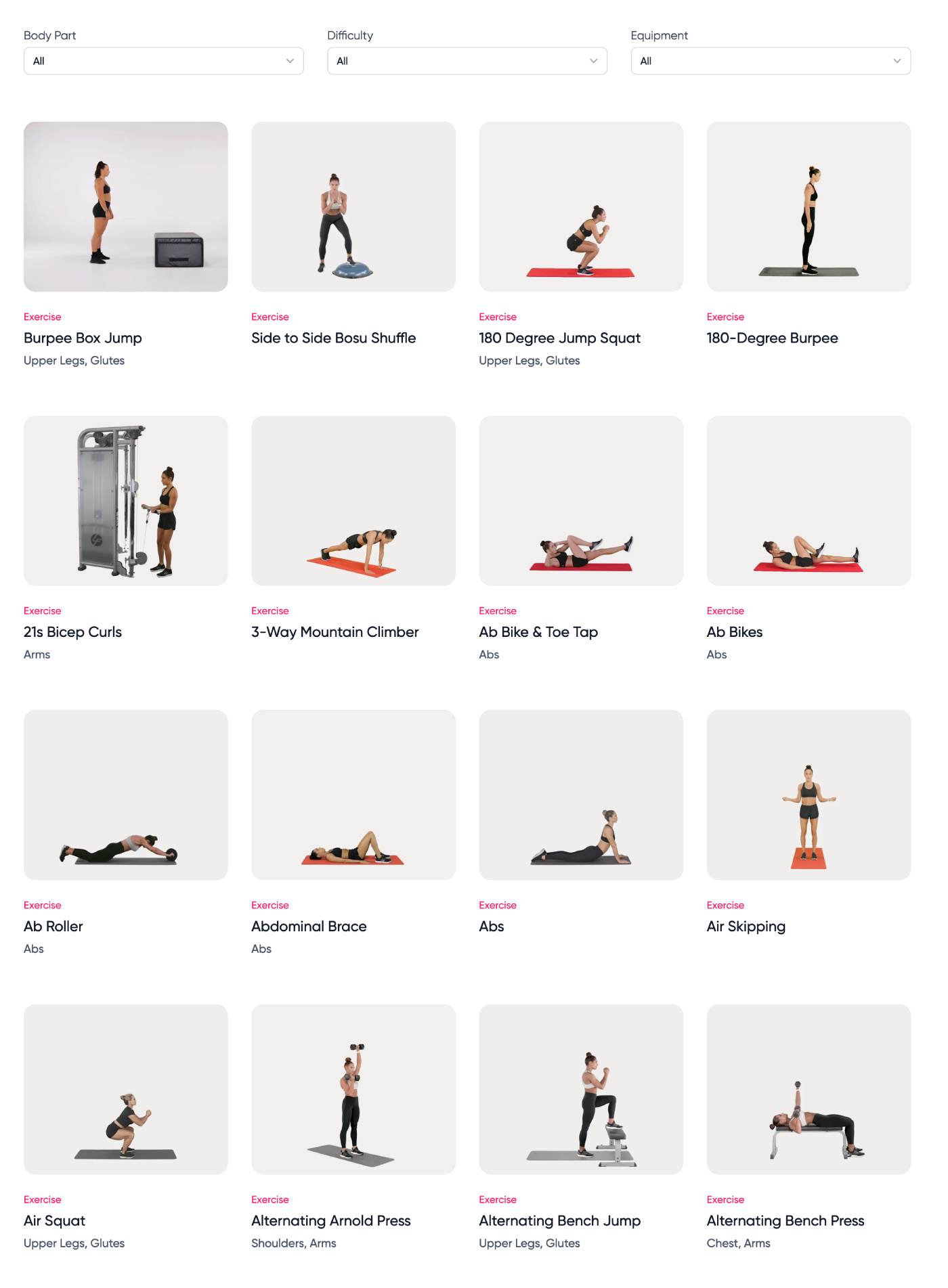
Sweat’s 9.5 reflects consistently strong app design: intuitive navigation, seamless mobile experience, clean visual hierarchy, and a workout logging flow that does not interrupt the session. The interface feels designed by people who actually use it. The programme calendar view is one of the best in the category – at a glance you can see your week, your completed sessions, and what is coming. Equipment requirements are visible before you start, and the exercise demo videos load quickly and are shot clearly.
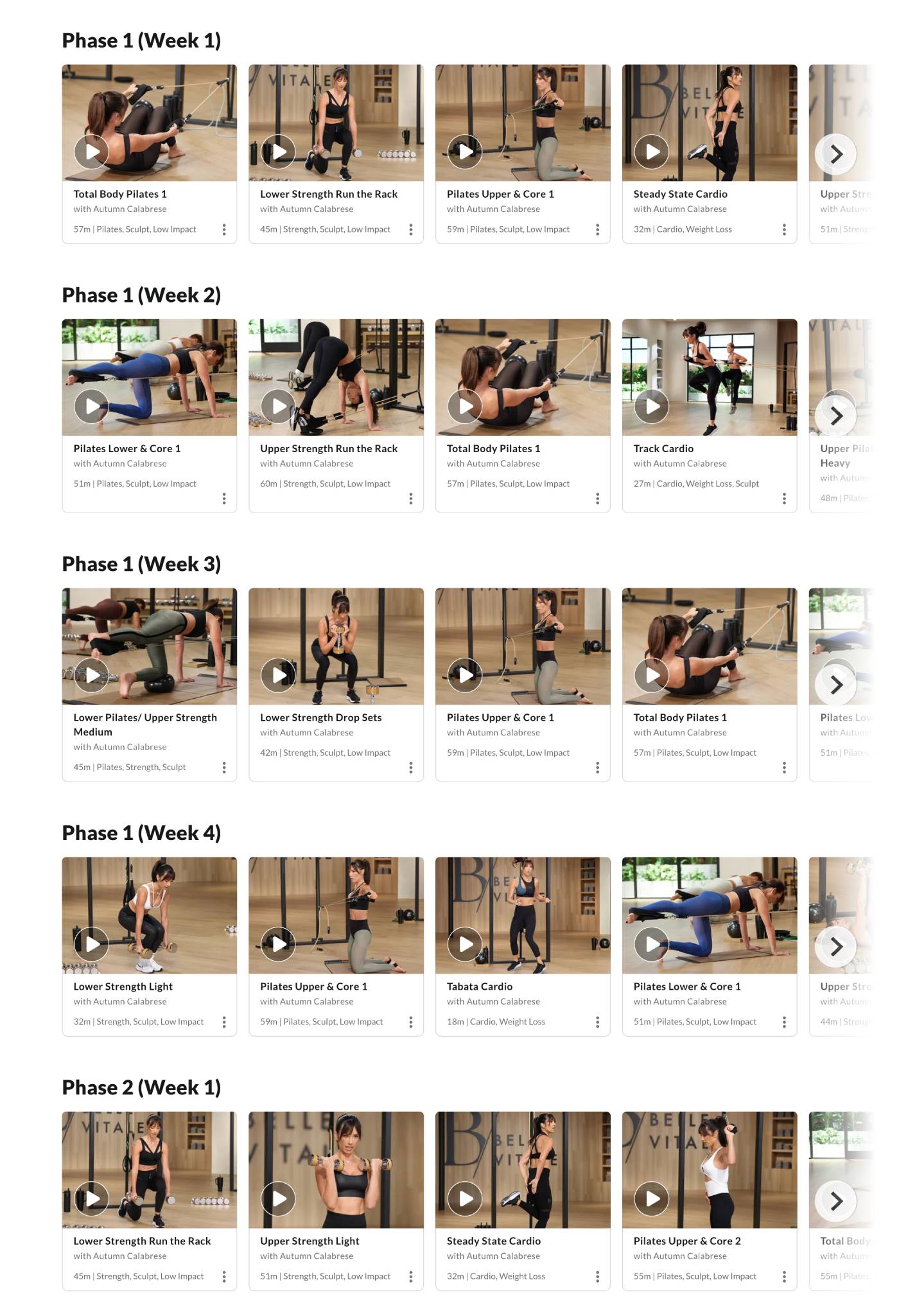
BODi’s 8.0 reflects a platform that has improved markedly from its early Beachbody On Demand days but still feels slightly less polished in navigation and search when compared to Sweat’s cleaner interface. Finding content requires more browsing, and the sheer volume of the library is a double-edged sword: more choice but more noise. For women who know what they want and are following a set programme, BODi is perfectly functional. For women who want the app to do the navigation for them, Sweat’s interface is the better experience.
A closer look at BODi
Nutrition integration
BODi leads here: 8.0/10 vs Sweat’s 6.5/10. This is BODi’s most distinctive advantage in the entire series. No other platform reviewed on Her Daily Fit includes a fully developed nutrition system as part of the base subscription. BODi’s offering includes:
- The 21 Day Fix and Portion Fix portion-control container systems
- Recipe libraries organised by calorie range and macronutrient ratio
- Shakeology and supplement guidance (though supplement purchase is additional)
- Eating plans that align with specific workout programmes
For women whose body composition goals are as much about diet as exercise – which the research consistently suggests they should be (Bauer et al., 2013) – this bundled model removes a significant friction point. You do not need a separate nutrition app or coach subscription.
Sweat’s 6.5 reflects the existence of some nutritional content – recipes and macro guidance – within the app, but the depth does not compare. Sweat positions itself as a workout platform that includes nutritional support rather than an integrated lifestyle system.
Pricing and value
BODi wins Value for Money 8.5 to 8.0, but Sweat is cheaper in absolute annual terms:
- Sweat: $134.99/year (approx. £107) – 7-day free trial on annual plan
- BODi: $179/year (approx. £142) – 7-day free trial on monthly plan; $19/month without annual commitment
BODi’s higher value score despite its higher price reflects what you get: a workout library considerably broader than Sweat’s, plus the fully integrated nutrition system. When you factor in that replacing BODi’s nutrition content with a standalone app or a nutrition coach would cost more, the effective value proposition strengthens significantly.
For women who will use the nutrition system, BODi at $179/year may represent better overall value. For women who want workouts only and already manage nutrition separately, Sweat at $134.99 is the leaner, cheaper option. Prices are as of March 2026 in USD; regional pricing may vary.
Personal testing and observations
I first used Sweat for approximately six months in 2019 when I was more focused on HIIT and found it excellent for that purpose. Returning in 2026 – after years of dumbbell-based strength work with Burn360 and Caroline Girvan – I completed the 7-day free trial and then subscribed for a full month, working through Strength in 30. The programme is three sessions per week, 30 minutes each, built around compound dumbbell movements. I was using 7kg dumbbells throughout, which I suspect was too light for my current level – I noticed feeling tighter and more defined, but I did not feel genuinely challenged the way I do with heavier loads. The exercise rotation was somewhat repetitive by week three: the same compound movements appearing week after week. That is probably the right approach for beginners learning form; it was less interesting at my training age. What I valued most was the structure itself – the weekly calendar, the logged sessions, the fact that the app tells you exactly what comes next. After years of open-ended training I had forgotten how much cognitive relief that provides.
On BODi I worked through four programmes across several months. 21 Day Fix: 28 days completed, 1.5kg lost, noticeably tighter arms and legs, but the jump-heavy cardio was a problem with my meniscus history and the on-screen modifications were not always clear enough to follow in real time. LIIFT4 was better suited – proper strength focus, less plyometric – though four sessions a week proved harder to stay consistent with than six. Belle Vitale I tested for three weeks: the Pilates-and-strength combination was genuinely different from anything else in the series, hitting muscles I had not been targeting the same way. I stopped purely because the sessions run 45-50 minutes and I know from experience I will not sustain that long-term.
Prices are as of March 2026 in USD; regional pricing may vary. I receive no affiliate commission from either platform. See our methodology →
Who should choose which
Choose Sweat if:
- You want the most structured, calendar-based workout app available – Sweat’s 10.0/10 programme structure score is unmatched in the series
- You train primarily for strength and want progressive dumbbell programming with clear weekly plans
- You already manage nutrition separately and want a lean workout-only subscription at $134.99/year
- UX matters to you – Sweat’s interface is the cleanest and most intuitive in the comparison series
- Recovery is a priority – Sweat builds rest days into its programme cadence rather than leaving you to self-direct
Choose BODi if:
- You want workout and nutrition guidance bundled in one subscription – BODi is the only platform in this series that includes a full nutrition system
- You prefer variety over structure and want access to a broad library rather than following one programme
- Month-to-month flexibility matters – BODi at $19/month is cheaper than Sweat without an annual commitment
- You have used BODi programmes before (21 Day Fix, P90X, Insanity) and want to return to familiar content
Consider alternatives if:
- Perimenopause or menopause support is your primary need – neither platform has dedicated hormonal transition programming. Pvolve (9.5/10 joint friendliness, women-over-40 focused) or The Sculpt Society are better choices
- Joint issues are significant – both Sweat (6.5) and BODi (5.5) score below average here
- Budget is the primary driver – FitOn’s free tier or Caroline Girvan’s free YouTube content offer genuine training value at no cost
Frequently asked questions
Is Sweat App or BODi better for women over 40?
Both platforms score 6.5/10 for Women Over 40 Specificity – the only tied category in this comparison. Neither has dedicated perimenopause programming. Sweat edges ahead overall (7.8 vs 7.3) because its superior programme structure and habit-building tools carry more practical value, but women specifically seeking menopause support should consider Pvolve or The Sculpt Society instead.
Does BODi include nutrition guidance?
Yes – and it is the only platform in this comparison series that bundles nutrition content directly into the subscription. BODi includes access to Beachbody’s portion-control nutrition programmes, recipe libraries, and supplement guidance. This is reflected in its Nutrition Integration score of 8.0/10 versus Sweat’s 6.5/10.
Which is cheaper: Sweat or BODi?
Sweat is cheaper annually: $134.99/year versus BODi’s $179/year, a saving of $44 per year. Monthly pricing reverses the comparison – BODi at $19/month is cheaper than Sweat’s $35.99/month if you do not commit annually. Factor in BODi’s included nutrition content when comparing effective value.
Is BODi suitable if I have joint pain?
BODi scores 5.5/10 for Joint Friendliness – one of the lower scores in the Her Daily Fit comparison series. The library includes high-impact programmes such as Insanity and P90X alongside lower-impact options, but there is no systematic joint-safe filtering tool. If joint health is a priority, Pvolve (9.5/10) or The Sculpt Society (9.0/10) are considerably better choices.
How does Sweat App’s programme structure compare to BODi?
Sweat scores 10.0/10 for Programme Structure – the highest score in the entire Her Daily Fit comparison series. BODi scores 7.5/10. Sweat provides detailed periodised weekly plans, calendar scheduling, progress tracking and workout logging that BODi’s broader content library does not fully replicate, though BODi’s flagship programmes such as 80 Day Obsession are well structured within themselves.
Can I try BODi or Sweat for free?
BODi offers a 7-day free trial on monthly plans. Sweat offers a 7-day free trial on its annual plan. Both trials require a payment method and will auto-renew unless cancelled before the trial period ends. Check the current trial terms on each platform’s website, as these occasionally change.
Also Compare
Research citations
- Westcott WL. resistance training is medicine. Current Sports Medicine Reports. 2012;11(4):209-216.
- Maltais ML, Desroches J, Dionne IJ. changes in muscle mass and strength after menopause. Reviews in Endocrine and Metabolic Disorders. 2018;10(4):237-251.
- Bauer J, Biolo G, Cederholm T, et al. PROT-AGE study group recommendations. Journal of the American Medical Directors Association. 2013;14(8):542-559.
- Rhodes RE, Yao CA. models accounting for intention-behaviour gap in physical activity. Psychology of Sport and Exercise. 2019;42:104-113.
- Chodzko-Zajko WJ, Proctor DN, Fiatarone Singh MA, et al. ACSM position stand on physical activity and older adults. Medicine & Science in Sports & Exercise. 2009;41(7):1510-1530.