
The Sculpt Society scores higher overall, 8.2 against 7.6, and is the stronger platform for joint-friendly training and perimenopause-specific programming. Form is the better pick if what you need most is short sessions and the app experience.
- Score 8.2 vs 7.6
- $24.99 vs $28.00
- Trial: 7 days vs 7 days
- Both tested hands-on
Quick answer: The Sculpt Society is the stronger overall platform for women over 40, scoring 8.2 against 7.6. It is ahead for joint-friendly training, perimenopause-specific programming and recovery between sessions. Form still wins for short sessions and the app experience, so it is the better choice if that is your priority. The two are level on muscle potential and nutrition integration.
The two platforms
Same nine weighted categories, two different women. Here is who each one is built for.
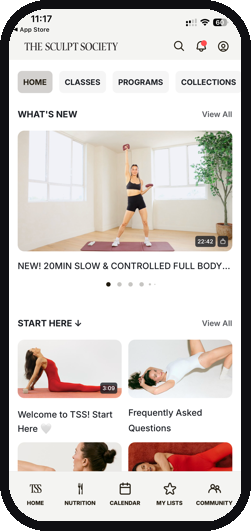
The Sculpt Society
WinnerLeads this comparison on joint-friendly training and perimenopause-specific programming, scoring 9 against 6.5 on Joint Friendliness.
- Low impact
- 15 to 35 min
- No equipment required
Choose The Sculpt Society if you:
- Perimenopausal and menopausal women who want a dedicated midlife programme
- Prenatal and postnatal women
- Beginners to intermediate exercisers
- Want joint-friendly training (Joint Friendliness 9 against 6.5)
- Want perimenopause-specific programming (Women Over 40 Specificity 6.6 against 5)
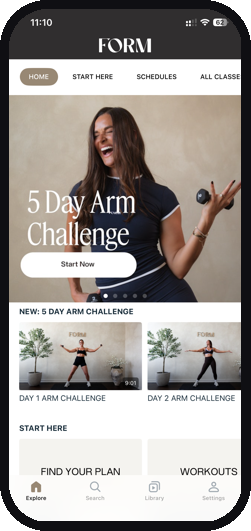
Form
Runner-upLeads this comparison on short sessions and the app experience, scoring 9 against 8.5 on Time Efficiency.
- Low impact
- 20 to 30 min
- No equipment required for
Choose Form if you:
- Women who want effective strength and Pilates workouts in 30 minutes or less
- Beginners to advanced
- Prenatal and postnatal women
- Want short sessions (Time Efficiency 9 against 8.5)
- Want the app experience (UX and Design 9 against 8.5)
Inside The Sculpt Society and FORM
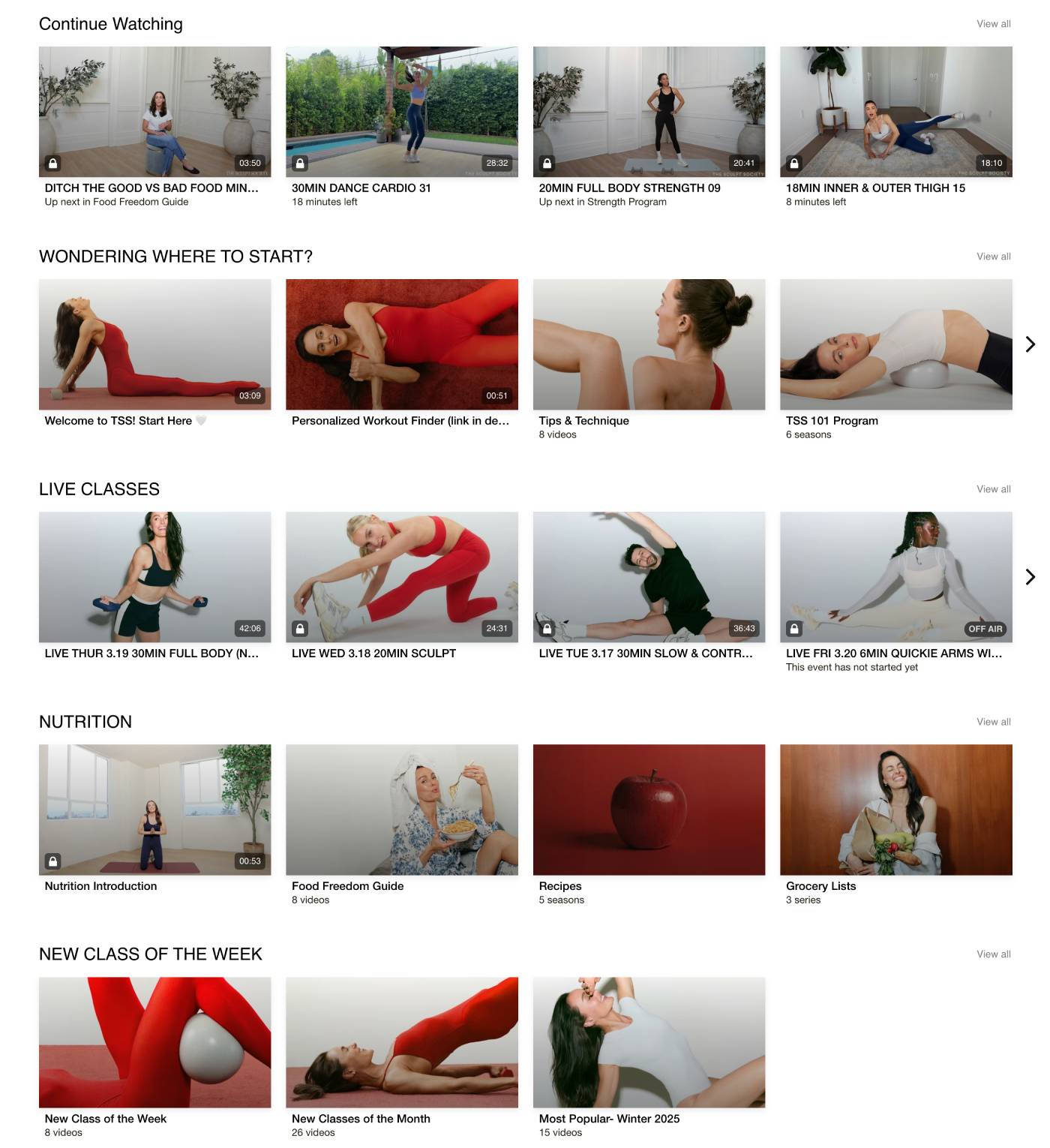
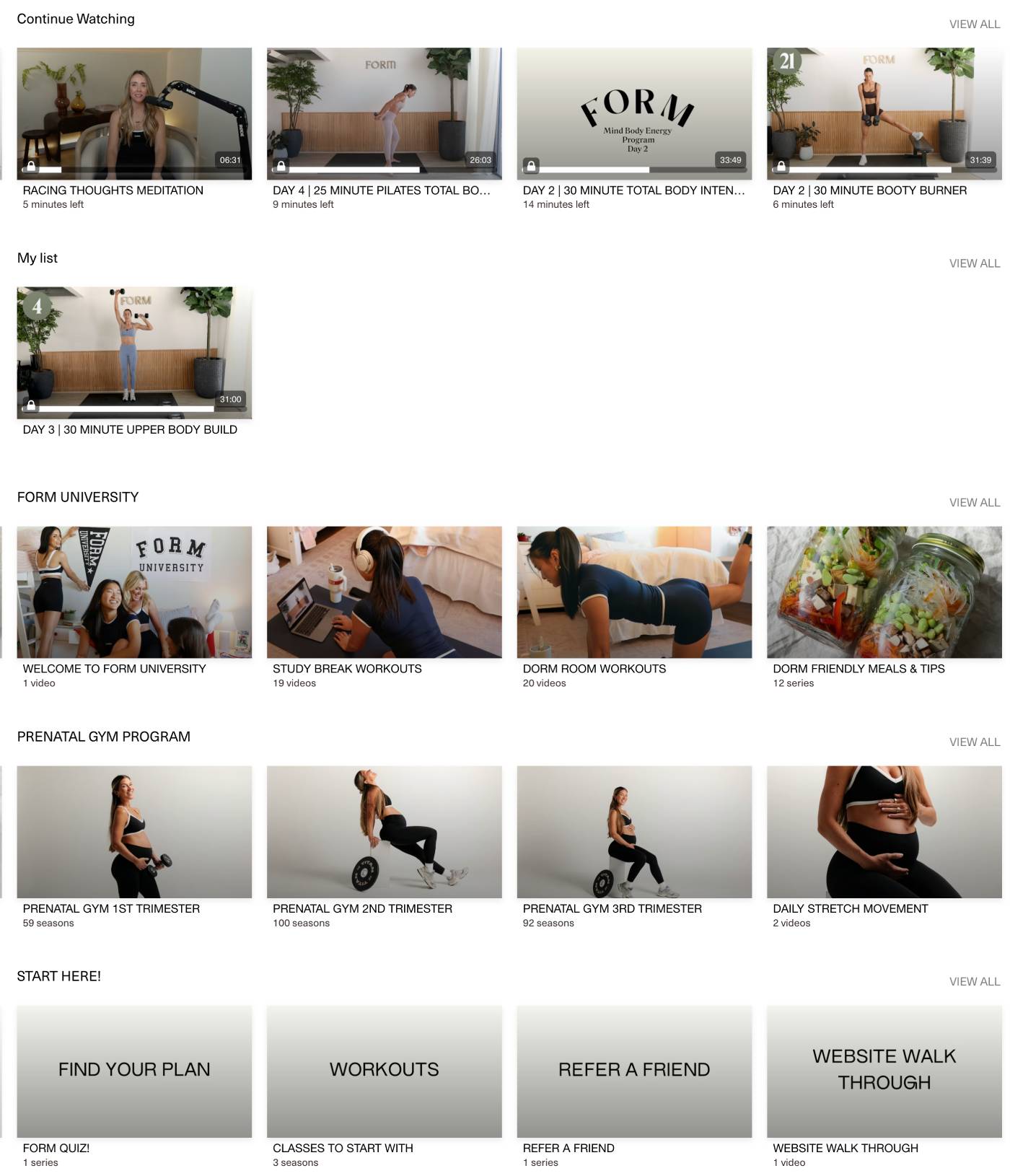
Two of the most beautifully designed fitness platforms available. Both under $30 a month. Both low-to-moderate impact. I tested them back to back, four weeks on The Sculpt Society, then three weeks on Form. Here is the honest comparison.
Reviewed by Katy, The Sculpt Society tested personally for 4+ weeks. Form tested personally for 3+ weeks immediately after. Prices last verified March 2026.
Bottom line in 30 seconds for women over 40
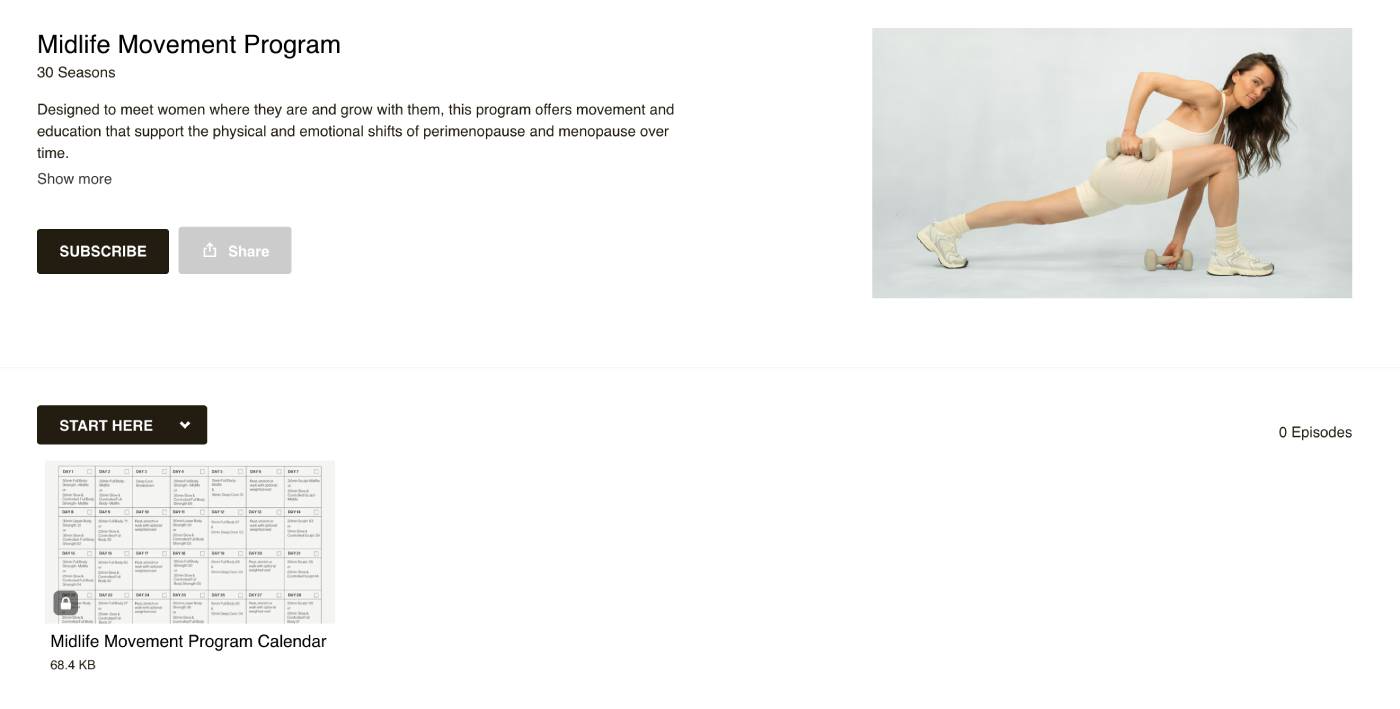
- . Overall Winner: The Sculpt Society (8.2) The Sculpt Society wins on Women Over 40 Specificity (6.6 / 10, second only to Pvolve across every platform reviewed here), Joint Friendliness, Recovery Compatibility, Programme Structure, and Value for Money. Its Midlife Movement Programme addresses perimenopausal symptoms directly, low energy, mood changes, joint sensitivity, and the platform’s low-impact-by-design format supports consistent training through hormonal fluctuation in a way that higher-impact alternatives cannot.
Form wins on UX and Design (9 / 10, the highest score of any platform reviewed on this site), Time Efficiency, and Muscle Potential. It is the platform I open most willingly, the one whose 30-minute sessions I look forward to, and the one that produced the most immediate visible results in my testing, a flatter belly, returning strength, real muscle soreness in new places, after just two weeks on the Form Method. If you are a healthy woman in your 40s with no significant joint issues or perimenopause symptoms, Form’s case is a serious one.
Form scored 6.5 / 10 for Joint Friendliness, the lowest joint score of any boutique platform in this comparison series. It has no structured injury modification programme, no dedicated low-impact track for women managing knee or hip problems, and no guidance for joint-sensitive exercise. Oestrogen decline during perimenopause also affects tendon and ligament integrity, increasing injury risk in midlife.[1] If you are managing a joint issue or want joint protection built into the programme design rather than self-directed, The Sculpt Society’s 8.5 / 10 joint score and dedicated modification tracks are the appropriate choice.
At-a-glance comparison
| Feature | The Sculpt Society | Form |
|---|---|---|
| Price per month | $24.99 | $28.00 |
| Price per year | $179.99 (~$15/mo) | $180.00 (~$15/mo) |
| Free trial | 7 days (full access) | 7 days (full access) |
| Training style | Dance cardio, sculpt, strength, Pilates-inspired, low-impact | Strength, Pilates, sculpt, barre, HIIT, gym-based (Brynley Joyner) |
| Session length | 20-45 min; most sculpt/strength 20-35 min | 5-50 min; sweet spot ~30 min |
| Impact level | Low throughout, no jumping, dance and sculpt-led | Low to moderate, Pilates low, strength moderate, HIIT available |
| Equipment | Mat + light weights; most classes equipment-free | Mat + dumbbells (5-6.5kg recommended); no equipment required for many classes |
| Lead trainer | Megan Roup (+ rotating team) | Sami Clarke + 3 specialists (Grace Freyre, Brynley Joyner, Calyn Brooke) |
| Perimenopause content | Dedicated 4-week Midlife Movement Programme; symptom-aware design throughout | None, no hormonal health education, no symptom-based classes |
| Joint safety | Low-impact by design; dedicated ankle, leg and no-kneeling modification tracks | No structured injury modifications; equipment-free filter available |
| Prenatal/postnatal | 40-week prenatal programme by trimester | Dedicated pre/postnatal trainer (Calyn Brooke, NASM-certified) |
| Nutrition | RD-led Food Freedom guide; intuitive eating approach | Dietitian-approved protein-focused recipes, meal plans, grocery lists, in-app hub |
| Mindfulness | Meditation and recovery classes | Guided meditations, affirmations, Future Self visualisation (Roxie Nafousi) |
| Library size | 1,000+ on-demand workouts | Hundreds of on-demand classes; smaller but monthly new programmes added |
| Women Over 40 Specificity* Her Daily Fit | 6.6 / 10, Midlife Movement Programme, symptom-aware design | 4.8 / 10, no perimenopause content or injury modifications |
| Her Daily Fit score | 8.2 | 7.6 |
*Women Over 40 Specificity is a scored category in the Her Daily Fit methodology (weighted 15%), assessing perimenopause/menopause programme depth, clinical credibility, specialist content breadth, symptom-aware workout design, and modification quality.
Full score breakdown
| Category | Weight | The Sculpt Society | Form | Winner |
|---|---|---|---|---|
| Time Efficiency | 15% | 8.5 | 9 ✓ | Form |
| Muscle Potential | 15% | 7 | 7 ✓ | Tie |
| Women Over 40 Specificity* | 15% | 6.6 ✓ | 4.8 | The Sculpt Society |
| Joint Friendliness | 12% | 9 ✓ | 6.5 | The Sculpt Society |
| Recovery Compatibility | 10% | 9 ✓ | 8 | The Sculpt Society |
| Programme Structure | 10% | 9 ✓ | 8 | The Sculpt Society |
| Value for Money | 8% | 8.5 ✓ | 8 | The Sculpt Society |
| UX and Design | 8% | 8.5 | 9 ✓ | Form |
| Nutrition Integration | 7% | 8 | 8 | Tie |
| Overall Score | 100% | 8.2 | 7.6 | The Sculpt Society |
*Women Over 40 Specificity is scored 0-10 across five sub-criteria: dedicated hormone health content, clinical credibility, specialist content breadth, symptom-aware workout design, and modification quality. The Sculpt Society 9.5, Midlife Movement Programme, perimenopause symptom-aware design, dedicated modification tracks. Form 5.5, no perimenopause content, no injury modifications, no hormonal health education.
Time efficiency (Form 9, The Sculpt Society 8.5: Form wins)
Form earns 9.0 because its sweet-spot session length of around 30 minutes is genuinely that, the warm-up and cool-down are integrated rather than added on, and the filter system makes it easy to find a 20-minute session when the day is short. The variety across four trainers means the 30-minute format doesn’t feel repetitive. The 14-day Form Method structure also removes the daily decision of what to do, which is itself a time efficiency gain for users who spend ten minutes choosing before they start.
The Sculpt Society’s 8.5 reflects the same session-length range, most sculpt and strength sessions run 20-35 minutes, but the dance cardio format can run longer, and the Midlife Movement Programme includes some 40-minute sessions. Both platforms have no filler: the time on screen is working time. The 0.5-point gap is real but narrow. For women with a genuine 20-minute window daily, both platforms have appropriate options.
Muscle potential (Form 7, The Sculpt Society 7: Form wins)
Form’s 7.5 reflects the compound dumbbell structure of its signature sessions, movements that work multiple muscle groups simultaneously, with progressive loading across the 14-day Form Method that produces real muscle soreness in the places you notice. After two weeks on the Form Method, I had visible muscle definition I hadn’t had since before a period of training inconsistency. The four-trainer format also adds genuine variety in muscle demand: Brynley Joyner’s gym-based sessions provide a different kind of muscular challenge than Sami Clarke’s sculpt work.
The Sculpt Society’s 7.0 reflects a lower ceiling on resistance load. The sculpt and strength sessions do build and tone, but the progressive overload structure is less systematic than Form’s and the working weights typically stay in the 2-5kg range. For women whose primary goal is visible muscle definition, rather than low-impact daily movement or joint-safe training, Form’s compound dumbbell approach delivers more on that specific metric. The 0.5-point gap is accurate: meaningful but not decisive.
Women over 40 specificity (The Sculpt Society 6.6, Form 4.8: The Sculpt Society wins)
The 4.0-point difference on Women Over 40 Specificity is the largest single-category gap in this comparison, and it explains most of the 0.9-point overall margin. The Sculpt Society’s 9.5 is earned: the Midlife Movement Programme is a dedicated four-week programme designed around the symptoms women over 40 actually report, low energy, mood changes, joint sensitivity, rather than a generic programme re-labelled for the demographic. Megan Roup built this programme from the specific physical experience of women in hormonal transition. The low-impact-by-design format means training is sustainable through the kinds of fluctuation that make high-intensity sessions inconsistent. This score is second only to Pvolve’s 10.0 across the entire Her Daily Fit comparison series.
Form’s 5.5 is not a criticism of the platform. It is an accurate description of what is not there. Form is an excellent fitness platform that does not know or address the hormonal context of its users’ lives. No perimenopause programme, no symptom-based classes, no hormonal health education, no doctor advisory panel. What Form does have, compound resistance training, Pilates content, mindfulness section, is physiologically relevant to perimenopause without being directed at it. Research links resistance training with muscle retention and bone density maintenance as oestrogen declines;[4] Pilates has been shown in clinical trials to reduce menopausal symptoms including mood, physical and sleep-related complaints.[5] The physiological benefit is real. The explicit perimenopause guidance is absent.
For women over 40 and over 50: both platforms are useful. The Sculpt Society is the safer default for anyone navigating perimenopause, post-menopause, or joint changes. Form is the better choice for healthy women who want the most effective daily fitness platform at this price point and don’t need perimenopause-specific scaffolding built in.
Joint friendliness (The Sculpt Society 9, Form 6.5: The Sculpt Society wins)
The 2.5-point gap on Joint Friendliness is the second largest difference in this comparison and the most practically significant for women managing any kind of joint sensitivity. The Sculpt Society’s 9.0 reflects its low-impact-throughout design: there are no jumping sections, no plyometric sequences, and no high-impact loading anywhere in the standard library. Its dedicated ankle injury, leg injury, and no-kneeling modification tracks are built into the platform navigation, not an afterthought. The dance cardio and sculpt format is inherently gentle on joints by design, not by adaptation.
Form’s 6.5 is the lowest joint score of any boutique platform reviewed on this site. Form’s sessions contain HIIT-adjacent movements in several programme tracks, and there is no structured injury modification programme, only an equipment-free filter that does not address joint impact specifically. During my three weeks of Form testing, two sessions required self-directed modification for movements that weren’t flagged as high-impact in the session description. For users who approach the platform with established joint awareness, this is manageable. For users relying on session metadata to assess appropriateness, the absence of systematic impact level indicators remains a real gap. Oestrogen decline during perimenopause reduces tendon and ligament integrity and raises injury risk;[1] that context makes the joint score difference between these two platforms a practical, not merely a theoretical, concern.
Recovery compatibility (The Sculpt Society 9, Form 8: The Sculpt Society wins)
The Sculpt Society’s 9.0 reflects how easy it is to train on every day without accumulating load. The low-impact format means recovery demand is minimal, there are no high-eccentric-load sessions producing the kind of muscle damage that requires 48-hour recovery windows. The lymphatic massage and recovery classes in the Lifestyle section are a genuine recovery support, not a token addition. For perimenopausal women managing variable sleep and energy, the ability to train consistently without worrying about whether today is “too soon” is a meaningful structural advantage.
Form’s 8.0 reflects a platform that includes rest days and recovery content, but where the HIIT-adjacent and compound dumbbell sessions do produce genuine muscle damage requiring recovery time. The 14-day Form Method has rest days built in, and the mindfulness section supports the psychological aspects of recovery. Brynley Joyner’s gym sessions are the most demanding recovery-wise; Pilates sessions with the other trainers are much more restorative. The Form platform gives you the tools to build an appropriate recovery week, but you need to direct that yourself.
Programme structure (The Sculpt Society 9, Form 8: The Sculpt Society wins)
Both platforms score well on Programme Structure, the 0.5-point gap reflects a narrow but real difference. The Sculpt Society’s 9.0 is supported by its explicit programme architecture: the Midlife Movement Programme, the 14-Day Strength Programme, the 40-week prenatal series, and dedicated recovery content all have clear start/finish points, progressive structure, and daily guidance. The onboarding quiz leads to a specific programme recommendation, and the daily plan removes the choice of what to do today.
Form’s 8.5 reflects a platform with an excellent entry structure, the 14-day Form Method is one of the cleanest programme onboardings tested in this series, but where the post-14-day experience becomes more self-directed. The weekly curated schedules help, but after completing the Form Method the path forward requires more active navigation than The Sculpt Society’s programme continuation system. The 0.5-point gap is real for long-term users more than for new ones.
A closer look at The Sculpt Society
UX and design (Form 9, The Sculpt Society 8.5: Form wins)
Form’s 9 / 10 UX and Design score is the highest of any platform reviewed on this site. The visual identity, warm neutrals, natural tones, typography that communicates care rather than urgency, affects how often you open the app. That is not a superficial observation: aesthetic design in fitness apps is associated with higher engagement and session frequency in adherence research. The filter tool is the best in category across every platform tested: trainer, duration, workout type, body focus, equipment, and fitness level can all be combined. The weekly curated schedules remove decision fatigue without locking you into a programme.
The Sculpt Society’s 8.5 is also excellent, Megan Roup’s visual aesthetic is clearly considered, the navigation is clean, and the platform experience feels warm and consistent. It loses half a point to Form primarily because Form’s filter granularity and visual design are a level above. One Form UX frustration worth noting: the quiz result arrives by email rather than on screen, which creates an odd friction precisely when new-user motivation is highest. That friction costs Form points elsewhere in the methodology but doesn’t affect the UX category, which assesses the in-platform experience.
A closer look at FORM
Nutrition integration (tied at 8 each)
This is the only category where both platforms score identically. The Sculpt Society’s nutrition content is framed through a Food Freedom, registered-dietitian-led intuitive eating approach, which reflects a deliberate philosophy about the relationship between women and food at midlife, rather than a calorie-tracking or macro-counting framework. Form’s nutrition is protein-focused and practical: TDEE-informed meal plans, grocery lists, anti-inflammatory recipes, and gut-friendly content, all within an in-app hub. Both approaches have real merit and real limitations.
For women over 40 specifically, adequate protein intake is the primary nutritional intervention against the muscle loss that accelerates as oestrogen declines.[3] Form’s explicit protein-first framing has a slight directional advantage on this specific criterion, but not enough to break the tie. The Sculpt Society’s intuitive eating approach has genuine merit for women who have spent decades in a difficult relationship with food-based restriction programmes, which describes a significant proportion of the over-40 demographic.
Pricing (essentially identical)
The annual cost difference between these two platforms is one cent: The Sculpt Society at $229.99 versus Form at $180.00. In practice, this comparison is not about price. Monthly, The Sculpt Society is $4 cheaper ($24.99 vs $28), but the annual plan is where both platforms are designed to be used, and the decision should be made entirely on content fit rather than cost.
Both platforms offer a 7-day free trial with full access, the same length and the same scope. Both auto-renew at the end of the trial period. For a one-cent annual price difference with a 7-day trial on both, there is no pricing reason to choose one over the other. The decision is entirely about whether perimenopause-specific content, joint friendliness, and movement format (TSS) outweigh better design, higher muscle stimulus, and superior time efficiency (Form).
Personal testing and observations
How I tested, back to back
These two platforms have the distinction of being the only pair in this comparison series that I tested consecutively rather than separately. I spent four weeks on The Sculpt Society, completing the Midlife Movement Programme, the 14-Day Strength Programme, several dance cardio sessions, and exploring the Lifestyle section, including a lymphatic massage class that became a regular fixture in my week. I then moved directly to Form.
I came to Form from The Sculpt Society, which matters for context. I had just finished four weeks of consistent movement and was in a more honest place than when I had started. I also came in at lower weights than usual, 6.5kg and 5kg, down from my normal 8.5kg, after a period of inconsistency before TSS. I was rebuilding, not pushing. I completed the 14-day Form Method programme, the 7-day Beginner Pilates series, and explored the mindfulness section throughout. Both platforms were tested as a real user, not as a casual browser. I am in my early 40s, perimenopausal, with a history of a meniscus injury.
The Sculpt Society testing
I went into the dance cardio sceptical, it is not a format I naturally reach for. Within the first session I realised the choreography is not the point; the ease is. The 30 minutes passed quickly in a way that 30 minutes of dumbbell work does not. The Midlife Movement Programme is structured around the symptoms women over 40 actually report, fatigue, mood changes, joint sensitivity, rather than being a generic programme re-labelled for the audience. The low-impact-throughout format means training is sustainable through the kinds of hormonal fluctuation that make high-intensity sessions inconsistent.
The lymphatic massage class in the Lifestyle section, a 10-minute guided technique, became a fixture in my week. Something I dismissed before trying. I still do it. That is the kind of content The Sculpt Society finds for you in places you would not have thought to look. Honest caveat: the dance format genuinely is not for everyone. The sculpt and strength content is accessible independently if dance feels like a barrier. The muscle-building potential is lower than a dedicated strength platform, the resistance load stays relatively modest and the progressive overload structure is less systematic than Form’s.
Form testing
I found Form through Instagram, landed on the website, and was sold before I had looked at a workout. The design did it, natural tones, wood, plants, a warmth that communicates something about how the platform thinks about its members. That first impression held up through three weeks of daily use. The first week of the Form Method produced that specific post-workout soreness that means something new has been asked of your body. By week two it had eased, and I had a clear sense of returning strength. My belly went flat. Two weeks later I started the Pilates series, which produced a different quality of tired, a pleasant lengthening, a sense of the body worked in a quieter way.
Form is now my favourite fitness app. I say that with complete sincerity and without it implying The Sculpt Society is worse. The two platforms serve different women well. Form serves healthy women who want effective daily training in a beautiful environment. The Sculpt Society serves women who need their platform to understand what forty-something feels like hormonally, structurally, and physically.
Who should choose which
Choose The Sculpt Society if:
- You are in perimenopause and want a programme that addresses the symptoms you are actually experiencing, not a repurposed generic programme with a new label. The Midlife Movement Programme is the reason to be here.
- You have joint sensitivity, a history of knee or ankle issues, or you simply cannot afford an injury setback and want a platform where the entire format is low-impact rather than modified.
- You want a dance and movement component alongside your strength and sculpt work, either because you know you enjoy it, or because you are open to discovering that you do.
- You want the second-highest Women Over 40 Specificity score in the Her Daily Fit methodology, at the same annual price as Form.
Choose Form if:
- You are a healthy woman in your 40s with no significant joint issues or perimenopausal symptoms, and you want the most enjoyable, best-designed fitness platform available at this price.
- You want to train across multiple modalities, strength, Pilates, sculpt, barre, without committing to a single approach, and you respond to beautiful design in a way that genuinely affects how often you open the app.
- You want the 14-day Form Method format’s psychological ease, short enough to commit to, long enough to feel real results, and a platform you will genuinely want to open every day.
- You want a Future Self meditation with actual behavioural psychology behind it alongside your workouts.
Who wins for…
Best for joint-friendly training
The Sculpt Society. Joint Friendliness 9 against 6.5.
Best for perimenopause-specific programming
The Sculpt Society. Women Over 40 Specificity 6.6 against 5.
Best for recovery between sessions
The Sculpt Society. Recovery Compatibility 9 against 8.
Best for a structured programme
The Sculpt Society. Programme Structure 9 against 8.
Best for short sessions
Form. Time Efficiency 9 against 8.5.
Best for value for money
The Sculpt Society. Value for Money 8.5 against 8.
Best for the app experience
Form. UX and Design 9 against 8.5.
Best for building and keeping muscle
Tied. Muscle Potential scores level at 7 out of 10 for both.
Best for nutrition guidance
Tied. Nutrition Integration scores level at 8 out of 10 for both.
Decision tree for women over 40
- You are managing perimenopause or menopause symptoms: The Sculpt Society. Women Over 40 Specificity 6.6 against 5.
- You have joint sensitivity or an injury history: The Sculpt Society. Joint Friendliness 9 against 6.5.
- Your sessions have to be short: Form. Time Efficiency 9 against 8.5.
- You want a structured programme rather than a library: The Sculpt Society. Programme Structure 9 against 8.
FAQ: The Sculpt Society vs Form
Is The Sculpt Society or Form better for perimenopause?
The Sculpt Society is the stronger choice for women in perimenopause. Its Midlife Movement Programme is designed around perimenopausal symptoms including low energy, mood changes and joint sensitivity. The platform’s low-impact-throughout format and 6.6 / 10 Women Over 40 Specificity score reflect genuine perimenopause-specific depth. Form has no hormonal health education, no symptom-based classes and no doctor panel. Its strength training and Pilates content is physiologically relevant to perimenopause, but it does not address the life stage directly.
Which is cheaper, The Sculpt Society or Form?
On an annual plan they are essentially identical: $179.99 (The Sculpt Society) vs $180 (Form), a one-cent difference. Monthly, The Sculpt Society is $4 cheaper ($24.99 vs $28). Both offer 7-day free trials with full access. The practical cost difference at annual billing is negligible.
Is The Sculpt Society or Form better for beginners?
Both are accessible to beginners. Form’s 14-day Form Method gives a structured daily schedule from day one with self-selected weights and clear trainer instruction. The Sculpt Society’s Midlife Movement Programme is specifically designed for women returning to or new to exercise, with low-impact sessions that reduce the barrier to starting. If you want a structured 14-day programme with a definite start and end point, Form’s entry is slightly more beginner-directed. If you want movement that feels immediately enjoyable rather than instructional, The Sculpt Society’s format has a lower psychological resistance to starting.
Can I do The Sculpt Society or Form with bad knees?
The Sculpt Society is the safer option for women with knee issues. It is low-impact throughout, with dedicated modification tracks for ankle and leg injuries and no-kneeling options. Form scored 6.5 / 10 for Joint Friendliness, no structured injury modifications, no dedicated joint-safe programme. Oestrogen decline during perimenopause reduces tendon and ligament integrity, increasing injury risk in midlife.[1] If joint protection needs to be designed into the programme rather than self-directed, The Sculpt Society is the appropriate choice.
Is The Sculpt Society or Form better for weight loss?
For perimenopausal women, both support body composition change. Form’s compound dumbbell sessions and protein-forward nutrition plan are more directly targeted at muscle-building and fat loss, after completing the Form Method, my belly noticeably flattened within two weeks. Research consistently links resistance training with the most effective outcomes for perimenopausal body composition change as oestrogen declines.[3] The Sculpt Society’s dance cardio and sculpt work supports cardiovascular health and muscle tone, and the Midlife Movement Programme addresses the hormonal context of weight change in perimenopause more directly. For general fat loss from a healthy baseline, Form’s approach has a slight edge.
What is the difference between The Sculpt Society and Form?
The Sculpt Society is built around dance cardio, sculpt and low-impact strength, with perimenopause-specific content scoring 6.6 / 10. Form is built around strength, Pilates, sculpt and barre by four specialist trainers, with best-in-class UX (9 / 10) and no perimenopause content (4.8 / 10). Annual cost is the same. For women in perimenopause or with joint concerns, The Sculpt Society wins clearly. For healthy women wanting the most enjoyable daily fitness platform at this price, Form makes a genuine case.
Also Compare
- Pvolve vs Sculpt, perimenopause specialist vs joyful movement; our highest-rated head-to-head
- CoCo vs Sculpt, 3-2-1 Pilates-led strength vs dance cardio sculpt
- CoCo vs Form, boutique Pilates hybrid vs multi-trainer strength platform
- Burn360 vs Pvolve, two other high-scoring boutique platforms for women over 40
Research citations
- Wright VJ, Schwartzman JD, Itinoche R, Wittstein J. The musculoskeletal syndrome of menopause. Climacteric, 2024;27(5):466 to 472. menopause MSK study. (Cited for: oestrogen decline’s effect on tendon and ligament integrity; increased injury risk in midlife.)
- Woods NF et al. Cortisol levels during the menopausal transition and early postmenopause: observations from the Seattle Midlife Women’s Health Study. Menopause, 2009. cortisol menopause study. (Cited for: cortisol sensitivity during perimenopause and the case for low-impact training.)
- Maltais ML et al. Differences in muscle strength and power between sedentary and trained perimenopausal women. 2018. resistance training RCT. (Cited for: resistance training and protein intake as primary interventions against muscle loss during perimenopause.)
- Mohebbi R, Shojaa M, Kohl M, et al. Exercise training and bone mineral density in postmenopausal women: an updated systematic review and meta-analysis. Osteoporos Int. 2023;34:1145 to 1178. bone density meta-analysis. (Cited for: resistance training as primary non-hormonal intervention for bone density maintenance after menopause.)
- Yiğit Kocamer M, Atilgan E. Investigating the effects of Pilates exercises on menopausal symptoms and sexual dysfunction in postmenopausal women: a randomized controlled trial. Medicine. 2025;104(23):e42689. Pilates menopause RCT. (Cited for: Pilates reducing menopausal symptoms including mood, physical and sleep-related complaints.)
This page may contain affiliate links. If you purchase through our links, we may earn a commission at no extra cost to you. This does not affect our scores, editorial independence or the opinions expressed.