
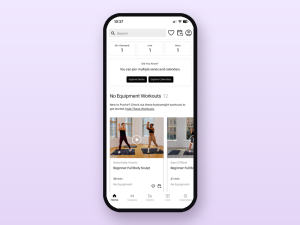

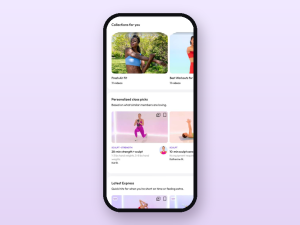

What workouts actually work during perimenopause?
During perimenopause, according to exercise physiology research, oestrogen levels fluctuate and decline. This may matter for fitness because According to exercise physiology research, oestrogen plays a role in muscle protein synthesis, bone mineral density. Connective tissue elasticity, and recovery speed, discuss with your healthcare provider how this affects your individual training approach. Simultaneously, according to research on the perimenopause transition, cortisol sensitivity may increase during this phase. According to Dr.
Stacy Sims, exercise physiologist and researcher whose work focuses specifically on female physiology and the menopause transition, writing in her 2022 book Next Level. High-volume endurance training and daily HIIT sessions that once produced results in younger women may trigger a different stress response during perimenopause, according to Dr. Sims, this can include elevated cortisol, disrupted sleep, and changes to fat distribution. Discuss whether this applies to your individual physiology with your healthcare provider.
Research on perimenopause and exercise does not suggest training less, but rather adapting training methods to align with hormonal shifts during this phase. As per a 2022 systematic review of 25 randomised controlled trials published in Menopause: The Journal of the North American Menopause Society. Structured resistance training significantly improved body composition, strength, and quality of life in perimenopausal and postmenopausal women.
According to a 2024 overview of reviews in BMC Women’s Health, covering 17 systematic reviews and 8,983 women, there is some evidence that yoga and, to a lesser extent, aerobic exercise ease menopause symptoms, though the authors found insufficient evidence to recommend any single form of exercise for a specific symptom. Resistance training earns its place on this page for muscle, bone and body composition rather than for symptom relief.
The fitness industry has not caught up. Most online workout platforms are built for younger women on the metabolic upslope: high volume, high frequency, high intensity. They work, for a time, until the metabolic context changes.
This is a key distinction in how fitness content addresses women in perimenopause: it treats them as a subcategory of “women over 40” in need of “low-impact exercise,” rather than understanding that the specific hormonal environment of perimenopause may respond well to specific workout methodologies that align with cortisol sensitivity during this phase. Discuss the right approach for you with your healthcare provider and declining oestrogen rather than against them.
Which four workout approaches does the research support?
Resistance training using compound, multi-joint movements is the single highest-priority intervention. Oestrogen directly supports muscle protein synthesis. As oestrogen declines, the stimulus required to trigger adaptation increases.
Compound movements, squats, deadlifts, pressing patterns, rowing patterns, place mechanical tension on large muscle groups in the way that single-joint exercises do not. Three sessions per week is a meaningful threshold: less than this, the stimulus erodes; more than this, without proportional recovery, cortisol burden increases.
Low-impact functional movement addressing pelvic floor, deep core, and hip stability becomes necessary rather than optional. Oestrogen deficiency affects connective tissue elasticity and pelvic floor muscle tone.
Conventional strength training does not address these structures. Pilates, yoga, or dedicated pelvic floor work targets the specific structures most affected by oestrogen decline. One to two sessions per week is sufficient when combined with proper resistance training intensity.
Moderate-intensity cardiovascular exercise without daily volume maintains cardiovascular health and metabolic flexibility. Daily cardio or HIIT, combined with resistance training on top, can push cortisol burden past the point of productive stimulus and into maladaptive stress response. One to two sessions per week of 30-45 minute moderate walking, cycling, or swimming is appropriate for most perimenopausal women. This is not “avoid cardio” advice; it is “avoid daily cardio without recovery” advice.
Intentional recovery days are not failure to train. They are where adaptation happens. Perimenopausal women recover more slowly than younger women because oestrogen decline affects tissue repair speed and sleep quality.
Two full rest days or light-activity days (easy walking, gentle stretching, nothing) per week are evidence-supported. Training seven days per week treats recovery as optional. For women navigating hormonal transition, it is mandatory.
How do the top perimenopause workout programmes compare?
Eight perimenopause workout programmes ranked on how well each accounts for a cycle that is still changing, and how good each is to use. Hormone awareness and ease of use are the two scores the ranking is built from, weighted 60/40. Overall is the weighted score across all nine criteria. All three update live from each programme’s own review.
| Rank | Programme | Hormone awareness 60% | Ease of use 40% | Overall | Testing tier | Best for | Not ideal for | Free trial |
|---|---|---|---|---|---|---|---|---|
| 1 | Pvolve | 8/10 | 8.5/10 | 8.3/10 | Fully tested | Clinically studied low-impact strength with a dedicated menopause programme | Women wanting measurable load progression | 14 days, card required |
| 2 | Obé Fitness | 7/10 | 9.5/10 | 7.5/10 | Fully tested | Cycle tracking and cycle-synced suggestions, easiest platform to sustain | Women who need real bone or pelvic floor work | 7 days |
| 3 | The Sculpt Society | 7/10 | 8.5/10 | 8.2/10 | Fully tested | Cycle syncing, symptom-targeted classes and hormone-driven education | Women needing maximum bone loading | 7 days |
| 4 | BODi | 7/10 | 8.5/10 | 8.0/10 | Fully tested | An explicit cortisol and blood-sugar approach plus a hormone programme | Women with sensitive joints using the wider library | 7 days, monthly only |
| 5 | Flipping 50 | 7/10 | 8/10 | 7.8/10 | Data profile | Programming staged for perimenopause rather than folded into menopause | Women wanting in-app cycle tracking | None published |
| 6 | Menovation | 8/10 | 6.5/10 | 7.7/10 | Fully tested | A built-in cycle and symptom tracker and a stage quiz that adapt | Women who want a polished interface | 8 days |
| 7 | Owning Your Menopause | 9/10 | 5/10 | 7.3/10 | Fully tested | Deepest HRT, hormone and symptom education plus specialist GP access | Women wanting heavy progression or a modern app | 14 days |
| 8 | Peloton | 7/10 | 7.8/10 | 7.3/10 | Fully tested | Cortisol, sleep and oestrogen decline addressed in the design | Women wanting a perimenopause-first platform | 30 days |
How should you structure your perimenopause training week?
The research-supported template for a perimenopausal woman training four to five days per week looks like this: three sessions of resistance training using compound, multi-joint movements. One session of mind-body or low-impact functional work such as yoga, Pilates, or dedicated mobility; one session of moderate cardiovascular exercise lasting no more than 30-45 minutes. This leaves two full rest or light-activity days, which are not optional, recovery is where the adaptation happens.
Why this structure aligns with perimenopause physiology: The three resistance sessions provide the mechanical loading stimulus that muscle and bone tissue require without becoming so frequent that accumulated fatigue and cortisol burden become counterproductive. The low-impact session addresses the pelvic floor, deep core, and hip stabilisers that are most vulnerable to oestrogen decline.
The single moderate cardio session maintains cardiovascular health and metabolic flexibility without the daily volume that can push cortisol elevation beyond the adaptive threshold. The two recovery days are not negotiable: muscle protein synthesis happens during recovery, connective tissue repair happens during recovery. And the nervous system downregulation that supports sleep quality happens during recovery.
Which perimenopause programmes rank highest?
Pvolve: low-impact strength built for a changing cycle
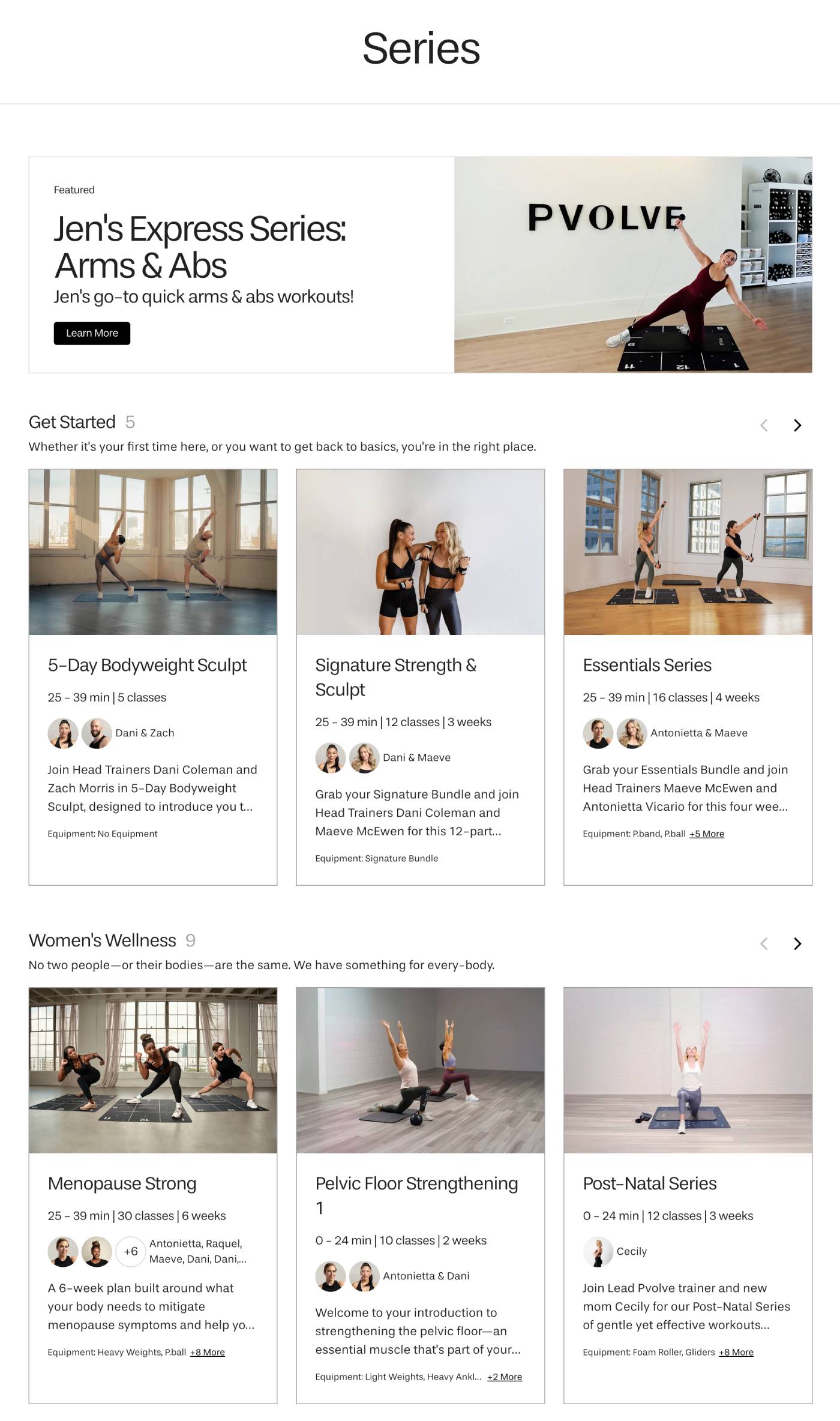
Multi-planar, constant-tension work builds muscle without the cortisol spike that heavy bilateral lifting brings.
Pvolve is a functional fitness streaming platform developed in collaboration with a Clinical Advisory Board including physical therapists, gynaecologists, and exercise physiologists. Its method uses rotation, lateral loading, and controlled hip hinging combined with constant-tension equipment, delivering strength stimulus while managing cortisol response during the perimenopause transition. Always check with your doctor before starting a new programme.
This score reflects perimenopause-specific criteria: cortisol management, joint safety, and functional strength backed by clinical evidence. Women who prioritise heavy load progression over multi-planar movement would rank the programmes differently.
Pvolve’s method works specifically because it produces muscle stimulus without loading the central nervous system with the cortisol burden that bilateral compound lifts can trigger during perimenopause. The 20-30 minute session length is important here: it sits within a range that may manage cortisol response more effectively. Meaning stimulus occurs without the systemic stress response that longer sessions generate when cortisol sensitivity is elevated.
The proprietary equipment, the p.band and gliders, creates constant tension through the entire range of motion. This is mechanically different from dumbbells or barbells where tension peaks only at certain points in the lift; the continuous tension produces muscle activation that justifies the session length.
The movement patterns specifically target the structures most affected by oestrogen decline: the glutes, hip stabilisers, and posterior chain. Oestrogen directly supports muscle protein synthesis in the large lower-body muscle groups. As oestrogen declines, these muscles lose density faster than others, and the metabolic consequence is significant (muscle drives resting metabolic rate).
Pvolve’s movement vocabulary, side-lying hip work, standing lateral loading, glute-focused patterns in multiple planes, directly addresses this vulnerability. The pelvic floor and endometriosis-specific sections address other oestrogen-sensitive tissues that conventional strength training ignores entirely.
Tested by Katy Cole, perimenopause: Two months in, this was the first programme that felt designed around my body’s actual state rather than asking me to push through it. The constant-tension movement left me energised rather than depleted, and the glute and hip work directly addressed joint instability I’d been noticing since my late 30s. On nights after Pvolve sessions I consistently slept better, which was the first time any programme had that effect rather than disrupting it.
Best for: Pvolve scored highest in our testing for women in perimenopause who want a scientifically supported, low-impact method that builds genuine functional strength without cortisol overload. It is particularly suitable for women with joint sensitivities or those recovering from injury, because the multi-planar approach builds the stability muscles around vulnerable joints rather than loading them with heavy bilateral movements. It is also the right programme for women who want their workout methodology to explicitly address hormonal context and the specific effects of oestrogen decline on muscle and tissue.
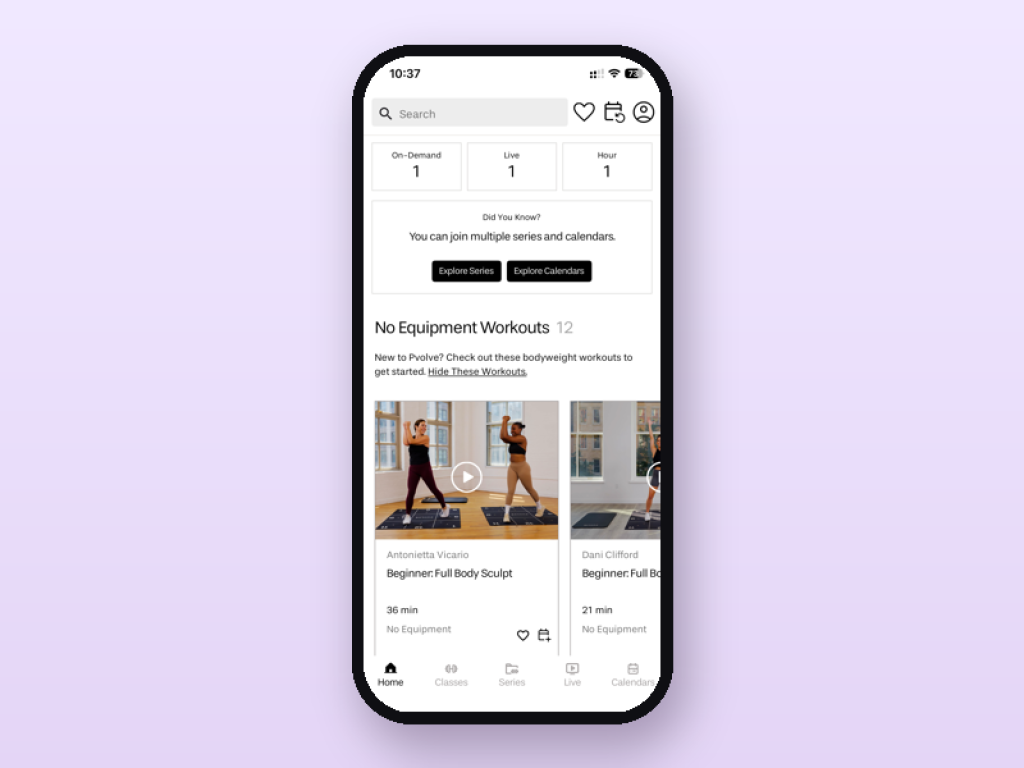
Test the method before you buy any equipment.
- Price
- $24.99/mo (web)
- Free trial
- 14 days, card required
- Note
- Card required, cancel by day 14
Trade-off: Pvolve’s multi-planar method prioritises functional movement over progressive loading, there is no built-in structure for tracking dumbbell weight increases across weeks. Women who want measurable strength progression via load numbers will find the method less structured than a dedicated progressive dumbbell plan. The proprietary equipment (p.band, gliders) adds upfront cost and is required to follow the method as designed. The 14-day trial is the cheapest way to find out: try Pvolve free.
Owning Your Menopause: the deepest hormone and HRT education
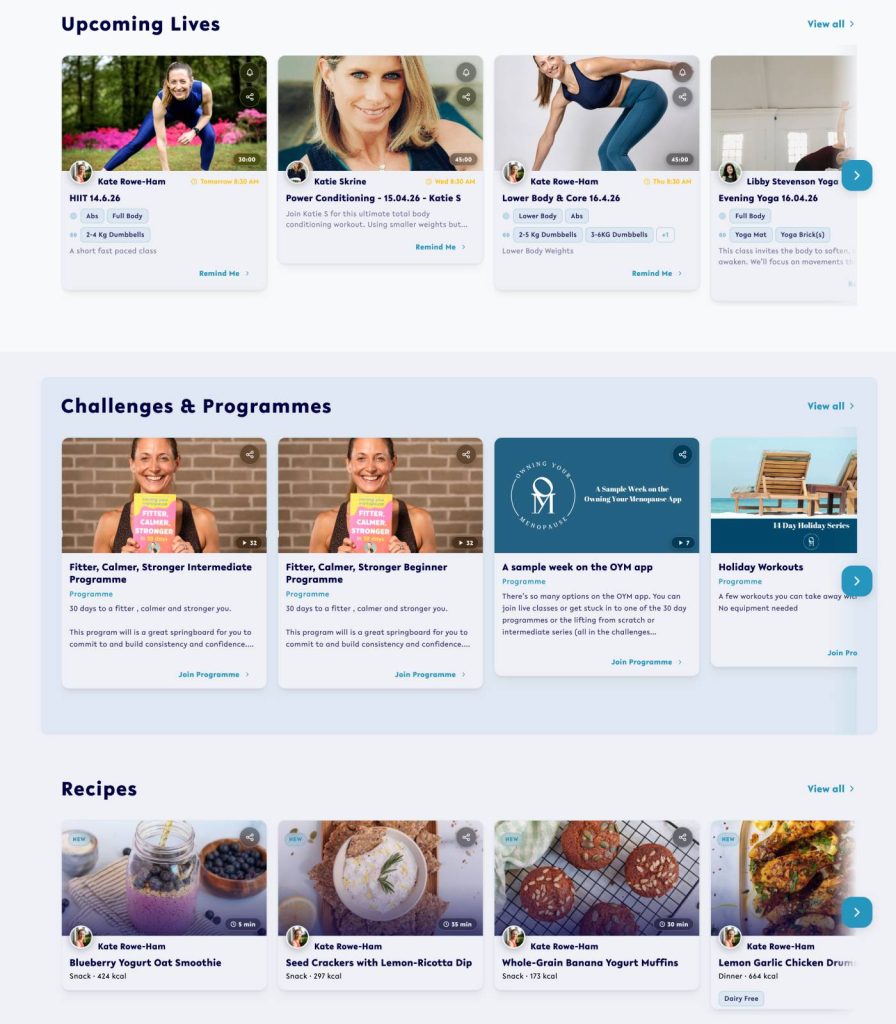
The strongest hormone and menopause content on this page by a clear margin, inside the most dated platform on it
I came to Owning Your Menopause at a specific point: shortly after fully recovering from a meniscus injury. Looking for something that would meet me where I was physically while also dealing with the perimenopause symptoms I was navigating. Kate Rowe-Ham’s name comes up consistently in the UK menopause fitness space, and GP access inside a fitness subscription was something I had not encountered anywhere else.
I have genuinely mixed feelings about this one, and I think that matters more than a tidy verdict would. I tested it across two periods, about eight weeks in total. Completing both the Beginner and Intermediate strength courses with Kate using 4 to 9 lb and 13 lb dumbbells, lighter than I normally train because of the knee. My focus was strength both times, so I cannot speak to the dance, yoga, rebound or HIIT content.
On the content this page ranks for, it is the best here. Kate is a Level 3 personal trainer and women’s health and menopause coach. Backed by a GP panel including Dr Katie Armstrong and Dr Eloise Elphinstone, with nutritional therapist Katie Skrine.
The HRT, hormone and symptom education is the most comprehensive I have tested, the community includes direct GP chat. And there are dedicated pelvic floor classes taught by a pelvic-health certified instructor. The face yoga is genuinely unique among platforms I have reviewed. Intensity is calibrated to the stage, and there is no jumping.
Tested by Katy Cole, perimenopause: The workout video production is noticeably basic for the price: home-studio filming. Limited lighting, no on-screen timers or next-exercise previews, and framing issues that wore on my motivation over the weeks. The app was slow to load and the calorie calculator threw repeated errors on my second attempt. None of that is fatal, but when you are trying to keep showing up, it is a real cost. That is why this sits sixth rather than first, and I would rather say so than pretend the education alone carries it.
Best for: women who want the education, the specialist GP access and the community more than a polished app, and who are early in the transition or coming back to training rather than chasing heavy progression.
Cost: £16.99/month on the web, or £159.99/year with two months free. Apple pricing in the UK is £17.99 monthly. US pricing is listed but I have not verified it.
full Owning Your Menopause review
Trade-off: the platform is dated and basic to use, which is the single biggest reason it is not higher. Strength coaching is solid for beginners and intermediates but tops out with no heavy overload, and bone loading stays light to moderate.
Obé Fitness: cycle tracking, and the best app here to use
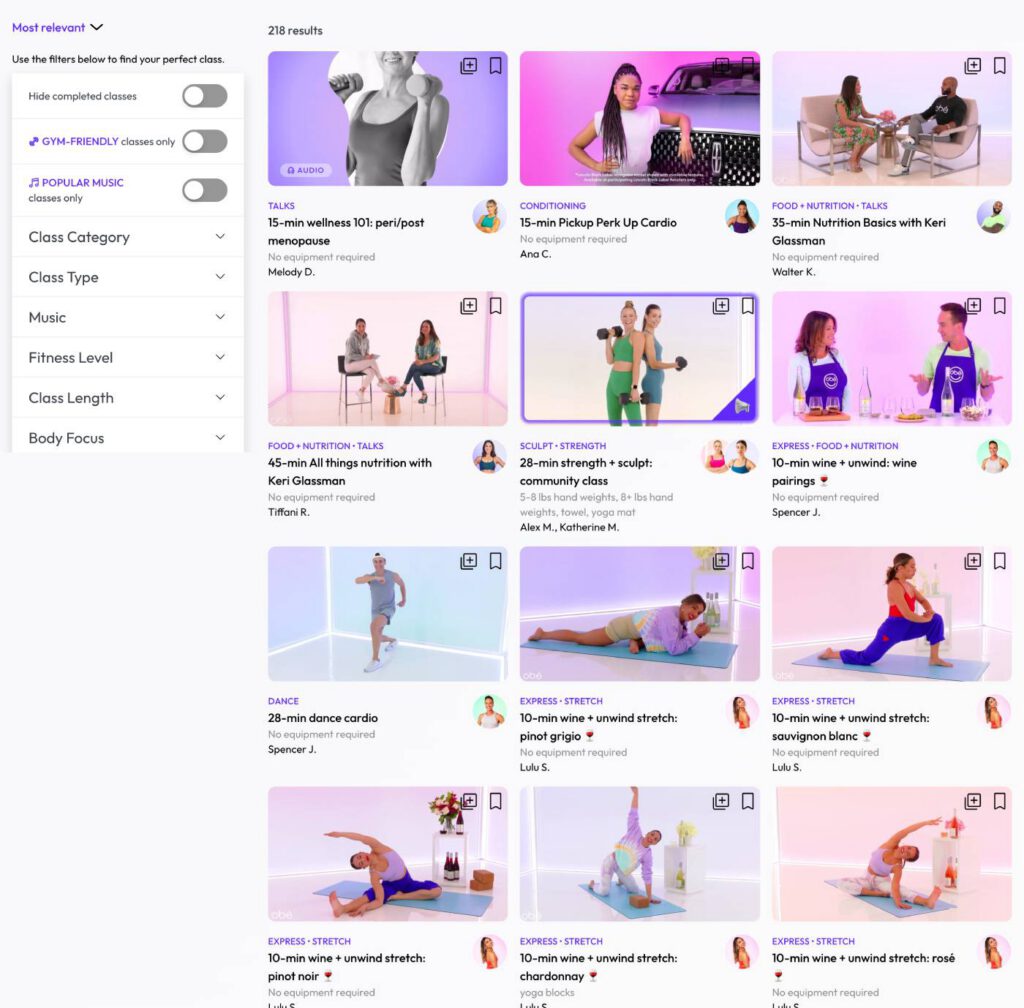
The best platform here to actually use, with cycle tracking and a real six-week menopause programme rather than a relabelled class list
I came to Obé already warm, straight off Alo Moves, Pvolve and Apple Fitness+, so I was not looking for a first home workout. I wanted variety. I tested it for a month in 2026 on a friend’s US account, because Obé still does not sell outside the US and Canada.
It is a boutique low-impact library: dance, sculpt, barre and Pilates, founded in 2018 and now published under Dear Media, with programming led by Melody Davi (NASM). No clinician on staff. What it does have for perimenopause is cycle tracking, cycle-synced class suggestions, and a genuine six-week Menopause Program alongside the Age Well series.
Here is what earned it second place. I was born in the early 80s and grew up on aerobics instructors in leotards, so the neon reached me before the programming did. Set that against the menopause platforms I have tested where the aesthetic tips toward muted and resigned, and the difference stops being cosmetic.
I noticed it daily. The filtering is the best I have used, too: length, impact, equipment, instructor. Narrowed fast enough that on a low-energy day I found a session instead of closing the app.
Tested by Katy Cole, perimenopause: A month of those 28-minute classes. Using dumbbells between 3 and 20 lb depending on whether I was doing Pilates, barre or strength, and my weight and measurements stayed exactly where I wanted them. In perimenopause that is a success in itself.
What it will not do is load you. The strength work is light to moderate and maintenance-oriented, and it plateaus once you are past beginner. The weight-bearing content is too light to do much for bone, and there is no pelvic floor content at all, which is a real gap at this life stage.
Best for: women who want low-impact movement they will genuinely keep doing, with cycle awareness built in, and who are training for consistency and mood rather than maximum strength. It suits beginners and returners particularly well.
Cost: $24.99/month, or $169.99/year, about $14.17/month. Same price on web and Apple. US and Canada only.
Trade-off: light loading means this is not the programme to lean on for bone or maximal strength, and there is no pelvic floor work. If you are outside the US or Canada you cannot subscribe at all.
Menovation: a tracker and stage quiz that actually adapt
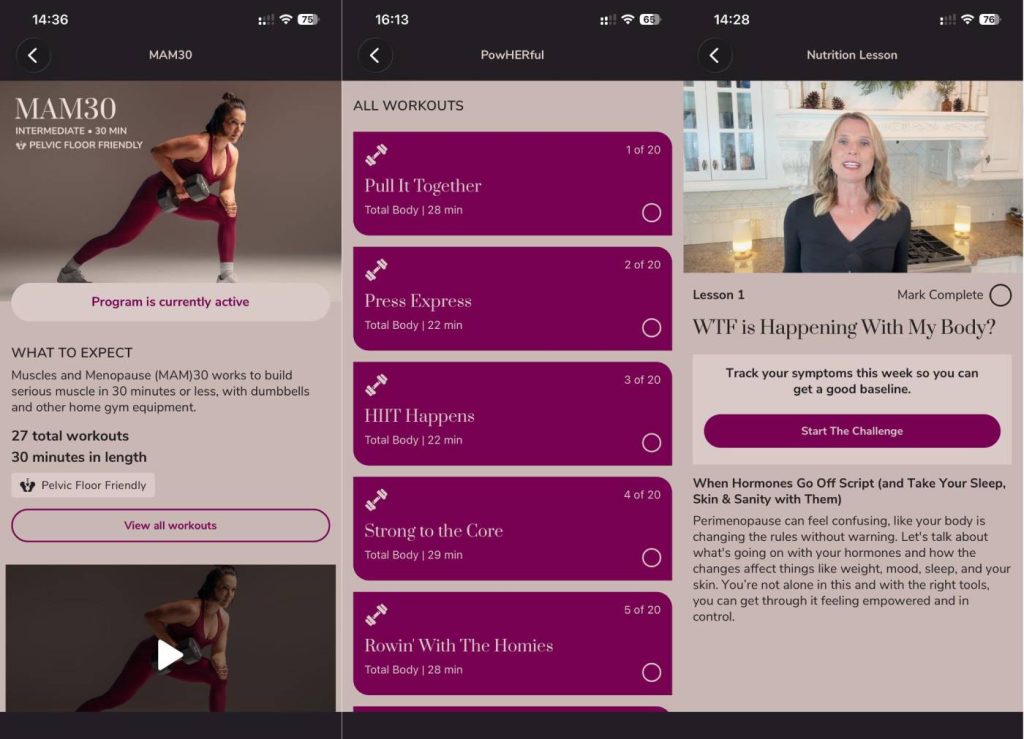
Built around perimenopause from the ground up, and the only homepage in fifty platforms that felt like it was talking to me
A friend mentioned Menovation in passing and I almost forgot about it. Then I looked it up and something stopped me scrolling: the website featured real women. By this point I have tested close to fifty platforms, and very few have managed that. I signed up for the trial mainly because I had never seen a platform built so explicitly for this life stage.
It launched in September 2025, which makes it one of the newer platforms I have reviewed, founded by Ashley Nowe, a Certified Menopause Coaching Specialist. There is a roster of clinicians behind it including an OBGYN, a reproductive psychiatrist and pelvic-floor physical therapists, though that roster is company-reported rather than independently verified.
A built-in cycle and symptom tracker and a stage quiz mean the programming adapts to where you actually are, and unlike most of this list it pairs that with real loading: light. Medium and heavy dumbbells, and a dedicated pelvic floor modality with a pelvic-health physical therapist attached.
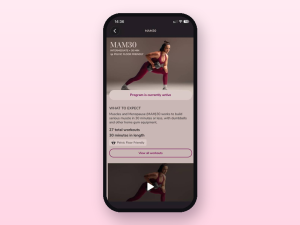
I tested it for six to eight weeks across PowHERful, MAM30 and barre. The roughly thirty nutrition lessons on perimenopause are some of the most complete. Practical information I have found on the topic, and I have spent a lot of time looking.
Tested by Katy Cole, perimenopause: PowHERful with Kaitlin Heaney delivered over five weeks: 141 lb down to 136 lb. Upper body dumbbells from around 11 lb to 13 lb, lower body from 17 lb to 20 lb, and visible tone through my upper body.
What I did not expect was feeling understood and recognised, which most fitness platforms never manage. The platform itself is where it falls down. The web version could not play workouts while I was testing, so I lost my big-screen setup and moved to the iOS app. And the MAM30 format, separate videos per exercise with minimal coaching, did not work for me at all.
Best for: women who want a platform designed around this life stage rather than adapted to it, who want dumbbell strength, pelvic floor work and education in one place, and who will trade interface polish to get it.
Cost: $28.99/month, $69.99 quarterly, or $199.99/year.
Trade-off: the interface is well behind the boutique platforms above it, the library is still growing so variety is narrower than a large mainstream catalogue, and there are no formal deload weeks in the programming.
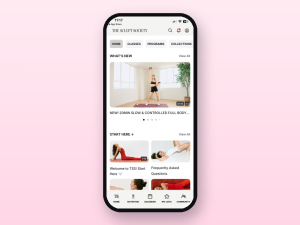
The Sculpt Society: cycle syncing and symptom-targeted classes
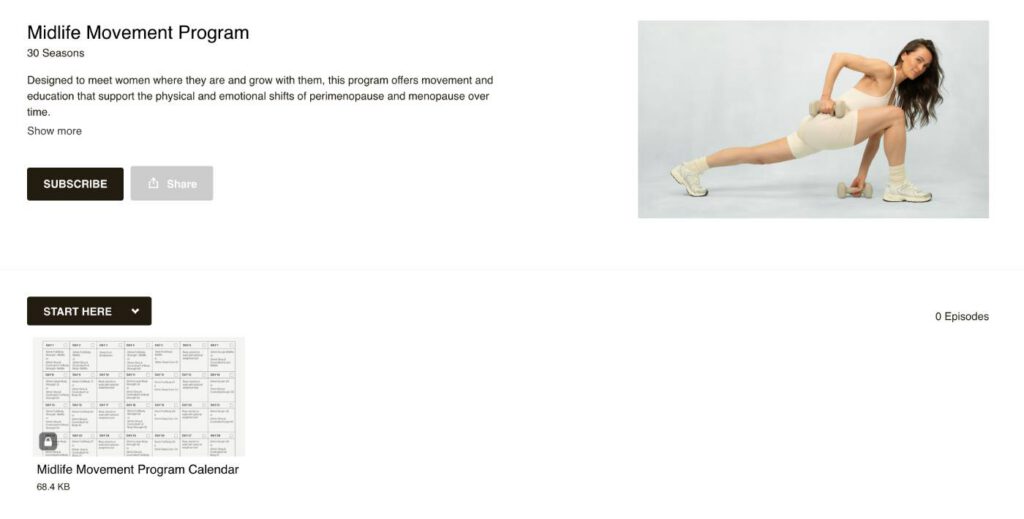
Dance cardio skips the HIIT cortisol spike, and enjoyment drives adherence, which is the single biggest predictor of results.
The Sculpt Society’s Midlife programme explicitly coaches to the cortisol-oestrogen relationship. Its method uses moderate-intensity dance cardio alongside sculpting, maintaining cardiovascular stimulus without the cortisol burden of daily high-intensity work.
This score reflects the Midlife programme’s perimenopause-specific design: cortisol-appropriate intensity, dedicated hormonal education, and the adherence advantage of enjoyable movement. Women who prioritise maximum hypertrophy over hormonal alignment would score it differently.
The Sculpt Society is a streaming fitness platform founded by Megan Roup, offering dance cardio, sculpt, and a dedicated Midlife programme designed around hormonal health. Its methodology for perimenopause is built around a principle that most fitness content misses: adherence is the single biggest predictor of fitness outcomes, and adherence depends on intrinsic enjoyment.
The dance cardio component provides cardiovascular stimulus at moderate intensity, high enough to maintain aerobic capacity and metabolic health without the cortisol elevation that daily HIIT generates. The sculpt sessions use lighter-to-moderate dumbbells with controlled movement patterns targeting muscle endurance and tone. The combination within a single weekly structure means women can address all movement categories without piecing together multiple subscriptions.
Methodologically, the dance-based cardio is specifically chosen for its mood-regulating properties. A 2019 paper published in Maturitas demonstrated that exercise adherence in perimenopausal women is significantly higher when the activity contains intrinsic enjoyment rather than purely prescriptive structure. The Sculpt Society’s Midlife programme explicitly addresses the hormonal context: instructors discuss the cortisol-oestrogen relationship. Explain why training methodology must change at midlife, and cue participants to moderate intensity appropriately for the perimenopausal nervous system. This contextual layer is rare in mainstream fitness content and changes how women relate to their training.
Tested by Katy Cole, perimenopause: The Midlife programme is a substantive, medically informed structure, not a cosmetic rebranding of existing classes. Instructors explicitly discuss the cortisol-oestrogen relationship during sessions, which changed how I approached intensity on high-symptom days. The dance cardio has a genuine mood-lifting effect that other moderate-intensity options don’t. Eight weeks in I was sleeping better and less fatigued, which is a specific perimenopausal outcome I had not achieved with other programmes.
Best for: The Sculpt Society scored highest in our testing for women who want a programme explicitly designed with perimenopause as its central principle and who value the medical education and hormonal context provided alongside the workouts. It is particularly suitable for women who struggle with adherence in generic fitness programmes and who respond better to enjoyable, moderate-intensity movement than to purely prescriptive training. The dance component makes it ideal for women who find typical strength-only programming monotonous.
Cost: $24.99/month or $229.99/year (about $19.17/month). Available internationally including the UK. 7-day free trial.
Trade-off: The dance cardio format is lighter on muscle mass stimulus than dedicated compound dumbbell training, women who need maximum resistance work for bone density (particularly those with elevated osteoporosis risk) may need to supplement with heavier weight sessions outside the platform. The Midlife programme is a specific section within a broader dance and sculpt library; non-Midlife content is not perimenopause-informed.
BODi: an explicit cortisol and blood-sugar approach
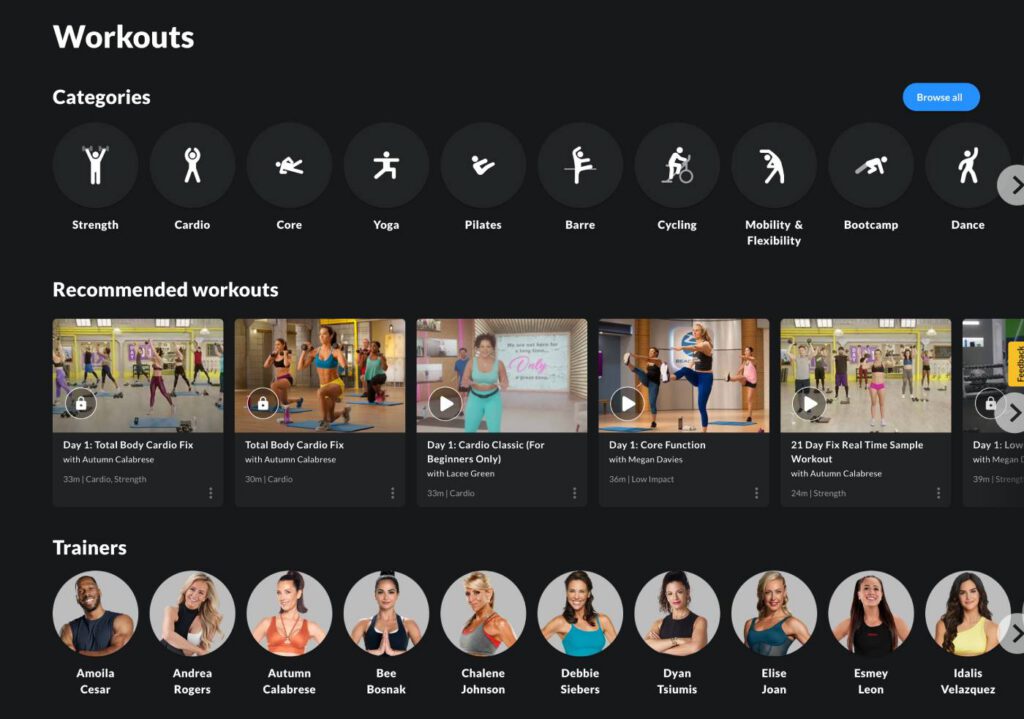
A dedicated twelve-week hormone programme inside one of the largest libraries available, and the one platform here where I picked the wrong starting point
I worked through four BODi programmes over several months: 21 Day Fix, LIIFT4, 4 Weeks for Every Body, and Belle Vitale. I am in my early 40s, working full time with children, with a HIIT and dumbbell background and a recent meniscus tear. That last detail turned out to matter more than I expected.
BODi is a large on-demand home fitness and nutrition platform, formerly Beachbody On Demand. Its perimenopause relevance rests on Belle Vitale, a twelve-week hormone programme built by Autumn Calabrese. An IIN-trained hormone coach rather than a clinician, with nutrition input from Ilana Muhlstein, RDN. The platform frames itself explicitly around cortisol and blood sugar, which is unusual in a mainstream library this size.
The calendar is the feature that makes it work: you open the app and press play instead of deciding. And on a low-energy day that is the difference between training and not.
I started with 21 Day Fix because that is where most people start. Twenty-eight days in I had lost 3 lb, my arms and legs were noticeably tighter, and I had meaningfully more energy by week two. The results were real. The problem was the cardio: jump squats, high knees, lateral hops, and I had only recently recovered from a meniscus tear.
LIIFT4 was the smarter choice for my joints, though four days a week is harder to sustain than it sounds. Belle Vitale I tested for three weeks using 15 to 20 lb dumbbells, heavier than suggested on some movements. And the Pilates side genuinely worked muscles I had not been hitting. Most of those sessions run 45 to 50 minutes.
Tested by Katy Cole, perimenopause: I know myself. Twenty to thirty minutes is my limit long term, so Belle Vitale at 45 to 50 minutes was never going to stick for me, however decent the programming. I modified movements around my knee throughout, and I could only do that because I have years of training behind me. Someone newer would be relying on the on-screen modifiers, and those are not consistently available, not always in frame, and rarely explained properly.
Best for: women who want the most structured content and included nutrition for the money, and who will stay inside Belle Vitale and the low-impact material rather than following whatever is most popular in the library.
Cost: $22.99/month standard, or $179/year, currently promoted at $119 for the first year. A $19/month variant also appears on the same product page.
Trade-off: you have to navigate around the platform’s own defaults. Outside Belle Vitale and the LIIFT low-impact content the library is jump-heavy and poorly modified for joints, and there is no pelvic floor work. Watch the billing and the supplement cross-sell.
Flipping 50: perimenopause treated as its own phase
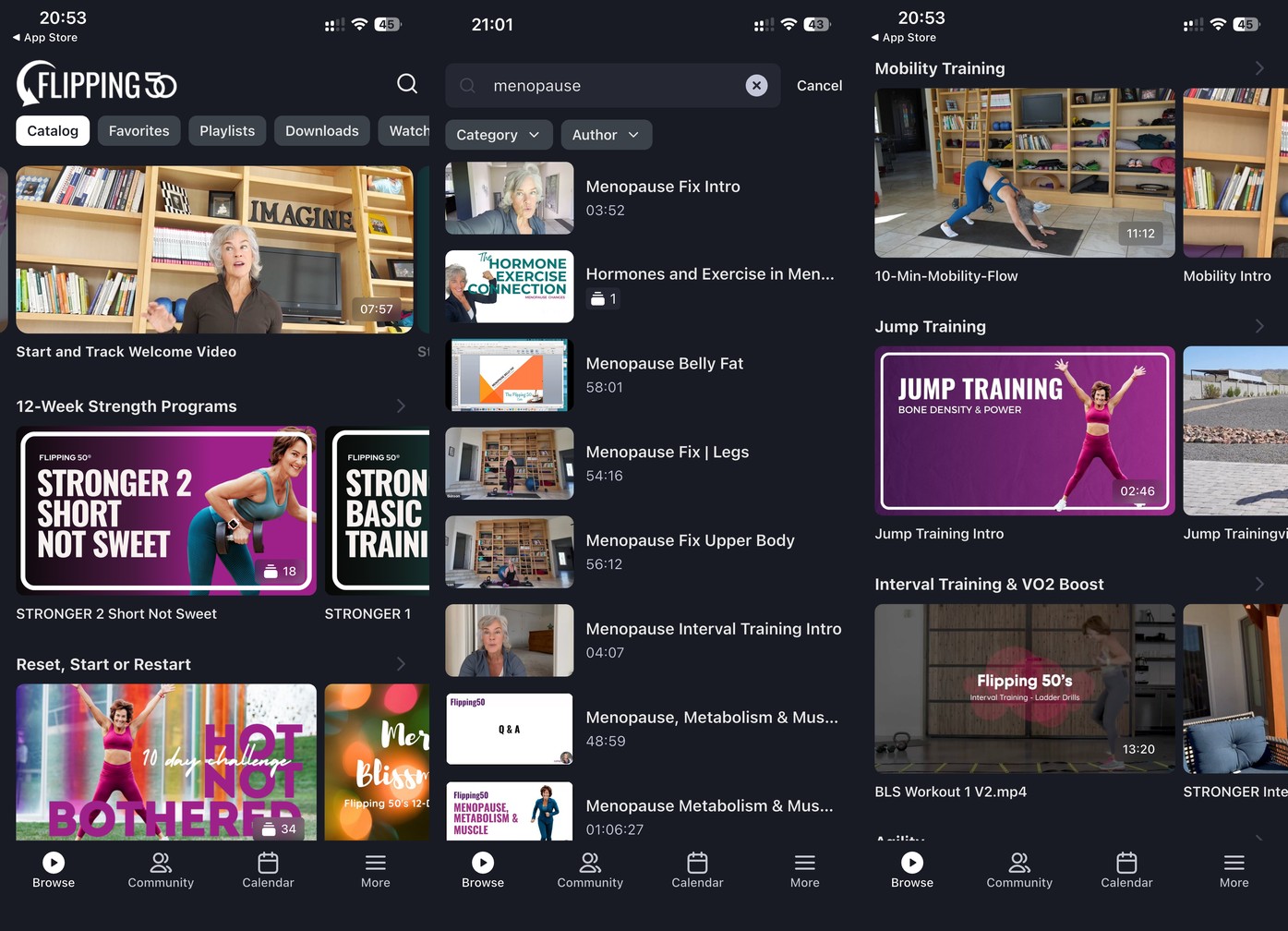
The only programme here that treats perimenopause as a separate phase with its own plan rather than folding it into menopause
Flipping 50 is built by Debra Atkinson, who holds an MS in exercise science. Her credentials include an NSCA CSCS and an ACE Medical Exercise Specialist credential, and she lectured in kinesiology for fifteen years. It carries a Data profile tier on this list rather than a tested one.
I have not tested this one first hand. What follows comes from the research profile, not from using it. What earns it a place on a perimenopause page specifically is the staging: the twelve-week STRONGER programmes are built separately for perimenopause, menopause and postmenopause, drawn from research featuring menopausal women. Most platforms on this list treat the whole transition as one audience.
The rest of the profile is strength-led rather than hormone-led:
- A dedicated pelvic floor programme rather than incidental core work.
- A bone-health course alongside loaded strength.
- Recovery named as a pillar, with real emphasis on cortisol and training less rather than more.
Education runs deep too: monthly masterclasses, over a thousand podcast episodes, books and courses.
The gap for perimenopause specifically: there is no in-app cycle or symptom tracking. When your cycle is still running and still changing, that is the thing you most want a platform to notice, and this one does not. The programming and education are stage-aware; the app does not adapt week to week. At $69 a month it is also the most expensive option on this page, which is exactly the judgement a research profile cannot make for you.
Best for: on the research, women who want strength as the method rather than an add-on, and who would rather follow a plan built for their phase than track symptoms in an app.
Cost: $69/month, or $549/year on the website. Apple in-app annual is $649, and the site annual also renews at $649.
Trade-off: no cycle or symptom tracking, the highest price here by a wide margin, a sprawling ecosystem, and it is one of the entries I have not used myself.
Peloton: breadth, with cortisol and sleep in the design
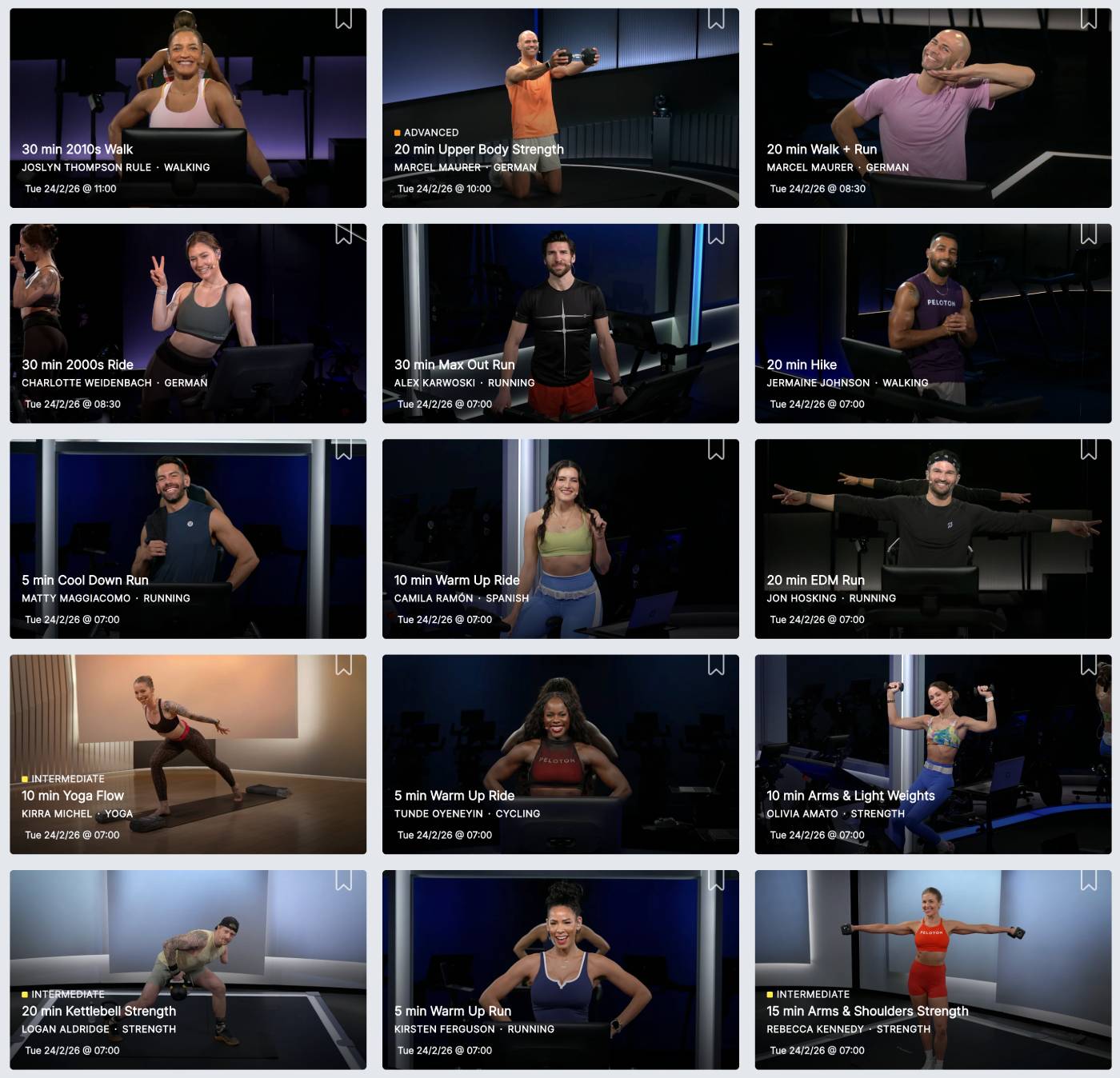
Instructors cue to cortisol management directly, and the yoga, meditation and recovery content is built in rather than sold separately.
Peloton’s advantage for perimenopause is not its strength programming alone, it is the integration of strength. Recovery, meditation, and yoga within a single platform, all curated specifically for the menopause transition.
This score reflects content breadth, live class accountability, and Menopause Collection quality. Perimenopause content is a feature within a large general platform, not its design focus, and nutrition scores 2/10, the lowest of any platform here.
Peloton is a connected fitness platform offering live and on-demand strength, cycling, yoga, running, and meditation classes. Its methodology for perimenopause relies on what most platforms miss: the integration of active recovery, nervous system downregulation, and meditation alongside resistance training and cardio. The Menopause Collection includes instructors who explicitly cue intensity within the cortisol-manageable zone and discuss the exercise-hormone relationship in real-time during classes.
The platform allows women to structure complete perimenopausal training weeks entirely within a single subscription: Monday/Wednesday/Friday strength, Tuesday/Saturday yoga, Thursday moderate cycling. Plus meditation and breathing work on recovery days. This integration matters because nervous system activation from training requires nervous system downregulation afterwards, and most platforms treat recovery as a separate purchase or an afterthought.
The live class format is methodologically significant for perimenopause. Women navigating fluctuating energy, motivation, and symptoms benefit from the real-time accountability that live classes provide. Knowing an instructor will cue your name if you show up, and seeing a live leaderboard with other participants, creates motivation that purely on-demand content cannot match.
This is not trivial: adherence is the single biggest predictor of fitness outcomes. For women whose biggest barrier is showing up on days when hormonal fluctuation has drained motivation, live classes solve a problem that even well-designed programming cannot address alone.
Tested by Katy Cole, perimenopause: The Menopause Collection is more substantive than the name suggests: instructors actively coach to cortisol thresholds mid-class rather than simply labelling sessions as menopause-friendly. Having strength, yoga, meditation, and cardio within a single subscription removed the decision overhead that low-energy perimenopausal days genuinely cannot handle. The live class accountability turned out to matter more than I predicted on the days when motivation was lowest.
Best for: Peloton scored highest in our testing for women who want a complete perimenopausal training week, strength, yoga, cardio, and meditation, within a single subscription and who benefit from live class accountability. It is also well-suited to women already invested in Peloton hardware, as the app and equipment libraries combine to provide significantly greater content variety than any single programme. At $12.99/month app-only access, it offers strong value relative to content breadth.
Cost: $12.99/month (app-only). $28.99/month (App+, adds hardware benefits). 30-day free trial. No Peloton hardware required for the app subscription.
Trade-off: Perimenopause content is a curated section within a very large general fitness platform, it is not the design philosophy. Women who want every class to be perimenopause-informed rather than navigating a menopause collection within a general library will find the experience inconsistent. Nutrition guidance is effectively absent.
Which perimenopause workout programme is right for you?
You want the most evidence-backed, low-impact method for a changing cycle
START WITH: Pvolve
Use the 14-day trial and start with the menopause programme, adding the pelvic floor series alongside it.
You want cycle awareness and something you will genuinely keep doing
START WITH: Obé Fitness
Start with the six-week Menopause Program, then build a week from the 28-minute classes. US and Canada only.
You want cycle syncing and classes aimed at specific symptoms
START WITH: The Sculpt Society
Start with the Midlife section rather than the general library, and use the symptom-based classes on harder weeks.
You want the most structured content and nutrition included
START WITH: BODi
Follow Belle Vitale, the twelve-week hormone programme. Avoid the jump-heavy titles the platform pushes.
You want a plan built for perimenopause specifically, not the whole transition
START WITH: Flipping 50
On the research this is the only one staged separately for this phase, but it is untested by us and has no cycle tracking.
You want the platform to adapt as your symptoms change
START WITH: Menovation
Take the stage quiz first so the programming matches where you are, then start with PowHERful.
You want to understand what is happening as much as train for it
START WITH: Owning Your Menopause
Start with the education library and the GP chat. Expect basic video production.
You want strength, yoga, cardio and recovery in one subscription
START WITH: Peloton
Start with the menopause collection, then build a full week around it. No hardware needed for the app tier.
How did we choose these eight perimenopause programmes?
This list is ranked on two things, weighted together. Sixty per cent is how well a programme accounts for a cycle that is still running and changing: whether it tracks cycles and symptoms. Whether it explains what shifting hormones do to training, and whether that content is built in rather than bolted on.
Forty per cent is how good the programme actually is to use. A programme has to clear a minimum on the first measure before the second counts at all, so polish alone cannot buy a place here. Three programmes that appeared on an earlier version of this page were removed because they fall below that minimum.
The blend is deliberate. Ranking on hormone content alone put the platform with the most dated interface on this list at the top. Which did not represent it accurately to a reader who then had to use it every day. Ranking on usability alone put well-made general fitness apps above programmes genuinely built for this stage. Weighting both is what produces an order that survives contact with real use.
Tested and researched entries are mixed here, and the tier chip on each card tells you which is which. Everything on this list except Flipping 50 I used myself for several weeks. Long enough to see how it behaves once the novelty wears off.
Flipping 50 is here on its research profile, labelled a data profile, with its section setting out what the evidence shows and what remains unverified without hands-on use. Scores throughout this page are pulled live from each programme’s review rather than typed in, so they cannot drift out of date. Full methodology is at how we score.
What research is this based on?
- Stacy Sims, Next Level: Kicking Ass Through Menopause and Beyond (Rodale Books, 2022)
- Resistance training for postmenopausal women, systematic review and meta-analysis, Menopause (2023)
- The impact of physical activity and exercise interventions on symptoms for women experiencing menopause, an overview of 17 reviews covering 8,983 women, BMC Women’s Health (2024)
- Yoga for menopausal symptoms, a systematic review and meta-analysis, Maturitas (2018)
- Physical activity and exercise interventions for menopausal symptoms, an overview of 17 reviews, BMC Women’s Health (2024)
- Pvolve clinical study: strength and quality of life in menopausal women, University of Exeter (2023, conducted in partnership with Pvolve)
Where should you read next?
Go deeper with our research-backed guides:
Frequently asked questions about perimenopause workouts
Resistance training two to three times a week, combined with low-impact movement and deliberate recovery, has the strongest research support. Pvolve ranks first here for delivering that combination in sessions short enough to repeat, backed by a University of Exeter study conducted in partnership with Pvolve which found improvements in hip strength, dynamic balance, flexibility and lean body mass in women aged 40 and over.
Because the tissue you are training is changing. Reviewing the physiology in the Journal of Musculoskeletal and Neuronal Interactions in 2009, Maltais and colleagues described menopause as associated with a decline in oestrogen that increases visceral fat mass and decreases bone mineral density, muscle mass and strength. You are not imagining it and you are not doing it wrong.
Some, but less than you might have done at thirty. High-intensity work still has value for cardiometabolic health, but recovery capacity is lower and cortisol response is a genuine consideration during the transition. The programmes that scored well here treat recovery as programming rather than as a rest day, and adjust intensity on high-symptom days.
No. The realistic outcome is that you retain muscle you would otherwise lose. In the Study of Women's Health Across the Nation, Greendale and colleagues found that at the start of the transition the rate of fat gain doubled while lean mass declined, and that total weight carried on climbing at much the same rate as before. Strength work defends the lean mass; it does not add bulk at the loads these programmes use.
Strength usually moves inside two to three weeks. Symptom and energy changes are less predictable and more individual. Across eight weeks of testing Evlo the change was specific rather than dramatic: soreness in muscles that other training had stopped reaching, and a return of core and glute strength.
It helps while your cycle is still running and still changing, which is the thing that distinguishes perimenopause from menopause. Cycle and symptom tracking is the feature most often missing from otherwise strong platforms, and it is worth checking for before subscribing if your symptoms vary week to week.