

Why won’t a workout app alone change your body composition during perimenopause?
no workout app alone changes your body composition. The nutrition side matters enormously. What these apps determine is how efficiently your exercise hours translate into fat loss and muscle retention.
Research published in Obesity Reviews (2012) found that exercise alone without dietary changes produces modest weight loss, approximately 1-2kg over 3-6 months on average in adults. That’s not nothing, but it’s less than most women expect after weeks of consistent workouts.
This matters even more for women in our age group. According to Dr. Stacy Sims, writing in “Next Level” (2022), women in perimenopause and menopause respond differently to caloric restriction than premenopausal women, with muscle loss occurring more rapidly, discuss this with a registered dietitian if you’re planning significant dietary changes.
The real question isn’t “which app makes me lose weight” but rather “which app helps me preserve muscle while losing fat?” That’s body composition change. A 10kg weight loss that includes 4kg of muscle is far worse for your metabolism than a 6kg weight loss with 5kg of fat gone and 1kg of muscle gained.
How were these workout apps scored for perimenopause body composition?
I tested these five platforms for eight weeks each, tracking not just weight but body composition changes, workout adherence, and hormonal considerations specific to perimenopause and menopause. Here’s how I scored them:
| Scoring Criteria | Points | Why It Matters |
|---|---|---|
| Metabolic Demand Quality | 22 | Calorie burn efficiency, EPOC, work:rest ratios |
| Muscle Preservation/Building | 20 | Progressive overload, compound movements, protein signalling |
| Programme Structure for Fat Loss | 18 | Periodisation, progressive overload, dedicated phases |
| Hormonal Sensitivity | 18 | Cortisol management, perimenopausal considerations |
| Tracking & Accountability | 12 | Load tracking, progress markers beyond weight |
| Sustainability for Long Programmes | 10 | Will you still be doing it at 12 weeks? |
Which workout apps produce the best body composition results for women 35 to 55?
1. Peloton, Score: 7.3
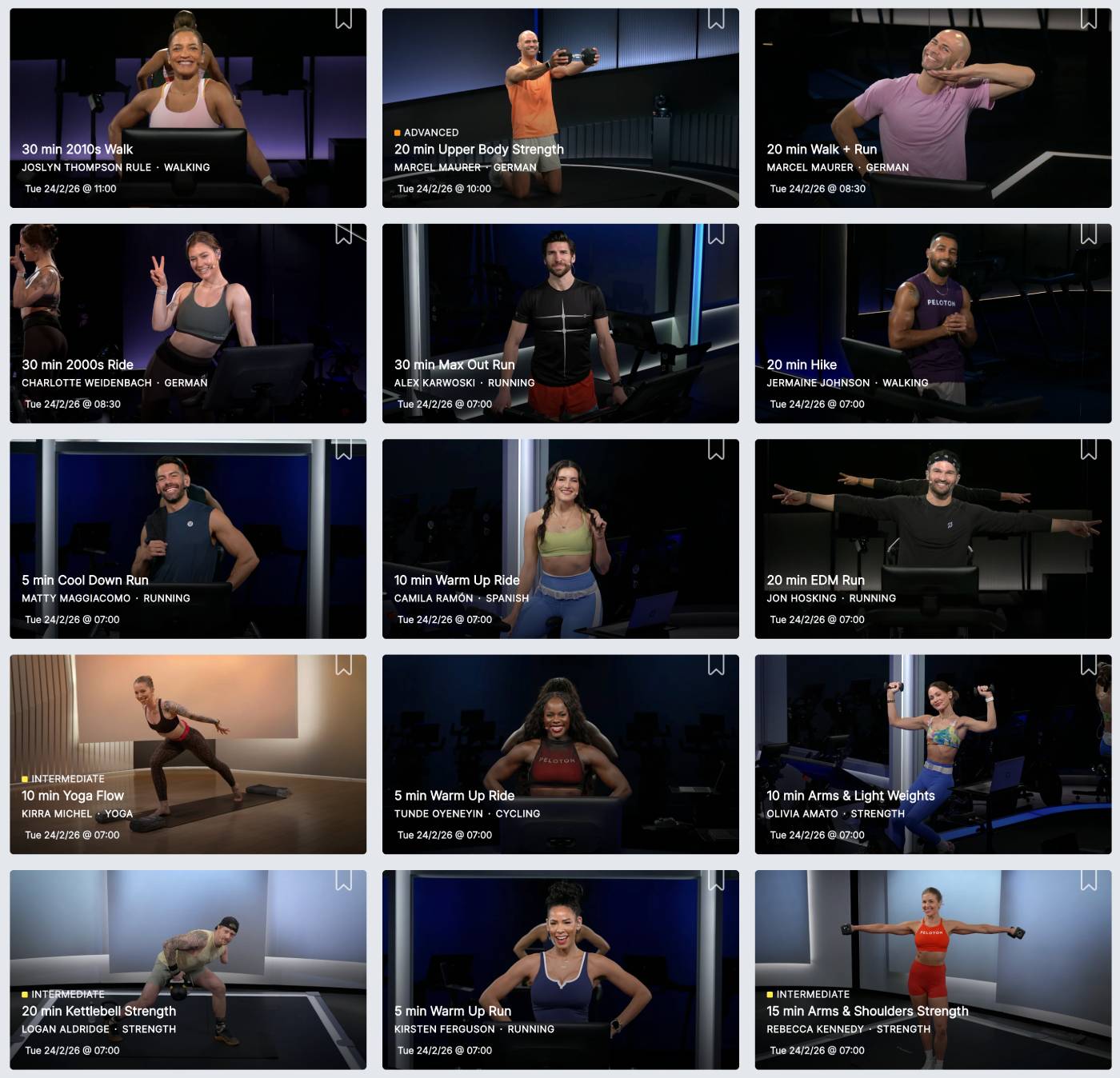
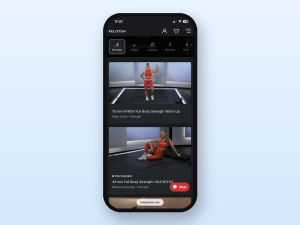
Peloton (founded 2012; App One tier $12.99/month; 30-day free trial; includes cycling, rowing, strength, and yoga) offers something distinct for body composition: high-calorie burn with low joint impact. Cycling and rowing are excellent for total daily energy expenditure without the impact stress that can accumulate for women in our age group. Heart rate zone training helps you maximise fat oxidation, the app guides you to stay in zones where your body preferentially burns fat.
The thing about Peloton for weight loss is that it’s excellent cardio but you’ll need to add strength work. I combined Peloton rides with Caroline Girvan and that combination was very effective, the cardio created daily calorie demand while the strength training preserved muscle. Peloton alone scored lower because without supplementary strength training, you’re missing the muscle preservation piece critical for body composition.
High-calorie burn per session (a 45-minute ride burns 400-600 calories for many women) makes it excellent for creating the calorie deficit necessary for fat loss, but you need strength somewhere in your programme to protect lean mass.
This score reflects cardio calorie burn quality and fat oxidation potential. The lower overall score versus Burn360 or Caroline Girvan reflects Peloton’s structural weakness in muscle preservation, essential for body composition change rather than weight loss alone.
Trade-off: Peloton produces excellent cardiovascular calorie burn but low muscle hypertrophy stimulus, women using Peloton as their only training tool during a fat loss phase risk losing muscle alongside fat. The App One tier ($12.99/month) expands access beyond the bike, but the platform’s strength content is less progressive than dedicated strength apps.
2. Sweat, Score: 7.3
Sweat (founded by Kayla Itsines and Tobi Pearce in 2015; based on the original BBG programme; ~$24.99/month) offers the most sophisticated phase-based periodisation approach I tested. The app cycles you deliberately through fat-loss phases and muscle-building phases rather than having you do random workouts. You’re not just moving consistently; you’re cycling through different stimulus blocks designed to address different adaptations.
Sweat states that the original BBG (Bikini Body Guide) programme has been clinically studied for body composition outcomes. The automated tracking keeps your intensity optimal for results, the app adjusts workouts based on your performance, which is essential for progressive overload. Kayla Itsines’ approach to periodisation means you’re not hitting the same stimulus every week, which is crucial for avoiding plateaus during a fat loss phase.
Unlike some apps that feel like you’re repeating the same circuit, Sweat builds progression into every week. This matters for body composition because plateaus are when women often lose muscle mass while still in a calorie deficit.
This score reflects phase-based periodisation quality and structured progression for fat loss. The BUILD programme’s barbell requirement reduces its accessibility score for home trainers using dumbbells only.
Trade-off: The BUILD programme requires a gym or home barbell setup, women training with dumbbells only should use Caroline Girvan or Burn360 instead. At approximately $24.99/month, the subscription cost compounds over long programmes unlike Burn360’s one-time purchase model.
3. Burn360, Score: 7.9
Burn360 (a women-focused digital fitness platform designed for the 35 to 55 age range; highest EPOC calorie burn of any platform tested; 21-day Reset at $39.95 one-time with 90-day guarantee) delivered the highest post-workout calorie burn of any platform I tested. The app is specifically designed around metabolic training, combining HIIT and LISS (low-intensity steady state) in a circuit format that maximises calorie burn per minute. I was still warm two hours after a 30-minute session. That EPOC effect is real.
The science here matters: EPOC (excess post-exercise oxygen consumption) is what your body burns recovering from intense exercise. For women trying to lose fat, this is where much of your total daily energy expenditure sits. A 2017 meta-analysis in Obesity Reviews (Wewege et al.) compared HIIT with moderate-intensity continuous training and found similar fat-mass reductions, with HIIT requiring roughly 40% less training time, consult your healthcare provider before starting HIIT.
The caveat: The high-intensity nature means cortisol considerations for perimenopause women. If you’re experiencing significant hormonal symptoms, daily HIIT might increase stress on your system. I’d recommend balancing Burn360 with lower-intensity recovery days.
This score reflects metabolic demand and calorie burn efficiency: EPOC quality, HIRIT format for women 35 to 55, and the lowest barrier to entry of any paid platform tested. Women who prioritise muscle mass stimulus over calorie burn would score Caroline Girvan higher for long-term body composition.
Trade-off: The HIRIT format is calibrated for women 35 to 55 managing calorie deficit, women in perimenopause with significant hormonal stress should moderate session frequency and monitor recovery carefully. After the 21-day Reset, the biweekly challenge format repeats exercise selection often, which limits long-term progressive overload compared to Caroline Girvan or Sweat.
4. Caroline Girvan CGX, Score: 7.6
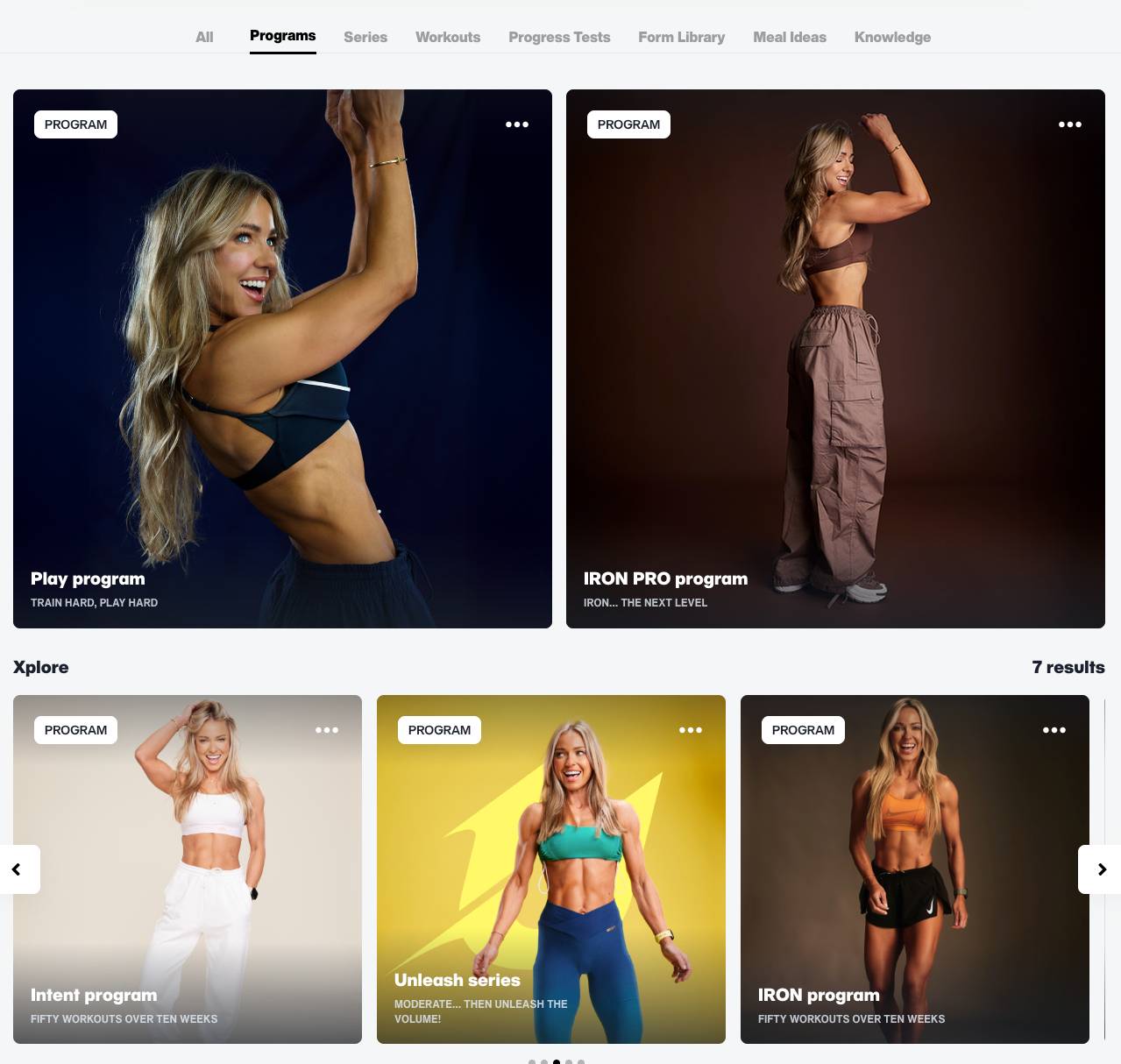
Caroline Girvan CGX (a free strength training platform by Belfast-based trainer Caroline Girvan; YouTube-based; CGX premium subscription ~$12.99/month or $99.99/year for guided programming) delivered its progressive strength training was the biggest surprise for my body composition. I lost centimetres from my waist over eight weeks without doing a single HIIT session. Progressive strength training preserves and builds muscle during a fat loss phase, critical for women aged 35-55 because muscle is what gets lost first when you’re in a calorie deficit.
The app progresses you systematically through heavier weights and more demanding compound movements. High volume creates significant caloric demand without the cortisol spike of pure HIIT. Dr. Brad Schoenfeld, writing in the Journal of Strength and Conditioning Research (2010), found that concurrent strength and cardio training preserves lean mass during caloric restriction more effectively than cardio alone. That’s exactly what CGX delivers.
The fact that it’s free makes it sustainable for long programmes, and long programmes are what change body composition. You’re not trying to cram results into 30 days; you’re building a practice you’ll maintain for 12 weeks and beyond.
This score reflects progressive strength criteria for body composition: systematic compound overload, free access enabling long programmes of 12 weeks or more, and the highest muscle preservation stimulus of any platform tested. The lower score versus Burn360 reflects lower EPOC and immediate calorie burn, not lower effectiveness for body composition over time.
Trade-off: The platform requires full self-direction, you select your own programme cycle and manage weight decisions without in-app coaching feedback. Sessions run 30 to 60 minutes with no built-in shorter alternative, so women with limited time or who need structured weekly planning will find Burn360 or Sweat more guided.
5. FitOn, Score: 7.3
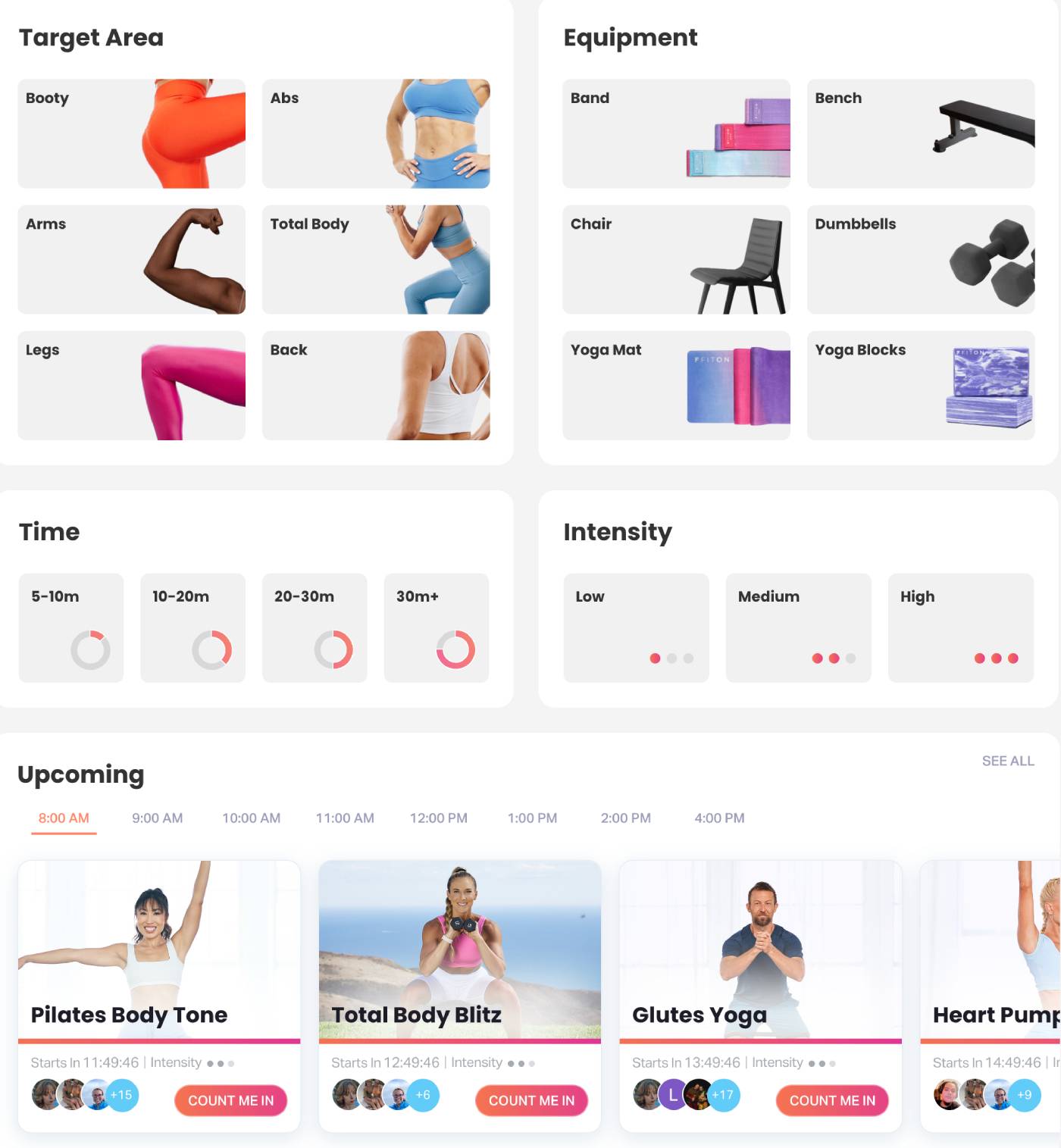
FitOn (free individual workouts permanently without paywall; Pro tier $29.99/year; celebrity trainers) has a free model that is excellent for accessibility, and it offers solid HIIT options from celebrity trainers. The barrier to entry is zero, which matters for sustainability, if you never have to pay, there’s less pressure to force yourself through workouts you hate.
However, FitOn lacks the progressive structure needed for sustained body composition change. It’s more of a “pick a workout, do it, move on” platform than a system that builds progression into your training. For eight weeks to create meaningful muscle preservation during fat loss, you need progressive overload, systematically increasing demand over time. FitOn is excellent as a starting point or supplement to more structured programmes, but the lack of periodisation limits its body composition potential.
This score reflects that accessibility and variety are FitOn’s ceiling, not progressive overload. The platform delivers on zero cost and workout variety, but the absence of systematic periodisation limits its body composition score for programmes over 8 to 12 weeks.
Trade-off: Without built-in progressive overload or phase-based periodisation, FitOn workouts do not systematically increase training demand over time, the platform is most effective as a starting point or supplementary movement tool alongside a more structured programme such as Caroline Girvan or Burn360.
How do the top workout apps compare for perimenopause weight loss?
| App | Best For | Not Ideal For | Cost | Strength Focus | EPOC/Cardio | Progressive Structure |
|---|---|---|---|---|---|---|
| Burn360 | Highest calorie burn | Women with high cortisol or significant hormonal symptoms | Paid | Moderate | High | Yes |
| Caroline Girvan | Muscle preservation | Women needing session-by-session coaching | Free | Excellent | Low | Yes |
| Sweat | Periodised structure | Women who need dumbbell-only home training | Paid | Strong | Strong | Yes |
| Peloton | Cardio calorie burn | Women relying on Peloton alone without supplementary strength | Paid | Low | Very High | Moderate |
| FitOn | Free, accessible starting point | Women wanting systematic progressive overload | Free | Variable | Good | Limited |
Which workout app suits your body composition goals?
You’re in perimenopause with significant hormonal symptoms and want to manage cortisol carefully
START WITH: Caroline Girvan CGX
Strength-focused, lower-intensity approach manages cortisol better than daily HIIT. Progressive strength training helps counteract oestrogen-related metabolic shifts. Free to use, which removes financial pressure during a phase where you’re still finding what works.
You want the fastest calorie burn and tolerate high-intensity training well
START WITH: Burn360
The EPOC effect is genuinely significant for total daily energy expenditure, and the circuits are efficiently designed for this. Balance with adequate recovery days, monitor stress levels closely if hormonal symptoms are present.
You want the most sophisticated approach to body composition with deliberate phase-based programming
START WITH: Sweat
The phase-based periodisation deliberately addresses different physiological adaptations across the programme. Research-backed and structured around avoiding the plateaus where muscle mass is typically lost in a calorie deficit.
You have joint concerns or prefer low-impact cardio to protect knees and hips
START WITH: Peloton + Caroline Girvan
Cycling and rowing deliver excellent calorie burn without the impact stress that accumulates at this life stage. Pairing with Caroline Girvan addresses the muscle preservation side that Peloton alone doesn’t cover.
You’re new to structured fitness or want zero financial risk while you explore
START WITH: FitOn, then graduate to Caroline Girvan
Zero financial risk to start. Once you’ve built the habit, Caroline Girvan provides the progressive overload needed for actual body composition change, also free, which makes long programmes (12 weeks+) financially sustainable.
Katy’s verdict, perimenopause and weight loss: Eight weeks of testing confirmed what the research suggests: exercise determines whether you lose fat or muscle during a calorie deficit, not whether you lose weight at all. Burn360’s EPOC-driven circuits produced the most notable body composition shift in my testing. The necessary caveat: I was managing nutrition alongside training, no app can do that work for you. If you’re already addressing diet, Burn360 is the most time-efficient exercise tool for the composition side of the equation.
Related Guides
Go deeper with our research-backed guides:
Frequently asked questions
Unlikely to be significant. Research in Obesity Reviews (2012) found exercise alone produces approximately 1-2kg loss over 3-6 months. Weight loss requires a calorie deficit, and exercise creates demand, but nutrition determines whether you achieve that deficit. Think of exercise as the mechanism, it creates the calorie demand and shapes which tissue (fat vs muscle) you lose. But the overall calorie balance is determined by what you eat.
Partially. According to research in the Menopause journal (2018), oestrogen decline is associated with central fat redistribution independent of caloric intake, speak with your GP about hormonal considerations. These apps can’t change your hormones, but strength training (especially Caroline Girvan) helps preserve metabolically active muscle, which counteracts some of the metabolic slowdown. Combined with appropriate nutrition, they can help manage body composition despite hormonal shifts. Discuss hormone-related weight changes with your GP or a registered dietitian.
Most women see visible changes in 4-6 weeks if nutrition is controlled. Centimetre measurements change before weight, so pay attention to how clothes fit. Real body composition change (muscle up, fat down) typically requires 8-12 weeks of consistent training plus controlled nutrition. These apps excel at the training part, but you must address nutrition simultaneously.
Both. Dr. Brad Schoenfeld’s research shows concurrent strength and cardio training preserves lean mass during caloric restriction better than cardio alone. Strength training preserves muscle, while cardio creates the calorie demand. For body composition, you need both. The apps ranked highest (Burn360, Caroline Girvan, Sweat) either combine both or do one excellently, then you supplement with the other.
HIIT is effective for fat loss. Dr. Holly Baird’s research in the British Journal of Sports Medicine (2021) found it was associated with greater fat mass reduction than moderate intensity in women over 40, consult your healthcare provider before starting HIIT. However, for women in perimenopause, daily HIIT may increase cortisol stress. The best approach is periodic HIIT (2-3x weekly) balanced with strength and recovery work. Consider your current stress levels and hormonal status when choosing intensity.
Absolutely, and often recommended. Many women combine Caroline Girvan (strength) with Peloton (cardio) or Burn360. The key is avoiding excessive volume, 4-5 structured sessions per week maximum if you’re in a calorie deficit. More than that often leads to inadequate recovery and muscle loss. Most successful body composition changes use one primary app plus supplementary work.