Reviewed by Katy · Burn360 tested personally for 4-5 years (multiple resets completed). Pvolve tested personally for 2 months. Prices last verified March 2026.
Overall Winner: Pvolve (8.6)
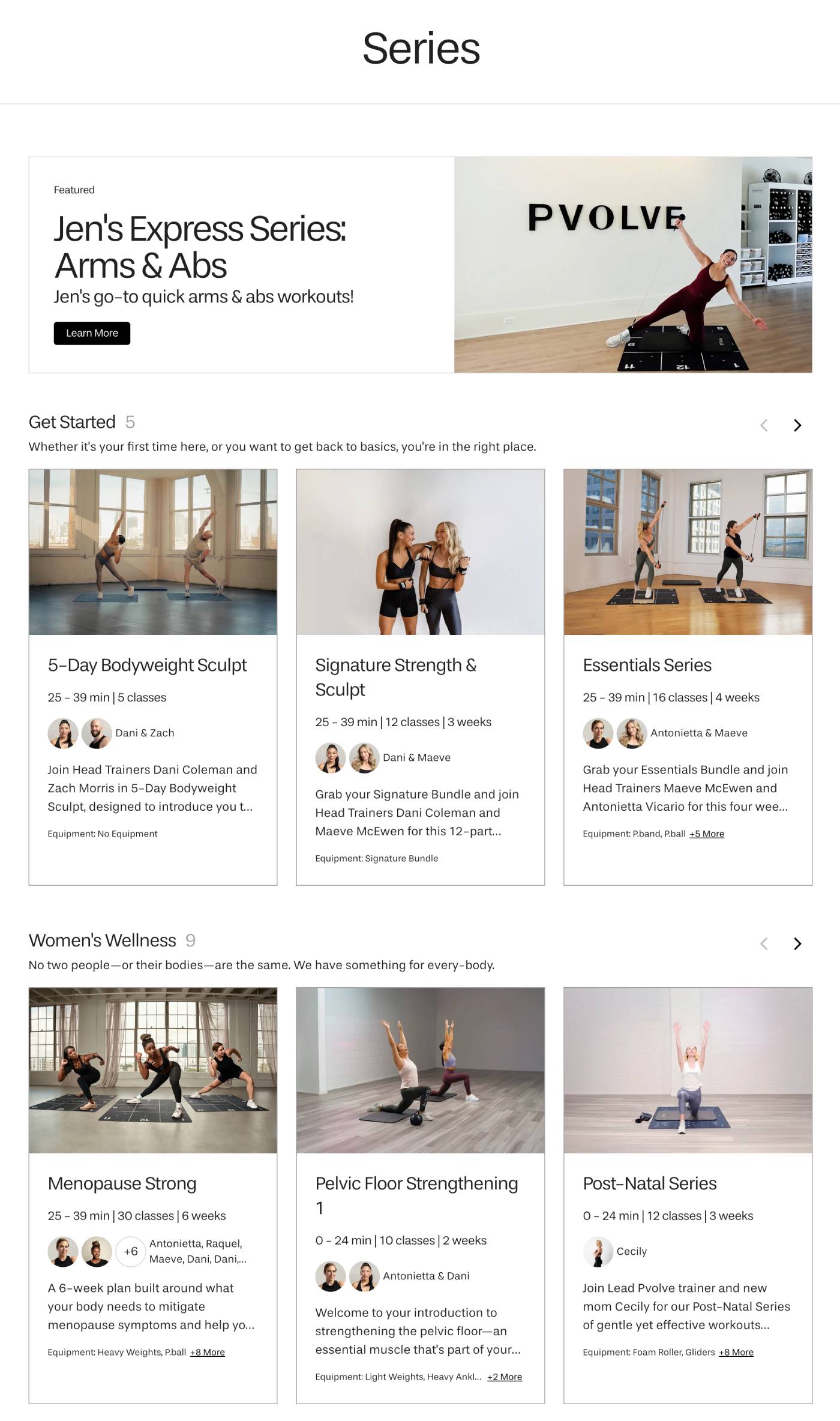
Pvolve wins on Women Over 40 Specificity (10/10 – the highest score in the methodology), Joint Friendliness, Programme Structure, and UX. Its clinical depth – Menopause Strong, the pelvic floor series, a University of Exeter study on 72 women aged 40-60 – is unmatched in this series. If you are navigating perimenopause or menopause and want a programme that has been designed around your specific physiology, Pvolve is the choice.
Best for Time and Value: Burn360 (8.3)
Burn360 scores 10/10 for Time Efficiency – the best in class across every platform reviewed on this site. Its $39.95 one-time entry is the lowest financial commitment to start of any tested programme, backed by a 90-day money-back guarantee. If you are new to dumbbell training, have a genuine 20-25 minute window daily, and want visible results with minimal setup, Burn360 is the smarter first step.
Important: Two Very Different Pricing Structures
Burn360’s entry cost ($39.95 one-time) looks cheaper than Pvolve’s subscription ($19.99/month), but the community membership where ongoing challenges and the 120+ video library live costs $29.95/month separately – and the reset purchase includes a free trial that auto-renews. Read the checkout carefully and set a calendar reminder. Pvolve’s annual plan at $179.99 ($14.99/mo effective) is significantly cheaper than 12 months of Burn360 Community ($359.40). If you are planning to train year-round, Pvolve’s annual subscription is better value.
At-a-glance: Burn360 vs Pvolve
| Feature | Burn360 | Pvolve |
|---|---|---|
| Entry price | $39.95 one-time (reset, lifetime) | $19.99/month |
| Annual price | $39.95 + $29.95/mo community (opt.) | $179.99/year (~$15/mo) |
| Free trial | No (90-day money-back guarantee) | 14 days (card required) |
| Training style | HIRIT – compound dumbbell combinations, resistance intervals | Functional movement, 3D multi-planar, resistance training, sculpt |
| Session length | 20-25 min (core); 30-35 min with warm-up/cool-down | 20-40 min depending on programme |
| Impact level | Moderate – dumbbell resistance + intervals, no pure cardio HIIT | Low – multi-planar functional movement, joint-protective by design |
| Equipment needed | One pair of dumbbells (3-5kg to start). That is it. | Bands + dumbbells for 297 classes; Signature Bundle ($199) for full 1,600+ |
| Menopause content | HIRIT hormonal design; 120+ rehab videos; women-only community | Menopause Strong (6-wk), pelvic floor series, endometriosis series, OB/GYN board |
| Clinical evidence | HIRIT methodology based on exercise science for female hormones | University of Exeter RCT: 72 women 40-60, 19% hip function, 21% flexibility gain |
| Nutrition plan | Eat 360 – TDEE calculator, phased carb approach, recipe library | Phase & Function – hormone-phase nutrition, OB/GYN collaboration |
| UX / platform | Members website (no app); clean but minimal; Seconds Pro for cardio | Dedicated app; 1,600+ on-demand; live classes; good filtering |
| Money-back | 90 days on the reset purchase | 14-day free trial |
| Women Over 40 Specificity* | 9.0 / 10 – HIRIT design, rehabilitation library, women-only community | 10.0 / 10 – Menopause Strong, Exeter study, OB/GYN board, pelvic floor |
| Her Daily Fit score | 8.3 | 8.6 |
Full score breakdown
| Category | Weight | Burn360 | Pvolve | |||
|---|---|---|---|---|---|---|
| Time Efficiency | 15% | 10 | 8.5 | 15% | 8.5 | 8.5 |
| Women Over 40 Specificity* | 15% | 9 | 10 | 12% | 9 | 9 ✓ |
| Recovery Compatibility | 10% | 9 | 9 | 10% | 7.0 | 8.5 ✓ |
| Value for Money | 8% | 8.5 | 8 | 8% | 7.5 | 8.5 ✓ |
| Nutrition Integration | 7% | 7.5 | 7.5 | 100% | 8.3 | 8.6 |
*Women Over 40 Specificity is a scored category in the Her Daily Fit methodology (weighted 15%), assessing perimenopause/menopause programme depth, clinical credibility, specialist content breadth, symptom-aware workout design, and modification quality. Burn360 9.0 – HIRIT hormonal design, 120+ rehab videos, women-only community. Pvolve 10 – Menopause Strong six-week programme, pelvic floor series, OB/GYN advisory board, University of Exeter clinical study.
Time efficiency (Burn360 10 – Pvolve 8.5: Burn360 wins)
Burn360’s 10 for Time Efficiency is the best score in this category across the entire Her Daily Fit comparison series. The core sessions run 20-25 minutes and that is not padded with unnecessary movement between exercises. The HIRIT format – compound combination exercises with minimal rest – means the working time is dense. You need a single pair of dumbbells and enough floor space to lunge. No warm-up equipment, no setup time, no interval timer beyond a free app. The entire committed-to-working window is 20-25 minutes.
Pvolve’s 9.5 is also excellent. Most standard library classes run 20-25 minutes, with filtering by session length working reliably. The 0.5-point gap reflects two things: Menopause Strong sessions run around 40 minutes, which is longer than the daily library norm; and Pvolve integrates warm-up sequences that add time for users accustomed to just pressing play. For anyone whose primary criterion is “I have 20 minutes and need that to be enough,” Burn360 is the more reliable choice. For anyone managing 30-40 minutes, the gap is negligible.
Muscle potential (tied 7.5 each)
Both platforms score 7.5 for Muscle Potential – a tie that reflects real equivalence. Neither is a dedicated hypertrophy platform in the way a gym-based or barbell-focused programme is. Both are designed for the metabolic, functional, and body-composition goals that matter more to women over 40 than maximum muscle mass. Burn360’s compound combinations produce visible body composition changes – measurable waist reduction and definition – without requiring heavy loading or gym access. Pvolve’s three-dimensional functional training recruits deep muscle chains and stabiliser systems that conventional training misses; the strength gains I made in eight weeks without the Signature Bundle were real and noticeable.
For women whose primary goal is visible muscle tone and body composition change, both platforms deliver. For women who want to maximise muscle-building specifically, both have a ceiling – compound dumbbell work (Burn360) or functional movement with light-to-moderate resistance (Pvolve) will not build the same level of hypertrophy as barbell or cable machine training. The tie at 10 is accurate.
Women over 40 specificity (Pvolve 10.0 – Burn360 9: Pvolve wins)
The 10-point difference on Women Over 40 Specificity is the primary driver of Pvolve’s overall win. Burn360 earns 9 – a very high score – because its entire design is built with women’s hormonal physiology in mind. Susan Ohtake’s HIRIT method explicitly addresses how women’s hormones respond differently to training: shorter sessions for cortisol management, compound resistance for muscle retention, interval structure for metabolic benefit without the cortisol burden of pure cardio HIIT. The women-only community has genuine engagement from women at the same life stage. The 120+ rehabilitation and mobility videos are developed specifically for the injury patterns most common in women over 40. This is not a women-specific add-on – the whole programme is designed for this demographic.
Pvolve’s 10 reflects something above that: dedicated clinical programming for menopause with a specialist doctor presenting the content, a University of Exeter randomised controlled study on 72 women aged 40-60 that found a 19% improvement in hip function and lower body strength and a 21% improvement in full-body flexibility over 12 weeks,[1] OB/GYN advisory board involvement in content development, a pelvic floor series, and an endometriosis series. Menopause Strong addresses not just the training but the physiological context of each training week – what is happening hormonally, why the programme is structured this way, what symptoms you can expect the format to support. No other platform reviewed on this site has clinical depth at this level.
Joint friendliness (Pvolve 9 – Burn360 8: Pvolve wins)
Both platforms score highly on Joint Friendliness, and the 0.5-point gap is narrow. Pvolve’s 9 reflects a training approach that is inherently joint-protective by design rather than by modification. The three-dimensional functional movement patterns load joints through full range of motion with controlled resistance rather than compressive loading or high-impact force. I completed Pvolve’s Knee Stability series during a period when heavier compound work was unsuitable and noticed real reduction in stiffness within two weeks – not relief, improvement. Pvolve does not work around joint problems; its movement vocabulary is structured to address them.
Burn360’s 7 is also excellent. The HIRIT format avoids pure cardio HIIT and high-impact plyometric movements by design – the resistance intervals use dumbbells rather than jumping. The community library includes 120+ mobility and rehabilitation videos covering specific joint guidance. I returned to Burn360 after my own knee injury precisely because the format was manageable during recovery. The 0.5-point gap reflects that Pvolve’s training architecture is structurally joint-protective in a way Burn360 is not – Burn360 is joint-safe at moderate intensity, but Pvolve’s design addresses joint health as a central principle.
Recovery compatibility (tied 9 each)
Both platforms tie at 9 for Recovery Compatibility, and the tie is earned. Burn360’s 20-25 minute moderate-intensity format produces a recovery demand that most women over 40 can manage daily without accumulating fatigue. The Eat 360 nutrition programme supports recovery through its anti-inflammatory food guidance. The community format also includes active recovery days built into the reset schedule. For women managing perimenopause-related fatigue or disrupted sleep, the session brevity is itself a recovery advantage – you can train every day without the 48-hour recovery window that heavier compound sessions require.
Pvolve’s 9 reflects the low-impact design of its standard library – functional movement with light-to-moderate resistance produces minimal muscle damage and supports daily training without overload. The platform explicitly designs recovery content into its programme schedules. The Menopause Strong programme’s cortisol-reduction philosophy treats session intensity as a recovery variable, building the training week to manage hormonal load rather than maximise cumulative effort. Both platforms are genuinely compatible with daily training for women over 40.
Programme structure (Pvolve 8.5 – Burn360 7: Pvolve wins)
The 8.5-point gap on Programme Structure reflects how each platform handles long-term progression. Pvolve has named, dated series with explicit progressive loading – Progressive Weight Training for Beginners, Menopause Strong, Knee Stability, and numerous other structured pathways each with clear weekly progression and defined outcomes. The library is large enough that after completing one series the next appropriate programme is identified. Pvolve’s Phase and Function nutrition programme adds a layer of structured guidance that integrates with the training progression.
Burn360’s 7 reflects a different model. The 21-Day Metabolic Reset is designed to be repeated at increasing weights – which works well as a repeat-and-progress format but relies on the user’s own judgement about when to increase weight and by how much. The community adds new 3-week challenges every three weeks, which provides ongoing variety and a sense of renewal. But those challenges don’t explicitly build on each other in the way Pvolve’s named series do. For self-directed users, Burn360’s model is fine. For users who benefit from external scaffolding about what to do next, Pvolve’s programme architecture is more supportive.
UX and design (Pvolve 8.5 – Burn360 7: Pvolve wins)
Pvolve’s 8.5 reflects a well-built dedicated app with a 1,600+ class library, reliable filtering by session type, duration, equipment, and trainer, and live class streaming for users who benefit from a scheduled format. The platform navigation is clean and the filtering makes it straightforward to find the right class for today’s time and energy. The visual design is warm and considered without being as immediately striking as Form’s.
Burn360’s 7.5 reflects the reality that it is a members website rather than a dedicated app – there is no native iOS or Android application. The website is clean and functional, navigation is minimal and reliable, but the in-workout experience is basic. Cardio sessions require a separate interval timer app (Seconds Pro is recommended). Susan Ohtake trains in silence – no music – which is either exactly what you want (no distraction, pure coaching) or not. The 1.0-point gap is accurate: Pvolve’s app experience is more polished and more versatile for different use scenarios.
Nutrition integration (tied 7.5 each)
Both platforms score 7.5 for Nutrition Integration – a tie at a meaningful level. Burn360’s Eat 360 programme is included with the reset and integrates a TDEE calculator with phased carbohydrate guidance and a recipe library. The approach is practical: it gives you a structure, a starting calorie level, and recipes without requiring extensive tracking. Susan Ohtake’s approach to nutrition reflects the same directness as her training methodology.
Pvolve’s Phase and Function nutrition programme is more sophisticated in its hormonal alignment – meal plans are designed around menstrual and perimenopausal cycle phases, with OB/GYN collaboration in the content development. The hormone-phase guidance is something no other platform in this comparison series offers at this level. The practical implementation requires more engagement than Burn360’s straightforward TDEE approach, but for women who want nutrition guidance that understands their hormonal context, Pvolve’s nutrition content is distinctively relevant.
Pricing (complex – read carefully)
The pricing comparison here requires more attention than most. Burn360’s entry cost – $39.95 one-time for the 21-Day Metabolic Reset with lifetime access – is the lowest financial commitment to begin of any platform reviewed on this site. The 90-day money-back guarantee is also the most generous return policy in this series. That $39.95 gives you the core programme indefinitely.
The community membership, where Susan adds new 3-week challenges every three weeks and the 120+ rehabilitation library lives, is $29.95/month as a separate subscription – not included in the reset. Crucially: the reset purchase includes a free community trial that auto-renews at $29.95/month unless you cancel. Read the checkout carefully and set a calendar reminder for the trial end date. Over 12 months, the community membership costs $359.40 plus the initial reset ($39.95) = $399.35 total year one.
Pvolve costs $19.99/month or $179.99/year (approximately $15/month effective). For full library access, the Signature Bundle equipment costs $199 one-time. Year one with annual subscription plus bundle: $378.99 – slightly less than a year of Burn360 Community. For ongoing year-round training, Pvolve’s annual plan at $179.99 is significantly cheaper than Burn360 Community at $359.40/year.
Personal testing and observations
Burn360 testing
I first found Susan Ohtake’s 21-Day Metabolic Reset about four to five years ago, one year after my pregnancy, at around 66kg. I started with 3kg dumbbells in each hand and found the workouts genuinely hard at that weight, which told me something about the compound format. I completed the reset three times over the following months, increasing my starting weight each round. By the third reset I was using 5kg and had visible muscle definition I hadn’t had before. My waist went from 68cm to 64cm over those months.
I have returned to Burn360 at intervals since – most recently after a knee injury when Caroline Girvan’s heavier compound work was unsuitable, at around 45. The community mobility library was what I was there for: 120+ videos covering specific joint rehabilitation, including several knee-focused series. Susan trains in silence – no music, quiet coaching style – which I find exactly right for the format. The 20-25 minutes passes in a way that longer sessions do not. Four to five years of returning to this programme tells me something about its practical stickiness. I have never found a programme that produces comparable results in the same window.
Pvolve testing
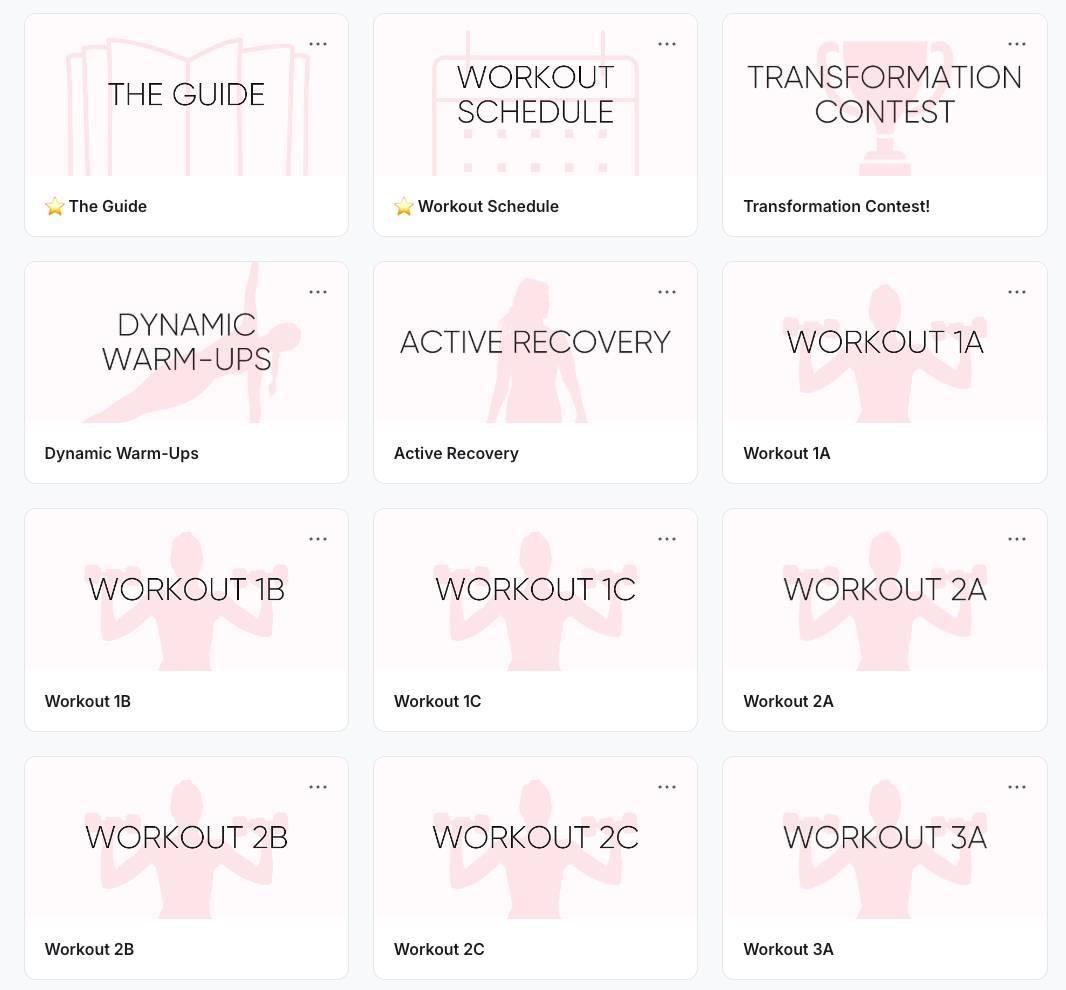
I tested Pvolve for two months without the proprietary Signature Bundle, using resistance bands and dumbbells I already owned. Filtering the library for 16-25 minute sessions with bands and dumbbells returned 297 classes – a substantial library before the bundle becomes necessary. I worked through the Progressive Weight Training for Beginners series, the Knee Stability injury support programme, several full-body bands classes, and started Menopause Strong (currently on week two). My strength progressed from 5kg upper body and 6.5kg lower body to 6.5kg upper and 8.5kg lower over eight weeks – measurable gain within short daily sessions.
The movement vocabulary has a genuine two-week learning curve. The exercises use unfamiliar angles and foot placements that feel awkward before they feel effective. After that settling-in period, the sessions feel purposeful in a different way from conventional training – working muscle chains and stability systems I was not otherwise reaching. The Knee Stability series produced a specific reduction in lower-body stiffness within two weeks that I did not expect from what I had assumed was a gentle platform. It is not gentle. It is intelligent about what kind of demand it places on the body.
Who should choose which
Choose Burn360 if:
- You have 20-25 minutes per day and want visible body composition results with minimal equipment. The $39.95 lifetime access is the lowest-risk entry point reviewed on this site.
- You have never trained with dumbbells before and want clear coaching that tells you exactly what to do from day one, without a learning curve.
- You are in a period of lower capacity – managing an injury, high life stress, or disrupted sleep – and need a programme that fits into 25 minutes rather than 40.
- You want to test a programme properly before committing to a subscription. The 90-day money-back guarantee on the reset is more generous than any trial period in this series.
Choose Pvolve if:
- You are in perimenopause or menopause and want a programme designed and clinically validated for that specific life stage – not adapted, but purpose-built. Menopause Strong is the only programme in this series that has a specialist doctor explaining the hormonal context of each training week.
- You want pelvic floor support and understand that perimenopause affects pelvic floor function in ways that most fitness platforms do not address.
- You are managing joint problems and want a platform where the training approach is inherently joint-protective by design, not by modification.
- You want structured series with clear milestones and progressive depth, and you plan to train year-round – Pvolve’s annual plan at $179.99 is significantly more cost-efficient than Burn360 Community for ongoing use.
FAQ: Burn360 vs Pvolve
Is Burn360 or Pvolve better for weight loss?
For perimenopausal women, Pvolve’s combination of functional resistance training and hormonal-health programming provides a more targeted approach to body composition change. Its low-cortisol format aligns with research suggesting cortisol elevation can worsen visceral fat accumulation during hormonal transition.[3] Burn360 also produced measurable body composition results in my testing – waist down 4cm and visible muscle definition over three rounds of the 21-day reset. For women starting from scratch, Burn360 is the clearer entry point for visible fat loss. For women deep in perimenopause wanting clinical-grade support for hormone-specific fat distribution changes, Pvolve’s architecture is more precisely designed.
Which is cheaper, Burn360 or Pvolve?
It depends on which tier. Burn360’s 21-Day Metabolic Reset is $39.95 one-time with lifetime access – exceptional value as an entry point. The Burn360 Community is $29.95/month separately. Pvolve costs $19.99/month or $179.99/year. On a year-one total, Pvolve Annual with the Signature Bundle ($179.99 + $199 = $378.99) is comparable to Burn360 Community for 12 months ($399.35). For ongoing year-round training, Pvolve’s annual plan is meaningfully cheaper.
Is Burn360 or Pvolve better for beginners?
Burn360 is the clearer starting point. The reset provides a structured daily schedule from day one, clearly coached by Susan Ohtake, starting with one pair of dumbbells at 3-5kg. No learning curve in the movements. Pvolve has a genuine two-week adjustment period for its three-dimensional movement vocabulary. For someone who wants to open a programme and start immediately without a settling-in period, Burn360 is the lower-friction first step.
Can I do Burn360 or Pvolve with bad knees?
Both platforms accommodate knee problems. Pvolve is low-impact by structural design – its multi-planar functional movement is inherently joint-protective, not adapted as a modification. I completed Pvolve’s Knee Stability series during a period when heavier compound work was unsuitable and noticed real reduction in stiffness within two weeks. Burn360’s community library contains 120+ mobility and rehabilitation videos including specific knee guidance, and its moderate-intensity 20-25 minute format is easier to recover from than longer programmes. For serious ongoing knee issues, Pvolve’s structural joint-friendliness gives it the edge.
Is Burn360 or Pvolve better for menopause?
Pvolve is the stronger option. Menopause Strong is a six-week programme combining strength, mobility, pelvic floor work, and clinical education co-presented by a specialist doctor. A University of Exeter study on 72 women aged 40-60 found a 19% improvement in hip function and lower body strength in the Pvolve group over 12 weeks.[1] Burn360 is designed with female hormonal physiology throughout – Susan’s HIRIT approach explicitly addresses how women’s hormones respond to training – and its shorter sessions support cortisol management. But Pvolve’s clinical menopause programming depth is not matched by any other platform in this series.
Can I start Burn360 or Pvolve without special equipment?
Both require minimal equipment to begin. Burn360 needs only one pair of dumbbells (3-5kg) and floor space. Pvolve works with standard resistance bands and dumbbells for 297+ classes before the Signature Bundle ($199) becomes useful. I personally tested Pvolve for two months without the bundle before deciding whether to invest in it. For the absolute lowest equipment entry cost, Burn360 – one dumbbell purchase – is marginally simpler.
Also Compare
Research Citations
- University of Exeter / Pvolve. Randomised controlled study: 72 women aged 40-60, 12-week Pvolve programme vs control. Outcome: 19% improvement in hip function and lower body strength, 21% improvement in full-body flexibility in the Pvolve group. Pvolve research.
- Liao M et al. The musculoskeletal syndrome of menopause. Climacteric, 2024. menopause MSK study.
- Woods NF et al. Cortisol levels during the menopausal transition and early postmenopause. Menopause, 2009. cortisol menopause study.
- Hackney AC. Stress and the neuroendocrine system: the role of exercise as a stressor and modifier of stress. Expert Review of Endocrinology & Metabolism. 2006;1(6):783-792. cortisol exercise study.
- Maltais ML et al. Differences in muscle strength and power between sedentary and trained perimenopausal women. 2018. resistance training RCT.