
Reviewed by Katy · Peloton tested personally across strength, yoga, and menopause collection. BODi tested personally across four programmes (28+ days each). Prices last verified March 2026.
BODi scores higher overall, 8.0 against 7.3, and is the stronger platform for nutrition guidance and a structured programme. Peloton is the better pick if what you need most is joint-friendly training and short sessions.
- Score 8.0 vs 7.3
- $12.99 / $24.99 vs $14.92/mo / $19/mo
- Trial: 30 days vs 7 days
- Both tested hands-on
Quick answer: BODi is the stronger overall platform for women over 40, scoring 8.0 against 7.3. It is ahead for nutrition guidance, a structured programme and value for money. Peloton still wins for joint-friendly training and short sessions, so it is the better choice if that is your priority. The two are level on recovery compatibility.
Bottom line in 30 seconds for women over 40
- BODi wins overall (8.0 against 7.3) because it leads on nutrition guidance and a structured programme. Nutrition Integration 9 against 2.
- Peloton wins on joint-friendly training and short sessions. Joint Friendliness 9 against 5.5.
- They are level on recovery compatibility. Those categories will not decide this for you.
The two platforms
Same nine weighted categories, two different women. Here is who each one is built for.
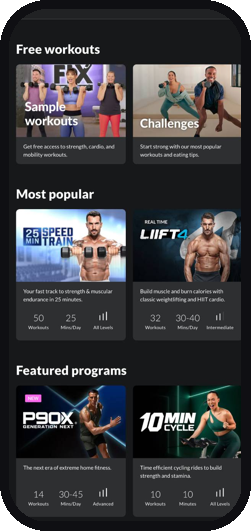
BODi
WinnerLeads this comparison on nutrition guidance and a structured programme, scoring 9 against 2 on Nutrition Integration.
- Moderate impact
- 20 to 45 min
- Dumbbells, resistance
Choose BODi if you:
- Active women ~35+ wanting structured, calendar-based home workouts + included nutrition guidance
- Want nutrition guidance (Nutrition Integration 9 against 2)
- Want a structured programme (Programme Structure 8.5 against 6.5)
- Want value for money (Value for Money 8.5 against 7)
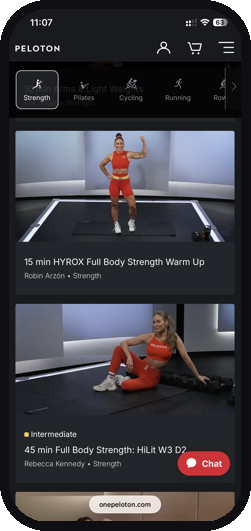
Peloton
Runner-upLeads this comparison on joint-friendly training and short sessions, scoring 9 against 5.5 on Joint Friendliness.
- Low impact
- 20 to 45 min
- None for app
Choose Peloton if you:
- Women ~35+ managing perimenopause, anyone needing live class accountability, joint-limited users who need real modification support
- Want joint-friendly training (Joint Friendliness 9 against 5.5)
- Want short sessions (Time Efficiency 9 against 8.5)
Inside Peloton and BODi
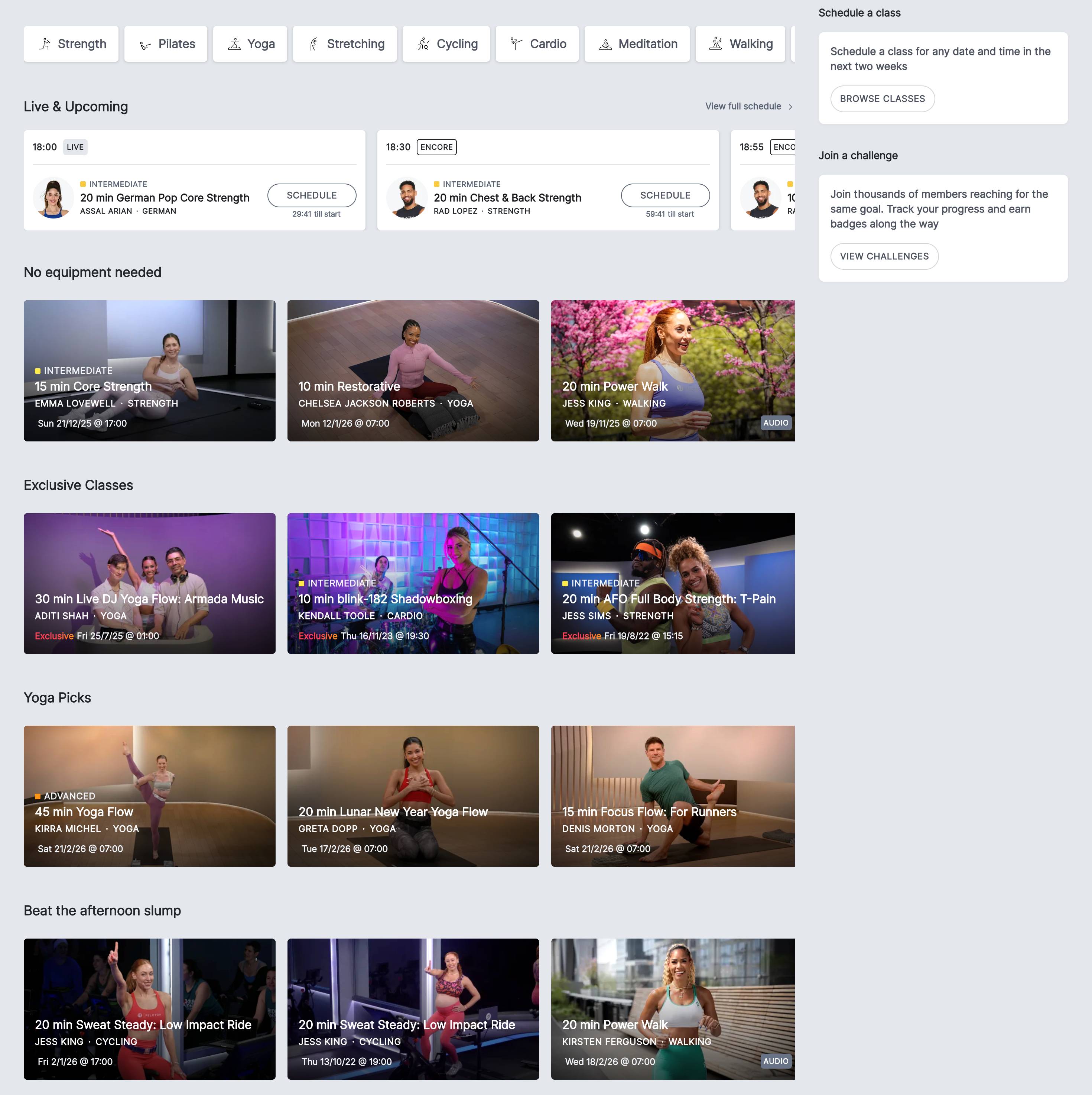
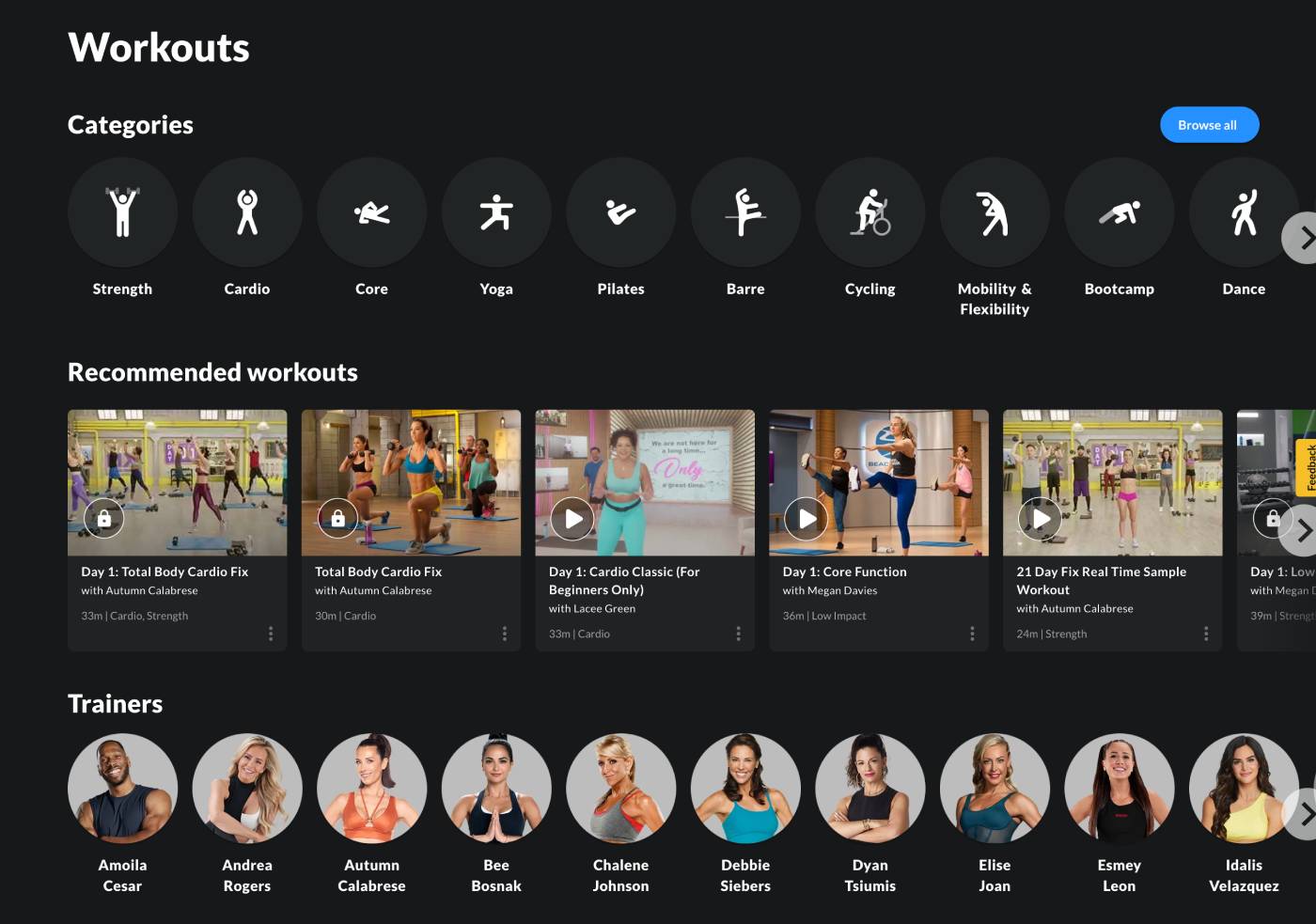
BODi (8.0 / 10) edges ahead on programme structure, included nutrition guidance, and the Belle Vitale perimenopause programme, particularly relevant if cost is a priority at $179/year versus Peloton App One at $155.88/year. If dedicated menopause content, superior in-class modification quality, and live class accountability matter most to you, Peloton (7.3 / 10) is the stronger choice, all of which carry more weight as hormonal changes affect training. Women with active knee or hip issues should approach BODi’s mainstream library with caution.
Key differences at a glance
| Feature | Peloton | BODi |
|---|---|---|
| Price per month | $12.99 (App One) / $24.99 (App Plus) £12.99 / £28.99 UK |
$14.92/mo (annual) / $19/mo monthly £14.92/mo UK (annual) |
| Price per year | No annual plan, monthly billing only | $179/year · £179/year UK |
| Free trial | 30 days | 7 days |
| Training style | Multi-modal: strength, yoga, cycling, pilates, barre, walking, running, meditation | Calendar-based structured programmes: strength, HIIT, pilates, low-impact |
| Intensity level | Low to high, full spectrum; menopause collection at lower end | Moderate to high; low-impact options available in specific programmes |
| Equipment required | None, app works on any device | Dumbbells (2-3 weights), resistance loops, mat (~£60-£150) |
| Nutrition guidance | None included | Portion Fix container system included |
| Live classes | Yes, with leaderboard and real participants | No |
| Women Over 40 Specificity* | 6 / 10 | 6.3 / 10 |
| Her Daily Fit score | 7.3 / 10 | 8.0 / 10 |
*Women Over 40 Specificity is a scored category in the Her Daily Fit methodology, assessing perimenopause/menopause programme depth, clinical credibility, specialist content breadth, symptom-aware workout design, and modification quality.
Full score breakdown
| Category | Weight | Peloton | BODi | Winner |
|---|---|---|---|---|
| Time Efficiency | 15% | 9 ✓ | 8.5 | Peloton |
| Muscle Potential | 18% | 7.5 | 8.5 ✓ | BODi |
| Women Over 40 Specificity* | 10% | 6 | 6.3 ✓ | BODi |
| Joint Friendliness | 12% | 9 ✓ | 5.5 | Peloton |
| Recovery Compatibility | 10% | 8.5 | 8.5 | Tie |
| Programme Structure | 12% | 6.5 | 8.5 ✓ | BODi |
| Value for Money | 8% | 7 | 8.5 ✓ | BODi |
| UX and Design | 8% | 7.8 | 8.5 ✓ | BODi |
| Nutrition Integration | 7% | 2 | 9 ✓ | BODi |
| Overall Score | 100% | 7.3 | 8.0 | BODi |
*Women Over 40 Specificity assesses perimenopause/menopause programme depth, clinical credibility, specialist content breadth, symptom-aware workout design, and modification quality (weighted 10%). It is the midlife fit composite drawn from twelve capability ratings, so it also weighs progressive strength, bone loading, recovery structure and midlife nutrition. Peloton 6, dedicated menopause collection, in-class modification quality, HSS rehabilitation programme, but no progressive loading guidance and no nutrition content. BODi 6.3, stronger on structured strength and the Portion Fix nutrition system, weaker on perimenopause-specific breadth.
Time efficiency (Peloton 9, BODi 8.5: Peloton wins)
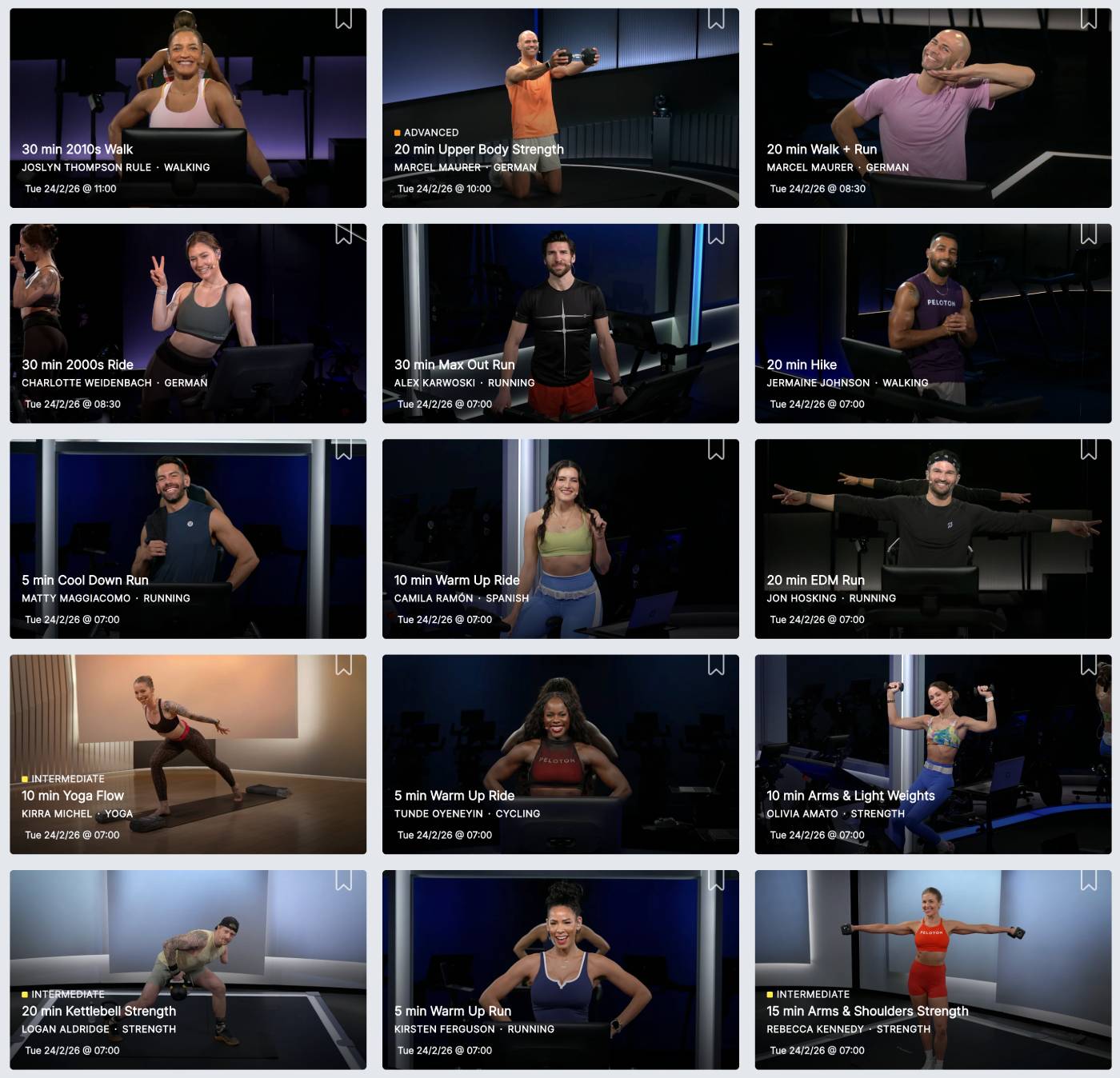
Peloton’s 9 reflects genuine 20-minute options confirmed across most workout types, cycling, strength, yoga, barre, pilates, stretching. The on-demand library is large enough that filtering to under 30 minutes at any workout type returns a meaningful selection rather than a handful of compromises. Peloton IQ assembles custom workouts based on time available and target muscle groups, which adds further flexibility for variable schedules. Live classes run on fixed durations but the on-demand archive makes any length accessible at any time.
BODi’s 8.5 reflects its programme-based structure: session lengths are determined by the programme, not the user’s day. Most BODi programmes have 20-45 minute sessions, with the 4 Weeks for Every Body programme running on the shorter end. The structure is an adherence advantage, you don’t decide the length, but it is less flexible than Peloton’s open library when life genuinely only allows 15 minutes. The 0.5-point gap is real but narrow for users who can commit to programme-specified lengths.
Muscle potential (BODi 8.5, Peloton 7.5: BODi wins)
BODi’s 8.5 reflects the quality of its structured strength programmes. LIIFT4 is Joel Freeman’s 8-week programme targeting one muscle group per session with systematic progressive loading, it is properly designed strength training, not a circuit with dumbbells. LIIFT More extends the format. The Portion Fix nutrition system’s protein emphasis supports muscle protein synthesis in a way that enhances the strength training benefit. For women over 40, where muscle retention becomes increasingly important as oestrogen declines,1 BODi’s structured strength approach is its most valuable asset for this demographic.
Peloton’s 7.5 reflects a platform where strength training is available and well-coached but not guided toward progressive overload. You choose your own weights and nobody prompts you to increase them. The strength class library is extensive, but the absence of a structured progression framework means users can stay comfortable at the same weights for months without the platform providing any indication they should advance. For women who self-direct well, this is fine. For women who benefit from external accountability on weight progression, BODi’s structured approach produces more measurable strength gains.
Women over 40 specificity (Peloton 6, BODi 6.3: BODi wins)
BODi takes this category by 6.3 to Peloton’s 6, but the margin is narrow and it is worth being precise about why, because the two platforms are strong in different places. This score is the midlife fit composite built from twelve capability ratings, so it covers more than menopause-specific classes. It also weighs progressive strength, bone loading, recovery structure and midlife nutrition.
Peloton leads on the menopause-specific part of that composite. Its dedicated menopause collection is the most developed of any mainstream platform in this comparison series, built around sustainable intensity, load-bearing without joint overload, and pacing aligned with research on cortisol management during hormonal transition.2 Modification cues sit inside the main class rather than in a separate on-screen modifier, which matters when you are managing a knee issue mid-session. The HSS rehabilitation programme, developed with the Hospital for Special Surgery, adds clinical credibility. Where Peloton loses ground is progressive loading guidance and nutrition, neither of which it provides.
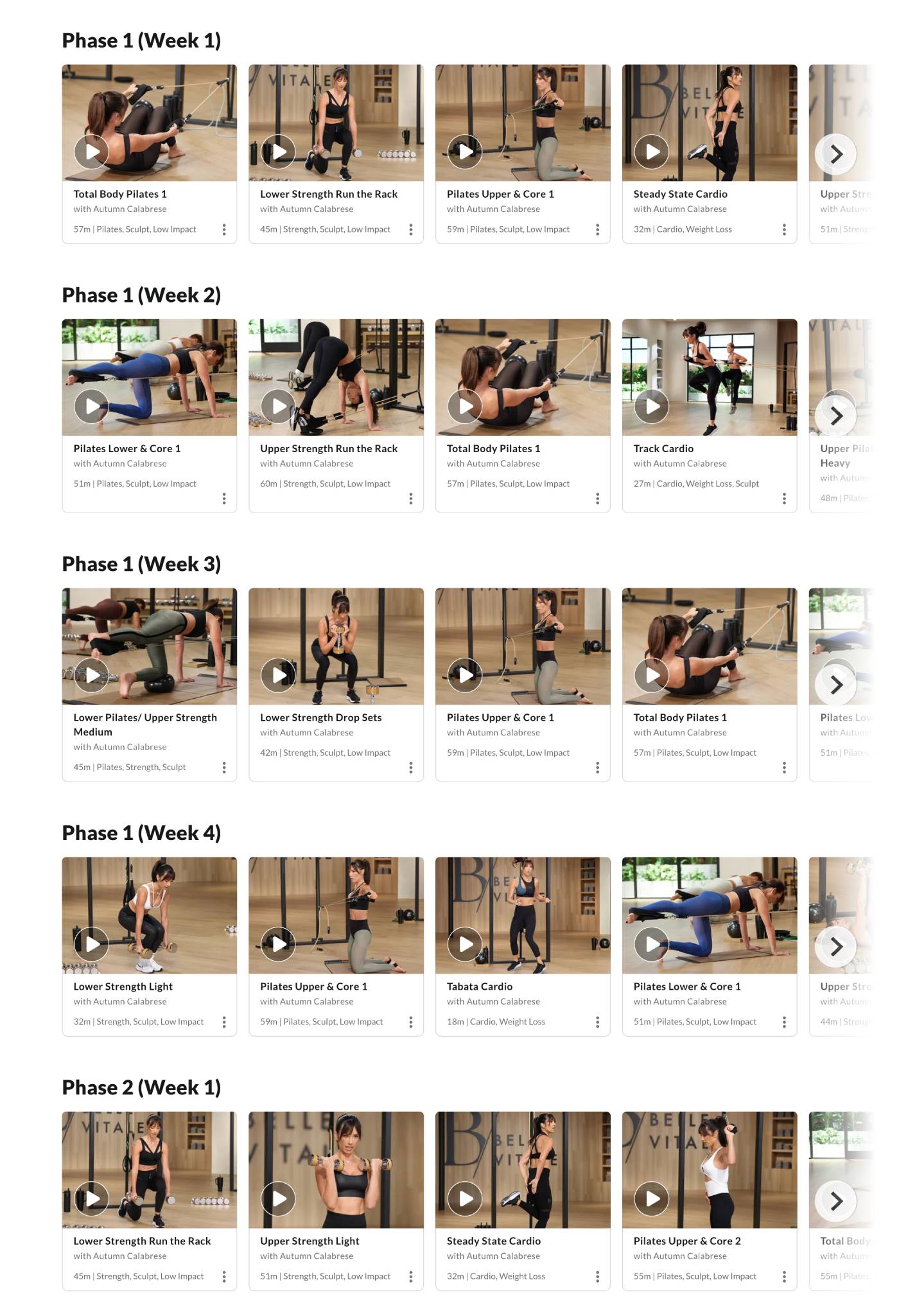
BODi is the reverse. Belle Vitale is a 12-week hormone health programme that feels genuinely different from the rest of the catalogue, with a cortisol-reduction philosophy, Track Pilates, low-impact strength and explicit perimenopause awareness. But it is one programme in a library where the popular content, 21 Day Fix, Insanity and T25, is high-impact and not designed for women over 40 navigating hormonal change. What pulls BODi ahead on the composite is structured strength progression and the Portion Fix nutrition system, not the breadth of its perimenopause content.
If your priority is specifically perimenopause and menopause programming, Peloton is the better pick. If your priority is building strength with nutrition handled in the same subscription, BODi is. The two scores sit close together because those strengths roughly cancel out.
Joint friendliness (Peloton 9, BODi 5.5: Peloton wins)
The 3.5-point gap on Joint Friendliness is the largest in this comparison and the most practically significant. Peloton’s 9 reflects a platform where low-impact daily options are abundant across every workout type, yoga, barre, pilates, the menopause collection, stretching, walking, and where modification cues are integrated into the main class delivery rather than offered on a separate modifier track you need to find mid-session. Using Peloton with a knee injury, I could navigate the daily schedule without needing to assess each class for impact level before pressing play.
BODi’s 5.5 is a realistic average of a split library. The most popular entry programmes, 21 Day Fix and Insanity, contain high-volume jumping: jump squats, high knees, lateral hops, with modifications that were too unclear to follow safely in real time during my testing. I pushed through more than I should have. LIIFT4 and 4 Weeks for Every Body have substantially better joint profiles, and Belle Vitale avoids high-impact loading entirely. But BODi’s programme onboarding defaults most new users toward 21 Day Fix, which is the worst-scoring programme for joint safety in the library. Women with any joint history should start with LIIFT4 or 4 Weeks for Every Body explicitly, not the default recommendation. Oestrogen decline during perimenopause reduces tendon and ligament integrity,4 which makes this distinction more than a preference.
Recovery compatibility (tied at 8.5 each)
Both platforms tie at 8.5 for Recovery Compatibility, and the tie is accurate. Peloton’s 8.5 reflects its full spectrum from restorative yoga and meditation to high-intensity intervals, the breadth means you can structure every week with appropriate recovery sessions without leaving the platform. The menopause collection is specifically paced to avoid the cortisol accumulation that research links to worsened perimenopause symptoms.2 The variety of genuinely low-intensity daily options, walking, light yoga, stretching, meditation, means rest days can be active without adding load.
BODi’s 8.5 reflects the rest days built into every programme schedule and the structured intensity management that the calendar format provides. Belle Vitale’s cortisol-reduction philosophy explicitly designs recovery into the weekly cadence. The risk is programme-selection dependent: 21 Day Fix’s jump-heavy cardio days are not recovery-friendly, and the programme structure doesn’t provide the same low-intensity daily flexibility as Peloton’s open library. For users who have chosen the right BODi programme, recovery management is good. For users on high-impact programmes, it requires more self-direction.
Programme structure (BODi 8.5, Peloton 6.5: BODi wins)
BODi’s 8.5 is one of the platform’s defining advantages. The workout calendar, where opening the app shows you exactly what today’s session is, what duration, which coach, and what equipment you need, removes the daily decision that research identifies as one of the primary causes of fitness platform dropout. 140+ structured programmes with defined start and end points create achievable milestones that open-ended libraries cannot match. For women over 40 where mental energy and decision bandwidth are limited resources, this structural advantage is a real adherence driver.
Peloton’s 6.5 reflects the reality that Peloton is a library you navigate, not a programme you follow. Peloton IQ helps, it assembles custom workouts based on your time and target, but using it effectively requires intentional engagement with the platform’s features. The live schedule provides structure for users who commit to it. For users who don’t engage with Peloton IQ or the live schedule, the typical trajectory is strong initial engagement followed by declining consistency around week 6-8 when the novelty of browsing a large library exhausts itself. BODi’s calendar structure is a more reliable adherence mechanism for most users.
A closer look at Peloton
UX and design (BODi 8.5, Peloton 7.8: BODi wins)
BODi’s 8.5 reflects consistent, clean delivery across phone, tablet, and Smart TV, the same app experience regardless of how you access it, with the programme calendar prominent and navigation requiring minimal effort. The platform design is functional without being remarkable, which is a positive assessment in a category where the worst outcome is friction before a workout. The workout calendar visible on the home screen is both a UX and an adherence advantage.
Peloton’s 7.8 reflects a genuinely good app experience on phone and tablet, but with two notable gaps. First: programmes are restricted to the app and are not accessible via web browser, which is a real usability limitation for desktop users who prefer a larger screen. Second: during my testing, the cancel link in the account settings was non-functional, I had to navigate through app settings to find the cancellation pathway. These are friction points in an otherwise well-designed platform.
A closer look at BODi
Nutrition integration (BODi 9, Peloton 2: BODi wins)
This is the largest scoring gap in this comparison and it is straightforward: Peloton includes no nutrition content at any subscription tier. The 2 reflects the complete absence of meal planning, recipe guidance, nutritional education, or dietary tracking. For women over 40 where nutrition is arguably the primary lever for body composition management, this is a significant gap. Peloton’s position appears to be that fitness and nutrition are separate domains, which is defensible, but it means the platform cannot be a one-stop solution for women who want training and nutrition support in one subscription.
BODi’s 9 reflects the Portion Fix container system, a practical, colour-coded portion control approach that was developed by a registered dietitian and that produced measurable results in my testing. During 28 days of 21 Day Fix with the Portion Fix system, I lost 1.5 kg without spending anything on Shakeology. The system is prescriptive enough to produce results but flexible enough to accommodate real eating patterns. BODi’s nutrition guidance is the most structured of any platform in this comparison series and a meaningful reason to choose it over Peloton if body composition is a primary goal.
Pricing (BODi cheaper annually)
BODi is the clear value winner on headline price. At $179/year ($14.92/month effective), BODi saves roughly $120/year compared to Peloton App Plus at $24.99/month, and the BODi price includes structured nutrition guidance that Peloton does not offer at any tier. Compared to Peloton App One at $12.99/month ($155.88/year), BODi at $179 is slightly more expensive annually but includes more structured content and nutrition guidance.
Peloton’s 30-day free trial is significantly more generous than BODi’s 7-day trial, meaningful if you want to evaluate a platform properly before committing financially. BODi’s cancellation process is straightforward (approximately 10 minutes, fully self-serve). Peloton’s cancellation link was non-functional during my testing period; cancellation required navigating through app settings. These operational details matter for real users who may want to pause or cancel.
Personal testing and observations
Peloton testing
I am a woman in my early 40s, currently in perimenopause, working full-time with children, and training daily. I have a history of a meniscus injury, which means joint load and modification quality matter more to me than they might have done a decade ago. I tested Peloton across strength, yoga, walking, and the menopause collection, using a single pair of 7.5kg dumbbells for dumbbell strength sessions and my own treadmill for cardio classes. No Peloton hardware at all.
The menopause collection was the most compelling dedicated perimenopause content of this type I encountered across the comparison series: sessions that directly addressed fatigue, joint sensitivity, and the mind-body component of perimenopause in a way that went beyond relabelling standard yoga or strength sessions as menopause-friendly. The modification cues built into the main class delivery were also notably better than BODi’s, mid-session I could adapt without breaking my flow or searching for an alternative track. The live class format provides a kind of committed psychology that on-demand recordings cannot replicate.
Weaknesses: Peloton does not guide progressive overload. The cancel link was non-functional during my testing. And at $24.99/month for App Plus, the price is a significant premium over BODi for comparable structured content.
BODi testing
I tested four programmes over several months. 21 Day Fix (28 days, full programme): I lost 1.5 kg and saw noticeably tighter arms and legs by week two, the colour-coded Portion Fix nutrition system drove most of that result. However, the cardio sessions are jump-heavy (jump squats, high knees, lateral hops), and modifications for knee issues were too unclear to follow safely in real time. I pushed through more than I should have. LIIFT4: Joel Freeman’s 8-week strength programme (four days a week, 30-40 minutes) is properly structured, targeting one muscle group per session with a HIIT and core block. The joint profile is substantially better. 4 Weeks for Every Body: slow eccentric dumbbell movements with zero jumping, I used this as active recovery. Belle Vitale: a hormone-focused 12-week programme built around Track Pilates, low-impact strength, and a cortisol-reduction philosophy, and the moment you open it, it feels like a completely different product from the rest of the BODi library.
Who should choose which
Choose Peloton if:
- You are managing perimenopause or menopause symptoms and want a platform with a dedicated content collection built around your physiology, not a single repurposed class with a new label.
- Live class accountability is the difference between showing up and skipping. Peloton’s live schedule, leaderboard, and real-time participants create a different kind of commitment psychology, no other platform at this price point does this as well.
- You have joint issues or a history of injury and need modification support built into the class itself rather than a separate modifier track you have to find mid-session.
- You prefer flexibility over structure, you want to choose your workout type and intensity each day based on how you feel.
Choose BODi if:
- You thrive on structure and a daily plan, if decision fatigue is what causes you to skip workouts, BODi’s calendar (open the app, press play) removes that friction entirely.
- You want nutrition guidance included in your subscription and don’t want to pay separately for a meal planning service. The Portion Fix container system is practical, not prescriptive, and does not require Shakeology to use.
- Budget is a real factor and you want the most structured home fitness content for the lowest annual cost. At $179/year, BODi represents strong value for 140+ programmes.
- You are starting with Belle Vitale or LIIFT4 rather than 21 Day Fix. Both programmes are significantly better suited to women over 40. If this is your starting plan, BODi is a strong choice.
Who wins for…
Best for nutrition guidance
BODi. Nutrition Integration 9 against 2.
Best for joint-friendly training
Peloton. Joint Friendliness 9 against 5.5.
Best for a structured programme
BODi. Programme Structure 8.5 against 6.5.
Best for value for money
BODi. Value for Money 8.5 against 7.
Best for building and keeping muscle
BODi. Muscle Potential 8.5 against 7.5.
Best for the app experience
BODi. UX and Design 8.5 against 7.8.
Best for short sessions
Peloton. Time Efficiency 9 against 8.5.
Best for perimenopause-specific programming
BODi. Women Over 40 Specificity 6.3 against 6.
Best for recovery between sessions
Tied. Recovery Compatibility scores level at 8.5 out of 10 for both.
Decision tree for women over 40
- You are managing perimenopause or menopause symptoms: BODi. Women Over 40 Specificity 6.3 against 6.
- You have joint sensitivity or an injury history: Peloton. Joint Friendliness 9 against 5.5.
- Your sessions have to be short: Peloton. Time Efficiency 9 against 8.5.
- Building and keeping muscle is the priority: BODi. Muscle Potential 8.5 against 7.5.
- You want a structured programme rather than a library: BODi. Programme Structure 8.5 against 6.5.
- You want nutrition guidance built in: BODi. Nutrition Integration 9 against 2.
Frequently asked questions
BODi is more likely to produce visible weight loss results in the short term, largely because it includes structured nutrition guidance, the Portion Fix container system, as part of the membership. During my 28-day test of 21 Day Fix, I lost 1.5 kg without spending anything on Shakeology. Peloton includes no nutrition content at any tier.
BODi is generally better for beginners because the workout calendar removes daily decision fatigue, you open the app and press play. Peloton’s breadth can feel overwhelming for new users, and without engaging with Peloton IQ or the live schedule, many users disengage within 6-8 weeks. BODi’s 4 Weeks for Every Body programme is specifically designed for true beginners.
BODi is significantly cheaper on an annual basis. BODi costs $179/year ($14.92/month effective) or £179/year in the UK. Peloton offers no annual plan, it is monthly billing only: App One at $12.99/month or App Plus at $24.99/month. BODi also includes structured nutrition guidance within the membership price.
It depends which part of the problem you are solving. For perimenopause and menopause programming specifically, Peloton is the stronger choice: its dedicated menopause collection is the most developed of any mainstream fitness platform I’ve tested, and modification cues are built into the main class rather than a separate modifier track. For building and keeping muscle, and for having nutrition handled inside the same subscription, BODi is stronger, which is why BODi takes the higher overall Her Daily Fit score.
Peloton can be done completely equipment-free. The app works on any phone, tablet, or computer, no Peloton bike, treadmill, or rower required. Dumbbells are useful for strength classes but not essential to start. I tested Peloton using only my phone, a pair of 7.5kg dumbbells, and my own non-Peloton treadmill.
BODi shut down its entire multi-level marketing coach network effective January 1, 2025, replacing it with a simpler single-level affiliate model. This is a meaningful positive change for ordinary members. You will no longer be recruited into a coach network or pressured toward supplements by someone earning commission from your purchases. Shakeology remains promoted throughout the platform, but is easy to decline and not required for results.
Pvolve vs Sculpt, clinically grounded resistance training vs accessible dance-led movement Daily Burn vs BODi, flexible 2,000+ workout library vs daily calendar structure Daily Burn vs Peloton, best value for variety vs best for live accountability and menopause content
Maltais ML, Desroches J, Dionne IJ. Changes in muscle mass and strength after menopause. Journal of Musculoskeletal and Neuronal Interactions . 2009;9(4):186-197. muscle loss menopause . Hackney AC. Stress and the neuroendocrine system: the role of exercise as a stressor and modifier of stress. Expert Review of Endocrinology & Metabolism . 2006;1(6):783-792. cortisol exercise study . Recio-Rodriguez JI et al. Effectiveness of a smartphone application for improving healthy lifestyles. Internet Interventions . 2020;22:100345. EVIDENT II trial . Watt FE. Musculoskeletal pain and menopause. Post Reproductive Health . 2018;24(1):34-43. menopause pain RCT . Hospital for Special Surgery. ACL Rehabilitation Programme in partnership with Peloton. HSS programme . Medical Disclaimer: The content on this page is for informational purposes only and is not medical advice. Consult your GP or a healthcare provider before beginning a new exercise programme, particularly if you are managing perimenopause, menopause, or any existing health condition or injury.