Reviewed by Katy – Fit with CoCo tested personally: 7-day free trial + multiple weeks of the Full Body Express 6-week programme + class library (strength and Pilates). Form tested personally: 3 weeks, immediately following a Sculpt Society block. | Updated March 2026
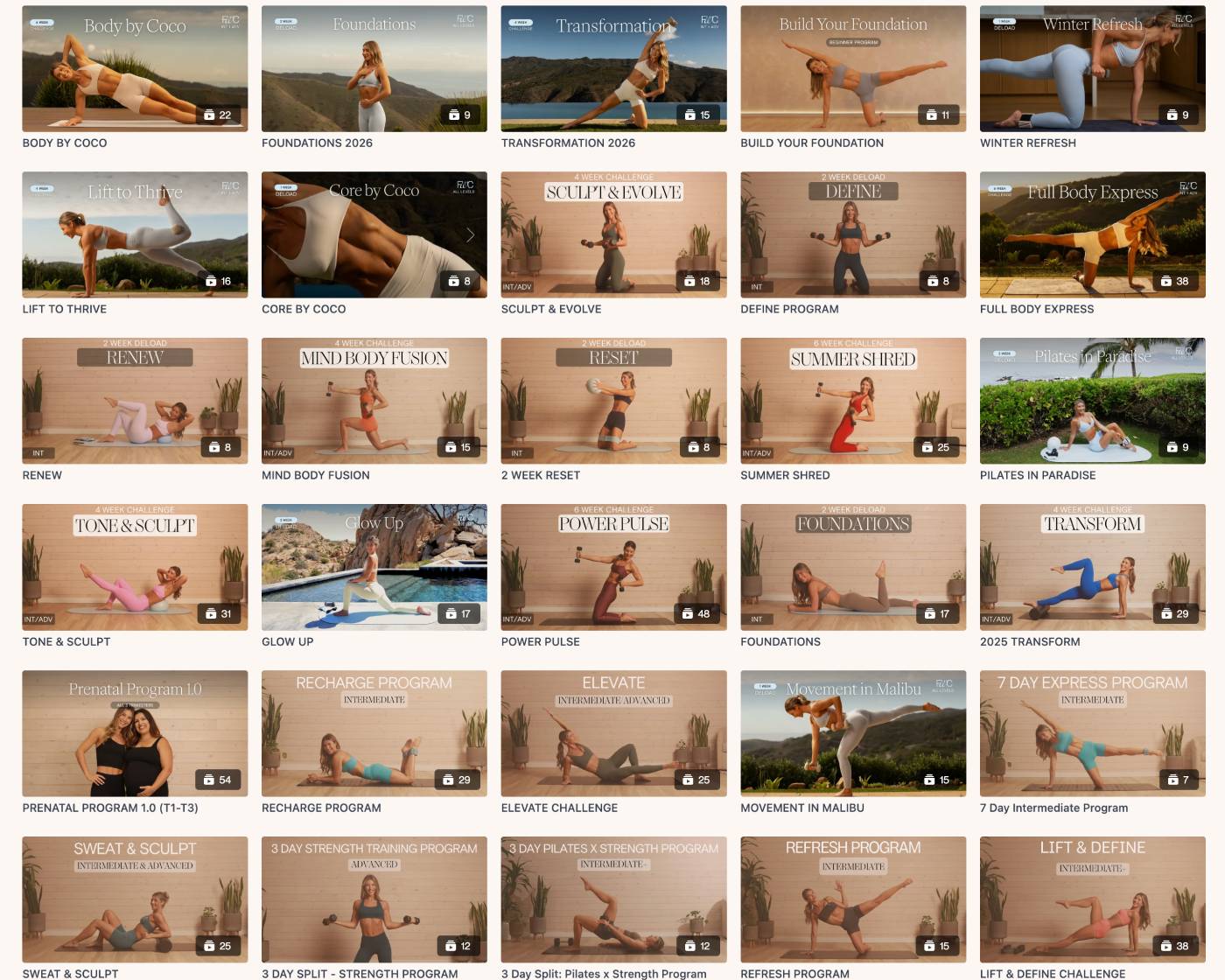
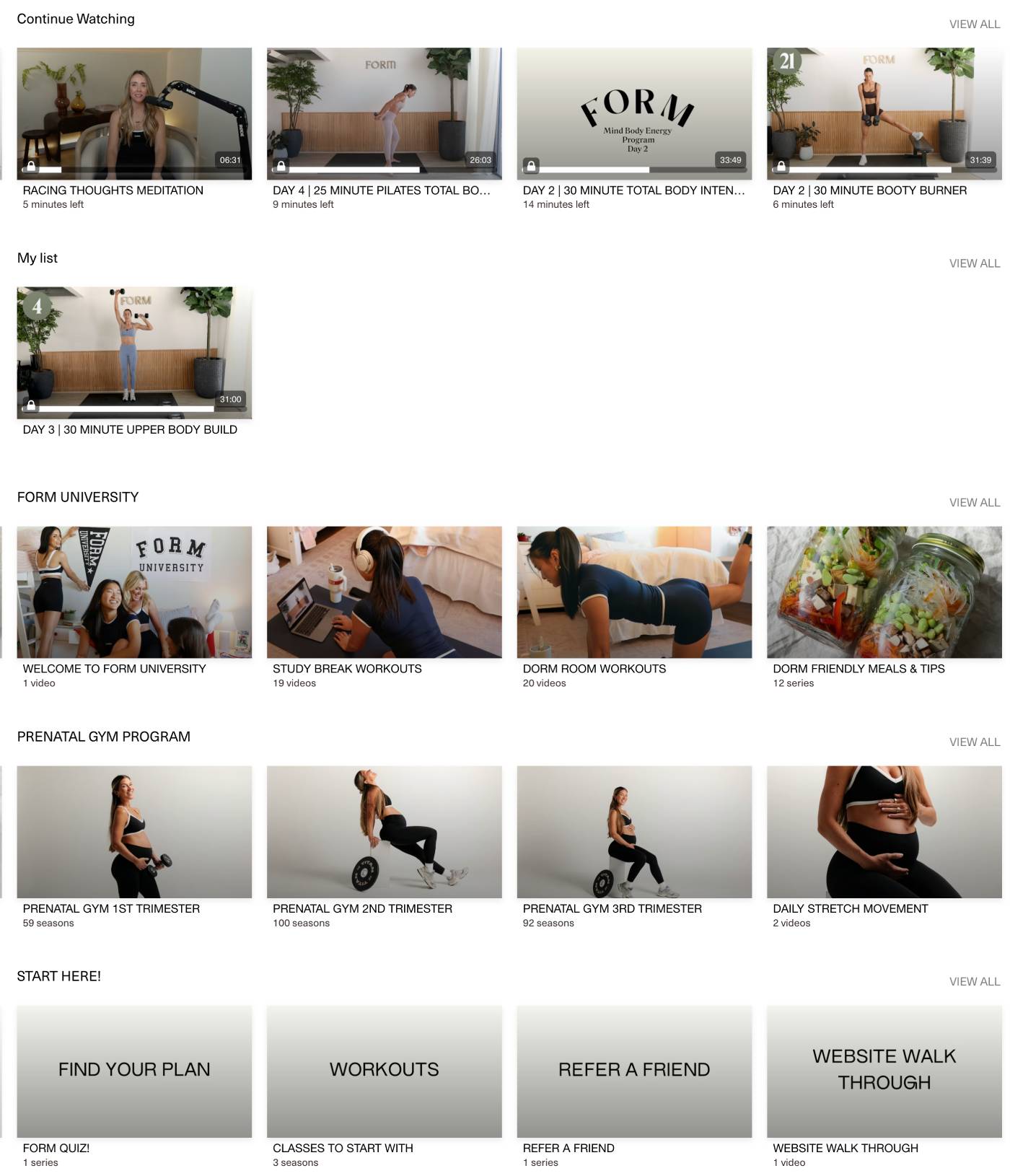
At-a-glance comparison
| Feature | Fit with CoCo | Form |
|---|---|---|
| Her Daily Fit score | 8.1 / 10 | 7.7 / 10 |
| Monthly price | $39.95/month | $28/month |
| Annual price | $359.95/year ($29.99/mo equiv.) | $180/year (~$15/mo equiv.) |
| Free trial | 7 days, no credit card (monthly) | 7 days |
| Training method | 3-2-1 (strength + Pilates + mobility) | Pilates, strength, barre, HIIT, meditation |
| Menopause programme | Hormonal methodology built in | None dedicated |
| Joint friendliness score | 8/ 10 | 6.5/ 10 |
| Nutrition hub | Meal plans + recipes included | Dietitian-approved recipes + nutrition hub |
| Programme length | 6-week structured programmes | Ongoing class library + monthly new programmes |
| Equipment needed | Dumbbells, resistance band (optional) | Mat, optional light dumbbells |
Her Daily Fit scoring breakdown
Her Daily Fit scores fitness platforms on nine weighted categories. The weights reflect the priorities of women aged 35–55: time efficiency, muscle health, joint safety, and hormonal relevance each carry significant weight. Below are the full scores for this comparison.
| Category | Weight | Fit with CoCo | Form | Winner |
|---|---|---|---|---|
| Time Efficiency | 15% | 9 | 9 | Tied |
| Muscle Potential | 15% | 8 | 7.5 | Fit with CoCo |
| Women Over 40 Specificity | 15% | 8 | 5.5 | Fit with CoCo |
| Joint Friendliness | 12% | 8 | 6.5 | Fit with CoCo |
| Recovery Compatibility | 10% | 8 | 8 | Fit with CoCo |
| Programme Structure | 10% | 9 | 8.5 | Fit with CoCo |
| Value for Money | 8% | 6.5 | 8 | Form |
| UX and Design | 8% | 8 | 9 | Form |
| Nutrition Integration | 7% | 7.5 | 8 | Form |
| Overall (weighted) | 100% | 8.1 / 10 | 7.7 / 10 | Fit with CoCo |
Time efficiency (Fit with CoCo 9 – Form 9: Tied)
Both platforms score 9 on time efficiency, and both deliver on the promise of practical workout lengths for busy women. This is the only category where neither platform has an edge.
Fit with CoCo’s workouts typically run 30–50 minutes for strength sessions and 20–35 minutes for Pilates and mobility. The 3-2-1 weekly structure means six sessions spread across a week, with clear guidance on which sessions to prioritise if the week gets compressed. There is no ambiguity about what to do next – the programme tells you.
Form’s sessions trend shorter overall: many Pilates and barre classes fall between 15 and 30 minutes, with longer strength-focused content at 35–45 minutes. The variety of session lengths means it is easier to fit a 15-minute class into a fractured day – but you are responsible for building those pieces into a coherent training week yourself. Form’s weekly curated schedules help with this, though they are less prescriptive than FwC’s programme-led approach.
Muscle potential (Fit with CoCo 8 – Form 7.5: Fit with CoCo wins)
Fit with CoCo’s 3-2-1 method emphasises progressive strength training across its three weekly strength sessions. Sessions use dumbbells with progressive loading cues built into the programme – you are not just doing the same weights in week four as you were in week one. This structure supports the kind of mechanical stimulus that research associates with lean mass preservation in women during perimenopause.
Resistance training has well-documented benefits beyond aesthetics. resistance training RCT. The study found strength training produces meaningful improvements in lean mass, resting metabolic rate, and functional capacity – precisely the outcomes women over 40 are trying to protect.
Form includes strength-focused content but the class library is eclectic – Pilates, barre, sculpt, and HIIT all sit alongside the strength sessions. Without a structured weekly strength sequence, the total training stimulus for muscle is harder to control and harder to progressively overload. Form scores 7.5 here: solid but not as muscularly targeted as FwC’s method.
Women over 40 specificity (Fit with CoCo 8 – Form 5.5: Fit with CoCo wins)
This is the widest scoring gap in the comparison: 8 versus 5.5. And it is one of the most important categories for the Her Daily Fit audience.
Fit with CoCo is built with hormonal health in mind. The 3-2-1 method is not arbitrary – the balance of strength, Pilates, and mobility maps to the physiological changes of perimenopause, including reduced oestrogen, declining muscle mass, and increased joint sensitivity. The strength component addresses sarcopenia risk; the mobility sessions address the stiffness and joint vulnerability that increase post-40; the Pilates sessions build the deep core and postural stability that become harder to maintain as oestrogen fluctuates.
Perimenopause affects the majority of women from their early 40s, with symptoms – including fatigue, sleep disruption, and musculoskeletal changes – that directly affect exercise capacity. perimenopause symptoms. A fitness platform that acknowledges this context in its programme design scores markedly higher here.
Form, for all its quality, does not offer a dedicated perimenopause programme or a hormonal training methodology. Sessions are designed for general fitness, not for the specific demands of women in hormonal transition. At 5.5, it is not penalised for what it is – a high-quality general platform – but it cannot compete with FwC on this metric.
Joint friendliness (Fit with CoCo 8 – Form 6.5: Fit with CoCo wins)
Form’s 6.5 on joint friendliness is one of the lowest scores in the boutique category across the entire Her Daily Fit comparison series. It warrants a frank explanation.
Form includes HIIT content, higher-impact barre sequences, and some jumping or dynamic movement in its general class library. For a woman whose joints are in good condition, this is fine – more variety is a benefit. For women managing knee sensitivity, hip concerns, or the connective tissue laxity that can accompany oestrogen decline, the absence of impact modification cues across the class library is a meaningful gap. Several sessions tested during the personal review required self-directed modification.
Fit with CoCo’s 3-2-1 method is designed to be fully low-impact. Strength sessions use controlled tempo with dumbbell resistance; Pilates sessions are mat-based; mobility sessions are stretch- and flow-focused. There is no unexpected plyometric content. The result is a platform where joint risk is systematically low, earning it 6.5 here.
The ACSM’s evidence-based position on exercise for older adults highlights the importance of joint-safe loading and appropriate exercise selection as populations age. ACSM position stand. Low-impact, resistance-based training is specifically recommended as the primary modality for maintaining functional capacity while protecting joints – which is exactly the design principle behind FwC’s method.
Recovery compatibility (Fit with CoCo 8 – Form 8: Fit with CoCo wins)
Both platforms are relatively recovery-friendly – the gap here is modest (0.5 points) but reflects a structural difference in design intent. Fit with CoCo earns 8 because the 3-2-1 method explicitly builds recovery into the week: mobility sessions are not optional add-ons but core programme components. Muscle group rotation between strength days is deliberate, so consecutive sessions target different areas.
Form scores 8 – strong, but slightly below FwC’s score because the self-directed nature of the class library means recovery planning is the user’s responsibility. It is easy to accidentally stack two consecutive sessions that work the same muscle groups if you are picking from the library by mood rather than by programme. Form’s weekly curated schedules help here, but they do not carry the same enforcement mechanism as FwC’s structured programme.
For women in perimenopause, recovery compatibility matters more than it might earlier in life. Extended recovery time, hormonal disruption of sleep, and higher perceived effort at equivalent training loads all mean that recovery-conscious programme design has measurable impact on sustainability and adherence over months and years.
Programme structure (Fit with CoCo 9 – Form 8.5: Fit with CoCo wins)
Fit with CoCo’s highest score in this comparison – 9 – reflects the clarity and logic of the 3-2-1 method. The Full Body Express 6-week programme, which I tested across multiple weeks, is a genuinely well-designed progression: week one establishes baseline difficulty, subsequent weeks increase load or volume in predictable ways, and the three weekly movement types complement rather than repeat each other. There is no ambiguity about what to do.
Form scores 8.5 on programme structure. It has added structured programmes and monthly new programme releases, and the weekly curated schedules are a useful tool for members who want direction. But the underlying model remains a class library – the programmes sit on top of that, rather than being the primary navigation mechanism. For a user who thrives on flexibility and variety, this is ideal. For a user who needs an explicit weekly plan to maintain consistency, FwC’s model is more effective.
Progressive overload – the systematic increase of training stimulus over time – is the fundamental mechanism by which strength adaptations occur. Platform design that makes progressive overload easy and obvious directly supports training outcomes. Pilates RCT.
Value for money and pricing (Form 6.5 – Fit with CoCo 8: Form wins)
This is Form’s clearest category win – and the most practically important one for many members.
Annual pricing comparison:
| Plan | Fit with CoCo | Form | Saving with Form |
|---|---|---|---|
| Monthly | $39.95/month | $28/month | $11.95/month |
| Annual | $359.95/year | $180/year | $179.95/year |
| Annual per month | ~$29.99/mo | ~$15/mo | ~$15/month |
Form’s annual plan at $15/month equivalent is one of the better value propositions in the boutique fitness category. For comparison, Fit with CoCo at $29.99/month on the annual plan is double that price. The $179.95 annual saving with Form is real and significant – equivalent to around six months of the FwC annual plan at no extra cost.
Fit with CoCo’s higher price is not arbitrary. The platform funds a more structured programme architecture, ongoing content development within the 3-2-1 framework, and the meal planning and recipe infrastructure that is built into the subscription. But the question is whether those features justify nearly double the annual cost for your specific situation. If you are a self-directed exerciser with a clear understanding of your weekly training needs, the additional $180/year for FwC’s structure is hard to defend on value grounds alone. That is why FwC scores 6.5 here – very good content, meaningful methodology, but priced at a premium that some users will not fully utilise.
UX and design (Form 8 – Fit with CoCo 9: Form wins)
Form has the best app design in the boutique fitness category. It is not close. The interface is clean, the search and filtering are intuitive, the video player is polished, and the overall experience of navigating the class library feels like a product that was designed with care rather than assembled iteratively. Both the web and mobile experiences are consistent and high quality. Form earns 9 here.
Fit with CoCo scores 8 – excellent for the category, with a clean, functional interface and clear programme navigation on both web and app. The 3-2-1 dashboard makes it easy to see where you are in your weekly structure. The slight gap to Form reflects the fact that Form’s polish extends to micro-interactions, typography, and video presentation in ways that feel more considered at every touchpoint.
Both platforms offer offline download for mobile users, which is a genuine usability win over larger platforms. For women who train while travelling or in areas with unreliable connectivity, offline download meaningfully expands when and where sessions can happen.

Nutrition integration (Form 7.5 – Fit with CoCo 8: Form wins)
Form’s nutrition hub includes dietitian-approved recipes, meal plans, and nutritional content – and it is integrated into the main platform rather than being a separate app or add-on. It earns 8 here for breadth and professional validation of its content.
Fit with CoCo includes meal plans and recipes as part of the subscription, but the nutrition component is less deeply integrated than Form’s hub. It earns 7.5 – solid but not leading the category. The meal plans are practical and aligned with the platform’s active-women audience, but the level of dietitian involvement and the depth of the nutritional content library is not at Form’s level.
Protein intake is a nutritional priority that research specifically highlights for women in midlife and older. PROT-AGE consensus. The study recommends higher protein intake per kilogram of body weight for active older adults than general population guidelines suggest – context that both platforms’ nutrition hubs could do more to address directly for their 35–55 demographic.

Personal testing and observations
Fit with CoCo testing
I tested Fit with CoCo starting with the 7-day free trial on the monthly plan (no credit card required) and extended into multiple weeks of the Full Body Express 6-week programme. I also explored the class library across both strength and Pilates session types on both the web browser and the mobile app.
The 3-2-1 structure is genuinely helpful if you are someone who has previously struggled to decide how to organise your week. The programme removes that decision: you know that Monday and Wednesday are strength, Tuesday and Thursday are Pilates, and there is a mobility session built in. The Full Body Express programme felt progressive – by week three, sessions were noticeably harder than week one, using the same movements but with loading that had stepped up. The Pilates sessions were not perfunctory filler; they engaged deep core and hip stability in ways that complemented rather than repeated the strength days.
The meal plans included in the subscription are practical – actual recipes and weekly plans rather than just generic nutrition guidance – but they are not deeply personalised. They are calibrated for an active woman rather than for a woman in perimenopause specifically, which is a minor gap given the platform’s hormonal focus elsewhere.
Form testing
I tested Form for three weeks immediately following a four-week Sculpt Society block – making this an unusually direct back-to-back comparison within a single training period. The contrast between the two platforms was noticeable within the first week. Form’s design quality is evident from the first session: the video quality, the instruction clarity, and the pacing of the classes feel premium.
The joint question came up in practice during testing. Several of Form’s HIIT-adjacent sessions required modification for training days where recovery was not complete. This was not a significant problem – modification options exist – but the absence of impact-level indicators on session thumbnails meant I had to either play the intro to gauge intensity or rely on the session tags, which are not always precise. For a woman with established joint concerns, this would require more active session management than FwC’s consistently low-impact library.
Form’s nutrition hub was the stronger nutrition experience of the two platforms – recipes are well-produced and the dietitian-approved labelling adds credibility. I used several recipes across the testing period and found them practical and genuinely appropriate for the activity level the platform is designed for.
Who should choose which
Choose Fit with CoCo if:
You want a structured weekly training method that takes the guesswork out of your week. The 3-2-1 model is ideal for women in perimenopause who want their workout plan to reflect the physiological realities of that stage – progressive strength, low joint impact, mobility built in. You are willing to pay a premium ($359.95/year) for that structure and methodology. You have responded well to programme-led fitness in the past, or you know that left to your own schedule you will default to comfortable habits rather than progressive overload.
Choose Form if:
You are a self-directed exerciser who enjoys variety and can build your own coherent week from a class library. You prioritise design quality and user experience – Form’s app is genuinely best-in-category. You are budget-conscious: at $180/year, Form is one of the best-value boutique platforms available. You are happy to work around the lack of menopause-specific programming and are not dependent on structured programme guidance. You want a platform that also functions well as a mindfulness and meditation resource, which Form supports well alongside its fitness content.
For women interested specifically in the Pilates component that both platforms share, the research evidence on Pilates-based resistance training is worth reviewing. Pilates meta-analysis.
The physiological case for why the Women Over 40 Specificity category carries 15% weight in Her Daily Fit scoring is grounded in evidence on how muscle responds to hormonal change. menopause muscle loss.
Which Is Better for Women Over 50?
Fit With CoCo stands out for women over 50 because Coco’s programming directly addresses the hormonal and physical changes of perimenopause and post-menopause – you’ll find content on joint care, strength training at lower loads and recovery that acknowledges an ageing body. FORM is more generically structured and skews toward a younger, performance-focused audience. If you are over 50 and want a coach who has thought deeply about your specific fitness needs, Fit With CoCo is the more relevant and empathetic choice.
Frequently asked questions
Is Fit with CoCo or Form better for women over 40?
Fit with CoCo is better for women over 40, scoring 8/10 on Women Over 40 Specificity compared to Form’s 5.5/10. Fit with CoCo’s 3-2-1 method – three strength sessions, two Pilates, one mobility – is structured for hormonal health and muscle preservation. Form has no dedicated menopause programming and its joint-friendliness score of 5.5/10 is one of the lowest in the boutique category.
Which is cheaper, Fit with CoCo or Form?
Form is significantly cheaper. Form costs $180/year (about $15/month equivalent) compared to Fit with CoCo’s $359.95/year (about $29.99/month equivalent). That is a $179.95 annual saving with Form. Both offer 7-day free trials, though Fit with CoCo’s trial requires no credit card on the monthly plan.
What is the 3-2-1 method in Fit with CoCo?
The 3-2-1 method is Fit with CoCo’s weekly workout structure: three strength-based sessions, two Pilates sessions, and one mobility or stretch session per week. The method is designed to balance progressive muscle stimulus with joint-friendly recovery, making it suitable for women in their 40s and 50s managing perimenopause.
Does Form have menopause-specific programming?
No. Form does not have a dedicated menopause or perimenopause programme. Unlike Fit with CoCo, which builds hormonal methodology into its 3-2-1 structure, Form offers a general library of Pilates, strength, barre, HIIT, and mindfulness content. This is the primary reason Form scores 5.5/10 on Women Over 40 Specificity – the lowest score in this comparison.
Can I try Fit with CoCo and Form for free?
Yes. Fit with CoCo offers a 7-day free trial on its monthly plan with no credit card required. Form also offers a 7-day free trial. Note that Fit with CoCo’s annual plan has no trial period and no refunds per their stated policy – the free trial applies to the monthly plan only.
What is the difference between Fit with CoCo and Form workouts?
Fit with CoCo uses a weekly 3-2-1 structure with longer, progressive strength-and-Pilates sessions and explicit 6-week programmes. Form offers a broader library including strength, Pilates, sculpt, barre, HIIT, and meditation, typically in shorter 15–40 minute classes. Form has higher variety and superior app design; Fit with CoCo has stronger programme structure and higher muscle-building potential.
Research citations
- Westcott WL (2012). Resistance Training is Medicine: Effects of Strength Training on Health. Current Sports Medicine Reports, 11(4), 209–216. resistance training RCT.
- Chodzko-Zajko WJ et al. (2009). American College of Sports Medicine Position Stand: Exercise and Physical Activity for Older Adults. Medicine & Science in Sports & Exercise, 41(7), 1510–1530. ACSM position stand.
- Yilmaz Akyuz G et al. (2026). Effects of Pilates versus aerobic exercise on strength, balance, and functional outcomes in women: a randomised controlled trial. PubMed Central. Pilates RCT.
- Liao CD et al. (2024). Effects of Pilates Training on Body Composition, Muscular Strength, and Physical Performance: A Systematic Review and Meta-Analysis. International Journal of Environmental Research and Public Health. Pilates meta-analysis.
- Maltais ML et al. (2018). Changes in Muscle Mass and Strength After Menopause. Journal of Cachexia, Sarcopenia and Muscle, 9(1), 1–13. menopause muscle loss.