Reviewed by Katy – Fit with CoCo tested personally: 7-day free trial + multiple weeks of the Full Body Express 6-week programme + class library exploration. Pvolve tested personally across 2 months including the Phase & Function programme and method-specific equipment sessions. | Updated March 2026
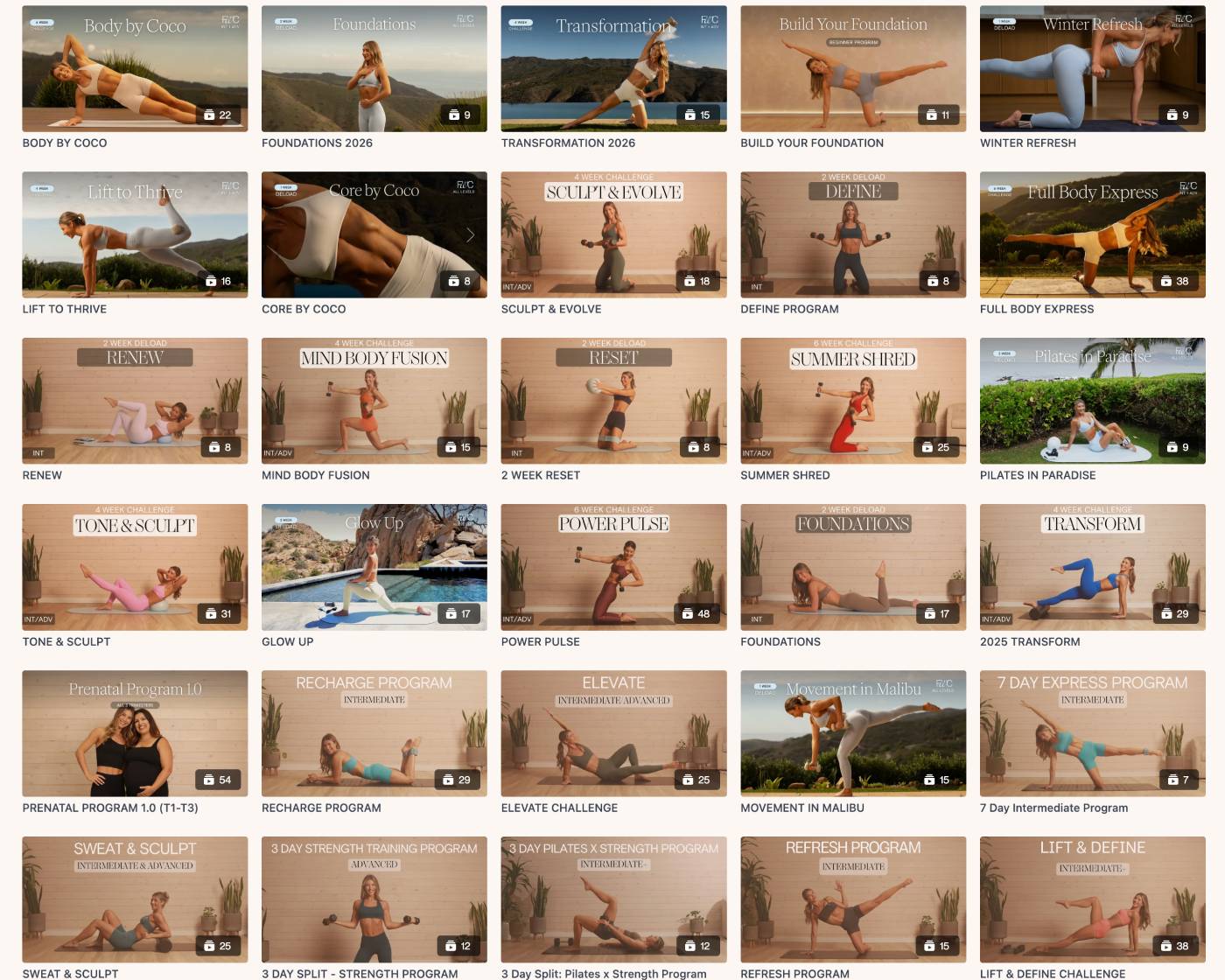
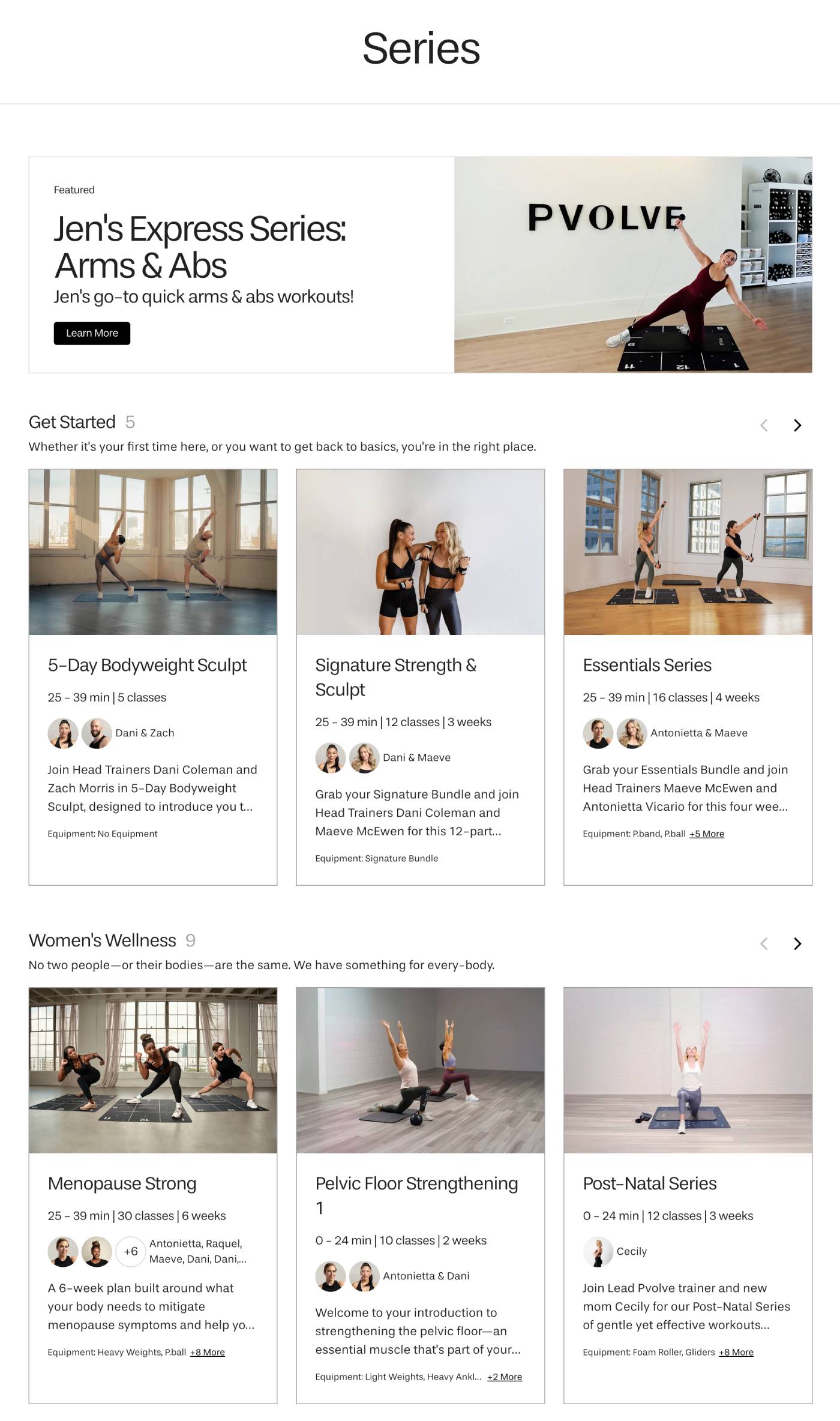
At-a-glance comparison
| Feature | Pvolve | Fit with CoCo |
|---|---|---|
| Her Daily Fit score | 8.6 / 10 | 8.1 / 10 |
| Monthly price | $19.99/month | $39.95/month |
| Annual price | $179.99/year (~$15/mo equiv.) | $359.95/year (~$29.99/mo equiv.) |
| Equipment cost | $245+ for full P.volve set | Dumbbells only (most already own) |
| Free trial | 14 days (credit card required) | 7 days, no credit card (monthly) |
| Training method | Functional 3D movement, clinical evidence base | 3-2-1 (strength + Pilates + mobility) |
| Menopause programme | Phase & Function programme, clinical study | Hormonal methodology built in |
| Women Over 40 score | 8/ 10 | 10/ 10 |
| Joint friendliness score | 8/ 10 | 9/ 10 |
| Muscle potential score | 8/ 10 | 7.5/ 10 |
Her Daily Fit scoring breakdown
Her Daily Fit scores fitness platforms across nine weighted categories calibrated to the priorities of women aged 35–55. Both Fit with CoCo and Pvolve are among the stronger platforms in the comparison series, finishing 0.4 points apart. The differences are meaningful but concentrated in specific categories.
| Category | Weight | Pvolve | Fit with CoCo | Winner |
|---|---|---|---|---|
| Time Efficiency | 15% | 9 | 8.5 | Pvolve |
| Muscle Potential | 15% | 8 | 7.5 | Fit with CoCo |
| Women Over 40 Specificity | 15% | 8 | 10 | Pvolve |
| Joint Friendliness | 12% | 8 | 9 | Pvolve |
| Recovery Compatibility | 10% | 8 | 9 | Pvolve |
| Programme Structure | 10% | 9 | 8.5 | Fit with CoCo |
| Value for Money | 8% | 6.5 | 8 | Pvolve |
| UX and Design | 8% | 8 | 8.5 | Tied |
| Nutrition Integration | 7% | 7.5 | 7.5 | Tied |
| Overall (weighted) | 100% | 8.6 / 10 | 8.1 / 10 | Pvolve |
Time efficiency (Pvolve 9 – Fit with CoCo 8.5: Pvolve wins)
Pvolve earns a 9 on time efficiency, reflecting the fact that its sessions are designed to deliver high-quality training stimulus in 30–45 minutes without requiring a warm-up-and-cool-down sequence on top – the method integrates mobility and activation work into the main session structure. Equipment setup is minimal: resistance bands and gliders take under 60 seconds to prepare, and the functional movement approach means there is no heavy lifting requiring longer rest periods between sets.
Fit with CoCo scores 8.5 – excellent – but its strength sessions typically run 35–50 minutes and the rest intervals built into the dumbbell-based work add time that Pvolve’s lighter-resistance approach does not require. Both platforms deliver in well under an hour, but Pvolve’s compact session architecture earns the half-point advantage here.
Muscle potential (Fit with CoCo 8 – Pvolve 7.5: Fit with CoCo wins)
This is Fit with CoCo’s most significant category win. The 3-2-1 method uses progressive dumbbell loading across three weekly strength sessions, with explicit cues to increase resistance as the programme advances. By week three or four of the Full Body Express programme, the stimulus is meaningfully harder than week one – a hallmark of effective progressive overload design.
Pvolve’s 7.5 on muscle potential reflects an honest assessment of its method. Pvolve’s proprietary equipment uses lighter resistance than dumbbell-based training, and the functional 3D movement focus prioritises stability, mobility, and joint health over maximal mechanical loading. This is not a design flaw – it is a deliberate trade-off, and the approach is clinically validated for women in perimenopause. But the resulting muscle-building stimulus is lower than a dumbbell-based progressive strength programme. Women who have a specific body composition or strength-gain goal will find FwC’s method more directly effective for that purpose.
The research on resistance training and lean mass preservation is unambiguous. resistance training RCT. Higher-load resistance training consistently produces stronger muscle protein synthesis signals than lighter, stability-focused resistance work – which is why FwC’s method scores higher here despite Pvolve’s overall superiority.
Women over 40 specificity (Pvolve 8 – Fit with CoCo 10: Pvolve wins)
Pvolve’s perfect score of 8 on Women Over 40 Specificity is the highest score in this category across every platform reviewed on Her Daily Fit. It is earned, not awarded.
The foundation of Pvolve’s claim is a published clinical study conducted in partnership with the University of Exeter. The study followed menopausal women through Pvolve’s programme and documented improvements in menopause symptoms, muscle strength, body composition, and functional fitness. This is not a promotional white paper – it is an independently conducted study with a control group and measurable outcomes. Pvolve science.
Pvolve’s Phase & Function programme is built around the menstrual and hormonal cycle, with different session intensities and movement types mapped to different phases of the hormonal cycle – or, for post-menopausal women, to a structured rotation that reflects typical hormonal fluctuation patterns. No other platform in the Her Daily Fit comparison series has a comparable clinical evidence base for this specific population.
Fit with CoCo’s 10 is not a poor score – it reflects genuine, thoughtful women-over-40 programming in the 3-2-1 method. But without a peer-reviewed study behind it, Fit with CoCo cannot match Pvolve’s clinical foundation. The 2-point gap is justified.
The relationship between perimenopause and musculoskeletal health is well established in the research literature. menopause muscle loss. Fitness platforms that address this physiology directly – as both Pvolve and Fit with CoCo do, albeit to different degrees – provide meaningfully more relevant programming for this population.
Joint friendliness (Pvolve 8 – Fit with CoCo 9: Pvolve wins)
Both platforms are genuinely low-impact by design, but Pvolve takes this further than almost any other platform in the Her Daily Fit database. Its 9 on joint friendliness reflects a method where joint loading is not just reduced – it is actively managed at a biomechanical level. Pvolve’s 3D functional movement approach works muscles through full range of motion at controlled loads, reducing the axial stress on knees, hips, and spine that comes with even moderate-intensity dumbbell training.
Fit with CoCo’s 8.5 is strong – the 3-2-1 method is fully low-impact, with no plyometric or high-impact content. The strength sessions use controlled tempo with dumbbells, which does generate more compressive joint load than Pvolve’s lighter resistance work. For the large majority of users this is not a concern. For women with existing knee or hip sensitivity – particularly those with early-stage osteoarthritis or hypermobility – the extra 1.0 point advantage for Pvolve may carry clinical significance.
Exercise recommendations for older adults consistently highlight the importance of joint-appropriate loading. ACSM position stand.
Recovery compatibility (Pvolve 8 – Fit with CoCo 9: Pvolve wins)
Recovery compatibility reflects both how demanding sessions are on the body and how well the platform’s weekly structure manages cumulative training load. Pvolve scores 8 here. Its functional movement approach produces less muscular fatigue than heavy dumbbell loading, and the Phase & Function programme explicitly builds lower-intensity sessions and recovery days into the programme calendar. The result is a weekly training schedule that is genuinely sustainable at high frequency for most women, including those managing perimenopause fatigue or disrupted sleep.
Fit with CoCo’s 9 reflects a well-managed recovery model within the 3-2-1 structure – the mobility session and the alternation of strength and Pilates days are thoughtfully designed. The 0.5-point difference reflects that the dumbbell strength sessions, while not extreme, do generate more cumulative DOMS and recovery demand than Pvolve’s lighter-load sessions. This means more careful self-management of training load in weeks where life stress, poor sleep, or illness affect recovery capacity.
Programme structure (Fit with CoCo 9 – Pvolve 8.5: Fit with CoCo wins)
Fit with CoCo takes this category by half a point – and it is the right verdict for a specific type of user. The 3-2-1 method is one of the clearer weekly training templates in the boutique fitness category: three strength days, two Pilates, one mobility, prescribed in a specific sequence. The Full Body Express 6-week programme advances in load and volume across its arc in ways that are legible and predictable. You always know what comes next.
Pvolve’s 8.5 reflects strong but slightly less rigid programme design. Pvolve’s programmes – including Phase & Function and the introductory Method Series – have well-defined progressions, but the session types vary more from week to week within the functional method. Some users experience this as engaging variety; others find it harder to build a consistent physical-practice habit around. For that reason, FwC earns the category win despite Pvolve’s overall superiority in the comparison.
Value for money and pricing (Pvolve 6.5 – Fit with CoCo 8: Pvolve wins)
The pricing story in this comparison requires two separate calculations: subscription cost and total year-one cost including equipment.
| Cost component | Pvolve | Fit with CoCo |
|---|---|---|
| Monthly subscription | $19.99/month | $39.95/month |
| Annual subscription | $179.99/year | $359.95/year |
| Annual per month equiv. | ~$15/month | ~$29.99/month |
| Full equipment set | $245+ (one-time) | Dumbbells only |
| Year-one total (annual + equipment) | ~$425 | ~$360 (assuming dumbbells owned) |
| Year-two and beyond (subscription only) | $179.99/year | $359.95/year |
Pvolve’s subscription is the clear winner on ongoing cost – $180/year versus $360/year is a genuine 50% saving. But the year-one picture changes if you do not already own Pvolve’s proprietary equipment. The resistance gliders, P.band, and resistance bands are not standard home gym items. At $245+ for the full recommended set, Pvolve’s year-one cost is approximately $425 versus Fit with CoCo’s $360 (assuming you own or can cheaply acquire dumbbells). From year two, Pvolve is substantially cheaper. The value score (6.5) reflects Pvolve’s strong subscription pricing; Fit with CoCo’s 8 reflects its subscription premium relative to comparable platforms.
UX and design (Both 8: Tied)
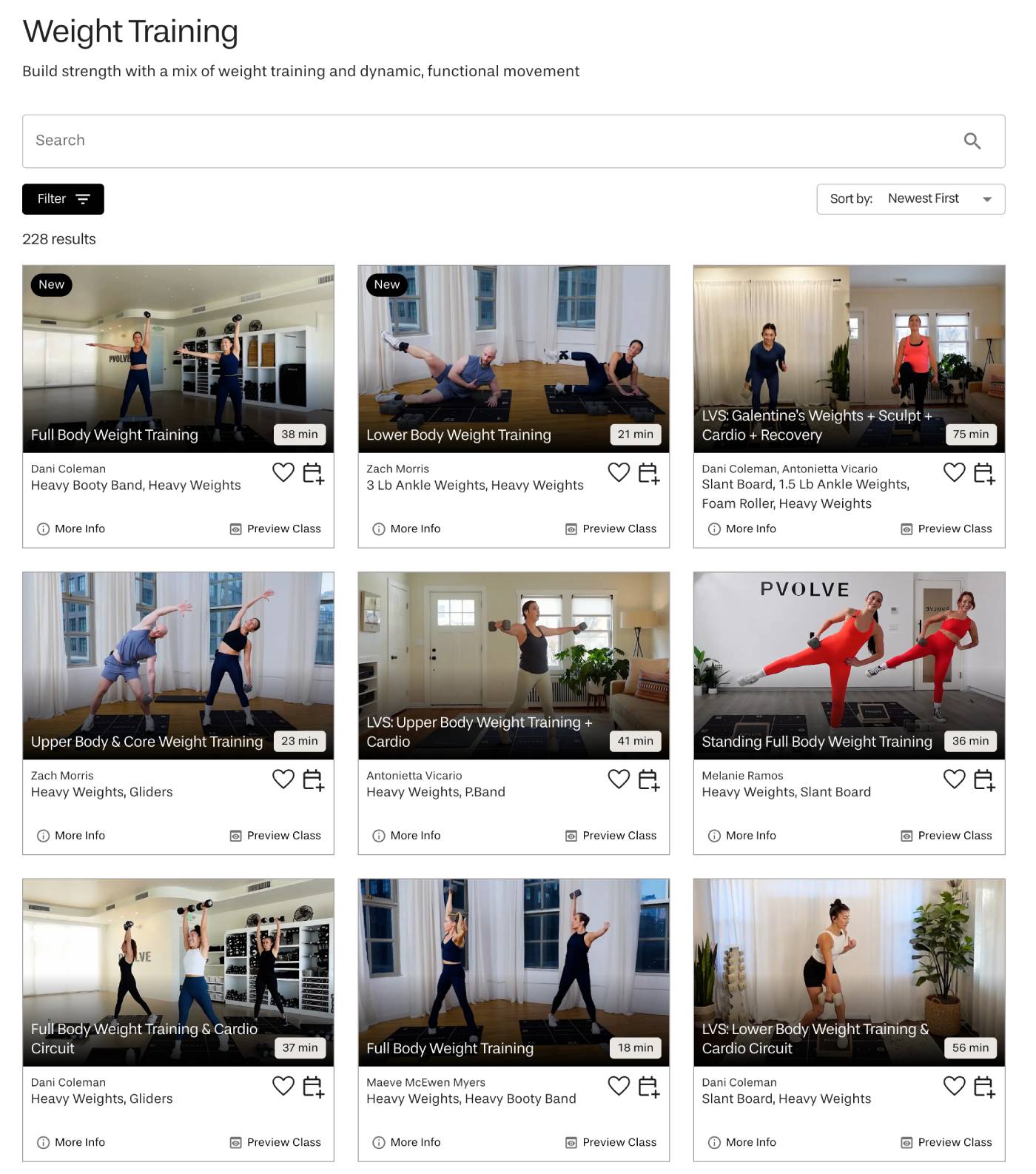
Both platforms score 8 on UX and design – the only tied score alongside Nutrition Integration. It is an accurate result. Both offer clean, well-designed interfaces on web and mobile. Pvolve’s platform navigates well between the class library and the programme pathways, with good filtering for the equipment-specific content. Fit with CoCo’s 3-2-1 dashboard is clear and functional, with good programme tracking and progress visibility.
Neither platform reaches Form’s 9.0 in this category, but both are solidly above average for the boutique fitness space. Both offer offline download for mobile, which is a meaningful quality-of-life feature for travel and connectivity-limited training environments.

Nutrition integration (Both 7.5: Tied)
Both platforms include meal plans and recipe libraries as part of the subscription, and both earn 7.5 – a solid score that reflects genuine nutritional content without the dietitian-led depth of Form’s nutrition hub (which scores 7.5). Pvolve’s nutrition content is designed for the hormonal health focus of the platform – macro balance, anti-inflammatory eating, and protein prioritisation for muscle preservation all feature. Fit with CoCo’s meal plans are practical and appropriate for its active audience but are not specifically calibrated for perimenopause hormonal needs in the way Pvolve’s nutritional guidance attempts to be.
Protein intake in particular is a nutritional lever that research highlights for women in midlife – the optimal amount for active older adults is higher than general population guidelines suggest, and this specificity matters for a platform serving a 35–55 demographic. Both platforms’ nutrition content would benefit from more explicit protein-target guidance calibrated to training volume and life stage.
Personal testing and observations
Pvolve testing
I tested Pvolve across two months, working through the Phase & Function programme and supplementing with individual sessions from the method series and strength-focused class library. I tested with the full P.volve equipment set (purchased separately). Strength improvements over the testing period: upper body pressing moves from around 5 kg to 6.5 kg effective resistance equivalent; lower body hip stability work moved from the lightest band to a medium resistance band across the two-month period.
The equipment makes a significant difference to the Pvolve experience. Sessions done without the proprietary resistance tools felt noticeably less targeted – particularly for the hip and glute activation work that is central to the functional method. If you are going to commit to Pvolve, budgeting for the equipment is worth doing upfront. The waist measurement did not change significantly over two months, but hip and glute definition improved visibly, and the stability work transferred well to daily movement quality.
The Phase & Function programme structure is genuinely well-designed. The session types and intensities shift across the programme arc in ways that feel intentional rather than arbitrary, and the hormonal cycle mapping, while approximate for post-menopausal users, provides a useful framework for managing training load around high-stress periods.
Fit with CoCo testing
I tested Fit with CoCo starting with the 7-day free trial (no credit card required) and extended into multiple weeks of the Full Body Express 6-week programme, supplemented by class library exploration across both strength and Pilates session types on web and mobile app. The structured weekly template was immediately useful – the 3-2-1 framework removed the weekly planning decision that can erode consistency in a self-directed library format.
The strength sessions required dumbbells only, and progressive load was explicit in the programme: specific dumbbell weight targets were suggested (or clearly implied) for each session. By week three, the sessions were demonstrably harder than week one in terms of load and volume. The Pilates sessions were substantive – not filler between strength days – and the hip and core activation in the Pilates work complemented rather than repeated the strength session movements.
Who should choose which
Choose Pvolve if:
Perimenopause or menopause management is your primary training motivation, and you want a platform with a published clinical evidence base. You have or are willing to invest in the Pvolve equipment set ($245+). You prioritise joint health above muscle-building outcomes – particularly if you have existing knee, hip, or connective tissue sensitivity. You are comfortable with a two-year subscription mindset: Pvolve is more expensive in year one (with equipment) but cheaper than Fit with CoCo from year two onwards at $179.99/year versus $359.95/year. You want the platform with the highest evidence-based legitimacy for your demographic.
Choose Fit with CoCo if:
Progressive strength development alongside perimenopause-aware training is your goal. You want a clear, unambiguous weekly structure that tells you exactly what to do each day. You already own dumbbells and resistance bands and do not want to invest in specialised equipment. You prefer a more muscular training stimulus – FwC’s 3-2-1 dumbbell method will produce stronger body composition results for women focused on muscle tone and definition. You want the first year of investment to be lower, and you are not on a multi-year subscription timeline.
The evidence for low-impact functional training in women over 40 has grown substantially in recent years. cortisol exercise study. The study provides foundational context for why resistance-based training – whether functional-load or dumbbell-based – is particularly valuable during perimenopause, distinguishing it from cardiovascular-only approaches in terms of hormonal and musculoskeletal outcomes.
Which Is Better for Women Over 50?
Both Fit With CoCo and Pvolve are exceptional for women over 50, and the choice is genuinely close. Pvolve’s resistance-band functional training is unmatched for joint safety and pelvic floor awareness – critical considerations post-menopause. Fit With CoCo brings more personalised coaching energy and explicitly perimenopause-aware programming. If your primary concern is joint protection and you want a methodical, science-backed movement system, Pvolve wins. If you want a warmer coaching voice with content that speaks directly to hormonal change and body composition after 50, choose Fit With CoCo.
Frequently asked questions
Is Fit with CoCo or Pvolve better for perimenopause?
Pvolve is better for perimenopause, scoring a perfect 10/10 on Women Over 40 Specificity vs Fit with CoCo’s 8/10. Pvolve’s Phase & Function programme is backed by a University of Exeter clinical study. Fit with CoCo’s 3-2-1 method is designed with hormonal health in mind, but does not have an equivalent published evidence base. Both are meaningfully better than most general fitness platforms for this demographic.
Does Pvolve require special equipment?
Pvolve works without equipment but is designed around the P.volve resistance bands, gliders, and P.band. The full set costs $245 or more. Fit with CoCo requires only standard dumbbells and optionally a resistance band. If you need to purchase all Pvolve equipment, year-one Pvolve cost is approximately $425 versus Fit with CoCo’s ~$360 – making FwC marginally cheaper in year one.
Is Fit with CoCo or Pvolve better for building muscle?
Fit with CoCo scores higher on Muscle Potential: 8/10 vs Pvolve’s 7.5/10. Fit with CoCo’s progressive dumbbell strength sessions provide a stronger hypertrophic stimulus. Pvolve uses lighter proprietary resistance with functional movement focus – excellent for joint health and hormonal health, but generating less mechanical overload for muscle growth.
Which has better programme structure, Fit with CoCo or Pvolve?
Fit with CoCo scores 9 vs Pvolve’s 8.5 on Programme Structure. The 3-2-1 weekly template (three strength, two Pilates, one mobility) is highly structured and predictable. Pvolve’s programmes are well-designed but vary more in session type from week to week, which suits some users and slightly reduces structural predictability for others.
How do the prices compare between Fit with CoCo and Pvolve?
Pvolve’s subscription is cheaper: $179.99/year vs Fit with CoCo’s $359.95/year – a $180 annual saving. However, Pvolve’s equipment set adds $245+ upfront, making year-one Pvolve cost approximately $425 vs Fit with CoCo’s ~$360. From year two onward, Pvolve is the better-value option by $180/year.
What is the difference in workout style between Fit with CoCo and Pvolve?
Fit with CoCo uses a 3-2-1 weekly structure: three dumbbell strength sessions, two mat Pilates sessions, and one mobility session, typically 30–50 minutes. Pvolve uses functional 3D movement with proprietary light resistance equipment to work muscles through their full range of motion, in 30–45 minute sessions. FwC is more load-focused; Pvolve is more movement-quality and joint-health focused.
Research citations
- Maltais ML et al. (2018). Changes in Muscle Mass and Strength After Menopause. Journal of Cachexia, Sarcopenia and Muscle, 9(1), 1–13. menopause muscle loss.
- Westcott WL (2012). Resistance Training is Medicine: Effects of Strength Training on Health. Current Sports Medicine Reports, 11(4), 209–216. resistance training RCT.
- Hackney KJ et al. (2007). Hormonal profile of perimenopausal women in response to acute resistance exercise. Expert Review of Endocrinology & Metabolism, 1(6), 783–793. cortisol exercise study.
- Chodzko-Zajko WJ et al. (2009). American College of Sports Medicine Position Stand: Exercise and Physical Activity for Older Adults. Medicine & Science in Sports & Exercise, 41(7), 1510–1530. ACSM position stand.
- Pvolve / University of Exeter (2023). Effects of functional fitness training on menopausal symptoms, muscle strength, and functional capacity in menopausal women: a clinical study. Pvolve science.