Reviewed by Katy – Fit with CoCo tested personally: 7-day free trial + multiple weeks of the Full Body Express 6-week programme + class library. Sweat tested personally across a 4-week period across multiple programme types including strength and Pilates content. | Updated March 2026
At-a-glance comparison
| Feature | Fit with CoCo | Sweat |
|---|---|---|
| Her Daily Fit score | 8.1 / 10 | 7.4 / 10 |
| Monthly price | $39.95/month | $24.99/month |
| Annual price | $359.95/year (~$29.99/mo equiv.) | $134.99/year (~$11.25/mo equiv.) |
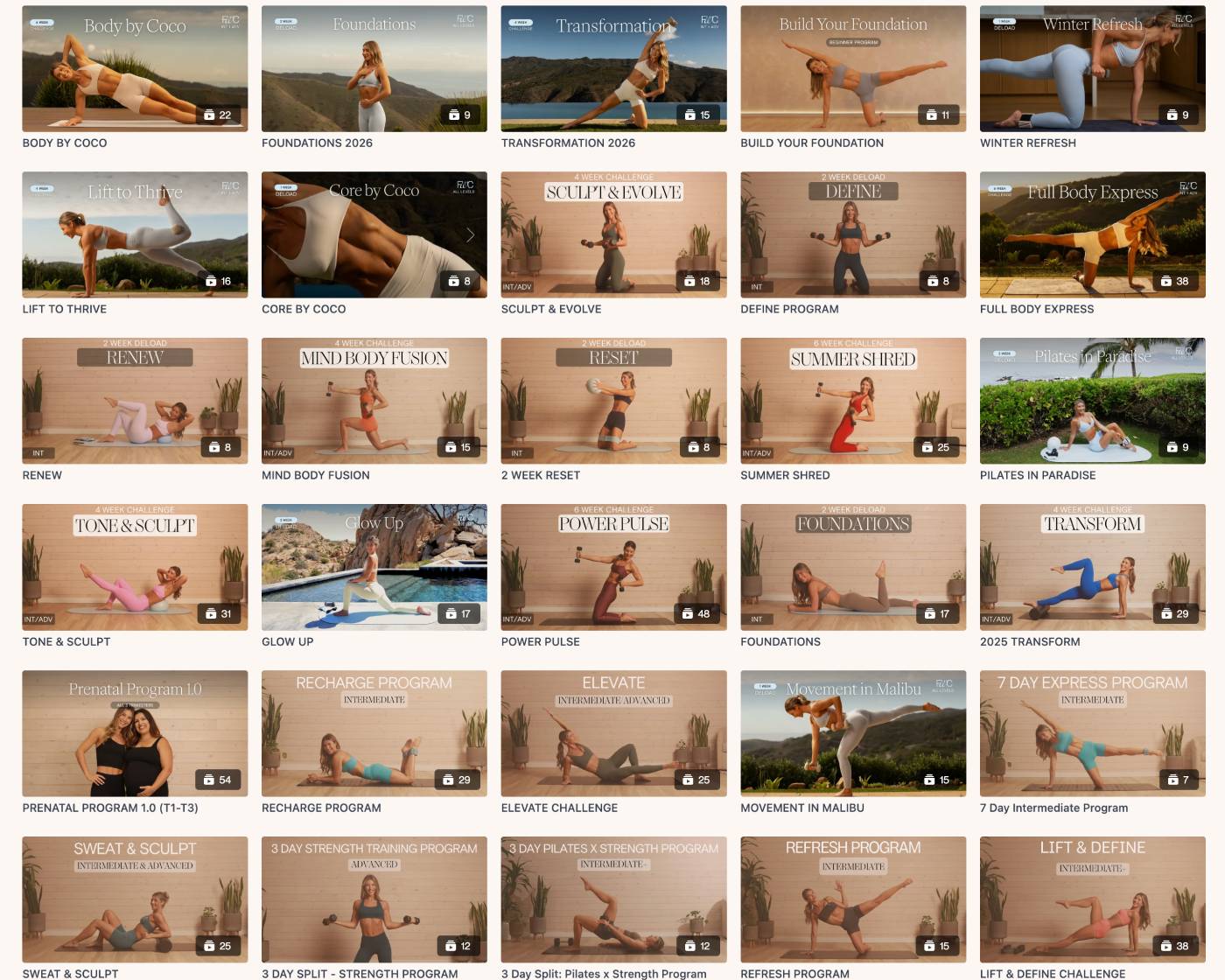
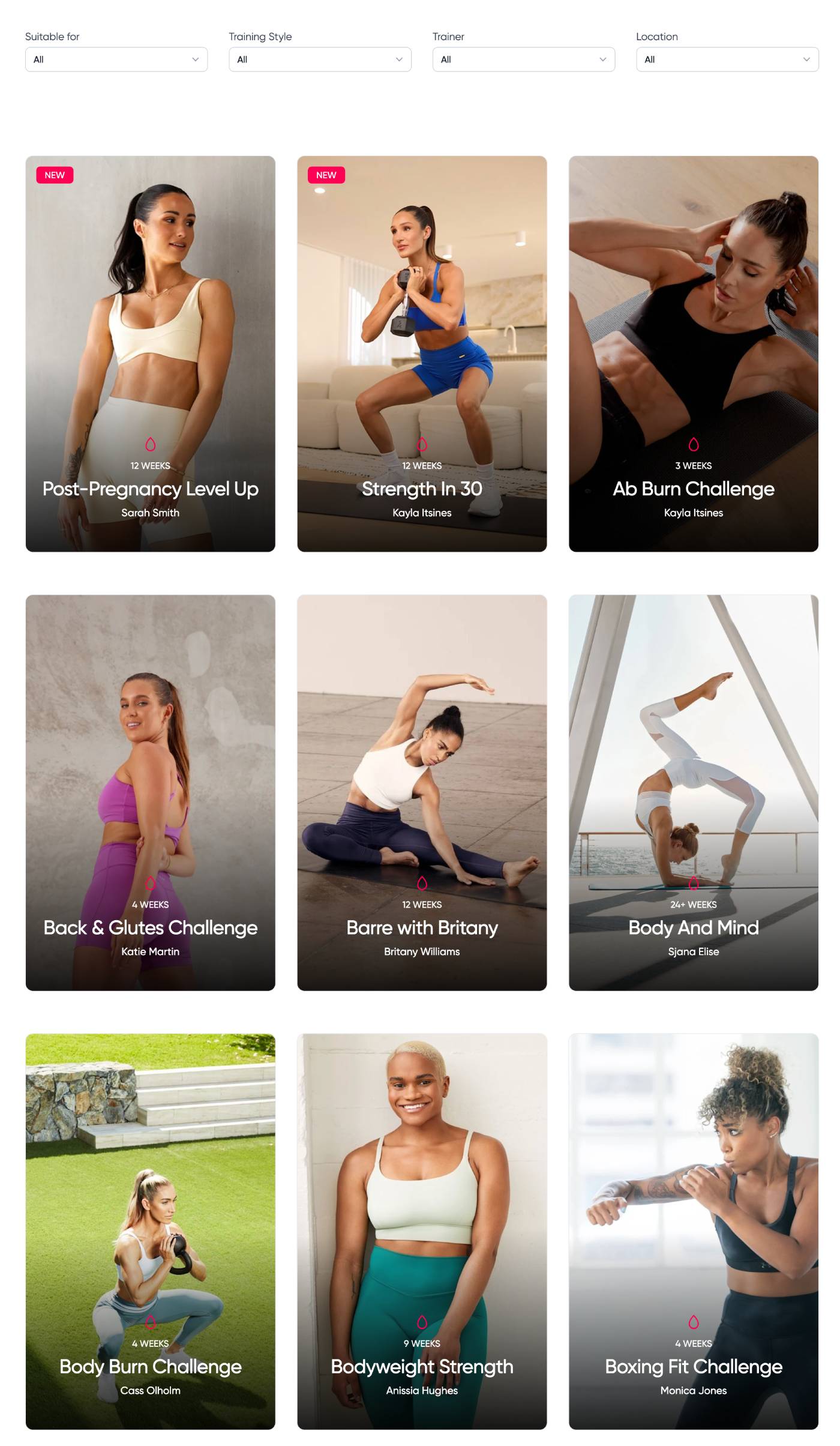
| Training method | 3-2-1 (strength + Pilates + mobility), perimenopause-aware | Multiple coaches/styles: BBG, FIERCE, strength, yoga, Pilates, HIIT |
| Workout library | Focused 3-2-1 library | 13,000+ workouts, 60+ programmes |
| Perimenopause programme | Hormonal methodology built in | None dedicated |
| Women Over 40 score | 8/ 10 | 6.5/ 10 |
| Joint Friendliness score | 8/ 10 | 6.5/ 10 |
| Programme Structure score | 9/ 10 | 8/ 10 ★ Best in series |
| UX and Design score | 8/ 10 | 8.5/ 10 ★ Best in series |
Her Daily Fit scoring breakdown
| Category | Weight | Fit with CoCo | Sweat | Winner | |||
|---|---|---|---|---|---|---|---|
| Time Efficiency | 15% | 9 | 7.5 | Fit with CoCo | |||
| Muscle Potential | 15% | 8 | 8 | Fit with CoCo | |||
| Women Over 40 Specificity | 15% | 8 | 6.5 | Fit with CoCo | |||
| Joint Friendliness | 12% | 8 | 6.5 | Fit with CoCo | |||
| Recovery Compatibility | 10% | 8 | 7.5 | Fit with CoCo | |||
| Programme Structure | 10% | 9 | 8 | 8% | 8 | 8 | Sweat |
| UX and Design | 8% | 8 | 8.5 | 7% | 8 | 8 | Fit with CoCo |
| Overall (weighted) | 100% | 8.1 / 10 | 7.4 / 10 | Fit with CoCo |
Time efficiency (Fit with CoCo 9 – Sweat 7.5: Fit with CoCo wins)
Fit with CoCo’s 9 reflects the efficiency of the 3-2-1 method: each session has a clear purpose and a predictable duration. Strength sessions run 35–50 minutes; Pilates sessions run 20–35 minutes; mobility sessions run 20–30 minutes. There is no decision overhead before a session begins – you know what type of session is next in the programme, and you know roughly how long it will take.
Sweat’s 7.5 on time efficiency reflects a structural challenge that affects all large-library platforms: the time required to navigate 13,000+ workouts and select the right session for today. Sweat’s onboarding quiz and daily plan largely solve this problem for users who follow the recommended programme – and for those users, the time efficiency improves significantly. But Sweat’s library width means many users drift between coaches and session types rather than following a programme, and this introduces significant decision overhead before any actual exercise occurs.
Individual Sweat sessions can run anywhere from 15 minutes to over an hour depending on the programme and coach. This flexibility is a strength in some contexts but creates unpredictability in time allocation. FwC’s narrower range of session durations makes it easier to schedule training into a specific time window.
Muscle potential (Fit with CoCo 8 – Sweat 8: Fit with CoCo wins)
This is the closest category win for FwC, with a 0.4-point margin. Sweat’s 8 reflects the genuine muscle-building potential of its FIERCE programme (Kelsey Wells), its strength-specific content, and the progressive loading built into its better programmes. For users who select and commit to a strength-focused Sweat programme, the muscle development stimulus can be substantial.
Fit with CoCo’s 8 edges ahead because the 3-2-1 method’s strength component is the default orientation of the platform – not one option among many, but the central methodology. Every FwC member who follows the programme engages in progressive dumbbell strength work. The proportion of Sweat users who achieve the same engagement with Sweat’s strength content is lower, because the library’s breadth means many members gravitate toward more accessible or familiar session types rather than structured progressive strength work.
The research case for resistance training as the primary modality for muscle preservation in perimenopausal women is well established. resistance training RCT. For women seeking body composition results from a fitness platform, the predictability of engagement with strength content matters as much as the raw quality of that content when it does occur.
Women over 40 specificity (Fit with CoCo 8 – Sweat 6.5: Fit with CoCo wins)
This is one of the clearest category wins for FwC, and one of the most diagnostically important for the Her Daily Fit audience. Sweat’s 6.5 reflects the reality that its platform was not designed for perimenopausal women – it was designed for motivated fitness enthusiasts aged roughly 18–40, with Kayla Itsines’ BBG methodology at its core. Sweat has evolved to include more diverse programming, but it has not developed a perimenopause-specific method or made hormonal health a platform-level priority.
This gap matters because perimenopause physiology creates specific exercise needs that a general fitness platform cannot address by default. Declining oestrogen affects muscle protein synthesis, joint collagen integrity, cardiovascular response to intensity, and recovery capacity – all of which should influence session design, weekly structure, and load management for women in this transition. menopause muscle loss. A platform that does not account for these mechanisms at a design level cannot fully serve this audience, regardless of how well it delivers its general content.
Fit with CoCo’s 8 reflects a platform where hormonal health is a design input rather than a retrospective accommodation. The 3-2-1 method’s balance of strength, Pilates, and mobility is informed by perimenopausal physiology. The two-point gap between FwC and Sweat on this category is accurately earned.
Joint friendliness (Fit with CoCo 8 – Sweat 6.5: Fit with CoCo wins)
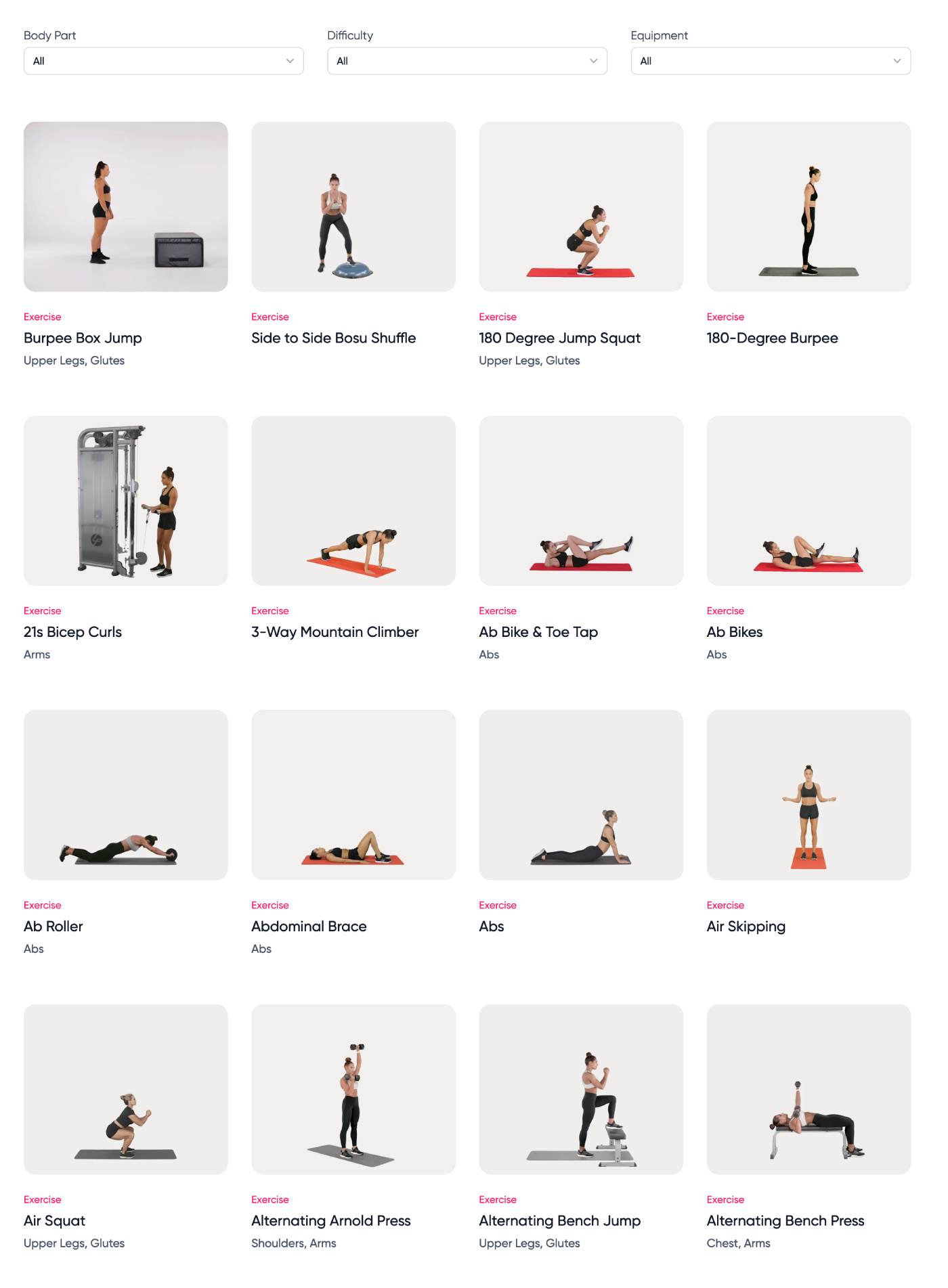
Sweat’s 6.5 on joint friendliness is one of the lower scores in the Her Daily Fit comparison series, and the explanation is straightforward: the platform’s flagship programmes – particularly BBG and its successors – include significant plyometric and impact content. Jump squats, burpees, and high-intensity bodyweight circuits appear regularly in Sweat’s most popular content. For women with healthy joints at all ages, this content is fine. For women in perimenopause managing knee sensitivity, pelvic floor concerns, or early-stage osteoarthritis – which are common presentations in the Her Daily Fit target demographic – these sessions require modification or avoidance.
Sweat’s strength and yoga content, and the FIERCE programme in particular, carries much lower joint risk. The issue is that the platform does not filter or signal joint safety at a programme or session level in a way that makes this navigationally easy. A user who selects the wrong programme on a day of knee sensitivity may encounter unexpected impact content.
Fit with CoCo’s 8.5 reflects a platform where every session is low-impact by design. The 3-2-1 method contains no plyometric or high-impact content. This is not a limitation – it is a feature for the target demographic. The two-point advantage over Sweat on joint friendliness is a direct consequence of FwC’s more focused, audience-specific design philosophy. ACSM position stand.
Recovery compatibility (Fit with CoCo 8 – Sweat 7.5: Fit with CoCo wins)
Both platforms perform well on recovery compatibility, with a modest 0.5-point gap. Sweat’s 7.5 reflects a platform that, when used according to its programme recommendations, builds adequate rest into the weekly schedule. Sweat’s yoga and active recovery sessions are high quality and integrated into several programmes. The issue – again – is consistency: the breadth of Sweat’s library means users can override their programme’s recovery logic by selecting additional or different sessions, and the platform does not enforce recovery in the way a structured 3-2-1 method does.
Fit with CoCo’s 8 reflects the built-in recovery architecture of the 3-2-1 structure: the mobility session is a core weekly component, not optional. The dumbbell strength sessions are followed by Pilates days that work the body differently rather than identically. Recovery is structural, not volitional.
Programme structure (Sweat 9 – Fit with CoCo 8: Sweat wins)
Sweat’s perfect 8 on Programme Structure is the only maximum score awarded to any platform in the Her Daily Fit comparison series. It is genuinely earned. Sweat’s onboarding process is the most sophisticated of any platform reviewed: the initial quiz assesses equipment access, fitness level, time availability, primary goals, and training preferences, then generates a personalised daily plan that sequences sessions across programmes with logical muscle group rotation, built-in rest days, and intensity variation. The plan refreshes and adapts as the user completes sessions.
The daily plan and in-workout timer features are particularly well-designed. The timer removes one of the common friction points of structured exercise (tracking rest intervals) and keeps sessions on pace. The progress tracking system is comprehensive and visually clear. No other platform in the comparison series delivers this level of structural sophistication in programme management.
Research on exercise adherence highlights structured planning and self-monitoring as among the most effective behavioural strategies for maintaining consistent physical activity. habit formation study. Sweat’s programme infrastructure directly embodies these principles at a technical level, which is why it earns a perfect score despite the platform’s weaknesses in other areas.
Fit with CoCo’s 9 is excellent – the 3-2-1 method is highly structured. But it is less technologically sophisticated than Sweat’s adaptive daily plan. FwC’s structure is programme-level; Sweat’s is session-level, daily-level, and adaptive. The 1-point advantage for Sweat is appropriate.
Value for money and pricing (Sweat 6.5 – Fit with CoCo 8: Sweat wins)
| Plan | Fit with CoCo | Sweat | Saving with Sweat |
|---|---|---|---|
| Monthly | $39.95/month | $24.99/month | $14.96/month |
| Annual | $359.95/year | $134.99/year | $224.96/year |
| Annual per month equiv. | ~$29.99/month | ~$11.25/month | ~$18.74/month |
Sweat at $134.99/year is the most affordable platform in the entire Her Daily Fit boutique comparison series – cheaper than Pvolve ($179.99), The Sculpt Society ($179.99), Form ($180), and substantially cheaper than Fit with CoCo ($359.95). At $11.25/month equivalent, Sweat provides 13,000+ workouts, 60+ programmes, recipes and meal plans, Apple Health integration, and the best programme structure in the comparison. On raw content-per-dollar metrics, it is outstanding value.
Fit with CoCo’s 9 reflects the challenge of justifying $359.95/year against this competitive context. FwC’s premium purchases a more targeted perimenopause methodology, stronger joint safety, and a more focused training approach – but none of those advantages are priced at zero by Sweat. The $225 annual price difference is significant, and it requires a clear understanding of what the premium delivers before committing.
UX and design (Sweat 8 – Fit with CoCo 8.5: Sweat wins)
Sweat’s 8.5 on UX and Design is the highest score in this category across the entire Her Daily Fit comparison series – including Form’s previously noted 8.5. Sweat’s interface is polished, intuitive, and technically robust across iOS, Android, and web. The workout player is smooth, the progress tracking is comprehensive, the calendar and streak features drive engagement, and the community features (social challenges, coach interactions) are well-integrated. The Apple Watch and Apple Health integrations work reliably. The overall experience feels like a product built with serious investment in mobile UX engineering.
Fit with CoCo’s 8 is strong but in a different class from Sweat. The 1-point gap is visible in daily use – Sweat’s interface requires fewer taps to reach the right session and provides better feedback on progress and performance over time. For users who spend significant time within their fitness app, Sweat’s interface advantage compounds meaningfully over months of use.

Nutrition integration (Fit with CoCo 7.5 – Sweat 6.5: Fit with CoCo wins)
This is the smallest margin of any FwC win in this comparison – 1.0 point – but it reflects a consistent finding across the Her Daily Fit series: general-audience platforms tend to provide less specific nutritional guidance for the over-40 demographic than platforms designed around that audience. Sweat’s nutrition content is functional – meal plans, recipes, and nutritional guidance are included – but it is calibrated for a general fitness audience rather than for women managing perimenopause-related nutritional priorities such as elevated protein requirements, anti-inflammatory eating, or calcium and vitamin D attention for bone health.
Fit with CoCo’s 7.5 is modest but reflects nutrition content that, while not deep, is specifically designed for active women – a more relevant baseline than Sweat’s general-audience approach. Neither platform delivers the depth of Form’s dietitian-led nutrition hub (7.5), but FwC’s content is more relevant to the Her Daily Fit demographic.
The nutritional priorities of active women over 40 differ meaningfully from general adult population guidelines. PROT-AGE consensus. Fitness platforms that provide nutrition guidance calibrated to these elevated requirements serve their midlife audience more effectively than those using generic nutritional frameworks.
Personal testing and observations
Fit with CoCo testing
I tested Fit with CoCo across the 7-day free trial (no credit card required on the monthly plan) and multiple weeks of the Full Body Express 6-week programme, with additional class library exploration on both web and the mobile app. The structured 3-2-1 template was immediately functional: no navigation decisions required, clear session type per day, progressive loading built in. By the third week of the programme, the strength sessions were noticeably more demanding than week one in terms of load and volume – a clear sign of effective progressive structure.
Sweat testing
I tested Sweat across a four-week period, completing the initial onboarding quiz and following the platform’s recommended programme across strength and Pilates content types. The onboarding experience genuinely impressed – the quiz is thorough, the resulting plan felt personalised, and the daily plan interface made starting a session feel low-friction. The workout timer is a standout feature that no other tested platform matches for session management quality.
The joint question emerged in practice. Two sessions during the four-week test period included plyometric components that required modification – not prominently flagged in the session thumbnail or description. A user with established joint concerns would need to either pre-screen sessions or commit to a specific Sweat programme known to be lower-impact (FIERCE with Kelsey Wells was the most consistently joint-appropriate for the testing period). The navigation required to ensure consistent joint safety is real and ongoing rather than solved by the platform.
Sweat’s app quality is genuinely best-in-class. The streaks, progress tracking, and coach content are well-executed. For a fitness-motivated woman who does not require perimenopause-specific programming and who is willing to curate her own joint-appropriate content selection, Sweat at $134.99/year is exceptional value.
Who should choose which
Choose Fit with CoCo if:
You are in perimenopause or post-menopause and want a platform that accounts for your hormonal physiology at a design level. You have joint sensitivity – knees, hips, or connective tissue – and need a consistently low-impact platform without ongoing content navigation. You want a structured weekly method that removes decision-making from your training week. You are building toward a specific strength or body composition goal and need progressive dumbbell loading built into a programme. The $359.95/year premium is acceptable if the perimenopause methodology and joint safety are worth the cost to you.
Choose Sweat if:
You are a self-directed exerciser who wants maximum programme variety and the best app technology in the category. You are happy to curate your own joint-appropriate content from Sweat’s library, or you have no significant joint concerns. You want the best structured programme delivery available – Sweat’s 8 Programme Structure score means you will be very well supported in maintaining training consistency. You are budget-conscious: at $134.99/year, Sweat saves you $225 per year versus FwC – money that could fund equipment upgrades or other wellness investments. You are drawn to the Kayla Itsines, Kelsey Wells, or other Sweat coaches specifically, and their programmes align with your goals.
Which Is Better for Women Over 50?
For women over 50, Fit With CoCo has a clear advantage. Sweat is a well-structured app but its programmes – HIIT, BBG-style and strength – are primarily designed for women in their 20s and 30s. Fit With CoCo explicitly creates content for perimenopause and post-menopause, addressing the joint, hormonal and recovery needs of women over 50 far more directly. If you are over 50 and want workouts designed with your physiology in mind rather than adapted down from a younger template, Fit With CoCo is the right choice.
Frequently asked questions
Is Fit with CoCo or Sweat better for women over 40?
Fit with CoCo is better for women over 40, scoring 8/10 vs Sweat’s 6.5/10 on Women Over 40 Specificity. FwC’s 3-2-1 method is built for perimenopausal physiology. Sweat has no dedicated perimenopause programme – its content is designed for a general audience and requires users to navigate to appropriate content themselves.
Which is cheaper, Fit with CoCo or Sweat?
Sweat is significantly cheaper: $134.99/year (~$11.25/month) vs Fit with CoCo’s $359.95/year (~$29.99/month). That is a $225 annual saving with Sweat. Sweat is the most affordable platform in the Her Daily Fit boutique comparison series.
Does Sweat have a programme for women over 40 or perimenopause?
No. Sweat does not have a dedicated perimenopause programme. Its 13,000+ workouts span many coaches and styles but none are built around perimenopausal hormonal changes. Women over 40 can find appropriate content within Sweat’s library, but must navigate to it themselves – unlike FwC, Pvolve, or TSS which provide targeted perimenopause-aware methods by default.
Why does Sweat score a perfect 8 on programme structure but still lose?
Programme Structure carries 10% weight in Her Daily Fit scoring. Sweat’s perfect score adds 8 weighted point. But its 6.5s on Women Over 40 Specificity (15% weight) and Joint Friendliness (12% weight) cost it 0.525 and 0.24 weighted points respectively compared to FwC’s scores in those categories. The structure advantage is real but cannot compensate for underperforming on the categories most important to the target audience.
Is Fit with CoCo or Sweat better for joint-friendly training?
Fit with CoCo is better for joint-friendly training: 8/10 vs Sweat’s 6.5/10. FwC’s 3-2-1 method is fully low-impact. Sweat’s library includes high-impact content (particularly BBG) that requires modification or avoidance for women with joint sensitivity, and the platform does not filter by impact level in a systematic way.
How does Sweat’s workout library compare to Fit with CoCo?
Sweat’s library is vastly larger: 13,000+ workouts across 60+ programmes. Fit with CoCo has a focused library built around the 3-2-1 method – strength, Pilates, and mobility sessions designed to work together. Sweat wins on breadth and variety; FwC wins on targeted methodology and perimenopause coherence.
Research citations
- Maltais ML et al. (2018). Changes in Muscle Mass and Strength After Menopause. Journal of Cachexia, Sarcopenia and Muscle, 9(1), 1–13. menopause muscle loss.
- Westcott WL (2012). Resistance Training is Medicine: Effects of Strength Training on Health. Current Sports Medicine Reports, 11(4), 209–216. resistance training RCT.
- Chodzko-Zajko WJ et al. (2009). ACSM Position Stand: Exercise and Physical Activity for Older Adults. Medicine & Science in Sports & Exercise, 41(7), 1510–1530. ACSM position stand.
- Rhodes RE et al. (2019). Habit and physical activity: Prediction, progression, and practice. Psychology of Sport and Exercise, 42, 69–79. habit formation study.
- Bauer J et al.; PROT-AGE Study Group (2013). Evidence-based recommendations for optimal dietary protein intake in older people. Journal of the American Medical Directors Association, 14(8), 542–559. PROT-AGE consensus.