Reviewed by Katy – The Sculpt Society tested personally for 4 weeks (full programme block including dance-cardio, sculpt, and recovery sessions). Fit with CoCo tested personally: 7-day free trial + multiple weeks of the Full Body Express 6-week programme + class library. | Updated March 2026
At-a-glance comparison
| Feature | The Sculpt Society | Fit with CoCo |
|---|---|---|
| Her Daily Fit score | 8.6 / 10 | 8.1 / 10 |
| Monthly price | $24.99/month | $39.95/month |
| Annual price | $179.99/year (~$15/mo equiv.) | $359.95/year (~$29.99/mo equiv.) |
| Free trial | 7 days | 7 days, no credit card (monthly) |
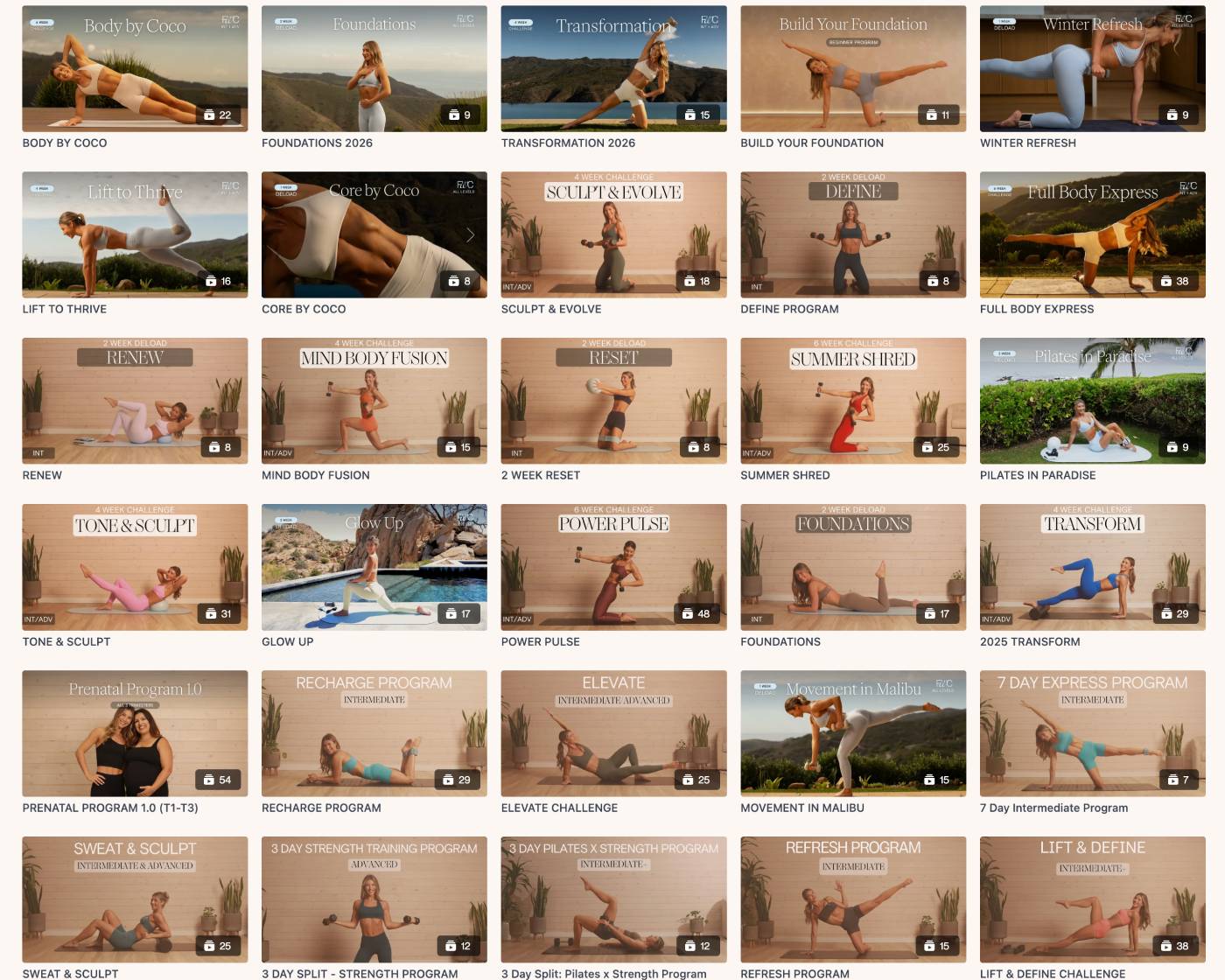
| Training method | Dance-cardio-sculpt (Megan Roup method) | 3-2-1 (strength + Pilates + mobility) |
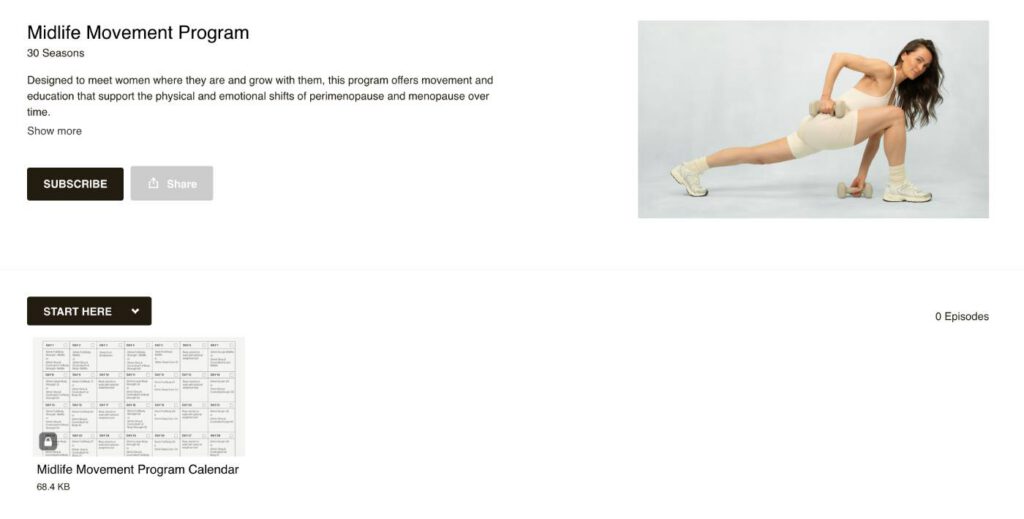
| Perimenopause programme | Dedicated 4-week programme with medical panel | Hormonal methodology built in |
| Women Over 40 score | 8/ 10 | 9.5/ 10 |
| Muscle Potential score | 8/ 10 | 7/ 10 |
| Joint friendliness score | 8/ 10 | 9/ 10 |
| Equipment | Mat only (light weights optional) | Dumbbells required |
Her Daily Fit scoring breakdown
Her Daily Fit scores platforms on nine weighted categories calibrated to the priorities of women aged 35–55. The Sculpt Society and Fit with CoCo are close overall – 0.2 points apart – but the category-level story reveals two platforms designed for different training priorities. TSS wins the comparison on its women-over-40 focus and value; FwC wins on muscle-building potential.
| Category | Weight | The Sculpt Society | Fit with CoCo | Winner |
|---|---|---|---|---|
| Time Efficiency | 15% | 9 | 8.5 | Fit with CoCo |
| Muscle Potential | 15% | 8 | 7 | Fit with CoCo |
| Women Over 40 Specificity | 15% | 8 | 9.5 | The Sculpt Society |
| Joint Friendliness | 12% | 8 | 9 | The Sculpt Society |
| Recovery Compatibility | 10% | 8 | 9 | The Sculpt Society |
| Programme Structure | 10% | 9 | 9 | Tied |
| Value for Money | 8% | 6.5 | 8.5 | The Sculpt Society |
| UX and Design | 8% | 8 | 8.5 | Tied |
| Nutrition Integration | 7% | 7.5 | 8 | The Sculpt Society |
| Overall (weighted) | 100% | 8.6 / 10 | 8.1 / 10 | The Sculpt Society |
Time efficiency (Fit with CoCo 9 – The Sculpt Society 8.5: Fit with CoCo wins)
Fit with CoCo edges this category at 8.5, reflecting the efficiency of the 3-2-1 method’s session design: each session type has a clear purpose and duration, typically 30–50 minutes for strength and 20–35 minutes for Pilates. No cross-category warm-up is needed – the session structure integrates activation into the main workout.
The Sculpt Society scores 9 – strong, but TSS’s dance-cardio sessions carry a slightly longer effective warm-up phase. The choreography-based movement sequences need a few minutes for the coordination elements to feel smooth, and this adds to effective session time for newer members. For experienced TSS users the gap narrows, but the learning curve on choreography means time efficiency is fractionally lower than FwC’s more straightforward strength-and-rep structure.
Both platforms comfortably accommodate the 30–45 minute window that research consistently identifies as the sweet spot for exercise adherence in time-pressured adult populations.
Muscle potential (Fit with CoCo 8 – The Sculpt Society 7: Fit with CoCo wins)
The largest gap in this comparison – 8 points – sits here, and it reflects a genuine, meaningful difference in training methodology. Fit with CoCo’s 3-2-1 method dedicates three of six weekly sessions to progressive dumbbell strength work, with explicit loading cues built into the programme. The Full Body Express programme advances in load and volume across its arc in ways that drive the mechanical overload required for lean mass development.
The Sculpt Society’s dance-cardio-sculpt approach uses light weights or body weight for its sculpting component. The method creates metabolic stress through sustained, high-repetition movement and relies more on muscular endurance than strength overload. This is a legitimate and effective approach for body composition maintenance, overall tone, and cardiovascular fitness – but the hypertrophic stimulus is substantially lower than FwC’s dumbbell-based sessions. TSS’s 7.0 is not a poor score; it honestly reflects what the method delivers and does not deliver for muscle development specifically.
For women in perimenopause, the argument for prioritising progressive strength training over lighter movement modalities is supported by the research literature. menopause muscle loss. The study documents the accelerated rate of muscle loss post-menopause and identifies progressive resistance training as the primary evidence-based countermeasure – making FwC’s stronger muscle stimulus directly relevant to the health outcomes this demographic is managing.
Women over 40 specificity (The Sculpt Society 8 – Fit with CoCo 9.5: The Sculpt Society wins)
TSS scores 8 on Women Over 40 Specificity – the second-highest score in this category across the entire Her Daily Fit comparison series, behind only Pvolve’s perfect 9.5. The primary driver of this score is TSS’s dedicated 4-week perimenopause programme, developed with a medical panel including doctors and women’s health specialists. This is not a generic “lower-impact” offering repackaged for the midlife market – it is a programme specifically built around the hormonal and physiological changes of perimenopause, with session design, intensity, and recovery structured accordingly.
TSS also responds to the reality that many women in perimenopause experience symptoms that affect both exercise capacity and motivation: fatigue, disrupted sleep, brain fog, joint sensitivity, and mood changes. The dance-cardio element of TSS’s method is specifically supportive here – the movement quality and choreography focus creates a mind-body connection and engagement that can make it easier to train on difficult symptom days compared to a structured strength session requiring focused loading.
Fit with CoCo’s 9.5 reflects genuine women-over-40 awareness in the 3-2-1 method – the balance of strength, Pilates, and mobility is thoughtfully designed for perimenopausal physiology. But without a published clinical study or a dedicated doctor-panel programme to the equivalent depth of TSS’s perimenopause offering, FwC earns a well-deserved but lower 9.5.
Dance-based movement has documented benefits for psychological wellbeing in women, including mood improvement and stress reduction outcomes that are particularly relevant for the perimenopause transition. dance fitness review. The analysis found dance-based exercise produced meaningful improvements in balance, quality of life, and psychological wellbeing outcomes – outcomes directly relevant to TSS’s perimenopause programme.
Joint friendliness (The Sculpt Society 8 – Fit with CoCo 9: The Sculpt Society wins)
TSS’s 9 on joint friendliness reflects the nature of its method: dance-cardio-sculpt with light or no weights, minimal impact, and fluid movement sequences that keep joint loading consistently low. There are no moments in a standard TSS session where a heavier dumbbell creates compression load on an arthritic knee or a vulnerable shoulder. The movement vocabulary is gentle by design.
Fit with CoCo’s 8.5 is strong – the 3-2-1 method is genuinely low-impact, and dumbbell strength sessions use controlled tempos that minimise joint stress. The half-point difference reflects the additional joint loading that comes with any dumbbell resistance work relative to body-weight or very-light-load movement. For most users this distinction is academic. For women with moderate knee, hip, or shoulder concerns, the difference may be practically significant.
Recovery compatibility (The Sculpt Society 8 – Fit with CoCo 9: The Sculpt Society wins)
TSS’s 8 on recovery compatibility reflects two structural advantages: its sessions generate less muscular fatigue than dumbbell strength training, and the programme explicitly includes recovery and flow sessions as core weekly components rather than optional additions. A woman who trains six days on TSS’s recommended schedule experiences less cumulative DOMS and systemic fatigue than the equivalent frequency on FwC’s strength-led programme.
This matters particularly during perimenopause, when fluctuating hormones, disrupted sleep, and higher perceived exertion at equivalent training loads all reduce effective recovery capacity. A programme that works with variable weekly energy levels rather than against them has a meaningful adherence advantage over months and years. TSS’s lighter metabolic demand means that even on high-symptom days, a 30-minute TSS session is achievable where a 45-minute dumbbell strength session might feel impossible.
Fit with CoCo’s 9 reflects well-managed recovery logic within the 3-2-1 structure. The mobility session and the Pilates days create real recovery between strength sessions. But the dumbbell work does produce meaningful DOMS – particularly for women who are newer to progressive loading – and this generates real constraints on consecutive training days in ways that TSS’s lighter method does not.
Programme structure (Both 9: Tied)
Both platforms tie at 9 on programme structure – a genuine reflection of two different but equally effective approaches to structuring a training week. Fit with CoCo’s 3-2-1 method is explicit and prescriptive: you know exactly what kind of session comes next, and the 6-week programme arc has a clear progressive logic. TSS’s approach is structured differently: the weekly schedule is curated and updated monthly, with clear session type rotation and a programme progression that advances over multi-week blocks.
The tied score is appropriate. Users who want maximal structure and minimal decision-making will find FwC’s template slightly more automatic. Users who want variety within a structured framework – which most TSS members describe as their preference – will find TSS’s curated approach equally well-designed. Neither is objectively better on this metric.
Value for money and pricing (The Sculpt Society 6.5 – Fit with CoCo 8.5: The Sculpt Society wins)
TSS earns its highest score of the comparison at 6.5 on value, reflecting a combination of excellent content quality at a competitive price with no equipment cost – the platform requires only a mat and optional light dumbbells that most users already own.
| Plan | The Sculpt Society | Fit with CoCo | Saving with TSS |
|---|---|---|---|
| Monthly | $24.99/month | $39.95/month | $14.96/month |
| Annual | $179.99/year | $359.95/year | $179.96/year |
| Annual per month equiv. | ~$15/month | ~$29.99/month | ~$15/month |
| Equipment cost | Mat only (~$0 additional) | Dumbbells (variable) | – |
At $179.99/year, TSS delivers five category wins, a dedicated perimenopause programme with medical panel involvement, and a polished, high-quality app experience. Fit with CoCo’s $359.95/year is justified only if the muscle-building premium is directly relevant to your goals. For the majority of the Her Daily Fit audience – women seeking sustainable, perimenopause-aware, low-impact movement – TSS’s price-to-quality ratio is outstanding. FwC’s 8.5 reflects a platform that provides real value, but at a price that competes unfavourably against alternatives with equivalent or higher overall quality.
UX and design (Both 8.5: Tied)
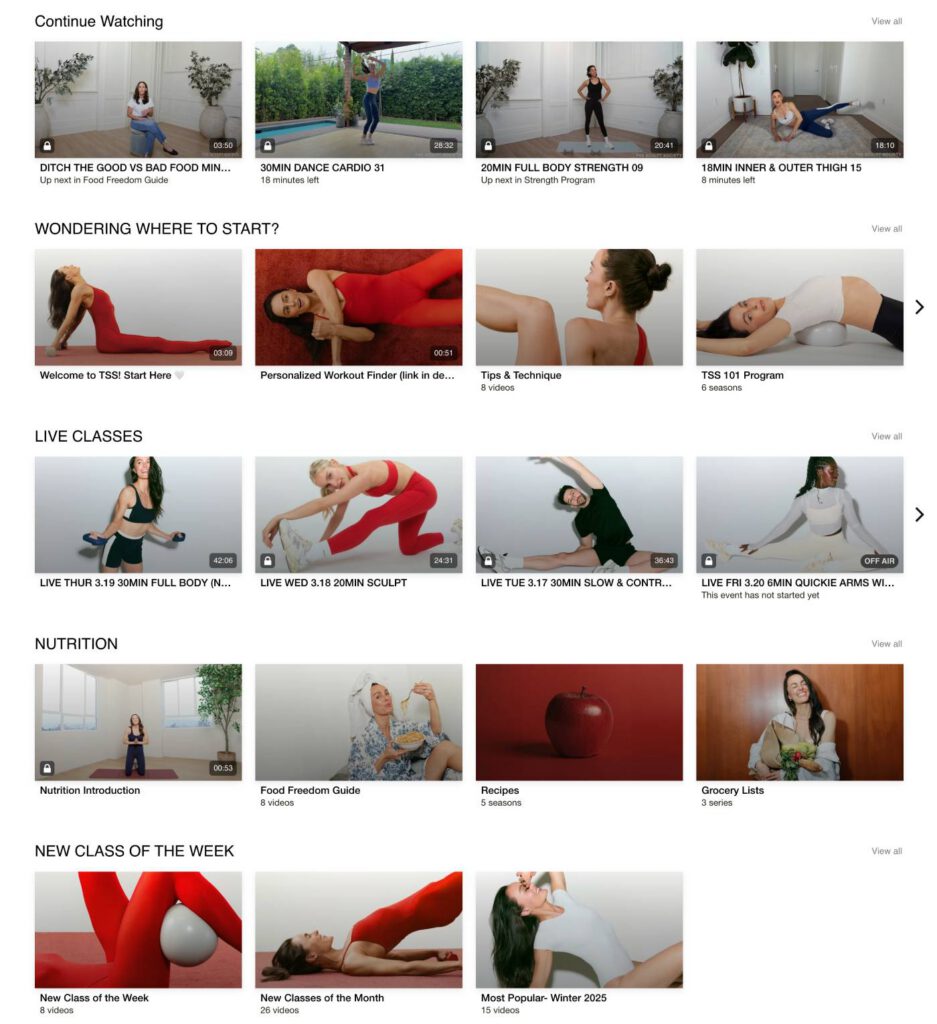
Both platforms tie at 8.5 on UX and design. TSS’s app is well-designed, with an attractive aesthetic that reflects its creator’s visual brand and easy navigation between session types, programmes, and the community features. The interface is clean and responsive on both web and mobile. Fit with CoCo’s dashboard is functionally strong – the 3-2-1 structure is clearly visualised, and programme tracking is easy to follow. Both offer offline download for mobile, which is a practical advantage for travel and low-connectivity training. The tie at 8.5 accurately reflects two platforms that are both well above average but neither at Form’s best-in-category 8.

Nutrition integration (The Sculpt Society 7.5 – Fit with CoCo 8: The Sculpt Society wins)
TSS scores 7.5 on nutrition integration, earning a modest 0.5-point advantage over FwC’s 8. TSS’s nutrition content includes recipes, meal guidance, and nutritional philosophy that is integrated into the platform and aligned with the movement method – an anti-inflammatory, protein-adequate approach that reflects the needs of an active midlife audience. The recipes are high quality and the nutritional guidance is practically useful.
Fit with CoCo’s nutrition content at 8 is solid – meal plans and recipes are included – but the integration is less deep and the perimenopause-specific nutritional guidance less developed than TSS’s offering. Both platforms would benefit from more explicit protein-target guidance for their 35–55 audience, for whom optimal protein intake is higher than general population guidelines suggest.
Personal testing and observations
The Sculpt Society testing
I tested The Sculpt Society across a four-week programme block, working through the main dance-cardio-sculpt programme alongside dedicated recovery and flow sessions. What TSS delivers in those four weeks is genuinely distinctive: the movement quality, the choreography, and the sense of physical ease that develops across the block are real and hard to replicate in a pure strength-and-Pilates format. By week three the choreography felt intuitive rather than effortful, and the sessions had a meditative flow quality that I found more restorative than most structured exercise formats.
The perimenopause programme within TSS is well-structured – the session intensity and duration adjustments are thoughtful, and the guidance around energy management across the week reflects genuine understanding of how perimenopause affects exercise capacity and recovery. The medical panel involvement is evident in the care with which hormonal symptoms are addressed in the programme materials, not just the workout design.
Fit with CoCo testing
I tested Fit with CoCo starting with the 7-day free trial (no credit card required on the monthly plan) and extending into multiple weeks of the Full Body Express 6-week programme, with class library exploration across both strength and Pilates session types on web and mobile. The contrast to TSS’s movement quality approach was immediately clear: FwC’s strength sessions demand focus on load management and form in a way that TSS’s choreography-driven sessions do not. The strength stimulus was real – by week three, the loading had progressed noticeably – and the results for body composition and functional strength were more direct than in a comparable TSS period.
The 3-2-1 template’s main virtue is its decision-free clarity. On a difficult week, knowing that today is a Pilates day rather than a strength day – and that the choice has been made for you – removes one friction point from getting the session done. This kind of structural commitment device has real value for consistency, particularly for women managing high cognitive load alongside training.
Who should choose which
Choose The Sculpt Society if:
You want a perimenopause-specific programme with medical panel involvement and high women-over-40 relevance. You enjoy movement quality, flow, and dance-based cardio over structured strength work – TSS is one of the few fitness platforms where the choreography itself becomes a source of joy rather than a learning hurdle. You want maximum value: at $179.99/year with no equipment cost, TSS is one of the most cost-effective high-quality boutique platforms available. You have joint sensitivity or regularly variable energy levels during perimenopause and need a method that adapts gracefully to how you feel on a given day.
Choose Fit with CoCo if:
Progressive strength development is your primary training goal and you want clear, measurable muscle-building progression within a perimenopause-aware framework. You already own dumbbells and prefer load-based training over choreography-based movement. You value a prescriptive weekly template that eliminates decision fatigue around session types. You are willing to pay the annual premium ($359.95/year) for a programme architecture that prioritises muscle development alongside hormonal health.
The evidence for dance-based exercise as a health intervention extends well beyond the physical outcomes typically measured in fitness research. dance fitness review. TSS’s approach – using dance movement as the primary modality – is supported by a meaningful body of research showing benefits for balance, body composition, psychological wellbeing, and quality of life in adult women.
Which Is Better for Women Over 50?
Women over 50 will find Fit With CoCo the more purposefully designed option. The Sculpt Society’s dance-cardio and light-weight sculpting is low-impact and enjoyable, making it accessible for women over 50 who are not interested in heavy lifting – but it lacks the hormonal health and bone density programming that becomes critical post-menopause. Fit With CoCo addresses these needs head-on. That said, if you are over 50 and in good health looking for something fun and sustainable rather than medically informed, The Sculpt Society is an excellent low-barrier choice.
Frequently asked questions
Is Fit with CoCo or The Sculpt Society better for women over 40?
The Sculpt Society is better for women over 40, scoring 9.5/10 on Women Over 40 Specificity vs Fit with CoCo’s 8/10. TSS has a dedicated 4-week perimenopause programme developed with a medical panel. Fit with CoCo’s 3-2-1 method is designed with hormonal health in mind but lacks a comparable dedicated perimenopause programme. Both platforms meaningfully outperform general fitness platforms for this demographic.
Which is cheaper, Fit with CoCo or The Sculpt Society?
The Sculpt Society is significantly cheaper: $179.99/year (~$15/month equivalent) vs Fit with CoCo’s $359.95/year (~$29.99/month equivalent). That is a $180 annual saving with TSS, with no additional equipment costs – TSS requires only a mat. FwC requires dumbbells, adding a variable upfront cost if not already owned.
Is Fit with CoCo or The Sculpt Society better for building muscle?
Fit with CoCo is significantly better for muscle building: 8/10 on Muscle Potential vs TSS’s 7/10 – the largest gap in this comparison. FwC’s three weekly dumbbell strength sessions provide a progressive overload stimulus. TSS’s dance-sculpt approach uses light or no weights and prioritises metabolic endurance and movement quality over muscle-building load.
What is The Sculpt Society’s perimenopause programme?
TSS’s dedicated 4-week perimenopause programme was developed with a medical panel including doctors and women’s health specialists. It adapts TSS’s dance-cardio-sculpt method to the energy, joint, and hormonal profile of perimenopause, with specific session structure, intensity guidance, and recovery pacing designed for women in hormonal transition. It is one of the most directly perimenopause-specific programmes available on any boutique fitness platform.
Do Fit with CoCo and The Sculpt Society use similar workout styles?
No. FwC uses a structured 3-2-1 weekly method: three dumbbell strength sessions, two mat Pilates sessions, one mobility session. TSS uses dance-cardio-sculpt: choreographed low-impact movement sequences combined with light resistance and body-weight sculpting. FwC is load-focused with progressive overload; TSS is movement-quality focused with higher choreography and mind-body emphasis.
Can I try both platforms for free before deciding?
Yes. Fit with CoCo offers a 7-day free trial with no credit card required on the monthly plan. The Sculpt Society also offers a 7-day free trial. Given the style difference between the platforms, testing both before committing to an annual plan is advisable – the dance-cardio feel of TSS and the structured strength approach of FwC suit different training personalities.
Research citations
- Maltais ML et al. (2018). Changes in Muscle Mass and Strength After Menopause. Journal of Cachexia, Sarcopenia and Muscle, 9(1), 1–13. menopause muscle loss.
- Fong Yan A et al. (2018). The Effectiveness of Dance Interventions on Physical Health Outcomes Compared to Other Forms of Physical Activity: A Systematic Review and Meta-Analysis. Sports Medicine, 48(4), 933–951. dance fitness review.
- Westcott WL (2012). Resistance Training is Medicine: Effects of Strength Training on Health. Current Sports Medicine Reports, 11(4), 209–216. resistance training RCT.
- Liao CD et al. (2024). Effects of Pilates Training on Body Composition, Muscular Strength, and Physical Performance: A Systematic Review and Meta-Analysis. International Journal of Environmental Research and Public Health. Pilates meta-analysis.
- Chodzko-Zajko WJ et al. (2009). American College of Sports Medicine Position Stand: Exercise and Physical Activity for Older Adults. Medicine & Science in Sports & Exercise, 41(7), 1510–1530. ACSM position stand.