$24.99/month or $134.99/year ($11.25/month) · 7-day free trial · Dumbbells, resistance band and optional barbell required for strength programmes
Platform tested personally for 5+ weeks (trial + one full month) · Strength in 30 and Pilates personally tested · Previously used Sweat for 6 months in 2019 · Prices verified April 2026
🗓️ Last updated: April 2026 · Pricing, features and programme availability checked against sweat.com – if the platform has recently updated its offering, changes may not yet be reflected here
Sweat App Review 2026 (Kayla Itsines): Quick Answer
Women who want a structured, progressive strength programme with the flexibility to mix in pilates, yoga and cardio; beginners learning proper form; anyone who wants a clear weekly plan without having to think about what to do
You want specific perimenopause-focused training methodology; you need offline downloads for travel or poor signal areas; you want personalised nutrition guidance tailored to your hormonal needs
Strength in 30: 30 min, 3x per week. Pilates sessions from 15 min. Optional LISS cardio (walking) 2x per week. Flexible to your schedule
Strength in 30: dumbbells + resistance band. Pilates/yoga: mat only. You log what you have and the app filters workouts accordingly
Bench or sturdy chair (step-ups, incline presses); step or box (can use bottom stair); kettlebell (dumbbell substitutes but not ideal for swings). Gym programmes require full gym access including leg press, cables, squat rack
Strength in 30 is NOT low impact – Romanian deadlifts, lunges and squats with weight load the knees and hips. Sweat does have dedicated low-impact programmes (Low Impact with Kayla, Low Impact Strength with Chontel) – use those instead if joint issues are significant
Strength in 30: moderate to high joint load – controlled movements but compound exercises under weight. HIIT optional. Pilates, yoga, Low Impact programmes: genuinely low impact
Moderate – 3x strength per week is manageable; app does not penalise missed sessions; dedicated recovery sessions available in library
Both – Strength in 30 and most Kayla programmes are home-based. Sweat also has dedicated gym programmes (Strength & Resistance, PWR with Kelsey) that require full gym equipment
Very low – onboarding quiz, instant programme recommendation, timers built in, exercise substitution in one tap, chatbot support. No music included but Spotify and Apple Music connect easily
Very low – a few taps in the app. Chatbot guides you through in seconds. Note: if subscribed via Apple or Google, cancel through that platform directly
$24.99/month or $134.99/year ($11.25/month). Is the Sweat app free? No – but a 7-day free trial is available for new members
Yes – especially on the annual plan at $11.25/month. For the breadth of programmes, structured workout plans, and beginner guidance, it is strong value for women who will use it consistently
7 days – card required, auto-renews if not cancelled before trial ends
No dedicated perimenopause programme – but strength, pilates, yoga and low-impact cardio are precisely what women over 40 need. The exercises are all there even if the label isn’t
200+ recipes with full macros written by a nutritionist, daily meal plans with shopping lists. Solid but not personalised to hormonal needs or perimenopause
No offline downloads – requires internet connection throughout workout
7.4 / 10
Quick Verdict
Worth it for women over 40? Yes – one of the best structured strength apps available, and the most beginner-friendly reviewed on this site.
Sweat earns an 7.4 /10 for doing something that sounds simple but most platforms get wrong: it tells you exactly what to do, makes it easy to do it, and gets out of your way. The onboarding quiz recommends the right programme before you’ve spent ten minutes browsing. The workouts have timers, video demonstrations, and audio cues built in. If you don’t like an exercise, you substitute it in one tap. There is no decision fatigue. You just show up and follow the plan. For a woman over 40 who wants to build and maintain muscle with a format she can actually stick to – three 30-minute sessions a week, easy to mix with walking – this is genuinely excellent. The score stops at 8.0 rather than higher because there is no perimenopause-specific programme and the nutrition, while solid, lacks the hormonal guidance this audience specifically needs.
Start here: Take the onboarding quiz and follow the programme recommendation. If it suggests Strength in 30, start there – it is exactly what it says. Use 7kg dumbbells if you have them, lighter if you are starting from scratch.
Jump to Section
Who Is Kayla Itsines?
Onboarding and Programme Selection
Who Is Sweat Best For?
Strength in 30 Review
BBG vs Strength in 30
Pilates and Other Programmes
Sweat for Women Over 40
App Design and Navigation
Exercise Substitution Feature
Nutrition and Recipes
Community
Equipment You Need
Gym Programmes
Sweat App Cost 2026
Pros & Cons
Will You Stick With It?
Full Scoring
vs Alternatives
FAQ
About This Sweat App Review: Why I Can Actually Evaluate It
I have been testing structured fitness programmes for 15 years and have completed somewhere between 40 and 50 over that time – some for a few weeks, some for months, a handful for years. The Kayla Itsines workouts and programmes reviewed on this site include Burn360 (4–5 years, multiple resets), Caroline Girvan‘s CGX, BODi, Daily Burn, Les Mills+, and others. I approach each review as someone who has enough experience across different training styles to have a genuine point of comparison, not just an impression formed from a single programme.
This Sweat app review is not based on a single trial. I used Kayla Itsines’ Sweat app for approximately six months in 2019 when I was more focused on HIIT and found it excellent for that purpose. Coming back to it in 2026 – after years of dumbbell-based strength work with Burn360 and Caroline Girvan – I completed the 7-day free trial and then subscribed for a full month, training consistently with Strength in 30 throughout. The results and observations in this review reflect that combined experience.
Who Is Kayla Itsines? The Trainer Behind Sweat
Kayla Itsines is an Australian personal trainer who became one of the most followed fitness figures in the world on the back of her Bikini Body Guide (BBG) – a downloadable workout programme that went viral before fitness apps existed. Kayla Itsines workouts built a global following precisely because they were short, required minimal equipment, and delivered visible results. She has been a certified personal trainer since 2008 and is also certified in pregnancy and postnatal exercise.
The Sweat app launched in 2015 as a home for her BBG programme – making Kayla Itsines’ fitness app workout routines available in a single place rather than as separate PDFs. In 2021 it was acquired by iFit for $300 million. Then, in late 2023, Kayla and co-founder Tobi Pearce bought it back, regaining full ownership and creative control. That buyback matters: the app feels like it is led by someone who genuinely cares about what it produces, not a corporate product optimised for retention metrics.
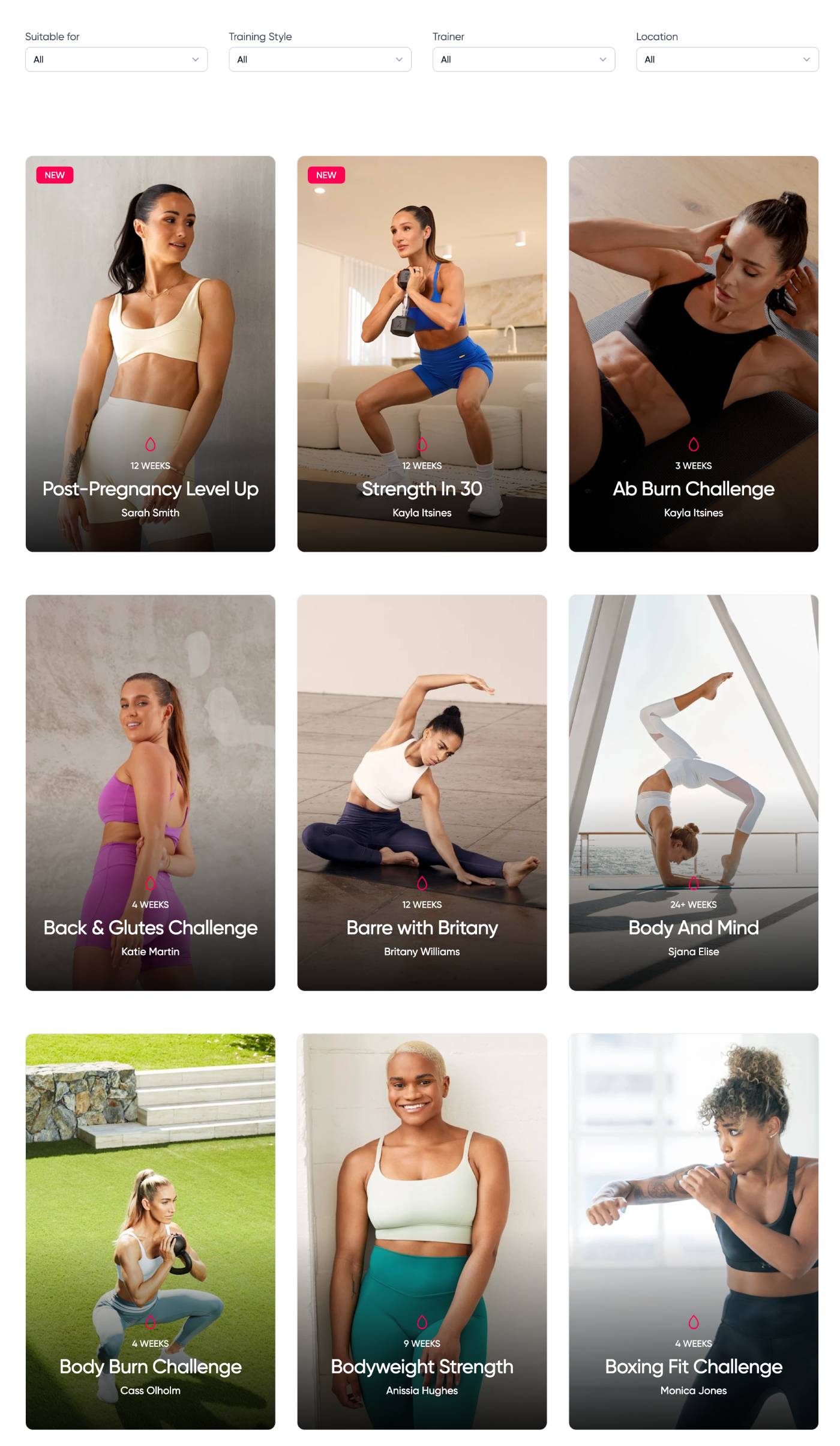
Today Sweat is the world’s largest women’s fitness app by downloads – over 30 million – with 60+ programmes across strength, HIIT, pilates, yoga, barre, cardio and more, led by Kayla and a team of other trainers including Kelsey Wells, Britany Williams, and Cass Olholm. It is still unmistakably Kayla’s platform, which is either a selling point or neutral depending on whether you connect with her approach. Her current flagship programme, Strength with Kayla, reflects how her own training has evolved – less HIIT, more controlled strength work. That shift is relevant for women over 40.
Onboarding and Programme Recommendation
When you sign up for Sweat, before you see a single workout, the app asks you a short series of questions: your fitness goals, your current fitness level, where you train (home or gym), and what equipment you have access to. Based on your answers, it recommends a specific programme. The whole process takes about two minutes. This is standard across most fitness apps now, but it is worth noting because the recommendation it produced was accurate.
For my profile (building muscle, moderate experience, home training with dumbbells and a resistance band) it recommended Strength in 30. That recommendation was right. I started the programme the same day without second-guessing it, without browsing through 60 options wondering which one to pick.
The equipment filtering goes one step further than the initial quiz. You can log your available equipment in the app settings and workouts will be filtered accordingly. If you only have dumbbells and a resistance band, you will not be presented with programmes that require a barbell or gym machines. It is a small feature, but it removes a specific friction point that catches people out on other platforms.
Who Is Sweat Best For – and Who Should Skip It?
Sweat is for you if:
- You want a structured programme that tells you exactly what to do each session – strength, pilates, yoga or cardio, all mapped out week by week
- You are new to strength training and want to learn exercises properly, with short video demonstrations and audio cues before each movement
- You want to build and maintain muscle at 40+ with sessions short enough to fit into a real life – 30 minutes, three times a week
- You like mixing strength training with walking as your cardio – the app explicitly suggests and tracks this combination
- You want flexibility within structure – exercise substitution, adjustable weights, optional HIIT clearly labelled
- You want a women-only platform with a large, active community
Sweat is probably not for you if:
- You want a programme built specifically around perimenopause and female hormonal physiology – there is no dedicated programme for this
- You need offline workout access – there are no downloadable workouts and you need an internet connection throughout
- You want nutritional guidance tailored to hormonal changes at 40+ – the recipes are good but general
- You are an advanced lifter wanting heavy progressive overload with periodisation – Sweat’s strength programmes are thorough but have a ceiling for experienced lifters
Strength in 30: The Programme I Was Recommended and Kept Coming Back To
Strength in 30 is three sessions per week, each 30 minutes. That is the entire time commitment for the core programme. The app also recommends two low-intensity cardio sessions per week – walks, either outside or on a treadmill – which are optional but sit naturally alongside the strength work rather than conflicting with it.
Each session is built around sets of exercises, each with a short video demonstration. Before you start a set, you can see exactly what movements are coming, what equipment you need, and how many repetitions or how long each exercise runs. A timer counts you through each movement. You do not have to think about what comes next. You follow the programme, and the programme does the thinking.
What a Strength in 30 Session Actually Looks Like
A typical session might open with Romanian deadlifts, move into lunges, then a resistance band row, then a dumbbell press. Each exercise has a short video of Kayla or another trainer demonstrating correct form – not a long instructional video, just a clean demonstration of the movement. Audio cues explain what you should be feeling and where. You log the weight you used. The next week, the workouts change, and you can refer back to what you lifted previously to know where to start.
I used 7kg dumbbells and found the sessions genuinely challenging at that weight. This is not a programme you glide through. The compound movements – Romanian deadlifts, lunges, rows, presses – recruit multiple muscle groups simultaneously, which is why 30 minutes produces real results. By the end of each session I had done real work.
What I particularly liked was the complete absence of distraction. No music playing unless you connect Spotify or Apple Music yourself. No presenter filling silence with motivational chat between sets. No production gimmicks. Just the exercise, the timer, the cue, and you. For someone who finds high-energy presenter-led workouts slightly exhausting, this minimalist format is a genuine relief.
Some days I got a little bored with the exercise rotation – the same compound movements appearing week after week has a cumulative sameness to it. The workouts do change weekly but the exercise vocabulary is deliberately limited, which is correct for beginners learning form and less interesting once you know the movements well.
Sweat app results after one month: I did not lose weight, and I was not expecting to. Coming in after years of Burn360 and Caroline Girvan, I was already strong enough that 7kg dumbbells were not going to produce dramatic body composition changes – I needed to be lifting heavier to challenge my existing base properly and I stayed at 7kg throughout. What I did notice was feeling tighter and more defined overall, and consistently stronger across the programme – that sense of muscles being more present, less soft. It is hard to put into words without sounding vague, but anyone who has been through a strength training phase will know exactly what I mean. My Sweat app before and after is less dramatic than Kayla Itsines BBG results you see online – but those results are typically from people who came in with no training base, which is exactly who this programme is designed for.
Here is why this is useful information for you: if you are coming in with a similar background, start heavier than you think you need to. If you are newer to strength training – and this programme is designed for that person – the results at the right starting weight will be more pronounced than mine were. The programme is built correctly for beginners. I just was not one.
What Weight Should You Start With?
If you are new to strength training: start with 3–5kg and focus entirely on form for the first two weeks. The Romanian deadlifts and lunges will be harder than they look at any weight when you are doing them correctly. If you have an existing training base: start heavier than your instinct says – probably 8–10kg – and see how the first session feels. The programme is scalable; do not undersell yourself from the start.
Kayla Itsines BBG vs Strength in 30: Which Should You Do?
This is the question most people who know Kayla from her original content will have, so it deserves a direct answer.
BBG (Bikini Body Guide / OG Kayla) is the programme that made Kayla famous. It is HIIT-based – 28-minute circuits of four exercises repeated twice, alternating between two circuits with one minute rest. Bodyweight and minimal equipment. High intensity, high repetition, fast-paced. It built its following among women in their 20s and early 30s who wanted to get lean quickly and could recover from high-intensity training three times a week.
Strength in 30 is what Kayla herself trains with now. Controlled compound movements with dumbbells, 30 minutes, three times a week. Lower intensity than BBG, higher load, more joint-specific demand. Designed around building and maintaining muscle rather than burning calories through cardio-intensity circuits.
Which One to Choose
Choose BBG / OG Kayla if: you are under 35, have good joint health, want a high-intensity challenge, are new to structured training and want to build a base of cardiovascular fitness alongside strength, and can recover from three HIIT sessions per week.
Choose Strength in 30 if: you are over 35-40, want to build and maintain muscle rather than chase a cardio burn, have any joint sensitivities, prefer a controlled pace over circuit intensity, or are coming from a background of running or cardio and want to add strength work.
For women over 40 specifically, Strength in 30 is the better starting point. The hormonal case for prioritising muscle over cardio-intensity training gets stronger with age, and the lower impact of controlled compound movements is more sustainable long-term than repeated HIIT.
The BBG results you see in before-and-after photos online are real – the programme works. But those results are predominantly from women who were either deconditioned coming in, or younger, or both. If you are in your 40s with some training history already, Strength in 30 is more likely to deliver the results that matter at this life stage.
Pilates, Yoga and the Rest of the Library
On days when I wanted something different from the Strength in 30 format I tried the pilates sessions. They are as short as 15 minutes, which makes them genuinely usable as a complement to a strength day or a standalone session on a recovery day.
The pilates content is well-produced and easy to follow. The movements are clearly demonstrated, the pace is manageable, and the sessions are focused enough that 15 minutes feels complete rather than truncated. For women who want to maintain flexibility and core strength alongside their strength training, this is an excellent option and requires no equipment at all beyond a mat.
The De-Stress Programme
I also tried the De-Stress yoga sessions – no equipment, genuinely serene, and far easier to follow than I expected having never done yoga before. The sessions are calm, clearly cued, and work well as an end-of-day wind-down or a rest day practice. If you have always been slightly put off by yoga, this is the most accessible entry point I have found.
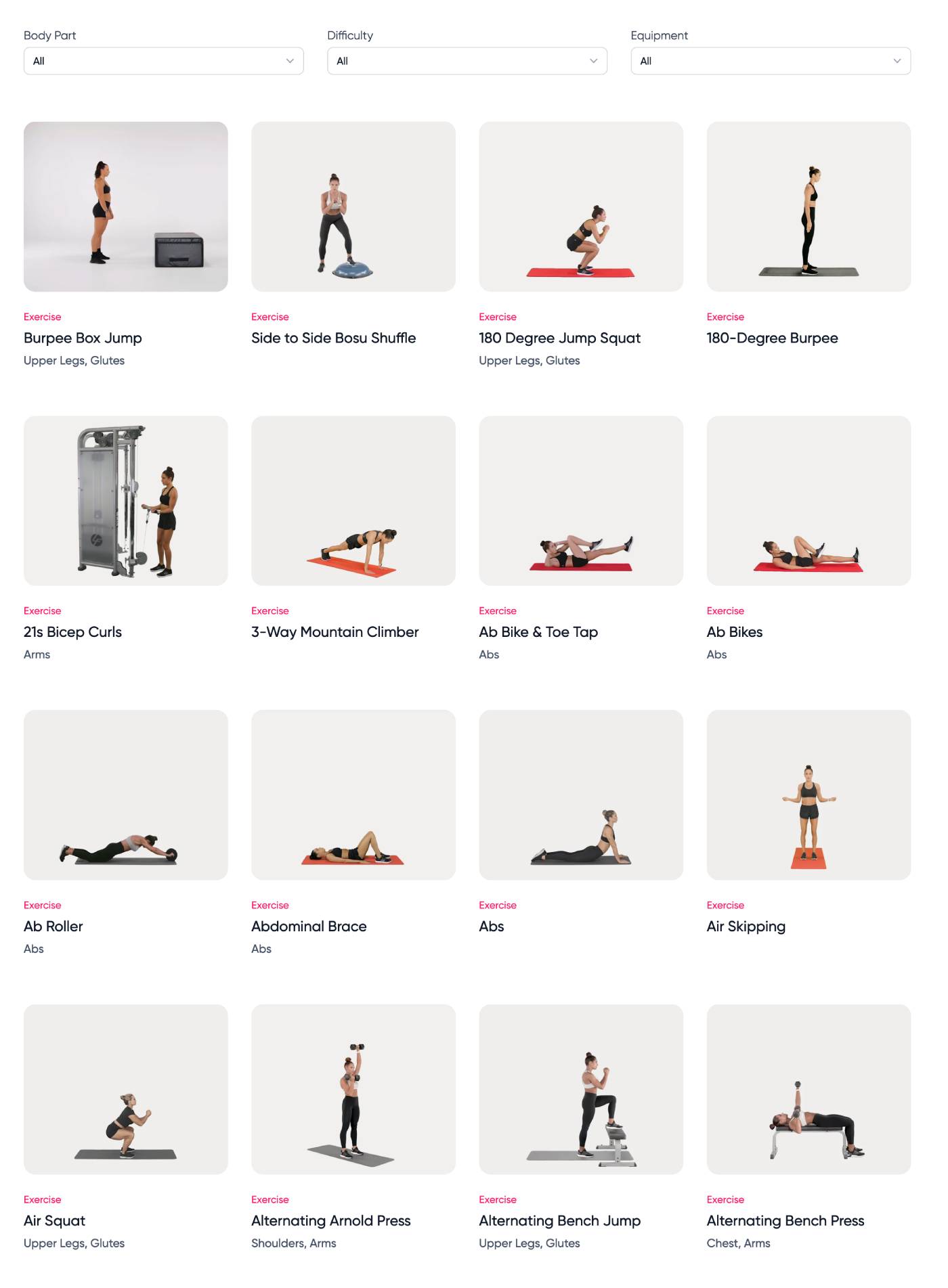
Beyond what I personally tested, the full library includes HIIT, circuit training, bodyweight programmes, barre, running programmes, pregnancy and postnatal content, and powerbuilding. The HIIT sessions are clearly marked as optional within programme recommendations – which I chose not to do and felt no pressure to – and the powerbuilding programmes (Kelsey Wells’ PWR, Stephanie Sanzo’s BUILD) go significantly heavier and more advanced than Strength in 30 for women who want to progress further.
Sweat for Women Over 40: Suitable Without Being Specifically Designed
This is the nuance worth capturing clearly, because it is more useful than the binary “yes it’s for over 40s” or “no it isn’t” that most reviews offer.
Sweat has no dedicated perimenopause programme. There is no training methodology built around female hormonal physiology at 40+ the way Burn360’s HIRIT approach is. If you are looking for a platform that has explicitly thought about cortisol, oestrogen decline, and resistance training principles specifically for perimenopausal women – this is not it.
What Sweat does have is a library full of exactly the exercises that women over 40 need: progressive strength training to maintain and build muscle mass, pilates for core strength and flexibility, low-impact cardio options, yoga for recovery and stress management. The exercise selection is precisely aligned with what the research says matters most at this life stage – even if the platform is not explicitly making that case.
Why It Works Despite the Gap
After 40, the priorities for effective training shift: building and maintaining muscle becomes more important than pure cardio, recovery needs more attention, and high-impact exercise needs to be balanced against joint health. Sweat’s Strength in 30 – compound dumbbell work, controlled pace, manageable sessions – hits the muscle-building priorities without the programme needing to say so. The absence of a perimenopause label does not mean the absence of the right exercises.
Important: Strength in 30 Is Not a Low-Impact Programme
This needs to be said clearly because it is easy to assume “strength training at home” means gentle. It does not. Strength in 30 includes Romanian deadlifts, weighted lunges, squats and step-ups – compound movements that place real load on knees, hips and lower back. At heavier weights, this is a genuine joint challenge, not just a muscle challenge.
If you have significant knee, hip or lower back issues, Strength in 30 is probably not the right starting point. Sweat does have genuinely low-impact alternatives: Low Impact with Kayla uses dumbbells and a chair, with full body, upper and lower body sessions under 30 minutes. Low Impact Strength with Chontel runs three 30–45 minute sessions per week. Both are designed specifically to build strength without the joint loading of compound lower body work under heavy weights. Use those instead, and consider Strength in 30 only once your joints are comfortable with the movement patterns.
The exercise substitution feature is particularly relevant for this audience. If a movement causes joint discomfort – a lunge variation that aggravates your knee, a press that catches your shoulder – you can substitute it in one tap with an alternative that works the same muscle group. You are not stuck with a movement that doesn’t work for your body on a given day.
App Design and Navigation: Minimalist and Effective
The Sweat app has a clean, unfussy design that does exactly what it needs to without visual clutter. Navigation is straightforward – your current programme is on the dashboard, the full library is one tap away, and the food and community sections are clearly separated.
Each workout shows you the equipment needed before you begin, the number of sets, and an overview of the exercises. You start the workout, the timer runs, the videos play, the audio cues tell you what to do. There are no distractions and no unnecessary steps between opening the app and beginning your session.
The in-app chatbot deserves a specific mention. It is one of the most useful support features of any platform reviewed on this site. If you have a question about cancellation, about how to modify your programme, about what a specific movement means – you ask the chatbot, it tells you in plain language, and you are done in under a minute. No support ticket, no waiting, no FAQ hunting.
No Offline Downloads
Sweat requires an internet connection throughout your workout. There are no downloadable workouts. This is the most consistently mentioned limitation in user reviews and it is a real one – if you train somewhere with unreliable wifi or data, or travel frequently, you will need a backup plan. The app also needs to stay open during your workout, which drains battery faster than normal use. Worth knowing before you commit.
The app also connects to Apple Health and Apple Watch, which means heart rate, active calories and workout data feed automatically into your health records without any manual logging. For women tracking activity data alongside their health, this integration is genuinely useful.
What Devices Does Sweat Work On?
iPhone / iOS: Full app, all features including meal plans, community, and Apple Health sync
Android: Full app, all features
Apple Watch: Fully integrated – view exercise demos on your wrist, track heart rate, control your workout without touching your phone
Desktop / browser: Workout access via browser at sweat.com – but meal plans and community are not available on desktop, only the workout library
MacBook / Mac: Browser access only at sweat.com – no dedicated Mac app. This is a common question (people search “sweat app macbook”) and the answer is: works in a browser, not as a native app
Smart TV / Apple TV: Not officially supported – browser only on TV
Offline / downloads: Not available on any device – requires internet throughout
The Exercise Substitution Feature: Small Detail, Big Difference
Most fitness apps give you the workout as-is. If an exercise doesn’t suit you – because of an injury, because you don’t have the right equipment, because you simply don’t like it – you either do it anyway or skip it and feel like you’ve shortchanged the session.
Sweat’s substitution feature solves this properly. Tap on any exercise and you can replace it with an alternative that works the same muscle group at a comparable intensity. The alternatives are pre-selected by the trainers – you are not searching through a library trying to find something equivalent yourself. One tap and you have a different movement that achieves the same outcome.
I used this. There were exercises in Strength in 30 where a particular variation didn’t feel right for my joints that day, and being able to swap without breaking the flow of the workout – without leaving the app, without Googling alternatives – made a real difference to the experience. This is the kind of feature that sounds minor in a description and reveals its value in actual use.
Sweat Nutrition: Solid Recipes, Light on Guidance
Sweat includes a food section with over 200 recipes written by a nutritionist, full macro information for each recipe (protein, carbohydrates, fat and calories), daily meal plans with weekly shopping lists, and a food Education section covering nutrition principles. During the biannual Sweat Challenge, additional exclusive meal plans are included.
The recipes are good. They are practical, varied, and the nutritional breakdown means you can track what you are eating without needing a separate app. Family-friendly options are included. The approach is sensible – eat well, fuel your training, no extreme restriction – and the shopping list feature is a genuinely useful practical touch.
What the Nutrition Does and Doesn’t Do
The food section gives you tools and ideas rather than a prescriptive plan. There are no personalised calorie targets linked to your training activity, no hormonal guidance for perimenopause, and no specific guidance on protein timing or carbohydrate strategy around training for women over 40. If those things matter to you – and they do matter – you will need to supplement Sweat’s nutrition content with dedicated guidance elsewhere. The recipes are a useful starting point, not a complete nutrition strategy.
This is why the score sits at 8.0 rather than higher. The workouts are excellent. The app experience is excellent. But for women over 40 whose nutritional needs are genuinely different – more protein, different carbohydrate timing, attention to bone density nutrients – the food section serves the general audience rather than this specific one.
Community: Active, Large and Genuinely Supportive
Sweat’s community is one of the most active of any fitness app available. The in-app forum connects you with millions of other users, and the Sweat Community on social media is similarly engaged. Virtual challenges run regularly, keeping long-term subscribers motivated beyond their individual programmes.
The biannual Sweat Challenge is worth highlighting separately – it is a free four-week programme included in your subscription, with exclusive workouts and meal plans, that runs twice a year. It gives the community a shared event to rally around and provides variety within your subscription without any additional cost.
One detail that came up repeatedly in reviews and that matches my experience: the app does not penalise missed sessions. If you skip a day, the programme continues without guilt-tripping you. There are no streaks to break, no notifications shaming you for missing a workout. For women whose energy and capacity genuinely fluctuates week to week – which it does at this life stage – that design decision is not small.
What Equipment Do You Need for Sweat?
The honest answer is: it depends entirely which programme you follow. The app lets you log your available equipment and filters accordingly – but it is worth knowing what different programmes actually require before you start.
Strength in 30 – bare minimum:
Dumbbells
Core requirement – ideally two pairs at different weights
~$20–$80
Start with 5–7kg, add a heavier pair as you progress. I used 7kg throughout
Resistance Band
Used in several exercises
~$5–$15
Loop band or long band both work
Mat
For floor-based exercises
~$10–$30
Any standard exercise mat
Strength in 30 – ideally also:
A bench or sturdy chair is used for step-ups, incline presses and seated movements. A dedicated workout bench is ideal but a solid dining chair works for most exercises. A step or box – even the bottom stair of a staircase – substitutes for a bench in step-up exercises. A kettlebell is listed in some sessions; a dumbbell can substitute for most movements but is not ideal for swings and similar kettlebell-specific patterns.
The Bench and Chair Problem
The app lists equipment requirements before each session, so you will see when a bench is needed. But this is worth knowing upfront: if you have only dumbbells and a band, some sessions will require a substitute or a modification. A sturdy chair handles most of it. A proper adjustable weight bench (roughly $80–$150) makes every session cleaner and is worth buying if you plan to train at home long-term.
Sweat Gym Programmes: Not Just a Home Workout App
Something the review has not covered yet because I tested at home: Sweat has a full range of gym-based programmes for women who train in a gym. This is a significant and underreported part of the app.
Strength & Resistance is an 18-week intermediate programme that requires a fully equipped gym – leg press, lat pulldown, cable machines, squat rack, free weights. It starts with six optional foundation weeks focused on technique, then progresses to five workouts per week with specific muscle group splits. Sessions run 45–50 minutes. This is a serious gym programme, not a beginner-friendly home workout dressed up for the gym.
PWR with Kelsey Wells has both home and gym versions. The gym version uses barbells, bench, kettlebells, cable machines and a Smith machine. The home version (PWR at Home) can be completed with just dumbbells but ideally also uses a bench, kettlebells, medicine ball and resistance bands. PWR Strength specifically has zero jumping – relevant if you want heavy lifting without impact.
BUILD with Stephanie Sanzo is a powerbuilding programme focused on progressive overload across three primary lifts: sumo deadlift, bench press, and squat. This requires a full gym setup with barbell, squat rack and bench press.
Home vs Gym: Which Programmes Suit Which Setup
Home, minimal equipment: Strength in 30 (Kayla), Low Impact with Kayla, Low Impact Strength (Chontel), most pilates and yoga programmes, Ignite Strength (Brit) – needs bench/chair
Home, more equipment: PWR at Home (Kelsey) – bench, kettlebells, bands; High Intensity Strength at Home (Cass) – dumbbells, kettlebells, skipping rope
Gym required: Strength & Resistance, PWR (gym version), BUILD (Sanzo) – full equipment needed
The app handles this through your equipment settings – log what you have and you will only be shown appropriate options. But knowing the programme names before you start means you can search specifically rather than relying on the recommendation alone.
Best Sweat App Programme for Weight Loss
This is one of the most searched questions about the app and deserves a direct answer. The honest position: no single programme produces weight loss on its own – that is driven primarily by nutrition. But if you want the programme most likely to support body composition change through training, the answer depends on your starting point.
If you are new to exercise: BBG / OG Kayla – the high-intensity circuit format burns more calories per session and builds a cardiovascular base quickly. Results are well-documented across the community.
If you have some training history: Strength in 30 or PWR at Home – building muscle increases your resting metabolic rate over time, which produces more sustainable body composition change than pure calorie-burning cardio. The before-and-after results are less dramatic in the short term and more significant in the long term.
For women over 40 specifically: Strength in 30 is the stronger choice for body composition at this life stage. Muscle mass preserves metabolic rate as oestrogen declines. Chasing calorie burn through HIIT without adequate strength work tends to produce diminishing returns after 40.
Sweat App Cost 2026: How Much Is the Sweat App and Is It Worth It?
| Cost | Equivalent per month | What’s included | |
|---|---|---|---|
| Monthly | $24.99/month | $24.99 | Full access to all 60+ programmes, 13,000+ workouts, recipes, meal plans, community, challenges, Apple Health integration |
| Annual | $134.99/year | $11.25/month | Everything in monthly – saves 55% vs paying monthly. Best value if you plan to use it consistently |
Value Assessment
At $11.25/month on the annual plan, Sweat is genuinely good value for what it delivers – 60+ programmes across every style of training, a well-designed app, 200+ nutritionist-written recipes, and one of the largest women’s fitness communities available. The monthly rate of $24.99 is harder to justify for occasional use but reasonable for consistent training. For women who know they will stick to a programme, the annual plan is the clear choice.
7-Day Trial Auto-Renews
The free trial requires a payment method upfront and auto-renews to the monthly subscription after 7 days if you don’t cancel. Cancel in the app settings before day 7 if you decide it’s not for you. If you subscribed via Apple or Google Play, cancellation must go through that platform, not through Sweat directly.
Sweat App Pros and Cons
Pros
- Best onboarding of any app reviewed – programme recommendation in 2 minutes based on your goals and equipment
- Strength in 30 is exactly what it says – 30 minutes, 3x per week, genuinely challenging
- Exercise substitution in one tap – no hunting for alternatives, no breaking workout flow
- Equipment logging filters your workouts to match what you actually have
- Minimalist format – no distracting music or presenter chat unless you choose it
- Built-in timers and video demonstrations for every exercise – ideal for learning proper form
- Weight logging tracks what you lifted for progression reference
- Pilates sessions from 15 minutes – easy to add around strength days
- De-Stress yoga genuinely accessible even for complete beginners
- Low-impact programmes available – Low Impact with Kayla and Low Impact Strength with Chontel for women who need joint-friendly options
- Full gym programmes (Strength & Resistance, PWR, BUILD) – not just a home workout app
- Chatbot support resolves queries in under a minute
- No guilt for missed sessions – app does not penalise you
- Apple Health and Apple Watch integration
- Biannual Sweat Challenge included in subscription
- Cancellation is genuinely easy – a few taps
- Annual plan at $11.25/month is excellent value
Cons
- Strength in 30 involves compound movements under load – not truly low-impact despite controlled pace. Women with joint concerns should start with Low Impact with Kayla or Low Impact Strength instead
- No dedicated perimenopause programme – women over 40 are served by the exercise selection, not by explicit targeting
- No offline downloads – requires internet connection throughout every workout
- Nutrition solid but not tailored to hormonal needs at 40+ – no perimenopause-specific guidance
- Exercise rotation can feel repetitive over time – the compound movement vocabulary is deliberately limited
- App crashes mid-workout have been reported, losing progress – not common but documented
- App must stay open during workouts, draining battery
- Monthly price of $24.99 feels high compared to competitors like Daily Burn at $14.99
- Some exercises require a bench – not flagged clearly upfront
Will You Actually Stick With It?
Sweat Weighted Scoring: How the 7.4 /10 Was Calculated
The 8.0 reflects a platform that executes the fundamentals exceptionally well – structure, progression, usability, beginner-friendliness – while falling short specifically on the criteria that matter most to this site’s audience: perimenopause-specific content and hormonally-informed nutrition. The Joint Friendliness score has been revised downward to 6.5 to reflect the fact that Strength in 30, while controlled, involves compound movements under load that are not truly low-impact – the availability of dedicated low-impact programmes (Low Impact with Kayla, Low Impact Strength with Chontel) mitigates this at the platform level but the flagship programme itself carries joint load. Recovery Compatibility has been adjusted to 8.0 to account for the intensity of compound strength sessions.
Category Weight Score Weighted Time Efficiency 15% 7.5 1.13 Muscle Potential 15% 8.0 1.20 Women Over 40 Specificity 15% 6.5 0.98 Joint Friendliness 12% 6.5 0.78 Recovery Compatibility 10% 7.5 0.75 Programme Structure 10% 8.0 0.80 Value for Money 8% 8.0 0.64 UX and Design 8% 8.5 0.68 Nutrition Integration 7% 6.5 0.46 Total 100% 7.4 / 10
Scoring notes: Programme Structure 10/10 – the best onboarding and daily structure of any platform reviewed. Platform and UX 9.5 – minimalist, friction-free, chatbot support is best in class. Joint Friendliness 6.5 – revised down: Strength in 30 involves compound movements under load including squats, lunges and deadlifts that place meaningful joint stress; low-impact programmes exist but are not the flagship. Recovery 8.0 – compound strength sessions at challenging weights require genuine recovery time. Women Over 40 Specificity 6.5 – the exercises are right, the explicit methodology is absent. Nutrition 7.0 – solid recipes with macros, but no hormonal or perimenopause guidance.
Final Weighted Score
7.4 / 10
The most beginner-friendly and best-structured app reviewed – excellent for women over 40 who want to build muscle with a plan they can actually stick to
Sweat App vs Burn360, Daily Burn, Les Mills+, Nike Training Club and The Body Coach
Sweat tested over 5+ weeks. Burn360 personally tested over 4–5 years. Daily Burn tested for one month. Les Mills+ tested on 30-day free trial. Nike Training Club and The Body Coach compared on published features and verified user reviews.
| Sweat | Burn360 ✓ | Daily Burn | Les Mills+ | Nike Training Club | The Body Coach | |
|---|---|---|---|---|---|---|
| Monthly cost | $24.99/month or $11.25/month annual | $39.95 one-time + $29.95/month community | $14.99–$19.95/month | $7.49–$14.99/month | Free (most content) / Nike app ecosystem | ~$17/month (varies by region) |
| Women over 40 focus | No dedicated programme – exercise selection aligned | Explicit – HIRIT for female hormones | Dedicated programmes within general platform | 4 perimenopause workouts only | General audience | General audience |
| Programme structure | Best in class – onboarding quiz, daily plan, timers | Clear 21-day reset, repeatable | Structured programmes within large library | Self-directed – no daily plan | Self-directed library browsing | Structured plans with Joe Wicks |
| Beginner-friendliness | Excellent – video demos, audio cues, substitutions | Very good – simple movements, clear coaching | Good – Daily Burn 365 for beginners | Choreography learning curve | Good – wide range of levels | Very good – Joe Wicks trains alongside you |
| Exercise substitution | One tap – same muscle group alternatives | |||||
| Session length | 30 min (Strength in 30); 15 min+ for pilates | 20–25 min – shortest of any reviewed | 15 min to 1 hour+ | 10–55 min | 15–45 min | 20–30 min |
| Offline access | No downloads | N/A – website based | Premium plan | Downloads available | Downloads available | |
| Nutrition | 200+ recipes, macros, meal plans, shopping lists | Eat 360 plan included | 72-week meal plans included | Editorial articles only | No nutrition content | Strong – integrated meal plans, macros |
| Weight logging | Logs weights used per session | Self-tracked | ||||
| Women-only platform | Yes | Yes | Mixed | Mixed | Mixed | Mixed |
| Free trial | 7 days | 90-day money-back on reset | 30 days | 30 days | Free tier available | 7 days |
| Gym programmes | Yes – Strength & Resistance, PWR, BUILD | Home only | Some gym content | Gym supplement workouts | Some gym workouts | Home focused |
| Best for | Beginners wanting structure; muscle building; mixed training styles; home or gym | Hormonal physiology focus; time-constrained women | Variety seekers; families | Martial arts; gym supplement | Variety without committing to a subscription | HIIT + nutrition in one app; Joe Wicks fans |
These two sit at roughly the same level for this audience but serve different needs. Burn360 has an explicit hormonal methodology and produces visible results in 20–25 minute sessions – it is the better choice if time is the primary constraint or if perimenopause physiology is your priority. Sweat is the better choice if you want variety across strength, pilates and yoga within one subscription, or if you are newer to strength training and want the most guided, beginner-friendly introduction available. Both are worth the trial.
Sweat App FAQ: Common Questions Answered
Sweat is a women’s fitness app created by Australian personal trainer Kayla Itsines – also known as Sweat by Kayla Itsines or the Kayla Itsines app. It offers 60+ programmes across strength training, HIIT, pilates, yoga, barre, cardio and more, with over 13,000 workouts. The app costs $24.99/month or $134.99/year and comes with a 7-day free trial. It is the world’s most downloaded women’s fitness app with over 30 million downloads.
The Sweat app costs $24.99/month or $134.99/year ($11.25/month). The annual plan saves approximately 55% compared to paying monthly. There is no free version of the app, but all new members get a 7-day free trial. Sweat app pricing is the same across iOS and Android – if you subscribe via Apple or Google Play, the charge appears on that platform’s billing.
Yes, for most women who will use it consistently – particularly on the annual plan at $11.25/month. The combination of structured workout programmes, video-guided exercise demonstrations, exercise substitution, and a 60+ programme library makes it strong value at that price. Where it falls short is perimenopause-specific content and offline access. For women coming in with an existing fitness base who need to push heavier, make sure you start at a challenging weight rather than defaulting to light dumbbells.
No – there is no permanently free tier. All new members get a 7-day free trial which requires a payment method upfront and auto-renews to the monthly plan ($24.99) unless cancelled before the trial ends. Some Kayla Itsines workouts are available free on YouTube and social media, but full programme access requires a subscription.
Cancel in the app: go to Profile → Settings → Subscription → Cancel Subscription. The in-app chatbot can also guide you through it in under a minute if you are unsure. If you subscribed via Apple, cancel in iOS Settings → Apple ID → Subscriptions. If via Google Play, cancel in the Play Store → Subscriptions. You keep access until the end of the paid billing period.
Yes, with an important nuance. Sweat has no dedicated perimenopause programme and no hormonal training methodology specifically designed for women at this life stage. But the exercise library – progressive strength training, pilates, yoga, low-impact cardio – is precisely aligned with what women over 40 need to build muscle, maintain flexibility, and support recovery. The exercises are right even if the label isn’t there. If explicit perimenopause-focused training is what you need, Burn360 is the better choice.
It depends which programme you choose. Strength in 30 involves compound movements under load – squats, lunges, deadlifts – which place meaningful stress on knees, hips and lower back. This is not truly low-impact despite the controlled pace. If you have existing joint concerns, start with Low Impact with Kayla or Low Impact Strength with Chontel instead – both are designed specifically to reduce joint stress while still building strength. The one-tap exercise substitution also allows you to swap any movement that causes discomfort for a joint-friendlier alternative within each session. Always consult a healthcare professional if you have specific joint conditions.
Yes – and this is an underreported part of the app. Sweat includes full gym-based programmes: Strength & Resistance (18-week intermediate programme requiring a fully equipped gym), PWR with Kelsey Wells (home and gym versions), and BUILD with Stephanie Sanzo (powerbuilding with barbell, squat rack and bench press). The app is not just a home workout platform. Log your available equipment in the settings and the app will filter to show appropriate programmes for your setup.
No single programme produces weight loss on its own – that is driven primarily by nutrition. But for body composition change through training: beginners should start with BBG (high-intensity circuits, well-documented results across the community). Women with some training history should consider Strength in 30 or PWR at Home – building muscle increases resting metabolic rate for more sustainable long-term change. For women over 40 specifically, Strength in 30 is the stronger choice because muscle mass preserves metabolic rate as oestrogen declines.
BBG (Bikini Body Guide) is the original Kayla Itsines programme – high-intensity circuit training with bodyweight and light equipment, designed to build cardiovascular fitness and burn calories quickly. Strength in 30 is her newer strength-focused programme – three 30-minute sessions per week using dumbbells and resistance bands, focused on building muscle through progressive overload. BBG is higher impact and more cardio-intensive; Strength in 30 is more controlled and strength-focused. For women over 40, Strength in 30 is generally the better starting point because muscle-building is the priority at this life stage, but BBG suits women who specifically want high-intensity cardiovascular training.
Strength in 30 is a Sweat programme of three 30-minute strength sessions per week using dumbbells, a resistance band, and optionally a barbell. It is designed for women who want to build muscle and improve strength in a manageable weekly time commitment. The programme changes workouts each week and logs the weights you use for progression reference. It is recommended by the app’s onboarding quiz for women with moderate experience training at home with dumbbells.
Yes – this is one of Sweat’s strongest features. Any exercise can be replaced with an alternative in one tap. The alternatives are pre-selected by the trainers to work the same muscle group at comparable intensity. You do not need to search for alternatives yourself. This is particularly useful for women managing joint issues or working around specific movement limitations.
No. Sweat requires an internet connection throughout every workout. There are no downloadable workouts. This is the most common criticism in user reviews and a real limitation for women who train somewhere with unreliable connection or travel frequently.
The app includes 200+ recipes written by a nutritionist with full macro information (protein, carbohydrates, fat, calories) for each recipe, daily meal plans with shopping lists, and an Education section on nutrition principles. It does not include personalised calorie targets linked to your training, and there is no hormonal or perimenopause-specific nutrition guidance. The recipes are good and practical; the nutritional approach is general rather than tailored.
At $24.99/month it is more expensive than Daily Burn ($14.99) and Les Mills+ ($14.99). The annual plan at $134.99 ($11.25/month) is the better value proposition and is competitive with anything at this level. If you know you will train consistently, the annual plan is worth it. If you are trying it out, the 7-day trial gives you enough time to complete several Strength in 30 sessions and form a genuine view.
Very easy – a few taps in the app settings. The in-app chatbot will guide you through the exact steps in under a minute if you are unsure. If you subscribed via Apple or Google Play, cancel through that platform directly rather than through the app.
Partially. Sweat offers solid pilates and resistance training options that work well for women over 50, and the 12-week structured programmes provide useful accountability. The BBG programme (Kayla Itsines) dominates the platform and skews younger and higher impact – which can feel misaligned if you are over 50 and not interested in bikini-focused training. The perimenopause and menopause support is thin: there is content acknowledging hormonal changes, but no dedicated programme for this life stage. Women over 50 who are already active and want a structured programme will find Sweat workable; women looking for menopause-specific guidance should look at Pvolve or Sculpt Society instead.
Final Verdict
7.4 /10
I am keeping the Sweat subscription. That is the clearest version of this verdict.
I tested this for over five weeks – the 7-day trial plus a full month of consistent training with Strength in 30 – and I have used the app before, for about six months in 2019 when I was more focused on HIIT. In 2019 it was excellent for that purpose. In 2026, coming back with years of Burn360 and Caroline Girvan behind me, I tested it with a different set of needs and a different body.
I did not lose weight. I was not expecting to. Coming in with an existing strength base and staying at 7kg dumbbells throughout, I was not challenging my muscles sufficiently to produce dramatic changes – that is on me, not the programme. What I did notice after a month was feeling consistently tighter and stronger: that specific, hard-to-describe quality of muscles being more present, less soft, that anyone who has been through a strength phase will recognise. For someone starting fresh with the right weight, the results would be more pronounced. The programme is built correctly for that person.
What Sweat does better than anything else reviewed on this site is eliminate the reasons not to start. You tell it what you want, it tells you what to do, and then every session is laid out – timers, video cues, substitution in one tap if something doesn’t work. There is no decision to make. You open the app and follow the plan. For a woman over 40 who already knows she should be strength training but keeps not doing it, that removal of friction is worth more than any individual programme feature.
The limitations are real. No perimenopause programme means women specifically looking for hormonally-informed training will find Burn360 a better fit. No offline access is inconvenient if your signal is unreliable. The nutrition is solid but general – it does not address the specific dietary considerations of perimenopause. And Strength in 30, while excellent, is not truly low-impact – women with joint concerns should look at Low Impact with Kayla or Low Impact Strength with Chontel first.
But as a platform for building and maintaining muscle at 40+, learning strength training with proper form, and finding a weekly structure you can actually stick to – Sweat is as good as it gets at this price point. The addition of gym programmes (Strength & Resistance, PWR, BUILD) means it scales beyond home training too.
Best for: Beginners learning strength training properly; women who want structured variety across strength, pilates and yoga; anyone who needs a programme that removes decision fatigue; women who train at home or in the gym.
Not ideal for: Women wanting explicit perimenopause-focused methodology; anyone needing offline workout access; experienced lifters who need to push significantly heavier than entry-level weights.
Sources & Further Reading
- Sweat. Programme library and features overview. sweat.com/programs
- Sweat. Food section and nutrition guidance. sweat.com/blogs/nutrition
- Sweat. App navigation and feature guide. support.sweat.com
- Fitness Drum. Sweat App Review 2026. fitnessdrum.com
- Tom’s Guide. SWEAT app review. tomsguide.com
- Apple App Store. Sweat app listing and features. apps.apple.com
- Resistance training for postmenopausal women: systematic review and meta-analysis — PubMed (2022)
- LIFTMOR Trial: high-intensity resistance training improves bone mineral density in postmenopausal women — PubMed (2018)
- Resistance training improves quality of life and vasomotor symptoms in postmenopausal women — PubMed (2021)
- Exercise effects on bone mineral density in postmenopausal women: systematic review and meta-analysis — PubMed (2022)
- Menopause FAQs: understanding the symptoms — North American Menopause Society (NAMS)
- Exercise as you get older — NHS
- Preserve your muscle mass — Harvard Health Publishing
Related Guides
What To Do Next
Not sure this is the right programme for you?
- → Take our 2-minute quiz for a personalised recommendation.
- → See our best workouts for women over 40 rankings
- → See how we score every programme using 9 weighted criteria.