
The Sculpt Society scores higher overall, 8.2 against 6.9, and is the stronger platform for building and keeping muscle and nutrition guidance. Melissa Wood Health is the better pick if what you need most is short sessions and recovery between sessions.
- Score 8.2 vs 6.9
- 7-day free trial on both
- Both tested hands-on
Quick answer: The Sculpt Society is the better overall platform for perimenopausal and menopausal women, scoring 8.2 versus Melissa Wood Health at 6.9. The Sculpt Society wins on the dedicated 4-week Midlife Movement Programme, the highest Women Over 40 Specificity score in the entire Her Daily Fit comparison series, moderate-weight strength work that supports muscle retention through oestrogen decline, and dance cardio. Melissa Wood Health wins on price (roughly 40% cheaper), an exceptional meditation library, beginner accessibility, and a calm aesthetic that suits women coming fresh to home fitness or returning after a long break.
The two platforms
Same nine weighted categories, two different women. Here is who each one is built for.
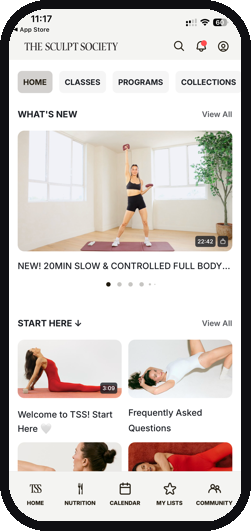
The Sculpt Society
WinnerLeads this comparison on building and keeping muscle and nutrition guidance, scoring 7 against 4 on Muscle Potential.
- Low impact
- 15 to 35 min
- No equipment required
Choose The Sculpt Society if you:
- Are managing perimenopause or menopause symptoms and want a dedicated 4-week programme (Midlife Movement)
- Have some training history and find 1 to 3 pound (0.5 to 1.5kg) weights too light
- Want moderate-weight strength that supports muscle retention through oestrogen decline
- Have joint history and want Injury Safe programmes alongside midlife content
- Want dance cardio as part of your training week
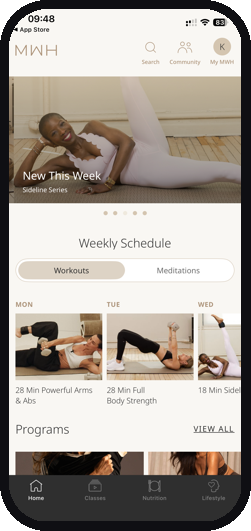
Melissa Wood Health
Runner-upLeads this comparison on short sessions and recovery between sessions, scoring 9 against 8.5 on Time Efficiency.
- Very low impact
- 10 to 30 min
- Light dumbbells , ankle
- Yes (USD only billing)
Choose Melissa Wood Health if you:
- Are an absolute beginner or returning to fitness after a significant break
- Want the cheapest entry into a quality low-impact pilates platform ($14.95/month)
- Need a strong meditation and breathwork library alongside training
- Prefer calm, mindfulness-focused coaching over high-energy instruction
- Want 15 to 20 minute sessions as the default class length
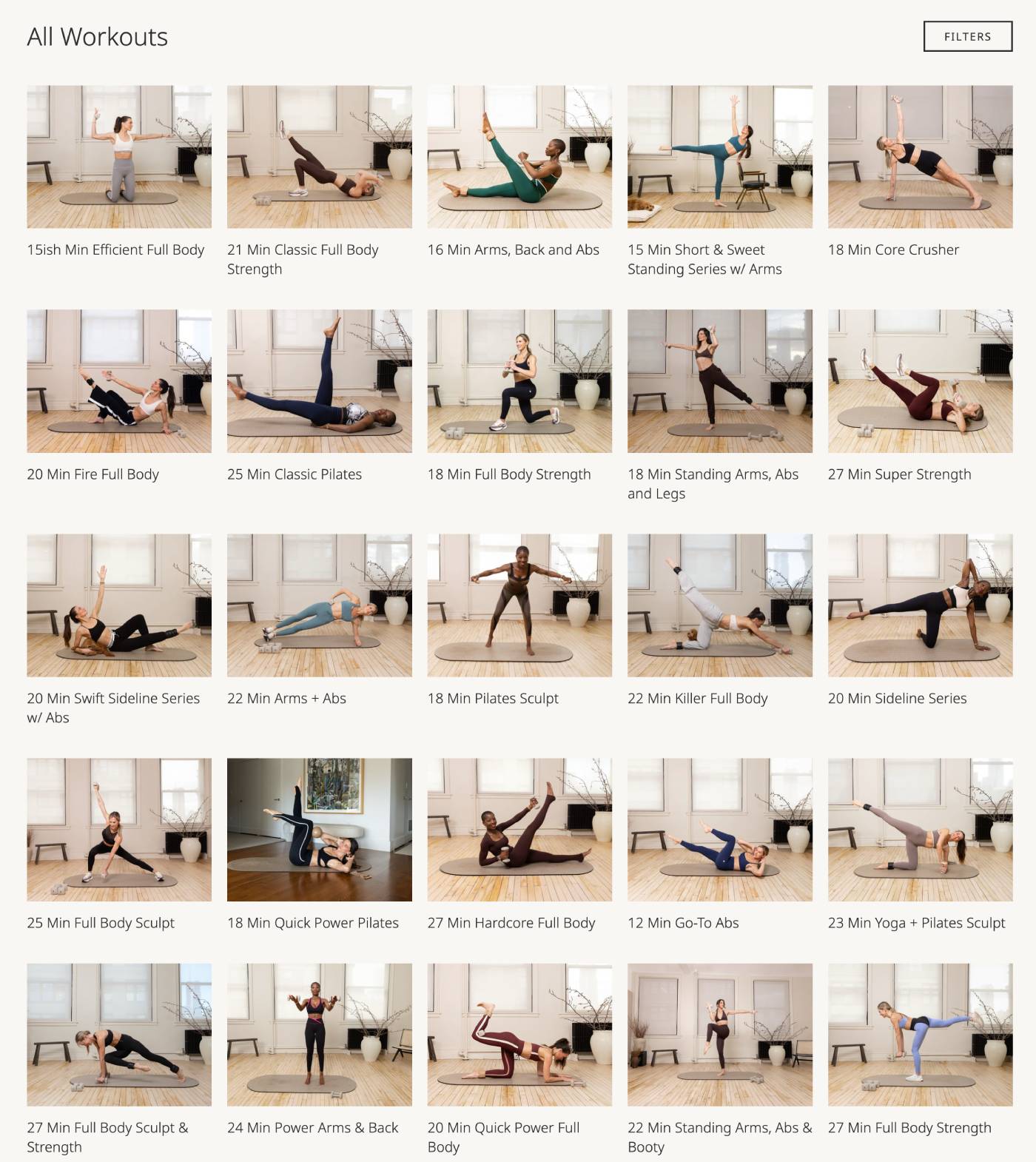
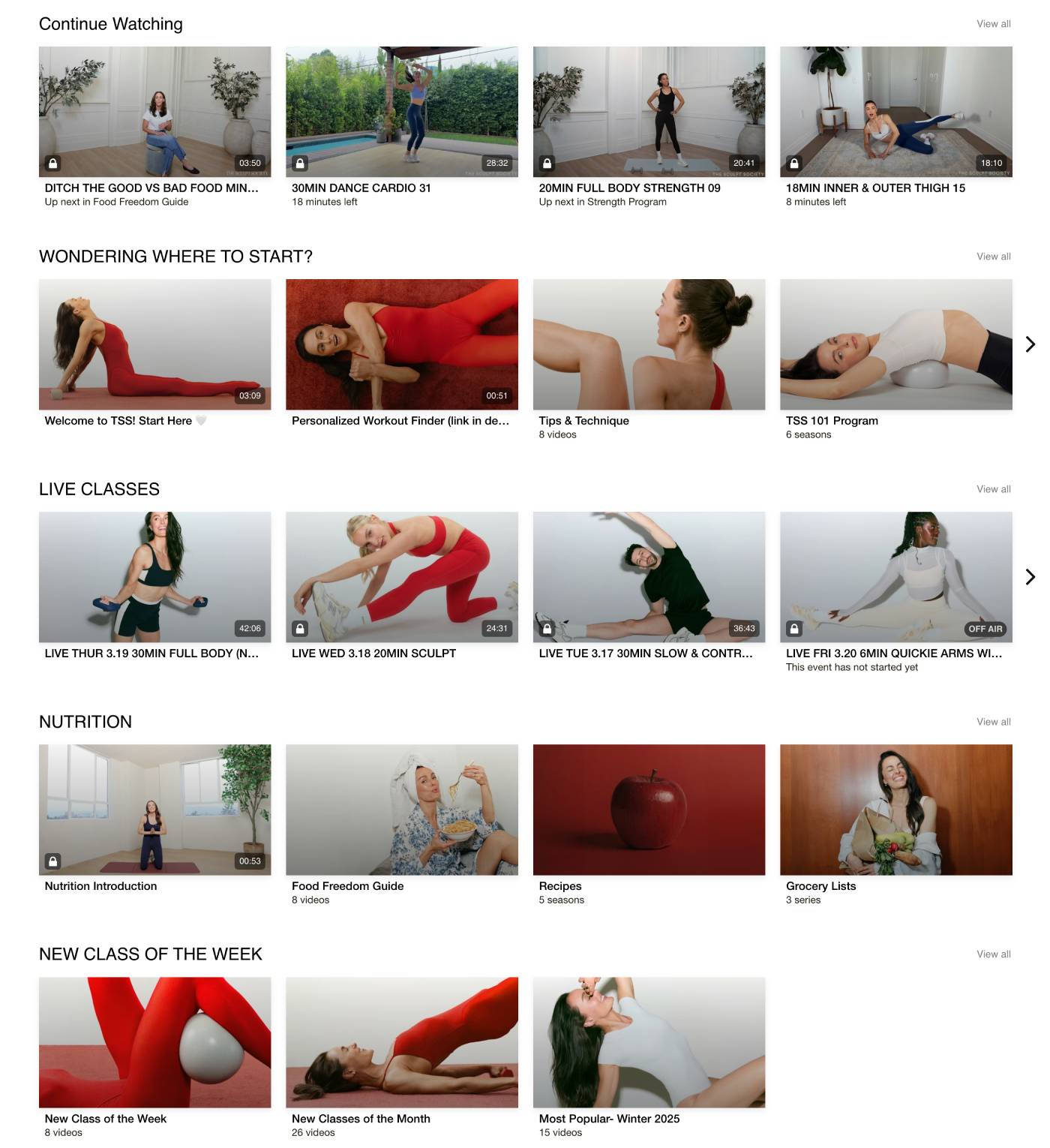
Inside Melissa Wood Health and The Sculpt Society
Bottom line in 30 seconds for women over 40
- The Sculpt Society wins overall (8.2 vs 6.9) because Midlife Movement is a dedicated perimenopause programme and the moderate-weight resistance work supports muscle retention through oestrogen decline. The Women Over 40 Specificity score of 6.6 / 10 is the highest in the comparison series.
- Melissa Wood Health wins on price, beginners and meditation. At $14.95/month it is the cheaper platform by roughly 40%. The 1 to 3 pound (0.5 to 1.5kg) weight philosophy makes it genuinely beginner-friendly. The meditation library is unusually strong for a fitness platform.
- Both are joint-friendly low-impact. Both work for perimenopausal women managing joint sensitivity. The Sculpt Society has dedicated Injury Safe programmes; MWH does not have injury-specific content. For women with active injury history, The Sculpt Society’s structure is more tailored.
Melissa Wood Health’s weight recommendations are too light for most perimenopausal women with training history. The MWH method centres on 1 to 3 pound dumbbells (roughly 0.5 to 1.5kg). For women coming to MWH from platforms using 5 to 9kg dumbbells, the drop is significant and the muscle-retention stimulus is reduced. If you have prior training history, expect to add heavier dumbbells or ankle weights yourself, which conflicts with the platform’s lean-body philosophy.
Quick yes/no comparison
| Feature | Melissa Wood Health | The Sculpt Society |
|---|---|---|
| Dedicated perimenopause programme | No | Yes (Midlife Movement, 4 weeks) |
| Highest Women Over 40 score in comparison series | No | Yes (6.6 / 10) |
| Live classes | No | Yes (some) |
| Strong meditation library | Yes | Limited |
| Dance cardio | No | Yes |
| Recommended dumbbell range | 1 to 3 pounds (0.5 to 1.5kg) | Light to moderate (5 to 8.5kg in testing) |
| Injury-specific programmes | No | Yes (Injury Safe series) |
| Prenatal and postnatal content | Yes | Yes |
| Annual pricing plan | Yes ($134.99) | Yes ($179.99) |
| Available internationally (UK, EU, AU) | Yes (USD only billing) | Yes |
| Free trial | 7 days | 7 days |
At-a-glance comparison
| Feature | Melissa Wood Health | The Sculpt Society |
|---|---|---|
| Her Daily Fit score | 6.9 / 10 | 8.2 / 10 |
| Price (US) | $14.95/month or $134.99/year | $24.99/month or $229.99/year |
| Price (UK) | USD only billing (around £12/month at current exchange rates) | Available internationally |
| Free trial | 7 days | 7 days |
| Approach | Slow, controlled, low-impact pilates and light strength with meditation | Slow controlled resistance training plus dance cardio plus dedicated midlife programme |
| Method philosophy | “Lean body” with light weights and high reps; mindfulness-focused | Sculpt method (slow controlled resistance) with moderate weights |
| Perimenopause programmes | None | Midlife Movement Programme (4 weeks), Injury Safe programmes |
| Equipment needed | Light dumbbells (1 to 3 lbs / 0.5 to 1.5kg), ankle weights, mat; some bodyweight only | No equipment required for most classes; light to moderate dumbbells, ankle weights, bands, Pilates ball for sculpt |
| Session length | 15 to 20 minutes typical; some 8-minute sessions; few around 25 minutes | ~30 minutes for main programme workouts; 5 to 50 minute range across library |
| Coaching style | Calm, precise, mindfulness-focused | Slow controlled with warmth; some classes more energetic (dance) |
| Instructors | Melissa Wood plus Kim Strother, Nwando, Nikki, Amanda | Multiple instructors including the founder |
| Recovery content | Meditation library (strong), breathwork sessions from 5 min | Lymphatic massage, quickie classes, stretching |
| Library size | 1,000+ workouts and meditations | 1,000+ on-demand workouts |
| Women Over 40 Specificity | 4 / 10 | 6.6 / 10 (highest in series) |
Her Daily Fit scoring breakdown
| Category | Weight | Melissa Wood Health | The Sculpt Society | Winner |
|---|---|---|---|---|
| Time Efficiency | 15% | 9 | 8.5 | Melissa Wood Health |
| Muscle Potential | 15% | 4 | 7 | The Sculpt Society |
| Women Over 40 Specificity | 15% | 4 | 6.6 | The Sculpt Society |
| Joint Friendliness | 12% | 8.5 | 9 | The Sculpt Society |
| Recovery Compatibility | 10% | 9.5 | 9 | Tied |
| Programme Structure | 10% | 7 | 9 | The Sculpt Society |
| Value for Money | 8% | 8 | 8.5 | Melissa Wood Health |
| UX and Design | 8% | 8 | 8.5 | Tied |
| Nutrition Integration | 7% | 5 | 8 | Tied |
| Overall | 100% | 6.9 / 10 | 8.2 / 10 | The Sculpt Society |
The Sculpt Society takes the high-weight perimenopause-relevant categories: Women Over 40 Specificity (15%), Muscle Potential (15%), Joint Friendliness (12%), Programme Structure (10%). Melissa Wood Health takes Time Efficiency (15%) and Value (8%). The 1.2-point overall gap reflects how the Women Over 40 category dominates the scoring rubric for the Her Daily Fit audience specifically, and that is the category where The Sculpt Society’s Midlife Movement Programme delivers what MWH structurally cannot.
Perimenopause programming: The Sculpt Society wins, MWH has no equivalent
This is the category where the gap between these two platforms is widest and where the audience-specific advantage is clearest.
What perimenopause-specific programming actually requires
Three physiological changes during perimenopause shape what training should look like. Oestrogen decline accelerates loss of muscle and bone, which makes resistance training more important. Maltais 2009 documents the muscle and strength loss trajectory after menopause, and a 2022 systematic review on resistance training for postmenopausal women confirms structured progressive loading as the most effective intervention. Baseline cortisol tends to elevate, making sustainable intensity more important than maximum intensity. Tendon and ligament elasticity decreases, which Watt 2018 documents in detail for musculoskeletal pain across the menopause transition.
A perimenopause-specific programme designs around these three realities through programme structure, exercise selection, intensity pacing and load progression. A platform that suits perimenopause incidentally because it happens to be low-impact is different from a platform that designs for the audience specifically.
The Sculpt Society’s Midlife Movement Programme
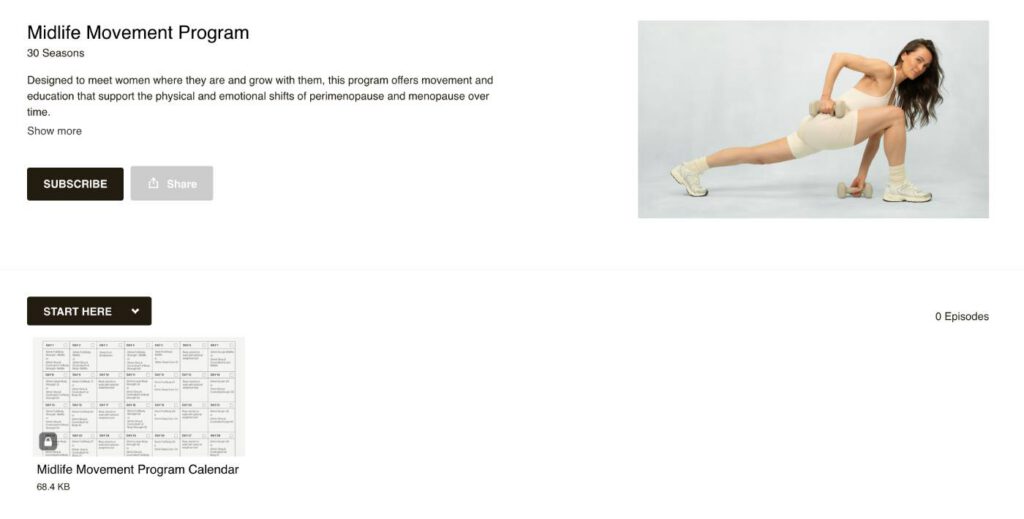
Midlife Movement is a dedicated 4-week perimenopause and menopause programme on The Sculpt Society platform. The training philosophy throughout is slow, controlled resistance work with light to moderate weights, no jumping, and a focus on the postural and joint-stability work that becomes more important as oestrogen declines. The structure paces well for women managing variable energy across the week.
I completed the 4-week Midlife Movement Programme in my testing. Sessions are roughly 30 minutes each. The 4-week arc produced maintained and slightly increased strength for me, which is the right outcome for perimenopausal training where retention rather than aggressive bulk-building is the realistic goal at this stage. The Sculpt Society also has Injury Safe programmes for women managing active joint history, which extends the platform’s joint-aware design beyond just the midlife audience.
Melissa Wood Health’s incidental midlife fit
Melissa Wood Health has no dedicated perimenopause or menopause programme and no hormone-focused instructors. The platform’s slow, controlled, low-impact philosophy suits the age group incidentally rather than by design. The published review describes this clearly: “the low-impact approach suits the age group incidentally.”
What MWH offers instead is a strong general low-impact platform that works for women over 40 without being specifically designed for them. The Total Body Tone with Kim programme and the Signature Series with Melissa are well-produced and the production values (calm aesthetic, careful coaching) are unusually high. None of this content engages with perimenopause physiology explicitly.
What this means for your decision
For perimenopausal women actively managing symptoms and wanting structured programming, The Sculpt Society’s Midlife Movement is the clearer fit. For women who want a calm low-impact platform that happens to suit perimenopause but is not specifically built around it, Melissa Wood Health is sufficient. The choice depends on whether you want intentional perimenopause design or incidental fit. A platform that engages with perimenopause physiology specifically will tend to age with you better as symptoms shift across the years; a platform that suits the audience incidentally may become less appropriate as your training needs evolve.
Muscle potential: The Sculpt Society wins on moderate weights vs MWH’s light-weight philosophy
Both platforms are low-impact resistance training. They differ on load: MWH uses 1 to 3 pound (roughly 0.5 to 1.5kg) dumbbells; The Sculpt Society uses light to moderate weights typically in the 5 to 8.5kg range.
Why load matters more after 40 for muscle retention
Progressive overload (the principle of gradually adding load over time) becomes more important after 40 because oestrogen decline accelerates loss of muscle and bone. The 2022 systematic review on resistance training for postmenopausal women is clear: training works only if the load progresses. The catch is the load has to be sufficient to drive adaptation in the first place. A weight that does not challenge the muscle does not produce the stimulus required to maintain it, let alone build it.
This is the structural problem with MWH’s 1 to 3 pound weight philosophy for women over 40 with training history. The weights are simply too light to drive muscle protein synthesis at meaningful levels. The platform produces good general body awareness and posture work; it does not produce the loading stimulus needed for perimenopausal muscle retention.
The Sculpt Society’s moderate-weight resistance work
The Sculpt Society scores 7 / 10. The sculpt and strength sessions use slow controlled resistance training with light to moderate weights. In my testing I used 5 to 8.5kg dumbbells with ankle weights, resistance bands and a Pilates ball. The Sculpt method emphasises time under tension (keeping the muscle working continuously through a slower tempo) rather than maximum load, which is a different philosophy from progressive dumbbell strength but is effective for muscle retention and definition. Over four weeks of the Midlife Movement Programme I maintained and slightly increased strength.
Melissa Wood Health’s light-weight approach
Melissa Wood Health scores 4 / 10. The platform’s “lean body” philosophy centres on light dumbbells and high reps. During my six weeks on MWH I noticed I had engaged muscles I do not normally target, and I was getting sore in new places, which was interesting and reflects genuine activation. But I also felt like I had lost some of the strength I had built previously on platforms using heavier weights. Once I added heavier dumbbells and ankle weights the challenge improved, but that potentially conflicts with MWH’s own lean-body philosophy.
What this means for your decision
For perimenopausal women with prior training history who need to maintain hard-won muscle through oestrogen decline, MWH’s 1 to 3 pound philosophy is too light. The Sculpt Society’s moderate-weight approach is more aligned with what the body needs at this stage. For absolute beginners or returners after a significant break, MWH’s light-weight start is appropriate as an on-ramp before progressing to heavier loading. Neither platform is the right choice for women whose primary goal is significant muscle building during perimenopause (see Caroline Girvan CGX or BODi LIIFT4 for that).
Joint friendliness: both win, both work for perimenopausal joints
This is the category where these two platforms are most aligned. Both are low-impact throughout and both serve perimenopausal women with joint sensitivity well.
Why joint friendliness matters more during perimenopause
As oestrogen drops in perimenopause, tendons and ligaments lose elasticity. Watt 2018 documents the increased frequency of musculoskeletal pain and arthritis around menopause and the role of oestrogen deficiency in predisposing women to these conditions. For women with any joint history, this matters more.
Melissa Wood Health’s joint profile
Melissa Wood Health scores 8.5 / 10. The platform is very low-impact throughout with slow controlled movements. During my testing I had no joint discomfort despite my meniscus history (a tear in the cartilage cushion inside the knee from years ago). The published review describes the platform as “comfortable on my joints during testing.”
The gap is that MWH has no dedicated injury-specific or life-stage series. Beginner and advanced levels exist plus comfort-based alternatives, but there are no dedicated programmes for knee, hip, back or shoulder issues. For women with active injury management needs, this is a limitation.
The Sculpt Society’s joint profile
The Sculpt Society scores 9 / 10. The entire sculpt and strength library uses slow controlled tempos with no jumping. Dance cardio is the only format with optional jumping and even there modifications are clear. The Injury Safe programmes go further, designed specifically for women managing active joint history.
What this means for your decision
For perimenopausal women with healthy joints, both platforms are appropriate joint-safe defaults. For perimenopausal women with active knee, hip, back or shoulder issues, The Sculpt Society’s Injury Safe programmes are the structural advantage. MWH’s joint friendliness is good but not specifically tailored to injury management.
Time efficiency: Melissa Wood Health wins on short sessions
MWH wins this category through session length and pacing.
Why short sessions matter more for perimenopausal women
The “ideal” 45-minute workout assumes a level of free time and energy that most women in their 40s with full-time work and family do not have. Perimenopause adds variable energy across what is left of the menstrual cycle (or post the cessation of cycles entirely), poor-sleep mornings from night sweats, and the cognitive load of managing symptom changes. The training window that actually exists is often 15 to 25 minutes, not 45 to 60. The platform that respects this reality wins.
Melissa Wood Health’s time-efficient design
Melissa Wood Health scores 9 / 10. Most sessions run 15 to 20 minutes. Some are as short as 8 minutes. A few longer classes run around 25 minutes. The platform is easy to stack for longer workouts if you have time, or keep to a single 15-minute session if you do not.
The 15 to 20 minute default is shorter than most reviewed platforms, including The Sculpt Society’s roughly 30-minute main programme workouts. For women whose constraint is “I have 15 minutes today, that’s all”, MWH is the better fit. The shorter sessions also mean stacking is more natural: two 15-minute sessions back to back produce a 30-minute total workout, but if life only allows one, the single session is still meaningful.
The Sculpt Society’s time efficiency
The Sculpt Society scores 8.5 / 10. Main programme workouts run roughly 30 minutes. The full library spans 5 to 50 minutes including 10-minute lymphatic massage and quickie classes. The filtering is competent and the quiz at sign-up surfaces a starting point. For perimenopausal women with predictable 30-minute training windows, this works well. For women with unpredictable 15-minute windows, MWH is faster to use.
The trade-off
Shorter sessions on MWH mean less total training stimulus per session than The Sculpt Society’s 30-minute workouts. For muscle retention, the longer Sculpt Society sessions deliver more meaningful loading time. For habit formation and daily consistency, MWH’s shorter sessions are easier to commit to. The right choice depends on whether your bottleneck is total weekly training volume or daily training adherence.
Recovery: tied, both have meaningful restorative content
Recovery is the category where these two platforms most genuinely tie. Both deliver content meaningfully above the comparison series average, with different focuses.
Why recovery matters more during perimenopause than at any prior life stage
Recovery capacity decreases through perimenopause for several compounding reasons. Sleep quality often declines partly from night sweats and partly from broader hormonal disruption. Baseline cortisol elevates. Muscle protein synthesis becomes less efficient with reduced oestrogen, which means the rest periods between training sessions need to be longer or smarter to allow the same level of adaptation. Training that exceeds recovery becomes counterproductive rather than additive: cortisol stays elevated, sleep deteriorates further, and the training stimulus that should be building you up starts breaking you down.
For women in their 40s and 50s, building in genuine restoration is not optional. It is the structural difference between a sustainable training year and burnout by month four. The platform that supports this need wins this category for the perimenopausal audience.
Melissa Wood Health’s meditation library
MWH’s meditation and breathwork library is the platform’s standout feature alongside the workouts. Sessions range from 5 minutes to longer guided practices. The library is integrated alongside the workouts rather than treated as bonus content. For perimenopausal women managing variable sleep and elevated baseline stress, the meditation depth produces measurable downregulation effects in a way most platforms do not. The breathwork sessions specifically can be used in the moment when symptoms like hot flashes or anxiety hit, which is a practical application most fitness platforms do not support at all.
The Sculpt Society’s recovery content
The Sculpt Society’s recovery content includes lymphatic massage sessions, quickie 10-minute classes, stretching content, and recovery work built into the Midlife Movement Programme. Lymphatic massage is unusual at this price point and is genuinely useful for the morning puffiness many perimenopausal women experience due to fluid retention changes during the hormonal transition. The recovery work is integrated into programme structure rather than standalone library content, which means it gets used reliably rather than skipped on busy days.
What this means for your decision
For perimenopausal women whose primary recovery need is meditation and breathwork for sleep and stress, MWH is the stronger fit. For women whose primary need is lymphatic drainage and morning-puffiness work, The Sculpt Society is the stronger fit. Both are above-average; the right choice depends on which specific recovery angle matters most to your perimenopause symptom profile. If you can articulate which symptom is most disruptive (sleep onset, night sweat recovery, morning puffiness, joint stiffness on waking, generalised tension), the right platform follows from that answer.
Programme structure: The Sculpt Society wins on dedicated arcs
The Sculpt Society’s named programme catalogue is more structured than MWH’s library-shaped offering.
The Sculpt Society’s structured arcs
The Sculpt Society scores 9 / 10. Midlife Movement runs 4 weeks. The 14-Day Strength Programme adds a focused strength block. Injury Safe programmes deliver structured arcs for women managing active joint history. The library is organised and the quiz at sign-up surfaces the right starting point.
Melissa Wood Health’s structure
MWH has programmes (Total Body Tone with Kim is one I tested, Signature Series with Melissa is another) but the platform is more library-shaped than programme-shaped. The weekly schedule and creator-based sorting help with navigation. For self-directed women this works; for women who want explicit multi-week arcs to follow, MWH’s programmes are present but less prominent than The Sculpt Society’s named perimenopause and injury arcs.
Value: Melissa Wood Health wins on price by a clear margin
This is the category where MWH’s strongest case sits.
Melissa Wood Health’s pricing
$14.95/month or $134.99/year (a saving of about 25% on annual billing). 7-day free trial. MWH is charged in USD only; UK women pay approximately £12/month at current exchange rates. The annual price equivalent to roughly £107/year is competitive against UK-billed alternatives. The pricing in USD only means exchange rate fluctuations affect what you actually pay month to month, which is a small but real consideration for non-US women budgeting carefully.
The Sculpt Society’s pricing
$24.99/month or $229.99/year. 7-day free trial. Available internationally with currency support. The annual plan saves about $120/year compared to monthly billing if you commit at sign-up.
The fair comparison for perimenopausal women
MWH at $14.95/month is roughly 40% cheaper than The Sculpt Society at $24.99/month. On annual billing the difference is $45/year ($134.99 vs $229.99). For perimenopausal women whose budget caps tight, MWH is meaningfully cheaper. The fair question is whether the additional $45/year for The Sculpt Society delivers value worth the difference. For women specifically managing perimenopause and wanting the dedicated Midlife Movement Programme plus Injury Safe content, yes. For women whose primary need is a calm low-impact platform with strong meditation, MWH at the lower price is the better value.
How both compare against the broader market
For context, MWH at $14.95/month sits at the lower end of the paid-platform spectrum, comparable to Peloton App One ($15.99/month) and BODi monthly ($19/month). The Sculpt Society at $24.99/month is in the same band as Obe Fitness and Pvolve streaming. The free option (Alo Wellness Club) is a separate consideration for women willing to give up structured perimenopause content for zero cost.
Nutrition integration: light on both, MWH has recipes but neither has a meal plan
Neither MWH nor The Sculpt Society includes a structured nutrition system, but the gap matters specifically for perimenopausal women.
Why nutrition matters more during perimenopause
Two reasons. First, oestrogen decline changes body composition (the ratio of fat to muscle in your body) even when training is consistent. Adequate protein intake becomes more important to support muscle protein synthesis (the process by which your body builds new muscle tissue), which itself becomes less efficient with reduced oestrogen. Second, perimenopause symptoms often include changes to how the body handles glucose and insulin, which makes blood sugar regulation through meal structure more relevant than at prior life stages.
What each platform offers
Melissa Wood Health includes a recipe collection. Recipes are good quality but unstructured: no calorie counts, no macros, no structured meal plans. The content is aspirational and reflects the platform’s broader “lean body” wellness aesthetic rather than functional nutrition support.
The Sculpt Society includes lifestyle classes that touch on nutrition and broader wellness alongside training. Like MWH, there is no integrated meal planning or structured framework. The content is educational and aspirational rather than actionable.
What this means for your decision
If nutrition support is a priority alongside training, neither platform is the right fit. For perimenopausal women rebuilding the eating side alongside training, BODi’s Portion Fix container system is a structured nutrition framework included in the BODi subscription that produces measurable results. Pair MWH or The Sculpt Society with a separate nutrition approach if body composition is a primary goal.
UX and design: tied, both deliver calm well-produced platforms
Both platforms score similarly on UX. The differences are stylistic rather than structural.
Melissa Wood Health’s UX
MWH’s design language is calm, minimalist and aesthetically polished. The platform is sorted by programme, workout, creator, and weekly schedule. The visual aesthetic reflects the platform’s “lean body” wellness brand: muted colours, careful typography, considered photography. For perimenopausal women whose mood is variable and who respond to calm aesthetics, MWH’s design lowers the emotional load of opening the app.
The Sculpt Society’s UX
The Sculpt Society’s design is pleasant and the navigation is easy in absolute terms. The quiz at sign-up surfaces a starting point. Dance cardio is not prominently surfaced (you have to search for it), and the filtering is less deep than Obe Fitness’s. For women who like the more energetic Sculpt aesthetic, the design works. For women who want maximum calm in the visual experience, MWH is the calmer choice.
Both have meaningful international friction
MWH is billed in USD only, which creates exchange rate uncertainty for non-US women. The Sculpt Society supports international currency billing which removes that friction. For UK women specifically, The Sculpt Society’s billing is more predictable month to month.
Who wins for…
Who wins for active perimenopause symptom management
The Sculpt Society. Midlife Movement is the dedicated 4-week programme.
Who wins for the lowest monthly price
Melissa Wood Health. $14.95/month vs $24.99/month for The Sculpt Society.
Who wins for absolute beginners over 40
Melissa Wood Health. The slow tempos, light weights, calm coaching style and 15 to 20 minute sessions remove intimidation factors. My mum in her late 60s was training daily within two weeks of trialling it.
Who wins for older women returning to fitness after a long break
Melissa Wood Health. The on-ramp is gentler. Women in their 60s and 70s who are coming fresh to home fitness will find MWH less intimidating than most reviewed platforms.
Who wins for women with prior training history
The Sculpt Society. The 1 to 3 pound weight philosophy on MWH is too light for women coming from platforms using 5 to 9kg dumbbells. The Sculpt Society’s moderate-weight resistance is more appropriate.
Who wins for muscle retention through perimenopause
The Sculpt Society. Moderate-weight resistance work supports muscle protein synthesis more reliably than MWH’s light-weight approach.
Who wins for meditation and breathwork alongside training
Melissa Wood Health. The meditation library is the platform’s standout feature.
Who wins for women with active knee, hip, back or shoulder issues
The Sculpt Society. Injury Safe programmes are designed for active joint management. MWH has no injury-specific series.
Who wins for short 15-minute training windows
Melissa Wood Health. 15 to 20 minute sessions are the default. The Sculpt Society’s main programme workouts are roughly 30 minutes.
Who wins for dance cardio alongside strength
The Sculpt Society. Dance cardio is a signature format. MWH has no dance content.
Who wins for prenatal and postnatal training
Tied. Both have prenatal and postnatal content. The Sculpt Society’s positioning is slightly more prominent.
Who wins for calm, mindfulness-focused coaching
Melissa Wood Health. The platform’s tone is unusually calm and quiet for fitness content.
Who wins for women over 50
The Sculpt Society for active women over 50; Melissa Wood Health for women over 50 returning to fitness. The Sculpt Society’s Midlife Movement extends naturally into post-menopause concerns. MWH is the better on-ramp for women over 50 who have not trained recently.
Who wins for women over 60
Melissa Wood Health. My mum in her late 60s found MWH genuinely accessible. The Sculpt Society’s moderate-weight loading may be too much for women starting fresh at this age.
Who wins for women on a tight household budget
Melissa Wood Health. $14.95/month is a real saving.
Screenshots from our full reviews
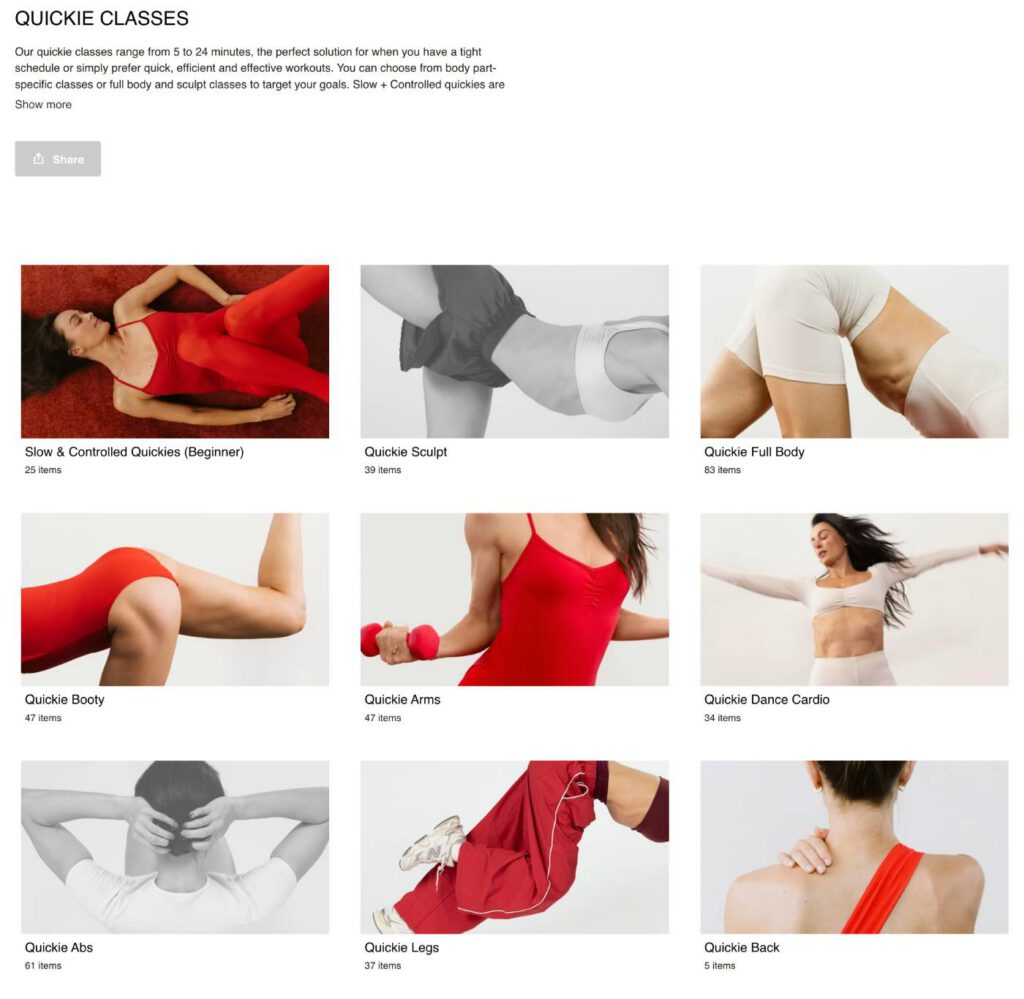
More screenshots: Melissa Wood Health
See the full Melissa Wood Health review for methodology and pricing.
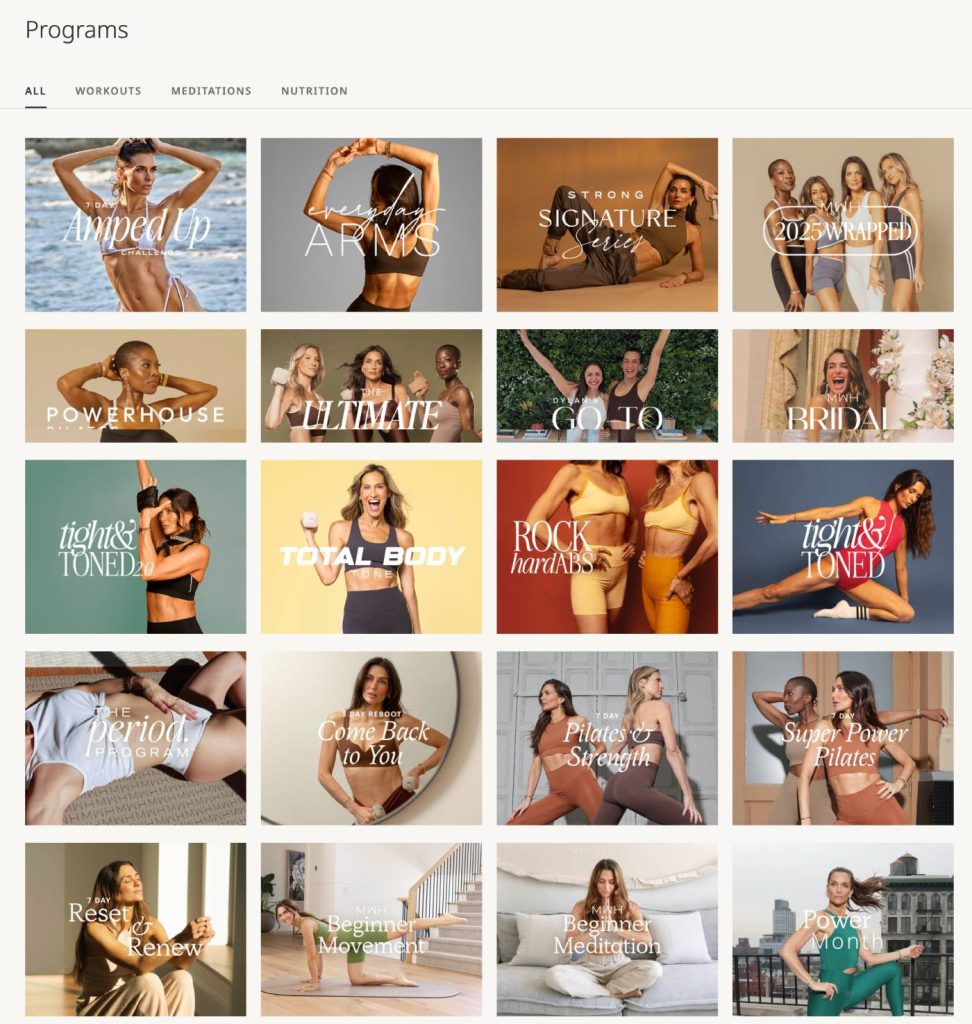
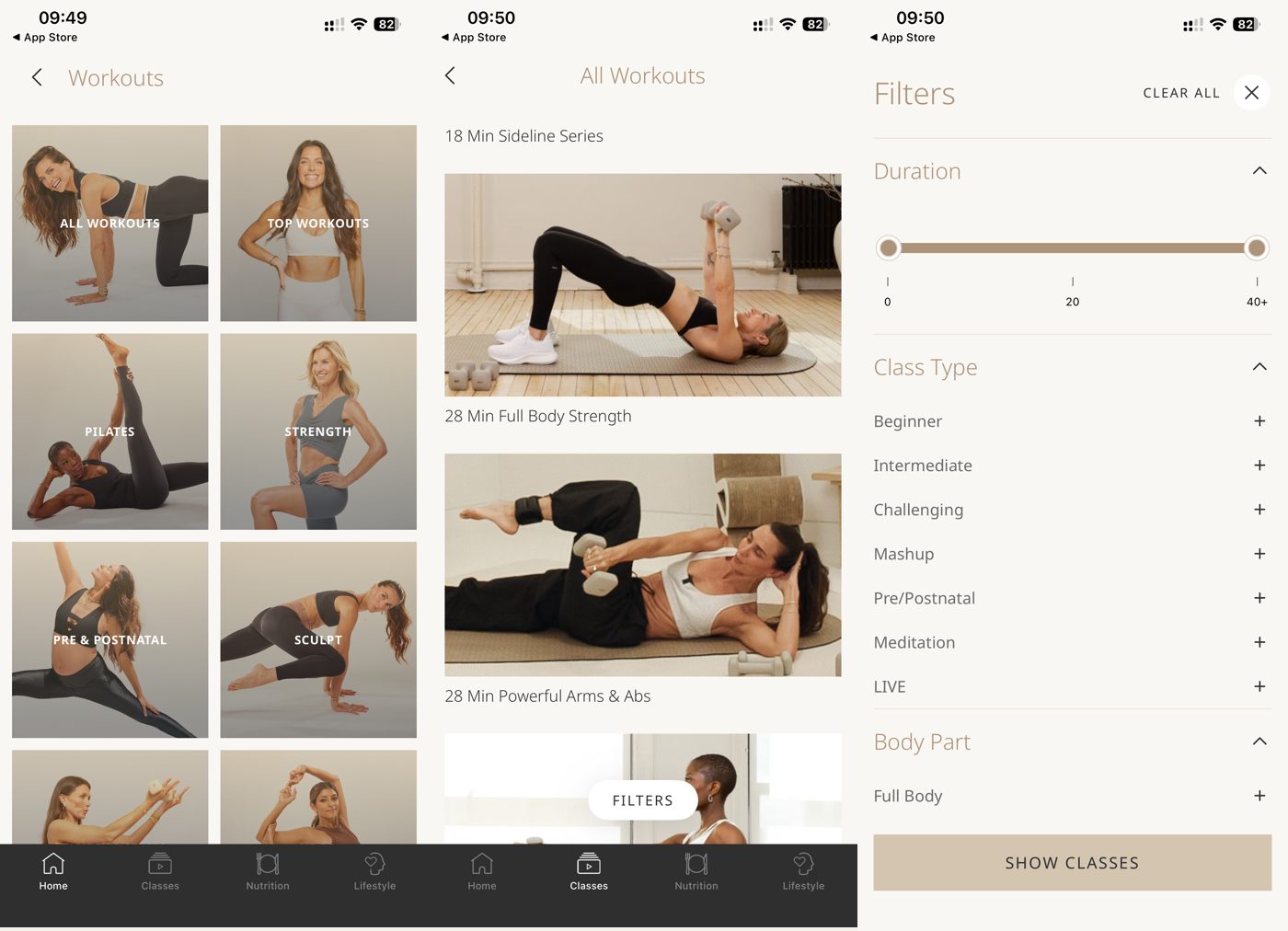

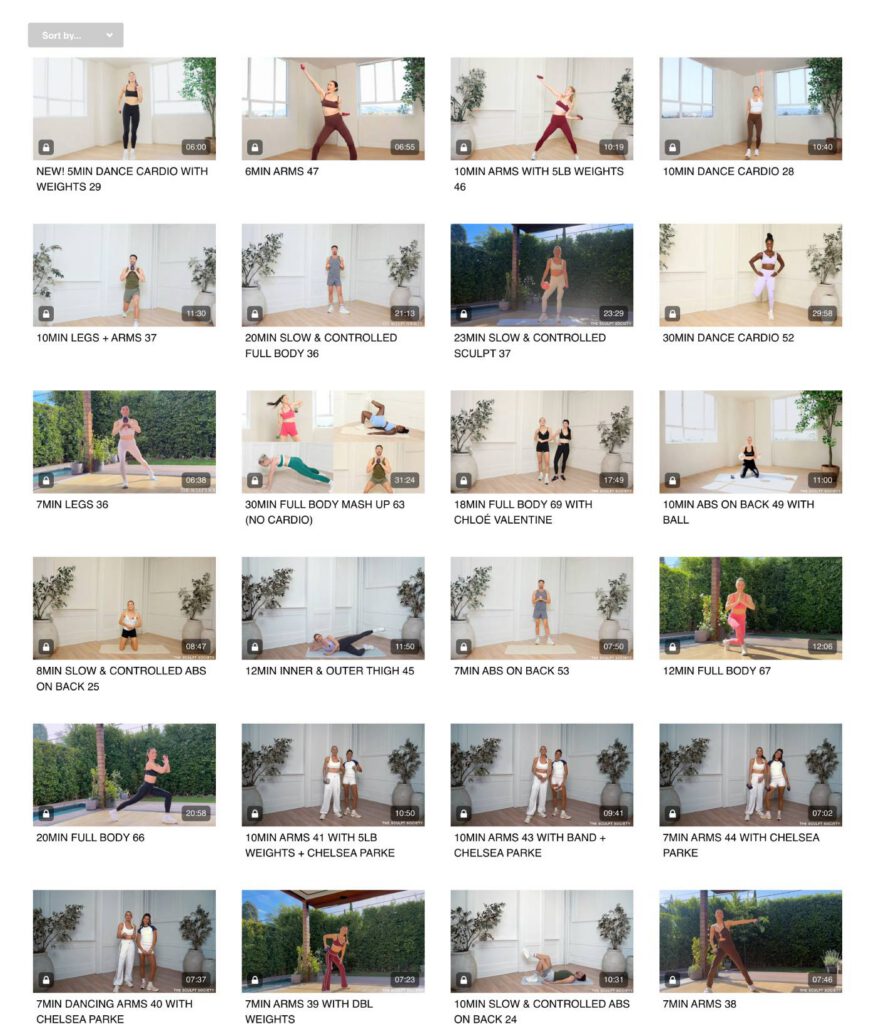
More screenshots: The Sculpt Society
See the full The Sculpt Society review for methodology and pricing.

Decision tree for women over 40
- Actively managing perimenopause symptoms and want a structured programme: The Sculpt Society (Midlife Movement).
- Budget caps at $15/month: Melissa Wood Health.
- Absolute beginner or returning after a long break: Melissa Wood Health.
- Have prior training history with 5 to 9kg dumbbells: The Sculpt Society.
- Sessions must be 15 to 20 minutes: Melissa Wood Health.
- You want dance cardio: The Sculpt Society.
- You want meditation and breathwork integrated with training: Melissa Wood Health.
- You have active knee, hip, back or shoulder issues: The Sculpt Society (Injury Safe).
- You want lymphatic drainage and morning puffiness work: The Sculpt Society.
- Women over 60 starting fresh: Melissa Wood Health.
- Active women over 50 managing perimenopause symptoms: The Sculpt Society.
- You want visible muscle building: Neither. See Caroline Girvan CGX or BODi LIIFT4.
What I did not test
- The full MWH library. I completed two structured programmes (Total Body Tone with Kim, Signature Series with Melissa) plus individual classes across pilates, strength and cardio, meditation sessions, and approximately 6 weeks of paid subscription. Not the full catalogue.
- The full Sculpt Society catalogue. I completed Midlife Movement (4 weeks), the 14-Day Strength Programme, sampled Injury Safe programmes, dance cardio and lifestyle classes. Prenatal and postnatal programmes not tested.
- MWH from outside the US billing window. The platform is charged in USD; UK exchange rates fluctuate.
- Long-term adherence beyond my test windows.
- The MWH community. Available but I did not engage deeply with it.
Personal testing and observations
Melissa Wood Health testing
I am a woman in my mid-forties, currently in perimenopause, working full-time with two children and training daily. I signed up for the 7-day MWH free trial and continued with a paid monthly subscription for approximately six weeks. I worked through individual classes, two structured programmes (Total Body Tone with Kim, Signature Series with Melissa), and the meditation library. I also asked my mum in her late 60s to test it alongside me, which turned out to be the most revealing part of the review.
For my mum, MWH was perfect: short, gentle, never intimidating, and within two weeks she was training daily without anyone pushing her. This is the audience MWH is genuinely well-suited to. Women coming fresh to fitness in their 60s or 70s find most platforms intimidating; MWH removes that barrier.
For me, an experienced exerciser coming from platforms like Burn360 and Fit with Coco, the workouts were sometimes too light with the recommended 1 to 3 pound dumbbells. I had been training with 5 to 9kg per hand on other platforms, so the drop was significant. After about six weeks I noticed I had actually engaged muscles I do not normally target, and I was getting sore in new places, which was interesting. But I also felt like I had lost some of the strength I had built previously. Once I added heavier dumbbells and ankle weights the challenge improved, but that potentially conflicts with MWH’s own lean-body philosophy.
The honest caveats: there is no perimenopause or menopause-specific content, the muscle building potential is low for anyone who already trains, and the workouts started to feel repetitive after about six weeks. What works genuinely well is the meditation library, the design language, and the unbeatable time efficiency of 15 to 20 minute sessions.
The Sculpt Society testing
I tested The Sculpt Society by completing the 4-week Midlife Movement Programme in full, completing the 14-Day Strength Programme, sampling Injury Safe programmes, and trying multiple dance cardio and lifestyle classes. Equipment used: 5 to 8.5kg dumbbells, ankle weights, resistance bands, a Pilates ball. Most sessions can be done with no equipment.
The Midlife Movement Programme was the more perimenopause-focused experience between these two platforms. Sessions are roughly 30 minutes each. The 4-week arc produced maintained and slightly increased strength while keeping my joints intact, which is the right outcome for perimenopausal training where retention rather than aggressive bulk-building is the realistic goal at this stage.
The platform’s joint-friendly default was the operational advantage I noticed most. I could open The Sculpt Society on any morning and press play on any sculpt or strength session without thinking about whether the loading pattern would aggravate anything. For my meniscus, the platform was a meaningfully safer default than most reviewed alternatives.
The gap I noticed: dance cardio is not prominently surfaced (you have to search for it), and the filtering is less deep than Obe Fitness or Pvolve. The quiz at sign-up partly compensates by surfacing a clear starting point.
Which is better for women over 50?
For women over 50, the answer depends on training history and starting point.
Active women over 50 with some training history: The Sculpt Society. Midlife Movement extends naturally into post-menopause concerns. The moderate-weight resistance work supports the muscle retention that becomes harder after 50 when oestrogen baselines stabilise.
Women over 50 returning to fitness after a long break: Melissa Wood Health. The on-ramp is gentler. The 15 to 20 minute sessions and 1 to 3 pound weight philosophy are appropriate starting loads after extended inactivity. As fitness builds, you can either progress within MWH by adding heavier dumbbells and ankle weights yourself, or graduate to The Sculpt Society’s moderate-weight programmes.
Women in their 60s and 70s starting fresh: Melissa Wood Health is the more appropriate platform. The Sculpt Society’s loading patterns may be too much without an extended building phase.
Frequently asked questions
Is Melissa Wood Health or The Sculpt Society better for women over 40?
The Sculpt Society is the stronger choice for perimenopausal and menopausal women, scoring 8.2 / 10 versus Melissa Wood Health at 6.9 / 10. The Sculpt Society has the highest Women Over 40 Specificity score in the entire Her Daily Fit comparison series, the dedicated 4-week Midlife Movement Programme, and moderate-weight strength work that supports muscle retention.
Is Melissa Wood Health cheaper than The Sculpt Society?
Yes. MWH is $14.95/month or $134.99/year. The Sculpt Society is $24.99/month or $229.99/year. MWH is roughly 40% cheaper on monthly billing.
Does Melissa Wood Health have a perimenopause programme?
No. MWH has no dedicated perimenopause or menopause programme and no hormone-focused instructors. The platform’s low-impact philosophy suits the age group incidentally, but nothing is labelled or structured specifically for perimenopause.
Which has better strength training for women over 40?
The Sculpt Society. MWH recommends 1 to 3 pound dumbbells (roughly 0.5 to 1.5kg), which is too light for most women over 40 with training history. The Sculpt Society uses moderate weights (5 to 8.5kg in my testing) which is more aligned with the load needed for muscle retention through perimenopause.
Which is more joint-friendly during perimenopause?
Both are low-impact throughout. The Sculpt Society scores 9 / 10 with no jumping in sculpt or strength content. MWH is very low-impact with slow controlled movements. Both are appropriate for perimenopausal women with joint history. The Sculpt Society has dedicated Injury Safe programmes; MWH does not.
Is Melissa Wood Health good for absolute beginners and older women?
Yes. MWH is well-suited to absolute beginners and older women starting or returning to fitness. My mum in her late 60s was training daily within two weeks of trialling it.
Does Melissa Wood Health have meditation?
Yes. MWH has a strong meditation and breathwork library, ranging from 5-minute sessions to longer guided practices. The meditation content is integrated alongside the workouts and was a genuine highlight of the platform during my six-week testing.
Research citations
- Maltais ML, Desroches J, Dionne IJ. Changes in muscle mass and strength after menopause. Journal of Musculoskeletal and Neuronal Interactions. 2009;9(4):186-197. PubMed.
- Watt FE. Musculoskeletal pain and menopause. Post Reproductive Health. 2018;24(1):34-43. doi: 10.1177/2053369118757537. SAGE.
- Resistance training for postmenopausal women: systematic review and meta-analysis. 2022. PubMed.
About this review
Reviewed by Katy Cole. Melissa Wood Health tested personally across the 7-day free trial plus approximately 6 weeks of paid monthly subscription, including the Total Body Tone with Kim programme, Signature Series with Melissa, individual classes across pilates and strength, and the meditation library. My mum in her late 60s tested MWH alongside me. The Sculpt Society tested personally across the full 4-week Midlife Movement Programme plus the 14-Day Strength Programme, Injury Safe programmes sampled, dance cardio and lifestyle classes. Prices verified against melissawoodhealth.com and thesculptsociety.com in May 2026.
Katy is the lead reviewer at Her Daily Fit. Fifteen years personally testing online fitness platforms. Mid-forties, currently in perimenopause, UK-based. Every claim on this page is either personally tested or attributed to peer-reviewed research. See how we score every programme using 9 weighted criteria.
Medical disclaimer: The content on this page is for informational purposes only and is not medical advice. Consult your GP or a healthcare provider before beginning a new exercise programme, particularly if you are managing perimenopause, menopause, or any existing health condition or injury.
Compared with
Where these brands appear in our “Best for” rankings