

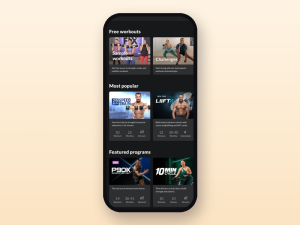
What is postmenopause and how should workouts change?
Postmenopause begins 12 months after the final menstrual period and continues for the rest of life. Estrogen sits permanently low. The transition phase is over. The structural changes the body now needs protection from (accelerated bone density loss, rising cardiovascular risk, sarcopenia, pelvic floor weakening) become the priorities rather than the day-to-day symptoms of perimenopause.
The shift in training priorities is meaningful. In perimenopause, programmes often respond to symptoms (hot flushes, sleep disruption, energy crashes) and to the wild hormonal fluctuations that make day-to-day energy unpredictable. In postmenopause, the work shifts to building and protecting structural integrity: bones, lean mass, heart, balance, pelvic floor. The Menopause Society 2023 position statement identifies resistance training, weight-bearing exercise and cardiovascular work as the three pillars of postmenopausal health.
The published evidence for postmenopausal women specifically is stronger than many women realise. Watson and colleagues (2018) ran the LIFTMOR trial in postmenopausal women with low bone mass. Eight months of heavy resistance training plus impact loading produced significant gains in lumbar spine and femoral neck bone mineral density. The control group lost density. The intervention group gained it. Cruz-Jentoft et al. (2010) established progressive resistance training as the documented intervention for sarcopenia. Burd and colleagues (2012) demonstrated higher leucine and protein thresholds for muscle protein synthesis in older adults.
The implication is that the most important window for protecting bone, muscle and heart is the first decade after the final menstrual period. The protocol is heavier lifting, not lighter. More frequency, not less. Cardiovascular work that includes Zone 2 and the occasional higher-intensity push. Mobility and balance work that prevents the falls that cause the hip fractures the protocol is trying to avoid. And critically, training that you can sustain across decades rather than burn out on in twelve weeks.
The platforms that score highest in this guide are the ones that build for postmenopausal physiology rather than treating menopause as an add-on. Two are entirely menopause-specific (Menovation and Owning Your Menopause). One has a clinical menopause programme inside a broader platform (Pvolve Menopause Strong). One has a 12-week menopause-aware programme with paired nutrition (BODi Belle Vitale). One has a Midlife Movement section that delivers what postmenopausal women want without making them feel medicalised (The Sculpt Society). One delivers the cardiovascular complement through a dedicated menopause collection (Peloton).
How should women in postmenopause train?
Train with progressive resistance (3 sessions per week), cardiovascular work (3-4 sessions per week including Zone 2 and one higher-intensity session), and dedicated balance and mobility work (2-3 short sessions per week). That is the protocol the published research consistently supports for women after the final menstrual period.
The resistance work matters most for bone density and lean mass preservation. The LIFTMOR protocol that drove bone density gains in postmenopausal women used compound lifts (deadlifts, squats, overhead presses) at 80-85% of one-rep maximum, twice per week for 30 minutes. Schoenfeld and colleagues (2016) documented twice-weekly frequency per muscle group as the floor for hypertrophy. Schoenfeld (2017) showed equivalent muscle growth across rep ranges 5-30 when total volume is matched, which gives postmenopausal women managing joint history flexibility to find a rep range that suits them.
Cardiovascular work after menopause is no longer optional. The American Heart Association identifies cardiovascular disease as the leading cause of death in women over 65. Estrogen no longer provides the vascular protection it did before. Sternfeld and colleagues (2014) MsFLASH aerobic trial showed improved sleep quality and reduced insomnia severity in midlife women following 12 weeks of moderate aerobic exercise. Newton et al. (2014) MsFLASH yoga trial showed modest improvements in mood and sleep. The published consensus is that 150-300 minutes per week of moderate cardiovascular work, with one weekly session pushing into higher-intensity zones to maintain VO2 max, supports the protocol.
Mobility and balance reduce fall risk, which is the mechanism by which bone fragility becomes hip fractures. The Royal Osteoporosis Society guidance recognises that strength, balance and impact loading together produce better outcomes than any one alone. Pelvic floor work belongs here too, particularly for women experiencing genitourinary syndrome of menopause. The platforms that integrate pelvic floor work into general strength sessions (Pvolve, Menovation) reduce the cognitive load of running a separate practice.
Recovery is the silent multiplier. Nedeltcheva and colleagues (2010) showed that sleep restriction during a caloric deficit shifts weight loss from fat to lean mass. Postmenopausal women already navigating sleep disruption cannot afford to compound the issue with overtraining. The protocol that emerges is structured, not aggressive. Three resistance sessions per week. Three to four cardiovascular sessions. Two short balance and mobility sessions. Adequate protein. Adequate sleep. Sustained for years.
What should postmenopausal women prioritise in a workout programme?
Six priorities matter most: menopause-specific framing, progressive resistance for bone and muscle, cardiovascular work for heart and metabolism, balance and proprioception for fall prevention, joint integrity, and protocol sustainability across decades. Each shows up in the postmenopausal research as a non-negotiable.
Menopause-specific framing. The platforms that build for postmenopausal physiology rather than retrofitting menopause as an afterthought produce better adherence. Menovation, Owning Your Menopause, Pvolve Menopause Strong and BODi Belle Vitale all sit in this category. The programming reflects what is actually happening (cortisol shifts, sleep disruption, joint changes, pelvic floor changes) rather than asking you to adapt a programme built for a 25-year-old to a body in a different decade.
Progressive resistance training. The LIFTMOR protocol used heavier loads than most women associate with midlife training. The bone density adaptation requires it. A programme that keeps you at 3kg dumbbells for two years will not produce the bone or muscle gains the research supports. Progressive overload (adding weight or volume across the weeks) is the mechanism.
Cardiovascular conditioning. Zone 2 work (low-to-moderate intensity, sustained for 30-60 minutes) protects vascular health. One weekly session at higher intensity preserves VO2 max. Walking, cycling, Pilates-style strength and structured intervals all qualify if the heart rate sits in the right zone.
Balance and proprioception. Hip fractures are the catastrophic outcome the postmenopausal protocol is trying to prevent. They occur because of falls, not because of weak bones alone. Single-leg work, lateral movements and rotational patterns reduce fall risk independent of strength gains. Pvolve’s multi-planar work and Knee Stability series are exactly this kind of training.
Joint integrity. The cartilage changes that accompany lower estrogen mean joints are less forgiving after menopause than before. Programmes that protect knees, hips and lumbar spine through movement quality rather than impact load are higher-value for sustained training across decades. Low-impact does not mean low-effort, and the strongest platforms in this guide prove it.
Protocol sustainability. The single most predictive factor for postmenopausal outcomes is consistency across decades, not intensity in any single year. The programme you keep doing at 65 is more valuable than the programme you abandon at 56. Calm, well-designed apps that you return to for years outperform aggressive programmes that burn you out in twelve weeks.
Which programmes score highest for postmenopause?
Pvolve scored highest overall (8.3) for its Dr Jessica Shepherd-led clinical advisory board, Menopause Strong programme and multi-planar movement system. Menovation (7.7) is the most perimenopause and menopause-specific platform tested. Owning Your Menopause (7.3) combines training with menopause education and GP access. BODi Belle Vitale (8.0) delivers a 12-week menopause-aware programme with paired nutrition. The Sculpt Society (8.2) is the most sustainable low-impact midlife platform. Peloton (7.3) delivers the cardiovascular complement.
| Programme | Score | Menopause focus | Equipment | Time commitment | Price / month | Trial |
|---|---|---|---|---|---|---|
| Pvolve | 8.3 | Menopause Strong, clinical advisory board, multi-planar | Bands, ankle weights, dumbbells | 20-30 min, 4-6 sessions/wk | $24.99/mo | 14 days |
| Menovation | 7.7 | Entirely peri/menopause-specific; strength, pilates, barre, nutrition | Dumbbells, mat, bands, pilates ball | 20-30 min, 4-5 sessions/wk | $28.99/mo or $199.99/yr | 8 days |
| Owning Your Menopause | 7.3 | Menopause-specific; strength, mobility, GP access, community | Dumbbells, mat, bands | 20-40 min, 3-5 sessions/wk | £16.99/mo or £13.33/mo on 6-mo plan | 14 days |
| BODi Belle Vitale | 8.0 | 12-week menopause programme by Autumn Calabrese, validated by James LaValle | Dumbbells, mat, optional bands | 20-30 min, 5 sessions/wk | $179/yr (~$14.92/mo) | 14 days |
| The Sculpt Society | 8.2 | Midlife Movement Programme, injury-safe filters, no-kneeling classes | Dumbbells, bands, ankle weights | 15-45 min, 4-5 sessions/wk | $24.99/mo or $229.99/yr | 7 days |
| Peloton | 7.3 | Menopause Health Collection (Respin Health, 56 classes, 100+ studies) | No equipment / your own | 20-60 min, 3-5 sessions/wk | $15.99/mo App One; $28.99/mo App+ | 30 days |
Scores pulled live via shortcodes. Discuss any new training programme with your doctor, physiotherapist or menopause specialist before starting, particularly if you have osteopenia, osteoporosis, a joint history or any pre-existing health condition.
How do the best workouts for postmenopause compare?
1. Pvolve, Score: 8.3
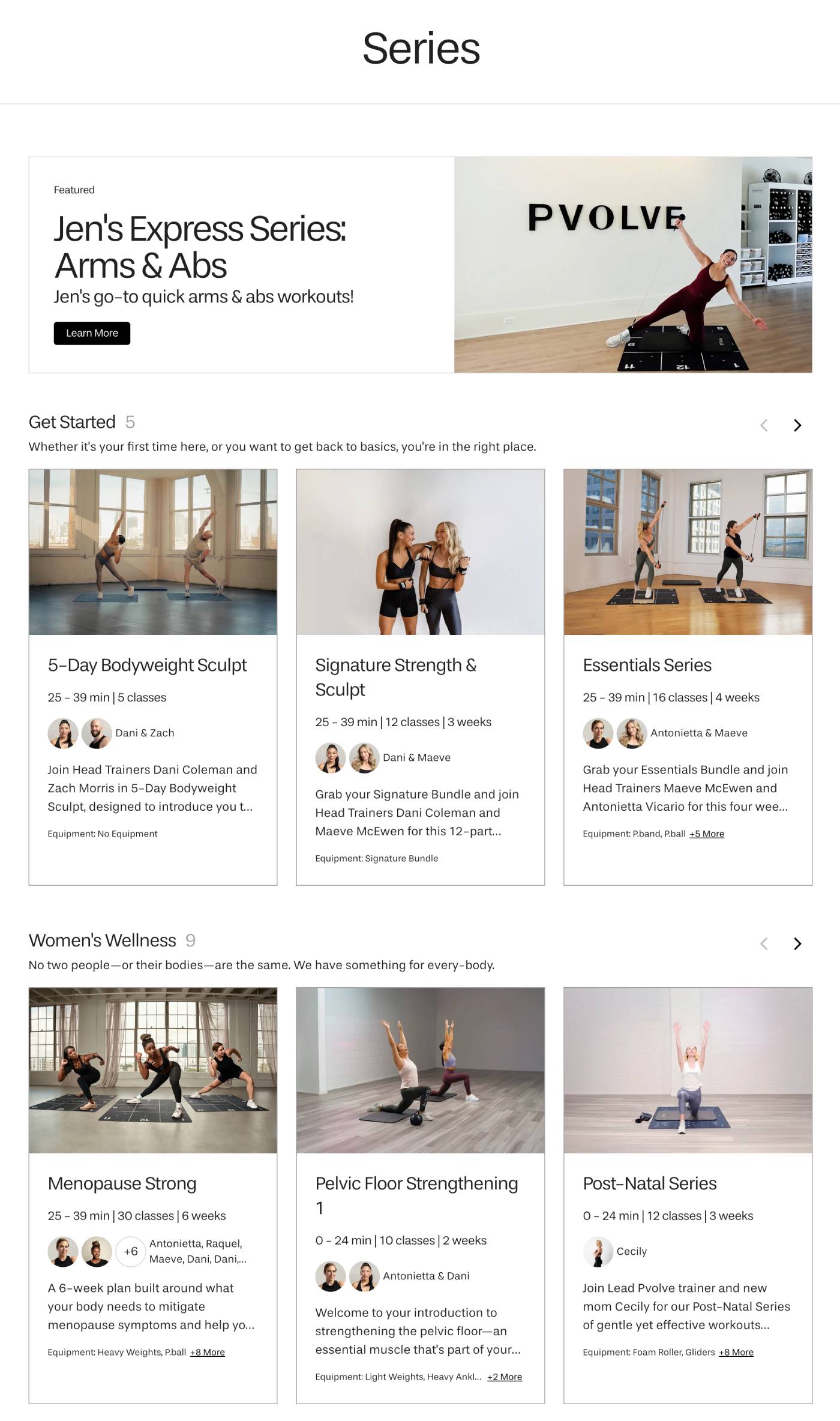
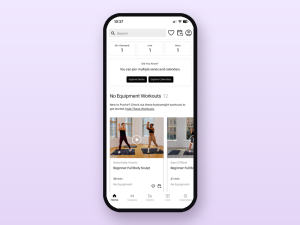
The only major platform with a clinical advisory board including Head of Medical Affairs Dr Jessica Shepherd (OB/GYN), Dr Amy Hoover (Doctor of Physical Therapy), Dr Gabrielle Lyon (muscle-centric medicine), Dr Nima Alamdari (Chief Scientific Advisor) and Dr Shannon DeVore (reproductive endocrinology). The Menopause Strong programme directly addresses bone density, pelvic floor, joint integrity and the body composition shifts that define postmenopausal years.
Pvolve’s movement system works through rotational, lateral and diagonal planes that conventional resistance training mostly skips. For postmenopausal women, this is the platform that combines strength, balance and joint protection in one programme.
This score reflects Pvolve’s position as the most postmenopause-aware platform with a clinical credibility moat. The Menopause Strong programme, the Knee Stability series, the pelvic floor work and the multi-planar movement system collectively address what postmenopausal women specifically need.
The Menopause Strong programme is the standout. It is built around four pillars Pvolve identifies as critical for women in midlife: muscle, bone, joint and pelvic floor. The sessions are 20-30 minutes. The progression is structured. The protocol is consistent with the published evidence on what postmenopausal bodies need.
The Knee Stability series belongs alongside it for women with a joint history or fall-risk concerns. The assessment approach helps identify movement compensations that fuel injury risk. The wider class library (over 1,500 sessions) covers everything from cardio burn to pelvic floor to low-impact strength.
Verdict: I tested Pvolve for two months of daily 20-minute sessions. I did not buy the Pvolve bundle. I used my own resistance bands, dumbbells from 5kg to 8.5kg, and ankle weights. The filter system is impressively granular: my specific filter (16-25 minutes, bands and dumbbells) returned 297 classes.
I started weight work at 5kg upper body and 6.5kg lower body. After two months I had progressed to 6.5kg upper and 8.5kg lower. Genuine progression across two months of 20-minute sessions, which is more than I expected.
The Menopause Strong programme delivered something I had not anticipated. Running up the stairs the other day I felt noticeably less wobbly, which sounds small but is not. The pelvic floor work especially is the kind of training that is easy to deprioritise because it does not feel dramatic, but I have noticed a real difference in stability and core connection.
Highest-scoring for: Postmenopausal women who want the most clinically credible menopause-aware programme on the market. Women with joint or knee history. Women who want pelvic floor work integrated into their strength training. Women who appreciate clinical credibility (Dr Jessica Shepherd OB/GYN, Dr Amy Hoover DPT, Dr Gabrielle Lyon).
Cost: $24.99/month. 14-day free trial.
Trade-off: The maximum dumbbell load most Pvolve classes use is lower than progressive heavy lifting protocols. Postmenopausal women specifically targeting bone density adaptation through LIFTMOR-style heavy loading should pair Pvolve with one heavier dumbbell session per week or graduate toward heavier loading after building the foundation. See our strength training for menopause guide for heavier-load options.
Start the 14-day free trialAffiliate link, opens pvolve.com. I earn a commission at no extra cost to you. Full disclosure
2. Menovation, Score: 7.7
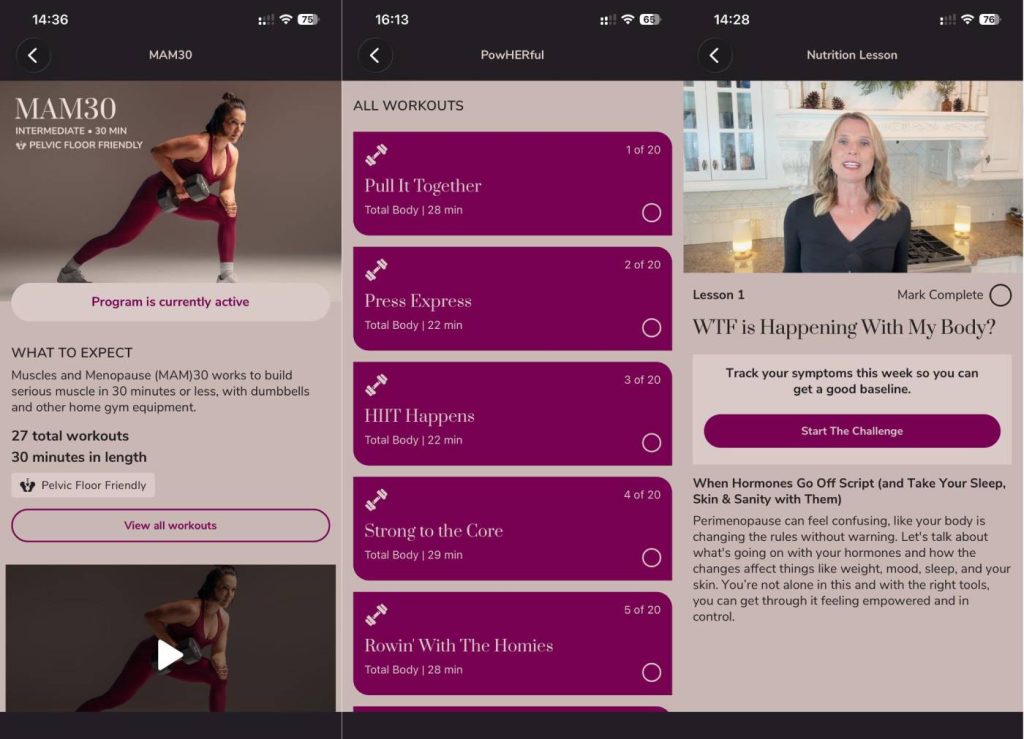
The most perimenopause and menopause-specific fitness platform I have tested. Every workout, every lesson, every recipe is framed through the lens of what your body is going through right now. Menovation was founded in September 2025 by Ashley Nowe and built around six modalities (strength, pilates, barre, yoga, pelvic floor, mobility with meditation) tailored to midlife physiology, plus ~30 nutrition lessons, 287+ recipes, 87+ expert health tips and 11 professional interviews.
For postmenopausal women who want the entire platform built around their life stage rather than a menopause section bolted on, Menovation is the closest fit available.
This score reflects Menovation’s position as the most peri/menopause-specific platform tested. The educational content is exceptional. UX limitations and a still-growing library (the platform launched September 2025) hold it back from a higher score.
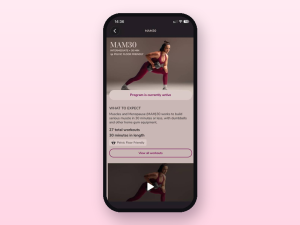
The flagship PowHERful programme with Kaitlin Heaney (Personal Trainer and Menopause Coaching Specialist) runs 5 weeks of structured progressive strength. The MAM30 programme uses a different format with separate videos per exercise. The barre programming is instructor-led and engaging. Beyond the workouts, the ~30 nutrition lessons on perimenopause are some of the most complete, practical information I have found on this topic, and the expert health tips cover hormones, mental health, intimacy, pelvic health and supplements in short, digestible formats.
The cycle and symptom tracker is a small but meaningful detail. For postmenopausal women, the symptom-tracking side remains useful even when the cycle side no longer applies, because hot flushes, sleep quality, mood and energy still vary across weeks and tracking them helps you spot patterns.
Verdict: A friend mentioned Menovation to me and I almost forgot about it. Then I looked it up and something stopped me scrolling: the website featured real women in their 40s, 50s and beyond with average bodies. That detail alone told me the people behind this platform understood their audience. By this point I have tested close to fifty platforms and very few have made me feel like the homepage was actually talking to me.
After approximately six to eight weeks across the PowHERful programme, MAM30 and the barre workouts, the PowHERful programme with Kaitlin Heaney delivered real results over five weeks: I dropped from 64kg to 61.5kg, increased my weights from around 5kg to 6kg upper body and 7.5kg to 9kg lower body per hand, and saw visible improvement in muscle tone, especially in my upper body.
What Menovation gets right, and gets right better than any other platform I have tested, is making perimenopause and menopause the entire foundation rather than an afterthought. Every workout, every lesson, every recipe is framed through the lens of what your body is going through right now. The rough edges are real (the web version could not play workouts during my testing, no way to filter by duration outside programme structures, library still growing) but the substance behind the platform is unusual.
Highest-scoring for: Postmenopausal women who want a platform built specifically for their life stage. Women who want to understand what is happening to their bodies alongside their training. Women who value expert-led education on hormones, pelvic health and nutrition from qualified clinicians. Women looking for strength, pilates, barre, yoga and pelvic floor in one peri/menopause-specific library.
Cost: $28.99/month, $69.99/quarter ($23.33/month equivalent), or $199.99/year ($16.67/month equivalent, saving 43%). 8-day free trial. UK pricing in USD only.
Trade-off: The library is still growing (launched September 2025) and you will eventually run through the available content faster than on established platforms like Pvolve. iOS app is the primary experience (web version was limited at time of testing). No injury-specific modifications during workouts. No filtering by duration outside programme structures.
3. The Sculpt Society, Score: 8.2
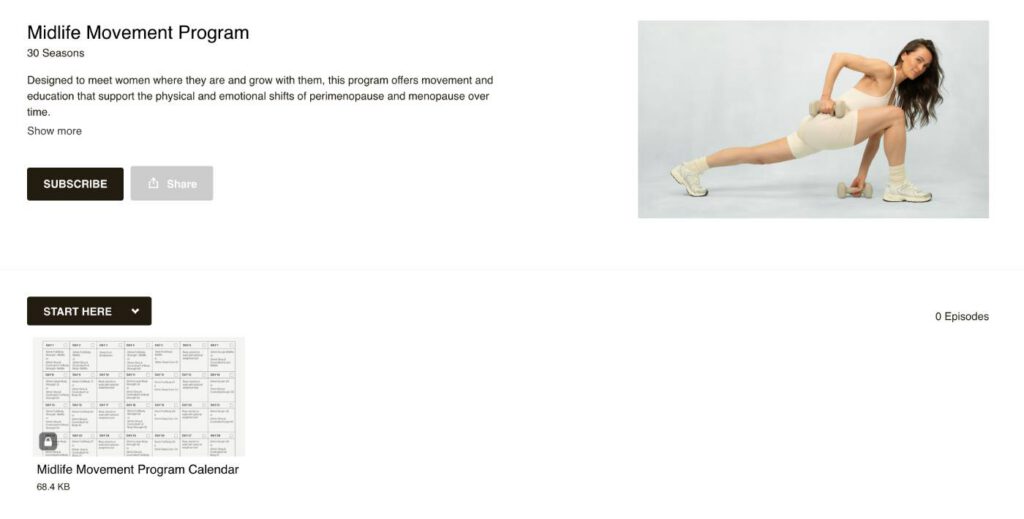
The most sustainable low-impact midlife strength platform tested. Dedicated sections for midlife support, injury-safe workouts and no-kneeling classes. The 4-week Midlife Movement Programme is medically informed and delivers what postmenopausal women need without making them feel medicalised.
The Sculpt Society also features a Lifestyle section that includes a lymphatic massage class and recovery-oriented content. The platform is calm, design-led and built for sustained use across years rather than weeks.
This score reflects The Sculpt Society’s position as the most sustainable midlife strength platform. The Midlife Movement Programme, the injury-safe filters and the no-kneeling sections were built for women who need joint-friendly options without sacrificing real adaptation.
The Midlife Movement Programme runs 4 weeks and is medically informed. The programming itself is what most postmenopausal women want from a strength platform: 30-45 minute sessions, dumbbell and band-based, low-impact and joint-aware. The 14-Day Strength Programme provides a shorter alternative for women who want a focused block.
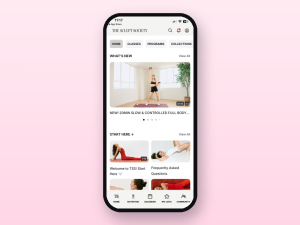
What sets The Sculpt Society apart for postmenopausal women specifically is the platform philosophy. Within minutes of opening the app, you find dedicated sections for midlife support, injury-safe workouts and no-kneeling classes. That alone tells you this platform thought about who it was building for.
Verdict: Within minutes of landing on the app, I spotted dedicated sections for midlife support, injury-safe workouts and no-kneeling classes. That alone told me this platform had actually thought about who it was building for. I was not expecting to enjoy the app as much as I did.
I completed the 4-week Midlife Movement Programme and increased my weights from 7.5kg to 8.5kg over the 4 weeks. The lymphatic massage class in the Lifestyle section is now a regular part of my week. The Midlife Movement Programme is medically backed and delivers on that promise in a way that feels human rather than clinical.
The score reflects one honest caveat: if you are already at an intermediate to advanced level, the default pace of the Midlife programme may feel slow. I could have pushed harder. For postmenopausal women at the beginning of their movement journey, or returning after a pause, this is exactly where to start.
Highest-scoring for: Postmenopausal women looking for sustainable, joint-friendly strength training. Women with a knee or hip history who benefit from no-kneeling options. Women who want recovery and lifestyle content integrated with their strength work. Women who prefer calm, well-designed platforms over high-energy aesthetics.
Cost: $24.99/month or $179.99/year. 7-day free trial.
Trade-off: The default pace of the Midlife programme may feel slow for women already at intermediate-to-advanced levels. The platform is not the right pick for women specifically chasing heavy bone-density loading; pair with Pvolve Menopause Strong or graduate to heavier dumbbell work after building the foundation.
4. Peloton, Score: 7.3
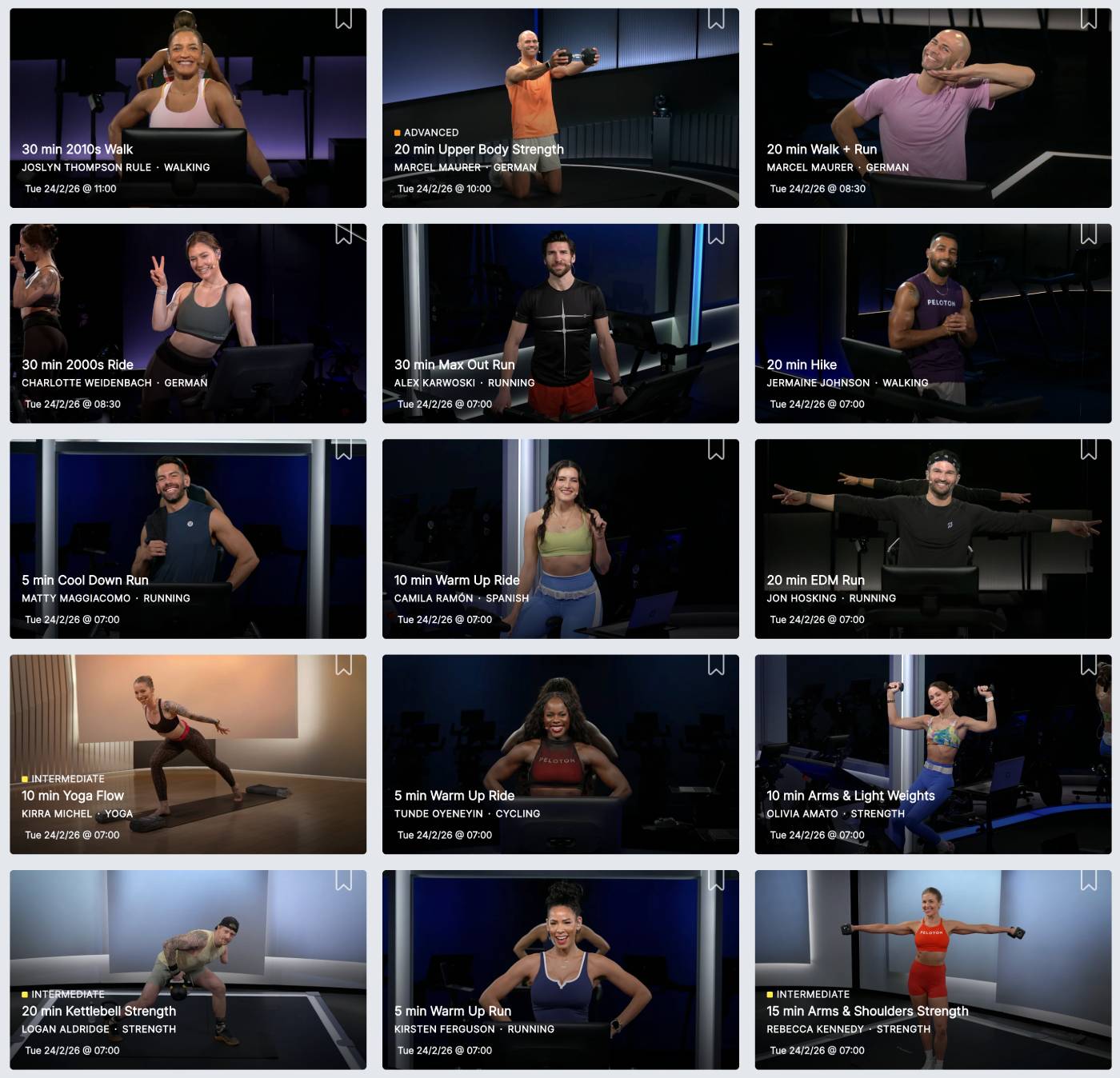
The most developed cardiovascular platform for postmenopausal women, with a dedicated Menopause Health Collection revamped March 2026 in partnership with Respin Health. The collection includes 56 classes structured around a 7-day programme, built on protocols drawn from over 100 published studies. Power Zone cycling delivers Zone 2 work; walking and running classes cover non-cycling cardio; live classes create real accountability.
You do not need to own Peloton equipment. App One ($15.99/month) gives access to the menopause collection, all strength, yoga, pilates, barre and live non-cycling classes. App+ at $28.99/month adds unlimited cycling and treadmill content. The platform is the strongest cardiovascular complement to a resistance-led postmenopausal protocol.
This score reflects Peloton’s cardiovascular strength rather than its strength training. For postmenopausal women, the Menopause Health Collection plus Power Zone cycling delivers the cardiovascular protocol the published research supports.
The Menopause Health Collection is the differentiator. The March 2026 revamp with Respin Health (founded by Halle Berry) restructured the collection around 56 classes organised into a 7-day programme, built on protocols drawn from over 100 published studies. It is one of the few platforms where you can search “menopause” and find an actual curated set of classes rather than a generic search result.
The Power Zone cycling programmes deliver the Zone 2 work that protects vascular health postmenopause. The walking and running classes work on a regular treadmill or outdoors. The instructor modification quality is genuinely good, which matters more than people think for women managing joint history. The live class format adds accountability that asynchronous platforms cannot match.
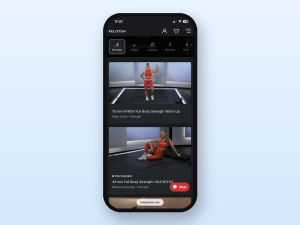
Verdict: I tested Peloton by mixing and matching classes across strength, yoga, walking and running, using my own treadmill for the cardio content and a single pair of 7.5kg dumbbells for strength. I do not own any Peloton equipment.
Most of the content most useful for women 40+ (low-impact cycling, yoga, barre, pilates, strength with modifications) requires either no equipment or dumbbells you may already own. I tested walking and running classes on a non-Peloton treadmill and it worked fine. The coaching translates completely.
Worth it for postmenopausal women? Yes, especially if menopause content and live accountability matter to you. The score reflects three things: a dedicated Menopause Health Collection that was genuinely well-developed before the March 2026 revamp and is stronger now, instructor modification quality that works in practice, and live classes that create real accountability. Honest warning: the cancel link has had functioning issues; cancel through the app or contact support if needed.
Highest-scoring for: Postmenopausal women who want cardiovascular work integrated with strength and recovery. Women with a treadmill or bike (yours or theirs) and an interest in Zone 2 training. Women who benefit from live class accountability. Women who want a curated menopause-specific cardio collection backed by published research.
Cost: $15.99/month App One (no cycling/treadmill content). $28.99/month App+ (adds unlimited cycling and treadmill). 30-day free trial.
Trade-off: The strength content is less progressive than dedicated strength platforms and is not the right primary pick if your priority is bone density loading. Use Peloton as the cardiovascular complement to a resistance-led week. The cancellation friction is real; cancel directly through the app.
5. Owning Your Menopause, Score: 7.3
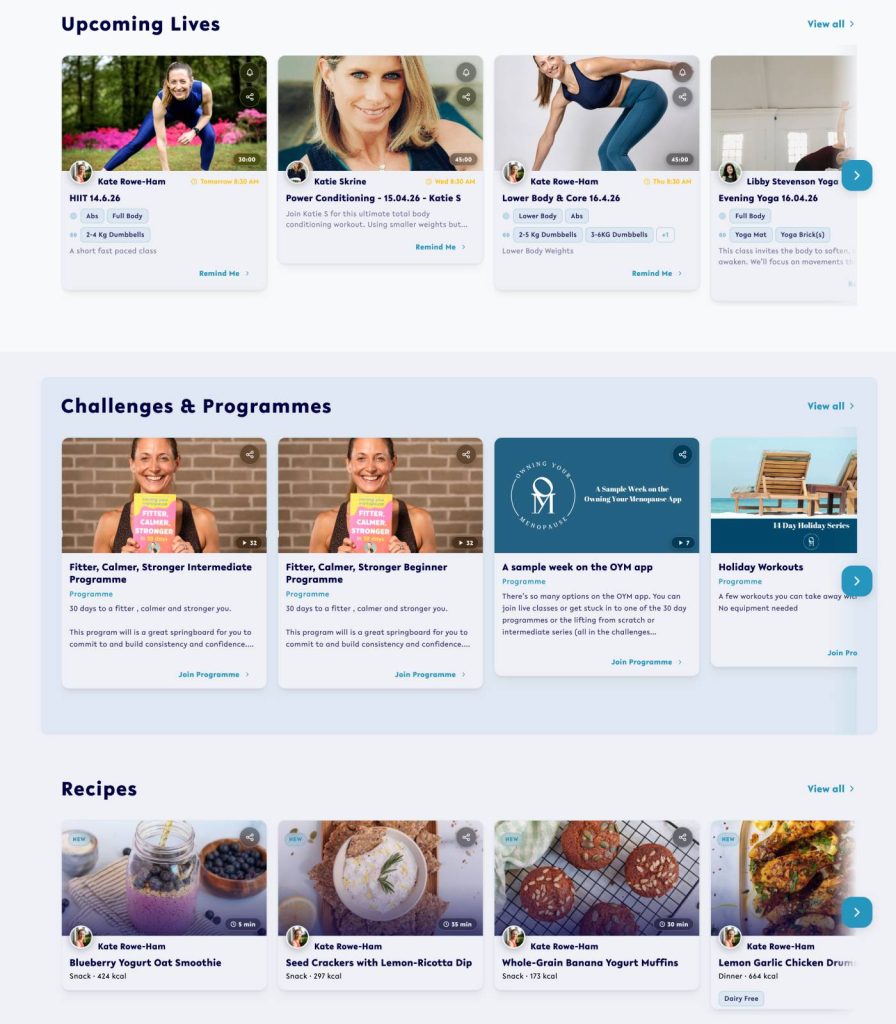
A menopause-specific platform that pairs training with menopause education, GP access and a community of women in the same life stage. The workout library covers strength, mobility and conditioning with a midlife focus. The menopause education content sits alongside the training rather than as an afterthought, and the GP access (one of the platform’s distinguishing features) gives members medically informed support for symptoms beyond what training alone can address.
For postmenopausal women who want training and medical guidance under one roof, with a peer community of women navigating the same physiology, Owning Your Menopause occupies a niche that few competitors touch.
This score reflects Owning Your Menopause’s position as a peri/menopause-specific platform combining training, education, GP access and community. The substance is real and the perimenopause knowledge is strong. Execution and visual polish are where the platform is still catching up.
The platform covers strength, mobility and conditioning work, with the training calibrated for midlife and postmenopausal physiology rather than borrowed from a general fitness library. The menopause education content covers symptoms, HRT considerations, sleep, mood and the structural changes that follow the final menstrual period. GP access via the platform sits behind the subscription and gives members a medically informed point of contact, which most fitness platforms (including the larger ones) cannot offer at any price.
The community component is the third pillar. For postmenopausal women who do not have a peer group of women going through the same physiology (many do not, particularly in social or professional settings that skew younger), a built-in community of women in the same life stage is non-trivial value.
Verdict: I tested Owning Your Menopause for several months before eventually moving on to other platforms in my testing rotation. I respect the perimenopause knowledge, which is genuine and considered, and the GP access plus community structure is unusual for a fitness platform. The training delivers what postmenopausal women need: strength, mobility and conditioning calibrated for midlife.
The honest caveat is executional. The platform felt, in places, a bit gloomy and amateur visually compared with the more polished options on this list. The training and the substance are strong; the production polish has not yet caught up. For women who care about polish, this matters; for women who care about substance, it does not. If your priority is menopause education with a GP-access safety net and a community of women in the same stage, Owning Your Menopause is one of very few platforms that delivers that combination.
Highest-scoring for: Postmenopausal women who want training, menopause education, GP access and community under one subscription. Women who value medical guidance alongside their training. Women in the UK looking for a UK-priced platform built around UK women’s health context. Women who care more about substance than visual polish.
Cost: £16.99/month or £80 for 6 months (£13.33/month equivalent). 14-day free trial.
Trade-off: Production polish is below the more design-led platforms (The Sculpt Society, Pvolve). The library is more modest than the larger platforms. The GP access varies by region and is subject to platform’s stated terms. If visual aesthetic is a primary driver of your adherence, consider The Sculpt Society or Pvolve.
6. BODi Belle Vitale, Score: 8.0
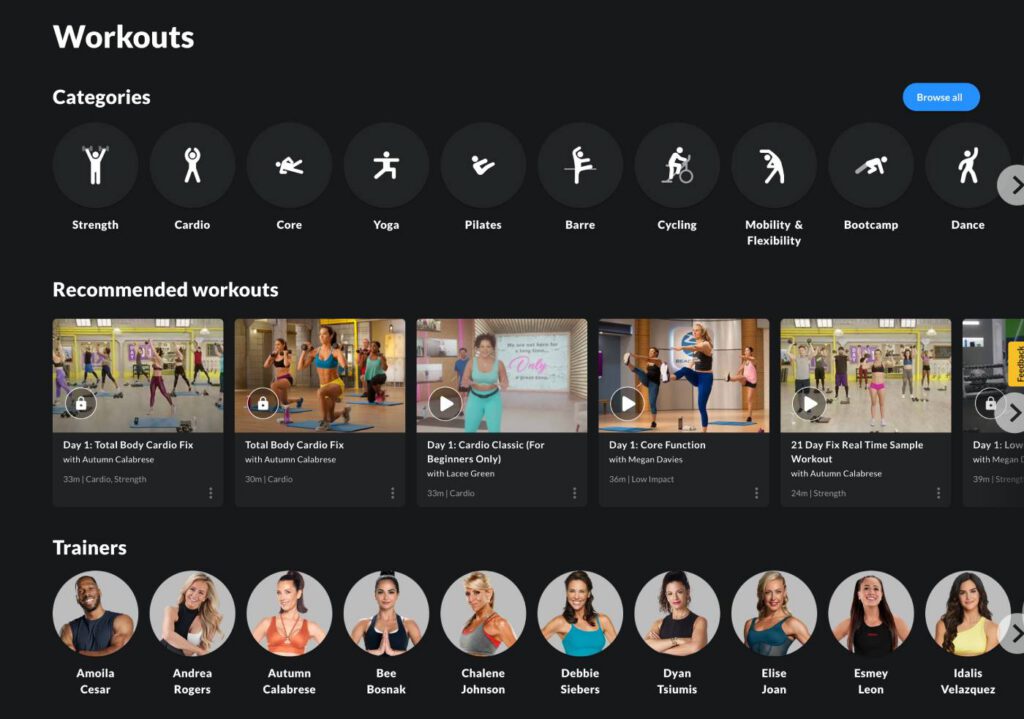
BODi’s Belle Vitale is a 12-week menopause-aware programme created by Autumn Calabrese and validated by clinical pharmacist James LaValle. It is one of the few major-platform menopause programmes that pairs structured training (low-impact strength, mobility, recovery) with menopause-specific nutrition guidance (Portion Fix containers calibrated for midlife metabolism). The whole subscription at $179/year (about $14.92/month equivalent) is unusually good value for a 12-week structured menopause programme plus a wide BODi library.
For postmenopausal women who want one platform that handles training and nutrition together, Belle Vitale is the most complete menopause-aware package at a major-platform price point.
This score reflects BODi’s position as the strongest training-plus-nutrition package in the postmenopausal category. Belle Vitale’s 12-week menopause programme with paired nutrition is genuinely unusual in the major-platform tier.
Belle Vitale was designed by Autumn Calabrese, an experienced BODi super-trainer, with clinical validation from James LaValle. The structure is 12 weeks of progressive low-impact strength sessions calibrated for midlife and postmenopausal women, paired with a menopause-aware version of BODi’s Portion Fix nutrition system. The sessions are 20-30 minutes. The nutrition guidance is woven into the programme rather than treated as a separate practice.
Beyond Belle Vitale, the BODi library covers LIIFT4 (a heavier strength-and-HIIT programme that suits postmenopausal women ready for progressive loading), 645 (a six-week balanced programme) and a deep back catalogue of structured programmes. The yearly $179 price is the relevant benchmark; the monthly tier is poor value.
Verdict: Belle Vitale is the BODi programme I keep coming back to in conversations about menopause-aware platforms. The combination of a 12-week structured strength programme calibrated for postmenopausal physiology, paired with menopause-specific Portion Fix nutrition guidance, is a more complete package than anything else in the major-platform tier at this price point. The training is low-impact, joint-aware and progressive. The nutrition guidance is structured enough to follow without becoming rigid.
The honest caveat is the BODi platform itself: the broader app aesthetic and onboarding experience can feel busy compared with the more design-led platforms (The Sculpt Society, Alo Wellness Club). The $179/year price absorbs a lot of that friction. For postmenopausal women who want training and menopause-aware nutrition guidance under one subscription, Belle Vitale is the most substantial offering at this price point.
Highest-scoring for: Postmenopausal women who want training and nutrition guidance under one subscription. Women who do well with a 12-week structured programme rather than an open-ended class library. Women who appreciate clinical validation (James LaValle, clinical pharmacist) on the nutrition side. Women on a moderate annual budget who want comprehensive scope.
Cost: $179/year (about $14.92/month equivalent). 14-day free trial.
Trade-off: The broader BODi app aesthetic is busier than the more design-led platforms in this guide. The auto-renewing subscription is standard for the category but worth marking in your calendar before the annual renewal. The Portion Fix system uses container-based portion control rather than a tracking app, which suits some women and not others.
Which workout for postmenopause is right for you?
You want the most clinically credible menopause-aware programme with joint protection and pelvic floor work integrated
START WITH: Pvolve Menopause Strong
14-day free trial. Start with the Menopause Strong programme (4 weeks). Add the Knee Stability series if you have a joint history. The multi-planar movement system protects joints while building strength. Dr Jessica Shepherd-led clinical advisory board.
You want the entire platform built around perimenopause and menopause, with workouts, nutrition and expert health education in one place
START WITH: Menovation PowHERful
8-day free trial. Start with the PowHERful programme (5 weeks) with Kaitlin Heaney. Pair the training with the ~30 nutrition lessons on perimenopause and the cycle/symptom tracker. The annual plan at $199.99 ($16.67/month equivalent) is the best value.
You want training, menopause education, GP access and a community of women in the same life stage under one subscription
START WITH: Owning Your Menopause
14-day free trial. UK-priced at £16.99/month or £80 for 6 months (£13.33/month equivalent). Use the menopause education content alongside the strength, mobility and conditioning library. GP access sits behind the subscription.
You want a structured 12-week menopause programme with paired nutrition guidance under one annual subscription
START WITH: BODi Belle Vitale
14-day free trial. $179/year (~$14.92/month equivalent). Complete the 12-week Belle Vitale programme (Autumn Calabrese, validated by James LaValle) with the menopause-aware Portion Fix nutrition guidance. Continue into LIIFT4 or 645 after completion.
You want sustainable, joint-friendly strength training you can keep doing for years without feeling medicalised
START WITH: The Sculpt Society Midlife Movement
7-day free trial. Run the 4-week Midlife Movement Programme. Add the injury-safe and no-kneeling filters if you have a joint history. The Lifestyle section adds recovery and lymphatic work.
You want cardiovascular work that protects vascular health and an integrated menopause content collection built on published research
START WITH: Peloton App One
30-day free trial. Filter by Menopause Health Collection (revamped March 2026 with Respin Health, 56 classes, 100+ studies). Mix Zone 2 cycling or walking with one weekly higher-intensity push to maintain VO2 max. Pair with a resistance programme from Pvolve, Menovation or BODi for the full postmenopausal protocol.
Where is the evidence still evolving on postmenopausal training?
Three open questions matter most. First, the optimal heavy-loading dose for postmenopausal bone density (LIFTMOR used a specific intensity; whether lighter protocols produce similar outcomes is still being tested). Second, the role of hormone therapy in moderating exercise response. Third, the impact of pelvic floor work on long-term continence outcomes.
On bone density loading, LIFTMOR used 80-85% of one-rep maximum across compound lifts twice per week. This is heavier than most home dumbbell programmes deliver. Whether lighter loads with higher volume produce equivalent bone outcomes in postmenopausal women is an active research question. The cautious operating point is heavier than you think you need, but progressing toward it carefully if you are returning to strength training after a pause. For women with diagnosed osteopenia or osteoporosis, work with a physiotherapist or supervised exercise specialist before attempting LIFTMOR-style loading.
On hormone therapy, the Menopause Society 2023 position statement updated the risk-benefit framing for symptomatic postmenopausal women within 10 years of their final menstrual period. Whether HRT modifies the exercise response (faster recovery, better protein synthesis, more bone adaptation) is a research question with promising preliminary signals but no settled consensus. Discuss with a menopause-trained clinician. Authors like Mary Claire Haver (The New Menopause) and Stacy Sims (Next Level) cover the practical implications in depth.
On pelvic floor work, the connection to long-term continence outcomes is increasingly well-supported but the optimal dose is unclear. The Pvolve and Menovation approach of integrating pelvic floor work into general strength sessions rather than treating it as a separate practice has practical adherence advantages. Targeted pelvic floor physiotherapy remains the highest-evidence intervention for women with existing symptoms.
If I were designing my own week from scratch today for postmenopausal training, knowing my joint history and my perimenopause physiology, I would run three progressive dumbbell sessions per week (Pvolve Menopause Strong or Menovation PowHERful as the anchor), two 30-45 minute walks at Zone 2 (or one walk plus one Power Zone cycling class from Peloton), one short balance or mobility session, and 100-130g of protein per day. That combination is not what any single programme on this list delivers as a single product. It is what the postmenopausal research seems to support, and it can be assembled across the six platforms in this guide.
Frequently Asked Questions
Pvolve scored highest for postmenopausal training. It is the only major platform with a clinical advisory board led by Dr Jessica Shepherd (OB/GYN), Dr Amy Hoover (PT) and Dr Gabrielle Lyon (muscle-centric medicine). The Menopause Strong programme addresses bone density, pelvic floor, joint integrity and body composition. Menovation and Owning Your Menopause are both menopause-specific platforms that rank prominently. BODi Belle Vitale delivers a 12-week menopause-aware programme by Autumn Calabrese validated by James LaValle. The Sculpt Society covers sustainable midlife strength. Peloton delivers the cardiovascular complement.
Perimenopause is the transition phase, when estrogen levels fluctuate wildly and symptoms often shape day-to-day training decisions. Postmenopause is the phase 12 months after the final menstrual period and beyond, when estrogen sits permanently low and the structural risks (bone density loss, cardiovascular disease, sarcopenia, pelvic floor weakening) become the dominant priorities. Postmenopausal training shifts toward heavier resistance for bones and muscle, more cardiovascular work for heart health, and dedicated balance work for fall prevention.
The published evidence supports 3 resistance sessions per week, 3-4 cardiovascular sessions per week (mostly Zone 2 with one higher-intensity session), and 2-3 short balance and mobility sessions per week. The Menopause Society identifies resistance training, weight-bearing cardiovascular work and balance training as the three exercise pillars of postmenopausal health.
Heavy resistance training combined with impact loading has been shown to improve bone mineral density in postmenopausal women with low bone mass. The LIFTMOR trial (Watson et al. 2018) ran for 8 months with postmenopausal participants and produced significant gains in lumbar spine and femoral neck density. The protocol used compound lifts at 80-85% of one-rep maximum twice per week. Discuss any bone density training programme with your doctor before starting.
Yes. Menovation (launched September 2025) is the most perimenopause and menopause-specific platform tested, with workouts, nutrition lessons and expert health tips all framed around midlife. Owning Your Menopause combines training with menopause education, GP access and community. Pvolve Menopause Strong is a clinical-grade programme led by Dr Jessica Shepherd OB/GYN. BODi Belle Vitale is a 12-week menopause programme by Autumn Calabrese, validated by James LaValle. Peloton’s Menopause Health Collection (Respin Health, 56 classes, 100+ studies) covers cardio.
Yes, but the protocol differs from what worked in younger years. The published evidence supports progressive resistance training plus adequate protein (1.6-2.2g per kg per day) as the most effective combination for fat loss with muscle preservation. The mechanism is building lean mass, which raises basal metabolic rate, while moderating intake. Severe caloric restriction works against muscle preservation.
Zone 2 cardiovascular work (low-to-moderate intensity, sustained for 30-60 minutes per session) combined with one weekly higher-intensity session protects vascular health and preserves VO2 max. Walking, cycling, swimming, rowing and elliptical work all qualify. The American Heart Association identifies cardiovascular disease as the leading cause of death in women over 65. Walking 30-45 minutes most days remains the most accessible and sustainable option.
No. The published evidence is consistent: postmenopausal women who begin progressive resistance training, cardiovascular conditioning and balance work achieve significant gains in strength, lean mass, bone density and cardiovascular fitness regardless of when they start. The LIFTMOR trial included postmenopausal women in their 60s and 70s. The right starting point for women returning to movement after a long pause is a low-barrier programme (The Sculpt Society Midlife Movement, Pvolve Progressive Weight Training for Beginners or Menovation MAM30) rather than a heavy lifting protocol.