Best Low-Impact Cardio for Women Over 40

By Katy ColePublished June 2, 2026
What's Included 5 programmes tested and ranked — low-impact cardio for women over 40Best For Women over 40 comparing low-impact cardio for women over 40Time Required 20–45 min per session depending on platformEquipment Ranges from no equipment to dumbbells and optional home-gym kit

Quick Answer – tested by a woman in perimenopause with a meniscus history

The best low-impact cardio programme for women over 40 is Peloton (7.6). Its Low Impact cycling library, Tread walking content and ride-length flexibility cover more low-impact cardio territory than any other platform tested.

For dance-led cardio without jumping, The Sculpt Society (8.6) is the strongest pick. For a free entry point, FitOn (7.5) covers walking, low-impact cardio and dance at zero cost. Daily Burn (7.2) and Pvolve (8.6) round out the five.

Reviewed by: Katy Cole, mid-40s, currently in perimenopause. I am not a personal trainer. I am a woman in my mid-forties who has personally tested close to 50 fitness platforms over 15 years, including extended testing of joint-friendly cardio after a meniscus injury, which I think makes me reasonably qualified to tell you what actually works for someone like us. Updated May 2026.

5 online fitness programs best for low-impact cardio for women over 40

1
Peloton Review

Peloton Review

Peloton earns 7.6/10 on the strength of a dedicated menopause content collection, instructor modification quality that works in practice, and live classes that create real…

🌱 🌿 🌙
Optional equipment Moderate impact 20–45 min App From $12.99/month
7.6 Read Review →
2
The Sculpt Society Review

The Sculpt Society Review

The Sculpt Society earns 8.6/10 as the only platform reviewed with a dedicated medically-backed programme for perimenopausal and menopausal women. 4-week Midlife Movement Programme, doctor-led…

🌱 🌿 🌙
Optional equipment Low impact 15–30 min App & Web From $24.99/month
8.6 Read Review →
3
FitOn App Review

FitOn App Review

FitOn earns 7.5/10 as the best free fitness app for women over 40. Genuinely unlimited free workouts across strength, HIIT, yoga, pilates, and more. Pro…

🌱 🌿 🌙
Optional equipment Moderate impact 5–60 min App Free tier
7.5 Read Review →
4
Daily Burn Review

Daily Burn Review

Daily Burn earns 7.2/10 for variety and value that genuinely has no equal at $14.99/month. 2,000+ workouts across every style. Strong dedicated programmes for women.…

🌱 🌿 🌙
Dumbbells Moderate impact 15–60 min App & Web From $14.99/month
7.2 Read Review →
5
Pvolve Review

Pvolve Review

Pvolve earns 8.6/10 as the most perimenopause-aware fitness streaming platform tested. Low-impact functional training with clinical backing, flexible 5–60 min class lengths, and the best…

🌱 🌿 🌙
Dumbbells Low impact 16–25 min App & Web From $19.99/month
8.6 Read Review →

What counts as low-impact cardio for women over 40?

Low-impact cardio is aerobic exercise where at least one foot stays on the floor at all times, with no jumping, landing or running. The cardiovascular stimulus comes from sustained moderate effort, not from ground-reaction force on the joints.

Walking is low impact. Indoor cycling is low impact. Rowing is low impact. Dance cardio can be either, depending on the choreography. A burpee, even slowed down, is not.

The distinction matters because most “cardio” content on the internet defaults to jumping and running. For women over 40, particularly those navigating perimenopause, that default is often the wrong trade.

The World Health Organization physical activity guidelines recommend 150 minutes of moderate-intensity aerobic activity per week for adults, or 75 minutes of vigorous-intensity activity. Neither category specifies impact. The cardiovascular adaptation is independent of whether your feet leave the floor.

According to the American College of Sports Medicine (ACSM), cardiovascular fitness is built through sustained activity at 64-90% of maximum heart rate, accumulated across the week. Walking briskly, cycling at moderate effort, swimming or rowing all deliver the same adaptation as running, given matched duration and intensity.

What changes between impact levels is the joint cost. A jumping burpee at moderate effort produces the same heart-rate response as a brisk walk, but the cost to the knees and lumbar spine is dramatically higher.

Why does cardio change for women over 40 in perimenopause and menopause?

Three things change at midlife that make low-impact cardio the higher-yield choice for most women. Cardiovascular risk rises, joint tolerance falls and cortisol sensitivity makes repeated all-out work counterproductive.

Cardiovascular risk increases postmenopause. According to the British Heart Foundation, the risk of cardiovascular disease in women rises in the decade following menopause as the protective effect of oestrogen on arterial flexibility is removed.

That makes consistent cardiovascular work more important, not less. The catch is that consistency requires sustainability, and sustainability requires not wrecking your joints.

Joint tolerance falls. Articular cartilage thins with age and the drop accelerates around the menopause transition. The British Menopause Society flags joint pain as a recognised symptom cluster of perimenopause and menopause.

Cardio formats that hammer the joints (jumping HIIT, plyometric burpees, repeat sprints) become a worse trade for marginal cardiovascular gain. The marginal gain over moderate-effort low-impact cardio is small. The joint cost is large.

Cortisol sensitivity rises in perimenopause. Dr Mary Claire Haver, a board-certified gynaecologist and author of The New Menopause, has been clear that midlife women often benefit from moderating sustained intensity in favour of structured, lower-cortisol training.

This part is personal for me. After a meniscus injury a couple of years ago, anything that asked me to land repeatedly stopped being an option. Low-impact cardio became the only sustainable way to keep cardiovascular fitness ticking over while the joint rebuilt.

The good news is the cardiovascular adaptation does not require impact. A 30-minute brisk walk at zone 2 effort produces the same aerobic stimulus as a 30-minute moderate-intensity HIIT session, with a fraction of the joint cost and almost none of the cortisol spike.

What should women over 40 prioritise in low-impact cardio?

Five priorities matter most: zone 2 base, joint variety, structured progression, sustainability over intensity and parallel strength work. Each translates to specific weekly programming.

Build a zone 2 base before chasing intensity. Zone 2 is the moderate effort where you can hold a conversation but not sing. It is the foundation of every well-built cardiovascular training programme.

The published research on polarised training (Stöggl & Sperlich 2014) supports a roughly 80/20 split: most aerobic work in zones 2-3, smaller amounts of zone 4-5 effort. For a beginner over 40, the first 6-8 weeks should be almost entirely zone 2.

Vary the joint pattern across the week. Walking loads the hips and knees one way. Cycling loads them another. Rowing changes the load pattern again. Mixing modalities reduces the chance of accumulated overuse in any single joint.

Choose structured progression over random effort. Cardiovascular fitness improves when the training stimulus increases over time. Walking faster, cycling at higher resistance, rowing at higher stroke rate. Structured programmes that progress load are higher-yield than the same time spent at the same effort week after week.

Prioritise sustainability over short-term intensity. Three short low-impact sessions a week, sustained for two years, beats five 60-minute HIIT sessions a week for six weeks and then nothing. Adherence beats optimisation.

Pair cardio with two strength sessions a week. Cardio is non-weight-bearing and does not deliver the bone-density stimulus that postmenopausal women need. The LIFTMOR trial (Watson et al. 2018) showed that bone density gains in postmenopausal women come from progressive resistance training, not cardiovascular work.

Cardio drives cardiovascular fitness. Strength drives muscle and bone. Both are needed. Neither replaces the other.

Which low-impact cardio programmes score highest?

Peloton scores highest overall (7.6) on cardio breadth and library depth. The Sculpt Society (8.6) leads on dance cardio. FitOn (7.5) is the strongest free option. Daily Burn (7.2) and Pvolve (8.6) cover specific niches.

Programme Score Joint friendliness Cardio formats Not Ideal For Price / month Trial
Peloton 7.6 9 Cycling, walking, rowing, outdoor Women wanting cardio without screens or app overhead App+ $28.99/mo 30 days
Sculpt Society 8.6 9 Dance cardio (mostly low impact), sculpt Women who want cycling or walking-led cardio $24.99/mo 7 days
FitOn 7.5 6 Walking, dance, Pilates cardio, mixed Women wanting one structured programme Free or Pro from ~$2.50/mo (annual) Free version
Daily Burn 7.2 8.5 Cardio, dance, walking, indoor cycling Women wanting a single coherent method $14.99/mo or $7.49/mo (annual) 30 days
Pvolve 8.6 9 Cardio Burn (low-impact tool-based cardio) Women wanting traditional cycling or walking $24.99/mo 14 days

Scores pulled live via shortcodes. Pricing verified May 2026. Discuss any new training programme with your doctor or physiotherapist, particularly with a joint history or cardiovascular condition.

How does intensity actually compare across these programmes?

Intensity varies widely even within “low-impact” categories. Peloton’s Low Impact rides stay at moderate effort throughout. The Sculpt Society’s dance cardio can spike to high zones. FitOn varies by class. Pvolve’s Cardio Burn is genuinely high effort despite being low impact.

The table below shows typical heart-rate-zone ranges across the platforms, based on testing. Zones are the standard 5-zone training model derived from polarised training research, where zone 1-2 is recovery to easy aerobic, zone 3 is moderate, zone 4 is threshold and zone 5 is maximal.

Modality Typical zone Impact Joint cost Notes
Peloton Low Impact rides Zone 2-3 None 1-2 Stay seated throughout. Sustained moderate effort. Safest after knee surgery.
Peloton walking (Tread or app) Zone 2-3 Low 2 Pace target features on the app. Outdoor walking content added 2026.
The Sculpt Society dance cardio Zone 2-4 Low to moderate 2-3 Choreography-driven. Some classes spike higher than expected.
FitOn walking + low impact Zone 2-3 None to low 1-2 Filter by intensity. Free tier covers full library.
Daily Burn cardio Zone 2-4 Varies 2-3 Mix of formats. Filter explicitly for low-impact options.
Pvolve Cardio Burn Zone 3-4 None 1-2 Alternates cardio + strength pushes. Low impact, high effort.
Peloton HIIT (typical) Zone 4-5 High 3-4 Often contraindicated post-meniscus or postnatal pelvic floor.
Walking outdoors Zone 2 Low 2 The most underrated cardiovascular intervention available.

The pattern is clear. Low-impact cardio covers a wide intensity spectrum. The right platform for you depends as much on which intensities you want as on which modalities you prefer.

How do the best low-impact cardio programmes compare?

1. Peloton – Score: 7.6

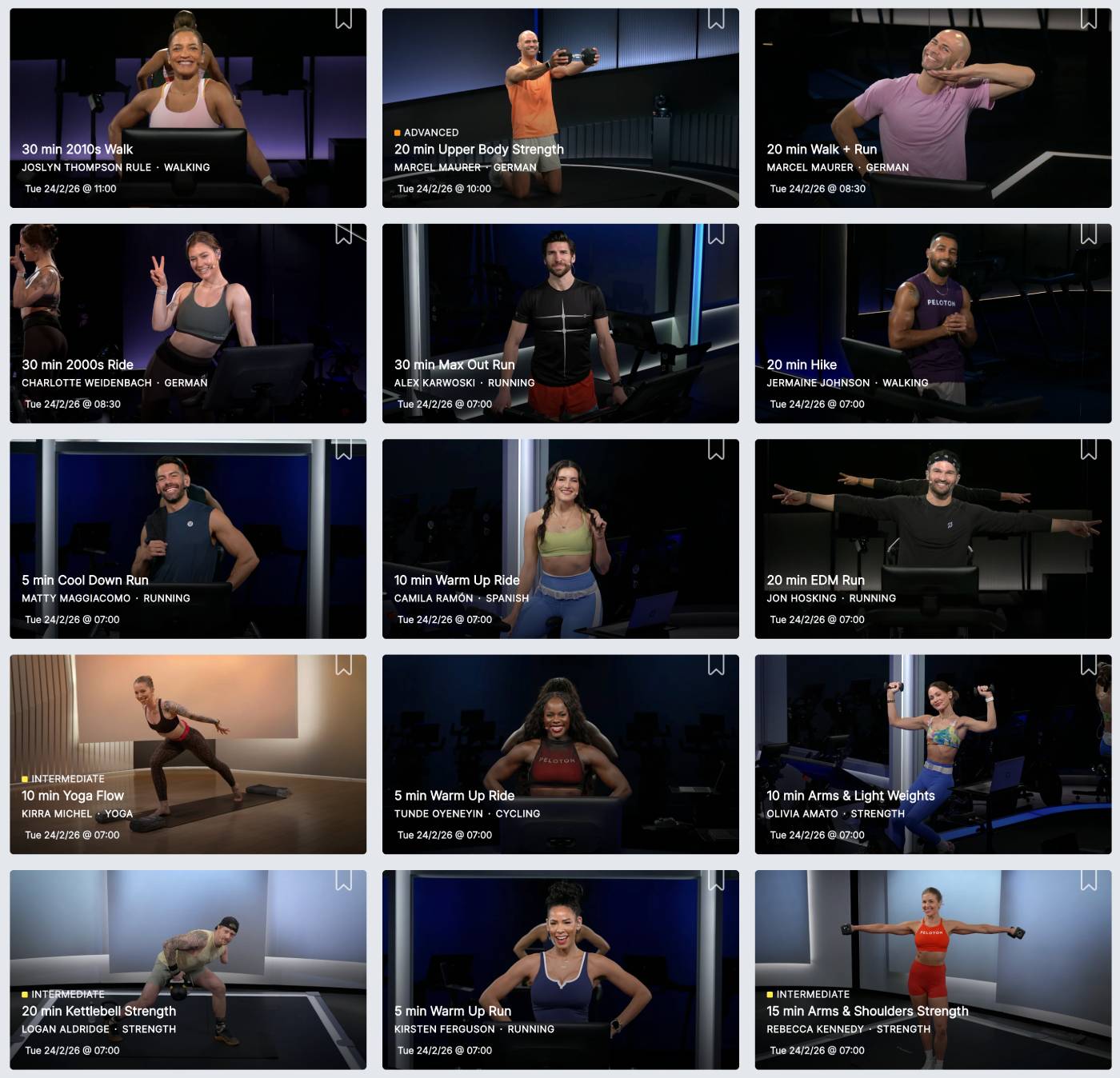
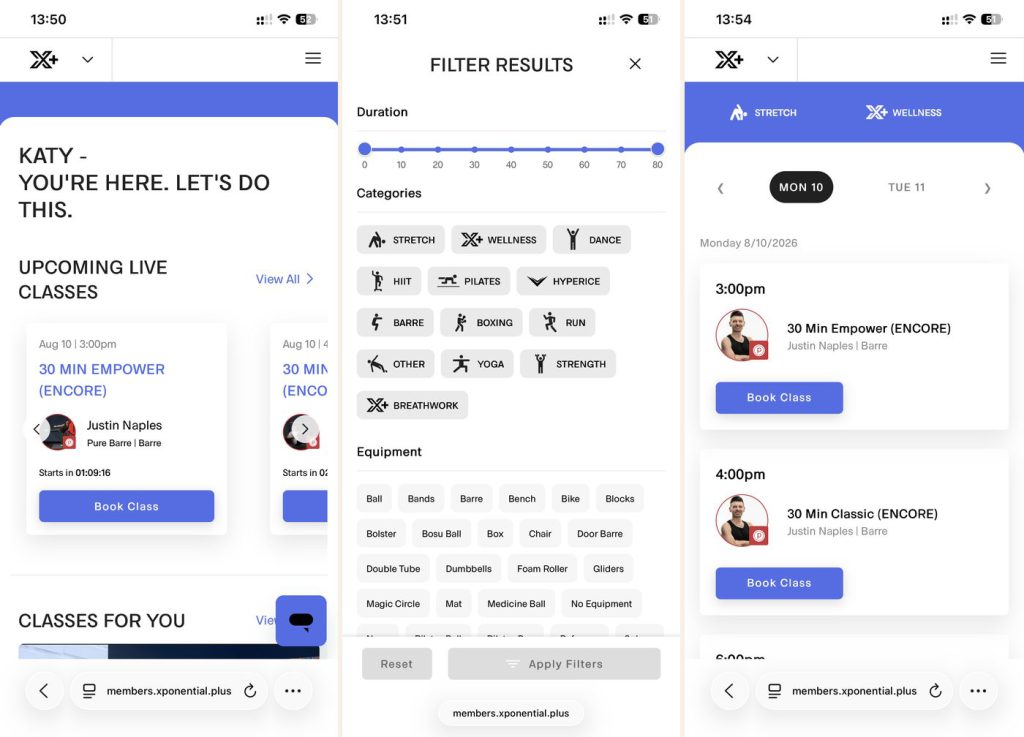
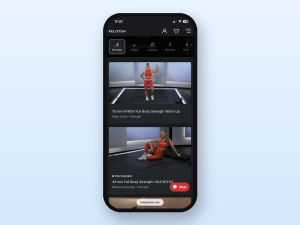
Peloton app filter showing workout type, duration and intensity options for on-demand and live classes — Low-Impact Cardio for Women Over 40

The most complete cardio library on the market. Cycling, walking, rowing and outdoor content under one subscription, with a Low Impact category large enough to build an entire training week from.

Peloton is not specifically built for women over 40, but the cardio breadth and the explicit Low Impact filtering make it the strongest cardio platform for our population. The app at $28.99/month works with any indoor cycle, treadmill or rower.

9.0Time Efficiency
7.5Muscle Potential
8.0Women Over 40 Specificity
9.0Joint Friendliness
8.5Recovery Compatibility
6.5Programme Structure
7.0Value for Money
7.8UX and Design
2.0Nutrition Integration

This score reflects cardio breadth and library depth. Peloton is the strongest pure-cardio platform tested for women over 40, even though it is not specifically designed for our demographic.

The cardio library covers Cycling, Tread (walking and running), Rowing, Outdoor (audio-only walking and running), Strength, Yoga, Pilates, Stretching and Meditation. For our population the relevant categories are Cycling Low Impact, Tread walking, Rowing and the Outdoor walking library.

Peloton added Extra Steps walking classes in 2026, the first outdoor audio-only walking content the platform has released. These run alongside the existing Tread walking library taught by Rebecca Kennedy, Kirsten Ferguson, Joslyn Thompson Rule, Marcel Dinkins and the British Tread roster.

The Low Impact cycling category is the standout. Stay-seated rides at moderate cadence, taught by Denis Morton, Hannah Corbin and Christine D’Ercole. Gradual resistance changes, sustained zone 2-3 effort, no spikes.

The Pace Target feature on the app (Android and iOS, added 2026) makes walking classes more useful. The instructor calls out effort levels and the app surfaces the corresponding pace, so the walk is structured rather than vague.

Verdict: I do not own any Peloton equipment. I tested the platform by mixing and matching classes across strength, yoga, walking and running, using my own treadmill for the cardio content and a single pair of 7.5kg dumbbells for strength.

Most of the content most useful for women 40+ (low-impact cycling, yoga, barre, pilates, strength with modifications) requires either no equipment or dumbbells you may already own. I tested walking and running classes on a non-Peloton treadmill and it worked fine. The coaching translates completely.

Peloton earns its score on three things: a dedicated menopause content collection that is genuinely well-developed, instructor modification quality that works in practice, and live classes that create real accountability. The sessions sat appropriately in my week without leaving me either undertrained or wrecked the next day. That balance is harder to get right than it sounds.

Highest-scoring for: Women in perimenopause and menopause who want the largest low-impact cardio library available under one subscription. Women rebuilding cardiovascular fitness after a joint injury. Women who train in mixed environments (gym, home, outdoors) and want one app that covers all of them.

Cost: Peloton App+ at $28.99/month gives unlimited cycling, walking, running, rowing and the full cross-training library. App One at $15.99/month is the cheaper tier but does not include unlimited cycling. The Cross Training Bike is $1,695, the Bike+ is $2,695, the Tread is $2,995 (verify on the official site at time of purchase, prices fluctuate with promotions).

Peloton review

Trade-off: Peloton is not specifically built for women over 40. Some instructors lean hard into hype-driven coaching that does not suit the audience. Filter aggressively. Also, the app is screen-led: women who want unplugged cardio will find the format intrusive.


2. The Sculpt Society – Score: 8.6

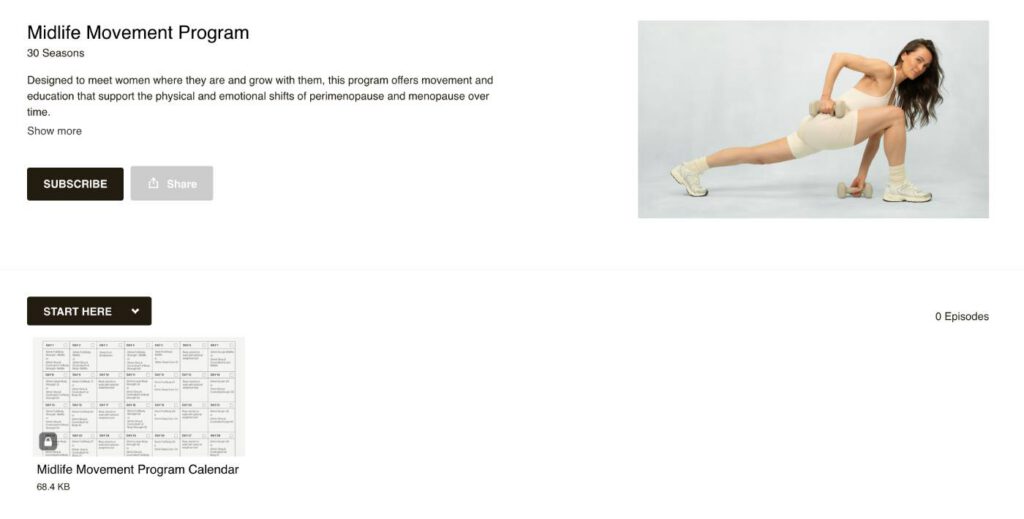
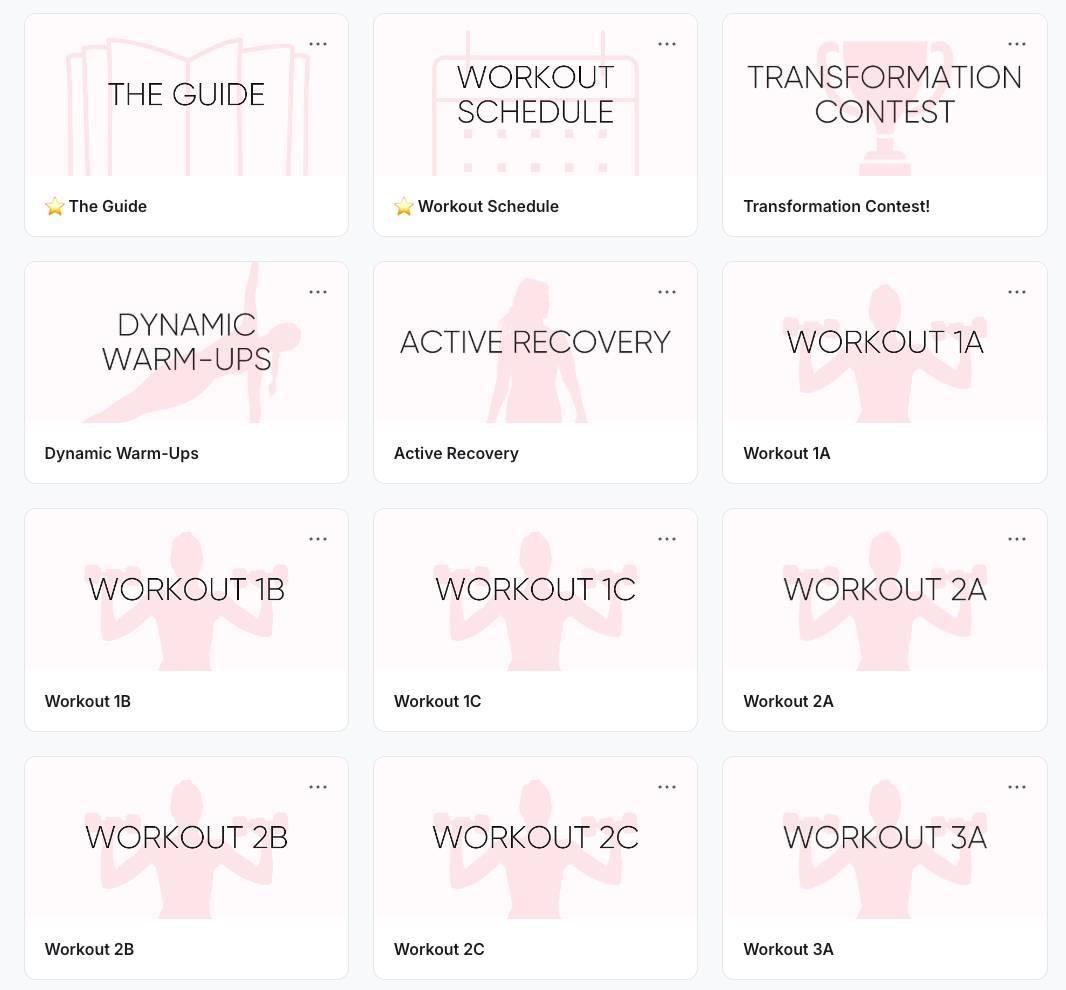
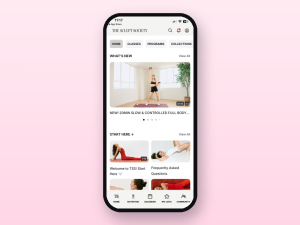
The Sculpt Society Midlife Movement Programme screen showing week-by-week structure for perimenopausal and menopausal women — Low-Impact Cardio for Women Over 40

Dance cardio as the cardio modality, taught by a former professional dancer. The most enjoyment-led cardio platform on this list, and enjoyment is the single biggest predictor of adherence in postmenopausal women.

The Sculpt Society pairs dance cardio with low-impact sculpt classes. The dance cardio sits at the cardio end. The sculpt sits at the strength-endurance end. Together they cover most of a balanced week.

8.5Time Efficiency
7.0Muscle Potential
9.5Women Over 40 Specificity
9.0Joint Friendliness
9.0Recovery Compatibility
9.0Programme Structure
8.5Value for Money
8.5UX and Design
8.0Nutrition Integration

This score reflects dance cardio quality and adherence-friendly format. Women who want cycling or walking-led cardio will rank Peloton higher; women who want movement that feels like play will rank this higher.

The Sculpt Society was founded by Megan Roup, a former professional dancer, and launched in 2017. The platform is built around two formats: dance cardio (the cardio piece) and sculpt classes (the strength-endurance piece).

Dance cardio classes are choreography-led, 20-45 minutes, taught in a friendly studio-style. Most classes stay low impact, though some choreography spikes briefly to higher zones. The app surfaces classes by intensity tag.

The key feature for adherence is the format itself. A choreography you enjoy is a workout you actually do. The published evidence on enjoyment as the strongest predictor of long-term exercise adherence in older women is robust, and dance cardio sits at the high end of that scale for our population.

Verdict: Within minutes of landing on The Sculpt Society app, I spotted dedicated sections for midlife support, injury-safe workouts and no-kneeling classes. That alone told me this platform had actually thought about who it was building for.

I completed the 4-week Midlife Movement Programme, dipped into the 14-Day Strength Programme, tested the injury-safe classes, discovered the lymphatic massage class in the Lifestyle section (now a regular part of my week) and eventually found the dance cardio through the search bar. I was not expecting to enjoy the app as much as I did.

The dance cardio is the cardiovascular piece. It is low-impact by design and the choreography pulls you along, which makes adherence easier than traditional cardio formats. The trade-off is that dance cardio plateaus without a structured progression model. Pair it with one heavier cardio modality (a brisk Peloton walk, a Climb ride) if you want continued progress on cardiovascular fitness specifically.

Highest-scoring for: Women who struggle with motivation for traditional cardio. Women returning to movement after a long pause. Women in early perimenopause who want a recovery-friendly format that does not crank cortisol.

Cost: $24.99/month or $189.99/year (saves 35%). 7-day free trial. Live and on-demand classes included.

The Sculpt Society review

Trade-off: Dance cardio does not deliver the same cardiovascular load as structured zone training. Women who want measurable progression should pair The Sculpt Society with a Peloton-style cycling or walking app, or accept that this is a maintenance-level cardio platform.


3. FitOn – Score: 7.5

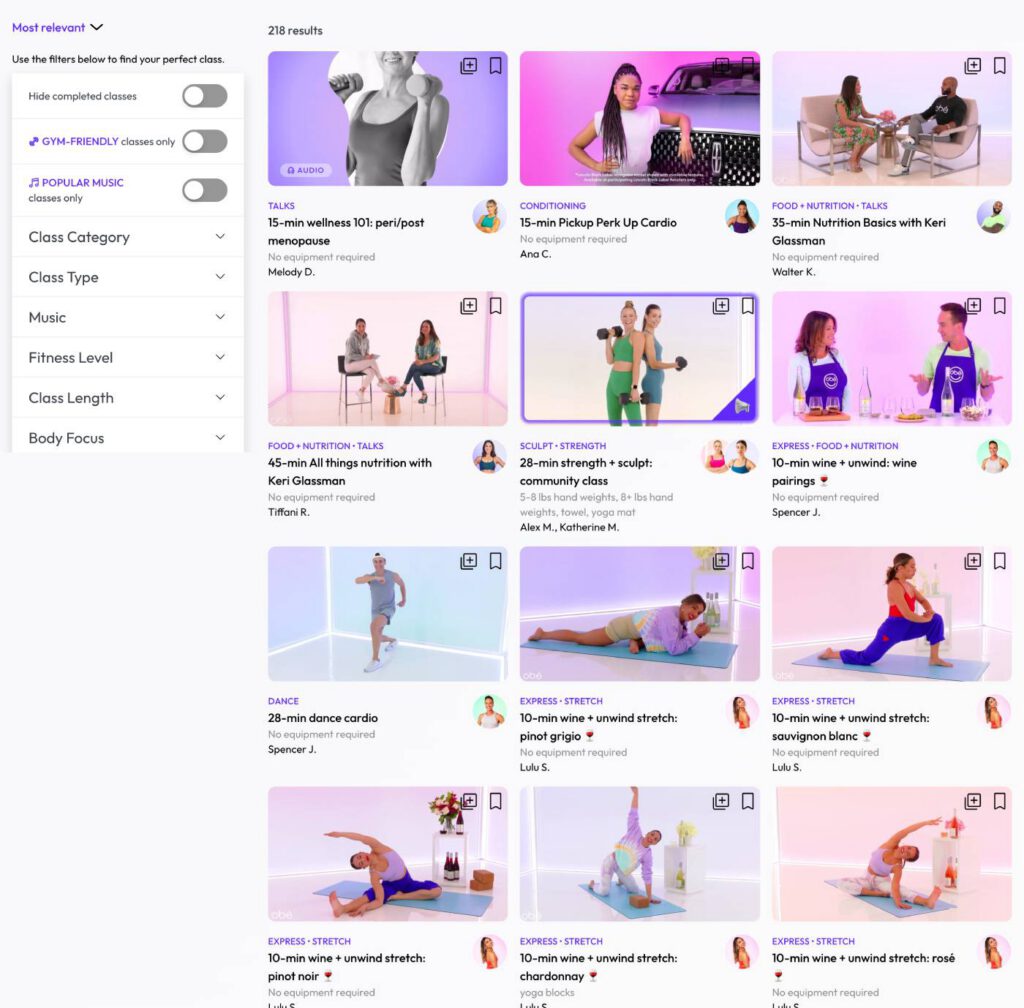
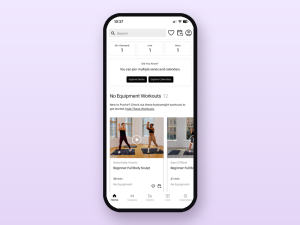
FitOn app equipment filter showing options to search by the gear you have available at home — Low-Impact Cardio for Women Over 40

The strongest free low-impact cardio option available. Full workout library at no cost, with optional Pro features for personalised meal plans, downloads and integrations.

FitOn covers walking, low-impact cardio, Pilates cardio, dance and mixed-modality classes. The free tier alone is more substantial than several paid platforms tested.

8.5Time Efficiency
8.0Muscle Potential
6.5Women Over 40 Specificity
6.0Joint Friendliness
9.0Recovery Compatibility
7.0Programme Structure
9.5Value for Money
6.5UX and Design
7.0Nutrition Integration

This score reflects free-tier cardio breadth and the value position. Women who want one structured progressive programme will find FitOn’s breadth less useful than a single committed method.

FitOn is genuinely free at the workout-content level. The platform runs on a freemium model: free users get the full library, Pro users get personalised meal plans, offline downloads, fitness tracker integrations and ad-free experience.

The cardio library covers walking, low-impact cardio, Pilates cardio, dance, HIIT (filterable out), Tabata, and mixed modalities. Classes can be filtered by intensity (low, medium, high) and by duration.

For women over 40 specifically, FitOn has dedicated programme tracks tagged for over-40 audiences, beginners returning to exercise, and low-impact training. The platform’s breadth is its strength.

FitOn Pro pricing in 2026 has run heavy discounts: a 6-month plan at $24.99 (down from $79.99) or annual at $29.99 (down from $99.99). At those prices, Pro is essentially free for an annual commitment.

Verdict: FitOn is not new to me. I used the app approximately five years ago and recently returned to test it for three months, working through multiple workouts: circuit training, Double Duty Strength, Ultimate Sculpt, CrossFit Hindsight, pilates, zumba-style cardio and guided meditation. I tested on both web and mobile, using the free tier for part of the period and upgrading to Pro to verify what the premium features actually deliver.

I am experienced enough to know what I want on a given day, so rather than following a programme I used the filter system to choose different workouts each session. I rotated across strength, various cardio formats, meditation and pilates over three months. For someone like me, this flexibility is the whole appeal.

For a woman over 40 who wants to dip her toe into low-impact cardio without committing $25-30/month, FitOn is the answer. The free tier is the headline. Unlimited access to the entire workout library, at zero cost.

Highest-scoring for: Women new to digital fitness who want to test the format at zero cost. Women with limited budgets. Women who want variety across multiple modalities rather than one committed method.

Cost: Free for the workout library. FitOn Pro at heavily discounted promotional pricing (verify on fitonapp.com).

FitOn review

Trade-off: The free model means content quality varies. There is no single coherent training method. Programme structure is weaker than paid platforms with a single voice. Women who need a clear path will find FitOn’s breadth confusing.


4. Daily Burn – Score: 7.2

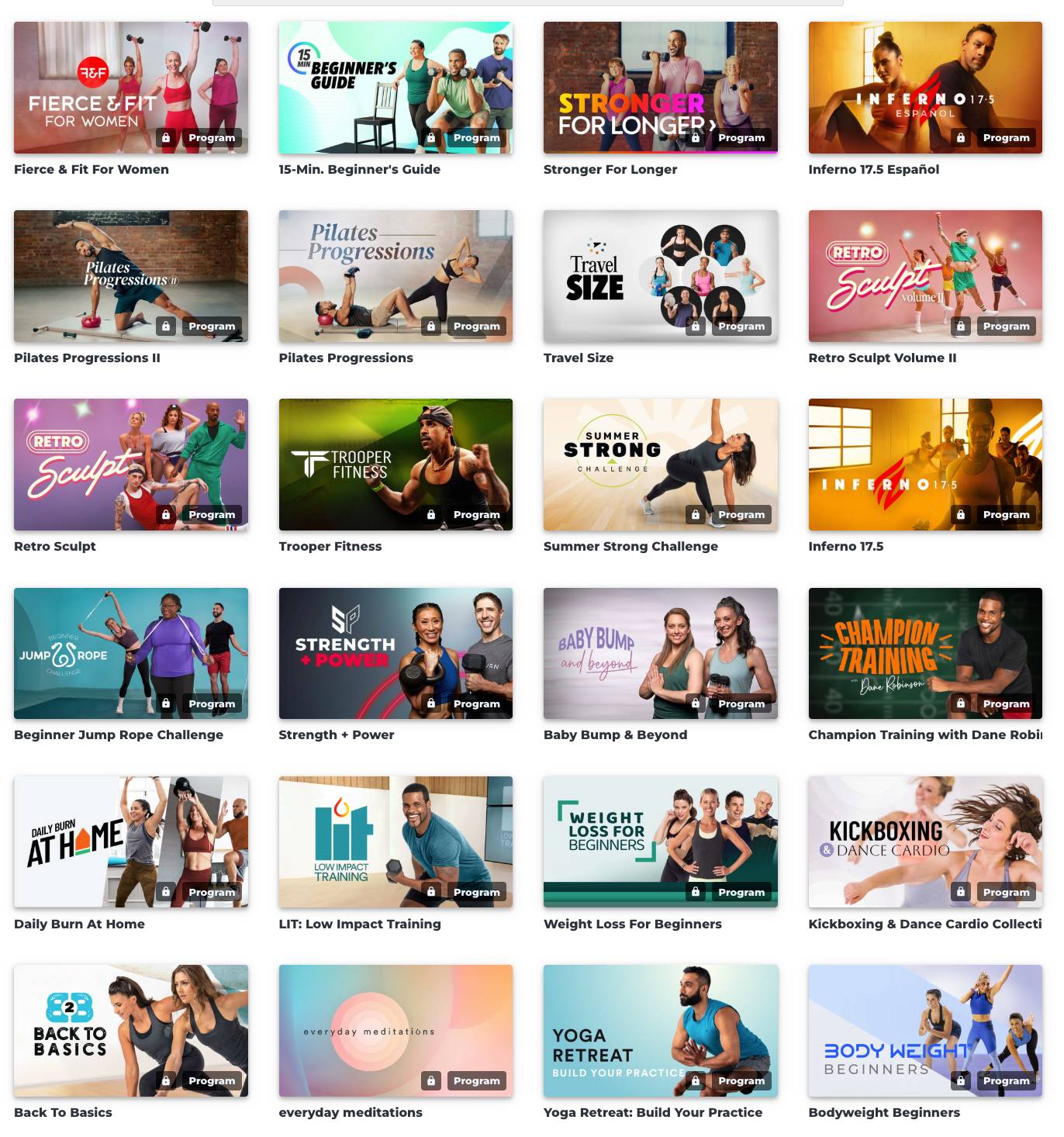
Daily Burn programme library covering beginner cardio through advanced strength, each with a day-by-day schedule — Low-Impact Cardio for Women Over 40

One of the longest-running digital fitness platforms, with a broad cardio library covering cardio dance, walking, indoor cycling, kickboxing modifications and barre.

Daily Burn has been operating since 2007 and remains active in 2026 with regular content updates. The cardio library is broad rather than deep in any single modality.

7.0Time Efficiency
5.5Muscle Potential
7.5Women Over 40 Specificity
8.5Joint Friendliness
6.5Recovery Compatibility
6.5Programme Structure
9.0Value for Money
9.0UX and Design
6.0Nutrition Integration

This score reflects long-running platform stability and cardio breadth. Daily Burn does not lead in any single category but covers a wide range of low-impact cardio formats.

Daily Burn launched in 2007 and predates most of the platforms tested in this guide. The library has grown through fashion cycles: cardio dance in the 2010s, HIIT-heavy programmes in the late 2010s, walking and low-impact content in 2020 onward as the demographic shifted.

For low-impact cardio specifically, the relevant tracks are True Beginner, Walking, Cardio Dance and Pilates Sculpt cardio. The True Beginner programme is the entry point for women returning to movement after a long pause.

Pricing is mid-range: $14.99/month standard or $7.49/month on an annual subscription. Premium tiers add coaching and additional content. The 30-day free trial is generous compared with the 7-day standard elsewhere.

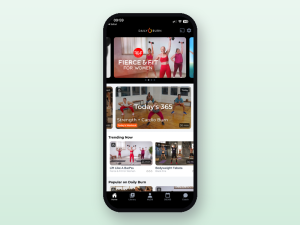
Verdict: My first week on Daily Burn ended up looking nothing like my plan. I started with Dance & MOVE! just to try it. Then did a 15-Minute Mobility session. Then found Fierce and Fit for Women, which is the programme I came back to again and again and the one I would genuinely recommend to any woman in her late 30s or beyond who wants results without messing around.

By the end of week one I was rotating between Fierce and Fit, Stronger for Longer, and the dance classes I had not expected to enjoy as much as I did. I did not plan to enjoy the dance classes. I went in mildly curious and came out having sweated more than expected and genuinely wanting to go back.

Dance & MOVE! has energetic music, a coach who makes the choreography feel approachable rather than intimidating, and a pace that keeps you moving without giving you time to feel self-conscious. What surprised me most was how quickly the time passed. I was working harder than it felt like I was.

Highest-scoring for: Women who find newer apps overwhelming. Women returning to movement after years away who want a low-pressure platform. Women on a budget who want full content access at $7.49/month annual.

Cost: $14.99/month or $7.49/month on annual. Premium tiers $26.99/month. Coaching plans $49.99/month. 30-day free trial with the 3-month plan.

Daily Burn review

Trade-off: The platform’s strength (broad, accessible, established) is also its weakness. Daily Burn does not lead in any single modality, and newer platforms have overtaken it in production quality and structured progression.


5. Pvolve – Score: 8.6

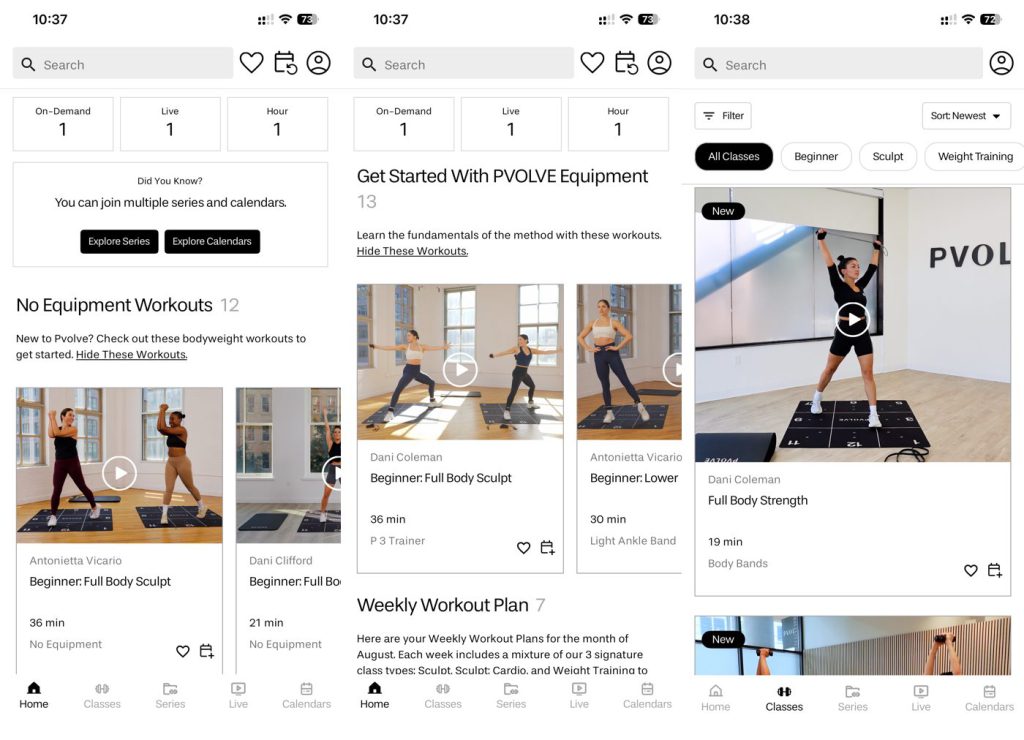
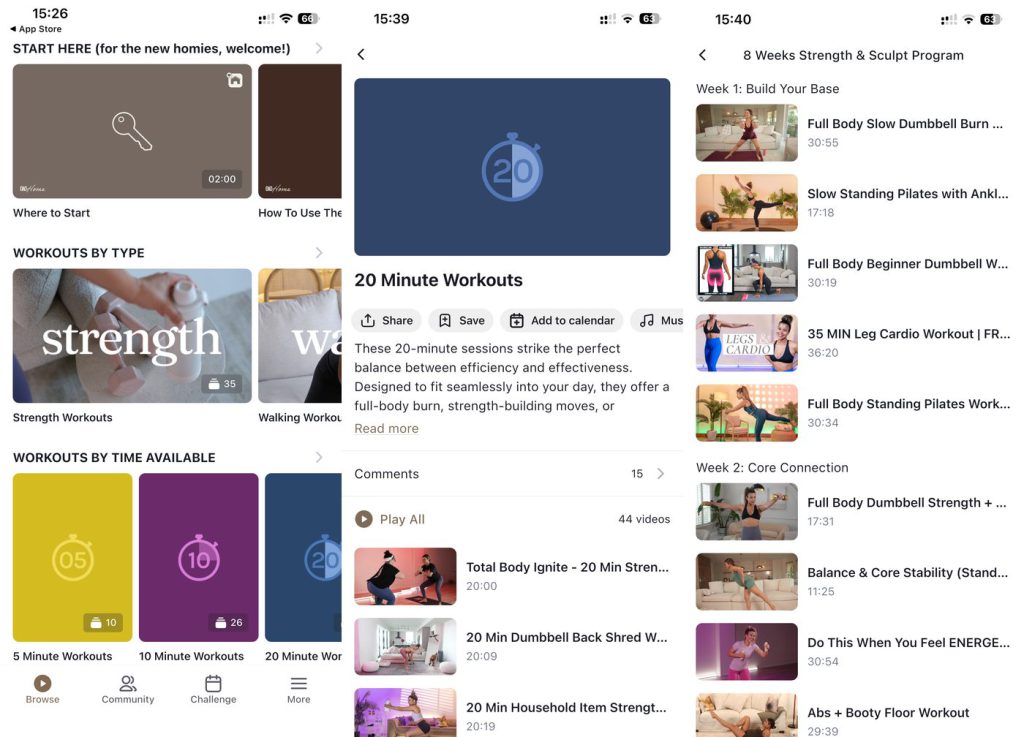
Pvolve series library showing Menopause Strong, Knee Stability and Progressive Weight Training programmes — Low-Impact Cardio for Women Over 40

The Cardio Burn category delivers low-impact cardio through the same proprietary-tool method that makes Pvolve’s strength content joint-friendly. Different from anything else on this list.

Pvolve is primarily a strength and resistance platform. The Cardio Burn classes layer cardiovascular stimulus onto the same tool-based functional moveis primarily a strength and resistance platform. The Cardio Burn classes layer cardiovascular stimulus onto the same tool-based functional movement patterns, which makes them low-impact by design.

8.5Time Efficiency
7.5Muscle Potential
10.0Women Over 40 Specificity
9.0Joint Friendliness
9.0Recovery Compatibility
8.5Programme Structure
8.0Value for Money
8.5UX and Design
7.5Nutrition Integration

This score reflects Pvolve’s low-impact-by-design cardio approach. Women who want traditional walking or cycling cardio will rank Peloton higher; women who want resistance-band-based cardiovascular work will rank this higher.

Pvolve’s Cardio Burn classes alternate cardio bursts with form-focused strength pushes using the same proprietary tools (P.ball, P.band, gliders) that define the method. The cardio stimulus is real, the joint impact is none.

The streaming membership is $24.99/month and gives access to thousands of on-demand classes plus a Live Virtual Studio with daily live-streaming classes. Apps run on iOS, Android and Apple TV.

For women rehabilitating from a joint injury or working around hip or knee issues, Pvolve’s Cardio Burn is the closest the platform comes to cardiovascular training without the compressive load of traditional cardio formats.

Verdict: I tested Pvolve over two months of daily 20-minute sessions across the band, dumbbell and bodyweight library. Filtering for 16-25 minutes with bands and dumbbells returned 297 classes. The Cardio Burn category sits inside that library and uses the same proprietary-tool method as the strength content.

I assumed Pvolve would be too gentle. It is harder than it looks. I was counting the last few reps on movemwould be too gentle. It is harder than it looks. I was counting the last few reps on movements that by all rights should have felt manageable. The cardiovascular stimulus is real and the joint cost is essentially zero, which is the trade most women over 40 are looking for.

Where Cardio Burn falls short is breadth. It is a category, not a structured cardio programme. Women who want progressive cardiovascular training across modalities (walking, cycling, rowing) will find Peloton more complete. Women who want low-impact cardio that respects a joint history will find Pvolve’s tools-based approach hard to match.

Highest-scoring for: Women rehabilitating from knee, hip or back issues who still want a genuine cardiovascular stimulus. Women already invested in the Pvolve method who want to add cardio without leaving the platform. Women who want resistance-loaded cardio rather than pure aerobic work.

Cost: Streaming membership $24.99/month. Proprietary tool bundle one-off around $150-200. 14-day free trial.

Pvolve review

Trade-off: Cardio Burn is one category within a platform pr”>Pvolve review

Trade-off: Cardio Burn is one category within a platform primarily built for strength. Women who want a comprehensive cardio platform should look at Peloton instead. The proprietary kit is a real one-off cost.


Which low-impact cardio programme is right for you?

1

You want the most complete low-impact cardio library available

START WITH: Peloton App+

$28.99/month covers cycling, walking, rowing, running and outdoor audio classes. Start with the Low Impact cycling category and the Tread walking library. Filter by 20-30 minute durations to begin.

2

You want movement that feels like play, not exercise

START WITH: The Sculpt Society

Dance cardio is the cardiovascular piece, sculpt classes are the strength piece. 7-day free trial. Start with the Beginner Sculpt programme and add dance cardio twice a week.

3

You want to test low-impact cardio at zero cost first

START WITH: FitOn (free tier)

Filter by intensity (low) and category (walking, dance cardio, Pilates cardio). The free tier covers the entire workout library. Upgrade to Pro only if you want meal plans and offline downloads.

4

You find newer apps overwhelming and want a low-pressure platform

START WITH: Daily Burn

30-day free trial with the 3-month plan. Start with the True Beginner programme. Older format, simpler coaching, lower production overhead. $7.49/month on annual.

5

You are rehabilitating from a knee, hip or back issue and need maximum joint protection

START WITH: Pvolve Cardio Burn

Tool-based cardio with no compressive joint load. 14-day free trial. Combine with strength sessions on the same platform for a complete low-impact training week. Talk to your physiotherapist before starting if you have an active injury.

Where is the evidence still evolving on low-impact cardio for women over 40?

Two specific questions remain open in the research. First, whether low-impact cardio alone delivers the cardiovascular protection that postmenopausal women need. Second, how zone 2 dosing should be balanced against higher-intensity intervals at this life stage.

The cardiovascular adaptation to sustained moderate-intensity work is well documented. Walking, cycling and rowing at zone 2-3 effort, accumulated across 150 minutes per week, meets the WHO physical activity recommendation and is associated with reduced cardiovascular risk in both men and women.

What is less clear is whether women in midlife specifically benefit from adding higher-intensity intervals. Dr Stacy Sims, in Next Level, argues that women in midlife respond well to short-burst higher-intensity work because it triggers the lactate response that supports glucose handling and metabolic flexibility.

Mary Claire Haver argues that the cortisol cost of higher-intensity training rises in perimenopause and that the trade-off should be evaluated individually. Both positions are defensible. The evidence base is genuinely uncertain on the right ratio for our population.

My read: build a zone 2 base for 6-8 weeks before introducing any zone 4-5 work. If the body recovers well from the zone 2 base, add one short higher-intensity session per week. If cortisol or sleep takes a hit, drop back to zone 2 only. Treat the higher-intensity work as optional, not foundational.

The second open question is whether structured Power Zone training (which Peloton supports best) produces meaningfully better cardiovascular outcomes than unstructured moderate-effort cardio in women over 40. There is no published RCT directly comparing the two formats in our population. The general endurance training literature supports polarised, zone-based training, but extrapolating from cycling research in young athletes to perimenopausal women is a leap.

Frequently Asked Questions

What is low impact cardio?

Low impact cardio is aerobic exercise where at least one foot stays on the floor at all times, with no jumping, landing or running. The cardiovascular stimulus comes from sustained moderate effort rather than ground-reaction force on the joints. Walking, indoor cycling, rowing, dance cardio and Pilates cardio are all low impact. Running and jumping HIIT are not.

Is low impact cardio enough for cardiovascular health?

Yes for most women. The World Health Organization recommends 150 minutes of moderate-intensity aerobic activity per week, which can be met entirely through low-impact formats like walking, cycling and rowing. The cardiovascular adaptation is independent of impact: sustained zone 2-3 effort produces the aerobic stimulus the heart needs regardless of whether your feet leave the floor. Women in midlife specifically may benefit from adding one short higher-intensity session per week if the body recovers well.

What is the best low impact cardio for women over 40?

Peloton scored highest overall in our 2026 evaluation for low impact cardio, with the largest Low Impact cycling library, a Tread walking library and outdoor audio classes under one subscription. The Sculpt Society is the strongest pick for dance cardio. FitOn is the best free option. Pvolve’s Cardio Burn is the best choice for women rehabilitating from joint issues. The right platform depends on which cardio modality you actually want to do consistently.

How often should women over 40 do low impact cardio?

Three to five sessions per week is the practical range for cardiovascular fitness. Three 30-minute zone 2 sessions per week meet the WHO 150 minute moderate-intensity recommendation. Five shorter sessions distribute the work more evenly and tend to suit women managing perimenopause symptoms or recovery variability. Pair cardio with two strength training sessions per week, since cardio alone does not deliver the bone-density and muscle-mass stimulus that women over 40 need.

Can I lose weight with only low impact cardio?

Possibly, but slowly, and not as a standalone strategy. Cardio creates a moderate energy deficit and supports cardiovascular health, but weight loss is primarily driven by nutrition and overall energy balance. The biggest weight management gains in midlife come from combining low impact cardio with progressive resistance training (which preserves and builds metabolically active muscle tissue) and adequate protein intake. Cardio alone tends to produce diminishing returns. Consult your doctor or a registered nutritionist for personalised guidance.

What is the best free low impact cardio app for women over 40?

FitOn is the strongest free low impact cardio app in our 2026 evaluation. The free tier includes unlimited access to the full workout library: walking, dance cardio, low-impact cardio, Pilates cardio, yoga and strength. Classes can be filtered by intensity and duration. FitOn Pro adds personalised meal plans, offline downloads and fitness tracker integrations, but the workout content is genuinely free. Peloton offers a free 30-day trial of its $28.99/month App+ tier as a way to test paid options at no cost.

Is walking enough cardio for women over 40?

Yes for most women, as a baseline. Brisk walking at zone 2 effort, accumulated to 150 minutes per week, meets the WHO physical activity guidelines and produces measurable cardiovascular adaptation. The 2020 Lancet Public Health analysis of daily step count found that 7,000-9,000 steps per day was associated with significantly reduced cardiovascular and all-cause mortality risk in adults over 40. Walking is the most underrated and most accessible cardiovascular intervention available. Pair it with two strength sessions a week for a complete training base.

What is the best low impact cardio for bad knees?

Pvolve’s Cardio Burn classes scored highest in our 2026 evaluation for women with knee history. The cardio stimulus comes from band tension and proprietary tools rather than compressive load. Indoor cycling on Peloton’s Low Impact category is the next best option: sustained zone 2-3 effort without out-of-saddle climbs or jumps. Walking is the simplest joint-friendly cardio option, particularly on a treadmill at low gradient. Always discuss any new training programme with your doctor or physiotherapist if you have a knee injury history.

Research sources

How we rank: Every programme is personally tested by women over 40 and scored on 9 weighted criteria designed for this life stage. Read our editorial policy and affiliate disclosure.

Go deeper with our research-backed guides:

Explore more categories:

Katy Cole
Written by

Katy Cole

Katy is the lead reviewer at Her Daily Fit and the editorial voice behind every review on the site. She has spent fifteen years personally testing online fitness platforms, from the earliest YouTube workout programmes to today's streaming services, with…

View all articles →

Independent · No Brand Deals

Honest fitness reviews, straight to your inbox

New reviews, guides and program updates. No fluff, no sponsors.

Compare items
  • Total (0)
Compare