

Why does training change at 60?
Four physiological changes accelerate after 60: sarcopenia speeds up, VO2 max declines, fall risk peaks, and cognitive maintenance becomes more central to long-term health. The protocols that worked at 50 still work at 60, but the stakes change. The training shifts from optimising performance to protecting function for the next 25 years.
Sarcopenia, the age-related loss of skeletal muscle mass and function, accelerates after 60. The European Working Group on Sarcopenia in Older People (Cruz-Jentoft et al. 2010) identified accelerated muscle loss from the seventh decade onward, with progressive resistance training as the documented intervention that reverses it. The 2019 Cochrane review of resistance training in older adults found significant gains in muscle strength, gait speed and the timed-get-up-and-go test across the studies it pooled. The implication for women in their 60s is that resistance training is not optional. It is the single most important determinant of how the next 20 years will feel.
VO2 max declines roughly 10% per decade after 60 without intervention. The American Heart Association identifies cardiovascular disease as the leading cause of death in women over 65. Zone 2 cardiovascular work most days, combined with one or two higher-intensity sessions per week, protects against the cardiovascular decline that drives both mortality risk and quality-of-life loss.
Fall risk peaks in the 60s and continues rising through the 70s and 80s. The 2019 Cochrane review of exercise for falls prevention in older adults concluded that multi-component programmes combining balance, functional and resistance training reduce the rate of falls by around 23 percent in community-dwelling older adults. The Royal Osteoporosis Society identifies balance training as a separate, additive intervention for fall prevention, distinct from strength or cardiovascular work. Hip fractures are the catastrophic outcome the protocol is trying to prevent, and they occur because of falls, not because of weak bones alone.
Cognitive maintenance becomes the fourth pillar. Northey and colleagues (2018) systematic review and meta-analysis in the British Journal of Sports Medicine identified exercise as the most effective single intervention for cognitive function in adults over 50, with effects across aerobic, resistance and combined training. For women in their 60s, exercise is the most powerful brain health tool available.
How should women over 60 train?
Train with progressive resistance (2-3 sessions per week), Zone 2 cardiovascular work (3-4 sessions per week), dedicated balance and proprioception work (2-3 short sessions per week), and adequate protein (approximately 1g per pound of bodyweight per day). That structure delivers what the published evidence consistently supports for women in this decade.
The resistance work is the priority. Sessions of 20-45 minutes, using compound dumbbell or band movements. The load should produce genuine fatigue by the last few reps of each set. Schoenfeld’s 2017 systematic review and meta-analysis showed equivalent hypertrophy across rep ranges from 5 to 30 when total volume is matched, which is encouraging for women in their 60s: working at 12-20 reps per set with moderate dumbbell loads produces the same adaptation as heavier 5-8 rep work.
The cardiovascular component should be mostly Zone 2 (conversational pace, sustainable for 30-60 minutes), with one or two higher-intensity sessions per week. Walking is the most accessible option and works as the primary modality for most women in their 60s. Cycling, swimming, rowing and elliptical work all qualify. The intensity should feel sustainable rather than exhausting.
Balance and proprioception training is the third pillar, often overlooked. Single-leg work, lateral movements, rotational patterns. Pvolve’s Knee Stability series and the multi-planar protocol are specifically built for this. Pilates balance work, yoga balance practice and Tai Chi also deliver real fall-prevention benefit. The World Health Organisation recommends 3 or more sessions per week of multi-component physical activity that emphasises functional balance and strength training for adults aged 65 and older. The Menopause Society 2023 non-hormone therapy position statement reinforces regular physical activity as a foundation of post-menopausal management.
Adequate protein supports the resistance training adaptation. The anabolic resistance documented in older adults (the reduced muscular response to a given protein dose) means women in their 60s benefit from higher protein intake spread across 4-5 meals each containing 25-40g of high-quality protein. The combined daily target sits around 100-130g for most women in this age group.
What should women over 60 prioritise in a workout programme?
Five priorities matter most: resistance training for sarcopenia prevention, Zone 2 cardiovascular for heart and VO2 max protection, balance for fall prevention, joint integrity for sustainability, and adherence over decades rather than weeks. Each priority addresses a documented physiological reality of training in the seventh decade.
Resistance training for sarcopenia prevention. 2-3 sessions per week of progressive compound resistance work. Squats, hinges, presses, pulls. The load should produce genuine fatigue by the last few reps. The single most predictive factor for functional independence at 75, 80 and 85 is the strength and muscle mass you built and protected through your 60s.
Zone 2 cardiovascular protection. 3-4 sessions per week of conversational-pace work, supplemented by one or two higher-intensity sessions. Walking 30-45 minutes most days remains the most accessible, sustainable and effective option. Cycling, swimming and rowing all qualify. The cardiovascular protocol drives both mortality risk reduction and quality-of-life maintenance.
Balance for fall prevention. 2-3 short sessions per week of dedicated balance work, separate from strength and cardiovascular. Single-leg work, lateral movements, rotational patterns, yoga and Pilates balance practice. Pvolve’s Knee Stability series, The Sculpt Society’s injury-safe content, Melissa Wood Health’s standing flow work, and dedicated Tai Chi practice all deliver the proprioception load that reduces fall risk.
Joint integrity for sustainability. Most women over 60 have some history (knee, hip, lower back, shoulder). Low-impact, joint-aware programming protects the cartilage and connective tissue that need to support training for the next 25 years. No-kneeling filters, modified squats and seated alternatives are not concessions to weakness; they are intelligent design.
Adherence over decades. The programme you keep doing at 70 outperforms the programme you abandon at 62. Calm, well-designed platforms with content libraries you return to outperform aggressive programmes that burn out the user after twelve weeks. Joint-respect, manageable session length and recovery-conscious programming all support sustained adherence. Melissa Wood Health is the clearest example in this guide: my mum trained with it daily within two weeks of starting, which is the kind of behaviour change every fitness platform claims and almost none deliver.
Which programmes score highest for women over 60?
Pvolve scored highest overall (8.3) for its Dr Jessica Shepherd-led clinical advisory board, multi-planar low-impact movement system and dedicated Knee Stability series. Melissa Wood Health (6.9) is the calmest, most habit-forming Pilates platform tested, with the strongest real-world adherence signal in this guide. The Sculpt Society (8.2) covers midlife-specific low-impact programming with explicit no-kneeling filters. Owning Your Menopause (7.3) delivers menopause and post-menopause-specific programming with GP access. Peloton (7.3) delivers cardiovascular work with menopause and senior-friendly modifications.
| Programme | Score | Method for women over 60 | Equipment | Time commitment | Price / month | Trial |
|---|---|---|---|---|---|---|
| Pvolve | 8.3 | Multi-planar resistance, Knee Stability, Menopause Strong | Bands, ankle weights, dumbbells | 20-30 min, 4-6 sessions/wk | $24.99/mo | 7 days |
| Melissa Wood Health | 6.9 | Short, calm Pilates flows, daily-habit design | Mat, 1-3 lb light dumbbells | 15-20 min, 5-7 sessions/wk | $14.95/mo or $134.99/yr | 7 days |
| The Sculpt Society | 8.2 | Midlife Movement, no-kneeling, injury-safe filters | Dumbbells, bands, ankle weights | 15-45 min, 4-5 sessions/wk | $24.99/mo or $229.99/yr | 7 days |
| Owning Your Menopause | 7.3 | Menopause and post-menopause-specific strength, mobility, conditioning + GP access | Dumbbells, mat | 20-40 min, 3-5 sessions/wk | £16.99/mo or £80/6 months | 14 days |
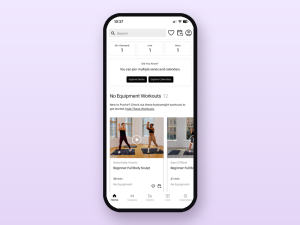
| Peloton | 7.3 | Power Walk, Zone 2 cycling, menopause collection | No equipment / your own | 20-60 min, 3-5 sessions/wk | $15.99/mo App One | 30 days |
Scores pulled live via shortcodes. Discuss any new training programme with your doctor, physiotherapist or menopause specialist before starting, particularly if you have osteoarthritis, osteoporosis, cardiovascular disease, joint replacement history or any pre-existing health condition.
How do the best workouts for women over 60 compare?
1. Pvolve, Score: 8.3
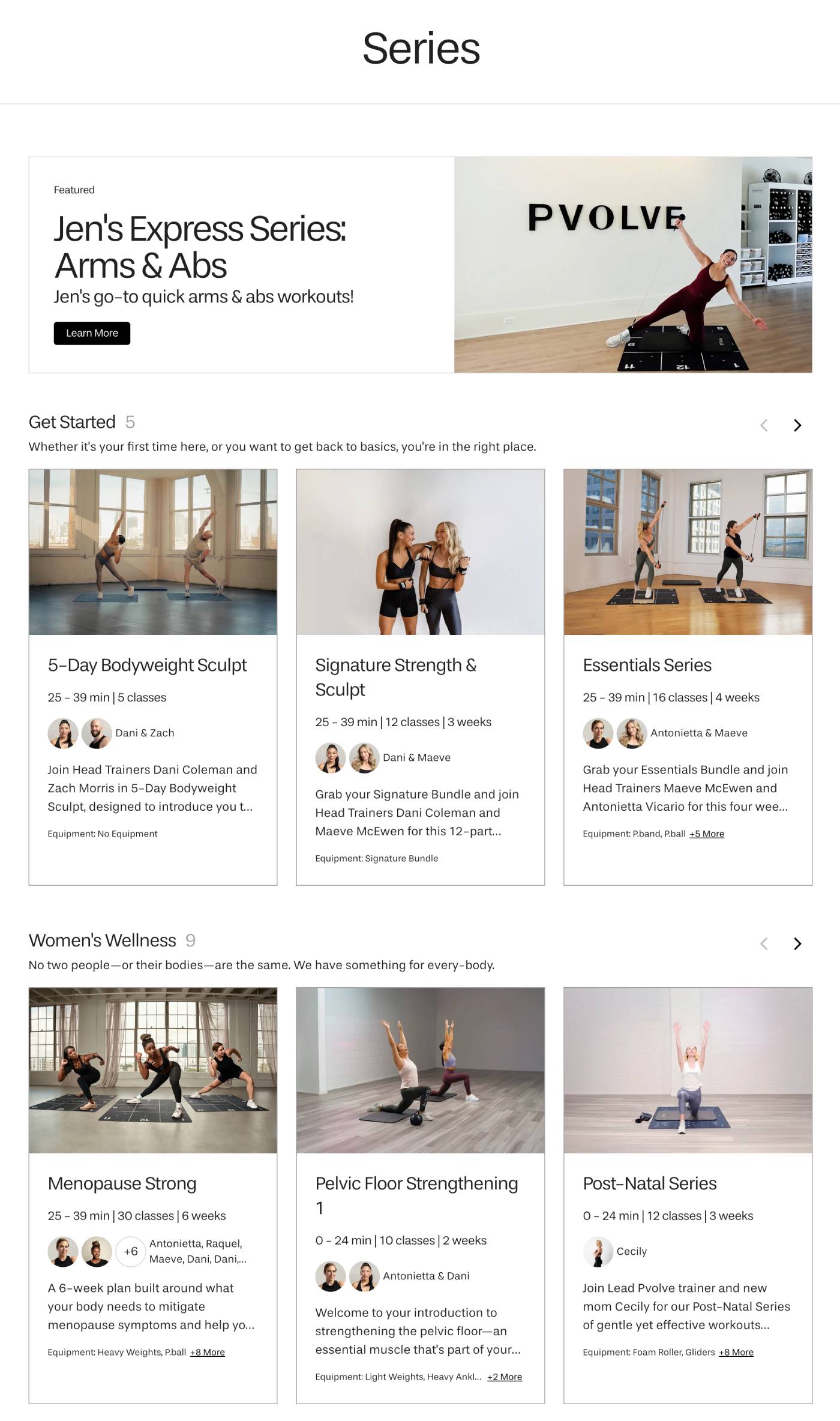
The most clinically credentialled platform for women over 60. Dr Jessica Shepherd-led advisory board, the Menopause Strong programme, the dedicated Knee Stability series, and over 1,500 multi-planar resistance classes. No impact, no jumping, real strength and balance adaptation across rotational, lateral and diagonal planes.
For women in their 60s with any joint history, who want pelvic floor work integrated into strength training, or who simply want the most thoughtfully built platform on the market, Pvolve is the standout.
This score reflects Pvolve’s position as the most thoughtfully designed platform for women over 60. The Menopause Strong programme, the Knee Stability series and the multi-planar movement system collectively address what women in this decade specifically need.
The multi-planar protocol is the differentiator for women over 60. Pvolve’s movements work through rotational, lateral and diagonal patterns that conventional training mostly skips. The muscles involved in stabilising those angles (hip abductors, external rotators, smaller posterior chain muscles) are often undertrained even in people who have been lifting for years. For women over 60, these are exactly the muscles that protect joint integrity and balance.
The Knee Stability series is the platform’s strongest single asset for women in their 60s. The assessment approach helps identify movement compensations that fuel injury risk. The progressions build functional knee strength without high-impact loading. For women managing osteoarthritis, post-replacement training or general joint vulnerability, this series is a dedicated tool. The clinical board behind it (OB/GYN Dr Jessica Shepherd, physiotherapist Dr Amy Hoover, muscle-centric medicine Dr Gabrielle Lyon) is the deepest in the consumer fitness space.
Verdict: I tested Pvolve for two months of daily 20-minute sessions, using my own resistance bands, dumbbells from 5kg to 8.5kg, and ankle weights. My specific filter (16-25 minutes, bands and dumbbells) returned 297 classes.
I assumed Pvolve was going to be too gentle. Low-impact, functional fitness, 20-minute sessions, how hard can it actually be? It is harder than it looks. I was counting the last few reps on movements that by all rights should have felt manageable. In some sessions I had to drop to lighter weights than I normally train with.
For women over 60 specifically, the Knee Stability series produces something I noticed in my own testing: some stiffness I had been carrying reduced noticeably, and the assessment approach helped me identify movement compensations I was making without realising it. Running up the stairs the other day I felt noticeably less wobbly, which sounds small but is not. That stability and proprioception gain is exactly what women in their 60s need to protect against the falls that drive hip fracture risk.
Highest-scoring for: Women over 60 who want the most thoughtfully designed platform for joint protection and balance. Women with a knee, hip or lower back history. Women looking for clinical credibility (Dr Jessica Shepherd, Dr Amy Hoover, Dr Gabrielle Lyon). Women who want pelvic floor work integrated into strength training.
Cost: $24.99/month. 7-day free trial.
Trade-off: The maximum dumbbell load most Pvolve classes use is lower than progressive heavy lifting protocols. For women over 60 specifically targeting bone density adaptation through heavier loading, pair Pvolve with one heavier session per week using dumbbells you progressively load.
Start the 14-day free trialAffiliate link, opens pvolve.com. I earn a commission at no extra cost to you. Full disclosure
2. The Sculpt Society, Score: 8.2
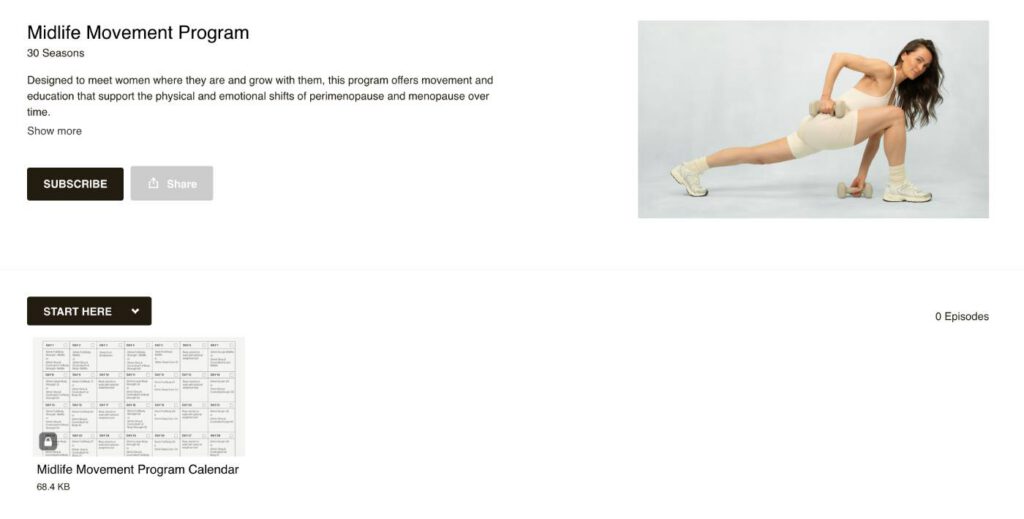
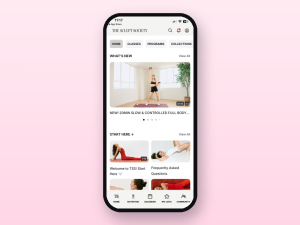
The most midlife-aware low-impact platform for women over 60. Dedicated sections for midlife support, injury-safe workouts and no-kneeling classes. The 4-week Midlife Movement Programme is medically informed and built for women navigating the joint and recovery considerations of the 60s.
The Lifestyle section includes lymphatic massage and recovery-oriented content. The platform is calm, design-led and built for sustained use across years.
This score reflects The Sculpt Society’s position as the most midlife-aware low-impact platform. The Midlife Movement Programme, the injury-safe filters and the no-kneeling sections are particularly useful for women in their 60s with joint history or replacement considerations.
The injury-safe filter is the platform’s key practical advantage for women over 60. Within minutes of opening the app, you can navigate to no-kneeling classes specifically. That kind of design respect for joint history matters more after 60 than at any earlier stage. The Midlife Movement Programme runs 4 weeks and uses dumbbells, bands and ankle weights at moderate loads, which is the right loading window for women new to or returning to resistance training in their 60s.
The dance cardio classes provide low-impact cardiovascular work that many women in their 60s find more enjoyable than indoor cycling or formal cardiovascular protocols. The Lifestyle section’s lymphatic massage class is genuinely useful for recovery and circulation, particularly for women managing menopause-related fluid retention or post-surgical recovery.
Verdict: Within minutes of landing on the app, I spotted dedicated sections for midlife support, injury-safe workouts and no-kneeling classes. That alone told me this platform had actually thought about who it was building for. I was not expecting to enjoy the app as much as I did.
I completed the 4-week Midlife Movement Programme and increased my weights from 7.5kg to 8.5kg over the 4 weeks. The lymphatic massage class in the Lifestyle section is now a regular part of my week. The Midlife Movement Programme is medically backed and delivers on that promise in a way that feels human rather than clinical.
For women over 60 specifically, the injury-safe and no-kneeling filters are the differentiators. The platform respects joint history without making the user feel medicalised. For women returning to movement after a pause, or managing osteoarthritis or post-replacement training, this is exactly where to start.
Highest-scoring for: Women over 60 looking for the most midlife-aware low-impact platform. Women with a knee or hip history who benefit from no-kneeling options. Women returning to movement after a long pause. Women who want recovery content integrated with their strength work.
Cost: $24.99/month or $179.99/year. 7-day free trial.
Trade-off: The default pace of the Midlife programme may feel slow for women in their 60s who have been training at intermediate-to-advanced levels for years. The platform is not the right primary pick for women specifically chasing heavy progressive resistance protocols.
3. Owning Your Menopause, Score: 7.3
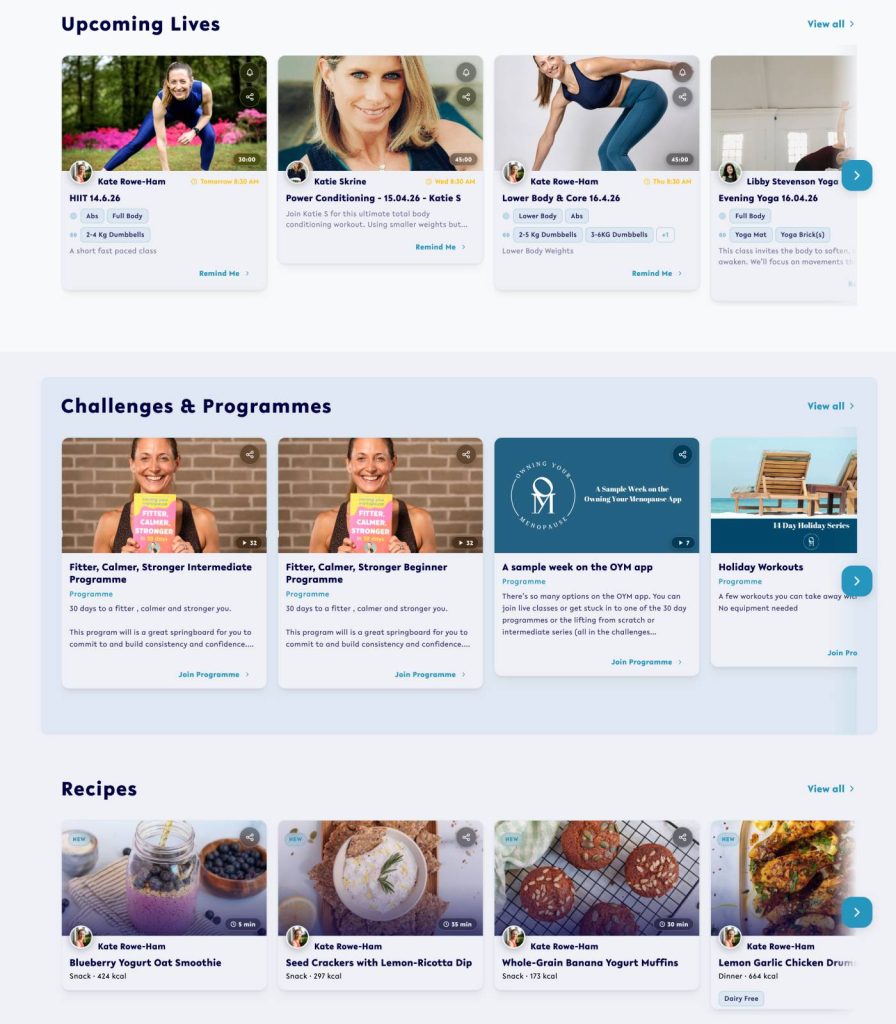
The UK-priced, menopause-specific platform built for women in perimenopause, menopause and post-menopause. Modalities cover strength, mobility and conditioning. The differentiator is the curation: the programme content is built around the symptomatology of menopause and the priorities of the post-menopause decade rather than retro-fitted from a general fitness library. GP access and a community sit alongside the workout library.
For women in their 60s who are post-menopausal and want a UK-based platform that takes menopause and post-menopause seriously as the framing rather than as a single sub-folder, OYM is the right pick.
This score reflects Owning Your Menopause’s position as the UK-priced menopause and post-menopause-specific platform tested. The clinical framing, GP access and community collectively cover ground that general fitness apps do not.
The strength programming is the platform’s most relevant feature for women over 60. The dumbbell work targets the muscle mass and bone density adaptation the LIFTMOR research and the Cruz-Jentoft sarcopenia consensus identify as the priority interventions for post-menopausal women. The mobility content covers the joint range of motion work that becomes increasingly valuable in the 60s and 70s. The conditioning sessions deliver moderate-intensity cardiovascular work for women who do not want to use a separate cycling or walking platform.
The GP access is unusual at this price point. For women in their 60s navigating post-menopausal symptoms that intersect with cardiovascular, bone or joint considerations, having a menopause-aware medical professional reachable inside the platform is real practical value. The community sits alongside as a peer-support layer, which the published behaviour-change literature consistently associates with adherence.
Verdict: I spent several months on Owning Your Menopause. I respect for its perimenopause knowledge but felt, executionally, a bit gloomy and amateur in places. The framing is right, the clinical instinct is right, and the GP-access model is exactly the kind of joined-up thinking that menopause platforms ought to deliver.
The visual design and production quality do not match the strength of the underlying thinking. If you are coming from a polished platform (Alo, Melissa Wood Health, Sculpt Society), OYM will feel like a step down in aesthetics. The training is solid. The execution is the thing that holds the score back rather than the substance.
For women in their 60s who are post-menopausal and specifically want a UK-priced platform with menopause expertise and GP access, OYM is worth the 14-day trial. For women who care more about the calm aesthetic and daily flow, MWH or Sculpt Society are likely better matches.
Highest-scoring for: Women over 60 who are post-menopausal and want a UK-priced platform with menopause-specific framing. Women who value GP access inside the subscription. Women who want a peer community alongside the workout library. Women happy to trade aesthetic polish for clinical relevance.
Cost: £16.99/month or £80 for 6 months. 14-day free trial.
Trade-off: The visual and production polish is below the leading platforms in this guide. The library is shallower than Pvolve’s or Sculpt Society’s. For women whose primary criteria are design and breadth, OYM is the wrong pick; for women whose primary criterion is post-menopause-specific framing with GP access, it is the right one.
4. Peloton, Score: 7.3
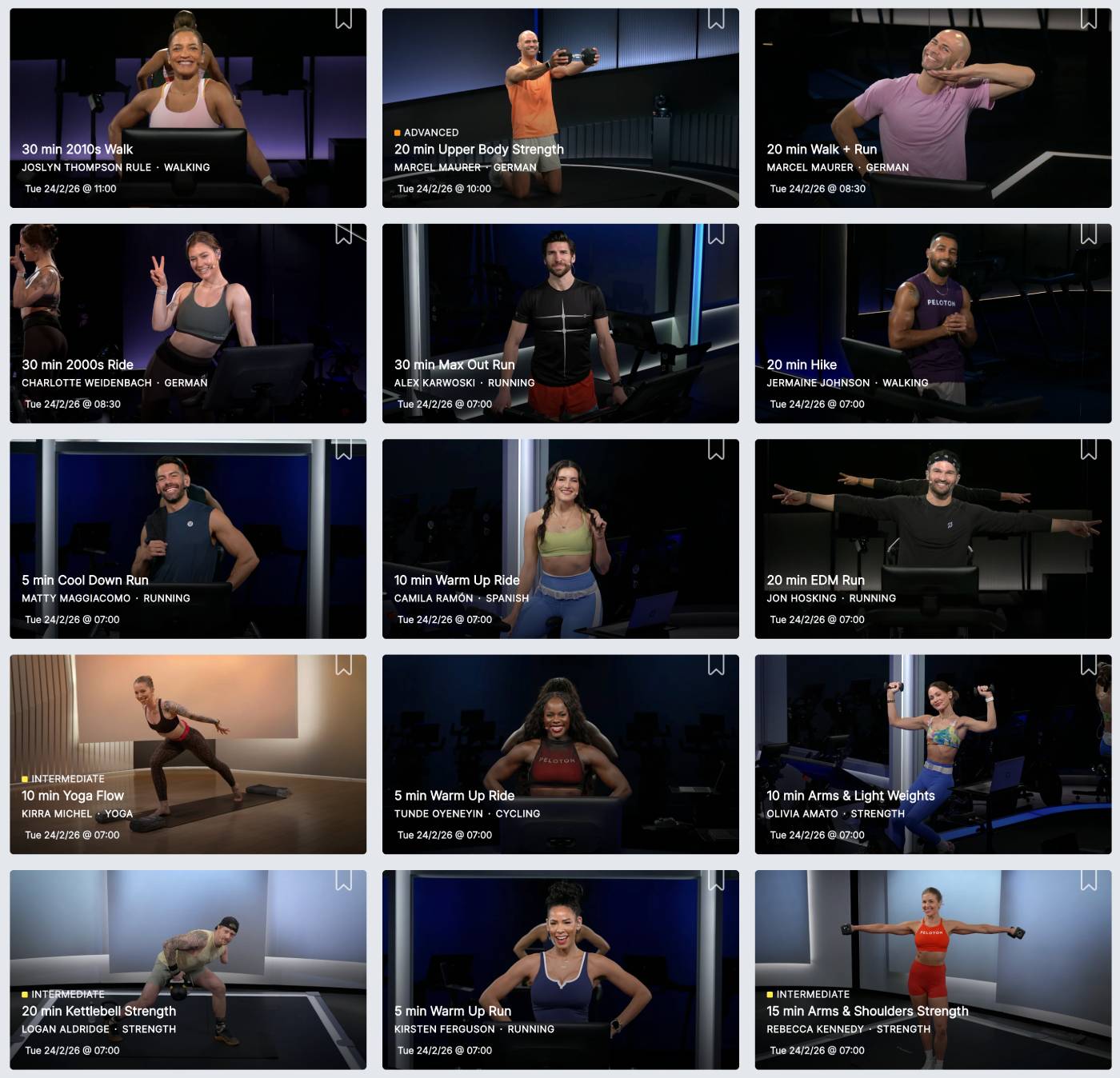
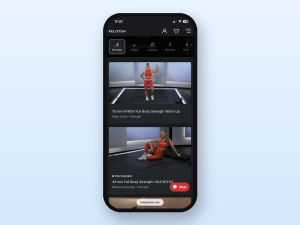
The most developed cardiovascular platform for women over 60, with Power Walk content, Power Zone cycling, walking and running classes that work on any treadmill, and a dedicated Menopause Health Collection (revamped March 2026 with Respin Health based on protocols drawn from over 100 published studies). The instructor modification quality is unusually good, which matters for women in their 60s managing joint history.
Peloton App One ($15.99/month) gives access to the menopause collection, walking content, strength with modifications, yoga, barre and Pilates. App+ ($28.99/month) adds unlimited cycling and treadmill content.
This score reflects Peloton’s cardiovascular depth rather than its strength training. For women over 60, the Power Walk content, Power Zone cycling and Menopause Health Collection deliver the Zone 2 cardiovascular work the published research supports.
The Power Walk content is the platform’s standout asset for women over 60. Walking is the most accessible cardiovascular work for this age group, and Peloton’s Power Walk programmes structure walking sessions with pace targets, instructor coaching and music programming that makes the work engaging rather than monotonous. The classes work on any treadmill or outdoors.
The Power Zone cycling programmes (the original Discover Your Power Zones runs 5 weeks across 25 classes) deliver structured Zone 2 work for women with bike access. The Menopause Health Collection (revamped March 2026 in partnership with Respin Health) includes content specifically programmed for cardiovascular, bone density and recovery considerations of women in midlife and beyond. The instructor modification quality is genuinely good.
Verdict: I am a woman in my early 40s, perimenopausal, working full-time with children, with a history of a meniscus injury and a training background in HIIT and dumbbells. I do not own any Peloton equipment. I tested the platform by mixing and matching classes across strength, yoga, walking and running, using my own treadmill for the cardio content and a single pair of 7.5kg dumbbells for strength.
Most of the content most useful for women 40+ (low-impact cycling, yoga, barre, Pilates, strength with modifications) requires either no equipment or dumbbells you may already own. I tested walking and running classes on a non-Peloton treadmill and it worked fine. The coaching translates completely.
Worth it for women over 60? Yes, especially if Power Walk content, live accountability and the Menopause Health Collection matter to you. The score reflects three things: a dedicated menopause content collection that is genuinely well-developed, instructor modification quality that works in practice, and live classes that create real accountability. Use Peloton as the cardiovascular complement to a resistance-led week.
Highest-scoring for: Women over 60 who want structured cardiovascular work integrated with menopause-aware content. Women with a treadmill or bike and an interest in Power Walk or Power Zone training. Women who benefit from live class accountability.
Cost: $15.99/month App One. $28.99/month App+ (adds unlimited cycling and treadmill). 30-day free trial.
Trade-off: The strength content is less progressive than dedicated strength platforms and is not the right primary pick if resistance training is the priority. Use Peloton as the cardiovascular complement to a resistance-led week. The cancellation friction is real; cancel directly through the app.
5. Melissa Wood Health, Score: 6.9
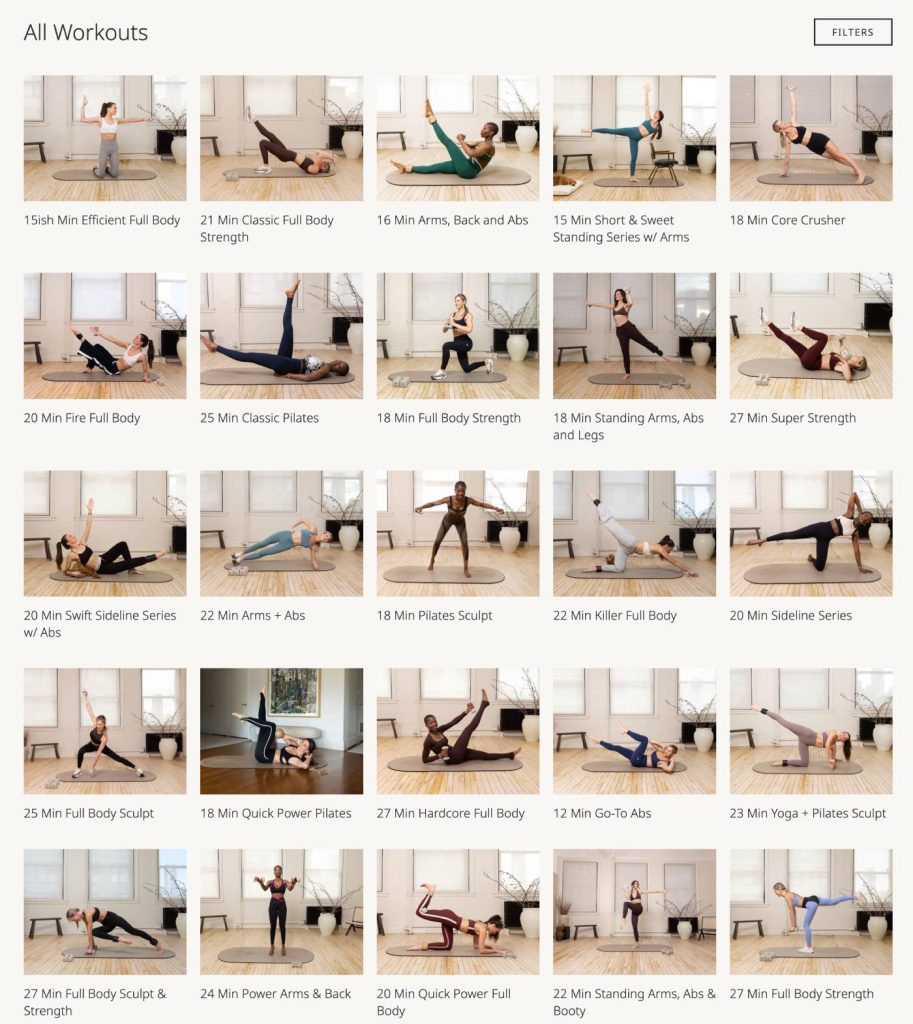
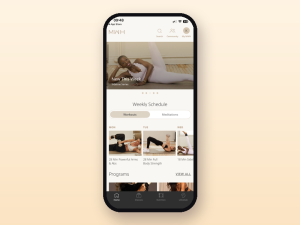
The calmest, most habit-forming Pilates platform tested, and the platform on this list with the strongest real-world adherence signal in a woman over 60. 15-20 minute sessions, beautiful design, gentle low-impact flows, a meditation library, and a Total Body Tone with Kim track for women who want a touch more conditioning alongside Melissa’s Signature Series.
For women over 60 building a daily movement habit, returning to fitness after a long pause, or wanting a calm aesthetic that pulls them back to the mat rather than intimidating them, MWH is the platform I keep recommending.
This score reflects Melissa Wood Health’s position as the most habit-friendly platform for women over 60. Short sessions, calm aesthetic and gentle progression collectively produce the adherence that matters more at this life stage than any single training feature.
The session length is the structural advantage. 15-20 minutes sits below the psychological barrier most older women have around starting a workout. You do not need to clear an hour, change clothes seriously, or build up to it. You put on the mat, press play, and the session is finished before resistance has time to set in. Over weeks, that is what produces the daily training behaviour the published falls and sarcopenia literature actually rewards.
The training itself is Pilates-flavoured low-impact mat work, mostly on the floor and standing rather than kneeling-heavy. Melissa’s Signature Series is the platform’s long-standing flow style: slow, controlled, mat-based. Total Body Tone with Kim is the slightly more conditioning-led track using 1-3 lb light dumbbells, which suits women over 60 who want a touch more upper-body work without graduating to a separate strength platform. The meditation library covers short guided practice for sleep, anxiety and morning grounding, which matters for women navigating post-menopausal sleep change.
Verdict: I tested the 7-day free trial and then six weeks of the paid subscription. Mid-40s, perimenopausal, meniscus history. The platform did exactly what I hoped Pilates would do: it calmed my nervous system, lengthened the muscles I had been compressing through heavier training, and gave me 20-minute sessions I could fit between the end of the working day and the evening.
The more important test ran in parallel. My mum, in her late 60s, trialled the platform alongside me. She has not been a fitness-app user historically. The behaviour change was striking. For her, MWH was perfect: short, gentle, never intimidating, and within two weeks she was training daily without anyone pushing her. That is the single most important signal I have ever collected on a fitness platform for women over 60: the adherence happened on its own.
The honest caveats: this is not a strength-and-bone-density-first platform. For women in their 60s who need progressive resistance training to manage sarcopenia, pair MWH with Pvolve, Owning Your Menopause or a separate dumbbell programme. Used as the daily anchor with a heavier weekly resistance session bolted on, MWH is one of the most pragmatic recommendations in this guide.
Highest-scoring for: Women over 60 building a daily movement habit. Women returning to fitness after a long pause. Women who want a calm aesthetic rather than a high-energy gym vibe. Women whose mum or partner might also use it. Women wanting Pilates flow plus light conditioning in one platform.
Cost: $14.95/month or $134.99/year. 7-day free trial.
Trade-off: MWH is not progressive resistance training. The 1-3 lb dumbbell loads are too light to drive the bone density adaptation the LIFTMOR research supports. Treat MWH as the daily Pilates and habit-anchor layer, and add one or two heavier resistance sessions per week from Pvolve or a dumbbell programme to cover sarcopenia and bone density.
Which workout for women over 60 is right for you?
You want the most clinically credentialled platform for joint protection, balance and pelvic floor work
START WITH: Pvolve Menopause Strong + Knee Stability
7-day free trial. Start with the Menopause Strong programme (4 weeks) and add the Knee Stability series. The multi-planar movement system protects joints while building strength. Dr Jessica Shepherd-led clinical advisory board.
You want a short, calm daily Pilates habit that you (or your mum) will actually keep doing
START WITH: Melissa Wood Health
7-day free trial. Use the Signature Series for the calm flow days and Total Body Tone with Kim for the slightly more conditioning-led ones. 15-20 minute sessions. Pair with one or two heavier resistance sessions per week for sarcopenia and bone density coverage.
You have a knee or hip history and need no-kneeling and injury-safe filters
START WITH: The Sculpt Society Midlife Movement
7-day free trial. Run the 4-week Midlife Movement Programme. Use the injury-safe and no-kneeling filters to navigate the wider class library. The Lifestyle section adds lymphatic massage and recovery content.
You are post-menopausal and want a UK-priced platform with menopause expertise and GP access
START WITH: Owning Your Menopause
14-day free trial. Use the strength and mobility content as the training base. Book the GP consultation inside the platform if you have menopause-related questions a community forum cannot answer. Add the community for peer accountability.
You want structured Zone 2 cardiovascular work, especially Power Walk content for everyday walking
START WITH: Peloton App One
30-day free trial. Filter by Menopause Health Collection and Power Walk. Mix three Power Walk or Zone 2 cycling sessions with one weekly higher-intensity push. Pair with a resistance programme from Pvolve, Sculpt Society or Owning Your Menopause.
Where is the evidence still evolving on training over 60?
Three open questions matter most. First, the optimal protein dose for women over 60 specifically (the upper end of 1g per pound may be more relevant for this age group than for women in their 40s). Second, the role of creatine supplementation in older women (preliminary evidence is positive but research in women over 60 specifically is limited). Third, the relative cognitive benefits of resistance versus aerobic versus combined training.
On protein, the published guidance from Burd 2012 and subsequent work supports the higher end of the protein range for older adults specifically. The anabolic resistance documented in older muscle means a larger protein dose per meal is needed to drive the same muscle protein synthesis response. For women over 60 wanting to preserve or build muscle, the practical target is 25-40g of high-quality protein per meal across 4-5 meals, often totalling 100-130g per day.
On creatine, the published evidence in older adults is generally positive for muscle mass, strength and cognitive function. A 3-5g daily dose is well-tolerated. The research base in women over 60 specifically is less extensive than in men of the same age, but the safety profile is excellent. Discuss with your GP before starting any supplement, particularly if you have kidney concerns or are taking other medications.
On cognitive benefits, the Northey 2018 meta-analysis identified exercise as the most effective single intervention for cognitive function in adults over 50, with benefits across aerobic, resistance and combined training. The relative magnitude across modalities is still being studied, but combined protocols (resistance plus aerobic plus balance) appear most effective. For women over 60, this means the same training framework that supports muscle, heart and joints also supports cognitive function.
If I were designing a week for women over 60, knowing the published research, I would suggest: two to three resistance sessions per week (Pvolve, Owning Your Menopause strength block, or a dumbbell programme), three to four Zone 2 cardiovascular sessions (mostly walking, with some cycling or swimming variety), one or two short balance and Pilates sessions (Melissa Wood Health daily mat work, Pvolve Knee Stability, or yoga balance practice), and one rest day. Plus 100-130g of protein per day, 7+ hours of sleep, and adequate vitamin D and calcium intake. That combination is not what any single programme on this list delivers as a single product. It is what the longevity research supports.
Frequently Asked Questions
Pvolve scored highest in our 2026 evaluation for women over 60. It is the only major platform with a Dr Jessica Shepherd-led clinical advisory board, the Menopause Strong programme, dedicated Knee Stability work, multi-planar movement and pelvic floor integration. Melissa Wood Health is the strongest pick for short, calm, daily-habit Pilates (Katy’s mum, in her late 60s, trained with it daily within two weeks). The Sculpt Society offers the no-kneeling and injury-safe filters. Owning Your Menopause is the UK-priced menopause and post-menopause-specific platform with GP access. Peloton delivers the cardiovascular complement.
The published evidence supports 2-3 resistance sessions per week, 3-4 cardiovascular sessions per week (mostly Zone 2), and 2-3 short balance and mobility sessions per week. The World Health Organisation recommends 150-300 minutes per week of moderate-intensity aerobic activity, 2+ days per week of muscle-strengthening activity, and 3+ days per week of multi-component activity that emphasises functional balance and strength for adults aged 65 and older. The 2019 Cochrane review of falls prevention found multi-component programmes reduce fall rates by around 23 percent.
Yes. Women over 60 who begin progressive resistance training achieve significant gains in lean muscle mass, strength and bone density regardless of when they start. The Cruz-Jentoft sarcopenia consensus identifies progressive resistance training as the documented intervention. The LIFTMOR trial produced significant bone density and strength gains in postmenopausal women in their 60s and 70s. The 2019 Cochrane review found significant improvements in strength, gait speed and functional measures. The protocol is heavier loading than you might expect, higher protein intake, and consistent frequency.
Pilates is excellent low-impact mat work with documented benefits for core strength, posture, balance and recovery, but it is not sufficient as a complete training programme. The Cruz-Jentoft sarcopenia consensus identifies progressive resistance training as the documented intervention for skeletal muscle loss. Pilates platforms like Melissa Wood Health are best used as the daily flow and habit-anchor layer, paired with one or two heavier resistance sessions per week to cover sarcopenia and bone density.
Walking is excellent low-impact cardiovascular work but is not sufficient as a complete exercise programme. The World Health Organisation recommends combining aerobic, muscle-strengthening and balance training for adults aged 65 and older. Walking 30-45 minutes most days delivers the cardiovascular component well; to get the muscle, bone and balance benefits, women over 60 need to combine walking with resistance training and dedicated balance work.
Single-leg work, lateral movements, rotational patterns and dedicated balance practice (Tai Chi, yoga balance, Pilates flow, Pvolve’s multi-planar protocol) all reduce fall risk independent of strength gains. The 2019 Cochrane review of exercise for falls prevention concluded that multi-component programmes reduce fall rates by around 23 percent. The most practical protocol is 2-3 short balance sessions per week combined with single-leg variations integrated into resistance training.
Yes. Northey 2018 systematic review identified exercise as the most effective single intervention for cognitive function in adults over 50, with benefits across aerobic, resistance and combined training. The mechanisms include increased cerebral blood flow, enhanced neurotrophic factor expression, reduced systemic inflammation and improved sleep quality. Combined protocols (resistance plus aerobic plus balance) appear most effective.
Low-impact, joint-aware training is generally well-tolerated by women with osteoarthritis or post-joint-replacement, but specific movements need modification. Pvolve and The Sculpt Society feature explicit no-kneeling, injury-safe and joint-aware filters. Melissa Wood Health’s mostly seated and standing flows also suit women managing knee history. Avoid deep flexion under load, high single-leg impact and end-range hip rotation until cleared by a physiotherapist. Discuss any post-surgical training with your surgical team before starting.