
Pvolve scores higher overall, 8.3 against 7.3, and is the stronger platform for nutrition guidance and a structured programme. Peloton does not lead on any scored category.
- Score 8.3 vs 7.3
- Trial: 14 days vs 30 days
- Both tested hands-on
Quick answer: Pvolve is the better overall platform for perimenopausal and menopausal women, scoring 8.3 versus Peloton at 7.3. Pvolve has the most comprehensive perimenopause-specific content tested across the entire Her Daily Fit comparison series: Menopause Strong (a 6-week programme co-developed with a specialist doctor), pelvic floor and endometriosis series, cycle syncing, a clinical advisory board, and a published University of Exeter study on women aged 40 to 60. Pvolve is also low-impact throughout, which is the right default for perimenopausal joints managing reduced tendon and ligament elasticity. Peloton wins on live class accountability, mainstream variety across 15+ workout types, the Hospital for Special Surgery clinical partnership, and a lower entry price on Peloton App One.
The two platforms
Same nine weighted categories, two different women. Here is who each one is built for.
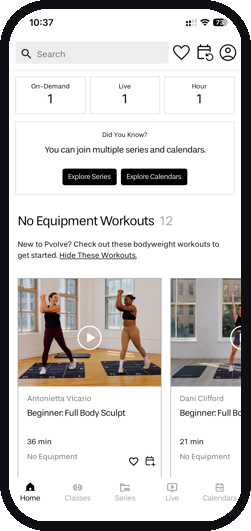
Pvolve
WinnerLeads this comparison on nutrition guidance and a structured programme, scoring 7.5 against 2 on Nutrition Integration.
- Low impact
- 16 to 25 min
- Pvolve Signature Bundle
- Yes (equipment via Healf)
Choose Pvolve if you:
- Are actively managing perimenopause or menopause symptoms and want the most comprehensive specialist platform
- Have joint history or active injury and want low-impact training as the platform default (not an opt-in filter)
- Need dedicated injury support content for knees, lower back, shoulders, hips, ankles or wrists
- Want pelvic floor, endometriosis or cycle syncing content built into the platform
- Are happy to invest in proprietary equipment for the full library experience
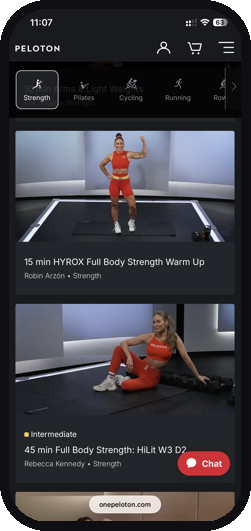
Peloton
Runner-upScores level with or below Pvolve on every weighted category.
- Low impact
- 20 to 45 min
- None for app
Choose Peloton if you:
- Want live class accountability with leaderboards and real-time participants
- Want broad variety across 15+ workout types (cycling, strength, yoga, pilates, walking, running, meditation, more)
- Are on a tight monthly budget and want the lowest entry price ($15.99/month for Peloton App One)
- Value the Hospital for Special Surgery clinical partnership and direct orthopedic consultation line
- Want to start training without buying any proprietary equipment
Inside Peloton and Pvolve

Bottom line in 30 seconds for women over 40
- Pvolve wins overall by a full point (8.3 vs 7.3) because the platform is built specifically around perimenopause-aware programming. Menopause Strong, pelvic floor work, endometriosis content, cycle syncing, a clinical advisory board, and a peer-reviewed study with the University of Exeter on women aged 40 to 60 collectively make Pvolve the most clinically depth platform on perimenopause in the comparison series.
- Peloton wins for women who want mainstream variety with menopause content layered in. The Menopause Health Collection (56 classes, 7-day framework, Respin Health partnership) is genuinely strong, and the rest of the Peloton library covers 15+ workout types from cycling to strength to live classes. For women who do not want a perimenopause-specialist platform, Peloton is the better fit.
- Equipment is the practical decision. Peloton works app-only with no proprietary equipment. Pvolve’s library is designed around the Signature Bundle (P.ball, P.band, Precision Mat) at $199. You can start Pvolve with bands and dumbbells but you will get more from the platform with the bundle.
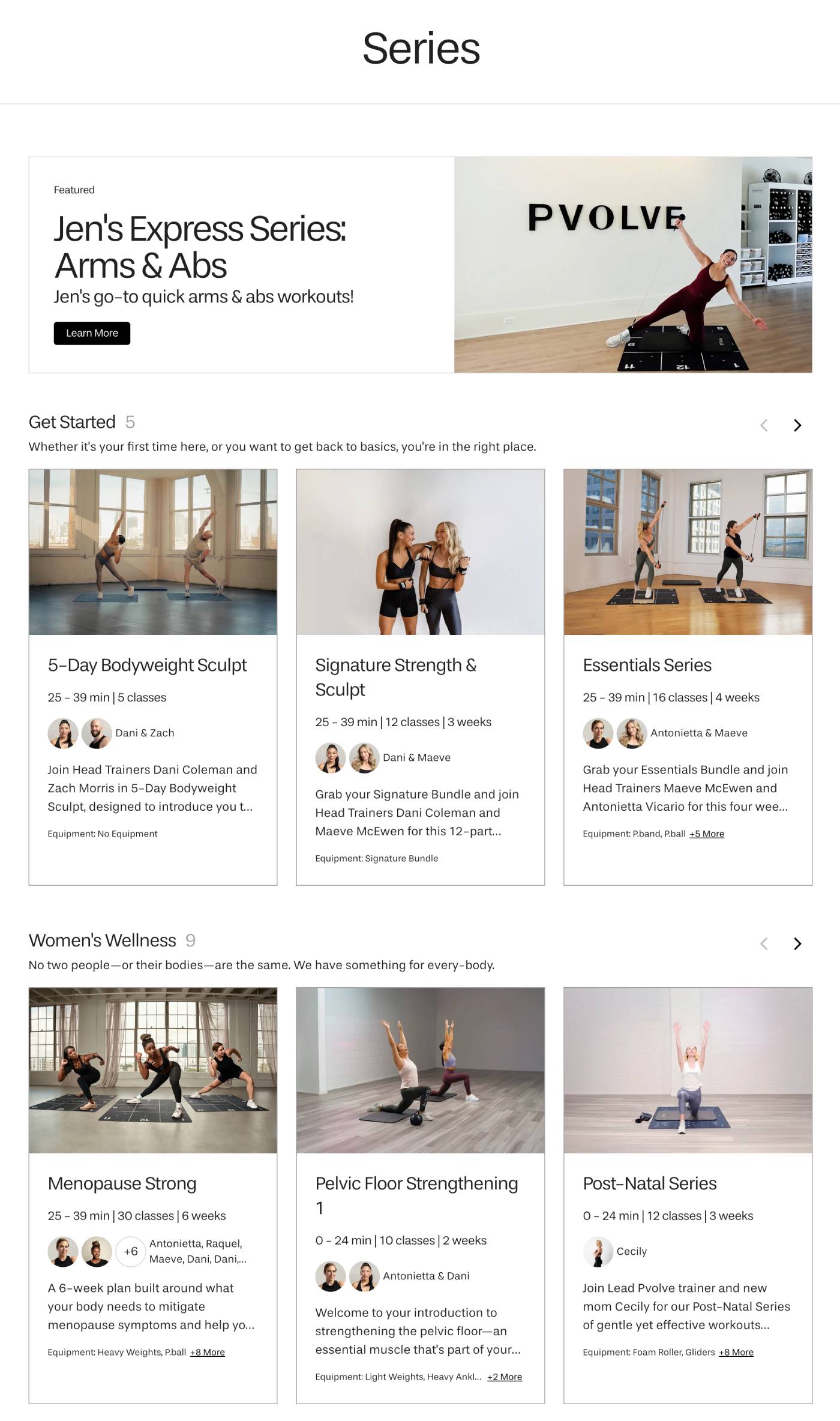
Pvolve’s perimenopause programming is the most comprehensive in the comparison series. Menopause Strong is a 6-week programme co-developed with a specialist doctor. Beyond Menopause Strong, the platform includes pelvic floor and endometriosis series, cycle syncing, a clinical advisory board, and a published University of Exeter study on women aged 40 to 60. Peloton’s Menopause Health Collection is excellent (56 classes, Respin Health partnership) but is one collection within a broader mainstream platform rather than the clinical specialist focus that defines Pvolve.
Quick yes/no comparison
| Feature | Peloton | Pvolve |
|---|---|---|
| Dedicated perimenopause programme | Yes (Menopause Health Collection, 56 classes) | Yes (Menopause Strong, 6 weeks) |
| Low-impact throughout the platform (no jumping anywhere) | No (mixed library) | Yes |
| Pelvic floor series | Limited | Yes |
| Endometriosis series | No | Yes |
| Cycle syncing functionality | No | Yes |
| Clinical advisory board | Hospital for Special Surgery partnership (October 2025) | Yes (perimenopause-focused) |
| Peer-reviewed study on women over 40 | Respin Health study in progress | Yes (University of Exeter, women 40 to 60) |
| Injury-specific content (knees, back, shoulders, hips, ankles, wrists) | Limited (HSS ACL programme) | Yes (dedicated series for each) |
| Live classes | Yes (signature feature, leaderboard) | Yes (live virtual studio, smaller scale) |
| Proprietary equipment required for full library | No | Yes (Signature Bundle for most content) |
| Available in the UK | Yes | Yes (equipment via Healf) |
| Free trial | 30 days | 14 days |
At-a-glance comparison
| Feature | Peloton | Pvolve |
|---|---|---|
| Her Daily Fit score | 7.3 / 10 | 8.3 / 10 |
| Price (US) | App One $15.99/month, App Plus $28.99/month | $24.99/month or $224.91/year streaming |
| Price (UK) | App One £12.99/month, App Plus £28.99/month | See pvolve.com / Healf for current UK pricing |
| Annual plan | No (monthly only) | Yes ($224.91/year) |
| Free trial | 30 days | 14 days (credit card required) |
| Equipment | None required for app library | Signature Bundle ($199) unlocks most library |
| Approach | Mainstream multi-modality library with menopause collection | Functional low-impact specialist with clinical perimenopause focus |
| Perimenopause content | Menopause Health Collection (56 classes, 7-day framework, Respin Health) | Menopause Strong 6-week programme + pelvic floor + endometriosis + cycle syncing + clinical advisory board |
| Impact level | Low to high (Menopause Collection low-impact; cycling/strength can be high-impact) | Low throughout (no jumping anywhere on platform) |
| Clinical partnerships | Hospital for Special Surgery (ACL programme + direct consultation line); Respin Health (menopause) | Clinical advisory board; University of Exeter study on women 40 to 60 |
| Live classes | Yes (signature, leaderboard, real-time participants) | Yes (live virtual studio, ~50 min sessions) |
| Injury support | HSS ACL recovery programme; orthopedic consultation line | Dedicated series for knees, lower back, shoulders, hips, ankles, wrists; assessment videos |
| Cancellation | Standard cancel link non-functional during testing; use app settings or contact support | Cancel before 14-day trial via account settings |
| Women Over 40 Specificity | 6 / 10 | 7.4 / 10 |
Her Daily Fit scoring breakdown
| Category | Weight | Peloton | Pvolve | Winner |
|---|---|---|---|---|
| Time Efficiency | 15% | 9 | 9 | Tied |
| Muscle Potential | 15% | 7.5 | 7.5 | Pvolve |
| Women Over 40 Specificity | 15% | 6 | 7.4 | Pvolve |
| Joint Friendliness | 12% | 9 | 9 | Pvolve |
| Recovery Compatibility | 10% | 8.5 | 9 | Pvolve |
| Programme Structure | 10% | 6.5 | 8.5 | Pvolve |
| Value for Money | 8% | 7 | 8 | Peloton |
| UX and Design | 8% | 7.8 | 8.5 | Pvolve |
| Nutrition Integration | 7% | 2 | 7.5 | Pvolve |
| Overall | 100% | 7.3 / 10 | 8.3 / 10 | Pvolve |
Pvolve takes the win across nearly every category. The only category Peloton wins outright is Value for Money on the strength of the lower-tier App One pricing. The pattern is straightforward: Pvolve is a perimenopause-specialist platform that scores higher on every category specifically relevant to this audience; Peloton is a mainstream multi-modality platform that scores reasonably across the board but doesn’t lead in any of the perimenopause-relevant categories.
Perimenopause programming: Pvolve wins, this is the most comprehensive content in the comparison series
This is the category where Pvolve’s specialist focus delivers value no other reviewed platform matches.
What perimenopause-specific training actually requires
Three physiological changes during perimenopause shape what training should look like. Oestrogen decline accelerates loss of muscle and bone, which makes resistance training more important. Maltais 2009 documents the muscle and strength trajectory after menopause, and a 2022 systematic review on resistance training for postmenopausal women confirms structured progressive loading as the most effective intervention. Baseline cortisol tends to elevate, making sustainable intensity more important than maximum intensity. Tendon and ligament elasticity decreases, which Watt 2018 documents in detail for musculoskeletal pain across the menopause transition.
Beyond these three core changes, perimenopause includes pelvic floor changes, cycle irregularity, increased risk of conditions like endometriosis presenting differently in the late reproductive years, and broader hormonal regulation that affects everything from sleep to body composition. A perimenopause-specific platform engages with these realities; a mainstream platform with a menopause collection bolted on does not.
What Pvolve actually delivers
Pvolve’s perimenopause content is unusually deep. Menopause Strong is a 6-week programme co-developed with a specialist doctor. Beyond the programme, the platform includes a dedicated pelvic floor series, an endometriosis series, cycle syncing functionality, a clinical advisory board, and a published University of Exeter study on women aged 40 to 60.
I tested Menopause Strong through week 2 of the 6-week programme during my Pvolve review. The session pacing assumes you are managing variable energy across the week. The exercise selection is built around low-impact functional loading patterns that respect tendon and ligament changes. The cueing engages with the specific physiology in a way mainstream platforms do not.
What Peloton’s Menopause Health Collection offers
Peloton’s Menopause Health Collection is 56 classes organised into a 7-day framework, developed in partnership with Respin Health (Halle Berry’s holistic menopause platform). Modalities include cycling, strength, running and walking, with recent additions including Weighted Vest Strength and Jump Training classes targeting bone density. The collection is well-produced and the partnership with Respin Health adds clinical credibility.
The structural difference from Pvolve is breadth of focus. Peloton is a mainstream platform with the Menopause Collection as one curated offering; Pvolve is a perimenopause specialist where the entire platform philosophy serves this audience. For women who want mainstream variety with menopause content layered in, Peloton works. For women who want clinical perimenopause focus throughout, Pvolve is the stronger fit.
Pvolve’s clinical credentials in detail
Pvolve’s clinical advisory board is a structural part of the platform rather than a marketing footnote. The board includes specialists in obstetrics, gynaecology, pelvic floor health, and physical therapy. Menopause Strong was co-developed with a specialist doctor on the advisory board. The pelvic floor and endometriosis series were similarly developed with clinical input.
The University of Exeter study on women aged 40 to 60 is published research evaluating Pvolve’s training methodology specifically in this age group. This kind of peer-reviewed evidence is unusual for any fitness platform; for one focused on perimenopause specifically, it is currently unique among reviewed platforms. The study assesses outcomes including strength, mobility and women’s reported symptom changes.
For perimenopausal women evaluating fitness platforms on EEAT (Expertise, Experience, Authoritativeness, Trustworthiness) signals, Pvolve’s clinical depth is meaningfully higher than mainstream platforms with menopause content layered in. This does not mean Peloton’s content is wrong; it means the platform philosophy differs. Pvolve treats perimenopause as the platform’s reason for being. Peloton treats it as one important audience among many.
What this means for your decision
For perimenopausal women actively managing symptoms and wanting specialist depth, Pvolve is the stronger choice. For women who want a broader mainstream platform with serious menopause content as part of the offering, Peloton is reasonable. The price differential (Peloton App One $15.99 vs Pvolve $24.99) reflects this difference: you pay more for Pvolve’s specialist focus.
Joint friendliness: Pvolve wins because the entire platform defaults to joint-safe
This is the category where the structural difference between mainstream and specialist platforms shows clearly.
Why joint friendliness matters more during perimenopause
As oestrogen drops in perimenopause, tendons and ligaments lose elasticity. Watt 2018 documents the increased frequency of musculoskeletal pain and arthritis around menopause and the role of oestrogen deficiency in predisposing women to these conditions. This is not a reason to stop training; it is a reason to be more deliberate about loading patterns, particularly high-impact loading from jumping or repeated impact through knees and hips.
For women with any joint history (meniscus, knee, hip, back, shoulder), this matters more. For women whose perimenopause symptoms include joint aches as part of the symptom profile, it matters even more.
Pvolve’s structural joint-safety advantage
Pvolve scores 9 / 10. The entire platform is low-impact throughout. No jumping anywhere. No high-impact loading. Modifications are offered within classes. The proprietary equipment (P.ball, P.band) is designed specifically for joint-safe functional loading.
Beyond the platform-wide low-impact default, Pvolve has dedicated injury support series for knees, lower back, shoulders, hips, ankles and wrists. Each series includes assessment videos before loading movements, which means the platform actively checks that you are ready for specific loading patterns before prescribing them. This kind of injury-aware design is unique among reviewed platforms.
Peloton’s joint profile is mixed
Peloton scores 9 / 10. The Menopause Health Collection is well-paced and low-impact. The yoga, barre, pilates and stretching content is also low-impact. The cycling content (Peloton’s signature) is low-impact on knees and hips by virtue of being seated cardio. The high-impact risk comes from the running content and from strength classes that include jumping or high-volume plyometrics (movements where you push off the ground explosively).
The Hospital for Special Surgery partnership (announced October 2025) adds clinical orthopedic depth. The ACL Recovery programme led by Jess Sims is well-designed, and from March 2026 Peloton members can call a direct line to book appointments with HSS orthopedic specialists.
The practical difference is that Peloton requires deliberate programme selection if you want joint-safe content; Pvolve gives you joint-safe by default everywhere.
Muscle potential: Pvolve edges ahead through functional low-impact loading
Both platforms deliver real muscle-retention training. They differ in philosophy, approach, and the mechanical route to progressive loading.
What progressive overload means and why it matters more after 40
Progressive overload is the principle of gradually adding load over time. In practice, this looks like going from 4kg dumbbells to 5kg, then 6kg, then 7.5kg over a few weeks. Or doing one more repetition than last week. Or slowing the lowering phase of a movement to make the muscle work harder without changing the weight.
After 40, oestrogen decline accelerates loss of muscle and bone. The 2022 systematic review on resistance training for postmenopausal women is clear: training works only if the load progresses. The same 4kg shoulder press for a year stops producing change after the first few weeks. The body adapts to whatever you give it; the stimulus has to keep increasing.
This matters more after 40 specifically because the muscle protein synthesis response (the rate at which your body converts dietary protein into new muscle tissue) becomes less efficient as oestrogen drops. Women under 40 build measurable strength on relatively flat programming. Women over 40 need progression structure to overcome the reduced anabolic response. The route to progression matters more, not less.
Two routes to progressive overload, and why this matters for perimenopausal joints
The standard route to progressive overload is heavier dumbbells or barbell loading. This works well for women whose joints tolerate the higher absolute loads. After 40, when tendon and ligament elasticity decreases, heavy loading carries more risk than at any prior life stage. Watt 2018 documents the increased musculoskeletal pain frequency around menopause.
There is a second route: progressive functional loading through resistance bands, weighted balls, and time under tension (keeping muscles working continuously through slower tempos). The mechanism is different. Instead of overloading the muscle with maximum force, this approach extends the duration the muscle works under tension and progressively increases that duration plus exercise complexity. The adaptation stimulus is real, the joint cost is meaningfully lower, and for perimenopausal women whose joints are no longer well-suited to heavy barbell work, this functional route is the more sustainable path.
Pvolve uses this second route as its core philosophy. Peloton uses a mix: some content is progressive dumbbell loading (the standard route), some is more functional (yoga, pilates, barre). Neither route is universally better; the question is which suits the body you have now.
Pvolve’s functional progressive loading
Pvolve scores 7.5 / 10. The Progressive Weight Training for Beginners programme that I tested is specifically structured to take women from no equipment up to confident dumbbell loading over a defined arc. Beyond that programme, the resistance work using the P.ball, P.band and Precision Mat creates time-under-tension stimulus that builds muscle without high-load risk. For perimenopausal women whose joints are no longer well-suited to heavy barbell work, this functional route to muscle retention is genuinely useful.
Peloton’s strength offering
Peloton scores 7.5 / 10. The strength library is broader than Pvolve’s but the progression structure is looser. With a single pair of 7.5kg dumbbells in my Peloton testing, some classes pushed hard enough that I was working at my limit by the end. That confirms the content is effective with basic equipment. The structural gap is that Peloton does not guide progressive overload. You choose your own weights and nobody prompts you to increase them.
For perimenopausal women whose primary muscle-building goal is significant strength gains, neither platform is the strongest choice (see Caroline Girvan CGX or BODi LIIFT4). For women whose goal is muscle retention with joint protection, Pvolve’s functional approach is more reliably joint-safe across the training year.
Time efficiency: tied, both work for short windows
Both platforms reach the top of this scoring category through different structural approaches.
Pvolve’s time efficiency
Pvolve scores 9 / 10. Sessions range from 5 to 60+ minutes depending on filter, with 16 to 25 minute sessions plentiful and genuinely effective. Menopause Strong sessions run around 40 minutes. The filtering system is excellent: filtering for 16 to 25 minute sessions with bands and dumbbells returned 297 classes in my testing. For perimenopausal women whose training window varies day to day, this kind of filtering gets you to the right session quickly.
Peloton’s time efficiency
Peloton scores 9 / 10. Genuine 20-minute options exist across most workout types: cycling, strength, yoga, barre, pilates, stretching. The on-demand library is large enough that filtering to under 30 minutes returns meaningful selection across every modality. Peloton IQ (a feature that builds custom workouts based on time and target muscle groups) removes the daily decision of what to do.
The structural difference
Pvolve has more 16 to 25 minute options specifically aimed at women fitting training around full lives. Peloton has more 30 to 45 minute options for women whose schedule supports longer sessions. Both work for perimenopausal women; the right choice depends on which session-length band you typically train in.
Recovery compatibility: Pvolve wins on perimenopause-specific recovery focus
Recovery is more important during perimenopause than at any prior life stage, and the platform that respects this reality structurally wins this category.
Why recovery matters more after 40 than at any prior life stage
Recovery capacity decreases through perimenopause for several compounding reasons. Sleep quality often declines partly from night sweats and partly from the broader hormonal disruption of the perimenopausal transition. Baseline cortisol (the stress hormone your body produces under load) tends to elevate. Muscle protein synthesis, the process by which damaged muscle tissue is rebuilt stronger between sessions, becomes less efficient with reduced oestrogen.
The implication is that training that exceeds recovery becomes counterproductive rather than additive: cortisol stays elevated, sleep deteriorates further, and the training stimulus that should be building you up starts breaking you down. For women in their 40s and 50s, building in genuine restoration is not optional. It is the structural difference between a sustainable training year and burnout by month four.
Pvolve’s recovery structure
Pvolve scores 9 / 10. The platform’s low-impact philosophy means recovery cost per session is lower than on high-impact platforms by design. Menopause Strong’s pacing builds in recovery awareness across the 6-week programme. The pelvic floor and endometriosis content includes restorative work specifically relevant to perimenopausal recovery needs.
Peloton’s recovery library
Peloton scores 8.5 / 10. The Menopause Health Collection includes restorative content paced for perimenopausal recovery needs. The standalone yoga, meditation and stretching library is well-developed. The rest of the platform’s content can be high-cortisol if you opt into the high-intensity cardio or strength formats.
For perimenopausal women whose primary need is consistently low-recovery-cost training, Pvolve’s platform-wide low-impact default is the safer structure. For women who want a mix of higher-intensity work alongside structured recovery, Peloton offers more variety.
Programme structure: Pvolve wins on dedicated programme arcs
Both platforms have programmes; they differ in how those programmes are structured and how prominent they are in the platform experience.
Why programme structure matters more in perimenopause
Perimenopause includes cognitive changes most women describe as brain fog: reduced executive function, harder mornings, more friction with routine decisions. Add this to a full-time job, household logistics, and the existing mental load of managing your own symptoms, and the daily question “what should I train” becomes a real reason workouts get dropped. The platform that removes the most decisions across the longest time horizon wins on adherence for perimenopausal women.
Pvolve’s structured programme catalogue
Pvolve scores 8.5 / 10. Menopause Strong runs 6 weeks with a defined progression arc. Progressive Weight Training for Beginners has a structured arc taking women from no equipment up to confident dumbbell loading. The injury support series for each body region (knees, lower back, shoulders, hips, ankles, wrists) are also structured rather than library-shaped. Beyond these named programmes, the platform surfaces collections that group content thematically (cycle phase, time available, body focus). For perimenopausal women whose brain fog makes daily decisions harder, the programme arcs reduce the daily “what do I do” decision across multiple weeks.
Peloton’s library-shaped structure
Peloton scores 6.5 / 10. The Menopause Health Collection has a 7-day framework but is collection-shaped rather than a defined multi-week programme. Peloton IQ builds custom workouts based on time and target muscle groups, which helps, but the underlying structure is still a library you navigate. The live schedule offers fixed weekly cadence for women who commit to it. For self-directed women this works; for women who benefit from external structure across weeks rather than within a single week, Pvolve’s named programmes are clearer.
Value: Peloton wins on entry price, Pvolve wins on specialist depth
This is the only category where Peloton clearly wins.
Peloton’s pricing structure
Peloton App One is $15.99/month or £12.99/month UK. App Plus is $28.99/month or £28.99/month UK. No annual plan at any tier. 30-day free trial. The cancel link was non-functional during my testing; use app settings or contact support directly.
For perimenopausal women on a tight monthly budget who want to access the Menopause Health Collection alongside broader content, Peloton App One at $15.99/month is the lowest-cost entry into a platform with serious menopause content.
Pvolve’s pricing structure
Pvolve streaming is $24.99/month or $224.91/year. The Signature Bundle is $199 and includes one month of streaming. The Total Transformation Bundle is $625 and includes one year of streaming. UK pricing varies; equipment is available via Healf, the official UK stockist. 14-day free trial with credit card required.
The price reflects specialist focus. You are paying more for Pvolve and you are getting the most comprehensive perimenopause platform in the comparison series in return.
What this means for your decision
If budget is the primary constraint and you want serious menopause content, Peloton App One at $15.99/month delivers more than expected at the price. If your priority is the most comprehensive perimenopause specialist platform and budget is secondary, Pvolve’s $24.99/month is fair value for what it delivers.
UX and design: Pvolve wins on filtering and platform consistency
Pvolve scores 8.5 / 10. The filtering is excellent: class length, pace, trainer, equipment, body focus, level, collections and favourites. The platform’s design philosophy is consistent throughout (low-impact, functional, perimenopause-aware) which makes navigation predictable.
Peloton scores 7.8 / 10. The app is well-designed in absolute terms but has known issues: programmes are only available in the app (not web browser), and the cancel link was non-functional during my testing. The breadth of content can feel overwhelming for new users.
Nutrition integration: neither leads, both are limited
Neither Peloton nor Pvolve includes a structured nutrition system. Pvolve’s perimenopause-focused content touches on nutrition adjacent to the training, particularly around hormonal health, but does not provide a meal plan or macro framework. Peloton has no nutrition content beyond occasional educational moments.
For perimenopausal women where nutrition is a primary lever for body composition, neither platform is the answer. BODi’s Portion Fix container system remains the strongest structured nutrition framework in a fitness subscription at this price point.
Who wins for…
Who wins for active perimenopause symptom management
Pvolve. The most comprehensive perimenopause content in the comparison series.
Who wins for women on the lowest budget
Peloton App One ($15.99/month). The cheapest entry into serious menopause programming.
Who wins for joint-friendly daily default browsing
Pvolve. Low-impact throughout, no jumping anywhere on the platform.
Who wins for live class accountability
Peloton. Live classes with leaderboard and real-time participants are the signature feature.
Who wins for variety across multiple workout types
Peloton. 15+ workout types from cycling to strength to walking to meditation.
Who wins for women with active knee, back, shoulder, hip, ankle or wrist injury
Pvolve. Dedicated injury support series for each, with assessment videos before loading movements.
Who wins for pelvic floor support
Pvolve. Dedicated pelvic floor series unique among reviewed platforms.
Who wins for women managing endometriosis
Pvolve. Dedicated endometriosis series.
Who wins for cycle syncing
Pvolve. Built into the platform.
Who wins for clinical credibility on perimenopause specifically
Pvolve. Clinical advisory board, Menopause Strong co-developed with specialist doctor, University of Exeter peer-reviewed study on women 40 to 60.
Who wins for orthopedic recovery and injury rehabilitation
Peloton. Hospital for Special Surgery partnership including ACL recovery programme and direct orthopedic consultation line.
Who wins for women who hate buying proprietary equipment
Peloton. Works app-only with no required equipment.
Who wins for women happy to invest in equipment for the full platform experience
Pvolve. The Signature Bundle ($199) unlocks the full library.
Who wins for women over 50 post-menopause
Pvolve. Menopause Strong extends naturally into post-menopause concerns including bone density and metabolic health.
Who wins for cycling-specific cardio
Peloton. Cycling is the platform’s signature format.
Who wins for a structured 6-week perimenopause programme
Pvolve. Menopause Strong is exactly this structure.
Who wins for women returning from significant inactivity
Pvolve. The Progressive Weight Training for Beginners programme is specifically designed for this return-to-fitness arc.
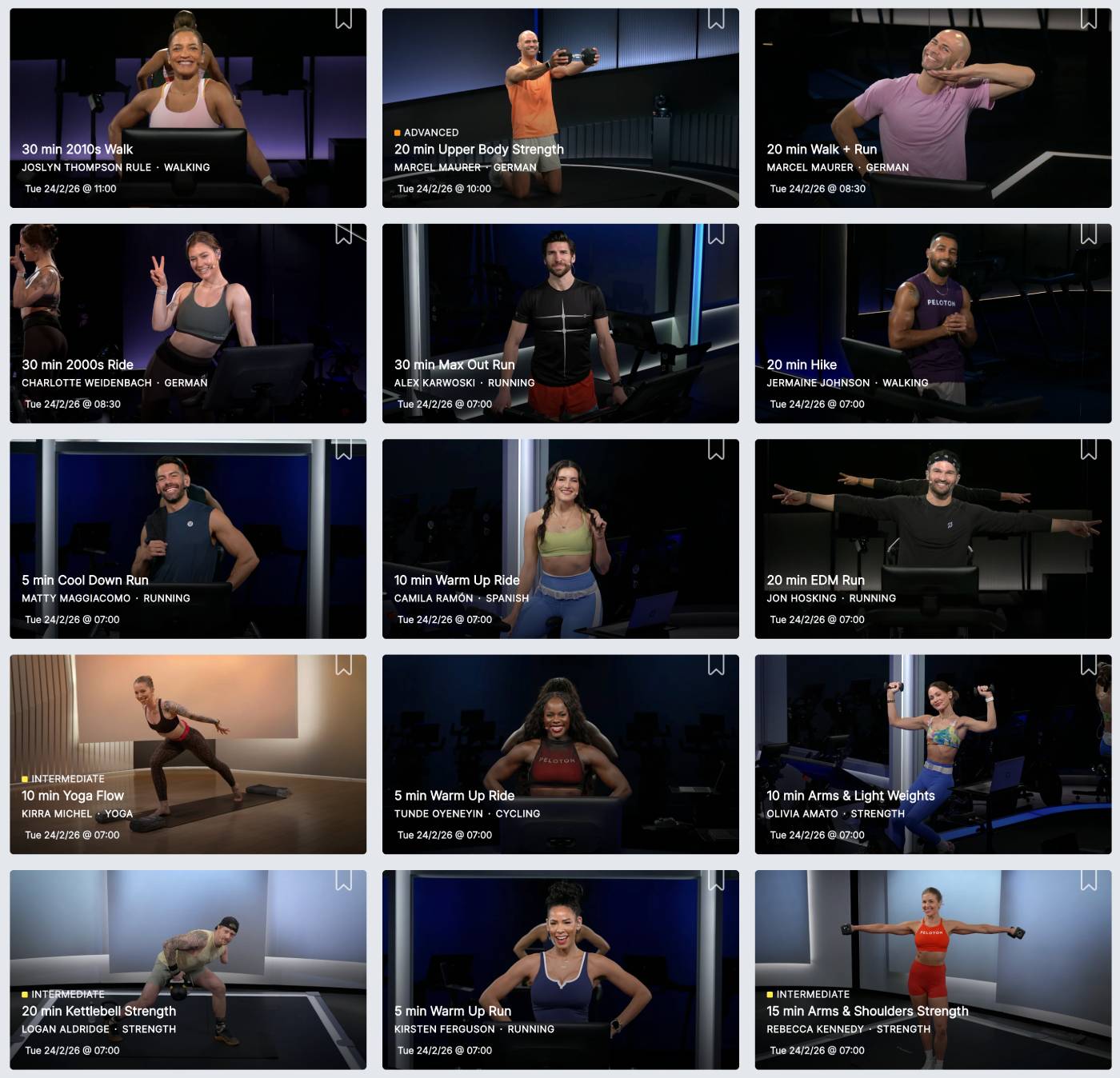
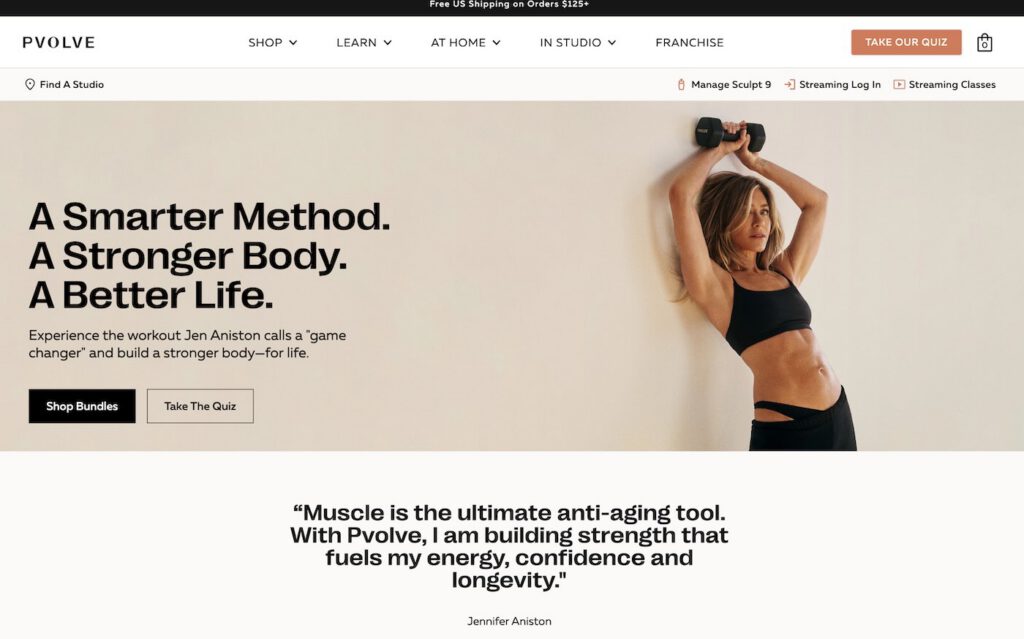
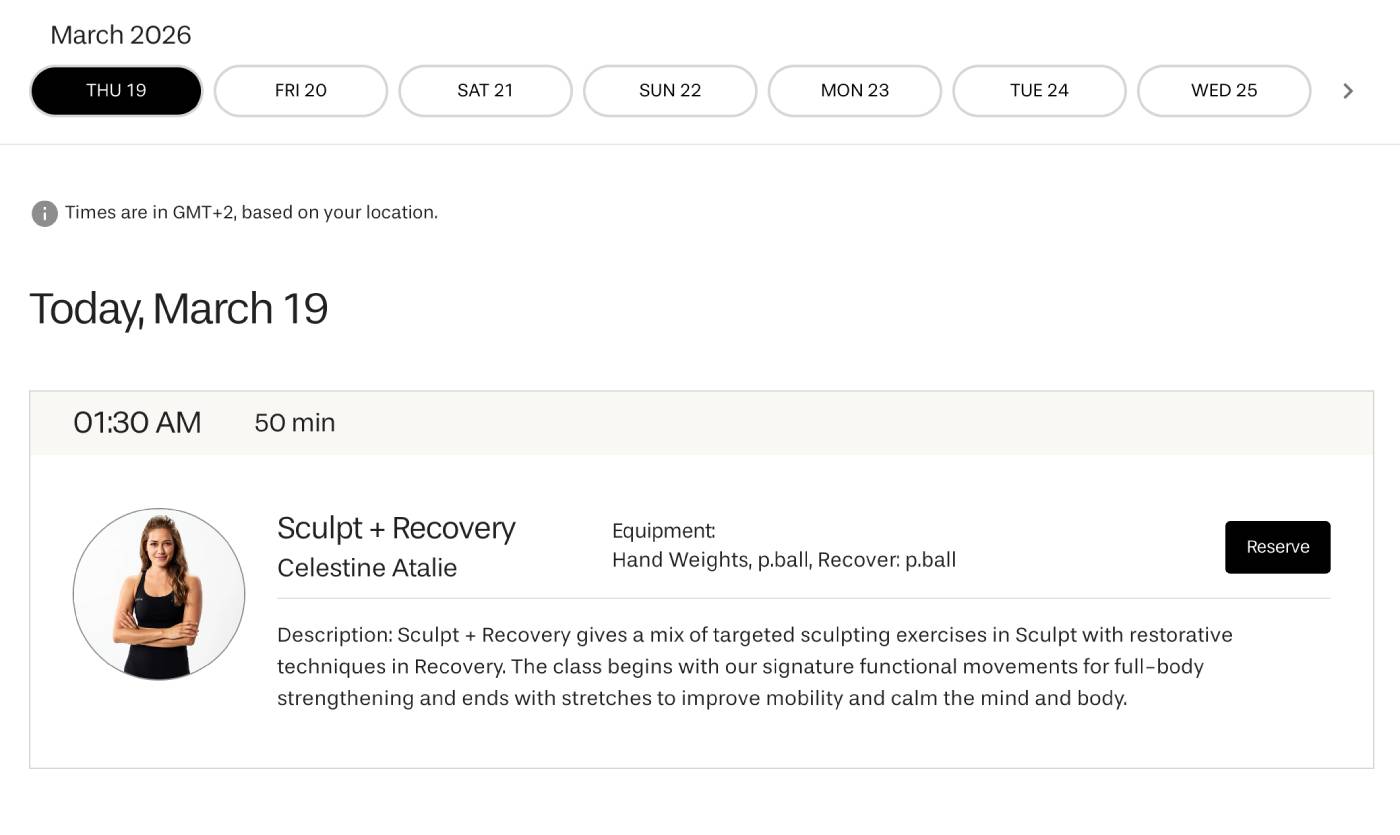
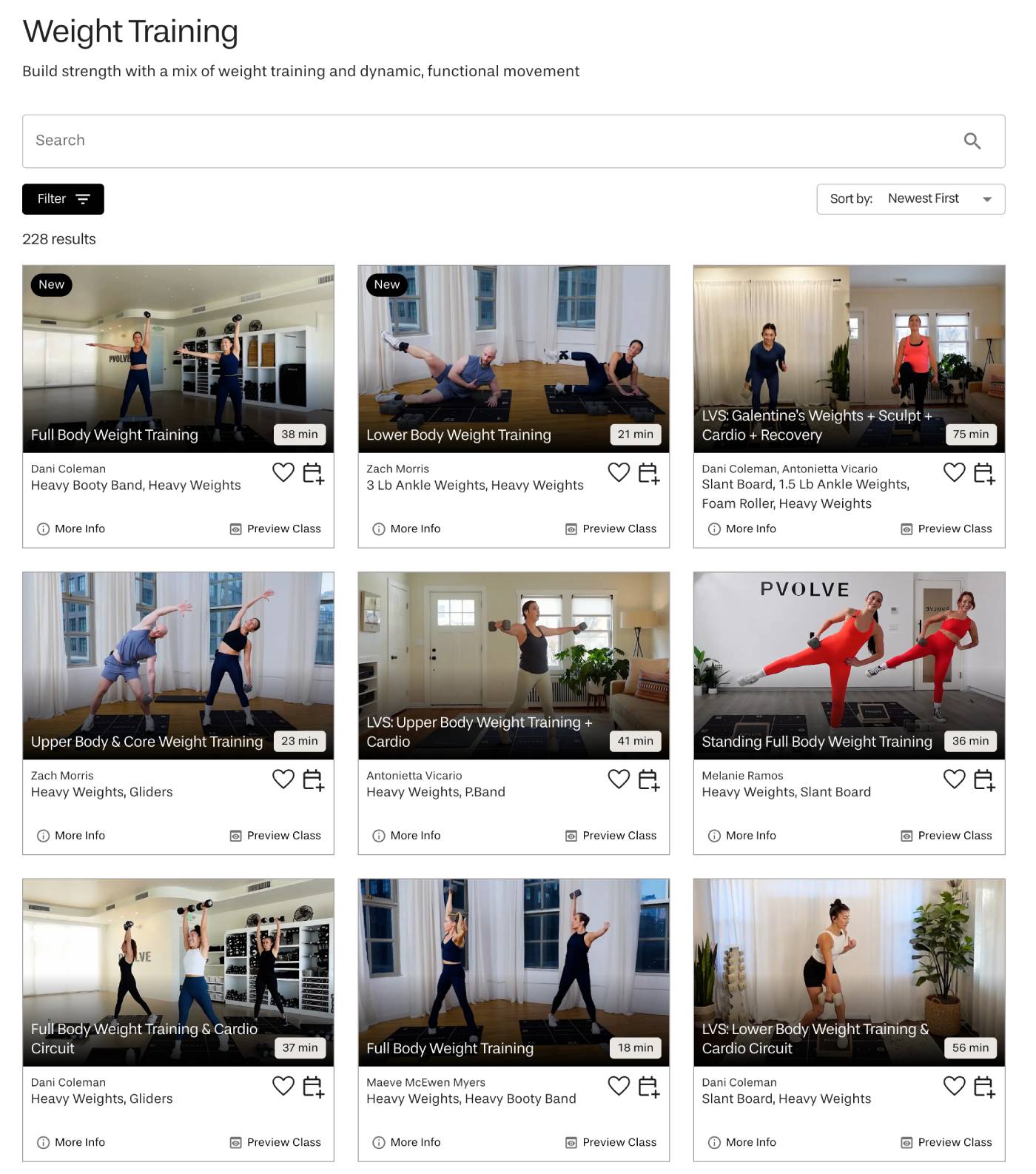
Screenshots from our full reviews
Decision tree for women over 40
- Actively managing perimenopause symptoms and want specialist depth: Pvolve.
- Tight monthly budget under $20: Peloton App One ($15.99/month).
- Active knee, back, hip, shoulder, ankle or wrist injury: Pvolve (dedicated injury support series).
- Pelvic floor concerns: Pvolve.
- Managing endometriosis: Pvolve.
- Want live class accountability with leaderboard: Peloton.
- Want variety across cycling, running, walking, strength, yoga, meditation: Peloton.
- Happy to invest in proprietary equipment: Pvolve (Signature Bundle).
- Want app-only access with no equipment buying decisions: Peloton.
- Want the most clinically grounded perimenopause platform: Pvolve.
- Want orthopedic clinical depth and direct specialist consultation: Peloton (HSS partnership).
- Want a structured 6-week perimenopause arc: Pvolve (Menopause Strong).
- Want a 7-day framework for menopause training: Peloton (Menopause Health Collection).
- Post-menopausal with bone density priorities: Either works. Peloton’s Weighted Vest Strength classes are a specific recent addition; Pvolve’s functional loading supports bone density through different mechanics.
Affiliate links where a partnership exists. Full disclosure.
What I did not test
- Peloton hardware. Tested app-only without bike, treadmill or rower.
- The full Pvolve Menopause Strong 6-week programme. I am currently in week 2 of 6.
- The full Pvolve Total Transformation Bundle. I tested with basic equipment plus the Signature Bundle equivalents.
- The HSS direct consultation line. I have not used the orthopedic specialist booking service on Peloton.
- The Peloton x Respin Health research study (P.R.E.S.S.). I did not participate.
- The University of Exeter study on Pvolve. I am familiar with the published research but was not a study participant.
- Long-term adherence beyond my test windows.
Personal testing and observations
Peloton testing
I am a woman in my mid-forties, currently in perimenopause, working full-time with two children and training daily. I tested Peloton with no Peloton hardware at all. Single pair of 7.5kg dumbbells, my own non-Peloton treadmill, phone projected to TV. Across strength, yoga, walking, running, and the Menopause Health Collection.
The Menopause Health Collection was compelling perimenopause content. Twenty-minute sessions including low-impact ride (cycling without standing or jumping in the saddle), hike (incline walking on a treadmill or outside), endurance, bodyweight strength and kettlebell. Built around the specific physical changes of this life stage rather than relabelling standard yoga or strength sessions as menopause-friendly. The sessions sat appropriately in my training week without leaving me undertrained or wrecked the next day. The modification cues built into the main class delivery were notably better than most platforms I have tested.
The HSS partnership content (the ACL Recovery programme led by Jess Sims, announced October 2025) adds clinical orthopedic depth. From March 2026, Peloton members can call a direct line to book appointments with HSS orthopedic specialists. This is the kind of clinical access most fitness platforms do not offer at any price point.
Weaknesses were real. Peloton does not guide progressive overload. The cancel link was non-functional during my testing, which I tested more than once. At $28.99/month for App Plus the price is a significant premium over App One. The dumbbell strength classes were challenging with 7.5kg dumbbells, which confirms the content is genuinely effective with basic equipment. The programmes are app-only and not accessible via web browser, which is a real usability gap for desktop-primary users.
Pvolve testing
I tested Pvolve across two months of daily 16 to 25 minute sessions. I am currently in week 2 of the 6-week Menopause Strong programme. I have completed the Knee Stability series, the Progressive Weight Training for Beginners programme, Full Body Bands, Upper and Lower Body Sculpt, and one live virtual studio session. I did not buy the Pvolve equipment bundle. I used resistance bands in medium and high resistance, dumbbells ranging from 5kg to 8.5kg, and ankle weights I already owned, and filtered the library for classes that work with that equipment. This is a legitimate way to use the platform and a useful test of whether the method holds up without the proprietary kit.
I started weight work at 5kg for upper body and 6.5kg for lower body. I am now at 6.5kg upper and 8.5kg lower. That is a genuine progression across two months of 20-minute sessions and more progression than I expected from a platform marketed primarily on low-impact functional training. Pvolve was considerably more physically demanding than I expected going in. The low-impact philosophy meant I did not expect the muscular fatigue, but the functional loading patterns create time-under-tension stimulus that genuinely works the body. The trade-off is that joint load stays consistently low.
The injury support series for knees was the kind of clinical content I do not see elsewhere at this price point. With my meniscus history (a tear in the cartilage cushion inside the knee from years ago), the Knee Stability series content was directly relevant. The assessment videos before loading movements meant I was checking my own readiness for specific loading patterns before doing them, which is the kind of self-knowledge most fitness platforms do not build.
Menopause Strong’s pacing through week 2 has been well-designed for perimenopausal recovery capacity. The exercise selection respects what oestrogen decline has changed about tendon and ligament behaviour. The programme structure assumes variable energy across the week rather than expecting peak performance every day. The session lengths (around 40 minutes for Menopause Strong sessions) are longer than Pvolve’s mainstream 16 to 25 minute content but the pacing inside the session is gentler.
The equipment investment is real. The Signature Bundle is $199. You can start with bands and dumbbells you already own, but you will get more from the platform with the proprietary equipment. For UK women, ordering through Healf is straightforward but adds delivery time. For US women, ordering through Pvolve directly is the simpler path. The Total Transformation Bundle at $625 includes one year of streaming and is the right purchase for women who already know they want a full year on the platform.
The free trial structure is worth noting: 14 days with full streaming access, credit card required. Cancel before day 14 if you do not continue. The 14-day trial is shorter than Peloton’s 30 days and only enough time for a brief commitment, not a full programme block. If you want to test Menopause Strong properly, plan to subscribe past the trial period.
Which is better for women over 50?
For women over 50, Pvolve is the stronger pick. Menopause Strong extends naturally into post-menopause concerns including bone density, joint stability, and metabolic health. The low-impact philosophy matters more after 50 when the cumulative cost of repeated joint impact compounds and recovery capacity is at its lowest in the life course.
Peloton works for active over-50 women who use the Menopause Health Collection deliberately and avoid the high-impact content. The Weighted Vest Strength and Jump Training classes that target bone density are valuable for over-50 women who can tolerate jumping, but for women managing joint history these are inappropriate. Pvolve’s joint-safe default avoids this selection problem entirely.
Frequently asked questions
Is Peloton or Pvolve better for women over 40?
Pvolve is the stronger choice for perimenopausal and menopausal women, scoring 8.3 / 10 versus Peloton at 7.3 / 10. Pvolve has the most comprehensive perimenopause-specific content tested across the comparison series. Peloton wins on live class accountability, mainstream variety and a lower entry price.
Is Pvolve cheaper than Peloton?
Peloton App One is cheaper at $15.99/month. Pvolve streaming is $24.99/month or $224.91/year. The fairer comparison is Peloton App Plus at $28.99/month against Pvolve, where Pvolve is the better value. Pvolve also requires equipment for full access: the Signature Bundle is $199 or the Total Transformation Bundle is $625.
Which has better perimenopause programming, Peloton or Pvolve?
Pvolve has the most comprehensive perimenopause content of any platform tested across the comparison series: Menopause Strong (6-week programme), pelvic floor series, endometriosis series, cycle syncing, clinical advisory board, and a published University of Exeter study on women aged 40 to 60. Peloton’s Menopause Health Collection is excellent but is one collection within a broader mainstream platform.
Do I need to buy Pvolve equipment?
You can start with resistance bands and dumbbells you already own and filter the library accordingly. Most of the library is designed around the proprietary Signature Bundle (P.ball, P.band, Precision Mat). The Signature Bundle costs $199 and includes one month of streaming.
Is Pvolve good for joint issues during perimenopause?
Yes. Pvolve is low-impact throughout with no jumping anywhere on the platform. Dedicated injury support series for knees, lower back, shoulders, hips, ankles and wrists with assessment videos before loading movements.
Does Peloton have live classes that Pvolve does not?
Yes. Peloton has live classes with leaderboards and real-time participants. Pvolve has a live virtual studio but at smaller scale.
Which has better clinical credentials, Peloton or Pvolve?
Both have clinical partnerships. Pvolve’s clinical depth is concentrated on perimenopause physiology (clinical advisory board, Menopause Strong co-developed with specialist doctor, University of Exeter study). Peloton’s clinical depth spans broader orthopedic work (Hospital for Special Surgery partnership for ACL recovery and orthopedic consultation) plus the Respin Health menopause partnership.
Research citations
- Maltais ML, Desroches J, Dionne IJ. Changes in muscle mass and strength after menopause. Journal of Musculoskeletal and Neuronal Interactions. 2009;9(4):186-197. PubMed.
- Watt FE. Musculoskeletal pain and menopause. Post Reproductive Health. 2018;24(1):34-43. doi: 10.1177/2053369118757537. SAGE.
- Resistance training for postmenopausal women: systematic review and meta-analysis. 2022. PubMed.
About this review
Reviewed by Katy Cole. Peloton tested personally without Peloton hardware (App tier) across strength, yoga, walking, running and the Menopause Health Collection, using a single pair of 7.5kg dumbbells and a non-Peloton treadmill. Pvolve tested personally across two months of daily 16 to 25 minute sessions, including the Menopause Strong 6-week programme (currently week 2), Knee Stability series, Progressive Weight Training for Beginners, Full Body Bands, Upper and Lower Body Sculpt, and live virtual studio classes. Prices verified against onepeloton.com and pvolve.com in May 2026.
Katy is the lead reviewer at Her Daily Fit. Fifteen years personally testing online fitness platforms. Mid-forties, currently in perimenopause, UK-based. Every claim on this page is either personally tested or attributed to peer-reviewed research. See how we score every programme using 9 weighted criteria.
Medical disclaimer: The content on this page is for informational purposes only and is not medical advice. Consult your GP or a healthcare provider before beginning a new exercise programme, particularly if you are managing perimenopause, menopause, or any existing health condition or injury.
Compared with
Where these brands appear in our “Best for” rankings