
BODi scores higher overall, 8.0 against 7.7, and is the stronger platform for nutrition guidance and a structured programme. Alo Wellness Club is the better pick if what you need most is joint-friendly training and value for money.
- Score 8.0 vs 7.7
- Both tested hands-on
Quick answer: BODi is the better overall platform for perimenopausal and menopausal women, scoring 8.0 versus Alo Wellness Club at 7.7. BODi wins on Belle Vitale (a 12-week perimenopause programme built around cortisol management), calendar-based structure that removes daily decisions, and structured nutrition through the Portion Fix system. Alo Wellness Club (the free version of Alo Moves since December 2025) wins on price (now free), library breadth, and deep recovery content (sound baths, yoga nidra, breathwork) that suits perimenopausal nervous systems.
The two platforms
Same nine weighted categories, two different women. Here is who each one is built for.
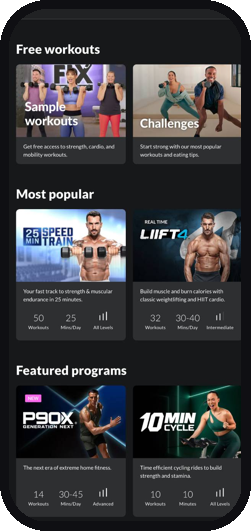
BODi
WinnerLeads this comparison on nutrition guidance and a structured programme, scoring 9 against 5.5 on Nutrition Integration.
- Moderate impact
- 20 to 45 min
- Dumbbells, resistance
Choose BODi if you:
- Are managing perimenopause or menopause symptoms and want a dedicated 12-week programme (Belle Vitale)
- Want a daily calendar that tells you what to do each session
- Want nutrition guidance with a protein-supportive framework (Portion Fix)
- Want structured progressive strength to retain muscle through oestrogen decline (LIIFT4)
- Need Android compatibility or have a household sharing across devices
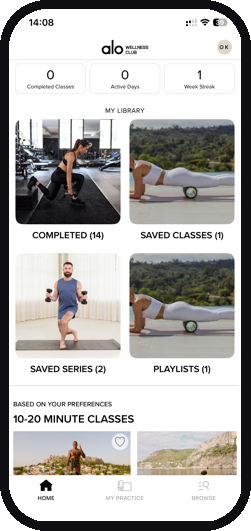
Alo Wellness Club
Runner-upLeads this comparison on joint-friendly training and value for money, scoring 8 against 5.5 on Joint Friendliness.
- Low impact
- 15 to 30 min
- Dumbbells, kettlebell
Choose Alo Wellness Club if you:
- Want a generous free library with no credit card required (free since December 2025)
- Need deep restorative content for perimenopausal sleep and stress disruption
- Already have a sense of how to train for your stage and want library breadth not structure
- Prefer Pilates and low-impact strength as your default training mode
- Use iOS or web (Alo Wellness Club has no Android app)
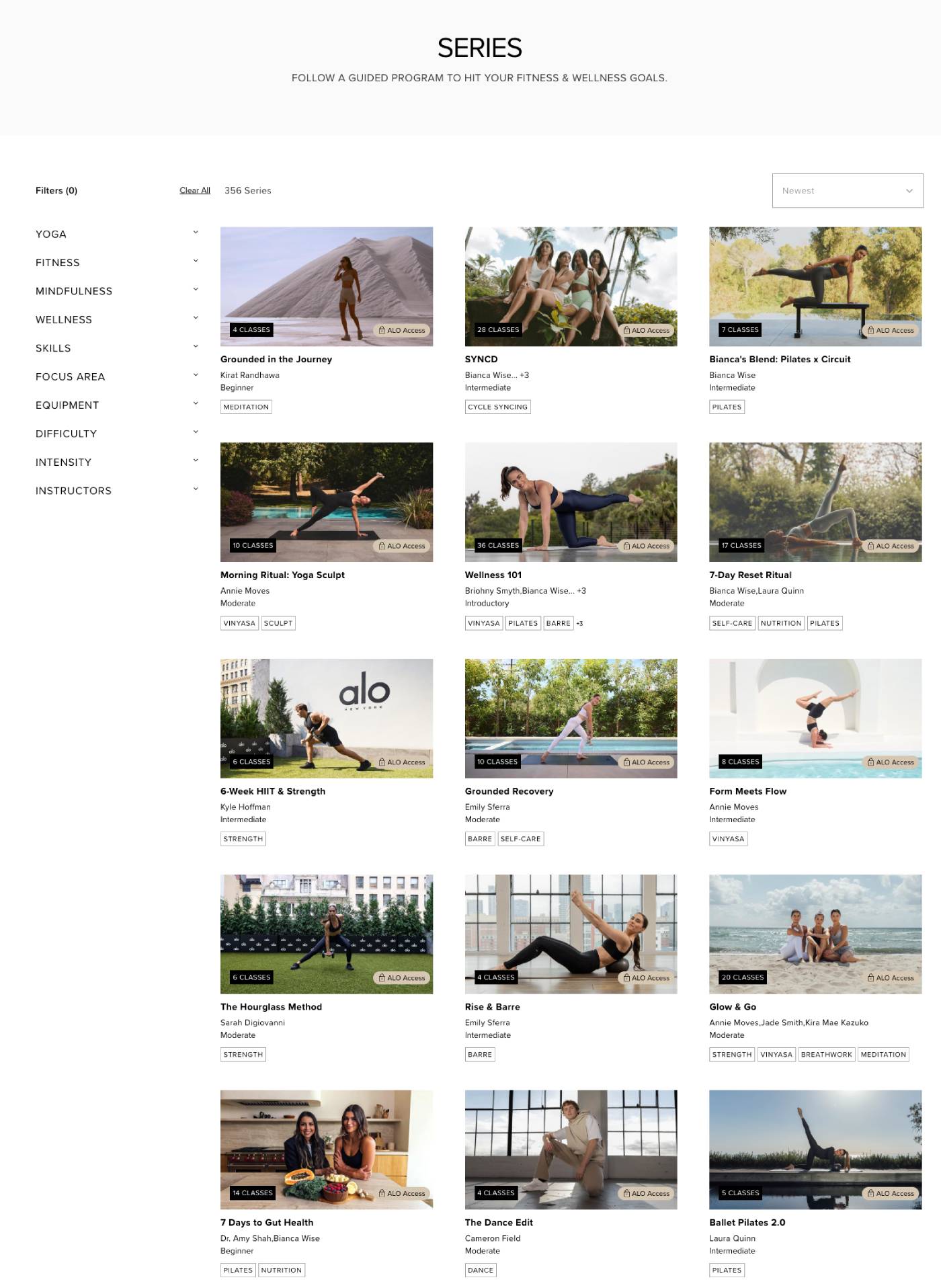
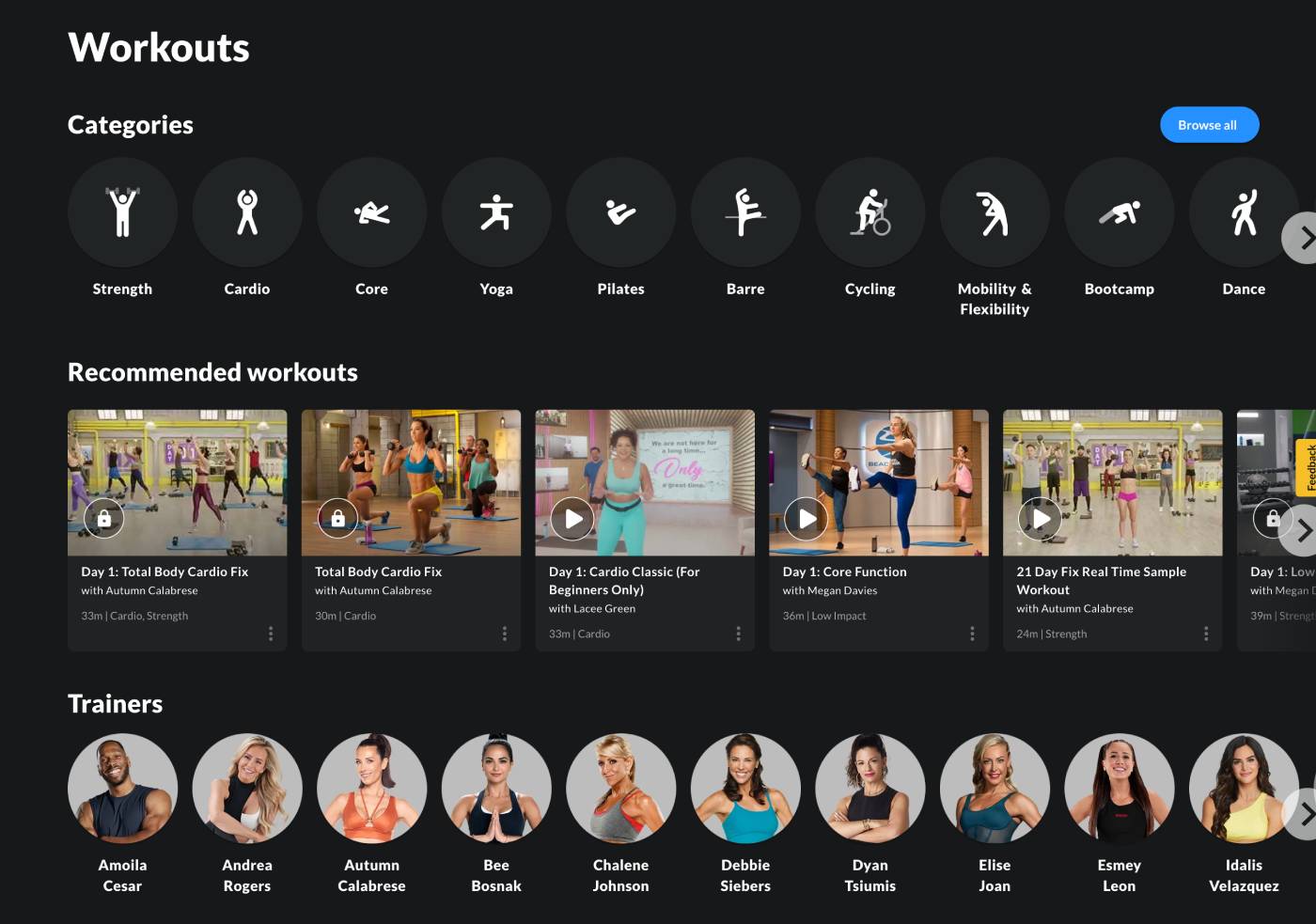
Inside Alo Wellness Club and BODi
Bottom line in 30 seconds for women over 40
- BODi wins overall (8.0 vs 7.7) because Belle Vitale is currently the strongest perimenopause-specific programme on any general-audience platform. Add the calendar structure (which removes a decision that perimenopause brain fog makes harder), the protein-focused Portion Fix nutrition (which matters more as oestrogen decline accelerates muscle loss), and LIIFT4 for progressive strength, and the case is clear for women actively managing this life stage.
- Alo Wellness Club wins on cost and recovery depth. Free since the December 2025 rebrand. The sound baths, yoga nidra and breathwork library is unusually relevant for perimenopausal nervous systems where baseline cortisol and sleep disruption are common. Best fit if you already know how to train for your stage and want a library not a plan.
- Watch the BODi joint profile carefully. 21 Day Fix and Insanity are jump-heavy and high-impact, which is the wrong starting point for perimenopausal joints. LIIFT4, 4 Weeks for Every Body and Belle Vitale have substantially better joint safety. Choose your BODi entry programme deliberately.
Alo Moves was renamed Alo Wellness Club in December 2025 and removed its paywall. The product is now free with an Alo Access account, no credit card required. The library, instructors and programmes are the same as the old paid Alo Moves; only the access model changed. The Her Daily Fit score is 7.7 / 10, with Value for Money pulled to 10 / 10 by the free pricing.
Quick yes/no comparison
| Feature | Alo Wellness Club | BODi |
|---|---|---|
| Free? | Yes (since December 2025) | No (7-day free trial) |
| Dedicated perimenopause programme | No (SYNCD is cycle-based, premenopausal) | Yes (Belle Vitale, 12 weeks) |
| Daily calendar plan | No (library-based) | Yes |
| Built-in nutrition guidance | Yes (Dr Amy Shah, Sakara) | Yes (Portion Fix container system) |
| Sound baths / yoga nidra / deep restorative content | Yes (extensive library) | Limited |
| Progressive strength programmes | Limited (library-based) | Yes (LIIFT4 8 weeks, LIIFT More) |
| Live classes | No | No |
| Android app | No (iOS + web only) | Yes |
| Web browser support | Yes | Yes |
| Credit card required to start | No | Yes (for trial) |
| Easy self-serve cancellation | Free, nothing to cancel | Yes (online, ~1 minute) |
At-a-glance comparison
| Feature | Alo Wellness Club | BODi |
|---|---|---|
| Her Daily Fit score | 7.7 / 10 | 8.0 / 10 |
| Price (US) | Free | $179/year ($14.92/month) or $19/month |
| Price (UK) | Free | £179/year |
| Free trial | Free product, no trial needed | 7 days |
| Ecosystem | iOS, web, Apple TV | iOS, Android, web, Apple TV, Roku, Fire TV |
| Approach | Library you browse | Calendar-based programmes you follow |
| Perimenopause content | SYNCD (cycle-based, premenopausal) | Belle Vitale (12-week perimenopause programme) |
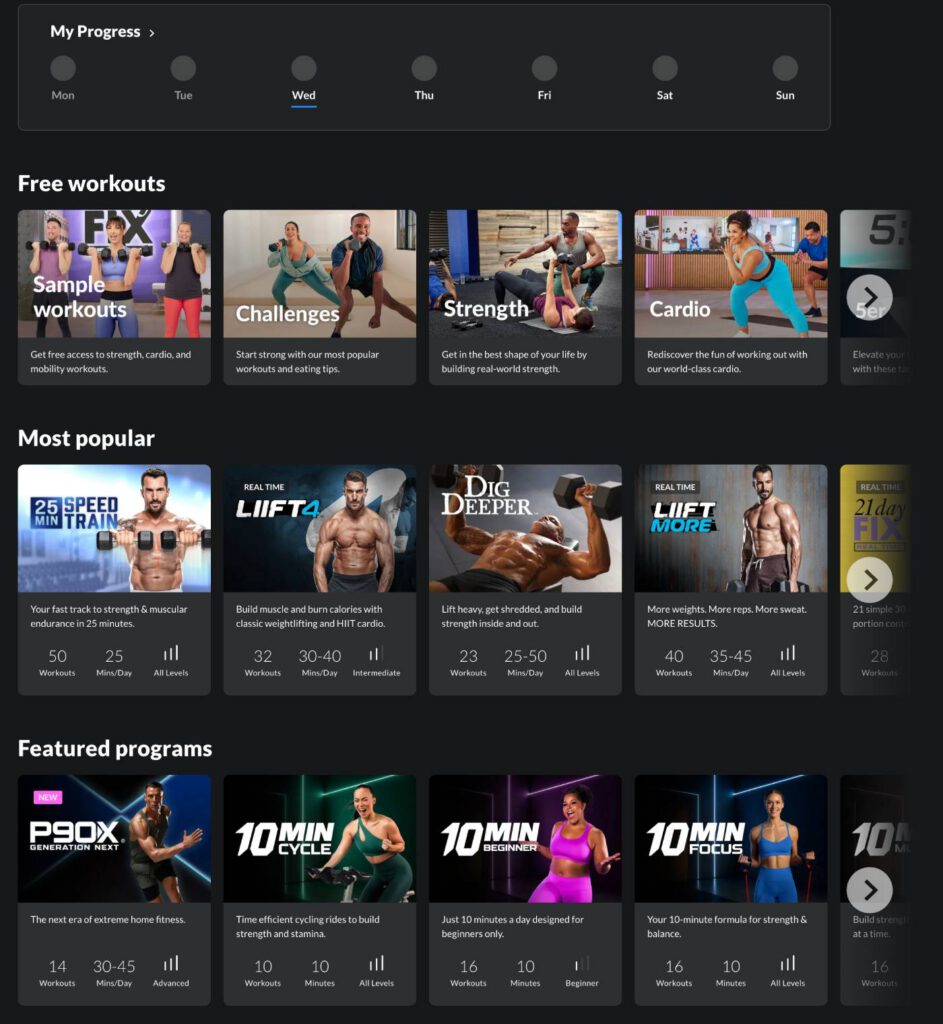
| Strength programmes | Roxie Jones, Bianca Melas series | LIIFT4 (8 weeks), LIIFT More, 4 Weeks for Every Body |
| Nutrition guidance | Dr Amy Shah, Sakara content | Portion Fix container system (protein-focused) |
| Recovery depth | Sound baths, yoga nidra, breathwork, restorative yoga, lymphatic | Built into programme schedules; less restorative variety |
| Women Over 40 Specificity | 5.7 / 10 | 6.3 / 10 |
Her Daily Fit scoring breakdown
| Category | Weight | Alo Wellness Club | BODi | Winner |
|---|---|---|---|---|
| Time Efficiency | 15% | 8 | 8.5 | BODi |
| Muscle Potential | 15% | 8 | 8.5 | BODi |
| Women Over 40 Specificity | 15% | 5.7 | 6.3 | BODi |
| Joint Friendliness | 12% | 8 | 5.5 | Alo Wellness Club |
| Recovery Compatibility | 10% | 8.5 | 8.5 | Alo Wellness Club |
| Programme Structure | 10% | 7 | 8.5 | BODi |
| Value for Money | 8% | 10 | 8.5 | Alo Wellness Club |
| UX and Design | 8% | 8 | 8.5 | BODi |
| Nutrition Integration | 7% | 5.5 | 9 | BODi |
| Overall | 100% | 7.7 / 10 | 8.0 / 10 | BODi |
The scoring pattern reflects what perimenopausal women actually need from a fitness platform. BODi takes the high-weight perimenopause-relevant categories: Women Over 40 Specificity (15%), Muscle Potential (15%) and Programme Structure (10%). Alo Wellness Club takes Value (8%, on the strength of being free), Joint Friendliness (12%), and Recovery (10%). The 0.4-point overall gap is real but narrower than the individual category gaps in Belle Vitale’s favour suggest.
Perimenopause programming: BODi wins by the largest margin in this comparison
This is the category where the gap between these two platforms is widest, and the category that matters most for the Her Daily Fit audience.
What “perimenopause-specific” actually means for training
Three physiological changes during perimenopause directly affect how women should train. First, oestrogen decline accelerates loss of muscle and bone, which makes resistance training (any training where you push against load) more important, not less, but also changes how the body responds to it. Maltais 2009 documents the muscle and strength trajectory after menopause, and a 2022 systematic review on resistance training for postmenopausal women confirms structured training is the most effective intervention.
Second, baseline cortisol (the stress hormone your body produces under load) tends to elevate during perimenopause, and training that spikes cortisol further can worsen the symptom profile (fatigue, poor sleep, mood disruption). Sustainable intensity matters more than maximum intensity at this stage.
Third, tendon and ligament elasticity decreases. The bands of tissue that connect muscle to bone and bone to bone lose some of their springiness, which increases injury risk from high-impact loading. Watt 2018 documents the increased musculoskeletal pain frequency around menopause and the role of oestrogen deficiency in predisposing women to joint and tendon issues.
A perimenopause-specific programme is one that designs around these three realities rather than ignoring them. Most general-audience fitness platforms train you as if you were 28. A perimenopause-aware platform trains you for the body you have now.
What Belle Vitale actually is
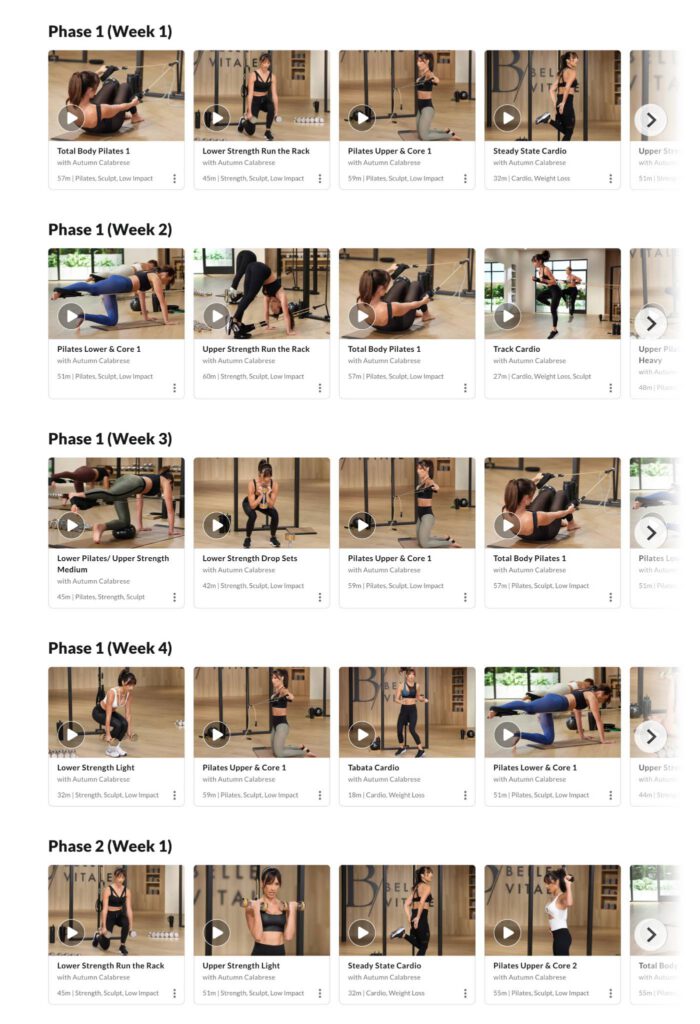
Belle Vitale on BODi is a 12-week hormone-focused programme built around three pillars: Track Pilates, low-impact strength, and a cortisol-reduction philosophy that pervades the pacing and intensity. The session structure deliberately avoids the cortisol spikes that worsen perimenopause symptoms. The load profile is low-impact throughout, which respects the tendon and ligament changes Watt 2018 documents. The structure assumes you are managing variable energy and recovery across the week, not training as if you had the recovery capacity of a 25-year-old.
In my testing, Belle Vitale sessions sat appropriately in my training week without leaving me undertrained or wrecked the next day. That balance is harder to get right than it sounds. The moment you open Belle Vitale, it feels like a different product from the rest of the BODi library: cortisol-managed pacing, Track Pilates focus, explicit perimenopause awareness in the cueing.
What SYNCD is and why it is not the same thing
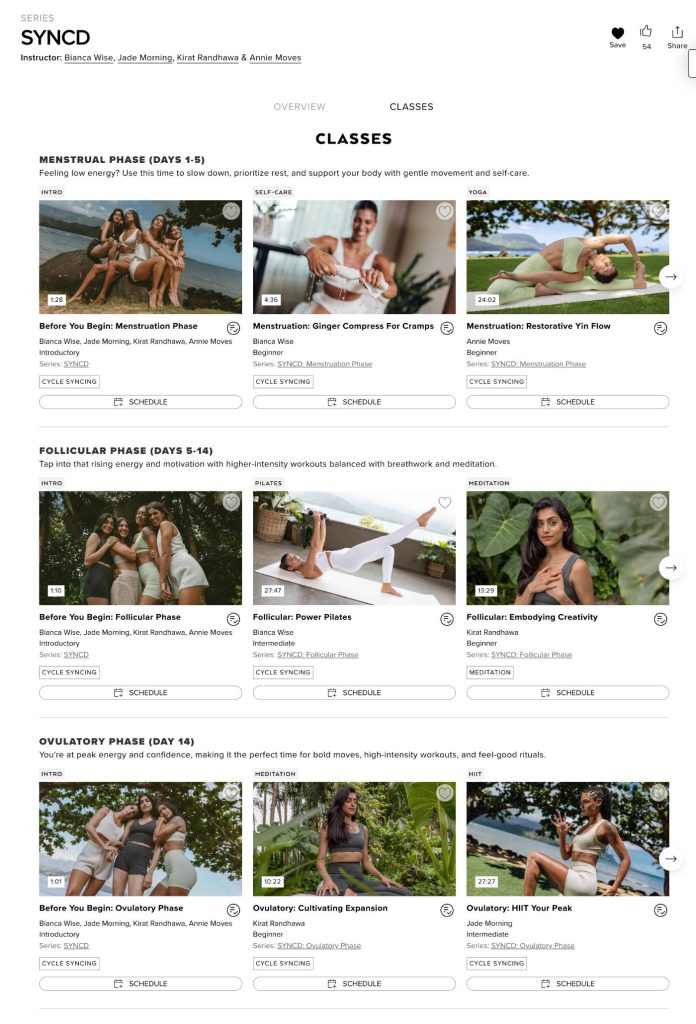
Alo Wellness Club’s closest equivalent is SYNCD, a cycle-based programme that adapts training to phases of the menstrual cycle. For premenopausal women still cycling regularly, SYNCD has logic to it: the follicular phase tolerates higher intensity, the luteal phase calls for moderation. The structural mismatch with perimenopause is that cycles are becoming irregular by definition, and many perimenopausal women are no longer cycling at all. SYNCD is a premenopausal product, not a perimenopausal one.
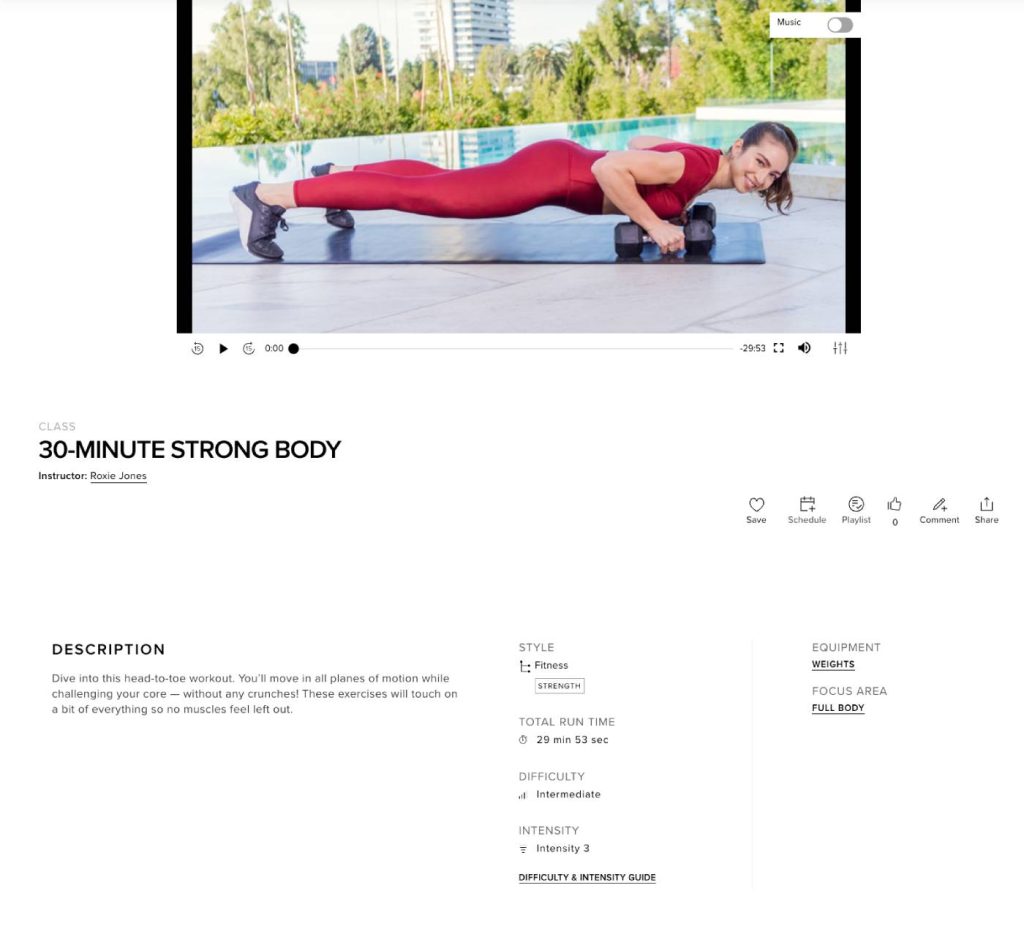
Beyond SYNCD, the Alo Wellness Club library suits perimenopause well without being labelled for it. Roxie Jones’s strength sessions, Bianca Melas’s Pilates blocks, the deep recovery library: all useful for this audience. The gap is structure and explicit acknowledgement. The library does not surface “what to do today during perimenopause” as a thread.
What this means for your decision
If perimenopause or menopause symptoms are actively shaping how you train (joint aches, sleep disruption, fatigue patterns, mood changes, irregular cycles), BODi’s Belle Vitale is the stronger choice by a clear margin. For women specifically researching workouts for perimenopause or low-cortisol training, Belle Vitale is currently the strongest dedicated content on any general-audience platform.
Muscle potential: BODi wins because progressive overload matters more after 40
BODi takes muscle potential because its dedicated strength programmes deliver more systematic progressive overload than Alo Wellness Club’s library-based approach.
What progressive overload means and why it matters more after 40
Progressive overload is the principle of gradually adding load over time. In practice, this looks like going from 4kg dumbbells to 5kg, then 6kg, then 7.5kg over a few weeks. Or doing one more repetition at the same weight than you managed last week. Or slowing the lowering phase of a movement to make it harder without changing the weight.
This matters more after 40 because oestrogen decline accelerates loss of muscle and bone. The 2022 systematic review on resistance training for postmenopausal women is clear: training works, but it only works if the load gets harder over time. Doing the same 4kg shoulder press for a year stops producing change after the first few weeks. The body adapts to whatever you give it; you have to keep increasing the stimulus.
BODi’s progressive structure delivers this systematically
LIIFT4 is Joel Freeman’s 8-week strength programme targeting one muscle group per session with systematic progressive loading. It is properly designed strength training, not a circuit with dumbbells. The programme structure prompts you to use a heavier dumbbell at clear points across the 8 weeks. LIIFT More extends the format with longer training arcs.
The Portion Fix nutrition system’s protein emphasis supports muscle protein synthesis (the process where your body builds new muscle tissue, which requires adequate protein intake especially as oestrogen decline reduces the efficiency of protein utilisation in women over 40). The combination of structured progressive overload plus protein-supportive nutrition is genuinely effective for muscle retention during perimenopause.
Alo Wellness Club’s strength offering is good but library-shaped
Roxie Jones and Bianca Melas both run effective strength series on Alo Wellness Club. The content quality is high: clear cueing, varied programming, accessible production. The structural gap is that progression across sessions and weeks is left to you. You pick the session, you pick the weights, and no calendar prompts you to increase load over time. For self-directed women who already know how to programme their own progression, this works. For everyone else, the load tends to plateau at whatever weights felt manageable in the first week.
The shared weakness on both platforms
Neither platform prompts you in-session to increase weights. BODi LIIFT4 is more structured at the programme level, but inside any given session, you still choose the weight. If muscle retention is your primary goal after 40, both platforms work but you will need to track and progress your weights yourself. Platforms like Caroline Girvan CGX deliver more explicit in-session progression cueing.
Joint friendliness: Alo Wellness Club wins overall; BODi wins only if you pick the right programme
This is the category where the average score hides the real picture.
Why joint friendliness matters more during perimenopause
As oestrogen drops, tendons and ligaments lose some of their elasticity. Watt 2018 reviews the increased frequency of musculoskeletal pain and arthritis around menopause and the role of oestrogen deficiency in predisposing women to these conditions. This is not a reason to stop training. It is a reason to be more deliberate about how you load joints.
In practice this means fewer jumping movements unless you have built up to them carefully, more modification options when something starts to twinge mid-session, and lower-impact alternatives across the training week. For women with any joint history (knee, hip, back, shoulder), this matters more.
Why Alo Wellness Club wins on default browsing
Alo Wellness Club’s library skews low-impact by design. Pilates, yoga, low-impact strength and breathwork are the headline categories. There is some high-intensity content but the default browsing experience surfaces lower-impact options. For perimenopausal women with any joint history, opening Alo Wellness Club and pressing play on a random session is a much safer default than opening BODi and pressing play on whatever the platform surfaces.
Why BODi’s joint friendliness depends entirely on programme choice
BODi scores 5.5 / 10 overall, but the average hides a real split. The two most-promoted entry programmes are 21 Day Fix and Insanity, both of which contain high-volume jumping: jump squats, high knees, lateral hops. During my 21 Day Fix testing, the modifications for knee issues were too unclear to follow safely in real time. I pushed through more than I should have.
LIIFT4 has a substantially better joint profile. 4 Weeks for Every Body uses slow eccentric dumbbell movements (the lowering phase of each rep deliberately slowed to make the muscle work harder) with zero jumping. Belle Vitale avoids high-impact loading entirely.
What this means for your decision
For perimenopausal women with any joint history, the safe BODi path is to start with LIIFT4, 4 Weeks for Every Body or Belle Vitale. Never start with 21 Day Fix. The BODi onboarding tends to surface 21 Day Fix as the default recommendation, so this is a choice you need to make deliberately rather than following the platform’s nudge. Alo Wellness Club does not require this kind of deliberate programme-selection vigilance.
Recovery: Alo Wellness Club wins on depth, which matters more in perimenopause than at any other life stage
Alo Wellness Club takes recovery because the breadth of restorative content is unusually relevant for perimenopausal nervous systems.
Why recovery matters more during perimenopause
Sleep quality often declines during perimenopause, baseline cortisol tends to elevate, and recovery capacity between training sessions decreases. Hackney 2006 on stress and the neuroendocrine system documents the bidirectional relationship: training is a stressor that can compound existing stress, and inadequate recovery erodes training benefit. For women in their 40s and 50s, building in genuinely restorative work is not optional. It is the difference between a sustainable training year and burnout.
What Alo Wellness Club offers
The restorative library includes sound baths (sessions where layered acoustic tones are used to support nervous system downregulation), yoga nidra (a guided relaxation practice that takes you to a state between waking and sleep), breathwork sessions, restorative yoga, lymphatic drainage sessions, and meditation. The breadth is unusual for any platform at any price point. For perimenopausal women managing variable sleep and elevated baseline stress, this restorative depth produces measurable downregulation effects in a way that “rest day” branding on other platforms does not.
In my testing, I used the sound bath and yoga nidra sessions on evenings when sleep was patchy. The effect on sleep onset that night was noticeable.
What BODi offers
BODi’s recovery is built into programme schedules through scheduled rest days and active recovery sessions. The structural management is good: every programme has rest days, and Belle Vitale specifically designs recovery into the weekly cadence. The library of standalone restorative content (yoga, meditation, restorative work) does not match Alo Wellness Club’s depth. If your need is “give me a deep restorative session right now”, Alo wins. If your need is “give me a programme that respects my recovery capacity”, BODi’s Belle Vitale wins.
Programme structure: BODi wins because perimenopause brain fog makes daily decisions harder
BODi takes programme structure because the workout calendar is the central organising principle of the platform.
Why decision fatigue matters more in perimenopause
Perimenopause symptoms include cognitive changes that are frequently described as brain fog: difficulty making decisions, reduced executive function, harder mornings. Add this to a full-time work schedule, family logistics, and the existing mental load of running a household, and the friction of deciding what to train today becomes a real reason workouts get skipped.
BODi’s calendar removes that decision. You open the app, today’s session is decided based on the programme you committed to at the start. Press play. The decision is made.
How Alo Wellness Club’s structure compares
Alo Wellness Club is a library you navigate. There is no central “what to do today” answer. You can follow programmes (Roxie Jones’s strength series, Bianca Melas’s Pilates blocks) but the structure is opt-in rather than the default. For self-directed women whose mental energy is not stretched by perimenopause symptoms, this is fine. For women whose cognitive bandwidth is already taxed, BODi’s “press play” model is a real adherence advantage.
The trade-off both platforms share
BODi’s programmes have defined endpoints. When you finish LIIFT4, the next decision is yours. Belle Vitale runs 12 weeks; what comes next is up to you. For women who benefit from external structure indefinitely, neither platform fully delivers it. The advantage BODi has is that the structure is the default during a programme; on Alo Wellness Club, the structure is always opt-in.
Nutrition: BODi’s is more structured, both matter more after 40
This is the second category where the gap is meaningful for perimenopausal women.
Why nutrition matters more after 40
Two reasons. First, oestrogen decline accelerates muscle loss and changes body composition (the ratio of fat to muscle in your body) even when training is consistent. Adequate protein intake becomes more important, not less, after 40. Second, perimenopause symptoms include changes to how the body handles glucose and insulin, which makes blood sugar regulation through nutrition more relevant than at any prior life stage.
BODi’s Portion Fix is genuinely useful
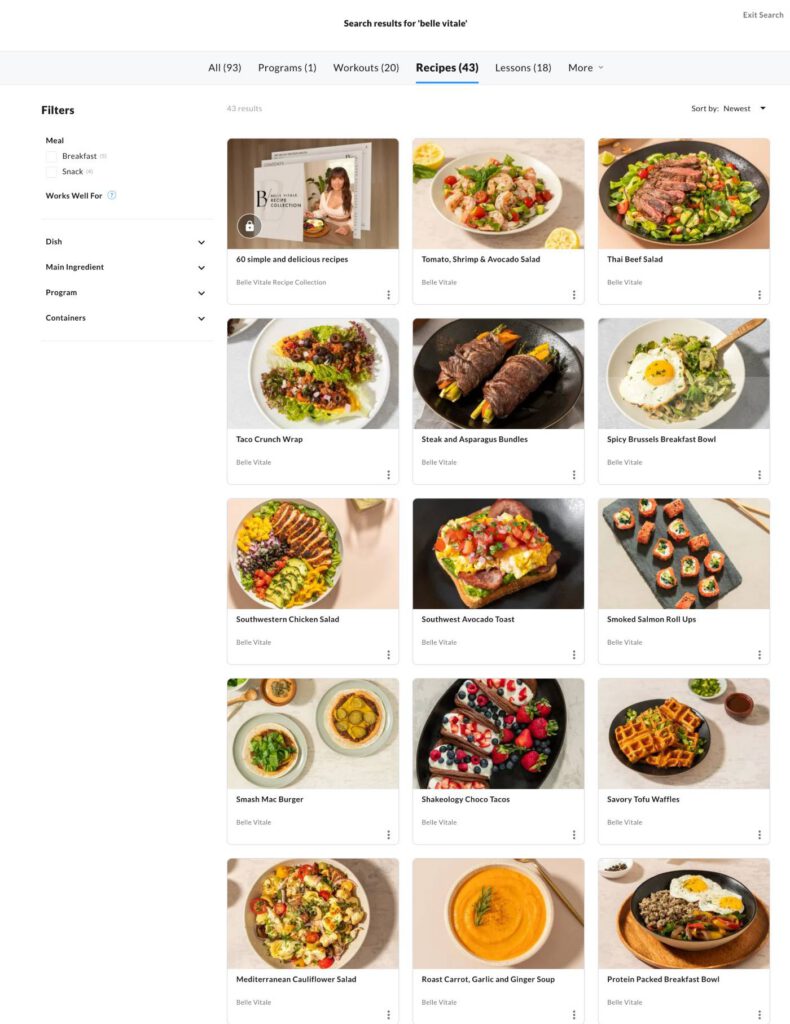
The Portion Fix container system is a practical, colour-coded portion control approach developed by a registered dietitian. The system emphasises protein at every meal and balances carbohydrate and fat in proportions that support both muscle retention and blood sugar stability. During my 28-day testing of 21 Day Fix, I lost 1.5kg without spending anything on Shakeology, just by following the Portion Fix system alongside the training.
The system is prescriptive enough to produce results but flexible enough to accommodate real eating patterns. Shakeology is promoted throughout the platform but is easy to decline and not required for results. For perimenopausal women trying to rebuild the eating side alongside their training, Portion Fix gives a structured framework without demanding a complete diet overhaul.
Alo Wellness Club’s nutrition is educational but unstructured
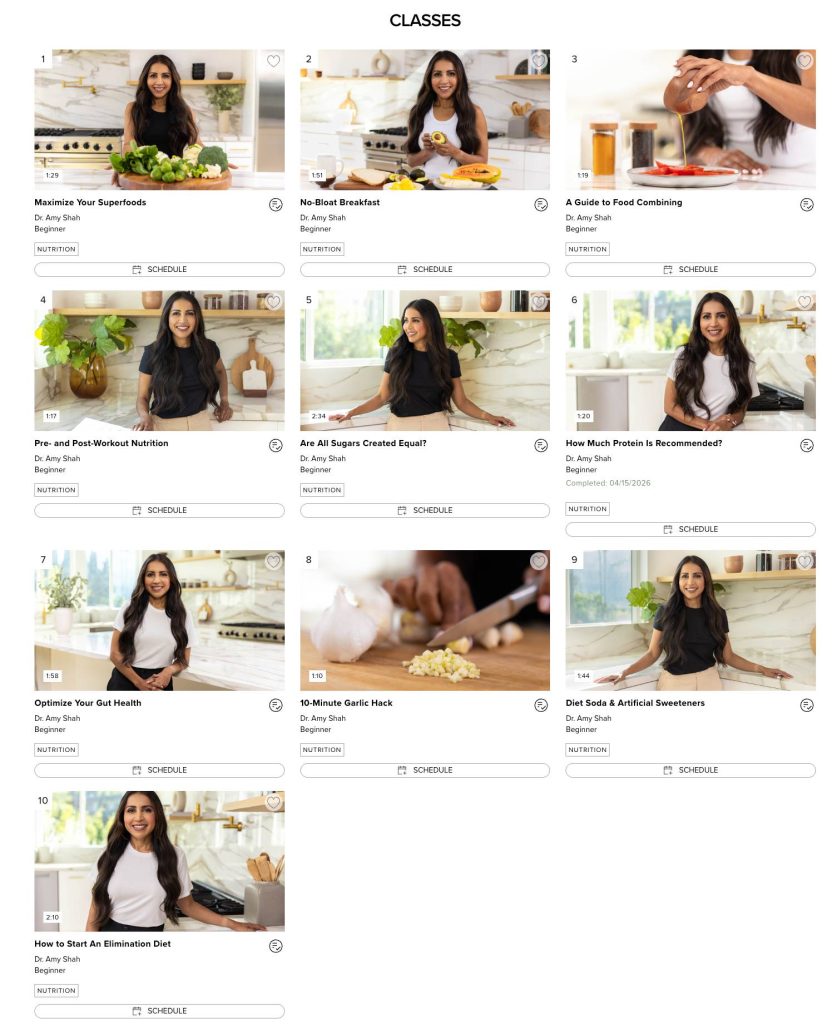
Alo Wellness Club includes nutrition content from Dr Amy Shah (a triple board-certified medical doctor with significant content on hormonal health) and Sakara (a US-based clean meal delivery brand). The content is genuinely educational. The structural difference from BODi is that there is no integrated daily portion or macro framework: you watch the nutrition content separately from the workout flow and decide for yourself how to apply it.
For self-directed women with some nutrition knowledge, Alo’s content adds useful depth. For women who need a framework to follow, BODi’s Portion Fix is the more actionable system.
Time efficiency: BODi narrowly wins for short-on-time women over 40
Time efficiency in the perimenopausal context means “training that produces results in the time I actually have” rather than abstract session length.
BODi’s 20-minute options exist confirmed across multiple programmes: 4 Weeks for Every Body runs short sessions, LIIFT4 has 30-minute sessions, Belle Vitale sessions are programme-set durations that fit a busy day. The structure is an adherence advantage because you don’t decide the length; the programme decided it for you.
Alo Wellness Club has strong duration filtering (5 to 60+ minutes) and the on-demand library works around a real week with no live schedule dependency. The trade-off is the navigation overhead: finding the right 20-minute session for what your body needs today takes mental energy that perimenopause brain fog makes harder. For Alo users who use the daily-plan-style programmes, the gap narrows.
Value: Alo Wellness Club wins, no contest
Alo Wellness Club is free. BODi is $179/year ($14.92/month effective) or $19/month on a monthly plan. There is no way for a paid platform to win value against a free one of comparable quality.
The fairer question for perimenopausal women is whether what BODi offers above and beyond Alo Wellness Club is worth $179/year. Belle Vitale plus the calendar structure plus Portion Fix nutrition is a reasonable case for paying. For women wanting a broad library of strength, Pilates and recovery without a perimenopause focus, Alo Wellness Club delivers the same outcome for free.
Who wins for…
Quick answers for specific perimenopausal training situations.
Who wins for active perimenopause symptom management
BODi. Belle Vitale is the strongest argument for BODi over Alo Wellness Club. The cortisol-reduction philosophy and Track Pilates structure directly address the perimenopause physiology.
Who wins for the lowest price
Alo Wellness Club. Free since December 2025. No credit card required.
Who wins for women who already know how to train but want a varied library
Alo Wellness Club. Free, broad, well-produced library. The lack of structure is an advantage if you already provide your own.
Who wins for women whose perimenopause brain fog makes decisions harder
BODi. Calendar removes the daily decision. Press play. Done.
Who wins for joint-friendly daily browsing
Alo Wellness Club. Lower-impact default browse. BODi works for joint friendliness only if you pick the right programme.
Who wins for perimenopausal sleep and stress disruption
Alo Wellness Club. Sound baths, yoga nidra, breathwork and lymphatic drainage are unusually deep and relevant for perimenopausal nervous systems.
Who wins for retaining muscle through oestrogen decline
BODi. LIIFT4 and LIIFT More deliver structured progressive overload alongside the protein-focused Portion Fix nutrition. The combination is more effective than Alo’s library-based strength.
Who wins for women on Android
BODi. Has a full Android app. Alo Wellness Club is iOS plus web only.
Who wins for beginners over 40
BODi. 4 Weeks for Every Body is specifically designed for true beginners with zero jumping. The calendar structure removes daily decisions that overwhelm new users. For beginners managing perimenopause specifically, start with Belle Vitale; otherwise 4 Weeks for Every Body.
Who wins for women managing tight household budget
Alo Wellness Club. Free is hard to beat. If the perimenopause-specific structure is not your primary need, this is the right starting point.
Who wins for women over 50 post-menopause
BODi if you can stick to Belle Vitale, LIIFT4 or 4 Weeks for Every Body. Alo Wellness Club for self-directed users. Belle Vitale extends naturally into post-menopause concerns including bone density, joint stability and metabolic health. The calendar suits women whose recovery capacity is variable.
Who wins for women managing diastasis recti or pelvic floor recovery
Alo Wellness Club. The Pilates library is deep and the cueing tends to be more pelvic-floor-aware than BODi’s. BODi’s options here are more limited.
Who wins for women who hate diet rules but want some nutrition guidance
Alo Wellness Club. Dr Amy Shah’s educational content gives the framework without the prescription. BODi’s Portion Fix is more rules-based.
Who wins for women who want a structured framework to follow
BODi. Both training and nutrition have explicit structure. Alo Wellness Club is opt-in.
Screenshots from our full reviews

Decision tree for women over 40
- Actively managing perimenopause symptoms (fatigue, sleep, joint aches, mood): BODi (Belle Vitale).
- Budget is zero: Alo Wellness Club. Free, no card required.
- You want a daily calendar that tells you what to do: BODi.
- You want to build your own week from a varied library: Alo Wellness Club.
- You have a knee, hip or back history: Alo Wellness Club by default. BODi only if starting with LIIFT4, 4 Weeks for Every Body or Belle Vitale. Never 21 Day Fix or Insanity first.
- You want nutrition integrated with training: BODi (Portion Fix).
- You need deep recovery content for sleep and stress: Alo Wellness Club (sound baths, yoga nidra, breathwork).
- You are on Android: BODi.
- You want progressive strength programmes: BODi (LIIFT4, LIIFT More).
- You are postmenopausal with bone density concerns: BODi (Belle Vitale extends naturally; LIIFT4 builds the muscle that supports bone density).
- You are recovering from pregnancy or managing pelvic floor / diastasis recti: Alo Wellness Club (Pilates depth).
What I did not test
- BODi Shakeology. I declined the upsell throughout my BODi testing and still produced visible results with Portion Fix alone. The Shakeology product itself is not part of my testing.
- Every BODi programme. My testing covered 4 programmes (21 Day Fix, LIIFT4, 4 Weeks for Every Body, Belle Vitale) of more than 100 in the BODi library.
- BODi hardware. BODi does not require hardware. I tested app-only.
- Every Alo Wellness Club programme. My testing covered multiple Roxie Jones and Bianca Melas programmes, SYNCD luteal phase, lymphatic drainage and sound bath sessions. Not the full catalogue.
- Long-term adherence to either platform beyond my test windows.
- Alo Wellness Club’s full nutrition content depth from Dr Amy Shah. I sampled the content but did not follow a structured nutrition protocol from the platform.
Personal testing and observations
Alo Wellness Club testing
I am a woman in my mid-forties, currently in perimenopause, working full-time with two children and training daily. I tested Alo Wellness Club across one month of structured daily use plus ongoing casual sessions. Multiple Roxie Jones and Bianca Melas programmes, SYNCD luteal phase, lymphatic drainage sessions and sound bath. Web and iOS app. No Android (the platform does not offer one).
The library is professionally produced (instructors, lighting, audio, set design are all of a piece) and the filtering by duration is genuinely useful for slotting workouts into a busy day. The free status removed the friction of justifying the subscription month to month, which was real before December 2025 when the paywall came down. The Pilates programmes from Bianca Melas were the strongest content for what my body needed during a heavy work period: enough work to feel like training, not enough to wreck me for the next day. The sound bath and yoga nidra library was unexpectedly useful for evenings when sleep had been patchy. I noticed downregulation effects on sleep onset that I have not had from generic “relaxation” content on other platforms.
The gap is what a free library cannot fix: there is no daily plan that surfaces what to do today, and there is no perimenopause-aware structure. For self-directed women this works. For women whose mental energy is already taxed by perimenopause symptoms, the absence of a “press play” pathway can become the reason workouts get skipped.
BODi testing
I tested four BODi programmes across several months.
21 Day Fix (28 days, full programme). I lost 1.5kg and saw noticeably tighter arms and legs by week two. The colour-coded Portion Fix nutrition system drove most of that result rather than the workouts themselves. The cardio sessions are jump-heavy (jump squats, high knees, lateral hops), and modifications for knee issues were too unclear to follow safely in real time. I pushed through more than I should have. This is the BODi programme I would actively warn perimenopausal women away from as a starting point.
LIIFT4. Joel Freeman’s 8-week strength programme (four days a week, 30 to 40 minutes per session). Properly structured strength training: one muscle group per session with a HIIT and core block. The joint profile is substantially better than 21 Day Fix and the progressive loading across the 8 weeks is genuine. By week 6 I was visibly more toned. This is the BODi programme I would direct perimenopausal women to first if they are not specifically looking for menopause programming.
4 Weeks for Every Body. Slow eccentric dumbbell movements (the lowering phase of each rep deliberately slowed to make the muscle work harder) with zero jumping. I used this as active recovery between heavier training blocks. Joint-considerate enough for women managing knee, hip or back history.
Belle Vitale. The hormone-focused 12-week programme built around Track Pilates, low-impact strength and cortisol-reduction philosophy. The moment you open it, it feels like a completely different product from the rest of the BODi library. Pacing is built to avoid cortisol spikes. Loading is low-impact throughout. The cueing inside sessions explicitly references perimenopause physiology in a way no other reviewed BODi content does. For perimenopausal women, this is the programme that justifies BODi’s existence over free alternatives.
Which is better for women over 50?
For women over 50 the answer depends on training history and joint status.
BODi is the stronger pick for women over 50 who can commit to Belle Vitale, LIIFT4 or 4 Weeks for Every Body. Belle Vitale extends naturally into post-menopause concerns including bone density (resistance training is the most effective intervention), joint stability, and metabolic health changes that continue post-menopause. LIIFT4 builds the muscle that becomes harder to retain after 50, when oestrogen levels stabilise at lower baseline values and muscle protein synthesis becomes less responsive. 4 Weeks for Every Body is joint-considerate enough for any age. Avoid the high-impact mainstream BODi content (21 Day Fix, Insanity); these are inappropriate for over-50 joints.
Alo Wellness Club works well for over-50 women who are already self-directed in their training. The Pilates and recovery libraries are strong, the price is free, and there is no upsell pressure. The gap is the lack of a daily plan, which for some over-50 women is exactly what they want and for others is the reason consistency slips.
Frequently asked questions
Is Alo Moves or BODi better for women over 40?
BODi is the stronger choice for women over 40 managing perimenopause symptoms because of Belle Vitale (a 12-week perimenopause programme), calendar-based structure that removes daily decisions, and the Portion Fix nutrition system that supports muscle retention through oestrogen decline. Alo Wellness Club (the free rebrand of Alo Moves since December 2025) wins on price and on the breadth of self-directed Pilates, strength and deep recovery content. BODi scores 8.0 / 10 versus Alo Wellness Club at 7.7 / 10.
Is Alo Moves free now?
Yes. Alo Moves rebranded as Alo Wellness Club in December 2025 and removed the paywall. The full library is now free with an Alo Access account, no credit card required.
Does BODi or Alo Moves have a perimenopause programme?
BODi has Belle Vitale, a 12-week perimenopause-focused programme built around Track Pilates, low-impact strength and cortisol-reduction philosophy. Alo Wellness Club has SYNCD, a cycle-based programme designed for premenopausal women still cycling regularly. For perimenopause-specific programming, BODi’s Belle Vitale is in a different category.
Which has better nutrition guidance for women over 40, Alo Moves or BODi?
BODi includes the Portion Fix container system, a colour-coded portion control approach developed by a registered dietitian. The protein emphasis supports muscle retention during perimenopause. Alo Wellness Club includes educational nutrition content from Dr Amy Shah and Sakara but no integrated daily framework. BODi is more structured.
Which is more joint-friendly for perimenopausal women?
Alo Wellness Club by default because the library skews low-impact. BODi’s joint friendliness depends on programme choice: Belle Vitale, LIIFT4 and 4 Weeks for Every Body are joint-considerate; 21 Day Fix and Insanity are high-impact with significant jumping. For perimenopausal joints managing reduced tendon elasticity, BODi works only if you start with the safe programmes.
Is Belle Vitale on BODi worth paying for?
For perimenopausal and menopausal women managing symptoms, yes. Belle Vitale is currently the strongest dedicated perimenopause programme on any general-audience BODi-tier platform. At $179/year, the price is reasonable for what it delivers.
What is SYNCD on Alo Moves?
SYNCD is Alo Wellness Club’s cycle-based training programme that adapts workouts to phases of the menstrual cycle. Designed for premenopausal women still cycling regularly, not for perimenopausal or post-menopausal women. For perimenopause-specific programming, BODi’s Belle Vitale is the better fit.
Did BODi shut down its MLM coaches?
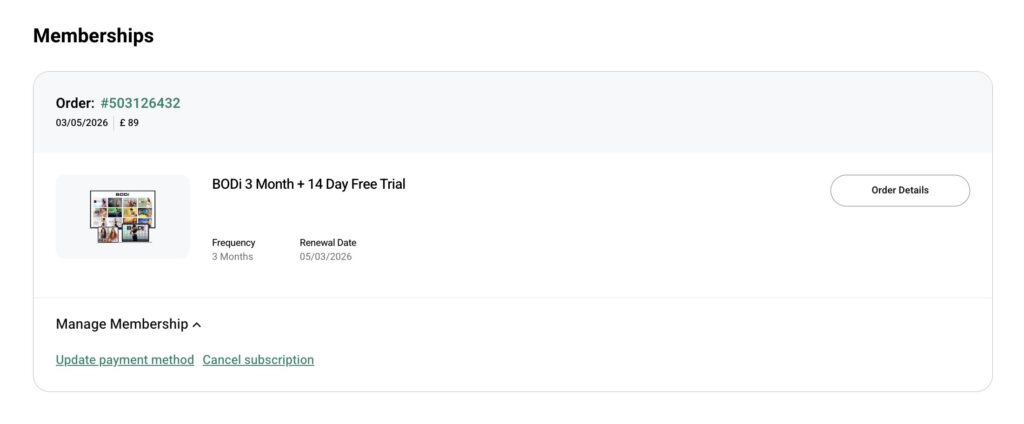
Yes. BODi shut down its multi-level marketing coach network effective January 1, 2025, replacing it with a simpler single-level affiliate model. You will no longer be recruited into a coach network or pressured toward supplements by someone earning commission. Shakeology remains promoted but is easy to decline.
Research citations
- Maltais ML, Desroches J, Dionne IJ. Changes in muscle mass and strength after menopause. Journal of Musculoskeletal and Neuronal Interactions. 2009;9(4):186-197. PubMed.
- Watt FE. Musculoskeletal pain and menopause. Post Reproductive Health. 2018;24(1):34-43. doi: 10.1177/2053369118757537. SAGE.
- Resistance training for postmenopausal women: systematic review and meta-analysis. 2022. PubMed.
- Hackney AC. Stress and the neuroendocrine system: the role of exercise as a stressor and modifier of stress. Expert Review of Endocrinology & Metabolism. 2006;1(6):783-792.
About this review
Reviewed by Katy Cole. Alo Wellness Club tested personally across one month of daily use plus ongoing casual sessions, including multiple Roxie Jones and Bianca Melas programmes, SYNCD luteal phase, lymphatic drainage and sound bath sessions on web and iOS. BODi tested personally across four programmes (21 Day Fix, LIIFT4, 4 Weeks for Every Body, Belle Vitale) over several months, with the Portion Fix nutrition system applied throughout. Prices verified against wellnessclub.aloyoga.com and bodi.com in May 2026.
Katy is the lead reviewer at Her Daily Fit. Fifteen years personally testing online fitness platforms. Mid-forties, currently in perimenopause, UK-based. Every claim on this page is either personally tested or attributed to peer-reviewed research. See how we score every programme using 9 weighted criteria.
Medical disclaimer: The content on this page is for informational purposes only and is not medical advice. Consult your GP or a healthcare provider before beginning a new exercise programme, particularly if you are managing perimenopause, menopause, or any existing health condition or injury.
Compared with
Where these brands appear in our “Best for” rankings