
Which resistance bands to buy
Most women over 40 need only two sets of resistance bands: a light-to-medium fabric set for upper body work and warm-ups, and a heavy fabric set for glutes and squats. Lower body strength outgrows a light band faster than most people expect, which is the usual reason a set of bands ends up in a drawer.
Fabric Bands, Light to Medium
A graded set covering upper body, warm-ups and early glute work
~$15 to $25
Fabric Bands, Heavy
Thicker bands for squats, hip thrusts and lateral walks
~$15 to $25
I keep bands in medium and high resistance alongside dumbbells from 11 to 19 lb, and the bands get used most for glute work and on days when my knee is complaining.
Do resistance bands actually build strength?
Yes, and the evidence is more decisive than most people expect.
In a systematic review and meta-analysis of eight studies, Lopes and colleagues, writing in SAGE Open Medicine in 2019, compared training with elastic devices against conventional weights and machines. The results “demonstrated no superiority between the methods analyzed” for either lower limb or upper limb strength, and the authors concluded that “elastic resistance training is able to promote similar strength gains to conventional resistance training”.
The mechanism is the same one that governs dumbbells. In a systematic review, Schoenfeld and colleagues, in the Journal of Strength and Conditioning Research in 2017, found low and high loads both build muscle when sets are taken close to failure. A band that makes the last two reps genuinely hard is working the muscle much the way a weight of equivalent difficulty does. Bands are not identical to weights, and the tension curve differs; what the evidence supports is comparable strength gain, not an identical stimulus.
Why that matters at this age specifically: in the Study of Women’s Health Across the Nation, Greendale and colleagues, in JCI Insight in 2019, found lean mass declined through the menopause transition while fat gain doubled. Bands are the lowest-friction way to start defending that muscle, and friction is usually what stops people.
Where bands genuinely fall short, and it is worth knowing: they do less for bone than loaded impact work. Bone responds to compressive loading, and a band provides tension rather than load through the skeleton. If bone density is your specific concern, bands are a good starting point and not a complete answer. Read that alongside our dumbbell guidance.
How do the best resistance band programmes compare?
* Nineteen of our 77 programmes list bands as equipment, but listing them is not the same as using them. This page only includes programmes where band work is substantive and not dwarfed by dumbbell work, which leaves six. Those are ranked on our menopause fit score, weighted 70%, blended with ease of use, weighted 30%. The band emphasis column shows how much of each programme actually runs on bands. Overall is the weighted score across all nine criteria.
| Rank | Programme | Band emphasis | Menopause fit 70% | Ease of use 30% | Review score * |
|---|---|---|---|---|---|
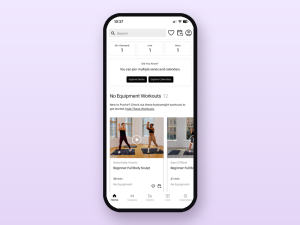
| 1 | Pvolve | Highest here. Bands and its own equipment carry more of the method than dumbbells | 7.4/10 | 8.5/10 | 8.3/10 |
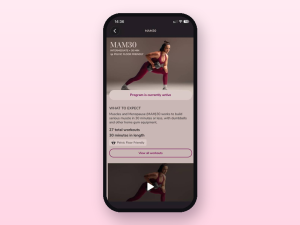
| 2 | Menovation | Moderate. Bands feature, but dumbbells do the heavy work | 7.6/10 | 6.5/10 | 7.7/10 |
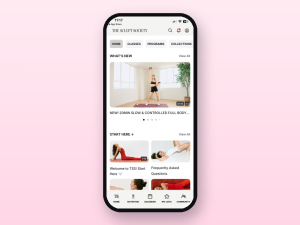
| 3 | The Sculpt Society | Moderate. Light bands and ankle weights through the sculpt work | 6.6/10 | 8.5/10 | 8.2/10 |
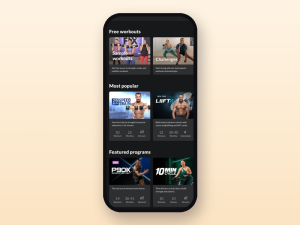
| 4 | BODi | High. Several programmes are band-based, and bands are often bundled | 6.3/10 | 8.5/10 | 8.0/10 |
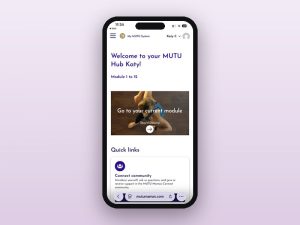
| 5 | MUTU System | High relative to its size. Bands and mat work are most of the method | 6.6/10 | 7/10 | 7.1/10 |
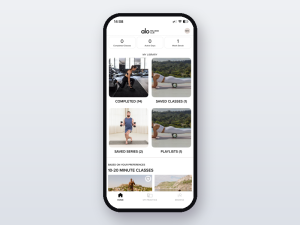
| 6 | Alo Wellness Club | Moderate to high, across a very large free library | 5.7/10 | 8/10 | 7.7/10 |
* Two different numbers appear in this table and they answer different questions. Full review score is the programme’s overall rating across all nine criteria we score, which is the number you see on its review page. The rank is calculated only from what this page is about: menopause fit weighted 70% and ease of use weighted 30%. That is why Pvolve ranks first here on a full review score of 8.3 while BODi, on 8.0, sits fourth. BODi is a strong platform that is less specifically built for midlife.
Two well-regarded programmes are deliberately not here. Flipping 50 and Owning Your Menopause both list bands as equipment and both rank highly on our other pages, but their band content is thin: bands appear a handful of times against dozens of dumbbell references. They are good programmes and they are not band programmes. If you already own dumbbells, look at them on our dumbbell page instead.
Which resistance band programmes rank highest?
Six online programmes build enough of their training around resistance bands to belong on this list. Pvolve ranks first, followed by Menovation, The Sculpt Society, BODi, MUTU System and Alo Wellness Club.
Pvolve: the most band-led method we review
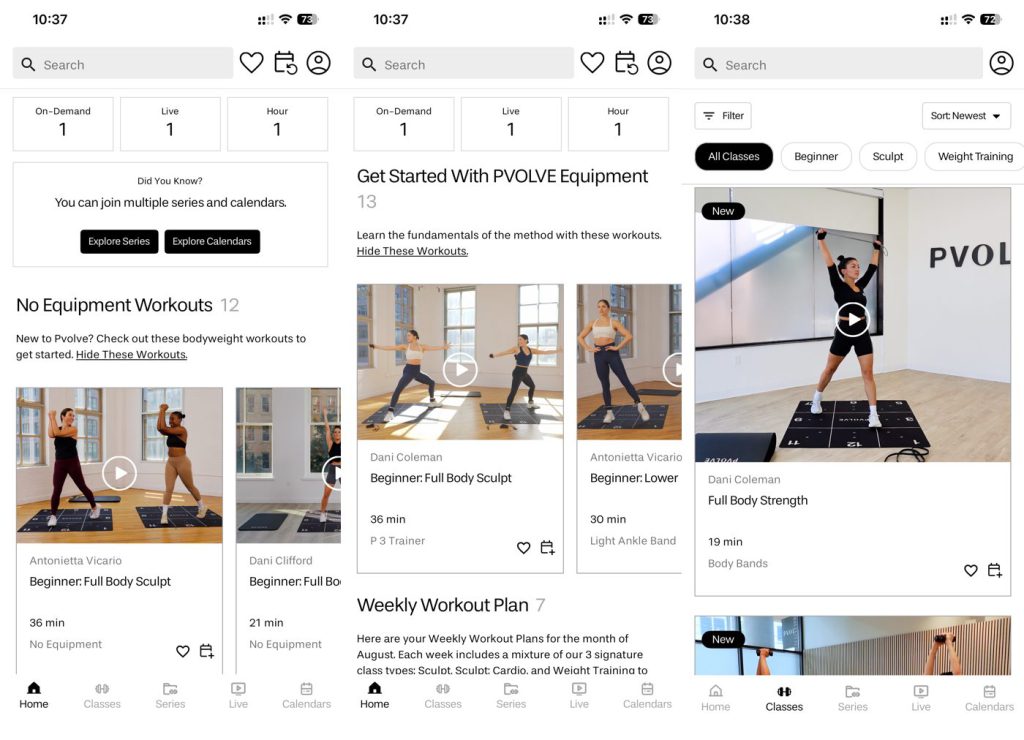
Bands and its own resistance equipment carry more of the work than dumbbells do
Pvolve is clinically studied low-impact functional training with a clinical advisory board including Dr Amy Hoover, a doctor of physical therapy, and Dr Nima Alamdari, a muscle physiologist. Resistance comes from bands, ankle weights and its own equipment rather than from loading a bar.
Tested by Katy Cole: I already had resistance bands in medium and high resistance, dumbbells from 11 to 19 lb and ankle weights, so I could start immediately. At this point in my life, in my 40s, in early perimenopause, with a previous knee injury, two kids and a full-time job, I am a lot more precise about what I actually need. Pvolve is what I landed on.
It ranks first on both counts: the highest menopause fit among band-led programmes, and by some distance the most band-dependent method here.
The honest limitation: it leans on its own branded equipment beyond ordinary bands, which adds real cost on top of the subscription, and loading stays light so the bone ceiling is low.
Cost: $24.99 a month, or $224.91 a year, about $18.74 a month. The 14-day trial asks for a card.
Start the 14-day free trialAffiliate link, opens pvolve.com. I earn a commission at no extra cost to you. Full disclosureMenovation: bands inside genuine menopause programming
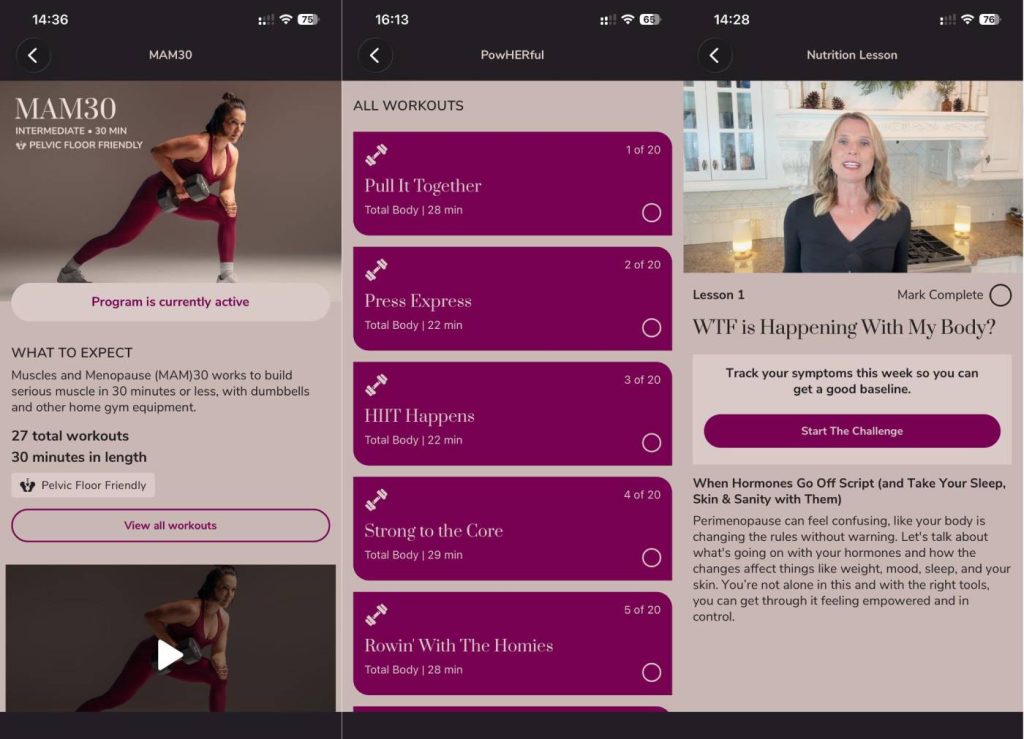
The best midlife education here, with bands alongside real dumbbell loading
Menovation is led by Ashley Nowe, a Certified Menopause Coaching Specialist, with a company-reported clinician roster including pelvic floor physical therapists.
Tested by Katy Cole, 6 to 8 weeks: The PowHERful programme delivered real results over five weeks. I moved from around 11 lb to 13 lb on upper body and 17 lb to 20 lb on lower body per hand. The roughly thirty nutrition lessons on perimenopause are some of the most complete I have found.
Set expectations on the bands: this scores highest here for menopause fit, but bands are a supporting tool rather than the method. If you own no dumbbells and want to stay band-only, Pvolve or MUTU will serve you better.
Cost: $28.99 a month, $69.99 quarterly or $199.99 a year. The trial is 8 days at the checkout, although the homepage says 7.
The Sculpt Society: light band sculpt work you will repeat
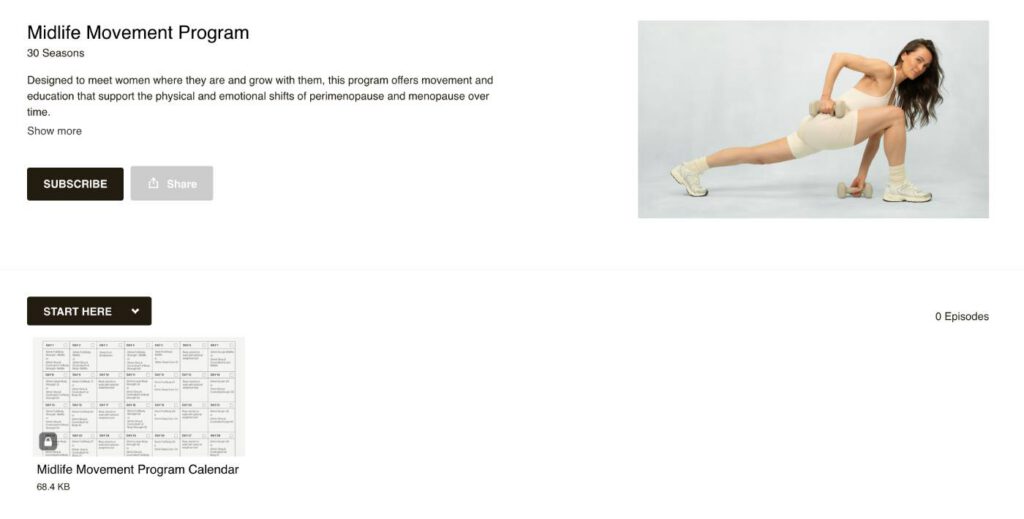
Bands and ankle weights through the sculpt sessions, in the format most likely to keep you consistent
The Sculpt Society was founded by Megan Roup and added a doctor-backed Midlife programme in 2026. The sculpt work runs on light bands and small weights, and functions at 2 lb.
Tested by Katy Cole, 4 weeks: I came to it in my 40s, recently post knee injury, with what I am fairly sure is the start of perimenopause. I did the two-minute quiz and it pointed me straight to the Midlife Movement Programme. By the end of four weeks I had moved from 17 lb to 19 lb on exercises where I started conservatively.
The honest limitation: light loading caps its strength and bone ceiling. Treat it as the consistency habit and add heavier work separately.
Cost: $24.99 a month on the web, $27.99 through Apple, with a 7-day trial.
BODi: several genuinely band-based programmes
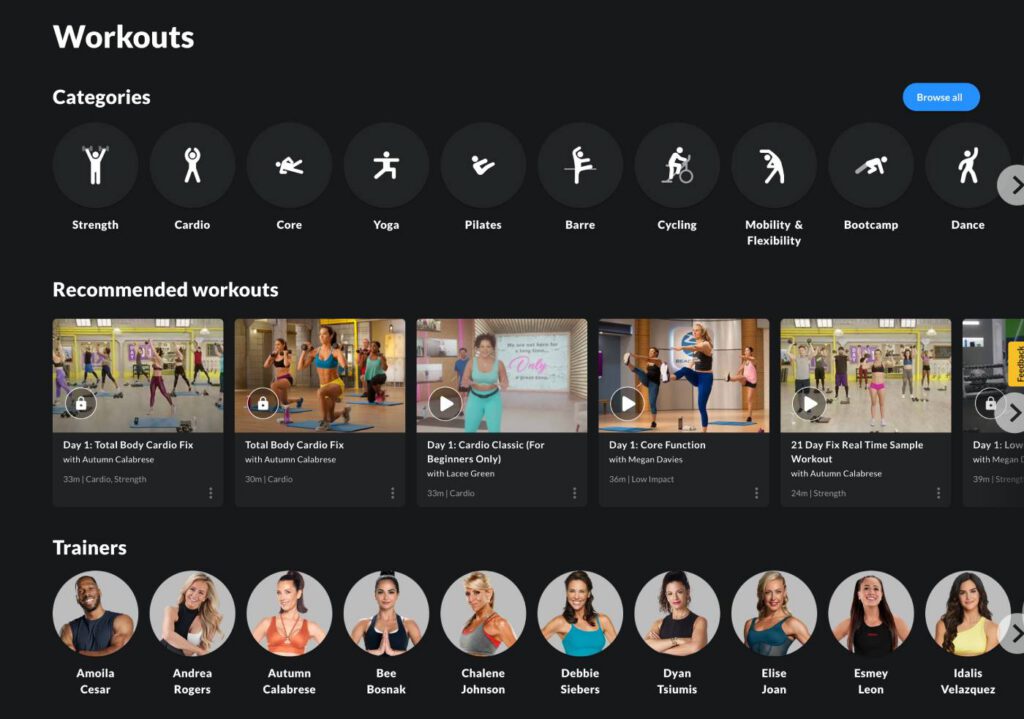
High band emphasis across the library, with bands often bundled into the kit
BODi carries several band-based programmes alongside the portion-control container system and meal plans tied to specific programmes.
Tested by Katy Cole, several months across four programmes: I completed 28 days and lost 3 lb, saw noticeably tighter arms and legs, and felt meaningfully more energy by week two. The colour-coded container nutrition system drove the majority of that result, not the exercise alone.
The caveat that matters: the mainstream library skews jump-heavy with poor joint modifications, which is the opposite of what most women over 40 need. Choose the band and low-impact programmes deliberately rather than following the default recommendations.
Cost: $22.99 a month standard, with a 7-day trial on monthly plans only.
MUTU System: bands and mat work as the whole method
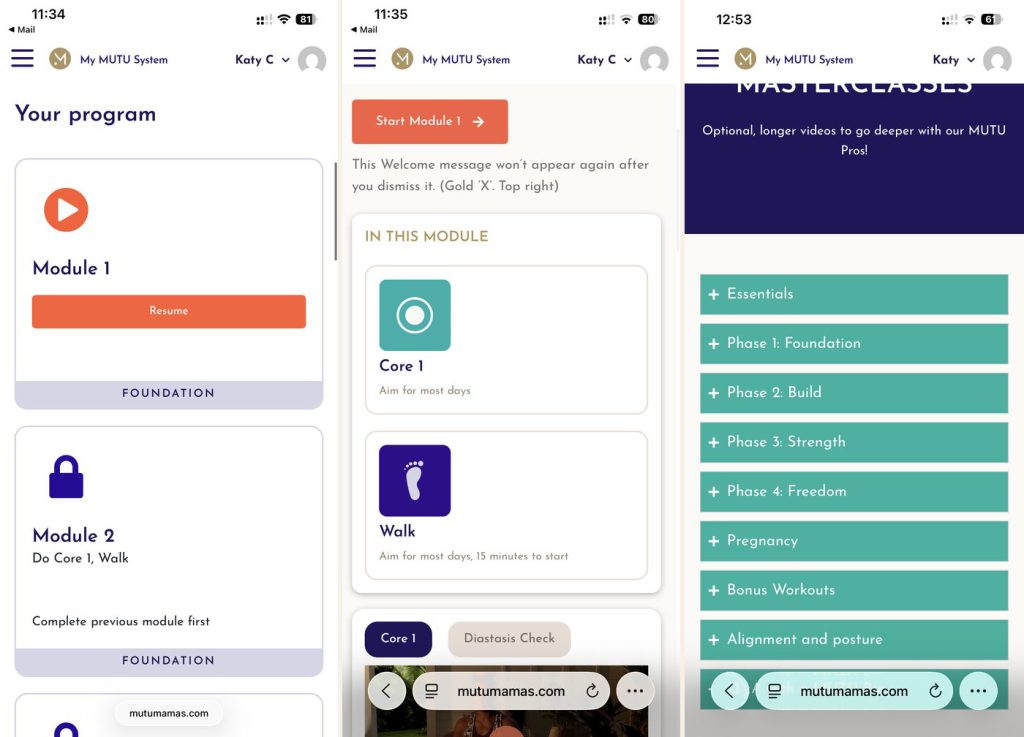
The most band-and-mat dependent programme here, aimed squarely at the pelvic floor and core
MUTU System was founded by Wendy Powell, a certified postpartum exercise specialist. She is not a clinician, and the programme is upfront about that; it was built in collaboration with women’s health professionals.
Tested by Katy Cole: I first started MUTU after my first pregnancy, ran through it again after my second, and I still use its core and pelvic floor exercises today, in perimenopause. My separation was about 3 cm wide, enough to make my belly protrude, and I noticed some leaking too. The sessions are breath-led and supported rather than hard.
The honest limitation: loading is light throughout, so it does very little for bone or maximal strength. Most women will want it alongside a strength programme, not instead of one.
Cost: roughly $28 a month, with a 10-day free trial, the longest here.
Start the 10-day free trialAffiliate link, opens mutusystem.com. I earn a commission at no extra cost to you. Full disclosureAlo Wellness Club: band and mat work across a large free library
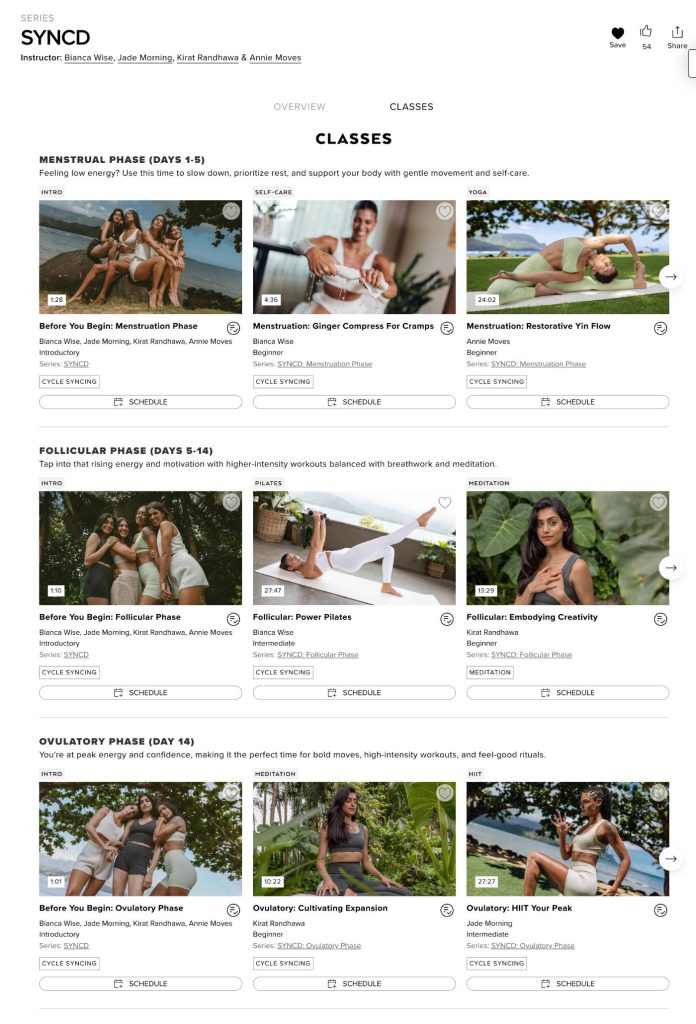
Genuinely free since late 2025, with substantive band content among everything else
Alo Wellness Club costs nothing with a free Alo Access account and carries loaded strength and band work alongside deep yoga, Pilates and restorative content.
Tested by Katy Cole: The filtering is the best thing about it. You can go, in under a minute, from “I have twenty-five minutes, a kettlebell and a dodgy knee” to a list of classes that actually match. Dumbbells, a kettlebell, a resistance band and a mat covered almost everything I did.
The honest limitation: no perimenopause programming, no progress tracking and no overload plan, so progression has to come from you. It ranks sixth on menopause fit for exactly that reason, not on band content.
Cost: free with an Alo Access account.
Which resistance band programme is right for you?
If you want bands to be the method, not an accessory, Pvolve.
If you want bands plus the best midlife education, Menovation, knowing dumbbells do the heavy work.
If leaking or abdominal separation is the actual problem, MUTU System, which has the longest trial here at 10 days.
If you want to enjoy it enough to keep going, The Sculpt Society.
If you want to spend nothing, Alo Wellness Club.
And buy the heavy set as well as the light one. Many women outgrow a light band for glute work within a few weeks, and that is usually the point at which people decide bands “do not work”.
How did we choose these six?
The qualifier is genuine band content, not a tag. Nineteen programmes list resistance bands as equipment, but listing is not using. We checked how much each programme’s own review actually discusses band work, and against how much it discusses dumbbells, and kept only those where band work is substantive and not dwarfed by loaded work. Six qualify.
That test removed two programmes we rate highly elsewhere. Flipping 50 and Owning Your Menopause both carry the bands tag, and both mention bands a handful of times against dozens of dumbbell references. Including them would have made this a general strength list with “bands” in the title.
The ranking is menopause fit, weighted 70%, blended with ease of use at 30%. Band use is the qualifier, so ranking on it again would restate the gate. Menopause fit and ease of use are close to independent, correlating at r = 0.24.
All six I have used and tested myself, which is unusual for a list this size.
We buy our own subscriptions. Some links on this page earn a commission, which never affects a score or a position.
What research is this page based on?
- Lopes JSS, Machado AF, Micheletti JK, et al. Effects of training with elastic resistance versus conventional resistance on muscular strength: a systematic review and meta-analysis. SAGE Open Medicine, 2019.
- Schoenfeld BJ, Grgic J, Ogborn D, Krieger JW. Strength and Hypertrophy Adaptations Between Low- vs. High-Load Resistance Training. Journal of Strength and Conditioning Research, 2017.
- Greendale GA, Sternfeld B, Huang M, et al. Changes in body composition and weight during the menopause transition. JCI Insight, 2019.
- Ramos-Campo DJ, Andreu-Caravaca L, Carrasco-Poyatos M, et al. Effects of Circuit Resistance Training on Body Composition, Strength, and Cardiorespiratory Fitness in Middle-Aged and Older Women. Journal of Aging and Physical Activity, 2022.
- Martyn-St James M, Carroll S. A meta-analysis of impact exercise on postmenopausal bone loss: the case for mixed loading exercise programmes. British Journal of Sports Medicine, 2009.
Nothing on this page is medical advice. If you have a diagnosed joint condition or injury, check with your doctor or a physiotherapist before starting.
Frequently asked questions about resistance band workouts
Yes. In a systematic review and meta-analysis of eight studies, Lopes and colleagues found in SAGE Open Medicine in 2019 that elastic resistance produced similar strength gains to conventional weights and machines, with no superiority for either method in upper or lower limb strength. What matters is that the last two reps are genuinely hard.
Six movements, two or three rounds, about twenty minutes: banded squat, standing row, glute bridge, overhead press, lateral band walk and Pallof press. Two or three times a week. The full session with sets, reps and which band to use is set out above, and none of it requires floor work if your knees prefer standing.
Two sets. A light-to-medium fabric set for upper body and warm-ups, and a heavy set for glutes and squats. Fabric loops beat latex for lower body because they do not roll or pinch, which is the most common reason people give up on bands. Expect to pay $15 to $25 per set.
Bands do not increase in 2 lb steps, so you progress differently: move to a heavier band, shorten the band to increase tension, slow the lowering phase to about three seconds, or add a round. Change one variable at a time. If all three rounds feel comfortable, it is time for the heavier band.
Less than loaded impact work, and this is their real limitation. Bone responds to compressive loading, and a band provides tension rather than load through the skeleton. Martyn-St James and Carroll found in the British Journal of Sports Medicine in 2009 that programmes combining impact with high-magnitude resistance work reduced postmenopausal bone loss. Treat bands as a starting point and discuss adding loading with your doctor.
Many women with sore knees find bands easier to tolerate, though this depends on the cause. Band tension loads the muscle without adding body weight or external load through the joint, and most band work can be done standing, so you avoid the kneeling and floor transitions that often aggravate knees. Pvolve is the programme here built most deliberately around that, with a doctor of physical therapy on its clinical advisory board. If knee pain is new, worsening or stops you walking normally, see a doctor or physiotherapist before choosing a programme.
Two or three sessions a week for strength work, with at least a day between sessions for the same muscle groups. Because bands are gentle on joints you can do more frequent light work if you want to, but the strength benefit comes from hard sets rather than from frequency alone.
Where should you read next?
- Our full Pvolve review, including what the branded equipment actually costs.
- Dumbbell workouts for women over 40, for the loading bands cannot provide.
- Best low impact workouts, if joints are the main concern.
- How we score, including how the menopause fit score is built.