


Best Exercise for Menopause Belly

By Katy ColePublished June 11, 2026Updated June 14, 2026
What's Included 6 programmes tested and ranked — exercise for menopause bellyBest For Women over 40 comparing exercise for menopause bellyTime Required 20–45 min per session depending on platformEquipment Ranges from no equipment to dumbbells and optional home-gym kit

Quick Answer – tested by a woman in perimenopause

The best exercise for menopause belly is progressive resistance training combined with low-impact cardio and pelvic floor or deep core work, delivered through a platform that actually understands perimenopausal physiology. Spot-targeting the belly with crunches does not shift visceral fat. Building lean muscle through progressive load, supported by sustained cardiovascular activity and core stability work, is the combination that moves the needle at this life stage.

The six menopause-specific or menopause-aware programmes that scored highest in our 2026 testing for menopause-belly outcomes: Pvolve (8.6) for its clinically curated Menopause Strong programme led by OB/GYN Dr Jessica Shepherd and its dedicated pelvic floor series; Menovation (7.9) as the most perimenopause-specific platform tested, with PowHERful delivering 2.5kg loss and visible upper-body tone in five weeks of Katy testing.

BODi Belle Vitale (8.1) for Autumn Calabrese’s menopause-specific strength and conditioning programme, validated by clinical pharmacist James LaValle, paired with the Portion Fix container nutrition system. The Sculpt Society (8.6) for the dedicated Midlife Movement programme by Megan Roup. Owning Your Menopause (7.6) for UK-priced menopause-specific programming with GP access and a community layer. Burn360 (8.3) took my waist from 68cm to 64cm across three rounds of the 21-Day Metabolic Reset.

Reviewed by: Katy Cole, mid-40s, currently in perimenopause, with a meniscus injury history. I am not a personal trainer, doctor or menopause specialist. The menopause belly is something I have been actively working on since my mid-40s, when I noticed the redistribution most women in perimenopause describe. Every programme on this list has been personally tested. Pricing verified May 2026. Updated May 2026.

6 online fitness programs best for exercise for menopause belly

1
Pvolve Review

Pvolve Review

Pvolve earns 8.6/10 as the most perimenopause-aware fitness streaming platform tested. Low-impact functional training with clinical backing, flexible 5–60 min class lengths, and the best…

🌱 🌿 🌙
Dumbbells Low impact 16–25 min App & Web From $19.99/month
8.6 Read Review →
2
Menovation Review

Menovation Review

Menovation is one the most perimenopause and menopause specific fitness platform I have tested. The educational content, nutrition lessons, and expert health tips are exceptional.…

🌱 🌿 🌙
Full gym Moderate impact 20–30 min App
7.9 Read Review →
3
BODi (Beachbody On Demand)

BODi (Beachbody On Demand)

BODi delivers excellent value at $179/year with 140+ structured programmes and included nutrition guidance. The calendar-based approach eliminates daily decision fatigue. However, popular programmes are…

🌱 🌿 🌙
Dumbbells Moderate impact 20–45 min App From $19/month
8.1 Read Review →
4
The Sculpt Society Review

The Sculpt Society Review

The Sculpt Society earns 8.6/10 as the only platform reviewed with a dedicated medically-backed programme for perimenopausal and menopausal women. 4-week Midlife Movement Programme, doctor-led…

🌱 🌿 🌙
Optional equipment Low impact 15–30 min App & Web From $24.99/month
8.6 Read Review →
5
Owning Your Menopause (OYM)

Owning Your Menopause (OYM)

The most comprehensive menopause education and wellness platform tested, with effective workouts held back by basic video production. Best-in-class GP access, community, and nutrition resources.

🌱 🌿 🌙
Dumbbells Moderate impact 20–30 min App & Web From $16.99/month
7.6 Read Review →
6
Burn360 Review

Burn360 Review

Burn360 earns 8.3/10 as the most time-efficient home fitness programme tested and the best entry point for women new to dumbbell training. $39.95 one-time with…

🌱 🌿 🌙
Full gym Moderate impact 20–25 min Web From $29.95/month
8.3 Read Review →

What causes menopause belly?

Menopause belly is the redistribution of body fat toward the abdomen that happens as oestrogen falls in perimenopause and menopause. The total amount of fat does not necessarily increase. The pattern of where it sits does.

Before perimenopause, oestrogen drives fat storage toward the hips and thighs. As oestrogen drops, the testosterone-to-oestradiol ratio shifts, which pushes fat storage toward visceral (deep abdominal) tissue. Stuenkel 2019 in Endocrinology and Metabolism Clinics documents the mechanism in detail, and Janssen et al. (2000) showed how visceral fat specifically increases with menopause transition independent of total body weight. The lived experience matches the literature: waistbands feel tighter, body composition photographs change, the abdominal area gains volume in a way that resists conventional approaches.

Three things drive this beyond hormones alone. Lean muscle mass falls faster after the menopause transition (the Cruz-Jentoft sarcopenia consensus identifies progressive resistance training as the documented intervention for skeletal muscle preservation in midlife). Sleep quality often deteriorates, which raises cortisol and contributes to insulin resistance and central fat storage. And recovery between sessions slows, so the same training that worked at 30 becomes harder to sustain at 45.

According to Dr Mary Claire Haver, a board-certified gynaecologist and author of The New Menopause, the menopause belly response is a hormonal redistribution problem dressed up as a fat-gain problem. The intervention has to match the cause. Spot-targeting with crunches does not.

How does menopause belly differ from other belly fat?

Menopause belly is primarily visceral fat, which sits deep around the organs and responds to hormonal and metabolic interventions rather than to abdominal-targeted exercise. Subcutaneous fat (the soft layer just under the skin) responds to general energy balance. Visceral fat responds to sleep, stress, strength training and sustained cardiovascular work.

The distinction matters because the visible problem (a softer, fuller abdomen) makes women reach for the wrong intervention. Crunches and ab work strengthen the abdominal muscles but do nothing to mobilise the visceral fat that creates the visual change.

The published research on resistance training in postmenopausal women has consistently shown reductions in visceral adipose tissue from structured strength programmes lasting 12 weeks or more. A 2023 systematic review and meta-analysis in PubMed Central confirmed exercise training effectively decreases fat mass, body fat percentage, waist circumference and visceral fat in postmenopausal women. A separate 2023 trial in resistance training showed that women compliant with a 15-week resistance training intervention had significantly greater reduction in visceral adipose tissue compared to controls. Resistance training is doing the work that crunches cannot.

What exercise actually works for menopause belly?

Three categories of exercise drive measurable change in menopause-belly outcomes: progressive resistance training, sustained low-impact cardio, and core-stability work that includes pelvic floor activation.

Progressive resistance training is the primary driver. The mechanism is straightforward. Strength training builds and maintains the lean muscle mass that supports basal metabolic rate. More lean muscle means more daily energy expenditure, which contributes to the energy deficit needed to shift visceral fat. The LIFTMOR trial (Watson et al. 2018) demonstrated bone density gains in postmenopausal women from heavy resistance training, and the same protocol drives lean mass and body-composition change. Schoenfeld 2017 confirmed that low-load and high-load protocols produce comparable hypertrophy when volume is matched, so the loading does not have to be brutal to work.

Protein intake matters alongside the training. Burd et al. (2012) showed that protein dosing per meal supports the muscle protein synthesis response that translates training into adaptation. The American College of Sports Medicine recommends 2-3 resistance sessions per week, with 8-12 reps at 67-85% of one-rep maximum, for hypertrophy and strength in adults. Mary Claire Haver recommends approximately 1g of protein per pound of bodyweight for women in midlife.

Sustained low-impact cardio creates the energy deficit. Walking, cycling and rowing at zone 2-3 effort, accumulated to 150-250 minutes per week, supports the modest caloric deficit that mobilises fat without spiking cortisol. The WHO physical activity guidelines recommend 150 minutes of moderate-intensity aerobic activity per week as the baseline.

High-intensity interval training shows good visceral fat reduction in research, but it is a worse trade for many women in perimenopause because the cortisol cost is real. Hackney 2006 documented how exercise stress interacts with the hypothalamic-pituitary-adrenal axis; when sleep and recovery are already stressed, HIIT can work against you despite the visceral fat headline. Nedeltcheva 2010 showed that sleep restriction during caloric deficit shifts weight loss away from fat toward lean mass, which is the opposite of what you want for menopause-belly outcomes. If your sleep is unstable, see our guide to low-cortisol workouts for perimenopause before piling on intervals.

Core stability and pelvic floor work matter more than ab exercises. A weak pelvic floor and disengaged transverse abdominis create the appearance of a softer belly even when visceral fat is unchanged. Pilates-influenced training, including the kind delivered by Pvolve and The Sculpt Society, addresses this directly. Mat sit-ups do not.

Which programmes scored highest for menopause belly in our 2026 testing?

Pvolve scored highest overall (8.6) for its combination of clinically curated Menopause Strong programme, dedicated pelvic floor series and functional core work. Menovation (7.9) sits second as the most perimenopause-specific platform tested end-to-end, with measurable Katy testing results on the PowHERful strength programme. BODi Belle Vitale (8.1) is third for its dedicated menopause programme by Autumn Calabrese, validated by clinical pharmacist James LaValle, paired with the Portion Fix container nutrition system. The Sculpt Society (8.6) carries the Midlife Movement programme by Megan Roup. Owning Your Menopause (7.6) is the UK-priced menopause-specific pick with GP access. Burn360 (8.3) closes the list with the most directly measurable waist result from our testing.

Programme Score Menopause-specific feature Documented result (testing) Price / month Trial
Pvolve 8.6 Menopause Strong (Dr Jessica Shepherd OB/GYN), pelvic floor series 5kg to 8.5kg weight progression in 2 months, improved hip stability $24.99/mo 14 days
Menovation 7.9 Most perimenopause-specific platform tested; PowHERful strength + 30 nutrition lessons 64kg to 61.5kg in 5 weeks, visible upper-body tone, weights progressed $28.99/mo 8 days
BODi Belle Vitale 8.1 Belle Vitale by Autumn Calabrese (validated by James LaValle) + Portion Fix nutrition Visible body composition shift, nutrition adherence simpler than calorie counting ~$15/mo annual 14 days
The Sculpt Society 8.6 Midlife Movement programme by Megan Roup Lean-mass focused dance-Pilates, core engagement gains $24.99/mo 7 days
Owning Your Menopause 7.6 UK-priced menopause-specific platform with GP access and community Symptom education plus structured strength, mobility and conditioning £16.99/mo 14 days
Burn360 8.3 21-Day Metabolic Reset; compound dumbbell loading Waist 68cm to 64cm across three rounds $39.95 one-time 90-day guarantee

Scores pulled live via shortcodes. Pricing verified May 2026. Discuss any new training programme with your doctor or physiotherapist before starting, particularly if you have a joint history, pelvic floor concerns, or are managing perimenopause symptoms with HRT.

How do the best programmes for menopause belly compare?

1. Pvolve – Score: 8.6

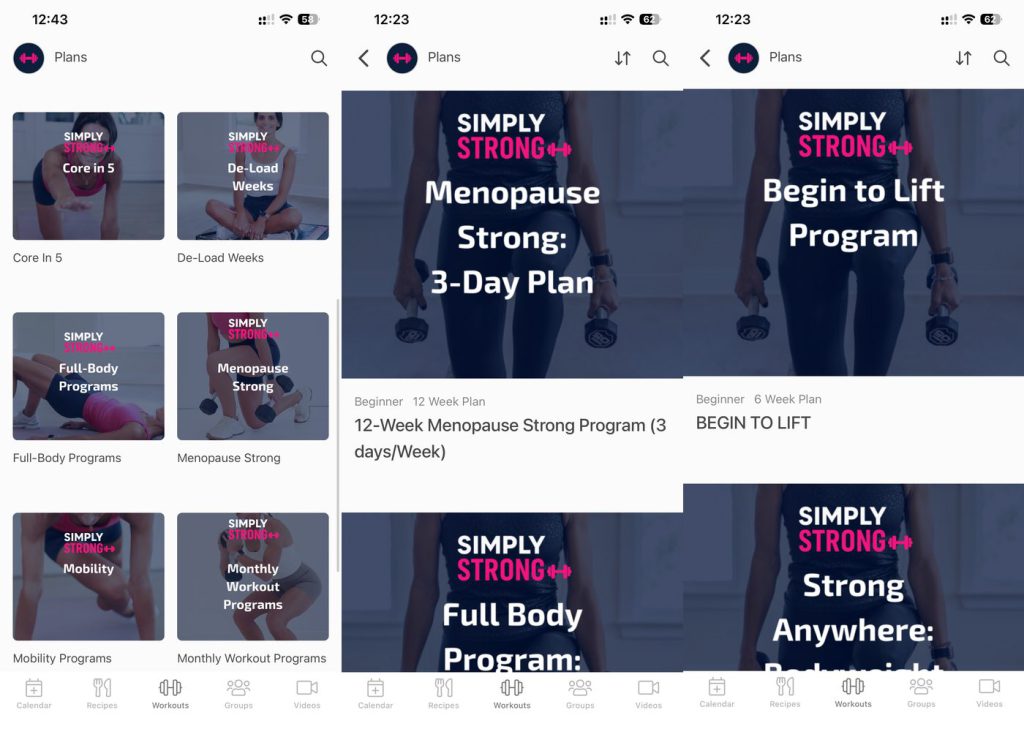
Pvolve series library showing Menopause Strong, Knee Stability and Progressive Weight Training programmes — Exercise for Menopause Belly

The most clinically curated perimenopause-aware fitness streaming platform tested. Menopause Strong programme, dedicated pelvic floor series, functional core work and band-based resistance all sit in one $24.99/month subscription.

Pvolve is the only platform on this list with a University of Exeter clinical study specifically in women aged 40-60. The clinical advisory board is led by OB/GYN Dr Jessica Shepherd, with Dr Amy Hoover (physiotherapy) and Dr Gabrielle Lyon (muscle-centric medicine) on the panel. The method combines band-based resistance with proprietary tools to drive muscular adaptation while sparing the joints.

8.5Time Efficiency
7.5Muscle Potential
10.0Women Over 40 Specificity
9.0Joint Friendliness
9.0Recovery Compatibility
8.5Programme Structure
8.0Value for Money
8.5UX and Design
7.5Nutrition Integration

This score reflects Pvolve’s position as the most clinically curated perimenopause platform on the list, with the only programme designed specifically for menopause-stage women and validated through a university clinical study.

Menopause Strong is a six-week structured programme combining strength, mobility, stretching and pelvic floor exercises. It is co-presented by a trainer and a specialist doctor who explains what is happening in your body during perimenopause and menopause as the programme progresses. That clinical layer is the single biggest differentiator across the entire menopause-fitness category.

The pelvic floor series matters specifically for menopause-belly appearance. A weak pelvic floor and disengaged transverse abdominis create the appearance of a softer abdomen even when visceral fat is unchanged. Pvolve treats pelvic floor work as a core training priority, not as an afterthought.

Verdict: I tested Pvolve over two months of daily 20-minute sessions, using resistance bands and dumbbells I already owned. I started weight work at 5kg upper body and 6.5kg lower body. I am now at 6.5kg upper and 8.5kg lower. That is a genuine progression across two months of 20-minute sessions, which is more than I expected.

I assumed Pvolve would be too gentle. It is harder than it looks. The pelvic floor work specifically is the kind of training that is easy to deprioritise because it does not feel dramatic, but I noticed a real difference in stability and core connection after two weeks.

My arms and core look more defined. My legs carry fat in a way that makes visible muscle hard to see, but I feel stronger in them. For the menopause-belly angle specifically, the combination of Menopause Strong, pelvic floor work and functional core training is more comprehensive than anything else I have tested.

Highest-scoring for: Women in perimenopause or menopause who want a programme that has explicitly thought about their physiology. Women with a joint history who cannot tolerate high-impact training. Women whose menopause-belly experience also includes pelvic floor concerns.

Cost: $24.99/month streaming or $224.91/year. Proprietary tool bundle one-off around $150-200. 14-day free trial.

Pvolve review

Trade-off: The proprietary equipment bundle is a real one-off cost. Pvolve’s strength ceiling is lower than progressive dumbbell programming. If your stated goal is heavy hypertrophy and bone density, pair Pvolve with one heavier strength day per week.


2. Menovation – Score: 7.9

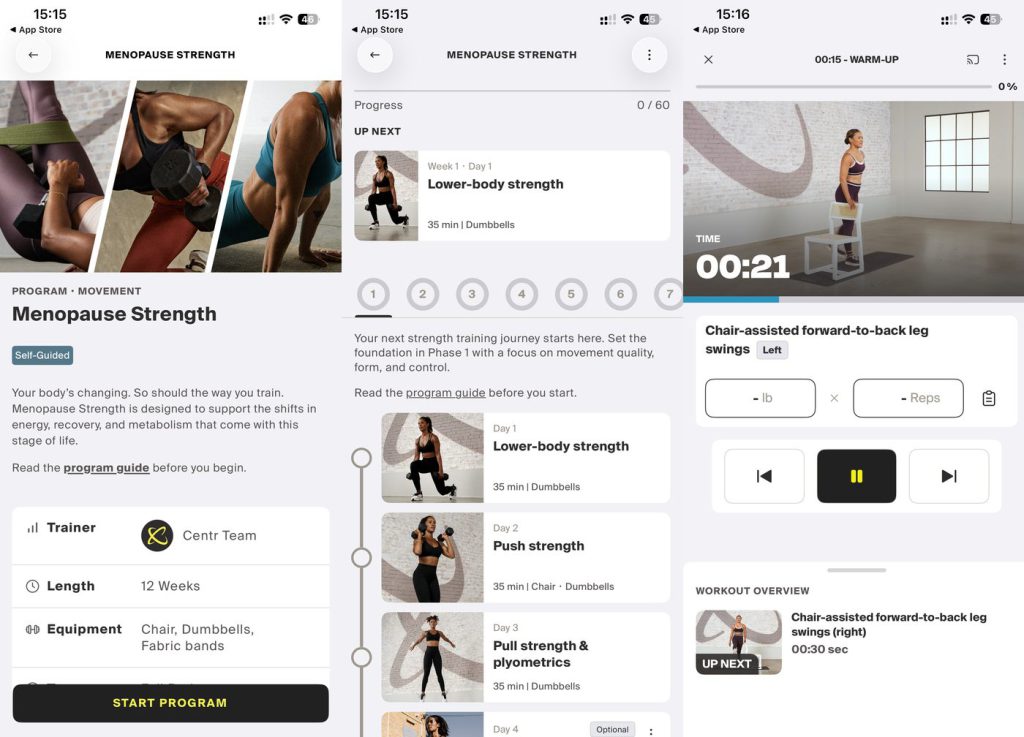
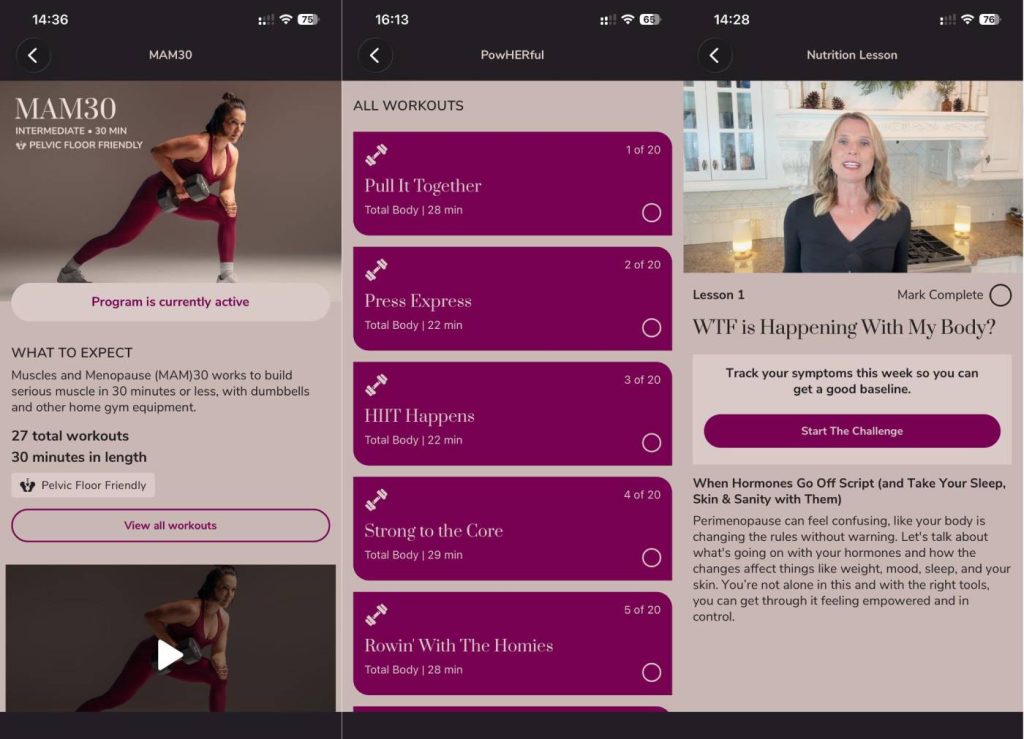
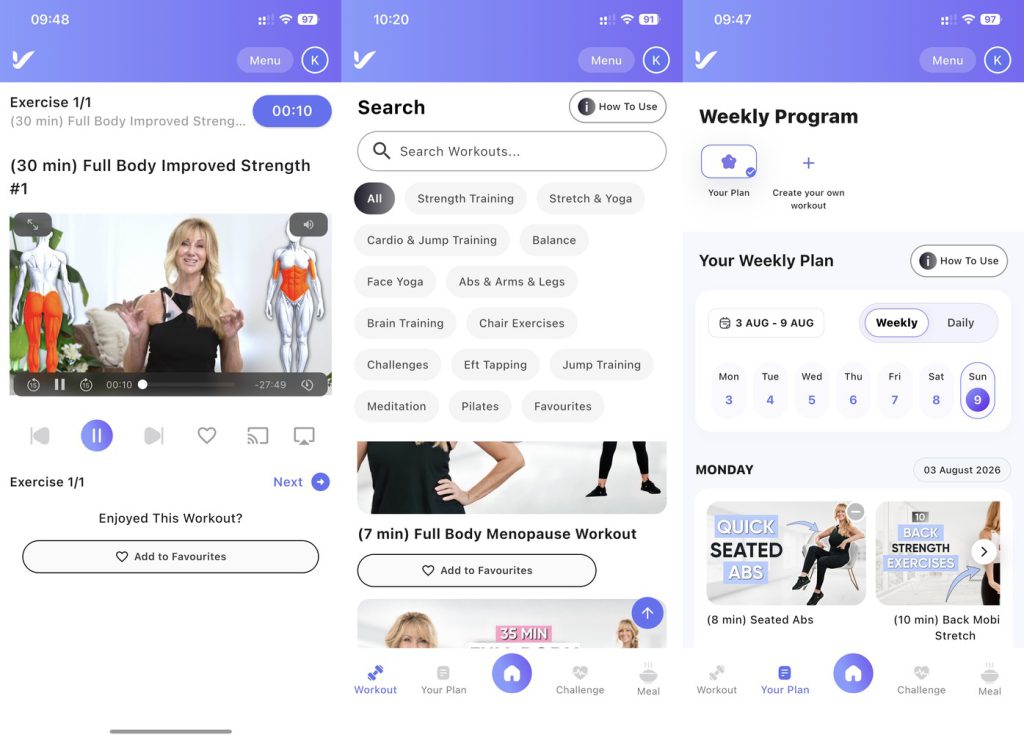
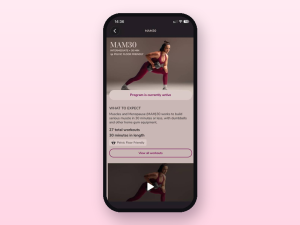
Screenshots from the Menovation app showcasing workouts structure and format — Exercise for Menopause Belly

The most perimenopause and menopause-specific fitness platform I have tested. Menovation runs $28.99/month, $69.99/quarter or $199.99/year with an 8-day free trial. The library covers strength (PowHERful, MAM30), barre, mobility and recovery, alongside expert-led health education covering hormones, mental health, intimacy and pelvic health. Approximately 30 nutrition lessons specifically address perimenopause physiology, and 87+ expert health tips cover the broader menopause picture.

For women who want a platform built end-to-end around perimenopausal physiology rather than a general fitness app with menopause content bolted on, Menovation is the most coherent option tested.

8.0Time Efficiency
8.0Muscle Potential
9.5Women Over 40 Specificity
8.0Joint Friendliness
8.0Recovery Compatibility
7.5Programme Structure
6.5Value for Money
6.5UX and Design
8.0Nutrition Integration

This score reflects Menovation’s position as the most menopause-specific fitness platform tested, with measurable Katy testing results on PowHERful and one of the most complete nutrition libraries on perimenopause I have found anywhere.

PowHERful is a five-week structured strength programme led by Kaitlin Heaney. The progression is deliberate, the cueing is clear, and the structure made my own progress measurable across the testing window. MAM30 covers shorter format sessions for days when energy or time are tight. The Barre track sits alongside as a lower-intensity option for recovery weeks. Cycle and symptom tracking is built into the app so the training context follows the user across the month.

The nutrition side is where Menovation goes beyond what most fitness platforms attempt. The ~30 lessons cover perimenopause-specific protein needs, blood sugar management, alcohol and sleep interactions, and the macro choices that support body composition at this life stage. The expert-led health education covers hormones, mental health, intimacy and pelvic health in formats that respect a user’s time. Every workout, every lesson and every recipe is framed through the lens of what your body is going through right now.

Verdict: I tested Menovation for six to eight weeks, including a full run-through of the PowHERful five-week strength programme. Over the five weeks of PowHERful I dropped from 64kg to 61.5kg with no calorie counting and no elimination diet. My weights progressed from 5kg to 6kg on upper-body movements and from 7.5kg to 9kg on lower-body movements per hand. Visible muscle tone improvement showed up first across my upper body, which is where I find improvements easiest to see.

The 30-or-so nutrition lessons on perimenopause are some of the most complete, practical pieces of information I have found on this topic, including across the books and podcasts I follow. The expert-led education on hormones, mental health, intimacy and pelvic health adds the dimension most fitness platforms quietly skip.

The honest caveats: the iOS app experience is meaningfully better than the web app, so iPhone users will get the best of the platform. The library is still growing; Menovation only launched in September 2025, which means the back catalogue is smaller than older platforms. For the menopause-belly angle specifically, the combination of measurable PowHERful results, perimenopause-specific nutrition curation and expert health education makes this one of the strongest end-to-end picks tested.

Highest-scoring for: Women in perimenopause or menopause who want an end-to-end platform built around their physiology rather than a general fitness app with menopause content bolted on. Women who want measurable strength progression with a structured five-week programme. Women who care about nutrition education specifically applied to perimenopause.

Cost: $28.99/month, $69.99/quarter or $199.99/year. 8-day free trial.

Menovation review

Trade-off: iOS app preferred; the web experience is more limited. The library is still growing since the September 2025 launch, so users wanting the back-catalogue depth of established platforms will find the range smaller. No clinical advisory board on the Pvolve scale, though the expert health education is substantive.


3. BODi Belle Vitale + Portion Fix – Score: 8.1

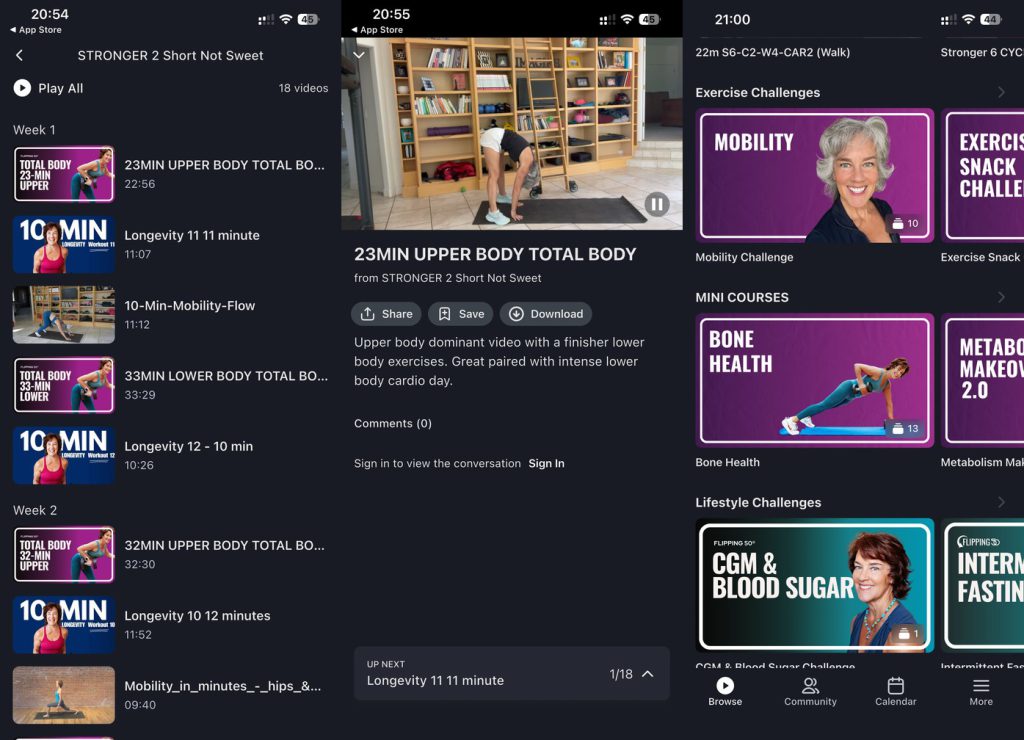
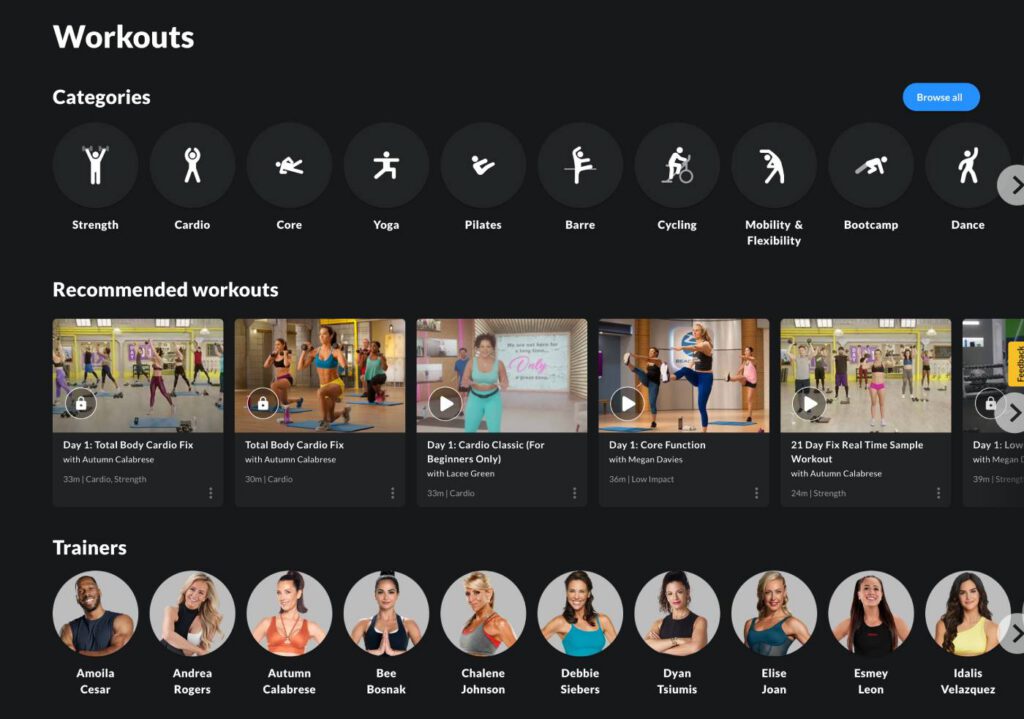
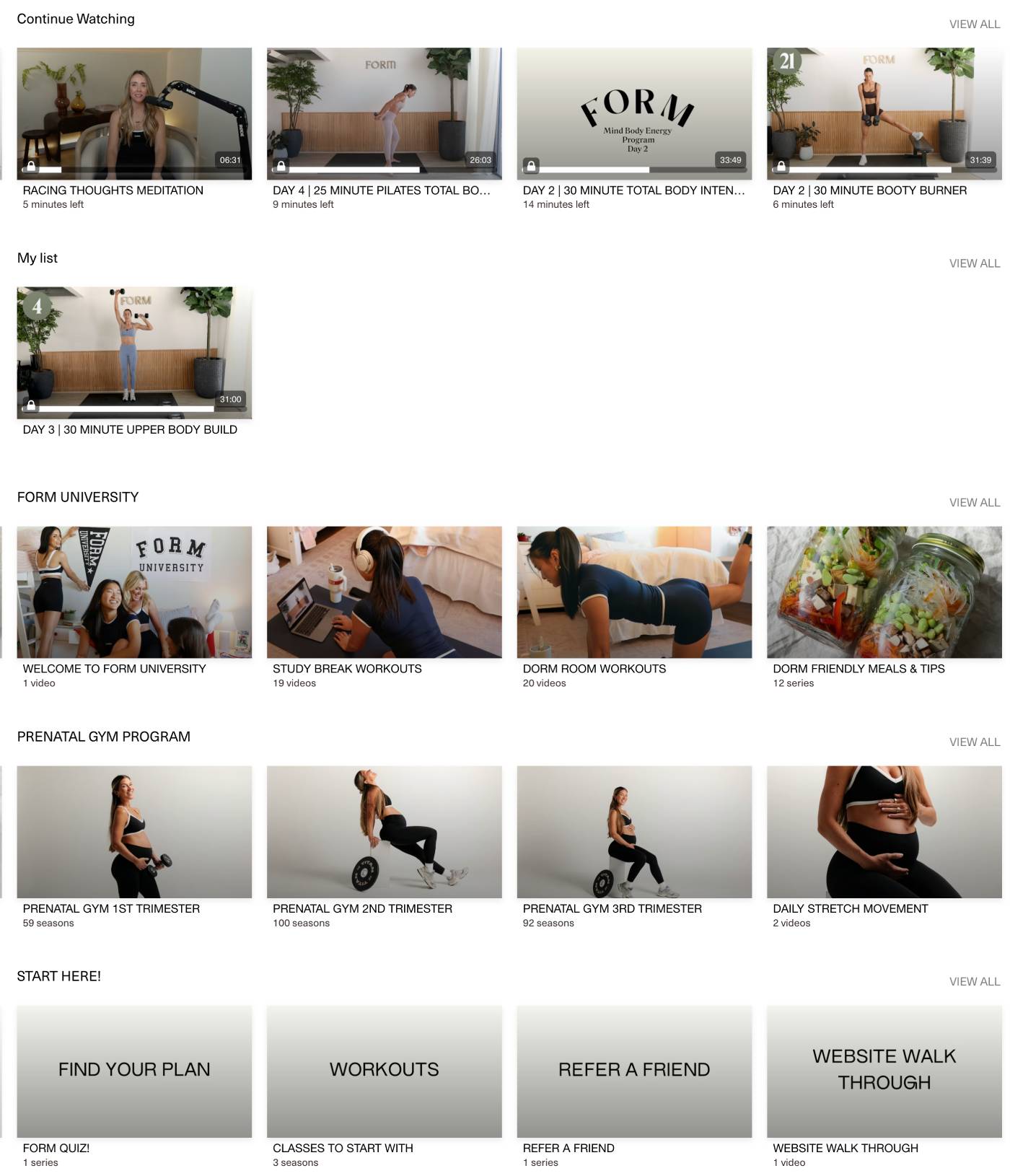
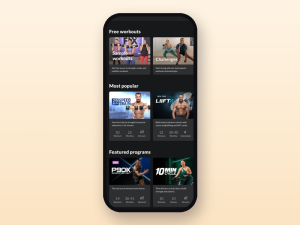
BODi app workout library showing Strength, Cardio, Pilates, Yoga, Barre and Mobility categories — personally tested by Her Daily Fit March 2026 — Exercise for Menopause Belly

BODi’s Belle Vitale is Autumn Calabrese’s dedicated menopause programme, validated by clinical pharmacist James LaValle. It runs alongside the Portion Fix container-based nutrition system, which addresses the nutrition side of menopause-belly outcomes more practically than any other platform tested. The BODi annual subscription works out at roughly $15/month and includes the full library of programmes (Belle Vitale, 4 Weeks for Every Body, 645, LIIFT4, and the back catalogue) plus the Portion Fix programme.

For women whose menopause-belly question is as much about nutrition adherence as it is about training, the Belle Vitale plus Portion Fix combination is the most pragmatic pairing on this list.

8.5Time Efficiency
8.5Muscle Potential
8.0Women Over 40 Specificity
5.5Joint Friendliness
8.5Recovery Compatibility
8.5Programme Structure
8.5Value for Money
8.5UX and Design
9.0Nutrition Integration

This score reflects BODi’s position as the strongest nutrition-integrated platform with a dedicated menopause programme. The Belle Vitale plus Portion Fix pairing is the most practical training-plus-nutrition combination tested for menopause-belly outcomes.

Belle Vitale is structured as three weeks of progressive resistance training, mobility and conditioning, designed to fit around the energy fluctuations of perimenopause. Sessions are short, the coaching cues from Autumn Calabrese are clear, and the programme is deliberately less aggressive than the older Beachbody flagships (Insanity, P90X) that the brand was built on. James LaValle’s involvement provides clinical validation around the choices the programme makes about loading, recovery and nutrition timing.

Portion Fix is where BODi differentiates from the rest of the list. The container system replaces calorie counting with a colour-coded portion framework: protein in red, vegetables in green, carbohydrates in yellow, fats in blue. For women who have spent years calorie counting and want a method that actually sticks, the container framework is the most adherence-friendly nutrition approach I have tested. The integration into the platform (recipes, weekly meal plans, shopping lists) reduces decision fatigue further.

Verdict: I tested BODi across multiple programmes (Belle Vitale, 4 Weeks for Every Body, 645) and the Portion Fix nutrition system. The platform’s strongest feature for the menopause-belly question is the nutrition integration. Belle Vitale on its own is a solid, well-structured strength and conditioning programme; it is not the most cutting-edge resistance training on the market, but it is competent and clinically informed.

What sets BODi apart is the Portion Fix container system running alongside the training. Container counting is genuinely easier to stick with than calorie counting, and the recipes integrated into the platform are realistic for a woman managing a household and a job. I am sceptical of fitness platforms that promise transformation, but the combination of Belle Vitale and Portion Fix is one of the few that addresses the nutrition lever as seriously as the training lever.

The honest caveats: BODi’s multi-level marketing legacy still shows up in some of the marketing language; if that puts you off, look elsewhere. Production polish on older library content is mixed (some 2010s programmes feel dated). The annual subscription is the right tier; monthly billing is poor value by comparison. For the menopause-belly question specifically, Belle Vitale plus Portion Fix delivers the most complete training-plus-nutrition coverage at the budget tier.

Highest-scoring for: Women whose menopause-belly question includes a meaningful nutrition adherence problem. Women who have tried calorie counting and want a more sustainable framework. Women who want a dedicated menopause programme with clinical validation at a budget annual price.

Cost: ~$179/year (works out at ~$15/month). 14-day free trial. Includes Belle Vitale, Portion Fix, and the full BODi programme library.

BODi review

Trade-off: Multi-level marketing legacy still visible in some brand language. Production polish on older library content is uneven. Belle Vitale itself is competent rather than cutting-edge; the value lives in the Belle Vitale plus Portion Fix combination, not Belle Vitale alone.


4. The Sculpt Society – Score: 8.6

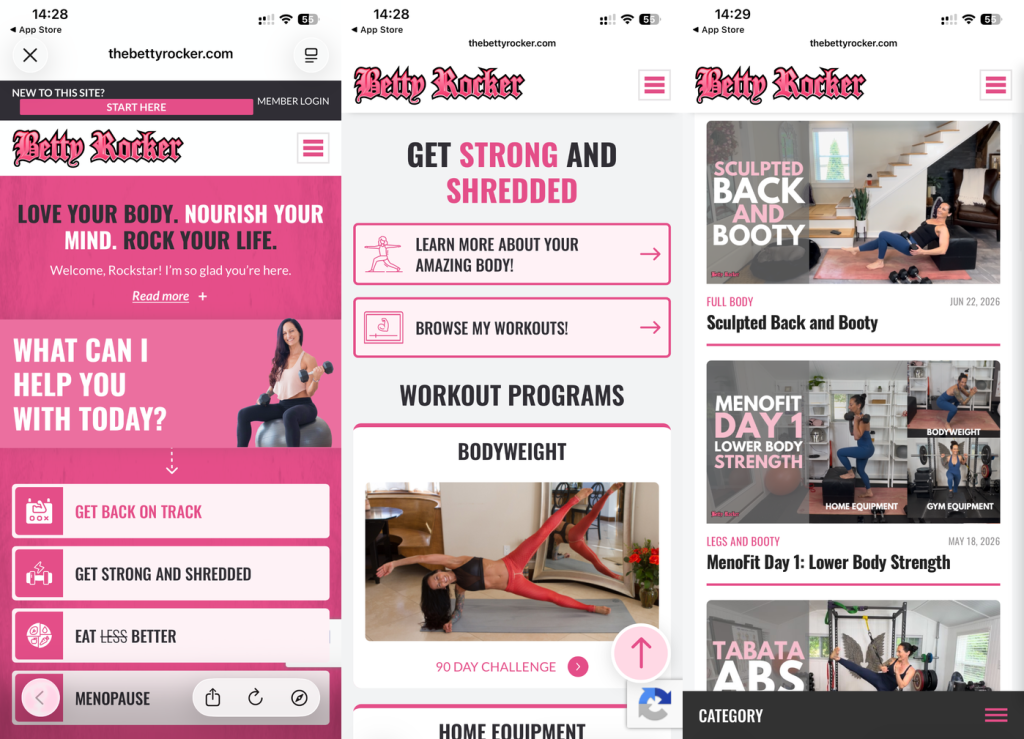
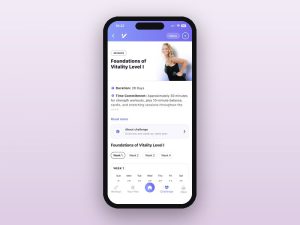
The Sculpt Society Midlife Movement Programme screen showing week-by-week structure for perimenopausal and menopausal women — Exercise for Menopause Belly

The Sculpt Society is built by Megan Roup, a former Broadway dancer, and combines dance cardio with sculpt-style resistance work using light to moderate weights. The platform added a dedicated Midlife Movement programme that targets women navigating perimenopause and menopause specifically, focused on lean mass, joint health and the kind of core engagement that addresses the appearance of menopause belly.

For women who want a menopause-aware programme inside a design-led, dance-influenced platform that does not feel clinical, this is the strongest pick on the list.

8.5Time Efficiency
7.0Muscle Potential
9.5Women Over 40 Specificity
9.0Joint Friendliness
9.0Recovery Compatibility
9.0Programme Structure
8.5Value for Money
8.5UX and Design
8.0Nutrition Integration

This score reflects The Sculpt Society’s position as the strongest design-led platform with a dedicated midlife programme. Production quality and instructor warmth are the standout features; the resistance ceiling is lower than progressive dumbbell programming.

The Sculpt Society’s training method combines dance cardio, sculpt sessions (using light dumbbells, sliders and ankle weights) and Pilates-influenced mat work. Sessions run 10-40 minutes. The Midlife Movement programme reframes the standard sculpt method around the priorities of women over 40: lower-impact cardio, more deliberate strength loading, longer warm-ups, and a focus on core and pelvic floor engagement.

The dance cardio component matters more than you might expect for the menopause-belly question. Women in perimenopause often abandon high-impact running and HIIT because of joint or pelvic floor concerns, and the dance format provides cardiovascular work at a sustainable intensity without the running-related cortisol cost. The sculpt sessions provide the lean-mass-supporting resistance work that drives the metabolic shifts the belly responds to.

Verdict: The Sculpt Society is the platform I recommend most often to women who tell me they cannot stand traditional strength training. Megan Roup’s coaching style is warm and specific; the production is genuinely beautiful; and the dance component makes the platform fun to log into in a way that most strength-led platforms are not.

The Midlife Movement programme is a meaningful addition for women over 40. The sessions are recognisable as Sculpt Society sessions, but the loading, the warm-up structure and the core cueing all reflect the priorities of midlife training. I tested across the broader library and the Midlife Movement series specifically, and the difference is real.

The honest caveats: the resistance ceiling is lower than progressive dumbbell programming. Women who already train with 10kg+ dumbbells will find the loading light. The price ($24.99/month) is at the upper budget edge. For the menopause-belly question, this works best as the primary cardio-plus-sculpt platform paired with one heavier strength session per week from a dumbbell programme.

Highest-scoring for: Women who want a menopause-aware programme that does not feel clinical or grim. Women whose joint history rules out high-impact cardio. Women who respond to warm, specific coaching and design-led aesthetics. Women who pair sculpt work with one heavier strength day per week.

Cost: $24.99/month or $239.99/year ($19.99/month equivalent). 7-day free trial.

The Sculpt Society review

Trade-off: Resistance ceiling is lower than progressive dumbbell programming. Women training for heavy hypertrophy will find loading light. No clinical advisory board on the Pvolve scale, though the Midlife Movement programme reflects considered midlife priorities.


5. Owning Your Menopause – Score: 7.6

Screenshot of Owning Your Menopause dashboard — Exercise for Menopause Belly

UK-priced menopause-specific platform with menopause education, GP access and a community layer. Owning Your Menopause runs £16.99/month or £80 for six months (~£13.33/month) with a 14-day free trial. The modalities cover strength, mobility and conditioning, with menopause symptom education and clinician access as the differentiating features.

For UK-based women who want a menopause-specific platform with the option of speaking to a GP about menopause symptoms inside one subscription, this is the most relevant option in the budget tested at this price point.

8.0Time Efficiency
7.0Muscle Potential
9.5Women Over 40 Specificity
6.5Joint Friendliness
8.0Recovery Compatibility
7.5Programme Structure
7.5Value for Money
5.0UX and Design
8.0Nutrition Integration

This score reflects Owning Your Menopause’s position as a UK-priced menopause-specific platform with GP access. The perimenopause knowledge is the standout strength; the executional polish is the area where the platform sits behind more design-led options.

The platform’s strongest feature for the menopause-belly question is the combination of menopause education with a programmed strength, mobility and conditioning library. Women whose menopause-belly experience is entangled with broader perimenopause symptoms (sleep, mood, hot flushes) benefit from the platform’s clinical and educational layer in a way that pure fitness apps do not deliver.

The community component sits alongside the training and education. For women in the UK navigating perimenopause without easy access to specialist menopause clinics on the NHS, the GP access and community layer is what justifies the £16.99/month price relative to general fitness apps. The training itself is functional rather than glamorous, but the menopause-specific education and clinician access give the platform its place on this list.

Verdict: I spent several months on Owning Your Menopause as part of my broader menopause-platform testing. I respect the platform for its perimenopause knowledge: the education layer is substantive, the symptom framing is clinically grounded, and the GP access is a meaningful feature for UK users.

Executionally, I found it a bit gloomy and amateur in places compared to design-led wellness platforms in the same price band. The training library is functional rather than premium-produced, and women who care heavily about production polish will notice the gap.

For the menopause-belly angle specifically, the platform gives you the perimenopause education, the GP access and a working strength and mobility library at a UK-friendly price. If menopause knowledge plus clinician access matter more than production aesthetics, this is the pragmatic choice.

Highest-scoring for: UK-based women who want a menopause-specific platform with GP access at a UK-priced subscription. Women whose menopause-belly question sits inside a broader perimenopause-symptom picture. Women who value menopause education and clinician access alongside the training.

Cost: £16.99/month or £80 for six months (~£13.33/month). 14-day free trial.

Owning Your Menopause review

Trade-off: Executional polish sits behind design-led platforms in the same price band. The training library is functional rather than premium-produced. Women who want a design-forward wellness experience may find the platform less inspiring to log into day after day.


6. Burn360 – Score: 8.3

Burn360 Metabolic Reset programme showing the structured HIRIT method across 21-day sessions — Exercise for Menopause Belly

21-day compound dumbbell reset with the lowest barrier to entry on this list. $39.95 one-time with a 90-day money-back guarantee, designed for women new to dumbbell training or restarting after a long pause.

Burn360 is created by Susan Ohtake. The 21-Day Metabolic Reset uses progressive compound movements (Romanian deadlifts, goblet squats, overhead presses) at 20-25 minute session lengths. It is not designed specifically for menopause, but the methodology aligns directly with what menopause-belly recovery requires: progressive load, compound movement, time efficiency.

10.0Time Efficiency
7.5Muscle Potential
9.0Women Over 40 Specificity
8.0Joint Friendliness
9.0Recovery Compatibility
8.0Programme Structure
7.0Value for Money
7.0UX and Design
8.0Nutrition Integration

This score reflects time efficiency and the lowest barrier to entry for compound dumbbell strength training. Burn360 is not specifically built for menopause but the methodology aligns directly with what menopause-belly recovery requires.

The movement selection targets the at-risk skeletal sites for postmenopausal bone loss (lumbar spine, femoral neck) through compound dumbbell loading. The same compound movements drive the lean-mass adaptation that supports metabolic rate and visceral fat reduction. For women who want a low-friction, short-duration commitment with the option to repeat at heavier weight, this is the most accessible entry point on the list.

The pricing structure is unusual: $39.95 one-time for lifetime access to the 21-Day Reset, with an optional $29.95/month for the Burn360 Community (mobility videos, women-only forums, ongoing challenges). The 90-day money-back guarantee makes it virtually risk-free to start. For information on the broader training context, see our guide to build muscle after 50.

Verdict: I came to Burn360 at a specific moment: one year after my pregnancy, when running and HIIT had stopped producing the results they used to. I started with 3kg dumbbells in each hand. The workouts were genuinely challenging at that weight, which told me something.

Over the following months I completed the 21-day reset three times, increasing my weights by about half a kilogram each round. By the third reset I was using 5kg and had visible muscle definition. My waist went from 68cm to 64cm.

For the menopause-belly question, the 4cm waist reduction across three rounds of Burn360 is the most direct measurement I have from any programme tested. The mechanism: compound dumbbell loading at progressive weight, sustained over months, while continuing to eat normally without restriction.

Highest-scoring for: Women new to dumbbell training. Women on a limited budget who want the lowest barrier to entry for effective compound strength. Women who want a structured 21-day commitment rather than an open-ended subscription.

Cost: $39.95 one-time for the 21-Day Reset (lifetime access). $29.95/month for Community access (separate). 90-day money-back guarantee.

Burn360 review

Trade-off: The programme is structurally simple (three weeks, then repeat at heavier weight). After the initial three rounds, more advanced trainees will need to look elsewhere for continued progression. The Community subscription adds value but is a separate $29.95/month commitment. No menopause-specific clinical curation.


Which menopause-belly programme is right for you?

1

You want the most clinically curated perimenopause platform with pelvic floor work and a university-validated programme

START WITH: Pvolve

The 14-day free trial gives access to the Menopause Strong programme, pelvic floor series and the full functional library. Start with Menopause Strong week one. Test the method using bands and dumbbells you already own before deciding on the equipment bundle.

2

You want an end-to-end perimenopause platform with structured strength, nutrition education and measurable progression

START WITH: Menovation PowHERful

8-day free trial. Run the full five-week PowHERful programme; track weight progression session by session. Use the ~30 perimenopause nutrition lessons as background education while you train. iOS app delivers the best experience.

3

Your menopause-belly question is as much about nutrition adherence as it is about training, and you want a clinically validated framework

START WITH: BODi Belle Vitale + Portion Fix

14-day free trial. Complete the three-week Belle Vitale programme alongside the Portion Fix container system. Lock in the annual subscription (~$15/month equivalent) only if Portion Fix actually shifts your day-to-day eating during the trial.

4

You want a menopause-aware programme inside a warm, design-led platform that does not feel clinical

START WITH: The Sculpt Society Midlife Movement

7-day free trial. Start with Midlife Movement and rotate dance cardio plus sculpt sessions across the week. Pair with one heavier dumbbell session if you have it; the platform’s strength ceiling is intentionally lower than progressive dumbbell programming.

5

You are UK-based and want a menopause-specific platform with GP access and a community layer

START WITH: Owning Your Menopause

£16.99/month or £80 for six months. 14-day free trial. Use the menopause education and symptom framing alongside the strength, mobility and conditioning content. Six-month plan only after the trial confirms the platform suits your routine.

6

You are new to dumbbell training and want the lowest barrier to entry with a measurable waist result on record

START WITH: Burn360

$39.95 one-time, 90-day guarantee. Complete the 21-Day Metabolic Reset with 3-5kg dumbbells. Repeat at heavier weight. Add the Community subscription only after two rounds if you want ongoing content.

How quickly can you reduce menopause belly with exercise?

Visible change in the menopause belly typically takes 4-12 weeks of consistent training. Earlier change (1-2 weeks) is usually core engagement and posture shift rather than visceral fat reduction.

The published research on resistance training in postmenopausal women shows measurable visceral fat reduction starting at around 12 weeks of structured intervention. The 2023 resistance training trial documented significant visceral adipose tissue reduction at 15 weeks. Faster timelines do happen, but they are the exception. My own Menovation PowHERful result (2.5kg over five weeks, 64kg to 61.5kg, with visible upper-body tone) is closer to the upper end of what consistent strength work plus normal eating delivers in the first month or two. My Burn360 waist result (68cm to 64cm) took three full rounds of the 21-day reset, so roughly 9-12 weeks of training plus rest weeks.

What changes within the first two weeks of a well-designed programme is real but different. Core engagement improves. Posture changes. Pelvic floor activation returns. The visual effect is a flatter abdomen even though the visceral fat itself has not meaningfully shifted yet.

This matters because women often abandon programmes at the 2-4 week mark when the visible change does not match the marketing language. Stick with the programme through week 8 minimum before evaluating whether the visceral fat is moving.

Three factors accelerate the timeline: consistent sleep, adequate protein intake (Mary Claire Haver recommends approximately 1g of protein per pound of bodyweight for women in midlife, supported by Burd 2012 on per-meal protein dosing), and managing alcohol intake. Each of these is a substantial topic on its own. None of them is optional.

How does menopause belly training fit into a full weekly plan?

A workable weekly plan for menopause belly: three resistance training sessions, two Pilates or pelvic-floor-focused sessions, two zone-2 walks of 30-45 minutes, and one rest day. The total weekly volume meets the WHO guidelines for moderate aerobic activity and the ACSM resistance training prescription without overshooting into territory where cortisol and recovery become problems.

The three resistance sessions should include at least one heavier dumbbell or barbell session targeting the at-risk skeletal sites (lumbar spine, femoral neck) referenced in the LIFTMOR trial. The other two can be lighter or band-based (Pvolve), sculpt-influenced (Sculpt Society Midlife Movement) or short-format strength (Menovation MAM30, Burn360, BODi Belle Vitale).

The two Pilates or pelvic-floor-focused sessions address the appearance side of menopause belly directly. Even where visceral fat has not yet shifted, restoring transverse abdominis activation and pelvic floor connection produces a visibly flatter abdomen. Pvolve’s pelvic floor series and The Sculpt Society’s mat work both deliver this.

The two zone-2 walks create the modest caloric deficit that mobilises visceral fat without stressing the recovery system. The single rest day is the non-negotiable. If you are sleep-disrupted or HRT-adjusting, take a second rest day and run with two resistance sessions and one Pilates session that week instead. For a fuller framework, see our workouts for menopause guide or the workout for postmenopause prescription if you are further along in the transition.

Where is the evidence still evolving on menopause belly exercise?

Three specific questions remain genuinely open in the research. First, the optimal balance of strength versus HIIT for visceral fat in perimenopause specifically. Second, how much pelvic floor work contributes to the appearance of a flatter belly. Third, whether time-restricted eating adds meaningful belly-fat reduction on top of structured exercise.

On the strength-versus-HIIT question, the published evidence is mixed. HIIT shows good visceral fat reduction in postmenopausal women in trials such as the 2018 randomised controlled trial in obese postmenopausal women. But the cortisol cost is higher than for resistance training, and women in perimenopause with sleep variability or recovery limitations may find HIIT counterproductive.

The position taken in this guide (strength training as the primary driver, with low-impact cardio as the energy-deficit support) reflects the consensus across the Menopause Society 2023 position statement, ACSM and clinicians like Mary Claire Haver and Stacy Sims. It is not the only defensible position. A woman who recovers well from intervals and sleeps consistently may benefit from adding two HIIT sessions per week to her structured strength work.

On the pelvic floor question, the contribution to belly appearance is intuitively clear but not formally quantified. A weak pelvic floor and disengaged transverse abdominis create the appearance of a softer abdomen. How much of the “I look pregnant by 7pm” effect is fat versus core engagement is genuinely unclear. Both shifts are worth addressing.

If I were designing my own week from scratch today, knowing what I know about my perimenopause physiology, I would run three strength sessions (two Pvolve-style functional plus one heavier Menovation PowHERful or dumbbell session), two Pilates-influenced sessions, two 30-minute walks at zone 2, and one rest day. That combination is not what any single programme on this list delivers. It is what the research and my own testing seem to support.

Frequently Asked Questions

What is the best exercise for menopause belly?

Progressive resistance training is the primary driver of menopause-belly change, combined with sustained low-impact cardio and pelvic floor or deep core work. Pvolve scored highest overall for its clinically curated Menopause Strong programme. Menovation sits second as the most perimenopause-specific platform tested with measurable PowHERful results. BODi Belle Vitale plus Portion Fix is the strongest nutrition-integrated pick. The Sculpt Society Midlife Movement is the design-led menopause-aware pick. Owning Your Menopause is the UK-priced menopause-specific app with GP access. Burn360 delivered a 4cm waist reduction in our testing.

Can you actually lose menopause belly?

Yes. The published research consistently shows reductions in visceral fat and waist circumference from structured exercise interventions in postmenopausal women. A 2023 systematic review confirmed exercise training effectively decreases fat mass, body fat percentage, waist circumference and visceral fat. In our testing, results included 2.5kg loss across five weeks of Menovation PowHERful, a 4cm waist reduction across three rounds of Burn360, and Pvolve weight progression across two months.

How long does it take to lose menopause belly with exercise?

Visible change in the menopause belly typically takes 4-12 weeks of consistent training. Earlier change (within 1-2 weeks) is usually core engagement and posture shift rather than visceral fat reduction. The published research on resistance training in postmenopausal women shows measurable visceral fat reduction starting at around 12 weeks of structured intervention. My Menovation PowHERful five-week result sits at the upper end of what consistent strength training delivers in the first month or two.

Are crunches good for menopause belly?

No. Crunches strengthen the abdominal muscles but do not mobilise visceral fat. Menopause belly is primarily a redistribution problem driven by hormonal shifts: oestrogen falls, the testosterone-to-oestradiol ratio shifts, and fat storage redistributes from hips and thighs toward visceral tissue. The intervention that works is progressive resistance training combined with sustained low-impact cardio and pelvic floor or core stability work. Crunches address none of those mechanisms.

What is the best workout app for menopause belly?

Pvolve scored highest overall for clinical curation and pelvic floor work. Menovation is the most perimenopause-specific platform tested end-to-end with measurable PowHERful results. BODi Belle Vitale plus Portion Fix is the strongest nutrition-integrated pick. The Sculpt Society Midlife Movement is the design-led menopause-aware option. Owning Your Menopause is the UK-priced menopause-specific pick with GP access.

Is HIIT good for menopause belly?

Sometimes. The published research shows HIIT reduces visceral adiposity in postmenopausal women, with some trials reporting greater visceral fat loss than combined training. The cortisol cost is real, though. Women in perimenopause with sleep variability, recovery limitations or HRT considerations may find HIIT counterproductive. If you recover well from intervals and sleep consistently, two short HIIT sessions per week alongside resistance training can work. If recovery is already stressed, build a structured strength and low-impact cardio base first.

Does walking reduce menopause belly?

Yes, as part of a combined approach. Walking at brisk pace (zone 2 effort) for 30-45 minutes most days creates the modest caloric deficit that supports visceral fat reduction without spiking cortisol. Daily step counts in the 7,000-9,000 range are associated with significantly reduced cardiovascular and all-cause mortality risk in adults over 40. Walking alone will not reduce menopause belly as quickly as walking plus resistance training, but it is the most accessible cardiovascular intervention available.

Can you get rid of menopause belly without HRT?

Yes. HRT can support body composition change, but exercise plus nutrition is effective independent of HRT status. The published research on exercise interventions in postmenopausal women consistently shows reductions in visceral fat, waist circumference and body fat percentage. Progressive resistance training plus appropriate cardio is the foundation regardless of hormonal status. Discuss HRT options with your GP separately; your training plan does not depend on the decision.

Research sources

How we rank: Every programme is personally tested by women over 40 and scored on 9 weighted criteria designed for this life stage. Read our editorial policy and affiliate disclosure.

Go deeper with our research-backed guides:

Explore more categories:

Katy Cole
Written by

Katy Cole

Katy is the lead reviewer at Her Daily Fit and the editorial voice behind every review on the site. She has spent fifteen years personally testing online fitness platforms, from the earliest YouTube workout programmes to today's streaming services, with…

View all articles →

Independent · No Brand Deals

Honest fitness reviews, straight to your inbox

New reviews, guides and program updates. No fluff, no sponsors.

Compare items
  • Total (0)
Compare