

Is thirty minutes actually enough?
Yes, and by a larger margin than most people expect.
In a meta-analysis of nine cohort studies totalling 122,417 participants followed for almost ten years, Hupin and colleagues, writing in the British Journal of Sports Medicine in 2015, found that “a low dose of MVPA resulted in a 22% reduction in mortality risk”, rising to a 28% reduction in older adults who met the full recommendations. The largest single jump in benefit is from doing nothing to doing something.
The World Health Organization’s baseline is 150 minutes of moderate activity a week. Five thirty-minute sessions gets you there exactly.
And if you cannot find thirty consecutive minutes, that is also fine. Reviewing nineteen studies with 1,080 participants, Murphy and colleagues, in Sports Medicine in 2019, compared accumulated exercise against continuous and found “no differences between accumulated and continuous groups for any cardiorespiratory fitness or blood pressure outcomes”. Three ten-minute blocks are not a compromise.
What thirty minutes will and will not do: it is comfortably enough for cardiorespiratory fitness, blood pressure and the mortality benefit above. It is enough for strength if the sets are hard and the load progresses. It is not enough to do everything in one session, which is why the better programmes on this page pick one job per day rather than trying to combine strength, cardio and mobility into every thirty minutes.
What separates a good thirty minutes from a wasted one
Having tested close to fifty platforms, the difference is almost never the exercises. It is how much of the half hour is actually training.
Warm-up inside the clock, not before it. A thirty-minute class that assumes you arrive warm is a twenty-two-minute class with a marketing problem.
One job per session. The programmes that score highest here commit to strength or conditioning or mobility on a given day. The ones that try to do all three in half an hour do none of them properly.
Progression built in. Short sessions still need the load to go up. Schoenfeld, Ogborn and Krieger, writing in the Journal of Sports Sciences in 2017, found a dose-response relationship between weekly resistance volume and muscle gain. Thirty minutes three times a week can carry enough volume; the same thirty minutes with the same weights forever cannot.
Intensity where it belongs. For the conditioning half, Batacan and colleagues, in the British Journal of Sports Medicine in 2017, found high-intensity interval training improved cardiometabolic health. That does not mean every session should be intervals, and after 40 recovery capacity is the constraint that decides how often you can repeat them.
How do the best thirty-minute programmes compare?
Eight programmes where thirty minutes sits inside the normal session range, ranked on time efficiency, weighted 70%, blended with ease of use, weighted 30%. Time efficiency measures whether a programme delivers a real training effect in a short session rather than filling it. Menopause fit is shown alongside because it is not part of this ranking and you should still be able to see it. All four scores update live from each programme’s own review.
| Rank | Programme | Session range | Time efficiency 70% | Ease of use 30% | Menopause fit not ranked | Overall | Testing tier | Best for |
|---|---|---|---|---|---|---|---|---|
| 1 | Obé Fitness | 5 to 60 min | 10/10 | 9.5/10 | 6/10 | 7.5/10 | Fully tested | Signature 28-minute classes and the best filtering here |
| 2 | Burn360 | 20 to 25 min | 10/10 | 7/10 | 5.1/10 | 7.9/10 | Fully tested | Compound dumbbell sessions with nothing wasted |
| 3 | FORM | 20 to 30 min | 9/10 | 9/10 | 4.8/10 | 7.6/10 | Fully tested | Pilates and strength in the easiest app to keep opening |
| 4 | Pvolve | 16 to 25 min | 9/10 | 8.5/10 | 7.4/10 | 8.3/10 | Fully tested | The best menopause fit here, in genuinely short sessions |
| 5 | Fit With Coco | 20 to 30 min | 9/10 | 8/10 | 5.6/10 | 7.9/10 | Fully tested | Structured strength and Pilates in one 3-2-1 method |
| 6 | Melissa Wood Health | 10 to 30 min | 9/10 | 8/10 | 4/10 | 6.9/10 | Fully tested | Calm, consistent sessions when energy is low |
| 7 | Peloton | 20 to 45 min | 9/10 | 7.8/10 | 6/10 | 7.3/10 | Fully tested | Live classes and real accountability, from $12.99 |
| 8 | Apple Fitness+ | 5 to 45 min | 9/10 | 7.5/10 | 4.3/10 | 6.9/10 | Fully tested | Deep integration if you already wear an Apple Watch |
Read the last two columns together and the trade-off on this page becomes visible. The two programmes best at using thirty minutes are not the two best suited to a midlife body. Pvolve at fourth is the strongest compromise: genuinely short sessions and the highest menopause fit here.
Which thirty-minute programmes rank highest?
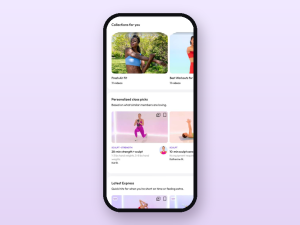
Obé Fitness: signature 28-minute classes and the best filtering here
Built around short classes rather than shortening long ones
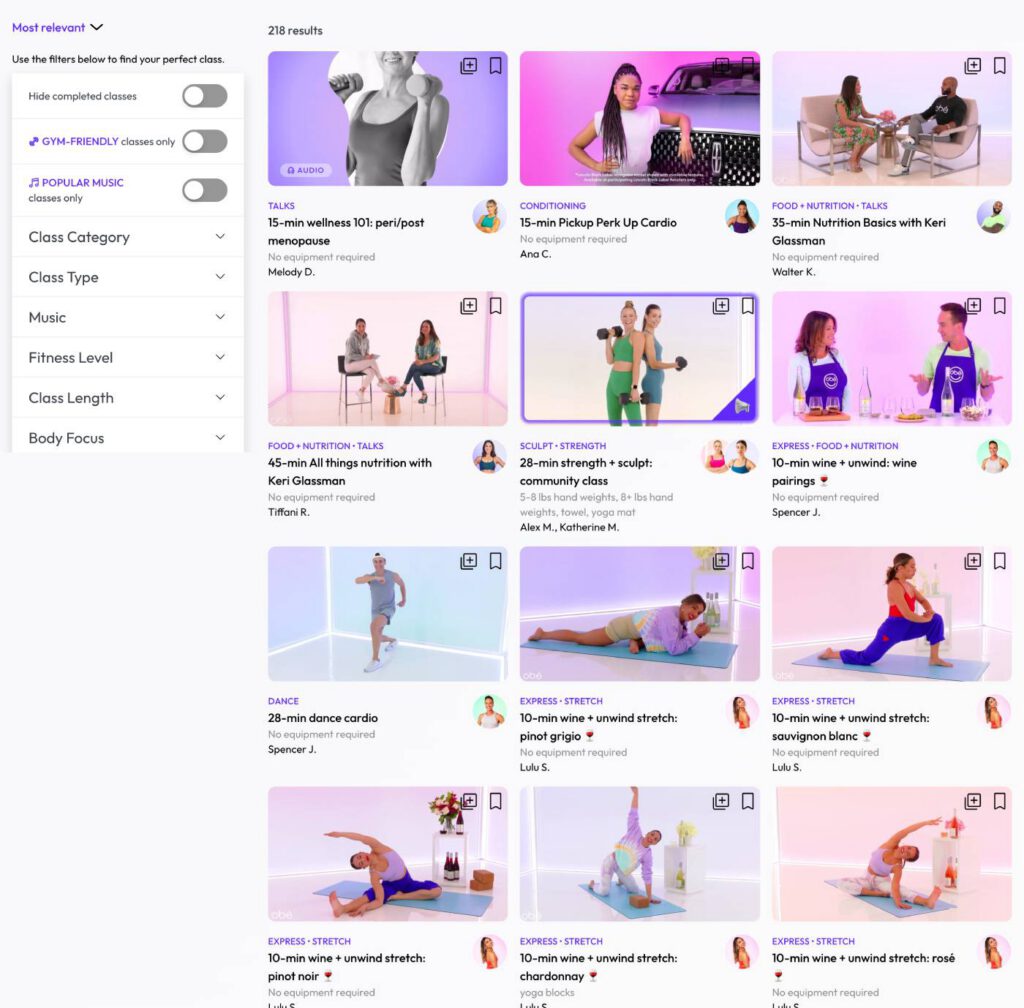
Obé Fitness is designed around its 28-minute format, with joint-aware cueing and an explicit low-impact filter across the library.
Tested by Katy Cole: Obé is one of the most enjoyable perimenopause-friendly platforms I have tested in years, with outstanding filtering and a design that lifts mood. The filtering system is one of the best I have used across close to 50 platforms.
The honest limitation: loads are light to moderate and maintenance-oriented, and our review notes it plateaus for intermediates. It is also US and Canada only.
Cost: $24.99 a month on web and Apple alike, with a 7-day trial or 30 days through a Guest Pass referral.
Burn360: the most time-efficient programme I have tested
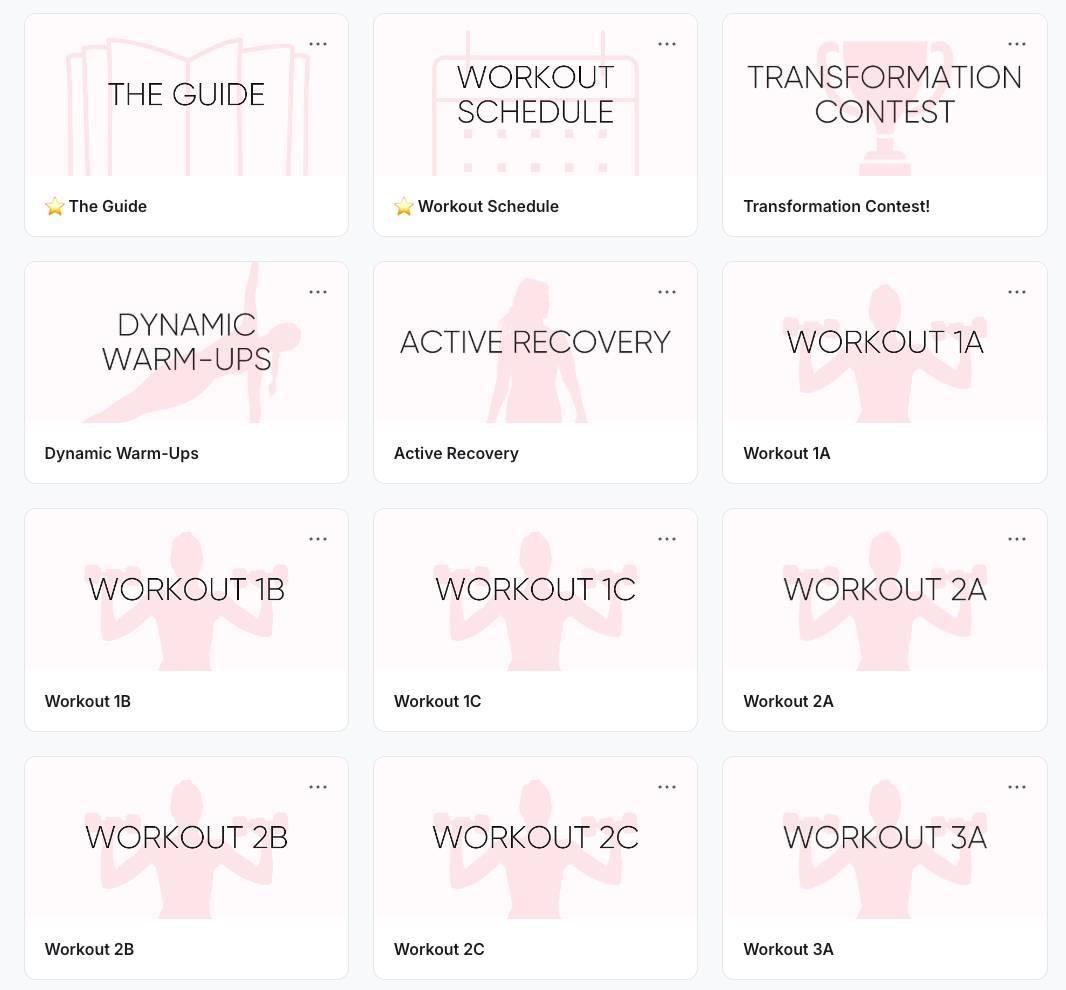
Twenty to twenty-five minute compound dumbbell sessions with nothing wasted, bought once
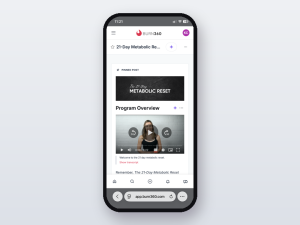
Burn360 is by Susan Ohtake, an ISSA-certified personal trainer. The sessions are compound dumbbell work at 20 to 25 minutes, and unusually it is not a subscription at all.
Tested by Katy Cole: This is the programme I wish I had found when I was coming off years of running and HIIT that had stopped working for me at around 39. I first found Susan Ohtake’s 21-Day Metabolic Reset four to five years ago, a year after my pregnancy, at around 146 lb.
Worth knowing before you compare prices: this is a one-off $39.95 for lifetime access rather than a monthly fee, with a 90-day money-back guarantee and no trial. Against $25 a month elsewhere it pays for itself in under two months.
The honest limitation: there is no menopause or hormone content, and the creator is not a menopause specialist.
Cost: $39.95 once, for lifetime access.
FORM: the easiest short session to keep coming back to
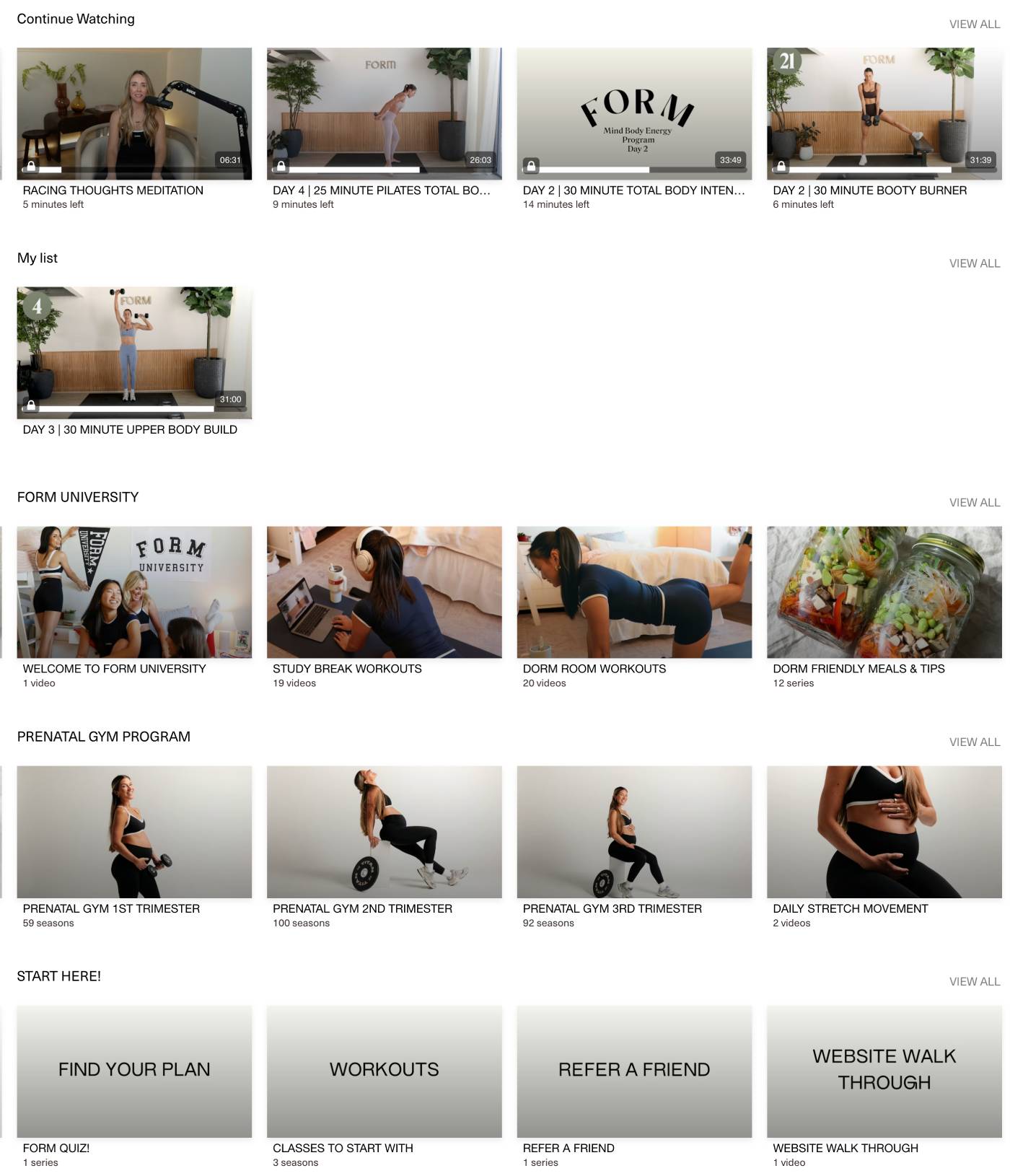
Twenty to thirty minute Pilates and strength in the best-designed app on this page
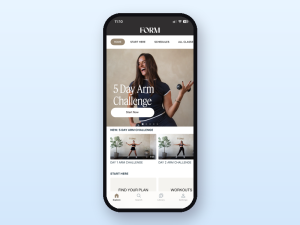
FORM pairs low-impact Pilates and strength with clear cueing and an anti-burnout ethos, and scores joint-highest here for ease of use.
Tested by Katy Cole, 2 weeks: I completed the full programme, tried the 7-day Beginner Pilates series and explored the meditation section, and my belly had gone flat. The beginner series is properly built rather than a few classes labelled beginner.
The honest limitation: loading is deliberately gentle and there is no menopause-specific content.
Cost: $28 a month with a 7-day trial giving full access.
Pvolve: the best midlife fit in genuinely short sessions
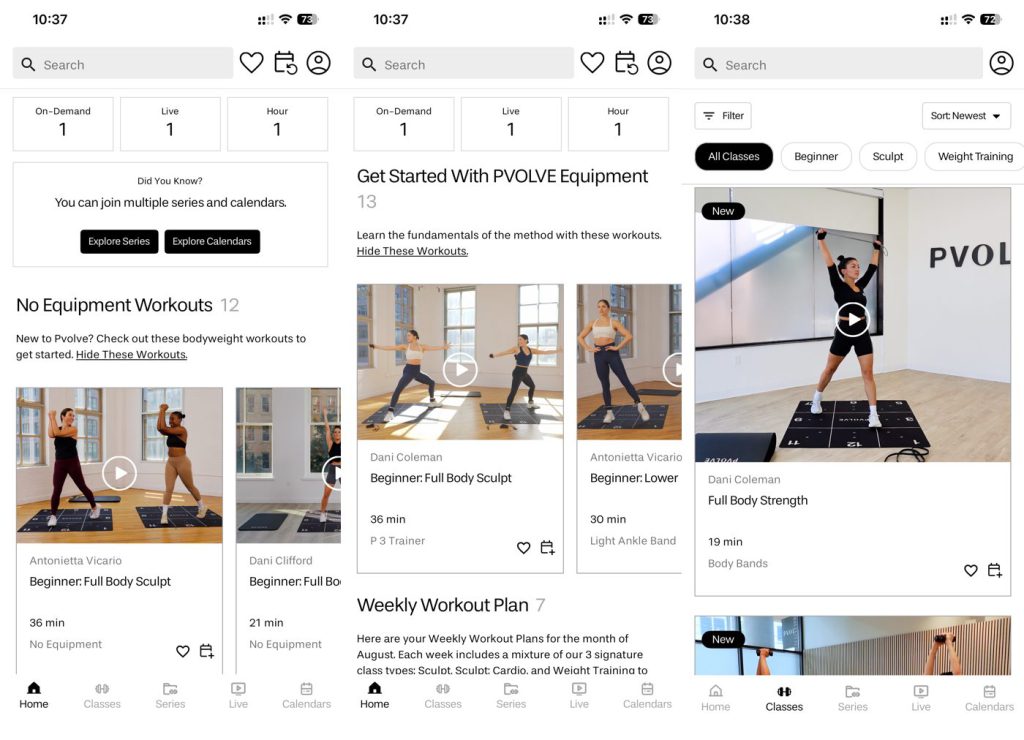
Sixteen to twenty-five minutes, zero impact, and the highest menopause fit on this page
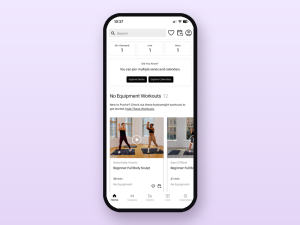
Pvolve is clinically studied low-impact functional training with a clinical advisory board including a doctor of physical therapy. Its sessions run 16 to 25 minutes.
Tested by Katy Cole: I have done the high-intensity programmes, the HIIT blasts and the thirty-day challenges that require sixty-minute sessions four times a week. At this point in my life, in my 40s, in early perimenopause, with a previous knee injury, two kids and a full-time job, I am a lot more precise about what I actually need. Pvolve is what I landed on.
If you read the menopause fit column, this is the row to look at. It scores highest here on suitability while still fitting inside half an hour.
The honest limitation: the method leans on its own equipment, which adds real cost, and loading stays light.
Cost: $24.99 a month, or $224.91 a year, about $18.74 a month. The 14-day trial asks for a card.
Start the 14-day free trialAffiliate link, opens pvolve.com. I earn a commission at no extra cost to you. Full disclosureFit With Coco: strength and Pilates in one structured half hour
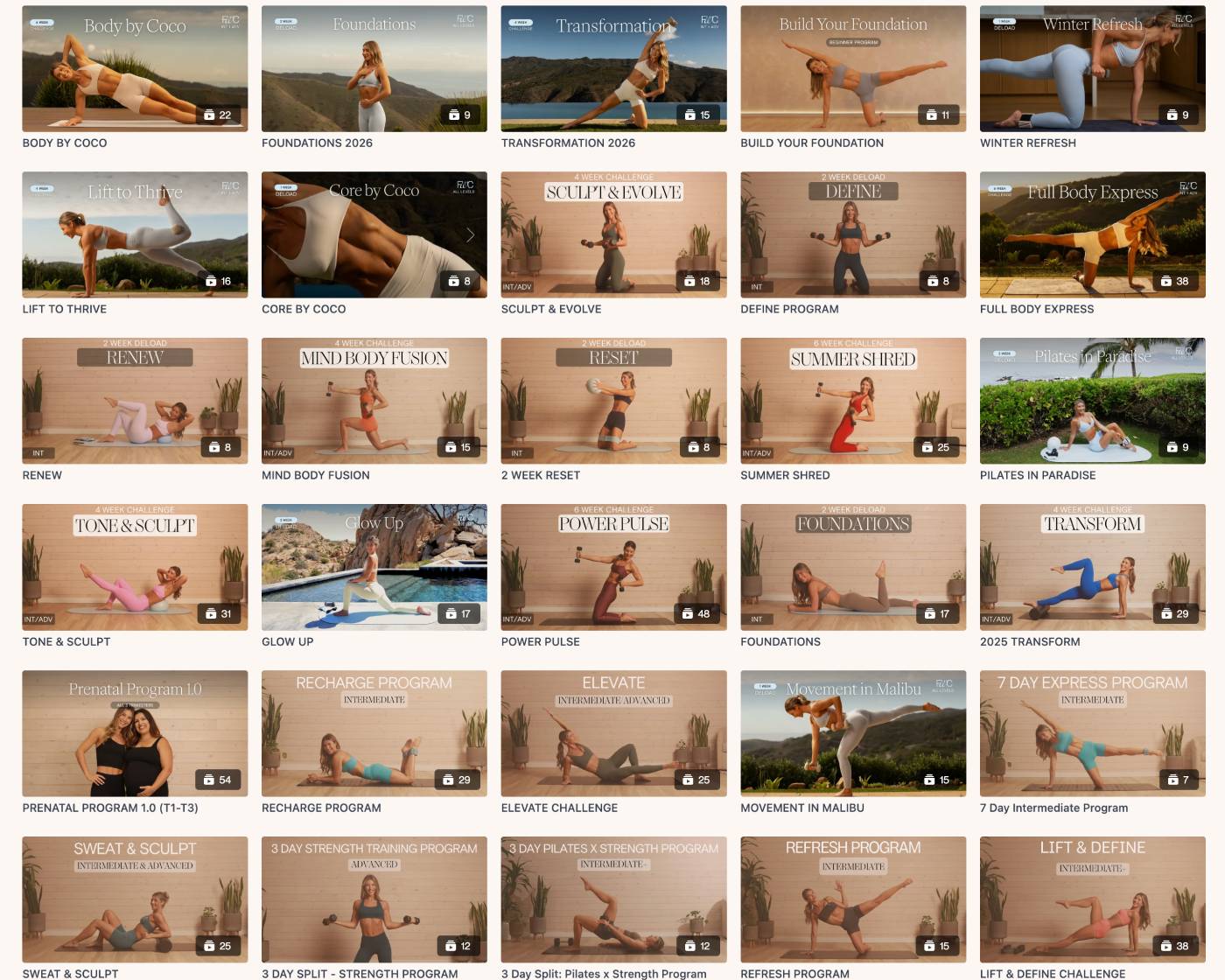
A 3-2-1 method with real four to six week progressions
Fit With Coco runs an explicitly low-impact method combining strength and Pilates in 20 to 30 minute sessions, structured as a programme rather than a class library.
Tested by Katy Cole, 7 weeks: After 7 weeks on the Full Body Express programme, my waist measurement dropped and I lost weight I had been carrying for a while. The Pilates days were not filler either; it showed up in how I was carrying myself going into the strength sessions later in the week.
The honest limitation: at $39.95 a month it is the most expensive subscription here, and there is no heavy periodisation.
Cost: $39.95 a month. The 7-day trial needs no card.
Melissa Wood Health: the session you will still do on a bad day
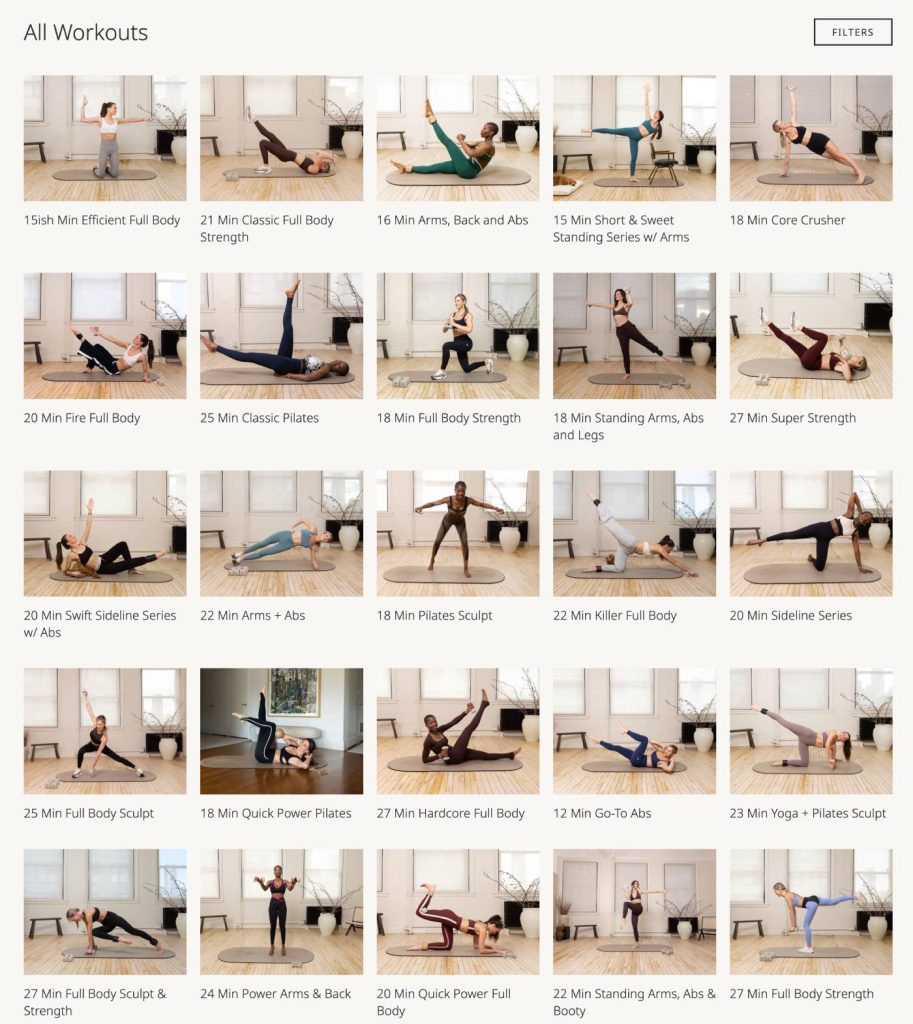
Ten to thirty minutes of calm Pilates, built for consistency rather than intensity
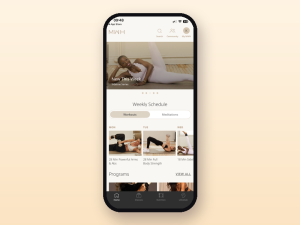
Melissa Wood Health is a low-impact Pilates and meditation app with modifications and weekly schedules, and it is genuinely good at getting you to show up without dread.
Tested by Katy Cole: The approach is very different from the heavier strength training I had been doing on Burn360 and Fit with Coco, where I was regularly lifting 11 to 20 lb. With my meniscus injury I switched from the rope skipping to treadmill walking and dance flow sessions.
The limitation to weigh: sessions use 1 to 3 lb weights at high repetitions with no progressive overload, and our tester lost strength over the test period. Excellent for habit, not for building.
Cost: $14.95 a month with a 7-day trial on both plans.
Peloton: live accountability from $12.99
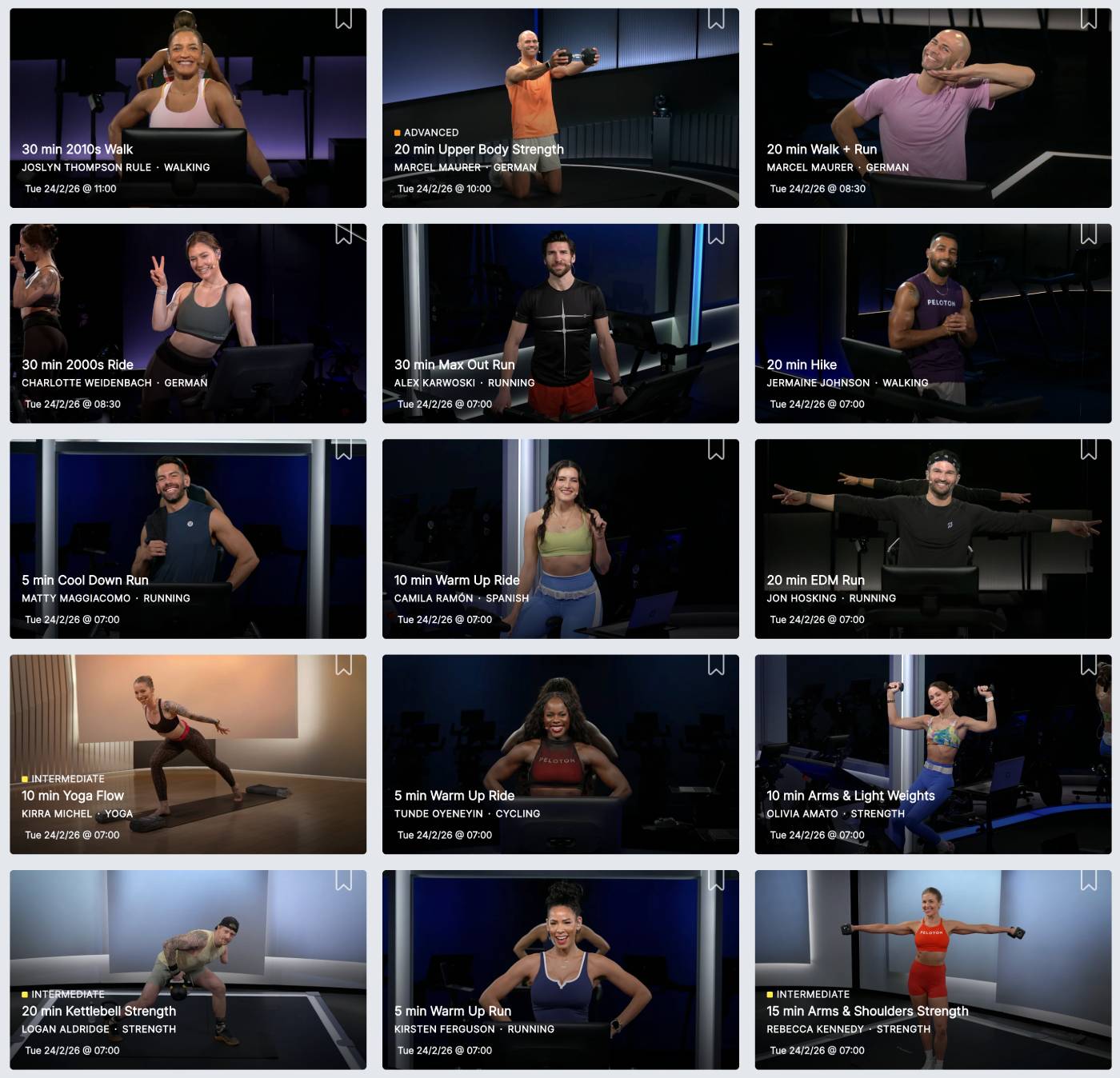
Twenty to forty-five minute classes with a real menopause collection, no hardware required
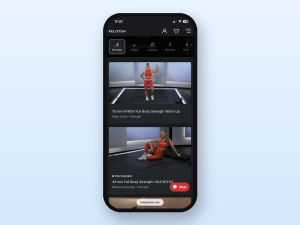
Peloton on the App One tier at $12.99 needs no bike, and carries live classes plus a menopause collection co-created with Respin Health.
Tested by Katy Cole: Peloton is one of the most marketed fitness brands in the world, and in my experience the louder the marketing, the thinner the substance for women who do not fit the default athletic 28-year-old target. I went in expecting that. The menopause collection changed my mind. I tested it using my own treadmill and a single pair of 17 lb dumbbells.
The honest limitation: no nutrition, no guided progressive overload and no symptom tracking.
Cost: App One $12.99 a month on web and Google Play, $15.99 through Apple, with a 30-day trial.
Apple Fitness+: the best modifications, if you are in the ecosystem
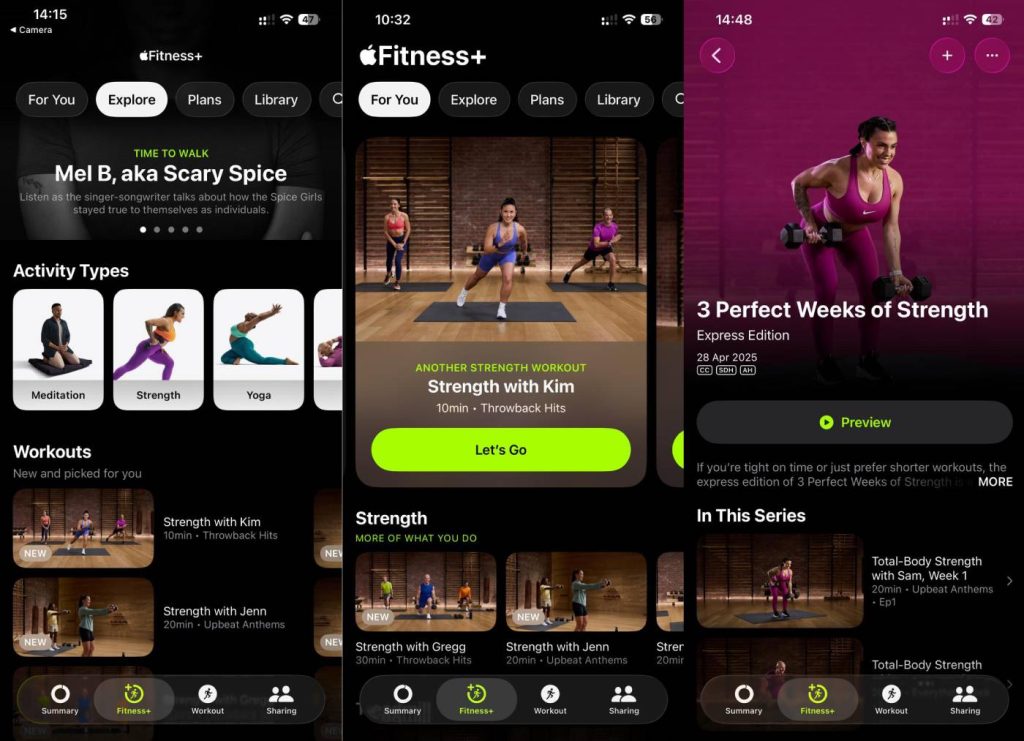
Five to forty-five minute sessions with a clinician-informed menopause programme
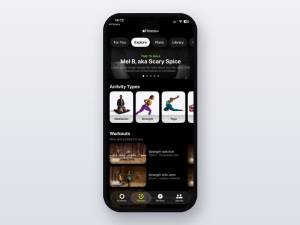
Apple Fitness+ now includes a Strong Through Menopause programme informed by Apple physician Dr Lauren Cheung, with strong low-impact variety at $9.99 a month.
Tested by Katy Cole: Every session has three trainers, one always showing modifications, making this one of the most reliable modification systems I have tested. I bought an iPad, got three months free, built my own week around it, and several weeks later I am still using it most days.
The honest limitation: no nutrition content at all, and it is Apple-only, so the ecosystem decides whether this is an option.
Cost: $9.99 a month, with one month free for new subscribers.
Which one is right for you?
If you want the least wasted time, Burn360, bought once for $39.95.
If you need to enjoy it to keep going, Obé Fitness.
If midlife suitability matters most, Pvolve, which is the best compromise on this page.
If your energy is unpredictable, Melissa Wood Health, and pair it with something loaded.
If you already own an Apple Watch, Apple Fitness+ at $9.99.
Whatever you pick, protect the thirty minutes rather than the programme. Consistency at half an hour beats an hour you keep postponing.
How did we choose these eight?
The qualifier is session length. Thirty minutes has to sit inside the programme’s normal range, not merely be reachable by stringing together stretch videos. Sixty-seven of our 77 published programmes qualify, which tells you something in itself: short sessions are now the norm rather than the exception.
The ranking is time efficiency, weighted 70%, blended with ease of use at 30%. Time efficiency measures whether a programme delivers a real training effect in a short session or simply fills it.
Because the gate is wide and the axis is not midlife-specific, we show menopause fit in the table as a separate column. It is not part of the ranking, and the honest result is that the two programmes best at using thirty minutes are not the two best suited to a midlife body. Pvolve at fourth is where those two things meet.
All eight of these I have used and tested myself, which is unusual for a list this size.
We buy our own subscriptions. Some links on this page earn a commission, which never affects a score or a position.
What research is this page based on?
- Hupin D, Roche F, Gremeaux V, et al. Even a low-dose of moderate-to-vigorous physical activity reduces mortality by 22% in adults aged 60 years and older. British Journal of Sports Medicine, 2015.
- Murphy MH, Lahart I, Carlin A, Murtagh E. The Effects of Continuous Compared to Accumulated Exercise on Health: A Meta-Analytic Review. Sports Medicine, 2019.
- Schoenfeld BJ, Ogborn D, Krieger JW. Dose-response relationship between weekly resistance training volume and increases in muscle mass. Journal of Sports Sciences, 2017.
- Batacan RB Jr, Duncan MJ, Dalbo VJ, et al. Effects of high-intensity interval training on cardiometabolic health: a systematic review and meta-analysis. British Journal of Sports Medicine, 2017.
- World Health Organization. Physical activity fact sheet.
Nothing on this page is medical advice. If you have a diagnosed condition or injury, check with your doctor or a physiotherapist before starting.
Frequently asked questions about 30 minute workouts
Yes. In a meta-analysis of nine cohort studies totalling 122,417 participants, Hupin and colleagues found in the British Journal of Sports Medicine in 2015 that a low dose of moderate to vigorous activity produced a 22% reduction in mortality risk, rising to 28% in older adults meeting full recommendations. Five thirty-minute sessions also meets the WHO's 150 minutes a week exactly.
Yes, with no measurable penalty. Reviewing nineteen studies with 1,080 participants, Murphy and colleagues reported in Sports Medicine in 2019 that there were no differences between accumulated and continuous exercise for any cardiorespiratory fitness or blood pressure outcomes. Three ten-minute blocks is a legitimate way to train, not a compromise.
Yes, if the sets are hard and the load progresses. Schoenfeld, Ogborn and Krieger found a dose-response relationship between weekly resistance training volume and muscle gain in the Journal of Sports Sciences in 2017, so what matters is total hard sets across the week rather than the length of any one session. Thirty minutes three times a week carries enough volume; the same thirty minutes at the same weights forever does not.
Burn360, by our scoring. Its sessions run 20 to 25 minutes of compound dumbbell work with very little wasted time, and it is a one-off $39.95 for lifetime access rather than a subscription. Obé Fitness scores equally on time efficiency and is easier to use, built around a signature 28-minute format.
Pick one per session. The programmes that score highest here commit to a single job on a given day rather than trying to combine strength, conditioning and mobility into every half hour. Across a week, two to three strength sessions plus some conditioning is a sensible split for most women over 40.
Sometimes, not always. Batacan and colleagues found in the British Journal of Sports Medicine in 2017 that high-intensity interval training improved cardiometabolic health. But recovery capacity is the constraint after 40, and doing intervals on consecutive days is usually what causes the crash. Treat it as one or two sessions a week rather than the default.
Pvolve, which scores highest on this page for menopause fit while keeping sessions to 16 to 25 minutes. It is worth noting that the two programmes best at using the time, Obé and Burn360, are not the two best suited to a midlife body, which is why menopause fit is shown in the table even though the ranking is on time efficiency.
Where should you read next?
- Our full Burn360 review, including why it is a one-off purchase rather than a subscription.
- Our full Pvolve review, including what the equipment costs.
- Dumbbell workouts for women over 40, if you want the weights guidance.
- How we score, including how time efficiency is judged.