

Is Pilates a good workout for women over 40?
Yes, with one important framing. Pilates delivers genuine core, postural, hip-stability and pelvic-floor benefits that suit midlife bodies, plus a low-joint-impact format that protects the knees, hips and lower back. What Pilates does not do, by itself, is build the heavy progressive strength or aerobic conditioning the published research supports for bone density, muscle preservation and cardiovascular health in women over 40. The pragmatic operating point is to treat Pilates as one part of a broader training week rather than a complete prescription.
The mechanism for Pilates’ particular value at this life stage is the combination of small-muscle stabiliser work, controlled breathwork and the spinal-articulation and pelvic-floor focus that few other modalities prioritise. Cruz-Ferreira and colleagues (2011) in Archives of Physical Medicine and Rehabilitation reviewed Pilates interventions and found consistent improvements in flexibility, dynamic balance and abdominal endurance. A 2019 systematic review and meta-analysis in Complementary Therapies in Medicine on Pilates and postmenopausal women found improvements in lumbar strength, body composition and quality of life across the included trials.
Lower back pain is where the published evidence for Pilates is strongest. A 2015 Cochrane review of Pilates for chronic low back pain found Pilates effective for reducing pain and improving function compared to minimal intervention, with effects comparable to other forms of exercise. For women over 40 who carry low-grade lumbar discomfort (a common consequence of years of sitting, pregnancies, or general deconditioning), Pilates is one of the better-supported non-pharmacological interventions.
Pelvic floor and core function is the second strength, and the one where Pilates earns its reputation. The deep core work it emphasises, transverse abdominis activation, controlled diaphragmatic breathing and pelvic floor coordination, addresses problems that become more common in perimenopause and beyond:
- Mild stress incontinence.
- Postural changes after pregnancies.
- Abdominal separation, the “mum tum” pattern.
Pilates is not a substitute for pelvic health physiotherapy where symptoms warrant it, and it is a meaningful general practice for the same muscle groups. If a joint history complicates heavier loading, our low-impact strength training guide covers the rest.
Where Pilates does not deliver is heavy progressive strength and aerobic adaptation. The Watson 2018 LIFTMOR trial on bone density in postmenopausal women required high-intensity progressive resistance training (heavy compound lifts) to produce bone density gains; mat Pilates with light props does not generate that loading. The Cruz-Jentoft sarcopenia consensus identifies progressive resistance training as the documented intervention for skeletal muscle preservation; again, mat Pilates is below the load threshold required for maximum hypertrophy. The right operating point is Pilates plus dedicated progressive strength, not Pilates instead of it.
The six platforms in this guide are the ones I have personally tested. They range from Pilates-as-primary-modality (FORM, Melissa Wood Health) to Pilates-as-significant-portion-of-the-week (Fit With Coco’s 3-2-1 method, The Sculpt Society’s Midlife Movement) to Pilates-as-one-content-category-among-many (Daily Burn, FitOn). Below the six tested platforms, I have included a “Worth Checking Next” section for dedicated Pilates platforms that are well-regarded in the wider market but that I have not yet hands-on reviewed.
What should women over 40 prioritise in a Pilates programme?
Five things matter most: instructor anatomical depth, programme structure, joint-friendly modifications, pelvic floor and core-specific content, and integrated breathwork. Each addresses something specific that midlife bodies need from Pilates.
Instructor anatomical depth. Comprehensive Pilates training (Romana’s, Stott, BASI, Polestar, Body Control Pilates in the UK) runs 500 to 600 hours and covers anatomy, the full classical repertoire, contraindications and teaching method. Many “Pilates” classes on general fitness platforms are taught by someone with a fitness certification plus a weekend workshop.
Both can be useful, and the cueing differs. Use the free trial to judge whether the cues feel precise and anatomically informed rather than decorative.
Programme structure versus class library. Some platforms (FORM, Fit With Coco, MWH) supply structured Pilates programmes that progress over weeks; others (Daily Burn, FitOn) supply a class library you choose from ad hoc. Structured programmes suit women new to Pilates or returning to it after a long break; class libraries suit women who already know what they want on a given day.
Joint-friendly modifications and equipment. Pilates is broadly low-impact, but specific exercises can stress knees (kneeling work), wrists (extended planks) and shoulders (overhead arm work). The platforms that flag modifications proactively (The Sculpt Society’s no-kneeling filter is the strongest example; FORM and MWH default to gentler versions) protect women with joint history. On equipment: mat-only Pilates is genuinely accessible; props (bands, ankle weights, light dumbbells, Pilates ball) expand the menu but are not required. MWH and FORM both default to mat-only plus 1-3 lb dumbbells.
Pelvic floor and core-specific content. Women in perimenopause and beyond face documented changes to pelvic floor function and abdominal wall integrity. The Pilates platforms that include explicit pelvic floor and deep core content (and that cue these correctly: no breath-holding, no bearing-down, no shallow chest-breathing) deliver real value here. For women with active pelvic floor symptoms, this content should sit alongside, not replace, specialised pelvic health physiotherapy.
Integrated breathwork. Pilates done correctly is breath-led. Inhale to prepare, exhale to engage, control the breath through the movement. Platforms that cue the breath explicitly produce different sessions from platforms that ignore it. The breath cueing is also where the parasympathetic-nervous-system benefit of Pilates comes from, which is meaningful for women managing perimenopausal sleep, stress and vasomotor symptoms. If cortisol-conscious training is your priority, my low-cortisol workouts guide goes deeper on the framework.
A 20-minute beginner mat Pilates session
Six movements, no equipment, no floor-to-standing transitions, and nothing that requires you to be able to get up quickly. This is the session to run if you want to know whether Pilates suits you before paying for anything.
| Movement | Reps | The cue that matters |
|---|---|---|
| Breathing, lying on your back, knees bent | 10 breaths | Ribs widen sideways on the inhale. If only your belly moves, you are missing the point of everything that follows. |
| Pelvic tilts | 10 slow | Move from the pelvis, not the legs. Small range. This is the position you will return to all session. |
| Dead bug, opposite arm and leg | 8 each side | Lower back stays in contact with the floor. The moment it lifts, you have gone too far. Shorten the range. |
| Glute bridge | 10 slow | Push through the heels and lift one vertebra at a time. Lower the same way, slowly. |
| Side-lying leg lift | 10 each side | Keep the top hip stacked over the bottom one. Rolling back turns this into a different, easier exercise. |
| Quadruped opposite arm and leg reach | 8 each side | Hips stay level. Reach long rather than lifting high. |
Two or three rounds, two or three times a week. Rest as needed between rounds. The whole thing should take about 20 minutes at a controlled pace, and if it takes less you are moving too fast.
How to progress, because Pilates does not use weights: slow the movement down, hold the end position for two or three seconds, increase the range only once control is solid, or add a round. Change one variable at a time. Speed is not progression in Pilates; it is usually the opposite.
If you leak, or you have a diagnosed prolapse or abdominal separation, skip the dead bug and the quadruped reach for now and work with a pelvic health physiotherapist on the breathing and pelvic tilts first. Those two movements are where deep core work most often goes wrong without supervision.
Mat Pilates or reformer: which should you pay for?
For most women over 40 starting out, mat Pilates at home is the better use of money, and reformer is the better experience. Both things are true and the honest answer depends on what is stopping you.
A reformer class typically costs $25 to $45 a session in a studio, so a twice-weekly habit runs $200 to $360 a month. Every app on this page costs less than one reformer class, and several cost nothing. If budget is the binding constraint, that maths settles it.
What reformer genuinely adds is spring resistance, which gives graded load that mat work cannot, and an instructor watching your alignment in real time. For someone with a complicated injury history, that supervision is worth paying for and no app substitutes for it.
What it does not add is a solution to the loading problem. Reformer springs provide assistance as often as resistance, and a reformer class is not a substitute for progressive strength training either. Women sometimes assume that paying studio prices means they have the strength side covered. It does not.
The pragmatic route: learn the movements at home from an app, and buy a handful of reformer or private mat sessions specifically to have someone correct your technique, rather than as your ongoing training.
What to look for in a Pilates programme if you are over 40
The differences between these platforms matter more than the differences between their Pilates. Classical mat Pilates is a well-defined method and most of these teach it competently. What separates them is everything around the movement.
- Does it say anything about the pelvic floor beyond “engage your core”? This is the single most useful filter. Vague core cues are the default, and they are close to useless if you are leaking. Specific, progressive pelvic floor programming is rare and worth paying for.
- Are there floor-to-standing transitions in every session? If knees, wrists or a hip make getting up and down difficult, a library full of transitions will quietly stop you using it. Check whether standing or seated options exist before subscribing.
- Is there any progression at all? Most Pilates apps offer a library rather than a plan. A library is fine if you are self-directed and a poor investment if what you actually need is to be told what to do on Tuesday.
- Does it acknowledge menopause? Only two platforms here do, and one of those does it properly. This is not a dealbreaker, but a programme that has thought about it has usually thought about other things too.
- What is the shortest session? The realistic answer to “will I keep this up” is usually decided by whether there is something you can do in ten minutes on a bad day.
- Does the price make sense against a strength app you also need? Since Pilates alone will not cover strength and bone, the real cost is this subscription plus another one. A $59 a month Pilates app plus a strength app is a serious monthly commitment.
One thing deliberately not on that list is instructor credentials in Pilates itself. Pilates teacher training is largely unregulated and a long certification does not reliably predict good teaching. Clinical credentials, a physiotherapy or physical therapy qualification, do predict better handling of injuries, pelvic floor and midlife-specific problems, which is why they carry weight in our scoring and general Pilates certifications do not.
Which Pilates programmes score highest?
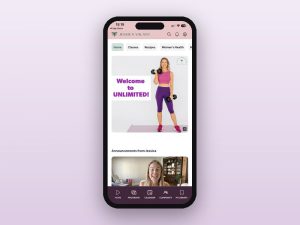
Seven programmes qualify as genuinely Pilates-led. Jessica Valant Pilates ranks first, followed by Fit With Coco, FORM, Lindywell, Melissa Wood Health, Move With Nicole and Blogilates.
Before the ranking, the thing nobody selling Pilates will tell you: Pilates is light loading by definition, and light loading is not what midlife bones and muscle need most.
That is not a criticism of the method, it is what the method is. Pilates is exceptional for core control, pelvic floor, joint-friendly movement and staying consistent, and close to useless for building bone.
Every programme below scores lower on our midlife fit measure than a good strength app would. That is the honest picture rather than a scoring quirk.
How do the best Pilates programmes compare?
| Rank | Programme | Pilates approach | Meno fit 70% | Ease of use 30% | Review score * | Length | Cost |
|---|---|---|---|---|---|---|---|
| 1 | Jessica Valant PilatesData profile | Physical-therapist-led classical mat work | 7.3 | 7.5 | 7.1 | 5 to 55 min | $59/mo |
| 2 | Fit With CocoFully tested | 3-2-1 strength and Pilates hybrid | 5.6 | 8 | 7.9 | 20 to 30 min | $39.95/mo or $359.95/yr |
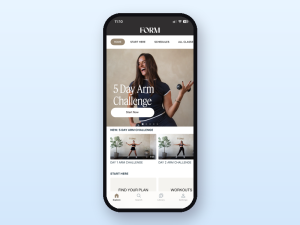
| 3 | FORMFully tested | Low-impact Pilates and strength | 4.8 | 9 | 7.6 | 20 to 30 min | $28/mo or $180/yr |
| 4 | LindywellData profile | Pilates plus breathwork | 4.8 | 8 | 6.9 | 5 to 45 min | About $29/mo or $199/yr |
| 5 | Melissa Wood HealthFully tested | Very low-intensity mat flow | 4 | 8 | 6.9 | 10 to 30 min | $14.95/mo or $134.99/yr |
| 6 | Move With NicoleData profile | Classical mat Pilates, free | 3.9 | 7 | 6.1 | 5 to 50 min | Free |
| 7 | BlogilatesSample tested | Pilates and sculpt, higher energy | 3.3 | 7 | 5.9 | 10 to 30 min | Free; app about $3.99/mo |
* Two different numbers appear here and they answer different questions. Full review score is the programme’s overall rating across all nine criteria we score, the number on its review page. The rank comes from what this page is about: how well the programme is built for women over 40, weighted 70%, blended with ease of use, weighted 30%. Fit With Coco carries a higher full review score than the programme above it, and still ranks second, because its Pilates content sits inside a hybrid method rather than leading it.
Three programmes from the earlier version of this page have been removed. The Sculpt Society, Daily Burn and FitOn all contain Pilates-influenced classes and none of them is a Pilates platform. Ranking them here made this a general low-impact list wearing a Pilates title. All three remain strong picks elsewhere on the site.
Jessica Valant Pilates: a physiotherapist teaching Pilates, not a Pilates teacher guessing at physiotherapy
The only programme here with genuine pelvic floor and menopause expertise built into the method
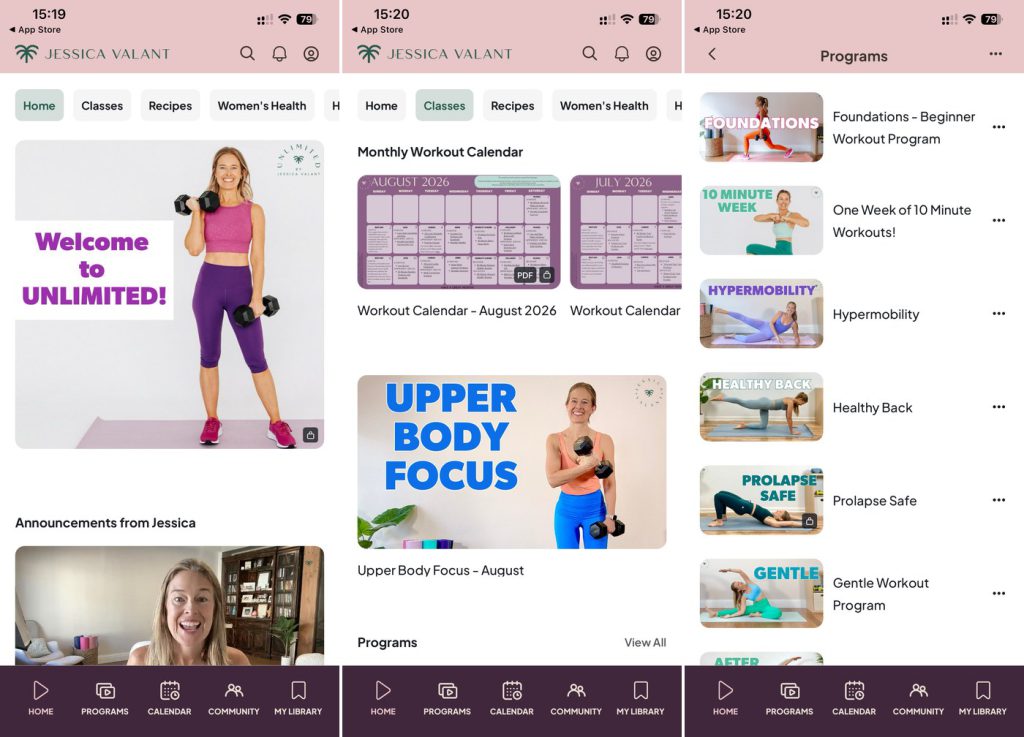
Jessica Valant Pilates is led by a licensed physical therapist, and it shows in the places Pilates usually goes vague: pelvic floor programming that is specific rather than a “engage your core” instruction, and menopause content that includes HRT education most fitness platforms will not touch.
This is a data profile, not a tested review. We have not run the programme first hand, so there is no personal testing note here. What the published information shows is the strongest clinical grounding of any Pilates platform we have assessed, with sessions from 5 to 55 minutes. What we cannot verify without testing is how the progression feels over a full block and whether the library depth matches the specialist content.
What a week looks like here: three mat sessions, with the pelvic floor content as a daily add-on rather than a session in its own right. This is the platform to choose if leaking, prolapse or abdominal separation is the actual reason you are looking at Pilates.
The honest limitation: $59 a month is the most expensive option on this page by a wide margin, with only a three-day trial and no published annual price. Loading is Pilates-light, so bone work has to come from elsewhere.
Cost: $59 a month for the unlimited membership, or $149 for a three-month prepaid term. Three-day trial.
Fit With Coco: the one that actually loads you
A 3-2-1 method that puts Pilates alongside real strength work rather than instead of it
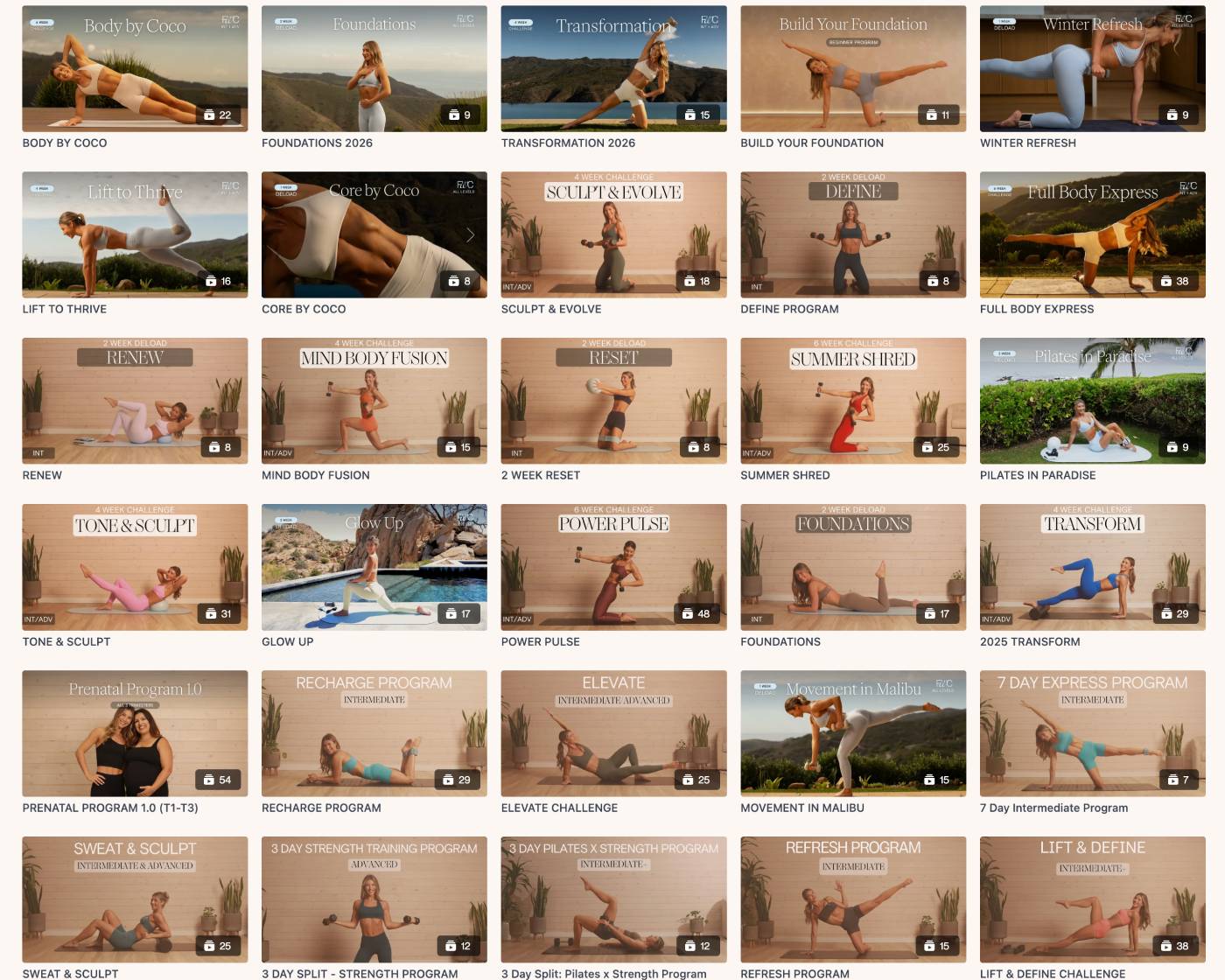
Fit With Coco runs a hybrid: three strength sessions, two Pilates, one cardio, in a structured week. For the specific problem this page keeps running into, that Pilates alone will not protect bone, it is the most complete answer here.
Tested by Katy Cole: I tested it on both the app and in a web browser. The coaching is the standout, and the results were real. The structure removes the decision you would otherwise have to make every day about whether today is a Pilates day or a weights day.
What a week looks like here: follow the 3-2-1 split as written. The Pilates sessions are recovery and control work; the strength sessions are where the adaptation happens. Do not swap the ratio in favour of more Pilates, however much more you enjoy it.
The honest limitation: $39.95 a month is premium pricing, and if you came here wanting pure Pilates, this is not that. It ranks second precisely because it is only partly a Pilates programme.
Cost: $39.95 a month or $359.95 a year, about $29.99 a month. Seven-day trial with no credit card required.
FORM: the best-value polished Pilates app
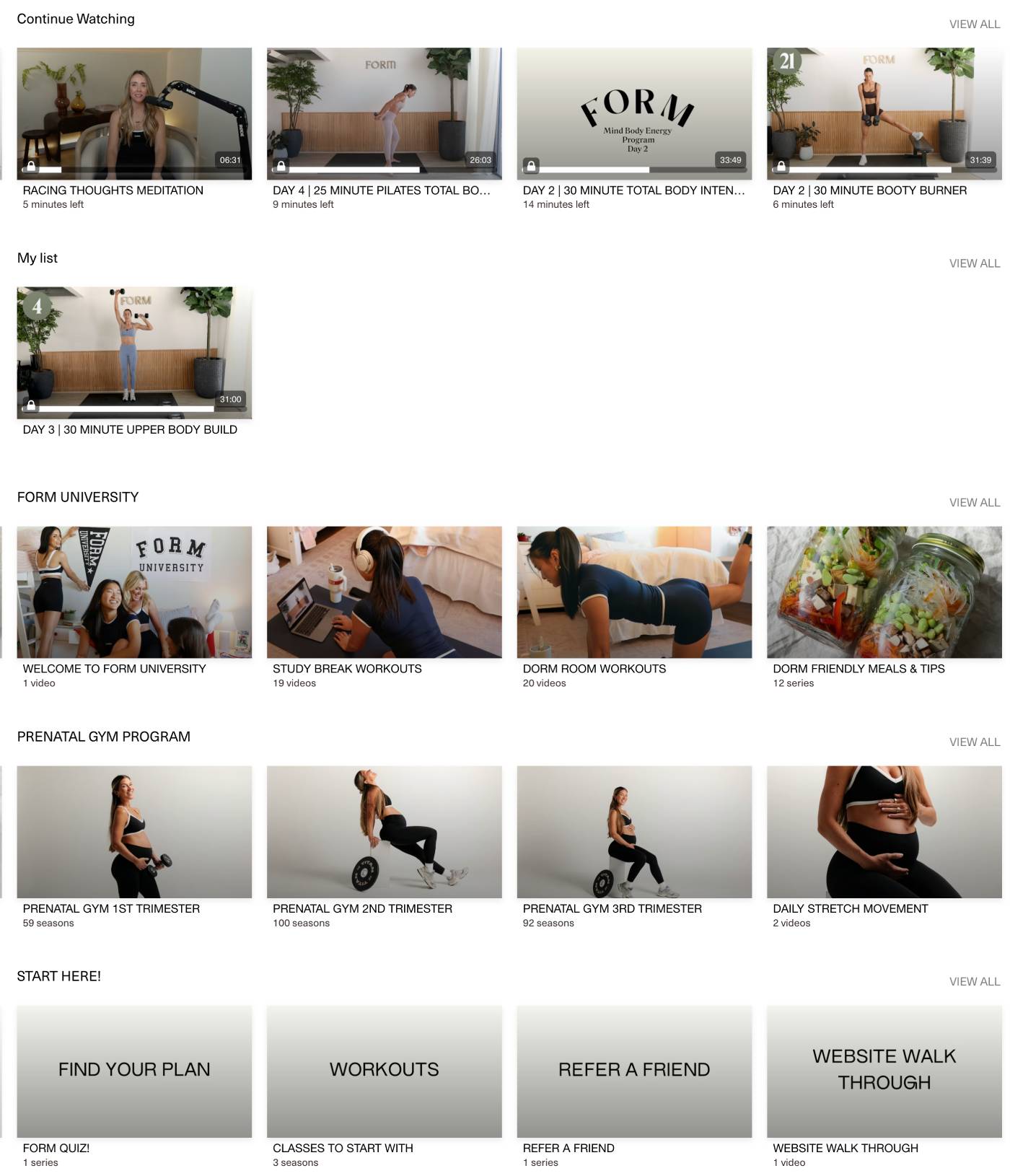
Low-impact Pilates and strength with an explicit anti-burnout ethos
FORM is the most polished app on this page at a sensible price, with a mindfulness section that addresses stress recovery directly and a strong community around it.
Tested by Katy Cole: FORM is the platform I spent the most time with, and the one that drew me to this category in the first place. The 20 to 30 minute sessions are the right length to actually do, and the anti-burnout framing is genuine rather than marketing.
What a week looks like here: four sessions, mixing the Pilates and strength tracks rather than staying in one. Use the mindfulness content on the days between instead of adding a fifth workout.
The honest limitation: there is no menopause content at all, and loading is light. It builds midlife strength gently, which is the right phrase: gently is both the appeal and the ceiling.
Cost: $28 a month or $180 a year on the site. Apple in-app pricing differs at $144.99 a year, which is worth checking before you subscribe. Seven-day full-access trial.
Lindywell: Pilates for people who have been made to feel bad by fitness
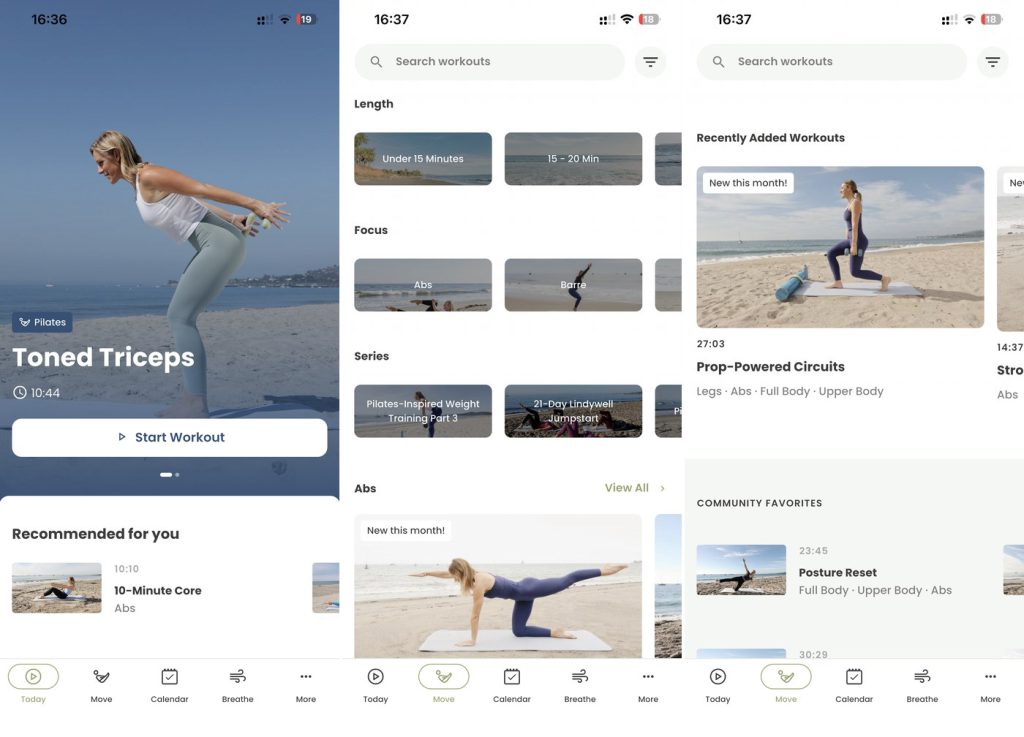
Grace over guilt, with breathwork treated as part of the method rather than an add-on
Lindywell pairs low-impact Pilates with breathwork and dietitian-backed nutrition, and its whole tone is built around removing the punishment framing that puts many women off exercise entirely.
This is a data profile, not a tested review. We have not run it first hand. What the published information shows: short sessions from 5 to 45 minutes, breathwork integrated throughout, and nutrition guidance from a dietitian rather than an influencer. What we cannot verify is the depth of the library over a longer period.
What a week looks like here: daily is realistic because the sessions are short and genuinely low intensity. Use the breathwork on days you would otherwise skip entirely.
The honest limitation: light loading limits strength and bone, and there is no clinician-led menopause content. It is kind to joints and to stress, and it will not build you.
Cost: about $29 a month or $199 a year. Fourteen-day trial, the longest here.
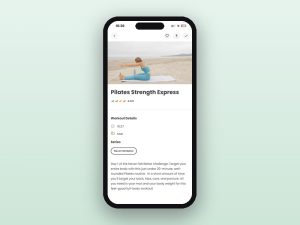
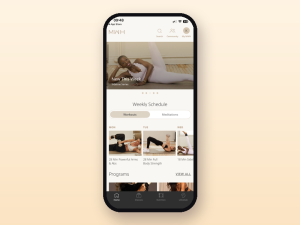
Melissa Wood Health: the calmest option, and the lightest
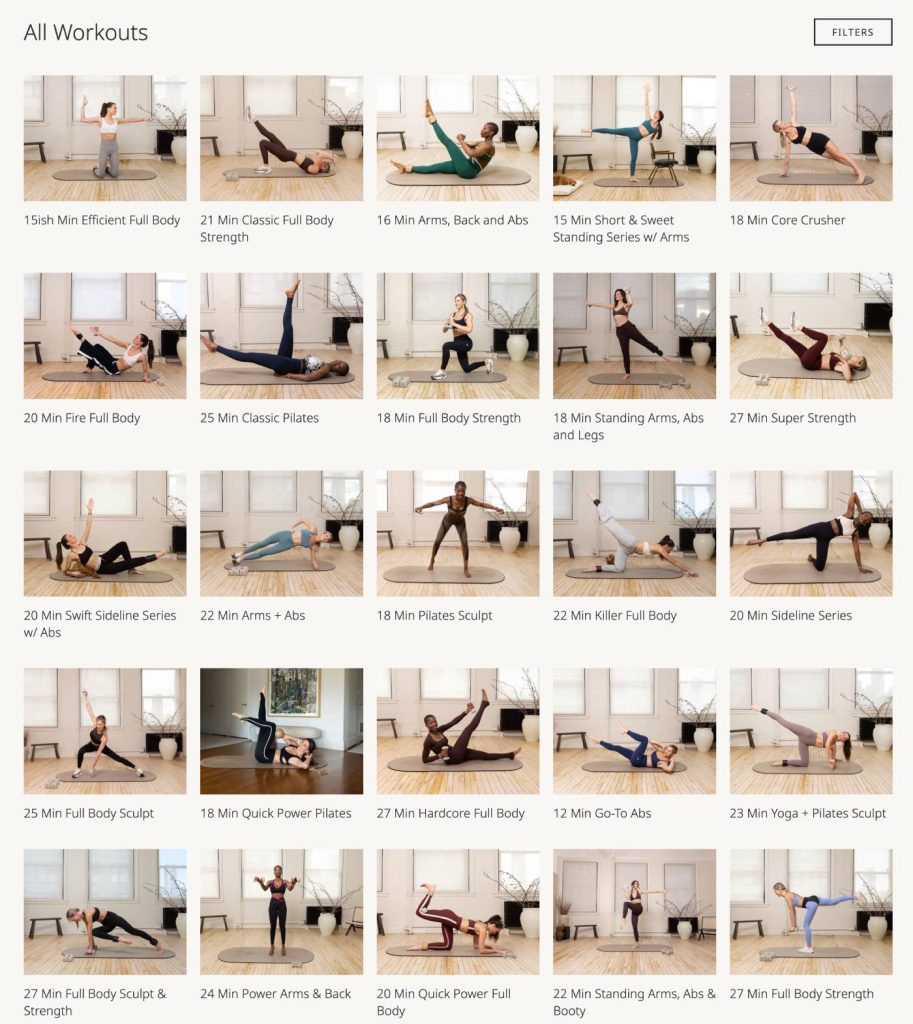
Very low-intensity mat flow and meditation, excellent for showing up daily
Melissa Wood Health is the gentlest platform here. Sessions run 10 to 30 minutes, combine Pilates-style flow with meditation, and ask very little of you on any given day.
Tested by Katy Cole: the surprise was being sore again from movements I used to do without getting sore, which says something about how specific the positions are even at low intensity. As a consistency tool it works; as a training stimulus it is limited.
What a week looks like here: daily short sessions, treated as movement and headspace rather than training. Pair it with two strength sessions from elsewhere, which is not optional if bone matters to you.
The honest limitation: very light loading does little for strength or bone, and there is no menopause content. It is the cheapest paid option here for a reason.
Cost: $14.95 a month or $134.99 a year, about a 25% saving. Seven-day trial on both plans.
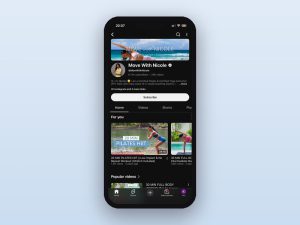
Move With Nicole: the best free mat Pilates on the internet
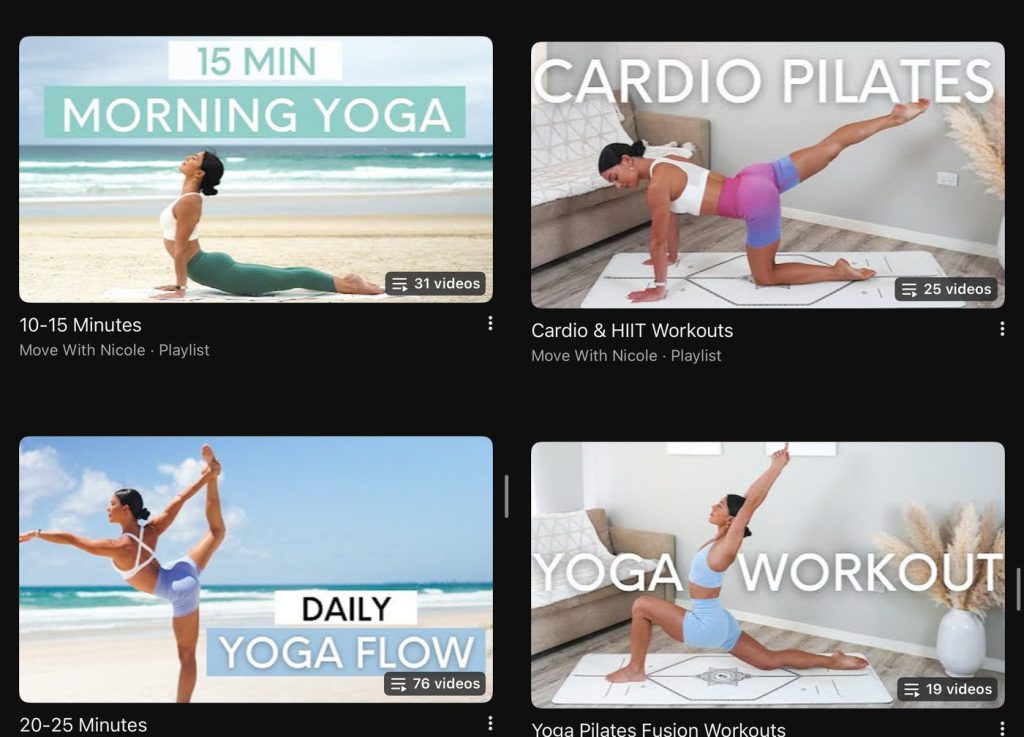
Beautifully produced classical mat work at no cost, with no app and no upsell
Move With Nicole is a free YouTube library of calm, well-produced mat Pilates, with sessions from 5 to 50 minutes and no subscription anywhere in it.
This is a data profile, not a tested review. We have not worked through it systematically. What is clear from the published library: consistent production quality, genuine classical mat technique, and a range of session lengths that makes it usable on a bad day.
What a week looks like here: pick a session length by how much time you have and do it three or four times a week. There is no programme structure, so you supply that yourself, which is the trade-off for it being free.
The honest limitation: no progression, no tracking, no menopause content, and low loading. If you want someone to tell you what to do next, this is not it.
Cost: free.
Blogilates: the most fun, and the least midlife-specific
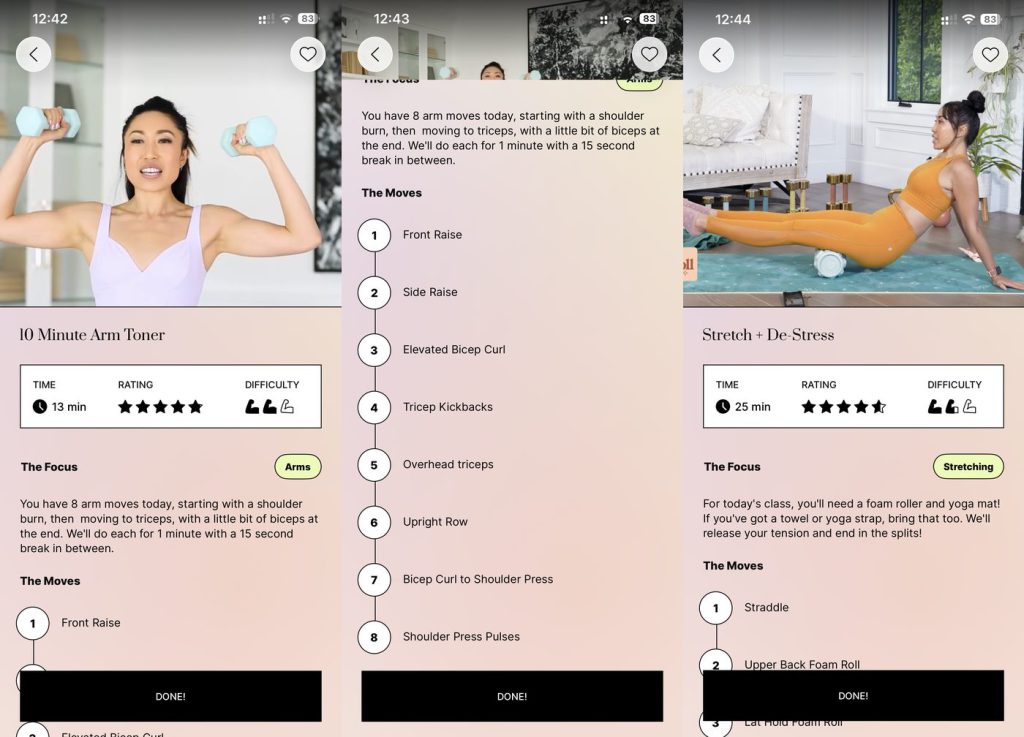
Cassey Ho’s free library is unbeatable value and it was not built for you
Blogilates is beginner-friendly, energetic and essentially free, with a very cheap app on top. It is the most enjoyable entry point here if what you need is to start at all.
Sample tested. We ran a seven-day trial of the app, completed a workout and explored the library rather than running a full programme, so this is a hands-on look with a longer test still to come.
What a week looks like here: three or four Pilates sessions, and skip the HIIT-flavoured content, which is where the impact level rises and where the platform stops suiting this audience.
The honest limitation: light on strength and bone stimulus, higher impact once the HIIT starts, and no menopause content whatsoever. It ranks seventh on midlife fit while being the best value on the page.
Cost: free on YouTube. The Body by Blogilates app is about $3.99 a month, or about $6.99 for all-access, with a seven-day trial.
Worth checking next: dedicated Pilates platforms (not yet reviewed)
Important note: The platforms below have not yet been hands-on tested for Her Daily Fit, which is why they are listed separately and do not carry our 9-criterion score. They are dedicated Pilates platforms or teachers that are well-regarded in the wider market and likely to deepen a Pilates practice further than the multi-modality platforms above. Full hands-on reviews are planned for the second half of 2026. Treat these as “worth checking” pointers, not ranked recommendations.
Move with Nicole (free YouTube; optional Patreon support). Australian-trained Pilates teacher Nicole McPherson runs one of the largest free Pilates YouTube channels with over a million subscribers. Sessions range from 10 to 45 minutes and cover mat Pilates fundamentals through to more advanced flows. The cueing is precise and anatomically informed; many viewers describe Move with Nicole as the free YouTube equivalent of a paid Pilates platform. For women who want serious Pilates at zero cost, this is the most-recommended free option in the current market.
Blogilates / Cassey Ho (free YouTube + Body by Blogilates app, approximately $14.99/month or $99.99/year). Cassey Ho built one of the original Pilates-online communities and continues to publish free Pilates content on YouTube alongside the paid app. The style is more energetic and pop-music-led than traditional Pilates, which suits some women better than the classical aesthetic. The 28-day programmes are structured and accessible.
Lottie Murphy Pilates (approximately £12.99-14.99/month, UK-based). Lottie Murphy is a UK-trained Pilates teacher with an explicit focus on women in midlife. Sessions emphasise pelvic floor work, posture and menopause-aware training. For UK-based women specifically wanting British-trained Pilates with a midlife focus, Lottie Murphy is the strongest standalone option.
Pamela Reif (free YouTube). German-language and English-language Pilates content with a large free library. Pamela Reif sits between Pilates and general fitness training; the Pilates-specific content is well-cued and free, with structured weekly plans published on her website.
Pilatology (approximately $25/month). A premium classical Pilates platform with depth of instructor training (Romana’s Pilates lineage). For women who specifically want classical Pilates with formally trained instructors, Pilatology is one of the more authoritative platforms.
Pilatesology (approximately $29/month or $295/year). A dedicated platform with extensive Reformer and Mat content from a wide roster of classical Pilates teachers. For women with access to a home Reformer (or studio Reformer subscription), Pilatesology is the most extensive on-demand Reformer library available.
Reformer at Home apps. Several apps offer Reformer-style workouts adapted for at-home use with bands and small props rather than the Reformer apparatus. The category is fast-moving; I plan to test the leading options in the second half of 2026.
Which Pilates programme is right for you?
If leaking, prolapse or abdominal separation is the real reason you are here, Jessica Valant Pilates, for the physiotherapist-led pelvic floor work.
If you want Pilates without giving up bone and muscle, Fit With Coco and its 3-2-1 structure. This is the answer for most women over 40 who would otherwise do Pilates alone.
If you want the best app at a sensible price, FORM at $28 a month, with a full-access seven-day trial.
If fitness has made you feel bad about yourself, Lindywell, and take the 14-day trial rather than deciding in a week.
If the win would simply be moving every day, Melissa Wood Health at $14.95 a month.
If you want to spend nothing, Move With Nicole for calm classical mat work, or Blogilates if you want energy and fun.
And whichever you pick, add two strength sessions a week. That is the single most useful sentence on this page, and it is the one Pilates platforms are least likely to tell you.
How did we rank these seven?
What changed: The Sculpt Society, Daily Burn and FitOn have been removed. All three contain Pilates-influenced classes and none is a Pilates platform, which made this a general low-impact list wearing a Pilates title.
Who wrote this. Katy Cole, mid-40s, currently in perimenopause, with a meniscus injury history. I am not a doctor, personal trainer or menopause specialist. Everything here comes from personally testing close to fifty fitness platforms over fifteen years and reading the published research, and none of it is medical advice.
The qualifier is being a Pilates platform, not containing Pilates classes. Plenty of general platforms run Pilates-influenced sessions. We kept only programmes where Pilates is the method, which is why The Sculpt Society, Daily Burn and FitOn were removed from the earlier version of this page, and why four genuine Pilates specialists were added: Jessica Valant Pilates, Lindywell, Move With Nicole and Blogilates.
The ranking is midlife fit, weighted 70%, blended with ease of use, weighted 30%, which is the same model we use across the site. Being Pilates is the entry ticket, so ranking on it again would restate the gate.
We did not apply our usual 6.0 score floor here, and you should know why. Pilates is light loading by definition, and our midlife fit measure rewards progressive strength and bone work. Applying the floor would have left three programmes and implied the other four are bad, which is not true: they are Pilates, doing what Pilates does. Showing all seven with honest scores, and saying plainly what Pilates does not give you, is more useful than a shorter list that hides the trade-off.
Three of the seven I have tested myself and one was sample tested. Jessica Valant Pilates, Lindywell and Move With Nicole are data profiles built from published information. Each section says which, and no data profile carries a first-hand testing claim.
We buy our own subscriptions. Some links on this page earn a commission, which never affects a score or a position.
What does Pilates actually do for women over 40?
The short version: Pilates is very good at the things that keep you moving, and poor at the things that keep you strong. Both halves of that matter, and the marketing usually only mentions the first.
What the evidence supports. Pilates has reasonable evidence behind it for core endurance, balance, posture and low back pain, and balance in particular is worth more than it sounds in midlife: falls are what turn low bone density into a fracture. It is also genuinely joint-friendly, which is why so many women arrive at it after something else started hurting.
What it does not do. Bone responds to load that increases over time, and mat Pilates does not progress load in any meaningful way. Muscle responds to progressive resistance taken reasonably close to failure, and Pilates rarely gets there either. A programme that never gets harder cannot drive adaptation, however good the technique is.
The pelvic floor point is the exception, and it is a real one. Pilates-style breath and deep core work is genuinely useful for pelvic floor function, and this is an area where midlife women are badly underserved. Jessica Valant Pilates is the platform here that treats it as a clinical subject rather than a cue.
So the sensible arrangement is Pilates two or three times a week for control, mobility and pelvic floor, plus two strength sessions that get measurably harder over time. Our strength training picks cover the second half. Read together, they are a complete plan; read alone, this page is half of one.
Nothing here is medical advice. If you have a diagnosed pelvic floor condition, a prolapse or a recent injury, work with a pelvic health physiotherapist rather than choosing a subscription.
How does Pilates fit alongside the rest of a midlife training week?
Pilates is a strong complement to progressive strength and aerobic training, not a replacement for them. A balanced week for most women over 40:
- Two Pilates sessions of about 30 minutes, for core, posture and stabiliser work.
- Two or three progressive strength sessions of 30 to 45 minutes, with dumbbells that get heavier over time. This is the load-bearing work Pilates does not provide.
- Two or three walks or cardio sessions of 30 to 45 minutes.
- One rest day.
Roughly four to six hours a week in total.
For women in their 50s and 60s building from a lower training base, the order is gentler. Start with daily MWH-style 15-20 minute Pilates as the habit-builder; once daily movement is locked in, add two 20-30 minute progressive strength sessions per week (working up from 2-3 lb to 5-8 lb dumbbells over weeks); add walking as the cardio. Daily short habits stick better than three-times-a-week longer commitments, and the sequence still gets you to the full midlife prescription within a few months.
Two open questions are worth flagging. First, mat versus Reformer: the published literature does not cleanly separate the two, and the practical choice is mostly cost (Reformer requires $1,500-3,000+ apparatus or a studio membership; mat does not). Second, pelvic floor: Pilates is a strong general practice for pelvic floor and core function, but women with active stress incontinence or postpartum concerns should consult a pelvic health physiotherapist alongside any Pilates practice rather than treating Pilates as the sole intervention.
Frequently Asked Questions
Yes, with one important framing. Pilates delivers genuine core, postural, hip-stability and pelvic-floor benefits that suit midlife bodies, plus a low-joint-impact format. The published evidence is strongest for lower back pain (Cochrane 2015), balance and abdominal endurance (Cruz-Ferreira 2011), and lumbar strength, body composition and quality of life in postmenopausal women (2019 Complementary Therapies in Medicine systematic review). What Pilates does not do, by itself, is build the heavy progressive strength or aerobic conditioning the published research supports for bone density (Watson 2018 LIFTMOR), muscle preservation (Cruz-Jentoft 2010) and cardiovascular health. Pilates is a strong complement to progressive strength and aerobic training, not a replacement.
Jessica Valant Pilates is our top pick for women over 40. It is the only platform here led by a licensed physical therapist, and the pelvic floor work is specific programming rather than a vague core cue. Fit With Coco is second, with the 3-2-1 method of three Pilates, two strength and one cardio session a week at $39.95/month, which keeps Pilates the dominant modality without letting strength drop out. FORM comes third on this page. Its overall score across our full criteria is higher than Jessica Valant’s, because overall score weighs all nine criteria across the whole platform, while this page ranks on how well each one delivers Pilates for a woman over 40. Melissa Wood Health is the calmest pick and the strongest fit for beginners and women in their 50s and 60s building a daily habit. For zero-cost serious Pilates, Move with Nicole on YouTube is the strongest free option here.
Yes, especially for beginners and women in their 50s and 60s building a daily movement habit. MWH is the calmest Pilates-led platform tested: 15-20 minute mat sessions with optional 1-3 lb dumbbells, beautiful design, integrated meditation library, and Melissa’s own Signature Series plus Total Body Tone with Kim. I tested the 7-day trial plus six weeks of paid subscription, and also asked my mum in her late 60s to test alongside, who was training daily within two weeks. The honest caveat: with light dumbbells only and no progressive overload, the muscle-building stimulus is low for experienced trainees. Best as a daily-habit platform paired with two heavier dumbbell sessions per week if bone density is a priority, or as a sole platform for beginners and women 50+ building movement capacity from a lower base. $14.95/month or $134.99/year with a 7-day free trial.
No. The published evidence on midlife muscle preservation and bone density is clear that progressive resistance training (heavy compound dumbbell or barbell work) is the documented intervention. The Watson 2018 LIFTMOR trial required high-intensity resistance training to produce bone density gains in postmenopausal women; the Cruz-Jentoft sarcopenia consensus identifies progressive resistance training as the intervention for skeletal muscle preservation. Mat Pilates with light props operates well below the load threshold required for these adaptations. Pilates is a strong complement to progressive strength training (it improves core, posture, hip stability and pelvic floor) but it does not replace the heavy loading that bone and muscle preservation requires.
Two or three sessions per week is the typical operating point. The published research on Pilates in postmenopausal women (2019 Complementary Therapies in Medicine systematic review) generally uses two-to-three-times-per-week protocols and finds meaningful improvements in lumbar strength, body composition and quality of life at that frequency. Daily Pilates is fine for women whose preference is high-volume practice (Melissa Wood Health is built around daily 15-20 minute sessions and works well for that pattern), but it should be paired with two or three progressive strength sessions per week and aerobic activity for the full midlife exercise prescription. Fit With Coco’s 3-2-1 method (three Pilates sessions per week) is the highest-frequency Pilates dose tested inside a structured weekly framework.
Generally yes, with modifications. Pilates is broadly low-impact and joint-friendly, but specific exercises can stress knees (kneeling work, deep flexion), hips (deep abduction work) or wrists (extended plank positions). The platforms that flag modifications proactively (The Sculpt Society’s no-kneeling filter, FORM’s gentle defaults, Melissa Wood Health’s mat-only flowing format) protect women with joint history. For active joint pain or recent injury, work with a physiotherapist before starting Pilates. For chronic joint history that is well-managed, the platforms in this guide can be calibrated to suit you with the right filters and modifications. The Pilates evidence for chronic lower back pain (Cochrane 2015) is particularly strong, which is meaningful for women whose joint issue is lumbar discomfort.
Both deliver value; the choice is mostly practical. Reformer Pilates introduces variable spring resistance that mat Pilates with bodyweight does not have, and the spring-based loading may produce different muscle activation patterns. The published literature does not cleanly separate the two; both formats appear in trials showing benefits for lower back pain, balance, posture and quality of life. The practical reality is that Reformer requires expensive apparatus (a home Reformer costs $1,500-3,000+) or a studio membership; mat Pilates requires only a mat. Mat Pilates with optional props (bands, ankle weights, light dumbbells, Pilates ball) approaches some of the Reformer experience at a fraction of the cost. For most women over 40, mat Pilates with progressive props is the right starting point; Reformer access is an upgrade for those who want it.
Move with Nicole on YouTube is the most-recommended free option in the wider market. Nicole McPherson is an Australian-trained Pilates teacher whose channel runs precise, anatomically informed Pilates classes from 10-45 minutes, free. For women who want serious Pilates at zero cost, Move with Nicole delivers more depth than any free fitness app’s Pilates library. FitOn’s free tier covers Pilates fundamentals alongside other modalities and requires no card to sign up. Pamela Reif also publishes free Pilates content on YouTube with structured weekly plans. If you want a paid platform at the budget tier, Daily Burn at $7.49/month annual delivers Pilates classes inside a broader library, and Melissa Wood Health at $134.99/year (about $11.25/month) is the cheapest dedicated Pilates-led platform with a structured library.
No, and this is the most important thing to know before subscribing. Pilates is excellent for core control, pelvic floor, balance, posture and joint-friendly movement, and it does not progress load, so it does little for bone density or maximal strength. The sensible arrangement is Pilates two or three times a week plus two strength sessions that get measurably harder over time.
Pilates-style breath and deep core work is genuinely useful for pelvic floor function, and it is one area where the method earns its reputation. Jessica Valant Pilates is the platform here led by a licensed physical therapist and treats pelvic floor as a clinical subject rather than a cue. If you have a diagnosed prolapse or you are leaking, see a pelvic health physiotherapist first: some standard mat exercises make certain presentations worse.
Move With Nicole for calm, well-produced classical mat work, and Blogilates if you want more energy and do not mind that it was not designed for midlife. Both are free on YouTube. The trade-off with free is that neither gives you programme structure or progression, so you have to supply that yourself.