

What actually changes about food in midlife?
Less than the diet industry claims, and something more specific than weight.
The best evidence here comes from the Study of Women’s Health Across the Nation, the long-running cohort that has followed women through the menopause transition. Greendale and colleagues, writing in JCI Insight in 2019, reported that at the start of the transition “rate of fat gain doubled, and lean mass declined”, and that both continued until about two years after the final period.
Then comes the finding that reframes everything, and almost nobody quotes it. The same study found that weight “climbed linearly during premenopause without acceleration” at the transition, and concluded there is “no discernable change in rate of weight gain at the start of the MT”.
What that means in practice: the scale is not lying to you, it is answering a different question. Body composition changes sharply during the transition, with fat gain doubling and lean mass falling, while total weight carries on much as before. That is why women describe feeling different in the same clothes at the same weight. It is also why a meal plan built purely around calorie restriction is the wrong tool: you can lose weight and still be losing the lean mass you need. What you want from nutrition here is protein sufficient to defend muscle, alongside training that gives that protein a reason to be used.
That second half matters. In a systematic review and meta-analysis of sixteen studies, Ramos-Campo and colleagues, writing in the Journal of Aging and Physical Activity in 2022, found resistance training in middle-aged and older women produced increases in muscle mass and “a moderate and large favorable effect” on strength. A meal plan alone will not do that. A meal plan attached to a strength programme might, which is exactly why apps that do both are worth a page of their own.
What separates a meal plan from a recipe library?
This distinction decides the whole page, so it is worth being blunt about it.
A meal plan tells you what to eat this week. It sequences meals, usually generates a shopping list, and takes the decision away from you at the point where decisions get skipped.
A recipe library gives you a search box. It may be excellent, extensive and written by a dietitian, and it still leaves the planning to you at seven o’clock on a Tuesday.
Both have value. Only one of them is what you are looking for if you searched for an app with meal plans, so only one of them qualifies for this list.
Excluded on purpose, despite strong nutrition scores: Owning Your Menopause and Flipping 50 both score highly for midlife nutrition, but what they offer is macro-counted recipes and education rather than a plan. Jessica Valant Pilates is excluded on its own description, which is a recipe library with dietitian input rather than a full personalised meal-plan system. WarriorBabe is excluded because its nutrition is one-to-one macro coaching sold at four figures, not a meal plan. If a recipe library is what you actually want, those first three are genuinely good, and the pages linked will tell you more.
How do the best workout apps with meal plans compare?
Eight programmes that all provide a structured eating plan, ranked on how well that nutrition suits a midlife body, weighted 70%, blended with ease of use, weighted 30%. Overall is the weighted score across all nine criteria, which is why a programme can rank above another here while scoring lower overall. All three scores update live from each programme’s own review.
| Rank | Programme | Midlife nutrition 70% | Ease of use 30% | Overall | Testing tier | What the plan actually is | Not ideal for | Free trial |
|---|---|---|---|---|---|---|---|---|
| 1 | BODi | 8/10 | 8.5/10 | 8.0/10 | Fully tested | A phased anti-inflammatory plan built on blood sugar stability, plus the container portion system | Anyone who needs low-impact workouts with good joint modifications | 7 days |
| 2 | Menovation | 8/10 | 6.5/10 | 7.7/10 | Fully tested | 287+ midlife recipes with meal plans, around 30 nutrition lessons and supplement guidance | Anyone who wants a polished interface | 8 days |
| 3 | Fabulous50s | 7.5/10 | 7/10 | 7.6/10 | Sample tested | Structured weekly plans with macros and a ready-made shopping list, plus an osteoporosis plan | Anyone wanting clinician-designed nutrition | 14 days |
| 4 | Centr | 7/10 | 8/10 | 7.4/10 | Sample tested | 600+ recipes and structured plans from a credentialed sports dietitian, with shopping lists | Anyone wanting menopause-specific nutrition | 7 days |
| 5 | FORM | 6.5/10 | 9/10 | 7.6/10 | Fully tested | Dietitian-approved protein-forward plans with grocery lists, in the best app here | Anyone needing menopause-specific nutrition or heavy loading | 7 days |
| 6 | Betty Rocker | 7.5/10 | 5/10 | 6.9/10 | Sample tested | Whole-food, protein-forward at 30 to 40g a meal, with menopause-specific eating guides | Anyone put off by supplement cross-selling or a dated interface | 30 days for $1 |
| 7 | Jillian Michaels App | 6/10 | 8.5/10 | 6.4/10 | Fully tested | The best meal-plan generator on the market, with diet presets and grocery lists | Midlife joints, energy and menopause, none of which it adapts for | 7 days |
| 8 | Fit With Coco | 6/10 | 8/10 | 7.9/10 | Fully tested | Anti-inflammatory plans bundled with the training, from a certified nutrition coach | Anyone on a tight budget at $39.95 a month | 7 days, no card |
Two patterns are worth noticing. The best meal planner on the page sits seventh, because the training around it is not built for a midlife body. And the most midlife-appropriate nutrition sits in the two apps with the weakest interfaces. Nothing here does both perfectly.
Which apps with meal plans rank highest?
BODi: the only one here where nutrition is the strongest part of the product
A phased eating plan built around blood sugar, not a recipe folder bolted to a workout library
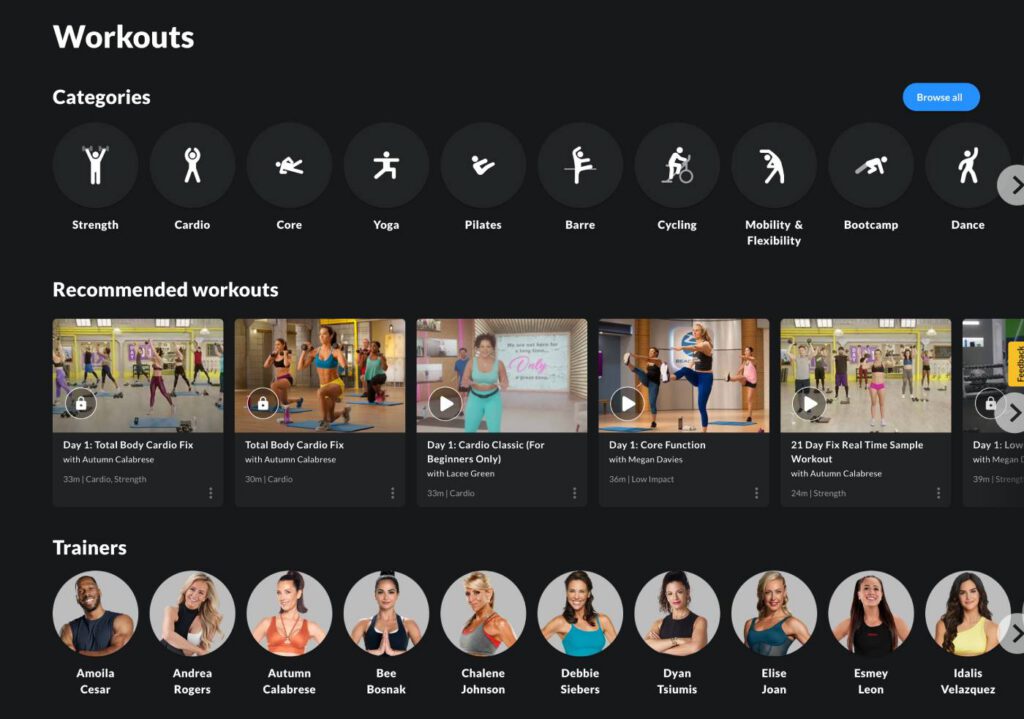
BODi carries the portion-control container system familiar from 21 Day Fix, plus meal plans tied to specific programmes, and in Belle Vitale a dedicated hormone programme created by Autumn Calabrese, an Institute for Integrative Nutrition hormone coach rather than a clinician.
Our review describes the eating plan as anti-inflammatory and protein-focused, with an emphasis on blood sugar stability and hormonal support, and it is explicit that this is a structured nutrition framework rather than a crash diet. On this page, that is the highest standard reached.
Tested by Katy Cole: The colour-coded container nutrition system drove the majority of the result I got, not the exercise alone. I had read some not-great reviews before starting, so I went in cautious, and the nutrition side is genuinely the part that changed things.
The reason it is not a blanket recommendation: the mainstream workout library skews jump-heavy with poor joint modifications, which is the opposite of what most women over 40 need. Belle Vitale is the exception rather than the rule. Buy this for the nutrition and treat the workout library with care, or pair it with something lower impact. The container system is also a general framework and, as our review notes, does not address perimenopause-specific nutritional needs in detail.
Best for: women who want a genuinely structured eating plan and will pick their workouts carefully.
Cost: $22.99 a month standard, with a $19 a month variant sometimes running. The 7-day trial is on monthly plans only.
Menovation: the most midlife-specific food content here
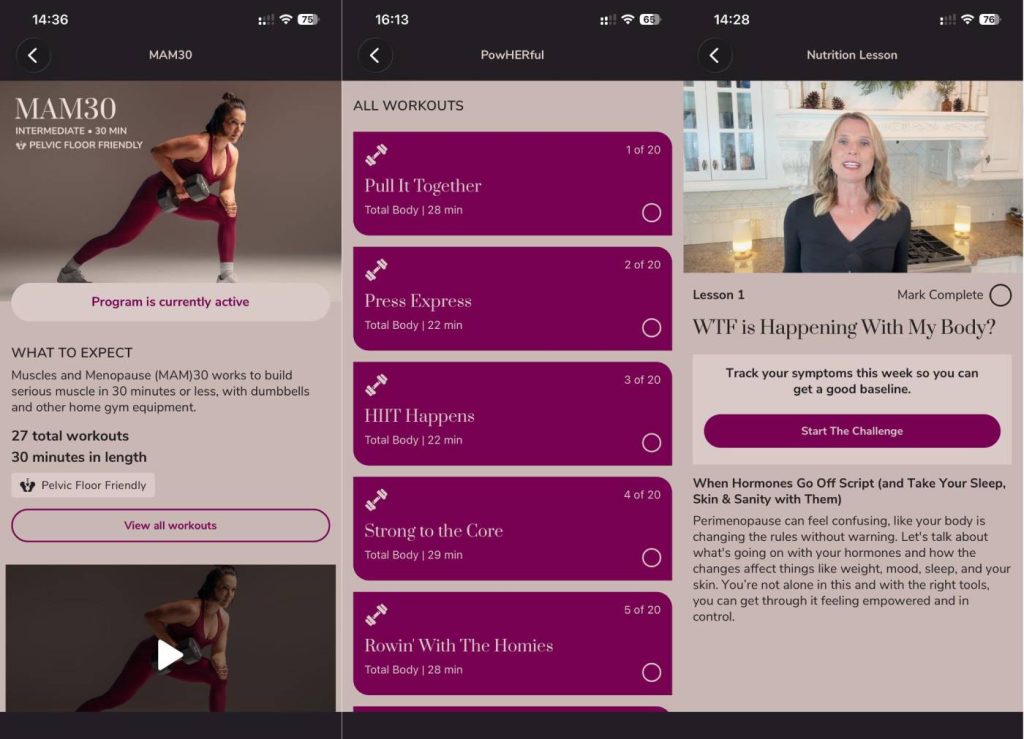
Around thirty nutrition lessons written for perimenopause, not adapted to it
Menovation is led by Ashley Nowe, a Certified Menopause Coaching Specialist, with a clinician roster that the company reports rather than independently verifies. It carries 287 or more midlife recipes with meal plans, supplement guidance, and a set of nutrition lessons built specifically around this life stage.
Tested by Katy Cole: The roughly thirty nutrition lessons on perimenopause are some of the most complete, practical information I have found on this topic, and I have spent a lot of time looking.
That is the strongest thing I can say about any nutrition content on this page. It is also worth being clear about what it is: education plus recipes plus plans, rather than a personalised system that adapts to you.
The honest limitation: the interface is dated and the library is still growing. You are buying the thinking, not the polish.
Best for: women who want to understand midlife nutrition rather than just follow a plan.
Cost: $28.99 a month, $69.99 quarterly or $199.99 a year. The trial is 8 days at the checkout, although the homepage says 7.
Fabulous50s: structured weekly plans, and the workouts are free
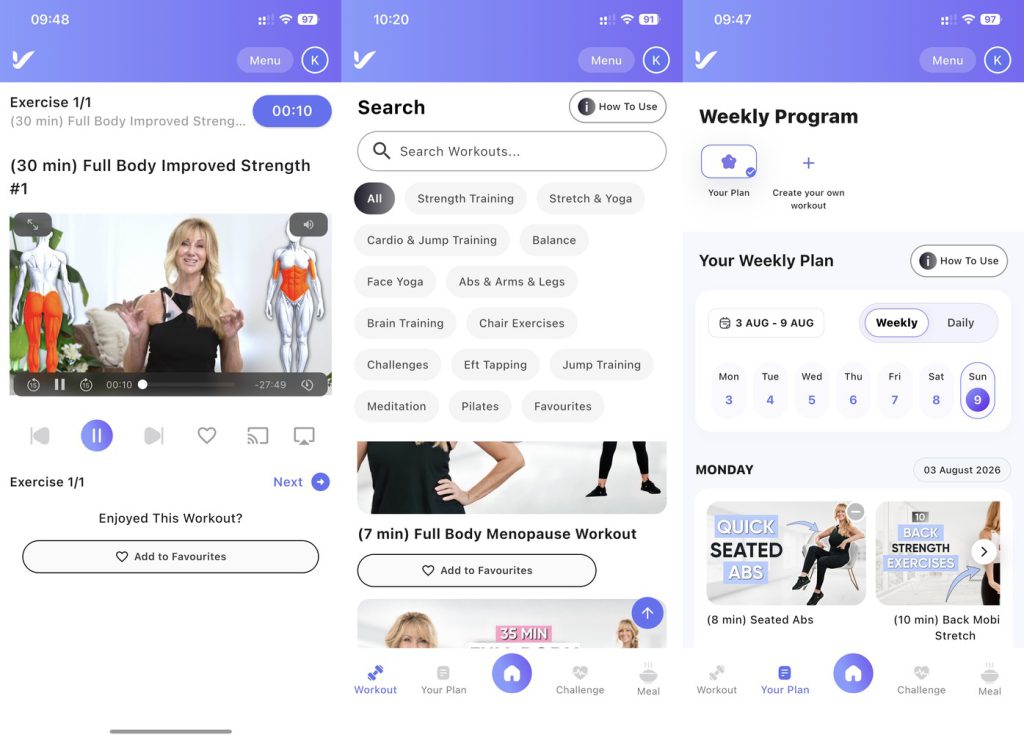
Weekly meal plans with macros and a shopping list already written for you
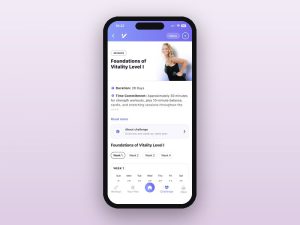
Fabulous50s is Schellea Fowler’s library, and its nutrition is more organised than most subscription apps manage: structured weekly meal plans with macros, a ready-made shopping list, and a dedicated osteoporosis plan. Fowler is a certified fitness instructor and personal trainer specialising in exercise for older adults, not a clinician or dietitian.
The shopping list is the detail that matters. It is the difference between a plan you read and a plan you execute.
The honest limitation: the nutrition is not clinician-designed, and the workouts, while genuinely built for over 50s, keep loading light.
Best for: women over 50 who want the whole week decided for them, at the lowest cost on this page.
Cost: workouts are free on YouTube. The Vitality app, which carries the meal plans, is $14.99 a month with a 14-day free trial.
Centr: the most credentialed nutrition team, without the midlife focus
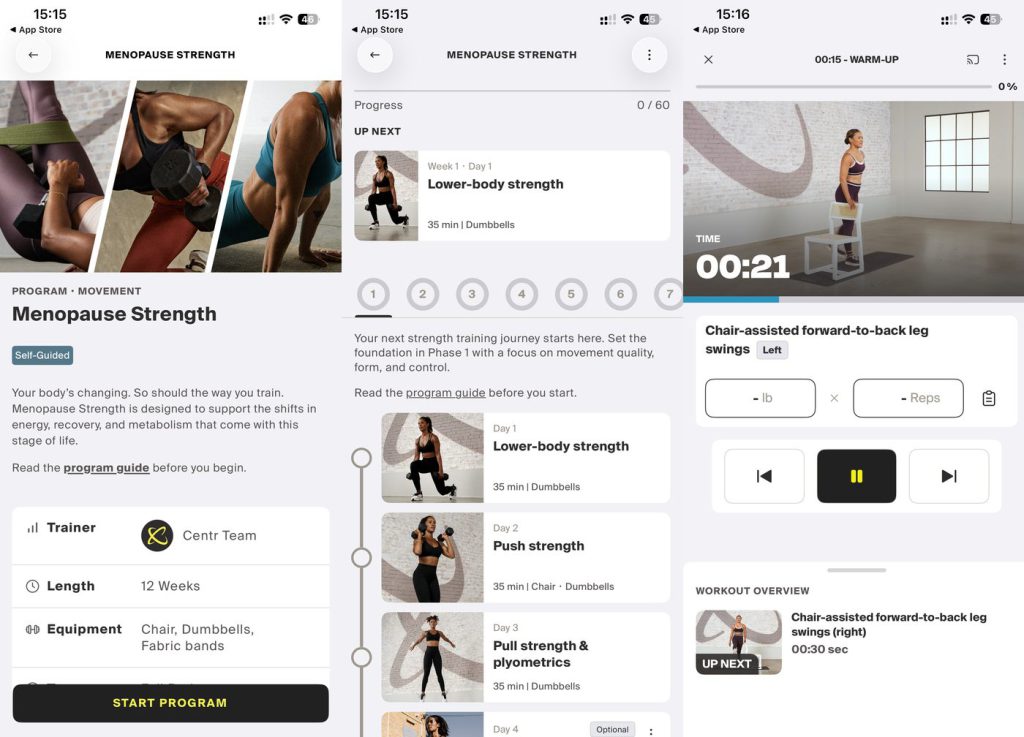
Structured plans from a credentialed sports dietitian, across 600 or more recipes
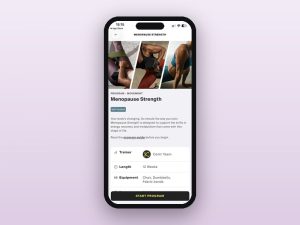
Centr is Chris Hemsworth’s platform, and its nutrition is the part that holds up best: structured meal plans and a large recipe base built by a credentialed sports dietitian, with shopping lists throughout. It also carries a 12-week menopause strength programme, though that content is coach-designed rather than clinician-led.
On sheer nutritional professionalism it is arguably the best on this page. It ranks fourth because the plans are built for general fitness rather than for a midlife body, and on this page that distinction is the whole point.
The honest limitation: nothing in the nutrition adapts to menopause. If you want a well-built plan and will handle the midlife adjustments yourself, that may not trouble you.
Best for: women who want a professionally built plan and are not looking for menopause-specific food guidance.
Cost: $29.99 a month with a 7-day trial.
FORM: dietitian-approved plans in the best app on this page
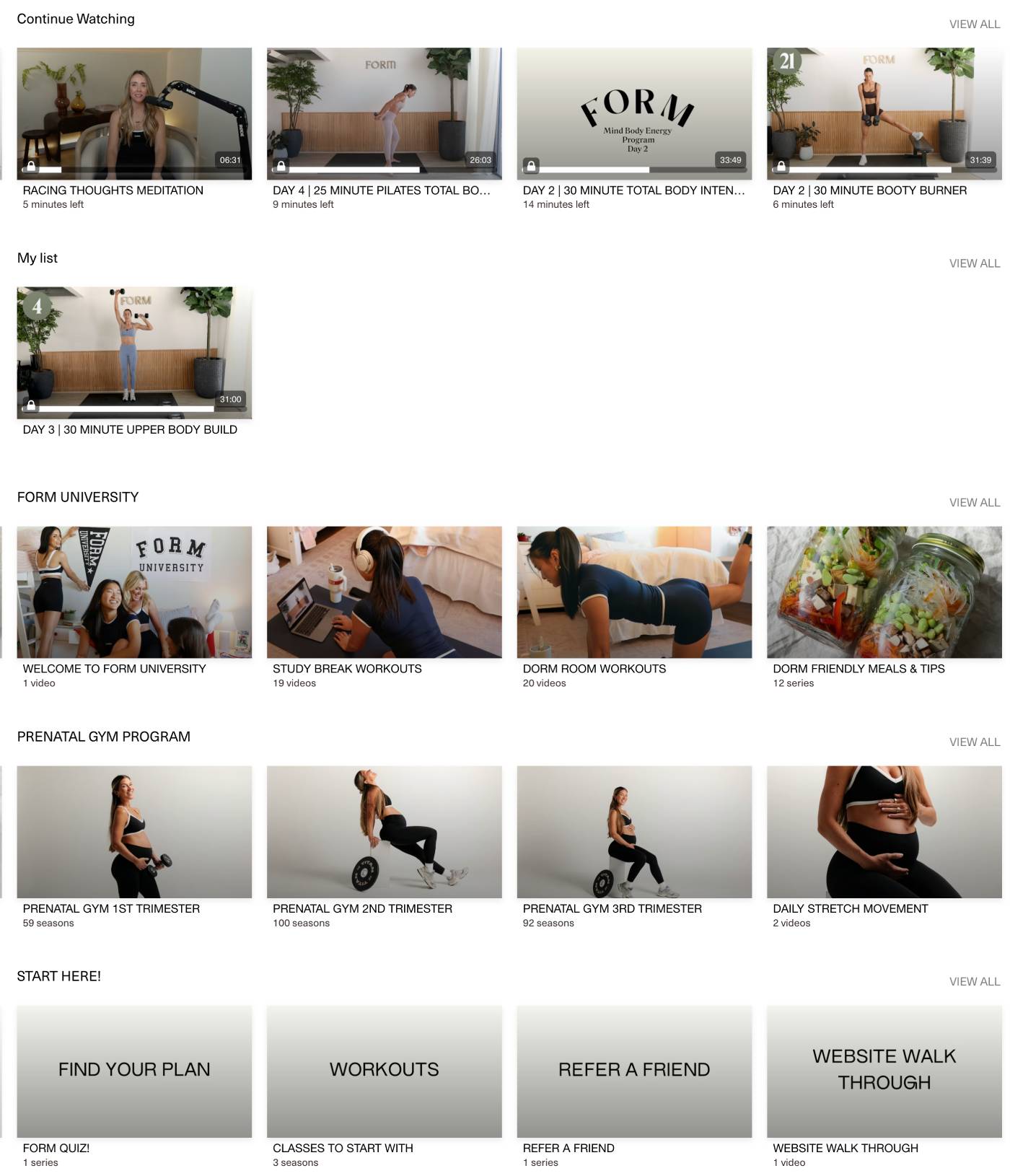
Protein-forward plans with grocery lists, attached to genuinely good Pilates and strength
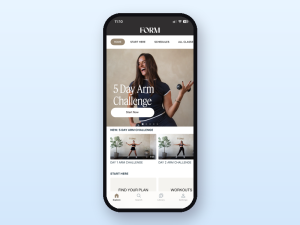
FORM is led by Sami Clarke and pairs low-impact Pilates and strength with dietitian-approved, protein-forward meal plans and grocery lists. It scores highest on this page for ease of use, which matters more for nutrition than it does for workouts: a plan you cannot navigate is a plan you abandon on day four.
Tested by Katy Cole: A note for anyone with dietary restrictions. I had one or two meals I could not follow because of my cholesterol diet, but the recipes are simple enough that swapping ingredients is straightforward. Those instances were rare: the food is generally clean, low-inflammatory and varied enough that most dietary approaches can work with it.
That is a more useful test than it sounds. Most meal plans fail the moment you have a restriction, and the ones that survive are the ones built from simple, adaptable food.
The honest limitation: the plans are not menopause-specific, and the training is deliberately gentle.
Best for: women who want a well-designed plan inside an app they enjoy using, and who do not need menopause-specific food guidance.
Cost: $28 a month, $27.99 through Apple, with a 7-day trial giving full access.
Betty Rocker: the most explicit protein targets, in the weakest interface
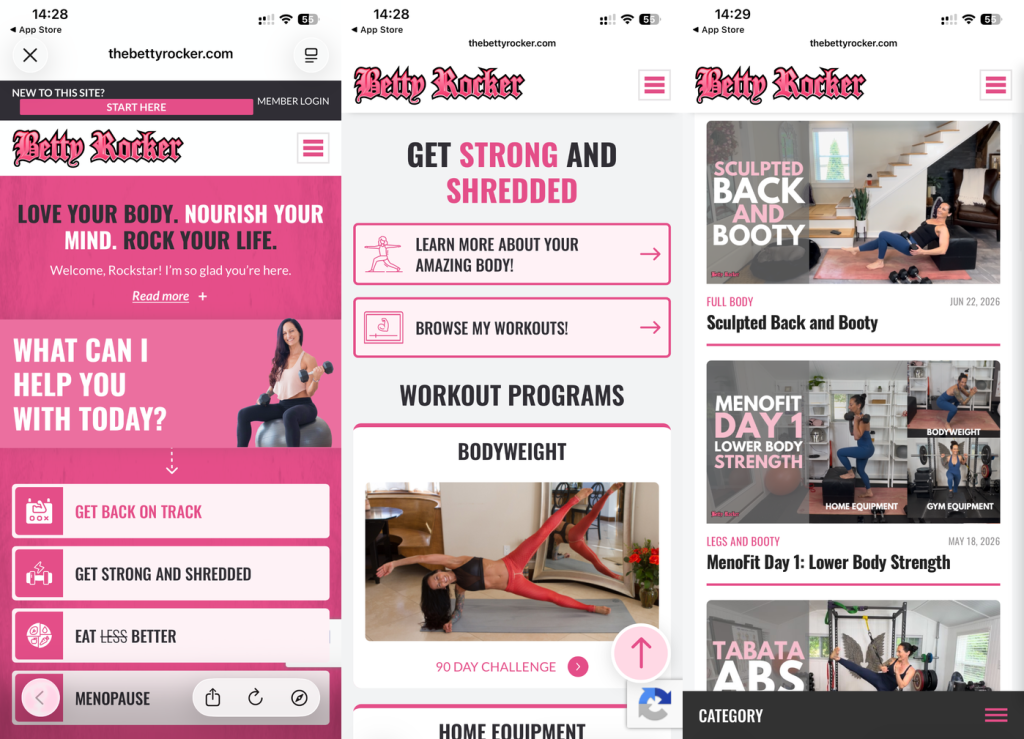
Whole-food eating with real numbers attached, and a perimenopause slant
Betty Rocker is Bree Argetsinger’s membership. She holds C.H.E.K. exercise coach and ISSA nutrition specialist credentials and is not a clinician. The nutrition is whole-food and protein-forward, targeting 30 to 40g a meal, with a high-fibre gut-health emphasis and menopause-specific eating guides.
Those explicit protein numbers are why it ranks sixth despite the lowest ease-of-use score here. Given what the SWAN data shows about lean mass declining through the transition, a plan that names a protein target per meal is doing something most of this page does not.
Two things to know before you sign up: the membership cross-sells supplements, which is worth a sceptical eye on any programme whose nutrition advice sits next to a shop. And the trial is not free: it is 30 days for $1, which is generous but is a payment, so treat it as a subscription you have started rather than a look around.
Best for: women who want concrete protein targets and whole-food structure, and will tolerate a dated interface to get them.
Cost: $37 a month, frequently promoted at $29. The trial is 30 days for $1.
Jillian Michaels App: the best meal planner, attached to the wrong workouts
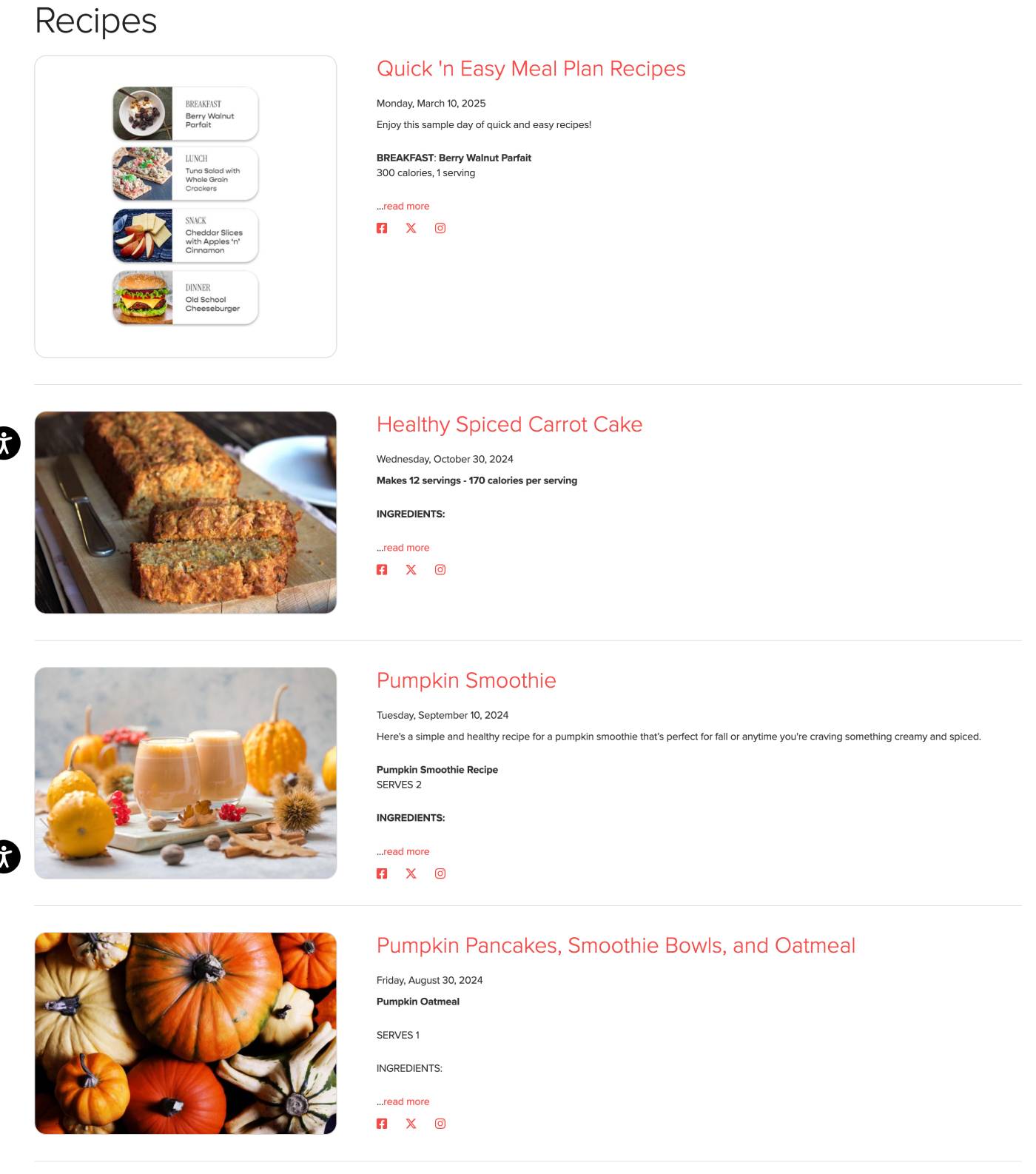
Genuinely the strongest meal-plan technology on this list, and the poorest fit for a midlife body
Jillian Michaels App has, by some distance, the most capable meal planning here: diet presets, automatic grocery lists, and a generator that builds a week around your preferences. Michaels has been a personal trainer since 1993 and holds a nutrition consultant certification; she is not a clinician.
Tested by Katy Cole: The generator feature deserves its own section, because it is genuinely clever and I have not seen it done as well anywhere else reviewed on this site.
Why it still ranks seventh: the nutrition is general weight-loss rather than midlife-specific, and the workout side defaults to high intensity that is not adapted for midlife joints, energy or menopause. If you want this meal planner, the honest advice is to use it alongside training from somewhere else on this site rather than to follow the app as a whole.
Best for: women who want the best meal-planning tool available and will get their workouts elsewhere.
Cost: $19.99 a month, with a 7-day trial for new accounts.
Fit With Coco: meal plans bundled into a method that works
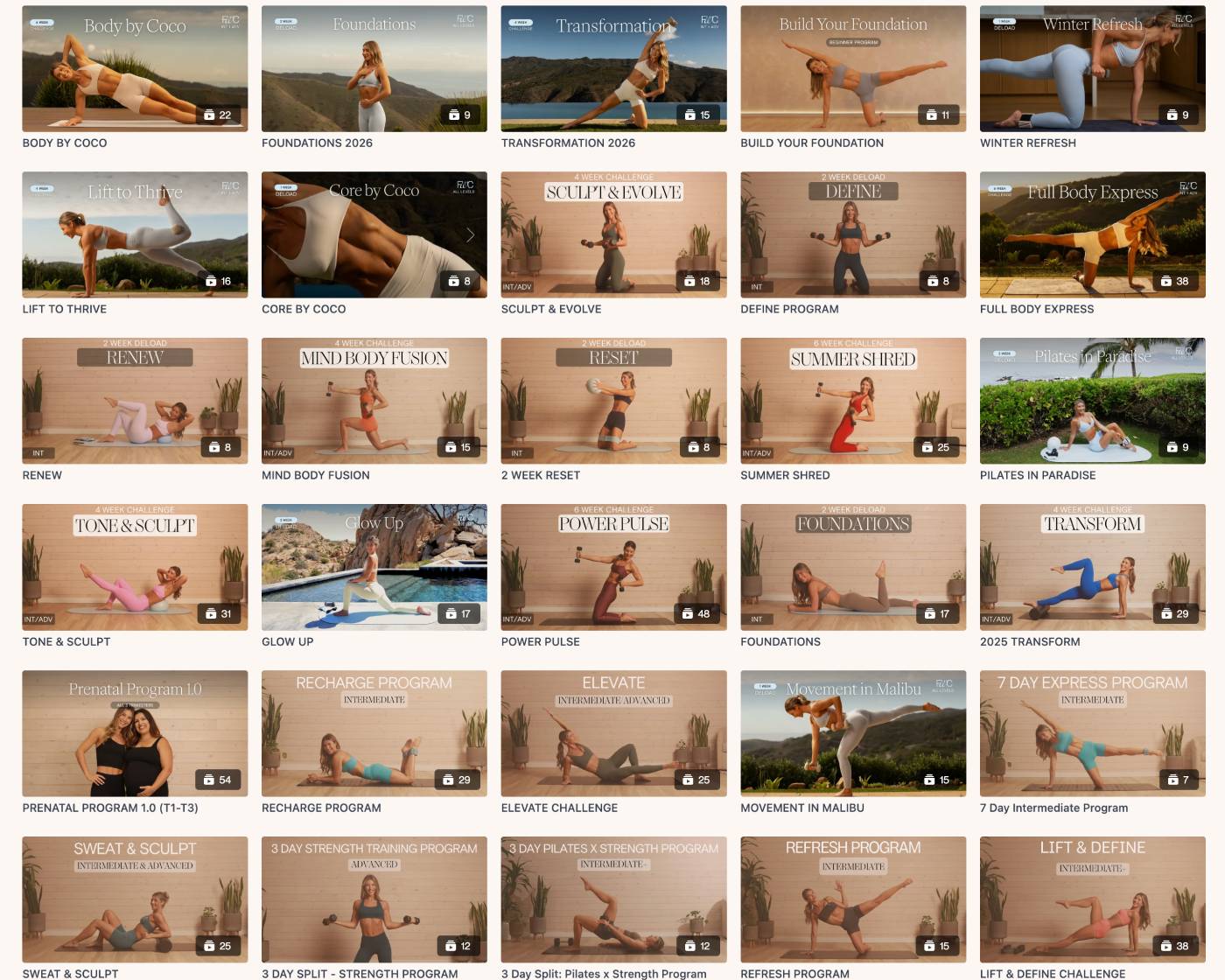
Anti-inflammatory plans included with the training, rather than sold as an add-on
Fit With Coco bundles anti-inflammatory meal plans with its 3-2-1 strength and Pilates method, written by a certified nutrition coach. The nutrition is the supporting act rather than the headline, which is why it sits eighth, but it is included rather than upsold.
Tested by Katy Cole: After 7 weeks on the Full Body Express programme, my waist measurement dropped and I lost weight I had been carrying for a while. The plan was part of that, though the training is what I would actually buy this for.
The honest limitation: at $39.95 a month it is the most expensive subscription on this page, and the nutrition is not the reason to choose it.
Best for: women who want a strong training method and will take a competent meal plan as a bonus.
Cost: $39.95 a month, $39.99 through Apple. The 7-day trial needs no card.
Which app with meal plans is right for you?
If the eating plan is the main reason you are subscribing, BODi, choosing your workouts carefully.
If you want to understand midlife nutrition, not just follow it, Menovation.
If you want the whole week decided, cheaply, Fabulous50s, with free workouts on YouTube.
If you want the nicest app and a solid plan, FORM.
If you want explicit protein targets, Betty Rocker, remembering the trial is $1 rather than free.
If you only want the meal planner, Jillian Michaels App, and take your training from elsewhere.
One thing applies whichever you choose. Judge it on protein and on whether you can follow it in a normal week, not on how fast the scale moves. The SWAN data is clear that weight is the least informative thing changing about your body right now.
How did we choose these eight apps with meal plans?
Two steps, and the first one does most of the work.
The qualifier. A programme has to actually provide a structured eating plan. We read each review and each nutrition profile to check whether what is offered is a plan that sequences meals, or a recipe library with a search box. Several programmes with high nutrition scores were excluded on that basis, including two whose nutrition scores would have placed them second and third, and we name them and link them above rather than quietly dropping them.
The ranking. Qualifying programmes are ranked on our midlife nutrition score, weighted 70%, blended with ease of use at 30%. Midlife nutrition judges whether the food guidance suits a body in this life stage, in particular protein sufficiency and whether the plan is built around blood sugar and muscle rather than calorie restriction alone. The two measures are close to independent, correlating at only r = 0.14, so the blend adds information rather than counting the same thing twice.
All eight I have used, five across a full test and three sampled, and each card carries its tier. No entry on this page rests on research alone.
We buy our own subscriptions. Some links on this page earn a commission, which never affects a score or a position; scores are set in each programme’s own review before any page like this is built.
What research is this page based on?
- Greendale GA, Sternfeld B, Huang M, et al. Changes in body composition and weight during the menopause transition. JCI Insight, 2019.
- Ramos-Campo DJ, Andreu-Caravaca L, Carrasco-Poyatos M, Benito PJ, Rubio-Arias JÁ. Effects of Circuit Resistance Training on Body Composition, Strength, and Cardiorespiratory Fitness in Middle-Aged and Older Women: A Systematic Review and Meta-Analysis. Journal of Aging and Physical Activity, 2022.
Nothing on this page is medical or dietary advice. If you have a medical condition, take any significant change of diet to your doctor or a registered dietitian first.
Where should you read next?
- Our full BODi review, including the container system and where the workout library falls short.
- Our full Menovation review, including the nutrition lessons.
- How we score, if you want to see how the nine criteria and the capability scores are built.
Frequently asked questions about workout apps with meal plans
A plan helps most at the point where decisions get skipped. The distinction that matters is that a meal plan sequences your week and usually generates a shopping list, while a recipe library gives you a search box and leaves the planning to you at seven o'clock on a Tuesday. Both have value; only one is what you searched for.
Because body composition changes faster than weight during the transition. In the Study of Women's Health Across the Nation, Greendale and colleagues reported in JCI Insight in 2019 that at the start of the transition the rate of fat gain doubled and lean mass declined, while weight climbed linearly without acceleration. The scale is answering a different question from the one you are asking.
Protein sufficiency matters more than calorie restriction, because you can lose weight and still lose the lean mass you need. The PROT-AGE position paper by Bauer and colleagues in 2013 states that older adults need more dietary protein than younger adults. Pair that with resistance training, which gives the protein a reason to be used.
The Jillian Michaels app has the strongest meal-planning technology on this list, with diet presets, automatic grocery lists and a genuinely clever generator. It ranks seventh because the nutrition is general weight-loss rather than midlife-specific and the workouts default to high intensity. If you want that planner, use it alongside training from elsewhere.
It varies, and it is worth testing during the trial. In testing FORM, one or two meals were unusable on a cholesterol-restricted diet, but the recipes were simple enough to swap ingredients and the food is generally clean and varied enough for most approaches. Plans built from complicated recipes fail restrictions much faster.
Owning Your Menopause and Flipping 50 both score highly for midlife nutrition but offer macro-counted recipes and education rather than a plan. Jessica Valant Pilates is excluded on its own description, a recipe library rather than a full personalised meal-plan system. WarriorBabe is one-to-one macro coaching sold at four figures. All are named on the page rather than quietly dropped.