
A subscription workout app built around structured, multi-week plans led by fitness trainers and athletes, with follow-along HD exercise videos and a tracker · real strength training with beginner-friendly guidance and home options · but pricier than its rivals, aesthetics-driven, and running on an aging content library · Dumbbells or a barbell and a mat.
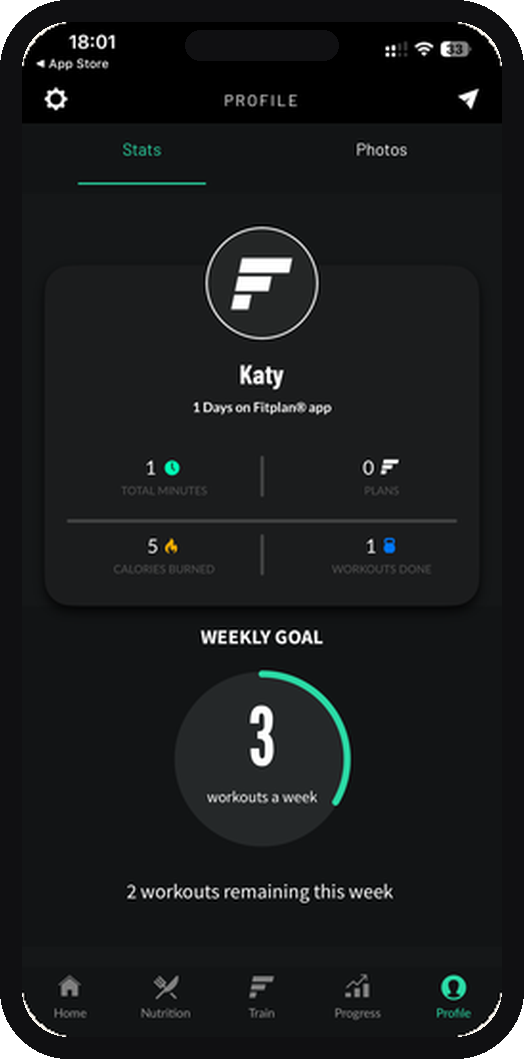
How I tested this. I downloaded Fitplan, set a weekly goal, worked through a lower-body workout following the exercise videos and logging my sets, and explored the plans, trainers and the nutrition library. This is a sample-tested review based on that hands-on trial plus research into the app, its pricing and its update history, and the screenshots are my own. This is education, not medical advice; check with your clinician before starting a strength programme, especially with a joint injury or pelvic-floor or heart concerns, and consider a qualified coach for form if you are new to lifting.
Fitplan Review 2026: Quick Answer
Sample tested: downloaded and trialled the app, tried a workout, plus research. Our own screenshots.
Women who want follow-along strength plans from real trainers, and like the confidence of a video to copy
You want menopause or pelvic-floor programming, the newest content, or the best value in a strength app
A subscription app of trainer-led, multi-week workout plans with follow-along videos and a tracker
Whatever the plan calls for, typically 30 to 60 minutes, self-paced
Depends on the plan; gym or home options, many workable with dumbbells
Low-impact for the strength plans, with some higher-impact HIIT options
Real resistance training, good for muscle and bone, though follow-along rather than individualised progression
The right kind of training for a midlife body, but no menopause, hormone or pelvic-floor content
A real strength: follow-along videos from trainers lower gym intimidation, with beginner and home plans
A concern: the plan library looks stagnant, with mostly maintenance updates in recent years
iOS, Android and web, with Apple Watch and Health support
Around $15.99 to $19.99 a month, or about $69.99 a year, with a 7-day free trial
A 7-day free trial, plus a few free single workouts; the full library needs a subscription
5.9 / 10
Quick Verdict
Worth it for women over 40? If you want follow-along strength workouts from real trainers, it is a good, beginner-friendly way in. But it is not built for menopause, it is on the pricey side, and its content looks dated, so weigh it against fresher, cheaper options.
Fitplan earns 5.9/10 in this sample-tested review. What it does well is follow-along strength: you pick a multi-week plan from a real trainer or athlete, and each session gives you HD videos to copy, with a tracker to log your weights and reps. That format is genuinely reassuring if the gym feels intimidating, and several reviewers, including women over 40, credit it with building their confidence. On the most important thing for a midlife body, resistance training for muscle and bone, it delivers real work, and there are beginner, women-led and home, dumbbell-only plans as well as gym ones.
Where it is limited for our audience. There is no menopause, hormone or pelvic-floor programming, and no modifications for joint injuries. The culture is aesthetics and influencer-driven, all booty and shredding, which will not suit everyone, and it is self-directed follow-along rather than individualised, progressive coaching. Two practical concerns stand out: it is more expensive than several rivals, and the plan library looks stagnant, with recent updates being mostly bug fixes rather than new content. Consider it if you specifically want trainer-led video workouts and are happy to add your own low-impact and recovery work, but compare it on price and freshness first.
Is Fitplan right for you?
Fitplan is strongest for building bone density (6.0 out of 10, against a 5.1 average across the 77 programmes scored) and weakest for value for money (5.0 against 6.9).
| Question | Verdict | Rating | Score |
|---|---|---|---|
| How it suits a perimenopausal body | |||
| Is Fitplan good for pelvic floor problems?Based on pelvic floor support and low-impact design | Low, about the same as mostmost score 4.6/10 | 4.0 / 10 | |
| Is Fitplan genuinely built for perimenopause and menopause?Based on menopause programming, hormone awareness, education and expert credibility | Low, and worse than mostmost score 3.3/10 | 1.8 / 10 | |
| Is Fitplan good for painful joints?Based on low-impact design and recovery provision | Moderate, about the same as mostmost score 6.2/10 | 6.0 / 10 | |
| Is Fitplan manageable when your energy is low?Based on recovery provision and mind-body support | Low, and worse than mostmost score 5.7/10 | 4.0 / 10 | |
| Is Fitplan good if you are new to strength training?Based on beginner on-ramp and mind-body support | Low, and worse than mostmost score 6.1/10 | 4.5 / 10 | |
| Is Fitplan good for building bone density?Based on bone loading and progressive strength | Moderate, but better than mostmost score 5.1/10 | 6.0 / 10 | |
| Does Fitplan help with nutrition?Based on midlife nutrition support | Low, about the same as mostmost score 4.0/10 | 4.0 / 10 | |
| How it performs as a product | |||
| Can you fit Fitplan into a busy week?Based on time efficiency | Strong, about the same as mostmost score 7.6/10 | 7.0 / 10 | |
| Is Fitplan worth the money?Based on value for money | Moderate, and worse than mostmost score 6.9/10 | 5.0 / 10 | |
Jump to Section
What Fitplan Actually Is
Fitplan is a subscription workout app built around structured, multi-week training plans led by fitness trainers, athletes and influencers. You choose a plan, and each session gives you follow-along, step-by-step HD videos demonstrating every exercise, along with a tracker to log your sets, reps, weights and progress on a calendar. It advertises more than a hundred programmes from over forty trainers, spanning home workouts, weightlifting and bodybuilding, HIIT, bodyweight and athletic training, plus prenatal and postnatal options, and there is a genuine nutrition library of more than four hundred recipes with full macros. An onboarding quiz suggests plans, and it runs on iOS, Android and the web, with Apple Watch and Health support.
For this audience it helps to be clear about what it is and is not. It is a genuinely useful, beginner-friendly way to follow real strength training, with the reassurance of a video to copy and plenty of women-led and home options, which makes it a reasonable strength tool for a midlife body. What it is not is a menopause or coaching programme: there is no hormone or pelvic-floor content, no injury modifications, and the plans are follow-along rather than individually progressed. It also leans heavily on aesthetics and influencer culture, and, importantly, its library looks like it has not been meaningfully updated in some time. Read Fitplan as trainer-led video strength for someone who wants that format, best paired with your own low-impact and recovery work.
Who Is Behind Fitplan? Credibility
Fitplan is made by Fitplan Technologies, founded in 2013, and since January 2022 it has been owned by FitLab, the hybrid-fitness company, and published under its app entity. Its credibility rests on the trainers and athletes who build the plans, who are experienced, competitive and, in many cases, well known, from physique athletes and IFBB pros to fitness influencers. At the fitness level, that means the programming is real and the demonstrations are professional, and the follow-along format is a genuine help for people learning to train.
How to read that credibility. Fitplan is a legitimate, trainer-led app, but it is an aesthetics and influencer brand, not a clinical or medical one: there are no clinicians, pelvic-health specialists or hormone-aware coaches, and no menopause-specific expertise. Just as relevant to trust in 2026 is upkeep: since the acquisition the app has removed features, such as its community feed, and its updates have been mostly maintenance rather than new plans, so it feels like a product receiving limited investment. Expect competent, professionally filmed strength workouts, but not fresh content or midlife-specific guidance.
My Experience: What It Was Actually Like
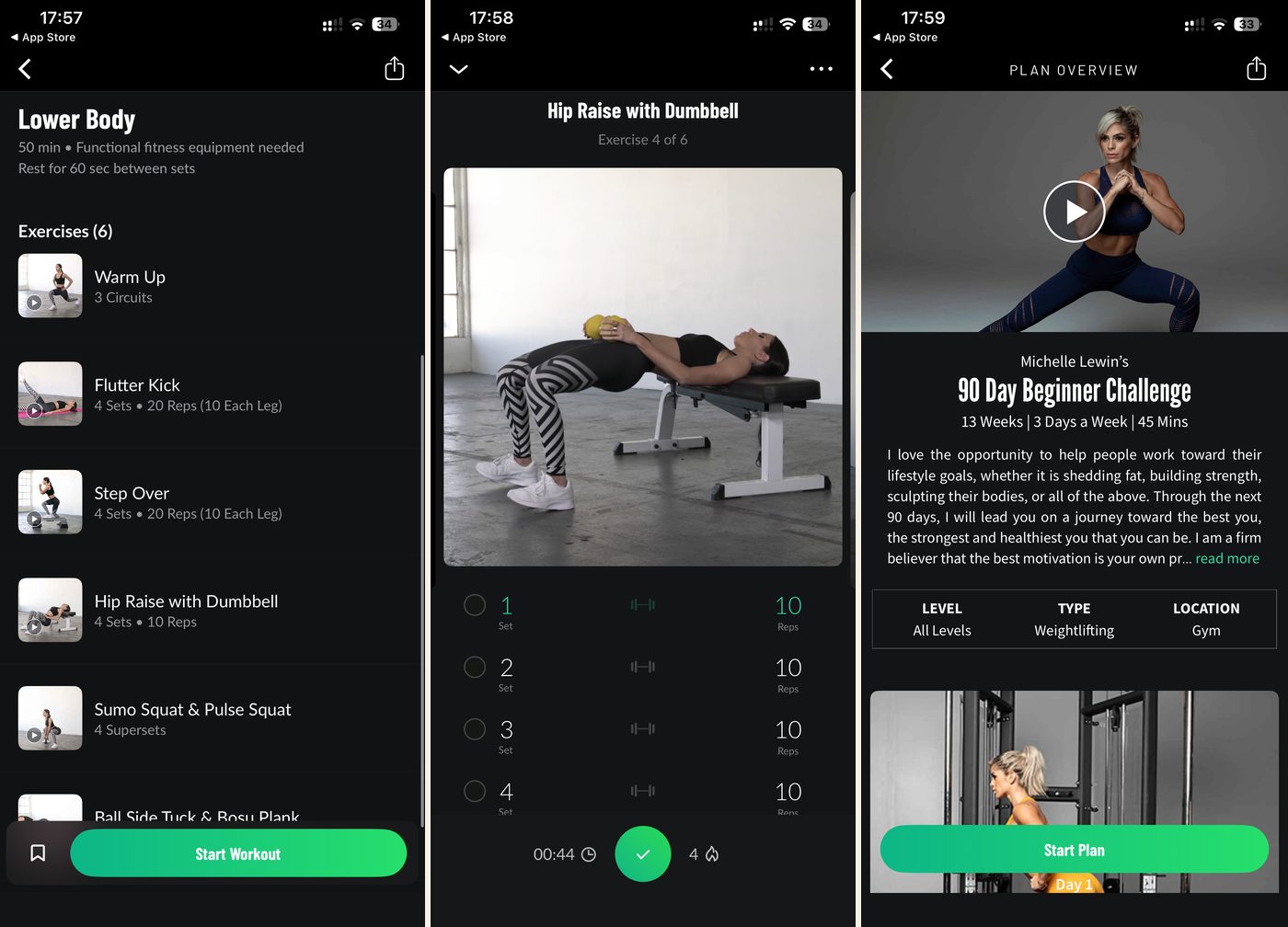
What I did. I set up the app, chose a weekly goal of three workouts, and worked through a lower-body session to see how it flows. The workout opened with a structured warm-up of a few circuits, then moved through the exercises, flutter kicks, step-overs, a hip raise with a dumbbell and sumo and pulse squats, each with a follow-along video, sets and reps, and a rest timer between them. Logging my reps and weights as I went was quick, and the follow-along format made it easy to just copy along rather than wonder what to do next.
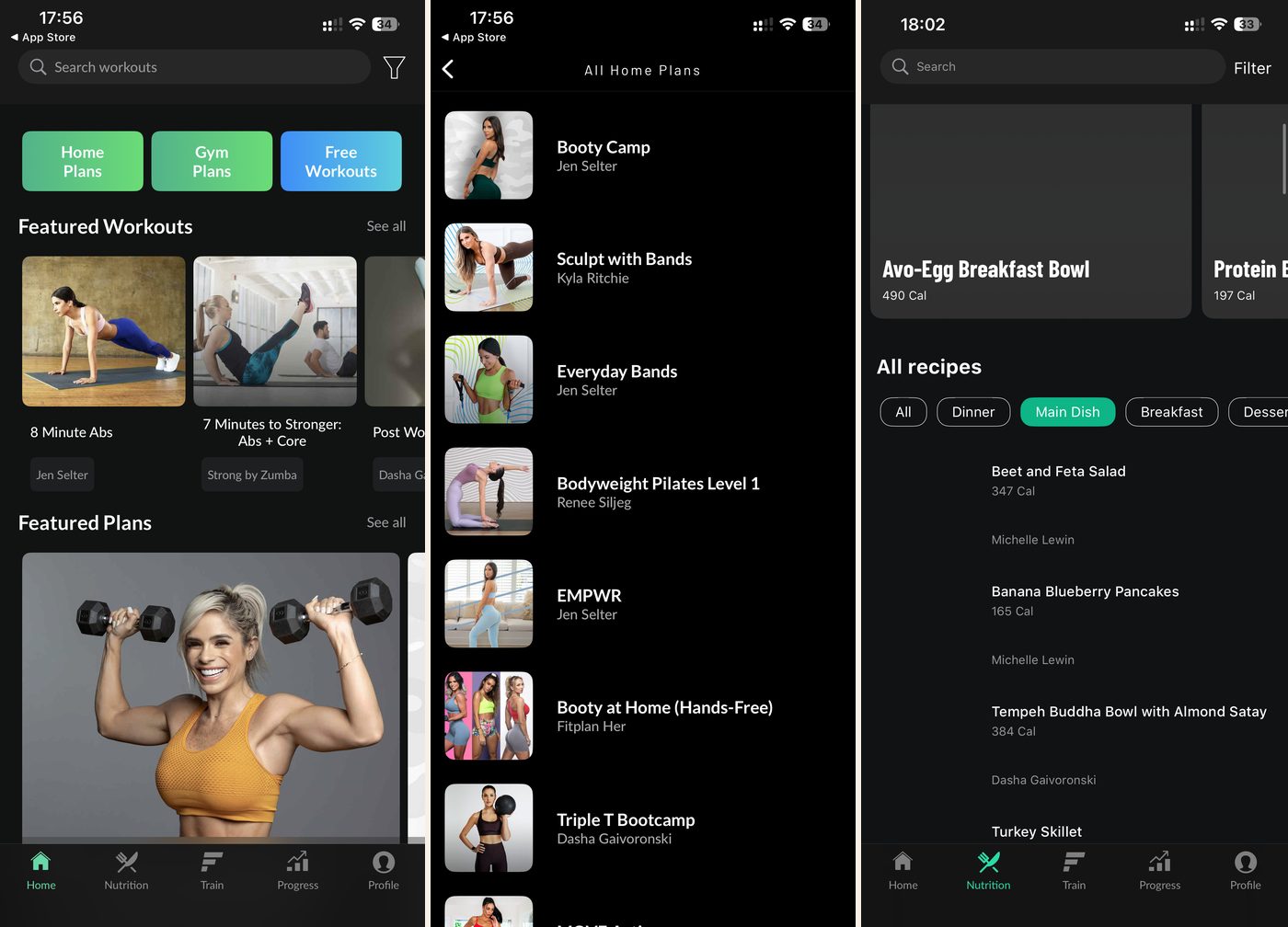
What stood out. Two things surprised me. First, the breadth: alongside gym plans there are home plans, hands-free options, bands and bodyweight Pilates, and a set of free workouts, plus plans from a range of women trainers, so it is far more than a gym-bro app. Second, the nutrition side is more substantial than I expected, a proper library of over four hundred recipes with full macros, filterable by course. What I did not find was anything tailored to a midlife body or a joint issue: no menopause or pelvic-floor content, and no way to swap an exercise if a movement does not suit you. It is a polished, feature-rich app to follow trainer-led strength, best steered by someone who already knows roughly what they want.
Content and Features
At a glance: trainer and athlete-led, multi-week strength plans with follow-along HD videos, a tracker, and beginner, women-led and home options, plus a real recipe library. Capped for our audience by no menopause or pelvic-floor content, no injury modifications, an aesthetics-driven culture, a higher price, and an aging, stagnant plan library.
| Format | A subscription app with 100-plus multi-week plans and follow-along HD exercise videos, plus a tracker, on iOS, Android and web. |
| Trainers | Over forty trainers, athletes and influencers, from physique athletes and IFBB pros to fitness personalities. |
| Plan types | Strength, bodybuilding, HIIT, bodyweight, athletic and home plans, plus prenatal and postnatal, with beginner and women-led options. |
| Strength and bone | Real resistance training, good for muscle and bone, though follow-along rather than individually progressed. |
| Impact and joints | Low-impact for the strength plans, with some higher-impact HIIT, and no modifications for joint injuries. |
| Women over 40 / menopause | No menopause, hormone or pelvic-floor programming, though there are beginner, women-led and home plans. |
| Beginner support | A real strength: follow-along videos lower gym intimidation, with a plan-recommendation quiz. |
| Nutrition | A genuine recipe library, over 400 recipes with full macros from the trainers, filterable by course, though not menopause-specific. |
| Content freshness | A concern: the plan library looks stagnant, with mostly maintenance updates in recent years. |
What Equipment Do You Need for Fitplan?
It depends on the plan, which is a strength of the app: you can pick gym plans that use barbells and machines, or home plans that need little more than a set of dumbbells and a mat. For training at home, an adjustable set of dumbbells will run most of the home and women-led plans, and because building strength is about lifting progressively heavier, weights that let you add load are the most useful thing to own.
For a midlife body, dumbbells are the single most valuable purchase, because protecting muscle and bone comes down to progressive resistance over time, and adjustable ones cover the widest range in the least space.
Recommended spec examples. These picks are curated for convenience by specification and feature fit, not personally lab-tested for long-term durability. Prices are examples; verify before buying.
Exercise mat
For the floor, core and accessory work at home.Recommended
Medium Dumbbells (up to 25 lb)
A versatile starting range for the home plans.~$50 to $65
Advanced Dumbbells (up to 50 lb)
For heavier, progressive strength as you get stronger.~$350 to $430
A quick heads-up: some of the buy links above are Amazon affiliate links, so if you grab something through them I may earn a small commission, at no extra cost to you. I only ever point you to kit I would happily use myself.
Bottom line on equipment: a barbell and rack suit the gym plans, or adjustable dumbbells and a mat for the home ones.
How We Scored Fitplan: the 5.9 / 10 Breakdown
Scores on our 9 weighted criteria, from a sample-tested trial plus research. Women Over 40 is our menopause-fit criterion, and its full 12-capability breakdown follows in the next section.
| Category | Weight | Score | Reasoning |
|---|---|---|---|
| Time Efficiency | 15% | 7 | Self-paced follow-along sessions you can fit around your week. |
| Muscle Potential | 18% | 6 | Real trainer-led resistance plans, though follow-along rather than individually progressed. |
| Women Over 40 Specificity | 10% | 3.9 | The right training for a midlife body with women-led and home options, but no menopause content and no injury modifications; full breakdown below. |
| Joint Friendliness | 12% | 7 | Strength work is low-impact, though some plans add HIIT and there are no injury modifications. |
| Recovery Compatibility | 10% | 6 | Plans schedule rest and recovery days, but it is self-directed and not menopause-aware. |
| Programme Structure | 12% | 6 | Well-structured multi-week plans and a tracker, though the library looks stagnant. |
| Value for Money | 8% | 5 | More expensive than several rivals, and the aging content weakens the value. |
| UX and Design | 8% | 6 | Good follow-along videos and device support, but users report bugs and the app feels under-invested. |
| Nutrition Integration | 7% | 5 | A large recipe library with full macros from the trainers, though general rather than a menopause-specific plan. |
| Total | 100% | 5.9 / 10 | Tested Score. |
Is Fitplan Good for Women Over 40?
On the most important thing, yes, with caveats. The best training for a woman over 40 is progressive resistance work, and Fitplan delivers real strength training in a format that many find reassuring: follow-along videos from actual trainers, so you can see exactly what to do, plus beginner, women-led and home, dumbbell-only plans. Several reviewers who are over 40 credit it with making the gym feel approachable and building their confidence, which is a genuine benefit, because the biggest barrier to strength training is often just knowing where to start.
Where it falls short, and what to pair it with. The gaps are the familiar ones for a midlife body, plus a couple specific to this app. There is no menopause, hormone or pelvic-floor programming, and no modifications for joint injuries, so you have to adapt yourself. The culture is aesthetics and influencer-led, which will not appeal to everyone, and the plans are follow-along rather than coached progression. On top of that, the content looks dated and the app is more expensive than several rivals, so you may be paying more for a stagnant library. So while the strength training is worthwhile, the support and the value are weaker than the alternatives.
What the wider picture shows. Fitplan is well liked for its trainer-led videos and beginner-friendliness, and its strength content is real and open to women. But it is a self-directed, aesthetics-focused app that has not been refreshed much lately, so read it as a reasonable trainer-led strength option, best if you specifically want that video format, and worth comparing on price and freshness against newer strength apps, while adding low-impact, recovery and any menopause-specific support elsewhere.
How Fitplan Fits Perimenopause, Menopause and Beyond
Our capability breakdown of how well Fitplan suits women across perimenopause, menopause and post-menopause. Women Over 40 is our menopause-fit criterion, and this is the full breakdown behind the Women Over 40 row above.
Fitplan is strongest for beginner-friendly, trainer-led resistance training, joint-friendly strength and home access; it is weakest on menopause and hormone programming, pelvic floor, injury modifications and nutrition, in our menopause and midlife capability assessment.
This is the perimenopause and menopause assessment, and it is separate from the overall score. Twelve things a programme either does for a midlife body or does not, each scored out of 10 with my reasoning next to it. Together they produce a single menopause fit score, and that becomes one of the nine categories in the overall scoring below.
How Fitplan Fits Perimenopause, Menopause & Beyond
Women Over 40 is our most important criterion, and here's the full breakdown behind it.
Fitplan is strongest for low-impact, progressive strength and bone loading, and weakest for menopause programming, pelvic floor, hormone awareness, menopause education, mind-body support, expert credibility and midlife nutrition, in our menopause and midlife capability assessment for women over 40.
At a glance
| Capability | Score | Rating | Why |
|---|---|---|---|
| Right training for a midlife body | |||
| Low-impact | 7/10 | Strong | Strength work is low-impact, though some plans add HIIT and there are no modifications for existing joint injuries. |
| Progressive strength | 6/10 | Some | Real trainer-led resistance and strength plans, but follow-along videos rather than individually progressed coaching, so you manage the load. |
| Bone loading | 6/10 | Some | Resistance training gives a genuine bone-loading stimulus, though many plans are hypertrophy or aesthetics-focused. |
| Recovery & deload | 5/10 | Some | Plans schedule rest and recovery days and include warm-ups, but it is self-directed and not menopause-aware. |
| Built for menopause | |||
| Menopause programming | 1/10 | None | No menopause or perimenopause programming. |
| Pelvic floor | 1/10 | None | No pelvic-floor content, and the prenatal/postnatal plans are not a menopause pelvic-floor programme. |
| Hormone awareness | 1/10 | None | No hormone education or programming. |
| Menopause education | 1/10 | None | No menopause-specific education. |
| Expert credibility | 4/10 | Minimal | Experienced, competitive trainers and athletes build the plans, but it is an aesthetics and influencer brand, not clinical or menopause-aware, and the library looks under-invested. |
| Whole-woman support | |||
| Mind-body support | 3/10 | Minimal | An aesthetics and influencer-driven app with progress tracking and some Pilates, but no real mind-body or menopause support. |
| Beginner on-ramp | 6/10 | Some | A genuine strength: follow-along videos lower gym intimidation, with beginner, women-led, home, bands, hands-free and free-workout options and a plan-recommendation quiz, though it is self-directed with no injury modifications. |
| Midlife nutrition | 4/10 | Minimal | A real recipe library of 400-plus recipes with full macros from the trainers, a genuine plus, though general rather than menopause-specific. |
ScaleBest-in-classStrongSomeMinimalNone
These are evidence-informed suitability ratings, not clinical measurements. They combine exercise science with product-specific research and, where indicated, hands-on testing, alongside multi-source verification, and are approximate. Individual response varies. A starting point, not medical advice. How we score menopause fit
What the sources say: scores combine the app and its plans, independent coverage, user sentiment and the science. Fitplan does well on the right training for a midlife body, with real resistance work and beginner-friendly follow-along videos, and it has women-led and home options. It scores low on the built-for-menopause measures because there is no menopause, hormone or pelvic-floor programming, no injury modifications, and no midlife-specific tailoring, so despite a decent recipe library it is a trainer-led strength tool rather than a supported midlife plan.
These are evidence-informed suitability ratings, not clinical measurements. They combine exercise science with programme research and multi-source verification, and are approximate. Individual response varies. A starting point, not medical advice. How we score menopause fit.
What the Research Says: Fitplan Checked
The training Fitplan delivers is well supported. Progressive resistance training improves strength and physical function in older adults, which is the basis of its strength plans,[1] and for bone specifically, heavier, progressive resistance and impact training improves bone density and physical function in postmenopausal women with low bone mass, as in the LIFTMOR trial.[2] That matters because across the menopause transition body composition shifts, with fat mass rising and lean mass falling, so protecting muscle with resistance training is a priority.[3]
Where the caveat lies. The evidence supports the training, not the format’s limits. Progressive overload works best when the load keeps climbing and the form is sound, and follow-along videos give you the movements but leave the progression and technique to you, with no coaching or injury modifications. For menopause specifically, strength is one essential piece, but it sits best alongside the pelvic-floor, recovery and low-impact work that Fitplan does not provide, so treat it as the strength component rather than the whole plan.
What Users Report: Verified Sentiment
Rating snapshot: Fitplan is well rated overall, holding around 4.8 stars on the App Store from roughly eleven thousand ratings, though many of the featured reviews are several years old, and around 4.0 on Google Play from several thousand reviews with over a million downloads, all read in 2026. We treat the high iOS figure with some caution given how aged the review pool looks.
What users praise and criticise. The praise is consistent: the follow-along videos with real trainers and athletes are the standout, people find they make the gym far less intimidating, the exercise variety is good, and the tracking is easy, with the option to run more than one plan at once. The fair criticisms are app bugs, including login lockouts and videos that fail to load, an aesthetics and booty-focused framing, a lack of personalisation, and questions about value at the price. The most decision-relevant issue is content freshness: reviewers report the plans have not changed much in a couple of years, the app has removed features such as its community feed, and recent updates have been mostly bug fixes, which suggests a product on maintenance rather than active development. We found no controversies or legal issues.
Consistently praised
- Follow-along videos from real trainers and athletes.
- Makes the gym far less intimidating for beginners.
- Good variety, easy tracking, and women-led and home plans.
- Works on phone, web and Apple Watch.
Consistently noted
- An aging, stagnant content library and removed features.
- App bugs, and a higher price than several rivals.
- Aesthetics and influencer-focused framing.
- No menopause, pelvic-floor or injury support.
Source and credibility note: the iOS rating was read in 2026 but the review pool looks aged, so we do not lean on it heavily, and no rating is used in our structured data. The content-freshness concern is drawn from the app’s update history and recent reviews. Figures can change, so treat them as a snapshot.
Fitplan specifications
- Free trial
- 7-day free trial (cancel 24h before end)
- Cancellation
- 7-day trial (not charged if cancelled 24h before); cancel anytime, ends at cycle end
- Who makes it
- Fitplan, plans by pro athletes/trainers (no single founder-trainer); now owned under MVMNT / WithU (acquired from original Fitplan Technologies); no clinician
- Still maintained
- Active (not defunct); Fitplan®: Gym & Home Workouts app v8.0.1 (rel 2026-01-13), id 1064119547 (MVMNT Inc.)
- What is included
- On-demand classes: yesLive classes: noRecovery content: partlyMenopause education: noStructured programmes: yesMeditation: noNutrition guidance: partly
- Women over 40
- Pelvic floor work: noMenopause clinician involved: noInjury modifications: partlyBone-health focus: partlyModified progressions: yesCycle syncing: noPrenatal options: partly
- Devices and access
- Offline downloads: partlyCasting to TV: partlySubtitles: noWearable sync: partly
- Support
- Clinical advisory board: noCommunity: partlySupplement upsell: no
- Last verified
- 13 August 2026
Fitplan Price 2026: What You Actually Pay
| Plan | Cost | Notes |
|---|---|---|
| Free trial | 7 days free | For first-time users; a few single workouts are also free, but the full library needs a subscription. |
| Monthly | ~$15.99 to $19.99 a month | The full plan library, follow-along videos and tracker; the price varies by platform and offer. |
| Annual | ~$69.99 a year | The best value, though some regions or legacy plans show higher prices. |
Cost and Cancellation
Fitplan costs roughly $15.99 to $19.99 a month, or about $69.99 a year, with a 7-day free trial for new users and a few free single workouts; the full library requires a subscription. Exact prices vary by platform, region and offer, and the store lists several historical price points, so confirm the current figure at sign-up and set a reminder before a trial ends. Given the app’s aging content, it is worth comparing the price against fresher or cheaper strength apps before committing. Prices were checked in 2026 and can change.
Fitplan Pros and Cons
Pros
- Real, trainer-led resistance training, good for midlife muscle and bone
- Beginner-friendly follow-along videos that lower gym intimidation
- Beginner, women-led and home, dumbbell-only options
- Easy tracking, and phone, web and Apple Watch support
- A genuine recipe library, over 400 recipes with macros
Cons
- An aging, stagnant content library and removed features
- More expensive than several rivals
- No menopause, hormone or pelvic-floor programming, and no injury modifications
- Aesthetics and influencer-focused culture
- Self-directed, with app bugs and no coaching by default
How Fitplan Compares
Here is how Fitplan stacks up against the alternatives women most often weigh it against. Scores come from our own reviews; apps we have not scored yet are marked and update automatically once reviewed.
| Feature | Fitplan | BodyFit | EvolveYou | Pvolve | Sweat |
|---|---|---|---|---|---|
| Our score | 5.9 / 10 | 6.4 / 10 | 6.1 / 10 | 8.3 / 10 | 7.3 / 10 |
| Monthly price | ~$15.99 to $19.99/mo | $9.99/mo · $49.99/yr | ~$14.99/mo | $24.99/mo · equipment from $199 | ~$19.99/mo |
| Style | Trainer-led follow-along strength | Structured strength and bodybuilding | Guided women’s strength | Functional strength, menopause-built | Women’s strength and HIIT |
| Follow-along videos | Yes, a real strength | Exercise demos | Yes | Yes | Guided |
| Content freshness | Aging, stagnant | Large, maintained | Active | Active | Active |
| Menopause programming | None | None | Minimal | Yes, menopause-built | Some |
| Best suited to | Women wanting trainer-led video strength | Women confident with a strength library | Women wanting guided app strength | Women ~35+ wanting menopause-built strength | Women wanting structured strength and HIIT |
Fitplan vs BodyFit: Which Is Better for Women Over 40?
These two are close rivals: both are trainer and athlete-led strength apps with exercise videos and a tracker, both lean towards aesthetics and neither offers menopause programming. The differences are freshness, price and format. BodyFit, from Bodybuilding.com, is cheaper, at about ten dollars a month or fifty a year, with a larger and better-maintained programme library and structured plans from credible coaches, though its videos are more short demonstrations than full follow-alongs. Fitplan’s edge is its polished, full follow-along videos led by named trainers and athletes, which are genuinely reassuring for beginners, but it costs more and its content looks stagnant.
For women over 40 the choice comes down to what you value. If you want the most beginner-friendly, video-led experience and do not mind paying more, Fitplan delivers that. If you want more programme depth, better upkeep and better value, BodyFit is the stronger pick. Neither is menopause-specific or offers injury modifications, so whichever you choose, treat it as the strength engine and add low-impact, recovery and any midlife-specific support yourself.
Best Alternatives to Fitplan
If you want better value, fresher content, or the menopause and joint-friendly support Fitplan lacks, these published options pair or compare well.
Fitplan FAQ
Fitplan is a subscription workout app built around structured, multi-week training plans led by fitness trainers, athletes and influencers. Each session gives you follow-along, step-by-step HD videos of every exercise, plus a tracker to log your sets, reps and weights. It advertises more than a hundred programmes from over forty trainers, spanning strength, bodybuilding, HIIT, bodyweight, home and athletic plans, with beginner and women-led options and a nutrition side. It runs on iOS, Android and web, with Apple Watch and Health support.
For the training, yes, with caveats: it offers real resistance work, which protects midlife muscle and bone, in a beginner-friendly follow-along video format, plus women-led and home plans, and several over-40 reviewers credit it with building gym confidence. The caveats are significant, though. There is no menopause, hormone or pelvic-floor programming and no injury modifications, the culture is aesthetics-focused, it is pricier than rivals, and the content looks stagnant. So it is a trainer-led strength tool best paired with low-impact, recovery and menopause-specific support.
Yes, reasonably. Fitplan offers real trainer-led resistance and strength plans, which are the right stimulus for building muscle, and heavier progressive resistance also supports bone density at midlife. The caveats are that the plans are follow-along videos rather than individually progressed coaching, so you manage the load and progression yourself, and many plans are aesthetics-focused. For the best results, add progressive overload deliberately over time.
It is still available and technically maintained, but it looks under-invested. Since its 2022 acquisition the app has removed features such as its community feed, and recent updates have been mostly bug fixes rather than new content, with reviewers reporting that the plan library has not changed much in a couple of years. So while it works, you should not expect fresh plans, and it is worth comparing it against more actively developed apps before subscribing.
Fitplan costs roughly $15.99 to $19.99 a month, or about $69.99 a year, with a 7-day free trial for new users and a few free single workouts, though the full library needs a subscription. Exact prices vary by platform, region and offer, and the store shows several historical price points, so confirm the current figure at sign-up. Given the aging content, it is worth weighing the price against fresher or cheaper strength apps.
For a woman who specifically wants polished, trainer-led follow-along video workouts and does not mind paying more, it can be, and the beginner-friendly format is a real plus. It is a weaker choice if you want the best value, the freshest content, or menopause, pelvic-floor or injury support, because it is pricier than rivals with a stagnant library and no midlife-specific content. This is a sample-tested review, and Fitplan is best used as the strength part of your routine, mixed with your own low-impact and recovery work.
Final Verdict
Tested Score: 5.9 / 10 · Sample tested, downloaded and trialled
Fitplan does one thing genuinely well: trainer-led follow-along strength. Choosing a plan from a real trainer or athlete and copying an HD video, with a tracker to log your lifts, is a reassuring, beginner-friendly way into strength training, and several women over 40 credit it with building their gym confidence. On the most important thing for a midlife body, resistance training for muscle and bone, it delivers real work, with women-led and home options as well as gym ones.
Fitplan is for women who specifically want polished, trainer-led video workouts and are happy to steer their own routine. It is not for women who want menopause or pelvic-floor programming, injury modifications, the best value, or the freshest content, because it offers none of the first three, costs more than several rivals, and runs on a library that looks stagnant. The best way to use it is as the strength part of your routine, mixed with your own low-impact movement and recovery, but it is worth comparing on price and upkeep against a cheaper, better-maintained option first. As a sample-tested trial this is my considered first impression rather than a long-term test.
Testing Status
Sample tested: this review is based on downloading and trialling the app, setting a goal, doing a workout and exploring the plans, trainers and nutrition, alongside research into Fitplan, its pricing and update history, with our own screenshots. It is a considered first impression rather than a long-term test. How we score and test.
Sources and Further Reading
- Liu, C.J. & Latham, N.K. (2009). Progressive resistance strength training for improving physical function in older adults. Cochrane Database of Systematic Reviews. Available at: pubmed.ncbi.nlm.nih.gov. Progressive resistance training improved strength and physical function in older adults.
- Watson, S.L. et al. (2018). High-intensity resistance and impact training improves bone mineral density and physical function in postmenopausal women with low bone mass: the LIFTMOR randomized controlled trial. Journal of Bone and Mineral Research, 33(2), 211 to 220. DOI 10.1002/jbmr.3284. Available at: pubmed.ncbi.nlm.nih.gov. Heavier, progressive resistance and impact training improved bone density and function.
- Greendale, G.A. et al. (2019). Changes in body composition and weight during the menopause transition. JCI Insight (Study of Women’s Health Across the Nation). Available at: pubmed.ncbi.nlm.nih.gov. The rate of fat-mass gain roughly doubled while lean mass declined across the menopause transition.
This is a sample-tested review based on a hands-on trial. Pricing and features were verified in 2026 and may have changed, and pricing varies by platform and region. Some affiliate links may be present. This site does not accept payment from platforms reviewed. Education, not medical advice; check with your clinician before starting a strength programme, especially with a joint injury, and consider a qualified coach for form if you are new to lifting.
Related Guides
What To Do Next
- → Take our 2-minute quiz for a personalised recommendation.
- → See our best workouts for perimenopause rankings.
- → Compare with our BodyFit review and see how we score every programme.