
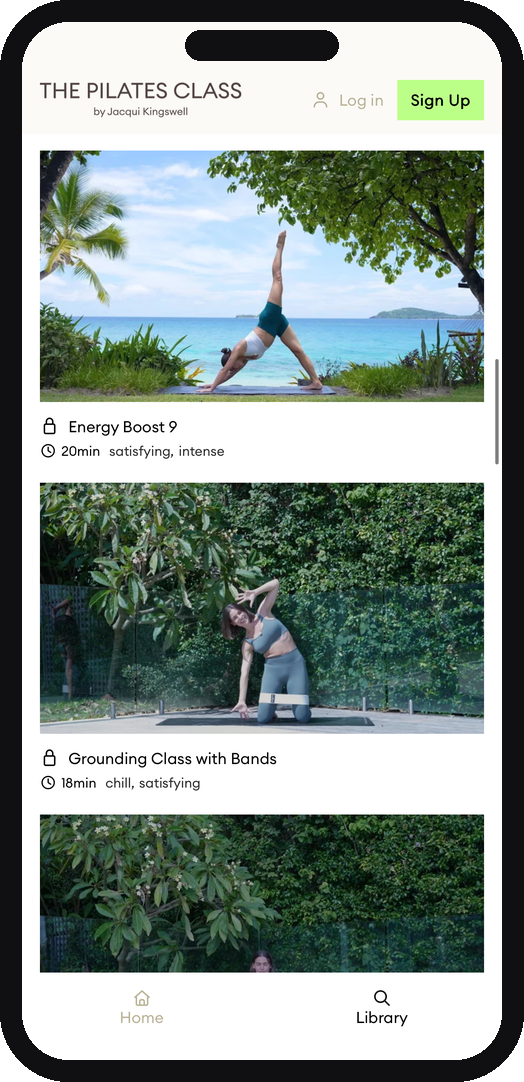
A polished, app-based mat Pilates and mind-body platform from former dancer Jacqui Kingswell, blending low-impact Pilates with barre, breathwork and meditation, plus prenatal, postnatal and a strong beginner onramp · genuinely calming, joint-friendly and time-efficient · but light on loading, with no menopause programming and an aesthetic, long-lean brand that will not suit everyone · Just a mat, and light weights if you like.
How we assessed this. This is a research-based data profile, not a hands-on test. We assessed The Pilates Class from the official app and website, its class library and programmes, pricing, independent coverage and user sentiment, and the exercise science, scored on our standard criteria. The hands-on sections are marked as pending. This is education, not medical advice; check with your clinician before starting a new programme, especially with joint, pelvic-floor or heart concerns.
The Pilates Class Review 2026: Quick Answer
Research-based data profile, not personally tested; hands-on sections pending
Women who want calming, low-impact mat Pilates with breathwork and meditation, in short do-anywhere classes
You want strength or bone-building training, menopause-specific programming, or you dislike an aesthetic, long-lean brand
An app and website streaming service of mat Pilates and mind-body classes led by founder Jacqui Kingswell and a small team
About 6 to 50 minutes, with many short options
Nothing required; optional light dumbbells, a loop band and a block, plus a chair for barre
Low: gentle, controlled mat Pilates, with optional higher-intensity classes
Joint-friendly, calming, strong breathwork and recovery content, a good beginner onramp, plus prenatal and postnatal
Light: builds tone and control, but little for building muscle or loading bone
Calming and joint-friendly, but no menopause, hormone or dedicated pelvic-floor programming
iOS and Android apps plus a web player; television, casting and offline are not clearly confirmed
About $29 a month, $59 a quarter, or $139 a year
A short free trial is offered, then it auto-renews; no refunds
6.2 / 10
Quick Verdict
Worth it for women over 40? For calming, low-impact mat Pilates with real mind-body content, yes. But it uses light loads and has no menopause programming, so for perimenopause or menopause it is a joint-friendly, feel-good base rather than a complete plan.
The Pilates Class earns 6.2/10 in this research-based profile. It is a genuinely polished, calming platform: low-impact mat Pilates blended with barre, stretch, breathwork and meditation, hundreds of short classes you can do anywhere, a warm beginner onramp, and prenatal and postnatal content. Founder Jacqui Kingswell’s teaching is widely loved for being soothing and clear, and the mind-body and recovery side is a real strength for a midlife body that wants gentle, sustainable movement.
Where it is limited for our audience. Mat Pilates is light and bodyweight-based, so it does little to build the muscle and load the bone a midlife body most needs, and there is no menopause, hormone or dedicated pelvic-floor programming, only a single Kegels class. The app draws reliability complaints, especially on Android, along with billing and no-refund frustrations, and the brand leans towards a sleek, long-lean aesthetic that some midlife women find less than welcoming. Choose it if you want a calming low-impact Pilates and mind-body habit, and pair it with dedicated progressive strength.
Is The Pilates Class right for you?
The Pilates Class is strongest for training on low energy (8.0 out of 10, against a 5.6 average across the 105 programmes scored) and weakest for building bone density (2.5 against 5.1).
| Question | Verdict | Rating | Score |
|---|---|---|---|
| How it suits a perimenopausal body | |||
| Is The Pilates Class good for pelvic floor problems?Based on pelvic floor support and low-impact design | Moderate, but better than mostmost score 4.7/10 | 6.0 / 10 | |
| Does The Pilates Class include perimenopause and menopause education and programming?Based on programming, education, hormone awareness and credibility | Low, and worse than mostmost score 3.2/10 | 2.3 / 10 | |
| Is The Pilates Class good for painful joints?Based on low-impact design and recovery provision | Strong, and better than mostmost score 6.1/10 | 8.0 / 10 | |
| Is The Pilates Class manageable when your energy is low?Based on recovery provision and mind-body support | Strong, and better than mostmost score 5.6/10 | 8.0 / 10 | |
| Is The Pilates Class good if you are new to strength training?Based on beginner on-ramp and mind-body support | Strong, and better than mostmost score 6.1/10 | 7.5 / 10 | |
| Is The Pilates Class good for building bone density?Based on bone loading and progressive strength | Low, and worse than mostmost score 5.1/10 | 2.5 / 10 | |
| Does The Pilates Class help with nutrition?Based on midlife nutrition support | Low, about the same as mostmost score 3.6/10 | 3.0 / 10 | |
| How it performs as a product | |||
| Can you fit The Pilates Class into a busy week?Based on time efficiency | Strong, about the same as mostmost score 7.5/10 | 8.0 / 10 | |
| Is The Pilates Class worth the money?Based on value for money | Strong, about the same as mostmost score 6.9/10 | 7.0 / 10 | |
Jump to Section
Who Is Behind It
Content and Features
Equipment You Need
Full Scoring
Good for Women Over 40?
Menopause and Midlife Fit
What the Research Says
What Users Report
Devices and App
Pricing 2026
Will You Stick With It
Pros and Cons
How It Compares
vs Pvolve
Best Alternatives
FAQ
Verdict
Assessment Status
Sources
What The Pilates Class Actually Is
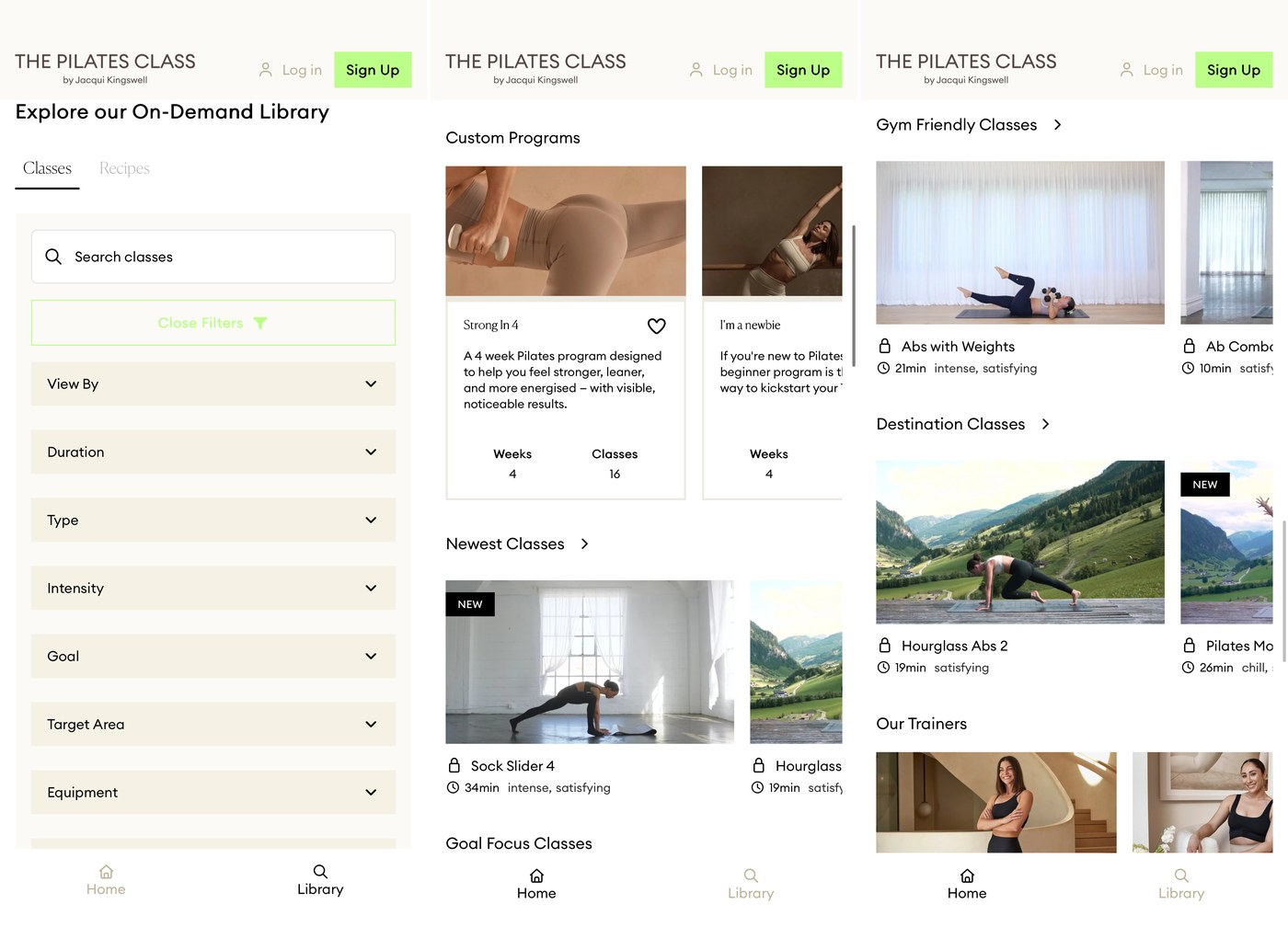
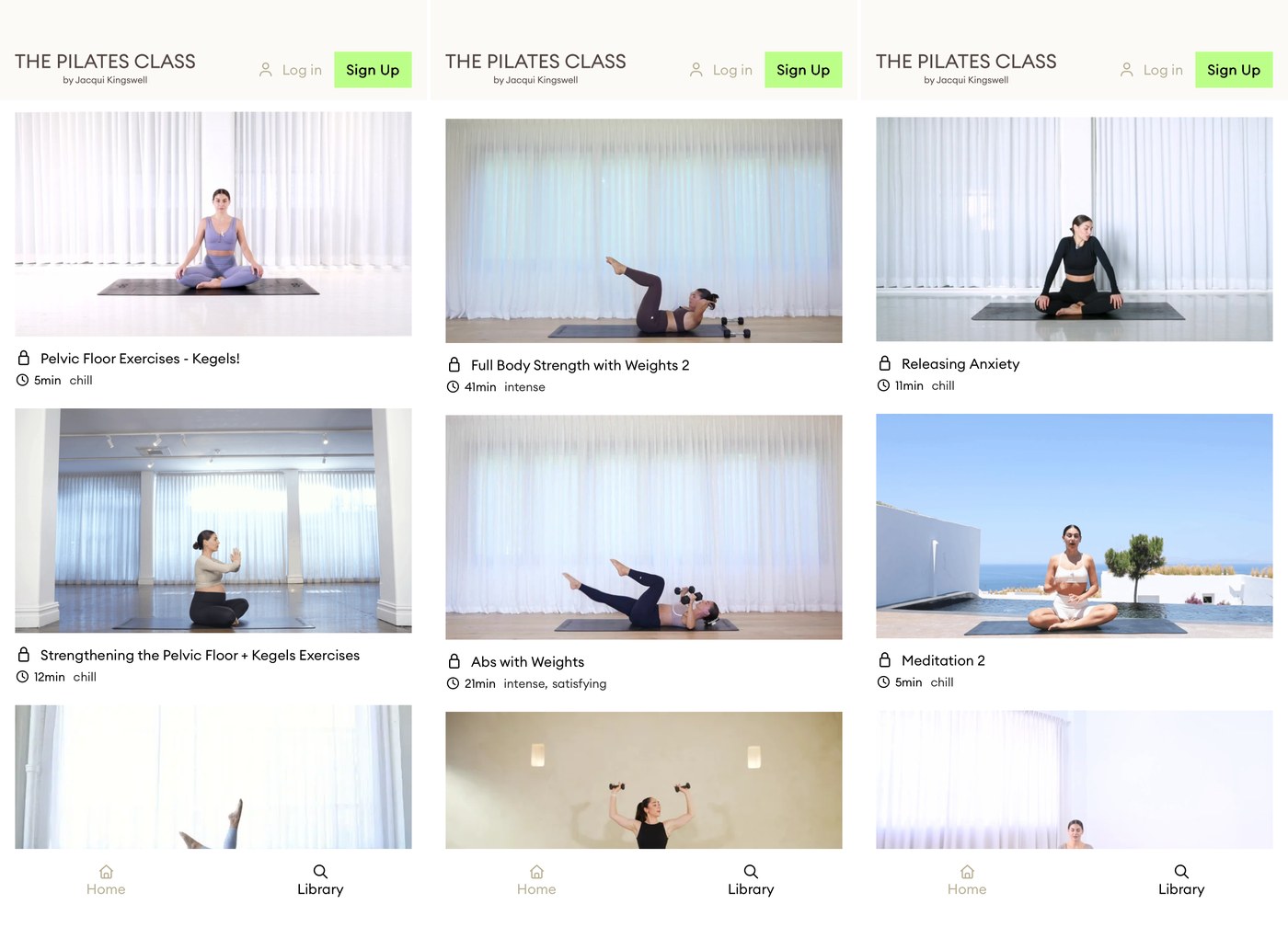
The Pilates Class, often shortened to TPC, is an app and website streaming service built around mat Pilates and mind-body movement. Its core is low-impact, controlled mat Pilates, blended with barre, stretch, gentle strength and higher-intensity Pilates HIIT, plus a genuine mind-body layer of breathwork, meditation and calm content. There are more than 400 classes across around 15 categories, running from about 6 to 50 minutes, with beginner to experienced levels and a mood-based intensity system, and dedicated prenatal and postnatal sections. It is led by founder and head trainer Jacqui Kingswell with a small team, delivered on demand rather than live.
For this audience it helps to be clear about what it is and is not. TPC is a polished, calming, genuinely low-impact way to move, and it is strong on the things a midlife body benefits from gently: joint-friendly Pilates, breathwork, meditation and recovery, with an easy beginner start. What it is not is strength or bone training, and it is not a menopause programme: the loads are light, there is no menopause or hormone content, and the pelvic-floor work is a single class rather than a programme. It also leans towards a sleek, long-lean aesthetic that is worth being aware of. Read it as a calming low-impact Pilates and mind-body habit, best paired with dedicated strength.
Who Is Behind The Pilates Class? Credibility
The Pilates Class was founded by Jacqui Kingswell, an Australian former professional dancer who has practised Pilates since childhood and teaches as the platform’s head trainer, with a small roster of other instructors. It grew out of her online classes around 2020 and scaled with her co-founder, the entrepreneur and influencer Natasha Oakley, into a global brand with members in more than a hundred countries, a first in-person studio, and a sister pregnancy platform. The company is US-registered.
How to read that credibility. Kingswell is an experienced, well-liked instructor, and the teaching quality is the most praised thing about TPC. What the brand is not is clinically or menopause-credentialed: no specific Pilates certification body is named on the official pages, the background is dance and experience-based rather than a stated qualification, and there is no women’s-health, pelvic-floor-rehab or menopause clinical expertise on record. It is very much an influencer-led wellness brand. For our audience that means you can expect calming, competent Pilates instruction, but not menopause-specific medical design or clinically supervised rehab.
Content and Features
At a glance: calming, polished, low-impact mat Pilates blended with barre, stretch, breathwork and meditation, with a strong beginner onramp and prenatal and postnatal content. Capped for our audience by light loading, no menopause programming, only a single pelvic-floor class, and an aesthetic brand slant.
| Format | An app and web streaming service of on-demand classes, with weekly schedules and challenges. |
| Styles | Mat Pilates, barre, stretch, gentle strength, Pilates HIIT, breathwork, meditation, yoga, plus prenatal and postnatal. |
| Class length | About 6 to 50 minutes, with many short do-anywhere options. |
| Levels | Beginner to experienced, with a mood-based Chill, Satisfying and Intense intensity system. |
| Midlife strengths | Low-impact and joint-friendly, calming, with strong breathwork and recovery content and a gentle beginner onramp. |
| Strength and bone | Light: mat and light-prop work builds tone and control, not heavy loading. |
| Menopause programming | None: no menopause, hormone or dedicated pelvic-floor programme, just a single Kegels class. |
| Nutrition | Some recipe and nutrition guides, mostly sold separately as add-ons. |
| Devices | iOS and Android apps plus a web player; television, casting and offline are not clearly confirmed. |
What Equipment Do You Need for The Pilates Class?
Almost nothing, which suits home practice. Every class is designed to be doable with no equipment, so you can get going with just a mat. If you want to add a little, TPC suggests a pair of very light dumbbells, around 2 to 3 lb, a loop resistance band and a yoga block, with a sturdy chair for the barre classes. A reformer class category exists for anyone who owns the machine, but it is entirely optional.
Because mat Pilates loads the body lightly, the most useful thing to own for a midlife body is a set of heavier adjustable dumbbells for the dedicated strength training we would pair alongside it, for the muscle and bone that light Pilates work will not build.
Recommended spec examples. These picks are curated for convenience by specification and feature fit, not personally lab-tested for long-term durability. Prices are examples; verify before buying.
Exercise mat
The one essential for every class.Recommended
Light Dumbbells (2 to 5 lb)
The light weights the sculpt classes use.~$65 to $80
Medium Dumbbells (up to 25 lb)
The companion buy for heavier midlife strength.~$50 to $65
A quick heads-up: some of the buy links above are Amazon affiliate links, so if you grab something through them I may earn a small commission, at no extra cost to you. I only ever point you to kit I would happily use myself.
Bottom line on equipment: a mat is all you need for TPC; heavier adjustable dumbbells are the companion buy for the strength it does not provide.
How We Scored The Pilates Class: the 6.2 / 10 Breakdown
Scores on our 9 weighted criteria, from our research-based assessment. Women Over 40 is our menopause-fit criterion, and its full 12-capability breakdown follows in the next section.
| Category | Weight | Score | Reasoning |
|---|---|---|---|
| Time Efficiency | 15% | 8 | A large library of short, do-anywhere, no-equipment classes that fit a busy day. |
| Muscle Potential | 18% | 4 | Mat Pilates with light props builds tone and control, but no progressive loading for real strength. |
| Women Over 40 Specificity | 10% | 4.3 | Joint-friendly and calming, but not menopause-specific and light-loading; full breakdown below. |
| Joint Friendliness | 12% | 8 | Low-impact, controlled mat work with abundant stretch and restorative content. |
| Recovery Compatibility | 10% | 8 | Strong stretch, breathwork, meditation and intensity-tiered options make it a good recovery fit. |
| Programme Structure | 12% | 6 | Programmes, challenges and weekly schedules give structure, though no periodised strength progression. |
| Value for Money | 8% | 7 | Around $139 a year for 400-plus classes is fair, though some feel the feature set is basic for the price. |
| UX and Design | 8% | 6 | Clean and calming, but app reliability complaints, especially on Android, and library navigation are noted. |
| Nutrition Integration | 7% | 4 | Some recipe and nutrition guides, mostly generic and sold separately. |
| Total | 100% | 6.2 / 10 | Research Score. |
Is The Pilates Class Good for Women Over 40?
For a calming, low-impact Pilates habit, it is a pleasant and capable option. The mat work is gentle and joint-friendly, the classes are short enough to fit a busy day, the beginner onramp is welcoming, and the mind-body layer of breathwork and meditation is genuinely good, which suits a midlife body that wants sustainable, feel-good movement. The prenatal and postnatal content is a real plus for those who need it, and Jacqui Kingswell’s teaching is warm and clear.
Who it suits, and what is missing. It suits a woman who wants soothing, low-impact Pilates and values the mind-body side. What is missing is the heavier stimulus a midlife body most needs: mat Pilates does not build meaningful muscle or load bone. There is no menopause, hormone or dedicated pelvic-floor programming, just a single Kegels class, and the nutrition content is generic and mostly an add-on. It is also worth flagging that the brand leans towards a sleek, long-lean aesthetic, with language about looking leaner, which some midlife women find less supportive than a strength-and-function focus.
What the wider picture shows. The Pilates Class is a polished, joint-friendly, calming platform, and its low-impact movement, breathwork and recovery are real benefits for midlife health. But it is a light-load mat Pilates and wellness app, not a strength, bone or menopause programme, so the best way to use it is as your low-impact Pilates and mind-body habit, layered with a dedicated progressive-strength routine for the muscle and bone it does not build.
How The Pilates Class Fits Perimenopause, Menopause and Beyond
Our capability breakdown of how well The Pilates Class suits women across perimenopause, menopause and post-menopause. Women Over 40 is our menopause-fit criterion, and this is the full breakdown behind the Women Over 40 row above.
The Pilates Class is strongest for low-impact movement, recovery, mind-body support and a gentle beginner onramp; it is weakest on strength, bone loading, and any menopause, hormone or pelvic-floor programming, in our menopause and midlife capability assessment.
| At a glance | Score |
|---|---|
| Right training for a midlife body | 5.3 / 10 |
| Menopause education and programming* | 2.6 / 10 |
| Whole-woman support | 6.0 / 10 |
This is the perimenopause and menopause assessment, and it is separate from the overall score. Twelve things a programme either does for a midlife body or does not, each scored out of 10 with my reasoning next to it. Together they produce a single menopause fit score, and that becomes one of the nine categories in the overall scoring below.
How The Pilates Class Fits Perimenopause, Menopause & Beyond
Women Over 40 is our most important criterion, and here's the full breakdown behind it.
The Pilates Class is strongest for low-impact, recovery & deload and mind-body support, and weakest for bone loading, menopause programming, hormone awareness, menopause education, progressive strength, expert credibility, midlife nutrition and pelvic floor, in our menopause and midlife capability assessment for women over 40.
At a glance
What the app teaches about perimenopause and/or menopause, not whether the training suits a midlife body.
| Capability | Score | Rating | Why |
|---|---|---|---|
| Right training for a midlife body | |||
| Low-impact | 8/10 | Strong | Low-impact, controlled mat Pilates is the core offering, gentle on joints. |
| Progressive strength | 3/10 | Minimal | Bodyweight and light-band load with no structured progressive overload or heavy resistance. |
| Bone loading | 2/10 | None | Mat and bodyweight work provides minimal weight-bearing or impact loading for bone density. |
| Recovery & deload | 8/10 | Strong | Rich stretch, breathwork, meditation and intensity-tiered schedules make deloading easy. |
| Menopause education and programming* | |||
| Menopause programming | 2/10 | None | No menopause or perimenopause-specific programmes, phases or symptom-targeted classes. |
| Pelvic floor | 4/10 | Minimal | Prenatal and postnatal classes touch the pelvic floor and there is a single Kegels class, but no menopause pelvic-floor programme. |
| Hormone awareness | 2/10 | None | No hormone, cycle or menopause-phase awareness in the programming. |
| Menopause education | 2/10 | None | No menopause education; the blog skews wellness and beauty. |
| Expert credibility | 3/10 | Minimal | Experienced dancer and instructor, but no named Pilates certification and no clinical or menopause credential. |
| Whole-woman support | |||
| Mind-body support | 8/10 | Strong | A genuine strength: strong breathwork, meditation and mindfulness content. |
| Beginner on-ramp | 7/10 | Strong | Beginner Essentials and Technique classes and thorough cueing ease newcomers in. |
| Midlife nutrition | 3/10 | Minimal | Nutrition content is generic wellness recipes, mostly sold separately, not midlife-tailored. |
ScaleBest-in-classStrongSomeMinimalNone
* What the app teaches and programmes around menopause, not whether the training suits a midlife body. Many programmes that score low here are still a good fit, they simply never use the word. A high score is not proof either: a few menopause videos added to a general library lifts this score without changing the training.
These are evidence-informed suitability ratings, not clinical measurements. They combine exercise science with product-specific research and, where indicated, hands-on testing, alongside multi-source verification, and are approximate. Individual response varies. A starting point, not medical advice. How we score menopause fit
What the sources say: scores combine the platform, its content, independent coverage, user sentiment and the science. The Pilates Class does well on low-impact movement, recovery and mind-body support, which genuinely suit a midlife body. It scores low on the built-for-menopause measures because it uses light loads, has no menopause, hormone or dedicated pelvic-floor programming, and no menopause credential, so it sits well below purpose-built menopause platforms.
These are evidence-informed suitability ratings, not clinical measurements. They combine exercise science with programme research and multi-source verification, and are approximate. Individual response varies. A starting point, not medical advice. How we score menopause fit.
What the Research Says: The Pilates Class Checked
Pilates has a real evidence base for what this platform does well. A meta-analysis in adults over 60 found Pilates produced moderate improvements in balance, strength and flexibility and reduced fall risk,[1] and it is one of the better-studied options for the lower back, reducing pain and disability more than minimal intervention, though not clearly beating other exercise.[2] For our audience specifically, a review in postmenopausal women found Pilates improved health-related quality of life,[3] and mind-body exercise more broadly improved sleep, mood and fatigue in peri and postmenopausal women, which fits TPC’s breathwork and meditation content.[4]
Where the limits lie. The catch for a midlife body is strength and bone. The strongest stimulus for bone comes from heavy, progressive resistance and impact training, which improved bone density in postmenopausal women with low bone mass, where light exercise did not to the same degree.[5] Mat Pilates is low-load, so it should not be sold as a bone-building practice, and that matters because fat mass rises and lean muscle falls across the menopause transition.[6] So the evidence supports using The Pilates Class for mobility, core, back comfort, recovery and stress, with heavier progressive strength added for the muscle and bone it cannot provide.
What Users Report: Verified Sentiment
Rating snapshot: the app rates highly on Apple, around 4.8 out of 5 from roughly 500 ratings, but a little lower on Google Play, around 4.4 from a couple of hundred reviews, past 50,000 installs. The difference is modest, and the Android app draws more reliability and compatibility complaints, which is the main friction rather than the content. It is also worth noting the app has openly asked users for five-star ratings, which tends to lift the Apple figure, and there is effectively no Trustpilot presence, so we treat the numbers as directional. The audience skews younger and Instagram-native, and menopause does not appear in the reviews at all.
What users praise and criticise. The praise is consistent: Jacqui Kingswell’s calming, clear teaching, effective low-impact toning, the variety and short lengths, the calming aesthetic, and the breathwork and mind-body content. The criticisms cluster on the app and the business rather than the classes: reliability and compatibility bugs, especially on Android, the lack of in-class music, and billing frustrations around auto-renewal, cancellation timing and a firm no-refund policy. A few reviewers also question how well the sleek, lean imagery matches the every-body promise.
Consistently praised
- Calming, clear teaching from Jacqui Kingswell and team.
- Effective low-impact toning and plenty of short classes.
- Strong breathwork, meditation and mind-body content.
- A polished, calming look and a welcoming beginner onramp.
Consistently noted
- App reliability and compatibility bugs, especially on Android.
- Billing, cancellation and no-refund frustrations.
- Light loading, so little for muscle or bone.
- An aesthetic, long-lean brand slant that will not suit everyone.
Source and credibility note: the Apple and Google scores differ (about 4.8 versus 4.4), so we report them separately rather than blending, and the Apple figure is likely lifted by in-app rating prompts. There is no meaningful Trustpilot presence, and the audience skews younger and aesthetic-led, so read the sentiment as directional for a midlife reader. Figures were checked in 2026 and can change.
Devices and App
The Pilates Class runs on iOS and Android apps and on a web player, with cross-device sync, favourites and rich filtering by intensity, category and duration. It is built on a video platform that could in principle support television and casting, but none of that, nor offline downloads or subtitles, is confirmed on the official pages, so if watching on a TV matters to you it is worth checking before subscribing.
The main weak spot is app reliability. Users report bugs after updates, including problems with full-screen and landscape playback and freezing mid-class, and these complaints are more common on Android. A few would like in-class music and a tidier library. None of this is about the quality of the Pilates itself, which is well liked, but the app experience is not always smooth.
The Pilates Class specifications
- Free trial
- 7-day
- Cancellation
- cancel anytime via App Store / Google Play; 1-week trial
- Session length
- ~10 to 50 min
- Who makes it
- Founder Jacqui Kingswell, creator/head trainer (TPC Method: Pilates + dance/yoga/barre); no specific formal certification publicly documented (founder/practitioner credibility)
- Still maintained
- Active; app v17.5 (rel 2026-01-23, ~7 months stale), id 1530081615
- What is included
- On-demand classes: yesLive classes: noRecovery content: yesMenopause education: noStructured programmes: yesMeditation: yesNutrition guidance: partly
- Women over 40
- Pelvic floor work: partlyMenopause clinician involved: noInjury modifications: partlyBone-health focus: noModified progressions: partlyCycle syncing: noPrenatal options: partly
- Devices and access
- Offline downloads: partlyCasting to TV: partlySubtitles: noWearable sync: no
- Support
- Clinical advisory board: noCommunity: partlySupplement upsell: no
- Last verified
- 12 August 2026
The Pilates Class Price 2026: What You Actually Pay
| Plan | Cost | Notes |
|---|---|---|
| Monthly | ~$29/mo | The most flexible plan, and the only one you can pause. |
| Quarterly | ~$59 for 3 months | A middle option billed every three months. |
| Annual | ~$139/yr | The best-value plan, but it cannot be paused. |
| Free trial | A short trial | A free trial is offered, then it auto-renews; confirm the length at signup. |
Cost and Cancellation
The Pilates Class costs about $29 a month, $59 a quarter, or $139 a year, which is fair value for 400-plus classes. A free trial is offered before billing begins, though the exact length is not clearly stated on the official pages, so confirm it at signup. Plans auto-renew and you can cancel any time before the next billing date, but the terms are stricter than some: monthly plans can be paused for 30, 60 or 90 days, annual plans cannot be paused, and there are no refunds, so set a reminder before renewal. Prices are in US dollars and were checked in 2026; confirm the current figures before subscribing.
Not sure The Pilates Class is the right programme for you?
Answer a few questions about your goals, schedule and fitness level, and get matched with programmes that fit.
Will You Actually Stick With It?
The Pilates Class is easy to keep up with. The short, do-anywhere classes lower the barrier to showing up, the calming style is something people look forward to, the weekly schedules and challenges add gentle structure, and the low-impact format means you can practise often without wearing yourself down. For a woman who wants a soothing daily movement ritual, it fits neatly into real life.
The risks to sticking with it are the app and the vibe. The reliability bugs can interrupt a session and frustrate, particularly on Android, and if the sleek, lean aesthetic does not resonate with you it can wear thin over time. If those things do not bother you, the calming content and structure make consistency straightforward.
The Pilates Class Pros and Cons
Pros
- Calming, polished, low-impact mat Pilates with strong mind-body content
- Short, do-anywhere classes with a welcoming beginner onramp
- Joint-friendly, with good breathwork, meditation and recovery
- Prenatal and postnatal content and fair annual pricing
- Warm, clear teaching from Jacqui Kingswell and team
Cons
- Light loading, so little for muscle or bone
- No menopause, hormone or dedicated pelvic-floor programming
- App reliability and compatibility bugs, especially on Android
- Strict billing: no refunds, and annual plans cannot be paused
- An aesthetic, long-lean brand slant that will not suit everyone
How The Pilates Class Compares
Here is how The Pilates Class stacks up against the alternatives women most often weigh it against. Scores come from our own reviews; prices and ratings are approximate, so verify on each platform.
| Feature | The Pilates Class | Pvolve | Pilates Anytime | The Sculpt Society | FitOn |
|---|---|---|---|---|---|
| Our score | 6.2 / 10 | 8.3 / 10 | 6.4 / 10 | 8.2 / 10 | 7.3 / 10 |
| Monthly price | ~$29/mo · $139/yr | $24.99/mo · equipment from $199 | ~$24/mo · $264/yr | ~$19.99/mo | Free tier · ~$29.99/yr Pro |
| Style | Mat Pilates and mind-body | Functional strength, menopause-built | Pilates, mat to reformer | Dance cardio and sculpt | Varied class library |
| Strength | Light, mat-based | Yes, functional and progressive | Light, core-focused | Light | Some |
| Low-impact option | Yes, a core strength | Yes, low-impact | Yes | Some | Some |
| Perimenopause content | None, one pelvic-floor class | Yes, menopause-built | Bone and pelvic-floor content | Minimal | Minimal |
| Best suited to | Women wanting calming mat Pilates and mind-body | Women ~35+ wanting menopause-built strength | Women wanting deep, expert Pilates | Women wanting dance and sculpt | Women wanting a free library |
The Pilates Class vs Pvolve: Which Is Better for Women Over 40?
These two sit at different ends of the midlife spectrum. Pvolve is a menopause-built system: structured, progressive, low-impact functional strength with a dedicated menopause programme developed with a clinical advisory board, pelvic-floor and joint-friendly work, usually with its own equipment. The Pilates Class is a calming mat-Pilates and mind-body app: lovely for low-impact movement, breathwork and recovery, accessible and polished, but light on load and not menopause-specific, with an aesthetic brand slant.
For women over 40 the choice comes down to what you want the workout to do. If your priority is protecting muscle and bone with progressive, menopause-aware training, Pvolve is the stronger single choice. If you want a soothing, sustainable low-impact Pilates habit with good mind-body content, The Pilates Class is a pleasant, well-taught option. In practice they complement each other: TPC for the calming movement, mobility and recovery, and a strength-focused programme like Pvolve, or a simple progressive weights routine, for the muscle and bone that mat Pilates alone will not build.
Best Alternatives to The Pilates Class
If you want strength and bone training, menopause-specific structure, or a deeper Pilates library, these published alternatives pair or compare well.
Similar programmes we partner with
Close to The Pilates Class, if it is not quite right for you
These are not part of this review’s score. Each shares a goal or training style with The Pilates Class, and each is worth a look if it is closer to what you need.
Deep, calming yoga, Pilates, meditation and walking with genuine over-40, menopause and pelvic floor content. Joint-friendly and beginner-welcoming, b…
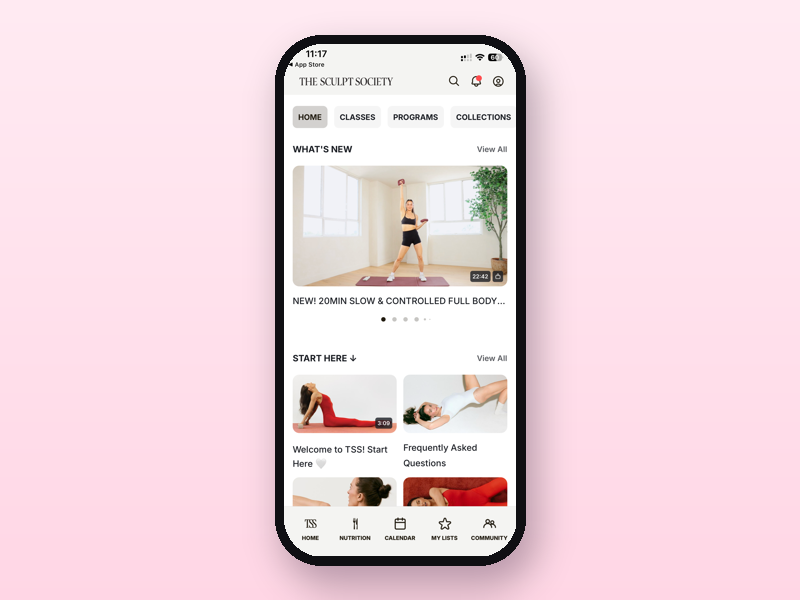
Joyful low-impact dance cardio and sculpt with a doctor-backed midlife programme added in 2026. Excellent for joints and consistency, though light loa…
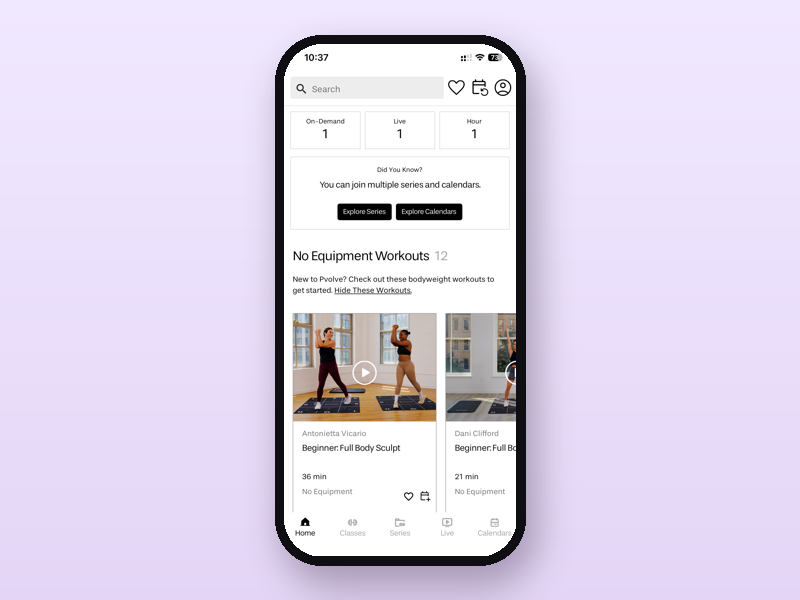
Clinically studied low-impact functional training with a dedicated menopause programme and pelvic floor content, backed by an OBGYN advisory board. Eq…
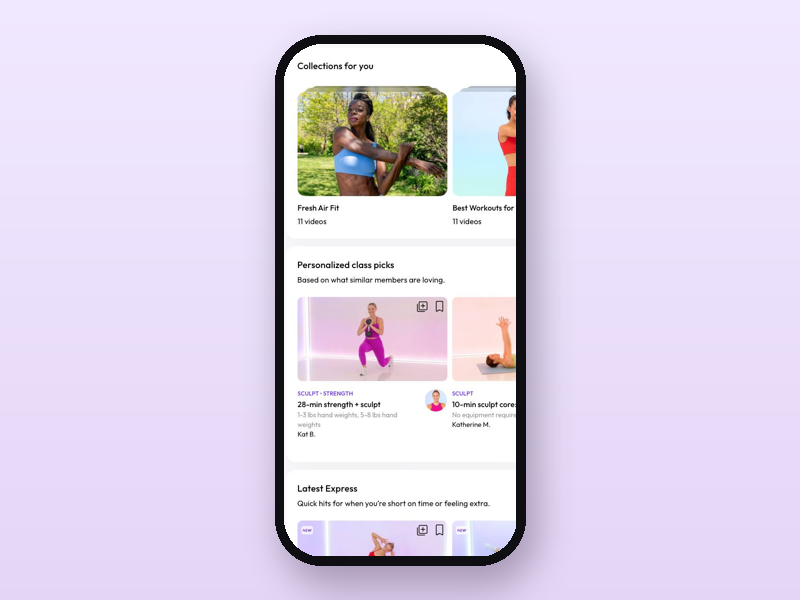
One of the most enjoyable fitness platforms for women in midlife: outstanding filtering, signature 28-minute classes, genuine menopause programming. U…
Affiliate links, at no extra cost to you. I buy my own subscriptions and a commission never moves a score or a position. Full disclosure.
The Pilates Class FAQ
The Pilates Class, or TPC, is an app and website streaming service built around mat Pilates and mind-body movement, founded by former dancer Jacqui Kingswell. Its core is low-impact mat Pilates, blended with barre, stretch, gentle strength and Pilates HIIT, plus breathwork, meditation and calm content. There are more than 400 classes across around 15 categories, from about 6 to 50 minutes, with beginner to experienced levels and dedicated prenatal and postnatal sections. It is on-demand rather than live.
For a calming, low-impact Pilates habit it is a pleasant, joint-friendly option, with a good beginner onramp, strong breathwork and recovery content, and prenatal and postnatal classes. The caveat is that mat Pilates is light and bodyweight-based, so it does little to build muscle or load bone, and there is no menopause, hormone or dedicated pelvic-floor programming, just a single Kegels class. So it works as a calming low-impact base, best paired with dedicated progressive strength.
It builds tone, core control and mobility, which are valuable, but it does not build much maximal strength or heavily load bone, because mat Pilates uses light and bodyweight resistance. The strongest stimulus for bone at midlife comes from heavier, progressive loading. Use The Pilates Class for its low-impact movement, mind-body content and recovery, and add a dedicated progressive-strength routine for real muscle and bone gains.
The Pilates Class costs about $29 a month, $59 a quarter, or $139 a year in US dollars, which is fair value for its 400-plus classes. A free trial is offered before billing, though the exact length is not clearly stated on the official pages, so confirm it at signup. Plans auto-renew and you can cancel before the next billing date, but monthly plans can be paused for 30 to 90 days, annual plans cannot be paused, and there are no refunds.
Not as dedicated programming. There is no menopause or perimenopause programme, and no hormone or phase-based content. Pelvic-floor work is limited to a single Kegels class within the Technique category, and there are prenatal and postnatal sections, but these are not a menopause-specific pelvic-floor programme. For structured menopause and pelvic-floor training, a purpose-built platform is a better fit, with The Pilates Class used alongside for calming low-impact movement.
For a woman who wants calming, low-impact mat Pilates with good mind-body content, in short classes that fit a busy life, yes, and the annual price is fair. It is a weaker choice if you want strength and bone training or menopause-specific programming, because it uses light loads and has no menopause content, the app has reliability complaints, and the brand leans towards an aesthetic, long-lean look. This is a research-based profile, not a hands-on test, and it is best used as a calming low-impact Pilates habit paired with dedicated strength.
Final Verdict
Research Score: 6.2 / 10 · Research-based, not personally tested
The Pilates Class is a polished, calming, well-taught mat Pilates and mind-body platform, and for our audience it does the gentle things well: low-impact, joint-friendly movement, strong breathwork and meditation, a warm beginner onramp, and short classes that fit a busy midlife day, with prenatal and postnatal content on top. Jacqui Kingswell’s teaching is a genuine draw, and the annual price is fair.
The Pilates Class is for women who want calming, low-impact mat Pilates with good mind-body content in short, do-anywhere classes. It is not for women who want strength and bone training or menopause-specific programming, because it uses light loads and has no menopause content, and it comes with app reliability complaints and a sleek, long-lean brand slant that will not suit everyone. The best way to use it is as your calming low-impact Pilates and mind-body habit, paired with a dedicated progressive-strength routine for the muscle and bone it does not build. As a research-based profile this is our considered assessment rather than a hands-on test.
Assessment Status
Research-based data profile: this profile is based on the official app and website, its class library and programmes, pricing, independent coverage, user sentiment and the exercise science, scored on our standard criteria. It has not yet been personally tested; the hands-on sections are pending. How we score and test.
Sources and Further Reading
- Fernández-Rodríguez, R. et al. (2021). Pilates improves physical performance and decreases risk of falls in older adults: a systematic review and meta-analysis. Physiotherapy, 112, 163 to 177. DOI 10.1016/j.physio.2021.05.008. Available at: pubmed.ncbi.nlm.nih.gov. In adults over 60, Pilates produced moderate improvements in balance, strength and flexibility and reduced fall risk.
- Yamato, T.P. et al. (2015). Pilates for low back pain. Cochrane Database of Systematic Reviews, (7), CD010265. DOI 10.1002/14651858.CD010265.pub2. Available at: pubmed.ncbi.nlm.nih.gov. Pilates reduced pain and disability more than minimal intervention, but was not clearly superior to other forms of exercise.
- de Almeida, P.P. et al. (2024). Effects of Pilates exercises on health-related quality of life in postmenopausal women: a systematic review and meta-analysis. Quality of Life Research, 33(8), 2067 to 2079. DOI 10.1007/s11136-024-03651-x. Available at: pubmed.ncbi.nlm.nih.gov. Pilates significantly improved health-related quality of life in postmenopausal women, with some risk-of-bias concerns across trials.
- Xu, H. et al. (2024). Effects of mind-body exercise on perimenopausal and postmenopausal women. Menopause, 31(5), 457 to 467. DOI 10.1097/GME.0000000000002336. Available at: pubmed.ncbi.nlm.nih.gov. Mind-body exercise improved bone density, sleep, mood and fatigue, though Pilates was pooled with other modalities rather than tested alone.
- Watson, S.L. et al. (2018). High-intensity resistance and impact training improves bone mineral density and physical function in postmenopausal women with low bone mass: the LIFTMOR randomized controlled trial. Journal of Bone and Mineral Research, 33(2), 211 to 220. DOI 10.1002/jbmr.3284. Available at: pubmed.ncbi.nlm.nih.gov. Heavier, progressive resistance and impact training improved bone density and function; light exercise did not to the same degree.
- Greendale, G.A. et al. (2019). Changes in body composition and weight during the menopause transition. JCI Insight, 4(5), e124865 (Study of Women’s Health Across the Nation). DOI 10.1172/jci.insight.124865. Available at: pubmed.ncbi.nlm.nih.gov. The rate of fat-mass gain roughly doubled while lean mass declined across the menopause transition.
This is a research-based data profile, not a hands-on test. Pricing and features were verified in 2026 and may have changed. Some affiliate links may be present. This site does not accept payment from platforms reviewed. Education, not medical advice; check with your clinician before starting a new programme, especially with joint, pelvic-floor or heart concerns.
Related Guides
What To Do Next
- → Take our 2-minute quiz for a personalised recommendation.
- → See our best workouts for perimenopause rankings.
- → Compare with our Pvolve review and see how we score every programme.