Jazzercise scores higher overall, 5.7 against 5.4, and is the stronger platform for nutrition guidance and fitting training into a busy week. Zumba is the better pick if what you need most is joint-friendly training.
- Score 5.7 vs 5.4
- $24.99/mo vs about $5 to $20 a class
- Joint friendliness 6 vs 7
- Neither has a structured menopause programme
Quick answer: Jazzercise wins overall, 5.7 against 5.4, and it is the better pick if you want your dance cardio to carry some light strength work, short on-demand options and a little midlife content. Zumba wins on joints, 7 against 6, because Zumba Gold is separately branded and booked as a lower-intensity class for active older adults. Jazzercise also has a dedicated low-impact option, but it sits inside the standard format range rather than being a class you choose instead. Zumba is also far cheaper to try once. Neither platform is built for perimenopause; for that specifically see our best workouts for perimenopause.
Bottom line in 30 seconds for women over 40
- Jazzercise wins overall (5.7 vs 5.4) on time efficiency, women over 40 specificity and nutrition integration. Light hand weights are built into the class rather than bolted on, on-demand sessions start around 10 minutes, and there is some menopause-labelled content in the library.
- Zumba wins the single most important category either platform wins outright. Joint Friendliness at 12% weight, 7 against 6. Both have a low-impact option; Zumba Gold is the one you book instead of a standard class, which is easier to sustain than adapting inside a mixed-level room.
- Six of the nine criteria are tied. These two platforms are far more alike than the marketing suggests. The decision comes down to whether your limiting factor is your joints or your muscle.
- Neither is a midlife programme. Both score 1 out of 10 on pelvic floor and neither scores above 4 on menopause programming. For dedicated perimenopause content see our best fitness app for perimenopause.
This is the caution that matters most for our readers and neither brand raises it. Dance fitness in its standard format involves jumping, bouncing and rapid lateral movement. Jazzercise and Zumba both score 1 out of 10 on our pelvic floor capability, which is the floor of the scale. Urinary incontinence is common among women who exercise: a systematic review and meta-analysis by Teixeira and colleagues found a 36% prevalence across female athletes in a range of sports.[4] Neither Jazzercise nor Zumba includes pelvic floor screening, education or exercises in its standard format, and neither flags which movements involve impact. If you experience leaking during impact exercise, that absence is the thing to weigh. Lower-impact formats such as Zumba Gold or Aqua Zumba reduce the impact load, and pelvic floor symptoms are worth raising with a GP or a pelvic health physiotherapist, who can assess what is appropriate for you. In the meantime use Zumba Gold or Aqua Zumba rather than a standard class.
Jazzercise vs Zumba: the two platforms
Same nine weighted criteria, two different women. Here is who each one is actually built for.
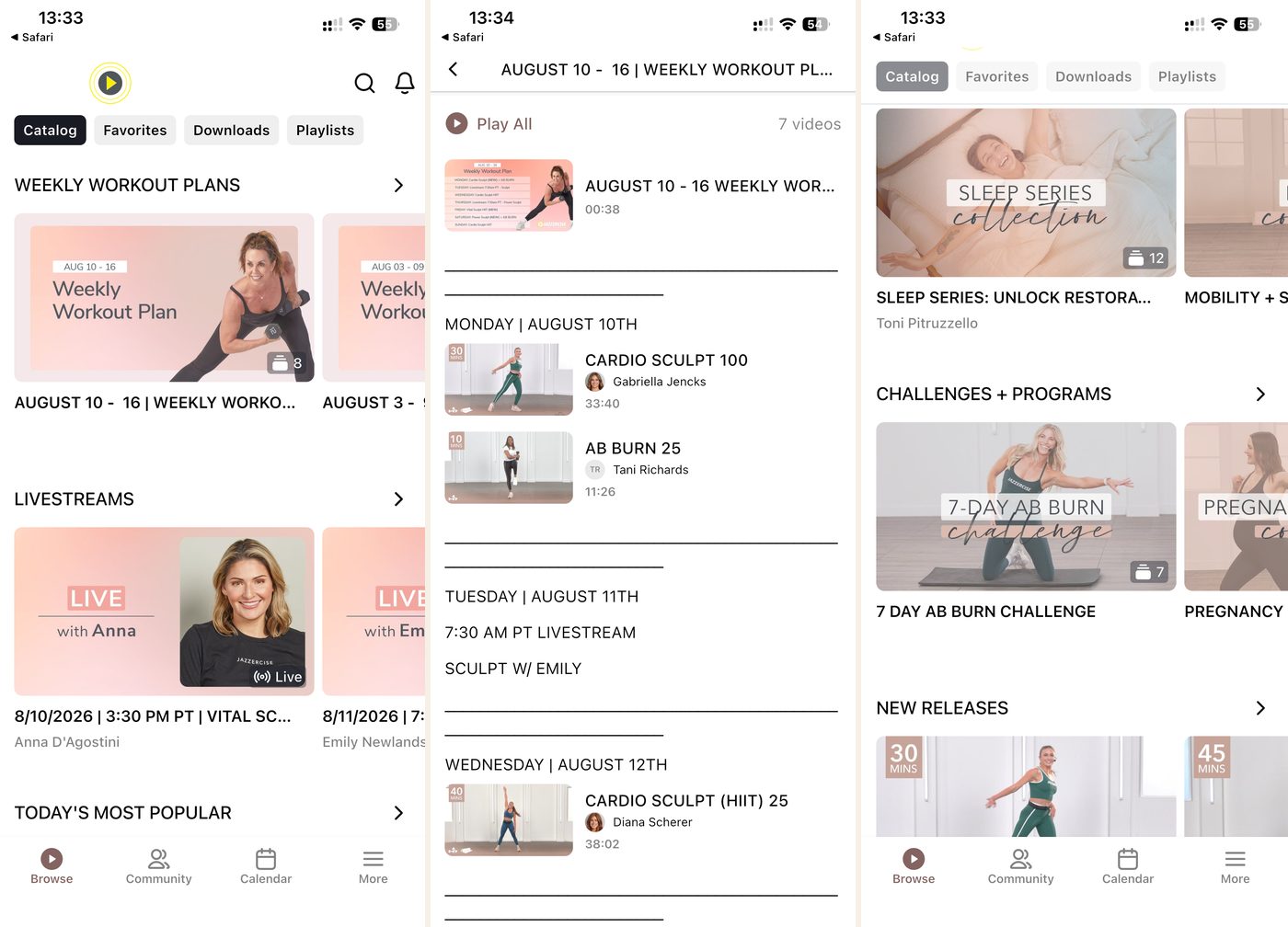
Jazzercise is a dance-fitness programme founded in 1969 by Judi Sheppard Missett, blending dance cardio with light hand-weight strength, kickboxing, Pilates and stretch. After more than fifty-five years it is one of the best-known names in group fitness. Class formats include Dance Mixx, Interval, Fusion, Strike kickboxing, Core and Strength, plus a dedicated low-impact option, delivered in franchised studio classes and through Jazzercise On Demand.
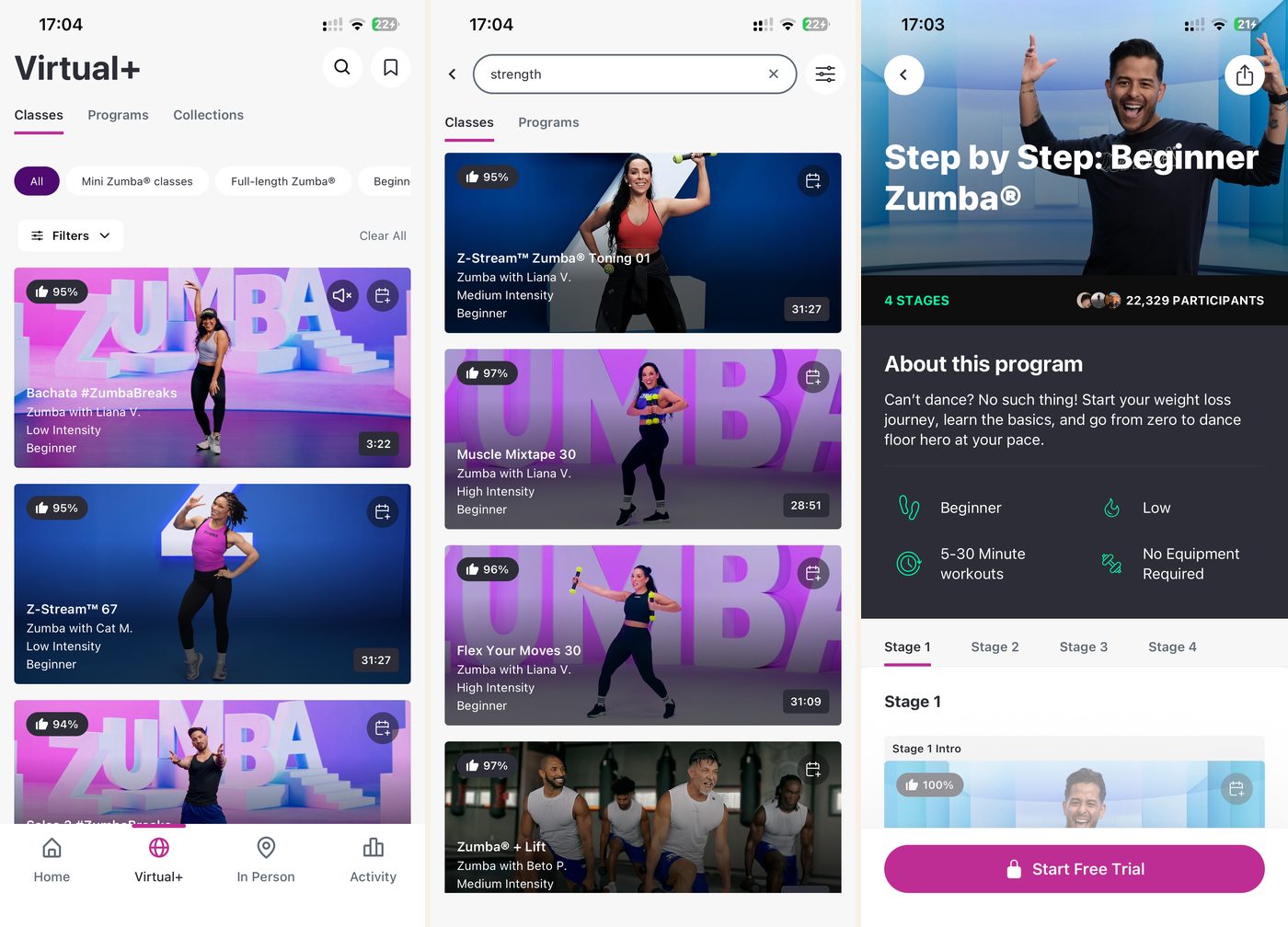
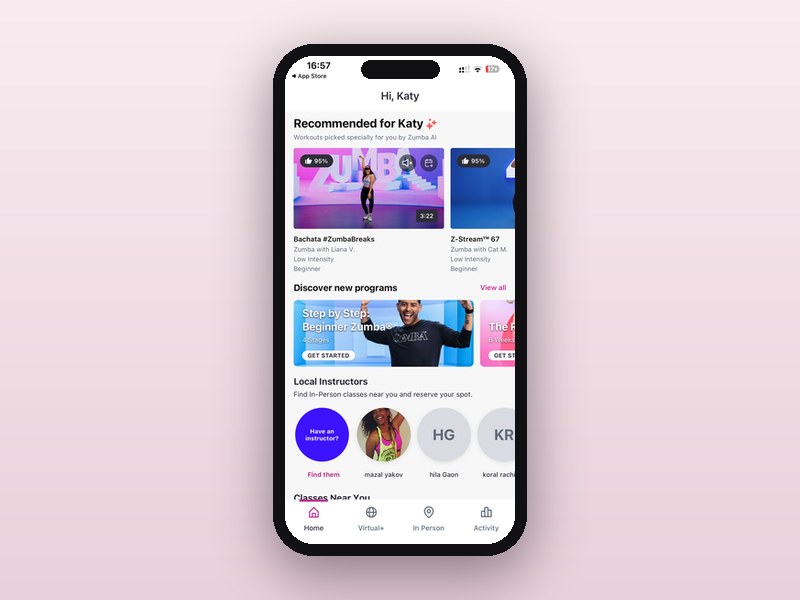
Zumba is a Latin-inspired dance-fitness programme created by Alberto “Beto” Pérez, a Colombian dancer and choreographer, and commercialised in Miami in 2001 with Alberto Perlman and Alberto Aghion. It is built on dance cardio to Latin and international music, from salsa and merengue to reggaeton and cumbia, delivered mostly as in-person classes led by licensed instructors, with a Zumba app alongside. The family includes Zumba Gold for active older adults, Aqua Zumba in water, and Zumba Toning with light weights.
Worth noting for credibility: both brands are led by dancers and choreographers rather than clinicians. Neither has a medical advisory panel, which is part of why both score low on our hormone awareness and menopause education capabilities.

Jazzercise
WinnerLeads this comparison on time efficiency and women over 40 specificity, scoring 7 against 6 on Time Efficiency.
- Light hand weights
- Moderate impact
- 10 to 60 min
- Studio and on demand
- App, web and TV
Choose Jazzercise if you:
- Want your cardio to include some resistance work rather than dance alone
- Are comfortable at moderate impact and happy to modify within a mixed-level class
- Want short on-demand options, from about 10 minutes, for the weeks when an hour is unrealistic
- Would use menopause-labelled content in the library, even though it is not a structured programme
- Want one flat subscription price rather than a cost that changes with your postcode
Zumba
Runner-upLeads this comparison on joint friendliness, scoring 7 against 6, on the strength of the Zumba Gold format.
- No equipment needed
- Zumba Gold option
- Studio 45 to 60 min
- Classes worldwide
- App and casting
Choose Zumba if you:
- Need a genuinely lower-impact option and would use Zumba Gold or Aqua Zumba
- Want to try dance fitness for the price of one drop-in rather than a subscription
- Already have a gym membership that includes classes
- Are new to dance fitness and want choreography that repeats and builds slowly
- Want the class for mood and enjoyment first, and are getting your strength work elsewhere
How we scored this, and why it is not a star rating
Both platforms are research-based data profiles, not hands-on tests. Neither Jazzercise nor Zumba was personally tested for this comparison, so the scores reflect what each platform contains, costs and claims rather than how its sessions feel. Both are scored on the same nine weighted criteria and the same twelve capability scores.
The methodology matters more than usual here, because these two platforms look almost identical from the outside.
Every programme on Her Daily Fit is scored on the same nine weighted criteria, and the weights are set for women in perimenopause and menopause rather than for a general fitness audience. That is why Muscle Potential carries the most weight at 18%, ahead of Time Efficiency at 15%, and why Nutrition Integration still earns 7% rather than being ignored. The full model is on our how we score page.
Alongside the nine criteria, every programme carries twelve capability scores out of 10. Those are the ones that separate a general fitness brand from a midlife one: menopause programming, menopause education, hormone awareness, pelvic floor, bone loading, midlife nutrition, and so on. On a pair like this, where the two headline scores sit close together, the capabilities are where the real differences live.
Both programmes here are research-based data profiles, not hands-on reviews. Katy has not personally trained through a Jazzercise or Zumba block. The scores come from the vendors’ published material, class formats, device support and pricing, assessed against the same criteria as every other programme. Where a platform has been tested in person, the review page says so and the score is labelled a tested score instead of a research score. This page will be updated if either is upgraded.
Perimenopause and menopause fit: Jazzercise wins, but neither is built for it
Jazzercise wins, on a low bar. It scores 4.2 on Women Over 40 Specificity against Zumba’s 3.6, and both numbers sit below 5 out of 10. Neither has a structured menopause programme.
This is the section most comparisons skip, and it is the one that decides the answer for our readers.
What midlife-aware dance fitness would actually need
Three changes shape what training should look like from the mid-forties, and each is drawn from published work rather than from us. Maltais and colleagues document that muscle mass and strength decline through the menopause transition.[2] Wright and colleagues describe associated changes in musculoskeletal tissue, which is what makes impact choices matter more than they did at 30.[1] And Teixeira and colleagues report a 36% prevalence of urinary incontinence across female athletes, which is relevant to any format built on jumping.[4]
A dance platform will never solve all three. What it can do is offer a lower-impact route, some resistance, and clear labelling so you can make the call yourself. That is the bar we are measuring against here, and neither platform clears it fully.
Jazzercise wins, on a low bar
Jazzercise wins, scoring 4.2 against Zumba’s 3.6 on Women Over 40 Specificity. Both numbers sit below 5 out of 10, and that is the headline: these are dance fitness brands that happen to attract women over 40, not platforms designed for them.
| Capability | Jazzercise | Zumba | What it means here |
|---|---|---|---|
| Menopause programming | 4 / 10 | 2 / 10 | Jazzercise has menopause-labelled classes in the library. Neither has a structured programme. |
| Menopause education | 4 / 10 | 1 / 10 | Jazzercise explains a little of the why. Zumba does not attempt it. |
| Hormone awareness | 3 / 10 | 1 / 10 | Neither adapts training to where you are in the transition. |
| Pelvic floor | 1 / 10 | 1 / 10 | Tied at the bottom. Neither addresses it, and both involve jumping. |
| Midlife nutrition | 5 / 10 | 1 / 10 | The single largest capability gap between the two. |
| Bone loading | 5 / 10 | 5 / 10 | Some weight-bearing stimulus from the dance. Modest, and tied. |
| Low-impact | 5 / 10 | 7 / 10 | Zumba Gold is a real lower-impact format. Jazzercise offers modifications instead. |
| Beginner on-ramp | 5 / 10 | 6 / 10 | Zumba repeats choreography more and adds no equipment. |
| Progressive strength | 4 / 10 | 4 / 10 | Tied, and low for both. Neither has a mechanism to increase load over time. |
| Recovery & deload | 5 / 10 | 5 / 10 | Tied. Neither structures rest weeks or tells you when to back off. |
| Expert credibility | 4 / 10 | 4 / 10 | Tied. Instructor-led on both, with no named clinician attached to either. |
| Mind-body support | 5 / 10 | 5 / 10 | Tied. Both are social and mood-lifting by design, neither offers meditation or breathwork. |
On hot flushes, sleep and mood
We will not tell you that either platform treats a symptom, because neither claims to and we are not qualified to say so. What we can tell you is what is in the product. Jazzercise has some menopause-labelled classes. Zumba has effectively none. Neither adapts the session to how you slept, and neither asks where you are in your cycle. Regular enjoyable movement is worth having in midlife on its own terms, and both of these deliver that reliably.
What this means for your decision
If you want a structured perimenopause plan, neither of these is it, and the four-point gap between Jazzercise’s 4 out of 10 and a platform built for midlife is much larger than the gap between these two. If you want dance cardio that is at least aware of the audience, Jazzercise is the one that gestures at it.
Jazzercise pros and cons
Jazzercise scores 5.7. It is strongest on short sessions and weakest on building and keeping muscle.
Pros
- Light hand-weight strength inside the class rather than bolted on.
- Short on-demand sessions from about 10 minutes.
- Some menopause-labelled content in the library.
- Nutrition guidance bundled in.
- Flat, verified national pricing.
- Native apps for Apple TV, Roku and Chromecast.
- Fifty-five years of class community that already skews over 40.
Cons
- The low-impact option sits inside the standard format range rather than being a separately branded class, so you are more often adapting in a mixed-level room.
- Moderate impact by default.
- Menopause content is a filter result, not a programme.
- Scores 1 out of 10 on pelvic floor.
- Subscription only after the 7-day trial.
Zumba pros and cons
Zumba scores 5.7. It leads on short sessions and trails on building and keeping muscle.
Pros
- Zumba Gold is a genuine lower-impact class format for active older adults, and Aqua Zumba removes almost all impact.
- Cheapest possible way in at a single drop-in.
- Often already included in a gym membership.
- Choreography repeats more, which suits beginners.
- App sessions go down to 3 minutes.
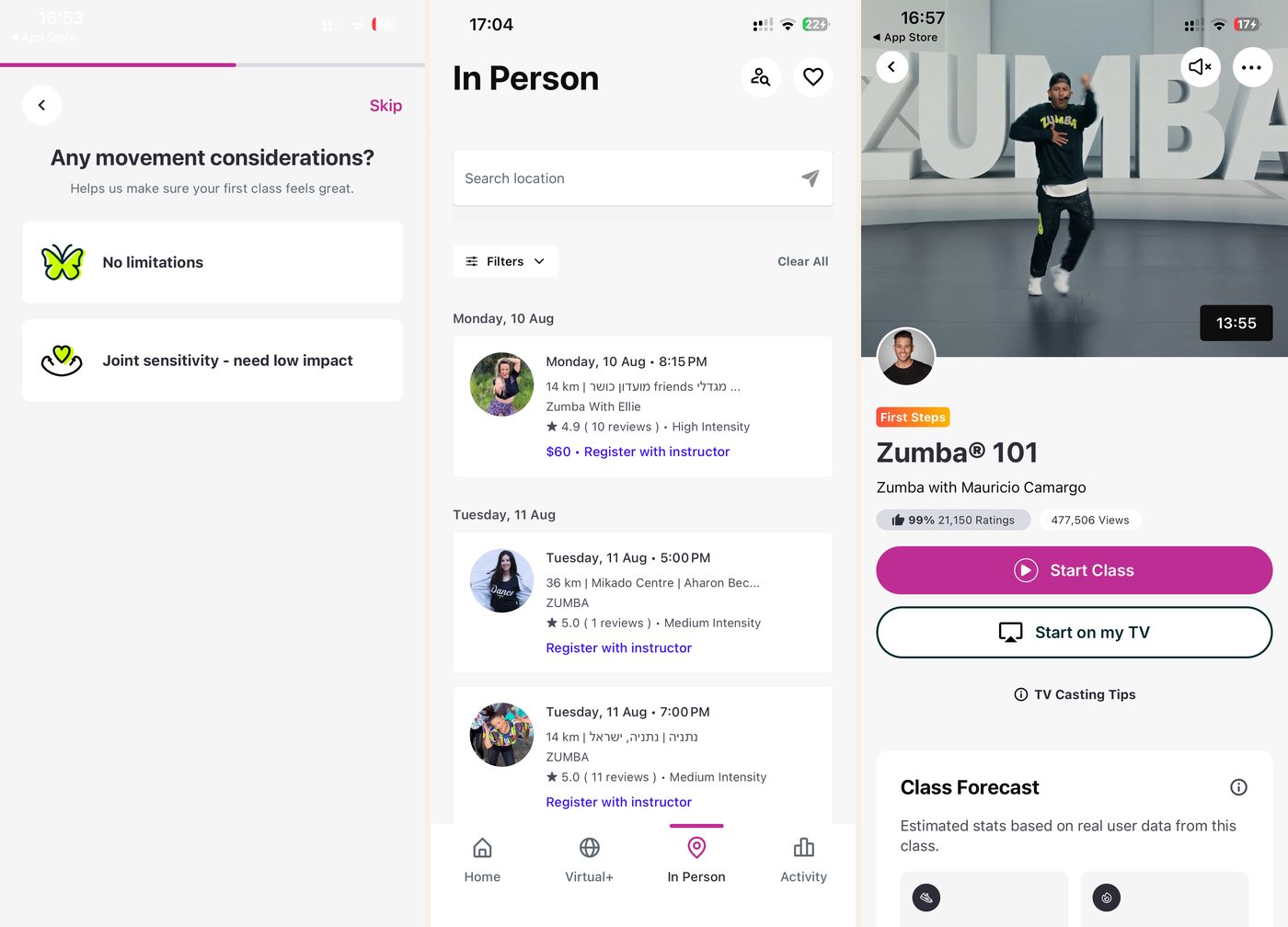
- Onboarding asks about joint sensitivity.
Cons
- Almost no midlife content: 2 out of 10 on menopause programming, 1 on education, 1 on nutrition.
- Resistance work only in Toning, and light.
- Studio pricing is set locally so it is unpredictable.
- Scores 1 out of 10 on pelvic floor.
- No native TV apps, casting only.
Quick yes/no comparison
| Feature | Jazzercise | Zumba |
|---|---|---|
| Dedicated menopause programme | No | No |
| Menopause-labelled content in the library | Yes | No |
| Separate lower-impact class format | No (modifications within class) | Yes (Zumba Gold) |
| Water-based option | No | Yes (Aqua Zumba) |
| Resistance work built into the class | Yes (light hand weights) | Only in Zumba Toning |
| Sessions under 20 minutes | Yes (from about 10 min) | Yes, in the app only (from 3 min) |
| Pelvic floor guidance | No | No |
| Nutrition content included | Yes | No |
| Free trial | Yes (7 days, On Demand) | Yes (14 days, app) |
| Flat national pricing | Yes (On Demand) | No (set locally) |
| Native TV apps | Yes (Apple TV, Roku, Chromecast) | No (casting only) |
| In-person classes | Yes | Yes |
Jazzercise vs Zumba at a glance
| Feature | Jazzercise | Zumba |
|---|---|---|
| Her Daily Fit score | 5.7 / 10 | 5.4 / 10 |
| Score basis | Research-based | Research-based |
| What it is | Dance cardio plus light strength, kickboxing, Pilates and stretch | Latin dance cardio, with Toning, Gold and Aqua formats |
| Where it happens | Studio classes and on demand | Mainly in-person classes, plus an app |
| Session length | 30 to 60 min in studio, 10 to 50 min on demand | Studio about 45 to 60 min; app 3 to 50 min |
| Equipment | Light hand weights and a mat | Supportive trainers; toning sticks for Zumba Toning |
| Impact level | Moderate, with modifications inside class | Moderate, with low-impact Zumba Gold and Aqua Zumba |
| Strength work | Built into the class format | Only in Zumba Toning, and light |
| Midlife option | Menopause-labelled classes in the on-demand library | Zumba Gold, aimed at active older adults and beginners |
| US cost | $24.99/month or $239.99/year; studio varies | About $5 to $20 a drop-in; app sold separately |
| Pricing confidence | Verified against the vendor | Indicative, set locally by studios |
| Free option | 7-day free trial on On Demand | 14-day free trial on the app; studio classes vary |
| Devices | iOS, Android, web, Apple TV, Roku, Chromecast | iOS, Android, web, with TV casting |
| Women Over 40 Specificity | 4.2 / 10 | 3.6 / 10 |
A note on the pricing row, because it is the one most likely to mislead. The Jazzercise figures are verified against the vendor. The Zumba figures are indicative: Zumba class pricing is set by individual instructors and studios rather than centrally, so your local price may sit well outside that range. Check before you assume Zumba is the cheaper option where you live.
Jazzercise vs Zumba: the full scoring breakdown
Jazzercise wins three of the nine weighted criteria, Zumba wins one, and five are tied. That is an unusually tied scorecard, and it is why the capability scores below do more work than the criteria on this pair. Scores are pulled live from each programme’s own assessment, so this table updates when the assessment does.
| Criterion | Weight | Jazzercise | Zumba | Winner |
|---|---|---|---|---|
| Muscle Potential | 18% | 4 | 4 | Tied |
| Time Efficiency | 15% | 7 | 6 | Jazzercise |
| Joint Friendliness | 12% | 6 | 7 | Zumba |
| Programme Structure | 12% | 7 | 7 | Tied |
| Women Over 40 Specificity | 10% | 4.2 | 3.6 | Jazzercise |
| Recovery Compatibility | 10% | 6 | 6 | Tied |
| Value for Money | 8% | 7 | 7 | Tied |
| UX and Design | 8% | 6 | 6 | Tied |
| Nutrition Integration | 7% | 5 | 1 | Jazzercise |
| Overall | 100% | 5.7 / 10 | 5.4 / 10 | Jazzercise |
Jazzercise wins three criteria outright, Zumba wins one, and six are tied. That is an unusually tied comparison, and it is the true shape of these two brands. The reason Jazzercise takes the overall despite winning fewer of the heavyweight categories is that its three wins include Time Efficiency at 15%, while Zumba’s single win, Joint Friendliness, carries 12%. Muscle Potential, the heaviest criterion at 18%, is tied and low for both.
Joint friendliness: Zumba wins, and this is its strongest argument
Zumba wins, 7 against 6 on Joint Friendliness. Both offer a low-impact option, but Zumba Gold is separately branded and aimed explicitly at active older adults, where the Jazzercise low-impact option sits inside the standard format range.
This is the category where the structural difference between the two platforms matters most.
Why impact choices matter more during perimenopause
Wright and colleagues describe a musculoskeletal syndrome of menopause, in which falling oestrogen is associated with changes in tendon and ligament tissue, the bands that connect muscle to bone and bone to bone.[1] The practical implication drawn from that work is that repeated impact through knees, hips and ankles deserves more thought than it did at 30. That does not mean avoiding impact. It means choosing how much, and having a route to less on the days your joints are unhappy.
What the brands say about themselves
Zumba describes Zumba Gold as a class for “active older adults” and beginners, which is unusually direct positioning for a fitness brand and tells you who the format is aimed at without you having to guess. Jazzercise describes its own range as “dance cardio with light strength, kickboxing, Pilates and stretch”, a wider mix inside one class. Read side by side, those two self-descriptions are the comparison in miniature: one brand widened its formats, the other widened its intensities.
Zumba’s structural advantage: a separate format, not a modification
Zumba wins, 7 against 6, and on the low-impact capability the gap is wider at 7 out of 10 against 5.
The difference is structural rather than a matter of degree. Zumba Gold is a separate class: lower intensity, lower impact, aimed at active older adults and beginners, with the choreography adapted rather than merely slowed. Aqua Zumba goes further and removes most of the impact entirely. You book the gentler class and everyone in the room is doing the same thing.
Jazzercise’s approach: modify inside the class
Jazzercise does have a dedicated low-impact option alongside Dance Mixx, Interval, Fusion, Strike, Core and Strength, and instructors cue modifications within standard classes. The difference is framing rather than absence: it is one option among several formats, not a separately branded class built around a named audience. In a standard class you are adapting in real time next to people who are not, which is a different psychological experience and a harder one to sustain when your knee is already sore.
What this means for your decision
If you have an active knee, hip or ankle issue, the separate-format approach is usually easier to stick with, and Zumba Gold is the reason to choose Zumba. If your joints are fine and you would rather have the strength work, Jazzercise’s approach costs you little.
Muscle potential: tied, and both are low
Tied, and low for both. Jazzercise and Zumba score the same on Muscle Potential, the heaviest-weighted criterion at 18%, and neither reaches half marks. Progressive strength capability is 4 out of 10 on both.
This is the highest-weighted criterion in the model at 18%, and neither platform scores half marks.
Why progressive overload matters more after 40
Progressive overload means gradually increasing the load your muscles work against: going from 3 pound to 5 pound weights over a few weeks, or adding repetitions. Maltais and colleagues document declining muscle mass and strength through the menopause transition, which is the reason deliberate loading matters more from this point than it did earlier.[2] The same light weights for a year stop producing change after the first few weeks.
What each platform actually delivers
Tied, 4 each. Jazzercise adds light hand weights, typically 1 to 5 pounds, built into the class format. That is a real stimulus but not a progressive one, because the weight does not climb as you get stronger. Zumba Toning uses light sticks or weights and is lighter still. Both score 4 out of 10 on our progressive strength capability, and both score 5 out of 10 on bone loading, which reflects some weight-bearing benefit from the dance itself without being a bone programme.
What this means for your decision
The conclusion is the same for both: treat this as your cardio and your enjoyment, and put a progressive strength programme next to it. Mohebbi and colleagues, in a systematic review and meta-analysis of exercise and bone mineral density after menopause, point to progressive resistance training as the primary non-hormonal intervention, which neither of these provides.[3] That is not a criticism of either brand. It is what a dance fitness class is for.
Time efficiency: Jazzercise wins on the short end of the range
Jazzercise wins, 7 against 6 on Time Efficiency. Both have short options, and the difference is what each platform shows you by default.
Why the floor matters more than the ceiling
The most common reason a routine collapses in midlife is not motivation, it is that the only available format needs an hour you do not have on a Tuesday. What matters is the shortest complete session a platform offers, not the longest.
The gap
Jazzercise wins, 7 against 6, but by less than you would expect. Both have short options: Jazzercise On Demand runs 10 to 50 minutes, and the Zumba app offers 3, 10, 20, 30 and 50 minute classes. The difference is the default. Zumba is a class-first brand, so the studio session most people actually attend is 45 to 60 minutes, and the short options live in the app rather than in the format you booked. Jazzercise is built for both, so the short session is the normal case rather than the fallback.
Nutrition integration: Jazzercise wins by the widest margin on the page
Jazzercise wins, 5 against 1, and on midlife nutrition specifically it is 5 out of 10 against 1. Jazzercise bundles some nutrition guidance with the subscription. Zumba is a class you attend, and nutrition sits entirely outside it.
At 7% this is the lowest-weighted criterion in the model, so it moves the overall score less than the size of the gap suggests. But if you want one subscription that at least gestures at what you eat, only one of these two does.
UX and design: tied, and both are dated
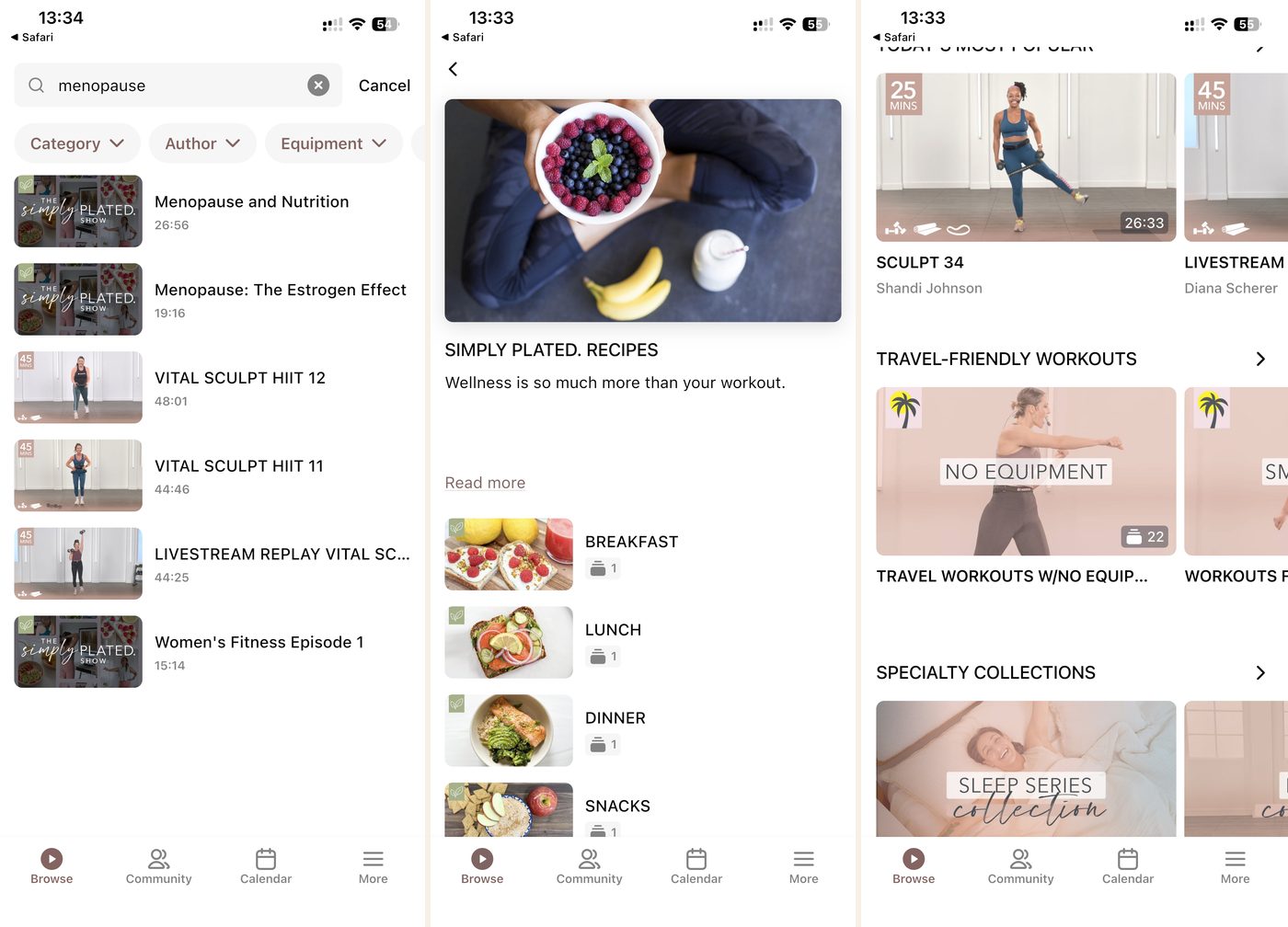
Tied, 6 each. Neither app is a pleasure to use. Both are functional, both let you filter by length and format, and neither has the polish of a platform built app-first this decade.
Jazzercise reaches more living room devices, with native apps for Apple TV, Roku and Chromecast. Zumba casts to a TV rather than shipping native apps for it, which is a small friction that repeats every session. Zumba’s onboarding does ask about joint sensitivity and routes you towards lower-impact options, which is a genuinely thoughtful touch and more than Jazzercise does at sign-up.
We score UX at all because a platform you find irritating is a platform you stop opening. On this pair it does not separate them.
Recovery compatibility: tied, and the tie hides two different gaps
Tied, 6 each, and both sit on the same recovery and deload capability score of 5 out of 10. Neither platform plans an easier week for you.
Recovery compatibility asks whether a platform lets you train around a flat week rather than abandoning it. Both fail the structural half of that. There is no deload block, no lighter phase, and no way to tell either app that this week is a write-off and have it adjust what it offers you. What differs is what is there when you scale down on your own initiative. Jazzercise gives you the shorter session: its range starts at 10 minutes, so a low-energy day can still be a class rather than a gap. Zumba gives you the lower intensity instead, because Zumba Gold and Aqua Zumba exist as separate formats rather than as modifications you have to invent mid-class, but its studio sessions run 45 to 60 minutes, so scaling down there means changing format rather than shortening the workout.
What this means for your decision. If your recovery weeks are mostly about time, Jazzercise is the easier of the two to keep a habit going in. If they are mostly about impact, Zumba is. Neither will make that call for you, so if you want deload written into the programme rather than improvised, this pair is the wrong pair to be choosing between.
Value for money: tied on score, very different in shape
Tied, 7 each, which hides the more useful point: they are priced on completely different models.
Jazzercise On Demand is a flat $24.99 a month, or $239.99 a year, with a 7-day free trial. You know what you are paying and it does not change with where you live. Zumba is mostly a per-class purchase, commonly $5 to $20 a drop-in, often already included if you have a gym membership, with the app as a separate subscription on top.
If you would attend once a week, Zumba is very likely cheaper. If you would train four or five times a week at home, Jazzercise almost certainly is. The tie is real: neither is better value in the abstract, only for a given frequency.
Who wins for…
Who wins for active knee, hip or ankle issues
Zumba. Both offer low-impact options, but Zumba Gold is separately branded for active older adults and Aqua Zumba removes almost all impact.
Who wins for getting some strength from your cardio
Jazzercise. Light hand weights are built into the class format. Zumba only adds resistance in Toning, and it is lighter.
Who wins for the cheapest way to try dance fitness
Zumba. A single drop-in is commonly $5 to $20, and it is often already included in a gym membership.
Who wins for short sessions on a busy week
Jazzercise. Short sessions are the default rather than an app-only alternative. The Zumba app does go down to 3 minutes, but its studio classes run 45 to 60.
Who wins for absolute beginners over 40
Zumba. It scores 6 out of 10 against 5 on our beginner on-ramp capability, the choreography repeats more, and there is no equipment to manage in a first class.
Who wins for anything menopause-specific
Jazzercise. It scores 4 out of 10 on menopause programming and education against Zumba’s 2 and 1. Both are low, and neither has a structured midlife programme.
Who wins for pelvic floor symptoms
Neither. Both score 1 out of 10. Neither includes pelvic floor screening, education or exercises, and neither flags which movements involve impact. Zumba Gold and Aqua Zumba reduce the impact load if that matters to you.
Who wins for muscle and bone
Tied. Both score 4 on muscle potential and 5 out of 10 on bone loading. Add a separate progressive strength programme either way.
Who wins for training at home
Jazzercise. On Demand is a full home product with native apps for Apple TV, Roku and Chromecast. Zumba’s app is a companion to a class-first brand.
Who wins for the class community
Tied. Both have decades of sociable in-person classes and unusually loyal followings among women over 40. This is a genuine strength of both.
Who wins for nutrition guidance
Jazzercise. 5 against 1, the widest criterion gap between them.
Who wins for predictable pricing
Jazzercise. A flat monthly or annual figure, verified. Zumba’s price is set locally, so what you pay depends entirely on your area.
Who wins for water-based training
Zumba. Aqua Zumba has no equivalent in the Jazzercise range and is the lowest-impact option either brand offers.
Who wins for women returning after a long break
Zumba. Zumba Gold plus repeating choreography plus no equipment is a gentler re-entry than a mixed-level class with hand weights.
Decision tree for women over 40
- Your joints are the limiting factor – Zumba, and specifically Zumba Gold or Aqua Zumba rather than a standard class.
- You want one subscription that covers cardio and some strength – Jazzercise.
- You have never done dance fitness and want to test the idea cheaply – Zumba, one drop-in class.
- You train at home and rarely have a full hour – Jazzercise On Demand, or the Zumba app if you want the very shortest sessions.
- You experience leaking during impact exercise – neither platform addresses pelvic floor symptoms. Zumba Gold or Aqua Zumba reduce the impact load, and a GP or pelvic health physiotherapist is the right place to start.
- Muscle and bone are your main reason for training – neither as your primary programme. Use either for cardio and add progressive strength.
- You want a structured perimenopause plan – neither. See our best workouts for perimenopause.
- You want the cheapest possible ongoing cost and already pay for a gym – Zumba, if your gym includes classes.
- You want to watch on a TV without casting – Jazzercise.
What we did not test
Neither platform was personally tested, and that is the main limitation of this page.
- Either platform in person. Both are research-based data profiles. Neither has been trained through for a full block.
- Instructor consistency across studios. Both run franchise or licensed instructor models, where quality varies more than in an app-only platform. A research profile cannot capture that.
- Zumba class pricing in a representative sample of studios. Prices are set locally, so our $5 to $20 range is indicative rather than verified.
- Whether the on-demand libraries go stale over a six-month subscription.
- Zumba Gold and Aqua Zumba specifically. The lower-impact formats are the reason to choose Zumba, and we have assessed them from published material rather than attendance.
- The Jazzercise menopause-labelled content in depth. We can confirm it exists as a filter result; we have not worked through it.
Which is better for women over 50?
Zumba, for most women in this group
This reverses the overall verdict, and the reason is impact. Zumba Gold exists specifically for active older adults, and the further past menopause you are, the more the joint friendliness gap at 7 against 6 tends to outweigh Jazzercise’s advantages on time and nutrition. Aqua Zumba extends that further again.
The exception
If you are already training comfortably at moderate impact and want the light strength work built in, Jazzercise’s overall score of 5.7 against 5.4 holds up at 50 as well as it does at 40.
Women over 60 starting fresh
Neither is the obvious first choice. Both assume some baseline coordination and the standard formats assume you can jump. Zumba Gold is the more appropriate entry of the two. For a broader set of options see our best workout apps for women over 50 and our best beginner workout app.
Frequently asked questions
Is Jazzercise or Zumba better for women over 40?
Jazzercise, narrowly. It scores 5.7 against 5.4 overall, and 4.2 against 3.6 on Women Over 40 Specificity. The gap comes from light strength inside the class and some menopause-labelled content. Zumba is the better pick if impact is your limiting factor.
Which is lower impact, Jazzercise or Zumba?
Zumba, 7 against 6 on joint friendliness. Both are moderate impact as standard, but Zumba Gold is a purpose-built lower-intensity format and Aqua Zumba removes most impact. Jazzercise offers modifications inside a standard class instead.
Which burns more calories, Jazzercise or Zumba?
We do not publish calorie comparisons, because the number depends far more on your body, your effort and the individual class than on the brand. Both are moderate-intensity dance cardio. If you want a figure for yourself, wear a heart rate monitor in your own classes rather than trusting a published average.
Is Jazzercise or Zumba better for beginners?
Zumba, slightly, at 6 out of 10 against 5 on our beginner on-ramp capability. Zumba Gold is built for beginners and active older adults, and the choreography repeats more. Jazzercise assumes a little more coordination and adds hand weights.
Do either have menopause-specific programming?
Neither has a structured menopause programme. Jazzercise scores 4 out of 10 on menopause programming and 4 on menopause education; Zumba scores 2 and 1. Both score 1 out of 10 on pelvic floor. If dedicated midlife programming is your priority, neither is the right platform.
How much do Jazzercise and Zumba cost?
Jazzercise On Demand is $24.99 a month or $239.99 a year with a 7-day free trial, and studio pricing varies. Zumba drop-ins are commonly around $5 to $20 or included in a gym membership, with the app sold separately. Our Jazzercise pricing is verified; our Zumba figure is indicative because studios set their own prices.
Will either protect my bone density?
Both give some weight-bearing stimulus and both score 5 out of 10 on bone loading, which is middling rather than strong. Neither is progressive: both score 4 out of 10 on progressive strength. According to Mohebbi and colleagues, in a systematic review and meta-analysis of exercise and bone mineral density after menopause, progressive resistance training is the primary non-hormonal intervention.[3] Use either as cardio and add progressive strength.
Can I do Jazzercise or Zumba with bad knees?
Zumba is the safer default, specifically Zumba Gold or Aqua Zumba. Zumba scores 7 for Joint Friendliness against Jazzercise’s 6, and Gold is a separate format rather than a modification you make alone. Wright and colleagues describe a musculoskeletal syndrome of menopause, in which falling oestrogen is associated with changes in tendon and ligament tissue, which is why a lower-impact route matters more than it used to.[1]
Is Jazzercise or Zumba better for pelvic floor symptoms?
Neither. Both score 1 out of 10. Neither includes pelvic floor screening, education or exercises, and neither flags which movements involve impact. Urinary incontinence is common among women who exercise, with one meta-analysis reporting 36% prevalence across female athletes.[4] Zumba Gold and Aqua Zumba reduce the impact load, and a GP or pelvic health physiotherapist can advise on what suits you.
Research citations
- Wright VJ, Schwartzman JD, Itinoche R, Wittstein J. The musculoskeletal syndrome of menopause. Climacteric. 2024;27(5):466–472. menopause MSK study. (Cited for: oestrogen decline’s effect on tendon and ligament integrity, and increased injury risk in midlife.)
- Maltais ML, Desroches J, Dionne IJ. Changes in muscle mass and strength after menopause. Journal of Musculoskeletal and Neuronal Interactions. 2009;9(4):186–197. PubMed. (Cited for: accelerated loss of muscle mass and strength through the menopause transition.)
- Mohebbi R, Shojaa M, Kohl M, et al. Exercise training and bone mineral density in postmenopausal women: an updated systematic review and meta-analysis. Osteoporosis International. 2023;34:1145–1178. bone density meta-analysis. (Cited for: progressive resistance training as the primary non-hormonal intervention for bone density after menopause.)
- Teixeira RV, Colla C, Sbruzzi G, Mallmann A, Paiva LL. Prevalence of urinary incontinence in female athletes: a systematic review with meta-analysis. International Urogynecology Journal. 2018;29(12):1717–1725. urinary incontinence meta-analysis. (Cited for: 36% prevalence of urinary incontinence across female athletes in a range of sports. Note: this review did not separate high-impact from low-impact sport, so we do not claim it did.)
About this comparison
Compiled by Katy Cole. Both Jazzercise and Zumba are research-based data profiles rather than hands-on reviews. Scores come from the vendors’ published material, class formats, device support and pricing, assessed against the same nine weighted criteria and twelve capability measures as every other programme on the site. Jazzercise pricing verified against jazzercise.com in August 2026. Zumba class pricing is indicative because it is set locally by instructors and studios.
Katy is the lead reviewer at Her Daily Fit. Mid-forties, currently in perimenopause, UK-based. Every claim on this page is either drawn from the vendors’ own published material or attributed to peer-reviewed research. See how we score every programme using nine weighted criteria.
How I make money: I paid for Zumba myself. If you subscribe through my link I earn a commission, at no extra cost to you. Full disclosure.
Medical disclaimer: The content on this page is for informational purposes only and is not medical advice. Consult your GP or a healthcare provider before beginning a new exercise programme, particularly if you are managing perimenopause, menopause, pelvic floor symptoms, or any existing health condition or injury.
Compared with
Where these brands appear in our “Best for” rankings