


Why are 20-minute workouts the right call for perimenopause?
20-minute training is not a compromise for women in perimenopause. It is often the right intensity-recovery ratio for the physiology of this life stage. Cortisol elevation, sleep disruption and slower recovery all argue for shorter focused sessions over long sessions that accumulate recovery debt. The published research consistently supports this framing.
The volume-matched rep ranges finding is the most useful starting point. Schoenfeld’s 2017 systematic review and meta-analysis showed equivalent hypertrophy across rep ranges from 5 to 30 when total training volume is matched. The practical implication: a focused 20-minute session at moderate dumbbell loads with shorter rest periods produces equivalent muscle adaptation to a longer session at heavier loads. Volume is the variable that matters; session length is not.
The frequency finding strengthens the case. Schoenfeld’s 2016 meta-analysis on training frequency showed twice-weekly per muscle group as the documented floor for hypertrophy. Three 20-minute full-body sessions per week meet that floor easily and leave four other days for recovery, walking and mobility. Three 60-minute sessions per week meet the same floor but accumulate more recovery cost.
The cortisol research adds a second layer that matters more in midlife than in earlier decades. Hackney 2006 documented elevated cortisol response in prolonged high-intensity exercise, which the body reads as a stressor on top of the existing stress load. For women already navigating perimenopausal cortisol shifts, sleep disruption and slower recovery, layering long high-intensity sessions tends to dig the hole deeper. Shorter sessions that finish before the stress response dominates protect the recovery you have.
The high-intensity short-session research adds another data point. Tabata and colleagues (1996) demonstrated that 4-minute high-intensity interval protocols produced cardiovascular adaptations rivalling 60-minute moderate sessions. For women in perimenopause specifically, 20-minute sessions can include genuine 4 to 8 minute high-intensity blocks that drive cardiovascular and metabolic adaptation, surrounded by the mobility and strength work that completes the protocol.
The cortisol-conscious framing matters for menopausal physiology. Dr Mary Claire Haver and Dr Stacy Sims both argue that midlife women benefit from cortisol-conscious training because elevated cortisol blunts the anabolic response, disrupts sleep, drives central fat storage and works against the body composition goals most women have. Shorter sessions sustained more days per week consistently outperform longer sessions that punish recovery.
The sleep piece sits underneath all of this. Nedeltcheva 2010 showed that sleep restriction during caloric deficit shifts weight loss from fat to lean mass, which is the worst possible body composition outcome for women in midlife who are working to preserve muscle. Women in perimenopause are already sleep-disrupted. Training protocols that compound fatigue work directly against the body composition goals most women have. Shorter sessions protect sleep; longer ones often do not.
For deeper reading on why training intensity and duration matter at this life stage, see our low-cortisol workouts for perimenopause guide. For the broader programming question, see workouts for perimenopause.
How should women in perimenopause use 20-minute workouts?
Run 4 to 5 short sessions per week: 3 resistance sessions of 20 to 25 minutes, 1 Pilates or mobility session of 15 to 20 minutes, and 1 to 2 short cardio or walking sessions of 20 to 30 minutes. That structure delivers the muscle, joint and cardiovascular adaptation the published research supports without accumulating recovery debt.
The resistance work is the priority. Compound dumbbell movements (Romanian deadlifts, goblet squats, overhead presses, bent-over rows) in 20-minute formats hit the twice-weekly-per-muscle-group floor identified in Schoenfeld 2016. Pvolve, Burn360 and Peloton’s Strength Roll Call all deliver compound programming in this format. Alo’s 4-week Hourglass Method with Sarah DiGiovanni adds another structured strength block at zero cost. Progress dumbbell weights every 2 to 4 weeks (0.5 to 1kg increments) to drive continued adaptation.
The Pilates or mobility session is the joint-protection and recovery component. Fit with Coco’s 3-2-1 method explicitly includes three Pilates sessions per week alongside two strength sessions, which is the right ratio for sustained perimenopause training. Melissa Wood Health’s Signature Series sits in this lane too: 15 to 20 minute Pilates-influenced mat work that builds core control without driving cortisol. For a wider pick of Pilates options, see our best Pilates programs for women over 40.
The cardio component should sit at Zone 2 most of the time, with one or two higher-intensity sessions. Walking 20 to 30 minutes most days hits the cardiovascular requirement at minimum impact load. For women who prefer indoor cardio, Peloton’s Power Walk or Power Zone Cycling classes structure the work directly.
The total weekly time commitment lands at roughly 100 to 150 minutes, which sits at the lower end of the World Health Organisation guidance of 150 to 300 minutes of moderate aerobic activity plus 2 or more days of muscle-strengthening for adults. The protocol works because it is sustainable, not because it is heroic. If you have slightly more time and want the next step up, our best 30-minute workout for women over 40 guide covers the same logic at the longer session length.
What should women in perimenopause prioritise in a 20-minute workout?
Five priorities matter most: compound movement selection over isolation work, progressive dumbbell loading despite the short session, frequency over single-session duration, joint-aware pacing, and consistency over perfection. Each priority addresses what makes a 20-minute session genuinely effective rather than just convenient.
Compound movements first. Squats, hinges, presses, pulls. Twenty minutes is not enough time for isolation work plus compound work, so compounds win. Romanian deadlifts, goblet squats, overhead presses and bent-over rows deliver the most adaptation per minute. Save isolation work (bicep curls, lateral raises) for accessory time if it exists.
Progressive loading. Short does not mean light. A 20-minute session at 8 to 12kg dumbbells produces real hypertrophy adaptation; the same session at 3kg dumbbells two years in a row does not. Progress the load 0.5 to 1kg every 2 to 4 weeks. Burd 2012 documented anabolic resistance in older adults, which means the muscle building signal requires adequate load even in shorter formats. The Cruz-Jentoft 2010 sarcopenia consensus identified progressive resistance training as the documented intervention for skeletal muscle preservation in midlife, and that consensus does not relax simply because the session is shorter.
Frequency over single-session length. Three 20-minute sessions per week beats one 60-minute session for hypertrophy outcomes when total volume is matched. The frequency drives the cumulative training stimulus. Five short sessions distributed across the week beat two long sessions concentrated on weekends. This is also where short formats earn their keep: a 20-minute session you can fit in before the school run is a session that happens. A 60-minute session that requires childcare, a clean kit and a clear two-hour window is a session that frequently does not.
Joint-aware pacing. Twenty-minute formats compress the work into less time, which can mean less rest between sets and faster movement transitions. For women in perimenopause with knee, hip or back history, prioritise programmes with explicit modification cueing (Pvolve, Peloton, Melissa Wood Health) over time-pressure formats that race through movements.
Consistency over perfection. The most predictive factor for outcomes is showing up most days for years, not optimising any single session. A 20-minute session you do five days a week for a year produces more adaptation than a 60-minute session you do twice a week for three months before quitting. Build the habit at the shorter format and the adaptation follows.
Which 20-minute workouts score highest for perimenopause?
Pvolve scored highest overall (8.3) for its 297-class library at the 16 to 25 minute filter and multi-planar resistance method. Melissa Wood Health (6.9) is the standout for shortest-format daily practice at 15 to 20 minutes. Alo Wellness Club (7.7) delivers the Hourglass Method 4-week strength programme and a free library at 10 to 45 minutes. Burn360 (7.9) covers compound dumbbell training in 20 to 25 minute sessions. Fit with Coco (7.9) delivers the 3-2-1 method in 15 to 30 minutes. Peloton (7.3) covers Strength Roll Call and Power Walk classes in short formats.
| Programme | Score | 20-min method | Equipment | Frequency | Price / month | Trial |
|---|---|---|---|---|---|---|
| Pvolve | 8.3 | Multi-planar resistance, 297 classes at 16-25 min | Bands, ankle weights, dumbbells | 4-6 sessions/wk | $24.99/mo | 14 days |
| Melissa Wood Health | 6.9 | 15-20 min Pilates-influenced mat + Total Body Tone | Mat, light dumbbells (1-3 lb) | 5-7 sessions/wk | $14.95/mo or $11.25/mo annual | 7 days |
| Alo Wellness Club | 7.7 | Hourglass Method 4-week strength + 10-45 min library | Mat, optional dumbbells | 4-6 sessions/wk | Free (no card) | Whole platform free |
| Burn360 | 7.9 | 21-day compound dumbbell, 20-25 min | Dumbbells (3-10kg) | 5-6 sessions/wk | $39.95 one-time | 90-day guarantee |
| Fit with Coco | 7.9 | 3-2-1 method (Pilates + strength + cardio) | Dumbbells, bands, Pilates ball | 5-6 sessions/wk | $39.95/mo | 7 days |
| Peloton | 7.3 | Strength Roll Call + Power Walk (10-30 min) | Any treadmill, dumbbells | 3-5 sessions/wk | $15.99/mo App One | 30 days |
Scores pulled live via shortcodes. Discuss any new training programme with your doctor or menopause specialist before starting, particularly if you have a joint history or any pre-existing health condition.
How do the best 20-minute workouts for perimenopause compare?
1. Burn360, Score: 7.9
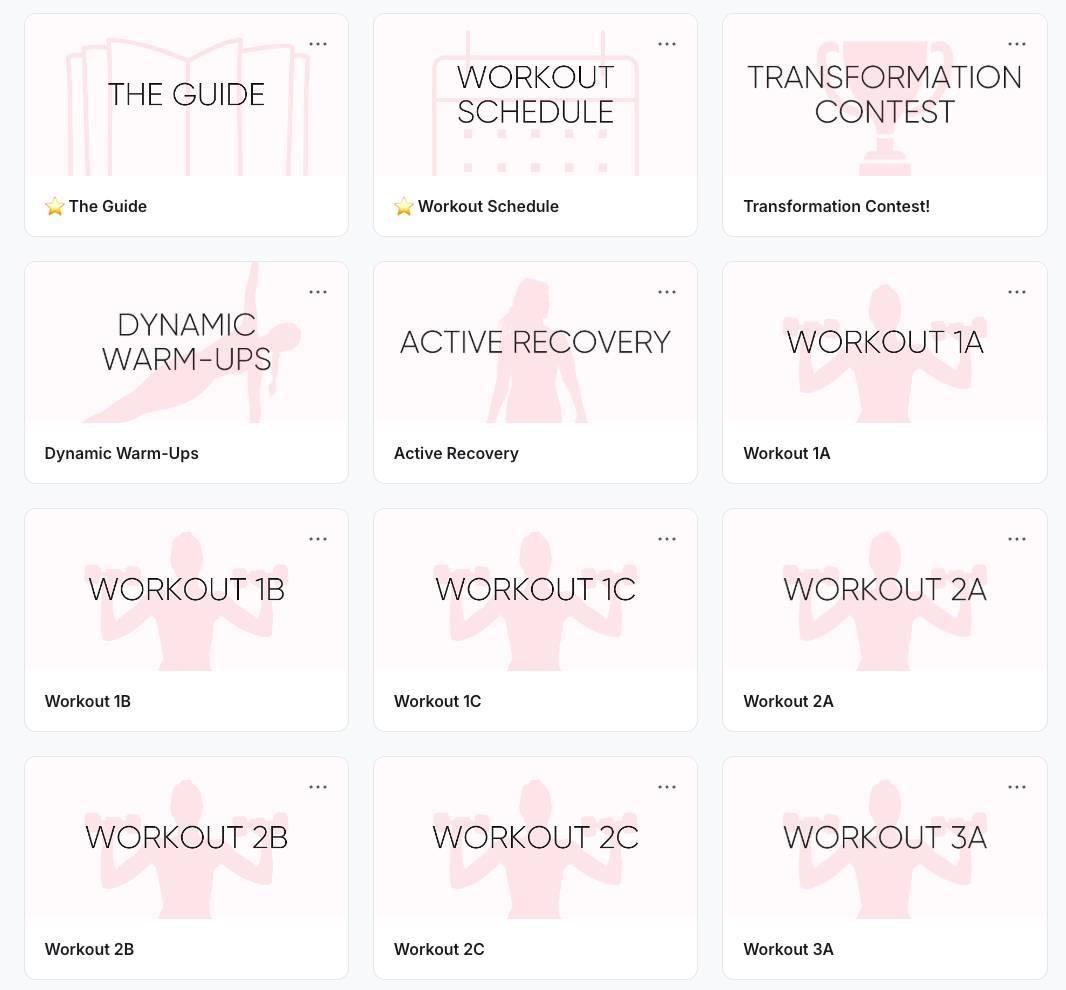
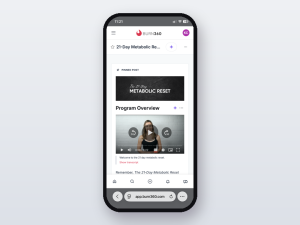
The most time-efficient compound dumbbell programme on the market. 20 to 25 minute sessions, 5 to 6 days per week, using Romanian deadlifts, goblet squats, overhead presses and rows. $39.95 one-time payment for lifetime access to the 21-Day Reset, with a 90-day money-back guarantee.
Created by Susan Ohtake. The programme structure (Week 1 baseline, Weeks 2-3 progress load, repeat at heavier weights) builds progressive adaptation through repetition rather than novelty. For women new to compound dumbbell training, this is the strongest entry point.
This score reflects Burn360’s position as the most time-efficient compound dumbbell programme. The 21-day cycle structure produces real progression at 20 to 25 minute session lengths. The one-time pricing model is unusual and meaningful for women cautious about ongoing subscriptions.
The compound movement selection is the methodological strength. Romanian deadlifts, goblet squats, overhead presses and rows deliver significant adaptation in 20 to 25 minutes. The 21-day repetition structure builds progressive load without requiring you to design progression yourself: Week 1 establishes baseline, Weeks 2 and 3 increase load or volume, the programme repeats.
For women in perimenopause specifically, the 20 to 25 minute format fits realistically into a working day. The structure is short enough that you can train 5 to 6 times per week without recovery debt, which builds the consistency habit that drives long-term adaptation.
Verdict: I came to Burn360 at a specific moment: around the time I was 39, when running and HIIT had stopped producing the results they used to. I felt too tired to run for an hour. Regular HIIT left me exhausted rather than energised. The hormonal shifts approaching perimenopause changed what worked.
I started with 3kg dumbbells in each hand. The workouts were genuinely challenging at that weight, which told me something. Over the following months I completed the 21-day reset three times, increasing my weights by about half a kilogram each round. By the third reset I was using 5kg and had visible muscle definition. My waist went from 68cm to 64cm.
For women in perimenopause specifically, Burn360 is the entry point that produces real adaptation in 20 to 25 minute sessions without intimidation. The compound movements, the short session format and the repeated-cycles structure work together to build the muscle base from which heavier programmes (Caroline Girvan, BODi LIIFT4) become accessible. Treat Burn360 as the foundation, not the destination.
Highest-scoring for: Women in perimenopause returning to strength training after a long pause. Women new to compound dumbbell movements. Women on a limited budget who want the lowest financial risk to start. Women who prefer a 21-day commitment to an open-ended subscription.
Cost: $39.95 one-time for the 21-Day Reset (lifetime access). $29.95/month for Community access (separate). 90-day money-back guarantee.
Trade-off: The 21-day cycle structure means progression eventually plateaus. After 3 to 4 rounds, more advanced trainees need to move to Caroline Girvan, BODi LIIFT4 or Pvolve’s heavier classes for continued progression. The Community subscription adds value but is a separate $29.95/month commitment.
2. Pvolve, Score: 8.3
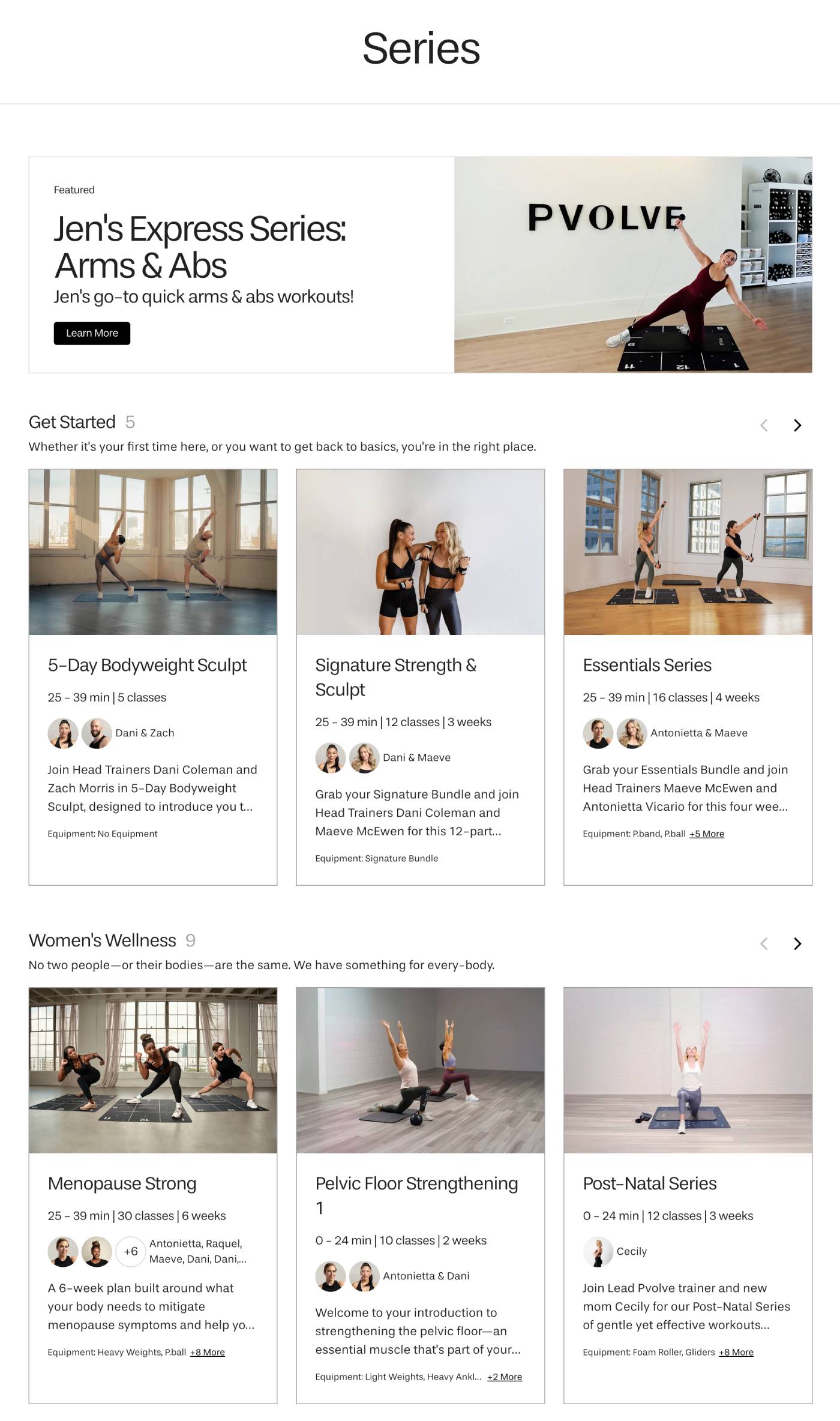
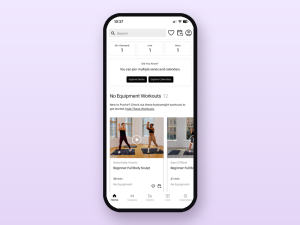
The most thoughtfully built 20-minute platform tested. Multi-planar resistance work (rotational, lateral, diagonal patterns) that conventional training mostly skips. Over 1,500 classes total, with 297 specifically at the 16 to 25 minute filter using bands and dumbbells. The Menopause Strong programme runs 20 to 30 minute sessions designed for hormone-aware training.
For women in perimenopause specifically wanting daily 20-minute sessions that produce real adaptation, this is the strongest tested option. The clinical advisory board (Head of Medical Affairs Dr Jessica Shepherd, OB/GYN; Dr Amy Hoover, Doctor of Physical Therapy; Dr Gabrielle Lyon, muscle-centric medicine) supports the platform’s midlife-aware programming.
This score reflects Pvolve’s position as the most 20-minute-aware platform tested. The 297 classes at the 16 to 25 minute filter, the multi-planar resistance method and the menopause-aware programming collectively address what women in perimenopause specifically need from short sessions.
The 297-class library at the 16 to 25 minute filter is the practical strength. Most platforms have a few short classes scattered through their library; Pvolve has hundreds of them by design. The Menopause Strong programme delivers 20 to 30 minute sessions structured around the four pillars Pvolve identifies for midlife: muscle, bone, joint and pelvic floor.
The multi-planar protocol is the methodological strength. Sagittal-plane training (forward and backward, the way most strength programmes move) misses the stabiliser muscles that protect joint integrity. Pvolve’s rotational and lateral work reaches these muscles in a way that 20-minute compound lifting alone does not.
Verdict: I tested Pvolve for two months of daily 20-minute sessions, using my own resistance bands, dumbbells from 5kg to 8.5kg, and ankle weights. My specific filter (16 to 25 minutes, bands and dumbbells) returned 297 classes.
I assumed Pvolve was going to be too gentle. Low-impact, functional fitness, 20-minute sessions, how hard can it actually be? It is harder than it looks. I was counting the last few reps on movements that by all rights should have felt manageable. In some sessions I had to drop to lighter weights than I normally train with.
I started weight work at 5kg upper body and 6.5kg lower body. After two months I had progressed to 6.5kg upper and 8.5kg lower. Genuine progression across two months of 20-minute sessions, which is more than I expected. The full-body weight training session with Zach Morris, 24 minutes long, is a class I have returned to repeatedly because it reliably produces that burning feeling in the muscles.
Highest-scoring for: Women in perimenopause who want daily 20-minute sessions that produce real strength and joint adaptation. Women with knee or hip history. Women who appreciate clinical credibility. Women who want multi-planar movement beyond traditional sagittal-plane lifting.
Cost: $24.99/month. 14-day free trial.
Trade-off: The maximum dumbbell load most Pvolve classes use is lower than progressive heavy lifting protocols. For women specifically targeting bone density adaptation through heavier loading, pair Pvolve with one heavier session per week using dumbbells you progressively load.
Start the 14-day free trialAffiliate link, opens pvolve.com. I earn a commission at no extra cost to you. Full disclosure
3. Fit with Coco, Score: 7.9
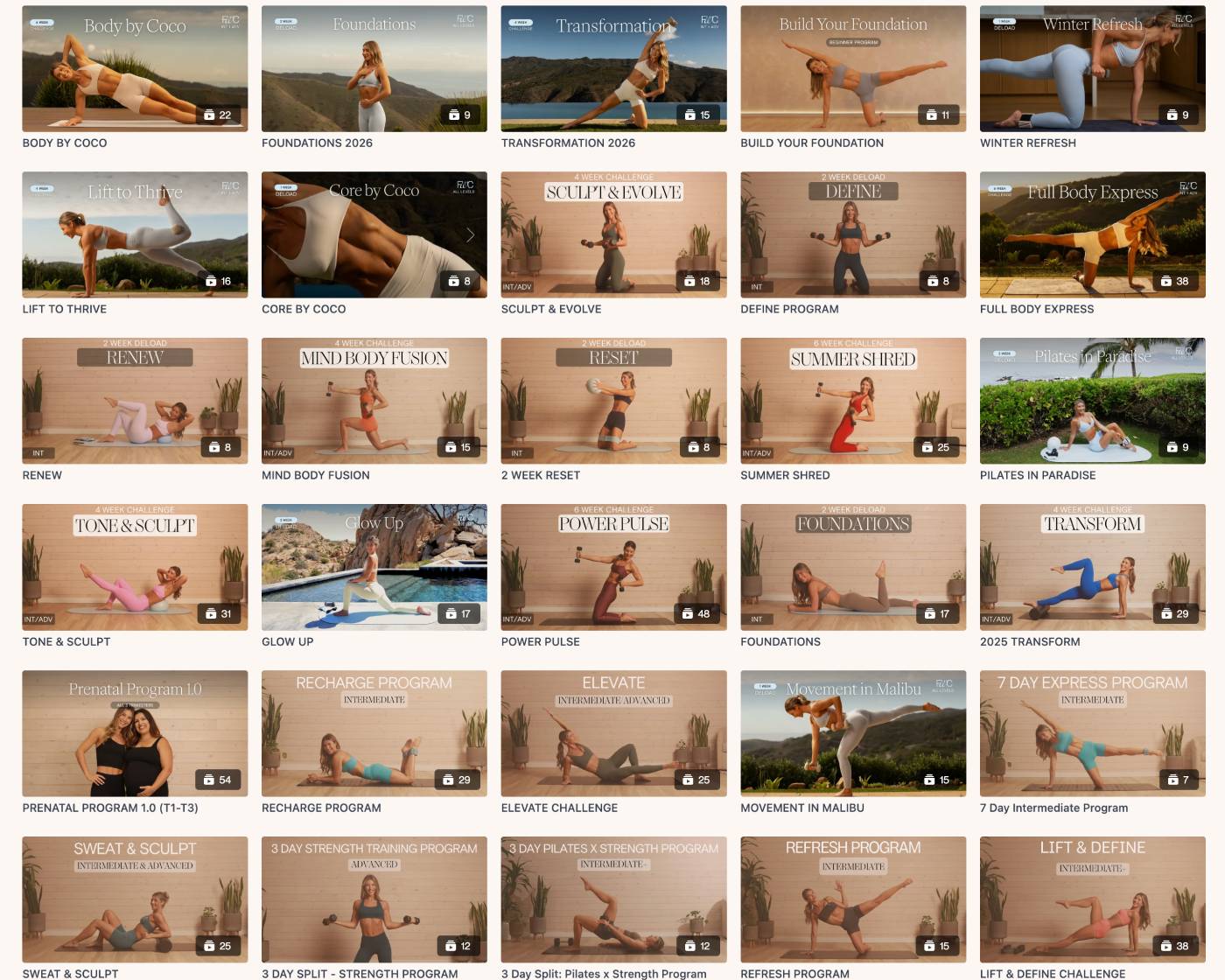
The most engaging short-session Pilates-strength hybrid platform tested. The 3-2-1 method delivers structural variety across the week: three Pilates sessions, two strength sessions, one cardio session. Sessions run 15 to 30 minutes. The format is concise, addictive and well-suited to sustained daily practice for women in perimenopause.
Created by Coco, a UK-based coach. The Full Body Express programme is the structured entry point for women over 40 looking for a programmed 7-week cycle.
This score reflects Fit with Coco’s position as the most engaging short-session platform for perimenopause. The 3-2-1 method delivers structural variety in 15 to 30 minute formats. The platform is built for women in midlife specifically.
The 3-2-1 method addresses something the published research supports without naming directly: structural variety reduces overuse risk while accumulating volume across different stimuli. Three Pilates sessions develop core control and posture. Two strength sessions drive lean mass adaptation. One cardio session supports cardiovascular health. Total weekly time commitment sits at roughly 2 to 3 hours.
The session length is the platform’s sustainability advantage. 15 to 30 minute sessions fit realistically into the calendar of a working woman in perimenopause. The format is short enough to do daily but structured enough to produce real adaptation when followed across weeks.
Verdict: By this point I have tested close to fifty online fitness platforms. Most of them are fine. Some are actively good. Very few are addictive. Fit with Coco came up repeatedly in conversations about what was working for women in their forties.
I started the 7-day trial expecting to assess it. I ended it as a paying subscriber, which should tell you something. The sessions are addictive in a way that very few platforms manage: positive, challenging, genuinely effective and short enough to fit into real life. After the first week I felt tighter through the belly and more stable through my core. After 7 weeks on the Full Body Express programme, my waist measurement dropped and I lost weight I had been carrying for a while.
For women in perimenopause specifically, the short-session format and the 3-2-1 method work together to make consistency feel easy rather than effortful. The honest caveats: the monthly price of $39.95 is high for what is delivered when comparable platforms cost significantly less, and the annual plan offers no trial.
Highest-scoring for: Women in perimenopause looking for short sustainable daily-practice format. Women who enjoy Pilates and want strength work integrated. Women who responded to Coco’s coaching style on social media. Women who prefer non-restrictive body composition approaches.
Cost: $39.95/month. 7-day free trial. No trial on annual plan.
Trade-off: The monthly price is the highest in this list relative to programme depth. The platform does not include explicit nutrition tools. The strength sessions are not as heavy as Caroline Girvan-style progressive lifting; pair with one heavier session per week for bone density loading.
4. Melissa Wood Health, Score: 6.9
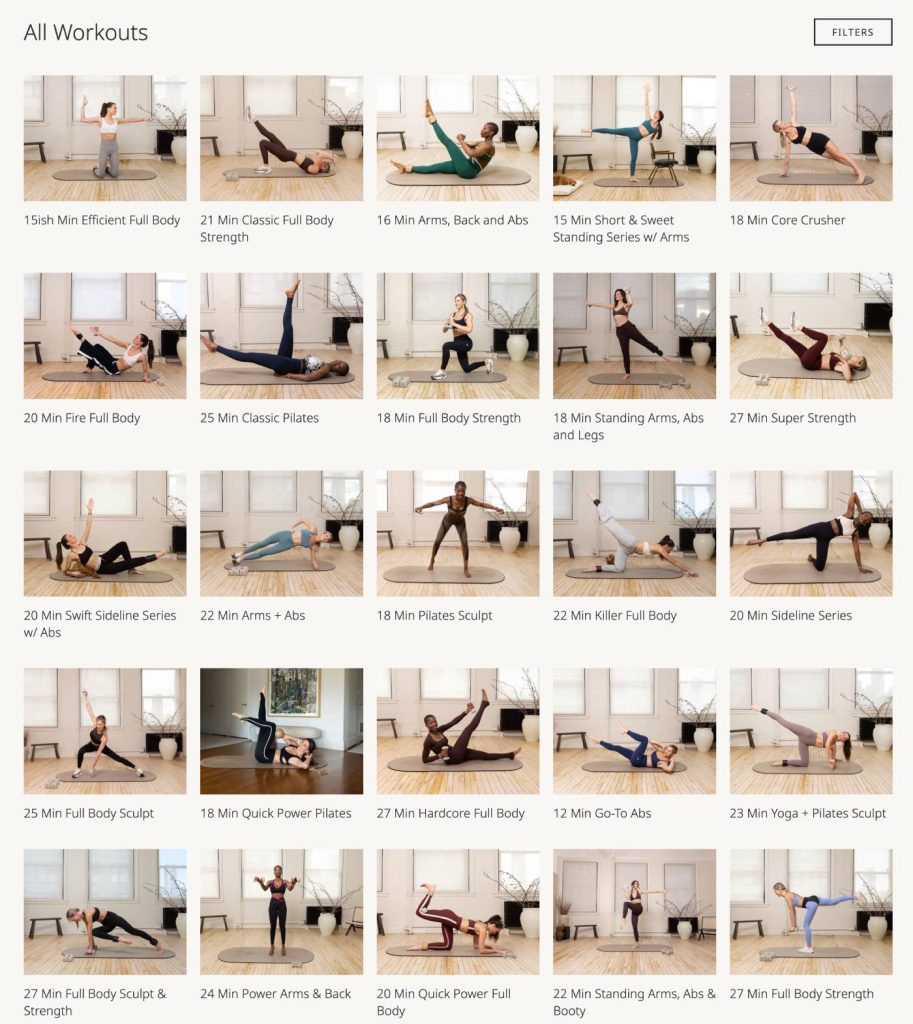
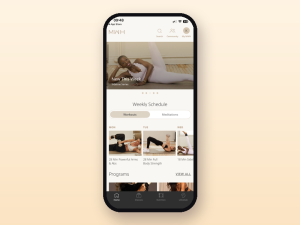
The shortest-format platform tested and the standout for time efficiency in the 20-minute category. Sessions run 15 to 20 minutes across Total Body Tone with Kim (a structured strength block with light dumbbells), the Signature Series with Melissa Wood (Pilates-influenced mat work) and a substantial meditation library. The platform is built explicitly around the idea of moving daily without it becoming another stressful thing on the to-do list. $14.95 per month or $134.99 per year ($11.25 per month equivalent), with a 7-day free trial.
For women in perimenopause whose binding constraint is time, not effort, Melissa Wood Health is the platform that respects that constraint without compromising the underlying training quality. The unbeatable time efficiency of 15 to 20 minute sessions makes the daily habit feel possible rather than aspirational.
This score reflects Melissa Wood Health’s position as the time-efficiency standout in the 20-minute category. The 15 to 20 minute session length is the shortest tested that still produces real adaptation, and the platform’s daily-practice orientation is the right shape for women in perimenopause specifically.
The session length is the platform’s defining feature. Most platforms in this guide cluster around 20 to 30 minutes; MWH sits below that at 15 to 20 minutes. That five-minute difference matters more than it sounds in real life. A 15-minute session before the school run is a session that happens five days a week. A 25-minute session before the school run is a session that happens twice a week and then drifts. The shorter floor protects adherence.
The programming is structured around two main tracks. Total Body Tone with Kim covers light-dumbbell strength work (1 to 3 lb range is what the platform recommends) in a Pilates-influenced format. The Signature Series with Melissa Wood is mat-based core, glute and posture work without weights. The meditation library covers breathwork, guided sleep and stress-management protocols, which sit alongside the training rather than as an afterthought.
The design is the third strength. The platform looks like a wellness brand built by someone who cares how things feel, not like a fitness app built by an engineering team. Beautiful design matters more than it should for adherence: an app you enjoy opening is an app you open more often.
Verdict: I tested MWH on the 7-day free trial and then paid through six weeks. My mum, who is in her late 60s, started the platform alongside me out of curiosity. Within two weeks she was training daily, which is the longest training streak she has held in years. The 15 to 20 minute session length is what made the difference for her, and watching that happen reframed what the platform is doing.
For me, six weeks in, the muscle-building stimulus is lower than what I get from Pvolve or Caroline Girvan because the dumbbell weights cap at 3 lb and the structure is closer to Pilates than to strength training. That trade-off is honest and clearly intentional. The platform is calming home workouts for women who wanted to move daily without it becoming another stressful thing on the to-do list, not a hypertrophy programme for experienced trainees. Treat it that way and it does what it sets out to do beautifully.
The standout sessions for me were Total Body Tone with Kim (the closest the platform comes to strength training) and the longer Signature Series flows when I had 20 minutes rather than 15. The meditation library carried more weight than I expected; I came in cynical and ended up using the breathwork sessions before sleep more nights than not.
Highest-scoring for: Women in perimenopause whose binding constraint is time. Beginners or women returning to movement who want a gentle daily-practice format. Women who value beautiful design and calm energy in a wellness app. Women building a daily habit rather than chasing a body composition goal.
Cost: $14.95 per month or $134.99 per year ($11.25 per month equivalent). 7-day free trial.
Trade-off: Muscle-building potential is low for experienced trainees. The 1 to 3 lb dumbbell recommendation caps the loading stimulus well below what hypertrophy adaptation in midlife requires per Burd 2012. For women specifically targeting body composition change or bone density, pair MWH’s daily practice with two heavier sessions per week (Caroline Girvan, Burn360 or Pvolve at heavier load).
5. Peloton, Score: 7.3
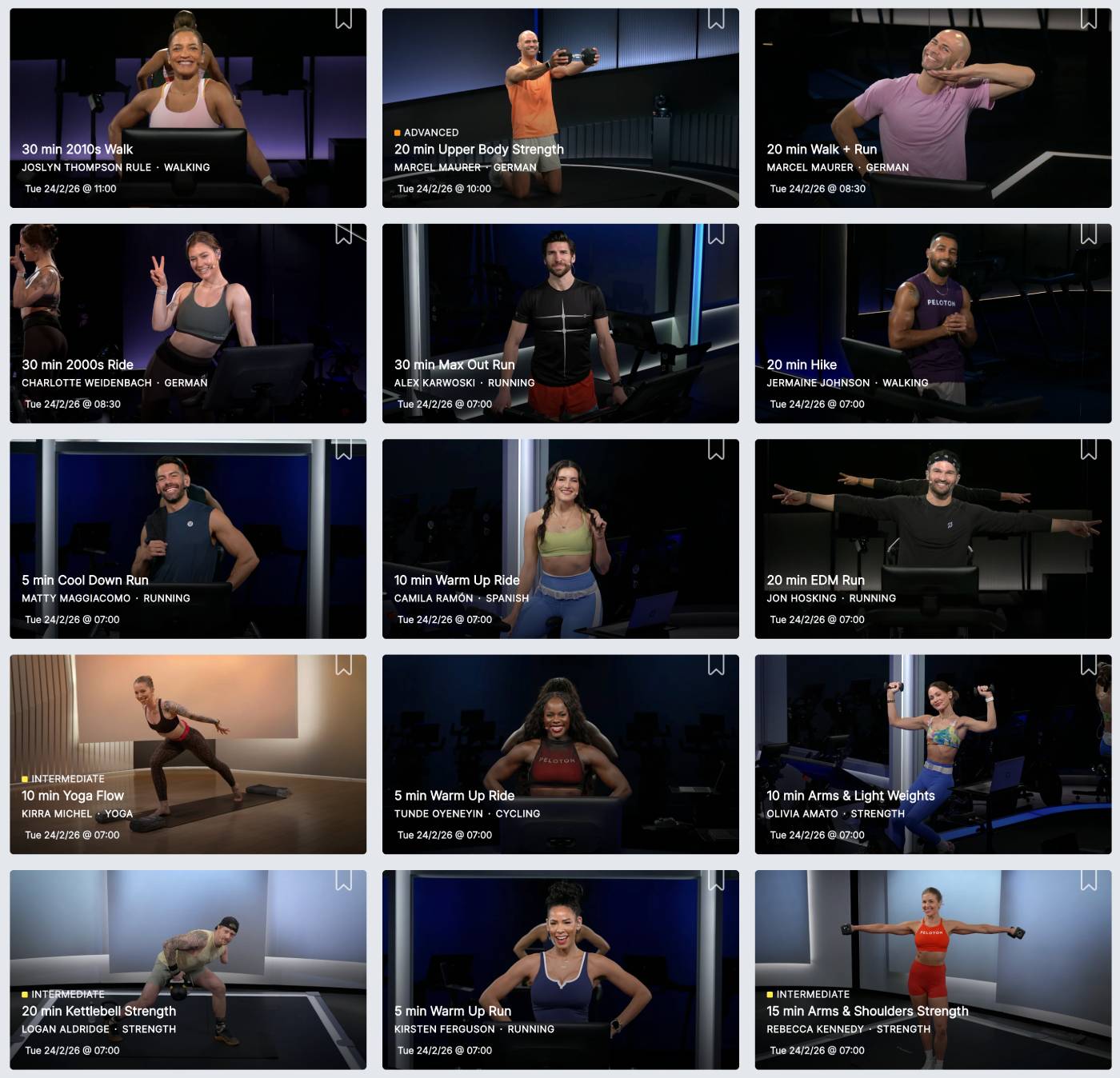
The most developed cardiovascular platform with strong short-format strength content. Strength Roll Call classes run 10 to 30 minutes and are organised by week and muscle group. Power Walk classes deliver coached Zone 2 walking in 20 to 30 minute formats. The Menopause Health Collection (revamped March 2026 with Respin Health) includes 56 classes structured around a 7-day programme.
For women in perimenopause whose primary need is cardiovascular work plus structured strength in short formats, Peloton App One at $15.99/month is the lowest-friction entry.
This score reflects Peloton’s position as the strongest cardiovascular platform with short-format strength content. The Strength Roll Call collection, Power Walk classes and the Menopause Health Collection all deliver content at 10 to 30 minute lengths.
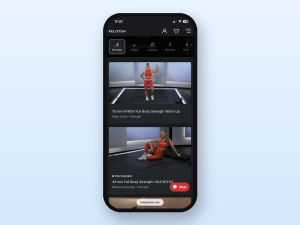
The Strength Roll Call collection is the practical strength asset. Most classes are 20 to 30 minutes, with core classes at 10 to 20 minutes. The format is live at 7:30 AM ET every weekday with on-demand recordings available, organised by week and muscle group (two full-body days, glutes and legs, upper body, core on Wednesdays). For women who want consistent weekday strength training without committing to a multi-week programme, the Roll Call format is the lowest-friction option.
The Power Walk classes are the cardiovascular complement. Coached treadmill walking with pace and incline targets, 20 to 30 minutes per session. The classes work on any treadmill, not just Peloton equipment. The Menopause Health Collection includes strength classes specifically calibrated for menopause-appropriate intensity through the Respin Health partnership.
Verdict: I am a woman in my mid-40s, perimenopausal, working full-time with children, with a history of a meniscus injury and a training background in HIIT and dumbbells. I do not own any Peloton equipment. I tested the platform by mixing and matching classes across strength, yoga, walking and running, using my own treadmill for the cardio content and a single pair of 7.5kg dumbbells for strength.
For 20-minute training specifically, Peloton’s Strength Roll Call format and Power Walk classes are the strongest options in the library. Twenty-minute strength classes at 7.5kg dumbbells with the modification cueing that the platform consistently delivers fits realistically into a working week. The Menopause Health Collection adds the menopause-aware filtering that removes the navigation burden.
The cancel link has had functioning issues; cancel through the app or contact support if needed. App One at $15.99/month is the right tier for women whose Peloton use case is walking plus strength rather than unlimited cycling.
Highest-scoring for: Women in perimenopause who want short-format strength training plus walking cardio in one subscription. Women with a treadmill (Peloton or otherwise). Women who benefit from live class accountability.
Cost: $15.99/month App One. $28.99/month App+ (adds unlimited cycling and treadmill, plus Strength+ app free). 30-day free trial.
Trade-off: The strength content is less progressive than dedicated strength platforms (Caroline Girvan, BODi LIIFT4). The cancellation friction is real. For women specifically wanting heavy progressive resistance, pair Peloton with one Caroline Girvan EPIC session per week.
6. Alo Wellness Club, Score: 7.7
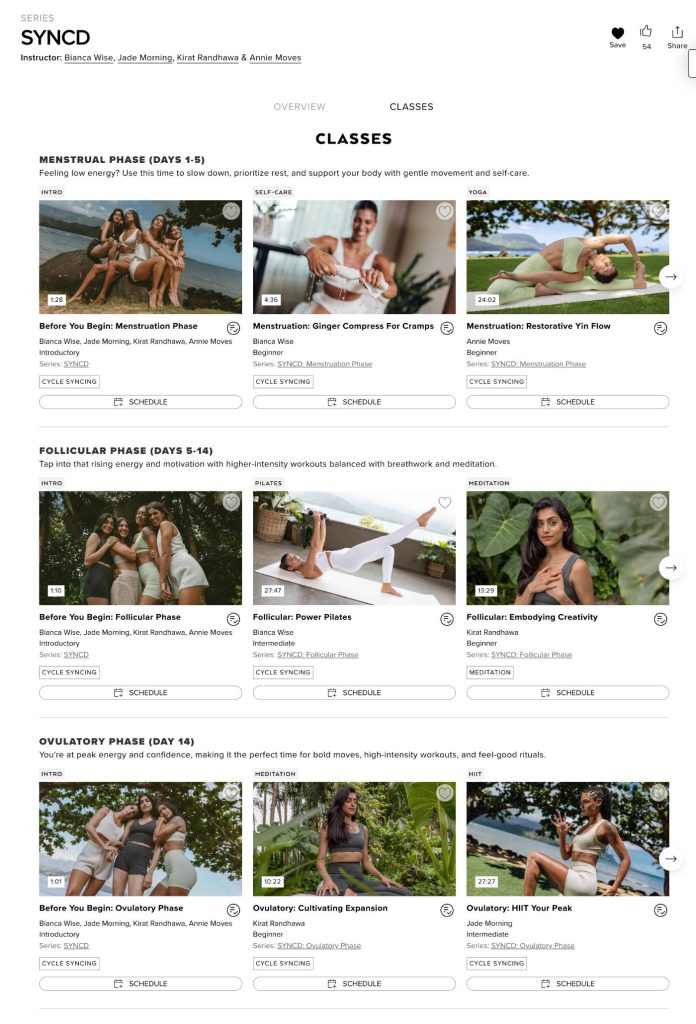
The most comprehensive free fitness platform available anywhere in 2026, with strong assets for the 20-minute angle specifically. Alo dropped the paywall on the platform in December 2025 and rebranded the former Alo Moves as Alo Wellness Club, a fully free streaming library covering strength, Pilates, HIIT, yoga and recovery. No credit card required at signup. The Hourglass Method with Sarah DiGiovanni is a 4-week structured strength programme that sits inside the wider library, and individual library sessions typically run 10 to 45 minutes with a strong cluster in the 20 to 30 minute range.
For women in perimenopause who want structured short-format training at zero cost, with the option of dropping into longer sessions when time allows, this is the most generous free offering tested.
This score reflects Alo Wellness Club’s position as the strongest free option in the 20-minute category. The Hourglass Method 4-week strength programme provides structured progression, and the wider library covers 10 to 45 minute sessions across modalities. The price point of zero combined with this depth of content makes it impossible to ignore.
The Hourglass Method is the platform’s anchor for the 20-minute angle. Four weeks of structured strength work with Sarah DiGiovanni, who built the programme around posture, glutes and the muscles that support midlife body composition. Sessions inside the programme cluster at 25 to 35 minutes, which slots into the upper edge of the 20-minute window. For women who want progression and accountability without paying for it, this is a real find.
The wider library covers what most subscription apps cover, at zero price. Filters work, the production is high-end, and the strength and Pilates content serves women over 40 well. Pilates flows, mat strength, mobility work, breathwork and yoga all sit in 15 to 30 minute formats; the more cardio-led HIIT classes tend to cluster at 25 to 45 minutes.
Verdict: I tested Alo Wellness Club for one month of daily use during the post-launch free period and kept logging in for the occasional class afterwards. The signup is one of the lowest-friction tested: an email address, no credit card, no “free trial” countdown. You are inside the platform in under a minute. This is a real trust signal: most free platforms still ask for a card so they can auto-convert you at the end of a trial. Alo does not, because there is nothing to convert to.
For the 20-minute angle specifically, the filters actually work, the strength and Pilates content serves women over 40 well, and the whole thing costs nothing. The Hourglass Method ran me four weeks of structured strength alongside the wider library, which is genuinely more than the platform’s zero price suggests it should be.
The honest caveats: there is no dedicated perimenopause programming on Alo, the way Pvolve has Menopause Strong or Peloton has the Menopause Health Collection. Long-term free status depends on Alo’s apparel strategy holding. Only Apple TV works on the telly (no Roku, no Fire TV, no Chromecast). Progress tracking is non-existent; you have to save Playlists or schedule classes in a calendar app. For a woman over 40 who wants free, beautifully produced training and is happy to drive her own week, this is one of the most generous offerings I have tested.
Highest-scoring for: Women in perimenopause whose binding constraint is budget. Women who want structured strength (Hourglass Method) plus a wider library at zero cost. Women happy to drive their own training week from a well-filtered catalogue. Women who already enjoy Pilates and yoga and want them in the same library as their strength work.
Cost: Free. No credit card required.
Trade-off: No dedicated perimenopause programming. Progress tracking is non-existent. Only Apple TV among streaming TV options. Long-term free status depends on Alo’s commercial strategy holding.
Which 20-minute workout for perimenopause is right for you?
You want the most thoughtfully built 20-minute platform with joint protection and menopause-aware programming
START WITH: Pvolve Menopause Strong
14-day free trial. Start with Menopause Strong (4 weeks) or filter the library by 16 to 25 minutes plus bands and dumbbells. The multi-planar movement system protects joints while building strength.
You want the shortest possible sessions, daily, with a calming gentle daily-practice feel
START WITH: Melissa Wood Health
7-day free trial. Run Total Body Tone with Kim and Signature Series with Melissa in 15 to 20 minute sessions daily. Pair with two heavier sessions per week if body composition is a goal. $14.95 per month or $11.25 per month equivalent on annual.
You want structured short-format strength at zero cost, with a wider free library when you want variety
START WITH: Alo Wellness Club Hourglass Method
Free with no card required. Run the 4-week Hourglass Method with Sarah DiGiovanni for structured strength, then filter the wider library by 15 to 30 minute sessions across Pilates, yoga and mobility for variety.
You are new to compound dumbbell training and want the lowest financial risk to start
START WITH: Burn360
$39.95 one-time, 90-day guarantee. Complete the 21-Day Metabolic Reset with 3 to 5kg dumbbells. Repeat at heavier weights. 20 to 25 minutes per session, 5 to 6 days per week.
You enjoy Pilates and want short daily-practice sessions with the 3-2-1 method
START WITH: Fit with Coco Full Body Express
7-day free trial. Run the Full Body Express programme for 4 to 7 weeks. The 15 to 30 minute sessions and the 3-2-1 method structure work together for sustained daily practice.
You want short-format strength training plus walking cardio in one subscription with live class accountability
START WITH: Peloton App One
30-day free trial. Filter by Strength Roll Call and Power Walk. Mix three 20-minute strength sessions per week with three 20 to 30 minute Power Walks. Pair with the Menopause Health Collection for menopause-aware programming.
Where is the evidence still evolving on 20-minute training?
Three open questions matter most. First, the precise volume threshold at which short sessions stop matching longer sessions for hypertrophy outcomes. Second, the role of session frequency versus session length in cortisol regulation for menopausal women. Third, the optimal mix of resistance and cardiovascular work when both have to fit into short formats.
On volume thresholds, Schoenfeld 2017 showed equivalence across rep ranges 5 to 30 when total volume is matched, which is the foundation of the 20-minute case. What is still being studied is whether the equivalence holds at extreme rep ranges (30+) commonly used to squeeze volume into short sessions. The cautious operating point is 8 to 15 reps per set, which both meta-analyses support.
On frequency versus length, the published evidence consistently supports frequency as the more important variable. Twice-weekly per muscle group is the documented hypertrophy floor; three or four short sessions easily meet this. Whether menopausal women specifically benefit more from the cortisol profile of multiple short sessions versus fewer long sessions is an active research question, with Hackney 2006 showing the cortisol response of prolonged high-intensity exercise as a starting point for the discussion.
On the resistance-cardio mix, the right ratio depends on individual circumstances. For most women in perimenopause, three short resistance sessions per week plus three or four short cardiovascular sessions plus one or two mobility or balance sessions is the operating point. Total weekly time of 100 to 150 minutes sits at the lower end of WHO guidance and is sustainable across decades.
If I were designing a 20-minute training week for women in perimenopause, knowing the published research and my own testing experience, I would suggest three Pvolve Menopause Strong sessions per week (20 to 30 min each), two Power Walks of 30 min on a treadmill, one 15 to 20 minute Melissa Wood Health Signature Series session and one short balance or Pilates session from Alo Wellness Club. Total weekly time of roughly 120 minutes. Plus 100 to 130g of protein per day across 4 to 5 meals, 7+ hours of sleep and adequate cortisol-conscious recovery. That combination delivers what the published evidence supports for women in this life stage.
Frequently Asked Questions
Burn360 is our top pick for 20-minute training in perimenopause. It scores highest on this page for time efficiency and covers compound dumbbell training in 20 to 25 minute sessions. Pvolve is second here and carries a higher overall score across our full criteria, because overall score weighs the whole platform while this page ranks on how well each one works in a 20-minute window. I tested Pvolve for two months of daily 20-minute sessions, and the filter for 16 to 25 minutes with bands and dumbbells returned 297 classes. The multi-planar resistance method delivers real strength adaptation in short formats without impact load, supported by a clinical advisory board led by OB/GYN Dr Jessica Shepherd. Melissa Wood Health is the standout for the shortest sessions at 15 to 20 minutes daily. Alo Wellness Club offers the 4-week Hourglass Method strength programme and a wider 10 to 45 minute library for free. Fit with Coco delivers the 3-2-1 method in 15 to 30 minute sessions. Peloton covers Strength Roll Call and Power Walk classes in 10 to 30 minute formats.
Yes. Schoenfeld’s 2017 systematic review and meta-analysis demonstrated equivalent hypertrophy across rep ranges from 5 to 30 when total training volume is matched, which means moderate dumbbell loads at higher reps in short sessions produce the same muscle adaptation as heavier loads in longer sessions. Schoenfeld’s 2016 frequency meta-analysis showed twice-weekly per muscle group as the documented hypertrophy floor, which three 20-minute full-body sessions per week meet easily. For women in perimenopause specifically, short sessions also support cortisol-conscious training: Hackney 2006 documented elevated cortisol response in prolonged high-intensity exercise, which blunts the anabolic response, disrupts sleep and drives central fat storage. Shorter focused sessions are physiologically appropriate, not a compromise.
Four to five short sessions per week is the practical target: 3 resistance sessions of 20 to 25 minutes plus 1 Pilates or mobility session of 15 to 20 minutes plus 1 to 2 short cardio or walking sessions of 20 to 30 minutes. Total weekly time commitment lands at roughly 100 to 150 minutes, which sits at the lower end of the World Health Organisation guidance of 150 to 300 minutes of moderate aerobic activity plus 2+ days of muscle-strengthening for adults. The protocol works because it is sustainable across decades, not because it is heroic in any single week.
Yes, with adequate load and frequency. The mechanism that drives muscle building (progressive resistance load producing mechanical tension on muscle fibres) does not require long sessions. Schoenfeld’s 2017 systematic review showed equivalent hypertrophy across rep ranges 5 to 30 when volume is matched, which means compound dumbbell movements (squats, hinges, presses, rows) at 8 to 15 reps with moderate-to-heavy loads in 20-minute sessions produce real adaptation. The Cruz-Jentoft 2010 sarcopenia consensus identifies progressive resistance training as the documented intervention for skeletal muscle preservation in midlife. The trade-off is that progressive overload becomes more important in short formats: you must increase dumbbell weight every 2 to 4 weeks to drive continued adaptation. Pair with adequate protein (approximately 1g per pound of bodyweight per day) for the full muscle-building protocol.
Fifteen to 20 minute sessions, daily, with progressive load and structured frequency. Melissa Wood Health is the platform built explicitly around this format: 15 to 20 minute sessions across Total Body Tone with Kim, Signature Series Pilates-influenced mat work and a meditation library, at $14.95 per month with a 7-day free trial. The trade-off is that muscle-building potential is lower at this length because the dumbbell weights cap at 1 to 3 lb; pair daily MWH practice with two heavier sessions per week (Caroline Girvan, Burn360 or Pvolve at heavier load) if body composition change is the goal. For beginners and women building a daily-movement habit, 15 to 20 minute sessions are often the right place to start.
Yes, if you accumulate the sessions across the week. The World Health Organisation guidance of 150 to 300 minutes of moderate aerobic activity per week is met by 4 to 5 short cardiovascular sessions of 20 to 30 minutes each, plus daily walking. Tabata and colleagues (1996) demonstrated that even 4-minute high-intensity interval protocols produce cardiovascular adaptations rivalling 60-minute moderate sessions, which means 20-minute formats with built-in interval blocks deliver real adaptation. For women in perimenopause specifically, mixing 3 Zone 2 walks per week (20 to 30 min each) with 1 to 2 higher-intensity Peloton Power Walk or Power Zone Cycling sessions is the right operating point.
Long high-intensity sessions drive cortisol elevation, which is particularly problematic for women in perimenopause because elevated cortisol blunts the anabolic response to training, disrupts sleep, drives central fat storage and works against the body composition goals most women have. Hackney 2006 documented the cortisol elevation that prolonged high-intensity exercise produces, and Nedeltcheva 2010 showed that sleep restriction (often a consequence of cortisol disruption) shifts weight loss from fat to lean mass during caloric deficit. Dr Mary Claire Haver and Dr Stacy Sims both advocate for cortisol-conscious training in midlife: shorter focused sessions sustained more days per week consistently outperform longer sessions that punish recovery. The right operating point for most women in perimenopause is 20 to 30 minute sessions, 4 to 5 days per week, with adequate sleep (7+ hours) and protein (approximately 1g per pound of bodyweight per day). Discuss persistent cortisol or sleep concerns with your GP or a menopause-trained clinician.
Heavy enough that the last few reps of each set are genuinely hard, regardless of session length. For most women in their 40s to 60s, 5 to 12kg dumbbells across compound movements (squats, hinges, presses, rows) is the right operating point. Schoenfeld’s 2017 systematic review showed equivalent hypertrophy across rep ranges 5 to 30 when total volume is matched, which means moderate dumbbell loads at 12 to 15 reps in short sessions produce the same adaptation as heavier loads at 5 to 8 reps in longer sessions. Burd 2012 documented anabolic resistance in older adults, which means muscle building requires adequate load even in shorter formats. For women new to dumbbell training, starting at 3 to 5kg and progressing 0.5 to 1kg every 2 to 4 weeks builds the strength base.