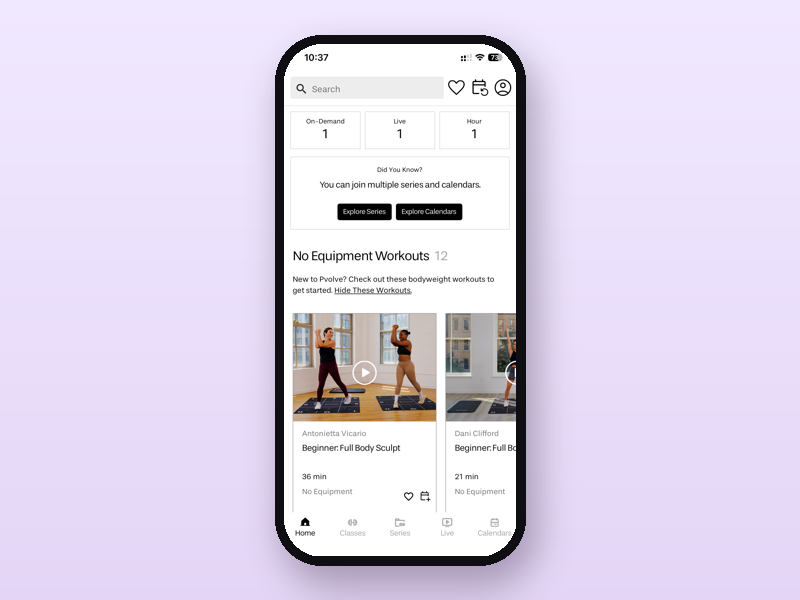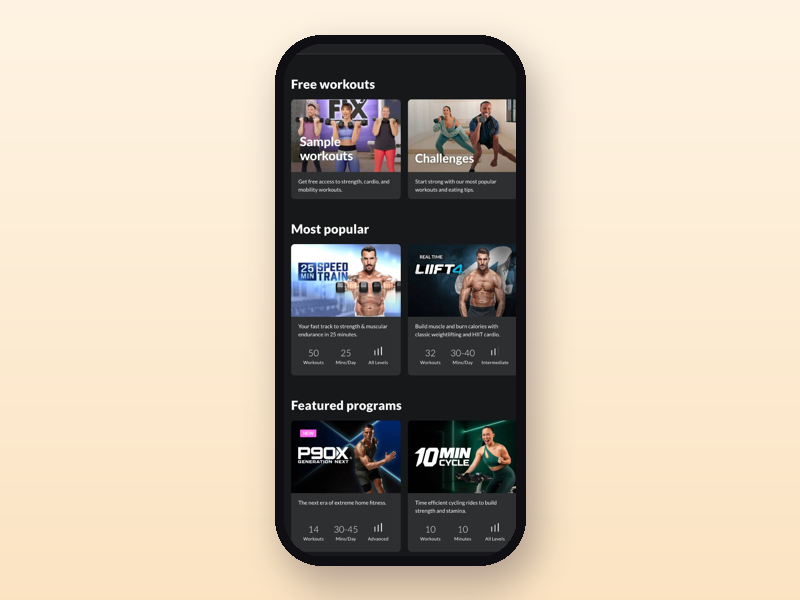
Ladder scores higher overall, 6.9 against 5.8, and is the stronger platform for a coach-programmed strength plan and app quality. Fitbod is the better pick if what you need most is training around whatever equipment you have and a cheaper subscription.
Quick answer
- Ladder 6.9 vs Fitbod 5.8
- $29.99 vs $15.99 a month
- App 9 vs 6, Ladder
- Structure 9 vs 7, Ladder
- Recovery 5.5 vs 4, Fitbod
- Pelvic floor 0 vs 0
Ladder is the better product, and it wins almost everything this site measures. It takes seven of the nine weighted criteria: UX and Design 9 against 6, Programme Structure 9 against 7, Muscle Potential 9 against 8, Time Efficiency 8 against 7, Value for Money 7 against 6.5, Women Over 40 Specificity 3.6 against 3.2 and Nutrition Integration 5 against 0. Joint Friendliness is tied at 5.
Fitbod wins one criterion, and it is the one a tired midlife body notices. Recovery Compatibility is 5.5 against 4, and the recovery and deload row reads 6 out of 10 against 4, because its muscle-fatigue heatmap steers each session toward recovered muscles while Ladder’s team plan runs the same week for everyone. Fitbod also leads bone loading, 8.5 out of 10 against 7, and beginner on-ramp, 6 against 5, and it costs half as much.
Ladder’s reputation as a perimenopause app did not come from Ladder. The 40-plus association is user-generated, spread on TikTok rather than built into the product, and the team most often named in those videos, Team Vitality, is general functional bodybuilding. Neither platform here has menopause programming, pelvic-floor work, hormone awareness or menopause education, and three of those four capability rows read zero on both. Buy either for progressive strength, which is a good reason. Do not buy either expecting it to understand the transition.
Ladder if you already train, want a coach to programme your week and will use the team around it, and if the higher price buys enough for you. Fitbod if your equipment changes from week to week, if you want the cheaper subscription, or if you would rather have an app that notices what you trained on Monday than one that hands everyone the same Wednesday. Neither one is a menopause tool, and neither will plan your recovery around a symptomatic week.
Fitbod vs Ladder: the two platforms
Both are strength-first, both progress load properly, and they disagree about who should be in charge.
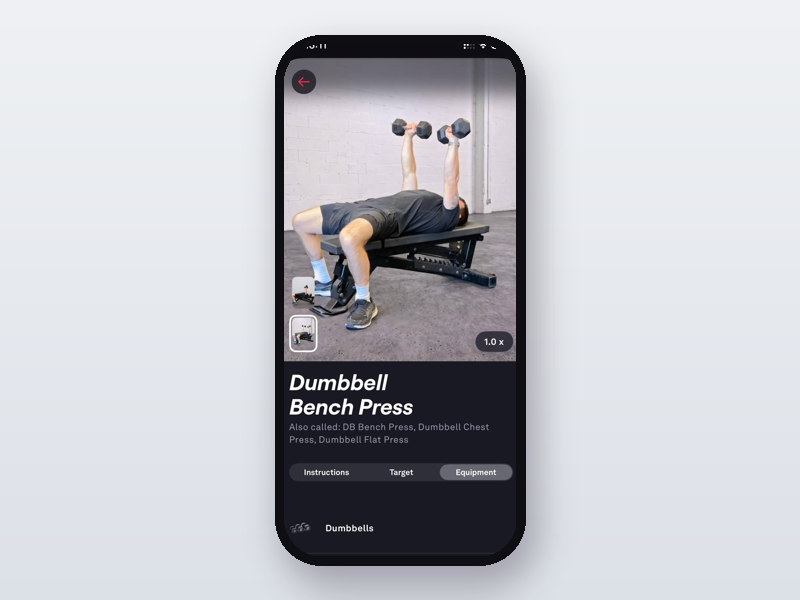
Fitbod
Runner-up
An AI strength generator that builds each lifting session around your goal, level and available equipment, then progresses the load as you log your sets. A planner and a logger rather than a follow-along class.
- 30 to 60 min
- Bone loading 8.5/10
- Recovery & deload 6/10
- 7-day trial
- Sample tested
Choose Fitbod if you:
- Move between a gym, a home setup and travel
- Want the cheaper of the two subscriptions
- Prefer a session that respects what you trained yesterday
- Already know the movements and do not want coaching
- Want to decide your own week
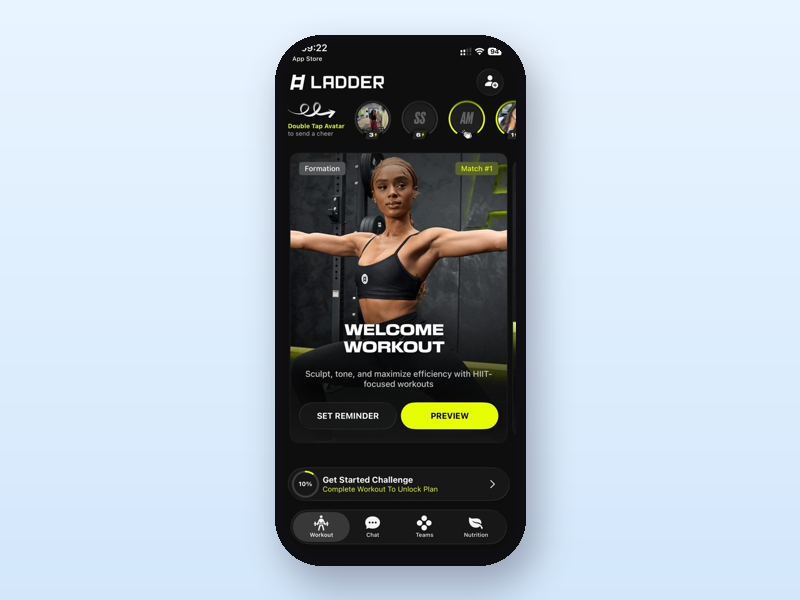
Ladder
Winner
Coach-led, team-based progressive strength. A quiz matches you to a coach and a team, and each week that coach releases a new block of workouts the whole team follows together, with in-ear audio coaching, video demos and load tracking.
- 30 to 45 min
- App 9.0
- Progressive strength 9/10
- 7-day trial, no card
- Sample tested
Choose Ladder if you:
- Want a real coach programming your week
- Are motivated by training alongside other people
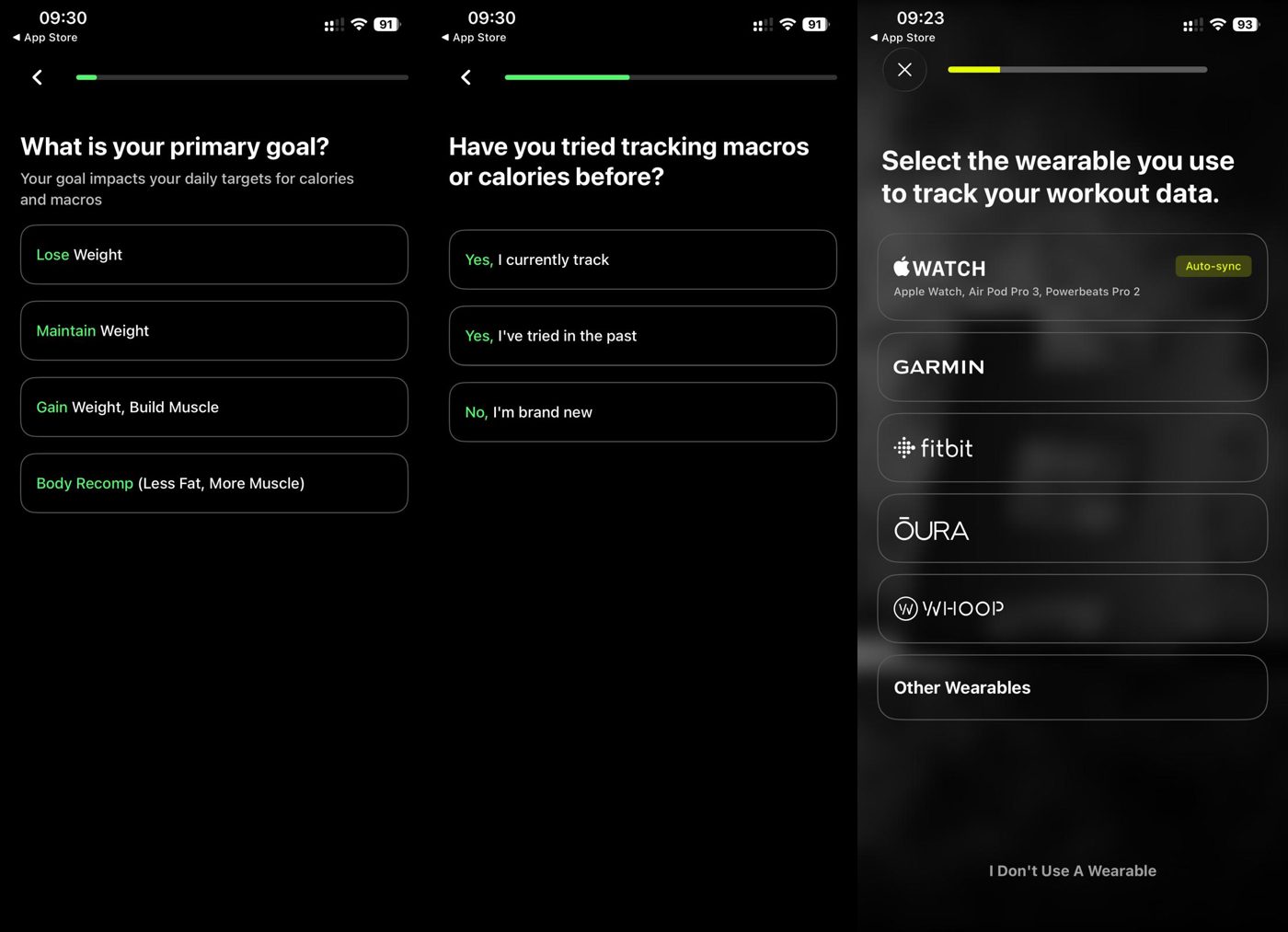
- Want macro tracking inside the same subscription
- Value a beautifully built app and will pay for it
- Already know how to dial a hard week down
How we scored this, and what a sample test can and cannot show
Both platforms went through the same nine weighted criteria and the same twelve capability scores, and both were assessed to the same depth. Muscle Potential carries 18%, Time Efficiency 15%, Joint Friendliness and Programme Structure 12% each, Women Over 40 Specificity and Recovery Compatibility 10%, Value for Money and UX and Design 8%, and Nutrition Integration 7%.
Same tester on both sides. Katy is a woman in her early 40s, perimenopausal, working full-time with children, with a previous meniscus injury. On Fitbod she worked through the onboarding flow, generated sample sessions, browsed the workout and programme library and went through the exercise guide library. On Ladder she completed the onboarding quiz, watched the coach welcome video, used the search and filter screens and looked at the in-app macro tracking.
That is a hands-on look on each side rather than a completed multi-week test, and the distinction matters in a specific way. A sample test tells you what a platform contains, how it is built and how the first hour feels. It does not tell you whether a six-week strength cycle progresses sensibly, whether the coaching stays fresh in week five, or whether an algorithm keeps choosing sensible loads three months in. Every rating on this page that depends on long-term use is provisional, on both sides equally, and we say so in the sections where it changes what a number is worth.
Nothing on either side was assessed against an injury, a flare of symptoms or a return from a long break, and the capability scores describe what is in the product rather than what happened to one body.
Coach or algorithm: who decides what you do this week
Ladder wins Programme Structure, 9 against 7, and this is the difference that shapes everything else on the page.
Ladder gives you a human with a plan. The quiz matches you to a coach and a team, each team has a distinct style running from functional bodybuilding through HIIT to Pilates, and the coach releases a new block every week that the whole team works through together, with in-ear audio coaching, video demos and load tracking. It runs progressive six-week strength cycles, and reviewers consistently name the programming and the structure as the reason to pay for it.
Fitbod gives you an algorithm with an opinion about today. Open it and it generates a session; close it and there is no week waiting for you. Its own assessment is direct about the boundary: there is no library of ready-made workouts to tap and play, you build the session or swap body parts yourself and then log your weights, because at heart it is a tracking app. That is a legitimate design, and it is the right one for a woman who knows what she is doing and wants the admin removed.
What Katy Cole noticed on Ladder was the tone of the thing rather than the mechanism. Before logging in she already had a feeling this was an app for building muscle, and that held up. A short video of a coach explained how it works, which she liked, and the app then recommended a programme based on her age and goals. The coaches come across as high energy, confident and professional, enough to make you want to train with them. Nothing in Fitbod is trying to make you want anything; it is a tool, and it behaves like one.
The 40-plus reputation Ladder never asked for
Ladder is widely recommended to women in their forties as a perimenopause app, and that recommendation did not come from Ladder.
The association is user-generated. It spread through women on TikTok talking about their results, not through anything the company built or claimed, and its own review says so plainly. Team Vitality, the team most often named in that conversation, is confirmed as general functional bodybuilding rather than anything designed for this life stage. Every team follows the same weekly plan regardless of hormonal status.
This matters because the recommendation is not wrong so much as mislabelled. Progressive resistance work genuinely is the training a midlife body benefits from, and the NHS recommends weight-bearing and resistance exercise alongside 150 minutes of weekly activity for women around menopause.3 A platform that programmes progressive lifting well is doing something useful for you. It is just not doing anything menopause-specific, and the gap between those two statements is where women end up disappointed.
The practical version: if you found Ladder through a video that said it was made for perimenopause, buy it anyway if you want coach-led strength, and buy it knowing that the symptom side is yours to manage. The same applies to Fitbod, which has never been marketed as anything other than a strength tool.
Muscle and bone: Ladder wins the criterion, Fitbod wins the bone row
Ladder wins Muscle Potential, 9 against 8, at 18% the heaviest weighting in the model, while progressive strength capability ties at 9 out of 10, the joint highest that row carries.
The tie is the fair summary of the two engines. Ladder is purpose-built for progressive overload, with weekly coach progression and load tracking, and it is the thing reviewers praise before anything else. Fitbod is purpose-built for the same outcome by a different route, choosing exercises, sets, reps and target weights from your logged history and raising them next time. Our tester’s read after time in both is consistent with that: once you are confident with the movements, Fitbod is genuinely good for progressive overload, and from the first screen Ladder is visibly built for progressive strength.
The criterion separates them on what surrounds the loading. Ladder’s coach decides the split, the volume and the six-week arc; Fitbod hands you a session and leaves the arc to you. Muscle Potential is a judgement about the whole training stimulus, not just the load on the bar.
Bone runs the other way, 8.5 out of 10 to Fitbod against 7. Fitbod can programme heavier progressive resistance in a gym setup and will keep escalating it, though it neither prescribes nor supervises that. Ladder’s loaded teams support bone loading too and it is never framed for bone health. The evidence is specific about which end of the range counts. Watson and colleagues found that heavier, high-intensity resistance and impact training improved bone density and physical function in postmenopausal women, where light exercise did not to the same degree.2 Harvard Health makes the everyday version of the point, describing progressive strength training as a way to slow bone loss and build bone against age-related decline.5
Our best workouts to build muscle after 50 ranking covers the wider field of platforms that progress load deliberately.
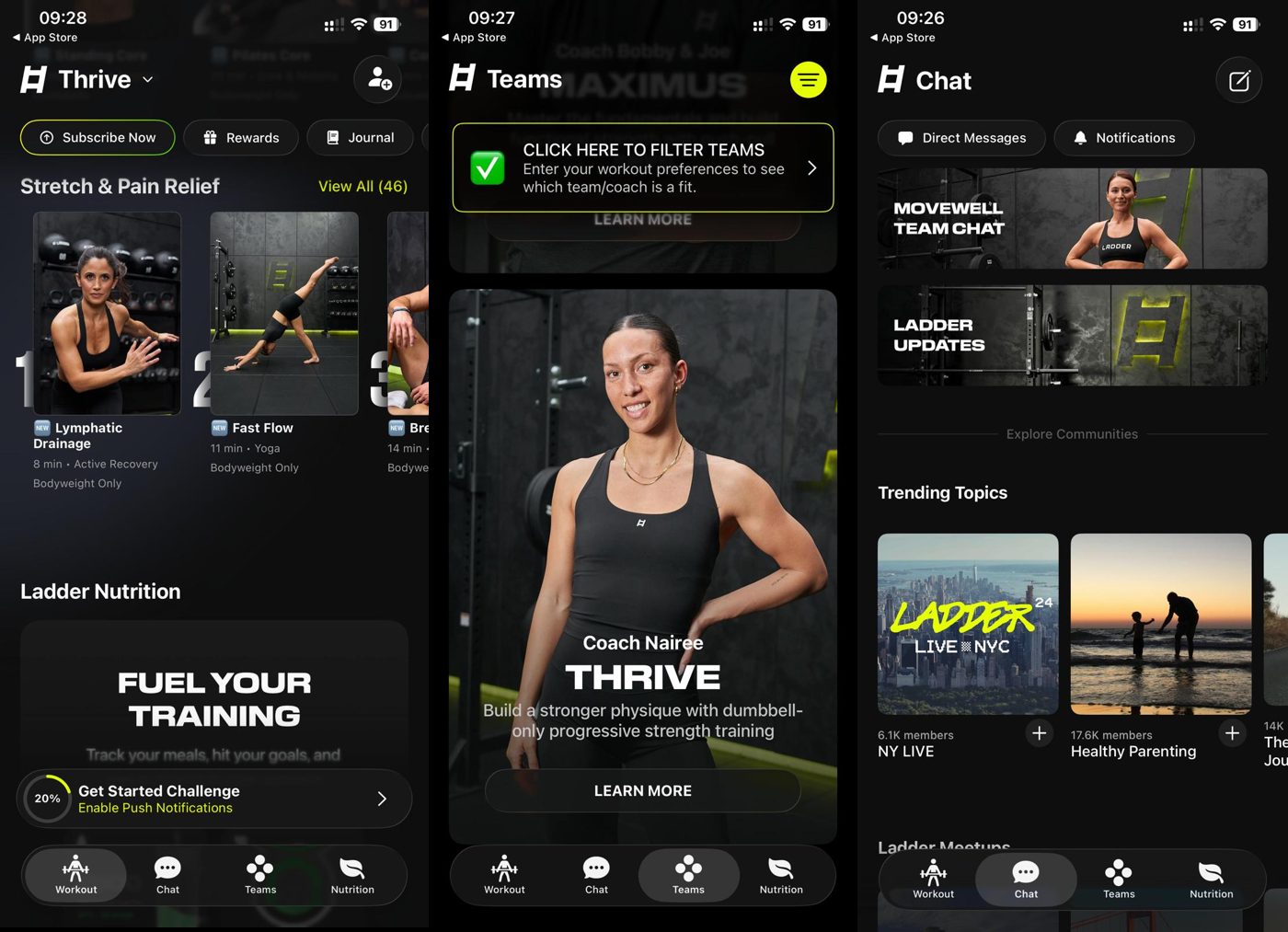
Recovery: Fitbod takes its only criterion, and it is not a small one
Fitbod wins Recovery Compatibility, 5.5 against 4, with recovery and deload capability 6 out of 10 against 4.
Fitbod tracks muscle fatigue and steers the next session toward the muscles it judges to be recovered. That is auto-regulation at the muscle-group level, and it is the reason a Fitbod week rarely stacks the same tissue twice. What it lacks is programmed deload weeks, so the escalation runs until you interrupt it.
Ladder has the opposite problem. There are scheduled rest days, but the plan is fixed for the whole team, so it cannot adapt to your individual recovery or symptoms, and no explicit deload weeks are verified. Our tester put her reservation on exactly this point: the programmes she looked at could feel like a lot for us, with longer sessions and not much recovery between them if you follow them exactly. Independent reviewers describe the same balance, plans that give you something to do most days with active rest built in, powerful but intense.
The mitigation exists and it is unadvertised. Ladder does let you swap sessions, dial the intensity down and take active rest days, so it is not rigid, but you have to know to do that. For a woman whose energy varies week to week, an app that requires you to opt out of the hard version is a different proposition from one that quietly routes around your fatigue. Our low-cortisol workouts for perimenopause guide covers platforms that treat this as a design principle.
Joint friendliness: a tie, and a low one
Tied at 5 each, with low-impact capability 5 out of 10 to Ladder against 4 to Fitbod. Neither is a joint-friendly platform and neither pretends to be.
Fitbod is not inherently low-impact. It generates lifting, and how kind a session is to a knee depends on which exercises you keep or exclude. You can swap any movement, save a dumbbell-only profile and steer it toward the gentler end, and the app will follow you there without ever suggesting it.
Ladder has some low-impact, mobility, yoga and Pilates teams, so there is somewhere to go, but the core teams are loaded strength and HIIT. Switching teams is not a small adjustment either: on the monthly plan you can change team twice a month, while the annual plan allows unlimited changes.
If a joint is currently setting your terms, this is a pair to come back to later rather than start with. Our best low-impact workouts for women over 50 ranking is the more useful page for that.
Perimenopause and menopause fit: three rows read zero on both
Ladder edges Women Over 40 Specificity, 3.6 against 3.2, and the capability rows underneath show how little separates two platforms that both do nothing here.
Pelvic floor, hormone awareness and menopause education are 0 out of 10 on both. Menopause programming is 1 on Ladder against 0 on Fitbod. Expert credibility ties at 3: Ladder has reputable strength coaches on its roster with no clinicians, pelvic-health specialists or menopause experts, and Fitbod, launched 2015, is algorithm-driven with no named clinician or menopause expertise behind it. Neither has a women’s-health voice anywhere in the product.
Both reviews reach the same conclusion independently: the scores here reflect a verified absence rather than missing information. Nobody looked for menopause content and failed to find it in a corner of the app; there is none.
What can be said for the pair is that the training itself is appropriate. Sá and colleagues reported that resistance training appears to improve postmenopausal symptoms and functional capacity, while rating the certainty of that evidence as very low to low.5 Both platforms deliver the intervention that finding concerns. Neither delivers anything shaped around the transition, and if that is what you came for, the useful step is to stop comparing these two.
Where the difference is real
Mind-body support is 4 out of 10 to Ladder against 1 to Fitbod, which is the widest midlife capability gap between them. Ladder has the team community, some yoga and Pilates teams and a social layer that people genuinely value, though nothing dedicated to midlife stress, sleep or mindfulness. Fitbod has none of that at all: it is pure lifting, with no community, no mind-body content and nothing to open on a day when you do not want to train.
Value for money: Ladder wins at twice the price
Ladder wins Value for Money, 7 against 6.5, which is the least intuitive result on the page given it costs roughly double.
| Plan | Fitbod | Ladder |
|---|---|---|
| Monthly | $15.99 a month | $29.99 a month, team change twice a month |
| Annual | $95.99 a year, about $8 a month | $179.99 a year, about $15 a month, unlimited team changes |
| Free tier | 3 free workouts | None |
| Free trial | 7 days, card required, auto-renews | 7 days, no card upfront |
| What the money buys | A session generator and a log | A coach, a team and a weekly programme |
| Nutrition included | None | AI macro, calorie and protein tracking |
Value is a judgement about what arrives for the money, and Ladder arrives with more: expert programming, a polished app, a community and macro tracking that replaces a separate subscription. Fitbod at about $8 a month on the annual plan is genuinely cheap for a serious strength engine, and it is a narrower product.
The trial terms are the sharpest practical difference. Ladder’s 7-day trial does not ask for a card upfront, which is unusually clean, so you can look at the coaching and the teams and walk away having spent nothing and given nothing. Fitbod’s 7-day trial requires a card and auto-renews, cancelling does not refund the current period, direct-site refunds run only to about 10 days, and App Store purchases are redirected to Apple for refunds, which is a recurring frustration in its reviews. Ladder bills through the App Store too, so cancellation sits in your device subscription settings. Set a reminder on either.
Some third-party pages mention higher Ladder tiers that are not on the official pricing page, and those are unverified. The two prices above are the ones the company publishes. Our best free and budget workout apps ranking covers what the money looks like further down the market.
UX and design: the widest gap on the page
Ladder wins UX and Design, 9 against 6, and no other criterion here is separated by that much.
Ladder is a genuinely beautiful piece of software. It is Apple-recognised, iOS-primary, syncs with Apple Watch, Apple Health and music services, and holds about 4.9 stars from roughly 100,000 or more ratings on the App Store, which is close to the ceiling for an app of that size. Clean, intuitive design is the first thing its reviewers name.
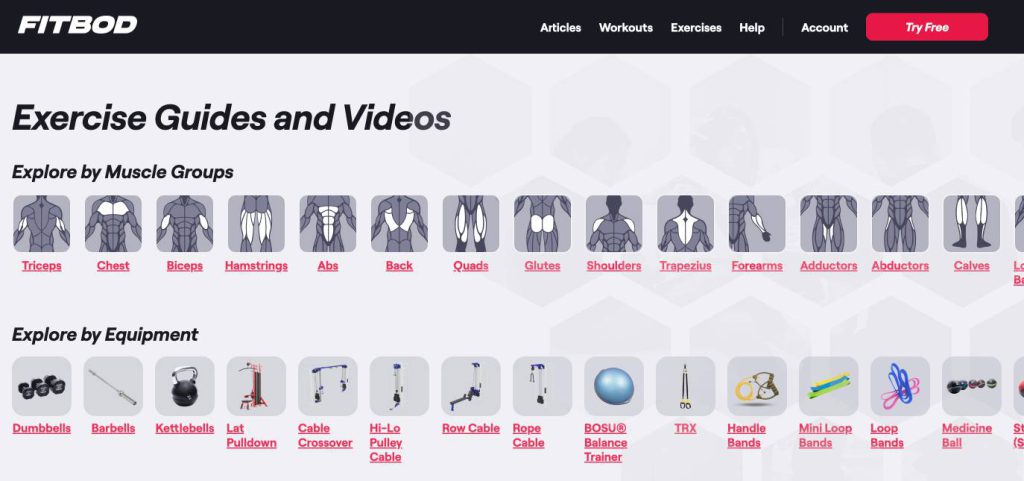
Fitbod is also well made and is often called the benchmark for strength-app design, so this is a gap between very good and exceptional rather than between good and bad. What holds it down is what the polish does not extend to. Each exercise has a short silent video of someone performing the move, with written form cues underneath, and there is no voice coaching, so nothing talks you through a lift. The touch Katy Cole did like is that every exercise shows the muscles it targets, which makes the exercise guide library genuinely browsable by muscle group and by equipment.
Time efficiency: Ladder wins, and both suit a compressed week
Ladder wins, 8 against 7, on sessions of roughly 30 to 45 minutes against Fitbod sessions that are user-set and typically land between 30 and 60.
The gap is small and practical. A Ladder session arrives sized: the coach has decided what fits in the block, and you follow it. A Fitbod session is as long as you make it, which is flexible when you have twenty minutes and slippery when you do not, because the app will happily generate more work than your evening has room for.
Both sit comfortably inside the volume the guidance asks for. The NHS advises strength work at least twice a week to support health and mobility,4 and either platform clears that with two or three sessions. Our 30-minute workouts for women over 40 guide covers the wider field in that band.
Nutrition: Ladder has some, Fitbod has none
Ladder wins Nutrition Integration, 5 against 0, with midlife nutrition capability 3 out of 10 against 0.
Ladder added AI macro, calorie and protein tracking in late 2025 at no extra cost, and it sits inside the same subscription. In testing that landed as a genuine plus, because tracking macros in the same app replaces paying separately for something like MyFitnessPal. What it is not is midlife-specific, and there is no registered dietitian behind it, so treat it as a competent tracker rather than nutrition coaching.
Fitbod has nothing: no calorie or macro targets, no food logging, no education. Nutrition carries the smallest weight in the model at 7%, so a zero here costs Fitbod less than it might appear to. If eating support is a real priority, our best workout apps with meal plans ranking is a better place to start than either.
Equipment and space needed at home
Fitbod is the more flexible of the two, and both want dumbbells.
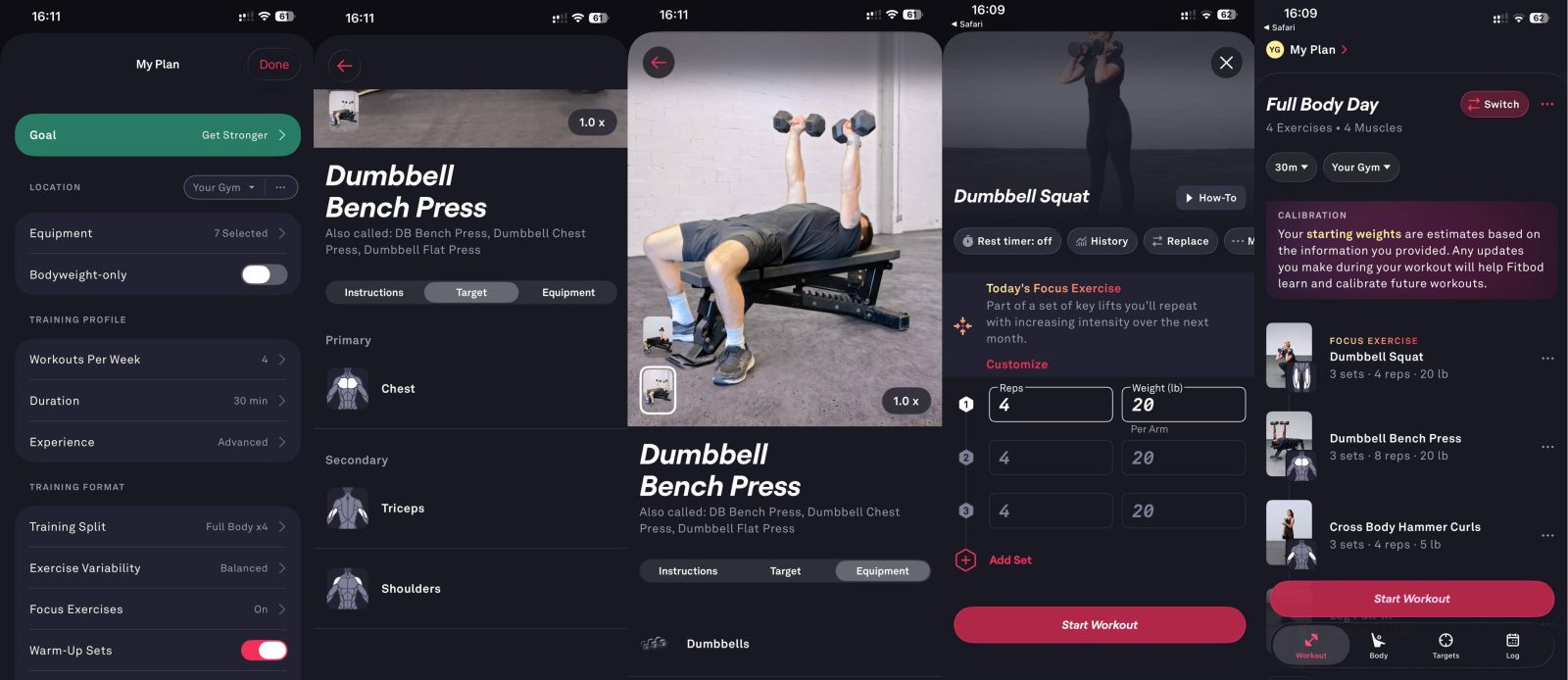
Fitbod builds around whatever you have and saves several profiles, covering a full gym, a home dumbbell setup, travel kit or bodyweight only, and regenerates the workout to match. Switching between a gym week and a kitchen-floor week costs you one tap, which is the most-praised thing about it.
Ladder depends on the team you join. Most strength teams assume dumbbells and some assume a fuller gym, while a few are more minimal or bodyweight-friendly, so the equipment question is answered by your team choice rather than by a setting.
On both, an adjustable dumbbell pair is the purchase that changes the outcome, because it lets the progression keep going after a fixed light pair has stopped providing a stimulus.2 Neither platform needs proprietary hardware, a machine or a dedicated room. Our best workouts for postmenopause ranking covers options with different kit requirements.
Starting from scratch: neither is built for a standing start
Fitbod wins beginner on-ramp, 6 out of 10 against 5, and both numbers sit below the middle for a reason.
Fitbod removes the decision. It tells you what to lift, shows a demo animation and takes the planning away, which many beginners find reassuring. What it does not do is teach, and its own review is candid about the consequence: as a beginner you are unlikely to stop and read a paragraph on how to hold a squat, so the form guidance is thin exactly where a newer lifter needs it most. It also points a beginner or a woman in perimenopause toward a more guided programme.
Ladder has an onboarding quiz, welcome workouts and beginner teams, and coaches who demo form and offer lighter dumbbell options, so the coaching is real. The complications are that many programmes are pitched at an intermediate level, and that everyone on a team follows the same shared plan, so a competitive or social layer arrives whether or not you wanted one.
The considered view from testing is that Ladder suits a woman who already understands how to structure her own training and wants Ladder for the muscle-building days, rather than a beginner who wants to be told exactly how much to rest. That is a fair description of both platforms, which is why neither on-ramp scores well.
Fitbod pros and cons
Fitbod scores 5.8. It is strongest on building and keeping muscle and weakest on nutrition guidance.
Pros
- Recovery Compatibility 5.5 against 4, on a muscle-fatigue heatmap that steers each session toward recovered muscles, with recovery and deload 6 out of 10 against 4.
- Bone loading 8.5 out of 10 against 7.
- Progressive strength 9, level with Ladder.
- Beginner on-ramp 6 against 5.
- Half the subscription price, at $15.99 a month or about $8 on the annual plan.
- Equipment profiles for a gym, home, travel or bodyweight.
- 3 free workouts before any trial starts.
Cons
- UX and Design 6 against 9 and Programme Structure 7 against 9: a session generator, not a week.
- Nutrition Integration 0, meaning none.
- Mind-body support 1 out of 10 against 4, and no community.
- No voice coaching.
- Manual progression on custom workouts, and early weight suggestions that can be inaccurate.
- A trial that requires a card and auto-renews, with refunds routed to Apple.
Ladder pros and cons
Ladder scores 6.9. It leads on building and keeping muscle and trails on suitability for women over 40.
Pros
- UX and Design 9 against 6, the widest gap on the page, on an Apple-recognised app sitting near the top of its category on the App Store.
- Programme Structure 9 against 7: a coach who releases a new block every week.
- Muscle Potential 9 against 8.
- Nutrition Integration 5 against 0, with macro tracking included.
- Mind-body support 4 out of 10 against 1.
- A 7-day trial with no card upfront.
Cons
- Recovery Compatibility 4 against 5.5, on fixed team plans that do not adapt to your individual recovery or symptoms, with recovery and deload 4 out of 10 against 6.
- Bone loading 7 against 8.5.
- Beginner on-ramp 5 against 6, with many programmes pitched intermediate.
- Zero on pelvic floor, hormone awareness and menopause education.
- Twice the monthly price.
- A 40-plus reputation the product does not earn.
Quick yes/no comparison
| Feature | Fitbod | Ladder |
|---|---|---|
| Free tier | Yes, 3 free workouts | No |
| Free trial without a card | No, a card is required | Yes, 7 days, no card |
| A human coach behind the plan | No, algorithm only | Yes, a team coach |
| A weekly programme rather than a session | No | Yes, a new block every week |
| Automatic load progression | Yes, on generated workouts | Yes, weekly coach progression |
| Adapts to your own recovery | Yes, a muscle-fatigue heatmap | No, the team plan is fixed |
| Programmed deload weeks | No | No, scheduled rest days only |
| Community | No | Yes, teams and chat |
| Audio coaching during a session | No, silent demo videos | Yes, in-ear audio |
| Macro or calorie tracking | No | Yes, included since late 2025 |
| Low-impact or mobility content | No, only your own exercise choices | Yes, some teams |
| Menopause or perimenopause programming | No | No |
| Pelvic floor content | No | No |
| Works with a full gym and with bodyweight only | Yes, saved profiles for both | Depends on the team you join |
| Was it tested hands-on | Yes, a hands-on look | Yes, a hands-on look |
Fitbod vs Ladder at a glance
| Fitbod | Ladder | |
|---|---|---|
| Overall score | 5.8 | 6.9 |
| How it was assessed | Sample tested, downloaded and explored hands-on with our own screenshots | Sample tested, onboarding and library explored hands-on, no full programme run |
| Cost | $15.99 a month or $95.99 a year | $29.99 a month or $179.99 a year |
| Trial | 3 free workouts plus a 7-day free trial, card required | A 7-day free trial that does not ask for a card upfront |
| Session length | User-set, roughly 30 to 60 minutes | Roughly 30 to 45 minutes |
| What it gives you | A generated lifting session, logged as you go | A coach, a team and a weekly block of workouts |
| Who sets the load | The algorithm, from your logged history | The coach, on a six-week progressive cycle |
| Who is behind it | Fitbod, launched 2015, algorithm-driven, no named clinician | Ladder strength coaches, no clinicians or menopause experts |
| Menopause content | None | None, despite the 40-plus reputation |
| Nutrition | None | AI macro, calorie and protein tracking, no dietitian |
| Equipment | Anything from a full gym to bodyweight, saved as profiles | Dumbbells for most teams, a fuller gym for some |
| Known live issue | Manual progression on custom workouts, refunds routed to Apple | Fixed team plans that ignore your recovery, pricey monthly |
| How we assessed it | Sample tested, downloaded and explored hands-on | Sample tested, onboarding and library explored hands-on |
Fitbod vs Ladder: the full scoring breakdown
Ladder wins seven of the nine weighted criteria and fitbod wins one, with one tied. The overall gap is 6.9 against 5.8, and it is the most lopsided criteria table on this site between two platforms doing broadly the same job.
| Criterion | Weight | Fitbod | Ladder | Winner |
|---|---|---|---|---|
| Muscle Potential | 18% | 8 | 9 | Ladder |
| Time Efficiency | 15% | 7 | 8 | Ladder |
| Joint Friendliness | 12% | 5 | 5 | Tied |
| Programme Structure | 12% | 7 | 9 | Ladder |
| Women Over 40 Specificity | 10% | 3.2 | 3.6 | Ladder |
| Recovery Compatibility | 10% | 5.5 | 4 | Fitbod |
| Value for Money | 8% | 6.5 | 7 | Ladder |
| UX and Design | 8% | 6 | 9 | Ladder |
| Nutrition Integration | 7% | 0 | 5 | Ladder |
| Overall | 100% | 5.8 | 6.9 | Ladder |
The twelve capability scores
Ladder wins four of the twelve capability scores and fitbod wins three, with five tied. Five rows are level, including progressive strength at the top of the scale and three menopause rows at the bottom of it. The widest gaps are mind-body support, 4 out of 10 to Ladder against 1, midlife nutrition, 3 against 0, and bone loading, 8.5 to Fitbod against 7.
| Capability | Fitbod | Ladder | Winner |
|---|---|---|---|
| Low-impact | 4 | 5 | Ladder |
| Progressive strength | 9 | 9 | Tied |
| Bone loading | 8.5 | 7 | Fitbod |
| Recovery & deload | 6 | 4 | Fitbod |
| Menopause programming | 0 | 1 | Ladder |
| Pelvic floor | 0 | 0 | Tied |
| Hormone awareness | 0 | 0 | Tied |
| Menopause education | 0 | 0 | Tied |
| Expert credibility | 3 | 3 | Tied |
| Mind-body support | 1 | 4 | Ladder |
| Beginner on-ramp | 6 | 5 | Fitbod |
| Midlife nutrition | 0 | 3 | Ladder |
Who wins for…
Who wins for being coached
Ladder. Programme Structure 9 against 7, on a real coach releasing a real week.
Who wins for building muscle
Ladder, on the criterion. Muscle Potential 9 against 8, with progressive strength tied at 9 out of 10.
Who wins for bone density
Fitbod. Bone loading 8.5 out of 10 against 7, because it escalates the load without being prompted.2
Who wins when your energy is unpredictable
Fitbod. Recovery Compatibility 5.5 against 4: its heatmap routes around fatigue, a fixed team plan cannot.
Who wins on price
Fitbod. Half the monthly cost, and about $8 a month on the annual plan.
Who wins for value
Ladder. Value for Money 7 against 6.5, because more arrives for the money even though the money is higher.
Who wins for the app itself
Ladder, decisively. UX and Design 9 against 6, the widest gap here.
Who wins for trying before you commit
Ladder. Seven days with no card upfront, against a Fitbod trial that takes a card and auto-renews.
Who wins for training in different places
Fitbod. Saved equipment profiles for a gym, a home setup, travel or bodyweight only.
Who wins for perimenopause and menopause
Neither. Pelvic floor, hormone awareness and menopause education are 0 out of 10 on both.
Who wins for company
Ladder. Mind-body support 4 out of 10 against 1, mostly on the strength of the team community.
Who wins for nutrition
Ladder. 5 against 0, on macro tracking that is generic but included.
Decision tree for women over 40
You want someone else to decide what you do this week. Ladder, for Programme Structure 9 against 7.
Your energy varies a lot week to week. Fitbod, because its heatmap adjusts and a fixed team plan does not.
You train in a gym some weeks and at home in others. Fitbod, for the saved equipment profiles.
Budget is the deciding factor. Fitbod, at $15.99 a month against $29.99, or about $8 a month annually against about $15.
You want to try it without handing over a card. Ladder, whose 7-day trial does not ask for one.
You are motivated by other people. Ladder, for the teams and the chat. Fitbod has no community at all.
You want macro tracking in the same subscription. Ladder, which added it in late 2025 at no extra cost.
You are new to lifting. Fitbod by a nose on the on-ramp, and a more guided programme instead of either would serve you better.
Perimenopause is why you are looking. Neither, and the TikTok recommendation you may have seen for Ladder is not a feature.
What we did not test
Neither platform was run as a completed multi-week programme, so the ratings that depend on time are provisional on both sides.
On Ladder we did not run a full six-week strength cycle, which is the unit the whole product is built around, so we cannot tell you how the progression feels in week five or whether the coaching holds your attention that long. The team community over time was not experienced, the Apple Watch integration was not assessed, and the yoga and Pilates teams were not sampled. What a hands-on look does show is the coaching style, the structure, the app quality and the shape of the week, and those are what the scores rest on.
On Fitbod we did not run a full multi-week programme either, so long-term weight-suggestion accuracy is untested, and that is the specific thing its reviewers complain about. The custom workout builder was not used, and the manual-progression complaint attached to it is reported from the review corpus rather than reproduced here. The Apple Watch app was not assessed.
Neither platform’s behaviour around an injury, a flare of symptoms or a long break was examined, and nothing on this page should be read as a claim about results over months on either.
Which is better for women over 50?
Ladder, if the coaching is what you are missing
The case gets stronger with age in one specific way: the further you are from your last structured training block, the more valuable it is to have someone else decide the volume and the progression. Harvard Health describes progressive strength training as a way to slow bone loss and build bone against age-related decline,5 and a coach who escalates deliberately is a reliable route to that. The condition is that you use the intensity controls rather than following every block exactly.
Fitbod, if your week is unpredictable
At 50 the thing that derails a training block is usually life rather than motivation, and Fitbod tolerates that better. It has no team schedule to fall behind, no shared week to miss, and a fatigue model that adapts to what you actually did. It leads bone loading 8.5 out of 10 against 7, and it costs half as much to keep in the background of a busy year.
What we would actually suggest
Take Ladder’s trial first, because it costs nothing and asks for no card, and see whether being coached is the thing you are missing. If it is, the higher price is doing real work. If what you actually need is something that flexes around an unpredictable week, Fitbod is the cheaper and calmer answer. If perimenopause symptoms are shaping your training, look at a menopause-built platform instead, and our Burn360 vs Pvolve comparison is a sensible starting point.
Frequently asked questions
Is Fitbod or Ladder better for women over 40?
Ladder, 6.9 against 5.8, and it is a wide result: Ladder wins seven of the nine weighted criteria, Fitbod wins one and one is tied. Ladder leads UX and Design 9 against 6, Programme Structure 9 against 7, Muscle Potential 9 against 8 and Nutrition Integration 5 against 0. Fitbod’s single criterion win is Recovery Compatibility, 5.5 against 4, and it is not a trivial one for a midlife body. Neither platform has a menopause feature: pelvic floor, hormone awareness and menopause education all read zero on both.
Is Ladder actually designed for perimenopause?
No, and this is the most useful thing on the page, because the idea is widespread. Ladder’s reputation as a 40-plus or perimenopause app is user-generated, spread by women on TikTok rather than built by Ladder. Its own review is explicit that the association comes from users and not from a feature, and that its most-discussed team, Team Vitality, is confirmed as general functional bodybuilding. Every team follows the same weekly plan regardless of hormonal status. Menopause programming scores 1 out of 10 and hormone awareness 0.
Which one builds more muscle and bone?
It splits, which is unusual. Ladder wins Muscle Potential 9 against 8, and progressive strength ties at 9 out of 10, the joint highest that row can carry. Fitbod wins bone loading, 8.5 out of 10 against 7, because it will keep raising the number on a barbell in a gym setup without waiting to be asked. Watson and colleagues found in the LIFTMOR trial that heavier, high-intensity resistance and impact training improved bone density and physical function in postmenopausal women, where light exercise did not to the same degree.2 Both platforms can get you there. Ladder programmes it better; Fitbod loads it harder.
How much do Fitbod and Ladder cost?
Fitbod is $15.99 a month or $95.99 a year, about $8 a month on the annual plan, with 3 free workouts plus a 7-day free trial that requires a card and auto-renews. Ladder is $29.99 a month or $179.99 a year, about $15 a month on the annual plan, with a 7-day free trial that does not ask for a card upfront. So Ladder is roughly double, and it still wins Value for Money 7 against 6.5, because value is what you get for the money rather than the size of the number.
Which is better if I want a plan rather than a workout?
Ladder, and Programme Structure is 9 against 7. A quiz pairs you with a coach and a team, and each week that coach publishes a new block of workouts for the whole team, delivered with audio coaching in your ear, video demos and load tracking. Fitbod generates one session at a time. Its own review draws the line clearly: there is no library of ready-made workouts to tap and play, you build the session or swap body parts yourself and then log your weights, because at heart it is a tracking app.
Which one adapts when I am tired?
Fitbod, and this is its only criterion win: Recovery Compatibility 5.5 against 4, on a recovery and deload row of 6 out of 10 against 4. Its muscle-fatigue heatmap tracks which muscles it judges to be recovered and steers the next session toward them. Ladder gives you scheduled rest days inside a fixed team plan that does not adapt to your individual recovery or symptoms. Our tester named the same thing from the other side: the programmes she looked at could feel like a lot, with longer sessions and not much recovery between them if you follow them exactly.
Can I make Ladder easier without falling behind the team?
Yes, and you have to know that you can. Ladder lets you swap sessions, dial the intensity down and take active rest days, so the plan is not rigid, but nothing prompts you to do any of that. The practical reading from testing is that Ladder suits a woman who already understands how to structure her own training and wants Ladder for the muscle-building days, rather than someone who wants to be told exactly how much to rest. On Fitbod the equivalent lever is the exercise swap and the equipment profile.
Which app is nicer to use?
Ladder, 9 against 6, and 9 is the widest single gap on this page. Ladder is polished, Apple-recognised, syncs with Apple Watch, Apple Health and music services, and holds about 4.9 stars from roughly 100,000 or more iOS ratings. Fitbod is no slouch and is often called the benchmark for strength-app design, but it is a quieter product: each exercise has a short silent video of someone performing the move, with written form cues underneath, and there is no voice coaching.
Which suits a beginner better?
Fitbod, narrowly, on a beginner on-ramp of 6 out of 10 against 5, and neither is a gentle landing. Fitbod removes the planning and shows a demo, but as a beginner you are unlikely to stop and read a paragraph on how to hold a squat, so the form guidance is thin exactly where a newer lifter needs it most. Ladder has an onboarding quiz, welcome workouts and beginner teams, and many of its programmes are pitched at an intermediate level, with everyone on a team following the same shared plan.
Does either help with nutrition?
Ladder, 5 against 0, and 0 means none at all. Ladder added AI macro, calorie and protein tracking in late 2025 at no extra cost, and in testing that was a genuine plus: you can track your macros in the same app, which replaces paying separately for something like MyFitnessPal. It is generic rather than midlife-specific and there is no dietitian behind it, which is why midlife nutrition capability is 3 out of 10 against 0. Fitbod has no nutrition content of any kind.
How much did you actually test each platform?
Both were sample tested rather than fully tested, so this page is symmetrical in its evidence and limited in its depth. Each app was downloaded and worked through hands-on, and the methods section above lists exactly what was covered on each side. In short, that means onboarding, navigation, the libraries and a taste of the sessions on both, and no completed programme on either. Neither was run for a full block, so every rating that depends on long-term use is provisional on both sides, and the screenshots on the two reviews are our own.
Which one would you actually recommend?
Ladder for a woman who already trains, wants expert programming and will use the community, because it is the better product on almost every axis this site measures. Fitbod for a woman who trains in different places with different kit, wants the cheaper subscription and prefers to decide her own week. Whichever you pick, plan your own recovery, because Ladder will not schedule it around your symptoms and Fitbod will not schedule it at all. If perimenopause is the reason you are looking, neither of these is built for it.
Research citations
- Sá KMM, da Silva GR, Martins UK, et al. Resistance training for postmenopausal women: systematic review and meta-analysis. Menopause. 2022. PubMed. (Cited for: apparent improvements in postmenopausal symptoms and functional capacity with resistance training. Note: the authors rate the certainty of evidence as very low to low, so we report it on that basis.)
- Watson SL, Weeks BK, Weis LJ, Harding AT, Horan SA, Beck BR. High-intensity resistance and impact training improves bone mineral density and physical function in postmenopausal women: the LIFTMOR randomized controlled trial. Journal of Bone and Mineral Research. 2018;33(2):211–220. PubMed. (Cited for: heavier, high-intensity resistance and impact training improved bone density and physical function, where light exercise did not to the same degree.)
- National Health Service. Things you can do to help menopause and perimenopause symptoms. NHS. nhs.uk. (Cited for: weight-bearing and resistance exercise is recommended alongside 150 minutes of weekly activity for women around menopause.)
- National Health Service. Strength exercises. NHS. nhs.uk. (Cited for: adults are advised to do strength work at least twice a week to support health and mobility.)
- Harvard Health Publishing. Strength training builds more than muscles. Harvard Medical School. health.harvard.edu. (Cited for: progressive strength training helps slow bone loss and can build bone, offsetting age-related decline.)
This page compares fitness platforms. It is not medical advice. Katy is a woman who has trained through perimenopause, not a clinician. Any training observations described are one person’s recorded experience, not an expected result or a general pattern. If you have a diagnosed condition, an injury, or symptoms that concern you, speak to a qualified healthcare professional before changing how you train.
About this comparison
Compiled by Katy Cole for Her Daily Fit. Both platforms were sample tested to the same depth: each was downloaded and explored hands-on, the screenshots on both reviews are our own, and neither was run as a completed multi-week programme, so any rating that depends on long-term use is marked provisional on both sides. Both were scored on the same nine weighted criteria and the same twelve capability scores. The scoring model weights Muscle Potential most heavily because progressive resistance work is the intervention with the strongest evidence behind it for a midlife body, which is why two platforms that both do it well finish closer than their overall scores suggest.1 The 40-plus reputation attached to one of them is user-generated and is reported here as such, not as a product feature. Prices were verified against official sources in 2026 and may differ if there has been a recent change, and unverified third-party tiers were excluded. Scores are pulled live from each programme’s own assessment. Her Daily Fit earns nothing from either platform.
Compared with