
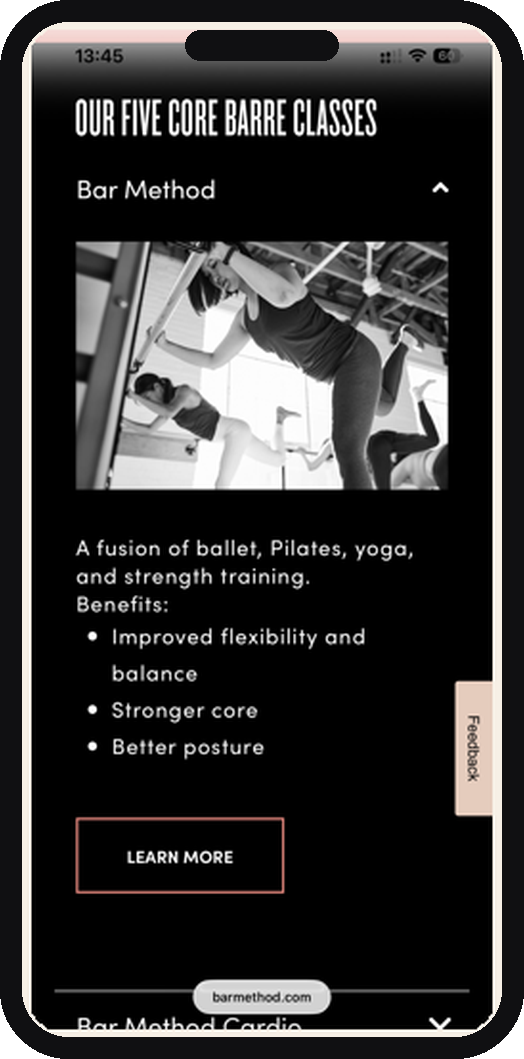
The original physical-therapist-informed barre method from Burr Leonard, an isometric, ballet-barre-based, low-impact strength workout delivered in studios and via the Bar Online streaming service, genuinely kind to joints and known for careful injury modifications · excellent for a midlife body that wants low-impact toning · but light on the heavy loading bone needs, and not a menopause programme · Just a mat, light weights and a chair.
How we assessed this. This is a research-based data profile, not a hands-on test. We assessed The Bar Method from the official method and its Bar Online streaming service, class formats, pricing, independent coverage and user sentiment, and the exercise science, scored on our standard criteria. The hands-on sections are marked as pending. This is education, not medical advice; check with your clinician before starting a new programme, especially with joint, pelvic-floor or heart concerns.
The Bar Method Review 2026: Quick Answer
Research-based data profile, not personally tested; hands-on sections pending
Women who want a genuinely low-impact, joint-friendly toning workout with expert instruction and careful modifications
You want heavy progressive strength for bone, or clinical menopause, hormone or pelvic-floor programming
An isometric ballet-barre method in studios, plus Bar Online, a web streaming service with on-demand and live classes
About 45 to 60 minutes per class
A mat, very light hand weights, and a sturdy chair or barre; a small ball and band are optional
Low: the method is designed to be non-impact and joint-friendly
A real strength: every move is physical-therapist-designed, with modifications for injuries and levels
Light: isometric high-rep work with 1 to 3 lb weights builds tone and endurance, not maximal bone loading
Low-impact and beginner-friendly, but no menopause, hormone or pelvic-floor programming, and only one perimenopause article
Bar Online streams in a web browser on phone, tablet, TV or laptop; there is no confirmed native app
Bar Online about $19.95 to $29.95 a month; studio classes are premium and vary by location
No free tier; a low-cost 4-week trial for $7.99, then it auto-renews
5.9 / 10
Quick Verdict
Worth it for women over 40? For low-impact, joint-friendly toning with genuinely expert instruction, yes. But it uses light loads and has no menopause content, so for perimenopause or menopause it is a lovely low-impact base rather than a complete plan.
The Bar Method earns 5.9/10 in this research-based profile. Its standout strength for our audience is how carefully it protects the body: the method was built with physical therapists and kinesiologists, every move is designed to be non-impact and joint-safe, and instructors demonstrate modifications for injuries and every level. That, plus a strong beginner onramp and rigorous instructor training, makes it one of the gentler, better-taught ways for a midlife body to build strength endurance, posture and core control, whether in a studio or at home through the Bar Online streaming service.
Where it is limited for our audience. Barre uses light weights and isometric holds, so while it builds tone and endurance, it does little to load muscle and bone the way heavier progressive training does, which is exactly what protects bone at midlife. There is no menopause, hormone or pelvic-floor programming, just a single perimenopause article, no nutrition, and the at-home product is a web player rather than a polished app. Choose it if you want a joint-friendly, expertly taught low-impact workout, and pair it with dedicated heavier strength for the bone and muscle it does not fully build.
Is The Bar Method right for you?
The Bar Method is strongest for painful joints (8.0 out of 10, against a 6.1 average across the 105 programmes scored) and weakest for value for money (5.0 against 6.9).
| Question | Verdict | Rating | Score |
|---|---|---|---|
| How it suits a perimenopausal body | |||
| Is The Bar Method good for pelvic floor problems?Based on pelvic floor support and low-impact design | Moderate, but better than mostmost score 4.7/10 | 6.0 / 10 | |
| Does The Bar Method include perimenopause and menopause education and programming?Based on programming, education, hormone awareness and credibility | Low, about the same as mostmost score 3.2/10 | 3.0 / 10 | |
| Is The Bar Method good for painful joints?Based on low-impact design and recovery provision | Strong, and better than mostmost score 6.1/10 | 8.0 / 10 | |
| Is The Bar Method manageable when your energy is low?Based on recovery provision and mind-body support | Strong, and better than mostmost score 5.6/10 | 7.0 / 10 | |
| Is The Bar Method good if you are new to strength training?Based on beginner on-ramp and mind-body support | Strong, and better than mostmost score 6.1/10 | 7.5 / 10 | |
| Is The Bar Method good for building bone density?Based on bone loading and progressive strength | Low, and worse than mostmost score 5.1/10 | 3.5 / 10 | |
| Does The Bar Method help with nutrition?Based on midlife nutrition support | Low, and worse than mostmost score 3.6/10 | 2.0 / 10 | |
| How it performs as a product | |||
| Can you fit The Bar Method into a busy week?Based on time efficiency | Moderate, and worse than mostmost score 7.5/10 | 6.0 / 10 | |
| Is The Bar Method worth the money?Based on value for money | Moderate, and worse than mostmost score 6.9/10 | 5.0 / 10 | |
Jump to Section
Who Is Behind It
Content and Features
Equipment You Need
Full Scoring
Good for Women Over 40?
Menopause and Midlife Fit
What the Research Says
What Users Report
Devices and App
Pricing 2026
Will You Stick With It
Pros and Cons
How It Compares
vs Pure Barre
Best Alternatives
FAQ
Verdict
Assessment Status
Sources
What The Bar Method Actually Is
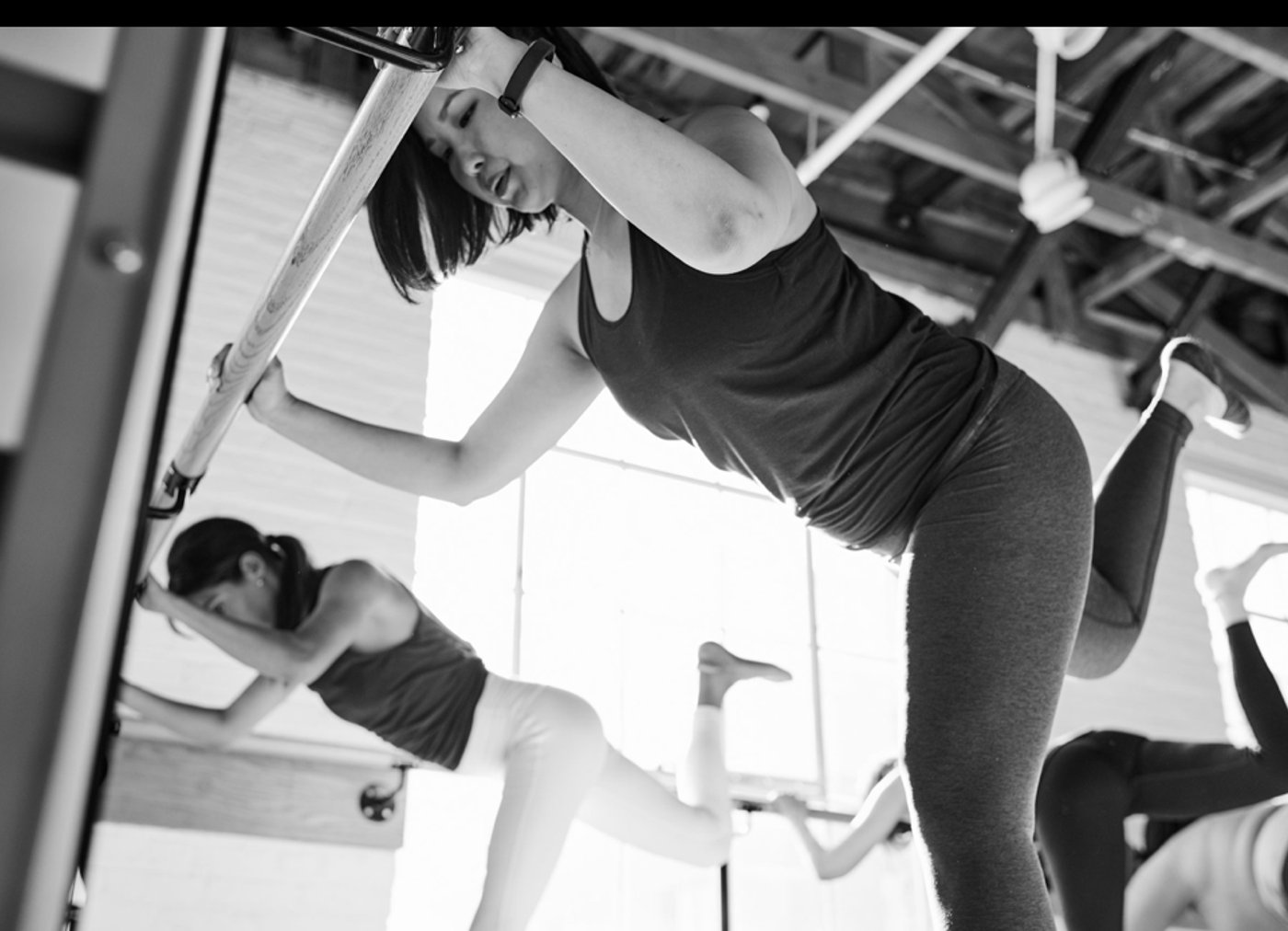
The Bar Method is a barre workout: a low-impact, isometric strength style that blends ballet, yoga, Pilates and light strength training into small, controlled movements and high-rep holds at a ballet barre. It is deliberately non-impact and joint-friendly, and its signature is precision, with a physical-therapist and kinesiologist-informed design and instructors trained to demonstrate modifications for different levels and injuries. It exists in two forms: physical franchise studios, and Bar Online, an at-home streaming service with hundreds of on-demand classes, new classes added most days, and scheduled livestream classes where you can optionally share your camera for real-time form correction. Standard classes run about 60 minutes, with 45-minute express options and a prenatal class.
For this audience it helps to be clear about what it is and is not. The Bar Method is a genuinely low-impact, expertly taught way to build strength endurance, posture and core control, and its care around joints and injuries is a real, documented differentiator, not just marketing. What it is not is a heavy strength or menopause programme. The loads are light, the movements isometric, so the muscle and bone stimulus is modest, and there is no menopause, hormone or pelvic-floor programming. Read it as a joint-friendly low-impact base, best paired with heavier progressive strength.
Who Is Behind The Bar Method? Credibility
The Bar Method was founded by Burr Leonard, who trained for years in the Lotte Berk Method before reworking its moves, with a team of physical therapists, into a version designed to spare the joints while still targeting muscles. She opened the first Bar Method studio in San Francisco around 2000, began franchising in 2008, and the brand marked its 25th anniversary in 2025. A distinctive part of its credibility is that it retains a standing national physical-therapist consultant who vets new moves and advises on injury modifications, and its instructor training is among the more rigorous in boutique fitness, with hundreds of hours of training, supervised practice, exams and annual re-certification. The brand is now owned by Purpose Brands, formerly Self Esteem Brands, the parent company of Anytime Fitness.
How to read that credibility. The physical-therapist input is real and ongoing, which is why the low-impact, injury-friendly positioning holds up so well, and the instruction is a genuine strength. What the brand is not is menopause-credentialed: there is no menopause specialist on staff, and while a recent perimenopause article cites research and quotes the brand’s physiotherapist, that is a single piece rather than a programme. For our audience that means you can trust the workouts to be safe and well-taught for a midlife body, but you should not expect menopause-specific medical design.
Content and Features
At a glance: a genuinely low-impact, expertly taught barre method with careful injury modifications, a beginner onramp and a prenatal class, on demand and live through Bar Online. Capped for our audience by light loads, no menopause or pelvic-floor programming, no nutrition, and a web-only at-home product.
| Format | Studio classes plus Bar Online, a web streaming service with on-demand and livestream classes. |
| Class length | About 60 minutes for signature classes, 45 for express. |
| Class types | Signature, express and mixed-level barre, a Bar Prenatal class, and targeted arms, seat, abs and posture work. |
| Impact and joints | A core strength: designed to be non-impact, with physical-therapist-informed modifications for injuries and levels. |
| Strength and bone | Light: isometric high-rep work with 1 to 3 lb weights builds tone and endurance, not heavy loading. |
| Menopause programming | None: no menopause, hormone or pelvic-floor programming, only one perimenopause article. |
| Live coaching | Livestream classes allow optional camera sharing for real-time form feedback. |
| Nutrition | None built in; only occasional blog content. |
| Devices | Streams in a web browser on phone, tablet, TV or laptop; no confirmed native app. |
What Equipment Do You Need for The Bar Method?
Very little, and the brand says you can substitute things you already own. For Bar Online at home you really need a mat, a very light pair of hand weights, usually 1 to 3 lb, and a sturdy chair or countertop to use as a barre. A small playground or Pilates ball and a light resistance band appear in some classes and are nice to have, but a rolled towel or a cushion will stand in. It is a low-barrier, small-space workout, which is part of its appeal.
Because the loads are deliberately light, the most useful thing to own for a midlife body is a set of heavier adjustable dumbbells for the dedicated strength training we would pair alongside barre, so you can progressively load the muscle and bone that light isometric work will not.
Recommended spec examples. These picks are curated for convenience by specification and feature fit, not personally lab-tested for long-term durability. Prices are examples; verify before buying.
Exercise mat
For the floor and core sections of a barre class.Recommended
Light Dumbbells (1 to 5 lb)
The light weights barre classes actually use.~$65 to $80
Medium Dumbbells (up to 25 lb)
The companion buy for heavier midlife strength.~$50 to $65
A quick heads-up: some of the buy links above are Amazon affiliate links, so if you grab something through them I may earn a small commission, at no extra cost to you. I only ever point you to kit I would happily use myself.
Bottom line on equipment: a mat, light weights and a chair run a barre class; heavier adjustable dumbbells are the companion buy for the bone-loading strength it does not provide.
How We Scored The Bar Method: the 5.9 / 10 Breakdown
Scores on our 9 weighted criteria, from our research-based assessment. Women Over 40 is our menopause-fit criterion, and its full 12-capability breakdown follows in the next section.
| Category | Weight | Score | Reasoning |
|---|---|---|---|
| Time Efficiency | 15% | 6 | Signature classes run about an hour, with 45-minute express options, so it asks for a real time commitment. |
| Muscle Potential | 18% | 5 | Light weights and isometric high-rep work build tone and endurance rather than maximal strength or hypertrophy. |
| Women Over 40 Specificity | 10% | 4.6 | A genuinely low-impact, joint-friendly fit, but no menopause-specific programming; full breakdown below. |
| Joint Friendliness | 12% | 9 | The standout: every move is physical-therapist-designed to be non-impact, with modifications for injuries and levels. |
| Recovery Compatibility | 10% | 8 | Low-impact and low-strain, so it can be done frequently and sits well alongside heavier training. |
| Programme Structure | 12% | 6 | Clear formats, a beginner onramp and some 30-day programmes, though not a tracked, progressively loaded plan. |
| Value for Money | 8% | 5 | Bar Online is reasonably priced, but studio classes are premium and there is no free tier. |
| UX and Design | 8% | 6 | The studio experience is strong, but the at-home product is a functional web player rather than a polished app. |
| Nutrition Integration | 7% | 2 | No nutrition tools or plans, only occasional blog content. |
| Total | 100% | 5.9 / 10 | Research Score. |
Is The Bar Method Good for Women Over 40?
For a low-impact, joint-friendly workout with excellent instruction, it is one of the safer and better-taught options for our audience. The whole method is built around protecting the body: physical-therapist-designed moves, a non-impact format, and modifications demonstrated for injuries and every level, which is exactly what many women over 40 want when knees, backs or shoulders start complaining. Add a careful beginner onramp and rigorous instructor training, and it is an approachable way to build strength endurance, posture and core control without pounding the joints.
Who it suits, and what is missing. It suits a woman who wants gentle, precise, expertly taught toning, especially one returning to exercise or managing niggling injuries. What is missing is the heavier stimulus a midlife body most needs for bone: the weights are light and the work isometric, so muscle and bone loading is modest. There is no menopause, hormone or pelvic-floor programming, no cycle tracking, and no nutrition, and while a prenatal class exists, there is no midlife-specific track.
What the wider picture shows. The Bar Method is a genuinely good low-impact method, and its joint care and teaching quality are real assets for our audience. But it is a light-load barre workout with a low-impact philosophy, not a menopause-designed or bone-building programme, so the best way to use it is as your joint-friendly base, layered with a dedicated heavier progressive-strength routine and, if you need them, menopause-specific tools it does not provide.
How The Bar Method Fits Perimenopause, Menopause and Beyond
Our capability breakdown of how well The Bar Method suits women across perimenopause, menopause and post-menopause. Women Over 40 is our menopause-fit criterion, and this is the full breakdown behind the Women Over 40 row above.
The Bar Method is strongest for low-impact, joint-friendly training, recovery and beginner access; it is weakest on heavy bone loading and on any menopause, hormone or pelvic-floor programming, in our menopause and midlife capability assessment.
| At a glance | Score |
|---|---|
| Right training for a midlife body | 5.8 / 10 |
| Menopause education and programming* | 3.0 / 10 |
| Whole-woman support | 5.7 / 10 |
This is the perimenopause and menopause assessment, and it is separate from the overall score. Twelve things a programme either does for a midlife body or does not, each scored out of 10 with my reasoning next to it. Together they produce a single menopause fit score, and that becomes one of the nine categories in the overall scoring below.
How The Bar Method Fits Perimenopause, Menopause & Beyond
Women Over 40 is our most important criterion, and here's the full breakdown behind it.
The Bar Method is strongest for low-impact and beginner on-ramp, and weakest for menopause programming, midlife nutrition, bone loading, pelvic floor, hormone awareness, menopause education, progressive strength and expert credibility, in our menopause and midlife capability assessment for women over 40.
At a glance
What the app teaches about perimenopause and/or menopause, not whether the training suits a midlife body.
| Capability | Score | Rating | Why |
|---|---|---|---|
| Right training for a midlife body | |||
| Low-impact | 9/10 | Best-in-class | Every move is explicitly non-impact and physical-therapist-designed to be joint-friendly, a genuine strength for midlife joints. |
| Progressive strength | 4/10 | Minimal | Light weights and isometric high-rep holds build tone and endurance, but there is no meaningful heavy or progressive loading. |
| Bone loading | 3/10 | Minimal | Standing weight-bearing work gives some stimulus, but light loads and non-impact isometrics provide limited osteogenic loading for bone density. |
| Recovery & deload | 7/10 | Strong | Low-impact and low-strain, it can be done frequently and sits well as active recovery alongside heavier training. |
| Menopause education and programming* | |||
| Menopause programming | 2/10 | None | No menopause-specific class track, plan or phase programming, only an every-body positioning and one blog article. |
| Pelvic floor | 3/10 | Minimal | Core work engages the pelvic floor and a prenatal class exists, but there is no dedicated pelvic-floor-for-midlife programme. |
| Hormone awareness | 3/10 | Minimal | A perimenopause article discusses hormonal change, but there is no cycle, phase or hormone-aware training guidance. |
| Menopause education | 3/10 | Minimal | One credible, research-cited perimenopause article is helpful, but it is a single piece, not a menopause education library. |
| Expert credibility | 4/10 | Minimal | Genuine ongoing physical-therapist input and rigorous instructor training, plus a guest OBGYN post, but no menopause-specialist credential. |
| Whole-woman support | |||
| Mind-body support | 7/10 | Strong | Strong mind-body, posture and supportive-community emphasis with empowerment-forward instruction. |
| Beginner on-ramp | 8/10 | Strong | A foundational beginner class, a modifications system and PT-informed adjustments make it very welcoming to older and deconditioned bodies. |
| Midlife nutrition | 2/10 | None | Minimal, generic nutrition content and nothing tailored to midlife protein or metabolic needs. |
ScaleBest-in-classStrongSomeMinimalNone
* What the app teaches and programmes around menopause, not whether the training suits a midlife body. Many programmes that score low here are still a good fit, they simply never use the word. A high score is not proof either: a few menopause videos added to a general library lifts this score without changing the training.
These are evidence-informed suitability ratings, not clinical measurements. They combine exercise science with product-specific research and, where indicated, hands-on testing, alongside multi-source verification, and are approximate. Individual response varies. A starting point, not medical advice. How we score menopause fit
What the sources say: scores combine the method, its formats, independent coverage, user sentiment and the science. The Bar Method does well on low-impact training, recovery and beginner access, which genuinely suit a midlife body. It scores low on the built-for-menopause measures because it uses light loads, has no menopause, hormone or pelvic-floor programming, and no menopause credential, so it sits well below purpose-built menopause platforms.
These are evidence-informed suitability ratings, not clinical measurements. They combine exercise science with programme research and multi-source verification, and are approximate. Individual response varies. A starting point, not medical advice. How we score menopause fit.
What the Research Says: The Bar Method Checked
A candid word on the evidence. There is very little peer-reviewed research on barre itself. The main indexed barre study is a small feasibility trial that found a barre programme was safe and workable for people with mild to moderate Parkinson’s disease, which supports that barre is doable and low-risk, but it does not prove strength, bone or body-composition benefits in midlife women.[1] So barre’s benefits are best understood through the evidence on its ingredients rather than on barre trials.
On those ingredients, the picture is encouraging for a joint-friendly workout. Balance and functional exercise, the kind barre’s single-leg work at the barre involves, reduces the rate of falls in older adults, with balance-focused programmes the most effective.[2] Resistance training improves strength and everyday function,[3] though the size of the benefit scales with load, and barre supplies only light load. That is the key caveat for bone: the LIFTMOR trial showed it was heavy, progressive resistance and impact training that improved bone density in postmenopausal women with low bone mass, where lighter exercise did not to the same degree.[4]
On core and pelvic floor. Barre emphasises core engagement, which is helpful, but it is not a substitute for dedicated pelvic-floor training: the evidence for improving incontinence comes from targeted pelvic-floor muscle training, not incidental core work.[5] All of this matters because across the menopause transition fat mass tends to rise and lean mass to fall,[6] so the sensible way to use barre is for its low-impact strength endurance and joint care, with heavier progressive strength added for the bone and muscle it does not load.
What Users Report: Verified Sentiment
Rating snapshot: most of the available sentiment is about the studios, not the Bar Online streaming product, and it is worth understanding why. The apps in the stores are booking apps for studio classes rather than the streaming service, so their ratings, a high iOS score from a loyal studio base and a much lower Android score dominated by app-loading complaints, describe the booking utility, not the workouts. There is no Trustpilot presence, and per-studio reviews on Google and Yelp tend to be strong. The at-home product itself is under-reviewed, so we treat all of this as directional and do not lean on a single number.
What users praise and criticise. The praise is consistent and specific: instruction quality and individual form correction, the low-impact, joint-friendly feel, visible toning and posture results, and a welcoming community. Many reviewers mention using it happily with injuries or as they get older. The fair criticisms are the premium studio pricing, the booking app’s reliability on Android, a method some find scripted or repetitive, a mic-correction teaching style that not everyone enjoys, limited studio availability, and an at-home product that is a web player rather than a polished app.
Consistently praised
- Excellent instruction and individual form correction.
- Genuinely low-impact and joint-friendly, with injury modifications.
- Visible toning, posture and core results over time.
- Welcoming, supportive community, suited to older bodies.
Consistently noted
- Studio pricing is premium, with no free tier.
- The booking app can be unreliable, especially on Android.
- Light loads, so limited muscle and bone building.
- No menopause, pelvic-floor or nutrition content; web-only at home.
Source and credibility note: the store apps are studio booking tools, not the streaming product, so their ratings should not be read as endorsements of Bar Online, and the iOS score in particular looks loyalty-skewed. There is no verified Trustpilot aggregate. Sentiment is drawn from studio reviews, app-store reviews and independent coverage, and is directional. Figures were checked in 2026 and can change.
Devices and App
Bar Online is a web-based streaming service: you watch in a browser on a phone, tablet, television or laptop, and you can pause and resume on-demand classes or join scheduled livestreams. The livestream option, where you can optionally share your camera for real-time form feedback, is a nice touch that brings some of the studio’s coaching home.
The thing to know is that there is no confirmed dedicated streaming app. The Bar Method apps in the app stores are booking apps for studio classes, so if you want the at-home library you are using the website. Offline downloads, television casting and subtitles are not clearly confirmed, so if any of those matter to you it is worth checking before subscribing.
The Bar Method specifications
- Free trial
- Yes, free trial (commonly cited 14-day); auto-bills after
- Cancellation
- Bar Online via account; studio Club Bar freeze $15/10 days; franchised terms vary
- Session length
- ~30 to 60 min
- Who makes it
- Founder Burr Leonard, trained in the Lotte Berk Method (1981), developed the technique with PT input; method founder/master trainer, NOT a licensed PT or clinician (experiential credibility)
- Still maintained
- Active; The Bar Method app v3.66.0 (rel 2026-08-11), id 1563482864 (also Bar Method Global id 6670148483)
- What is included
- On-demand classes: yesLive classes: partlyRecovery content: yesMenopause education: noStructured programmes: partlyMeditation: noNutrition guidance: no
- Women over 40
- Pelvic floor work: partlyMenopause clinician involved: noInjury modifications: yesBone-health focus: noModified progressions: partlyCycle syncing: noPrenatal options: yes
- Devices and access
- Offline downloads: noCasting to TV: partlySubtitles: noWearable sync: no
- Support
- Clinical advisory board: noCommunity: partlySupplement upsell: no
- Last verified
- 12 August 2026
The Bar Method Price 2026: What You Actually Pay
| Plan | Cost | Notes |
|---|---|---|
| Bar Online monthly | ~$29.95/mo | The most flexible plan, billed monthly. |
| Bar Online quarterly | ~$23.95/mo | Billed every 3 months. |
| Bar Online annual | ~$19.95/mo (~$239/yr) | The best-value plan, billed annually. |
| Intro trial | $7.99 for 4 weeks | A low-cost trial, not free; it auto-renews to your chosen plan. |
| Studio classes | Premium, varies | Intro offers vary by studio and season, drop-ins near $40, memberships roughly $129 to $279 a month by location. |
Cost and Cancellation
At home, Bar Online is reasonably priced: about $29.95 a month, dropping to roughly $23.95 on the quarterly plan or $19.95 on the annual plan, which works out around $239 a year. There is no free tier, but there is a low-cost 4-week trial for $7.99, which requires a card and auto-renews to your chosen plan afterwards, so set a reminder if you only want the trial. Plans renew automatically, you can cancel any time, and the terms state no refunds. Studio pricing is separate and premium, and because each studio is independently owned it varies by location, so check locally. Prices were checked in 2026 and may change; confirm the current figure before subscribing.
Not sure The Bar Method is the right programme for you?
Answer a few questions about your goals, schedule and fitness level, and get matched with programmes that fit.
Will You Actually Stick With It?
The Bar Method has real adherence strengths. The instruction is engaging and personal, the low-impact format means you can do it often without beating up your body, and the community and results keep people loyal, with many reviewers staying for years. For a woman who values being taught well and worked gently but thoroughly, it is easy to keep coming back to, whether in a studio or on Bar Online at home.
The risks to sticking with it are variety and access. The method is deliberately standardised, so some find it repetitive over time, and the premium studio price or limited local availability can be a barrier, which is part of why the at-home option matters. If you enjoy precise, repeatable, low-impact work and can get past the web-only home experience, consistency comes naturally.
The Bar Method Pros and Cons
Pros
- Genuinely low-impact and joint-friendly, physical-therapist-designed
- Excellent instruction with careful injury modifications
- Strong beginner onramp, welcoming to older and returning bodies
- Good for posture, core control and strength endurance
- Bar Online adds an affordable at-home option with live coaching
Cons
- Light loads, so limited muscle and, importantly, bone loading
- No menopause, hormone or pelvic-floor programming
- No nutrition content, and studio pricing is premium
- At-home product is a web player, with no confirmed native app
- Can feel scripted or repetitive over time
How The Bar Method Compares
Here is how The Bar Method stacks up against the alternatives women most often weigh it against. Scores come from our own reviews; prices and ratings are approximate, so verify on each platform.
| Feature | The Bar Method | Pure Barre | The Sculpt Society | Pvolve | FitOn |
|---|---|---|---|---|---|
| Our score | 5.9 / 10 | 6.6 / 10 | 8.2 / 10 | 8.3 / 10 | 7.3 / 10 |
| Monthly price | Online ~$19.95 to $29.95 · studio premium | Online ~$29.99 · studio premium | ~$19.99/mo | $24.99/mo · equipment from $199 | Free tier · ~$29.99/yr Pro |
| Style | Isometric low-impact barre | Isometric low-impact barre | Dance cardio and sculpt | Functional strength, menopause-built | Varied class library |
| Strength | Light, isometric | Light, isometric | Light | Yes, functional and progressive | Some |
| Low-impact option | Yes, a core strength | Yes | Some | Yes, low-impact | Some |
| Perimenopause content | One article, no programming | Minimal | Minimal | Yes, menopause-built | Minimal |
| Best suited to | Women wanting joint-friendly, expertly taught barre | Women wanting energetic studio barre | Women wanting dance and sculpt | Women ~35+ wanting menopause-built strength | Women wanting a free library |
The Bar Method vs Pure Barre: Which Is Better for Women Over 40?
These are the two best-known barre franchises, and they are more similar than different: both are low-impact, isometric, light-weight barre workouts with studio and at-home options. The Bar Method leans into precision, physical-therapist-informed design and careful modifications, with a reputation for the most exacting instruction and a strong focus on protecting joints. Pure Barre tends to feel a little more energetic and choreography-driven, with its own signature small movements and a large studio network.
For women over 40 the choice is mostly about feel and access. If your priority is joint safety, careful modifications and being taught meticulously, The Bar Method is the more conservative, rehab-minded choice. If you want a slightly livelier class and there is a studio near you, Pure Barre is a strong option. Neither is a menopause or heavy-strength programme, so whichever you prefer, the same advice applies: enjoy it as your low-impact base and add dedicated progressive strength for the bone and muscle that light barre work will not build.
Best Alternatives to The Bar Method
If you want heavier strength, menopause and pelvic-floor support, or a lower-cost option, these published alternatives pair or compare well.
Similar programmes we partner with
Close to The Bar Method, if it is not quite right for you
These are not part of this review’s score. Each shares a goal or training style with The Bar Method, and each is worth a look if it is closer to what you need.
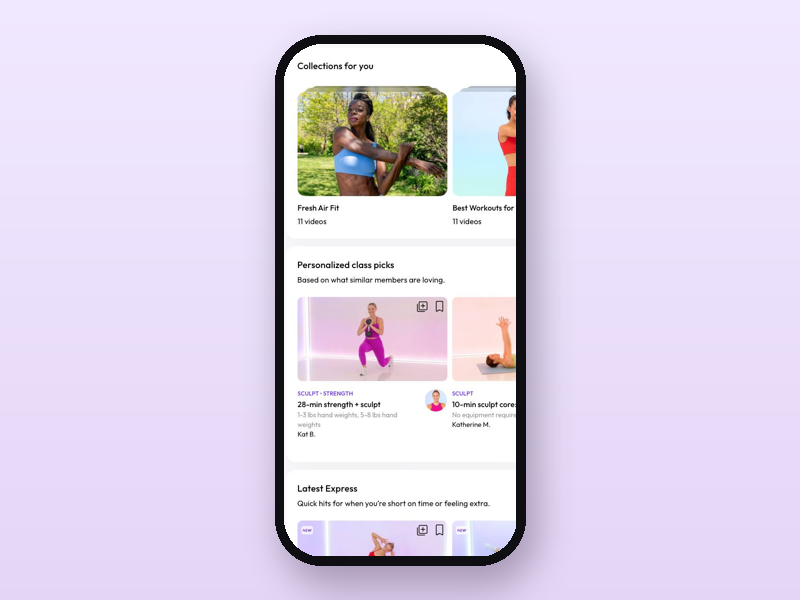
One of the most enjoyable fitness platforms for women in midlife: outstanding filtering, signature 28-minute classes, genuine menopause programming. U…
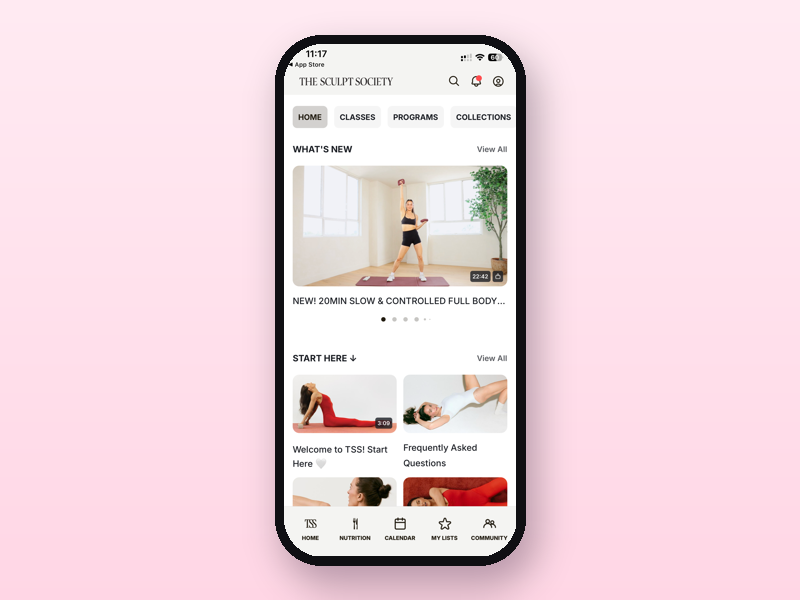
Joyful low-impact dance cardio and sculpt with a doctor-backed midlife programme added in 2026. Excellent for joints and consistency, though light loa…
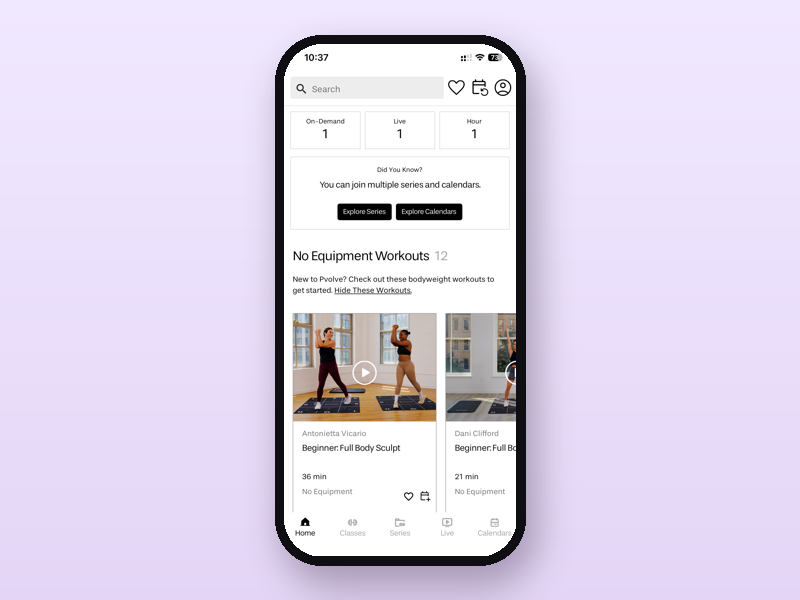
Clinically studied low-impact functional training with a dedicated menopause programme and pelvic floor content, backed by an OBGYN advisory board. Eq…
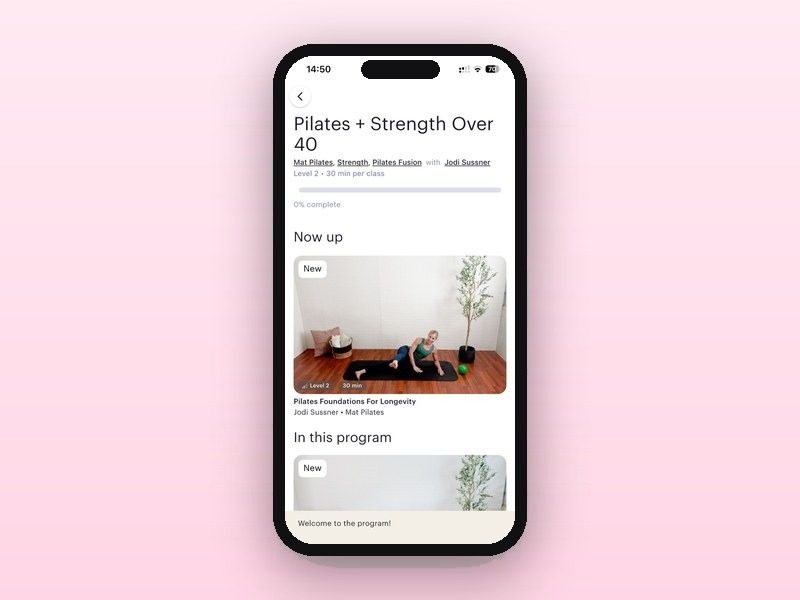
Deep, calming yoga, Pilates, meditation and walking with genuine over-40, menopause and pelvic floor content. Joint-friendly and beginner-welcoming, b…
Affiliate links, at no extra cost to you. I buy my own subscriptions and a commission never moves a score or a position. Full disclosure.
The Bar Method FAQ
The Bar Method is a barre workout: a low-impact, isometric strength style that blends ballet, yoga, Pilates and light strength training into small, controlled movements at a ballet barre. It was founded by Burr Leonard and designed with physical therapists to be non-impact and joint-friendly. It is delivered in franchise studios and through Bar Online, a web streaming service with hundreds of on-demand classes and scheduled livestream classes. Signature classes run about 60 minutes, with 45-minute express and prenatal options.
For a low-impact, joint-friendly workout with excellent instruction it is one of the safer, better-taught options for midlife women, with careful injury modifications and a strong beginner onramp. The caveat is that it uses light weights and isometric holds, so it does little to load muscle and bone the way heavier training does, and it has no menopause, hormone or pelvic-floor programming, just a single perimenopause article. So it works well as a joint-friendly base, best paired with dedicated heavier strength.
It builds tone and muscular endurance, and it is good for posture and core control, but it does not build much maximal strength or heavily load bone. Barre uses light weights, usually 1 to 3 lb, and isometric high-rep holds, whereas the strongest stimulus for bone at midlife comes from heavier, progressive loading. Use The Bar Method for its low-impact strength endurance and joint care, and add a dedicated progressive-strength routine for real muscle and bone gains.
The at-home Bar Online service costs about $29.95 a month, dropping to roughly $23.95 on a quarterly plan or $19.95 on an annual plan, around $239 a year. There is no free tier, but there is a low-cost 4-week trial for $7.99 that auto-renews to your chosen plan. Studio pricing is separate and premium, and varies by location because each studio is independently owned, with intro offers that vary by studio and season, drop-ins near $40 and memberships roughly $129 to $279 a month. Confirm current prices before subscribing.
The at-home Bar Online product is a web-based streaming service that you watch in a browser on a phone, tablet, television or laptop, rather than a dedicated streaming app. The Bar Method apps you find in the app stores are booking apps for studio classes, not the on-demand library. Offline downloads, television casting and subtitles are not clearly confirmed, so check before subscribing if those features matter to you.
For a woman who wants a genuinely low-impact, joint-friendly, expertly taught workout, and who values careful modifications and precise instruction, yes, especially at the reasonable Bar Online price. It is a weaker choice if your priority is heavy progressive strength for bone, or menopause, hormone or pelvic-floor programming, because it uses light loads and has no midlife-specific content. This is a research-based profile, not a hands-on test, and it is best used as a joint-friendly base paired with dedicated strength.
Final Verdict
Research Score: 5.9 / 10 · Research-based, not personally tested
The Bar Method is one of the most carefully designed and well-taught low-impact workouts around, and for our audience that care counts. It is genuinely non-impact and joint-friendly, built with physical therapists, taught by rigorously trained instructors, and full of modifications for injuries and levels, which makes it an approachable, safe way for a midlife body to build strength endurance, posture and core control, in a studio or at home through Bar Online.
The Bar Method is for women who want a joint-friendly, expertly taught low-impact workout, particularly those returning to exercise or managing injuries. It is not for women who want heavy progressive strength for bone, or menopause, hormone or pelvic-floor programming, because it uses light loads and has no midlife-specific content, and the at-home product is web-only. The best way to use it is as your low-impact, joint-friendly base, paired with a dedicated heavier progressive-strength routine for the bone and muscle it does not load. As a research-based profile this is our considered assessment rather than a hands-on test.
Assessment Status
Research-based data profile: this profile is based on the official method and its Bar Online streaming service, class formats, pricing, independent coverage, user sentiment and the exercise science, scored on our standard criteria. It has not yet been personally tested; the hands-on sections are pending. How we score and test.
Sources and Further Reading
- Haussler, A.M., Tueth, L.E. & Earhart, G.M. (2025). Feasibility of a Barre Exercise Intervention for Individuals with Mild to Moderate Parkinson Disease. Journal of Dance Medicine & Science, 30(3), 224 to 233. DOI 10.1177/1089313X251342623. Available at: pubmed.ncbi.nlm.nih.gov. A single-arm feasibility study found a barre programme was safe and workable; it did not test strength, bone or body-composition outcomes.
- Sherrington, C. et al. (2019). Exercise for preventing falls in older people living in the community. Cochrane Database of Systematic Reviews, (1), CD012424. DOI 10.1002/14651858.CD012424.pub2. Available at: pubmed.ncbi.nlm.nih.gov. Exercise reduced the rate of falls in older adults by roughly a fifth, with balance and functional programmes the most effective.
- Liu, C.J. & Latham, N.K. (2009). Progressive resistance strength training for improving physical function in older adults. Cochrane Database of Systematic Reviews, (3), CD002759. DOI 10.1002/14651858.CD002759.pub2. Available at: pubmed.ncbi.nlm.nih.gov. Progressive resistance training produced large strength gains and modest functional improvements in older adults.
- Watson, S.L. et al. (2018). High-intensity resistance and impact training improves bone mineral density and physical function in postmenopausal women with low bone mass: the LIFTMOR randomized controlled trial. Journal of Bone and Mineral Research, 33(2), 211 to 220. DOI 10.1002/jbmr.3284. Available at: pubmed.ncbi.nlm.nih.gov. Heavier, progressive resistance and impact training improved bone density and function; light exercise did not to the same degree.
- Dumoulin, C. et al. (2018). Pelvic floor muscle training versus no treatment for urinary incontinence in women. Cochrane Database of Systematic Reviews, (10), CD005654. DOI 10.1002/14651858.CD005654.pub4. Available at: pubmed.ncbi.nlm.nih.gov. Targeted pelvic-floor muscle training improved incontinence and quality of life, which incidental core work does not replace.
- Greendale, G.A. et al. (2019). Changes in body composition and weight during the menopause transition. JCI Insight, 4(5), e124865 (Study of Women’s Health Across the Nation). DOI 10.1172/jci.insight.124865. Available at: pubmed.ncbi.nlm.nih.gov. The rate of fat-mass gain roughly doubled while lean mass declined across the menopause transition.
This is a research-based data profile, not a hands-on test. Pricing and features were verified in 2026 and may have changed, and pricing varies by plan and location. Some affiliate links may be present. This site does not accept payment from platforms reviewed. Education, not medical advice; check with your clinician before starting a new programme, especially with joint, pelvic-floor or heart concerns.
Related Guides
What To Do Next
- → Take our 2-minute quiz for a personalised recommendation.
- → See our best workouts for perimenopause rankings.
- → Compare with our Pure Barre review and see how we score every programme.