



What should a workout schedule for women over 40 actually contain?
Most schedules aimed at women in midlife are just a general fitness plan with the word “menopause” added. A schedule that genuinely accounts for what changes after 40 has four components, in order of how much they matter.
Two strength sessions, non-negotiable. This is the part carrying the evidence, and it is the part most often dropped. Everything else on the list is optional in a bad week. These are not.
Enough low-intensity movement to manage stress load. Perimenopause is a period of raised physiological stress on its own. A schedule of nothing but hard sessions adds to a load that is already elevated, which is why women who train harder in their forties often feel worse rather than better.
Genuine recovery, scheduled rather than hoped for. Recovery capacity becomes less predictable through the transition. A plan that assumes every week is the same will break in the weeks when sleep has not happened.
Something you actually enjoy. This sounds soft and it is the difference between a schedule that lasts three weeks and one that lasts three years.
The weekly schedule, in full
| Day | Session | Time | Why it is there |
|---|---|---|---|
| Monday | Full-body strength A | 30 to 45 min | Muscle and bone. The session that matters most |
| Tuesday | Walk, or mobility | 20 to 30 min | Recovery without doing nothing |
| Wednesday | Cardio you enjoy | 20 to 30 min | Heart, mood, and it should not wreck you |
| Thursday | Full-body strength B | 30 to 45 min | The second exposure. This is what drives progress |
| Friday | Mobility or yoga | 15 to 20 min | Joints, sleep, stress |
| Saturday | Something longer | 45 to 90 min | Enjoyment, and it keeps the habit alive |
| Sunday | Rest | , | Adaptation happens here, not in the sessions |
What goes in a full-body strength session
- A squat or leg press pattern. 3 sets of 8 to 12.
- A hinge pattern: Romanian deadlift, hip thrust. 3 sets of 8 to 12.
- An upper-body push: press-up, overhead or chest press. 3 sets of 8 to 12.
- An upper-body pull: row, or lat pulldown. 3 sets of 8 to 12.
- A carry or a core hold. 3 sets, 30 to 45 seconds.
Session A and Session B use the same five patterns with different exercises. That is all the variety you need, and repeating patterns is how you can tell whether you are getting stronger.
Why are two strength sessions the non-negotiable part?
Because the two tissues you lose fastest after 40 respond to almost nothing else.
On muscle: Li and colleagues, writing in BMC Geriatrics in 2026, meta-analysed resistance exercise in older adults with sarcopenia and found significant improvements in handgrip strength, gait speed, skeletal muscle mass index and five-times sit-to-stand performance. The pooled gains included 2.95 kg of grip strength and 0.15 m/s of walking speed, which are the kinds of numbers that translate into carrying shopping and crossing a road comfortably.
On bone, the timing is sharper than most women are told. Ho-Pham and colleagues, writing in Osteoporosis International in 2023, tracked bone density through the perimenopausal transition and found femoral neck loss running at roughly 0.51 per cent a year before the late forties, accelerating to about 1.39 per cent a year between 49 and 54, then slowing. The fastest losses happen in a window a few years wide, and that window is when a schedule like this one is worth the most.
On what kind of training: Zhou and colleagues, writing in the Journal of Sport and Health Science in 2026, reviewed 74 studies covering 5,331 postmenopausal women and found mind-body exercise combined with resistance training was the most effective approach for bone density, beating single-modality training at the lumbar spine, femoral neck and total body. That combination is precisely the schedule above: strength days plus yoga and mobility days.
And on falls, which is where all of this eventually points: Wong and colleagues, writing in the Journal of Orthopaedic Translation in 2020, reviewed twelve studies covering 4,784 older adults and found exercise reduced falls, with strength combined with balance training most effective, while fracture prevention specifically came from resistance and jumping exercises.
How hard should each session be?
The strength sessions should be genuinely hard in the last two or three repetitions of each set. If you could comfortably do five more, the weight is too light to drive adaptation, and you are spending the time without collecting the benefit.
The cardio and mobility days should be the opposite. You should finish feeling better than when you started. If your Wednesday cardio leaves you too tired to lift well on Thursday, it has stopped being cardio and become a third hard session.
This is the balance most women get wrong in midlife, usually in the same direction: too many moderately hard sessions, none of them hard enough to build anything, all of them tiring enough to accumulate. Two genuinely hard sessions and three genuinely easy ones beats five medium ones.
How do you progress it over twelve weeks?
| Weeks | What changes | How it should feel |
|---|---|---|
| 1 to 4 | Same weights, focus on form and turning up | Manageable. Two sessions a week becomes normal |
| 5 to 8 | Add weight where the last two reps were easy | Harder. Some sessions you do not fancy |
| 9 | Lighter week. Same sessions, two thirds of the weight | Easy, and slightly frustrating. Do it anyway |
| 10 to 12 | Add weight again from the new baseline | Noticeably stronger than week 1 |
Which programmes give you a real schedule?
If you would rather be told what to do than build it yourself, six platforms provide a genuine week-by-week structure and clear our quality floor.
Flipping 50: built for exactly this age group
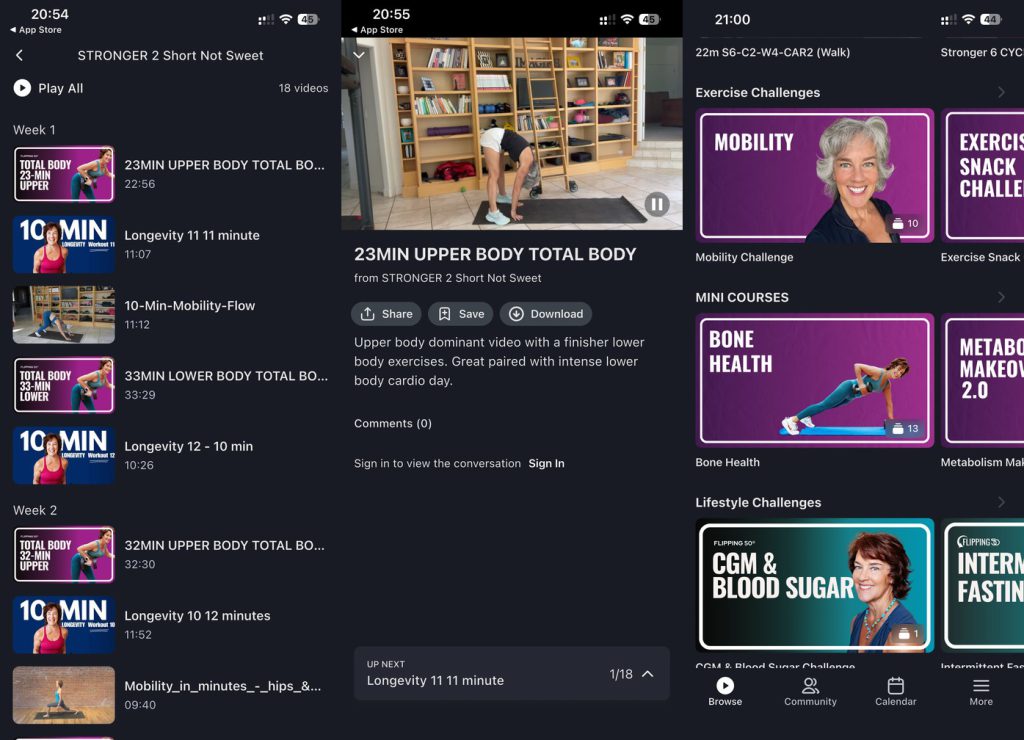
Flipping 50 scores 8 on suitability over 40, the highest of anything with a structured plan, and it is the only programme here designed from the ground up around the perimenopausal body rather than adapted towards it. The weekly structure is explicit and the reasoning behind it is explained rather than asserted.
At $69 a month it is comfortably the most expensive option on this page, and the production values are plainer than the app-first platforms. You are paying for the programming judgement.
Best for: women who want the plan and the reasoning. Read the full Flipping 50 review.
Pvolve: the best structure-to-price ratio here
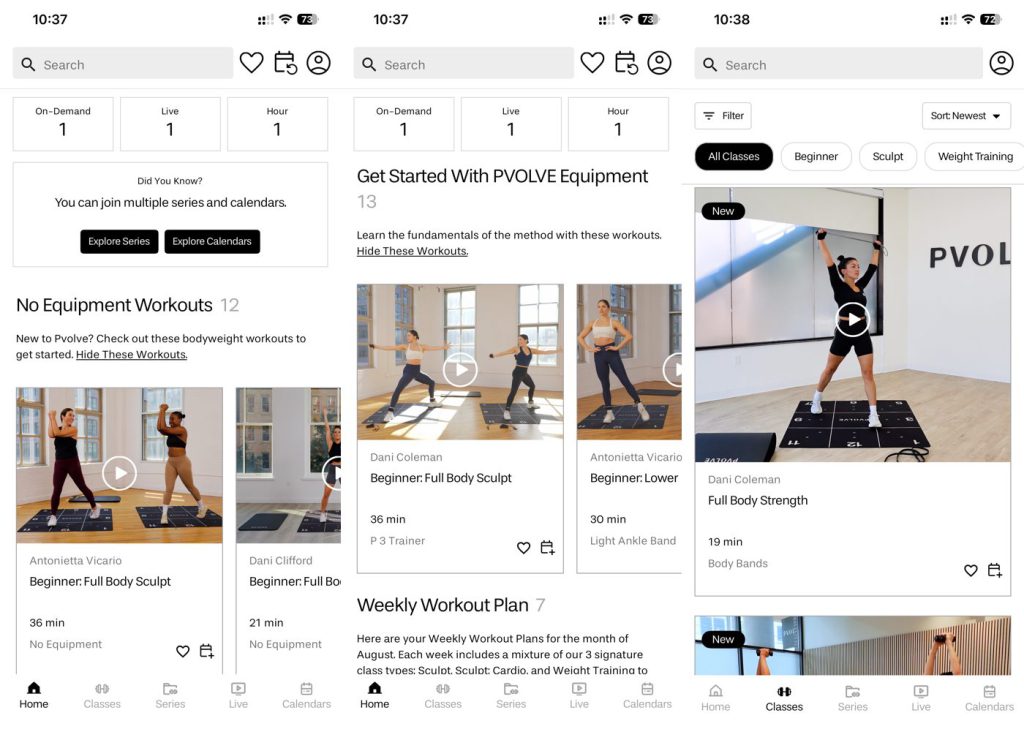
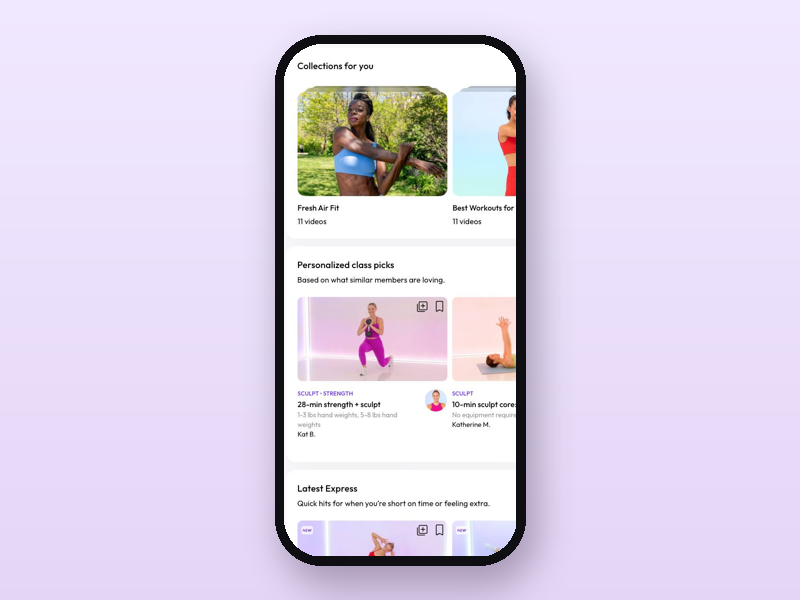
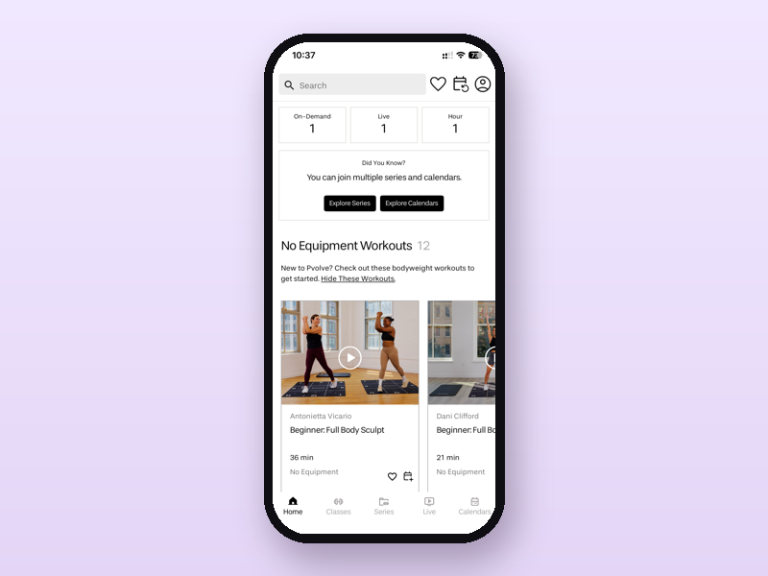
Pvolve scores 7.4 on suitability over 40 and 8.5 on programme structure, and at $24.99 a month it costs a third of the option above it. Its clinical advisory board is led by an OB/GYN and a Doctor of Physical Therapy, which shows in how the progressions are built.
The caveat is that it is resistance work in its own idiom, using bands and its own equipment rather than conventional weights. That suits a lot of women and frustrates those who want a barbell.
Best for: most people reading this page. Read the full Pvolve review.
Jessica Valant Pilates: the physiotherapist’s schedule
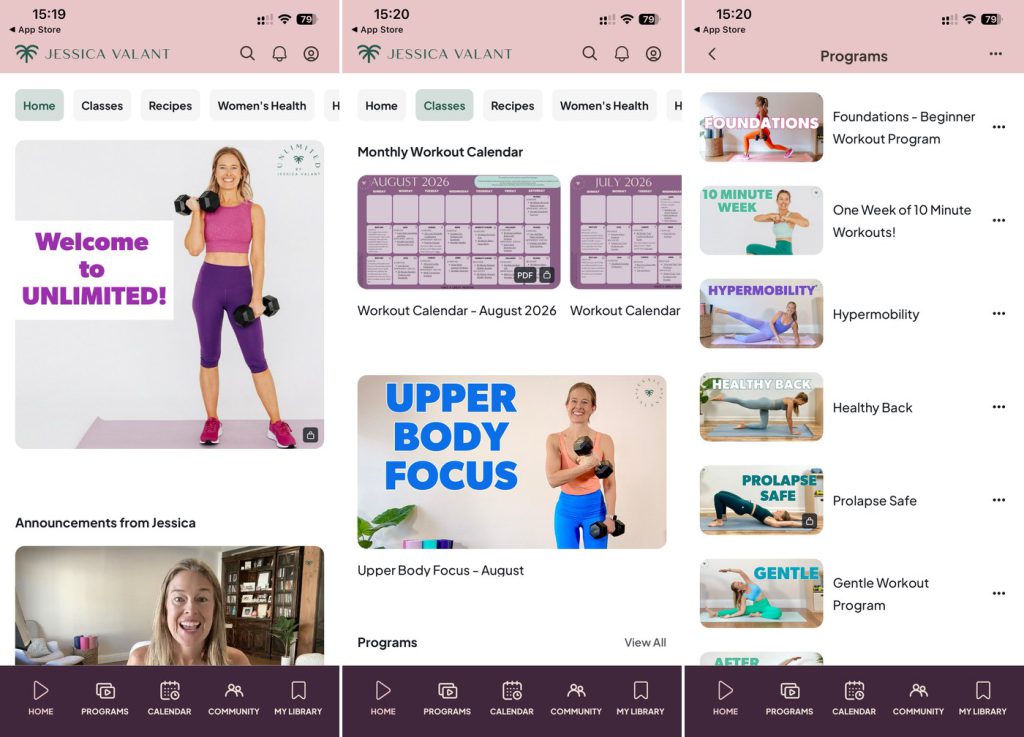
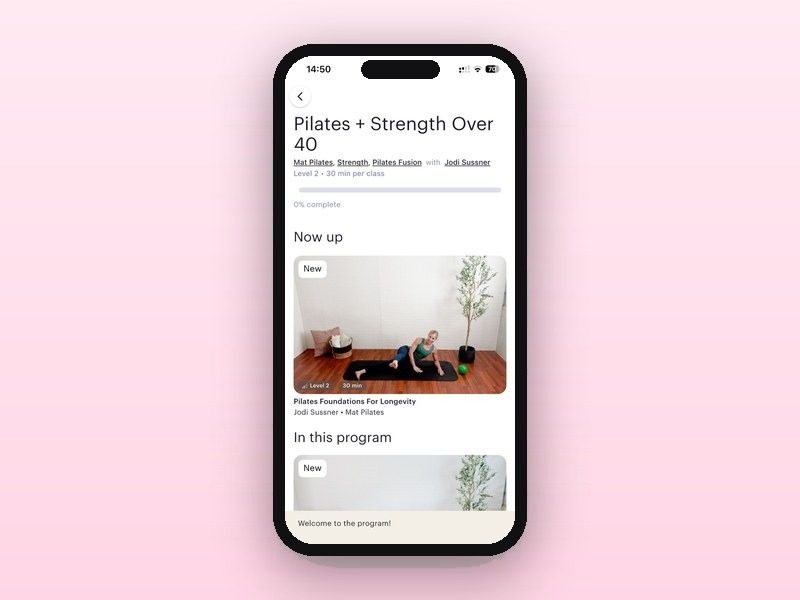
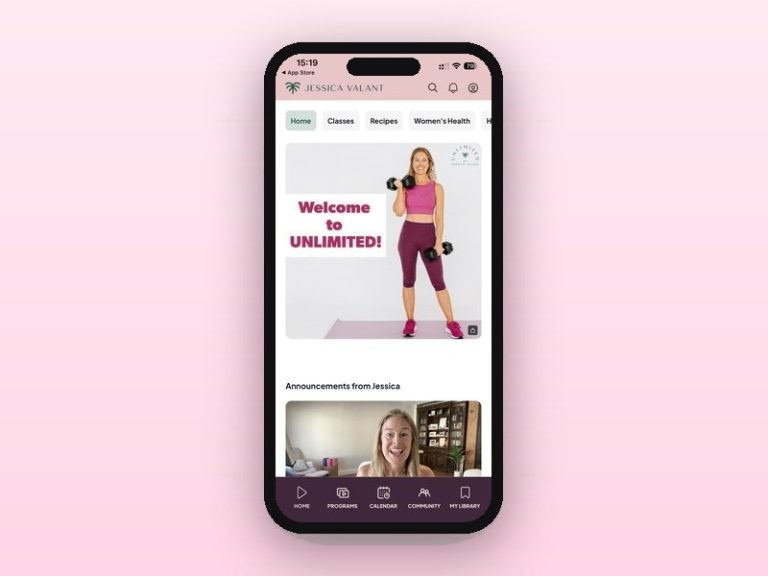
A licensed physical therapist running structured programmes, scoring 7.3 on suitability over 40. The Women’s Health track covering pelvic floor, hysterectomy and postnatal recovery is more specific than anything else here.
It is Pilates-led, so the loading is lighter than the schedule above assumes. Treat it as the framework and add heavier work alongside. At $59 a month it is also priced at the top of this list.
Best for: working around a specific issue with qualified guidance. Read the full Jessica Valant review.
The Sculpt Society: the most polished plan
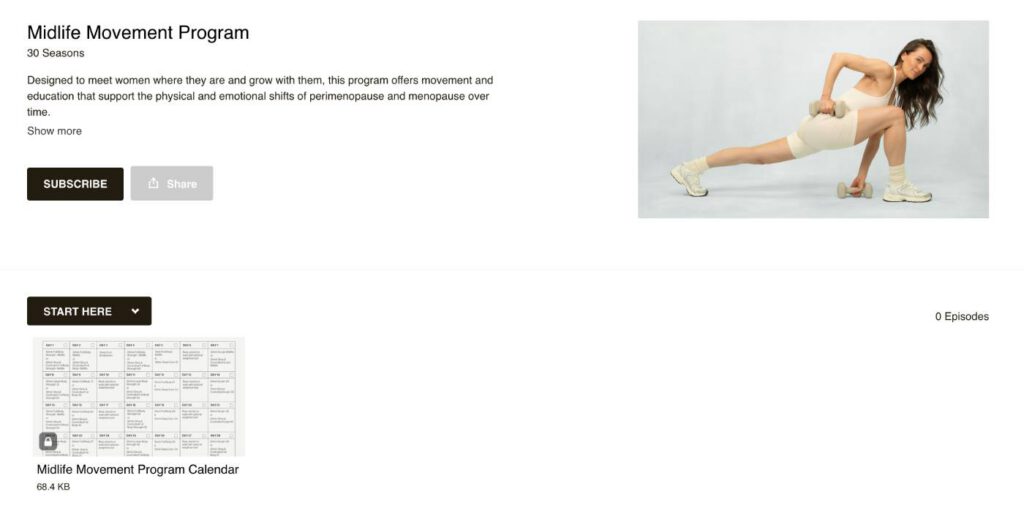
The Sculpt Society scores 9 on programme structure, the highest here, and its 4-Week Midlife Movement Programme is a genuine structured plan rather than a playlist. Usability at 8.5 makes it one of the easiest to stick with.
Its limitation for this page is loading. Dance-led sculpt work is light, so it delivers the schedule shape without delivering the strength stimulus. Pair it with weights.
Best for: people who need the plan to be enjoyable. Read the full Sculpt Society review.
Evlo Fitness: the one that schedules your lighter weeks
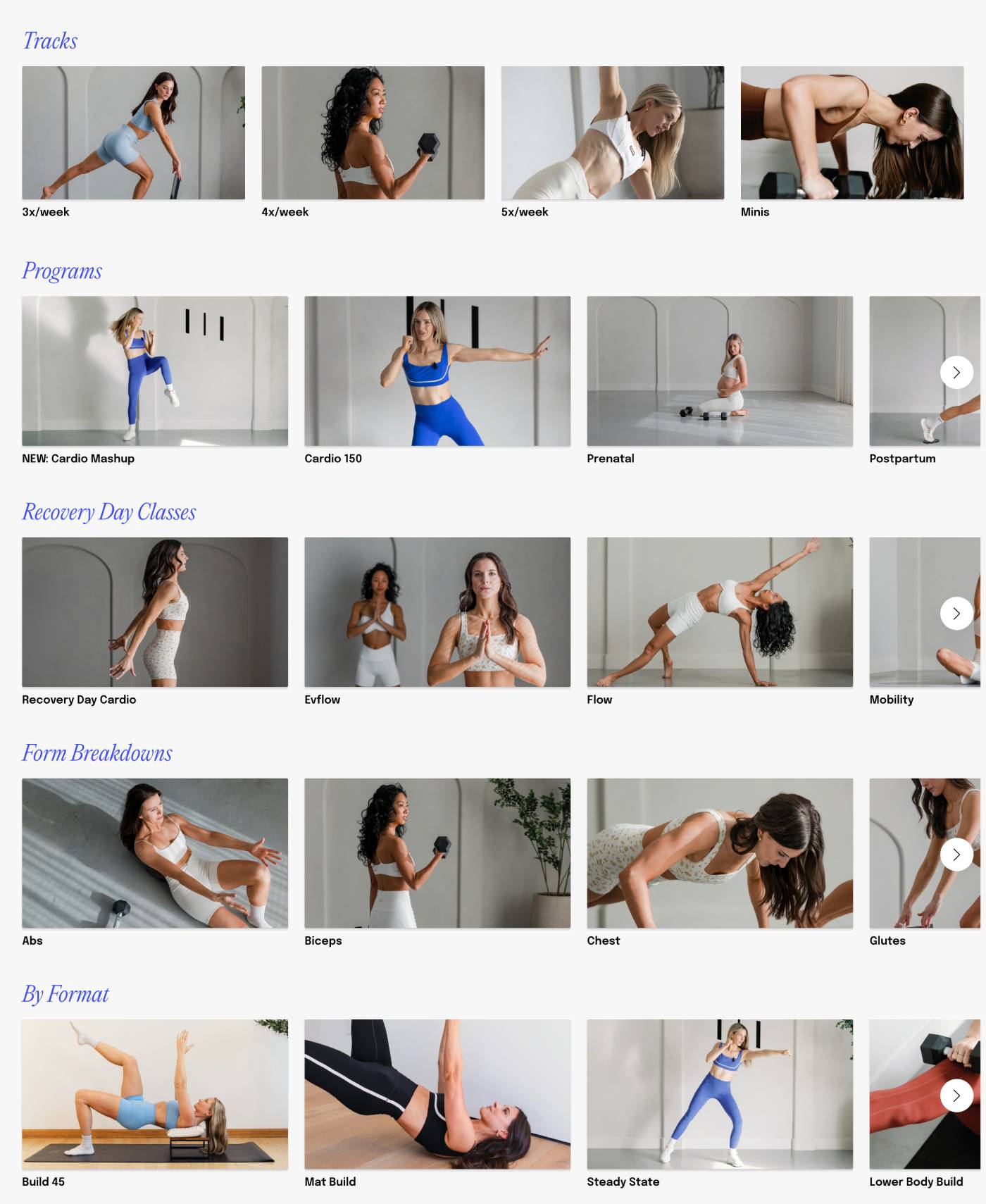
Evlo is the only platform here that plans deloads for you rather than leaving them to your judgement, which addresses the single most common failure in a midlife training week. Structure scores 8.5.
At $55.99 a month it is expensive, and the physician-led framing will appeal to some and feel clinical to others.
Best for: anyone who has burned out from training too hard, too often. Read the full Evlo review.
BODi: the widest library behind the plan
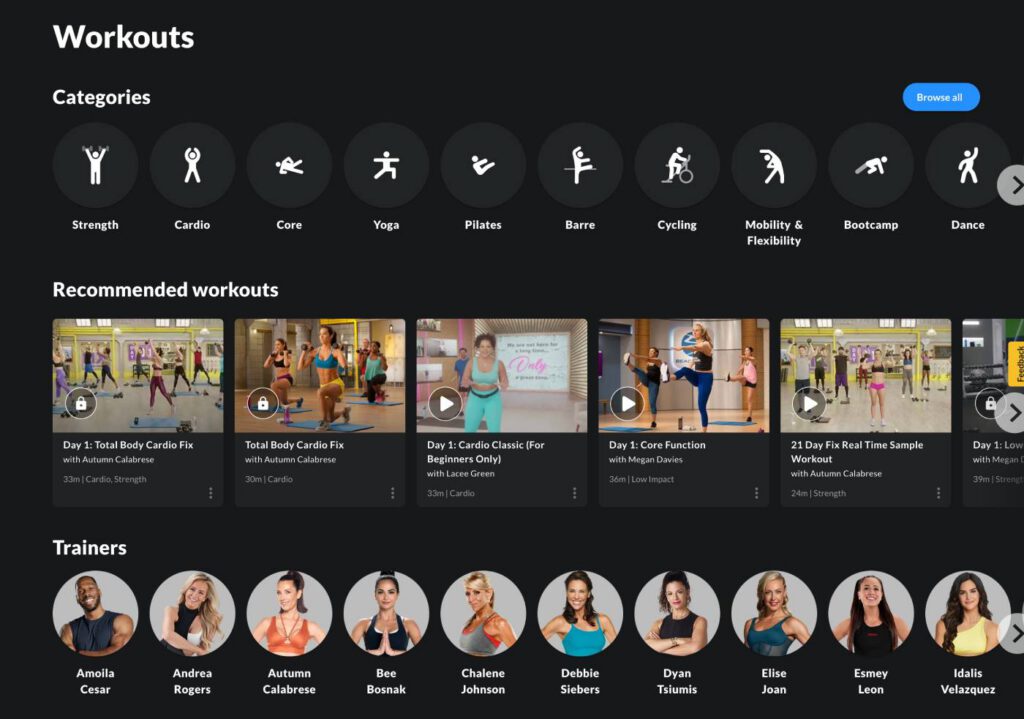
BODi provides structured multi-week programmes with nutrition attached, scoring 8.5 on structure at $19 a month, the cheapest full plan here.
It scores lowest of these six on suitability over 40 at 6.3, and the library around the good programmes includes a lot of content that works against a cortisol-conscious week. It rewards knowing what to ignore.
Best for: people who want plan plus nutrition in one place. Read the full BODi review.
How do the best structured programmes compare?
| Programme | Suitability over 40 (70% of rank) | Usability (30% of rank) | Programme structure (the gate) | Overall | Price |
|---|---|---|---|---|---|
| Flipping 50 | 8 | 8 | 8 | 7.8 | $69 a month |
| Pvolve | 7.4 | 8.5 | 8.5 | 8.3 | $24.99 a month |
| Jessica Valant Pilates | 7.3 | 7.5 | 8 | 7.1 | $59 a month |
| The Sculpt Society | 6.6 | 8.5 | 9 | 8.2 | $24.99 a month |
| Evlo Fitness | 6.6 | 8.5 | 8.5 | 8.0 | $55.99 a month |
| BODi | 6.3 | 8.5 | 8.5 | 8.0 | $19 a month |
Which is right for you?
- You want the plan and the reasoning behind it: Flipping 50.
- You want the best structure for the money: Pvolve.
- You are working around an injury or pelvic floor symptoms: Jessica Valant Pilates.
- You have abandoned plans because they were joyless: The Sculpt Society.
- You have overtrained yourself into exhaustion before: Evlo Fitness.
- You want nutrition in the same subscription: BODi.
- You already know how to programme: none of them. Use the schedule above.
How do you adapt the schedule around a bad week?
The schedule assumes a normal week, and normal weeks are rarer than plans pretend. The order to cut things in:
- Cut Saturday first. It is the most enjoyable and the least load-bearing.
- Then the mobility days. If you are lifting through full range, you are getting range work anyway. Afonso and colleagues, writing in Healthcare in 2021, found no difference between strength training and stretching for improving range of motion across eleven trials.
- Then the cardio day. Walking covers more of this than people credit.
- Keep both strength sessions as long as possible. If only one survives, make it a full-body session and accept the week.
- If nothing survives, walk. A week of walking is not a failed week.
Weeks where sleep has collapsed are the ones to reduce deliberately rather than push through. In perimenopause that is not softness, it is reading the conditions.
Worth checking next: platforms we have not reviewed
The structured-programme market is large and we have assessed a fraction of it. Ladder scores highly on structure in our library but sits outside this list on midlife suitability. Runna is excellent structurally and is a running app, which is a different question. Outside our library, Peloton’s programme tracks and several coaching-led services offer real periodisation that we have not yet evaluated for this audience.
We will add them when their reviews publish. A short accurate list beats a padded one.
Why some popular platforms did not make this list
Platforms with libraries rather than plans. A large catalogue is not a schedule. Several well-regarded apps were excluded because what they offer is a collection of workouts and a filter, which leaves the hardest decision, what to do today and how it connects to last week, entirely with you.
Caroline Girvan scores highest in our library on programme structure and is excluded here on suitability over 40, where she scores 3.7. Her programmes are rigorous and unmodified, which is exactly right for some women and wrong for most women starting at 45 after a decade away. She remains the best free structured strength training we have assessed.
Runna clears the structure gate comfortably and is excluded on our quality floor, at an overall score below the threshold, and because a running plan answers a narrower question than this page asks.
How did we rank these six?
The gate is programme structure of 8 or above, meaning a genuine week-by-week plan with progression, plus our standard quality floor. Twenty of our published programmes clear it, so the gate does real work rather than admitting everything.
The ranking is 70 per cent suitability for women over 40 and 30 per cent usability. A weekly schedule is a generic requirement rather than a midlife-specific capability, so under our model the structure requirement acts as the gate and the ranking asks which of the qualifying platforms actually serves this reader best.
Near misses. MUTU System blends just below BODi and is a pelvic floor programme first, so it is ranked properly on our pelvic floor page. Centr and FORM both clear the structure gate and fall short on midlife suitability.
Where is the evidence still evolving?
Well established: resistance training improves strength, muscle mass, walking speed and physical function in older adults, including those who have already lost ground. Bone loss accelerates through the perimenopausal transition. Combined training beats single-modality training for bone.
Reasonably supported: two sessions a week as a minimum effective dose for strength in untrained and lightly trained adults.
Less settled: the optimal weekly distribution for perimenopausal women specifically. Almost all of the frequency and periodisation research is done in older adults generally or in younger athletes, not in women aged 45 to 55. The schedule on this page is a reasoned application of general principles to this population, not a protocol lifted from a trial in it.
What would change our advice: trials comparing two versus three strength sessions a week in perimenopausal women, with recovery and symptom measures alongside strength outcomes. That study would settle several arguments this page has to navigate by judgement.