
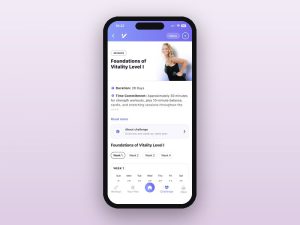
Why does mobility change after 40?
Two things happen at once, and only one of them is about age.
The first is straightforward disuse. Joints keep the range you regularly ask them for. Most adult lives ask for a narrow band of movement: sitting, standing, walking forward, reaching to about shoulder height. Anything outside that band gradually becomes unavailable, not because the joint has changed but because nothing has visited that position in years.
The second is hormonal. Joint aches and morning stiffness are among the most commonly reported perimenopause symptoms and among the least discussed in the consulting room. Oestrogen influences connective tissue and inflammation, and its decline coincides with the stiffness many women notice first on getting out of bed. This is why women often describe the change as arriving suddenly rather than creeping up.
The practical consequence of both is the same. The gap between doing a little mobility work and doing none widens sharply in midlife. Before 40 you can neglect it and get away with it. After 40 the bill arrives faster.
Do you need stretching, or is strength training enough?
This is the question that should shape your whole approach, and the answer is not what the mobility industry would like it to be.
Afonso and colleagues, writing in Healthcare in 2021, ran a systematic review and meta-analysis of eleven randomised controlled trials covering 452 participants, comparing strength training against stretching for improving range of motion. They found no difference between the two. Sub-group analyses, including active versus passive range and joint-by-joint comparisons, showed no differences either.
That is a genuinely useful result. Strength training taken through a full range of motion, meaning a deep squat rather than a quarter squat, a full overhead press, a lunge that actually lengthens the hip flexor, delivers the same range gains as dedicated stretching. If you already train that way twice a week, a separate mobility routine is optional rather than essential.
Where a dedicated routine still earns its place: if you are not currently strength training, if you have a specific stiff area that your training does not reach, or if you simply find that five quiet minutes on the floor is the thing that makes your body feel liveable. Those are all good reasons. “Because you have to stretch” is not one of them.
What should a mobility routine actually include?
A routine worth doing covers four regions, because those are where midlife stiffness concentrates and where losing range costs you the most in daily life.
Hips
The single highest-value area. Hip range determines how easily you get off the floor, how you climb stairs, and how much your lower back has to compensate. Rotation matters as much as flexion, which is why 90/90 work appears in almost every credible routine.
Thoracic spine
The mid back stiffens quietly and then shows up as shoulder problems, because a shoulder cannot reach overhead properly if the ribcage below it will not extend or rotate. If you sit at a desk, this is the region that has been neglected longest.
Ankles
The least glamorous and the most connected to falling. Ankle range determines balance strategy, squat depth and how you absorb a stumble. It takes about ninety seconds a day to maintain and almost nobody does it.
Shoulders
Overhead range is the one most women notice going, usually when reaching a high shelf. It responds well to work, but only if the thoracic spine is addressed at the same time.
Notice what is not on this list: the hamstrings. Touching your toes is the flexibility test everyone remembers from school and it predicts almost nothing useful about how well you move.
The 10-minute daily mobility routine
No equipment, done on the floor, in this order. A cushion under the knees helps on several of these.
- Cat cow, 60 seconds. On all fours, alternating between arching and rounding, following your breath rather than a count. This wakes up the spine before anything asks more of it.
- 90/90 hip rotations, 2 minutes. Seated with one leg bent in front at 90 degrees and one out to the side at 90 degrees, rotate slowly from one side to the other. Keep the chest tall. This is the most valuable two minutes in the routine.
- Thoracic open book, 90 seconds. Lying on your side, knees bent, arms extended in front, open the top arm across your body and follow it with your eyes. Let the ribcage rotate rather than forcing the shoulder down.
- Low lunge with a reach, 90 seconds. Back knee down and cushioned, sink gently into the front hip, then reach the same-side arm overhead. This gets the hip flexor and the side body at once.
- Ankle rocks, 60 seconds. Half kneeling, drive the front knee forward over the toes without lifting the heel. Small, repeated, unglamorous.
- World’s greatest stretch, 2 minutes. From a lunge, drop the same-side elbow towards the floor, then rotate open and reach up. It earns its name by covering hips, thoracic spine and shoulders in one movement.
- Child pose with a side reach, 60 seconds. Finish by walking the hands to each side to open the lats and the ribcage.
Move into range and back out again rather than hanging in the end position. Mobility is what you can control, not what gravity can achieve for you.
Which programmes deliver real mobility work?
If you would rather be led than remember a routine, these five genuinely teach mobility rather than listing it as a category.
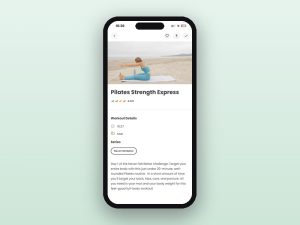
Lindywell: Pilates-led mobility with the gentlest tone
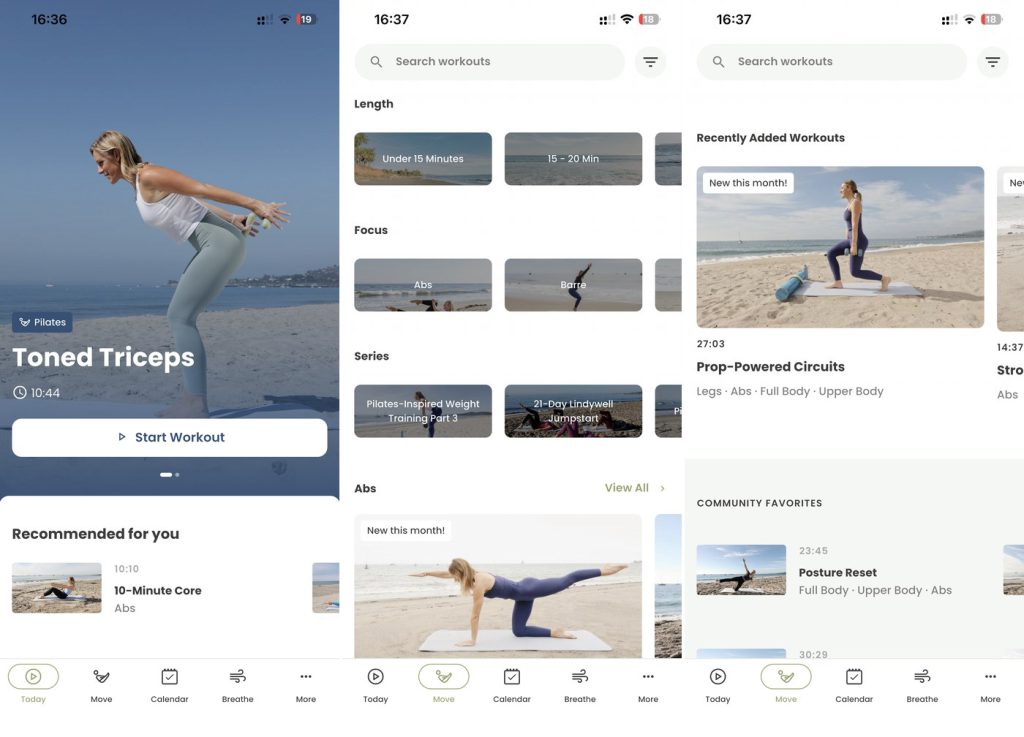
Lindywell scores 9 on joint friendliness and built its identity around modification and a non-punishing tone, which is exactly what a stiff, sore, midlife body responds to. Its mobility work is woven through the Pilates content rather than filed in a separate shelf, so you get it whether or not you go looking.
The limitation is that it is a Pilates platform, so the mobility is Pilates-shaped: strong on spine and hips, lighter on ankles and overhead work. At around $29 a month it is also not the cheapest way to solve this problem.
Best for: anyone who wants to be treated gently. Read the full Lindywell review.
Yoga With Adriene: the best free mobility on the internet
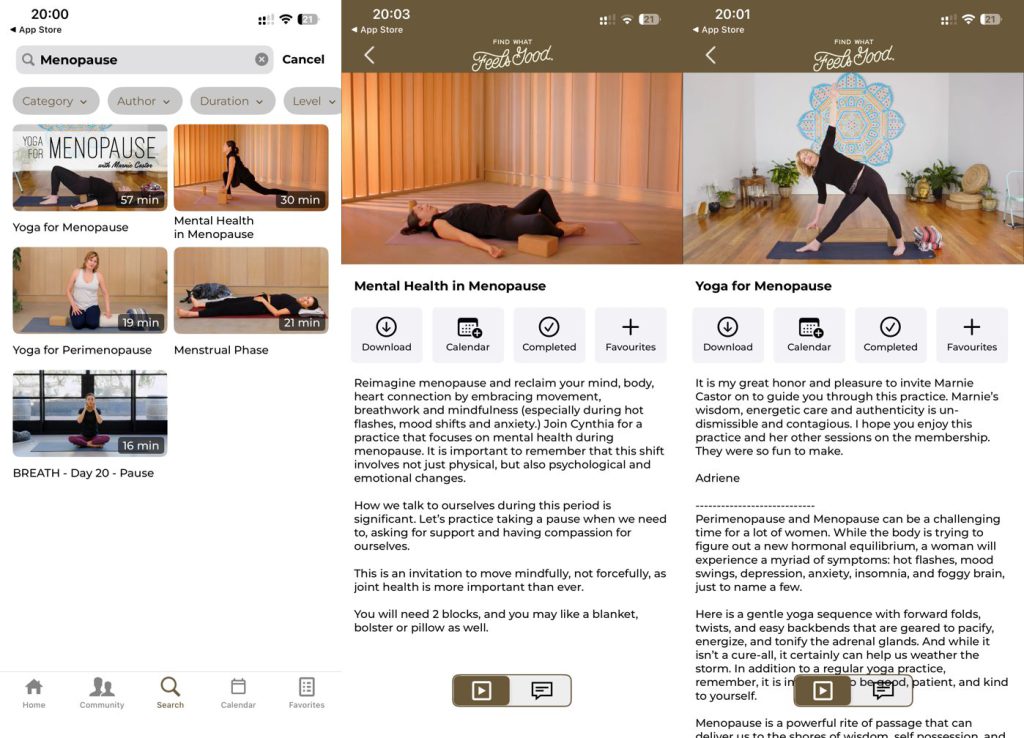
Also 9 on joint friendliness, and free. The catalogue includes a great deal of gentle, mobility-led practice, and the teaching tone is permissive in a way that keeps people coming back rather than feeling behind.
The weakness is structure. It is a library, not a programme, so you have to choose what to do. For a daily ten-minute habit that is less of a problem than it sounds, because you can simply repeat one video.
Best for: spending nothing and still getting good teaching. Read the full Yoga With Adriene review.
Jessica Valant Pilates: the physiotherapist option
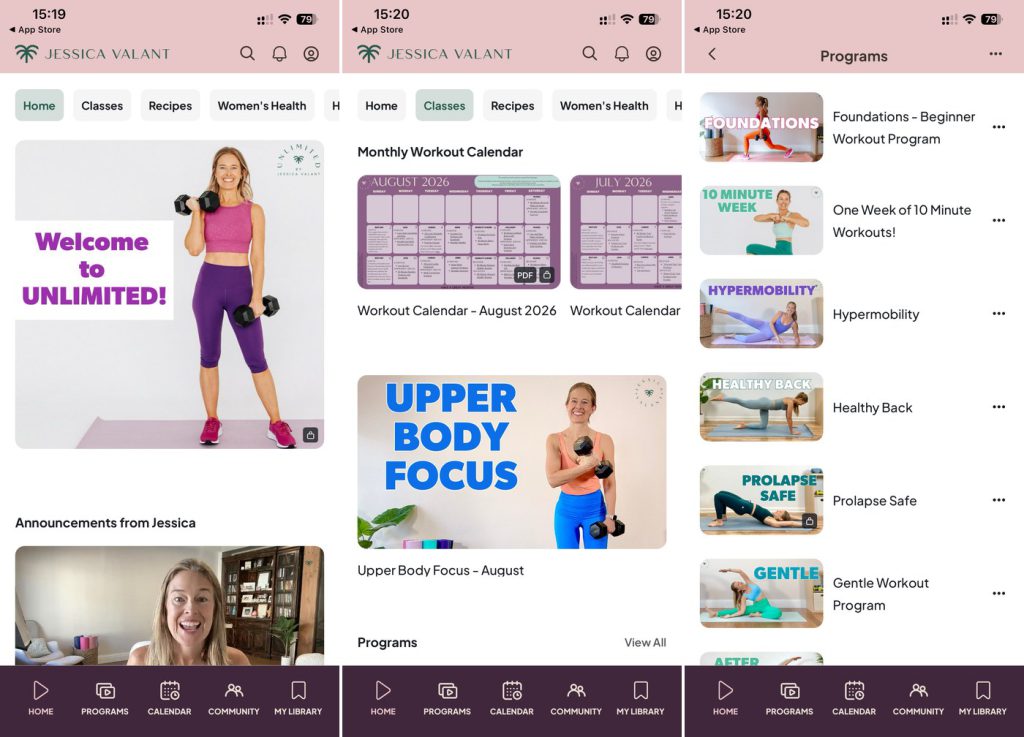
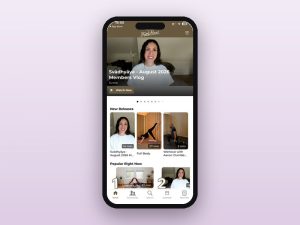
Jessica Valant is a licensed physical therapist, which shows in how precisely the mobility work is cued and in a Women’s Health section covering pelvic floor, hysterectomy recovery and postnatal considerations. It scores 9 on joint friendliness.
At $59 a month it is the most expensive option here by a distance, and the app experience lags the others at 7.5. You are paying for the clinical judgement rather than the polish.
Best for: working around a specific issue with qualified guidance. Read the full Jessica Valant review.
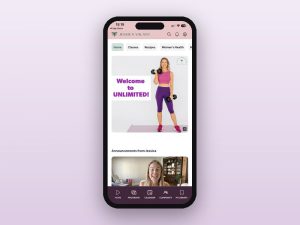
Obé Fitness: the best app to actually use
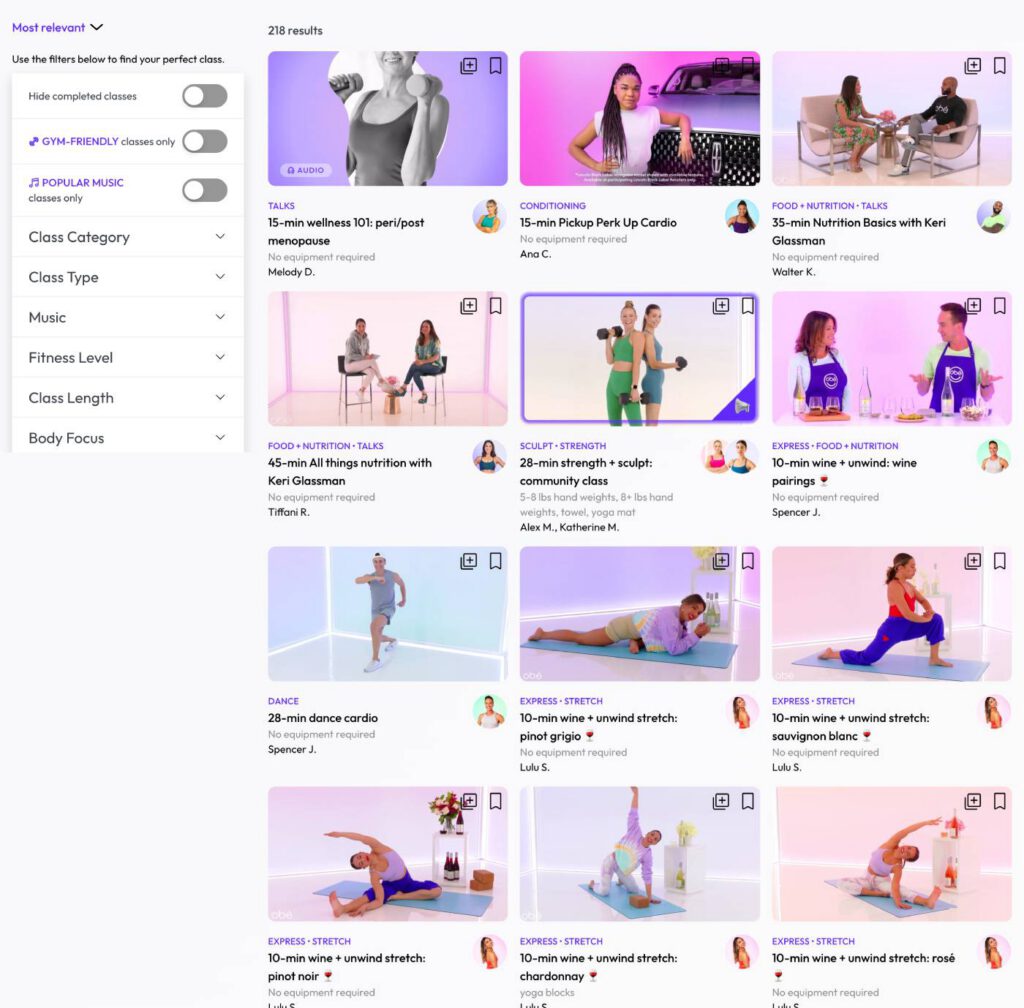
Obé scores 9.5 on usability, the highest here and one of the highest anywhere on this site, and it has a genuine mobility and stretch category rather than a token one. If the barrier to your mobility habit is friction, this removes the most of it.
Its joint friendliness of 8 is the lowest of these five, reflecting a catalogue that also contains a lot of higher-impact content you will need to steer around.
Best for: people who abandon apps that annoy them. Read the full Obé Fitness review.
Fabulous50s: free, and aimed squarely at over 50
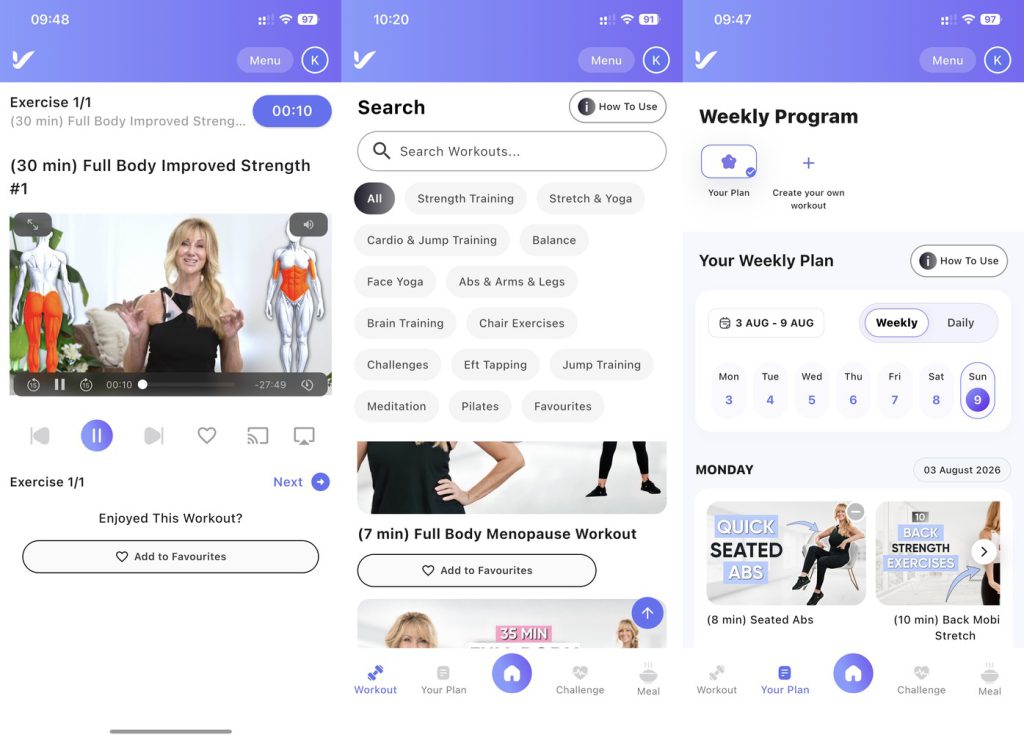
Fabulous50s mentions mobility more than any other programme we assess, and its five-pillar approach names mobility explicitly alongside strength, cardio, balance and impact. It scores 9 on joint friendliness and costs nothing on YouTube.
It ranks last of the five only because usability lags at 7. As free mobility content aimed at exactly this audience, it is hard to argue with.
Best for: women over 50 who want content made for them, at no cost. Read the full Fabulous50s review.
How do the best mobility programmes compare?
| Programme | Joint friendliness (70% of rank) | Usability (30% of rank) | Overall score | Price | Best for |
|---|---|---|---|---|---|
| Lindywell | 9 | 8 | 6.9 | Around $29 a month | Gentlest tone |
| Yoga With Adriene | 9 | 8 | 6.8 | Free on YouTube | Best free teaching |
| Jessica Valant Pilates | 9 | 7.5 | 7.1 | $59 a month | Physiotherapist led |
| Obé Fitness | 8 | 9.5 | 7.5 | $24.99 a month | Best app experience |
| Fabulous50s | 9 | 7 | 7.6 | Free on YouTube | Made for over 50 |
Which is right for you?
- You want to spend nothing: Yoga With Adriene, or Fabulous50s if you are over 50.
- Something specific hurts: Jessica Valant Pilates, for the clinical background.
- You have abandoned three apps already: Obé Fitness, because friction is your actual problem.
- You find most fitness content hectoring: Lindywell.
- You already lift twice a week through full range: possibly none of them. Read the strength section above again.
How does mobility fit alongside the rest of a midlife training week?
Mobility is the easiest thing to over-prioritise, because it feels productive and it never leaves you sore. A realistic week:
- Two strength sessions, taken through full range, which doubles as your mobility work. Our low-impact strength training page ranks the options.
- Five to ten minutes of mobility on most days, ideally the routine above, ideally attached to something you already do.
- Daily walking, which maintains ankle and hip range better than people expect.
- One longer session a week if you enjoy it, yoga or Pilates, for the parts a short routine skips.
If the week compresses, keep the strength sessions and shorten the mobility. The evidence says the strength work is buying you both.
What will mobility work not do for you?
It will not build bone. It will not build muscle. It will not treat pain.
The bone point matters most, because the window is narrower than most women are told. Ho-Pham and colleagues, writing in Osteoporosis International in 2023, tracked bone density through the perimenopausal transition and found femoral neck loss running at about 0.51 per cent a year before the late forties, accelerating to roughly 1.39 per cent a year between 49 and 54. Mobility work does nothing about that. Loading does.
On falls, the pattern is similar. Wong and colleagues, writing in the Journal of Orthopaedic Translation in 2020, reviewed twelve studies covering 4,784 older adults and found exercise reduced falls, with the combination of strength and balance training most effective, while fracture prevention specifically came from resistance and jumping. Mobility is a contributor to that picture, not the picture.
And on pain: stiffness eases with movement, but pain that is sharp, one-sided, persistent or worsening is a physiotherapy question, not a YouTube one. Pelvic floor symptoms in particular need targeted work rather than general mobility.
Worth checking next: mobility apps we have not reviewed
The dedicated mobility app market is real and we have not assessed it. Pliability (formerly ROMWOD) is the best known, aimed largely at CrossFit and athletic populations. GOWOD runs mobility assessments and builds routines from them. StretchIt and Bend are the consumer-friendly end of the same category.
We have not ranked them because we have not tested them, and because their audience is mostly younger and more athletic than this site is written for. If we assess them and they beat the platforms above for a woman over 40, they will appear here.
It is worth knowing this market exists, because a search for “best mobility app” will return those names rather than the ones on this page. They are answering a different question.
Why some popular platforms did not make this list
General platforms with a stretch category. Pvolve, The Sculpt Society, Peloton, FORM and Melissa Wood Health all contain mobility content and several score higher than programmes listed here on joint friendliness. None of them teaches mobility as a discipline; they include stretching as a supporting shelf. On a page about mobility exercises specifically, that distinction is the whole point.
The goal tag alone was not sufficient. The mobility goal is carried by a large minority of our published programmes, far too many for the tag to work as a filter on its own. We required both the goal tag and genuine mobility emphasis in the programme’s own review, which reduced the field to five.
Dedicated mobility apps. Excluded because unreviewed, not because unworthy, as set out above.
How did we rank these five?
The gate was carrying the mobility goal and genuinely teaching mobility, adjudicated from each programme’s own review text rather than its tag.
The ranking is 70 per cent joint friendliness and 30 per cent usability. Joint friendliness is the closest capability we score to what a mobility page is actually about, since we do not carry a dedicated mobility score. Usability is blended in because a daily habit dies on friction faster than on content quality.
Near misses. Evlo Fitness blends highest of any programme on joint friendliness and usability combined, and is excluded because it is a strength platform whose mobility content is incidental. Pvolve and The Sculpt Society sit just behind it in the same position. If your priority is training rather than mobility specifically, all three are better platforms than most of this list, and our general rankings place them accordingly.
Where is the evidence still evolving?
Reasonably established: range of motion responds to training at any age, and strength training through full range delivers range gains equivalent to stretching. Resistance training improves strength, walking speed and muscle mass in older adults.
Less settled: whether mobility work reduces injury risk. This is asserted constantly in fitness marketing and the trial evidence is thin and mixed. We have deliberately not made that claim on this page.
Largely untested: mobility work for perimenopausal joint symptoms specifically. The mechanism is plausible, the reports are consistent, and the trials have not been done in this population. Everything this page says about menopausal stiffness is inference plus reported experience, and we would rather flag that than borrow authority from studies in other groups.
What would change our view: a controlled trial of a short daily mobility routine in perimenopausal women, measuring morning stiffness and function rather than centimetres of reach.