
vs
Pvolve ✓ HANDS-ON REVIEW
Pvolve scores higher overall, 8.3 against 8, and is the stronger platform for short sessions and value for money. Evlo Fitness is the better pick if what you need most is building and keeping muscle and joint-friendly training.
- Score 8.3 vs 8.0
- Both tested hands-on
Quick answer: Pvolve is the stronger overall platform for women over 40, scoring 8.3 against 8.0. It is ahead for short sessions, value for money and perimenopause-specific programming. Evlo Fitness still wins for building and keeping muscle and joint-friendly training, so it is the better choice if that is your priority. The two are level on recovery compatibility and programme structure.
The two platforms
Same nine weighted categories, two different women. Here is who each one is built for.
Pvolve
Winner
Leads this comparison on short sessions and value for money, scoring 9 against 6.5 on Time Efficiency.
- Low impact
- 16 to 25 min
- Pvolve Signature Bundle
Choose Pvolve if you:
- Women in perimenopause or menopause who want low-impact functional strength
- Busy women who need 20 to 30 min sessions that genuinely work
- Anyone who has plateaued on conventional training and wants a different stimulus
- Want short sessions (Time Efficiency 9 against 6.5)
- Want value for money (Value for Money 8 against 6)
Evlo Fitness
Runner-up
Leads this comparison on building and keeping muscle and joint-friendly training, scoring 9 against 7.5 on Muscle Potential.
- Low impact
- 35 to 50 min
- Dumbbells at multiple
Choose Evlo Fitness if you:
- Women ~35+ who want a structured daily plan designed by physical therapists
- Anyone who has plateaued on HIIT or whose body is struggling to recover from high-intensity training
- Want building and keeping muscle (Muscle Potential 9 against 7.5)
- Want joint-friendly training (Joint Friendliness 9.5 against 9)
Quick answer
Quick answer: Pvolve wins overall at 8.3 versus Evlo at 8.0. Pvolve scored 7.4 / 10 on Women Over 40 Specificity, the highest of any platform reviewed across close to 50 tested, with the 6-week Menopause Strong programme clinically backed by a University of Exeter study on women aged 40-60, plus pelvic floor and endometriosis content, cycle syncing and a clinical advisory board guiding programme design. Pvolve costs $24.99 per month versus Evlo’s $55.99, less than half the price. Evlo wins on Muscle Potential (9 / 10, the highest tested) and Joint Friendliness (9.5 / 10, DPT-designed exercise selection in a different category from every other reviewed platform). Both platforms build deload weeks into the training cycle, which is unusual and meaningful for perimenopausal training. For clinically-backed perimenopause programming at a lower price, Pvolve. For maximum muscle building and the most rigorous DPT-designed joint protection, Evlo.
Choose Evlo Fitness if you:
- Want maximum muscle and bone retention with logged progressive overload
- Have plateaued on HIIT or your body is struggling to recover from high-intensity training
- Want the most clinically rigorous joint protection (DPT-designed by Dr. Shannon Ritchey)
- Can find 45 to 50 minutes reliably, three to five times per week
- Manage chronic pain and want exercise selection filtered through physical therapy reasoning
Choose Pvolve if you:
- Want the most clinically-backed perimenopause programme (University of Exeter study)
- Value cycle syncing, pelvic floor and endometriosis-aware content
- Prefer the lower monthly price ($24.99 vs $55.99)
- Are willing to invest in the $199 Signature Bundle (or already own resistance bands)
- Want low-impact-by-design movement (no jumping, no plyometrics)
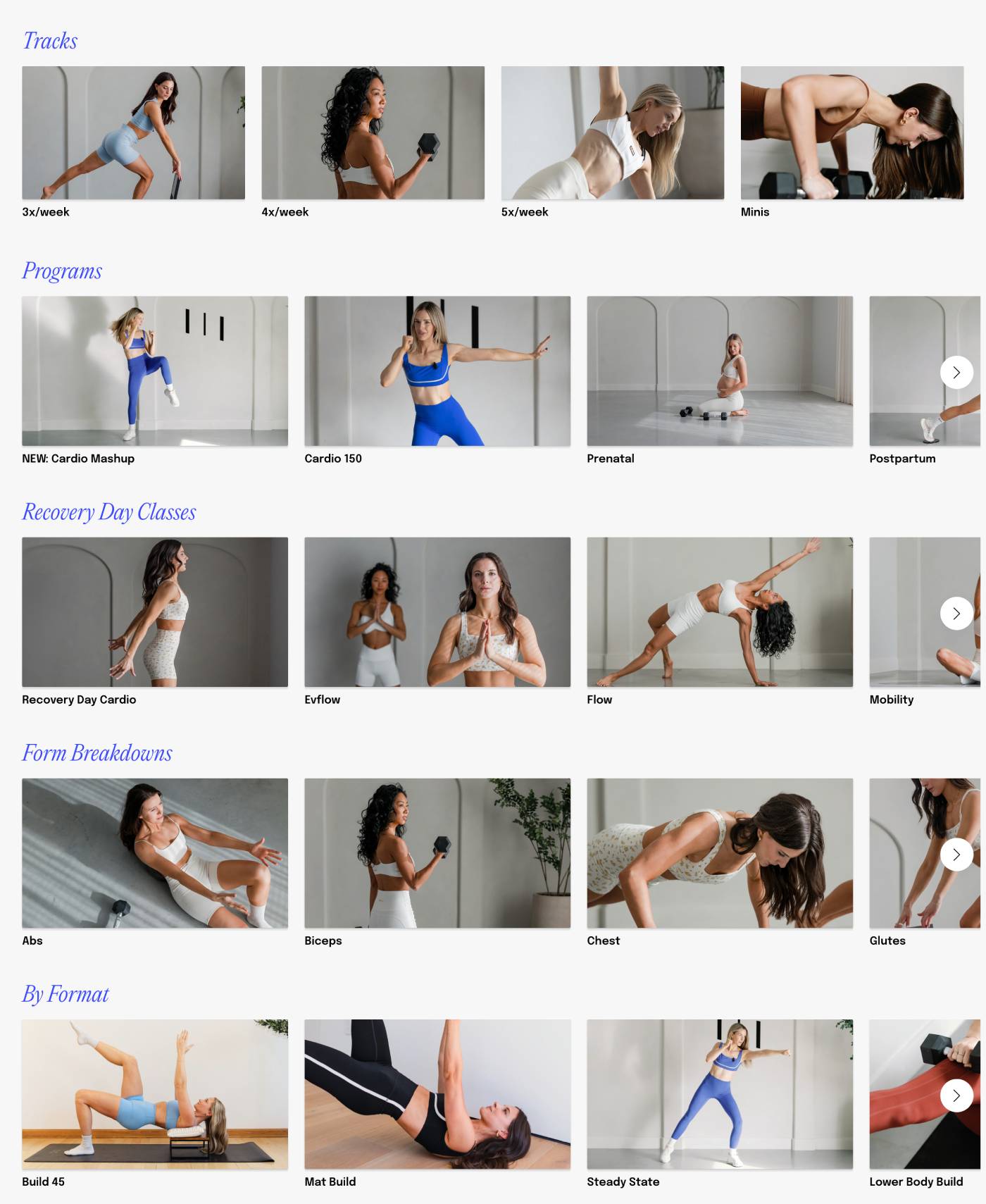
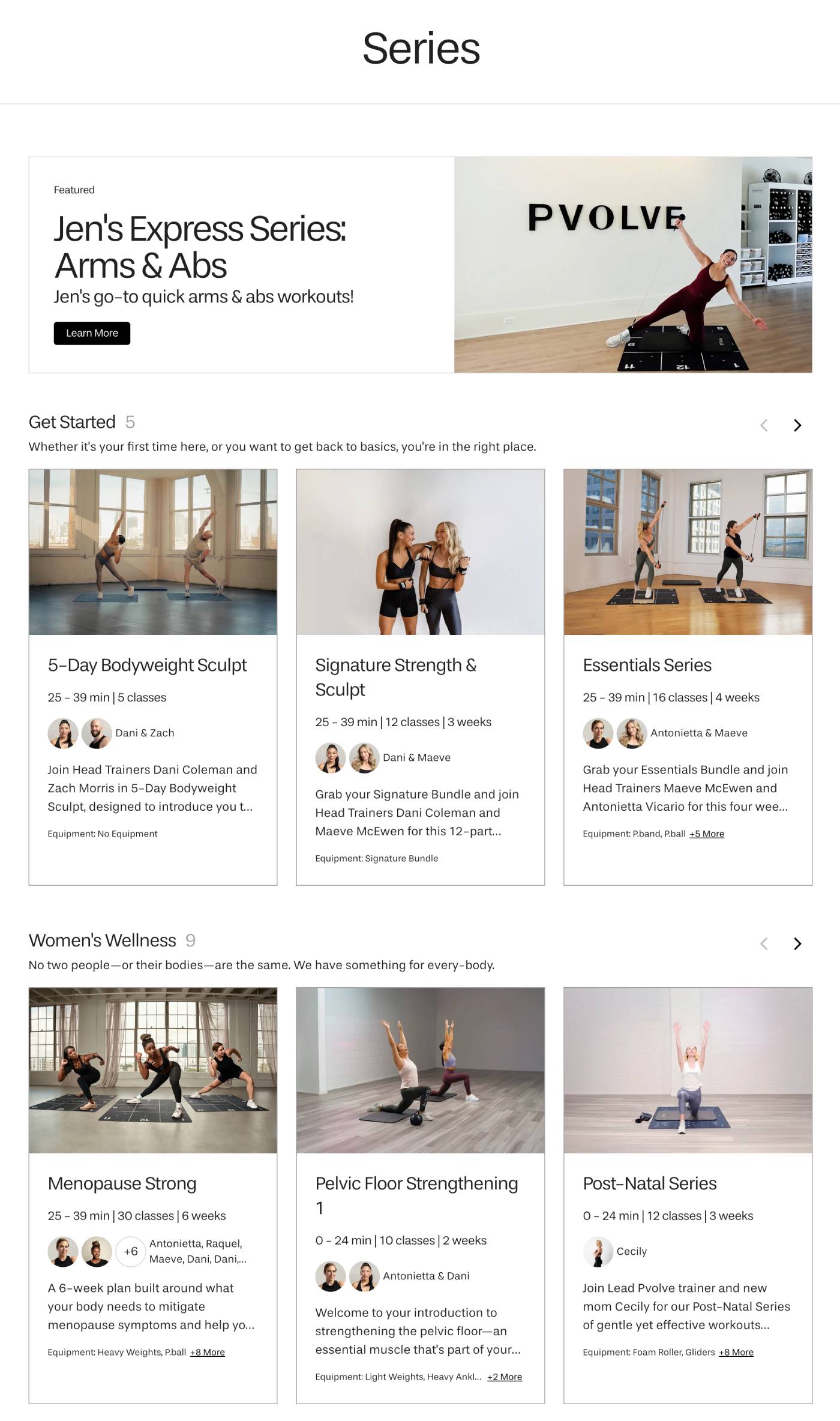
Inside Evlo and Pvolve
Bottom line in 30 seconds
- Pvolve wins on perimenopause specificity, clinical backing and price. 8.3 versus Evlo at 8.0. The 6.6 / 10 Women Over 40 Specificity score is the highest tested. The University of Exeter clinical study is unmatched in home-fitness streaming. At $24.99/month, Pvolve is less than half the price of Evlo.
- Evlo wins on muscle building and clinical joint methodology. The 9 / 10 Muscle Potential is the highest tested. The 9.5 / 10 Joint Friendliness from DPT-designed exercise selection is in a different category. The Rest Test methodology and Foundations onboarding are the cleanest application of progressive overload principles tested.
- Both platforms build deload into the training cycle. Evlo programmes Reset Weeks across the year. Pvolve’s clinical sequencing of Menopause Strong builds recovery into the weekly schedule. The structural recovery is meaningful for perimenopausal training and both platforms get this right.
Evlo is the most expensive platform reviewed. $55.99/month or $599/year. Time demands (45 to 50 minutes, 4 to 5 times per week) further compound the value calculation. For women who cannot find the time reliably, the cost-to-use ratio does not work.
Pvolve’s Signature Bundle is $199 upfront. The P.ball, P.band and Precision Mat unlock most of the library. You can start with resistance bands and dumbbells you already own and filter accordingly. Total year-one Pvolve cost with bundle is approximately $424, still less than Evlo at $599.
At a glance
| Evlo | Pvolve | |
|---|---|---|
| Monthly price | $55.99/mo | $24.99/mo |
| Annual price | $599/yr | $224.91/yr streaming |
| Signature equipment | None required (standard dumbbells) | Signature Bundle $199 (P.ball, P.band, Precision Mat) |
| Free trial | 14 days (card required) | 14 days |
| Founder / lead | Dr. Shannon Ritchey, DPT | Founded by Stephen Pasterino; Rachel Katzman CEO |
| Method | DPT-designed strength with The Rest Test | 3D movement, low-impact by design |
| Signature programmes | Foundations onboarding, weekly tracks, Reset Weeks | Menopause Strong (6 weeks), Knee Stability, Progressive Weight Training |
| Clinical backing | DPT credentialled methodology | University of Exeter study, clinical advisory board |
| Session length | 45 to 50 minutes | Flexible 5 to 60 minutes |
| Cycle syncing | No | Yes |
| Pelvic floor and endometriosis content | Limited | Yes (dedicated series) |
| Personal testing | 8 weeks structured daily use | 2 months daily; Menopause Strong (week 2), Knee Stability, Progressive Weight Training |
| Overall score | 8.0 / 10 | 8.3 / 10 |
Full scoring breakdown
| Category | Weight | Evlo | Pvolve | Winner |
|---|---|---|---|---|
| Time Efficiency | 15% | 6.5 | 9 | Pvolve |
| Muscle Potential | 15% | 9 | 7.5 | Evlo Fitness |
| Women Over 40 Specificity | 15% | 6.6 | 7.4 | Pvolve |
| Joint Friendliness | 12% | 9.5 | 9 | Evlo Fitness |
| Recovery Compatibility | 10% | 9 | 9 | Tie |
| Programme Structure | 10% | 8.5 | 8.5 | Tie |
| Value for Money | 8% | 6 | 8 | Pvolve |
| UX and Design | 8% | 8.5 | 8.5 | Tie |
| Nutrition Integration | 7% | 7 | 7.5 | Pvolve |
| Overall | 100% | 8.0 | 8.3 | Pvolve |
Why these scoring categories matter more after 40
Three physiological changes during perimenopause shape what training should look like. Oestrogen decline accelerates loss of muscle and bone. Maltais 2009 documents the trajectory and the 2022 systematic review on resistance training for postmenopausal women confirms structured progressive loading as the most effective intervention. Baseline cortisol elevates. Tendon and ligament elasticity decreases, which Watt 2018 documents as a primary driver of musculoskeletal pain.
Between Evlo and Pvolve, the biggest splits sit on Women Over 40 Specificity (Pvolve 10 vs Evlo 7.5), Muscle Potential (Evlo 9.0 vs Pvolve 7.5), Value for Money (Pvolve wins on price), and Time Efficiency (Pvolve’s flexibility vs Evlo’s 45-50 minute requirement). Joint Friendliness is close (Evlo 9.5 vs Pvolve 9.0); both score in a category most platforms cannot reach.
Women over 40 specificity 6.6 vs 7.4
This is the category where Pvolve wins most decisively, and it drives the overall score gap.
Pvolve scored 8.3 / 10, the highest of any platform reviewed across close to 50 tested. The 6-week Menopause Strong programme is clinically backed by a University of Exeter study on women aged 40-60. The clinical advisory board guides programme design. The platform includes pelvic floor content, endometriosis series, cycle syncing, and explicit perimenopause education sequenced to match where you physically are in the week. The structural depth on this category is unmatched.
Evlo scored 6.6 / 10 on Women Over 40 Specificity. The DPT-designed method is ideal for the audience (sustainable intensity, joint protection, progressive structure that accounts for recovery compression) but is not packaged as a dedicated perimenopause programme. Dr. Shannon Ritchey developed the method from her own training experience as a physical therapist managing chronic pain. The marketing and structure target performance-oriented women broadly rather than perimenopause specifically.
The 2.5-point category gap is the largest single contributor to the overall 0.6-point score difference. For dedicated perimenopause programming, Pvolve is the substantially stronger choice. For perimenopause-suited training without explicit life-stage packaging, Evlo’s method works.
Muscle potential 9 vs 7.5
This is the counterweight where Evlo wins.
Evlo scored 8.0 / 10, the highest of any platform reviewed. The DPT-designed method uses progressive overload with logged weights. The Rest Test methodology assesses muscle failure properly: after your final rep, rest five seconds, attempt additional reps; if three or more, increase weight or rep target next session. This is the cleanest application of progressive overload principles I have seen on a streaming fitness platform.
Pvolve scored 8.3 / 10. Progressive Weight Training for Beginners delivers real stimulus but the ceiling is lower than heavy compound lifting. The 3D movement method emphasises stability and neuromuscular control over maximum hypertrophy. For maintenance and foundational strength, Pvolve works. For visible body composition change through heavy progressive loading, Pvolve is not the cleanest path.
For women optimising for maximum muscle and bone retention through structured progressive strength, Evlo. For joint-safe movement that includes strength as one component within broader perimenopause programming, Pvolve.
Why progressive overload matters more after 40
Progressive overload is the principle of gradually adding load over time. After 40, oestrogen decline accelerates muscle and bone loss. The 2022 systematic review on resistance training for postmenopausal women is clear: training works only if the load progresses. Evlo is built around this principle with logged weights, the Rest Test, and Reset Weeks. Pvolve delivers some progression but the 3D movement method ceiling is lower. Combine either with adequate protein intake (1.6 to 2.2 grams per kilogram of body weight daily).
Joint friendliness 9.5 vs 9
Both platforms score very high on Joint Friendliness; Evlo edges ahead narrowly.
Evlo scored 9.5 / 10, the highest tested. Every exercise selection is DPT-designed and informed by Dr. Shannon Ritchey’s physical therapy background. 120+ rehab videos are accessible alongside the main programme. The platform-level approach to exercise selection is in a different category from every other reviewed platform.
Pvolve scored 8.3 / 10. The 3D movement method is low-impact by design: zero jumping, zero plyometrics. The Knee Stability series is a dedicated programme for users with knee history. The clinical advisory board includes physiotherapy expertise that informs movement selection.
Both work for women with diagnosed knee, hip or back issues. Evlo’s clinical rigour on individual exercise selection is the cleaner choice for users wanting the most considered movement choices. Pvolve’s low-impact-by-design platform-wide approach is the cleaner choice for users wanting the methodology embedded in the platform structure rather than in individual exercises.
Time efficiency 6.5 vs 9
Pvolve wins this category clearly.
Pvolve’s class lengths are highly flexible with 5 to 60 minute options. Menopause Strong sessions are around 40 minutes. Live virtual studio classes are around 50 minutes. The shorter mobility and recovery sessions (5 to 15 minutes) stack easily onto a main session. The breadth of duration options is the differentiator.
Evlo scored 6.5 / 10 on Time Efficiency, the lowest of strong contenders. Sessions are 45 to 50 minutes, three to five times per week. This is the most significant practical barrier of any platform reviewed: many women under-use what they pay for because they cannot find the time reliably.
For time-constrained perimenopausal women, Pvolve is materially more achievable week-to-week. For women who can find 45 to 50 minutes reliably and want the most rigorous training method, Evlo’s time commitment is justified by the results.
Value for money 6 vs 8
Pvolve wins on raw pricing.
Pvolve streaming is $24.99/month or $224.91/year. The Signature Bundle at $199 unlocks the full library. Total year-one cost with bundle is approximately $424. The 8 / 10 Value for Money score reflects competitive streaming pricing offset by the equipment investment.
Evlo is $55.99/month or $599/year. The 6 / 10 Value for Money score reflects the highest price reviewed plus the time demands that mean many women under-use what they pay for.
The annual gap is $374. Even with Pvolve’s Signature Bundle, year-one total cost is $175 less than Evlo. For women price-sensitive but wanting credentialled perimenopause-focused training, Pvolve is the clearer value choice.
Recovery compatibility 9 vs 9
Pvolve wins this category narrowly.
Pvolve scored 9 / 10 on Recovery Compatibility. Daily sessions are sustainable without fatigue accumulation because the low-impact method does not produce the cortisol load of high-impact training. The clinical advisory board’s input on recovery sequencing is built into Menopause Strong specifically.
Evlo programmes Reset Weeks for deload built into the training cycle. Breathwork cool-downs are built into every session. The recovery demand is moderate (demanding on specific muscles, not full-body fatigue accumulation).
For perimenopausal women managing recovery compression, Pvolve’s low-impact-by-design approach is more sustainable across consecutive training days. Evlo’s Reset Weeks are the structural recovery mechanism.
Programme structure 8.5 vs 8.5
Both platforms score high on Programme Structure.
Evlo’s structure is daily auto-assignment plus Foundations onboarding plus Reset Weeks. The Foundations programme walks new users through the method before assigning daily training. The daily auto-assignment removes decision fatigue. Reset Weeks are programmed across the year.
Pvolve’s Menopause Strong is a structured 6-week programme. Knee Stability is a dedicated series. Progressive Weight Training for Beginners has clear progression. The structured programme experience is strong for the dedicated programmes; the wider Pvolve library is more curate-your-own.
Both are competent. Evlo’s Foundations onboarding is unusually thorough. Pvolve’s structured programmes are more clinically calibrated for perimenopause specifically.
UX and design 8.5 vs 8.5
Both platforms are well-designed.
Evlo’s daily auto-assignment is the standout UX feature: you open the app and your session is ready. Foundations onboarding is best-in-class. Weight tracking is integrated cleanly.
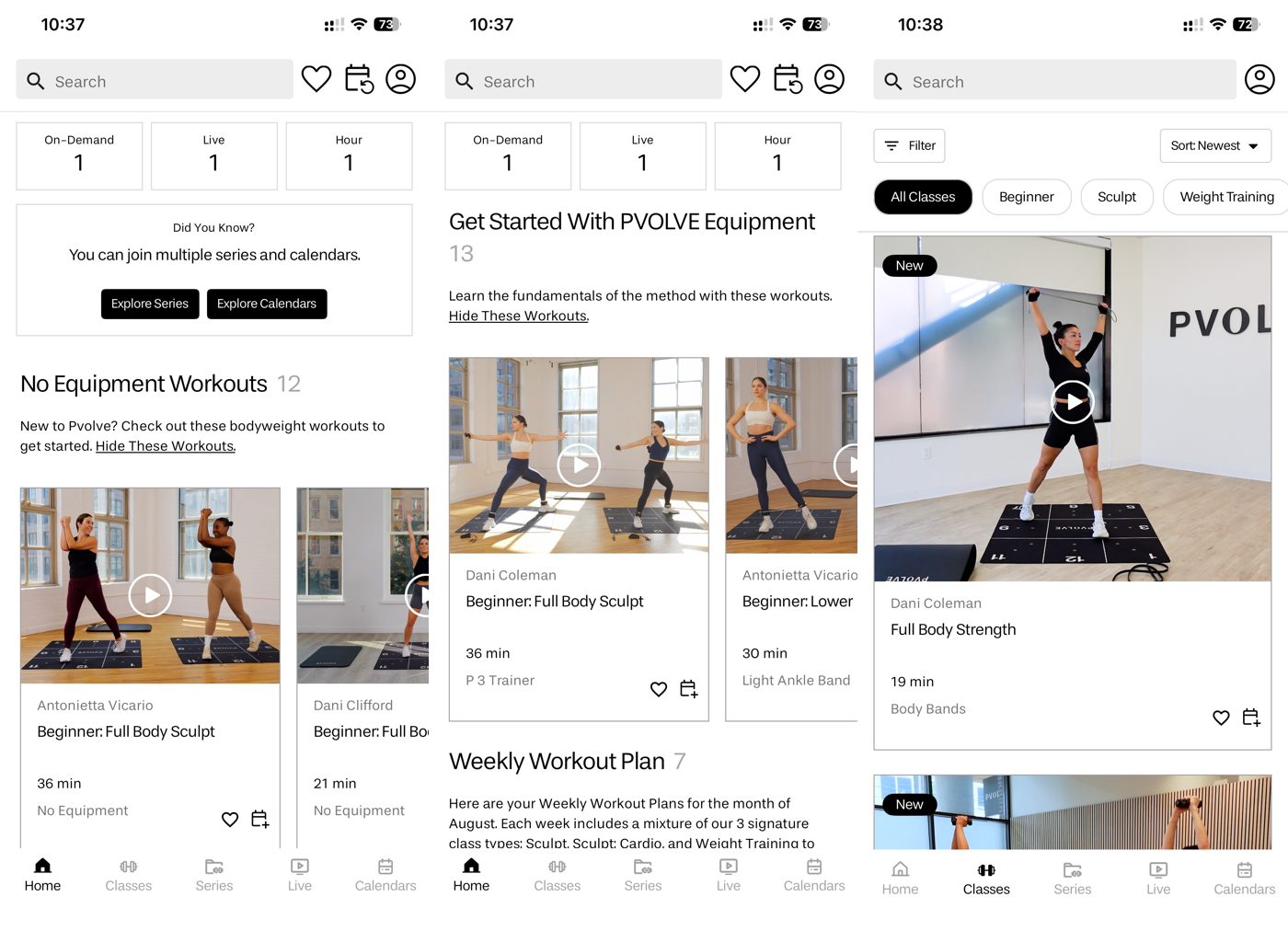
Pvolve’s UX is similarly polished. The filtering system is well-built (filter by equipment, level, duration). The quiz-driven onboarding produces a calibrated starting point. Live virtual studio integration works smoothly.
Both competent. Differences are aesthetic rather than functional.
Nutrition integration 7 vs 7.5
Neither leads on nutrition.
Evlo includes some nutrition guidance but it is not a focus. Dr. Shannon Ritchey’s expertise is movement and physical therapy.
Pvolve has Sculpt 9 (vegan, no sugar) as an optional add-on. Some nutrition guidance exists but it is not a focus.
Neither matches Obe Fitness’s audio courses on protein and women’s health, or BODi’s meal plans. This category does not differentiate the two platforms meaningfully.
Why built-in deload weeks matter more after 40
Across the close to 50 platforms tested on this site, the consistent gap most fitness apps share is they do not programme deload into the training cycle. They assume users will self-regulate intensity and rest. Most people do not. The result is the same predictable adherence pattern: women push through 6 to 8 weeks, accumulate fatigue without noticing, then drift away or get injured.
Both Evlo and Pvolve solve this. Evlo’s Reset Weeks are programmed across the year so you cannot skip them. Pvolve’s clinical sequencing of Menopause Strong builds recovery into the weekly schedule. For perimenopausal women specifically, having deload built in (rather than left to user discretion) removes the willpower requirement of taking a step back. Many women resist this because it feels like regression. Both platforms position deload as part of the training rather than as a break from it, which is what makes the structure stick.
This shared feature is unusual at the higher-tier price point. Most $25 to $55/month platforms do not programme deload. Both Evlo and Pvolve do. For perimenopausal training, this matters more than the score gap suggests.
Why low-impact-by-design matters more after 40
Decreased oestrogen reduces tendon and ligament elasticity, which makes the same plyometric and impact-heavy movements that were fine at 30 produce more aggravation at 45. Most fitness platforms address this through modifications: a third trainer on screen demonstrating a lower-impact version. The modification is available but not the default; you have to choose it each session.
Pvolve’s 3D movement method takes a different approach: low-impact is the default, not the modification. There is no jumping. There are no plyometrics. The exercise selection is built from the assumption that joint loading should be controlled, not that it can be optionally controlled. This is a structural choice rather than a coaching choice, and it changes how the platform feels across a training month.
Evlo’s DPT-designed approach is similar in philosophy but applied through individual exercise selection rather than a platform-wide methodology. Dr. Shannon Ritchey’s physical therapy reasoning filters every movement choice. Both platforms arrive at low-impact training through different routes. For women with diagnosed joint conditions, Evlo’s clinical filtering is slightly stronger; for women wanting low-impact as the platform’s default rather than an exercise-level choice, Pvolve’s method is structurally clearer.
Who wins for…
Best for clinically-backed perimenopause programming
Pvolve. University of Exeter clinical study on women aged 40-60. Clinical advisory board.
Best for maximum muscle building
Evlo. 9 / 10 Muscle Potential, highest tested.
Best for most rigorous joint protection
Evlo. 9.5 / 10 Joint Friendliness from DPT-designed exercise selection.
Best for cycle syncing
Pvolve. Built into the platform. Evlo does not offer cycle syncing.
Best for pelvic floor and endometriosis content
Pvolve. Dedicated series. Evlo has limited content here.
Best for budget
Pvolve. $24.99/month vs Evlo $55.99/month. Even with the $199 Signature Bundle, year-one cost is $175 less than Evlo.
Best for time-constrained training
Pvolve. Flexible 5 to 60-minute sessions. Evlo requires 45 to 50 minutes 4-5x weekly.
Best for women who have plateaued on HIIT
Evlo. The DPT-designed method is specifically positioned for women whose bodies struggle with high-intensity training.
Best for women with chronic pain
Evlo. Dr. Shannon Ritchey built the platform from her own chronic pain experience as a physical therapist.
Best for low-impact-by-design movement
Pvolve. 3D method involves no jumping or plyometrics by design.
Best for women in their 50s and 60s
Pvolve. Low-impact 3D method and Knee Stability series. Evlo’s time demand is a high bar for this group.
Best for women who want minimal equipment
Evlo. Standard dumbbells work. Pvolve’s Signature Bundle at $199 adds equipment investment.
Best methodology rigour overall
Evlo. DPT-designed, The Rest Test, Reset Weeks, Foundations onboarding. The most considered training approach reviewed for individual exercise selection. Pvolve wins on platform-level clinical backing via UoE study.
Best for women returning to fitness after a long break
Pvolve. The lower per-session intensity and shorter session lengths are easier to re-enter. Evlo’s Foundations onboarding is thorough but the 45 to 50-minute session length is a higher re-entry bar.
Best for absolute beginners with no strength training history
Neither is the strongest entry. Both assume some training literacy. Daily Burn True Beginner, Melissa Wood Health, or Obe Fitness Menopause Program are gentler on-ramps for absolute beginners over 40.
Best for women whose budget can stretch to either
If both prices fit your budget, choose based on goal: maximum muscle (Evlo) or perimenopause depth (Pvolve). The price gap should not be the deciding factor for women who can comfortably afford either.
Best for women with active perimenopause symptoms
Pvolve. The Menopause Strong programme’s clinical sequencing addresses symptom management explicitly. Evlo’s method works for perimenopause-suited training but does not engage with symptoms directly.
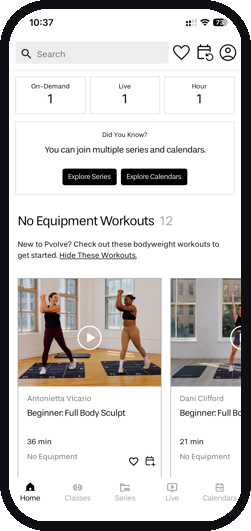
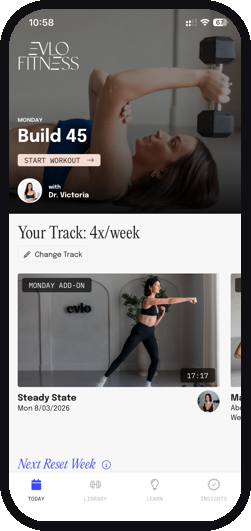
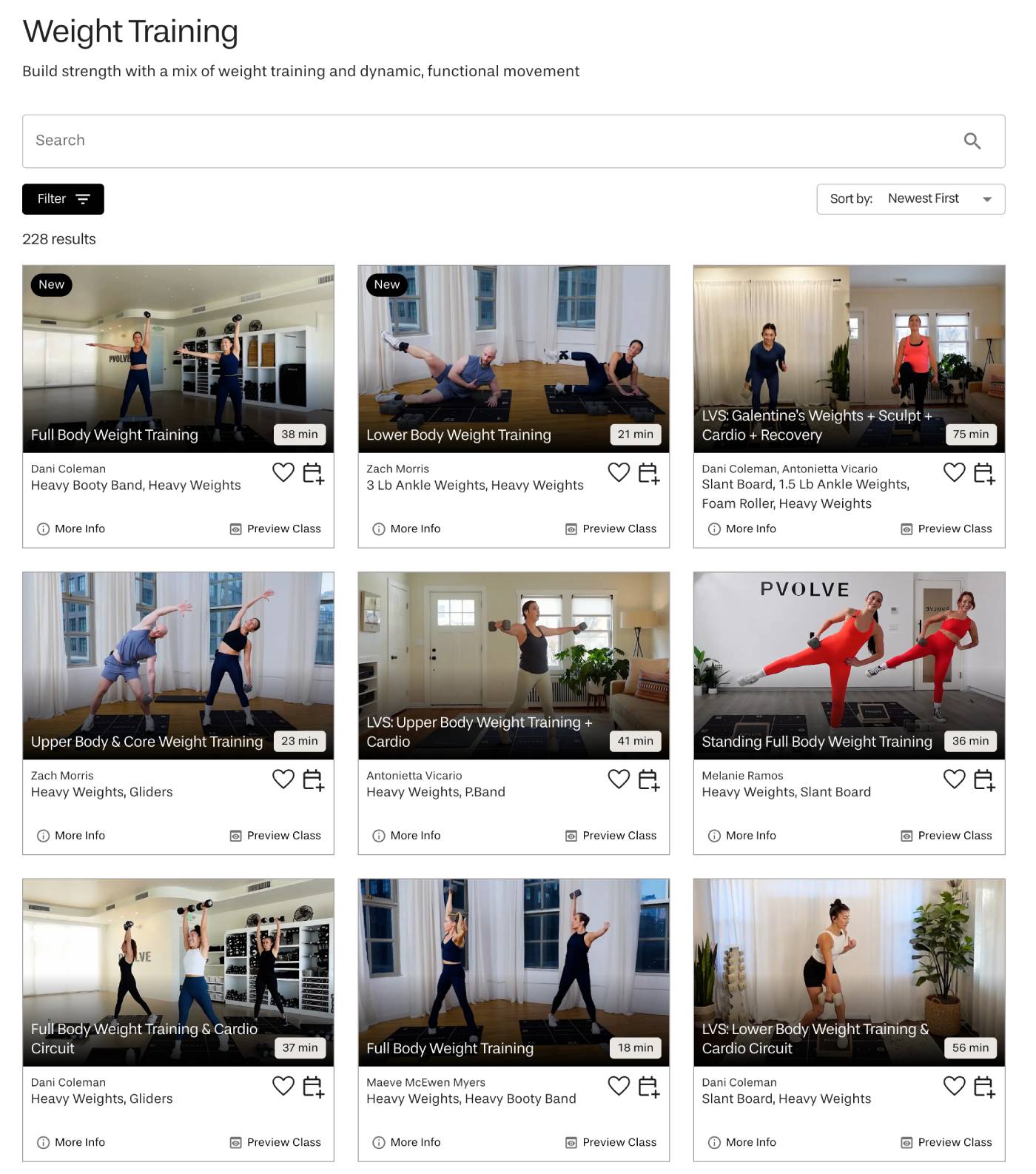
Screenshots from our full reviews
More screenshots: Evlo
See the full Evlo review for methodology and pricing.
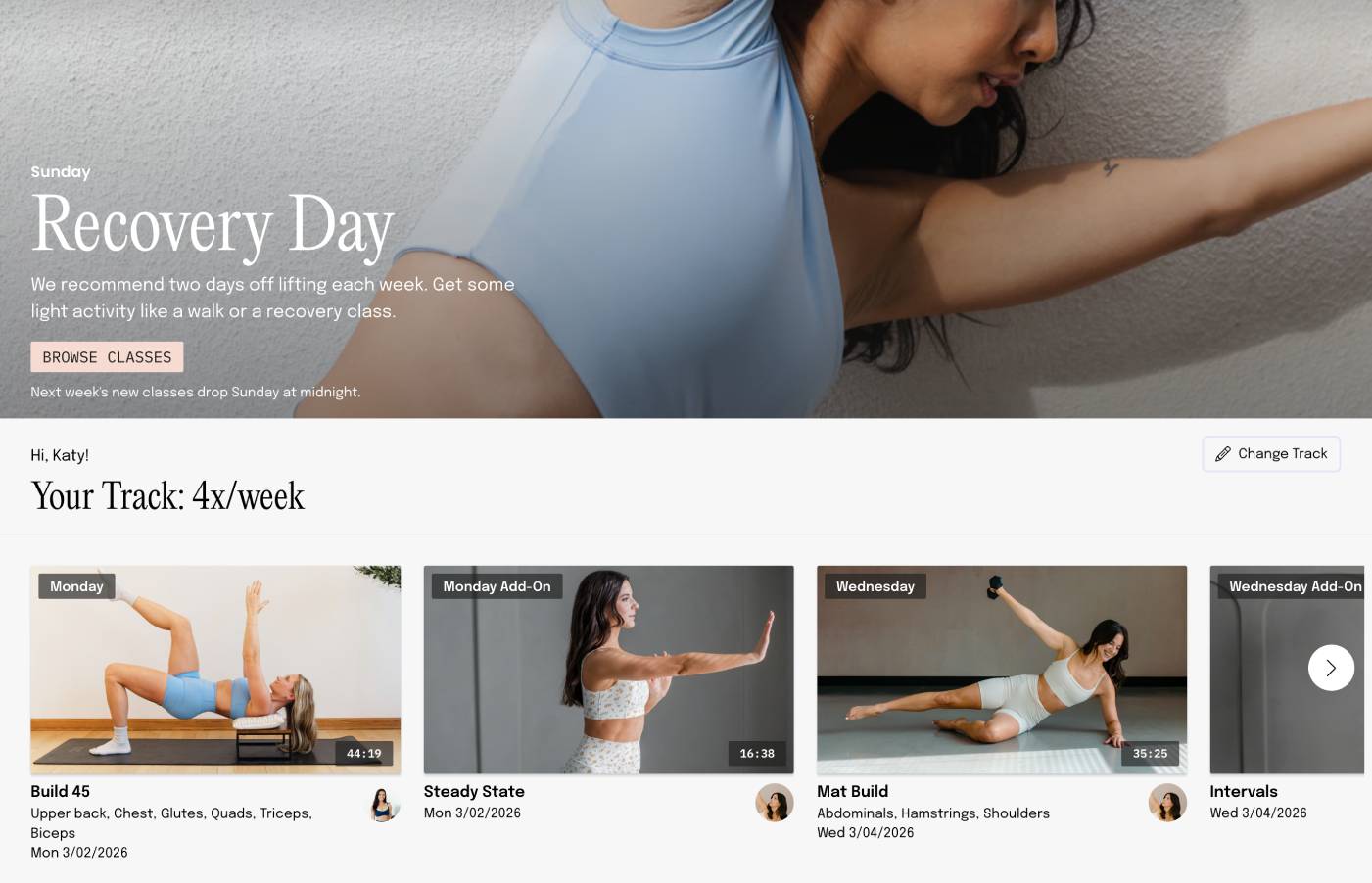
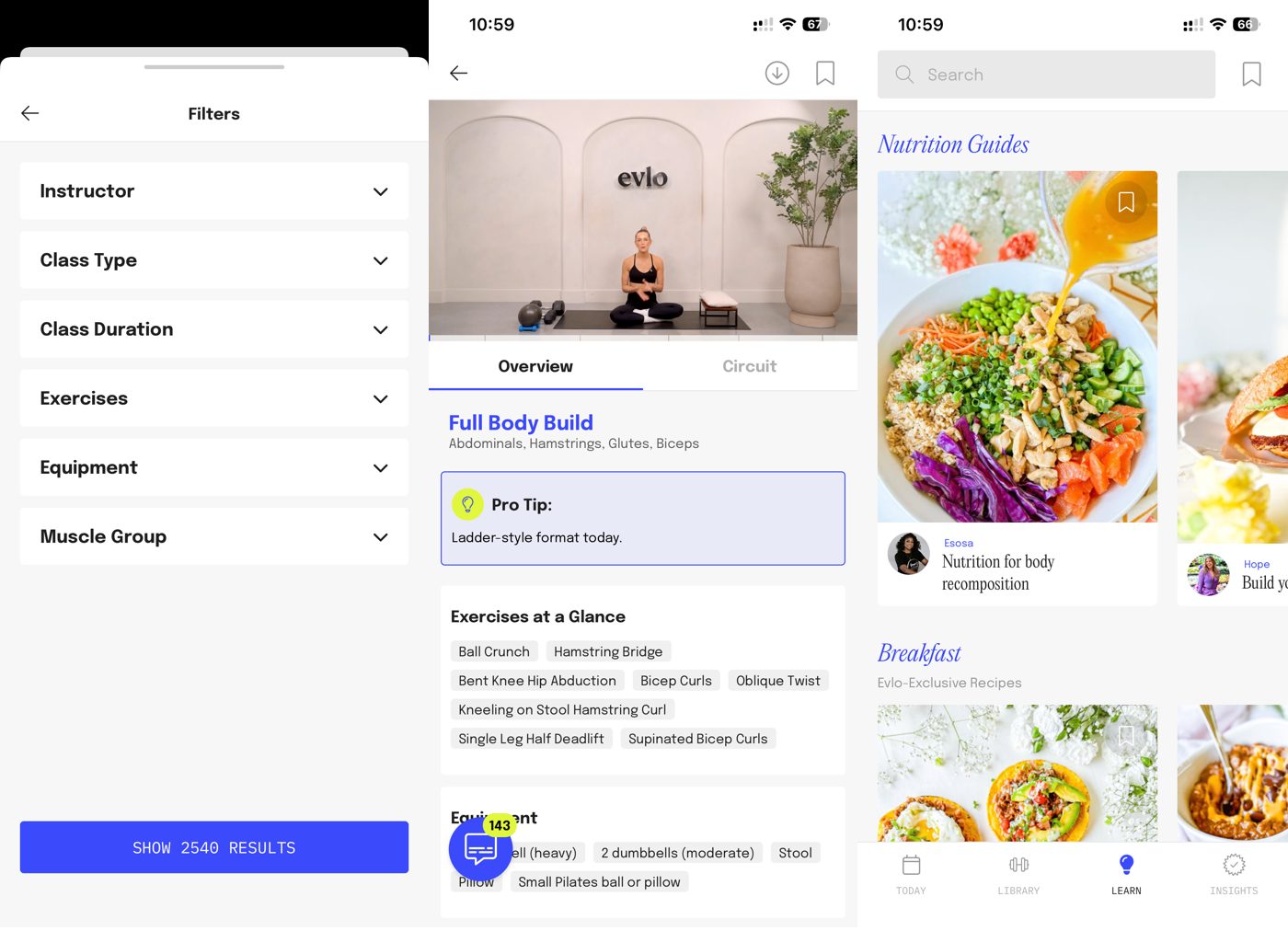
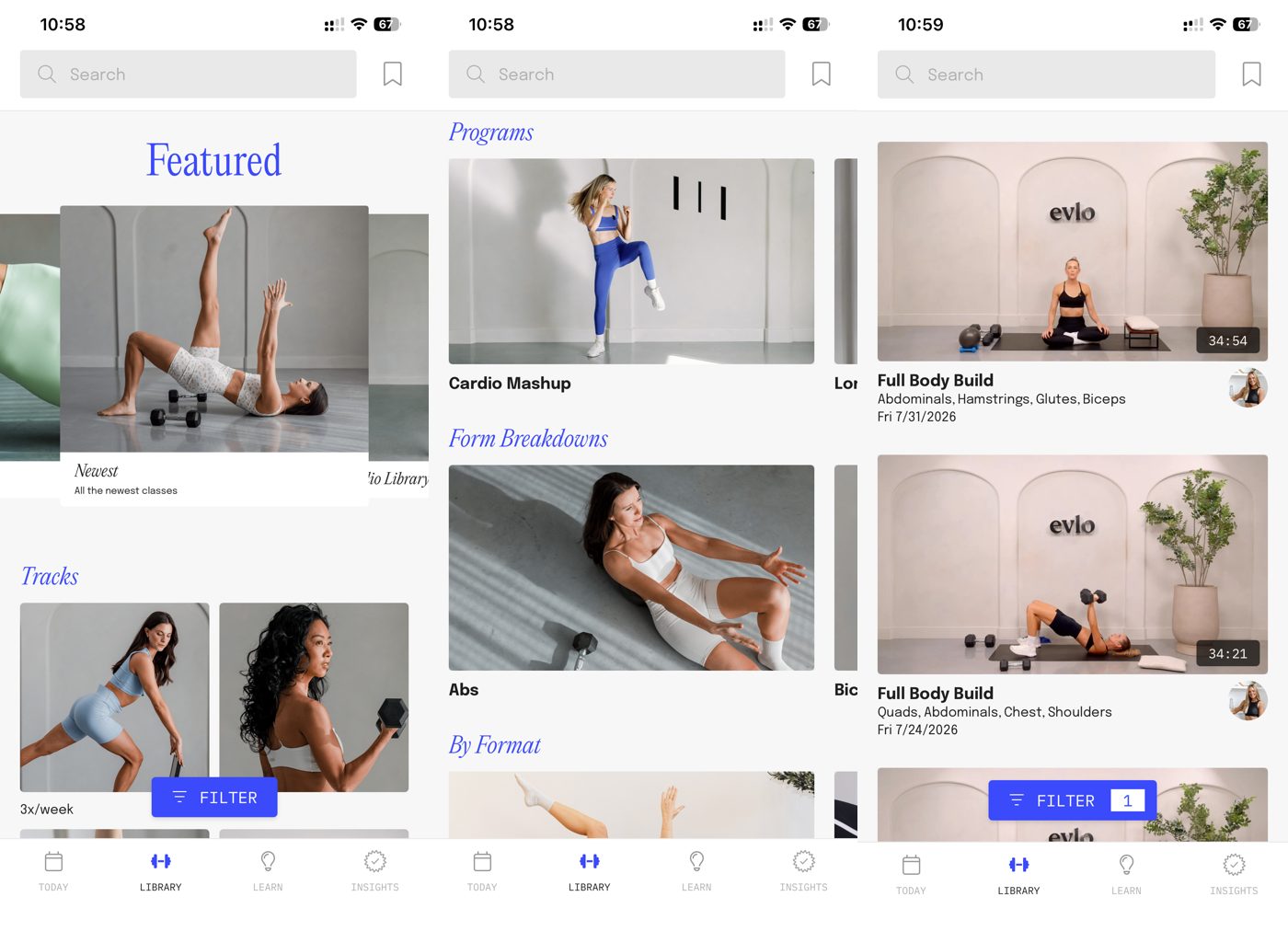
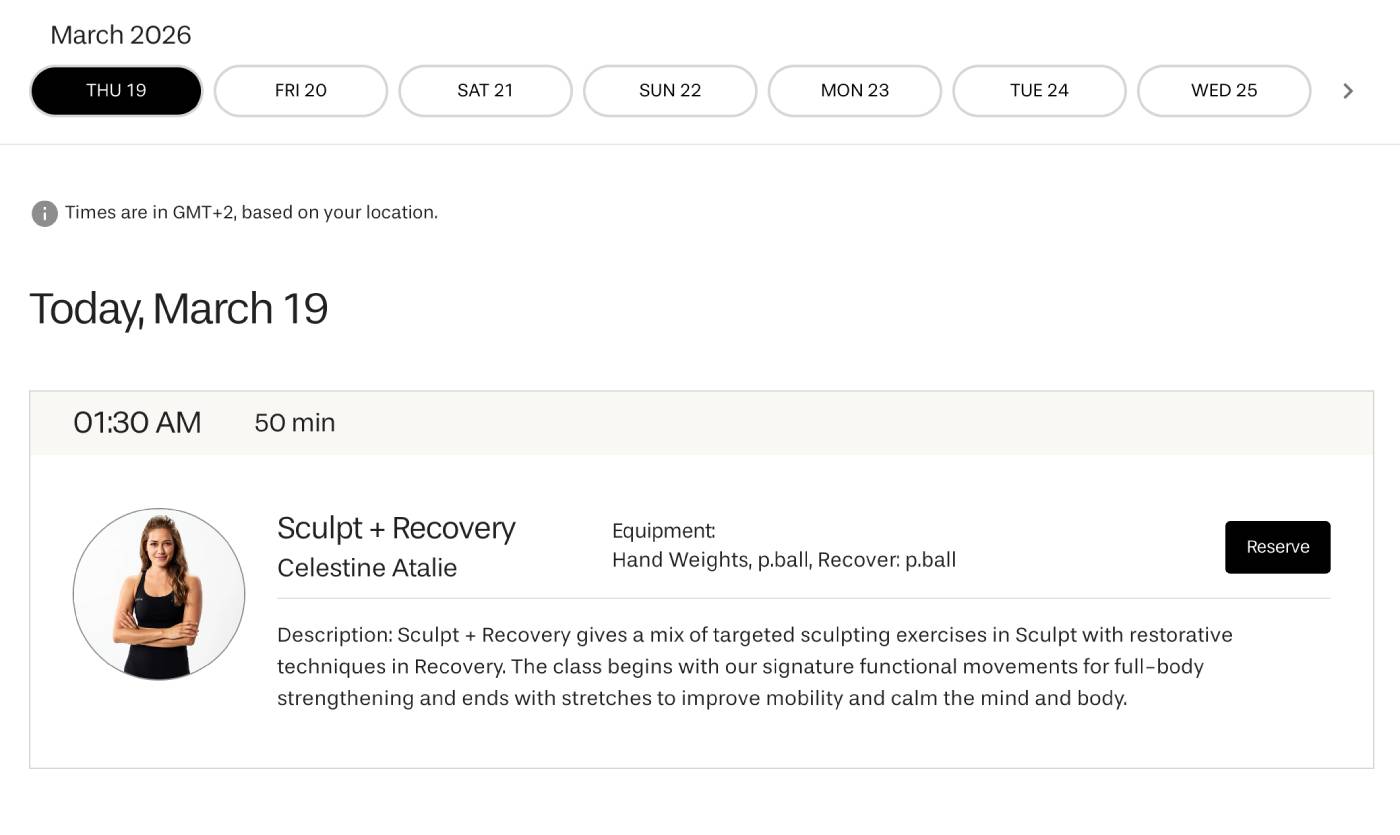
More screenshots: Pvolve
See the full Pvolve review for methodology and pricing.
Decision tree for women over 40
Start here. Is dedicated perimenopause programming with clinical backing your priority?
- Yes: Pvolve. 7.4 / 10 Women Over 40 Specificity, University of Exeter study, Menopause Strong.
- No: continue.
Is maximum muscle building with logged progressive overload your primary goal?
- Yes: Evlo. 9 / 10 Muscle Potential, The Rest Test.
- No: continue.
Is budget a primary constraint?
- Yes: Pvolve. $24.99/month vs Evlo $55.99/month.
- No: continue.
Can you find 45 to 50 minutes reliably, three to five times per week?
- No: Pvolve. Evlo’s time demand is the biggest practical barrier.
- Yes: Evlo if you also want maximum methodology rigour; Pvolve if you want perimenopause specificity.
Default if multiple factors tied: Pvolve for the higher overall score, dedicated perimenopause programming, lower price and more achievable time commitment. Evlo for women who specifically prioritise maximum muscle building and DPT-designed methodology and can absorb the cost and time commitment.
A useful framing
Both platforms are unusually rigorous for home-fitness streaming. The question is not “which is more credentialled” because both are credentialled in different ways. The question is “which credentialling do you need most.” If you need the programme as a whole to have been clinically tested, Pvolve. If you need every individual exercise to be filtered through clinical reasoning, Evlo. Most users do not need both; the one that matches your priority is the one to subscribe to.
A small but real difference worth knowing: Pvolve’s recent business history (Stephen Pasterino founded the platform in 2017; Rachel Katzman is now CEO and credited as founder on the current website) is less personal-brand-driven than Evlo’s structure around Dr. Shannon Ritchey. For users who want platform stability that does not depend on one person’s continued involvement, Pvolve’s broader founder team is the slightly safer long-term bet. For users who want the platform’s voice to come from one credentialled person, Evlo’s Shannon Ritchey-led approach is the cleaner experience.
Affiliate links where a partnership exists. Full disclosure.
Why equipment investment matters more after 40
One under-discussed dimension of fitness platform choice is whether the platform locks you into proprietary equipment. Pvolve’s Signature Bundle ($199 for P.ball, P.band, Precision Mat) is a real upfront commitment. The equipment is not generic; it is designed specifically for Pvolve’s 3D movement method. If you cancel Pvolve, the equipment has limited use elsewhere.
Evlo uses standard dumbbells, which you may already own and which work across any future platform you switch to. For women uncertain about which platform will fit long-term, Evlo’s standard-equipment approach is the lower-commitment bet. For women confident Pvolve is the right long-term platform, the bundle becomes a one-time investment that pays back over years of use.
You can also start Pvolve without the bundle, filter the library for classes that work with resistance bands and dumbbells you already own, and decide whether to buy the bundle after the trial. This is what I did during my testing. Most of the library I needed was accessible without the bundle. Whether the additional equipment-based classes are worth $199 depends on how much time you spend on the platform.
What I did not test
- The full Evlo library. Tested across 8 weeks of structured daily use.
- Evlo Reset Weeks across multiple cycles. Experienced one Reset Week during testing.
- The Pvolve Signature Bundle equipment. Tested with resistance bands and dumbbells already owned.
- The full 6-week Pvolve Menopause Strong programme. Completed week 2 at time of review.
- Pvolve Sculpt 9 supplement. Optional and not personally tested.
- Long-term adherence beyond my test windows on either platform.
Personal testing and observations
Evlo testing
I tested Evlo across 8 weeks. The Foundations onboarding programme is the most considered introduction to a training method I have used. Dr. Shannon Ritchey walks you through the philosophy, the Rest Test methodology, the rationale for exercise selection, and the daily auto-assignment system before you begin the main training.
The Rest Test was the moment my training shifted. After your final rep, you rest five seconds and attempt additional reps. If you can do three or more, increase weight or rep target next session. Applied consistently across 8 weeks, this produced the most effective muscle-building results of anything I have tested.
The friction point was time. Sessions are 45 to 50 minutes, three to five times per week. Across the 8 weeks of testing I made the time for four sessions a week; some weeks I could only manage three. The methodology is excellent but the time commitment is real.
Pvolve testing
I did not buy the Pvolve equipment bundle. I used resistance bands in medium and high resistance, dumbbells ranging from 5kg to 8.5kg, and ankle weights I already owned, and filtered the library for classes that work with that equipment. I tested across two months of daily use, completing two weeks of the six-week Menopause Strong programme, plus Knee Stability series, Progressive Weight Training for Beginners, Full Body Bands, Upper and Lower Body Sculpt, and two live virtual studio classes.
I started weight work at 5kg for upper body and 6.5kg for lower body. I am now at 6.5kg upper and 8.5kg lower. The progression is real and the joint impact is meaningfully lower than any other strength platform I have tested.
The clinical sequencing was what struck me most about Menopause Strong. The education sequences to match where you physically are in the week, so the content on declining oestrogen, muscle, bone density and recovery reinforces what you are doing in the gym rather than being decorative. With my previous meniscus injury, I trained two months daily on Pvolve without aggravation, which is unusual.
Why clinical backing and methodology rigour are different things
Both Evlo and Pvolve are positioned as more methodologically rigorous than mainstream fitness platforms, but the rigour applies at different levels.
Evlo’s rigour is at the level of individual exercise selection. Every movement is filtered through Dr. Shannon Ritchey’s physical therapy reasoning about joint loading, soft-tissue stress and movement quality. The 9.5 / 10 Joint Friendliness score reflects this granular DPT-designed approach. The methodology is rigorous at the rep-by-rep level.
Pvolve’s rigour is at the level of platform-wide methodology and clinical validation. The 3D movement method is low-impact by design across the platform. The University of Exeter clinical study tested the Menopause Strong programme as a whole intervention on women aged 40-60. The clinical advisory board validates programme design at the structural level. The methodology is rigorous at the programme-architecture level.
Both are unusual in home-fitness streaming. The difference matters for what you are looking for: if you want every exercise to be considered, Evlo. If you want the programme as a whole to be clinically validated, Pvolve. Most users do not need both; choose based on which aspect of methodology rigour matters most to your training goals.
Which is better for women over 50?
For women over 50, Pvolve is the stronger choice.
The low-impact 3D movement method, Knee Stability series, and Menopause Strong programme are well-suited to women in their 50s managing post-menopause joint sensitivity, bone density concerns and recovery compression. The clinical advisory board’s input on movement selection is meaningful at this life stage. The shorter and more flexible session lengths suit over-50 schedules.
Evlo’s DPT-designed method is excellent for women over 50 who already train consistently and want maximum strength gain. The 45 to 50-minute sessions four to five times per week are a high bar for this group, however.
For women in their 60s and 70s starting fresh, neither platform is the strongest entry. Daily Burn’s True Beginner, Melissa Wood Health or Obe Fitness Menopause Program (US/Canada) are gentler on-ramps. Pvolve’s Menopause Strong is also a credible option for US users with the budget for the bundle.
Frequently asked questions
Is Evlo or Pvolve better for women over 40?
Pvolve at 8.3 / 10 vs Evlo at 8.0 / 10. Pvolve wins on perimenopause specificity, clinical backing and price. Evlo wins on muscle building and DPT-designed joint protection.
Which is cheaper?
Pvolve. $24.99/month vs Evlo $55.99/month. Even with the $199 Signature Bundle, Pvolve year-one is $175 less than Evlo.
Which has better perimenopause programming?
Pvolve. University of Exeter clinical study on women aged 40-60. Menopause Strong. Clinical advisory board.
Which has better strength training?
Evlo. 9 / 10 Muscle Potential, highest tested. DPT-designed progressive overload with The Rest Test.
Do I need the Pvolve equipment bundle?
Not strictly. You can start with resistance bands and dumbbells you already own. Bodyweight classes are available. The bundle unlocks full library access.
Which has better joint protection?
Evlo narrowly (9.5 vs 9.0). Both are strong on joint friendliness.
Which is better for cycle syncing?
Pvolve. Evlo does not offer cycle syncing.
Can I cancel either easily?
Both. Evlo via evlofitness.com portal. Pvolve through standard subscription settings.
Which has better community?
Similar. Neither matches Sweat’s millions-of-users in-app forum. Both have engaged communities of women in similar life stages who recommend the platforms to each other.
Which has better onboarding for new users?
Evlo. The Foundations onboarding programme is best-in-class. Pvolve’s quiz-driven onboarding is competent but less methodologically thorough than Evlo’s Foundations.
Are both available internationally?
Yes. Both are USD-priced and accept international users. Pvolve has stronger UK/EU presence given Jennifer Aniston’s international profile and brand reach. Neither is UK-natively priced.
Which is better for women combining home training with other activities?
Pvolve. The shorter session lengths and lower per-session intensity stack with other activities (walking, gym strength sessions, swimming) more easily. Evlo’s 45 to 50-minute high-intensity sessions are harder to layer on top of other training.
Do both platforms work with my existing dumbbells?
Yes for Evlo. Standard dumbbells work for the entire library; adjustable dumbbells or two to three fixed pairs covers most strength work. For Pvolve, dumbbells work but the platform is designed around the P.ball and P.band; you will filter the library to find dumbbell-friendly classes if you do not buy the Signature Bundle.
Is the Pvolve Jennifer Aniston endorsement meaningful?
Jennifer Aniston used Pvolve during recovery from a back injury, which the brand references in its marketing. It is a real endorsement (not a paid one) but the methodology rigour and clinical backing matter more than the celebrity association. Treat the endorsement as colour rather than evidence.
Can I combine Evlo and Pvolve?
Possible but expensive. Total monthly cost is $80.98 combined. Both are full-programme platforms designed to be your primary training. Most women pick one based on goal (muscle building or perimenopause specificity) and stick with it.
Which is more sustainable long-term?
Pvolve. The lower price, shorter sessions and joint-safe design make 12 to 24-month sustained use more achievable. Evlo’s time and cost commitment is harder to maintain long-term unless the methodology depth is the primary draw.
Does either offer family or partner sharing?
Neither offers official family sharing in the way Apple Fitness+ does. Both subscriptions are designed for individual use.
Which has more credible founder credentials?
Both have credentialled founders. Dr. Shannon Ritchey (Evlo) is a Doctor of Physical Therapy. Stephen Pasterino (Pvolve original founder) developed the 3D movement method; Rachel Katzman is now CEO. The University of Exeter clinical study on Pvolve adds external validation that Evlo does not have at the same level. Different routes to credibility.
Research citations
- Maltais ML, Desroches J, Dionne IJ. Changes in muscle mass and strength after menopause. Journal of Musculoskeletal and Neuronal Interactions. 2009;9(4):186-197. PubMed.
- Watt FE. Musculoskeletal pain and menopause. Post Reproductive Health. 2018;24(1):34-43. doi: 10.1177/2053369118757537. SAGE.
- Resistance training for postmenopausal women: systematic review and meta-analysis. 2022. PubMed.
- Physical activity and exercise interventions on menopausal symptoms: overview of reviews. 2024. PubMed.
About this review
Reviewed by Katy Cole. Evlo tested personally across 8 weeks of structured daily use, including the Foundations onboarding programme, multiple weekly tracks, weight tracking and one Reset Week. Pvolve tested personally across two months of daily use, including two weeks of the six-week Menopause Strong programme, Knee Stability series, Progressive Weight Training for Beginners, Full Body Bands, Upper and Lower Body Sculpt, and live virtual studio classes; used resistance bands and 5kg-8.5kg dumbbells already owned (did not buy the Pvolve Signature Bundle). Prices verified against evlofitness.com and pvolve.com in May 2026.
Katy is the lead reviewer at Her Daily Fit. Fifteen years personally testing online fitness platforms. Mid-forties, currently in perimenopause, UK-based. Every claim on this page is either personally tested or attributed to peer-reviewed research. See how we score every programme using 9 weighted criteria.
Medical disclaimer: The content on this page is for informational purposes only and is not medical advice. Consult your GP or a healthcare provider before beginning a new exercise programme, particularly if you are managing perimenopause, menopause, or any existing health condition or injury.
Compared with
Where these brands appear in our “Best for” rankings