
Why is dance a particularly good workout for women over 40?
Dance combines aerobic conditioning, lower-body strength, balance, coordination and a meaningful mental health benefit in one session. For women in perimenopause and beyond, that combination addresses several documented age-related changes at once. The research on dance specifically for midlife women is small but consistently positive. The general exercise research that applies to dance (cardiovascular adaptation, fall prevention, mood support) is much larger and supports it strongly.
Cardiovascular health is the most-documented benefit. Merom and colleagues (2016) in the American Journal of Preventive Medicine followed nearly 50,000 adults over 11 years and found that those who reported dancing for exercise had a 46% lower risk of cardiovascular disease mortality compared to people who reported walking but not dancing. The study cannot prove causation, but the signal is large enough to take seriously. Dance produces moderate-to-vigorous aerobic adaptation in a format most people experience as enjoyable rather than effortful.
Balance and fall prevention is the second meaningful benefit. Hwang and Braun (2015) in the Journal of Aging and Physical Activity reviewed multiple dance intervention studies in older adults and found consistent improvements in balance, gait speed and lower-limb strength. The mechanism is the multi-planar, weight-shifting nature of choreographed movement: dance requires balance demands that linear cardio (walking, cycling) does not produce. For women over 40 starting to think about long-term fall prevention, dance delivers the balance training the published research supports.
Cognitive and mood support is the third meaningful benefit. Verghese and colleagues (2003) in the New England Journal of Medicine tracked leisure activities in 469 older adults and found that dance was associated with the largest reduction in dementia risk of any activity studied, including reading, board games and other physical activities. A 2019 systematic review in Frontiers in Aging Neuroscience reached similar conclusions about dance and cognitive function. The combination of physical activity, music, choreography and (often) social engagement appears to produce cognitive benefits that single-modality exercise does not.
The mood lift is the benefit women report most, and it is the reason dance gets repeated when other cardio does not. Music, movement and play produce a different psychological experience from straight cardio, which matters in perimenopause where mood fluctuation is a documented part of the transition. The Menopause Society 2023 nonhormone therapy position statement includes regular physical activity in its mood and wellbeing framework; dance is simply one of the modalities people actually sustain.
Joint friendliness is the fourth practical strength. Dance cardio is typically low-impact, with weight shifts rather than running impact. For women with a knee or hip history, a well-coached dance class delivers the cardiovascular load without the joint loading that running or jumping HIIT produces. The platforms in this guide all offer dance content that is structurally low-impact, and our wider low-impact cardio for women over 40 guide explains how dance compares with walking, cycling and swimming.
How should women over 40 evaluate a dance workout app?
Look at coaching quality, intensity range, music licensing, programme structure and joint-friendly modifications. The dance fitness market has historically been dominated by high-energy formats aimed at 20-somethings; the platforms that work for women over 40 are the ones that respect the age range without losing the joy of dance.
Coaching quality is the first filter, and the split is between dancers who teach and instructors who add choreography. Both can work. What matters is whether the choreography is teachable rather than performative.
The right cueing breaks a sequence into beat-by-beat instructions a non-dancer can follow. The wrong cueing assumes you already know the moves and leaves you stumbling half a beat behind.
Intensity range matters more than people expect. Some dance fitness defaults to peak intensity (305 Fitness); others build for sustained moderate intensity (The Sculpt Society, Daily Burn Dance & MOVE!, much of Obé’s catalogue). For women over 40 managing sleep, cortisol or vasomotor symptoms, sustained moderate intensity dance produces the cardiovascular adaptation the research supports without the post-session crash that high-intensity formats sometimes trigger. The platforms that offer a range of intensities let you match the session to your day.
Music licensing is the silent quality differentiator. Premium dance platforms license popular music (Obé, Peloton, The Sculpt Society, parts of Daily Burn) and structure the choreography to the beat. Budget platforms more often use library music, which is fine but produces a less immersive experience. The free trial is the right window to assess whether the music quality matters to you.
Programme structure separates dance-as-cardio (do a class when you feel like it) from dance-as-training (follow a structured progression that builds skill and conditioning over weeks). For women who want a defined progression, The Sculpt Society’s 4-week Midlife Movement Programme, Obé’s six-week Menopause Program and Daily Burn’s Dance & MOVE! are the structured options. For women who want to drop into classes ad hoc, the broader class libraries on FitOn and Peloton work well.
Joint-friendly modifications are the last filter and the one most relevant to midlife. Dance involves weight shifts, lunges, squats and turns that can stress knees, hips and lower backs if executed without care. The platforms that flag modifications proactively (The Sculpt Society’s no-kneeling filter is the clearest example; Obé’s explicit low-impact filter is the next strongest) protect you from the small re-injuries that derail consistency. A dance class that does not respect joint history is a dance class you will eventually have to stop doing.
What should women over 40 prioritise in a dance workout app?
Five priorities matter most: dance-trained coaching, low-impact defaults, modification quality, progressive programme structure and music quality. Each one addresses a documented stumbling block for women bringing midlife considerations to a dance practice. None of them are exotic; the platforms that handle them well do so by design.
Dance-trained coaching. Choreography is a skill, and coaches who can break it down for non-dancers almost always come from a dance background rather than a general fitness one.
- The Sculpt Society: Megan Roup’s Tribeca Ballet history shows in the precision of her cueing.
- Obé Fitness: instructors come from dance and movement backgrounds.
- Daily Burn: Dance & MOVE! coaches cue beat by beat rather than expecting you to copy visually.
One class on a free trial tells you whether a coach’s cueing suits how you learn.
Low-impact defaults. Dance can be high- or low-impact depending on the platform’s philosophy. For women over 40, low-impact defaults (weight shifts rather than jumps, controlled lunges rather than plyometric work) deliver the cardiovascular load without the joint stress. The platforms in this guide all offer low-impact dance options; some default to low-impact and offer high-impact as the variation, which is the right calibration for midlife. Obé layers a dedicated low-impact filter across the whole library, which makes the calibration almost frictionless.
Modification quality. Dance involves weight shifts, lunges, squats and turns that can aggravate knees, hips and backs, so the platforms that flag modifications explicitly are the ones worth paying for. Check before subscribing whether low-impact alternatives are shown on screen rather than mentioned once at the start.
Progressive programme structure. Ad-hoc class selection is fine for women who already know what they want and just need a library. For women building a dance practice from scratch, a structured programme (4-week Midlife Movement on The Sculpt Society, six-week Menopause Program on Obé, Dance & MOVE! on Daily Burn) sequences the choreography from foundational to more complex, which builds skill rather than just delivering sessions. The result is that classes get easier to follow over time even as the work gets harder.
Music quality. Dance is fundamentally about moving to music. Platforms that license real music and structure choreography to the beat (rather than against generic library tracks) produce an experience most people find more engaging. The Sculpt Society, Obé, Peloton and Daily Burn all license recognisable music; FitOn uses a mixture. For a practice you want to sustain, music quality matters more than people expect at sign-up.
Which dance workout apps score highest?
Eight platforms carry enough genuine dance content to belong on this list. The Sculpt Society ranks first, followed by Obé Fitness, Daily Burn, Les Mills+, Apple Fitness+, Jazzercise, Zumba and MADFit.
One pattern runs through all of them and it is worth saying plainly before the table: dance is the most enjoyable cardio most women over 40 will ever do, and almost none of it is built for what midlife bodies actually need most. Dance platforms are cardio platforms. They are light on progressive loading, light on bone work, and mostly silent on perimenopause. Only two of the eight clear our midlife bar on their own. The rest are worth doing, and worth pairing with something that loads you.
How do the best dance workout apps compare?
| Rank | Programme | Dance emphasis | Meno fit 70% | Ease of use 30% | Review score * | Length | Cost |
|---|---|---|---|---|---|---|---|
| 1 | The Sculpt SocietyFully tested | Dance-cardio is the method | 6.6 | 8.5 | 8.2 | 15 to 35 min | $24.99/mo or $229.99/yr |
| 2 | Obé FitnessFully tested | Dance cardio is a core vertical | 6 | 9.5 | 7.5 | 5 to 60 min | $24.99/mo or $169.99/yr |
| 3 | Daily BurnFully tested | Dedicated dance programme | 4.4 | 9 | 6.8 | 15 to 60 min | From about $15/mo, $89.99/yr |
| 4 | Les Mills+Fully tested | Two named dance programmes | 4.6 | 7.5 | 6.2 | 10 to 55 min | $14.99/mo or about $119.99/yr |
| 5 | Apple Fitness+Fully tested | Dance is one modality of eleven | 4.3 | 7.5 | 6.9 | 5 to 45 min | $9.99/mo or $79.99/yr |
| 6 | JazzerciseData profile | Dance fitness is the whole brand | 4.2 | 6 | 5.7 | 10 to 60 min | About $19.99/mo on demand |
| 7 | ZumbaData profile | Dance fitness is the whole brand | 3.6 | 6 | 5.4 | 45 to 60 min | $19.99/mo or $179/yr |
| 8 | MADFitSample tested | Dance-led cardio among other formats | 3.3 | 6 | 6.2 | 5 to 45 min | Free on YouTube; app about $19.99/mo |
* Two different numbers appear here and they answer different questions. Full review score is the programme’s overall rating across all nine criteria we score, which is the number on its review page. The rank comes only from what this page is about: menopause fit weighted 70% and ease of use weighted 30%. That is why Apple Fitness+ sits fifth despite a respectable full review score. It is a good product that is barely built for midlife.
Two platforms we rate highly are deliberately not here. Peloton and FitOn both appeared on the earlier version of this page. Neither is dance-led: dance is a handful of classes inside a large general library rather than a format either platform builds around. Including them made this a general fitness list with “dance” in the title. Both remain excellent choices for other reasons, and their reviews say so.
The Sculpt Society: dance cardio that is actually a training programme
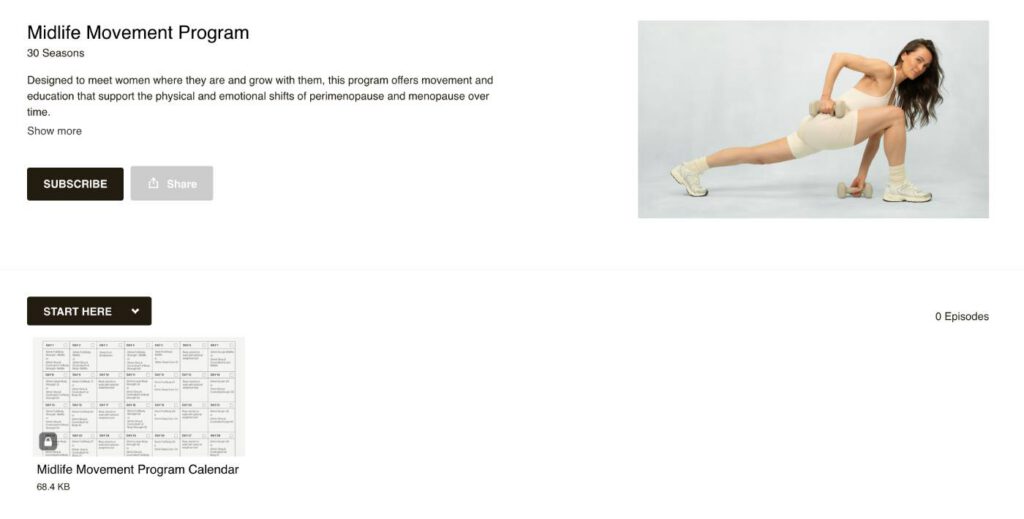
The only platform here where dance is the method and midlife is designed for
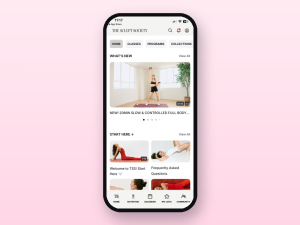
The Sculpt Society was built by Megan Roup, a former Tribeca Ballet dancer, and the dance-cardio sessions are paired with sculpt work rather than sold as a separate cardio product. A doctor-backed midlife programme was added in 2026.
Tested by Katy Cole: I completed the four-week Midlife Movement Programme, and the dance-cardio sessions sit naturally inside the structure rather than feeling like a bolt-on “dance day”. I increased my weights from 7.5 kg to 8 kg across the block. The choreography is teachable at speed, which matters more than it sounds: a routine you cannot follow is a routine you stop doing.
The honest limitation: loading stays light. It ranks first on menopause fit among dance platforms and still caps out well below what a dedicated strength programme gives you for bone. Treat it as your cardio and consistency engine, not your whole plan.
What a session actually looks like: a typical dance-cardio class runs 15 to 35 minutes, barefoot, on a mat-sized patch of floor, with no equipment. Roup teaches in short repeating blocks, so you learn four or five moves and then string them together rather than being asked to remember a three-minute routine. The sculpt classes that pair with it use light dumbbells, a band and ankle weights.
Choreography difficulty: low to moderate, and this is the platform’s real advantage. The steps are simple enough to follow on a first watch, which means you spend the session moving rather than pausing to rewind. If you have tried dance workouts before and given up because you could not keep up, this is the one to try next.
Cost: $24.99 a month, or $229.99 a year, about $19.17 a month. Seven-day free trial.
Obé Fitness: the best filtering of any dance-led platform
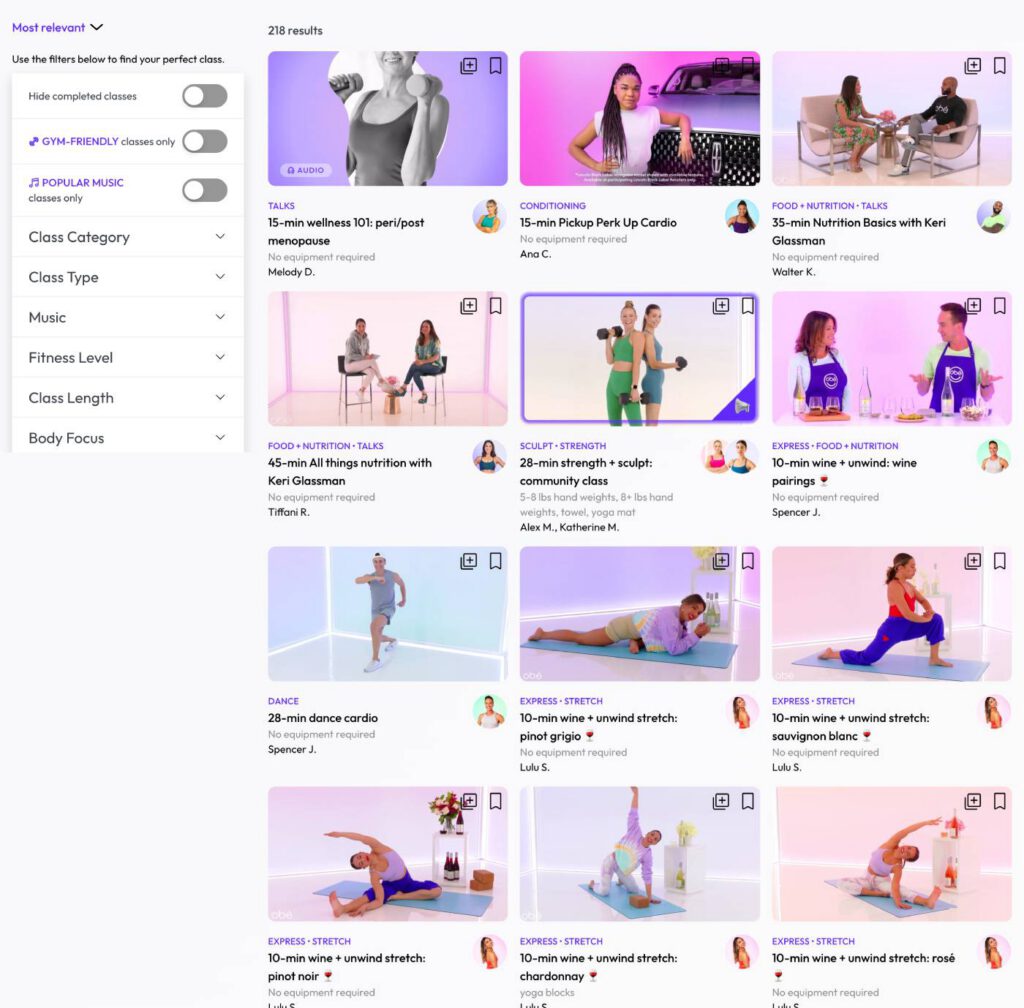
Studio-quality dance cardio with genuine menopause programming, if you can access it
Obé Fitness runs dance cardio as a core vertical alongside barre and sculpt, with signature 28-minute classes and a six-week Menopause Program.
Tested by Katy Cole, one month daily: I tested Obé in my 40s in perimenopause, using a friend’s US account. The filtering is the standout. Being able to pick a 20 to 30 minute dance cardio class by instructor, and actually enjoy the one that comes back, is what turns a subscription into a habit.
The honest limitation: it is available in the United States and Canada only, and it needs a US or Canadian card at signup. If you are outside those two countries this is not an option, whatever the score says.
What a session actually looks like: the signature format is 28 minutes, which is long enough to count and short enough to do before work. Classes are shot in a bright studio with an instructor and no class behind them, so nothing is happening off-camera that you cannot see. Dance cardio sits alongside barre, sculpt, yoga and strength, all filterable by length, instructor, equipment and intensity.
Choreography difficulty: moderate, and instructor-dependent in a way the filtering handles well. Some instructors teach in blocks; others run longer combinations. Because you can filter by instructor and stay with the one whose teaching style suits you, the difficulty is effectively yours to set.
Cost: $24.99 a month, or $169.99 a year, about $14.17 a month. Seven-day trial, or 30 days through a Guest Pass referral.
Daily Burn: a structured dance programme at the lowest paid price
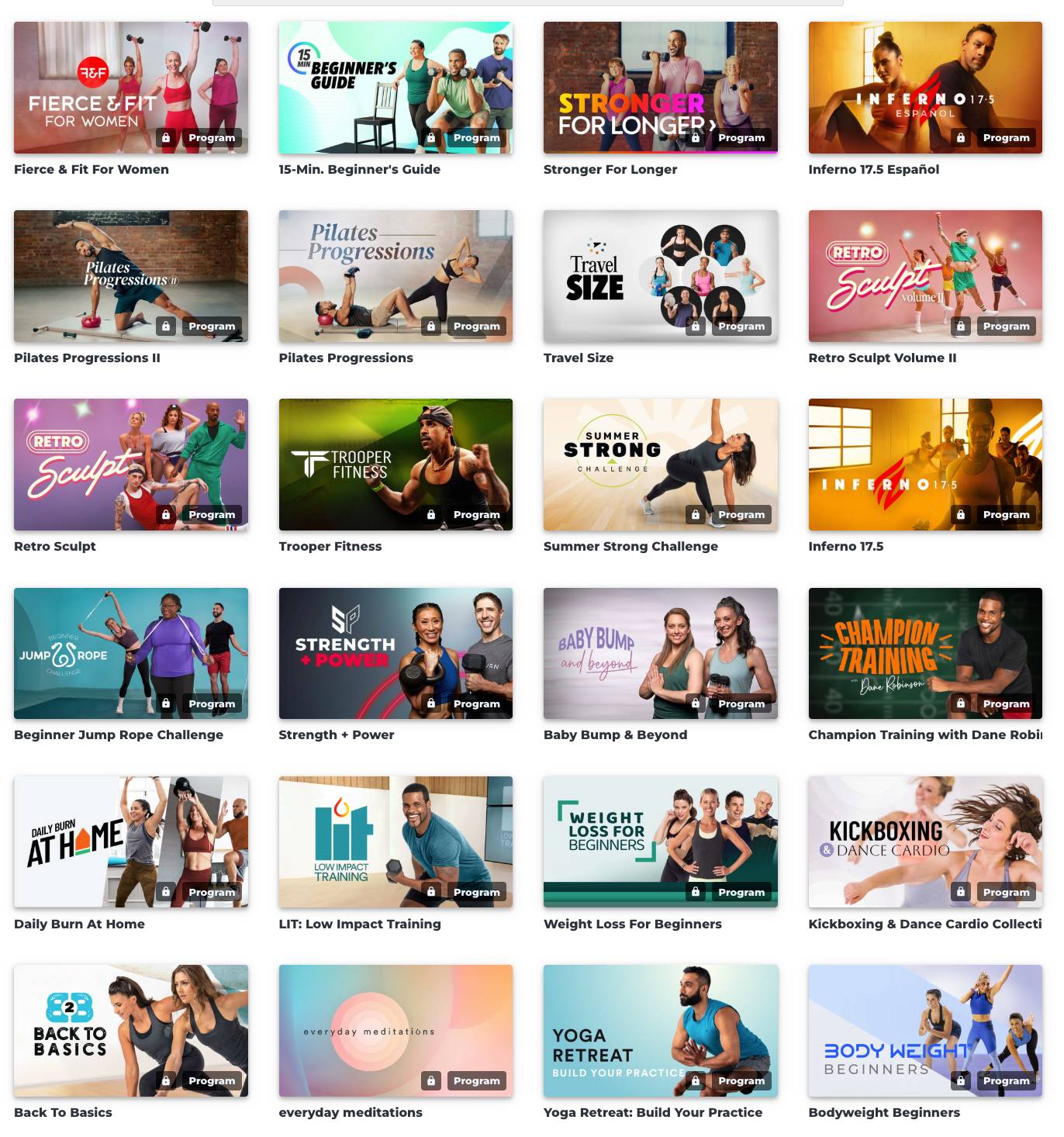
Dance & MOVE! is a real programme rather than a scattering of classes
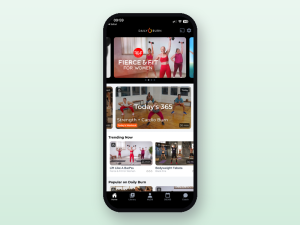
Daily Burn carries over 2,000 workouts across every style, and its dance content is organised into a followable programme rather than left as a category to browse.
Tested by Katy Cole: I did not plan to enjoy the dance classes. I went in mildly curious and came out having sweated more than expected and genuinely wanting to go back. The class was Dance & MOVE!: energetic music, and a coach who makes the choreography followable rather than impressive.
The honest limitation: production values are functional rather than premium, and menopause fit is the weakest of the tested platforms here. There is no monthly plan, so the cheap headline price requires committing for three months or more.
What a session actually looks like: Dance & MOVE! sessions run 15 to 30 minutes with a coach and a small group, filmed in a studio rather than a soundstage. The programme gives you an ordered sequence to work through rather than a category to browse, which is the difference between doing dance twice and doing it for eight weeks.
Choreography difficulty: low. The teaching is deliberately followable rather than impressive, which suits complete beginners and anyone returning after a long gap. The trade-off is that experienced dancers will find it simple.
Cost: from $44.99 for three months, about $15 a month, down to $89.99 a year, about $7.49 a month. Thirty-day trial on the three-month plan.
Les Mills+: the most choreographed dance workouts on this list
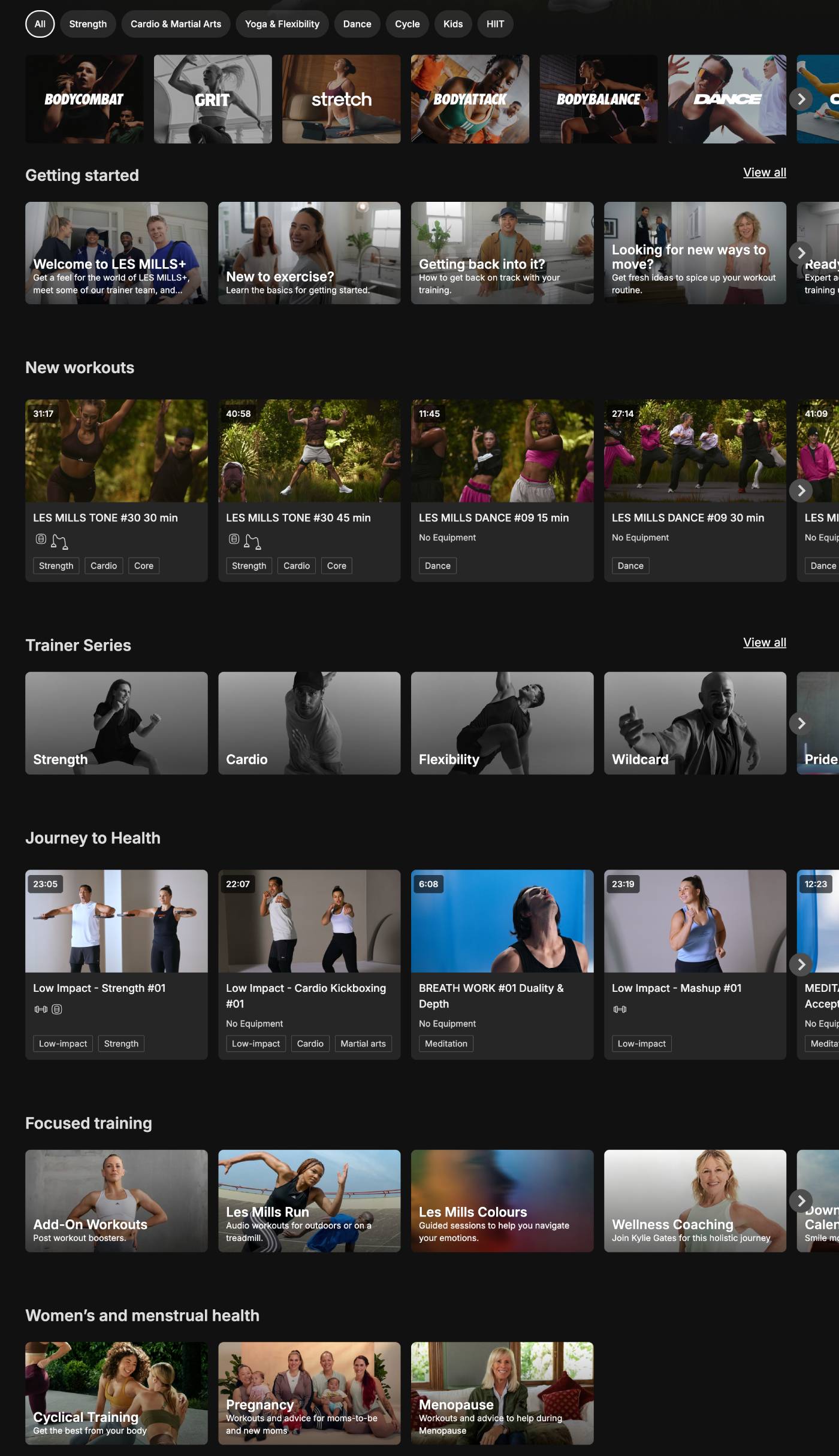
BodyJam and Sh’Bam are proper dance programmes, and the impact level is the catch
Les Mills+ is the only platform here with two named, separately programmed dance formats, backed by the choreography machine behind the gym classes.
Tested by Katy Cole: the library is genuinely large and the choreography is the most polished of anything here. I did not hit major technical problems during the trial, though the pattern across user reviews suggests app stability is worth knowing about before committing.
The caveat that matters most: this is the only high-impact platform on the list. If jumping is a problem for your joints, your pelvic floor or your knees, the default programming is not built for you and the low-impact options are the exception rather than the rule.
What a session actually looks like: BodyJam is street and club dance choreographed to a DJ-style mix, typically 30 to 55 minutes. Sh’Bam is the lighter, more accessible sibling, usually 30 minutes, designed to be picked up quickly. Both are filmed as full studio classes with a room of participants, which some people find motivating and others find intimidating.
Choreography difficulty: the highest here. BodyJam in particular assumes you will repeat a release several times before it clicks. That is by design and it is genuinely rewarding, but it is the opposite of a follow-along-first-time class.
Cost: Premium $14.99 a month, or about $119.99 a year. A Base tier runs $6.99 a month. Fourteen-day trial.
Apple Fitness+: cheap, polished, and barely a dance platform
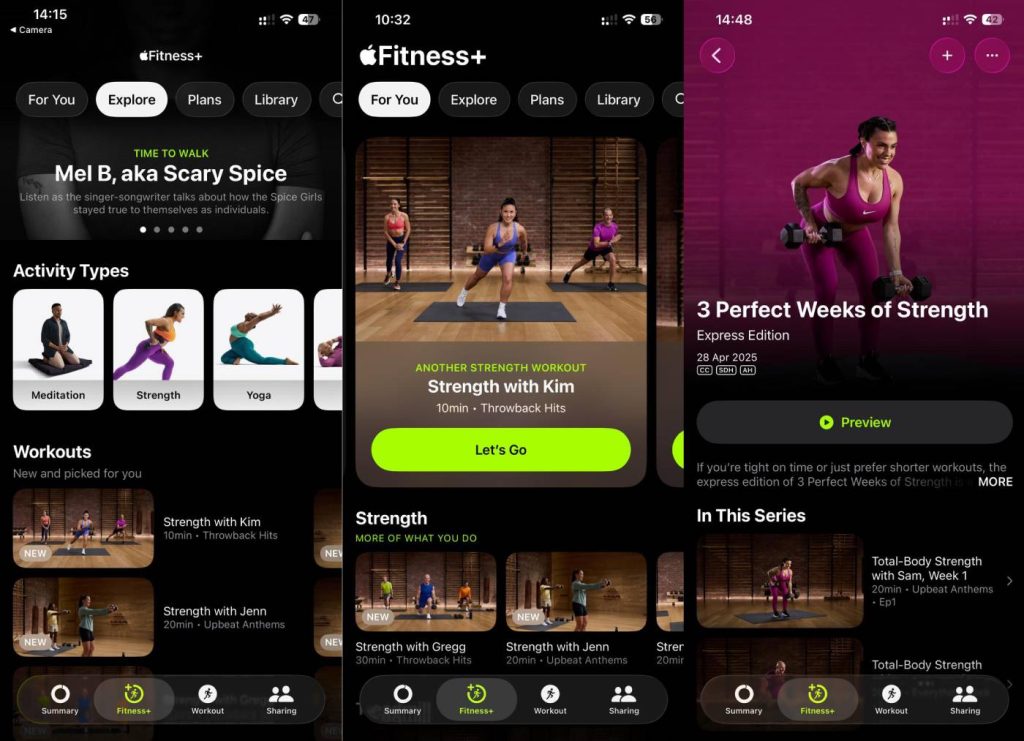
Dance is one modality among eleven, but the price and the production are hard to argue with
Apple Fitness+ includes dance alongside strength, HIIT, yoga, kickboxing, cycling, rowing, treadmill, core, meditation and cooldown, and added a clinician-informed Strong Through Menopause programme.
Tested by Katy Cole: I tested it without an Apple Watch, so I cannot speak to the metrics layer that is the platform’s headline feature. The dance classes are well produced and short, and the low-impact variety across the wider library is better than the price suggests.
The honest limitation: it needs Apple hardware, there is no nutrition side, and dance is a category rather than a programme. It ranks fifth on menopause fit, not on quality.
What a session actually looks like: dance classes run 10 to 30 minutes, shot to Apple’s usual standard, with three instructors on screen demonstrating standard, modified and beginner versions of every move simultaneously. That three-tier demonstration is the single most useful accessibility feature on any platform here, and it costs nothing extra.
Choreography difficulty: low to moderate, and adjustable mid-class because the modifier is always on screen. You do not have to stop and find an easier version; you just follow a different person.
Cost: $9.99 a month or $79.99 a year. One month free for new subscribers, three months with an eligible Apple device.
Jazzercise: the dance format with the most grown-up room
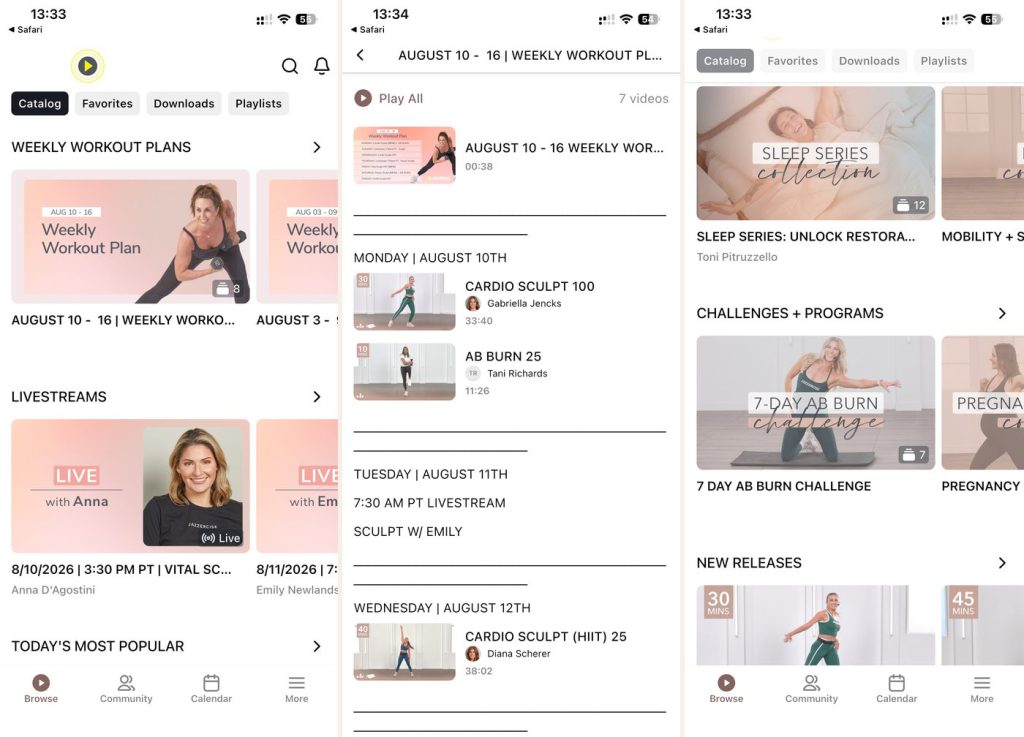
Sixty years old, genuinely sociable, and the only brand here whose core audience is already midlife
Jazzercise runs on demand and in person, and the in-person classes are the point for a lot of people: the room is full of women in their forties, fifties and sixties rather than twenty-year-olds.
This is a data profile, not a tested review. We have not trained on Jazzercise first hand, so there is no personal testing note here. What the published information shows: dance impact plus light hand weights gives a modest strength and bone stimulus, better than dance cardio alone and well short of progressive loading. What we cannot yet verify is how the on-demand library compares with a live class.
The honest limitation: moderate impact throughout, light on progressive strength, and no menopause-specific programming at all.
What a session actually looks like: a class blends dance cardio with light hand weights and body-weight strength intervals, typically 30 to 60 minutes. The hand-weight blocks are what separate it from pure dance cardio and are the reason it carries a slightly better strength and bone case than Zumba does.
Choreography difficulty: low to moderate. Routines repeat across a season, so the same combinations come round often enough to learn. Published information suggests the in-person class is the stronger experience; we have not verified the on-demand library against it.
Cost: Jazzercise On Demand about $19.99 a month; roughly $199 to $239.99 a year depending on tier. In-person pricing is separate. Trials run 7 to 14 days depending on promotion.
Zumba: the one most likely to make you forget you are exercising
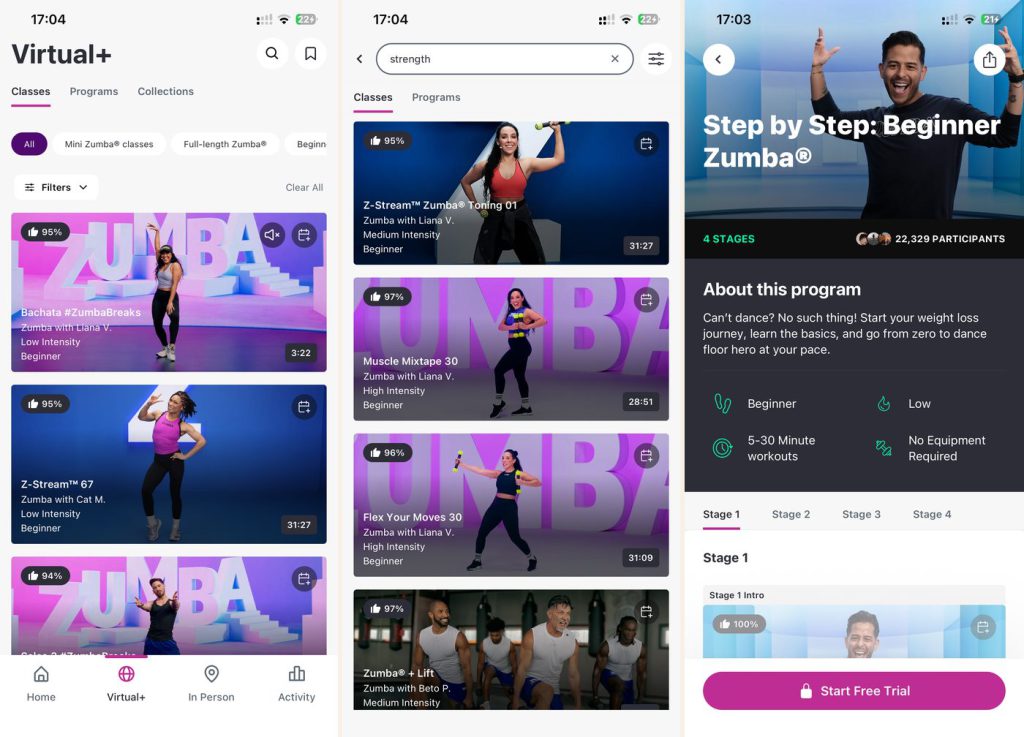
Joy first, and Zumba Gold is the version most women over 50 should start with
Zumba is the most recognised dance fitness brand in the world, available as an app and through studios almost everywhere, which matters if access is your real constraint.
This is a data profile, not a tested review. We have not trained on Zumba first hand. What the published information shows: a joy-first, joint-friendlier cardio format that is strong for mood and adherence, with a gentler Zumba Gold variant aimed at older participants and anyone whose joints prefer less bounce.
The honest limitation: sessions run 45 to 60 minutes, the longest here, it is light on strength and bone, and there is no menopause programming. It ranks seventh for those reasons, not because it is a poor workout.
What a session actually looks like: Latin-led dance cardio to a continuous mix, usually 45 to 60 minutes, with no equipment and no counting. Zumba Gold is the same idea at lower intensity and lower impact, choreographed for older participants and anyone with joint limits, and it is the version most women over 50 should start with rather than treat as a step down.
Choreography difficulty: low by design. Instructors cue visually rather than verbally and repetition is heavy, so following along without knowing the routine is the intended experience rather than a compromise.
Cost: the Zumba app is $19.99 a month or $179 a year, with a 14-day trial. The class locator is free. In-person pricing is per class or per studio.
MADFit: free, apartment-friendly, and the lightest option here
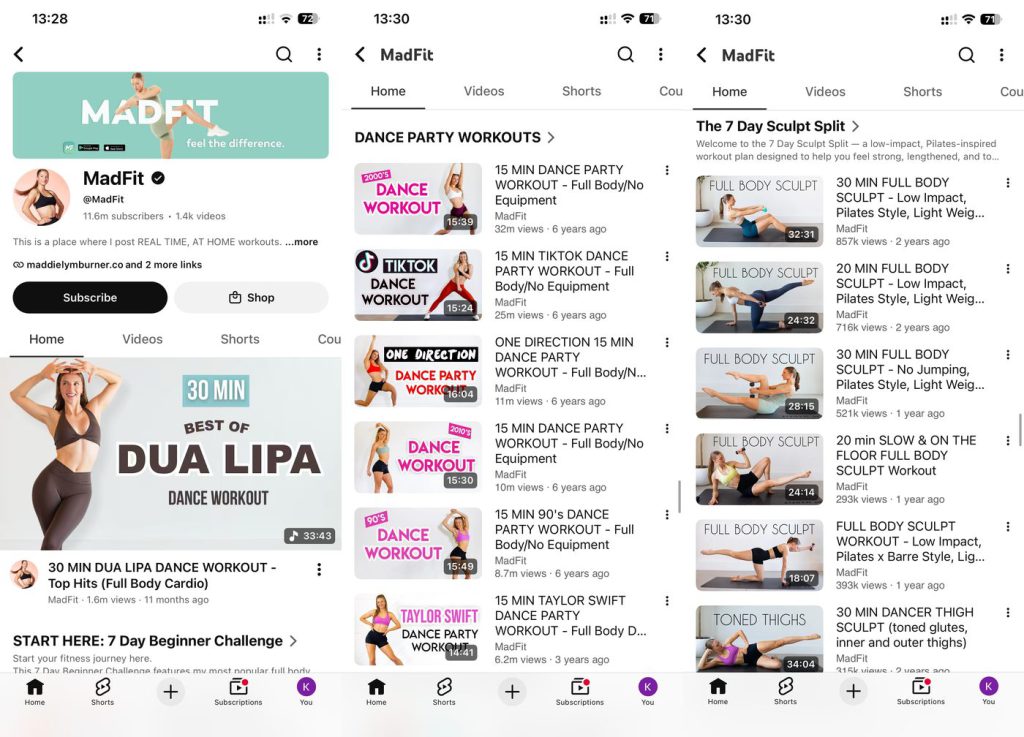
Dance-led cardio you can do above a sleeping neighbour, at no cost
MADFit is Maddie Lymburner’s YouTube library, built around apartment-friendly workouts that do not thump, with a paid app on top.
Sample tested. We worked through a sample of the free sessions, including the dance ones, and browsed the paid app rather than running a full programme. A pair of light to moderate dumbbells is the key addition, and some app sessions use a bench.
The honest limitation: no strength progression, no bone work and no menopause layer. It ranks eighth on midlife fit while being genuinely useful if cost or noise is your binding constraint.
What a session actually looks like: 5 to 45 minute follow-alongs filmed in a normal room, with an explicit no-jumping constraint so nothing thumps through a floor. The dance-led cardio sessions are often built around a single artist or album, which is a small thing that makes them much easier to repeat.
Choreography difficulty: low. These are follow-along cardio sessions rather than routines to learn, so there is nothing to memorise and nothing to fall behind on.
Cost: free on YouTube. The MADFit app runs about $19.99 a month.
Worth checking next: dedicated dance fitness apps (not yet reviewed)
Important note: The apps below have not yet been hands-on tested for Her Daily Fit, which is why they are listed separately and do not carry our 9-criterion score. They are dance-fitness-specific platforms that are well-regarded in the wider market and likely to deepen a dance practice further than the multi-modality platforms above. Full hands-on reviews are planned for the second half of 2026. Treat these as “worth checking” pointers, not ranked recommendations.
305 Fitness (approximately $24.99/month). A high-energy dance cardio platform built around the in-person studio classes of the same name (which originated in New York). The on-demand library defaults to peak intensity rather than sustained moderate intensity, which suits women who want the high-intensity dance experience. For women managing perimenopausal sleep, cortisol or vasomotor symptoms, the default intensity may be higher than ideal; the platform offers some lower-intensity options.
Dancebody Live (approximately $39/month). A New York studio-based dance fitness brand with on-demand and live streaming. The signature is “dance-as-cardio” with curated choreography to popular music. Production values are premium; pricing reflects that.
STEEZY (approximately $20/month or $99/year). A dance education platform rather than a fitness platform: structured beginner-to-advanced courses in hip-hop, K-pop, contemporary and other styles taught by professional choreographers. For women who want to learn dance as a skill (rather than dance as cardio), STEEZY delivers something the fitness platforms above do not. The cardiovascular benefit is real but secondary to the skill development.
AloMoves Dance (approximately $20/month or $199/year). Alo’s wellness app includes a dedicated dance section alongside yoga, Pilates and meditation. The dance content is smaller than dedicated dance platforms but the integration with calm modalities (yoga, restorative work) suits women who want dance as one part of a broader wellness practice.
Which dance workout app is right for you?
If you want one subscription to be both your dance cardio and your strength work, The Sculpt Society. Run the four-week Midlife Movement Programme first. Filter out kneeling work if you have a knee or wrist history.
If you are in the US or Canada and want the best class-picking experience here, Obé Fitness. Filter for 20 to 30 minute dance cardio, then try the first fortnight of the Menopause Program.
If you want a structured dance programme as cheaply as possible, Daily Burn. Complete Dance & MOVE!, and rotate 15-Minute Mobility on the days you are not doing cardio.
If you want real choreography and your joints tolerate impact, Les Mills+, for BodyJam and Sh’Bam. Skip it if jumping is a problem.
If you already own Apple hardware and want to spend the least, Apple Fitness+ at $9.99 a month.
If what you actually want is a room full of women your own age, Jazzercise in person, not on demand.
If you want to enjoy it so much you forget it is exercise, Zumba, and start with Zumba Gold if your joints prefer less bounce.
If you want to spend nothing, or you live above someone, MADFit on YouTube.
Whichever you pick, pair it with two strength sessions a week. Every platform on this page is cardio-led, and cardio alone will not protect the muscle and bone that perimenopause and menopause put at risk. Our strength training picks cover that side.
How did we rank these eight?
Who wrote this. Katy Cole, mid-40s, currently in perimenopause, with a meniscus injury history. I am not a doctor, personal trainer or menopause specialist. Everything here comes from personally testing close to fifty fitness platforms over fifteen years and reading the published research, and none of it is medical advice.
The qualifier is genuine dance content, not a tag. Nineteen platforms in our library mention dance somewhere. Listing a dance class is not being a dance platform. We kept only those where dance is a named format the platform actually programmes, which is why Peloton and FitOn are discussed above but not ranked, and why four platforms that carry real dance content but were never tagged for it, Les Mills+, Apple Fitness+, Daily Burn and MADFit, are now included.
Barre is not dance. Barre borrows ballet’s vocabulary and almost none of its cardio. Pure Barre, Barre3 and Fabletics Fit are all excluded here on purpose; mixing them in is how a dance list quietly turns into a barre list.
The ranking is menopause fit, weighted 70%, blended with ease of use at 30%. Dance content is the qualifier, so ranking on it again would just restate the gate. We publish the trade-off rather than hide it: a platform with wonderful choreography that is unpleasant to use will not top this list, and a platform that is a joy to use but ignores midlife will not either.
We did not apply our usual score floor to this page, and you should know why. On most of our lists we drop anything below a blended 6.0. Only two dance platforms clear that. Applying it here would have produced a two-item list that ignored Zumba and Jazzercise, the two brands most people mean when they search for a dance workout. Showing them with honest scores and an explicit warning about what dance does not give you is more useful than pretending they do not exist.
Five of the eight I have used and tested myself. Jazzercise and Zumba are data profiles built from published information, and MADFit was sample tested. Each section says which.
We buy our own subscriptions. Some links on this page earn a commission, which never affects a score or a position.
How do you make dance count for bone and muscle?
Dance on its own will not protect the muscle and bone that midlife puts at risk, and no platform on this page pretends otherwise once you read its detail. That is not a reason to skip dance. It is a reason to know what dance is doing for you and what you have to add.
What dance genuinely delivers is well evidenced. Merom and colleagues found an association between regular dance participation and lower cardiovascular mortality; Verghese and colleagues found dance among the leisure activities associated with lower dementia risk; Hwang and Braun’s review of dance interventions in older adults found improvements in balance and functional capacity. Balance matters more than it sounds: falls, not fragility alone, are what turn low bone density into a fracture.
What dance does not deliver is progressive loading. Bone responds to load that increases over time, and Watson and colleagues’ LIFTMOR trial found that high-intensity resistance and impact training improved bone density in postmenopausal women with low bone mass, at loads far above anything a dance class applies. Cruz-Jentoft and colleagues’ sarcopenia work points the same way for muscle: what preserves it is progressive resistance, not general activity.
So the practical arrangement, and it is not complicated:
- Two strength sessions a week that get measurably harder over time, whether that is heavier weights, more reps or slower lowering. This is the non-negotiable part.
- Dance for everything else: your cardio minutes, your balance work, your mood, and the reason you actually open the app. The World Health Organisation guideline of 150 to 300 minutes of moderate aerobic activity a week is very achievable in dance sessions.
- Add hand weights where the format allows it. Jazzercise builds them in and The Sculpt Society pairs sculpt work with the cardio. That does not replace a strength programme, but it is better than dance cardio alone.
- Do not use dance as your only impact. If bone is a specific concern for you, that is a conversation to have with your doctor rather than a problem to solve by dancing harder.
Read as a pair, this page and our strength training picks cover the whole brief. Most women who stick with training long term are doing something they enjoy and something that works, and they are rarely the same thing.
How does dance fit alongside the rest of a midlife training week?
Dance is a strong cardio modality and it does not replace progressive resistance training. A balanced week for a woman over 40 looks like this:
- Two or three progressive strength sessions.
- Two or three cardio sessions, of which dance can be all or some.
- One or two recovery sessions: yoga, stretching or mobility.
Our workouts for menopause guide maps the wider week.
The cardio role for dance is well-documented. The Merom 2016 cardiovascular mortality data, the Hwang 2015 balance and fall prevention evidence and the Verghese 2003 dementia risk reduction signal all support dance as a meaningful aerobic and cognitive intervention. A woman doing two dance cardio sessions per week alongside strength training is hitting the WHO physical activity guidelines (150-300 minutes of moderate aerobic activity) with a modality she enjoys, which dramatically improves adherence.
The strength role is what dance does not fully cover. The Watson 2018 LIFTMOR trial showed that bone density gains in postmenopausal women require high-load progressive resistance training, not bodyweight or light-load work. The Cruz-Jentoft sarcopenia consensus identifies progressive resistance training as the intervention for skeletal muscle preservation. Dance-cardio sculpting and the strength classes inside Obé’s library contribute some loading, and neither substitutes for dedicated dumbbell work. The section above on making dance count for bone and muscle sets out how to arrange that.
Treat dance as the cardio cornerstone of your week, two or three sessions, and add two strength sessions alongside it. Three platforms on this list cover both sides inside one subscription:
- The Sculpt Society, via the Midlife Movement Programme.
- Obé Fitness, via the Menopause Program plus its strength library, in the US and Canada.
- Daily Burn, via Fierce and Fit for Women alongside Dance & MOVE!.
If you want heavier loading than any of those supply, keep the dance and take the strength work from a dedicated platform instead.
The cortisol consideration is the last piece. High-intensity dance cardio can spike cortisol the same way HIIT does; women managing perimenopausal sleep or vasomotor symptoms may want to keep the dance intensity moderate and concentrate any high-intensity work into a single weekly session. The Sculpt Society, Daily Burn and most of Obé’s catalogue default to moderate intensity; Peloton’s high-energy dance cardio classes (Kendall Toole format) and Obé’s Dance HIIT and Bounce content sit at the higher end and should be sequenced accordingly.
Where is the evidence still evolving on dance and women in midlife?
Three open questions matter most. First, whether dance specifically (versus other moderate aerobic activity) produces additional cognitive or mood benefits in women in perimenopause. Second, whether choreographed dance produces measurably better balance and fall prevention than equivalent-duration walking or low-impact cardio. Third, whether the social or musical components of dance contribute to adherence in ways that solo cardio cannot.
On the cognitive question, the Verghese 2003 dementia risk data is striking but observational; the participants who chose to dance may have differed in other ways from those who did not. The 2019 Frontiers in Aging Neuroscience review pulled together multiple intervention studies but concluded that more controlled trials are needed before strong causal claims can be made. The pragmatic position: the cognitive signal for dance is real enough to take seriously, and the downside of including dance in a midlife training week is negligible.
On the balance and fall prevention question, the Hwang 2015 review found consistent improvements in balance, gait speed and lower-limb strength from dance interventions in older adults. Whether the improvements exceed what equivalent-duration walking or low-impact cardio would produce is harder to isolate. The multi-planar nature of dance (weight shifts, turns, lateral movement) is a plausible mechanism for the balance benefit specifically, but the controlled head-to-head comparisons are limited.
On the adherence question, the observational data is consistent: women report higher enjoyment and longer adherence to dance fitness than to equivalent-intensity solo cardio. The mechanism appears to be the combination of music, choreography and (often) coaching presence. For women whose primary fitness barrier is adherence rather than capability, dance is a meaningful intervention precisely because it gets done.
A dance-led week, built from the programmes on this page:
- Two dance cardio sessions of 30 to 45 minutes, from Daily Burn, The Sculpt Society or Obé Fitness.
- Two or three progressive strength sessions of 20 to 30 minutes, from The Sculpt Society’s Midlife Movement strength work, Obé’s strength library, or a dedicated dumbbell programme.
- One or two walks of 30 to 45 minutes.
- One yoga or restorative session.
Alongside that: enough protein, seven hours of sleep or more, and consistency in preference to intensity.
Frequently Asked Questions
Yes, with strong supporting evidence. Merom and colleagues (2016) followed nearly 50,000 adults over 11 years and found that those who reported dancing for exercise had a 46% lower risk of cardiovascular disease mortality than walkers. Hwang and Braun (2015) reviewed multiple dance intervention studies and found consistent improvements in balance, gait speed and lower-limb strength. Verghese and colleagues (2003) found that dance was associated with the largest reduction in dementia risk of any leisure activity studied. The combination of moderate-to-vigorous aerobic conditioning, balance training, cognitive engagement and mood support makes dance one of the strongest single modalities for women in midlife. The caveat: dance does not replace progressive resistance training for bone density and muscle preservation.
The Sculpt Society scored highest in our 2026 evaluation. Founded by former Tribeca Ballet dancer Megan Roup, the platform's signature is dance-cardio sculpting that pairs choreographed cardio with low-impact strength in the same session. The 4-week Midlife Movement Programme is built specifically for women in perimenopause, with no-kneeling filters and injury-safe options layered into the dance content. Obe Fitness is the strongest paid pick after The Sculpt Society for women in the US or Canada wanting premium dance studio production, dance-trained coaching and the best filtering tested. Daily Burn covers structured dance programmes at the cheapest paid tier ($7.49/month annual). Peloton covers high-energy dance cardio with live class accountability. FitOn covers zumba-style cardio in the free tier.
No, not officially. Obe Fitness is only available to residents of the United States and Canada, and a US or Canadian credit card is required at sign-up. Residents outside the US and Canada can sometimes sign up with a US or Canadian payment method, but the platform is not officially supported in the UK or Europe, and customer service is calibrated to US and Canadian users. For UK-based women wanting dance-led variety, The Sculpt Society is available globally and is the natural alternative; for the cheapest paid dance programme, Daily Burn ships internationally and serves the same use case.
For cardiovascular health and balance training, yes. Two or three 30-45 minute dance cardio sessions per week meets the WHO physical activity guidelines on the aerobic side (150-300 minutes of moderate aerobic activity per week). For muscle preservation and bone density, dance alone is not enough. The Cruz-Jentoft sarcopenia consensus identifies progressive resistance training as the documented intervention for skeletal muscle preservation, and the Watson 2018 LIFTMOR trial showed bone density gains in postmenopausal women require high-load progressive resistance training. The right operating point is dance as the cardio cornerstone plus two or three dedicated progressive strength sessions per week with dumbbells or barbell.
The Sculpt Society defaults to low-impact dance-cardio sculpting, with the no-kneeling filter for women with knee or wrist history. Obe Fitness applies a dedicated low-impact filter across the whole class library, which makes calibrating intensity almost frictionless. Daily Burn's Dance & MOVE! and broader dance library can be filtered for low-impact options. Peloton's lower-intensity dance cardio classes (typically 20-30 minutes) sit in moderate-intensity, low-impact territory; the high-energy classes lean higher impact. FitOn's free dance library includes low-impact options. For women specifically prioritising joint protection, The Sculpt Society's structural design around modifications makes it the strongest pick.
With the right modifications, yes. Dance involves weight shifts, lunges, squats and turns that can stress knees, hips and lower backs if executed without care. The platforms that flag modifications proactively (The Sculpt Society's no-kneeling filter is the clearest example, and Obe verbally cues knee and back positioning during strength and barre classes) protect you from re-injury. Look for low-impact dance content, avoid high-impact plyometric work, and reduce range of motion on lunges and squats if needed. If you have a recent injury or active flare, work with a physiotherapist before starting dance fitness. For chronic joint history that is well-managed, the platforms in this guide can be calibrated to suit you with the right filters.
For dance as cardio, yes; for dance as a learnable skill, mostly no. The fitness platforms in this guide treat dance primarily as a cardio modality and the choreography as a means to the cardio end. For women who want to develop real dance technique (hip-hop, K-pop, contemporary, ballet), a dedicated dance education platform like STEEZY is structurally different: structured beginner-to-advanced courses taught by professional choreographers, with skill development as the explicit goal. The cardiovascular benefit from STEEZY is real but secondary to the learning. For women who want both fitness and skill, pair The Sculpt Society or Obe Fitness (for fitness) with STEEZY (for technique).
Two or three sessions per week is the typical operating point. The WHO physical activity guidelines call for 150-300 minutes of moderate aerobic activity per week; two or three 30-45 minute dance cardio sessions meets that target while leaving room for strength training and recovery. Daily dance is fine for women whose preference is high-volume cardio, but it should be paired with two or three progressive strength sessions per week for muscle and bone preservation. For women managing perimenopausal sleep, cortisol or vasomotor symptoms, keeping dance intensity moderate and concentrating any high-intensity work into a single weekly session is the cautious operating point.
They solve different problems. Jazzercise blends dance cardio with light hand-weight and body-weight intervals, so it gives a modest strength and bone stimulus that Zumba does not. Zumba is pure dance cardio, is more widely available, and its Zumba Gold variant is deliberately lower impact for older participants. If you want the social in-person room, both deliver; if you want any strength benefit at all from the class itself, Jazzercise. Neither replaces a strength programme.
Look for classes taught in short repeating blocks rather than long routines. The Sculpt Society and Daily Burn both teach this way, and Apple Fitness+ shows a beginner modifier on screen throughout so you can switch mid-class without stopping. Avoid Les Mills BodyJam to begin with: it is choreographed to be learned across several repeats, which is rewarding later and discouraging first.
Partly, and less than most people assume. Dance is weight bearing, but bone responds to load that increases over time, and dance classes do not progress load. Watson and colleagues found in the LIFTMOR trial that improvements in bone density in postmenopausal women came from high-intensity resistance and impact training, at loads well above a dance class. Treat dance as your cardio and balance work, add two progressive strength sessions a week, and discuss bone specifically with your doctor if it is a known concern.
Yes. MADFit builds its whole library around apartment-friendly, no-jumping workouts, and it is free on YouTube. The Sculpt Society's dance cardio is low impact and barefoot on a mat-sized space. The one to avoid is Les Mills+, which is the only high-impact platform on this list.