Pure Barre scores higher overall, 6.6 against 6.3, and is the stronger platform for app quality and building muscle. Barre3 is the better pick if what you need most is joint-friendly training and a calm, mind-body approach.
Quick answer
- Pure Barre 6.6 vs Barre3 6.3
- Joints 9 vs 8, Barre3
- App 7 vs 5.5, Pure Barre
- Mind-body 8 vs 5, Barre3
- Menopause programming 2 vs 2
- 14-day vs 7-day trial
Pure Barre is the better product and Barre3 is the better fit for a midlife body, which is why the score and the recommendation point in different directions. Pure Barre wins on the overall score, 6.6 against 6.3, and on Muscle Potential 6 against 5, Programme Structure 8 against 7, Value for Money 7 against 6, UX and Design 7 against 5.5 and Women Over 40 Specificity 4.5 against 4.4.
Barre3 wins the two things a midlife body notices most. Joint Friendliness is 9 against 8, one of the highest on this site, and mind-body support is 8 out of 10 against 5. It also wins low-impact capability 9 against 8, beginner on-ramp 8 against 7, pelvic floor 3 against 1 and Nutrition Integration 3 against 2, though neither has any nutrition worth the name.
Two limits apply to everything below, and we would rather say them once at the top than bury them. First, neither platform is a menopause tool. Menopause programming scores 2 out of 10 on both and hormone awareness 2 on both. Both brands write about menopause on their blogs and neither programmes it inside the app, so if perimenopause is the reason you are looking, this comparison is the wrong shelf. Second, neither platform was fully tested. Barre3 was a hands-on look at the online app and Pure Barre was a one-week trial with two sessions, so scores that depend on how a platform behaves across months, progression, variety, staying power, are provisional on both sides.
Pure Barre if you want one polished subscription that covers barre plus strength, yoga, stretch and dance, and you are happy to build your own week from a large library. Barre3 if what you want is the calmest, gentlest, kindest way back into moving regularly, and you can live with an app that has a reputation for crashing. The finding worth carrying away is that the platform with the higher score is not the platform better suited to a midlife body, and knowing which of those you are buying is the whole decision.
Barre3 vs Pure Barre: the two platforms
Same nine weighted criteria, same twelve capability scores, both sampled rather than fully tested, and both light-load by design.
Barre3
Runner-up
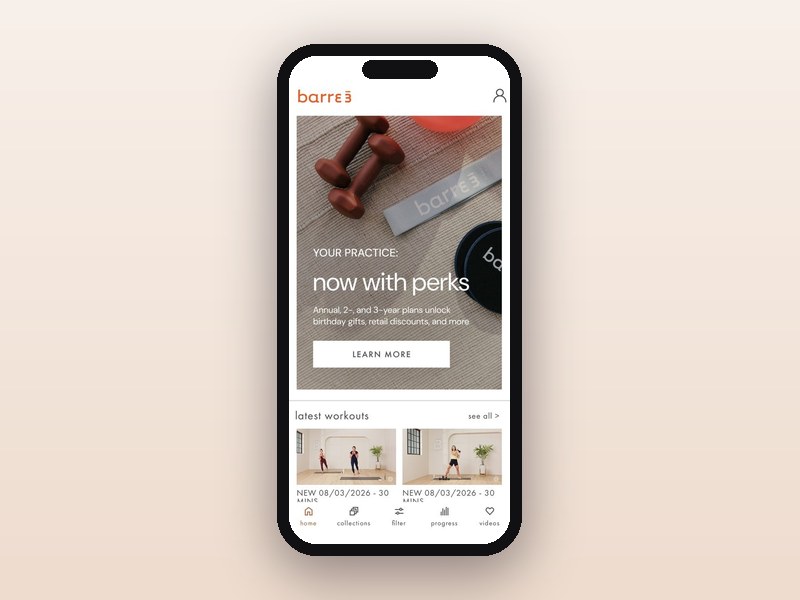
A women-founded low-impact blend of barre, light-weight strength conditioning, low-impact cardio, Pilates and yoga-based flows, with breath-led mindfulness woven through every class.
- 5 to 60 min
- Joints 9.0
- Mind-body 8/10
- 14-day trial
- 2,300+ classes
Choose Barre3 if you:
- Want the gentlest option available on joints
- Want breathwork and a calm pace built into the training itself
- Are returning to movement and want no pressure to keep up
- Value a weight-neutral, modification-first approach
- Want a longer free trial before you decide
Pure Barre
Winner
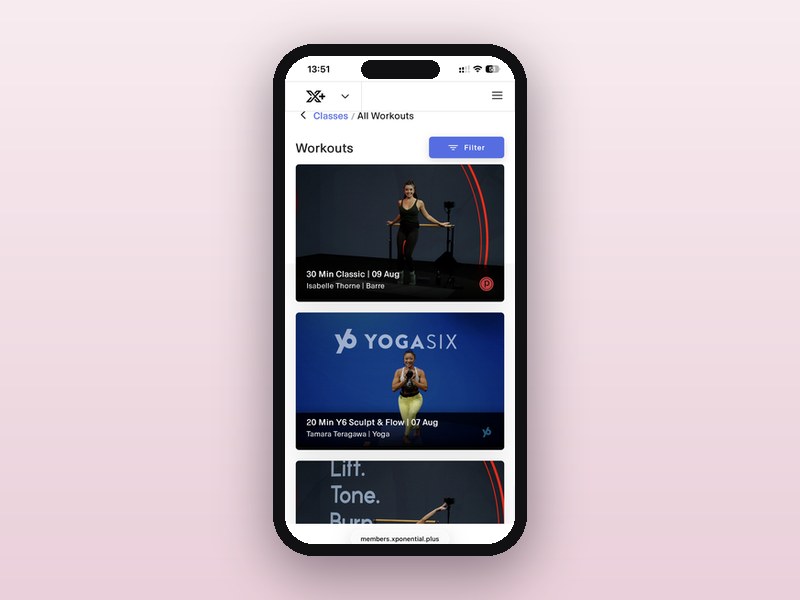
Pure Barre On Demand delivered through Xponential+, a multi-brand library spanning barre, dumbbell strength, yoga, stretch and dance, with a fast filter by length, class type and equipment.
- 10 to 60 min
- Structure 8.0
- App 7.0
- 7-day trial
- Multi-brand
Choose Pure Barre if you:
- Want strength, yoga and dance in the same subscription
- Want to filter a library fast by how you feel that day
- Care about production quality and app reliability
- Want a cheaper single-brand entry point
- Have or want access to in-studio classes too
How we scored this, and how both were tested
Both platforms were scored on the same nine weighted criteria and the same twelve capability scores, and both were sampled rather than fully tested. Muscle Potential carries 18%, Time Efficiency 15%, Joint Friendliness and Programme Structure 12% each, Women Over 40 Specificity and Recovery Compatibility 10%, Value for Money and UX and Design 8%, and Nutrition Integration 7%.
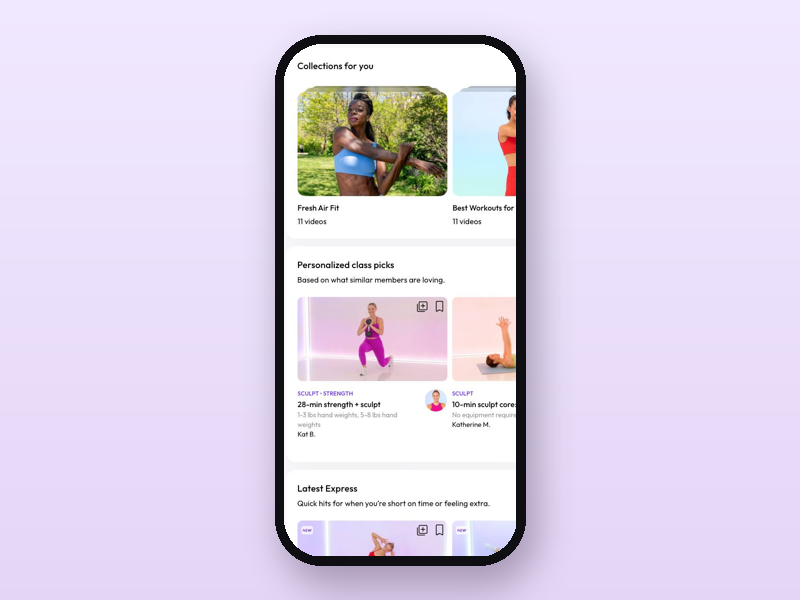
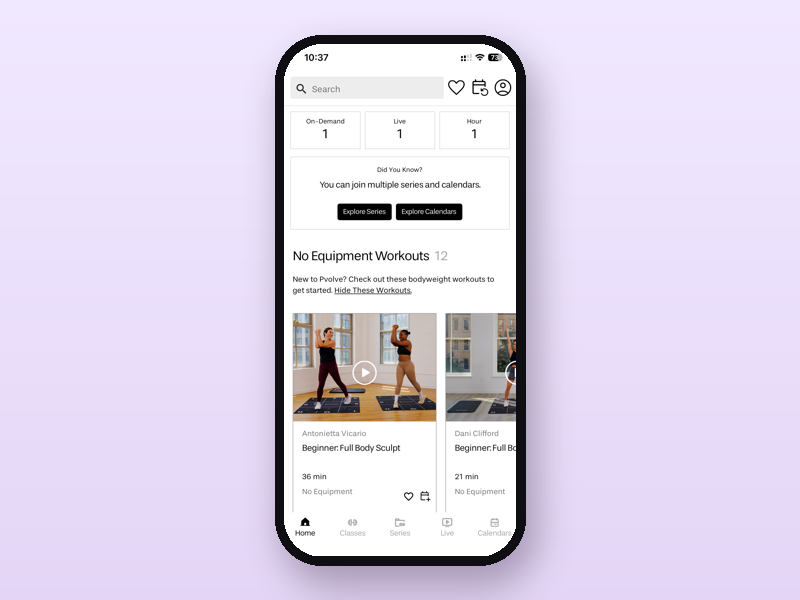
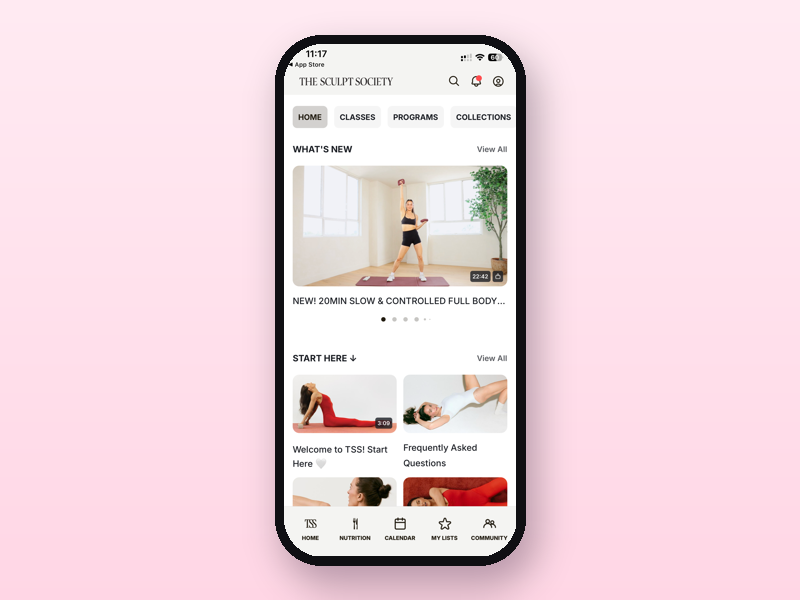
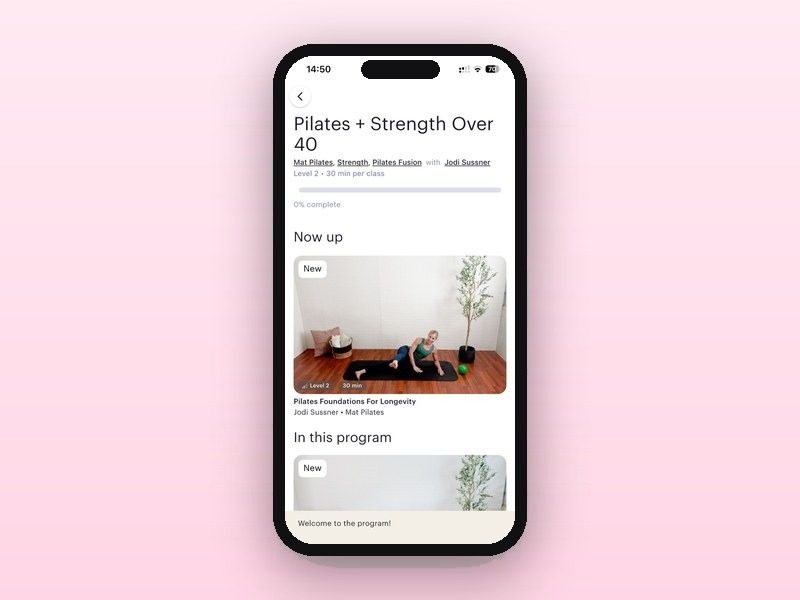
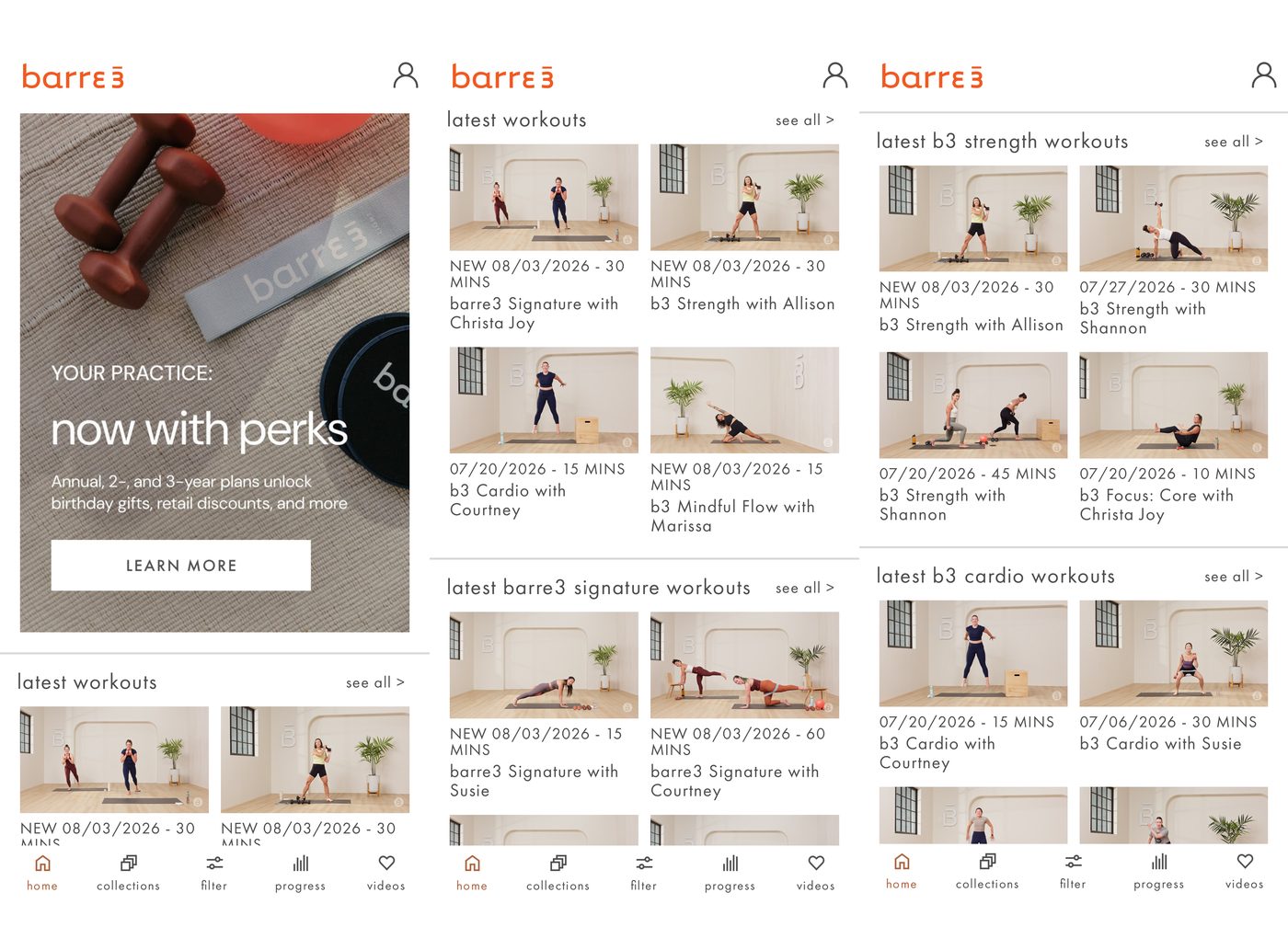
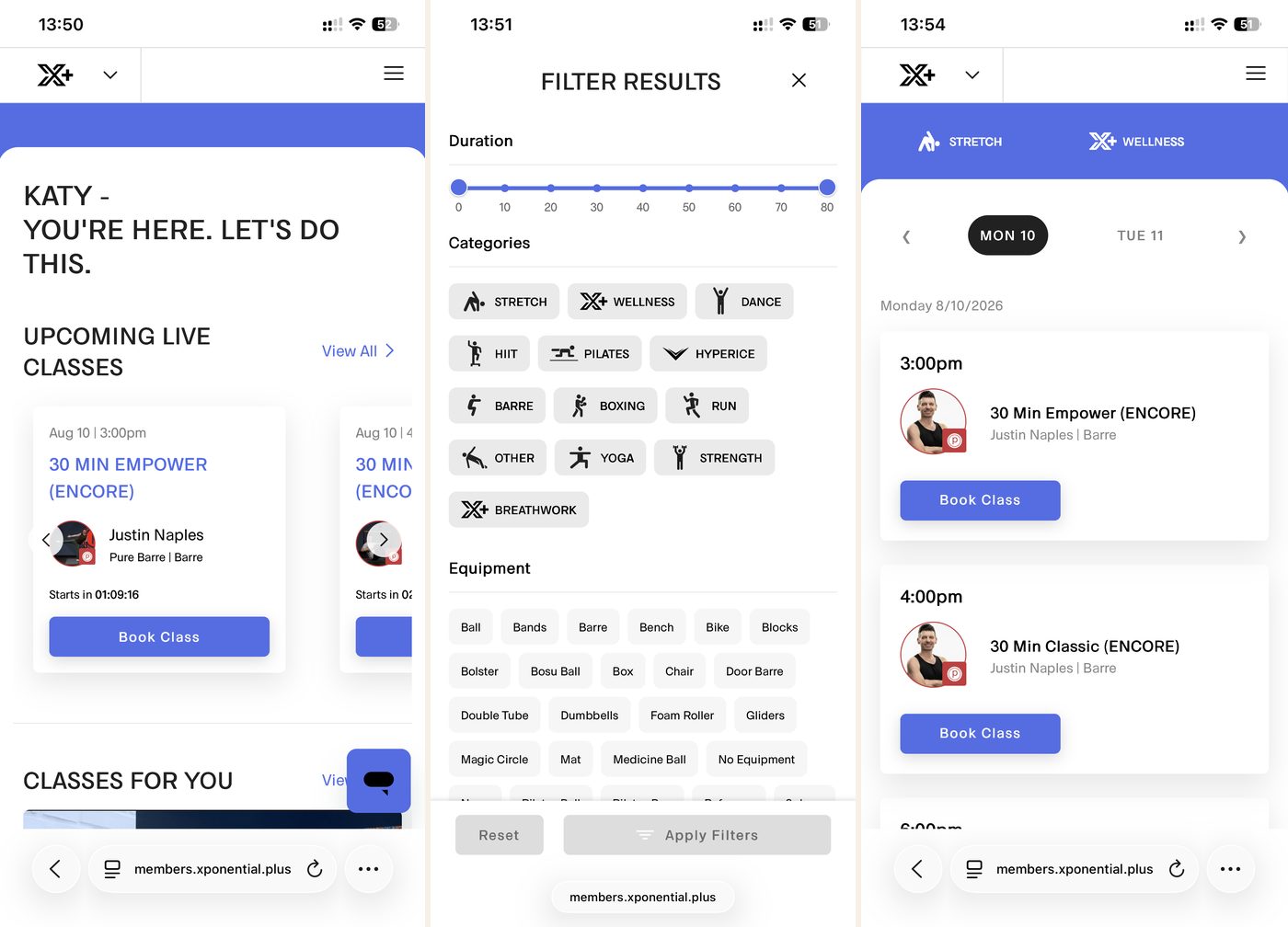
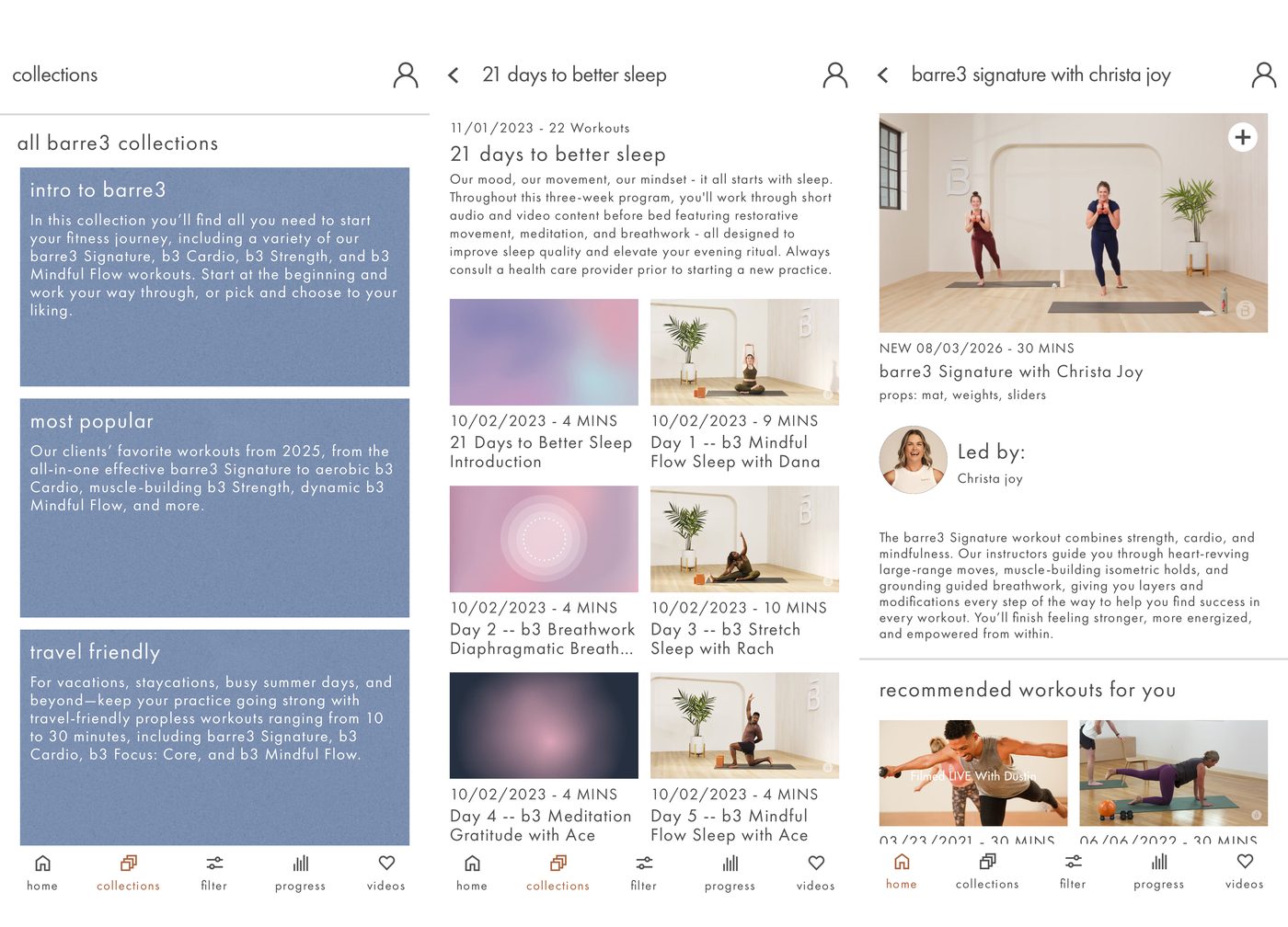
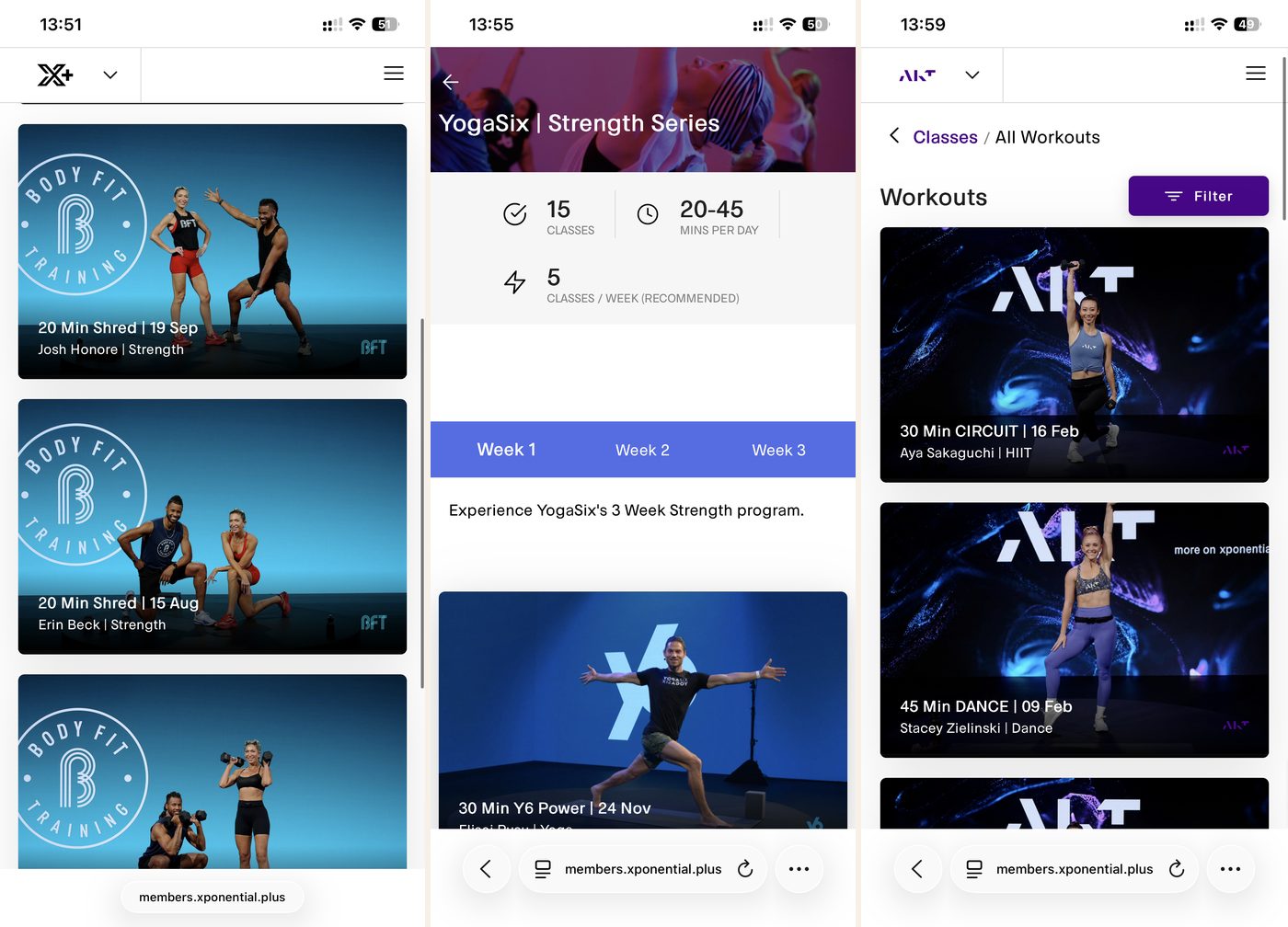
Same tester on both, and she is not a clinician. Katy is a woman in her early 40s, perimenopausal, working full-time with children. On Barre3 she signed into the online app and used it hands-on: she completed a full barre3 Signature class with Christa Joy, and explored the curated collections, the class filters, the 21-day sleep program and the Postures 101 form series. On Pure Barre she took a one-week Xponential+ trial and worked through a couple of sessions, a 20-minute dumbbell strength session and a dance class, alongside the filtering and the wider library. The screenshots on both reviews are her own.
Neither of those is a completed multi-week test, and that limit is symmetrical, so the same depth of evidence sits behind both columns. It also means neither set of scores should be read as a verdict on how either platform holds up across three months of real use. Where a score depends on that, we mark it in the section rather than only here.
The disagreement at the heart of this comparison
Pure Barre wins the score sheet and Barre3 wins the midlife fit, and this is not a rounding artefact. Pure barre wins five of the nine weighted criteria and barre3 wins two, with two tied. On the twelve capability scores it runs the other way: Barre3 wins five of the twelve capability scores and Pure Barre wins four, with three tied.
The reason is that the two measures ask different questions. The nine weighted criteria are mostly about the product: how much muscle it can build, how well it is organised, what it costs, how good the app is. The twelve capability scores are about whether the thing is built for a midlife body: low-impact design, bone loading, pelvic floor, hormone awareness, mind-body support, a kind on-ramp.
Pure Barre wins the product questions because it is, plainly, a better-built and better-organised piece of software with more in it. Barre3 wins the fit questions because its whole design philosophy is aimed at how women actually move and feel, with modification-first teaching, a breath-led pace and a weight-neutral framing.
Neither measure is wrong. What matters is knowing which one you are buying on. A woman who will abandon an app that crashes should read the criteria column. A woman with a knee that dictates her week should read the capability column. And if you want the ranking logic we apply across our best-of pages, it deliberately blends both rather than trusting a single axis, for exactly this reason.
Perimenopause and menopause fit: a near tie, at a low level
Pure Barre edges Women Over 40 Specificity, 4.5 against 4.4, and the gap is small because there is very little between them on the thing that criterion measures.
The menopause capability rows are almost identical. Menopause programming is 2 out of 10 on both. Hormone awareness is 2 on both. Menopause education is 1 for Barre3 against 2 for Pure Barre. Expert credibility is where Pure Barre pulls ahead, 5 against 3, on the strength of a proper in-house instructor certification and a large, professionally run organisation behind it, against Barre3’s experienced instructors and strong teaching philosophy but no clinician, no menopause specialist and no advisory board.
Neither platform carries menopause content. On Barre3 she reports there are programs for better sleep, meditation and breathwork, but she did not find anything specific for perimenopause or menopause. On the Pure Barre trial she found no perimenopause or menopause programming, no pelvic-floor focus and no nutrition.
Both brands publish menopause material outside the product. Barre3’s marketing talks about supporting your hormones and your nervous system, which is general low-cortisol positioning rather than menopause programming. Pure Barre publishes midlife and menopause education on its blog, including a partnership with a virtual menopause clinic, which is marketing and referral rather than anything programmed inside the app. Neither is a menopause tool and we would not send anyone here for one.
Barre3 does address life stages directly in one respect: it has dedicated prenatal and postnatal collections, by trimester and recovery phase, including postnatal core and pelvic-floor rebuilding. That is real, and it is not the same thing as menopause-stage support.
Pelvic floor
Barre3 wins on a low bar, 3 out of 10 against 1, and 1 is the lowest pelvic floor score we have published. Barre3’s pelvic-floor work exists only inside the postnatal collection, not as a standalone track. Pure Barre has none in the app at all, only a brand blog post. Neither platform coaches pelvic floor work for a woman in her forties or fifties, which is the population most likely to want it.
Joint friendliness: Barre3 wins, and this is its strongest section
Barre3 wins, 9 against 8, and 9 is one of the highest Joint Friendliness scores on this site. Low-impact capability is 9 out of 10 against 8.
Low-impact is not a feature on Barre3, it is the whole brand. There is no jumping, the movements are small and controlled, and the teaching is modification-first with no pressure to keep up. It is a very relaxing and pleasant app with a lovely atmosphere, which sounds like faint praise until you have tried to keep up a routine through a flare-up of something.
Pure Barre’s barre classes are equally controlled and deliberately joint-protective: small, isometric, high-repetition movements at a barre. Its capability score of 8 reflects that. The reason it sits a point below is the app around it. Pure Barre On Demand lives inside Xponential+, which also carries HIIT and boxing, so a larger share of what you are paying for is higher impact than the barre itself. There are also plenty of low-impact and stretch options in there, so this is a difference of proportion rather than a warning.
Why this matters more now. Barre-specific research is thin, and we would rather say so than lean on it. Kim reports that barre exercise improved mood and stress-hormone markers in older women in a small controlled study,3 which supports the modality as a pleasant, sustainable form of movement. It is not a long-term trial in menopausal women and it does not measure joint outcomes, so we treat it as encouraging rather than conclusive.
Muscle and bone: Pure Barre wins, and both share the same ceiling
Pure Barre wins Muscle Potential, 6 against 5, with progressive strength capability 6 out of 10 against 4 and bone loading 5 against 3. Muscle Potential carries the heaviest weight in our model at 18%, so this single criterion is a large part of why Pure Barre takes the overall score.
Be clear about where Pure Barre’s advantage comes from, because it is not the barre. Classic barre is light-load isometric endurance work and gives very little bone stimulus. The advantage is the Xponential+ library it sits inside, which carries genuine strength classes with dumbbells and kettlebells. A 20-minute strength session with dumbbells is a solid, well-structured workout. That is a fair verdict on one class rather than a programme, and that is the full scale of the claim.
Barre3 uses light hand weights, typically 1 to 5 lb, with some b3 Strength classes going up to 8 to 12. That builds tone, control and endurance. Our tester puts the position squarely: there is strength content, and if you bring your own progressive overload it will help you build muscle with all the midlife benefits, mixed with the low-impact work. The operative words are “bring your own”, because the platform will not programme progression for you.
The shared ceiling is the point. Greendale and colleagues, working with the Study of Women’s Health Across the Nation, found that the rate of fat-mass gain roughly doubled while lean mass declined across the menopause transition,1 which is why muscle carries the most weight in our scoring. Watson and colleagues found in the LIFTMOR trial that heavier, high-intensity resistance and impact training improved bone density and physical function in postmenopausal women, where light exercise did not to the same degree.2 Both of these platforms sit below that threshold on their own.
So the practical answer is the same for both: enjoy them for what they are, and add progressive loading separately. Our best workouts to build muscle after 50 ranking covers platforms built around progression rather than around a modality.
Mind-body and the stress response: Barre3’s clearest win
Barre3 wins mind-body support, 8 out of 10 against 5, and this is the widest capability gap on the page.
Breath-led mindfulness runs through every Barre3 class rather than sitting in a separate section of the library, and the pace is deliberately calm. There are dedicated programs for sleep, meditation and breathwork, and the 21-day sleep program was part of the hands-on look. She describes the overall feel as relaxing and pleasant with a lovely atmosphere, which is a design outcome rather than an accident.
Pure Barre has some breathwork, wellness and YogaSix yoga content, and a dance class carried a low-motivation day well, but there is no dedicated meditation strand. Its 5 out of 10 reflects content that is present rather than programmed.
This matters more in midlife than a mind-body score usually would. Shepherd-Banigan and colleagues, in an umbrella systematic review and meta-analysis, found that yoga reduced psychological menopausal symptoms, with sleep and vasomotor effects more mixed.4 We would not claim more than that, and specifically we do not claim either platform treats a symptom. What we can say is that a calm, breath-led session is a different physiological proposition from a high-intensity one, and on days when a hard session is the wrong choice, Barre3 gives you somewhere to go that is still training.
Our low-cortisol workouts for perimenopause guide covers the platforms that treat this as a design problem rather than a content category.
Class structure and finding a session: Pure Barre wins on the filter
Pure Barre wins Programme Structure, 8 against 7, and the filtering is the reason.
The filtering makes choosing easy, because you can narrow the library down quickly by length, class type and equipment and find something that fits your energy that day. She describes using exactly that: on a day when she did not really feel like training, she picked a dance class instead. A library you can search by mood as much as by muscle group is a real answer to the commonest reason people stop training, which is not injury or boredom but a low-motivation Tuesday.
Barre3 is not badly organised, and 7 is a respectable score. It has curated collections, challenges and multi-week programs, all of which were covered in the hands-on look. The reason it sits below Pure Barre is that the app behaves like a degraded subset of the website, so collections, favourites and progress work properly in one place and unreliably in the other.
Neither platform tells you what to do in sequence over months. Both are pick-your-own libraries with some structured series inside them. The summary from the Barre3 review applies to both: a lot of it fits naturally, so if you already know what you need you can assemble the right mix here yourself. If you do not know what you need, that is a real limitation on both sides.
Time efficiency: tied, and both fit a compressed week
Tied at 8 each, and these are two of the stronger Time Efficiency scores in our comparison set.
Barre3 runs 5 to 60 minutes across more than 2,300 on-demand classes, with plenty of genuinely short options and travel-friendly workouts. Pure Barre On Demand runs 10 to 60 minutes, with in-studio classes at 45 to 50 minutes if you have a studio near you.
The tie is fair, and Pure Barre’s filter is what closes what would otherwise be a small gap in Barre3’s favour on library size. Finding a twelve-minute class quickly is worth as much as owning a thousand of them.
Our 30-minute workouts for women over 40 and 20-minute workouts for perimenopause guides cover the wider field in both bands.
Recovery: tied, by different routes
Tied at 7 each, with recovery and deload capability also tied at 7 out of 10.
The two platforms arrive there differently, and that is worth knowing. Barre3’s recovery is built into the training: mobility work, breathwork, sleep-support content and a calm pace that rarely leaves you needing days to recover. Pure Barre’s recovery is a content category in the wider Xponential+ library: StretchLab stretch sessions, slow-and-relaxed YogaSix classes and recovery content alongside the barre.
Which suits you depends on whether you want recovery to be something you schedule or something the training already contains. Neither platform programmes a deload for you or tells you when to take one.
UX and design: Pure Barre wins, and this is Barre3’s weakest link
Pure Barre wins, 7 against 5.5, and this is the largest criterion gap on the page.
The Xponential+ app is beautifully made, on a par with Peloton or Daily Burn, with crisp video, a calm atmosphere and easy navigation. She singles out the coaching: in every session she tried, the instructor talked through exactly what she was doing, the correct posture, and what to pay attention to or avoid. She valued that for a specific personal reason, that she is someone who tends to let her form drift when she is concentrating on getting through a set, so having that steady, clear guidance genuinely helped. Users echo the production quality, though navigation and search draw fair criticism, and there is a recurring cluster of billing, trial and cancellation complaints that is worth knowing before you start a trial.
Barre3’s 5.5 is the lowest score on either side of this comparison, and the gap between how people talk about the classes and how they talk about the app is the story. The classes are widely loved, praised even inside negative reviews. The app draws consistent complaints: crashes, casting and streaming-to-television failures, workout tracking that does not log and pushes users out to the website, and a billing sync bug that re-prompts some paying members to subscribe again despite an active membership, which Barre3 acknowledges in its own support pages. Casting to a television was not tested, so that point reports the pattern in user reviews rather than a first-hand finding.
The practical advice, if you are drawn to Barre3, is to test the casting during the 14-day trial, because that is where most of the complaints land and it is the thing you cannot discover from a phone screen.
One aside from the Pure Barre testing worth recording: the platform offers VR sessions and we did not test them. Our tester has tried VR training before, on Fiit, and found a real novelty to it, but as with most novelties she ultimately prefers to work out the usual way. Treat VR as a curiosity to try on the trial rather than a reason to choose either platform.
Nutrition: neither, and Barre3 wins the argument about nothing
Barre3 wins on the criterion, 3 against 2, with midlife nutrition capability 3 out of 10 against 2, and neither number should encourage anyone.
Our tester states the Barre3 position directly: she did not see any nutrition advice, it is purely coached workout videos, which are lovely quality. Pure Barre has no meaningful nutrition content in the app either. Nutrition carries the smallest weight in our model at 7%, so this barely moves either score.
It is worth stating plainly rather than glossing. If you want training and eating handled in one subscription, neither of these platforms offers it, and the menopause-specialist platforms we have reviewed do it considerably better.
Equipment and space needed at home
Almost identical, and both are among the cheapest platforms to set up.
Barre3 needs the same light hand weights described above, a mat and your bodyweight, with an optional resistance band and small core ball. Barefoot or grip socks are recommended, and a sturdy chair stands in for a barre. Pure Barre needs a mat and light hand weights, plus a small ball and a resistance band for classic barre, and plenty of classes are equipment-free. In a Pure Barre studio the props are provided.
The useful addition on either platform is a heavier adjustable pair of dumbbells, because light fixed weights stop providing a strength stimulus once you adapt to them. On Barre3 that keeps the b3 Strength classes challenging. On Pure Barre it lets you use the Xponential+ strength classes properly.
Neither needs a dedicated room, a machine or any subscription hardware, which is a genuine advantage over the connected-fitness platforms and one reason both are easy to start.
Starting from scratch: Barre3, and gentle does not mean easy
Barre3 wins beginner on-ramp, 8 out of 10 against 7.
Its case is the teaching. Modification-first, all levels, no pressure to keep up, and a weight-neutral, body-positive framing that is about strength and self-kindness rather than shrinking. For a woman returning to movement after a break, an injury, or a long stretch of not feeling welcome in fitness spaces, that is not a soft benefit. Bacon and Aphramor found that weight-neutral approaches improved health behaviours and psychological wellbeing with lower attrition than weight-focused programmes,5 and lower drop-out is the outcome that decides whether any of this works.
Gentle is not the same as easy. Our tester works out regularly and still found the barre3 Signature class challenging, which she puts down to usually focusing more on strength training and walking. Small movements held for a long time are their own kind of hard.
Pure Barre’s case is different and also real. Its coaching cues posture and what to avoid in every class, and the filter removes the paralysis of a large library. If your worry is doing something wrong rather than being made to feel unwelcome, Pure Barre answers that better. Barre technique itself takes some practice on either platform.
Barre3 pros and cons
Barre3 scores 6.3. It is strongest on joint-friendly training and weakest on nutrition guidance.
Pros
- Joint Friendliness 9, one of the highest on this site, with low-impact capability 9 out of 10 against 8.
- Mind-body support 8 against 5, the widest capability gap here, with breathwork in every class and dedicated sleep and meditation programs.
- Beginner on-ramp 8 against 7, modification-first and weight-neutral.
- Pelvic floor 3 against 1.
- Nutrition Integration 3 against 2.
- Dedicated prenatal and postnatal collections.
- A 14-day trial against 7.
- More than 2,300 classes from 5 to 60 minutes.
Cons
- UX and Design 5.5, the lowest score on this page, with recurring crashes, casting failures, tracking that does not log and a billing sync bug the company acknowledges.
- Muscle Potential 5 against 6, with progressive strength 4 out of 10 against 6 and bone loading 3 against 5.
- Expert credibility 3 against 5.
- Value for Money 6 against 7.
- The trial requires a card and auto-renews.
Pure Barre pros and cons
Pure Barre scores 6.6. It leads on joint-friendly training and trails on nutrition guidance.
Pros
- The higher overall score, 6.6 against 6.3.
- UX and Design 7 against 5.5, beautifully produced with clear coaching that cues posture and what to avoid.
- Programme Structure 8 against 7, driven by a filter that genuinely helps you match a class to the day.
- Muscle Potential 6 against 5, thanks to real strength classes across the Xponential+ library.
- Value for Money 7 against 6, with a $19.99 single-brand tier.
- Expert credibility 5 against 3.
Cons
- Pelvic floor 1 out of 10, the lowest we have published, and no menopause, hormone or nutrition content in the app.
- Mind-body support 5 against 8, with no dedicated meditation strand.
- Joint Friendliness 8 against 9.
- A 7-day trial against 14.
- A recurring cluster of billing, trial and cancellation complaints.
- A multi-brand app rather than a barre-focused one, with fewer short classic barre options than barre fans want.
Quick yes/no comparison
| Feature | Barre3 | Pure Barre |
|---|---|---|
| Menopause or perimenopause programming | No | No |
| Menopause education inside the app | No | No |
| Standalone pelvic floor track | No, only within the postnatal collection | No |
| Prenatal and postnatal collections | Yes | Not assessed |
| Nutrition guidance | No | No |
| Dedicated meditation or sleep programmes | Yes | No dedicated meditation strand |
| Breathwork | Yes, woven into every class | Some |
| Yoga | Yoga-based flows | Yes, a separate brand in the library |
| Dance classes | Not assessed | Yes |
| Dumbbell or kettlebell strength classes | Light weights only | Yes |
| Progressive overload guidance | No | No |
| Filter by length, type and equipment | Yes | Yes, and it is a strength |
| Works without buying hardware | Yes | Yes |
| In-studio classes available | Yes, not assessed | Yes, 45 to 50 minutes, not assessed |
| VR sessions | No | Yes, not assessed |
| Free trial | Yes, 14 days, card required | Yes, 7 days |
Barre3 vs Pure Barre at a glance
| Barre3 | Pure Barre | |
|---|---|---|
| Overall score | 6.3 | 6.6 |
| How it was assessed | Sample tested, a hands-on look at Barre3 online with our own screenshots | Sample tested on a one-week Xponential+ trial, two sessions completed |
| Cost | About $29.99/month, ~$239.99/year | $19.99/month Pure Barre only, $29.99/month or ~$239.99/year all brands |
| Free trial | 14 days, card required, auto-renews | 7 days |
| Session length | 5 to 60 minutes, more than 2,300 classes | 10 to 60 minutes on demand, 45 to 50 in studio |
| Approach | A low-impact blend of barre, light strength, cardio, Pilates and yoga flows with breath-led mindfulness | Classic barre plus a multi-brand library of strength, yoga, stretch and dance |
| Delivered through | The Barre3 online app and website | Xponential+ |
| Founded by | Sadie Lincoln, 2008 | Carrie Rezabek Dorr, 2001 |
| Menopause content | None in the app | None in the app |
| Equipment | Light 1 to 5 lb weights, a mat, optional band and ball, a chair for a barre | A mat, light hand weights, a small ball and a band for classic barre |
| Known live issue | App crashes, casting failures, tracking not logging, a billing sync bug | Recurring billing, trial and cancellation complaints |
| How we tested it | A hands-on look at the online app, one Signature class plus collections, filters and programs | A one-week trial, two sessions, plus the library and filtering |
Barre3 vs Pure Barre: the full scoring breakdown
Pure barre wins five of the nine weighted criteria and barre3 wins two, with two tied. The overall gap is 6.6 against 6.3, which is narrow, and the two ties, Time Efficiency and Recovery Compatibility, are genuine rather than rounded.
| Criterion | Weight | Barre3 | Pure Barre | Winner |
|---|---|---|---|---|
| Muscle Potential | 18% | 5 | 6 | Pure Barre |
| Time Efficiency | 15% | 8 | 8 | Tied |
| Joint Friendliness | 12% | 9 | 8 | Barre3 |
| Programme Structure | 12% | 7 | 8 | Pure Barre |
| Women Over 40 Specificity | 10% | 4.4 | 4.5 | Pure Barre |
| Recovery Compatibility | 10% | 7 | 7 | Tied |
| Value for Money | 8% | 6 | 7 | Pure Barre |
| UX and Design | 8% | 5.5 | 7 | Pure Barre |
| Nutrition Integration | 7% | 3 | 2 | Barre3 |
| Overall | 100% | 6.3 | 6.6 | Pure Barre |
The twelve capability scores
Barre3 wins five of the twelve capability scores and pure barre wins four, with three tied. The widest gaps run in opposite directions: mind-body support 8 against 5 to Barre3, and bone loading 5 against 3 with progressive strength 6 against 4 to Pure Barre. Three rows tie, including two of the menopause rows, which is the clearest possible statement that neither platform is built for this stage.
| Capability | Barre3 | Pure Barre | Winner |
|---|---|---|---|
| Low-impact | 9 | 8 | Barre3 |
| Progressive strength | 4 | 6 | Pure Barre |
| Bone loading | 3 | 5 | Pure Barre |
| Recovery & deload | 7 | 7 | Tied |
| Menopause programming | 2 | 2 | Tied |
| Pelvic floor | 3 | 1 | Barre3 |
| Hormone awareness | 2 | 2 | Tied |
| Menopause education | 1 | 2 | Pure Barre |
| Expert credibility | 3 | 5 | Pure Barre |
| Mind-body support | 8 | 5 | Barre3 |
| Beginner on-ramp | 8 | 7 | Barre3 |
| Midlife nutrition | 3 | 2 | Barre3 |
Value for money: Pure Barre wins, and the entry price is why
Pure Barre wins, 7 against 6.
| Plan | Barre3 | Pure Barre |
|---|---|---|
| Entry tier | No cheaper tier | $19.99/month, Pure Barre only |
| Full monthly | About $29.99 | $29.99, all Xponential+ brands |
| Annual | About $239.99, promotional tiers lower | About $239.99, all brands |
| Free trial | 14 days, card required, auto-renews | 7 days |
| Delivered through | The Barre3 online app and website | Xponential+ |
| What the money buys | More than 2,300 low-impact classes, collections, sleep and mindfulness programmes | Barre plus strength, yoga, stretch, dance and boxing across several brands |
At the top tier the two cost almost exactly the same, monthly and annually. Pure Barre wins because of what sits either side of that: a $19.99 single-brand entry point that Barre3 has no equivalent to, and a considerably larger library for the same $29.99. Barre3’s score is also dented by the reliability and billing complaints, which are a value question as much as a quality one when a member is charged twice.
Barre3’s one clear advantage on price is the trial: 14 days against 7. That is double the time to work out whether a platform suits your week, though it requires a card and auto-renews, so set a reminder before day 14 either way.
What this means for your decision. At the same headline price you are choosing between more content and better content-delivery on one side, and a calmer, gentler, more coherent single philosophy on the other. Our best free and budget workout apps ranking covers cheaper options than either.
Who wins for…
Who wins for painful joints
Barre3. Joint Friendliness 9 against 8 and low-impact 9 out of 10 against 8, in a comparison where both are already gentle.
Who wins for perimenopause and menopause
Neither. Menopause programming ties at 2 out of 10 and hormone awareness ties at 2. Women Over 40 Specificity is 4.5 against 4.4, which is a difference too small to choose on.
Who wins for building muscle after 40
Pure Barre, and neither well. Muscle Potential 6 against 5, on the strength classes in the wider library rather than the barre.
Who wins for bone density
Pure Barre, on a low bar. Bone loading 5 out of 10 against 3, and both sit below the loading the evidence points to.2
Who wins for a calm nervous system
Barre3. Mind-body support 8 out of 10 against 5, with breathwork in every class rather than in a separate category.
Who wins for the app itself
Pure Barre. UX and Design 7 against 5.5, the largest criterion gap on this page.
Who wins for finding a class fast
Pure Barre. Programme Structure 8 against 7, and the filter is the single best thing about it.
Who wins for variety in one subscription
Pure Barre. Xponential+ carries yoga, dumbbell strength, stretch, dance and boxing alongside the barre.
Who wins for a woman returning to movement
Barre3. Beginner on-ramp 8 out of 10 against 7, and a weight-neutral, modification-first approach with no pressure to keep up.
Who wins on price
Pure Barre. Value for Money 7 against 6, on a $19.99 entry tier Barre3 does not match.
Who wins for trying before you commit
Barre3. Fourteen days against seven, with a card required and auto-renewal on both counts worth a diary reminder.
Who wins for nutrition
Neither. 3 against 2, and neither offers guidance worth paying for.
Who wins for pelvic floor
Barre3, on the lowest bar on this page. 3 out of 10 against 1, and Barre3’s is inside the postnatal collection rather than a track of its own.
Decision tree for women over 40
A joint dictates what you can do. Barre3, for Joint Friendliness 9 against 8 and the gentlest design in this pair.
You want one subscription to cover barre, strength, yoga and dance. Pure Barre, through Xponential+.
You have abandoned apps before because they were annoying to use. Pure Barre. UX and Design 7 against 5.5 is the gap that decides this.
You are coming back to movement after a long break. Barre3, for the modification-first teaching and the weight-neutral framing.
Your priority is muscle and bone. Neither on its own. Pure Barre gets you closer through its strength classes, and both need progressive loading added.
Perimenopause is why you are looking. Neither. Both score 2 out of 10 on menopause programming, and this is the wrong pair of platforms for that question.
You want to follow along on the television. Pure Barre, or test Barre3’s casting during the trial, because casting failures are the most common complaint about it.
You want the cheapest way in. Pure Barre at $19.99 a month for the single brand.
You want the longest look before paying. Barre3, at 14 days against 7.
What we did not test
Both of these are sample tests, and the untested surface is large on both sides.
On Barre3 we did not test in-studio classes, live classes, the prenatal and postnatal collections, or casting to a television. The casting omission matters because it is the single most complained-about aspect of the platform, so our UX assessment on that point reflects the pattern in user reviews rather than a first-hand finding.
On Pure Barre we did not test classic barre classes, the VR sessions, or in-studio classes. That first omission is worth sitting with: we did not complete a classic Pure Barre class, so what we can report is the strength session, the dance class and the library around them.
On neither platform can we speak to progression across months, to whether the library stays interesting, or to how either handles an injury or a symptom flare. Modification support was not assessed on either side. Nothing on this page should be read as a claim about long-term results on either platform, and we have avoided implying otherwise throughout.
We would revisit both sets of scores if either platform gets an extended test, and the Barre3 UX score in particular could move in either direction once casting and tracking are tested first-hand rather than read about.
Which is better for women over 50?
Barre3, for most women
The case gets stronger with age rather than weaker. Joint Friendliness of 9 and low-impact capability of 9 out of 10 matter more when a knee or a hip is setting the terms, and the modification-first teaching means there is a version of every class you can actually do. The breath-led pace and the sleep and mindfulness programmes address the part of postmenopause that a workout library usually ignores. Our best low-impact workouts for women over 50 and best workouts for postmenopause rankings cover the wider field.
Pure Barre, if you want strength in the same place
Bone and muscle become the priority after menopause, and Pure Barre is the only one of these two with genuine dumbbell and kettlebell classes in the same subscription. Bone loading of 5 out of 10 against 3 and progressive strength of 6 against 4 are real differences, even though both sit below the threshold the evidence supports.2 If you will use the strength side of Xponential+ rather than only the barre, it is the more complete purchase. If you will only do the barre, the advantage disappears, because classic barre is light-load on both platforms.
What we would actually suggest
Neither of these alone. A woman over 50 is best served by pairing whichever of these she enjoys with a progressive strength habit somewhere else, because that is the intervention with the strongest evidence behind it for muscle and bone,1,2 and neither platform will programme it. Choose on which one you will actually open, then add the loading separately.
Frequently asked questions
Is Barre3 or Pure Barre better for women over 40?
It depends which question you are asking, and this is the rare comparison where the higher score is not the better answer for everyone. Pure Barre scores higher overall, 6.6 against 6.3, and wins five of the nine weighted criteria. Barre3 wins five of the twelve midlife capability scores against Pure Barre’s four. Pure Barre is the better product: better built, better organised, better value. Barre3 is the better fit for a midlife body: gentler on joints, 9 against 8, far stronger on mind-body support at 8 out of 10 against 5, and a kinder on-ramp at 8 against 7. Neither is a menopause tool.
Is Barre3 the same as Pure Barre?
No, and the differences matter more than the shared word. Pure Barre, founded in 2001 by Carrie Rezabek Dorr, is classic barre: small, isometric, high-repetition movements at a ballet barre, under the tagline Lift, Tone, Burn. At home it streams through Xponential+, a multi-brand app that also carries yoga, dumbbell strength, stretch and dance. Barre3, founded in 2008 by Sadie Lincoln, is a blend rather than pure barre: barre-style small movements mixed with light-weight strength, low-impact cardio, Pilates and yoga-based flows, with breath-led mindfulness woven through every class. Pure Barre gives you more breadth. Barre3 gives you a single calmer philosophy.
Which one builds more muscle and bone after 40?
Pure Barre, narrowly, and neither well enough to rely on. Muscle Potential is 6 against 5, progressive strength 6 out of 10 against 4, and bone loading 5 against 3. Pure Barre’s advantage is not the barre, it is the Xponential+ library around it, which carries genuine dumbbell and kettlebell strength classes. Barre3 uses light hand weights of roughly 1 to 5 lb, with some classes going to 8 to 12. The loading evidence is clear that light weights are not the stimulus that protects bone,2 so treat both platforms as low-impact conditioning and add progressive lifting elsewhere.
Which is gentler on painful joints?
Barre3, 9 against 8, and 9 is one of the highest Joint Friendliness scores on this site. Low-impact capability is 9 out of 10 against 8. Both are genuinely gentle and neither asks you to jump, but Barre3 is built around modification first, with no pressure to keep up, and its pacing is deliberately calm. Pure Barre’s barre classes are equally controlled; the difference is that the wider Xponential+ library it sits inside also carries HIIT and boxing, so more of the app is higher impact than the barre itself.
Which app is nicer to use?
Pure Barre, and it is not close: UX and Design is 7 against 5.5. The Xponential+ app is beautifully made, on a par with Peloton or Daily Burn, with a calm atmosphere and easy navigation. Barre3’s classes are widely loved and its app is the most-complained-about thing about it: crashes, casting and streaming-to-television failures, workout tracking that does not log and pushes you back to the website, and a billing sync bug that re-prompts some paying members to subscribe again, which Barre3 acknowledges in its own support pages. If you plan to follow along on a television, test the casting during the free trial.
Does either have menopause or perimenopause programming?
No. Menopause programming is 2 out of 10 on both, hormone awareness 2 on both, and menopause education 1 for Barre3 against 2 for Pure Barre. On both, the search turned up sleep, meditation and breathwork on Barre3 but nothing specific for perimenopause or menopause, and on the Pure Barre trial no perimenopause or menopause programming, no pelvic-floor focus and no nutrition. Both brands publish menopause material on their blogs. Neither programmes it inside the product. Women Over 40 Specificity is 4.4 against 4.5, which is close because they are close: both are low-impact platforms with a midlife gap.
Which is better value?
Pure Barre, 7 against 6. Pure Barre is $19.99 a month if you only want Pure Barre, or $29.99 a month and about $239.99 a year for the whole Xponential+ library, with a 7-day free trial. Barre3 is about $29.99 a month or about $239.99 a year, with a 14-day free trial that requires a card and auto-renews. So at the top tier they cost almost exactly the same, and Pure Barre has a cheaper single-brand entry point and a much larger library. Barre3’s longer trial is the one point in its favour, and its value score is also dented by the app reliability and billing complaints.
Which has better pelvic floor content?
Barre3, on a low bar: 3 out of 10 against 1, and 1 is the lowest pelvic floor score we have published. Barre3’s pelvic-floor rebuilding sits inside its postnatal collection rather than in a standalone track, which is not the same as menopause-stage pelvic-floor work. Pure Barre has none in the app, only a brand blog post. If pelvic floor is the reason you are looking, neither of these is the answer.
How much did you actually test each platform?
Both were sample tested rather than fully tested. Barre3 was a hands-on look at the online app, one full Signature class plus the collections, filters and programmes; Pure Barre was a one-week Xponential+ trial with two sessions completed. The methods section above lists exactly what was covered on each. Neither is a completed multi-week test, so long-term scores on both sides are provisional and we say so in the sections where it bites.
Which suits a woman who is new to structured exercise?
Barre3, on a beginner on-ramp of 8 out of 10 against 7. Its teaching is modification-first with no pressure to keep up, and its weight-neutral framing is about strength rather than shrinking, which is a healthier starting frame than most of the market offers. The Signature class was still challenging for a regular trainer, so gentle does not mean easy. Pure Barre’s case is different and also real: the coaching cues posture and what to avoid in every session, which matters if you are someone whose form drifts once you are concentrating on getting through a set.
Which one would you keep if you could only have one?
For a woman over 40 whose priority is joints, calm and sustainability, Barre3, despite the lower score, because Joint Friendliness 9 against 8 and mind-body support 8 out of 10 against 5 are the two things it does better than almost anything else we have scored. For a woman who wants one subscription to cover barre and strength and yoga and dance, and who will not tolerate a glitchy app, Pure Barre, which is why it takes the higher overall score. Whichever you choose, add progressive loading for muscle and bone, because neither platform provides it.
Do I need equipment for either?
Very little, and almost the same for both. Barre3 needs light hand weights, a mat and your bodyweight, with an optional resistance band and small core ball, and a sturdy chair stands in for a barre. Pure Barre needs a mat and light hand weights, with a small ball and a resistance band for classic barre, and plenty of classes are equipment-free. The useful addition for either is a heavier adjustable pair of dumbbells, because light fixed weights stop providing a strength stimulus once you adapt to them.
Research citations
- Greendale GA, Sternfeld B, Huang M, et al. Changes in body composition and weight during the menopause transition. JCI Insight. 2019;4(5):e124865. Study of Women’s Health Across the Nation. PubMed. (Cited for: the rate of fat-mass gain roughly doubled while lean mass declined across the menopause transition.)
- Watson SL, Weeks BK, Weis LJ, Harding AT, Horan SA, Beck BR. High-intensity resistance and impact training improves bone mineral density and physical function in postmenopausal women: the LIFTMOR randomized controlled trial. Journal of Bone and Mineral Research. 2018;33(2):211–220. PubMed. (Cited for: heavier, high-intensity resistance and impact training improved bone density and physical function in postmenopausal women, where light exercise did not to the same degree.)
- Kim TK. Effects of walking and barre exercise on CES-D, stress hormones, hs-CRP and immunoglobulins in elderly women. Journal of Clinical Medicine. 2025. PMC. (Cited for: barre improved mood and stress-hormone markers in older women in a small controlled study. Note: this is not a long-term trial in menopausal women and it did not measure joint or strength outcomes, so we do not claim that it did.)
- Shepherd-Banigan M, Goldstein KM, Coeytaux RR, et al. Improving vasomotor and psychological symptoms and quality of life in menopausal women through yoga: an umbrella systematic review and meta-analysis. Complementary Therapies in Medicine. 2017;34:156–164. PMC. (Cited for: yoga reduced psychological menopausal symptoms, with sleep and vasomotor effects more mixed. Note: this concerns yoga, not barre, and we cite it for the mind-body element rather than for either platform.)
- Bacon L, Aphramor L. Weight science: evaluating the evidence for a paradigm shift. Nutrition Journal. 2011;10:9. Nutrition Journal. (Cited for: weight-neutral approaches improved health behaviours and psychological wellbeing with lower attrition than weight-focused programmes.)
This page compares fitness platforms. It is not medical advice. Katy is a woman who has trained through perimenopause, not a clinician. Any training observations described are one person’s recorded experience, not an expected result or a general pattern. If you have a diagnosed condition, an injury, or symptoms that concern you, speak to a qualified healthcare professional before changing how you train.
About this comparison
Compiled by Katy Cole for Her Daily Fit. Both platforms were sample tested rather than fully tested, which makes this one of the more evenly evidenced comparisons on the site. Barre3 was a hands-on look at the online app and Pure Barre a one-week Xponential+ trial with two sessions completed; the methods section above lists exactly what each test covered. Neither is a completed multi-week test, so long-term scores on both sides are provisional. Both were scored on the same nine weighted criteria and the same twelve capability scores. Greendale and colleagues document a roughly doubled rate of fat-mass gain alongside declining lean mass across the menopause transition,1 which is why Muscle Potential carries the most weight in that model, and it is the criterion on which both of these light-load platforms are weakest. Prices were verified against official sources in 2026 and may differ if there has been a recent change. Scores are pulled live from each programme’s own assessment. Her Daily Fit earns nothing from either platform.
Compared with
Featured in