Peloton scores higher overall, 7.3 against 6.6, and is the stronger platform for building muscle and menopause-stage suitability. Pure Barre is the better pick if what you need most is a structured programme.
Quick answer
- Peloton 7.3 vs Pure Barre 6.6
- Menopause programming 8 vs 2
- Joints 9 vs 8
- Structure 6.5 vs 8
- 30-day vs 7-day trial
- Nutrition tied at 2
Peloton is the better platform for a woman over 40, and the reason is a menopause collection most people would not expect it to have. Menopause programming is 8 out of 10 against 2, the highest we have recorded for a general fitness platform. It wins Women Over 40 Specificity, 6 against 4.5, Joint Friendliness 9 against 8, Time Efficiency 9 against 8, Recovery Compatibility 8.5 against 7 and UX and Design 7.8 against 7.
Pure Barre wins on class structure and filtering, and it is the lighter test. Programme Structure is 8 against 6.5, and its filter by length, class type and equipment is genuinely good. Beginner on-ramp is 7 out of 10 against 6 and progressive strength 6 against 5. But we sampled it across one week and two sessions, and it has no menopause content, no pelvic floor content and no nutrition.

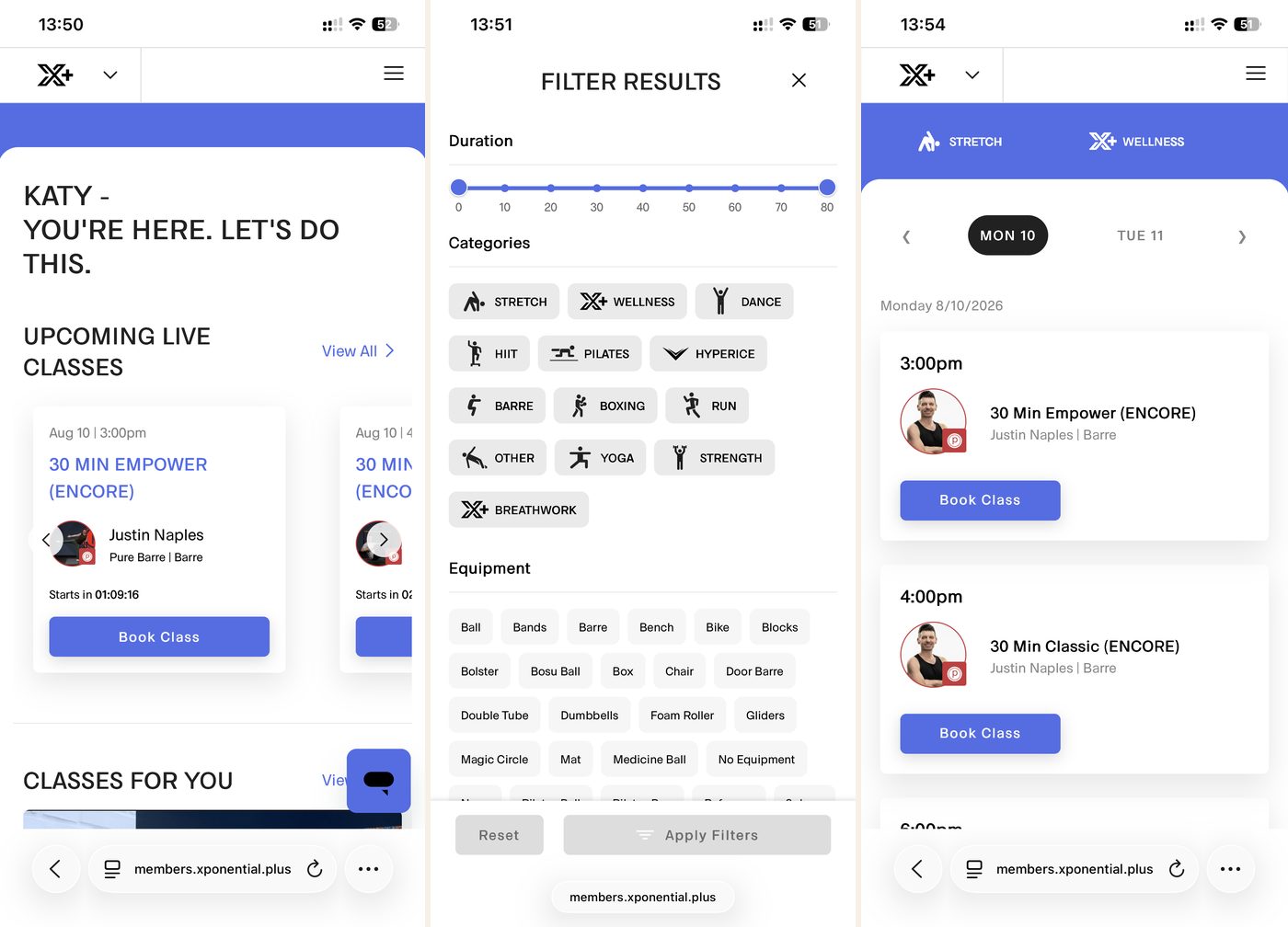
These two platforms were not tested to the same depth, and this is the most important caveat on the page. Peloton was used for four weeks, app only, without owning any Peloton equipment, with classes mixed across strength, yoga, walking and running. Pure Barre was sampled on a one-week Xponential+ trial with a couple of sessions completed: a 20-minute dumbbell strength class and a dance class. So the Peloton assessment reflects how a platform behaves across a month of real training, and the Pure Barre assessment reflects what the platform contains and how two sessions felt. Where a Pure Barre score rests on the lighter evidence, we say so in the section rather than only here.
Peloton if you want the widest range of low-impact routes into training, if perimenopause is on your mind, or if you simply want the longest trial available to find out whether an app suits you. Pure Barre if barre is the modality you actually enjoy and you want a library you can filter quickly by how you feel that day. The finding worth carrying away is that a mainstream platform nobody markets at midlife women has more menopause content than a boutique brand that does market at them.
Pure Barre vs Peloton: the two platforms
Same nine weighted criteria, same twelve capability scores, and one platform tested four times longer than the other.
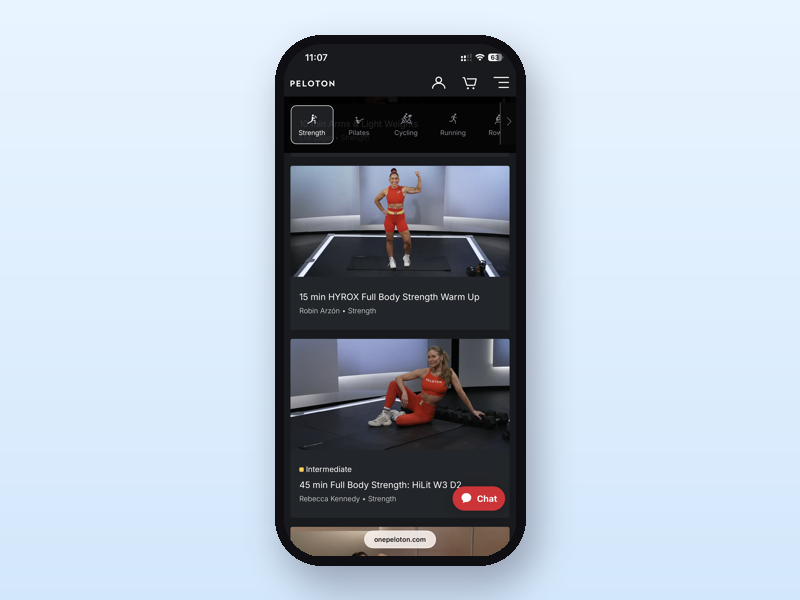
Peloton
Winner
An app-only membership spanning strength, yoga, walking, running and low-impact cycling, with a dedicated menopause content collection and no hardware required.
- 5 to 60+ min
- Menopause programming 8/10
- Joints 9.0
- 30-day trial
- App only
Choose Peloton if you:
- Want menopause content from a mainstream platform
- Want walking, yoga and low-impact options alongside strength
- Have joints that rule out higher-impact work
- Want the longest free trial available, at 30 days
- Do not want to buy any equipment
Pure Barre
Runner-up
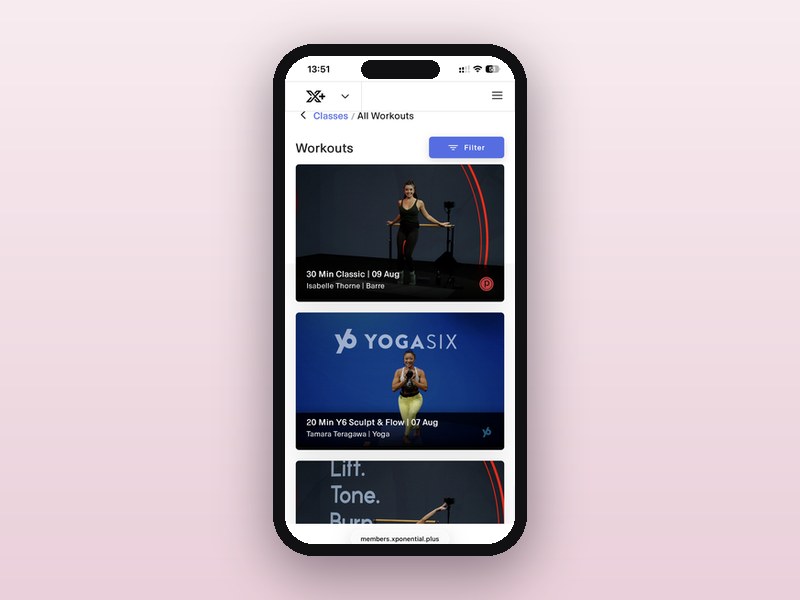
Pure Barre On Demand delivered through Xponential+, covering barre, dumbbell strength and dance, with a fast filter by length, class type and equipment.
- 10 to 60 min
- Structure 8.0
- Beginner on-ramp 7/10
- 7-day trial
- Sample tested
Choose Pure Barre if you:
- Actually enjoy barre as a modality
- Want to filter a library fast by how you feel that day
- Want clear form guidance while you work
- Are newer to structured exercise
- Have or want access to in-studio classes too
How we scored this, and how both were tested
Both platforms were scored on the same nine weighted criteria and the same twelve capability scores, and they were not tested to the same depth. Muscle Potential carries 18%, Time Efficiency 15%, Joint Friendliness and Programme Structure 12% each, Women Over 40 Specificity and Recovery Compatibility 10%, Value for Money and UX and Design 8%, and Nutrition Integration 7%.
Same tester, and she describes her own position on Peloton directly. Katy is a woman in her early 40s, perimenopausal, working full-time with children. She tested Peloton for four weeks by mixing and matching classes across strength, yoga, walking and running, testing them alongside her regular training. She does not own any Peloton equipment, so this is an assessment of the app alone, which is also the cheapest way to use it.
Pure Barre was a lighter test and we are not going to dress it up. She signed up for a one-week Xponential+ trial, the streaming service that carries Pure Barre On Demand, and worked through a couple of sessions. That is enough to judge the library, the filtering and the coaching style in the classes she did. It is not enough to judge progression, consistency or how the platform holds up over a month, and we have marked the sections where that limit bites.
Perimenopause and menopause fit: Peloton wins, and it is the surprise of this comparison
Peloton wins Women Over 40 Specificity, 6 against 4.5, and the capability rows are where the real gap sits: menopause programming 8 out of 10 against 2, hormone awareness 7 against 2, menopause education 6 against 2.
Our tester’s account of finding it is worth quoting because expectation is part of the story. She went into the test ready to be underwhelmed. What she found instead was a dedicated menopause content collection. An 8 out of 10 on menopause programming is the highest we have recorded for a general fitness platform, and it comes from a brand most people associate with stationary bikes rather than midlife health.
That is not the same as a menopause specialist. Its menopause education score of 6 sits below the dedicated platforms we have reviewed, and Peloton is not going to teach you the physiology the way a specialist library will. But among large mainstream platforms, having a named collection at all is unusual.
Pure Barre has no menopause programming, no pelvic floor content, no nutrition and no dedicated meditation. Its scores of 2, 2 and 2 on the menopause rows reflect that absence, and it is the more notable absence of the two because Pure Barre markets to exactly this audience.
Pelvic floor
Peloton wins, 4 out of 10 against 1, and 1 is the lowest pelvic floor score we have published. Teixeira and colleagues report a 36% prevalence of urinary incontinence across female athletes in a systematic review with meta-analysis,3 which is reason to want the subject addressed on a platform aimed at women. That review did not separate high-impact from low-impact sport, so we do not claim it did. Neither platform coaches pelvic floor work.
Joint friendliness: Peloton wins, and it has more ways to train gently
Peloton wins, 9 against 8, and 9 is one of the highest Joint Friendliness scores on this site. Low-impact capability ties at 8 out of 10, so neither platform is harsh.
The difference is range. Peloton offers walking, yoga and low-impact cycling alongside strength, so on a day when loading is the wrong choice there is somewhere to go that is still training. Her report across four weeks is that she trained consistently without aggravation, which is the outcome that matters for anyone managing a joint.
Pure Barre is barre-based and inherently low impact, which is why its capability score matches. We tested it across two sessions, so we can say the modality is gentle and we cannot say how it holds up across weeks of repeated use, which is exactly the kind of claim a one-week trial cannot support.
Why this matters more now. Wright and colleagues describe the musculoskeletal syndrome of menopause, covering oestrogen decline’s effect on tendon and ligament integrity and increased injury risk in midlife.1 Neither platform’s modification support was assessed in our testing, so on both you should expect to manage your own substitutions.
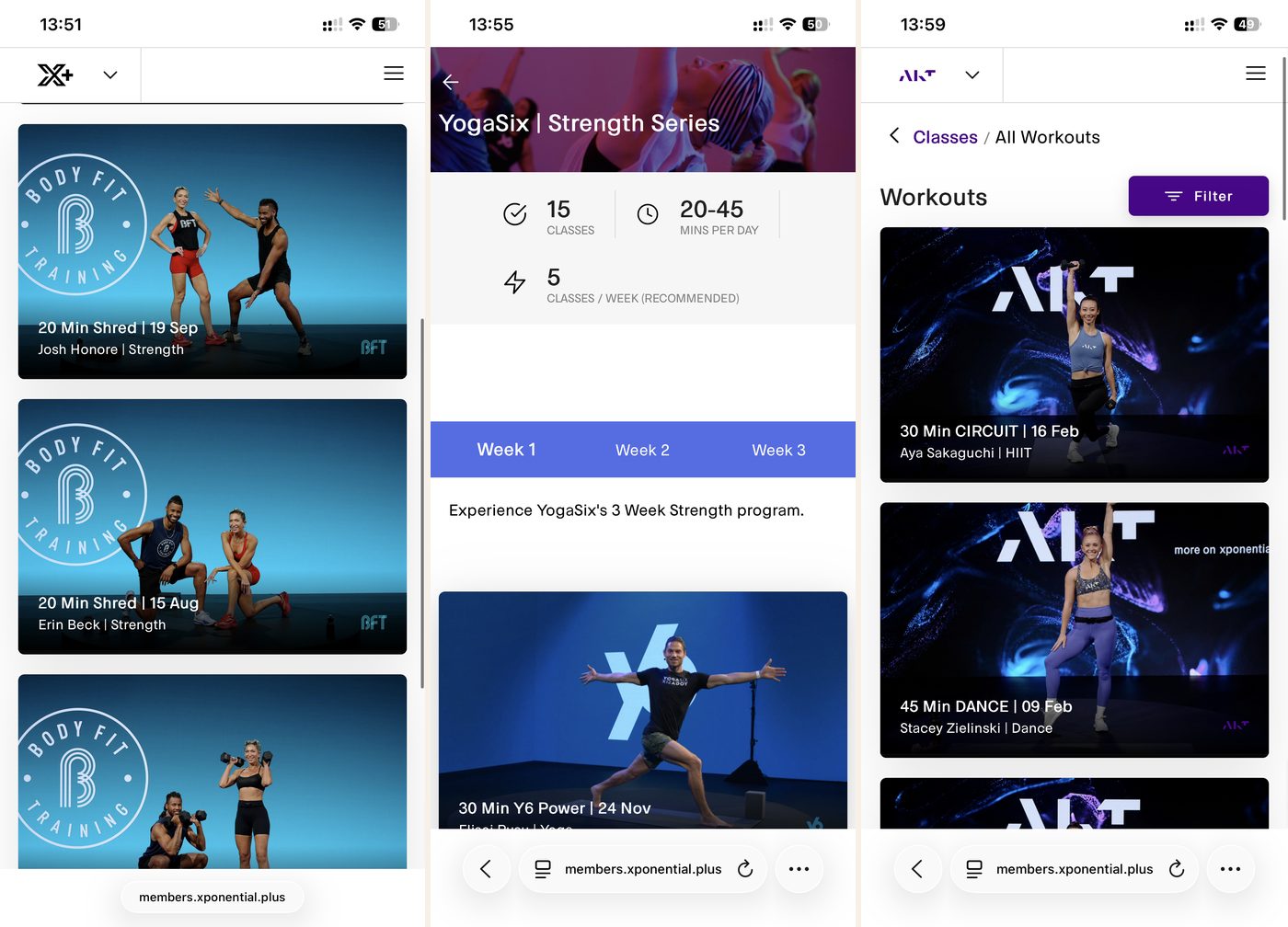
Class structure and filtering: Pure Barre wins, and this is its best section
Pure Barre wins, 8 against 6.5, and it is the one criterion where it clearly beats Peloton.
The filtering is the reason. You can narrow the library down quickly by length, class type and equipment and find something that fits your energy that day, and Katy Cole describes using exactly that: on a day when she did not really feel like training, she picked a dance class instead. A library you can search by mood as much as by muscle group is a real answer to the problem of not wanting to train.
Peloton’s 6.5 reflects the opposite shape. It has no progressive overload guidance, and she mixed and matched rather than following a fixed programme, which is what the platform invites. If you want to be told what to do in sequence, neither of these is built for it, and Peloton is the weaker of the two.
One limit on the Pure Barre finding: two sessions tell you the filter works. They do not tell you whether the library stays interesting across three months, which is where several platforms in our comparison set have come unstuck.
Muscle potential: Peloton wins, and neither is a strength specialist
Peloton wins, 7.5 against 6, though progressive strength capability runs the other way at 6 out of 10 for Pure Barre against 5, and bone loading ties at 5. Muscle Potential carries the heaviest weight in our model at 18%, because Maltais and colleagues document accelerated loss of muscle mass and strength through the menopause transition.2
On Peloton Katy Cole reports that she was working at her limit by the end of sessions, which tells you the strength classes are not soft. What Peloton lacks is any progressive overload guidance, so the intensity is there and the progression is your own responsibility.
On Pure Barre she tried a 20-minute strength session with dumbbells and found it a solid, well-structured workout. That is a fair and limited verdict on one class rather than a programme, and we are not going to extrapolate it into a claim about muscle gain.
Neither platform is where we would send someone whose main goal is adding load. Mohebbi and colleagues identify progressive resistance training as the primary non-hormonal intervention for bone mineral density after menopause,4 and a further review reports improvements in menopause symptoms and functional capacity with resistance training, on evidence its own authors rate as very low to low certainty.5 Our best workouts to build muscle after 50 ranking covers platforms built around progression.
Time efficiency: Peloton wins, and both are good for a compressed week
Peloton wins, 9 against 8, and these are two of the stronger Time Efficiency scores in this comparison set.
Peloton runs from 5 to 60 minutes and above, with genuine 20-minute options rather than 20-minute listings that run to 30. Pure Barre On Demand runs 10 to 60 minutes, with in-studio classes at 45 to 50 if you have a studio near you.
Pure Barre’s filter closes some of the gap in practice, because finding a short class quickly is worth as much as having one. Her account of picking a class to match her energy on a low day is the useful version of that.
Our 30-minute workouts for women over 40 and 20-minute workouts for perimenopause guides cover the wider field in both bands.
Recovery: Peloton wins, on range rather than design
Peloton wins, 8.5 against 7, though recovery and deload capability runs the other way at 7 out of 10 for Pure Barre against 6.
That split is worth explaining. Peloton’s advantage is having yoga, walking and low-impact cycling available, so a recovery day still has something in it. Pure Barre’s higher deload capability reflects a modality that is gentler by default rather than any structured deload.
Neither platform programmes recovery for you. Our low-cortisol workouts for perimenopause guide covers platforms that treat it as a design problem rather than a gap in the schedule.
UX and design: Peloton wins, with one live problem worth knowing
Peloton wins, 7.8 against 7, and it has a specific flaw that could cost you money.
Our tester found the cancel link non-functional during testing, and she tested this more than once with the same result. On a platform with a 30-day trial, a cancel path that does not work is the difference between a free trial and a charge, so set a reminder and allow time. Peloton’s programmes are also app-only with no web version, which matters if you prefer a laptop or television.
Pure Barre’s interface is where its filtering lives, and she rated the filter highly. She also valued the coaching style for a specific personal reason: she is someone who tends to let her form drift when she is concentrating on getting through a set, and having that steady, clear guidance genuinely helped. That is a useful signal about the teaching, even from two sessions.
One aside from her Pure Barre testing that is worth recording: she has tried VR training before, on FIIT, and found a real novelty to it, but as with most novelties she ultimately prefers to work out the usual way. Pure Barre offers VR sessions and we did not test them.
Nutrition: tied at the bottom of our scale
Tied at 2 each, with midlife nutrition capability tied at 2 out of 10. This is the lowest nutrition tie in our comparison set.
Peloton has no nutrition guidance. Pure Barre has none either. Nutrition carries the smallest weight in our model at 7%, so this barely moves either score, and it is worth stating plainly rather than glossing: if you want training and eating in one subscription, neither of these platforms offers it and the menopause-specialist platforms we have reviewed do it far better.
Equipment and space needed at home
Neither needs the hardware the brands are known for.
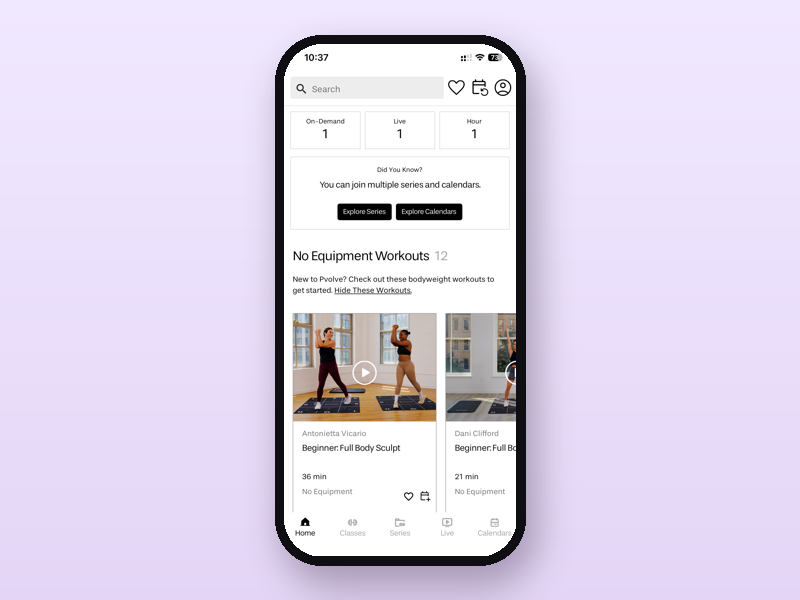
Our tester does not own any Peloton equipment and tested the app alone across four weeks of strength, yoga, walking and running. That is the important practical point about Peloton for most readers: the bike is not the product, the app is, and it is the cheaper way in. We did not test the Peloton Bike, Tread or Row.
Pure Barre On Demand needs a mat and light dumbbells for the strength classes, plus a wall or the back of a chair for barre work. We did not test in-studio classes, which run 45 to 50 minutes and require a studio near you.
Starting from scratch: Pure Barre narrowly, and Peloton is the safer purchase
Pure Barre wins beginner on-ramp, 7 out of 10 against 6, and the two answers pull in different directions.
Pure Barre’s case is the filtering and the coaching. Being able to pick a class by length and type removes the paralysis of a large library, and her note about the steady, clear guidance helping someone prone to letting her form slip is exactly the reassurance a beginner needs.
Peloton’s case is the trial. Thirty days against seven is a much more forgiving way to discover whether an app fits your life, and for a beginner who does not yet know what she likes, that matters more than a point of on-ramp score. The caution about the cancel link applies.
Peloton pros and cons
Peloton scores 7.3. It is strongest on joint-friendly training and weakest on nutrition guidance.
Pros
- A dedicated menopause content collection, with menopause programming 8 out of 10 against 2 and hormone awareness 7 against 2.
- Joint Friendliness 9, one of the highest on this site, with walking, yoga and low-impact cycling alongside strength.
- Time Efficiency 9 with genuine 20-minute options.
- Recovery Compatibility 8.5.
- Expert credibility 8 out of 10 against 5.
- A 30-day trial, the longest in this set.
- No equipment needed.
- Trained consistently without aggravation across four weeks.
Cons
- The cancel link was non-functional during testing, confirmed more than once.
- Programmes are app-only with no web version.
- No progressive overload guidance, and progressive strength 5 out of 10 against 6.
- No nutrition guidance at all, Nutrition Integration 2.
- Programme Structure 6.5 against 8.
Pure Barre pros and cons
Pure Barre scores 6.6. It leads on joint-friendly training and trails on nutrition guidance.
Pros
- Programme Structure 8 against 6.5, driven by filtering she rated as genuinely useful for matching a class to your energy that day.
- Beginner on-ramp 7 out of 10 against 6.
- Progressive strength 6 against 5 and recovery and deload 7 against 6.
- Clear form guidance she valued personally.
- Inherently low impact, tied at 8 out of 10.
- A solid, well-structured 20-minute dumbbell session.
Cons
- No menopause programming, no pelvic floor content, no nutrition and no dedicated meditation, with pelvic floor 1 out of 10, the lowest we have published.
- Women Over 40 Specificity 4.5 against 6.
- A 7-day trial against Peloton’s 30.
- And the evidence here is lighter: one week, two sessions, so progression and long-term variety are untested.
Quick yes/no comparison
| Feature | Peloton | Pure Barre |
|---|---|---|
| Dedicated menopause content collection | Yes | No |
| Pelvic floor content | Partly | No |
| Nutrition guidance | No | No |
| Walking or running classes | Yes | No |
| Yoga | Yes | No |
| Barre | No | Yes |
| Dance classes | Not assessed | Yes |
| Filter by length, type and equipment | Yes | Yes, and it is a strength |
| Progressive overload guidance | No | Not assessed |
| Works without buying hardware | Yes | Yes |
| Web version as well as app | No, app only | Not assessed |
| In-studio classes available | No | Yes, 45 to 50 minutes |
| Free trial | Yes, 30 days | Yes, 7 days |
Pure Barre vs Peloton at a glance
| Peloton | Pure Barre | |
|---|---|---|
| Overall score | 7.3 | 6.6 |
| How it was assessed | Fully tested over four weeks, app only, no Peloton hardware | Sample tested on a one-week Xponential+ trial, two sessions completed |
| Cost | $15.99 to $28.99/month US, £12.99 to £28.99 UK | $19.99 to $29.99/month via Xponential+ |
| Free trial | 30 days | 7 days |
| Session length | 5 to 60+ minutes, genuine 20-minute options | 10 to 60 minutes on demand, 45 to 50 in studio |
| Approach | App-only library across strength, yoga, walking, running and low-impact cycling | Pure Barre On Demand: barre, dumbbell strength and dance, with fast filtering |
| Menopause content | A dedicated collection | None |
| Equipment | None required, no Peloton hardware used in testing | Mat, light dumbbells, a wall or chair |
| Known live issue | Cancel link non-functional during testing | None recorded in the sessions tested |
| How we tested it | Four weeks, app only, classes mixed across formats | One-week trial, two sessions |
Pure Barre vs Peloton: the full scoring breakdown
Peloton wins six of the nine weighted criteria and pure barre wins one, with two tied. The overall gap is 7.3 against 6.6. Read it alongside the testing-depth warning above: Peloton’s scores rest on four weeks and Pure Barre’s on one.
| Criterion | Weight | Peloton | Pure Barre | Winner |
|---|---|---|---|---|
| Muscle Potential | 18% | 7.5 | 6 | Peloton |
| Time Efficiency | 15% | 9 | 8 | Peloton |
| Joint Friendliness | 12% | 9 | 8 | Peloton |
| Programme Structure | 12% | 6.5 | 8 | Pure Barre |
| Women Over 40 Specificity | 10% | 6 | 4.5 | Peloton |
| Recovery Compatibility | 10% | 8.5 | 7 | Peloton |
| Value for Money | 8% | 7 | 7 | Tied |
| UX and Design | 8% | 7.8 | 7 | Peloton |
| Nutrition Integration | 7% | 2 | 2 | Tied |
| Overall | 100% | 7.3 | 6.6 | Peloton |
The twelve capability scores
Peloton wins six of the twelve capability scores and pure barre wins three, with three tied. The menopause programming row, 8 against 2, and hormone awareness, 7 against 2, are the widest gaps and the reason a mainstream platform beats a women’s brand on this page.
| Capability | Peloton | Pure Barre | Winner |
|---|---|---|---|
| Low-impact | 8 | 8 | Tied |
| Progressive strength | 5 | 6 | Pure Barre |
| Bone loading | 5 | 5 | Tied |
| Recovery & deload | 6 | 7 | Pure Barre |
| Menopause programming | 8 | 2 | Peloton |
| Pelvic floor | 4 | 1 | Peloton |
| Hormone awareness | 7 | 2 | Peloton |
| Menopause education | 6 | 2 | Peloton |
| Expert credibility | 8 | 5 | Peloton |
| Mind-body support | 7 | 5 | Peloton |
| Beginner on-ramp | 6 | 7 | Pure Barre |
| Midlife nutrition | 2 | 2 | Tied |
Value for money: tied, and the trials are not comparable
Tied at 7 each.
| Plan | Peloton | Pure Barre |
|---|---|---|
| Monthly, US | $15.99 to $28.99 | $19.99 to $29.99 |
| Monthly, UK | £12.99 to £28.99 | Not assessed |
| Free trial | 30 days | 7 days |
| Delivered through | The Peloton app | Xponential+ |
| What the money buys | A broad library with a menopause collection and no hardware requirement | Pure Barre On Demand, with strong filtering, plus a route to in-studio classes |
The prices overlap almost completely, which is why the scores tie. The trials do not: 30 days against 7 is the largest trial gap in our comparison set, and it is the single most useful practical difference if you are unsure. The caution is the cancel link, which she found non-functional and confirmed more than once, so give yourself time rather than cancelling on day 30.
What this means for your decision. At effectively the same price, Peloton gives you more range and menopause content, and Pure Barre gives you a modality and a filter. Our best free and budget workout apps ranking covers cheaper options than either.
Who wins for…
Who wins for perimenopause and menopause
Peloton, and it is not close. Menopause programming 8 out of 10 against 2 and hormone awareness 7 against 2.
Who wins for a joint history
Peloton. Joint Friendliness 9 against 8, with more low-impact routes and four weeks of consistent training without aggravation.
Who wins for finding a class fast
Pure Barre. Its filter by length, class type and equipment is the best thing about it.
Who wins for building muscle after 40
Peloton, narrowly, and neither well. Muscle Potential 7.5 against 6, with no progressive overload guidance on either.
Who wins on price
A tie at 7. The prices overlap; the trials do not.
Who wins for trying before you commit
Peloton. Thirty days against seven, with the caveat that the cancel link failed during our testing.
Who wins for barre
Pure Barre, obviously. Peloton does not offer it. Our best Pilates programmes for women over 40 ranking covers the nearest adjacent modality.
Who wins for walking and yoga
Peloton. Both are in the library and neither is on Pure Barre.
Who wins for nutrition
Neither. Tied at 2, and neither offers guidance.
Who wins for pelvic floor
Peloton, on a low bar. 4 out of 10 against 1, the lowest score of its kind we have published.
Who wins for a beginner
Pure Barre on the score, Peloton on the trial. Beginner on-ramp 7 out of 10 against 6, against 30 days to decide instead of 7.
Decision tree for women over 40
Perimenopause is why you are looking. Peloton, on menopause programming 8 against 2. This is the clearest call on the page.
You want barre specifically. Pure Barre. Peloton does not offer it.
You have a joint that limits you. Peloton, for the range of low-impact routes.
You often do not feel like training and need to pick something gentle fast. Pure Barre, for the filter.
You are unsure and do not want to waste money. Peloton, for the 30-day trial, and set a cancellation reminder because the cancel link failed during our testing.
You want walking or yoga in the same subscription. Peloton.
You want nutrition guidance too. Neither. Look at the menopause specialists.
You have a Pure Barre studio nearby and might attend in person. Pure Barre, since the on-demand library complements the studio classes.
What we did not test
This page has a larger untested surface than most of our comparisons, and here it is.
Pure Barre was the lighter sample described above, one week and two sessions. We did not test classic barre classes, the VR sessions, or in-studio classes. We cannot speak to progression, to whether the library stays varied across months, or to how the platform handles an injury, and we have avoided implying otherwise anywhere on this page.
On Peloton we did not test the Bike, the Tread or the Row hardware, the desktop experience, or the Personal Trainer add-on. She mixed and matched classes rather than following a fixed programme, so her account describes a self-directed month rather than a completed plan.
Neither platform’s modification support for injuries was assessed.
Because the two tests differ so much in depth, we would treat the Pure Barre scores as provisional in a way the Peloton scores are not, and we will revisit them if the platform gets a longer test.
Which is better for women over 50?
Peloton, for most women
The menopause collection covers postmenopausal questions that a barre library does not touch, and the range of walking, yoga and low-impact cycling gives more options on a day when loading is the wrong choice. Joint Friendliness of 9 and four weeks of training without aggravation are the most direct evidence either platform offers. Our best low-impact workouts for women over 50 and best workouts for postmenopause rankings cover the wider field.
Pure Barre, if barre is what you will actually do
Adherence beats theory, and a woman who enjoys barre and will do it three times a week is better served than one who owns a broader library she does not open. Its low-impact profile ties with Peloton’s at 8 out of 10, and the form guidance is genuinely helpful. Just know that progressive loading remains the intervention with the best evidence behind it for muscle and bone after menopause,4 and neither platform will programme that for you.
Frequently asked questions
Is Peloton or Pure Barre better for women over 40?
Peloton, 7.3 against 6.6, and it wins six of the nine weighted criteria. The reason is one most people would not predict: Peloton has a dedicated menopause content collection, and menopause programming scores 8 out of 10 against 2, with hormone awareness and menopause education ahead by the same order. Women Over 40 Specificity is 6 against 4.5. Her own words are that she went into the Peloton test ready to be underwhelmed, and what she found instead was that collection.
Does Peloton really have menopause content?
Yes, and it is the highest menopause programming score we have recorded for a general fitness platform: 8 out of 10, against 2 for Pure Barre. That does not make Peloton a menopause specialist, and its menopause education score of 6 sits below the dedicated platforms we have reviewed. But among large mainstream platforms it is unusual to find anything at all, and Peloton has a named collection rather than a single class buried in a library.
Which is better if you have joint problems?
Peloton, 9 against 8, and 9 is one of the highest Joint Friendliness scores on this site. Low-impact capability ties at 8 out of 10, so both are gentle, but Peloton has more low-impact routes: walking, yoga and low-impact cycling alongside strength. She trained consistently without aggravation across four weeks. Pure Barre is barre-based and inherently low-impact, and we tested it too lightly to make a comparable claim.
How do Peloton and Pure Barre compare on price?
They tie on Value for Money at 7 each. Peloton is $15.99 to $28.99 a month in the US, or £12.99 to £28.99 in the UK, with a 30-day free trial. Pure Barre On Demand runs $19.99 to $29.99 a month through Xponential+, with a 7-day free trial. Peloton’s 30-day trial is by far the longest in this comparison set and is the single best way to find out whether a platform suits you without paying. One caution: the Peloton cancel link was non-functional during testing, so leave time to cancel.
Which has the better class structure?
Pure Barre, 8 against 6.5, and this is the one criterion where it clearly wins. Its filtering is the reason: you can narrow the library down quickly by length, class type and equipment and find something that fits your energy that day, and on a day when she did not really feel like training she picked a dance class instead. Peloton has no progressive overload guidance and she mixed and matched rather than following a fixed programme, which is what a 6.5 reflects.
Which builds more muscle for women over 40?
Peloton, 7.5 against 6, though neither is a strength specialist. Progressive strength capability is 5 out of 10 for Peloton against 6 for Pure Barre, and bone loading ties at 5. She reports she was working at her limit by the end of Peloton strength sessions, and found the Pure Barre 20-minute dumbbell session a solid, well-structured workout. Neither platform offers progressive overload guidance, so if adding load is your goal our best workouts to build muscle after 50 ranking is the better starting point.
What is the time commitment and typical session length for each?
Peloton wins Time Efficiency, 9 against 8, and both are good. Peloton runs 5 to 60 minutes and above with genuine 20-minute options. Pure Barre On Demand runs 10 to 60 minutes, with in-studio classes at 45 to 50. Both fit a compressed week, and Pure Barre’s filter makes finding a short class faster than most platforms manage.
Which has better pelvic floor or nutrition content?
Peloton on pelvic floor, 4 out of 10 against 1, which is the lowest pelvic floor score we have published. On nutrition they tie at 2 each, which is the lowest nutrition tie in this set: Peloton has no nutrition guidance and Pure Barre has none either. Neither platform is a reason to subscribe for either subject.
How much did you actually test each platform?
Unequally, and it matters. Peloton was tested for four weeks, app only, without owning any Peloton equipment, mixing classes across strength, yoga, walking and running. Pure Barre was sampled on a one-week Xponential+ trial, two sessions in total: a 20-minute dumbbell strength class and a dance class. That is a much lighter test, so the Pure Barre scores describe what the platform contains and how two sessions felt rather than how it performs over weeks.
What equipment and space do you need at home for each?
Neither needs the hardware you might expect. She does not own any Peloton equipment and tested the app alone, which is the cheapest way to use Peloton and covers strength, yoga, walking and running. Pure Barre On Demand needs a mat and light dumbbells for the strength classes, and a wall or chair for barre work. We did not test the Peloton Bike, Tread or Row, nor Pure Barre in-studio classes.
Which platform would suit a woman new to structured exercise?
Pure Barre, narrowly, on a beginner on-ramp of 7 out of 10 against 6, and Peloton is the safer purchase. Pure Barre’s filtering makes choosing easy, and she valued the steady, clear form guidance because she is someone who tends to let her form drift when concentrating on getting through a set. Peloton’s 30-day trial against Pure Barre’s 7 days is the more forgiving way to find out whether either suits you.
Research citations
- Wright VJ, Schwartzman JD, Itinoche R, Wittstein J. The musculoskeletal syndrome of menopause. Climacteric. 2024;27(5):466–472. menopause MSK study. (Cited for: oestrogen decline’s effect on tendon and ligament integrity, and increased injury risk in midlife.)
- Maltais ML, Desroches J, Dionne IJ. Changes in muscle mass and strength after menopause. Journal of Musculoskeletal and Neuronal Interactions. 2009;9(4):186–197. PubMed. (Cited for: accelerated loss of muscle mass and strength through the menopause transition.)
- Teixeira RV, Colla C, Sbruzzi G, Mallmann A, Paiva LL. Prevalence of urinary incontinence in female athletes: a systematic review with meta-analysis. International Urogynecology Journal. 2018;29(12):1717–1725. urinary incontinence meta-analysis. (Cited for: 36% prevalence of urinary incontinence across female athletes in a range of sports. Note: this review did not separate high-impact from low-impact sport, so we do not claim it did.)
- Mohebbi R, Shojaa M, Kohl M, et al. Exercise training and bone mineral density in postmenopausal women: an updated systematic review and meta-analysis. Osteoporosis International. 2023;34:1145–1178. bone density meta-analysis. (Cited for: progressive resistance training as the primary non-hormonal intervention for bone density after menopause.)
- Sá KMM, et al. Resistance training for postmenopausal women: systematic review and meta-analysis. Menopause. 2022. PubMed. (Cited for: improvements in menopause symptoms and functional capacity with resistance training. Note: this review did not measure strength or lean mass as primary outcomes, and its authors rate the certainty of evidence as very low to low, so we report it on that basis.)
This page compares fitness platforms. It is not medical advice. Katy is a woman who has trained through perimenopause, not a clinician. Any training observations described are one person’s recorded experience, not an expected result or a general pattern. If you have a diagnosed condition, an injury, or symptoms that concern you, speak to a qualified healthcare professional before changing how you train.
About this comparison
Compiled by Katy Cole for Her Daily Fit. The two platforms were not tested to the same depth and we state that throughout rather than once. Peloton was fully tested across four weeks, app only and without owning any Peloton hardware, mixing classes across strength, yoga, walking and running alongside her regular training. Pure Barre was sample tested on a one-week Xponential+ trial with a couple of sessions completed, a 20-minute dumbbell strength class and a dance class, which is enough to assess the library, the filtering and the coaching in those classes and not enough to assess progression or long-term variety. Both were scored on the same nine weighted criteria and the same twelve capability scores, and the Pure Barre scores should be read as provisional. Maltais and colleagues document accelerated loss of muscle mass and strength through the menopause transition,2 which is why Muscle Potential carries the most weight in that model. Prices were verified against official sources in 2026 and may differ if there has been a recent change. Peloton’s cancel link was non-functional during testing, confirmed more than once, and is worth re-checking before you subscribe. Scores are pulled live from each programme’s own assessment. Her Daily Fit earns nothing from either platform.
Compared with
Featured in