Daily Burn scores higher overall, 6.8 against 6.1, and is the stronger platform for app quality and joint-friendly training. Aaptiv is the better pick if what you need most is audio-led training you can follow away from a screen.
Quick answer
- Daily Burn 6.8 vs Aaptiv 6.1
- $14.99 a month on both entry plans
- Low-impact 8 vs 5
- Beginner on-ramp 8 vs 6
- Mind-body support 7 vs 5, Aaptiv
- Menopause programming 3 vs 1
Daily Burn is the better choice for a woman over 40, and the reason is that you can see what you are doing. It wins UX and Design 9 against 6, Value for Money 9 against 7, Joint Friendliness 8.5 against 6.5, Nutrition Integration 6 against 4 and Women Over 40 Specificity 4.4 against 3.4. On the twelve capability rows it wins eight against one, including low-impact 8 out of 10 against 5 and beginner on-ramp 8 against 6.
Aaptiv is the better pick for training where a screen is useless, and its calm content is the best row either platform holds. Mind-body support is 7 out of 10 against 5, and it wins Muscle Potential 6 against 5.5 and Recovery Compatibility 7 against 6.5. It runs about $8 a month on the annual plan and is often subsidised through an employer, a health plan or Medicare.
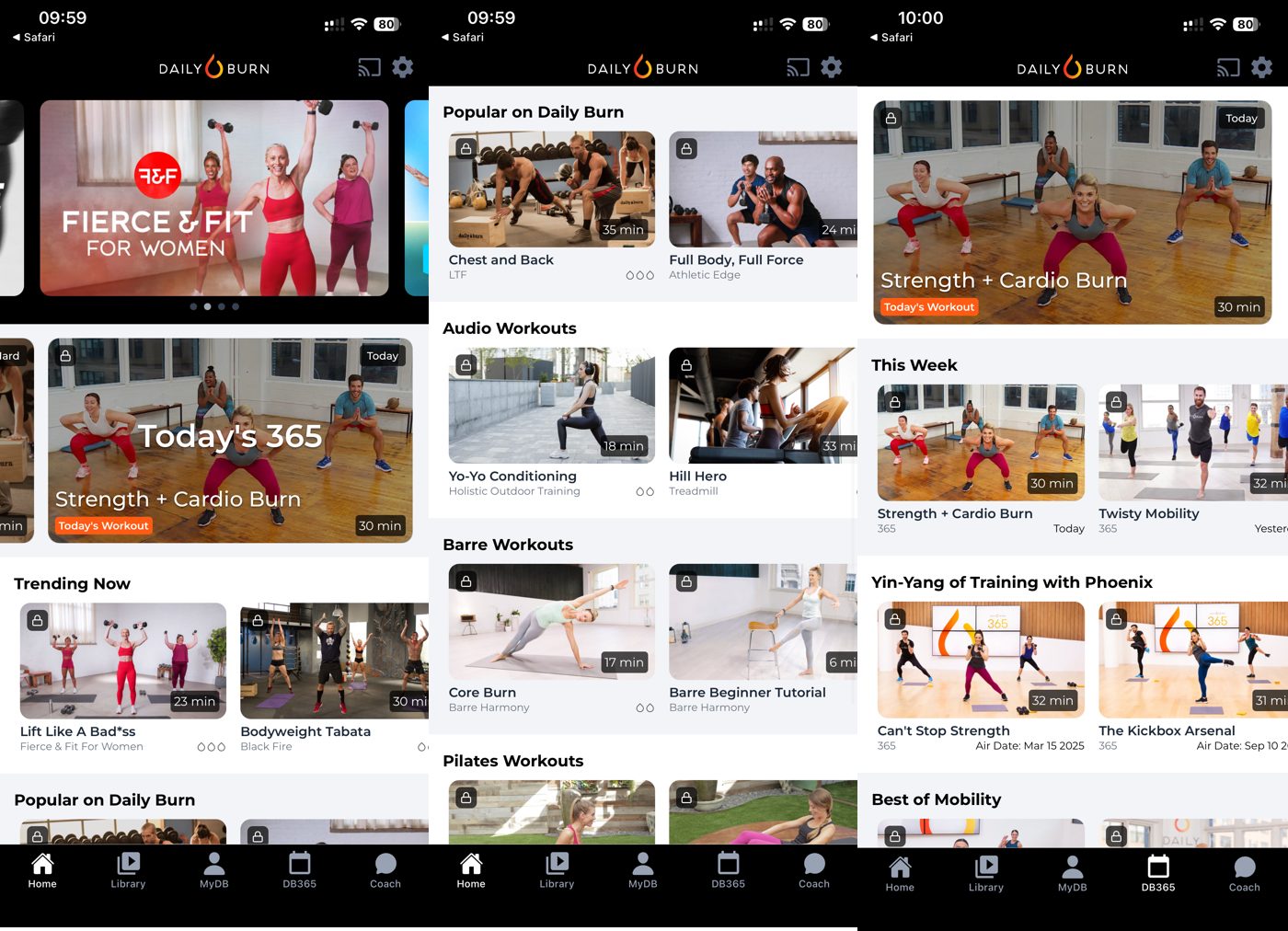
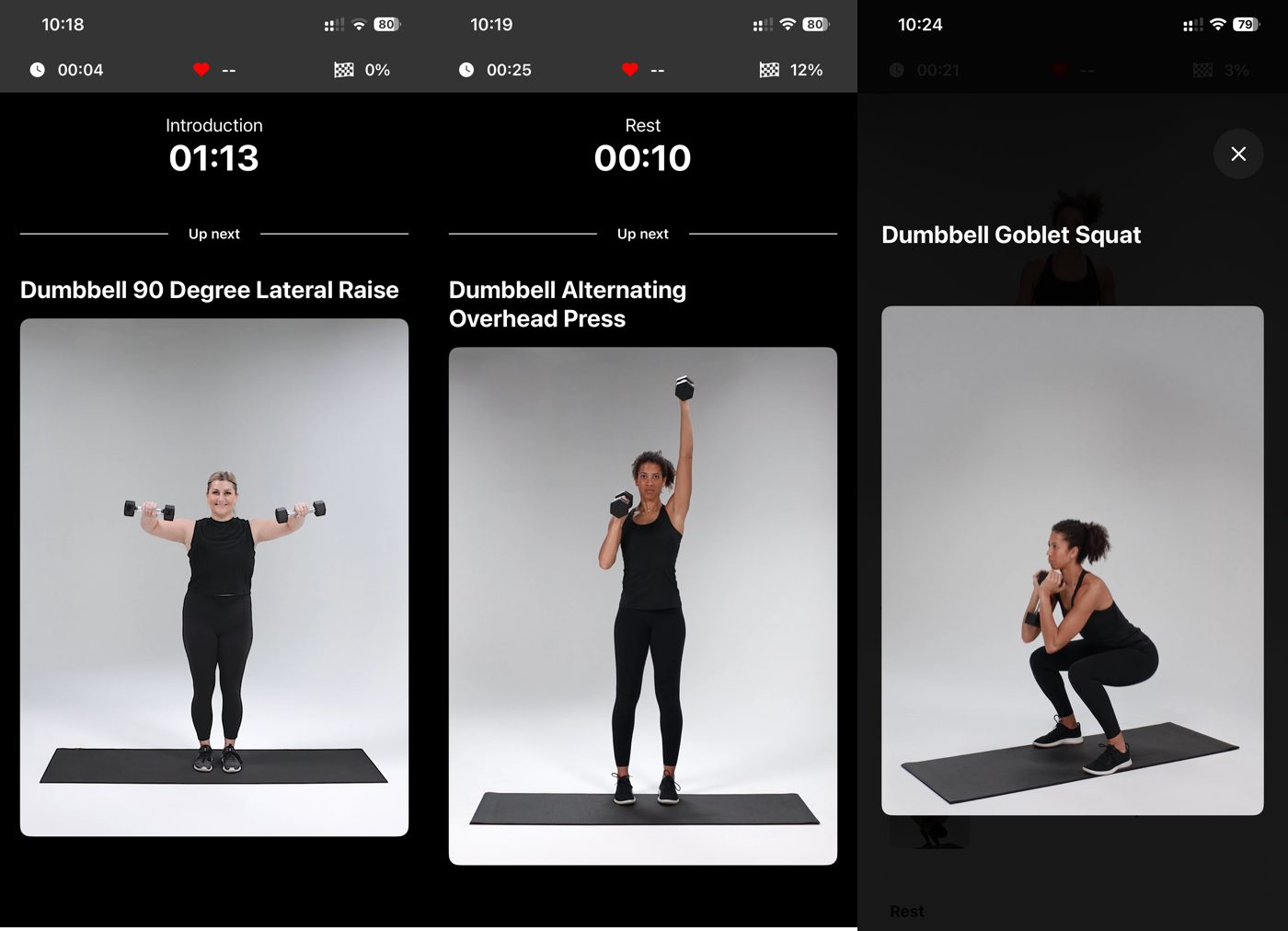
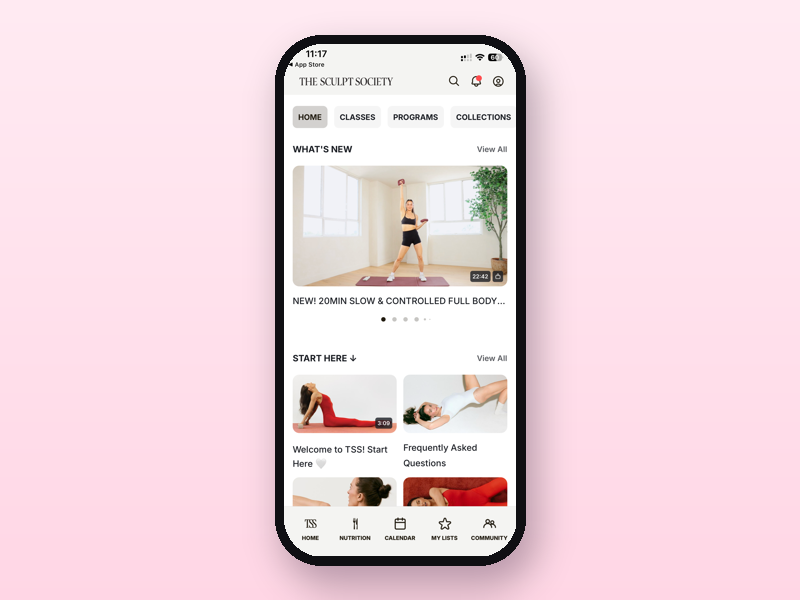
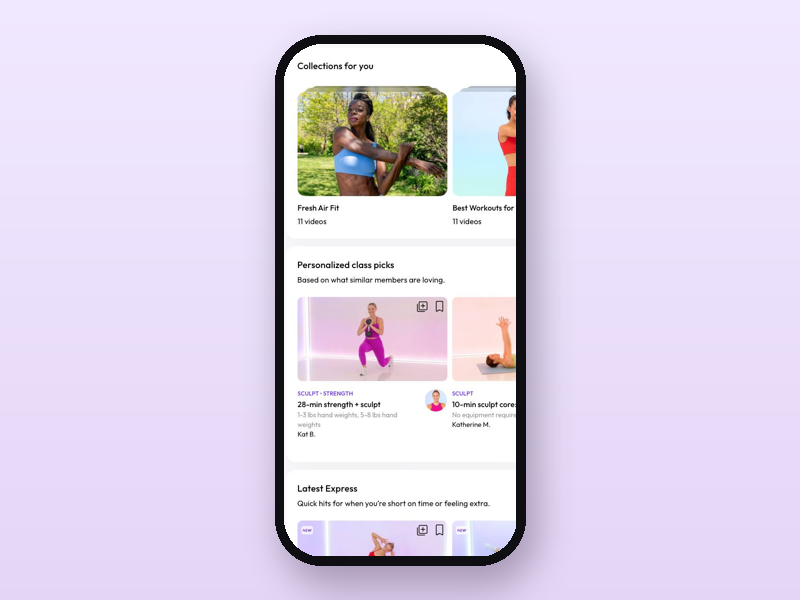
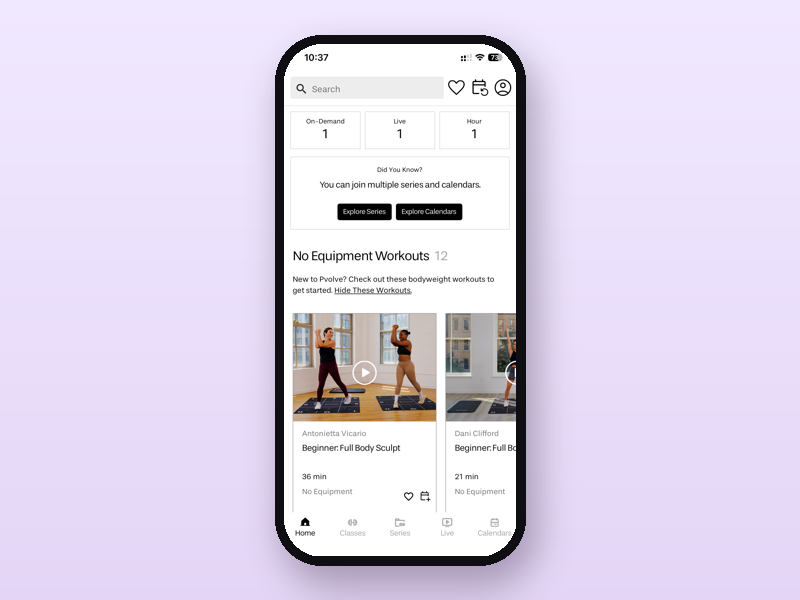
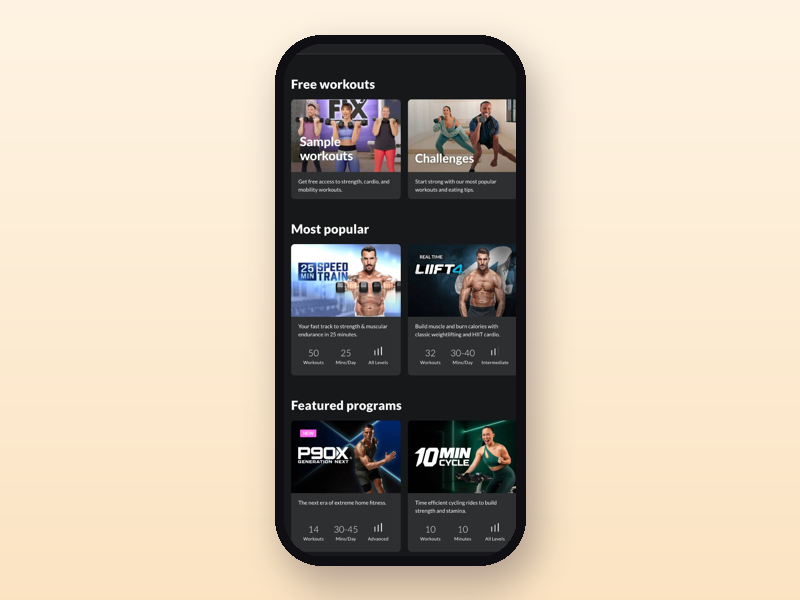
These two were not assessed to the same depth. Daily Burn was used for a full month on the Basic plan, which is enough to say how a programme behaves across four weeks. Aaptiv was sample tested: the app was downloaded, onboarding and the library explored and sample sessions tried, with our own screenshots, so it is a hands-on look rather than a multi-week run. Any Aaptiv rating that depends on long-term use is provisional, and its column should be read as a first impression rather than a settled verdict. We say so again in the sections where that limit matters.
Daily Burn if you want to see the movement, if variety is the thing that keeps you consistent, or if a joint means you need low-impact and seated options that actually exist. Aaptiv if you train on a treadmill, in a gym or outdoors where watching a screen is impractical, if you want a genuinely good meditation and sleep library, or if your employer already pays for it. Neither programmes a thing for perimenopause or menopause, and neither will make you lift heavier, so pair either one with deliberate strength work.
Daily Burn vs Aaptiv: the two platforms
Same price at the door, same nine weighted criteria, and one fundamental difference: whether you watch the workout or listen to it.
Daily Burn
Winner
More than 2,000 filmed workouts across strength, HIIT, dance, yoga, mobility and seated sessions, with day-by-day programmes and a new 30-minute workout every day.
- 15 min to an hour
- Value 9
- Low-impact 8/10
- 30-day trial
- Fully tested
Choose Daily Burn if you:
- Go quiet when the workout stops changing
- Want to watch the movement, not imagine it
- Need low-impact or seated options that really exist
- Want strength, dance and yoga on one subscription
- Are starting again and want something to press play on
Aaptiv
Runner-up
Trainer-led audio classes for running, gym strength, cycling, rowing, boxing, barre, yoga, stretching and meditation, with an AI SmartCoach that assembles a plan.
- About 30 min
- Mind-body 7/10
- Muscle 6
- 7-day trial
- Sample tested
Choose Aaptiv if you:
- Train where you cannot stare at a screen
- Run outdoors or use gym equipment
- Want meditation and sleep content that is properly good
- Already know how the movements should look
- Can get it through an employer or health plan
How we scored this, and why one column is thinner
Both were scored on the same nine weighted criteria and the same twelve capability scores. Muscle Potential carries 18%, Time Efficiency 15%, Joint Friendliness and Programme Structure 12% each, Women Over 40 Specificity and Recovery Compatibility 10%, Value for Money and UX and Design 8%, and Nutrition Integration 7%.
Same tester, different depth. Katy is a woman in her early 40s, perimenopausal, working full-time with children, with a previous meniscus injury. On Daily Burn she spent a month on the Basic plan, rotating Fierce and Fit for Women against Stronger for Longer, with a Dance and MOVE! class and a 15-Minute Mobility session in the mix.
On Aaptiv she went through the onboarding quiz, worked through the workout library and filters, followed a SmartCoach strength program and spent time in the meditation and sleep categories and the nutrition content. That is a hands-on look rather than a multi-week test, so anything that only reveals itself over eight weeks, whether a plan keeps adapting sensibly, whether the syncing holds up, is outside what we can tell you.
The consequence is narrower than on most of our comparison pages, because both columns rest on real use. Where a judgement needs time, the Daily Burn number carries four weeks and the Aaptiv number carries a first impression. Where a judgement needs only the product, price, library breadth, whether pelvic-floor work exists anywhere, the two are on equal footing.
UX and design: Daily Burn wins, and it is the widest criterion gap on the page
Daily Burn wins UX and Design, 9 against 6, and 9 is one of the strongest scores of its kind we have published.
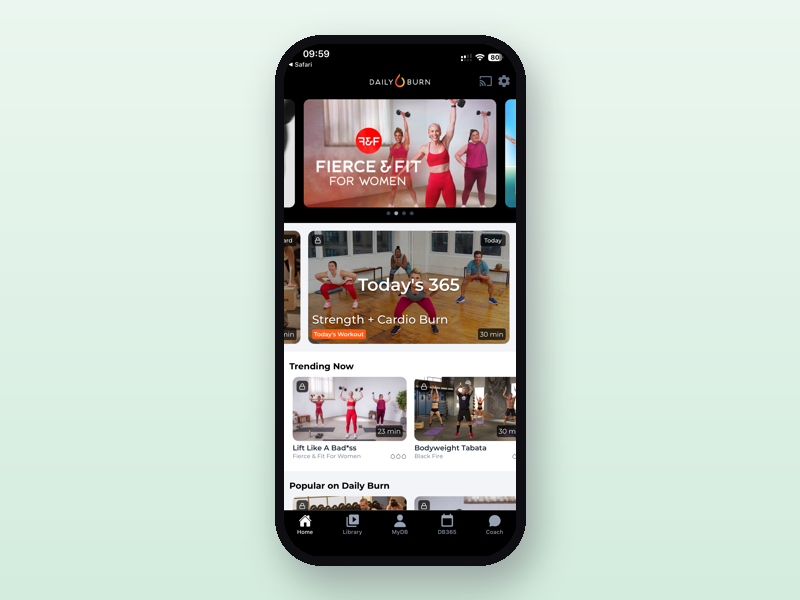
The verdict from the month is short: simple, clean, fast. There were no technical issues at all, no buffering, no confusing menus and no crashes, and finding a workout takes seconds. The filtering by type, trainer, length and equipment is well built and useful rather than decorative. It runs on iOS and Android, smart TVs, Apple TV, Fire TV, Roku, Chromecast and any browser, and in testing it lived mostly on a phone propped up in front of the mat, casting to the television for dance classes where seeing the whole body clearly helped.
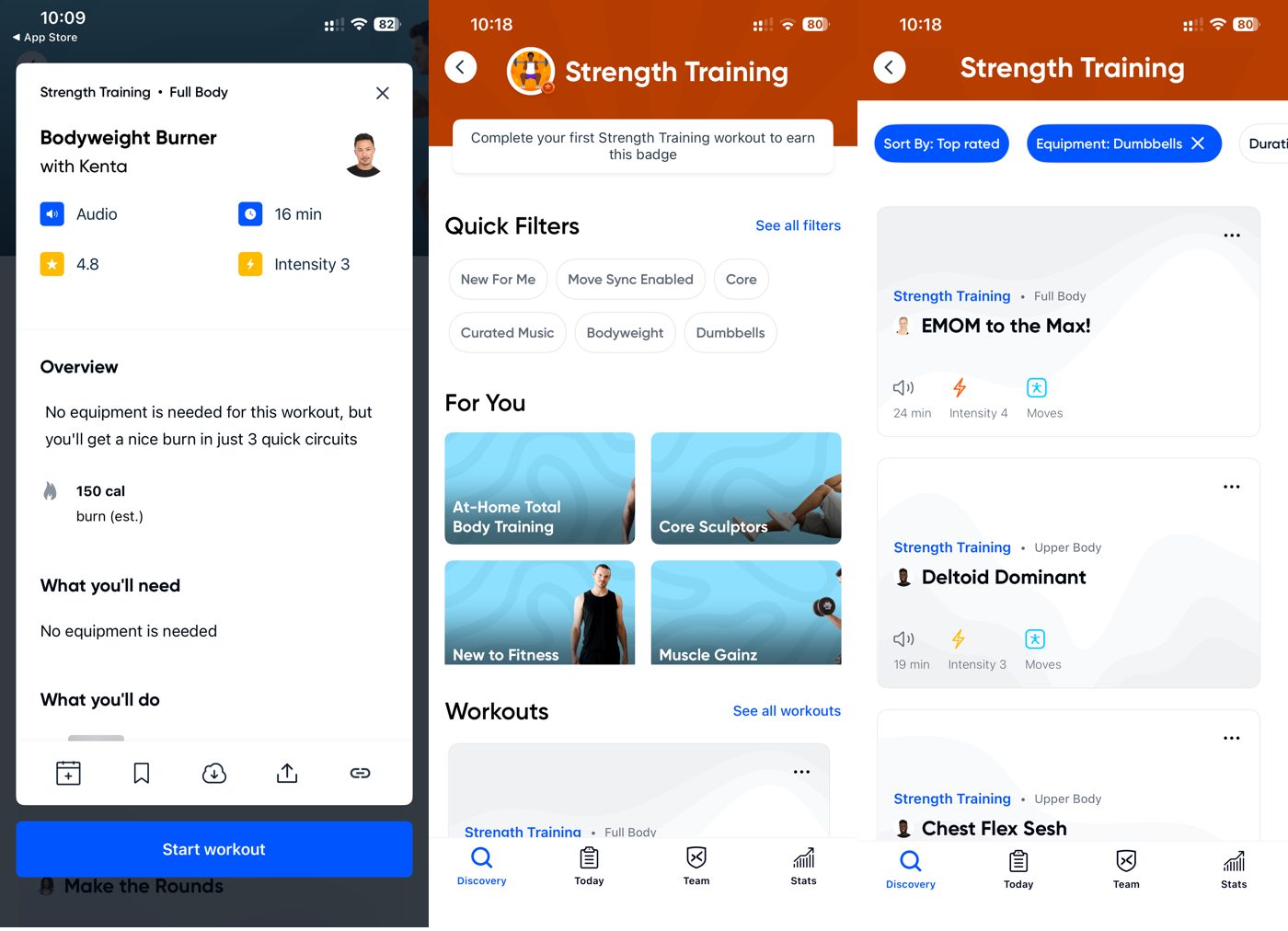
Aaptiv is harder to judge on the same axis because much of it is deliberately not on screen. The navigation itself is intuitive, with workouts split by category and challenges alongside your own personal plan, so finding things was quick. What holds the score down is what has happened since the AI rebuild: a rise in reliability complaints covering broken Apple Watch and Apple Health syncing, lost tracking and removed workouts. That is exactly the kind of problem a short hands-on look cannot confirm or dismiss, which is why the practical advice is to test syncing on your own device during the 7-day free trial.
Joint friendliness: Daily Burn wins, and its accessibility content is genuinely unusual
Daily Burn wins, 8.5 against 6.5, with low-impact capability 8 out of 10 against 5.
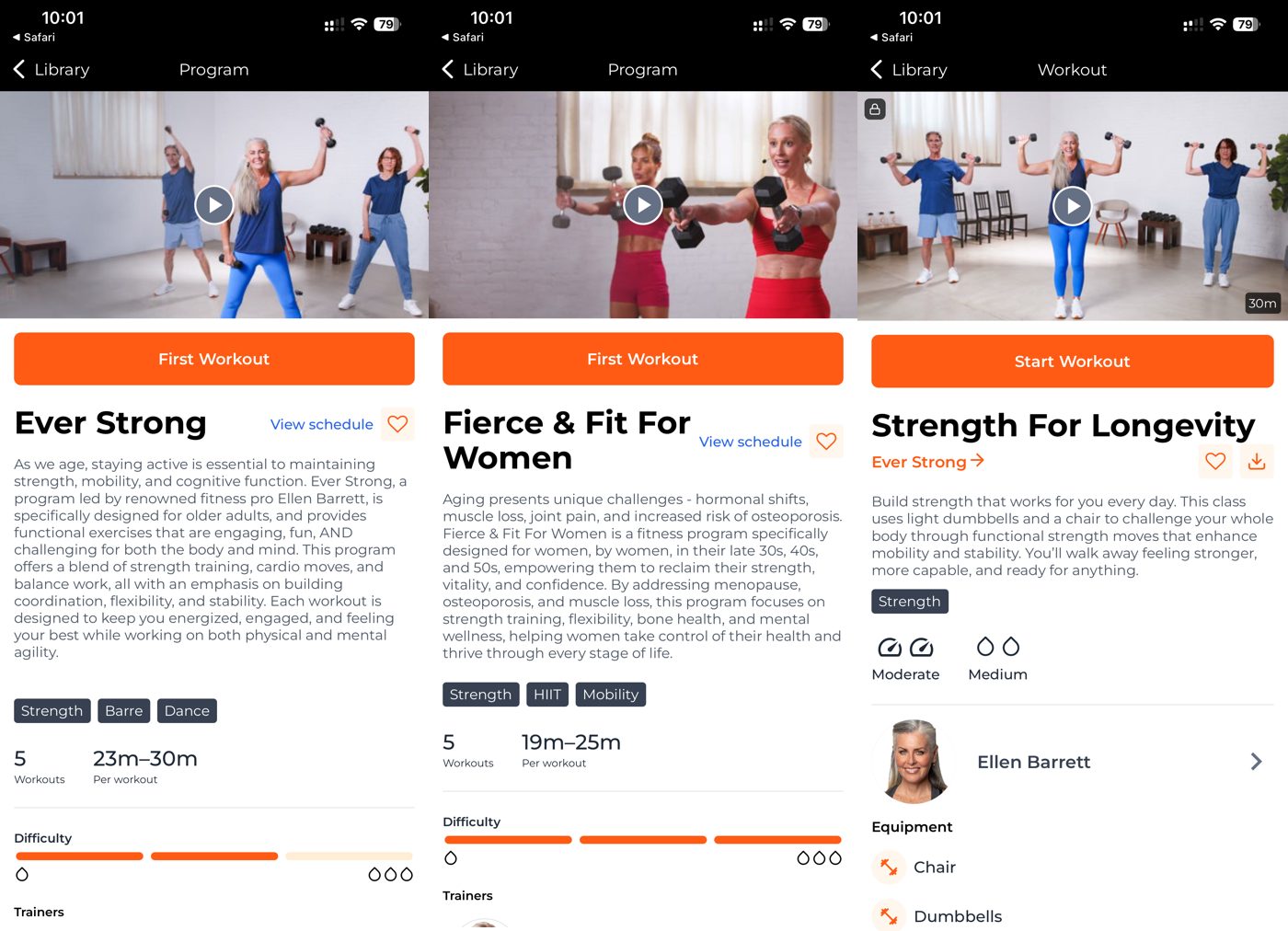
What earns that is not marketing. Daily Burn carries full seated workout programmes for limited mobility or injury recovery, low-impact modifications through most programmes, and dedicated recovery sessions, which is a deeper accessibility bench than almost anything at this price. Fierce and Fit for Women goes further in a way that is easy to miss: three women train alongside coach Amanda throughout, so the scaled version of every move is on screen the whole time and you can adjust for a knee or a low-energy day without breaking focus.
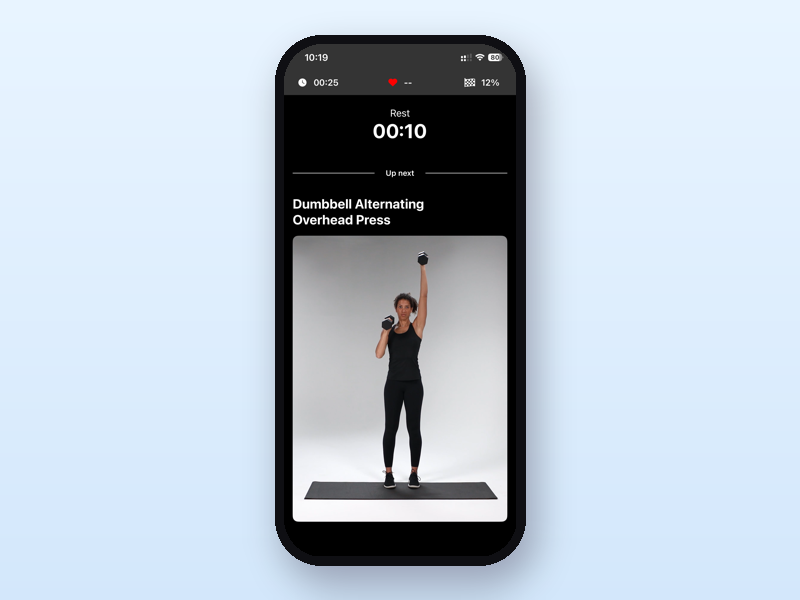
Aaptiv has low-impact material, walking, yoga, barre and stretching, and a lower ceiling on how much it can protect you. The core limitation is structural: if you are being coached by ear, nobody can see what you are doing and you cannot check your version of a movement against theirs. The app does show a short clip of each move, which helps, and the tester was clear about why that mattered to her, being visual and prone to losing her form.
Our best low-impact workouts for women over 50 ranking covers the field where this is the primary design goal rather than a category.
Muscle and bone: Aaptiv edges it, and the tie underneath is the real finding
Aaptiv wins Muscle Potential, 6 against 5.5, and progressive strength capability ties at 5 out of 10, with bone loading 4 to Daily Burn against 3. Muscle Potential carries the heaviest weight in our model at 18%, so this is Aaptiv’s most valuable win, and it is a narrow one.
Aaptiv’s advantage is that something is deciding your week. The SmartCoach plan rotated upper body, lower body and full body across the days chosen in onboarding, which is a sensible split. What it does not do is track load. Nothing in the app records the dumbbell you picked up or asks you to pick up a heavier one next time, and a voice cannot see whether you are working near your limit.
Daily Burn films everything and coaches it properly, which is a different kind of advantage, and it also has no automatic progression. Fierce and Fit for Women is emphatically not a gentle programme, and someone who has trained with heavy weights for years still finished those sessions sweating, so the intensity is real even where the loading is not programmed.
This is where both platforms hit the same ceiling. Harvard Health states plainly that progressive strength training slows bone loss and builds bone,4 and neither of these platforms delivers progression as a feature. Sá and colleagues found in a systematic review and meta-analysis apparent improvements in postmenopausal symptoms and functional capacity from resistance training, while rating the certainty of that evidence very low to low.1 The practical translation is the same on either subscription: pick a weight that challenges you, write down what you used, and increase it deliberately, because the app will not.
Our best workouts to build muscle after 50 ranking covers the platforms that do programme progression.
Value for money: Daily Burn wins, and Aaptiv may be free already
Daily Burn wins, 9 against 7, and both platforms sit at the same $14.99 entry price, so this is entirely about what arrives for the money.
| Plan | Daily Burn | Aaptiv |
|---|---|---|
| Entry monthly | $14.99 a month on Basic | $14.99 a month |
| Annual | $125.95 a year on Basic | $99.99 a year, about $8 a month |
| Higher tier | Premium $19.95 a month or $149.99 a year | None |
| What the higher tier adds | The full archive of past daily workouts, audio-only options and early access | Not applicable |
| Free trial | 30 days | 7 days |
| Refunds | A 30-day money-back guarantee, which does not stack with the trial | Not assessed |
| Another way in | None | Often subsidised or free through an employer, health plan or Medicare |
For most people the Basic plan at $14.99 a month is enough, and Premium is worth it mainly for the full historical archive of daily workouts. More than 2,000 workouts across every format at that price is genuinely hard to match, which is what the score reflects.
Aaptiv is cheaper annually and buys less, and the sensible order of operations is to check whether you already have it. It is distributed heavily through employer benefits, health plans and Medicare Advantage, so a call to your HR department or your health plan may make the whole question moot. One caution on Daily Burn: the free trial and the money-back guarantee do not stack, so read the terms before you sign up rather than after. Our best free and budget workout apps ranking covers the cheaper end of the market.
Structure: a tie, and both leave the week to you
Programme Structure ties at 6.5, which is a fair result for two platforms that organise workouts without programming a person.
Daily Burn’s programmes are day-by-day schedules covering beginner cardio through advanced strength, and Fierce and Fit for Women is the one to judge the platform on: strength and HIIT in the same session, built for women in their late 30s and beyond. Stronger for Longer sits beside it as the slower, more controlled option, well structured and easy to stay consistent with on a lower-energy day. What the platform does not do is progress you between blocks or schedule a deload.
The size of the library is its own structural problem, and it is worth being direct about. Opening Daily Burn for the first time meant seeing thousands of workouts across every type of exercise imaginable and spending a few minutes just staring. The first week ended up looking nothing like the plan it started as. That is delightful if variety is what keeps you going and paralysing if you need one path.
Aaptiv answers that with SmartCoach, which assembles a plan for you and adapts it, and that is a genuine advantage over browsing. The counterweight is that the plan is a rotation rather than a progression, and the review of it was based on a short run rather than the eight weeks that would show whether the adaptation stays sensible.
Perimenopause and menopause fit: neither, and one is nearer the mark
Daily Burn wins Women Over 40 Specificity, 4.4 against 3.4, with menopause programming 3 out of 10 against 1, pelvic floor 2 against 1 and hormone awareness 2 against 1.
The 3 is not menopause programming and it should not be mistaken for it. What Daily Burn has is programmes deliberately built for women in their late 30s and beyond, which is a demographic decision rather than a physiological one, and it lands closer to this audience than a general library usually does. There is no hormone content, no cycle or symptom adaptation and no clinician involved.
Aaptiv has less. The hands-on look found no dedicated perimenopause or menopause programming or education anywhere in the app, and its parent company’s health-tech posture, Medicare distribution and musculoskeletal programmes included, does not extend to women’s-health specialists. Its review is direct that other apps address hormonal needs, pelvic floor or joint problems more directly.
The evidence on what exercise can offer here is more modest than the marketing around it. Money and colleagues, in an overview of reviews, found evidence that yoga improved physical, urogenital and total menopause symptoms, with the effect on vasomotor and psychological symptoms inconclusive, and concluded there is insufficient evidence to recommend a particular form of exercise.2 That is a reasonable frame for both platforms: movement helps, and no specific class type on either app is the answer.
Pelvic floor
Daily Burn takes it 2 out of 10 against 1, and neither has anything you could call pelvic-floor training. Daily Burn’s edge comes from having seated programmes and low-impact modifications that let you avoid loading you do not want, rather than from any dedicated content. Aaptiv has none at all, and this was one of the specific gaps its review named. Neither will help you manage this, and a pelvic-health physiotherapist will.
Expert credibility
A tie at 4 out of 10. Daily Burn’s trainers are motivating and cue movements well, coach Amanda on Fierce and Fit for Women among them, and none of them holds clinical or menopause credentials. Aaptiv’s trainers are certified and its parent, PEAR Health Labs, brings a health-technology posture through Medicare and musculoskeletal programmes, and there are no women’s-health clinicians attached either. Two platforms, the same absence.
Recovery: Aaptiv edges the criterion, Daily Burn takes the deload row
Aaptiv wins Recovery Compatibility, 7 against 6.5, while recovery and deload capability goes to Daily Burn at 5 out of 10 against 4.
Aaptiv earns the criterion on the strength of its calm content. Meditation, deeper-sleep sessions and relaxing stretch are a large, well-made part of the library rather than a token category, and for a woman whose sleep has become unreliable that is worth more than another workout. Its mind-body support score of 7 out of 10, the highest row on either side of this comparison, is the same fact stated differently.
Daily Burn has dedicated mobility and recovery content, and a 15-Minute Mobility session sorted out a week of accumulated tension during the month of testing, which is exactly the use case. What neither platform has is a programmed deload: no rest week arrives on its own, on either subscription.
Our low-cortisol workouts for perimenopause guide covers the platforms that treat recovery as something to schedule rather than something to offer.
Time efficiency: a tie, and both fit a compressed week
Time Efficiency ties at 7 each, and the two arrive there from different directions.
Daily Burn runs from 15 minutes to over an hour, and on a bad day 15 minutes of something beats nothing at all. Daily Burn 365 adds a new 30-minute session every day, available on demand whenever suits, which removes the choosing entirely.
Aaptiv concentrates around 30 minutes, which is what busy people need, and its real time advantage is different: audio training fits into time that is already committed. A walk, a commute, a treadmill at a gym, a run outdoors. That is not a shorter workout, it is a workout that does not need its own slot. Our 30-minute workouts for women over 40 and 20-minute workouts for perimenopause guides cover the wider field.
Nutrition: Daily Burn wins, and neither is a nutrition product
Daily Burn wins Nutrition Integration, 6 against 4, with midlife nutrition capability 5 out of 10 against 2.
Recipes and meal plans come inside the Basic subscription rather than as an upsell, and there is a separately priced one-on-one coaching add-on, a real human coach reachable by text and video, which goes further than general content. That add-on was not tried during the month, and it is the obvious route if what you actually need is accountability rather than another workout.
Aaptiv carries a lot of nutrition information, including material that is useful in its own right, and it is general rather than aimed at a peri or menopausal audience. The specific frustration in testing was the filtering: wanting low-carb meals and finding no way to search for them. Nutrition Integration carries the smallest weight in our model at 7%, so this criterion moves neither total much. Our best workout apps with meal plans ranking covers the platforms where eating is the point.
Equipment and space needed at home
The same short list on both, and Aaptiv assumes you may not be at home at all.
For Daily Burn’s strength and HIIT programmes you need a mat and dumbbells at minimum, ideally two or three pairs of different weights so you can scale up or down inside a single session. Equipment requirements are listed clearly before you start, and for dance, yoga and bodyweight work you need nothing.
Aaptiv is built to travel. Its strength classes use dumbbells or body weight, and much of the library assumes a treadmill, a gym floor, a bike, a rower or a pavement rather than a living room. That is the point of the format, and it means the equipment question is often answered by wherever you already train.
On either subscription the purchase that changes the outcome is a set of dumbbells you can actually progress with, since neither platform tracks or prescribes load. Neither requires subscription hardware, a machine or a dedicated room.
Starting from scratch: Daily Burn, comfortably
Daily Burn wins beginner on-ramp, 8 out of 10 against 6, and 8 is among the highest we have published for that capability.
Three things earn it. Daily Burn 365 is a new beginner-accessible 30-minute workout every day that you can press play on without thinking. The coaches explain the exercises and walk you through the movements, so you are being actively coached rather than following someone in silence, which matters most when the pattern is unfamiliar. And the seated and low-impact content means a genuine beginner has somewhere to start that is not a compromise.
Aaptiv is welcoming in its own way, with level filters, an adaptive SmartCoach plan and a short clip of each move, and it asks something of a beginner that a video does not: the ability to translate a description into a movement you cannot see. Just listening rather than watching is an adjustment, and for a first-time exerciser at home it would not be the first choice.
One caution on Daily Burn that applies to beginners specifically: Fierce and Fit for Women is not the place to start. It is a strength and HIIT programme for people already training, and Daily Burn 365 is the better entry point.
Daily Burn pros and cons
Daily Burn scores 6.8. It is strongest on value for money and weakest on suitability for women over 40.
Pros
- UX and Design 9 against 6, with a month of use and no crashes, buffering or confusing menus.
- Value for Money 9 against 7, for more than 2,000 workouts at $14.99 a month.
- Joint Friendliness 8.5 against 6.5, with low-impact 8 out of 10 against 5 and full seated programmes.
- Beginner on-ramp 8 against 6.
- Nutrition Integration 6 against 4, with recipes and meal plans included.
- Programmes aimed at women in their late 30s and beyond.
- A 30-day free trial.
Cons
- Muscle Potential 5.5 against 6, with no automatic load progression anywhere.
- Recovery Compatibility 6.5 against 7 and mind-body support 5 out of 10 against 7.
- No menopause, hormone or pelvic-floor programming and no clinical credentials.
- No programmed deloads.
- So much choice that it can stall someone who wants one clear path.
- The trial and the money-back guarantee do not stack.
Aaptiv pros and cons
Aaptiv scores 6.1. It leads on short sessions and trails on suitability for women over 40.
Pros
- Mind-body support 7 out of 10 against 5, the strongest capability row on the page, across meditation, deeper-sleep and relaxing stretch.
- Recovery Compatibility 7 against 6.5, and Muscle Potential 6 against 5.5.
- About $8 a month on the annual plan, and often subsidised or free through an employer, health plan or Medicare.
- An AI SmartCoach that assembles and adapts a plan.
- Intuitive navigation.
- The format works where a screen does not, at a gym or outdoors.
Cons
- UX and Design 6 against 9, with a rise in reliability complaints since the AI rebuild, including broken Apple Watch and Apple Health syncing.
- Joint Friendliness 6.5 against 8.5 and low-impact 5 out of 10 against 8.
- Strength delivered audio-first with no load tracking.
- No menopause programming, pelvic-floor work or hormone content.
- Nutrition with no usable filter.
- And a hands-on look rather than a multi-week test.
Quick yes/no comparison
| Feature | Daily Burn | Aaptiv |
|---|---|---|
| You watch a full follow-along class | Yes, everything is filmed | No, audio with a short clip of each move |
| Free trial | Yes, 30 days | Yes, 7 days |
| Money-back guarantee | Yes, 30 days, and it does not stack with the trial | Not assessed |
| A plan assembled for you | No, day-by-day programmes you pick | Yes, the AI SmartCoach |
| Automatic load progression | No | No |
| Seated workouts for limited mobility | Yes, full programmes | Not assessed |
| Dance classes | Yes | No |
| Guided meditation and sleep content | Yes, alongside yoga and mobility | Yes, and it is a strength |
| Outdoor and treadmill running classes | Not assessed | Yes, that is the heartland |
| Menopause or perimenopause programming | No | No |
| Pelvic floor content | No | No |
| Nutrition guidance | Yes, recipes and meal plans in Basic | Yes, general and hard to filter |
| Human coaching available | Yes, a separately priced add-on | No, an AI assistant instead |
| Available through an employer or health plan | No | Often |
Daily Burn vs Aaptiv at a glance
| Daily Burn | Aaptiv | |
|---|---|---|
| Overall score | 6.8 | 6.1 |
| How it was assessed | Fully tested for one month on the Basic plan | Sample tested, a hands-on look through onboarding, the library and sample sessions |
| Cost | $14.99 a month or $125.95 a year on Basic, $19.95 a month or $149.99 a year on Premium | $14.99 a month or $99.99 a year, about $8 a month |
| Trial | 30-day free trial, plus a 30-day money-back guarantee that does not stack | 7-day free trial |
| Session length | 15 minutes to over an hour | Most workouts land around 30 minutes |
| Approach | More than 2,000 filmed workouts and day-by-day programmes, plus a daily 30-minute session | Trainer-led audio classes with an AI SmartCoach adaptive plan |
| Impact by default | Mixed, with deep low-impact and seated content | Mixed, with walking, yoga and stretching as the gentle end |
| Who is behind it | Motivating trainers with good cues, including coach Amanda, and no clinical credentials | Founded in 2016, acquired by PEAR Health Labs in 2021, certified trainers only |
| Menopause content | None, though some programmes target women in their late 30s and beyond | None at all |
| Equipment | A mat and two or three pairs of dumbbells for strength and HIIT | Dumbbells or body weight, and often a treadmill, bike, rower or pavement |
| Known live issue | A library so large it can stall you, and no programmed deloads | Reliability complaints since the AI rebuild, including broken Apple Watch and Apple Health syncing |
| How we assessed it | Fully tested for one month on the Basic plan | Sample tested, a hands-on look rather than a multi-week run |
Daily Burn vs Aaptiv: the full scoring breakdown
Daily burn wins five of the nine weighted criteria and aaptiv wins two, with two tied. Both of Aaptiv’s wins are narrow, and the two ties, Time Efficiency and Programme Structure, are genuine rather than convenient.
| Criterion | Weight | Daily Burn | Aaptiv | Winner |
|---|---|---|---|---|
| Muscle Potential | 18% | 5.5 | 6 | Aaptiv |
| Time Efficiency | 15% | 7 | 7 | Tied |
| Joint Friendliness | 12% | 8.5 | 6.5 | Daily Burn |
| Programme Structure | 12% | 6.5 | 6.5 | Tied |
| Women Over 40 Specificity | 10% | 4.4 | 3.4 | Daily Burn |
| Recovery Compatibility | 10% | 6.5 | 7 | Aaptiv |
| Value for Money | 8% | 9 | 7 | Daily Burn |
| UX and Design | 8% | 9 | 6 | Daily Burn |
| Nutrition Integration | 7% | 6 | 4 | Daily Burn |
| Overall | 100% | 6.8 | 6.1 | Daily Burn |
The twelve capability scores
Daily burn wins eight of the twelve capability scores and aaptiv wins one, with three tied. The widest gap is low-impact, 8 out of 10 against 5, and the one row Aaptiv takes is mind-body support at 7 against 5, which is also the highest number anywhere in this comparison. Menopause education ties at 2 out of 10 and expert credibility at 4, which together say that neither platform was built for this stage or staffed for it.
| Capability | Daily Burn | Aaptiv | Winner |
|---|---|---|---|
| Low-impact | 8 | 5 | Daily Burn |
| Progressive strength | 5 | 5 | Tied |
| Bone loading | 4 | 3 | Daily Burn |
| Recovery & deload | 5 | 4 | Daily Burn |
| Menopause programming | 3 | 1 | Daily Burn |
| Pelvic floor | 2 | 1 | Daily Burn |
| Hormone awareness | 2 | 1 | Daily Burn |
| Menopause education | 2 | 2 | Tied |
| Expert credibility | 4 | 4 | Tied |
| Mind-body support | 5 | 7 | Aaptiv |
| Beginner on-ramp | 8 | 6 | Daily Burn |
| Midlife nutrition | 5 | 2 | Daily Burn |
Who wins for…
Who wins for painful joints
Daily Burn. Joint Friendliness 8.5 against 6.5, low-impact 8 out of 10 against 5, and seated programmes that actually exist.
Who wins on price
Daily Burn for what you get, Aaptiv for what you pay. Value for Money 9 against 7, and Aaptiv is cheaper annually.
Who wins for a complete beginner
Daily Burn. Beginner on-ramp 8 out of 10 against 6, and a new beginner-accessible session every day.
Who wins for building muscle
Aaptiv, narrowly, and neither convincingly. Progressive strength ties at 5 out of 10 and neither tracks load.4
Who wins for sleep and stress
Aaptiv. Mind-body support 7 out of 10 against 5, across meditation, deeper-sleep and relaxing stretch.5
Who wins for perimenopause and menopause
Neither. Menopause programming is 3 out of 10 against 1, and the 3 is a target audience rather than any content.
Who wins for pelvic floor
Neither, at 2 out of 10 against 1. Daily Burn simply gives you more ways to avoid loading you do not want.
Who wins for variety
Daily Burn, by a distance. More than 2,000 filmed workouts across every format on one subscription.
Who wins for training at a gym or outdoors
Aaptiv. Audio coaching is the right format anywhere you cannot watch a screen.
Who wins for nutrition
Daily Burn. 6 against 4, with recipes and meal plans inside the Basic plan.
Who wins for a busy week
A tie at 7. Daily Burn goes down to 15 minutes; Aaptiv fits into time you have already spent.
Who wins on evidence
Daily Burn, on a month against a first look. Aaptiv’s long-term ratings remain provisional.
Decision tree for women over 40
You need to see the movement. Daily Burn. This is the single clearest split between the two.
You train on a treadmill, at a gym or outdoors. Aaptiv, and connect Strava if you run.
Variety is the thing that keeps you consistent. Daily Burn, and pick two or three programmes to rotate rather than browsing every day.
You want one coach and one clear path. Neither, really, and Aaptiv’s SmartCoach comes closer to deciding for you.
A joint or limited mobility sets the terms. Daily Burn, for the seated programmes and the visible modifications.
Sleep and stress are the problem, not fitness. Aaptiv, for the meditation and deeper-sleep library.
You want to check whether you already have one. Aaptiv, through an employer, a health plan or Medicare, before you pay for anything.
Perimenopause is why you are looking. Neither. Menopause programming is 3 out of 10 and 1 out of 10.
What we did not test
One platform got a month and the other got a first look, and neither got a full programme cycle.
On Daily Burn, the one-on-one coaching add-on was not tried, Daily Burn 365 was not run as a routine, the seated workout programmes were not used and the Premium archive was not opened. A month of rotating two strength programmes with dance and mobility tells you how the platform behaves week to week. It does not tell you what twelve weeks of one programme produces.
On Aaptiv the gaps are wider. There was no full multi-week programme, no outdoor running classes, no use of the Strava connection and no Apple Watch app, which matters because the syncing complaints are the live concern about this platform and we could not confirm or dismiss them.
Neither platform’s handling of an injury or a symptom flare was assessed, and nothing on this page should be read as a claim about long-term results on either.
Which is better for women over 50?
Daily Burn, and by more than at 40
The accessibility content is what makes the difference. Full seated programmes, low-impact modifications throughout and visible on-screen scaling are worth more the more your body has opinions, and being coached through a movement rather than left to copy it matters when the pattern is new or being relearned. Wu and colleagues found in a meta-analysis of randomised trials that high-intensity interval training improved cardiorespiratory fitness in older adults compared with moderate continuous training,3 which is a fair defence of keeping some hard work in the week, on a platform that also gives you somewhere gentle to put it. Our best workouts for postmenopause ranking covers the wider field.
Aaptiv, as a companion rather than a plan
Its best use after 50 is the part that has nothing to do with lifting: guided walks, gentle stretch, and a meditation and sleep library good enough to justify the subscription on its own. As the primary way to train, the audio-first format asks you to judge your own form with nobody watching, which is a bigger ask at this stage than at 30.
What we would actually suggest
Take the 30-day Daily Burn trial and use it properly, one strength programme rotated with mobility and something you enjoy, and add your own dumbbell progression on paper because neither app will do it. Check whether Aaptiv comes free through your employer or health plan, and if it does, keep it for the walks and the sleep sessions. Our best dance workout apps for women over 40 ranking covers the format Daily Burn does surprisingly well.
Frequently asked questions
Is Daily Burn or Aaptiv better for women over 40?
Daily Burn, 6.8 against 6.1. It wins UX and Design 9 against 6, Value for Money 9 against 7, Joint Friendliness 8.5 against 6.5, Nutrition Integration 6 against 4 and Women Over 40 Specificity 4.4 against 3.4, and it takes eight of the twelve capability rows against one. Aaptiv wins Muscle Potential 6 against 5.5, plus Recovery Compatibility 7 against 6.5, and its mind-body support is 7 out of 10 against 5, the best single row either platform holds. Neither has menopause programming.
What is the actual difference between them?
One is a video library and the other is a voice in your ear. Daily Burn is more than 2,000 filmed workouts across strength, HIIT, dance, yoga, mobility and seated sessions, organised into day-by-day programmes. Aaptiv is trainer-led audio, built for treadmill and outdoor running, gym strength, cycling, rowing, boxing, barre, yoga, stretching and guided meditation, with a short video of each move rather than a full follow-along class. That single design decision explains almost every score difference on this page.
Which is better value?
Daily Burn, 9 against 7, and both are inexpensive. Daily Burn is $14.99 a month or $125.95 a year on Basic, with Premium at $19.95 a month or $149.99 a year adding the full archive of past daily workouts and audio-only options. Aaptiv is $14.99 a month or $99.99 a year, about $8 a month annually, which is the cheaper headline. Daily Burn wins because of what the money buys: more than 2,000 workouts across every format against a mostly audio library. Aaptiv has one advantage worth checking first, since it is often subsidised or free through an employer, health plan or Medicare benefit.
Which one is gentler on joints?
Daily Burn, 8.5 against 6.5, with low-impact capability 8 out of 10 against 5. Its library carries full seated workout programmes for limited mobility, low-impact modifications through most programmes and dedicated recovery sessions, and in Fierce and Fit for Women three women train alongside the coach so the scaled version of every move is visible on screen the whole time. Aaptiv has low-impact options too, walking, yoga and stretching among them, and being coached by ear means you cannot see whether your version of a movement is the safe one.
Which builds more muscle?
Aaptiv, 6 against 5.5, and it is the narrowest win on the page and the one we would treat most carefully. Its SmartCoach plans rotate upper body, lower body and full body, which is a reasonable structure, and the strength is delivered audio-first with no load tracking, so nothing records what you lifted or tells you to lift more. Daily Burn’s strength content is filmed and coached but has no programmed progressive overload either. Progressive strength capability ties at 5 out of 10, which is the fairer summary: neither is a strength programme, and Harvard Health is clear that it is progressive strength training that slows bone loss and builds bone.4
Does either have menopause or perimenopause content?
No. Menopause programming is 3 out of 10 for Daily Burn against 1 for Aaptiv, and that 3 is earned by having real programmes aimed at women in their late 30s and beyond rather than by any menopause content. Aaptiv’s review found no dedicated perimenopause or menopause programming or education at all. Pelvic floor is 2 out of 10 against 1, hormone awareness 2 against 1, and neither platform has a women’s-health clinician attached. If hormones are the reason you are looking, neither of these is built for it.
Which has the better mind-body and meditation content?
Aaptiv, clearly, on mind-body support of 7 out of 10 against 5, and it is the strongest capability row either platform holds. The library runs from meditation to deeper-sleep sessions and relaxing stretch, alongside yoga and Pilates-style classes, which is exactly what an audio format does well. That matters more than it sounds at this life stage: the NHS notes that regular exercise, including relaxing activities such as yoga and Pilates, can help with menopausal sleep, mood and symptoms.5 Daily Burn has yoga, meditation and mobility, and it is not the centre of the product.
How much did you actually test each one?
Daily Burn far more than Aaptiv. Daily Burn was used for a full month on the Basic plan, rotating Fierce and Fit for Women with Stronger for Longer, plus dance and mobility work. Aaptiv was a hands-on look rather than a multi-week test: the app was downloaded, onboarding and the library explored, sample sessions tried, and the screenshots are our own. Any Aaptiv rating that depends on long-term use should be read as provisional.
Which is better for a beginner?
Daily Burn, on a beginner on-ramp of 8 out of 10 against 6, and it is one of the highest on-ramp scores we have published. Daily Burn 365 gives a new beginner-accessible 30-minute workout every day that you can simply press play on, the filtering by type, length, equipment and difficulty is well built, and coaches explain the movements rather than leaving you to copy them. Aaptiv is friendly enough, with level filters and a SmartCoach plan that adapts, and a beginner who cannot see the movement is being asked to learn form by description.
Is Aaptiv still reliable after the AI rebuild?
That is the open question about it. Aaptiv was founded in 2016, acquired by PEAR Health Labs in 2021 and rebuilt around an AI platform, adding SmartCoach adaptive plans and an AI assistant. Since then there has been a rise in reliability complaints, including broken Apple Watch and Apple Health syncing, lost tracking and removed workouts. The practical advice is to use the 7-day free trial to confirm that syncing works on your own device before you pay for a year. Daily Burn, by contrast, ran for a month with no technical issues, no buffering, no confusing menus and no crashes.
Which one has nutrition guidance?
Daily Burn, 6 against 4, with midlife nutrition capability 5 out of 10 against 2. Recipes and meal plans are included in the Basic subscription, and there is a separately priced one-on-one coaching add-on with a real human coach available by text and video, which was not tried. Aaptiv carries a lot of nutrition information and it is general rather than aimed at a peri or menopausal audience, and the filtering is the weak point: there was no way to search for low-carb meals specifically. Neither has a registered dietitian involved.
Which one would you actually recommend?
Daily Burn for most women reading this, because you can see what you are doing, the low-impact and seated options are genuinely deep, and $14.99 a month buys an unusual amount. Aaptiv if your training happens where a screen does not work, on a treadmill, at a gym or outdoors, or if your employer or health plan already pays for it, and its meditation and sleep library is a real reason to keep it alongside something else. Neither one should be the whole plan for a midlife body, because neither will make you lift heavier.
Research citations
- Sá KMM, da Silva GR, Martins UK, et al. Resistance training for postmenopausal women: systematic review and meta-analysis. Menopause. 2023;30(1):108–116. PubMed. (Cited for: apparent improvements in postmenopausal symptoms and functional capacity with resistance training. Note: the authors rate the certainty of the evidence as very low to low, so we report it on that basis.)
- Money A, MacKenzie A, Norman G, et al. The impact of physical activity and exercise interventions on symptoms for women experiencing menopause: overview of reviews. BMC Women’s Health. 2024;24(1):399. PubMed. (Cited for: evidence of improvement in physical, urogenital and total menopause symptoms following yoga, with vasomotor and psychological evidence inconclusive, and insufficient evidence overall to recommend a particular form of exercise.)
- Wu ZJ, Wang ZY, Gao HE, Zhou XF, Li FH. Impact of high-intensity interval training on cardiorespiratory fitness, body composition, physical fitness, and metabolic parameters in older adults: a meta-analysis of randomized controlled trials. Experimental Gerontology. 2021;150:111345. PubMed. (Cited for: interval training improved peak oxygen consumption in older adults compared with moderate-intensity continuous training.)
- Harvard Health Publishing. Strength training builds more than muscles. Harvard Medical School. Harvard Health. (Cited for: progressive strength training slows bone loss and builds bone.)
- National Health Service. Menopause and perimenopause: things you can do. NHS. NHS. (Cited for: regular exercise, including relaxing activities such as yoga and Pilates, can help with menopausal sleep, mood and symptoms.)
This page compares fitness platforms. It is not medical advice. Katy is a woman who has trained through perimenopause, not a clinician. Any training observations described are one person’s recorded experience, not an expected result or a general pattern. If you have a diagnosed condition, an injury, or symptoms that concern you, speak to a qualified healthcare professional before changing how you train.
About this comparison
Compiled by Katy Cole for Her Daily Fit. Both platforms were used, and not to the same depth. Daily Burn ran for a full month on the Basic plan, and the methods section above sets out which programmes that covered. Aaptiv was a hands-on look: the app was downloaded, onboarding and the library explored and sample sessions tried, with our own screenshots, so any rating that depends on long-term use is provisional. Both were scored on the same nine weighted criteria and the same twelve capability scores. Harvard Health’s position on progressive strength is the reason Muscle Potential carries the heaviest weight in that model,4 and it is also why two platforms with no load tracking share a ceiling. Prices were verified against official sources in 2026 and may differ if there has been a recent change; Aaptiv in particular is distributed through employer benefits, health plans and Medicare, so what you pay may bear no relation to the list price. Scores are pulled live from each programme’s own assessment. Her Daily Fit earns nothing from either platform.
Compared with
Featured in
Best low-impact workouts, women over 50
Best workouts to build muscle after 50
Best workout apps with meal plans
Best dance workout apps, women over 40
30-minute workouts, women over 40
20-minute workouts for perimenopause
Low-cortisol workouts for perimenopause
Best workouts for postmenopause