Fitness Blender scores higher overall, 7.2 against 7.1, and is the stronger platform for joint-friendly training and menopause-stage suitability. Jillian Michaels App is the better pick if what you need most is app quality and nutrition guidance.
Quick answer
- Fitness Blender 7.2 vs Jillian Michaels App 7.1
- Free vs $19.99 a month
- Joints 7 vs 4.5
- Menopause programming 6 vs 1
- App quality 8.5 vs 5, Jillian
- Nutrition 9 vs 7, Jillian
Fitness Blender is the better choice for a woman over 40, and the reason is what the training defaults to rather than what it costs. It wins Joint Friendliness 7 against 4.5, Women Over 40 Specificity 5.8 against 7, Recovery Compatibility 7 against 6 and Value for Money 9 against 8.5. On the twelve capability scores it wins ten, including low-impact 8 out of 10 against 3, menopause programming 6 against 1 and pelvic floor 5 against 1.
The Jillian Michaels App wins the two criteria that decide whether you enjoy using a platform. UX and Design 8.5 against 5, because it is a properly built modern app and Fitness Blender is a dated website with no app at all. Nutrition Integration 9 against 7, on meal planning good enough to be worth the subscription by itself. Midlife nutrition capability is 6 out of 10 against 5.
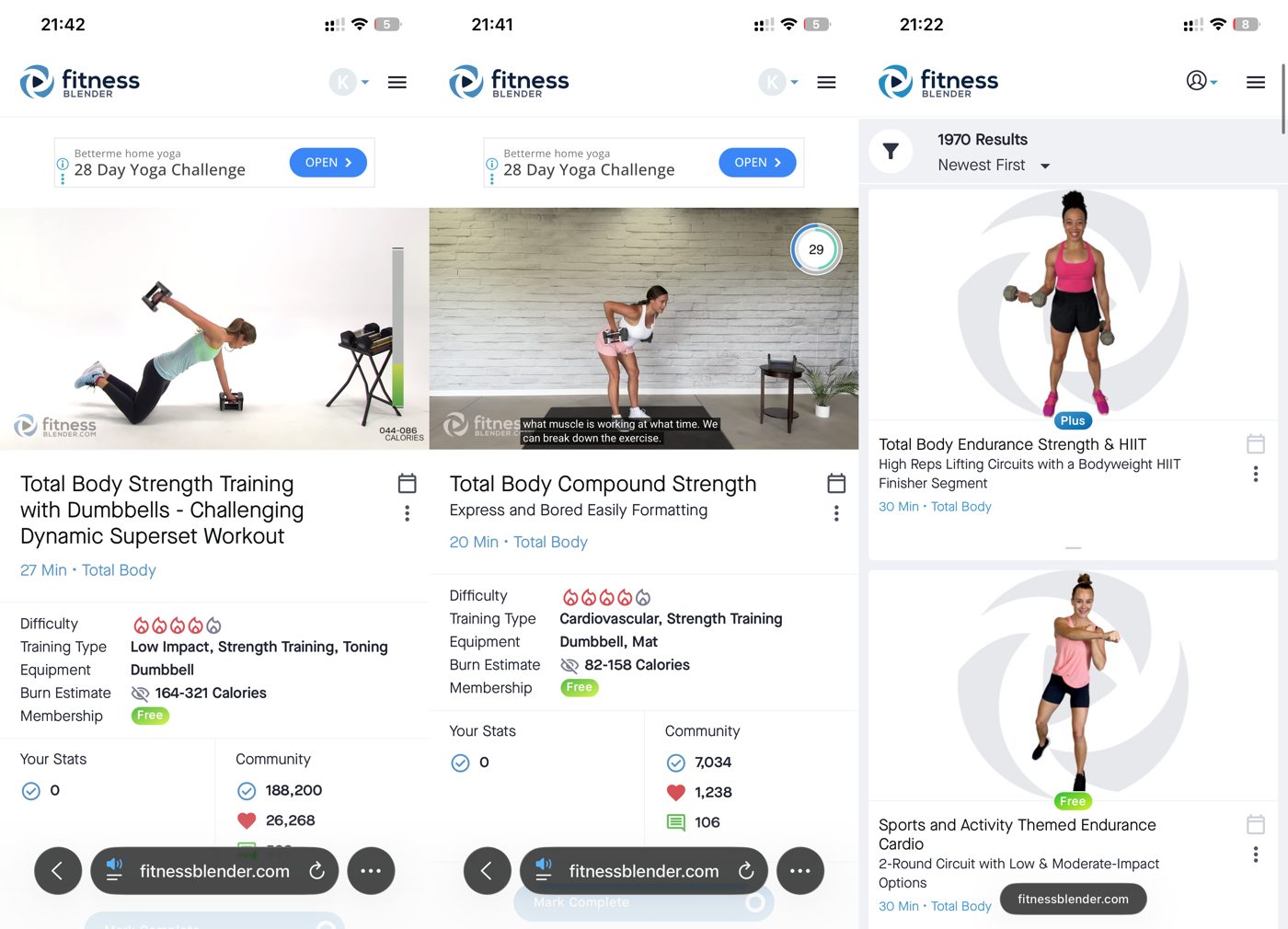
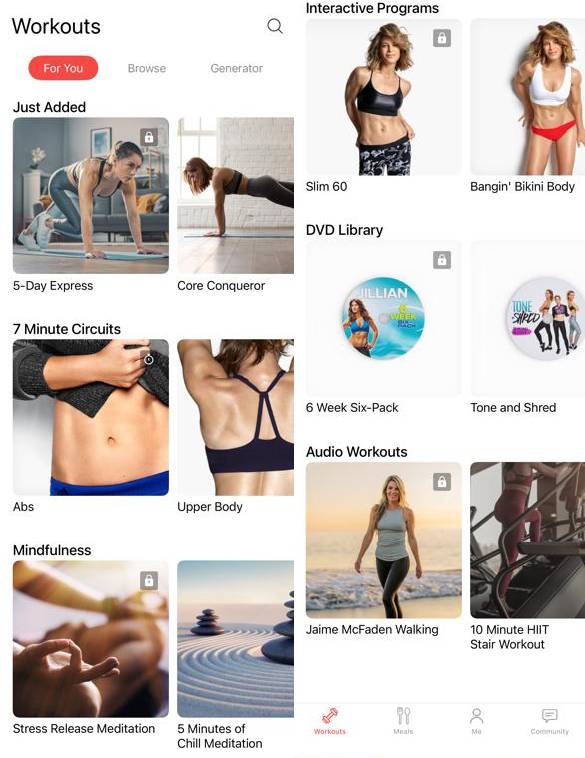
Neither platform was run to completion, and the two tests were different shapes. Fitness Blender was sample tested on free access: several strength workouts were completed, the library and filters were used, and the screenshots on its review are our own, but no multi-week program was run. The Jillian Michaels App was tested across two weeks over two programmes, Slim 60 and Shred It With Weights, and neither programme was finished, because Katy Cole deliberately stopped. That decision is itself a finding and we treat it as one. On both platforms, any score that depends on long-term use is provisional, and we say so again where it matters.
Fitness Blender if you want strength you can load and progress, a deep low-impact library to build around a joint, a dedicated perimenopause programme, and a bill of nothing. The Jillian Michaels App if you still thrive on high intensity, have no joint issues, and want a polished app with the best meal planning in this category. If you are coming back to a style of training you remember liking, read the joints section before you subscribe.
Fitness Blender vs Jillian Michaels: the two platforms
Same nine weighted criteria, same twelve capability scores, and two completely different ideas of what a workout is for.
Fitness Blender
Winner
A large library of follow-along videos on the website and on YouTube covering strength, HIIT, cardio, Pilates, barre, kettlebell, kickboxing, low-impact and stretching, plus structured multi-week programs, workouts rated 1 to 5, and a calendar and custom-program tools inside FB Plus.
- 5 to 90 min
- Value 9.0
- Low-impact 8/10
- Free tier
- Sample tested
Choose Fitness Blender if you:
- Want strength you can load and keep loading
- Need to build a week around a joint
- Want a dedicated perimenopause programme
- Are happy training in a browser
- Do not want to spend anything to start
Jillian Michaels App
Runner-up
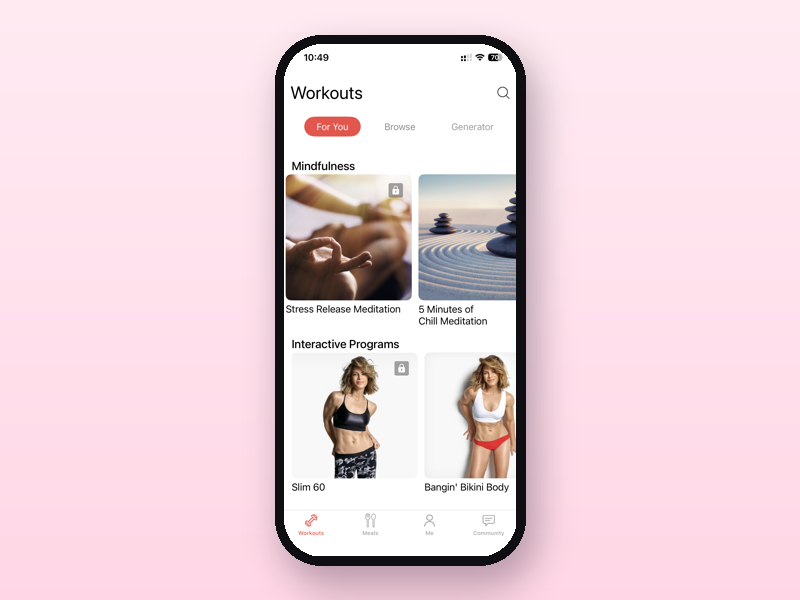
A large library of more than 1,000 workout videos and structured programmes, bodyweight and HIIT-led, with the full DVD back catalogue, meal plans with grocery lists, mindfulness and audio workouts, and a Generator that builds a session to your time, location and intensity.
- 10 to 45 min
- Nutrition 9.0
- UX 8.5
- 7-day trial
- Two weeks tested
Choose the Jillian Michaels App if you:
- Still respond well to high-intensity training
- Have no joint issues to work around
- Want meal plans and grocery lists built in
- Want a polished phone app that works offline of a browser
- Like being recommended where to start
How we scored this, and what each test actually covered
Both platforms were scored on the same nine weighted criteria and the same twelve capability scores. Muscle Potential carries 18%, Time Efficiency 15%, Joint Friendliness and Programme Structure 12% each, Women Over 40 Specificity and Recovery Compatibility 10%, Value for Money and UX and Design 8%, and Nutrition Integration 7%.
Same tester, two tests of different shapes. Katy is a woman in her early 40s, perimenopausal, working full-time with children, and post knee injury, and she has been testing structured fitness platforms for fifteen years across something between forty and fifty programmes. On Fitness Blender she worked on the free tier: she used the filters, completed several strength sessions including Total Body Strength Training with Dumbbells with Kelli and a Total Body Compound Strength session, and took her own screenshots. On the Jillian Michaels App she ran the onboarding questionnaire, worked through Slim 60 and then Shred It With Weights across two weeks, used the meal plans, and stopped both programmes.
Neither test is a completed multi-week programme, so on both sides any rating that depends on long-term use carries a provisional flag. The two tests are also asymmetric in an interesting way: the Fitness Blender assessment is broad and shallow, a library explored rather than a plan followed, while the Jillian Michaels assessment is narrow and deep, two plans followed far enough to know they were wrong and then abandoned.
Where a criterion depends on what a platform holds, price, library breadth, whether a menopause programme exists, both columns stand on the same ground. Where it depends on how training feels over months, neither column is a long-term verdict, and we say so in the sections where that matters.
Joint friendliness: the widest gap on the page, and it is about the default
Fitness Blender wins, 7 against 4.5, with low-impact capability 8 out of 10 against 3, which is the widest capability gap between these two.
The difference is not that one platform has impact and the other does not. Both have plenty of HIIT. The difference is what happens when you do nothing. On Fitness Blender the low-impact and joint-friendly library is extensive, it is informed by the doctors of physical therapy on the team, and the length, type and equipment filters let you assemble a week that never touches a jump. On the Jillian Michaels App the library defaults to high intensity and impact almost everywhere, and building a gentler rotation means resisting most of what is in front of you.
There is one exception on the Jillian side and it deserves naming, because it is easy to miss. Low Impact Shred is a 30-day programme built specifically around no-impact training, and it is the programme to look for if impact is your main concern with the platform. It sits buried in a long programme list rather than being offered up, and it was not tested here, so we can tell you it exists and not how it feels.
The alternative-exercise feature is the other half of this story, and it is better than most platforms offer. Most movements carry a lower-intensity or lower-impact swap you can select mid-session. The limit is that the swap is constrained to the same movement type, so a plank becomes another plank rather than something from a different category, which is a real constraint if you need to avoid a whole class of movement rather than a single exercise. In practice she was reaching for the alternative exercise options, which Jillian does offer for most movements, quite regularly, and the underlying problem is stated precisely in the review: post knee injury, that level of impact is more than she needed at this point.
None of this makes the intensity worthless. Cai and colleagues found in a systematic review and meta-analysis that high-intensity interval training significantly improved cardiorespiratory fitness in middle-aged and older women,4 which is a real benefit and one the Jillian Michaels App will deliver in quantity. It is a statement about who the default was built for.
Perimenopause and menopause fit: one has a programme, the other has nothing
Fitness Blender wins Women Over 40 Specificity, 5.8 against 7, and menopause programming is 6 out of 10 against 1, the widest menopause gap we have published between two mainstream platforms.
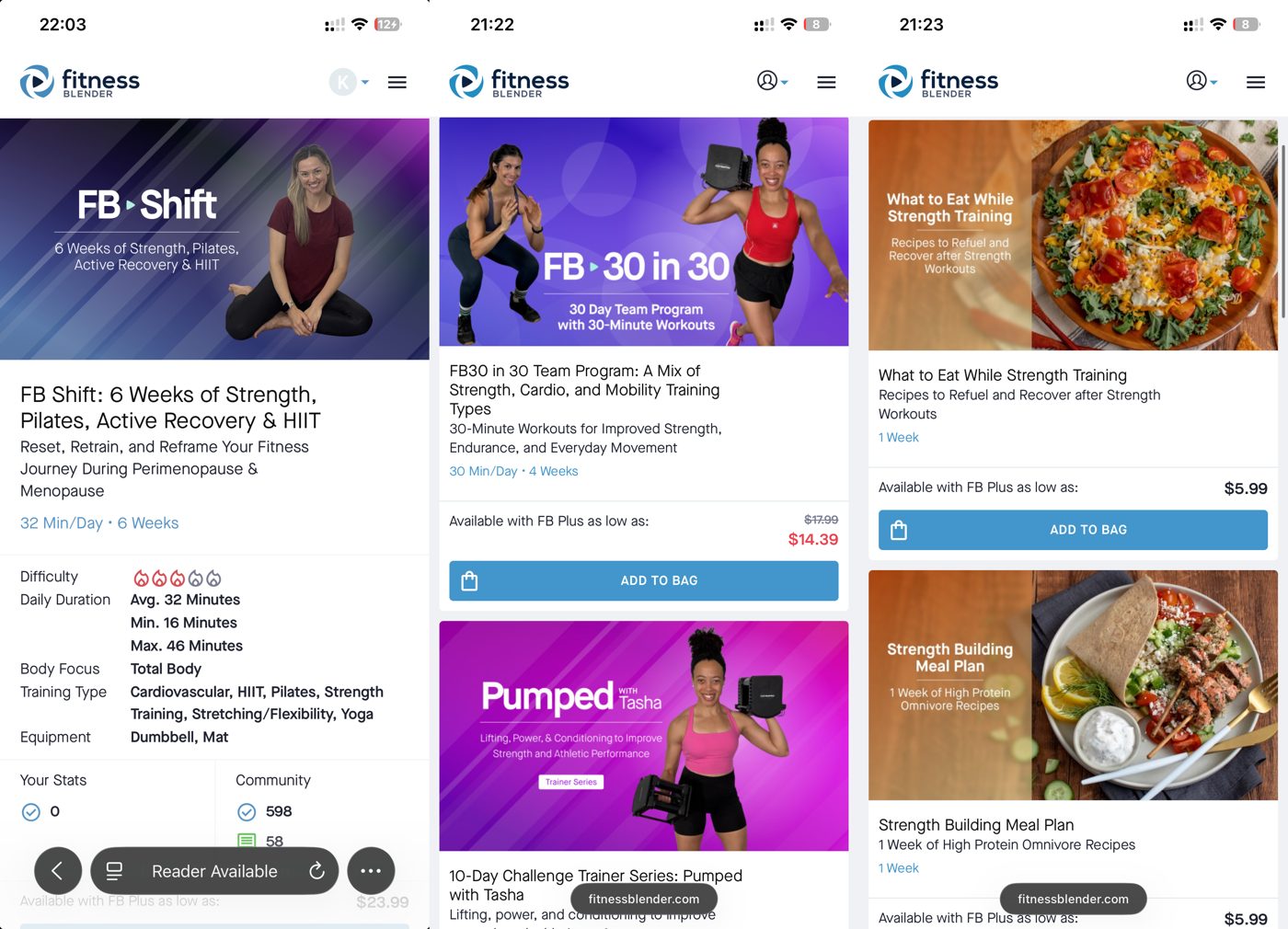
FB Shift is a dedicated 6-week perimenopause and menopause program that runs from strength through Pilates and active recovery to HIIT, and builds in more recovery than the other plans do. It was found while exploring rather than run, and the review is careful about what it is: a workout program rather than menopause education, without special guidance on hormones or the pelvic floor. That distinction is exactly what the capability scores record.
Menopause programming 6, because a real dedicated plan exists. Hormone awareness only 3, because the platform documents no cycle or symptom tracking and nothing that adapts to where you are in the transition. Menopause education 4, because trainer talks and articles touch the subject without teaching it, and members discussing it in the community forum is not the same thing.
The Jillian Michaels App has none of this. There is no programme on the platform that addresses this life stage, no hormone or symptom content, no pelvic-floor work and no menopause education, which is why four of its capability scores sit at 1 out of 10. Its own review is direct about the mismatch: the high-intensity, impact-led default does not account for the slower recovery, joint sensitivity or cortisol load that many women in their 40s and 50s are managing.
Berin and colleagues found in a randomised controlled trial that a 15-week resistance programme cut moderate to severe hot flushes by about 44 percent and improved related quality of life in postmenopausal women.3 That is the sort of result a menopause-aware plan is reaching for, and it is worth saying that neither platform is running that protocol. What Fitness Blender has is the ingredients and a plan that arranges them sensibly. What the Jillian Michaels App has is a lot of intensity and no arrangement for this stage at all.
Pelvic floor
Fitness Blender wins, 5 out of 10 against 1, and the gap is real rather than nominal. It has genuine pelvic-floor workouts designed with doctors of physical therapy, framed around prenatal and postnatal recovery rather than menopause continence, which is why the score stops at 5. They were not tested here. The Jillian Michaels App has prenatal and postnatal programmes organised by trimester and no pelvic-floor content of its own.
Expert credibility
Fitness Blender wins, 7 out of 10 against 5, and this is unusually strong credentialing for a home-workout brand. Kelli and Daniel Segars are both certified personal trainers, she with degrees in psychology and sociology and he with a background in dietetics, and since 2021 the brand has grown into a team that includes doctors of physical therapy, registered dietitians, registered yoga teachers and licensed psychologists. Jillian Michaels is a long-established trainer with a very large following and a coherent method, and there is no named clinician, physiotherapist or menopause specialist behind the programming. Neither platform has a menopause clinician or advisory board.
Muscle and bone: Fitness Blender wins, and on both the loading is your job
Fitness Blender wins Muscle Potential, 7 against 7, with progressive strength 6 out of 10 against 4 and bone loading 5 against 3. Muscle Potential carries the heaviest weight in our model at 18%.
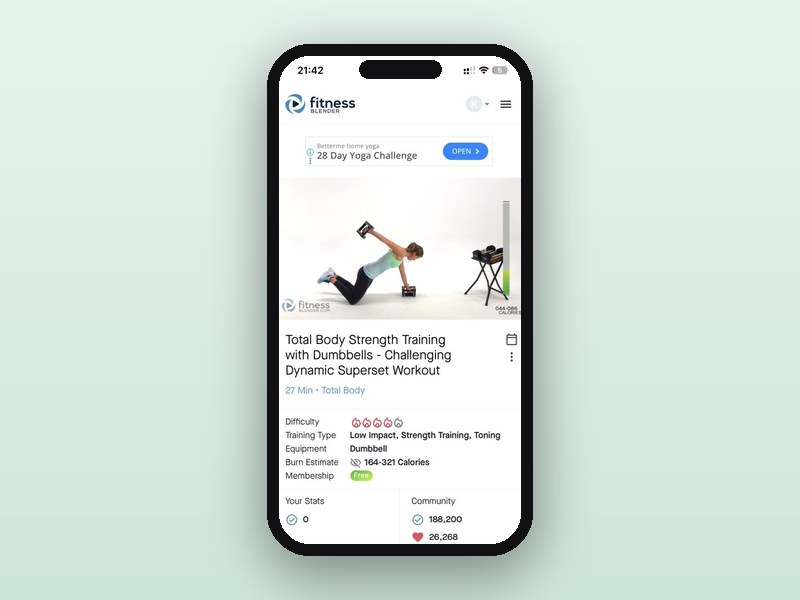
Fitness Blender has genuine dumbbell and kettlebell strength work, structured multi-week programs to hang it on, and no ceiling other than the weights you own. There are loads of strength workouts on the platform and she has done several, particularly total body sessions like Total Body Strength Training with Dumbbells with Kelli, and she liked how they are taught: the instructor introduces what you will do, then explains the movements and how to perform them, which is more coaching than a plain video library usually offers.
The Jillian Michaels App is bodyweight-heavy with some dumbbell work, and even Shred It With Weights, the programme built around dumbbells, runs significant jumping and high-intensity intervals between the loaded sets. That mixed profile is the reason its progressive strength score is 4: the loading is real but it is never the point of the session.
What the evidence asks for is size of load and repetition of it. Sá and colleagues found in a systematic review and meta-analysis that resistance training was associated with improvements in postmenopausal symptoms and functional capacity, though the authors rate the certainty of that evidence as very low to low, so we report it on that basis.1 Khalafi and colleagues found across a large body of trials that exercise increased muscle and reduced fat mass, waist circumference and visceral fat in postmenopausal women, with resistance work best for muscle.2 Neither platform will nudge you to add weight, and on both, a pair of adjustable dumbbells is what turns the content into a stimulus.
Our best workouts to build muscle after 50 ranking covers platforms that programme progression explicitly.
UX and design: the Jillian Michaels App wins, and it is not close
The Jillian Michaels App wins, 8.5 against 5, and this is its largest win on the page.
It is a properly built modern app. The navigation is clean, nothing feels buried, the categories make sense, and moving between workout content, meal plans and mindfulness sections is intuitive. My Journey tracks weight over time, prompts progress photos and offers fitness tests to benchmark improvement, and My Day pairs a daily tip with your workout and meal plan, though neither is prominently surfaced and you have to go looking.
Fitness Blender has no current official phone app. It is a plain website, on a dated interface with music-free production, that FB Plus suggests you save to your home screen so it behaves a little like an app. There are no offline downloads, so you need a browser and a connection every time you train. It does run in any modern browser on a phone, tablet or computer, the free library is on YouTube so it plays on smart TVs, you can cast the ad-free player over Chromecast or AirPlay, and captions are available. For a woman who trains at home on a laptop or a television, that is workable; if you want an app for the gym or a plane, that is the gap.
One genuine failure sits on the Jillian side and it is worth recording because the app lists it as a feature. She located the blog, the FAQ pages and the podcast without difficulty. The forum itself took a long search to find, would not load when she did locate it, and then she could not find it again. She gave up. If community matters to you, treat it as unreliable rather than as a working feature.
Nutrition: the Jillian Michaels App wins, and this is the reason to pay
The Jillian Michaels App wins Nutrition Integration, 9 against 7, and it is the best meal planning we have seen inside a training platform.
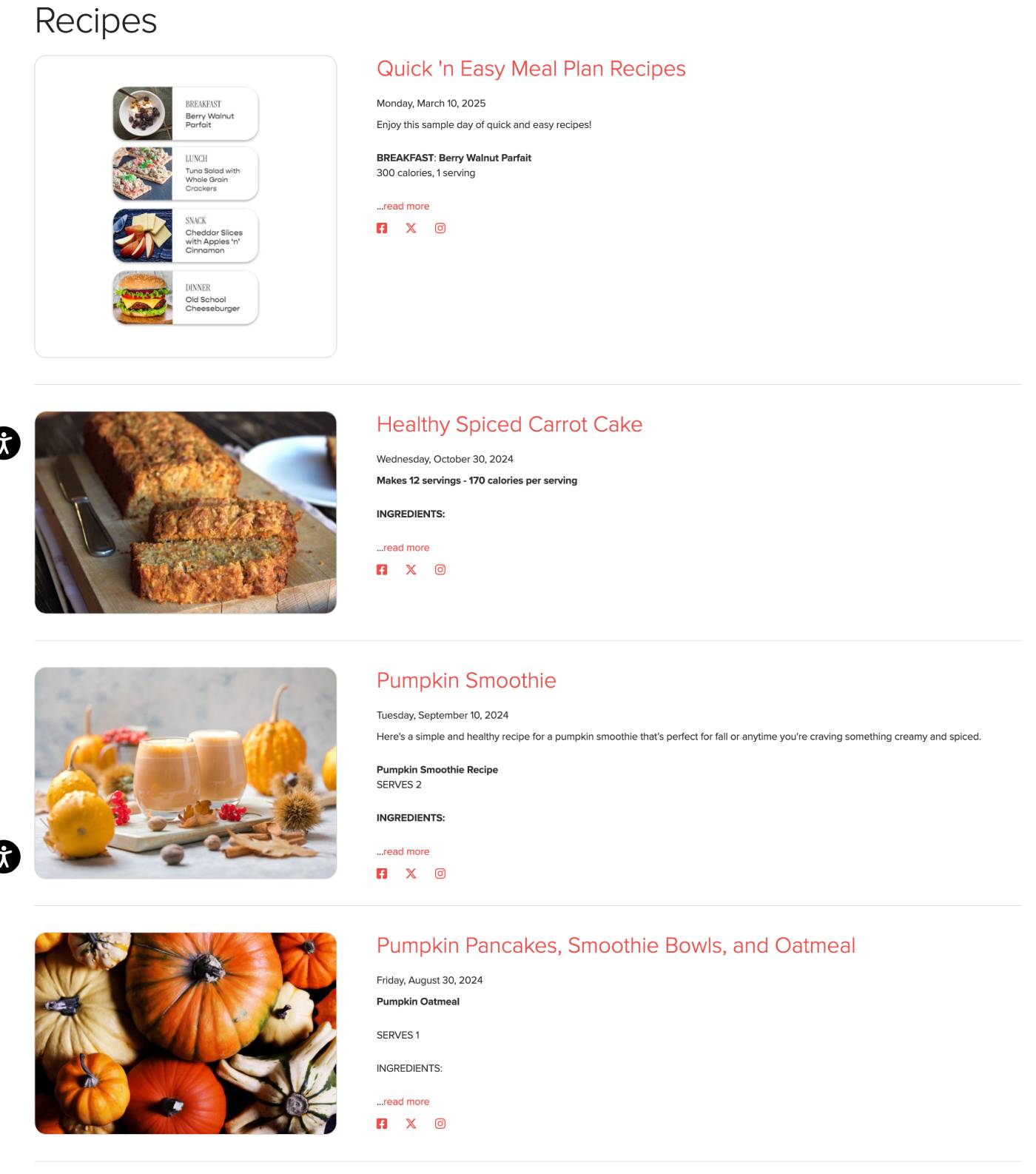
You choose from Omnivore, Pescatarian, Vegan, Vegetarian, Keto, Paleo, Gluten Free and 5 Minute Meals. Nutritional information comes with every dish and grocery lists are built into the plan. You can change the number of servings for a family, choose which days to follow and which meals to include, which is more granular than most platforms bother with and is what makes the plans usable rather than aspirational. She started on Omnivore and, since she is not a big meat eater, switched to Pescatarian after the first week, which the app handled by simply updating everything. Two recipes stayed with her: the Almond Chicken became a regular in her rotation and the Apple Pie was an unexpected find.
Fitness Blender sells calendar-based meal plans and a recipe library written by registered dietitians, which is credible and better than most workout libraries manage, and it sits alongside the training rather than inside it. Neither is menopause-specific and midlife nutrition capability is 6 out of 10 against 5, so the practical gap is smaller than the criterion scores suggest. Nutrition carries the smallest weight in our model at 7%. Our best workout apps with meal plans ranking covers the wider field.
Value for money: Fitness Blender wins, and neither platform is expensive
Fitness Blender wins, 9 against 8.5, and the gap is about the free tier rather than about either price being unreasonable.
| Plan | Fitness Blender | Jillian Michaels App |
|---|---|---|
| Free tier | A large library of full-length workouts, plus articles, recipes and a calendar | None |
| Monthly | About $8.99 for FB Plus | $19.99 |
| Annual | About $79.99 for FB Plus | $149.99, about $12.50 a month |
| One-off purchase | Individual programs from about $14.99 to $19.99, kept for good | Not offered |
| Trial | 1 week of FB Plus for new members, card required | 7 days with full access on first signup |
| Cancelling | One click from the account page, access to the end of the period | Depends how you subscribed; may need an email to support |
Fitness Blender is refreshingly straightforward about money. The core library is genuinely free, FB Plus is inexpensive, individual programs are a one-off purchase you keep, and cancellation is one click with access running to the end of the billing period. The only cost on the free tier is attention: the workouts play as YouTube videos with ads, which is the one negative Katy Cole named about the free version.
The Jillian Michaels App is not badly priced for what it includes, and the annual plan brings it to about $12.50 a month. The thing to plan for is leaving. How you cancel depends entirely on how you subscribed, uninstalling the app does not cancel anything, no refunds are issued after billing, and you need to act at least 48 hours before renewal. Our tester had to email support to cancel, which added friction she did not expect. If you start the 7-day trial, put a reminder in your calendar the same day.
Our best free and budget workout apps ranking covers the wider free field.
Structure and progression: Fitness Blender wins, narrowly and for different reasons
Fitness Blender wins, 8 against 7.5, and both platforms are stronger here than a video library usually is.
Fitness Blender has genuine multi-week programs, challenges, difficulty ratings from 1 to 5, and inside FB Plus a calendar and custom-program tools that let you build and track a plan. Her summary of what that adds up to is fair: if you know how to structure your workouts, there is plenty here to keep you going for months. The implied warning is in the first clause. Without a program, you assemble your own week, and a library this size can be a lot of choosing.
The Jillian Michaels App solves the starting problem better than almost anything else in this category. The onboarding questionnaire asks about goals, fitness level, available equipment and how many days a week you want to train, then recommends specific workouts and programmes, and that recommendation removes the browsing entirely. For someone who finds large content libraries paralysing rather than exciting, in her words, that was a genuine plus. What holds its score down is what happens next: the library is vast, much of it looks similar when browsing, and once you finish your first programme, choosing the next one takes patience.
Time efficiency: Fitness Blender wins on range, Jillian on the clever feature
Fitness Blender wins, 8 against 7.5, and the two platforms solve the same problem differently.
Fitness Blender runs from 5 to 90 minutes with a length filter and an on-screen timer counting each interval, so you can find something that fits whatever gap you have. The Jillian Michaels App runs 10 to 45 minutes, and its answer is the Generator: you enter how much time you have, whether you are at home or in a gym, and the intensity you want, and it builds a custom session to those constraints. That is the most time-responsive feature on the platform and on an unpredictable week it is genuinely more useful than a filter. We did not use it, so we can describe the control and not the sessions it produces.
Our 30-minute workouts for women over 40 and 20-minute workouts for perimenopause guides cover the wider field in both bands.
Recovery: Fitness Blender wins, and the gap is structural
Fitness Blender wins Recovery Compatibility, 7 against 6, with recovery and deload capability 7 out of 10 against 2, the second widest capability gap on the page.
Fitness Blender builds stretching, mobility and active-recovery sessions into its programs and schedules rest days inside them, and the perimenopause plan extends the recovery cycle further. It is not a meditation platform and mind-body support ties at 5 out of 10, but the training is arranged so that recovery is part of the week rather than what happens when you stop.
The Jillian Michaels App is arranged the other way. Slim 60 asks for five or six sessions a week at 30 to 45 minutes, Shred It With Weights runs 30 to 40 minutes several times a week, and the design assumption throughout is that you push through.
There is mindfulness content and there are audio workouts, and there is no deload logic and no recovery structure to speak of, which is what a 2 out of 10 records. For a body in perimenopause managing a slower recovery curve, that is the part that bites first. Her account of it is specific: the soreness she felt afterwards was the wrong kind, joint-adjacent rather than the satisfying deep muscle fatigue she gets elsewhere, and the overall intensity profile was still higher than she wanted.
Our low-cortisol workouts for perimenopause guide covers platforms that treat this as a design problem.
Equipment and space needed at home
A mat starts you on both, and a pair of adjustable dumbbells is the purchase that changes either one.
Many Fitness Blender sessions are bodyweight and need nothing but a mat, and the strength content, which is the part that matters most for a midlife body, calls for dumbbells. Because the platform lets you load as heavy as you like, adjustable dumbbells are the single best buy: they let you go heavier as you get stronger. A kettlebell is a useful extra for the swing and carry work.
The Jillian Michaels App needs less. Most programmes are bodyweight only, some use dumbbells, and Shred It With Weights needs a dumbbell set. One programme, Weight Lifting and Functional Training, requires gym equipment, and everything else is home-friendly. Neither platform requires proprietary hardware, a machine or a dedicated room, and on both the real constraint on muscle and bone is not the app, it is what you are willing to pick up.
Starting from scratch: free wins, and the recommendation engine is the counter-argument
Fitness Blender wins beginner on-ramp, 8 out of 10 against 5, and the two platforms fail a beginner in opposite directions.
Fitness Blender is famously approachable. A huge free library, difficulty ratings from 1 to 5, abundant true-beginner content and a no-hype, body-neutral tone people trust. Nothing about starting costs money, and the filters make it easy to build days you can actually do. What it will not do is choose for you.
The Jillian Michaels App does choose for you, and does it well. The onboarding questionnaire is one of the better ones in this category and its recommendation is accurate: ask for weight loss and you are pointed at Slim 60, which is exactly what the name suggests. The problem for a beginner over 40 is what that recommendation contains. Slim 60 rotates two strength days against one cardio day, the strength work is bodyweight-heavy and the cardio days are HIIT circuits, and the sessions are genuinely intense. Starting there after years away is a hard first month for most bodies and a bad one for a joint.
Fitness Blender pros and cons
Fitness Blender scores 7.2. It is strongest on value for money and weakest on the app experience.
Pros
- Value for Money 9 against 8.5, on a large genuinely free library.
- Joint Friendliness 7 against 4.5, with low-impact 8 out of 10 against 3.
- Women Over 40 Specificity 5.8 against 7, on a dedicated 6-week perimenopause and menopause program.
- Recovery Compatibility 7 against 6.
- Muscle Potential 7 against 7, on real dumbbell and kettlebell work.
- Pelvic floor 5 out of 10 against 1, expert credibility 7 against 5, beginner on-ramp 8 against 5.
- A team with physical therapists, dietitians and psychologists in it.
Cons
- UX and Design 5 against 8.5: no phone app, no offline downloads, a dated website and plain music-free production.
- Free-tier workouts play as YouTube videos with ads.
- Hormone awareness 3 out of 10, with no cycle or symptom tracking.
- You often assemble your own plan.
- No menopause clinician or advisory board, and the strength and bone benefit depends entirely on your own loading.
Jillian Michaels App pros and cons
Jillian Michaels App scores 7.1. It leads on nutrition guidance and trails on suitability for women over 40.
Pros
- Nutrition Integration 9 against 7, on eight meal plan types with nutritional information and grocery lists built in.
- UX and Design 8.5 against 5, on a genuinely well-built modern app.
- An onboarding questionnaire that removes the browsing problem.
- The Generator, which builds a session to your time, location and intensity.
- A very large library including the full DVD back catalogue.
- An alternative exercise option on most movements.
- Midlife nutrition 6 out of 10 against 5.
Cons
- Joint Friendliness 4.5 against 7, with low-impact 3 out of 10 and one low-impact programme in the whole library.
- Recovery Compatibility 6 against 7, with recovery and deload 2 out of 10.
- Menopause programming, pelvic floor, hormone awareness and menopause education all 1 out of 10.
- A community forum that would not load.
- Cancellation that may need an email and 48 hours of notice.
- And neither tested programme was finished.
Quick yes/no comparison
| Feature | Fitness Blender | Jillian Michaels App |
|---|---|---|
| Free to use | Yes, a large free library | No |
| Free trial of the paid product | Yes, 1 week for new members, card required | Yes, 7 days on first signup |
| A dedicated phone app | No, a website you save to your home screen | Yes |
| Offline downloads | No | Not assessed |
| A plan recommended for you at signup | No | Yes, from the onboarding questionnaire |
| Structured multi-week programmes | Yes | Yes |
| Dedicated low-impact content | Yes, an extensive library | One programme, Low Impact Shred |
| Swap an exercise mid-session | No, you pick a different workout | Yes, within the same movement type |
| Menopause or perimenopause programming | Yes, FB Shift, a 6-week program | No |
| Hormone or symptom tracking | No | No |
| Pelvic floor content | Yes, designed with physical therapists | No |
| Meal plans | Yes, from registered dietitians, sold alongside | Yes, eight plan types with grocery lists |
| A working community | Yes, an active forum | Listed, but it would not load |
| Cast to a television | Yes, Chromecast or AirPlay | Not assessed |
| Was it tested hands-on | Yes, several workouts on free access | Yes, two programmes across two weeks |
Fitness Blender vs Jillian Michaels at a glance
| Fitness Blender | Jillian Michaels App | |
|---|---|---|
| Overall score | 7.2 | 7.1 |
| How it was assessed | Sample tested on free access, several strength workouts completed, with our own screenshots | Fully tested across two weeks and two programmes, neither of which was finished |
| Cost | Free, or FB Plus about $8.99 a month or $79.99 a year | $19.99 a month or $149.99 a year, about $12.50 a month |
| Trial | 1 week of FB Plus for new members, card required | 7-day free trial with full access on first signup |
| Session length | 5 to 90 minutes, with an on-screen timer | 10 to 45 minutes, and the Generator builds 10, 20, 30 or 45 |
| Approach | A follow-along video library plus structured multi-week programs, rated 1 to 5 | More than 1,000 videos and structured programmes, bodyweight and HIIT-led |
| Impact by default | Mixed, with an extensive low-impact library to filter to | High, with one low-impact programme in the library |
| Who is behind it | Kelli and Daniel Segars, plus physical therapists, dietitians and psychologists | Jillian Michaels, with no named clinician behind the programming |
| Menopause content | FB Shift, a 6-week perimenopause and menopause program | None |
| Equipment | A mat to start, dumbbells and a kettlebell for the strength work | Mostly bodyweight, dumbbells for some programmes |
| Known live issue | No phone app, no offline downloads, ads on the free tier | The community forum would not load, and cancelling may need an email |
| How we assessed it | Sample tested on free access, several strength workouts completed | Tested across two weeks and two programmes, neither finished |
Fitness Blender vs Jillian Michaels: the full scoring breakdown
Fitness blender wins seven of the nine weighted criteria and jillian michaels app wins two. The overall gap is 7.2 against 7.1, and the two criteria the Jillian Michaels App wins are the two that decide whether a platform is pleasant to use rather than whether it suits a midlife body.
| Criterion | Weight | Fitness Blender | Jillian Michaels App | Winner |
|---|---|---|---|---|
| Muscle Potential | 18% | 7 | 7 | Fitness Blender |
| Time Efficiency | 15% | 8 | 7.5 | Fitness Blender |
| Joint Friendliness | 12% | 7 | 4.5 | Fitness Blender |
| Programme Structure | 12% | 8 | 7.5 | Fitness Blender |
| Women Over 40 Specificity | 10% | 5.8 | 7 | Fitness Blender |
| Recovery Compatibility | 10% | 7 | 6 | Fitness Blender |
| Value for Money | 8% | 9 | 8.5 | Fitness Blender |
| UX and Design | 8% | 5 | 8.5 | Jillian Michaels App |
| Nutrition Integration | 7% | 7 | 9 | Jillian Michaels App |
| Overall | 100% | 7.2 | 7.1 | Fitness Blender |
The twelve capability scores
Fitness blender wins ten of the twelve capability scores and jillian michaels app wins one, with one tied. The widest gaps are low-impact, 8 out of 10 against 3, recovery and deload, 7 against 2, and menopause programming, 6 against 1, all to Fitness Blender. Mind-body support is the tie at 5 each. Midlife nutrition, 6 against 5, is the one the Jillian Michaels App takes.
| Capability | Fitness Blender | Jillian Michaels App | Winner |
|---|---|---|---|
| Low-impact | 8 | 3 | Fitness Blender |
| Progressive strength | 6 | 4 | Fitness Blender |
| Bone loading | 5 | 3 | Fitness Blender |
| Recovery & deload | 7 | 2 | Fitness Blender |
| Menopause programming | 6 | 1 | Fitness Blender |
| Pelvic floor | 5 | 1 | Fitness Blender |
| Hormone awareness | 3 | 1 | Fitness Blender |
| Menopause education | 4 | 1 | Fitness Blender |
| Expert credibility | 7 | 5 | Fitness Blender |
| Mind-body support | 5 | 5 | Tied |
| Beginner on-ramp | 8 | 5 | Fitness Blender |
| Midlife nutrition | 5 | 6 | Jillian Michaels App |
Who wins for…
Who wins for painful joints
Fitness Blender, decisively. Joint Friendliness 7 against 4.5 and low-impact 8 out of 10 against 3.
Who wins on price
Fitness Blender. Value for Money 9 against 8.5, because a large part of it costs nothing.
Who wins for perimenopause and menopause
Fitness Blender. Menopause programming 6 out of 10 against 1, on FB Shift, and it is a training plan rather than menopause education.
Who wins for building muscle
Fitness Blender. Muscle Potential 7 against 7, on strength work you can load without an intensity tax.
Who wins for bone density
Fitness Blender, narrowly. Bone loading 5 out of 10 against 3, and on both platforms reaching a real stimulus is your decision.5
Who wins for meal planning
The Jillian Michaels App, easily. Nutrition Integration 9 against 7, on eight plan types with grocery lists built in.
Who wins on the app itself
The Jillian Michaels App. UX and Design 8.5 against 5, because one is a modern app and the other is a dated website.
Who wins for recovery
Fitness Blender. Recovery Compatibility 7 against 6, with recovery and deload 7 out of 10 against 2.
Who wins for being told where to start
The Jillian Michaels App. Its onboarding questionnaire recommends a programme; Fitness Blender leaves the choosing to you.
Who wins for a beginner
Fitness Blender. Beginner on-ramp 8 out of 10 against 5, and free removes the cost of finding out.
Who wins for pelvic floor
Fitness Blender, on a low bar. 5 out of 10 against 1, and its content is postnatal rather than menopause-stage.
Who wins for an unpredictable week
A near tie. Time Efficiency 8 against 7.5, and the Generator is the better idea of the two.
Decision tree for women over 40
A joint dictates what you can do. Fitness Blender, for the low-impact library and the filters that let you build around it.
You do not want to spend anything. Fitness Blender. The free tier is genuinely usable, and ads are the price.
Perimenopause is why you are looking. Fitness Blender, for FB Shift, and read our Pvolve review if you want clinical menopause programming instead.
You want eating handled in the same app. The Jillian Michaels App. Nothing else in this pair comes close.
You still love training hard and nothing hurts. The Jillian Michaels App, and use the Generator on the days the programme feels like too much.
You want a proper phone app. The Jillian Michaels App, because Fitness Blender does not have one.
Your priority is muscle and bone. Fitness Blender, with adjustable dumbbells, and progress the weight yourself.
You are coming back to training after years away. Fitness Blender, rated 1 or 2 to begin with, because the other platform will start you at an intensity your body has not agreed to.
What we did not test
Two partial tests, and the gaps are on opposite sides.
On Fitness Blender we did not run the FB Shift perimenopause program, we did not buy an FB Plus membership, and we did not work through the structured multi-week programs or the pelvic-floor and postnatal workouts. Several strength workouts on free access tell you what the library holds and how the sessions are taught. They do not tell you whether a six-week plan progresses well, or whether the paid tools are worth about $8.99 a month.
On the Jillian Michaels App we did not run Low Impact Shred, which is the programme most relevant to a reader with joint concerns, or Transform 90, and we did not use the Generator, the kickboxing and yoga content or the DVD back catalogue. Two programmes were started and neither was finished, deliberately.
Neither platform’s handling of an injury or a symptom flare was assessed, and nothing on this page should be read as a claim about long-term results on either.
Which is better for women over 50?
Fitness Blender, and by a wider margin than at 40
Everything that separates them gets sharper with age. The low-impact library matters more when a knee sets the terms, the recovery structure matters more when the bounce-back is slower, and free means you can find out without committing. FB Shift is a reasonable place to start, and the dumbbell work is where the value actually is. Our best low-impact workouts for women over 50 and best workouts for postmenopause rankings cover the wider field.
The Jillian Michaels App, only with conditions
If you are 50-plus, training hard already and nothing hurts, the app is well built and the meal planning is excellent. The conditions are that you find Low Impact Shred, use the Generator to control intensity on the days the programme is too much, and accept that nothing on the platform is arranged for this stage. That is a lot of self-management to buy.
What we would actually suggest
Start on Fitness Blender because it costs nothing, build two strength days with dumbbells you can progress, and put the low-impact content around them. If you find that the missing app is the thing that stops you opening it, that is a real reason to pay for something else, and the Jillian Michaels App is not the only option worth looking at.
Frequently asked questions
Is Fitness Blender or the Jillian Michaels App better for women over 40?
Fitness Blender, 7.2 against 7.1. It wins seven of the nine weighted criteria and ten of the twelve midlife capability scores. The decisive rows are Joint Friendliness, 7 against 4.5, and Women Over 40 Specificity, 5.8 against 7, because one platform has a dedicated perimenopause programme and a deep low-impact library while the other is high-impact by design. Jillian Michaels App wins two criteria and wins them well: UX and Design 8.5 against 5, and Nutrition Integration 9 against 7.
Is Fitness Blender really free?
Most of it, yes, and this is the single biggest practical difference between the two. A large library of full-length workouts is on the website and the YouTube channel with no account and no card. FB Plus adds an ad-free player, exclusive workouts, custom program tools, tracking and the programs and meal plans for about $8.99 a month or $79.99 a year, with a 1-week free trial for new members that does need a card. Individual programs can be bought outright from about $14.99 to $19.99 with no membership. The catch on the free tier is that the workouts play as YouTube videos with ads.
Which one is gentler on the joints?
Fitness Blender, 7 against 4.5, with low-impact capability 8 out of 10 against 3, and this is the widest capability gap on the page. Fitness Blender carries an extensive low-impact and joint-friendly library, informed by doctors of physical therapy, alongside plenty of high-impact HIIT you have to select around. The Jillian Michaels App defaults to impact almost everywhere. There is one exception worth knowing, Low Impact Shred, a 30-day programme built around no-impact training, which is buried in the programme list rather than offered up.
Does either have perimenopause or menopause programming?
Only one, and only as a training plan. Menopause programming is 6 out of 10 against 1. Fitness Blender has FB Shift, a dedicated 6-week perimenopause and menopause program of strength, Pilates, active recovery and HIIT, which builds in more recovery than its other plans. It is a workout program rather than menopause education, with no specific hormone or pelvic-floor guidance, which is why hormone awareness is 3 against 1 and menopause education 4 against 1. The Jillian Michaels App has nothing on the platform that addresses this life stage at all.
Which builds more muscle and bone?
Fitness Blender, 7 against 7, with progressive strength 6 out of 10 against 4 and bone loading 5 against 3. Both platforms can load a dumbbell, and neither will tell you to make it heavier. Fitness Blender has genuine dumbbell and kettlebell strength work, structured multi-week programs and no ceiling except your own rack. The Jillian Michaels App is bodyweight-heavy with some dumbbell work, and even its weights programme runs jumping and high-intensity intervals between the loaded sets. On both, reaching a stimulus that matters for bone is your decision to make.5
Which app is better to actually use?
The Jillian Michaels App, 8.5 against 5, and it is not close. It is a modern, well-organised phone app where the navigation is clean, nothing feels buried and moving between workouts, meal plans and mindfulness is intuitive. Fitness Blender has no current official phone app at all. It is a plain website you save to your home screen, with no offline downloads, so you need a browser and a connection every time. That is the trade you are making, and for a woman who trains at home on a laptop or a television it may cost her nothing.
Which has better nutrition?
The Jillian Michaels App, 9 against 7, and it is the best meal planning we have seen inside a training platform. Omnivore, Pescatarian, Vegan, Vegetarian, Keto, Paleo, Gluten Free and 5 Minute Meals plans come with nutritional information on every dish and grocery lists built in, and you can change servings, days and meal types. Fitness Blender sells calendar-based meal plans and a recipe library written by registered dietitians, which is credible and sits alongside the workouts rather than inside them. Neither is menopause-specific, and midlife nutrition runs 6 out of 10 to 5 in Jillian’s favour.
Which is better value?
Fitness Blender, 9 against 8.5, though the Jillian Michaels App is not badly priced. Fitness Blender gives you a large usable library for nothing and asks about $8.99 a month if you want the extras. The Jillian Michaels App is $19.99 a month or $149.99 a year, about $12.50 a month annually, with a 7-day free trial on first signup and no refunds after billing. Cancellation is the part to plan for: it depends entirely on how you subscribed, uninstalling does not cancel, and Katy Cole had to email support, which added friction she did not expect.
Which suits a beginner better?
Fitness Blender, on a beginner on-ramp of 8 out of 10 against 5, and the reason is cost rather than content. Workouts are rated 1 to 5, there is abundant true-beginner material, and the whole thing can be tried without a card. The Jillian Michaels App has a genuinely good onboarding questionnaire that asks about goals, level, equipment and days a week and then recommends a starting point, which removes the browsing problem in a way Fitness Blender does not. What it recommends, though, is high-intensity work, which is a hard first month for a body that has been sitting still.
Which is better if my week is unpredictable?
They tie in spirit and Fitness Blender wins on the number, Time Efficiency 8 against 7.5. Fitness Blender runs from 5 to 90 minutes with an on-screen timer and a length filter. The Jillian Michaels App runs 10 to 45 minutes and has the Generator, which builds a custom session from your time, location and intensity, and which the review calls the most flexible feature on the platform. We did not use the Generator, so we cannot tell you how good the sessions it builds are, only that the control exists.
Why did you stop testing the Jillian Michaels programmes?
Because they were the wrong training for the body doing them, and stopping was the finding. Our tester ran Slim 60 for a week and switched to Shred It With Weights hoping the dumbbell emphasis would suit her better, and stopped that too. Post knee injury, that level of impact was more than she needed, and the soreness afterwards was the wrong kind, joint-adjacent rather than the satisfying deep muscle fatigue. Neither programme was finished. That is a two-week test rather than a completed one, and every Jillian Michaels App score on this page should be read with that in mind.
Which one would you actually recommend?
Fitness Blender for most women reading this, because it fits a midlife body better and costs nothing to find out. Use the filters to build a week of two strength days with dumbbells you can progress, add low-impact days around them, and consider FB Shift if you want the recovery built in. The Jillian Michaels App is worth the money if you still respond well to high intensity, have no joint issues, and want the meal planning, which is genuinely excellent. If impact is the problem, look for Low Impact Shred before you subscribe, and set a cancellation reminder the day you start the trial.
Research citations
- Nunes de Sá KMM, da Silva GR, Martins UK, et al. Resistance training for postmenopausal women: systematic review and meta-analysis. Menopause. 2023. Menopause. (Cited for: apparent improvements in postmenopausal symptoms and functional capacity with resistance training. Note: the authors rate the certainty of the evidence as very low to low, so we report it on that basis.)
- Khalafi M, Habibi Maleki A, Sakhaei MH, et al. The effects of exercise training on body composition in postmenopausal women: a systematic review and meta-analysis. Frontiers in Endocrinology. 2023. PMC. (Cited for: exercise increased muscle and reduced fat mass, waist circumference and visceral fat in postmenopausal women, with resistance training best for muscle.)
- Berin E, Hammar M, Lindblom H, Lindh-Åstrand L, Rubér M, Spetz Holm AC. Resistance training for hot flushes in postmenopausal women: a randomised controlled trial. Maturitas. 2019;126:55–60. Maturitas. (Cited for: a 15-week resistance programme cut moderate to severe hot flushes by about 44 percent and improved related quality of life.)
- Cai L, et al. Effects of high-intensity interval training on cardiopulmonary fitness and physical function in middle-aged and elderly women: a systematic review and meta-analysis. Frontiers in Physiology. 2025. PMC. (Cited for: high-intensity interval training significantly improved cardiorespiratory fitness in middle-aged and older women.)
- Watson SL, Weeks BK, Weis LJ, Harding AT, Horan SA, Beck BR. High-intensity resistance and impact training improves bone mineral density and physical function in postmenopausal women: the LIFTMOR randomized controlled trial. Journal of Bone and Mineral Research. 2018;33(2):211–220. PubMed. (Cited for: heavier, high-intensity resistance and impact training improved bone density and physical function, where light exercise did not to the same degree.)
This page compares fitness platforms. It is not medical advice. Katy is a woman who has trained through perimenopause, not a clinician. Any training observations described are one person’s recorded experience, not an expected result or a general pattern. If you have a diagnosed condition, an injury, or symptoms that concern you, speak to a qualified healthcare professional before changing how you train.
About this comparison
Compiled by Katy Cole for Her Daily Fit. Neither platform was run to completion, and the two tests were different shapes rather than different levels of effort; the methods section above sets out what each one covered. Both were scored on the same nine weighted criteria and the same twelve capability scores, and on both sides any rating that depends on months of use is provisional. Khalafi and colleagues report that resistance work is the modality that best protects muscle across the menopause transition,2 which is why Muscle Potential carries the most weight in that model. Prices were verified against official sources in 2026 and may differ if there has been a recent change; Fitness Blender’s figures were checked in August 2026 and the Jillian Michaels App figures in February 2026. Scores are pulled live from each programme’s own assessment. Her Daily Fit earns nothing from either platform.
Compared with
Featured in