
Pvolve scores higher overall, 8.3 against 6.9, and is the stronger platform for building muscle and menopause-stage suitability. Melissa Wood Health is the better pick if what you need most is recovery.
Quick answer
- Pvolve 8.3 vs MWH 6.9
- Pvolve wins 6 of 9 criteria
- Pvolve $24.99/mo, MWH $14.95/mo
- Pelvic floor: 9 out of 10 vs 4
- Both low impact, both knee-safe
- Weights went up on one, down on the other
Pvolve is the better platform for most women over 40, and the gap is largest exactly where midlife training matters. It wins six of the nine weighted criteria, including Muscle Potential at 18% weight, 7.5 against 4. On capabilities it takes menopause programming 9 out of 10 against 1, menopause education 9 against 1, hormone awareness 8 against 1, and pelvic floor 9 against 4, which is the highest pelvic floor score we have recorded anywhere.
Melissa Wood Health wins on calm, and that is a real thing to want. It takes Recovery Compatibility, 9.5 against 9, and leads mind-body support 9 out of 10 against 6 and beginner on-ramp 8 against 6. It is also $10 a month cheaper. If you want a gentle daily Pilates flow rather than a training programme, it is the more pleasant place to be.
Pvolve, if you want to be measurably stronger in three months and you are willing to spend the first fortnight learning unfamiliar movement patterns. Melissa Wood Health, if you want something calm and repeatable that will not aggravate anything, and you are getting your strength work elsewhere. The two are not really competing for the same job, and the scores mostly reflect that Pvolve is trying to do the harder one.
Affiliate links where a partnership exists. Full disclosure.
Two warnings, one for each. Pvolve has a learning curve: the movement patterns are unfamiliar and the review is blunt that if you want zero equipment and zero learning curve, the first two weeks will test your patience. It is also not a barbell programme, so if your goal is a heavy conventional squat it is not your primary platform. On Melissa Wood Health, the workouts started to feel repetitive after about six weeks, and Katy did not continue her subscription past the testing period. Both facts belong in front of you before you pay either.
Pvolve vs Melissa Wood Health: the two platforms
Same nine weighted criteria, same twelve capability scores, and both were used properly rather than browsed.
Pvolve
Winner
Low-impact functional strength built on resistance bands, light weights and proprietary equipment, with a clinically framed Menopause Strong programme and the strongest pelvic floor provision on this site.
- 16 to 25 min
- Menopause Strong
- Pelvic floor 9/10
- 14-day trial
- Bands and weights
Choose Pvolve if you:
- Want to get measurably stronger without loading a barbell
- Want menopause content with clinical context rather than a label
- Are managing pelvic floor concerns and want that actually programmed for
- Have a knee, hip or ankle history and want stability work built in
- Will tolerate two weeks of unfamiliar movement patterns to get there
Melissa Wood Health
Runner-up
Pilates-led low-impact flow with light strength, a strong meditation library and a calm, unhurried tone, at one of the lower subscription prices on this site.
- 10 to 30 min
- $14.95/month
- Mind-body 9/10
- 7-day trial
- Light weights and a mat
Choose Melissa Wood Health if you:
- Want something calm and repeatable that will not aggravate anything
- Are getting your progressive strength work somewhere else
- Value meditation and mind-body content as part of the subscription
- Are newer to training and want the gentler on-ramp
- Want the lower monthly price
How we scored this, and how both were tested
Both platforms were paid for and used, and the testing periods were long enough to mean something. Pvolve was tested across two months of daily sessions. Melissa Wood Health was tested on a 7-day free trial followed by roughly six weeks on a paid monthly subscription, covering the Total Body Tone programme with Kim and the Signature Series with Melissa.
Same tester, same body, same period of life. Katy is in her forties, in early perimenopause, with a previous knee injury, two children and a full-time job. On Pvolve she used resistance bands in medium and high resistance, dumbbells from 11 lb to 19 lb and ankle weights she already owned. She did not buy the Pvolve equipment bundle, which matters for the equipment section below. On Melissa Wood Health she used light dumbbells, ankle weights and a mat. Her framing going into Pvolve is worth quoting, because it explains the standard both were held to: after fifteen years of testing online fitness platforms, she is a lot more precise about what she actually needs versus what sounds appealing, and she wanted to see whether the substance matched the positioning.
Muscle Potential carries the most weight of the nine at 18%, because preserving lean mass through the menopause transition is the highest-value thing a training programme can do for a woman in this age group. Time Efficiency is 15%. Alongside the nine criteria sit twelve capability scores out of 10, and on this pair the capability table is where the platforms separate most sharply.
Muscle potential: Pvolve wins, and the evidence is unusually direct
Pvolve wins, 7.5 against 4. This is the heaviest-weighted criterion at 18%, and it is the clearest result in this comparison because the same person ran both and the weights moved in opposite directions.
What happened on Pvolve
She started weight work at 11 lb for upper body and 14 lb for lower body. By the end of two months she was at 14 lb upper and 19 lb lower. She broke through a strength plateau she had been stuck on for months, and after twenty-minute sessions daily for two months her summary was simply that she was getting stronger. Her arms and core looked more defined.
The interesting part is the beginning. Pvolve made her drop to lighter weights than she normally trains with, which surprised her, and she found herself counting the last few reps on movements that by all rights should have felt manageable. That is what a different movement pattern does: it is not easier or harder in the abstract, it loads things you have not been loading. Progressive strength capability scores 7 out of 10.
What happened on Melissa Wood Health
She had been training with 11 to 20 lb per hand on other platforms, so the drop on MWH was significant. She felt she had lost some of the strength built previously, and put it plainly: she felt like she was losing the strength she had built from heavier training. Progressive strength capability is 2 out of 10, and bone loading 2.
That is not the whole story, and the review is fair about it. She had actually engaged muscles she does not normally target and was getting sore in new places, and once she added heavier dumbbells and ankle weights the challenge improved. So MWH is doing something real. It is just not progressive loading, and it will not hold strength you built elsewhere.
Why this matters more after 40
Maltais and colleagues document accelerated loss of muscle mass and strength through the menopause transition.2 Mohebbi and colleagues, in an updated systematic review and meta-analysis, identify progressive resistance training as the primary non-hormonal intervention for bone mineral density after menopause.4 A separate systematic review and meta-analysis reports improvements in menopause symptoms and functional capacity with resistance training, on evidence its own authors rate as very low to low certainty.5 A two-month rise from 11 lb to 14 lb and 14 lb to 19 lb is that mechanism working. A drop in working weight, sustained, is that mechanism running backwards.
What this means for your decision
If strength is why you are training, this section decides it. Bone loading is 5 out of 10 against 2, so Pvolve is better but neither is a bone-density programme, and a dedicated progressive resistance plan would beat both. Our best workouts to build muscle after 50 ranking covers those.
Perimenopause and menopause fit: Pvolve wins by the widest margin on the page
Pvolve wins, 7.4 on Women Over 40 Specificity against 4. On the underlying capabilities it is not a contest: menopause programming 9 out of 10 against 1, menopause education 9 against 1, hormone awareness 8 against 1, expert credibility 9 against 5.
Katy’s verdict after two months, including week 2 of the Menopause Strong programme, is the strongest endorsement she has given any programme on this site: Menopause Strong is the best perimenopause-specific programme she has encountered on any platform. Her reason is specific rather than vague. The combination of clinical context alongside the physical work makes it feel different from any fitness programme she has done, and she noticed a real difference in stability and core connection after two weeks.
Melissa Wood Health scores 1 out of 10 for menopause programming, hormone awareness and menopause education, meaning none of it exists. She came to MWH in her mid-forties in perimenopause, and the platform simply does not address that stage. It skews younger and more general wellness, which is not a criticism of what it is, only a statement of who it is for.
Pelvic floor: the widest single gap in the comparison
Pvolve scores 9 out of 10 for pelvic floor support, the highest we have recorded on any platform. Melissa Wood Health scores 4. This is the one section where the difference is likely to change what a reader does.
Teixeira and colleagues report a 36% prevalence of urinary incontinence across female athletes in a systematic review and meta-analysis.3 That review did not separate high-impact from low-impact sport, so we do not claim that it did, and we are not going to tell you what your symptoms are. What we can tell you is that one of these two platforms has pelvic floor work actually programmed into it and the other has some awareness and no programme. If this is part of why you are looking at low-impact training, that is the finding.
Joint friendliness: Pvolve wins narrowly, and both passed the same knee
Pvolve wins, 9 against 8.5, and on low-impact capability they are tied at 9 out of 10 each, the joint-highest on this site.
Both were used by the same tester with a previous knee injury. On Melissa Wood Health the workouts felt comfortable on her joints throughout testing, which is what a 9 for low-impact should mean in practice. On Pvolve something more went on: after the knee stability series, her knee was more stable than when she started, and running up the stairs one day she felt noticeably less wobbly.
That is the difference between a platform that avoids hurting your knee and one that trains it. It also matters more in this decade than it did in the last one: Wright and colleagues describe a cluster of musculoskeletal changes associated with the menopause transition, including effects on tendon and ligament integrity and a raised injury risk.1 Neither platform is a rehabilitation programme, and neither should be treated as one. But only one of them produced a change she could feel outside the sessions.
What this means for your decision. If your requirement is simply that nothing hurts, both clear it. If you want the joint to get better rather than just be spared, Pvolve is the one with stability work built in. Our best low-impact workouts for women over 50 ranking covers the wider field.
Equipment: what you actually need, and what you can skip
You do not need the Pvolve equipment bundle, and this comparison is the evidence. Katy tested Pvolve for two months without buying it, using resistance bands in medium and high resistance, dumbbells from 11 lb to 19 lb and ankle weights she already owned. The strength progression above happened on that kit.
That matters because the bundles are the expensive part. The Signature Bundle is $199 and includes one month of access, the Transformation Bundle is $625 and includes a year of streaming, and equipment starts at $199. If you already own bands and a couple of pairs of dumbbells, the streaming subscription alone is a legitimate way in.
Melissa Wood Health needs light dumbbells, ankle weights and a mat, and that is genuinely all. Note the direction of travel though: on MWH she ended up adding heavier dumbbells and ankle weights to make the sessions challenging enough, so the lighter equipment requirement is partly a symptom of the lighter loading.
Time efficiency: tied, and the tie is genuine
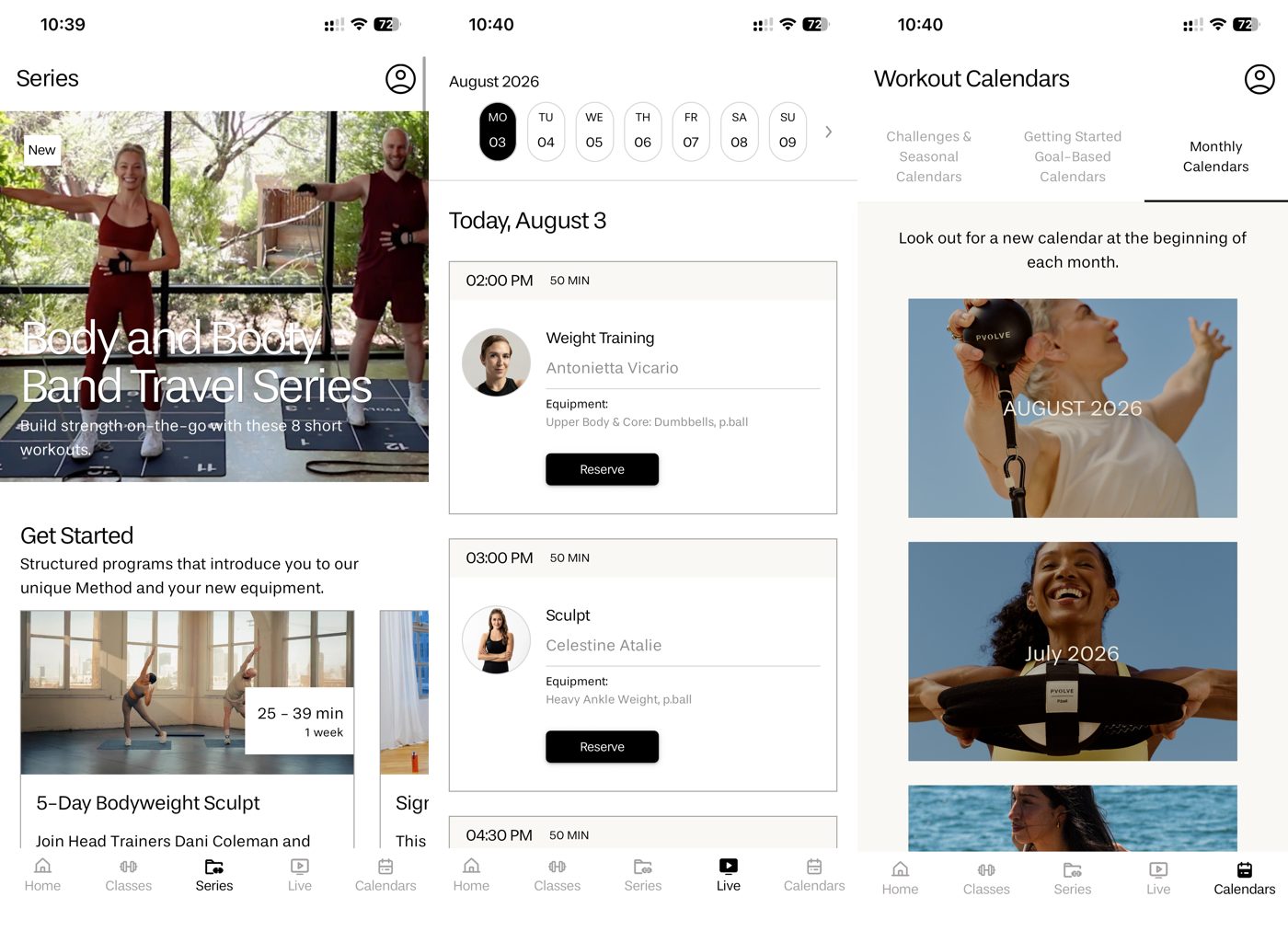
Tied at 9 each. Pvolve runs 16 to 25 minutes, Melissa Wood Health 10 to 30, and both are built for a real week rather than an aspirational one.
That framing applies to both and explains why this criterion carries 15% of the weight: she is not going to commit to 60-minute sessions at 6am and then feel guilty when life makes that unsustainable. Twenty minutes a day, every day, is something she actually does, and she did it on Pvolve daily for two months without a rest-day guilt spiral. As a working mother of two, she names the class length filter alone as the feature that makes Pvolve work for her in a way most platforms do not.
The one asymmetry is what a session delivers. On MWH she naturally started stacking two or three workouts together to feel challenged, which means the nominal 10 to 30 minutes was sometimes 40 or 60 in practice. A short session you have to double is not as time-efficient as a short session that is enough.
What this means for your decision. Both clear the bar that matters. Our 20-minute workouts for perimenopause ranking covers the wider field.
Recovery and mind-body: Melissa Wood Health wins, and it is not close on the capabilities
Melissa Wood Health wins, 9.5 against 9 on Recovery Compatibility. On mind-body support the gap is wider, 9 out of 10 against 6, the one capability where MWH clearly leads.
This is what MWH is for. The tone is calm, the sessions do not chase intensity, and the meditation library is a real part of the product rather than a bolt-on. If your nervous system is the thing that needs managing, that is a legitimate reason to choose it, and the scores say so.
Pvolve is not weak here, at 9 and recovery and deload 7 out of 10 against MWH’s 4. The distinction is that Pvolve recovers you between training sessions, where MWH is closer to being the restful thing itself.
UX and design: Pvolve wins on filtering, MWH on calm
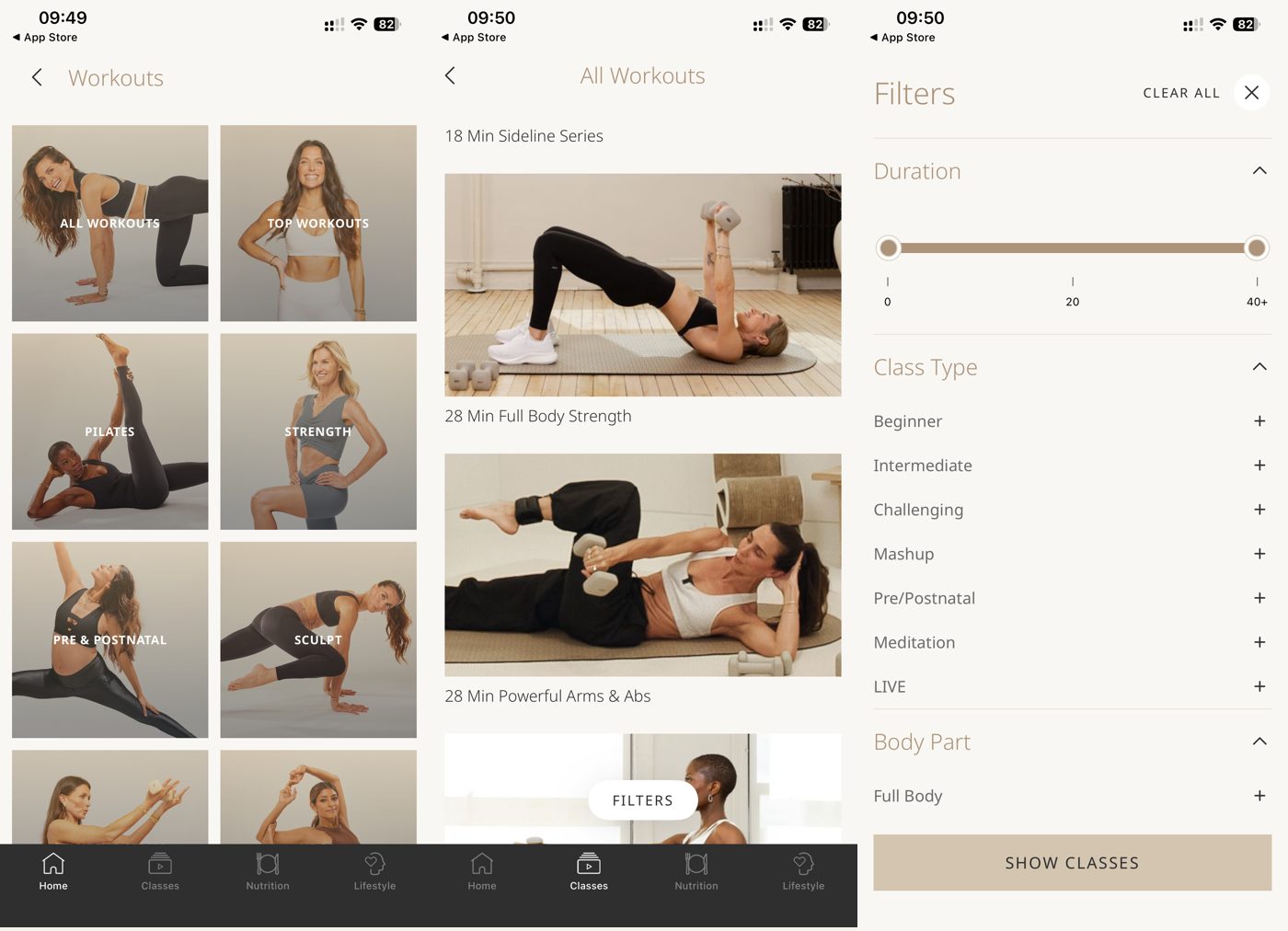
Pvolve wins, 8.5 against 8.
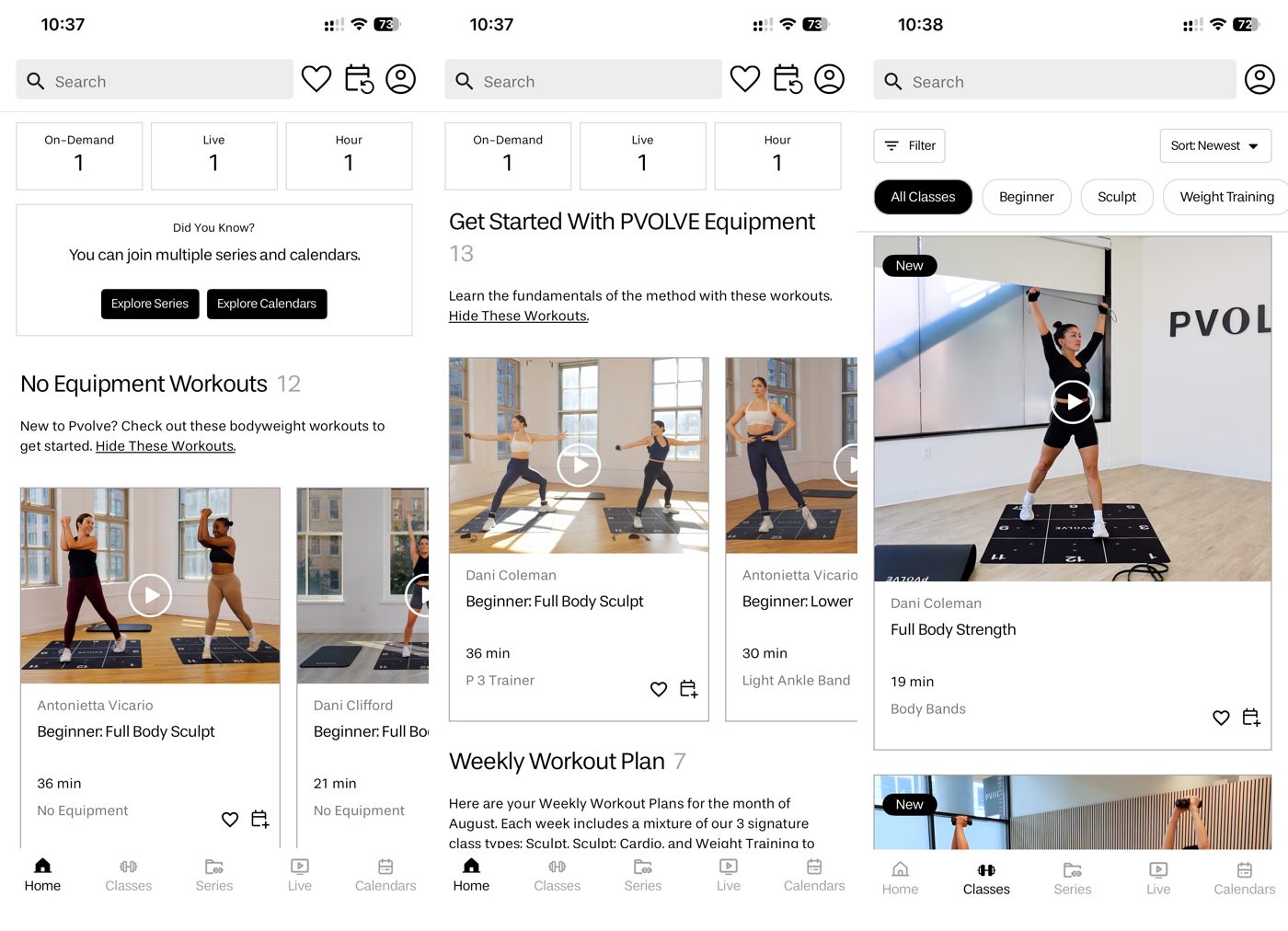
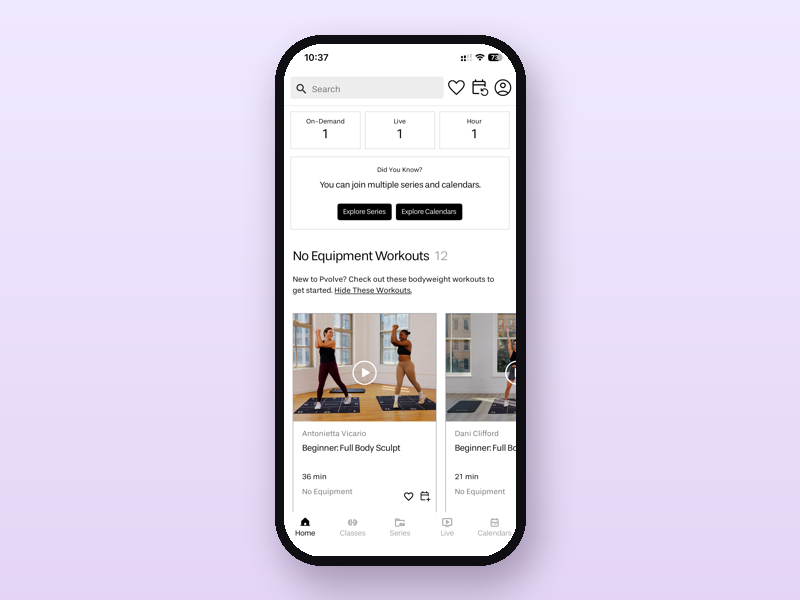
Katy’s first reaction to Pvolve was that there were a lot of options. Her reaction after five minutes with the filter system was that it is the most functional filtering she has seen on any fitness platform she has reviewed, and she is explicit about why that is not a trivial feature: being able to adjust for what you have time and energy for, without hunting through dozens of class titles, is a small thing that makes a real difference to whether you show up.
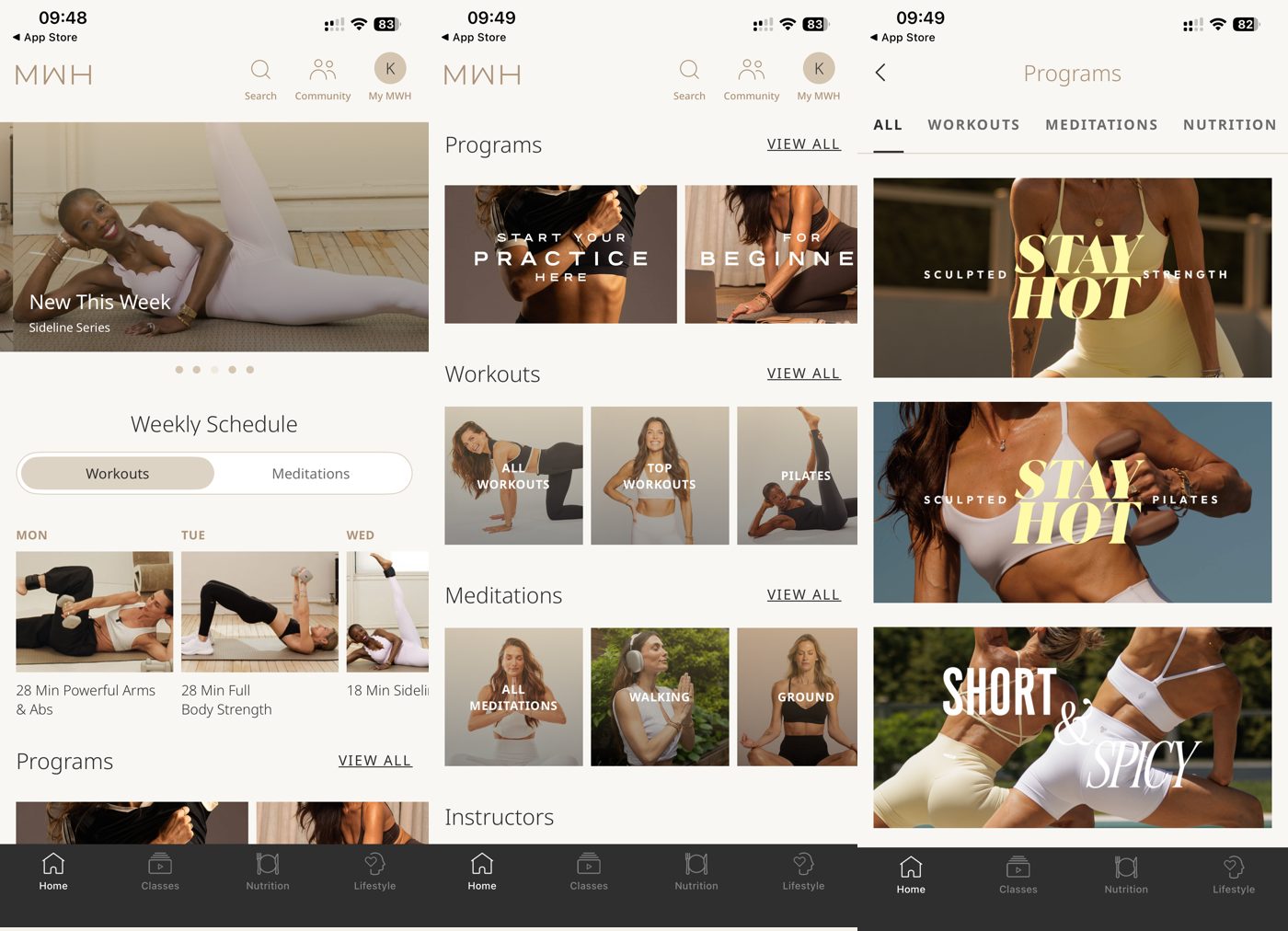
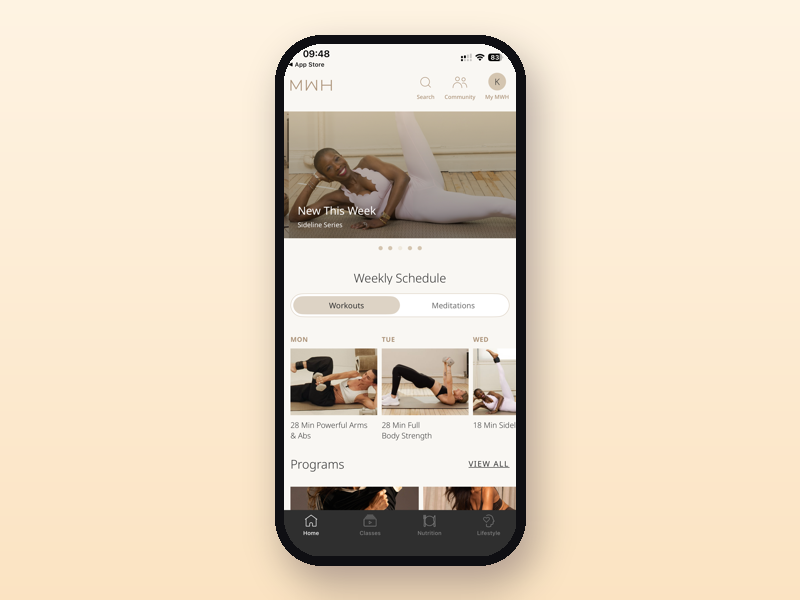
Melissa Wood Health’s navigation is clean and intuitive, and its problem is not the interface. It is that the workouts start to feel repetitive after about six weeks, which is a content depth issue rather than a design one, and it is the reason she did not continue the subscription.
Instructors: a structural difference, not a taste one
Pvolve wins on expert credibility, 9 out of 10 against 5, and the difference shows up in how a class is actually run.
On Pvolve the instructors demonstrate thoroughly and work alongside you from the first rep. The useful part is this: you are never watching someone demonstrate while you stand waiting. On a platform with a genuine learning curve, that is what makes the first fortnight survivable.
On Melissa Wood Health it came down to fit. Kim’s teaching style suited her more than Melissa’s, which is a normal thing to find on a platform built around one founder and one supporting coach, and worth knowing if you are trying the 7-day trial: try both before you judge it.
Pvolve pros and cons
Pvolve scores 8.3. It is strongest on joint-friendly training and weakest on suitability for women over 40.
Pros
- Highest overall score of the two and the strongest midlife capability profile on this site: menopause programming 9, menopause education 9, pelvic floor 9, hormone awareness 8, expert credibility 9.
- Documented strength progression over two months.
- Joint Friendliness 9 with knee stability work that produced a felt change.
- Programme Structure 8.5 and the best filtering on any platform reviewed.
- Nutrition Integration 7.5, the higher of the two.
- 14-day trial.
Cons
- $24.99 a month, $10 more than MWH. A real learning curve: the first two weeks will test your patience if you want zero equipment and zero learning curve.
- Not a barbell programme, so not the answer if a heavy conventional squat is the goal.
- Beginner on-ramp 6 out of 10 against 8.
- Mind-body support 6 against 9.
- Bundles are expensive at $199 to $625, though not required.
Melissa Wood Health pros and cons
Melissa Wood Health scores 6.9. It leads on recovery between sessions and trails on suitability for women over 40.
Pros
- $14.95 a month, or about $11.25 on the annual plan.
- Wins Recovery Compatibility at 9.5, the highest single criterion score on this page.
- Mind-body support 9 out of 10 and beginner on-ramp 8, both ahead of Pvolve.
- Low-impact 9 out of 10, tied.
- Comfortable on a knee with a meniscus history throughout testing.
- Clean, intuitive navigation.
- It engages muscles heavier training tends to skip.
Cons
- Progressive strength 2 out of 10 and bone loading 2, the lowest on this page, with a felt loss of previously built strength during testing.
- No menopause programming, hormone awareness or menopause education, all 1 out of 10.
- Repetitive after about six weeks, and the subscription was not continued.
- Sessions often needed stacking two or three deep to feel challenging.
- Priced in USD only.
Quick yes/no comparison
| Feature | Pvolve | Melissa Wood Health |
|---|---|---|
| Progressive strength programming | Yes | No |
| Menopause-specific programme | Yes, Menopause Strong | No |
| Menopause education content | Yes | No |
| Pelvic floor work programmed in | Yes | Partly |
| Joint stability work | Yes | No |
| Meditation library | Partly | Yes |
| Usable with equipment you likely own | Yes | Yes |
| Proprietary equipment required | No, optional | No |
| Sessions under 15 minutes | No, 16 min minimum | Yes |
| Nutrition guidance | Partly | Partly |
| Free trial | Yes, 14 days | Yes, 7 days |
| Priced outside USD | Partly, UK pricing via retail partners | No, USD only |
Pvolve vs Melissa Wood Health at a glance
| Pvolve | Melissa Wood Health | |
|---|---|---|
| Overall score | 8.3 | 6.9 |
| How it was assessed | Tested, two months of daily sessions | Tested, 7-day trial plus about six weeks paid |
| US cost | $24.99/month or $224.91/year | $14.95/month or $134.99/year, about $11.25/month |
| Free trial | 14 days, full streaming access, card required | 7 days, full access on monthly and annual plans |
| Session length | 16 to 25 min | 10 to 30 min |
| Style | Low-impact functional strength with bands and weights | Pilates-led flow with light strength |
| Equipment used in testing | Bands medium and high, dumbbells 11 to 19 lb, ankle weights | Light dumbbells, ankle weights, mat |
| Optional hardware | Signature Bundle $199, Transformation Bundle $625, equipment from $199 | None |
| Menopause content | Menopause Strong, with clinical context | None |
Affiliate links where a partnership exists. Full disclosure.
Pvolve vs Melissa Wood Health: the full scoring breakdown
Pvolve wins six of the nine weighted criteria, Melissa Wood Health wins one, and two are tied. Scores are pulled live from each programme’s own assessment, so this table updates when the assessment does.
| Criterion | Weight | Pvolve | Melissa Wood Health | Winner |
|---|---|---|---|---|
| Muscle Potential | 18% | 7.5 | 4 | Pvolve |
| Time Efficiency | 15% | 9 | 9 | Tied |
| Joint Friendliness | 12% | 9 | 8.5 | Pvolve |
| Programme Structure | 12% | 8.5 | 7 | Pvolve |
| Women Over 40 Specificity | 10% | 7.4 | 4 | Pvolve |
| Recovery Compatibility | 10% | 9 | 9.5 | Melissa Wood Health |
| Value for Money | 8% | 8 | 8 | Tied |
| UX and Design | 8% | 8.5 | 8 | Pvolve |
| Nutrition Integration | 7% | 7.5 | 5 | Pvolve |
| Overall | 100% | 8.3 | 6.9 | Pvolve |
The twelve capability scores
Pvolve wins nine of the twelve, Melissa Wood Health wins two, and one is tied. The four menopause rows and the pelvic floor row are where this comparison is really decided.
| Capability | Pvolve | Melissa Wood Health | Winner |
|---|---|---|---|
| Low-impact | 9 | 9 | Tied |
| Progressive strength | 7 | 2 | Pvolve |
| Bone loading | 5 | 2 | Pvolve |
| Recovery & deload | 7 | 4 | Pvolve |
| Menopause programming | 9 | 1 | Pvolve |
| Pelvic floor | 9 | 4 | Pvolve |
| Hormone awareness | 8 | 1 | Pvolve |
| Menopause education | 9 | 1 | Pvolve |
| Expert credibility | 9 | 5 | Pvolve |
| Mind-body support | 6 | 9 | Melissa Wood Health |
| Beginner on-ramp | 6 | 8 | Melissa Wood Health |
| Midlife nutrition | 4 | 3 | Pvolve |
Value for money: tied on the score, and $10 a month apart
Tied at 8 each, which is the harness working as intended: value is what you get for what you pay, not the size of the number.
| Plan | Pvolve | Melissa Wood Health |
|---|---|---|
| Monthly | $24.99 | $14.95 |
| Annual | $224.91 | $134.99, about $11.25/month |
| Free trial | 14 days, card required | 7 days |
| Equipment bundles | Signature $199 with one month access, Transformation $625 with one year | None |
| Other | Sculpt 9 supplement $64 for 30 servings, US only, not pushed within the platform | Priced in USD only |
Pvolve costs two thirds more and delivers considerably more programme: the menopause work, the pelvic floor provision, the stability series, the filtering. MWH costs less and is a calmer, simpler product. Both earn a 8 because both are fairly priced for what they are.
The trial asymmetry favours Pvolve, and so does the realistic test. Fourteen days is enough to get through the learning curve and see whether the movement patterns suit you. Seven days on MWH is enough to enjoy it, but the problem she hit only appeared at about six weeks. If price is the deciding factor, our best free and budget workout apps for women over 40 ranking covers cheaper options than either.
Who wins for…
Who wins for getting measurably stronger
Pvolve. 7.5 against 4, progressive strength 7 out of 10 against 2, and a documented two-month progression from 11 lb to 14 lb upper body and 14 lb to 19 lb lower.
Who wins for pelvic floor concerns
Pvolve. 9 out of 10 against 4, the highest pelvic floor score we have recorded on any platform.
Who wins for anything menopause-specific
Pvolve. Menopause programming 9 against 1, education 9 against 1, hormone awareness 8 against 1. Melissa Wood Health has none of it.
Who wins for a calm daily practice
Melissa Wood Health. Mind-body support 9 out of 10 against 6, and Recovery Compatibility 9.5, the highest criterion score on this page.
Who wins for starting from scratch
Melissa Wood Health. Beginner on-ramp 8 out of 10 against 6. Pvolve’s first two weeks are a genuine learning curve.
Who wins on price
Melissa Wood Health. $14.95 a month against $24.99, or about $11.25 on the annual plan.
Who wins for an existing knee, hip or ankle problem
Pvolve, narrowly. 9 against 8.5, low-impact tied at 9 out of 10 each. Both were comfortable on a meniscus history, and only Pvolve produced a felt improvement in stability.
Who wins for a short session on a busy day
Tied at 9 each, though MWH sessions often needed stacking two or three deep to feel challenging, and Pvolve’s did not.
Who wins for training with equipment you already own
Tied. Two months of Pvolve were done on bands and dumbbells already owned, with no bundle purchased. MWH needs light dumbbells, ankle weights and a mat.
Who wins for meditation and stress
Melissa Wood Health. Mind-body support 9 against 6, and the meditation library is a real part of the product.
Who wins for staying interesting past two months
Pvolve. Two months of daily use without a rest-day guilt spiral, against workouts that started to feel repetitive at about six weeks and a subscription that was not renewed.
Who wins for heavy conventional strength
Neither. If you want to squat 176 lb or need a barbell programme to hit your goals, neither of these is your primary platform.
Who wins for nutrition guidance
Pvolve. 7.5 against 5, and midlife nutrition 4 out of 10 against 3. Both are modest.
Decision tree for women over 40
You want to be stronger in three months. Pvolve.
Pelvic floor is part of why you are here. Pvolve, at 9 out of 10 against 4.
You want menopause-aware programming. Pvolve. It is the only one of the two with any.
You want calm, and your strength work is handled elsewhere. Melissa Wood Health.
You are returning to exercise after a long gap. Melissa Wood Health first, on the gentler on-ramp, then reassess at six weeks when the repetition sets in.
Budget is tight. Melissa Wood Health, at $10 a month less.
You are unsure. Pvolve, because fourteen days is long enough to get past the learning curve and find out, where seven days is not long enough to find MWH’s limitation.
What we did not test
Both were used properly, and there are still gaps worth naming.
The Pvolve proprietary equipment bundle was not purchased or tested, so nothing here judges the P.ball or the branded kit, and the strength progression described was achieved without them. The Sculpt 9 supplement was not tested and is not something we would assess anyway. Testing covered Progressive Weight Training for Beginners, bands and dumbbell classes, week 2 of Menopause Strong, the knee stability series and one live virtual session, not the full library.
On Melissa Wood Health, testing covered the Total Body Tone programme with Kim and the Signature Series with Melissa across about seven weeks in total. The meditation library was not worked through at length, and the nutrition reset was not followed.
We do not publish calorie-burn comparisons. Any body-composition observations on this page are one person’s record over a defined period, not a promised result.
Which is better for women over 50?
Pvolve, and more decisively than at 40
Everything that makes Pvolve win gets more relevant with age, not less: the pelvic floor provision, the joint stability work, the menopause and hormone content, and above all the progressive loading. Bone loading is 5 out of 10 against 2, and while neither is a bone programme, one of them at least moves in the right direction.
The exception
If you are already doing progressive strength work elsewhere and what you want is a gentle daily practice that keeps you moving on the other days, Melissa Wood Health at mind-body 9 out of 10 does that better and costs less. Our best workouts for postmenopause ranking covers the stage-specific question, and best Pilates programmes for women over 40 covers MWH’s category properly.
Women over 60 starting fresh
Melissa Wood Health is the gentler front door, on beginner on-ramp 8 out of 10 against 6. But be clear that it will not build strength, and strength is the thing that matters most in that decade. Use it to establish the habit, then move to something progressive.
Frequently asked questions
Is Pvolve or Melissa Wood Health better for women over 40?
Pvolve, on our scoring, 8.3 against 6.9, winning six of the nine weighted criteria. It leads decisively on strength, menopause content and pelvic floor. Melissa Wood Health wins Recovery Compatibility, costs $10 a month less, and is the better choice if you want a calm practice and are training for strength elsewhere.
Which is safer for joint pain?
Both are low impact and both scored 9 out of 10 on low-impact capability. Pvolve edges Joint Friendliness at 9 against 8.5 because it includes stability work rather than only avoiding load. Both were used comfortably by a tester with a previous meniscus injury. Neither is a rehabilitation programme, and a diagnosed joint problem is a question for a physiotherapist.
Does Pvolve or Melissa Wood Health build strength better?
Pvolve, 7.5 against 4, with progressive strength capability 7 out of 10 against 2. In two months of testing, working weights rose from 11 lb to 14 lb for upper body and 14 lb to 19 lb for lower body. On Melissa Wood Health, working weights dropped from the 11 to 20 lb used on other platforms.
Which offers more for pelvic floor concerns?
Pvolve, by the widest margin in this comparison: 9 out of 10 against 4, and the highest pelvic floor score we have recorded on any platform. Melissa Wood Health has some awareness of it but no programme.
Do I need to buy the Pvolve equipment?
No. Two months of testing, including the strength progression described on this page, were done using resistance bands and dumbbells already owned, without buying the bundle. The Signature Bundle is $199 including one month of access and the Transformation Bundle is $625 including a year of streaming, but the streaming subscription alone is a legitimate way in if you already have bands and dumbbells.
How much do Pvolve and Melissa Wood Health cost?
Pvolve is $24.99 a month or $224.91 a year, with a 14-day free trial that requires a card. Melissa Wood Health is $14.95 a month or $134.99 a year, about $11.25 a month, with a 7-day free trial. Melissa Wood Health is priced in USD only.
Which has better guidance for bone density?
Pvolve, on bone loading 5 out of 10 against 2, though neither is primarily a bone programme. Mohebbi and colleagues identify progressive resistance training as the primary non-hormonal intervention for bone mineral density after menopause.4 Pvolve progresses load and Melissa Wood Health does not, which is the relevant difference.
Which is better for weight loss after 40?
We do not publish calorie comparisons or promise weight outcomes. As one person’s record: after two months on Pvolve, arms and core looked more defined. Those are observations, not predictions, and the more useful questions after 40 are whether the strength progresses and whether you will still be doing it in three months.
How long do the workouts take?
Pvolve runs 16 to 25 minutes and Melissa Wood Health 10 to 30, and they tie on Time Efficiency at 9 each. One practical difference: on Melissa Wood Health the sessions were often stacked two or three deep to feel challenging enough, so the real time cost was sometimes higher than the nominal one.
Is Melissa Wood Health worth it long term?
That depends what you want from it. In testing, the workouts started to feel repetitive after about six weeks and the subscription was not continued past the testing period. As a calm daily practice alongside strength work elsewhere it holds up. As your only training platform, the strength ceiling is the problem.
Research citations
- Wright VJ, Schwartzman JD, Itinoche R, Wittstein J. The musculoskeletal syndrome of menopause. Climacteric. 2024;27(5):466–472. menopause MSK study. (Cited for: oestrogen decline’s effect on tendon and ligament integrity, and increased injury risk in midlife.)
- Maltais ML, Desroches J, Dionne IJ. Changes in muscle mass and strength after menopause. Journal of Musculoskeletal and Neuronal Interactions. 2009;9(4):186–197. PubMed. (Cited for: accelerated loss of muscle mass and strength through the menopause transition.)
- Teixeira RV, Colla C, Sbruzzi G, Mallmann A, Paiva LL. Prevalence of urinary incontinence in female athletes: a systematic review with meta-analysis. International Urogynecology Journal. 2018;29(12):1717–1725. urinary incontinence meta-analysis. (Cited for: 36% prevalence of urinary incontinence across female athletes in a range of sports. Note: this review did not separate high-impact from low-impact sport, so we do not claim it did.)
- Mohebbi R, Shojaa M, Kohl M, et al. Exercise training and bone mineral density in postmenopausal women: an updated systematic review and meta-analysis. Osteoporosis International. 2023;34:1145–1178. bone density meta-analysis. (Cited for: progressive resistance training as the primary non-hormonal intervention for bone density after menopause.)
- Sá KMM, et al. Resistance training for postmenopausal women: systematic review and meta-analysis. Menopause. 2022. PubMed. (Cited for: improvements in menopause symptoms and functional capacity with resistance training. Note: this review did not measure strength or lean mass as primary outcomes, and its authors rate the certainty of evidence as very low to low, so we report it on that basis.)
This page compares fitness platforms. It is not medical advice. Katy is a woman who has trained through perimenopause, not a clinician. Any strength or body-composition figures described are one person’s recorded experience, not an expected result. If you have a diagnosed condition, an injury, or symptoms that concern you, speak to a qualified healthcare professional before changing how you train.
About this comparison
Compiled by Katy Cole for Her Daily Fit. Both platforms were paid for and tested: Pvolve across two months of daily sessions, using bands and dumbbells already owned rather than the branded bundle, and Melissa Wood Health across a 7-day trial plus about six weeks of paid subscription. Both were scored on the same nine weighted criteria and the same twelve capability scores. Prices were verified against official sources in 2026 and may differ if there has been a recent change. Scores on this page are pulled live from each programme’s own assessment, so they update when the assessment does. Her Daily Fit earns a commission on Pvolve at no extra cost to you, and earns nothing from Melissa Wood Health. That has not changed a single score on this page, and the Melissa Wood Health limitations described above are reported exactly as they were found.
Compared with
Where these brands appear in our “Best for” rankings
Best workouts to build muscle after 50
Best Pilates programmes, women over 40
Best resistance band workouts, women over 50
20-minute workouts for perimenopause
Low-cortisol workouts for perimenopause
30-minute workouts, women over 40
Best workouts for postmenopause