


Why does cortisol matter for workouts in perimenopause?
Cortisol is the stress hormone, and elevated cortisol in perimenopause specifically blunts the anabolic response to training, disrupts sleep, drives central fat storage and works against the body composition goals most women have at this stage. Choosing low-cortisol training is not about avoiding hard work. It is about training in a way that produces real adaptation instead of recovery debt.
The cortisol response to exercise is well-documented. Hackney and colleagues (2006) reviewed the endocrine response to training across formats and showed that long, high-intensity sessions (60+ minutes at high intensity, particularly fasted) produce the largest cortisol spike, while shorter focused sessions with adequate rest produce a meaningfully smaller and more recoverable response. For women in perimenopause where baseline cortisol regulation is already shifting, that difference is the difference between training that builds you and training that grinds you down.
The sleep connection is the second mechanism. Nedeltcheva and colleagues (2010) in Annals of Internal Medicine showed that sleep restriction during caloric deficit shifts weight loss from fat to lean mass. For menopausal women specifically, where sleep disruption is common, cortisol-spiking training that further disrupts sleep produces a compounding effect: more cortisol, less sleep, more cortisol the next day. The training plan that worked at 32 quietly stops working at 45 not because the work changed but because recovery capacity did.
The expert framing is consistent. Dr Mary Claire Haver in The New Menopause argues that midlife women specifically benefit from cortisol-conscious training because the same training stress that built muscle at 30 can drive body composition the wrong way at 45. Dr Stacy Sims in Next Level echoes the framing: train smarter, not harder, for women in midlife, with the explicit caution that fasted high-intensity work raises cortisol more in perimenopausal women than in younger women or in men.
The practical implication is that the most effective workouts for women in perimenopause are often shorter, more focused and more strength-led than the daily HIIT culture that dominates fitness marketing. Two MsFLASH trials reinforce this. Newton and colleagues (2014) showed yoga delivers measurable improvements in sleep and well-being for menopausal women with vasomotor symptoms. Sternfeld and colleagues (2014) showed moderate aerobic activity, not high-intensity intervals, produces the cleanest improvements in menopausal quality of life. The published evidence supports the low-cortisol framing across multiple research areas.
If you want a longer treatment of how to structure the wider week, see our guide to workouts for perimenopause and the 20-minute workouts breakdown. Both feed into the same framework: short, structured, strength-led, recovery-respected.
How should women in perimenopause train for low cortisol?
Run three to four short resistance sessions per week (20-30 minutes each), three to four Zone 2 cardiovascular sessions (mostly walking, 30-45 minutes), one to two restorative yoga or meditation sessions, and limit HIIT to one session per week of 20 minutes maximum. That structure delivers real adaptation while keeping the cortisol response in the range your recovery can actually manage.
The resistance work is the priority and stays the priority even inside a cortisol-conscious framework. The Cruz-Jentoft sarcopenia consensus (2010) identifies progressive resistance training as the documented intervention for skeletal muscle preservation, and the LIFTMOR trial (Watson et al, 2018) showed structured progressive resistance training improves bone density in postmenopausal women. The cortisol-conscious adjustment is session length and frequency: three short sessions per week beat one or two long sessions for both adaptation and recovery cost.
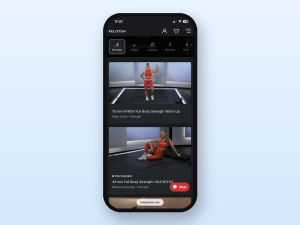
The Zone 2 cardiovascular work is the next pillar. Walking 30-45 minutes most days at conversational pace is the lowest-cortisol cardiovascular work available. The intensity sits in the fat-oxidation zone without spiking the hormonal stress response. Pvolve’s Menopause Strong walks, Peloton Power Walk and outdoor walking all qualify, and so does pushing a buggy uphill at a brisk pace for thirty minutes. It does not need to be fancy.
The restorative work is the recovery pillar that most women in perimenopause underprioritise. Restorative yoga, meditation, breathwork and dedicated mobility sessions all support the parasympathetic nervous system, which is the cortisol antidote. Two 15-30 minute sessions per week make a meaningful difference to sleep quality and recovery capacity. The Newton 2014 MsFLASH data sits underneath this. If you want a deeper dive on mobility specifically, our mobility app guide goes further.
The HIIT limit is the explicit cortisol-conscious move. HIIT is not bad. Daily HIIT is. Limiting high-intensity work to one session per week, maximum 20 minutes, lets you keep the cardiovascular benefit without accumulating the cortisol cost. For women in perimenopause specifically with significant sleep disruption or stress, the right operating point may be zero HIIT for a month while sleep and recovery rebuild. If you are also navigating hot flashes specifically, the framework in our hot flashes workout guide overlaps closely with this one.
What should women in perimenopause prioritise for cortisol-conscious training?
Five priorities matter most: session length under 45 minutes, frequency over intensity, strength as the foundation (not cardio), restorative work as a separate weekly priority, and protecting sleep above everything else. Each priority addresses a documented physiological reality of training in midlife.
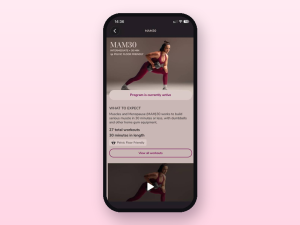
Session length under 45 minutes. Long, high-intensity sessions are the biggest cortisol-spiking format. Most women in perimenopause do well at 20-30 minute strength sessions plus 30-45 minute walking sessions. The total weekly training time of 3-5 hours sits within recovery capacity rather than pushing past it. Melissa Wood Health’s 15-20 minute Pilates sessions sit at the most aggressive end of this spectrum, and after six weeks of testing they delivered noticeable strength change without any of the recovery debt that longer formats produce.
Frequency over intensity. Three to four short sessions per week consistently outperform one or two long sessions for both adaptation and cortisol management. The cumulative training stimulus comes from the frequency, not from any single heroic session. Schoenfeld’s 2016 frequency meta-analysis supports this framing: twice-weekly training per muscle group is the hypertrophy floor, and short frequent sessions are the practical way most midlife women hit it.
Strength as the foundation. Resistance training spikes cortisol less than long cardiovascular work at the same effort level. Compound dumbbell movements (squats, hinges, presses, rows) drive lean mass adaptation that raises basal metabolic rate, which supports body composition goals without requiring extended cardio sessions. Build the week around strength, not around cardio. The Pvolve Menopause Strong, Sculpt Society Midlife Movement and Owning Your Menopause strength blocks all do this; Melissa Wood Health does it on lighter loads but with very high movement frequency.
Restorative work as a separate priority. Restorative yoga, meditation, breathwork and dedicated mobility work are not optional add-ons. They are the parasympathetic counterweight to the training stress. Two 15-30 minute restorative sessions per week meaningfully improve sleep quality, which improves cortisol regulation, which improves training response. The MsFLASH yoga trial (Newton 2014) is the cleanest published evidence here. Alo Wellness Club’s sound bath library, FORM’s meditation section and The Sculpt Society’s Lifestyle section are the strongest in-platform options tested.
Sleep above everything. The single biggest cortisol intervention is consistent 7+ hours of sleep. Nedeltcheva 2010 demonstrated that sleep restriction shifts weight loss from fat to lean mass during caloric deficit. For women in perimenopause specifically, if sleep is genuinely disrupted, training adjustments matter less than addressing the sleep itself. Discuss persistent sleep concerns with your GP or a menopause-trained clinician; the Menopause Society 2023 position statement covers non-hormonal management options that may be relevant.
A sample low-cortisol training week
A cortisol-conscious week is not an easy week. It is a week with two genuinely hard sessions and no junk volume in between. The mistake most women make when they read about cortisol is to make everything gentle, which protects the nervous system and loses the muscle and bone. The structure below keeps the hard work and removes the accumulation.
| Day | Session | Why it is there |
|---|---|---|
| Monday | Full body strength, 30 to 45 min, taken close to hard | The session that protects muscle and bone. Do not soften this one. |
| Tuesday | Walk, 30 to 45 min, conversational pace | Aerobic base without adding recovery cost. |
| Wednesday | Mobility, yoga or pelvic floor work, 15 to 30 min | Active recovery. This is a real session, not a rest day with extra steps. |
| Thursday | Full body strength, 30 to 45 min, taken close to hard | The second stimulus. Two a week is the minimum that works. |
| Friday | Walk or complete rest, your choice on the day | The flexible day. Decide by how you slept, not by the plan. |
| Saturday | Something you enjoy: dance, a longer walk, a class | Adherence is the variable that actually determines outcomes. |
| Sunday | Rest | A full day off, every week, without negotiating. |
What is deliberately absent: daily HIIT, fasted hard training, two-a-days, and any session done on under five hours of sleep. Those are the four patterns that most reliably turn training into another stressor at this life stage.
How to adjust it: if you slept badly, keep the session and cut the volume, for example three working sets instead of five, rather than swapping strength for cardio. If you are ill or genuinely depleted, take the day. If you are consistently unable to complete the two strength sessions, the problem is the rest of the week, not the sessions.
Every fourth to sixth week, deload. Keep the same sessions and cut the volume roughly in half for a week. Evlo schedules this for you as Reset weeks and Flipping 50 builds it into its programming; on any other platform you have to plan it yourself, and almost nobody does.
None of this is medical advice. If exhaustion, sleep disruption or a racing heart rate persist regardless of how you train, that is a conversation for your doctor.
Which low-cortisol workouts score highest for perimenopause?
Eight programmes qualify. Flipping 50 ranks first, followed by Menovation, Evlo, Obé Fitness, BODi, MUTU System, Fabulous50s and Peloton.
This list changed substantially in August 2026, and the change is the point. An earlier version ranked Pvolve first and was built largely from the same programmes that top our other midlife lists, which is a sign of a ranking axis doing no work.
Cortisol-conscious training is a specific thing: it needs structured recovery, a deload concept, and programming that does not treat every session as a chance to go harder. When we gated on that instead, six of the original seven programmes dropped out.
How do the best low-cortisol workouts for perimenopause compare?
| Rank | Programme | Recovery approach | Meno fit 70% | Ease of use 30% | Review score * | Length | Cost |
|---|---|---|---|---|---|---|---|
| 1 | Flipping 50Data profile | Recovery is a named pillar of the method | 8 | 8 | 7.8 | 20 to 40 min | $69/mo |
| 2 | MenovationFully tested | Short sessions, education-led pacing | 7.6 | 6.5 | 7.7 | 20 to 30 min | $28.99/mo or $199.99/yr |
| 3 | EvloFully tested | Periodic Reset weeks built into the plan | 6.6 | 8.5 | 8.0 | 35 to 50 min | $55.99/mo or $599/yr |
| 4 | Obé FitnessFully tested | Explicit rest days and burnout guidance | 6 | 9.5 | 7.5 | 5 to 60 min | $24.99/mo or $169.99/yr |
| 5 | BODiFully tested | Belle Vitale hormone track, with caveats | 6.3 | 8.5 | 8.0 | 20 to 45 min | $22.99/mo or $179/yr |
| 6 | MUTU SystemFully tested | Breath-led, no high-intensity work at all | 6.6 | 7 | 7.1 | 12 to 30 min | About $28/mo |
| 7 | Fabulous50sSample tested | Low-impact throughout, no HIIT | 6.5 | 7 | 7.6 | 5 to 40 min | Free on YouTube; app $14.99/mo |
| 8 | PelotonFully tested | Menopause collection built with Respin Health | 6 | 7.8 | 7.3 | 20 to 45 min | App One $12.99/mo; App+ $28.99/mo |
* Two different numbers appear here and they answer different questions. Full review score is the programme’s overall rating across all nine criteria we score, the number you see on its review page. The rank comes from what this page is about: how well the programme is built for women in perimenopause, weighted 70%, blended with how good it is to use, weighted 30%. Qualifying for the list at all is a separate test, described at the bottom of this page.
Evlo: the clearest deload structure of anything we have tested
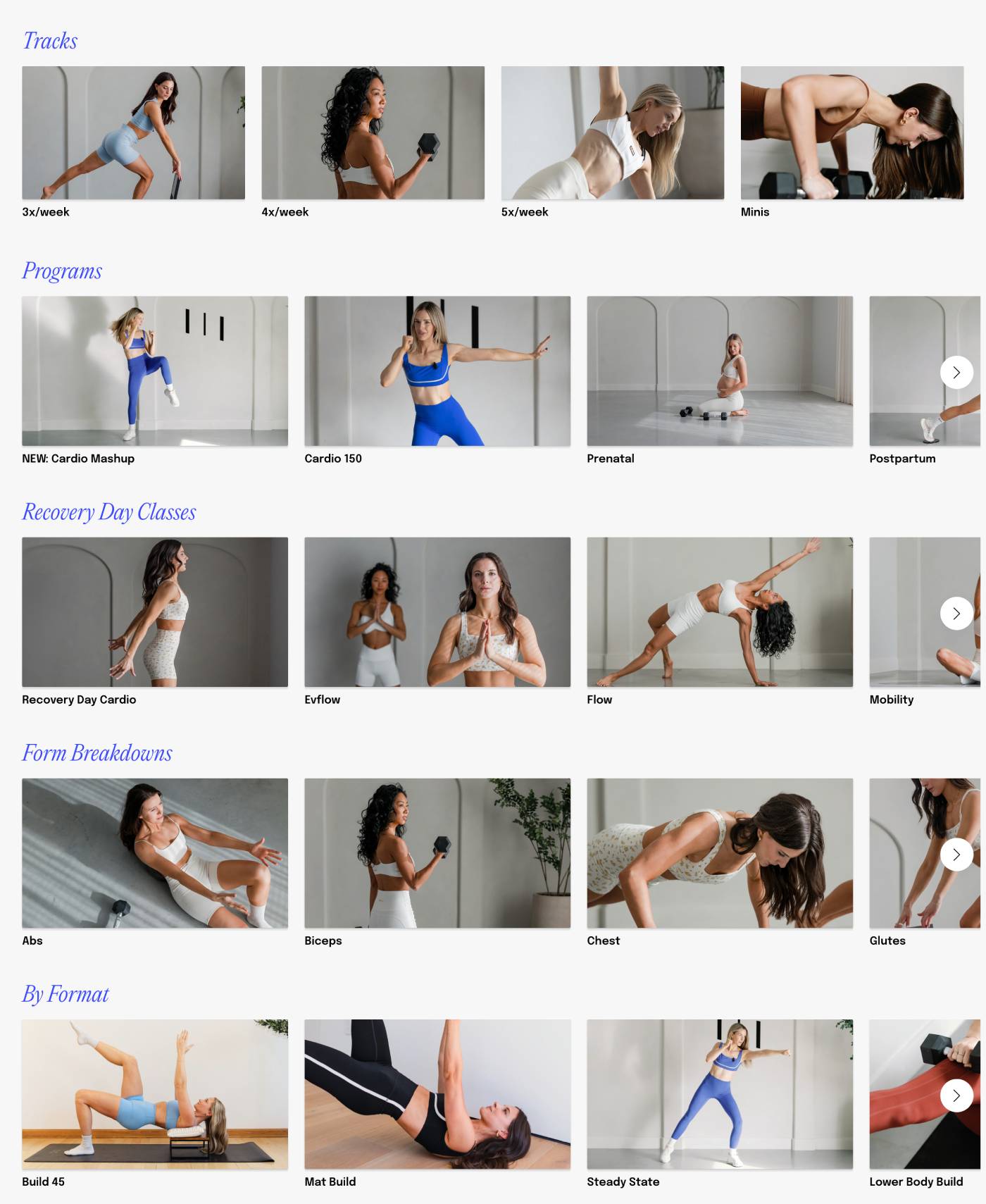
Every instructor holds a Doctorate in Physical Therapy, and Reset weeks are scheduled rather than optional
Evlo is the platform that engages most directly with the question this page is about. Its own material discusses shifting the body out of a stress state, and periodic Reset weeks are built into the plan rather than left to your judgement, which is the single most useful structural feature for anyone training while already running cortisol-high.
Tested by Katy Cole, eight weeks: I completed sessions across Build, Burn, Barre and the cardio add-ons, and spent time in the nutrition section testing recipes. Eight weeks produced noticeable muscle change where other training had stopped reaching. The sessions are demanding without being frantic, which is a harder balance to strike than it sounds.
The honest limitation: sessions run 35 to 50 minutes, the longest here, and at $55.99 a month it is the second most expensive option. If the reason you are on this page is that you are exhausted, a 45-minute session may be the wrong starting point even if the programming is right.
What a low-cortisol week looks like here: follow the plan and take the Reset weeks when they come, which is the part most people skip. Three Build sessions a week is plenty. If 45 minutes is too much on a given day, Evlo’s own guidance is to shorten rather than skip, and that is the right instinct.
Cost: $55.99 a month or $599 a year. Fourteen-day trial, though the App Store listing still shows legacy 7-day copy.
Obé Fitness: explicit about rest days in a way almost nothing else is
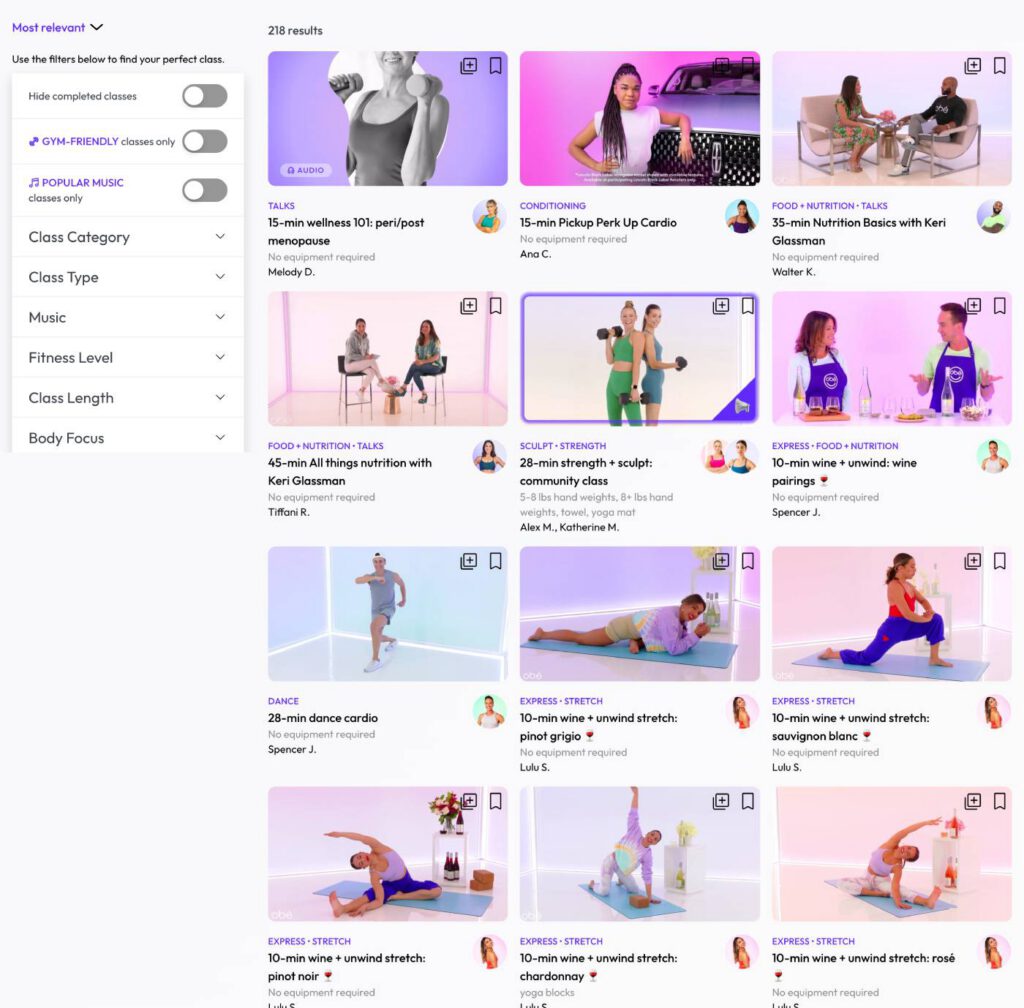
Outstanding filtering, genuine menopause programming, and a stated position on workout burnout
Obé Fitness is unusually direct about rest days and avoiding burnout, which is a sensible framing for a life stage where cortisol sensitivity increases. The filtering is what makes that practical: you can pick a 20-minute low-intensity class on a bad day instead of abandoning the week.
Tested by Katy Cole, one month daily: I tested Obé in my 40s in perimenopause, using a friend’s US account. Being able to filter to something short and gentle, and actually enjoy it, is what stops a bad week becoming a lost month.
The honest limitation: the library carries a lot of HIIT, so the low-cortisol version of this platform is one you have to assemble with the filters rather than one it hands you. It is also available in the United States and Canada only.
What a low-cortisol week looks like here: filter to 20 to 30 minutes, low intensity, and stay with one or two instructors whose pacing suits you. Use the six-week Menopause Program as your spine. The platform will happily serve you HIIT if you let the home screen decide, so set the filters once and work from them.
Cost: $24.99 a month or $169.99 a year. Seven-day trial, or 30 days through a Guest Pass referral.
MUTU System: no high-intensity work anywhere in it
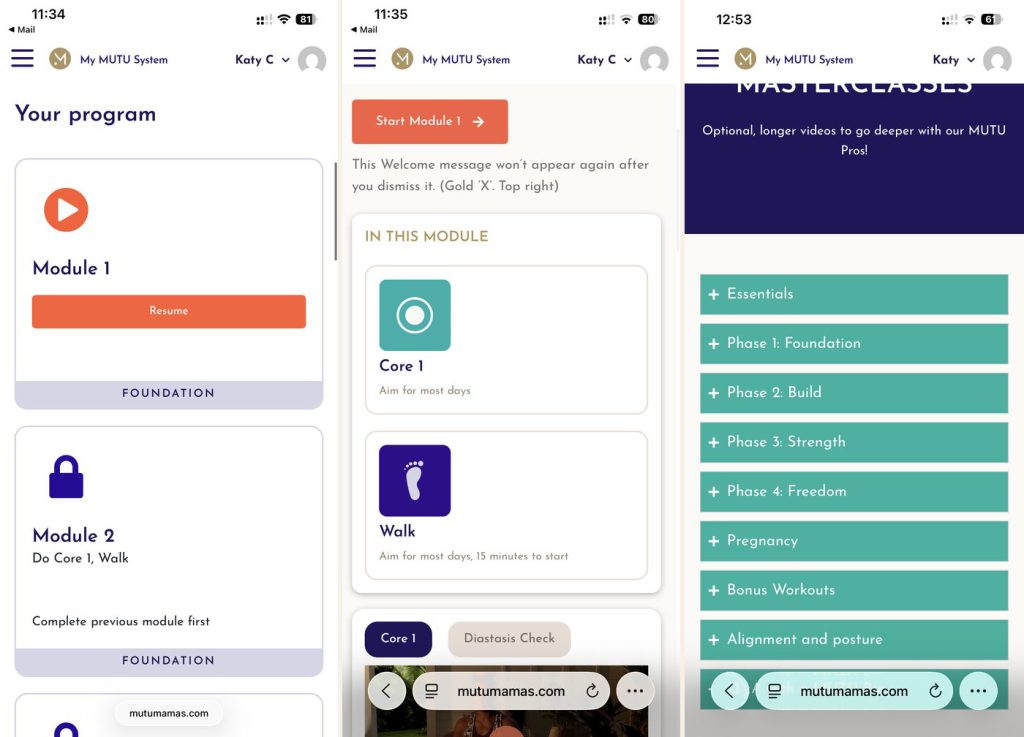
Breath-led pelvic floor and core rehab, which makes it structurally incapable of spiking anything
MUTU System is physio-informed and deliberately gentle. There is no HIIT in it at all, and the sessions are breath-led and supported rather than hard, which is exactly right if your nervous system is the thing that needs attention first.
Tested by Katy Cole: I first started MUTU after my first pregnancy, ran it again after my second, and I still use its core and pelvic floor work now, in perimenopause. It is the programme I return to when I need to train without adding stress.
The honest limitation: loading is light throughout, so it does very little for bone or maximal strength. This is a programme to run alongside strength work once you are recovered, not instead of it.
What a low-cortisol week looks like here: daily is fine, because the sessions are 12 to 30 minutes and breath-led rather than taxing. This is the one programme on the page where more frequency does not mean more stress. Once you feel steady, add two strength sessions a week from somewhere else rather than trying to make MUTU do that job.
Cost: about $28 a month, or roughly $190 a year. Ten-day free trial, the longest here.
BODi: a real hormone programme inside a library that works against it
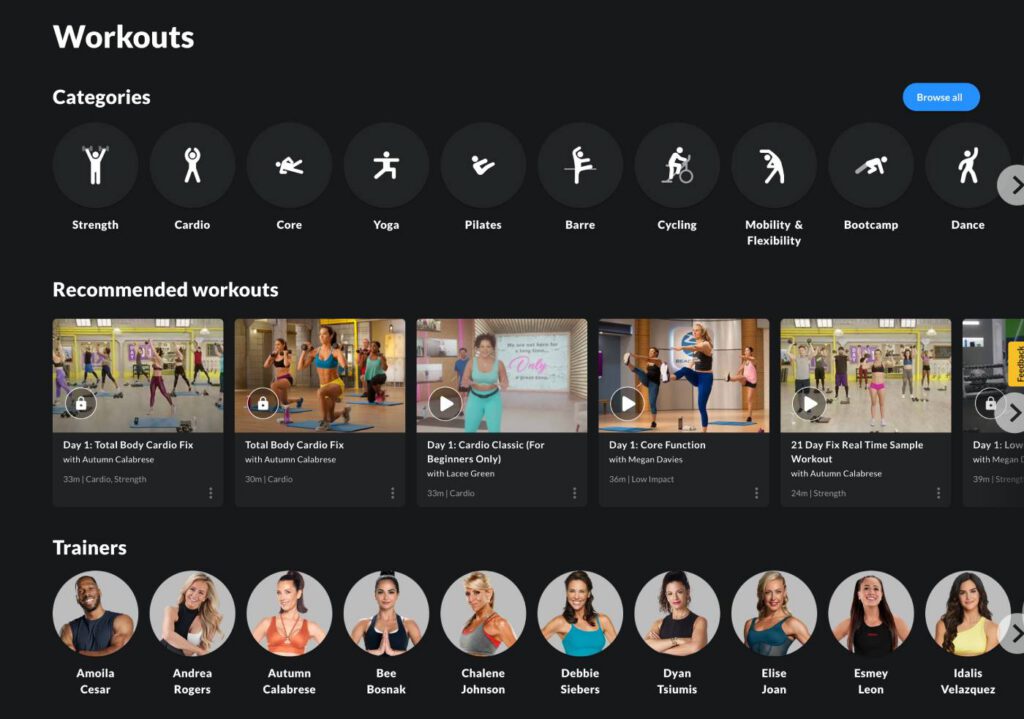
Belle Vitale is the reason it qualifies; the rest of the platform is the reason for the caveat
BODi carries a dedicated hormone programme in Belle Vitale, alongside a large nutrition system. That programme is genuinely built for this brief.
Tested by Katy Cole, several months across four programmes: I completed 28 days and lost 3 lb, saw noticeably tighter arms and legs, and felt meaningfully more energy by week two. The nutrition system drove most of that, not the exercise alone.
The caveat that matters most on this page: the mainstream BODi library skews jump-heavy with poor joint modifications, which is close to the opposite of cortisol-conscious training. It ranks fifth on the strength of Belle Vitale specifically. If you subscribe and then follow the default recommendations, you will get the wrong platform.
What a low-cortisol week looks like here: run Belle Vitale and nothing else. Do not browse the wider library while you are trying to lower training stress, and do not follow the home-screen recommendations. Pair it with the nutrition system, which is where most of BODi’s results actually come from.
Cost: $22.99 a month, or $179 a year with a $119 first-year promotion running. Seven-day trial on monthly plans only.
Fabulous50s: free, genuinely over-50, and never once frantic
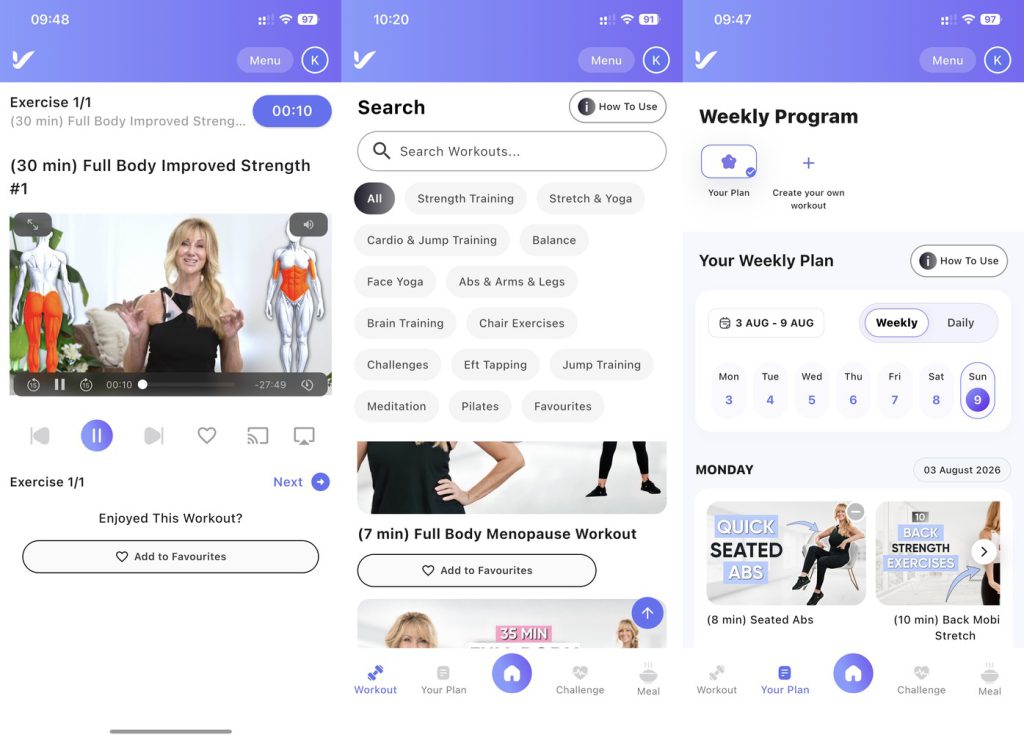
Low-impact strength, mobility and balance from someone actually in the demographic
Fabulous50s is Schellea Fowler’s library, free on YouTube, with no HIIT and no intensity pressure anywhere in it. For a woman who has been told for a decade to push harder, the tone alone is worth something.
Sample tested. We worked through a sample of the free sessions rather than running a full programme. What is clear from that sample: consistently low impact, warm coaching, and a genuine focus on balance and mobility alongside light strength.
The honest limitation: loading stays light and the menopause approach is education-led rather than clinician-led. It ranks seventh on midlife fit, not on kindness.
What a low-cortisol week looks like here: three or four of the low-impact strength and mobility sessions, plus the balance work, which is the part most women skip and most need. Everything is short enough to do on a bad-sleep day, and nothing in the library will push you past where you want to be.
Cost: free on YouTube. The Vitality app is $14.99 a month with a 14-day trial, the cheapest paid option here.
Flipping 50: the only programme here where recovery is a stated pillar
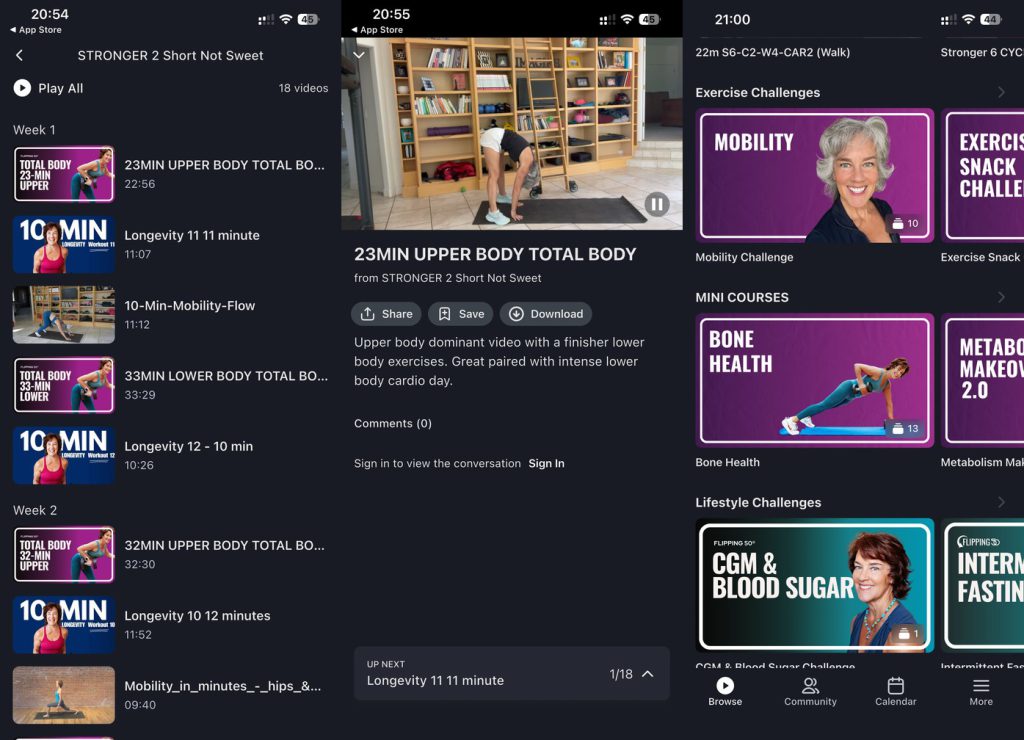
Menopause-first strength from a certified strength coach, built around training less rather than more
Flipping 50 comes from Debra Atkinson, CSCS, and runs 12-week progressive programmes staged separately for perimenopause, menopause and postmenopause, plus a dedicated pelvic floor track. Recovery is a named pillar of the method, with explicit emphasis on cortisol, stress, rest, and the idea that more training is often the wrong answer in midlife.
This is a data profile, not a tested review. We have not run the programme first hand, so there is no personal testing note here. What the published information shows is the most explicit stress-and-recovery framing of anything we have assessed, alongside yoga, mobility and mindset content. What we cannot verify without testing is how the coaching feels in practice and whether the progression holds up across a full 12 weeks.
The honest limitation, and it is a big one: $69 a month is by a wide margin the most expensive option on this page, roughly five times what Fabulous50s costs and three times Obé. There is no reliable free trial. For a programme we have not tested first hand, that is a lot to ask, and you should treat the ranking as “best fit on paper” rather than a personal recommendation.
What a low-cortisol week looks like here: follow the 12-week programme for your stage as written, three sessions a week, and use the yoga and mobility content on the days between rather than adding a fourth workout. The method’s own position is that most women in midlife are doing too much, so resist the urge to supplement it.
Cost: $69 a month, or $549 a year on the website. Apple in-app pricing runs higher at $649 a year. Trials are conditional and not always offered.
Peloton: a menopause collection inside the largest library on this page
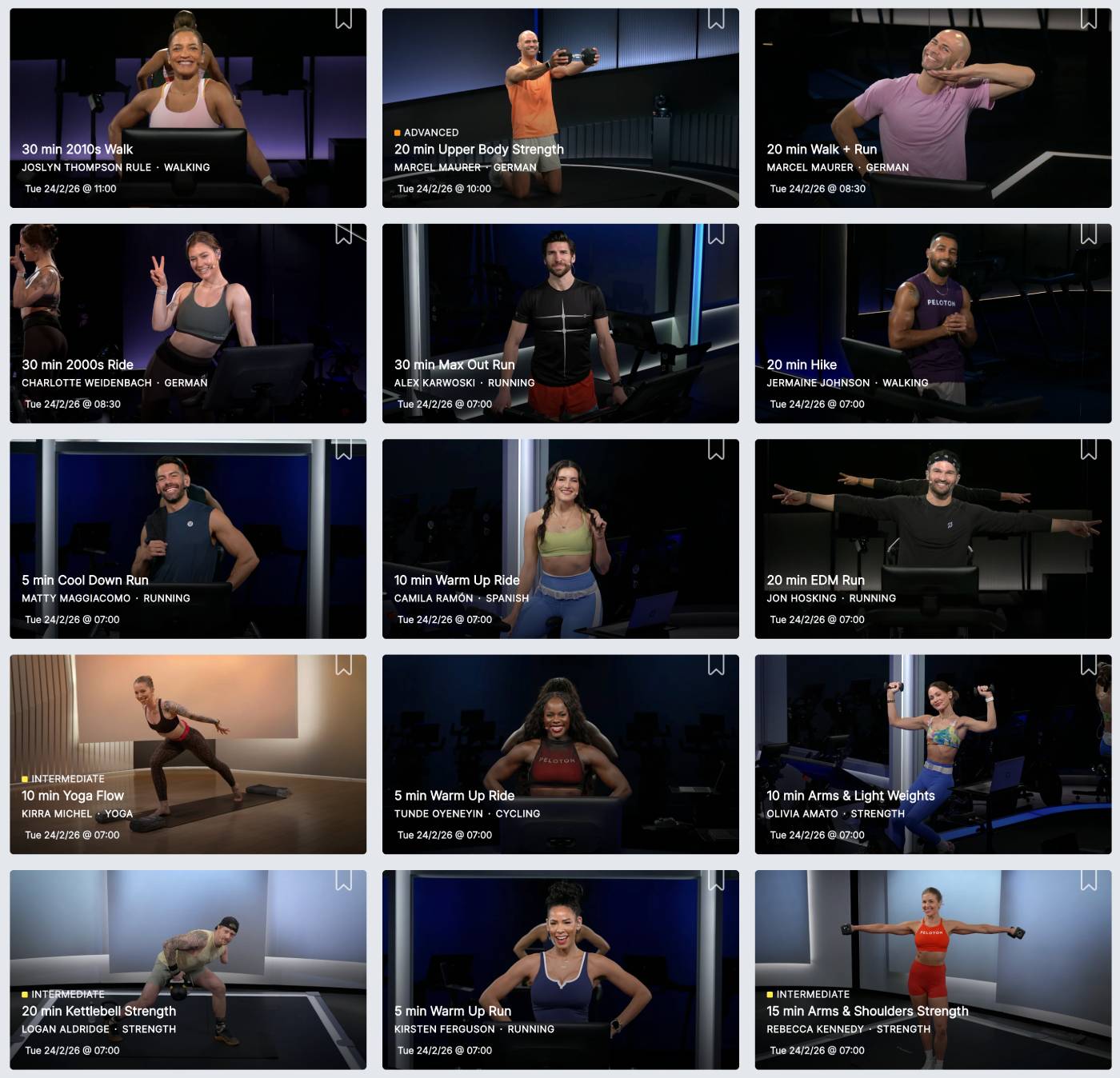
Built with Respin Health, and explicitly designed around reduced tolerance for sustained high cortisol
Peloton‘s menopause collection was built with Respin Health and its own material names the problem directly: reduced tolerance for sustained high cortisol, joint sensitivity, and the need for load-bearing work without excessive impact.
Tested by Katy Cole: I tested the platform by mixing classes across strength, yoga, walking and running, using my own treadmill and a single pair of 17 lb dumbbells. The live accountability is real and it is the thing that keeps people going back.
The honest limitation: there is no nutrition, no guided progressive overload and no symptom tracking, and the wider library is built around intensity. Like BODi, you have to choose the right corner of it deliberately.
What a low-cortisol week looks like here: use the menopause collection as your filter and treat the rest of the library as off-limits for now. Two strength classes and two walks a week is a perfectly good structure. Live classes are motivating but they are also designed to push you, so pick on-demand when you are depleted.
Cost: App One $12.99 a month on web, App+ $28.99 a month. Thirty-day trial.
Menovation: short sessions and the best explanation of why you are tired
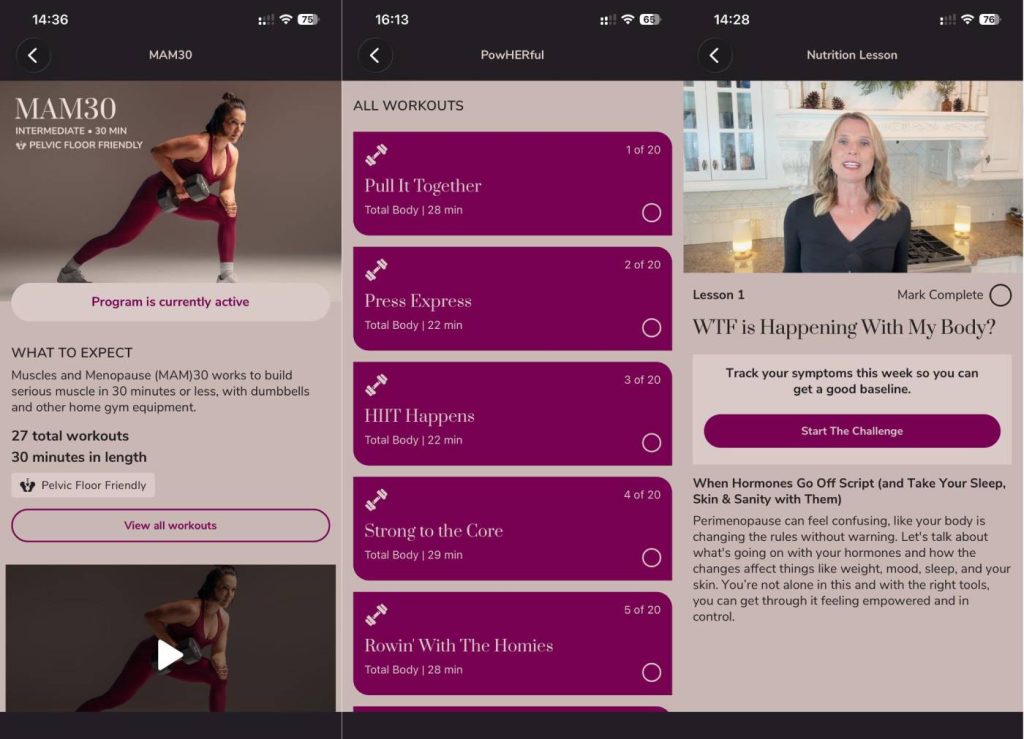
Built around perimenopause and menopause rather than adapted to them, with education doing much of the work
Menovation keeps sessions to 20 to 30 minutes and pairs them with genuinely good education and nutrition lessons. For cortisol specifically, the value is less in the workouts and more in understanding why the training that worked at 35 stops working at 47.
Tested by Katy Cole: I worked through the programme and the education modules are the part I still think about. Session length is the practical win: 20 to 30 minutes is short enough that you do it on a bad-sleep day instead of skipping, which matters far more for cortisol than any single session’s design.
The honest limitation: the interface is dated and the library is still growing. It also carries more HIIT than its position here might suggest, so use the shorter strength sessions rather than defaulting to whatever is featured.
What a low-cortisol week looks like here: three of the 20 to 30 minute strength sessions, spaced with a day between, and the education modules on rest days instead of extra training. Skip the HIIT sessions entirely while you are in a depleted phase; they are in the library but they are not what puts this programme on this page.
Cost: $28.99 a month or $199.99 a year. The checkout offers 8 days free, although the homepage says 7.
Which low-cortisol workout for perimenopause is right for you?
If you want recovery designed in rather than left to you, Evlo. Reset weeks are scheduled, and it is the platform that engages most directly with training while stressed.
If you are exhausted right now and 45 minutes is not happening, Menovation at 20 to 30 minutes, or MUTU System at 12 to 30.
If your nervous system is the problem before your muscles are, MUTU System. Breath-led, no high intensity anywhere, 10-day trial.
If you want to spend nothing while you work out whether this helps, Fabulous50s on YouTube.
If you want the most explicit menopause-first structure and price is not the constraint, Flipping 50, knowing we have not tested it first hand and it costs $69 a month.
If you already have Peloton or BODi, use the menopause collection or Belle Vitale specifically, and ignore what the app recommends on the home screen.
Whichever you choose, the thing that lowers training stress most is not the platform. It is doing less than you think you should on the days you slept badly, and doing it consistently anyway.
Why some popular platforms did not make this list
What changed: this page previously ranked Pvolve first and six of its seven picks have been replaced. Pvolve is an excellent platform that is not built around managing training stress, and the section on why some platforms did not make this list explains each removal.
This page previously ranked Pvolve first, and six of its seven programmes are now gone. That is a deliberate correction rather than a change of opinion about those platforms, and it is worth being specific about why.
Pvolve scores 6 on mind-body support, below our threshold of 7. It is an excellent precision-movement platform and it tops our resistance band list and our low-impact list. It is not built around managing training stress, and putting it first here said more about its general quality than about this question.
The Sculpt Society scores 5 on recovery and deload structure, and Melissa Wood Health scores 4. Both are calm, low-impact and genuinely mind-body led, which is why they kept appearing on a page like this. Neither has a structured recovery concept, and on a page about cortisol that gap is the whole subject.
Owning Your Menopause clears our capability thresholds but its own review is dominated by high-intensity work, with nine references to HIIT against three to stress and recovery combined. It also carries the weakest ease-of-use score of any programme we considered here.
Alo Wellness Club and FORM both qualify and both narrowly missed the cut, scoring 6.39 and 6.06 on the blended ranking against a floor of 6.5. If you already subscribe to either, neither is a bad choice for this purpose.
How did we rank these eight?
Who wrote this. Katy Cole, mid-40s, currently in perimenopause, with a meniscus injury history. I am not a doctor, personal trainer or menopause specialist. Everything here comes from personally testing close to fifty fitness platforms over fifteen years and reading the published research, and none of it is medical advice.
Qualifying and ranking are two separate tests, and on this page that distinction does the work.
To qualify, a programme has to score at least 7 on mind-body support, at least 6 on recovery and deload structure, and be low or moderate impact. Twenty-two of our 77 programmes clear that. This is the test that removed most of the previous list.
To rank, we use how well the programme is built for women over 40, weighted 70%, blended with ease of use, weighted 30%. Ten programmes cleared both the gate and our 6.5 floor; we list the eight that scored highest.
We rank on midlife fit rather than on mind-body support because mind-body support is already the entry ticket. Ranking on it again would just restate the gate and hand the top spots to the gentlest programmes, which is not the same as the most useful ones. The two measures are close to independent, correlating at r = 0.47.
Six of the eight I have tested or sampled myself. Flipping 50 is a data profile built from published information, and Fabulous50s was sample tested. Each section says which, and no data profile carries a first-hand testing claim.
We buy our own subscriptions. Some links on this page earn a commission, which never affects a score or a position.
Worth checking next: dedicated yoga and meditation apps (not yet reviewed)
Important note: The two apps below have not yet been hands-on tested for Her Daily Fit, which is why they are listed separately and do not carry our 9-criterion score. They are included here because they specialise in parasympathetic modalities that the six reviewed platforms above touch but do not anchor on. Full hands-on reviews are planned for the second half of 2026. Treat these as “worth checking” pointers, not ranked recommendations.
Glo ($30/month or $245/year, 7-day free trial). The most established yoga, Pilates and meditation hybrid app, with the largest library of midlife-aware content and one of the only major platforms still offering live classes. For women who want yoga and Pilates as the primary modality rather than as a complement to strength training, Glo is the most-recommended standalone option in the current market.
Insight Timer (free tier; $9.99/month or $59.99/year Premium). The most established dedicated meditation app, with over 100,000 free meditations, sleep stories, breathwork practices and yoga nidra sessions. For cortisol-conscious training specifically, two or three 10-20 minute Insight Timer sessions per week directly support the parasympathetic nervous system that strength and cardio work do not address. The free tier covers most needs, and Insight Timer pairs naturally with any of the six platforms above as a dedicated meditation layer.
Both apps go deeper in parasympathetic and meditation modalities than the fitness platforms above. For the deepest recovery work, pairing a primary fitness platform from this list with one of these dedicated apps delivers the most complete cortisol-conscious week. We will publish full hands-on reviews once the testing is complete.
How do you know if your training is adding to your stress load?
The most useful signal is not how hard a session feels while you are doing it. It is what happens in the twenty-four hours afterwards. Training that suits you leaves you tired and then restored. Training that is adding to an already high stress load leaves you wired, sore for days, or sleeping worse rather than better.
The practical signs worth watching, none of which require a wearable:
- Sleep gets worse after hard sessions, not better. Particularly waking at three or four in the morning on the nights following training.
- Soreness lasts beyond two days from sessions that used to leave you fine the next morning.
- Resting heart rate stays elevated the morning after, if you happen to track it.
- You dread the session rather than being neutral about it. Persistent dread is information, not weakness.
- Performance goes backwards while effort goes up. This is the clearest sign of all and the easiest to rationalise away.
What to do about it is unglamorous. Reduce volume before you reduce intensity, because keeping some hard work protects the muscle and bone that midlife puts at risk, and it is the total weekly load that is usually the problem. Take a full deload week every fourth to sixth week whether or not you feel you need one, which is exactly what Evlo’s Reset weeks and Flipping 50’s programming build in for you. And treat sleep as part of the training plan rather than something separate from it.
One caveat worth stating plainly: cortisol is not measurable at home, and “low cortisol” is a useful framing for how to train rather than a diagnosis. Persistent exhaustion, sleep disruption or a heart rate that will not settle are worth discussing with your doctor rather than solving with a different subscription. Thyroid problems, anaemia and sleep apnoea all present this way and none of them is a training problem.
Where is the evidence still evolving on cortisol-conscious training?
Three open questions matter most. First, the precise cortisol response threshold at which short high-intensity sessions become net-negative for menopausal women. Second, the role of fasted training in cortisol elevation specifically for women in perimenopause. Third, the optimal weekly distribution of strength, cardio and restorative work for cortisol management in midlife.
On HIIT thresholds, the published evidence supports moderate HIIT (1-2 sessions per week of 15-20 minutes) as net-positive for cardiovascular adaptation without driving sustained cortisol elevation. Higher frequencies (daily HIIT, 30+ minute high-intensity sessions) have weaker evidence for adaptation gains and stronger evidence for cortisol cost. The cautious operating point for women in perimenopause is one HIIT session per week maximum, dropped entirely during periods of sleep disruption or elevated life stress.
On fasted training, Dr Stacy Sims in Next Level argues that fasted training drives larger cortisol responses in midlife women specifically and recommends a small carbohydrate-and-protein intake before morning sessions. The published evidence supports this framing, though the effect size in any individual woman varies. The cautious operating point is to eat a small protein-containing meal before morning training, particularly before higher-intensity sessions. For low-intensity walking and restorative yoga, fasted practice is generally well-tolerated.
On the optimal weekly distribution, the framework outlined here (three to four strength, three to four Zone 2 cardio, one to two restorative, zero to one HIIT) is consistent with the published research, but the specific ratios that work best for any individual woman depend on her baseline cortisol, sleep quality, life stress and training history. The right operating point requires testing and adjustment over weeks rather than copying a fixed template.
A low-cortisol week, built from the programmes on this page:
- Three strength sessions of 20 to 30 minutes from Menovation, or the scheduled plan from Evlo if you want the Reset weeks handled for you.
- Three walks of 30 to 45 minutes at conversational pace.
- Two restorative sessions from Alo Wellness Club, which is free, or MUTU System if your nervous system needs the attention more than your muscles do.
- One full rest day, and at most one HIIT session.
Alongside that: enough protein, seven hours of sleep or more, and something to eat before morning training. The sample week further up this page sets out the same structure day by day.
Can you actually measure your cortisol at home?
Not usefully, and this matters because a whole product category is built on suggesting otherwise. Cortisol follows a steep daily curve, peaking within an hour of waking and falling through the day, and it responds within minutes to a stressful email or a poor night’s sleep. A single reading tells you very little. Saliva panels sold direct to consumers typically sample a handful of points and are interpreted against reference ranges that were not designed for that use.
What your wearable reports is not cortisol either. Heart rate variability, resting heart rate and sleep staging are downstream signals that correlate loosely with overall stress load. They are genuinely useful as trends over weeks, and close to meaningless day to day, which is the opposite of how most people read them. If your ring tells you that you are unrecovered on a morning you feel fine, the useful response is to note it and carry on, not to abandon the session.
The practical position we would take: track two things, both free. How you slept, and whether you completed the session you planned. A month of that tells you more about whether your training is working for you than any panel will, and it costs nothing.
Where a test genuinely is warranted, it is a clinical one ordered by a doctor, for a reason. Persistent exhaustion with unexplained weight change, blood pressure changes or muscle weakness are worth investigating properly rather than treating as a programming problem.
Frequently Asked Questions
Flipping 50 ranks highest on our 2026 assessment. It is the only programme we assess where recovery is a stated pillar of the method rather than an afterthought. Pvolve, which topped an earlier version of this page, no longer qualifies: it scores below our threshold on mind-body support, and it is a precision-movement platform rather than one built around managing training stress
Elevated cortisol in perimenopause specifically blunts the anabolic response to training, disrupts sleep, drives central fat storage and works against the body composition goals most women have. Long high-intensity sessions (60+ minutes at high intensity, particularly fasted) produce the largest cortisol spike, while shorter focused sessions with adequate rest produce a meaningfully smaller and more recoverable response. For women in perimenopause where baseline cortisol regulation is already shifting, this difference matters. Dr Mary Claire Haver and Dr Stacy Sims both argue for cortisol-conscious training in midlife: train smarter, not harder, because the same training stress that built muscle at 30 can drive body composition the wrong way at 45.
The published evidence supports 3-4 short resistance sessions per week (20-30 minutes each), 3-4 Zone 2 cardiovascular sessions (mostly walking, 30-45 minutes), 1-2 restorative yoga or meditation sessions, and 1 HIIT session per week maximum at 20 minutes. Total weekly training time of 3-5 hours sits within recovery capacity rather than pushing past it. The cumulative training stimulus comes from the frequency, not from any single heroic session. Three short resistance sessions per week beat one or two long sessions for both adaptation and recovery cost.
No. HIIT is not bad. Daily HIIT is. Limiting high-intensity work to one session per week of 20 minutes maximum lets you keep the cardiovascular benefit without accumulating the cortisol cost. The published evidence supports moderate HIIT (1-2 sessions per week of 15-20 minutes) as net-positive for cardiovascular adaptation in midlife women without driving sustained cortisol elevation. Higher frequencies (daily HIIT, 30+ minute sessions) have weaker evidence for adaptation gains and stronger evidence for cortisol cost. For women in perimenopause with significant sleep disruption or stress, the right operating point may be zero HIIT for a month while sleep and recovery rebuild, then reintroduce one weekly session.
Both contribute to cortisol management, but in different ways. Pilates, yoga, restorative work and meditation directly support the parasympathetic nervous system, which is the cortisol antidote (Newton 2014 MsFLASH yoga). Strength training in short focused formats (20-30 minutes with compound movements at moderate-to-heavy loads) drives adaptation without spiking cortisol the way long high-intensity cardiovascular sessions do. The optimal cortisol-conscious week includes both: 2-3 strength sessions plus 2-3 Pilates or yoga sessions, plus Zone 2 walking and adequate sleep. Alo Wellness Club's free yoga and sound bath library is the easiest way to layer parasympathetic work over a primary strength platform such as Evlo or Menovation.
Generally no, particularly for higher-intensity sessions. Dr Stacy Sims argues that fasted training drives larger cortisol responses in midlife women specifically and recommends a small carbohydrate-and-protein intake before morning sessions. The published evidence supports this framing, though the effect size in any individual woman varies. The cautious operating point for women in perimenopause is to eat a small protein-containing meal before morning training, particularly before higher-intensity sessions. For low-intensity walking and restorative yoga, fasted practice is generally well-tolerated. Discuss any persistent fatigue, energy or recovery concerns with your GP or a registered dietitian.
Sleep is the single biggest cortisol intervention. Nedeltcheva and colleagues (2010) demonstrated that sleep restriction during caloric deficit drives a much larger proportion of weight loss from lean mass rather than fat mass. Sleep deprivation also disrupts the leptin and ghrelin signals that regulate hunger, drives cortisol elevation that promotes central fat storage, and blunts the anabolic response to resistance training. For women in perimenopause specifically, where sleep disruption is common, prioritising 7+ hours of sleep often produces more body composition change than any specific training modification. If sleep is genuinely disrupted, training adjustments matter less than addressing the sleep itself. Discuss persistent sleep concerns with your GP or a menopause-trained clinician.
Several signs suggest training stress is exceeding recovery capacity. Persistent fatigue that does not resolve with a rest day. Sleep disruption (difficulty falling asleep, waking at 3-4 AM with racing thoughts). Weight stalling or weight gain despite reduced food intake. Mood instability or irritability. Hunger dysregulation (intense cravings or reduced appetite). Plateau in training despite consistent effort. These signals usually mean the cortisol load is too high for current recovery capacity. The first response is to reduce training intensity (drop HIIT for two weeks, shorten sessions, add an extra rest day) rather than push harder. Discuss persistent symptoms with your GP or a menopause-trained clinician.
All exercise raises cortisol acutely, and that is normal and healthy. The question is whether it settles afterwards. In perimenopause, tolerance for sustained high training stress falls, so the same programme that felt fine at 35 can leave you wired and sleeping badly at 47. The fix is usually less total volume rather than less intensity: keep two genuinely hard strength sessions and remove the junk mileage in between.
Not necessarily, but most women benefit from doing less of it than they are. HIIT is efficient and it does protect fitness, but daily HIIT is the single most common pattern we see in women who feel worse the more they train. One or two short sessions a week alongside two strength sessions is plenty. If your sleep worsens on the nights after HIIT, that is your answer.
Cortisol is naturally highest in the morning and falls through the day, so morning training works with that rhythm rather than against it. That said, the best time to train is the time you will actually train. If evenings are your only option, keep hard sessions earlier in the evening and put mobility or yoga closest to bedtime.
Most women notice sleep changing within one to two weeks and energy following a few weeks after that. If you have made a genuine reduction in volume, taken a deload week, and still feel no different after six to eight weeks, the cause is probably not your training. Thyroid problems, anaemia, sleep apnoea and depression all present as exercise intolerance, and all are worth ruling out with your doctor.