Down Dog scores higher overall, 6.0 against 5.2, and is the stronger platform for value for money and app quality. Asana Rebel is the better pick if what you need most is nutrition guidance and a structured programme.
Quick answer
- Down Dog 6.0 vs Asana Rebel 5.2
- About $12.99 vs about $19.99 a month
- App quality 9 vs 6
- Structure 7 vs 5, Asana Rebel
- Nutrition 5 vs 1, Asana Rebel
- Bone loading 2 vs 2, tied at the floor
Down Dog is the better choice for a woman over 40, and the biggest reasons are the price you can actually see and an app that lets you dial everything down. It wins Value for Money 8 against 3, UX and Design 9 against 6, Recovery Compatibility 8 against 7 and Joint Friendliness 7 against 6. On the capability scores it leads beginner on-ramp 9 out of 10 against 6, mind-body support 8 against 7 and recovery and deload 8 against 6.
Neither of them will build muscle or bone, and that is the finding that should decide how you use whichever you choose. Bone loading ties at 2 out of 10 and progressive strength is 3 against 2, so both are a layer of your week rather than the whole of it. Asana Rebel wins Programme Structure 7 against 5 and Nutrition Integration 5 against 1, the second only because Down Dog has no nutrition content at all.
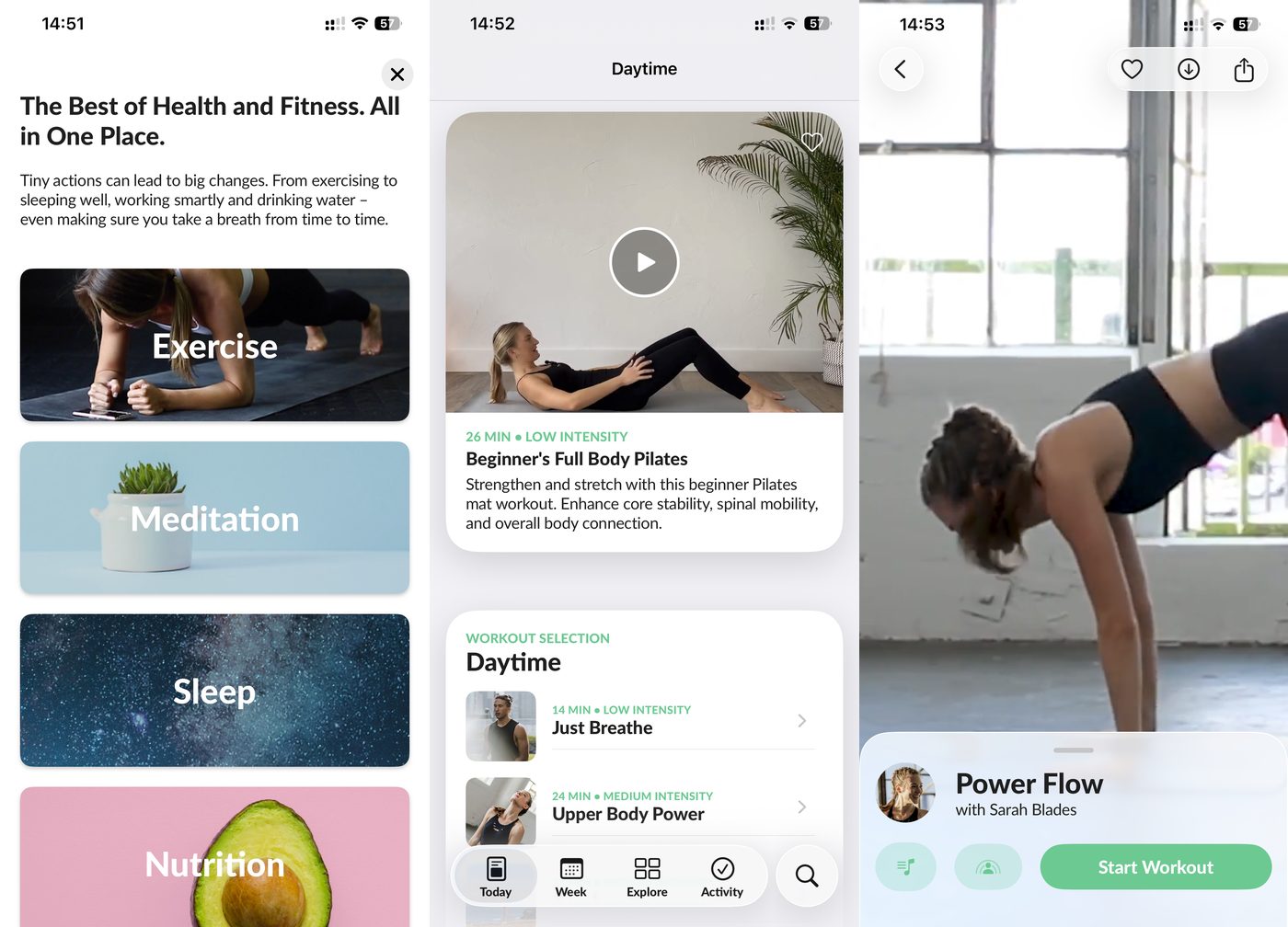
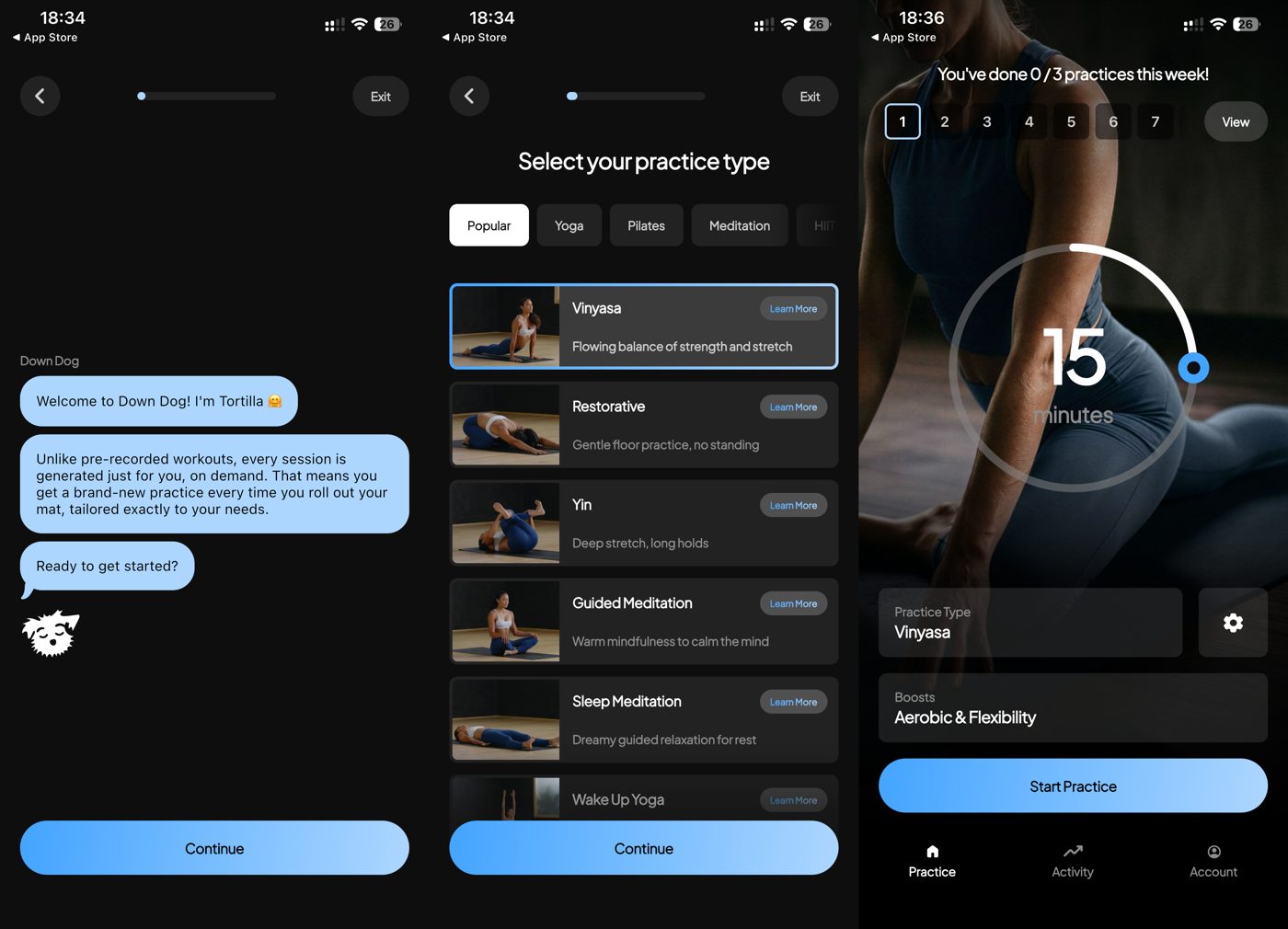
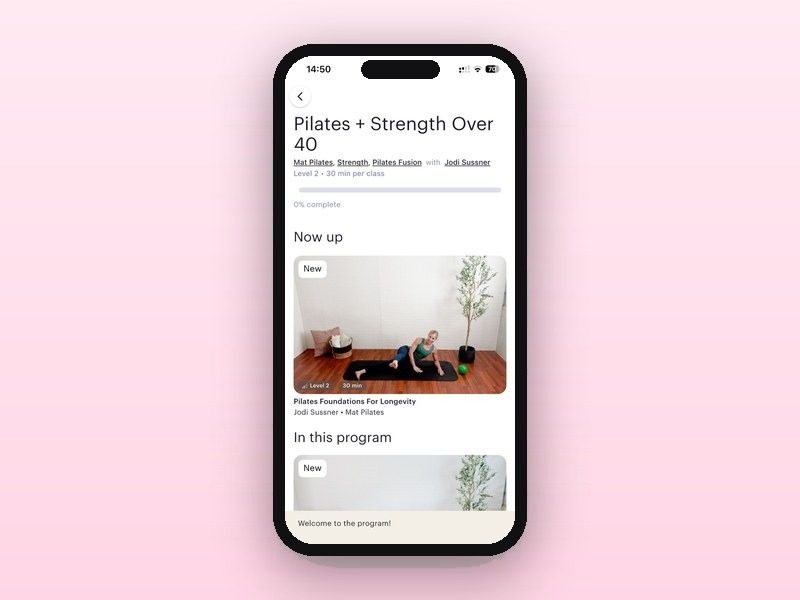
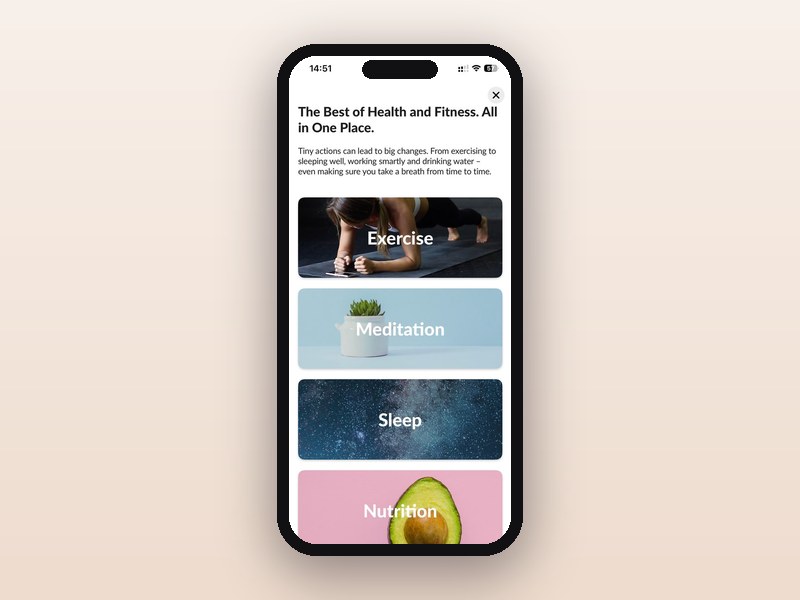
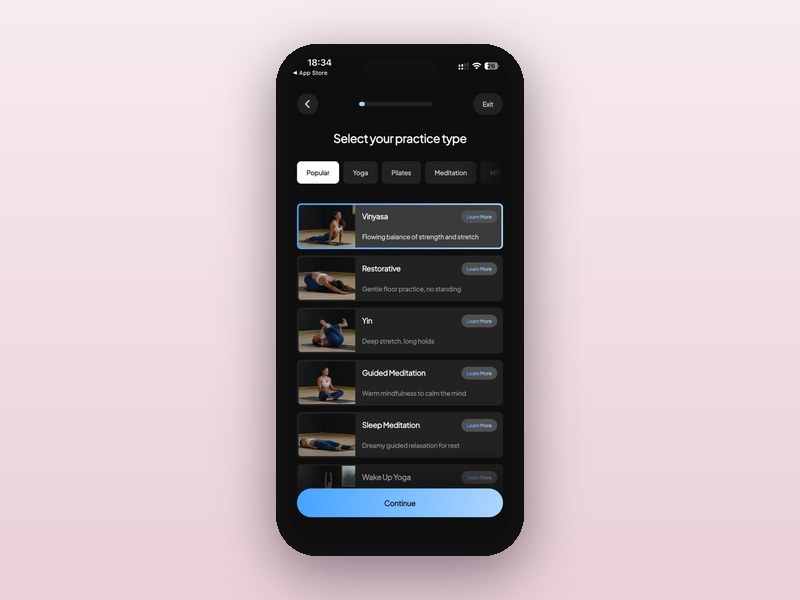
These two were not assessed to the same depth, and one of them could not be opened without paying. Down Dog was sample tested: the AI onboarding was completed and a generated Pilates practice was run, with our own screenshots, but no multi-week run was made. Asana Rebel is a research-based data profile. It hides its price behind an onboarding quiz that ends in a paid plan, there is no genuine free trial, and refunds sit inside a 14-day window, so no subscription was bought and no session was completed. Its column comes from the official app and site, the store listings, Trustpilot, independent reviews and the peer-reviewed science, and every Asana Rebel score describes what the platform contains rather than how it felt to use.
Down Dog if you want the calmest, most adjustable low-impact and recovery layer in this category, at a price you can see before you pay it, and you are content to put your strength training somewhere else. Asana Rebel if you specifically want recipes and a daily plan with a streak inside the same subscription as the movement, and you will manage a subscription that hides its price until the end of a quiz. Neither one programmes anything for menopause, and neither loads a bone.
Asana Rebel vs Down Dog: the two platforms
Same nine weighted criteria, same twelve capability scores, and two mat apps that leave the same thing out.
Asana Rebel
Runner-up
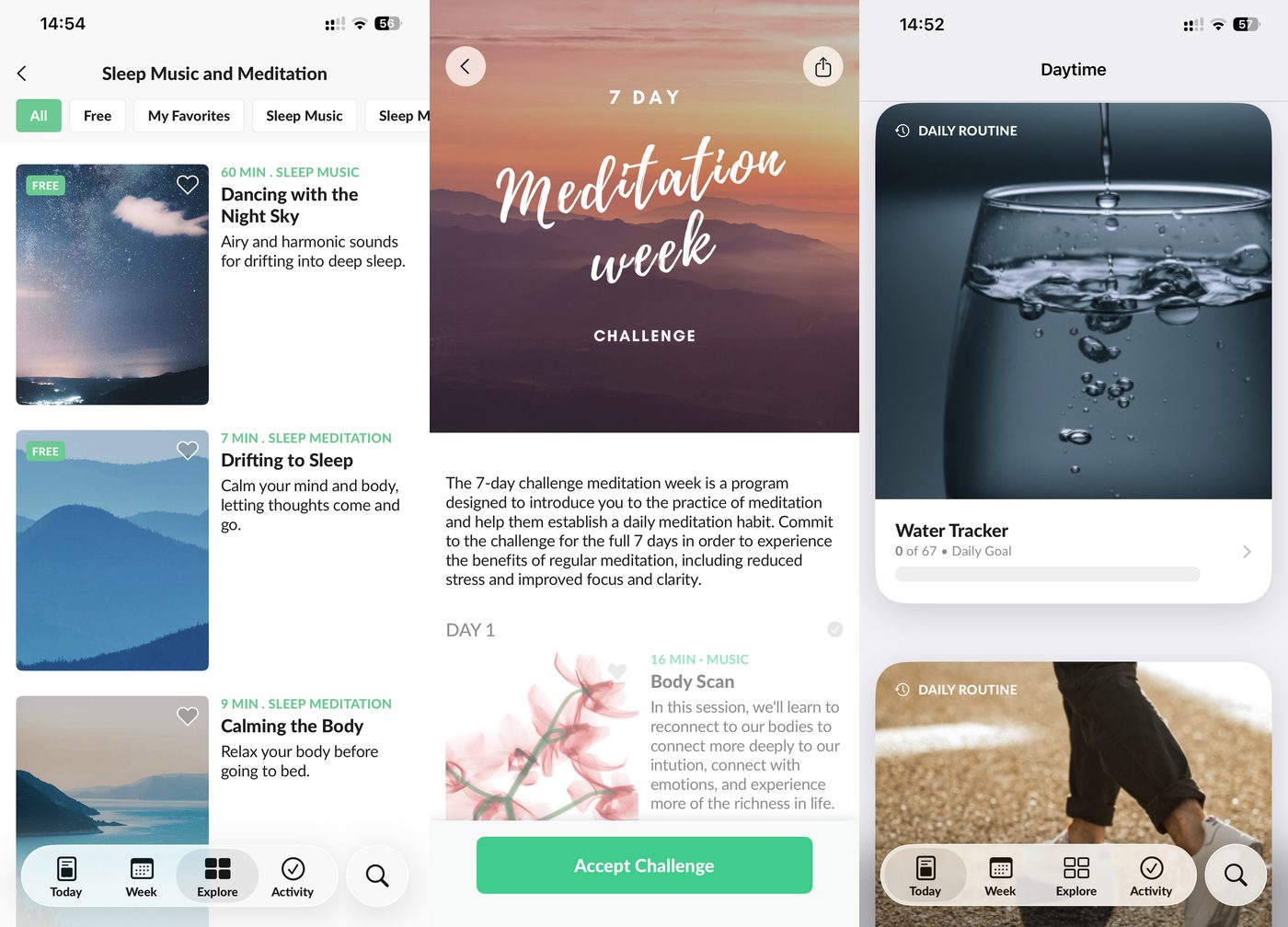
A yoga-inspired all-in-one app that blends yoga-style movement with Pilates, cardio and light HIIT, alongside guided meditation, sleep audio, a recipe library and a gamified daily plan with streaks, water and weigh-in tracking.
- 10 to 30 min
- Structure 7.0
- Mind-body 7/10
- No real trial
- Not tested
Choose Asana Rebel if you:
- Want recipes in the same app as the movement
- Like a daily plan and a streak to protect
- Are starting from a long way back
- Train on a mat with no equipment at all
- Will manage the billing carefully
Down Dog
Winner
A family of six apps, Yoga, Pilates, Barre, HIIT, Prenatal Yoga and Meditation, that generate a brand-new non-repeating session every time from your chosen style, level, length, pace, focus areas, music and voice, guided by recorded yoga-teacher voices.
- Length you set
- UX 9.0
- Beginner 9/10
- Card-gated trial
- Sample tested
Choose Down Dog if you:
- Want a calm low-impact and recovery layer
- Need to dial level and pace down on a bad day
- Are new to yoga or coming back stiff
- Want six practice types on one membership
- Will load a barbell or dumbbells elsewhere
How we scored this, and why one column is weaker evidence
Both platforms were scored on the same nine weighted criteria and the same twelve capability scores. Muscle Potential carries 18%, Time Efficiency 15%, Joint Friendliness and Programme Structure 12% each, Women Over 40 Specificity and Recovery Compatibility 10%, Value for Money and UX and Design 8%, and Nutrition Integration 7%.
Same tester, and only one platform was used. Katy is a woman in her mid-40s, perimenopausal, working full-time with family commitments, and with a previous meniscus injury. On Down Dog she completed the AI onboarding quiz, worked through the practice-type chooser, set the adjustable session length and ran a generated Pilates practice on iOS, and the screenshots on its review are her own. That is a hands-on look rather than a multi-week run, so any Down Dog rating that depends on months of use is provisional.
Asana Rebel was not used, because there is nothing to use without paying, and we do not buy a subscription to produce a comparison. What we did instead was work through the public product materials, the two store listings, the Trustpilot profile, independent reviews and the peer-reviewed science, so we can describe accurately what the platform holds.
That asymmetry matters in a specific place. Where a criterion turns on how something feels, the Down Dog score rests on a practice actually run and the Asana Rebel score rests on documentation. Where a criterion turns on what a platform offers, price, breadth, whether menopause content exists, both columns stand on the same ground. We flag the difference where it should change how much weight you give a number.
Muscle and bone: the shared failure, and the reason this pair needs a third app
Down Dog wins Muscle Potential, 4 against 3, and neither number is a recommendation. Progressive strength is 3 out of 10 against 2 and bone loading ties at 2 against 2, which is the floor.
Down Dog is bodyweight yoga plus light-weight barre and Pilates. That builds some tone and a great deal of mobility, and it has no external load and no rep-and-set progression, so it sits below the mechanical stimulus that drives bone adaptation. Asana Rebel is body-weight and yoga-led throughout with no progressive loading of any kind, which is why its progressive strength score is lower still. Muscle Potential carries the heaviest weight in our model at 18%, so this is where both platforms lose most of their ground against a strength app.
Our tester named the gap on Down Dog directly. As a perimenopausal woman, the part she really missed was strength training, and there is none there. Her conclusion follows from it: the app is lovely for a low-impact or recovery day, and on its own it would not cover all of her perimenopause and menopause needs. That is the correct way to use either of these platforms.
Kumar and colleagues found that bone-building needs high-magnitude loading and that low-to-moderate exercise yields minimal bone-density change.5 Read against that, the practical answer for a woman over 40 is not to choose between these two on strength grounds, it is to add two loaded sessions a week from somewhere else and use whichever of these you prefer for the rest. Our best workouts to build muscle after 50 ranking covers platforms that programme progression explicitly.
Value for money: Down Dog wins, and the difference is transparency
Down Dog wins, 8 against 3, and this is the widest criterion gap on the page.
| Plan | Asana Rebel | Down Dog |
|---|---|---|
| Monthly | About $19.99 at renewal | About $12.99 |
| Annual | About $71.99 at renewal | About $99.99, roughly $8.33 a month |
| Intro offer | About $9.99 a first month or $35.99 a first year | The website is cheaper than subscribing in the apps |
| Trial | None genuine, refunds inside a 14-day window | A brief full-access trial, card required |
| What one membership covers | The workout, meditation, sleep and nutrition library | All six apps: Yoga, Pilates, Barre, HIIT, Prenatal Yoga and Meditation |
| Is the price shown up front | No, only after an onboarding quiz | Yes |
Down Dog charges less for more. One membership unlocks all six apps rather than selling yoga and meditation separately, the annual plan brings it to roughly $8.33 a month, the website price is lower than the in-app price because it avoids the app-store commission, and school students and teachers get it free. Cancellation runs through your account on the website, or through the App Store or Google Play if you subscribed there, with access to the end of the period.
Asana Rebel costs more and will not tell you so. It funnels you through an onboarding quiz, including a goal weight, before showing a figure. Renewal sits around $19.99 a month or $71.99 a year, the intro is a discounted paid entry at about $9.99 for a first month or $35.99 for a first year, and there is no genuine free trial, only a limited free tier and a 14-day refund window. Across the app stores and consumer sites the recurring complaint is auto-renewal without clear notice, difficulty cancelling and refunds available only inside that window. There is no evidence of regulatory action and we do not claim any.
What this means for your decision. Neither of these is expensive in absolute terms, and one of them lets you compare before you commit. Down Dog is not blameless here either: its free trial requires a card and its own complaint channel is billing, so set a reminder the day you start it. Our best free and budget workout apps ranking covers the wider field.
UX and design: Down Dog wins, on one of the highest scores we have published
Down Dog wins, 9 against 6, and the reason is control rather than gloss.
Almost everything is adjustable: level, length, pace, whether there is a warmup and cooldown, how long you hold a pose, how much instruction you want, the music and the voice, plus a Boost that targets specific body areas. For a midlife body that is not a cosmetic feature, it is the difference between a practice that fits the day you are having and one that does not.
It runs on iOS, Android, Mac and in a browser, casts to a television over AirPlay or Chromecast, downloads for offline use on mobile and syncs to Apple Health, with captions in every supported language. There is no dedicated Apple Watch or Apple TV app, and the recorded instructor voices are the default with a synthesized voice offered as an option, which some users have found less soothing for restorative work.
Our tester’s account of the craft is unambiguous, and she is not a natural audience for it: the practices are made beautifully, with a calm voice showing exactly what to do and how, and she is not usually a yoga or Pilates person.
Asana Rebel is polished too, and its store ratings are high for that reason. What holds it to 6 is not the build. It is an onboarding quiz that asks for a goal weight before it shows a price, no genuine trial, and a cancellation experience that generates steady complaints, and we are reporting that from the review corpus rather than from use.
The generated-session trade, and what you give up for it
Down Dog never plays the same class twice, and the price of that is that you cannot edit one.
Instead of a catalogue of recorded classes, Down Dog assembles a session from a large library of segments each time you press start, so no two practices are identical and the content never goes stale. That is a genuine engineering achievement and it is the reason its beginner on-ramp scores 9 out of 10: you can dial the level down on a bad day and up again a month later, and the app rebuilds around you.
The constraint arrived immediately in testing. What disappointed Katy Cole was that she could not change a practice once it was generated: it is all laid out and you follow along, with no way to swap a movement out. She also did not find a filtering option to build her own session, which may have been limited because she was on the trial. For a woman avoiding a particular movement, that means the steering has to happen before you press start, through the level, the focus areas and the practice type, rather than mid-session.
Asana Rebel does not offer that steering either. Its sessions are labelled by intention, such as energy or core, and the daily plan can be pointed at a goal, and there is no low-impact filter and no way to exclude a movement. Neither app has a live teacher, so on both, nobody is watching your form.
Joint friendliness: Down Dog wins, and both are genuinely kind
Down Dog wins, 7 against 6, with low-impact capability 7 out of 10 against 6.
Down Dog’s yoga catalogue is mat-based and gentle, and the restorative, yin, chair, hatha and yoga nidra options give a stiff or sore body somewhere to go on a day when loading would be wrong. It is held below a best-in-class rating for one reason: the separate HIIT app in the same membership is genuinely high impact, so the family as a whole is not uniformly low-impact. Blocks and a strap make the poses more accessible, which is worth knowing for a body easing back into flexibility work.
Asana Rebel is largely low-impact as well, yoga and Pilates-led with light HIIT and cardio blended in, and the absence of a low-impact filter means you cannot screen those faster sessions out before you commit to one.
Sivaramakrishnan and colleagues found in a systematic review and meta-analysis that yoga improved balance, lower-limb strength and flexibility in older adults compared with inactive and active controls, though it did not show a reduction in falls themselves.3 That is a fair statement of what a yoga practice offers a midlife body: better movement quality and better balance, which is worth having, and not a substitute for load.
Recovery and sleep: Down Dog wins, and this is what it is for
Down Dog wins Recovery Compatibility, 8 against 7, with recovery and deload capability 8 out of 10 against 6 and mind-body support 8 against 7.
Restorative and yin practices, yoga nidra, breathwork and a dedicated Meditation app in the same membership add up to deliberate down-regulation rather than a wind-down tacked on the end. The calm, self-paced feel is the product, and for a woman whose evenings are keyed-up it is the most useful thing either app does.
Asana Rebel is not weak here and this is where the two come closest. Guided meditations, sleep meditations and focus and sleep music sit alongside gentle yoga, all inside one subscription. Neither app has a structured deload, because neither has a structured training plan to deload from.
The evidence is encouraging and it is not a promise. Wang and colleagues found that yoga modestly improved sleep quality in women with sleep problems overall, while the peri and postmenopausal subgroup showed no significant benefit.4 Cramer and colleagues found that yoga reduced menopausal symptoms, most consistently the psychological ones, with the vasomotor effects less robust.1 Read together, those two say the same thing: this is credible support for stress and mood, and a weaker case for the night sweats. Our low-cortisol workouts for perimenopause guide covers platforms that treat this as a design problem.
Perimenopause and menopause fit: neither, and four scores tie at the floor
Down Dog edges Women Over 40 Specificity, 3.8 against 3.2, and menopause programming, hormone awareness and menopause education all tie at 1 out of 10.
Down Dog has no menopause track, no filter and no life-stage-aware programming in any of its six apps, and the generative sequencing has no awareness of cycle, hormones or menopausal status. Its Prenatal Yoga app is tailored by trimester and included in the membership, and the only pelvic-floor engagement anywhere is incidental to it, which is why pelvic floor scores 2 against 1 rather than anything higher. Our tester recorded the absence plainly during testing: there was no nutrition, no community, and no perimenopause or menopause practices or educational content.
Asana Rebel has less than that. It carries no hormone, symptom, stage or education content of any kind, and no pelvic-floor content or cueing. Its framing is built around weight loss and a goal weight rather than the transition, which for a midlife audience points in the wrong direction, because the priority at this stage is keeping the muscle you already have.
Expert credibility
Down Dog wins, 3 out of 10 against 2, and both are low. Down Dog is made by Yoga Buddhi Co., founded in 2015 by Ben Simon and Carlos Ormachea, who paired software engineering backgrounds with formal yoga-teacher training, and the guidance comes from qualified, recorded yoga instructors rather than pure text-to-speech. That earns credibility as a yoga brand and none as a clinical one: there is no clinician, no pelvic-floor physiotherapist, no menopause specialist and no medical advisory board. Asana Rebel is built by Asana Rebel GmbH of Berlin, founded in 2015 by Pascal Klein and Robin Pratap, and its instructor backgrounds are not clearly documented, with no named physician, physiotherapist, registered dietitian or menopause specialist behind the content.
Structure: Asana Rebel wins, and it is one of only two things it wins
Asana Rebel wins Programme Structure, 7 against 5, and the gap is real rather than a rounding difference.
Asana Rebel hands you a plan every day and gamifies it: a streak to protect, a water count, a weigh-in, personalised programmes and multi-day challenges. As engagement design that works, and it is what a woman who has stalled three times before is looking for, something to open and something to tick.
Down Dog is generative and on-demand by design, which is the same feature that wins it the UX row and costs it this one. There is no guided, week-by-week progression, and you set your own goals through personal challenges and streaks instead. If you want to be told what to do on a Tuesday in week three, Down Dog will not tell you, and a 5 is the fair price of an engine that builds a fresh session every time.
Time efficiency: Down Dog wins, and both fit a compressed week
Down Dog wins, 8 against 7, because the length is a dial rather than a menu.
On Down Dog you set the session length yourself, with quick options for a short practice, so it flexes around whatever gap the day leaves. Asana Rebel runs about 10 to 30 minutes throughout, a good band for a busy day and a narrow one at both ends. For a woman fitting movement around work and family, both work; only one lets you ask for eight minutes. Our 30-minute workouts for women over 40 and 20-minute workouts for perimenopause guides cover the wider field in both bands.
Nutrition: Asana Rebel wins, because the other has none
Asana Rebel wins Nutrition Integration, 5 against 1, with midlife nutrition capability 4 out of 10 against 1.
Asana Rebel has a recipe library and meal plans covering soups, smoothies, high-protein and anti-inflammatory options. What holds it to 5 is the framing and the sourcing: the content is built around weight loss, and there is no confirmed registered dietitian behind it.
Down Dog has no nutrition or meal content in any of its six apps, which is what a 1 means. It does not pretend otherwise, and Nutrition Integration carries the smallest weight in our model at 7%, so this barely moves either total. If you want eating handled alongside training, neither belongs on your shortlist. Our best Pilates programmes for women over 40 ranking covers platforms in this style that go further.
Equipment and space needed at home
A mat covers almost everything on both, and the useful extra purchase is the same.
Down Dog needs a mat for the yoga, restorative and meditation work, and a couple of blocks and a strap make the poses more accessible, which is worth having for a midlife body easing back into flexibility. The Barre and Pilates practices call for light hand weights and the HIIT app is bodyweight by default. Asana Rebel is designed to be done anywhere with a mat and nothing else, because the work is yoga-inspired and body-weight throughout, so it travels well.
Because neither app loads you, the purchase that changes what you get from either is a pair of adjustable dumbbells for a separate strength habit. A light fixed pair stops providing a stimulus once you adapt to it, which is the whole reason the bone loading scores sit where they do. Neither platform requires proprietary hardware, a machine or a dedicated room.
Starting from scratch: Down Dog is close to the best on-ramp we have scored
Down Dog wins beginner on-ramp, 9 out of 10 against 6, and 9 is a best-in-class rating in that capability.
The reason is that nothing about it is fixed. Level, length and pace are adjustable, the instruction level can be turned up while you learn what the poses are called, the voice and music are yours to choose, and the trial lets you find out whether it suits you. A beginner who is stiff, tired or nervous can make a practice small enough to finish, which is the single biggest predictor of whether she comes back.
Asana Rebel is a good on-ramp too, on a beginner score of 6 out of 10: short, gentle, no equipment, and a daily plan that removes the choosing. Two things hold it back. You cannot see what you are buying until the quiz ends, and a beginner is exactly the person least able to judge whether the subscription will be worth it. And the weight-loss framing puts the emphasis on a number rather than on turning up.
Asana Rebel pros and cons
Asana Rebel scores 5.2. It is strongest on short sessions and weakest on value for money.
Pros
- Programme Structure 7 against 5, on a gamified daily plan, streak and weigh-in tracking, and multi-day challenges.
- Nutrition Integration 5 against 1, on a recipe library and meal plans the other app does not have at all.
- Mind-body support 7 out of 10, with guided meditation, sleep meditations and focus audio bundled in.
- Low-impact 6 out of 10 on a largely yoga and Pilates library.
- Beginner on-ramp 6, with short no-equipment sessions you can do anywhere.
- A polished app with Apple Watch, Apple Health and offline downloads.
Cons
- Value for Money 3 against 8, on pricing hidden behind a quiz with no genuine free trial.
- UX and Design 6 against 9.
- Muscle Potential 3 against 4, with progressive strength 2 out of 10 and bone loading 2.
- A weight-loss and goal-weight framing.
- Menopause programming, pelvic floor, hormone awareness and menopause education all 1 out of 10.
- Expert credibility 2, with no clinician or dietitian named.
- And we could not test any of it.
Down Dog pros and cons
Down Dog scores 6.0. It leads on the app experience and trails on nutrition guidance.
Pros
- UX and Design 9 against 6, on adjustable level, length, pace, hold lengths, instruction level, voice and music plus a Boost for specific areas.
- Value for Money 8 against 3: one membership covers six apps and the website costs less than the app stores.
- Beginner on-ramp 9 out of 10 against 6, a best-in-class rating.
- Recovery Compatibility 8 against 7, with restorative, yin, yoga nidra and meditation.
- Joint Friendliness 7 against 6.
- Non-repeating sessions, offline downloads, TV casting and captions.
- And it was actually tested.
Cons
- Nutrition Integration 1, because there is none in any of the six apps.
- Programme Structure 5 against 7: generative rather than a guided plan.
- Bone loading 2 out of 10 and progressive strength 3, with no strength training at all.
- A practice cannot be changed once it is generated, and there is no filtering to build your own.
- No live teacher to correct form.
- No menopause programming or standalone pelvic-floor track.
- A free trial that requires a card.
Quick yes/no comparison
| Feature | Asana Rebel | Down Dog |
|---|---|---|
| Price shown before you sign up | No, only after an onboarding quiz | Yes |
| Free trial of the paid product | No, a 14-day refund window instead | Yes, a brief full-access trial, card required |
| Any progressive strength training | No | No, light barre and Pilates weights only |
| A daily plan built for you | Yes, a gamified daily plan | No, personal challenges instead |
| Non-repeating sessions | No | Yes, every session is generated fresh |
| Change or swap a movement mid-session | No | No, the practice is fixed once generated |
| Set your own session length | No, sessions run 10 to 30 minutes | Yes, fully adjustable |
| Meditation and sleep content | Yes, in the same subscription | Yes, a dedicated Meditation app |
| Menopause or perimenopause programming | No | No |
| Pelvic floor content | No | Incidental, within the Prenatal Yoga app |
| Nutrition guidance | Yes, recipes and meal plans | No, none at all |
| Named, credentialed founders | Yes, Pascal Klein and Robin Pratap | Yes, Ben Simon and Carlos Ormachea |
| Offline downloads | Yes, on the paid tier | Yes, on mobile |
| Cast to a television | Not assessed | Yes, AirPlay or Chromecast |
| Was it tested hands-on | No, research-based only | Yes, onboarding and one generated practice |
Asana Rebel vs Down Dog at a glance
| Asana Rebel | Down Dog | |
|---|---|---|
| Overall score | 5.2 | 6.0 |
| How it was assessed | Data profile, research-based, no session was completed and no subscription was bought | Sample tested, the AI onboarding completed and a generated Pilates practice run, with our own screenshots |
| Cost | About $19.99 a month or $71.99 a year at renewal | About $12.99 a month or $99.99 a year, roughly $8.33 a month |
| Intro or trial | An intro from about $9.99, no genuine free trial | A brief full-access trial, card required |
| Session length | About 10 to 30 minutes | Fully adjustable, with quick options for a short practice |
| Approach | A yoga-inspired all-in-one bundle with a gamified daily plan | Six apps on one membership, each generating a fresh session every time |
| Impact by default | Low to moderate, with light HIIT and cardio mixed in | Low, apart from the separate HIIT app |
| Who is behind it | Asana Rebel GmbH of Berlin, founded 2015 by Pascal Klein and Robin Pratap | Yoga Buddhi Co., founded 2015 by Ben Simon and Carlos Ormachea |
| Menopause content | None of any kind | None, and no life-stage-aware programming |
| Equipment | A mat, and nothing else | A mat, plus blocks, a strap and light weights for barre and Pilates |
| Known live issue | Pricing hidden behind a quiz, auto-renewal and cancellation complaints | No way to change a generated practice, and a card-gated free trial |
| How we assessed it | Research-based, no session completed | Sample tested, onboarding and one generated practice |
Asana Rebel vs Down Dog: the full scoring breakdown
Down dog wins seven of the nine weighted criteria and asana rebel wins two. The overall gap is 6.0 against 5.2, and the two rows Asana Rebel takes, Programme Structure and Nutrition Integration, are the two places Down Dog deliberately does not compete.
| Criterion | Weight | Asana Rebel | Down Dog | Winner |
|---|---|---|---|---|
| Muscle Potential | 18% | 3 | 4 | Down Dog |
| Time Efficiency | 15% | 7 | 8 | Down Dog |
| Joint Friendliness | 12% | 6 | 7 | Down Dog |
| Programme Structure | 12% | 7 | 5 | Asana Rebel |
| Women Over 40 Specificity | 10% | 3.2 | 3.8 | Down Dog |
| Recovery Compatibility | 10% | 7 | 8 | Down Dog |
| Value for Money | 8% | 3 | 8 | Down Dog |
| UX and Design | 8% | 6 | 9 | Down Dog |
| Nutrition Integration | 7% | 5 | 1 | Asana Rebel |
| Overall | 100% | 5.2 | 6.0 | Down Dog |
The twelve capability scores
Down dog wins seven of the twelve capability scores and asana rebel wins one, with four tied. The widest gaps are beginner on-ramp, 9 out of 10 against 6, and midlife nutrition, 4 against 1, which run in opposite directions. Four capabilities tie, and three of those ties are at 1 out of 10: menopause programming, hormone awareness and menopause education. Bone loading is the fourth, tied at 2.
| Capability | Asana Rebel | Down Dog | Winner |
|---|---|---|---|
| Low-impact | 6 | 7 | Down Dog |
| Progressive strength | 2 | 3 | Down Dog |
| Bone loading | 2 | 2 | Tied |
| Recovery & deload | 6 | 8 | Down Dog |
| Menopause programming | 1 | 1 | Tied |
| Pelvic floor | 1 | 2 | Down Dog |
| Hormone awareness | 1 | 1 | Tied |
| Menopause education | 1 | 1 | Tied |
| Expert credibility | 2 | 3 | Down Dog |
| Mind-body support | 7 | 8 | Down Dog |
| Beginner on-ramp | 6 | 9 | Down Dog |
| Midlife nutrition | 4 | 1 | Asana Rebel |
Who wins for…
Who wins on price
Down Dog. Value for Money 8 against 3, on a lower price you can see before you pay it.
Who wins on the app itself
Down Dog. UX and Design 9 against 6, because almost every part of a practice is a dial.
Who wins for building muscle
Neither. Muscle Potential 4 against 3, and both are the wrong tool for the job.
Who wins for bone density
Neither, and it is a tie at the floor. Bone loading 2 out of 10 each, well below what the bone evidence asks for.5
Who wins for painful joints
Down Dog. Joint Friendliness 7 against 6, on a mat-based catalogue with restorative and chair options.
Who wins for sleep and stress
Down Dog. Mind-body support 8 out of 10 against 7, on yoga nidra, breathwork and a dedicated Meditation app.
Who wins for being told what to do
Asana Rebel. Programme Structure 7 against 5, on a daily plan Down Dog does not attempt.
Who wins for nutrition
Asana Rebel, by default. 5 against 1, because Down Dog has no nutrition content at all.
Who wins for a complete beginner
Down Dog. Beginner on-ramp 9 out of 10 against 6, because you can make a practice small enough to finish.
Who wins for perimenopause and menopause
Neither. Menopause programming ties at 1 out of 10, and so do hormone awareness and menopause education.
Who wins for a busy week
Down Dog. Time Efficiency 8 against 7, because you set the length rather than pick from a range.
Who wins on evidence
Down Dog, because we used it. Asana Rebel has no genuine free trial, so its column is research-based throughout.
Decision tree for women over 40
You want the calmest possible movement layer. Down Dog, on restorative, yin and yoga nidra, and put strength elsewhere.
A joint dictates what you can do. Down Dog, and dial the level and pace down before you start rather than hoping mid-practice.
You want to be told what to do every morning. Asana Rebel, for the daily plan, and go in knowing what the subscription does.
Your priority is muscle and bone. Neither. This is the wrong pair, and our Alo Wellness Club review covers a free library with real load in it.
Sleep is the thing that has broken. Down Dog, for the meditation and yoga nidra content, with the caveat that the evidence for peri and postmenopausal sleep specifically is weak.
You are completely new to this. Down Dog, at the lowest level and the shortest length, and raise the instruction level while you learn.
Perimenopause is why you are looking. Neither. Our Pvolve review covers the most clinically developed menopause programming we have tested.
You want recipes in the same app. Asana Rebel, and treat the weight-loss framing with care.
What we did not test
The whole of one column, and most of the other family.
No session was completed on Asana Rebel, and no subscription was bought. That rules out any completed workout, the meditation and sleep audio, the gamified daily plan and the recipe library and meal plans, which is to say all of it. Everything on this page about how Asana Rebel trains comes from the research basis set out at the top, and its column should be read as a description of the platform rather than a verdict on the experience.
On Down Dog the membership covers six apps and only one was opened. We did not use the flagship Yoga app, the Barre and HIIT apps, the Meditation app or the Prenatal Yoga app, and we did not try the television casting path. One generated Pilates practice and a full onboarding tell you how the engine behaves and how the guidance sounds. They do not tell you whether the yoga library holds up across three months, or whether the meditation content earns the mind-body score over time.
Neither platform’s handling of an injury or a symptom flare was assessed, and nothing on this page should be read as a claim about long-term results on either.
Which is better for women over 50?
Down Dog, and the gap widens
Every argument for it gets stronger with age. Adjustable level and pace matter more when the same practice is easy one week and too much the next, the restorative and chair options matter more when the floor is further away than it used to be, and blocks and a strap turn poses that would otherwise be off the table into ones you can hold. Our best low-impact workouts for women over 50 and best workouts for postmenopause rankings cover the wider field.
Asana Rebel, only with conditions
The meditation and sleep content is a genuine strength at any age, and the goal-weight framing ages badly, because the priority at 55 is holding on to lean tissue rather than reducing a number. If you want it, use it for the calm and the gentle movement, keep a separate progressive strength habit, and manage the subscription actively rather than leaving it running.
What we would actually suggest
Take the Down Dog trial, set a cancellation reminder the same day, and see whether the generated practices suit you. If they do, pair it with two loaded strength sessions a week from a different platform. That combination serves a woman over 50 far better than either of these apps used on its own.
Frequently asked questions
Is Asana Rebel or Down Dog better for women over 40?
Down Dog, 6.0 against 5.2. It wins seven of the nine weighted criteria and seven of the twelve midlife capability scores, with four of those capabilities tied at the floor. The decisive rows are Value for Money, 8 against 3, and UX and Design, 9 against 6. Asana Rebel wins two: Programme Structure 7 against 5, on its gamified daily plan, and Nutrition Integration 5 against 1, because Down Dog has no nutrition content of any kind.
Will either of them build muscle or bone?
No, and this is the most important sentence on the page. Bone loading ties at 2 out of 10, and progressive strength is 3 out of 10 against 2. Down Dog is bodyweight yoga plus light-weight barre and Pilates, which is toning and mobility rather than loading. Asana Rebel is body-weight and yoga-led with no progressive loading at all. Kumar and colleagues found that bone-building needs high-magnitude loading and that low-to-moderate exercise yields minimal bone-density change,5 so whichever you pick, the strength work has to happen somewhere else.
Which is better value?
Down Dog, 8 against 3, and the difference is transparency as much as money. One Down Dog membership is about $12.99 a month or $99.99 a year, roughly $8.33 a month, and it unlocks all six apps, with the website cheaper than subscribing inside the apps and free access for school students and teachers. Asana Rebel is about $19.99 a month or $71.99 a year at renewal, with a discounted intro of about $9.99 for a first month or $35.99 for a first year, and it will not show you the figure until you finish an onboarding quiz. Both carry billing complaints, and Down Dog’s free trial requires a card.
Which app is nicer to use?
Down Dog, 9 against 6, and it is one of the highest UX scores we have published. It is deeply customisable, you set level, length, pace, warmup and cooldown, hold lengths, instruction level, music and voice, and a Boost targets specific body areas. It runs on iOS, Android, Mac and the web, casts to a television, downloads for offline use on mobile and syncs to Apple Health. Asana Rebel is polished too, which is part of why its store ratings are high; what holds it to 6 is the funnel rather than the build.
What is the catch with Down Dog’s generated sessions?
You cannot change one once it exists. Every practice is assembled fresh from a library of segments, so no two are identical, and the trade is that the session is laid out and you follow along. Our tester was disappointed that she could not change a practice once it was generated, with no way to swap a movement out, and she did not find a filtering option to build her own session, which may have been limited on the trial. If you need to avoid a specific movement, set the level and focus areas before you start.
Does either have perimenopause or menopause content?
No, and four capability scores tie at 1 out of 10: menopause programming, hormone awareness, menopause education and, at 2 against 1, pelvic floor. Down Dog has no menopause track, filter or life-stage-aware programming in any of its apps, and its only pelvic-floor engagement is incidental to the Prenatal Yoga app. Asana Rebel has no hormone, symptom, stage or education content of any kind. Its framing is aesthetic and weight loss rather than the transition. Our tester puts the practical consequence plainly about Down Dog: on its own it would not cover all of her perimenopause and menopause needs.
Which is gentler on the joints?
Down Dog, 7 against 6, with low-impact capability 7 out of 10 against 6, and both are genuinely kind to a midlife body. Down Dog’s yoga catalogue is mat-based and gentle, with restorative, yin, chair and yoga nidra options, and it is held below best-in-class only because the separate HIIT app is high impact. Asana Rebel is largely low-impact yoga and Pilates with light HIIT and cardio blended in, and no low-impact filter. Neither has a live teacher, so nobody corrects your form on either.
Which is better for sleep and stress?
Down Dog, on mind-body support of 8 out of 10 against 7 and Recovery Compatibility 8 against 7, and this is the strongest practical argument for either app. Restorative and yin practices, yoga nidra and a dedicated Meditation app give real, deliberate down-regulation. Asana Rebel bundles guided meditations, sleep meditations and focus music alongside the workouts, which is its own best feature. Fan and colleagues found that mind-body therapies improved sleep, depression and anxiety in menopausal women, though yoga was not the standout modality among them.2
Which gives you more structure?
Asana Rebel, 7 against 5, and it is one of only two criteria it wins. Its gamified daily plan, streaks, water and weigh-in tracking and multi-day challenges give a beginner something to open and tick every morning. Down Dog is generative by design: there is no guided week-by-week plan, and you set your own goals through personal challenges instead. If being told what to do is what keeps you going, that gap is real, and it is the reason Down Dog’s Programme Structure sits at 5.
Which suits a complete beginner better?
Down Dog, on a beginner on-ramp of 9 out of 10 against 6, and 9 is a best-in-class rating in that capability. Level, length and pace are all adjustable, so you can dial a practice right down on a bad day and back up later, the instruction level can be raised while you learn the poses, and the trial lets you try it properly first. Asana Rebel is short, gentle and needs no equipment, which is a good on-ramp too, but you cannot see what you are buying until the quiz ends.
Which has nutrition guidance?
Asana Rebel, 5 against 1, and this is the widest criterion gap in its favour because Down Dog has nothing at all. Asana Rebel has a recipe library and meal plans covering soups, smoothies, high-protein and anti-inflammatory options, framed around weight loss and with no confirmed registered dietitian behind them, which is why midlife nutrition capability is 4 out of 10 against 1. Down Dog has no nutrition or meal content in any of its six apps and does not pretend otherwise.
Which one would you actually recommend?
Down Dog, for most women reading this, and with a condition attached. Use it for what it is: the low-impact, recovery and mind-body layer of your week, on the days when loading would be wrong and on the evenings when sleep is the problem. Then put progressive strength somewhere else, because neither app will give it to you. Asana Rebel is worth considering only if a bundled recipe library and a daily plan with a streak are the features you want most, and even then, read the billing section before the quiz shows you a price.
Research citations
- Cramer H, Peng W, Lauche R. Yoga for menopausal symptoms: a systematic review and meta-analysis. Maturitas. 2018;109:13–25. PubMed. (Cited for: yoga reduced menopausal symptoms, most consistently the psychological ones, with vasomotor effects less robust.)
- Fan Z, et al. Mind-body therapies for sleep disturbances, depression and anxiety in menopausal women: a systematic review and meta-analysis of randomised controlled trials. Frontiers in Public Health. 2025. PMC. (Cited for: mind-body therapies improved sleep, depression and anxiety in menopausal women, with yoga not the standout modality.)
- Sivaramakrishnan D, Fitzsimons C, Kelly P, et al. The effects of yoga compared to active and inactive controls on physical function and health-related quality of life in older adults: a systematic review and meta-analysis. International Journal of Behavioral Nutrition and Physical Activity. 2019. PMC. (Cited for: yoga improved balance, lower-limb strength and flexibility in older adults, without a demonstrated reduction in falls.)
- Wang WL, Chen KH, Pan YC, Yang SN, Chan YY. The effect of yoga on sleep quality and insomnia in women with sleep problems: a systematic review and meta-analysis. BMC Psychiatry. 2020. PMC. (Cited for: yoga modestly improved sleep in women overall, while the peri and postmenopausal subgroup showed no significant benefit.)
- Kumar S, Smith C, Sim M, et al. Exercise for postmenopausal bone health: can we raise the bar? Current Osteoporosis Reports. 2025. PMC. (Cited for: bone-building needs high-magnitude loading, and low-to-moderate exercise yields minimal bone-density change.)
This page compares fitness platforms. It is not medical advice. Katy is a woman who has trained through perimenopause, not a clinician. Any training observations described are one person’s recorded experience, not an expected result or a general pattern. If you have a diagnosed condition, an injury, or symptoms that concern you, speak to a qualified healthcare professional before changing how you train.
About this comparison
Compiled by Katy Cole for Her Daily Fit. The two platforms were not assessed to the same depth, and the difference is structural rather than a matter of effort. Down Dog was sample tested; the methods section above lists what that covered, and any rating depending on months of use is provisional. Asana Rebel has no genuine free trial and will not show a price before an onboarding quiz, so it is a research-based data profile assembled from public product materials, store listings, review corpora and peer-reviewed science. Both were scored on the same nine weighted criteria and the same twelve capability scores, and the Asana Rebel column describes what the platform contains rather than how it performs in use. Kumar and colleagues report that low-to-moderate exercise does little for bone,5 which is why Muscle Potential carries the most weight in that model and why two mat-based apps both lose ground on it. Prices were verified against official sources in 2026 and may differ if there has been a recent change; Asana Rebel’s figures vary by region and cohort, so treat them as approximate and confirm at checkout. Scores are pulled live from each programme’s own assessment. Her Daily Fit earns nothing from either platform.
Compared with
Featured in