Peloton scores higher overall, 7.3 against 6.1, and is the stronger platform for menopause-stage suitability and joint-friendly training. Aaptiv is the better pick if what you need most is training you can do without a screen and a cheaper monthly bill.
Quick answer
- Peloton 7.3 vs Aaptiv 6.1
- Menopause programming 8 vs 1
- Joints 9 vs 6.5, Peloton
- Value tied at 7
- Nutrition 4 vs 2, Aaptiv
- Audio-first vs video-first
Peloton is the better platform for a woman over 40 by a wide margin, and the single biggest reason is that it has actual menopause content while Aaptiv has none. Peloton wins Women Over 40 Specificity 6 against 3.4, Joint Friendliness 9 against 6.5, Time Efficiency 9 against 7, Muscle Potential 7.5 against 6, UX and Design 7.8 against 6 and Recovery Compatibility 8.5 against 7. On the twelve capability scores it wins eight and loses none.
Aaptiv keeps two things worth knowing about, and one of them is not a score. It wins Nutrition Integration 4 against 2 and ties on Programme Structure and Value for Money. The thing that does not show up in the table is the format: Aaptiv is audio-first, which makes it the one of these two you can use at the gym or on a walk without looking at a screen. It is also frequently free through an employer, a health plan or a Medicare Advantage benefit.
Peloton’s cancel link was not functioning when we tested it, and we tested this more than once with the same result. That is a recorded finding from the four weeks of testing rather than a complaint we read somewhere, and it matters because the 30-day free trial is the normal way in. If you sign up, do not rely on the standard cancel link. Go to app settings, then account, then membership, or contact support directly, and put a reminder in your calendar several days before the trial ends rather than on the final day. Re-check it before you subscribe, because a broken link is the kind of defect a company can fix quietly.
Peloton if you want the deepest low-impact library of the two, real menopause-stage content and in-class modification cues, and you are willing to manage a subscription that was awkward to cancel. Aaptiv if a benefits scheme gives it to you, or if the training you actually do happens at a gym, on a treadmill or outdoors where a screen is not an option. If you want a platform that will progress your lifting for you, neither of these does that, and that is the gap they share.
Aaptiv vs Peloton: the two platforms
Same nine weighted criteria, same twelve capability scores, one delivered through your ears and one through a screen.
Aaptiv
Runner-up
Trainer-led audio and video classes across treadmill and outdoor running, strength, cycling, elliptical, rowing, boxing, barre, yoga, stretching and guided meditation, with an AI SmartCoach that assembles an adaptive plan.
- Around 30 min
- Audio-first
- Mind-body 7/10
- 7-day trial
- Sample tested
Choose Aaptiv if you:
- Train where you cannot watch a screen
- Can get it through work, a health plan or Medicare
- Want meditation and sleep content alongside training
- Run outdoors and want coaching in your ear
- Want the lower fixed monthly price
Peloton
Winner
App-only membership spanning strength, yoga, walking, running and low-impact cycling, with a dedicated menopause content collection and no hardware required.
- 5 to 60 min
- Menopause 8/10
- Low-impact 8/10
- 30-day trial
- Fully tested
Choose Peloton if you:
- Want menopause-stage content that exists in the app
- Have a joint that limits what you can do
- Want live classes for accountability
- Like a session assembled from the time you have
- Will diarise the cancellation before day 30
How we scored this, and how far each test went
Both platforms were scored on the same nine weighted criteria and the same twelve capability scores. Muscle Potential carries 18%, Time Efficiency 15%, Joint Friendliness and Programme Structure 12% each, Women Over 40 Specificity and Recovery Compatibility 10%, Value for Money and UX and Design 8%, and Nutrition Integration 7%.
One tester, and two different depths of use. Katy is a woman in her early 40s, perimenopausal, working full-time with children, with a history of a meniscus injury and a training background in HIIT and dumbbells. She is not a clinician. On Peloton she trained for four weeks, app only, and she does not own any Peloton equipment, so she used her own treadmill for the cardio classes and a single pair of 17 lb dumbbells for the strength work. She went into the test ready to be underwhelmed, on the reasoning that heavily marketed platforms rarely have much underneath for a woman who is not the default target. What she found instead was a dedicated menopause content collection.
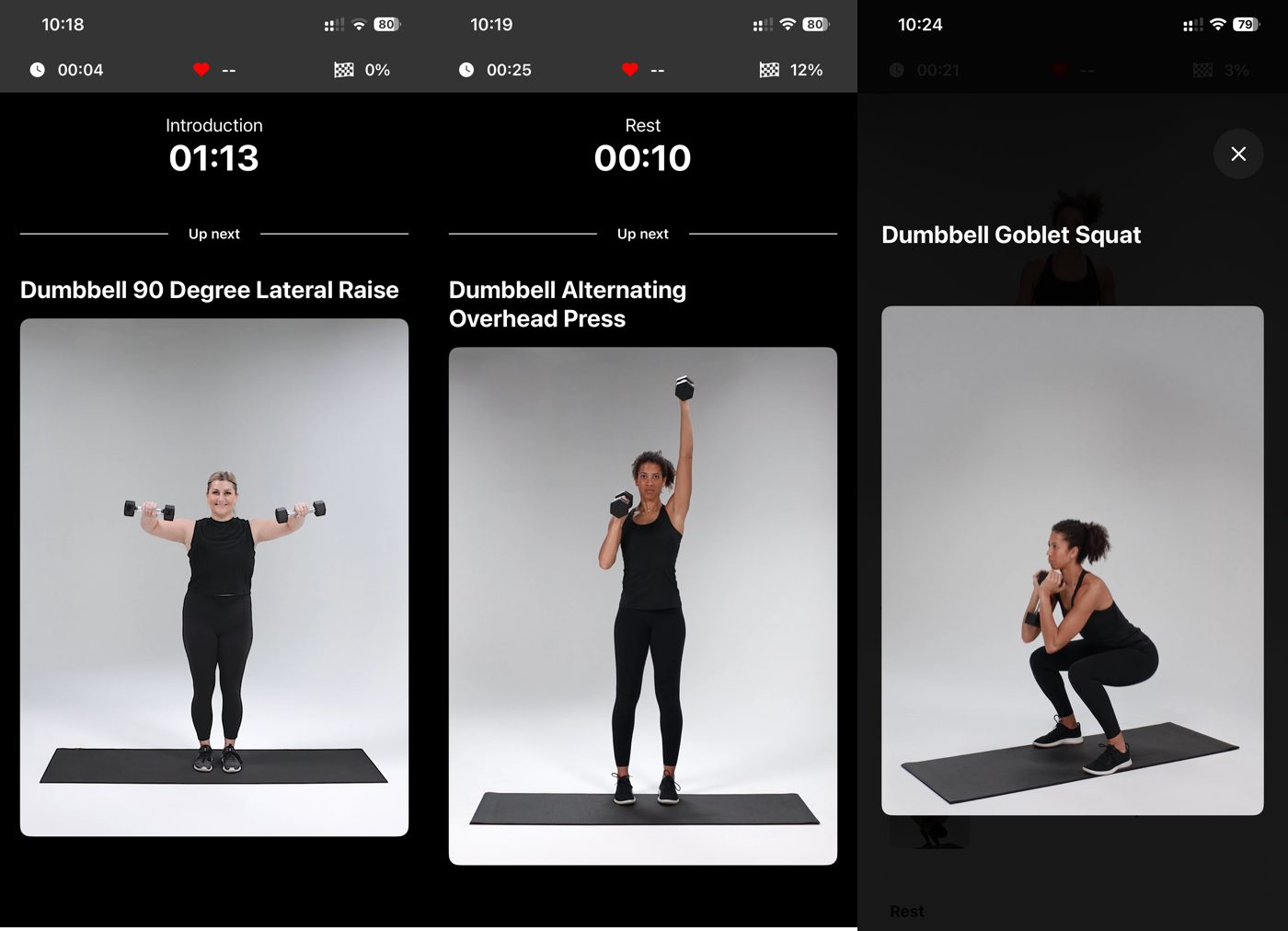
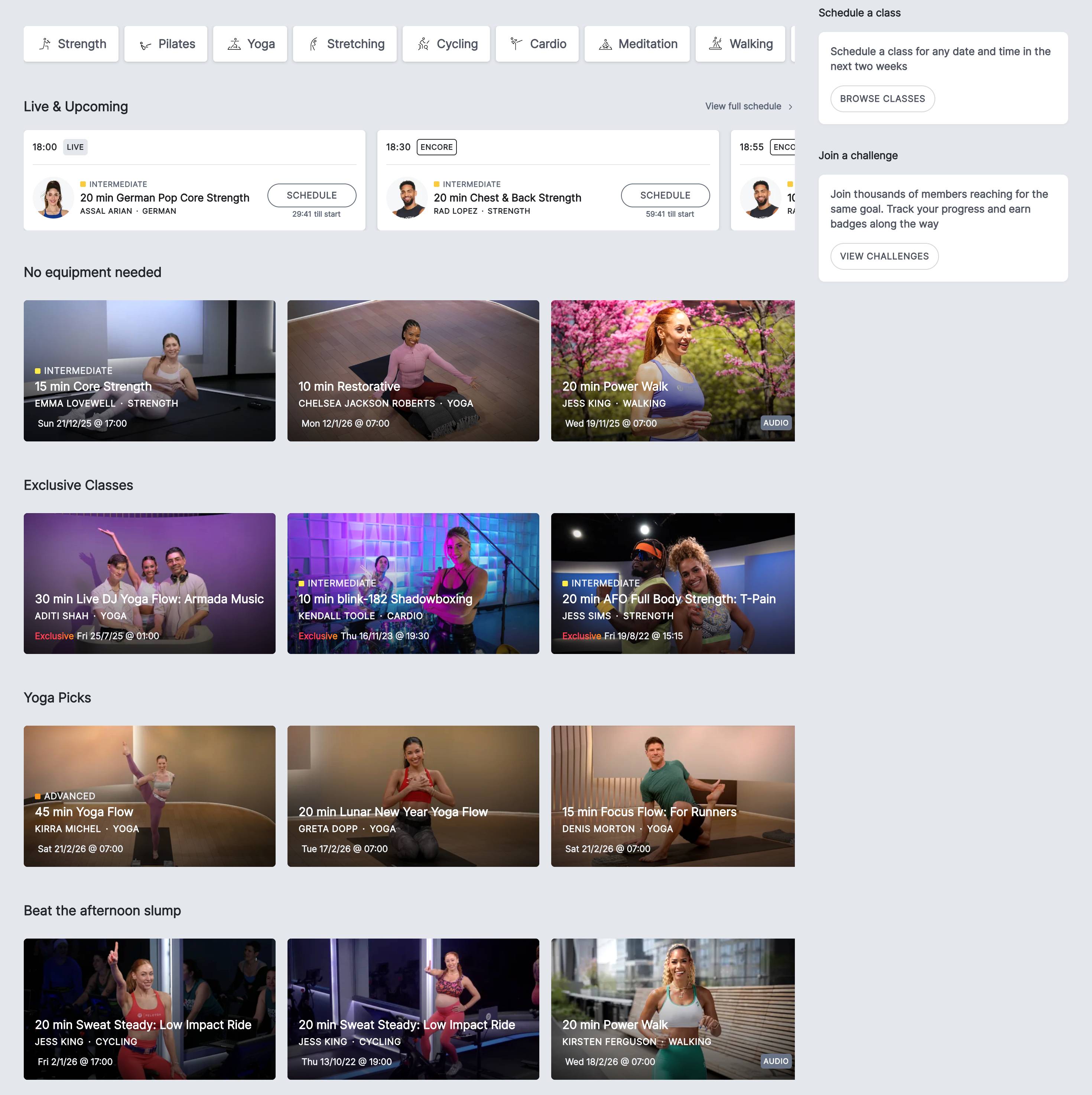
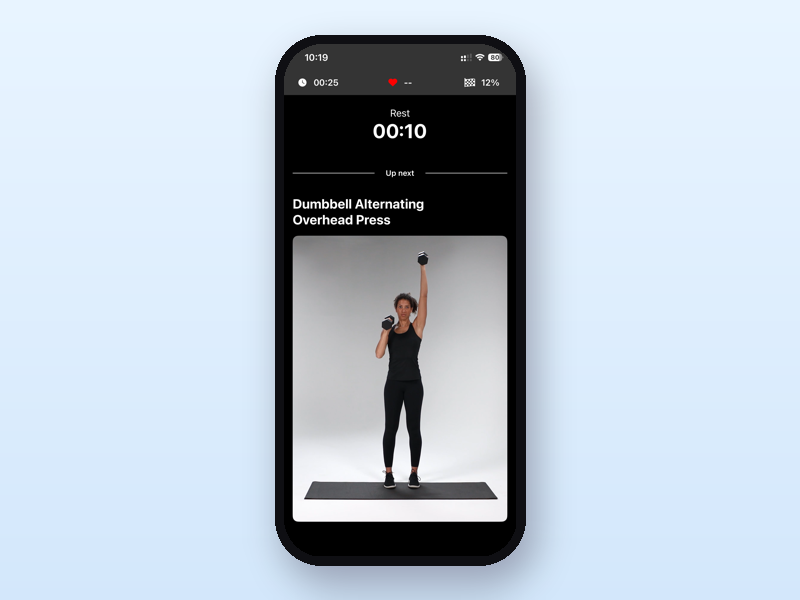
On Aaptiv the work was lighter: the app was downloaded, onboarding and the library explored, a SmartCoach strength program set up, sample sessions tried across the categories, and the screenshots on that review are our own. That establishes what the platform is and how the format feels. It does not establish how a SmartCoach plan behaves after two months, so any Aaptiv score that turns on the long run is provisional and we say so where it bites.
The asymmetry runs the same way as the result here, which is worth flagging rather than hiding: the platform we used more is also the platform that scores higher. Where a criterion depends only on what a platform contains, price, library breadth, whether menopause programming exists at all, both columns rest on the same kind of evidence and the comparison is sound.
Perimenopause and menopause: the largest gap on the page
Peloton wins Women Over 40 Specificity, 6 against 3.4, and underneath that sits the widest capability gap we have recorded in this pairing: menopause programming 8 out of 10 against 1.
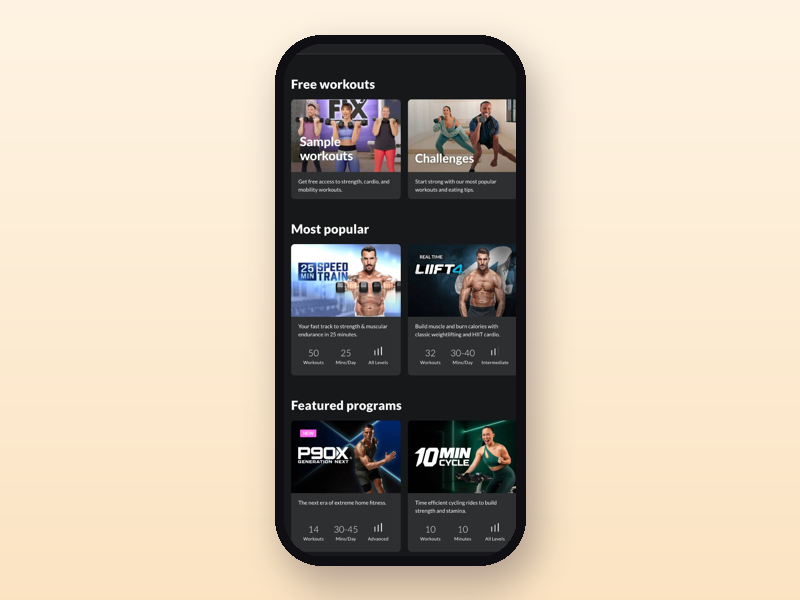
Peloton has a curated menopause collection rather than a token class. It is a set of 20-minute sessions built around this life stage, low-impact rides, hikes, endurance work, bodyweight strength and kettlebell work, and it covers sleep, mood, joint health, pelvic floor and cardiovascular change. In her account it is one of the most substantial dedicated menopause libraries of any platform she has reviewed, and she is not easily impressed by a marketing department. Hormone awareness scores 7 out of 10 against 1 and menopause education 6 against 2 on the strength of it.
Aaptiv has nothing here. Its own review is unambiguous: she did not find any dedicated perimenopause or menopause programming or education. What it does have is a large calming library, meditation through to deeper-sleep and relaxing stretch sessions, yoga and Pilates-style classes, and a lot of strength work. Her conclusion for this audience was that other apps address the specific hormonal needs, pelvic floor or joint issues more directly, and that Aaptiv suits a woman who already knows what she is doing and does not need that guidance.
It is worth being precise about what the evidence supports, because a menopause label is not a clinical outcome. Sá and colleagues found in a systematic review and meta-analysis of resistance training in postmenopausal women that symptoms and functional capacity appeared to improve, while rating the certainty of that evidence as very low to low.1 Money and colleagues, reviewing the wider field, found evidence of improvement in physical, urogenital and total menopause symptoms following yoga, with the vasomotor and psychological evidence inconclusive, and concluded there is not yet enough evidence to recommend one form of exercise over another.4
So a menopause collection is not a treatment. What it is, and this is the real advantage, is content chosen for a body that has changed, which spares you from working out for yourself which class in a very large library is right for you this week.
Pelvic floor
Peloton wins, 4 out of 10 against 1, and 1 is the lowest score we publish for that row. Peloton’s menopause collection touches pelvic floor as a topic rather than programming a dedicated track, which is what a 4 reflects. Aaptiv has no pelvic-floor content at all. If this is your priority, neither of these is your platform, and our Menovation review covers one that is built for it.
Expert credibility
Peloton wins, 8 out of 10 against 4. Its coaching roster is large, professionally run and publicly accountable, and its content development draws on outside clinical partnerships. Aaptiv was founded in 2016 and acquired by PEAR Health Labs in 2021, which rebuilt it around an AI platform; its trainers are certified, and there are no women’s-health clinicians attached to the product. Neither company employs a menopause specialist we could name in either review.
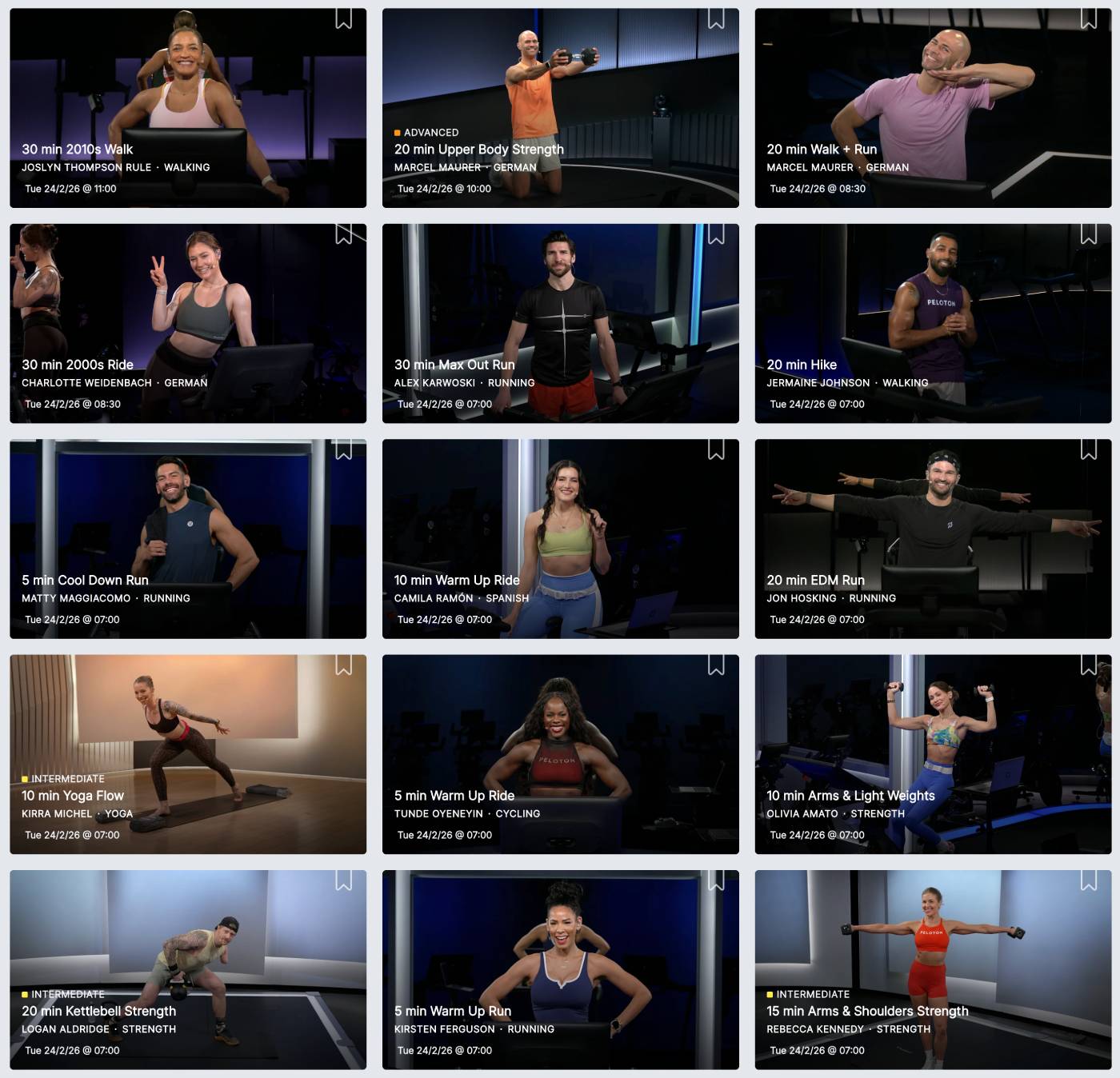
Joint friendliness: Peloton wins, and this is its second-strongest section
Peloton wins, 9 against 6.5, with low-impact capability 8 out of 10 against 5. That Joint Friendliness score is among the highest we have published.
Two things earn it. The first is breadth of genuinely low-impact content: walking classes, low-impact cycling, yoga, barre and Pilates, all of which give you somewhere to go on a day when loading is the wrong idea. The second is the coaching. Modification cues are in-class, not separate, so the easier option arrives while you are moving rather than in a separate video you have to go and find. She has a meniscus injury and reports that she trained consistently without aggravation across the four weeks, which is the outcome that matters more than any feature list.
Aaptiv is not a high-impact platform either. It carries yoga, barre, stretching, walking and elliptical work alongside its running content, and it scores 6.5 on that basis. What holds it lower is the format. In an audio-first session nobody is showing you the modified version, so when a movement is wrong for your knee you have to invent the alternative yourself, in the moment, from a verbal description. Level filters and the SmartCoach plan adapt to you, and a short video shows each move if you go looking for it, and neither of those is the same as a modification cued as you go.
Our best low-impact workouts for women over 50 ranking covers the platforms built around this rather than accommodating it.
Audio-first against video-first: the real difference between them
This is the choice that decides the page for a lot of readers, and it does not appear in any score.
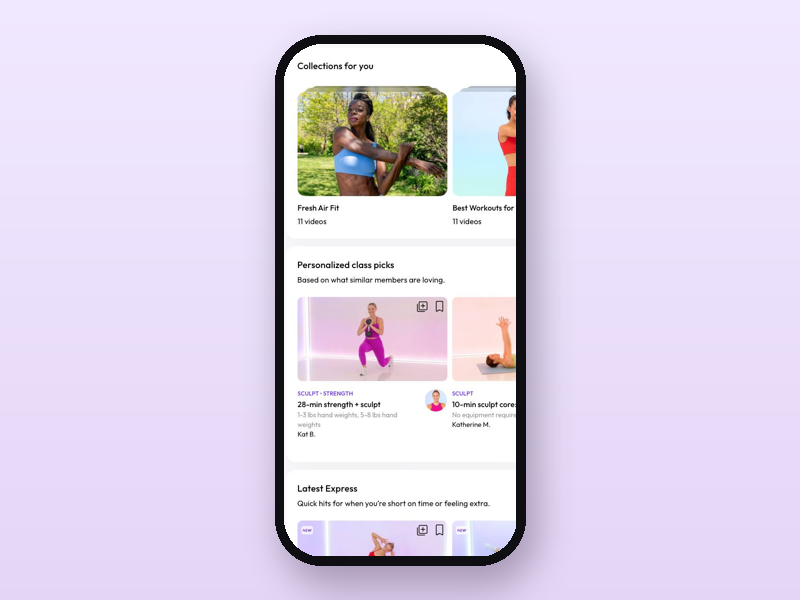
Aaptiv puts a trainer in your ear. There is a short video of each move, which she appreciated, because she is very visual and loses her form, so being shown and reminded genuinely helps. But the session itself is spoken. The consequence is a platform that works where a screen does not: at a gym, on a treadmill, on a guided outdoor workout, and that is where she used it most. The navigation is intuitive, with workouts split by category and challenges plus your own personal plan, so she found what she needed quickly.
The same design has a cost, and she names it: just listening rather than watching is an adjustment, so at home it would not be her first choice. That is the whole trade in one sentence. If your training happens in a room with a television, audio-first removes something and adds nothing.
Peloton is video-first with a large live schedule on top, and live classes create a form of accountability that a library cannot. There is no world in which a woman who trains in her living room prefers the audio version, which is why this is a question about where you train rather than which platform is better made.
Muscle and bone: Peloton wins, and both leave the loading to you
Peloton wins Muscle Potential, 7.5 against 6, while progressive strength capability ties at 5 out of 10 and bone loading runs 5 against 3. Muscle Potential carries the heaviest weight in our model at 18%, so this criterion moves the total more than any other.
Peloton’s advantage is the quality of the sessions rather than any programming logic. She mixed and matched rather than following a fixed programme, and found the dumbbell strength classes the most challenging thing in the library: with one pair of 17 lb dumbbells, some of them pushed hard enough that she was working at her limit by the end. She treats that as confirmation that the content is effective with basic equipment rather than as a complaint. What Peloton does not do is guide progressive overload, and its own review says so.
Aaptiv’s strength work is real and its delivery undercuts it. Audio-first strength has no load tracking, so nothing in the app records what you lifted last week or prompts you to add to it. Bone loading of 3 out of 10 is the consequence: sessions that are perfectly good as exercise and are not organised around the progressive increase in load that bone responds to. Harvard Health summarises the mechanism plainly, that progressive strength training slows bone loss and builds bone.5
Why this matters more after 40 than before it is a question the research answers directly. Maltais and colleagues describe an accelerated loss of muscle mass and strength through the menopause transition,2 which is the reason muscle carries the most weight in our scoring model and the reason a platform that ignores load progression is a bigger problem at 50 than at 30.
The practical answer on either platform is the same. Buy adjustable dumbbells, write down what you lifted, and add to it deliberately, because neither app will do it for you. Our best workouts to build muscle after 50 ranking covers the platforms that programme progression explicitly.
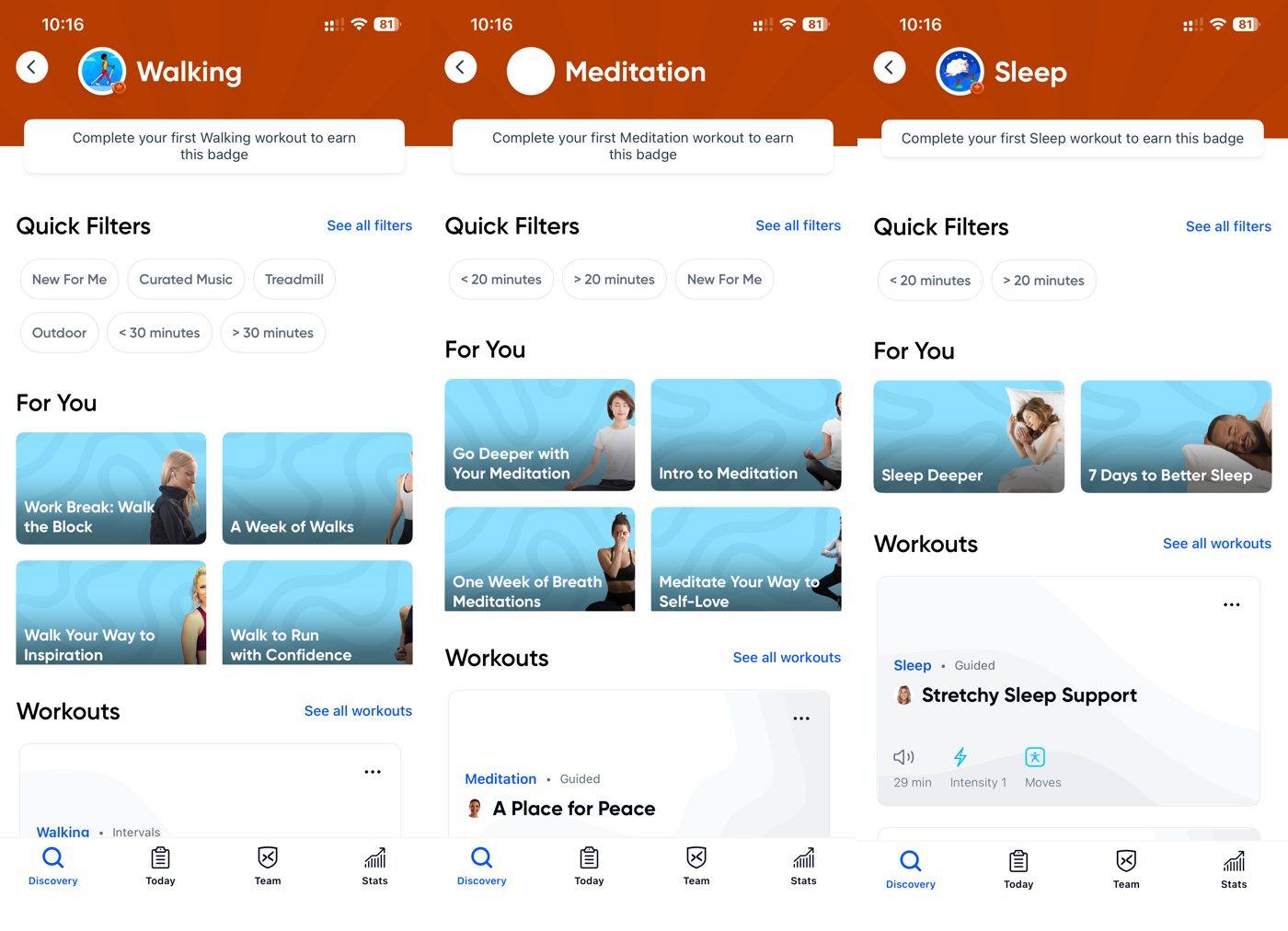
Time efficiency: Peloton wins, and one feature does the work
Peloton wins, 9 against 7, and 9 is among the strongest Time Efficiency results in our comparison set.
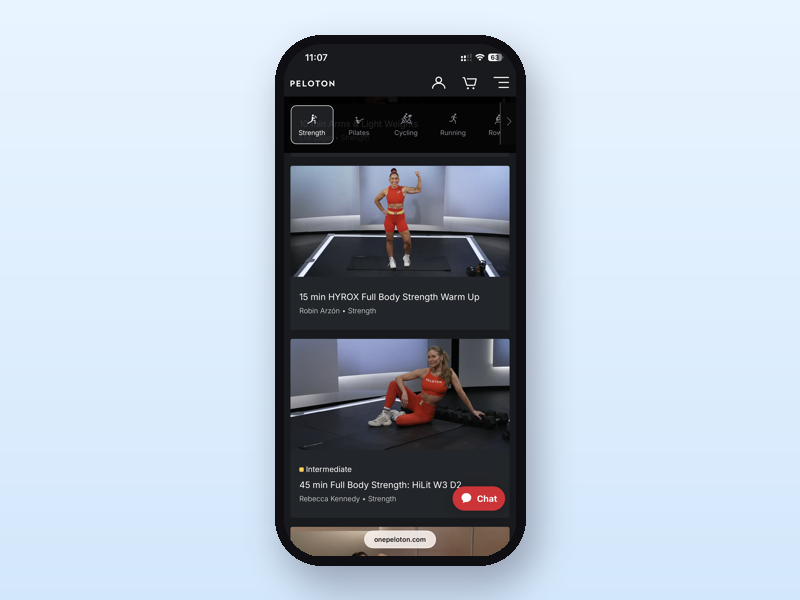
Peloton runs from 5 to 60 minutes and above, with genuine 20-minute options rather than nominal ones, and it has Peloton IQ, which builds a custom workout from the duration you have available and the muscle groups you want to target. She calls that the feature she found most useful, because for a woman managing time constraints it removes the daily decision-making friction that causes most people to skip a session. The classes she took sat appropriately in her week alongside her regular training, leaving her neither undertrained nor wrecked the next day, which is harder to get right than it sounds.
Aaptiv is respectable rather than exceptional here. Most workouts land around 30 minutes, which she notes is what busy people need, and the SmartCoach plan schedules them on the days you choose. The gap is that a 30-minute default is a poor fit for a 15-minute window, and Aaptiv has no equivalent of a session assembled around the time you actually have.
Our 30-minute workouts for women over 40 and 20-minute workouts for perimenopause guides cover the wider field in both bands.
Programme structure: a genuine tie, for opposite reasons
Tied at 6.5 each, and the tie is not two platforms doing the same thing equally well.
Aaptiv has the more structured answer on paper. Its AI SmartCoach assembles an adaptive plan around your goals and your available days: hers was a SmartCoach strength program that rotated upper body, lower body and full body on the days she chose. That is a plan, and a free-choice library is not.
Peloton has no equivalent. Programmes exist, and they are app-only with no web version, which is a real gap if you train from a laptop or a desktop browser. In testing she moved across strength, yoga, walking and running rather than working through one fixed programme, which gave her a realistic picture of the library and also means the structured route is the part of Peloton we probed least.
They land level because Peloton’s Peloton IQ and its class organisation do much of what a plan does, and because Aaptiv’s plan has no load tracking underneath it, so the structure is a schedule rather than a progression. Neither platform will tell you that this week should be lighter.
Recovery and mind-body: Peloton wins the criterion, the mind-body row ties
Peloton wins Recovery Compatibility, 8.5 against 7, and mind-body support ties at 7 out of 10, which is the highest capability score Aaptiv holds.
Aaptiv’s calming content is the best argument for the app for this audience. Meditation, deeper-sleep sessions, relaxing stretch work, yoga and Pilates-style classes are all there, and the guided meditation library is a genuine strength rather than a checkbox. For a woman whose sleep has become unreliable, that is not a small thing, and the yoga evidence reviewed by Money and colleagues is the strongest part of the exercise-and-menopause literature.
Peloton matches that content and adds the recovery habit around it. Its recovery and deload capability is 6 out of 10 against 4, because there is more to drop into on a low day and because the low-impact walking and cycling content works as active recovery rather than as a lighter workout. Neither platform schedules a deload or notices that you are tired.
Our low-cortisol workouts for perimenopause guide covers the platforms that treat this as a design problem.
Value for money: a tie, and the two routes to it could not be less alike
Tied at 7 each, which surprises people, because one of these platforms is cheaper at every tier.
| Plan | Aaptiv | Peloton |
|---|---|---|
| Monthly | $14.99 | $15.99 to $28.99, or £12.99 to £28.99 |
| Annual | $99.99, about $8 a month | No annual tier in our testing |
| Free trial | 7 days | 30 days |
| Other routes in | Employer benefits, health plans and Medicare Advantage | None found |
| Hardware needed | None | None for the app tier |
| Cancelling | Through app-store settings, with a 30-day money-back window on the annual plan | The standard cancel link was not functioning in testing |
Aaptiv is the cheaper product and the tie is fair, because value is what you get for the money rather than the size of the bill. At $14.99 a month or $99.99 a year, which works out at about $8 a month, Aaptiv is inexpensive, and the distribution through employer benefits, health plans and Medicare Advantage means a lot of women pay less than that or nothing. If your HR department already offers it, the value argument is over.
Peloton costs more and delivers more per pound: a larger library, live classes, the menopause collection, deeper low-impact content and better in-class coaching. Its 30-day free trial is twice the length of most and four times Aaptiv’s.
The subscription mechanics are where Peloton loses what its content earns. The broken cancel link described at the top of this page is the specific issue, and the general lesson is the same one we give for every platform with a long trial: subscribe through the App Store or Google Play where you can, so cancellation sits in your own account settings, and diarise it on the day you sign up. Our best free and budget workout apps ranking covers the cheaper end of the field.
UX and design: Peloton wins, and both have live reliability questions
Peloton wins UX and Design, 7.8 against 6, and neither platform is free of problems a subscriber will meet.
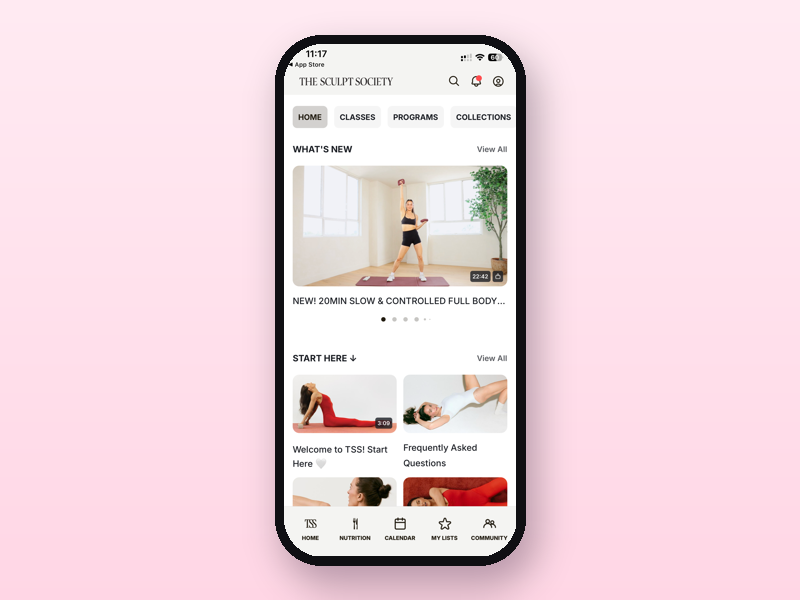
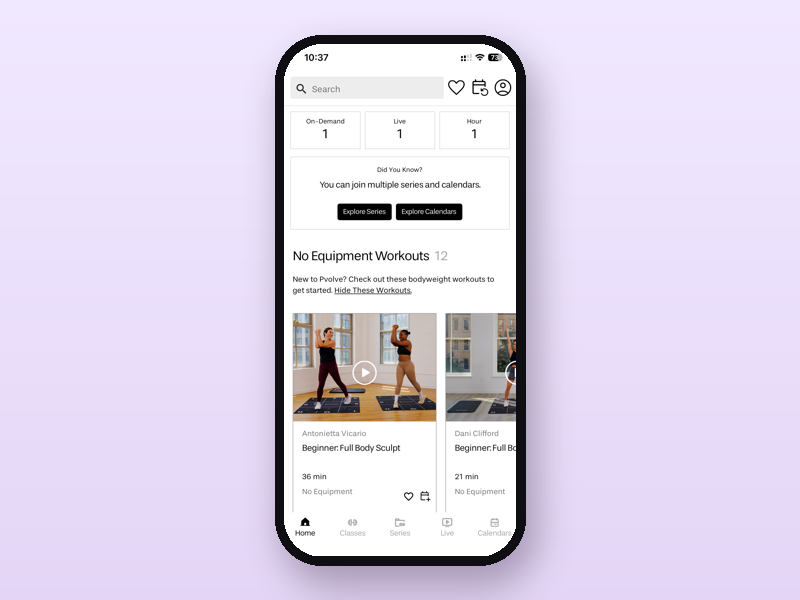
Peloton is a polished, well-organised app, and filtering by type, instructor and duration makes it easy to slot a session into a busy day. Two things hold the score below 8. Programmes are app-only with no web version, so a desktop-primary user is excluded from the structured content. And the cancel-link failure is a user-experience defect as much as a billing one.
Aaptiv’s interface is clean and its navigation is intuitive, and it sits lower for reasons that are largely about reliability. Complaints have risen since the AI rebuild, including broken Apple Watch and Apple Health syncing, and that is the kind of fault that quietly stops a platform being the one you open. There is also no usable nutrition filter, which we come to below.
Nutrition: Aaptiv wins the only criterion it wins
Aaptiv wins Nutrition Integration, 4 against 2, and this is the single criterion that goes its way.
Aaptiv carries a lot of nutrition information, and it is general rather than aimed at a perimenopausal or menopausal reader. Some of it is still useful, and she singles out the tips for cholesterol. What frustrated her was the retrieval: she missed a proper filter, and gives the concrete example that she wanted low-carb meals and could not easily find them. Midlife nutrition capability is 2 out of 10 for both platforms, which is the more informative number, because neither has anything written for a body at this stage.
Peloton has no nutrition guidance at all. Nutrition carries the smallest weight in our model at 7%, so this criterion barely moves either total. If you want training and eating handled in one subscription, our best workout apps with meal plans ranking is the right place to look.
Equipment and space needed at home
Neither platform requires its own hardware, and the same modest kit covers both.
Peloton was tested app only, without any Peloton equipment, on a non-Peloton treadmill and with one pair of 17 lb dumbbells, and the coaching translated completely. Most of the content that matters most for women over 40, low-impact cycling, yoga, barre, Pilates and strength with modifications, needs either nothing or dumbbells you may already own. Aaptiv is the same: its classes are built to run on whatever you have, with level filters and the SmartCoach plan adapting around it.
On both platforms the purchase worth making is a pair of adjustable dumbbells rather than a machine, for the reason set out in the muscle section: a fixed light pair stops being a stimulus once your body has adapted to it. A mat and enough floor space covers everything else.
Starting from scratch, or starting again
A tie at 6 out of 10 on beginner on-ramp, and they are hard for different reasons.
Peloton is easy to start and easy to get lost in. Registration is straightforward, the 30-day trial is offered upfront, and a personalisation questionnaire covers goals, experience level and preferences. The difficulty is scale: a library that large asks a beginner to choose, and Peloton IQ helps with the shape of a session rather than the shape of a month.
Aaptiv gives a beginner a plan through SmartCoach, which is the right instinct, and then hands her an audio session with nobody demonstrating the movement. For someone who has never done a goblet squat, a voice describing one is a hard start, and the short move videos help without solving it.
Cardiovascular fitness is worth a mention here, because it is the thing that improves fastest when someone starts training and the thing both platforms cover well. Wu and colleagues found in a meta-analysis of randomised trials that interval training improved peak oxygen consumption in older adults more than moderate-intensity continuous training did.3 Both libraries carry interval work, and the sensible order for a beginner is to build the habit first and add the intensity once the week is holding.
Aaptiv pros and cons
Aaptiv scores 6.1. It is strongest on short sessions and weakest on suitability for women over 40.
Pros
- Nutrition Integration 4 against 2, and ties on Programme Structure and Value for Money.
- Mind-body support 7 out of 10, its best row, on meditation, deeper-sleep and relaxing stretch content.
- Audio-first delivery that works at a gym or outdoors where a screen does not.
- An AI SmartCoach that builds an adaptive plan around your days.
- $14.99 a month, or $99.99 a year at about $8 a month, and frequently free through an employer, a health plan or Medicare Advantage.
Cons
- Women Over 40 Specificity 3.4 against 6, with menopause programming 1 out of 10, pelvic floor 1 and hormone awareness 1.
- Joint Friendliness 6.5 against 9 and bone loading 3 against 5.
- Strength delivered audio-first with no load tracking.
- No usable nutrition filter.
- Rising reliability complaints since the AI rebuild, including broken Apple Watch and Apple Health syncing.
- A 7-day trial, and it was sampled rather than lived with.
Peloton pros and cons
Peloton scores 7.3. It leads on joint-friendly training and trails on nutrition guidance.
Pros
- Women Over 40 Specificity 6 against 3.4, on a menopause collection that is real content.
- Joint Friendliness 9 against 6.5 with low-impact 8 out of 10 against 5.
- Time Efficiency 9 against 7, helped by Peloton IQ. UX and Design 7.8 against 6, Muscle Potential 7.5 against 6 and Recovery Compatibility 8.5 against 7.
- Expert credibility 8 against 4.
- A 30-day free trial, and no hardware needed.
Cons
- Nutrition Integration 2, with nothing at all.
- The cancel link was not functioning in testing.
- Programmes are app-only with no web version.
- No progressive overload guidance.
- It is the more expensive of the two at every tier, from $15.99 up to $28.99 a month.
- Pelvic floor is 4 out of 10, which leads this pair and is still low.
Quick yes/no comparison
| Feature | Aaptiv | Peloton |
|---|---|---|
| Menopause programming in the app | No | Yes, a dedicated collection |
| Pelvic floor content | No | Covered as a topic, not a track |
| Works without looking at a screen | Yes, audio-first | No |
| Live classes | No | Yes |
| A plan built for you | Yes, the AI SmartCoach | No, but Peloton IQ builds sessions |
| Load tracking for strength | No | No |
| Progressive overload guidance | No | No |
| Works in a web browser | Classes yes, structured content varies | No, programmes are app-only |
| Free trial | Yes, 7 days | Yes, 30 days |
| Available through an employer or health plan | Often | Not found |
| Straightforward to cancel | Yes, through app-store settings | The standard link was not functioning in testing |
| Nutrition content | Yes, general and hard to filter | No |
| Guided meditation | Yes | Yes |
| Hardware required | None | None on the app tier |
| How deeply was it tested | Sample tested | Fully tested, four weeks |
Aaptiv vs Peloton at a glance
| Aaptiv | Peloton | |
|---|---|---|
| Overall score | 6.1 | 7.3 |
| How it was assessed | Sample tested, a hands-on look through onboarding, the library and sample sessions | Fully tested over four weeks, app only, no Peloton hardware |
| Cost | $14.99 a month or $99.99 a year, about $8 a month, and often subsidised or free through an employer, health plan or Medicare benefit | $15.99 to $28.99 a month in the US, £12.99 to £28.99 in the UK |
| Trial | A 7-day free trial | A 30-day free trial |
| Session length | Most workouts land around 30 minutes | 5 to 60 minutes and above, with genuine 20-minute options |
| Delivery | Audio-first, with a short video of each move | Video-first, with a live schedule |
| Approach | Trainer-led audio and video classes with an AI SmartCoach that assembles an adaptive plan | App-only membership across strength, yoga, walking, running and low-impact cycling |
| Modifications | Level filters and the SmartCoach plan adapt to you | Modification cues are given inside the class rather than in separate videos |
| Who is behind it | Founded in 2016 and acquired by PEAR Health Labs in 2021, with certified trainers | A large public company; no instructor named in our testing notes |
| Menopause content | None | A dedicated menopause content collection |
| Equipment | A mat and dumbbells you already own | A mat and dumbbells, plus a treadmill if you have one |
| Known live issue | Reliability complaints since the AI rebuild, including broken Apple Watch and Apple Health syncing | The cancel link was not functioning during testing |
| How we assessed it | Sample tested, onboarding and library explored with our own screenshots | Fully tested over four weeks, app only |
The full scoring breakdown
Peloton wins six of the nine weighted criteria and aaptiv wins one, with two tied. The two ties, Programme Structure and Value for Money, are the only places the table gets interesting, and both of them are ties for reasons the sections above explain rather than coincidences.
| Criterion | Weight | Aaptiv | Peloton | Winner |
|---|---|---|---|---|
| Muscle Potential | 18% | 6 | 7.5 | Peloton |
| Time Efficiency | 15% | 7 | 9 | Peloton |
| Joint Friendliness | 12% | 6.5 | 9 | Peloton |
| Programme Structure | 12% | 6.5 | 6.5 | Tied |
| Women Over 40 Specificity | 10% | 3.4 | 6 | Peloton |
| Recovery Compatibility | 10% | 7 | 8.5 | Peloton |
| Value for Money | 8% | 7 | 7 | Tied |
| UX and Design | 8% | 6 | 7.8 | Peloton |
| Nutrition Integration | 7% | 4 | 2 | Aaptiv |
| Overall | 100% | 6.1 | 7.3 | Peloton |
The twelve capability scores
Peloton wins eight of the twelve capability scores and aaptiv wins none, with four tied. The four ties are progressive strength, mind-body support, beginner on-ramp and midlife nutrition, which together say that the two platforms are level on general training quality and separated almost entirely by whether anyone has thought about a midlife body. The widest gap is menopause programming, 8 out of 10 against 1.
| Capability | Aaptiv | Peloton | Winner |
|---|---|---|---|
| Low-impact | 5 | 8 | Peloton |
| Progressive strength | 5 | 5 | Tied |
| Bone loading | 3 | 5 | Peloton |
| Recovery & deload | 4 | 6 | Peloton |
| Menopause programming | 1 | 8 | Peloton |
| Pelvic floor | 1 | 4 | Peloton |
| Hormone awareness | 1 | 7 | Peloton |
| Menopause education | 2 | 6 | Peloton |
| Expert credibility | 4 | 8 | Peloton |
| Mind-body support | 7 | 7 | Tied |
| Beginner on-ramp | 6 | 6 | Tied |
| Midlife nutrition | 2 | 2 | Tied |
Who wins for…
Who wins for perimenopause and menopause
Peloton, decisively. Women Over 40 Specificity 6 against 3.4, on a collection built for this stage.
Who wins for painful joints
Peloton. Joint Friendliness 9 against 6.5 and low-impact 8 out of 10 against 5.
Who wins for training at the gym
Aaptiv, and it is not close. Audio coaching works where a screen does not, which is the one thing it does better than anything on this page.
Who wins for running outdoors
Aaptiv. Outdoor running is part of its core library rather than an add-on, though we did not use those classes.
Who wins for building muscle
Peloton. Muscle Potential 7.5 against 6, on dumbbell classes that are genuinely demanding.
Who wins for bone
Peloton. Bone loading 5 out of 10 against 3, and on both platforms the progression is yours to manage.5
Who wins for a fifteen-minute window
Peloton. Time Efficiency 9 against 7, because Peloton IQ builds to the time you have.
Who wins for sleep and meditation
A tie at 7 out of 10 on mind-body support. Aaptiv is the cheaper route to it, Peloton the more complete one.
Who wins on price
A tie at 7. Aaptiv costs less, Peloton delivers more, and a benefits scheme can settle it.
Who wins for nutrition
Aaptiv, and it is a thin win. 4 against 2, on general content with no usable filter.
Who wins for accountability
Peloton. Live classes at a set time do something no on-demand library does.
Who wins on evidence
Peloton, because it was lived with. Four weeks of app-only use against a hands-on look.
Decision tree for women over 40
Perimenopause is the reason you are looking. Peloton. It is the only one of the two with content written for this stage.
Your employer or health plan offers Aaptiv. Take it, and use it for the gym and outdoor sessions. A free platform you use beats a paid one you do not.
You train at a gym, not in a living room. Aaptiv, for coaching in your ear while you use equipment you cannot watch a screen from.
A knee or a hip decides your week. Peloton, for the low-impact library and the in-class modification cues.
You need a set class time to actually turn up. Peloton, for the live schedule.
You train from a laptop. Aaptiv, because Peloton programmes are app-only with no web version.
Your priority is muscle and bone. Peloton, then add your own loading plan, because no platform on this page will progress it for you.
You will forget to cancel a trial. Aaptiv has the shorter trial and the working cancel route. If you take Peloton’s 30 days, set the reminder before you finish signing up.
What we did not test
The gaps sit on both sides and the Aaptiv ones are larger.
On Aaptiv we did not run a full multi-week programme, so nothing here describes how a SmartCoach plan progresses over time, which is the claim the platform most wants to make. We did not use the outdoor running classes, the Strava connection or the Apple Watch app, and the syncing complaints reported above come from the review corpus rather than from our own use.
On Peloton we did not use the Peloton Bike, the Tread or the Row hardware, and the scores describe the app-only membership. We did not assess the desktop experience or the Personal Trainer add-on. The four weeks were spent mixing and matching rather than following one structured programme, so the programme route is the part of the platform we probed least.
Neither platform was assessed for how it handles an injury or a symptom flare, and nothing on this page should be read as a claim about long-term results on either.
Which is better for women over 50?
Peloton, more clearly than at 40
The menopause collection covers sleep, mood, joint health, pelvic floor and cardiovascular change, and the yoga and strength content is the part she rates most highly for this age group. The caveat she raises is worth repeating: cycling is Peloton’s dominant format and it is not always the right choice for a woman managing bone density, because a non-weight-bearing session does little for bone whatever it does for fitness. Use the strength, walking and yoga content first.
Aaptiv, in one specific case
If you already train and want audio coaching for the gym, or your health plan supplies it, it earns its place as a second app rather than a first one. Its meditation and sleep library is the reason to keep it. Our best workouts for postmenopause ranking covers the wider field.
What we would actually suggest
Start the Peloton trial, put the cancellation date in your calendar the same day, and spend the month on the menopause collection, the strength classes and the walking content rather than the bike. If your workplace offers Aaptiv, add it for the sessions that happen away from a screen. And whichever you keep, write down your weights, because that is the one thing neither of them will do.
Frequently asked questions
Is Aaptiv or Peloton better for women over 40?
Peloton, 7.3 against 6.1, and the margin is wide by the standards of this comparison set. Peloton wins Women Over 40 Specificity 6 against 3.4, Joint Friendliness 9 against 6.5, Time Efficiency 9 against 7, Recovery Compatibility 8.5 against 7, Muscle Potential 7.5 against 6 and UX and Design 7.8 against 6, and it takes eight of the twelve capability rows against none. Aaptiv wins Nutrition Integration 4 against 2, and the two tie on Programme Structure and on Value for Money.
What does Aaptiv actually do differently?
It is audio-first. A trainer talks you through the session in your ear rather than demonstrating it on screen, with a short video of each move available if you want to check the shape of it. That makes it usable in places a video platform is not, and Katy Cole found exactly that: it shines anywhere you cannot stare at a screen, at the gym or on a guided outdoor workout, and that is where she used it most. At home she was clear it would not be her first choice, because listening rather than watching is an adjustment.
Does either platform have menopause content?
Only Peloton, and the gap is the largest on the page. Menopause programming is 8 out of 10 against 1, hormone awareness 7 against 1 and menopause education 6 against 2. Peloton carries a curated collection of 20-minute sessions built around this life stage, low-impact rides, hikes, endurance work, bodyweight strength and kettlebell, rather than a single class buried in a menu. Aaptiv has none: Katy Cole did not find any dedicated perimenopause or menopause programming or education, and its own review says so plainly.
Is Peloton worth it without the bike?
That is how it was tested here, so we can answer it directly. The four weeks of testing were app only, without owning any Peloton equipment, using a non-Peloton treadmill for the cardio classes and a single pair of 17 lb dumbbells for strength. The strength, yoga, walking, running and low-impact cycling content all work without hardware, and the menopause collection is app content. The app-only membership starts at $15.99 a month in the US and £12.99 in the UK, and that is the tier this page scores.
Which one builds more muscle?
Peloton, 7.5 against 6, though neither platform programmes progression. Peloton’s dumbbell strength classes were the most challenging part of the test, and with a single pair of 17 lb dumbbells some of them pushed hard enough that Katy Cole was working at her limit by the end. Aaptiv’s strength is delivered audio-first with no load tracking, so nothing records what you lifted or tells you when to lift more. Progressive strength capability ties at 5 out of 10, which is the fairest summary: both can be used to build muscle and neither will manage it for you.
Which is gentler on joints?
Peloton, 9 against 6.5, and 9 is one of the highest Joint Friendliness scores we have published. Low-impact capability is 8 out of 10 against 5. The reason is a large low-impact library, walking, low-impact cycling, yoga and barre, combined with modification cues given inside the class rather than in separate videos. Our tester has a meniscus injury and trained consistently without aggravation across the four weeks. Aaptiv has yoga, barre, stretching and walking, and its audio-first format means nobody is showing you the easier version while you work.
Is there a catch with cancelling Peloton?
Yes, and it is the one thing on this page we would tell a friend before she signed up. The cancel link was not functioning when we tested it, and we tested this more than once with the same result. If you start the 30-day free trial, do not rely on the standard cancel link. Go to app settings, then account, then membership, or contact support directly, and set a calendar reminder several days before day 30 so you are not resolving it at the last minute.
Can you get Aaptiv free through an employer or a health plan?
Often, yes, and it is the strongest part of its value case. Alongside the direct $14.99 a month or $99.99 a year plans, which work out at about $8 a month annually, Aaptiv is distributed through employer benefits, health plans and Medicare Advantage, so a lot of people pay a reduced rate or nothing at all. Check with your HR department or your health plan before subscribing directly. If you got it through a benefit, you also manage and cancel it through that provider rather than through the app store.
Which suits a busy week better?
Peloton wins Time Efficiency 9 against 7, and both are workable. Most Aaptiv workouts land around 30 minutes, which Katy Cole notes is what busy people need. Peloton runs from 5 to 60 minutes beyond, with genuine 20-minute options, and it adds Peloton IQ, which assembles a custom session from the time you have and the muscle groups you want. Removing the daily decision about what to do is worth more than it sounds when the alternative is skipping.
Which has better mind-body and meditation content?
Neither, and that is a genuine tie at 7 out of 10 on mind-body support. Aaptiv’s meditation, deeper-sleep and relaxing-stretch content is the best thing in the app for a midlife audience, alongside its yoga and Pilates-style classes. Peloton matches it with yoga, meditation and sleep content inside a much larger library. If mind-body work is the main thing you want, Aaptiv is the cheaper way to get it and Peloton is the more complete one.
How much was each platform tested?
Peloton was fully tested for four weeks, app only, mixing and matching classes across strength, yoga, walking, running and low-impact cycling, plus the menopause collection. Aaptiv was sample tested: the app was downloaded, onboarding and the library explored, a SmartCoach strength program set up and sample sessions tried, with our own screenshots. That is enough to describe the format and the library accurately, and not enough to say how well a SmartCoach plan progresses over three months, so treat Aaptiv scores that depend on the long run as provisional.
Which one would you actually recommend?
Peloton for almost every woman reading this, because the menopause collection is real content rather than marketing, the low-impact library is deep, and the modification cues are given in class. Take the 30-day trial, and set the cancellation reminder on day one. Aaptiv is worth it in two situations: if your employer or health plan gives it to you, or if what you want is training you can do at the gym or outdoors without looking at a screen. Neither one will progress your loading for you, so that part stays your job.
Research citations
- Sá KMM, da Silva GR, Martins UK, et al. Resistance training for postmenopausal women: systematic review and meta-analysis. Menopause. 2023;30(1):108–116. PubMed. (Cited for: apparent improvement in postmenopausal symptoms and functional capacity with resistance training. Note: the authors rate the certainty of the evidence as very low to low, and we report it on that basis rather than as a settled finding.)
- Maltais ML, Desroches J, Dionne IJ. Changes in muscle mass and strength after menopause. Journal of Musculoskeletal and Neuronal Interactions. 2009;9(4):186–197. PubMed. (Cited for: an accelerated loss of muscle mass and strength through the menopause transition.)
- Wu ZJ, Wang ZY, Gao HE, Zhou XF, Li FH. Impact of high-intensity interval training on cardiorespiratory fitness, body composition, physical fitness, and metabolic parameters in older adults: a meta-analysis of randomized controlled trials. Experimental Gerontology. 2021;150:111345. PubMed. (Cited for: interval training improved peak oxygen consumption in older adults more than moderate-intensity continuous training.)
- Money A, MacKenzie A, Norman G, et al. The impact of physical activity and exercise interventions on symptoms for women experiencing menopause: overview of reviews. BMC Women’s Health. 2024;24(1):399. PubMed. (Cited for: evidence of improvement in physical, urogenital and total menopause symptoms following yoga, with vasomotor and psychological evidence inconclusive, and insufficient evidence overall to recommend one form of exercise over another.)
- Harvard Health Publishing. Strength training builds more than muscles. Harvard Medical School. Harvard Health. (Cited for: progressive strength training slows bone loss and builds bone.)
This page compares fitness platforms. It is not medical advice. Katy is a woman who has trained through perimenopause, not a clinician. Any training observations described are one person’s recorded experience, not an expected result or a general pattern. If you have a diagnosed condition, an injury, or symptoms that concern you, speak to a qualified healthcare professional before changing how you train.
About this comparison
Compiled by Katy Cole for Her Daily Fit. Peloton was used for four weeks on the app-only membership, without any of the company’s hardware, which is the tier most readers of this site would buy. Aaptiv was sample tested, so its column describes the format and the library rather than how a plan holds up over months. Both were scored on the same nine weighted criteria and the same twelve capability scores. Maltais and colleagues describe the accelerated loss of muscle and strength that follows the menopause transition,2 which is why Muscle Potential carries the most weight in that model.
The broken cancel link reported on this page is a finding from our own testing in 2026 and it may have been fixed since, so check it before you rely on it. Prices were checked against official sources in 2026 and may differ if there has been a recent change; Aaptiv in particular is often supplied through a benefits scheme at a different price from the published one. Scores are pulled live from each programme’s own assessment. Her Daily Fit earns nothing from either platform.
Compared with
Featured in