
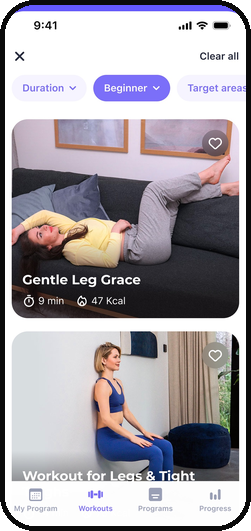
FitMe is a subscription app of short chair yoga, wall Pilates, somatic yoga and in-bed workouts, published by Extramile Limited of Cyprus. In this FitMe review we found no free trial of the full plan: the web plan FitMe pre-selects costs $24.99 for the first month, then renews at $49.99 a month. All prices in USD, checked on 22 September 2026. The App Store lists cheaper subscriptions from $9.99 a week, but we could not confirm which of them the app offers you.
Research-based data profile, not personally tested · Assessed from FitMe’s Terms of Use and Privacy Policy, its website fit-me.app, its public web sign-up funnel and pricing, both app store listings, the Cyprus company registry, and 4,999 written user reviews we sampled and coded across the two stores · Prices regularly verified
Data profileFitMe Review 2026: Quick Answer
Quick Verdict
Is FitMe worth it if you are in your late thirties or older, or anywhere in perimenopause or menopause? Only as a gentle way back into moving, bought with your eyes open about the billing. FitMe’s gentle formats do little to load bone or build muscle.
What FitMe does well is real. The sessions are short, seated or lying down, and need nothing but a chair, which removes almost every barrier for a woman who has not exercised in years or who cannot get down on the floor. That is exactly what its happiest reviewers praise: in the 4,999 written reviews we coded, the two strongest positive themes are that it is gentle and good for beginners, and that people can move without joint pain. Chair-based exercise has real evidence behind it for strength and function in older adults.1
The problem is everything around the workouts. The sign-up funnel promises to “lose cortisol belly”, sells a “Diet for Hormonal Balance”, says doctors are referring people to it, and credits a “National Institute of Health” study in the same words for three different kinds of exercise. We could not find evidence for these claims. And most of the one and two star reviews on both stores are about billing, cancelling and refunds.
Where to start: use the free first day of a programme before you pay anything, and if you want gentle seated movement long term, a chair yoga class at a local community centre or a free video library will give you similar sessions without the renewal risk. If you do buy FitMe, buy it through the App Store or Google Play rather than a link in an advert, so you can cancel from your phone, and set a reminder the day you subscribe.
Is FitMe right for you?
FitMe suits beginners who need seated or supported exercise. It does not suit anyone relying on it for strength, bone or menopause support.
FitMe fits if you: are starting from very little and want the lowest possible barrier · find floor work difficult or impossible and want seated or supported options · want short, calm movement for mobility and mood rather than a training programme · are comfortable managing a subscription carefully.
Look elsewhere if you: want to build or keep muscle and bone through menopause, since we found no external load or bone-loading work · want menopause education or expert input you can verify · have a specific injury you need the programme to respect, as several reviewers say their quiz answers were not reflected · find weight-loss and body-part language difficult.
Jump to Section
What Is FitMe?
FitMe is a subscription workout app of short, low-impact routines, mainly chair yoga, wall Pilates, somatic yoga, tai chi and workouts done in bed or on a sofa, sold through a long sign-up quiz, with separate versions aimed at older women. It launched on 28 September 2023 and is actively maintained: version 1.40 reached the App Store on 20 September 2026.
The store description sets the tone: “Lazy girl friendly”, “No exhausting exercises”, sessions that are “only 10 MINUTES”, and a promise to “transform that bum from flab to fit” and “Lose belly fat”. The App Store subtitle reads “For men, women, and seniors”. Behind the scenes, the web sign-up funnel runs separate “senior” and “young” versions, offers age bands up to 70 and over, and sells a paid “Senior Fitness program” as an add-on.
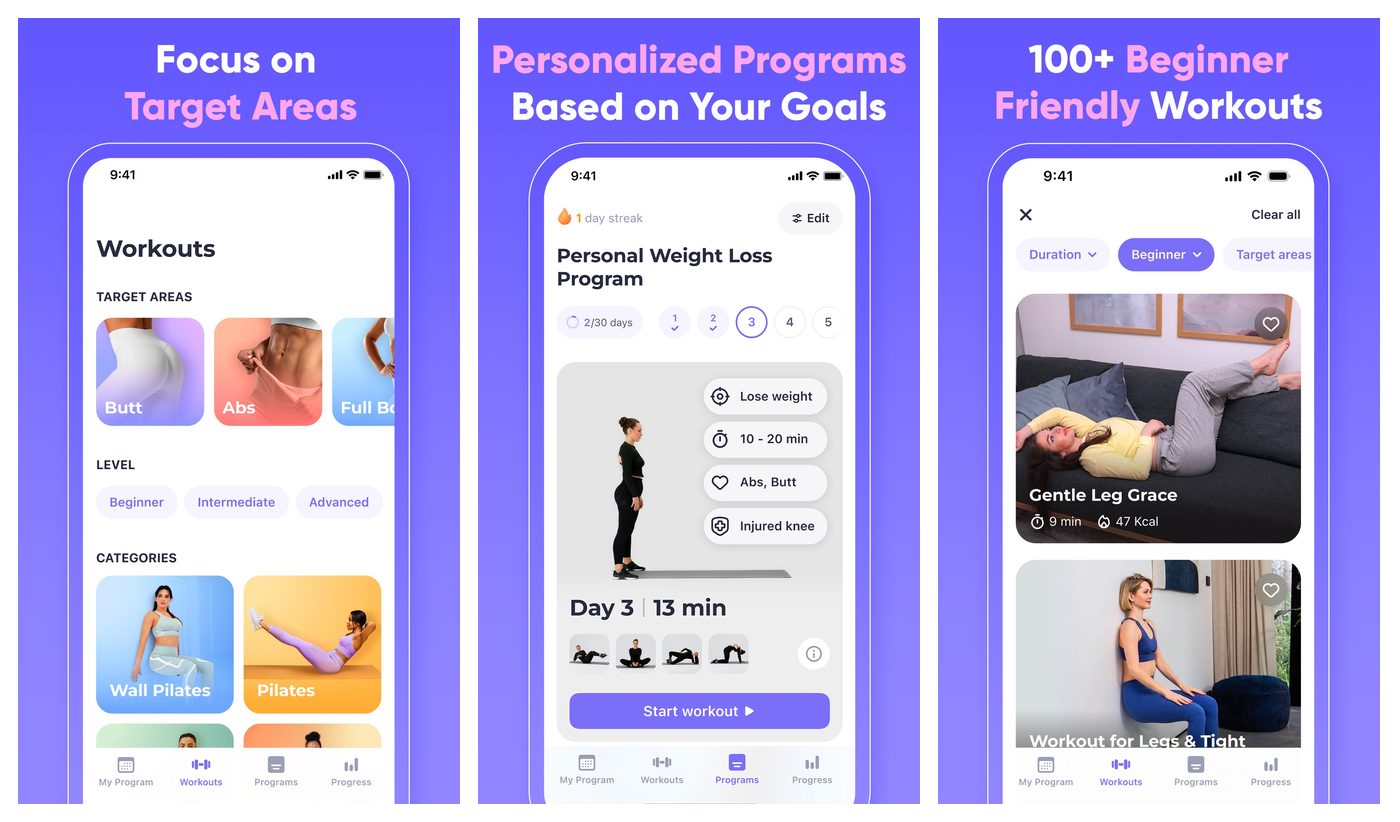
You do not browse your way in. You answer a quiz about your age, body shape, goals, injuries and medication, and FitMe builds what it calls a personalised 30 day plan. FitMe states there are more than 100 workouts, and its website lists more than 20 programmes, including Chair Yoga for Seniors, Wall Pilates, Seated Tai Chi, Walking, a Calisthenics Program, Pelvic Floor Health for Women, Pelvic Pilates for Women, a 30-Day Belly Course and Bubble Butt in 4 Weeks. According to the same page, the first day of each of 21 listed programmes is free, along with progress and weight trackers; everything after that needs a subscription.
Chair workouts are the format FitMe reviewers mention most, yet none of the seven iPhone screenshots on FitMe’s App Store listing shows chair yoga, and the models shown are young women. If you are coming to FitMe from a chair yoga advert, what the store shows you and what the advert promised may not be the same thing.
Who Owns FitMe, and Is It Legit?
FitMe is a real, registered business: it is published by Extramile Limited, a private company registered in Cyprus in April 2023, and Gismart, the app studio behind Dancebit, lists FitMe as one of its own products. The concerns about FitMe are its marketing claims and its billing, not whether the company exists.
Extramile Limited is company number HE 445953, registered on 10 April 2023, with its registered office in Nicosia and one director, Efthymios Michailidis, according to the Cyprus Registrar of Companies. FitMe’s Terms of Use and Privacy Policy both name Extramile as the operator, and FitMe’s website carries an Extramile copyright line. The company’s own site was still a template-style “Coming soon” page when we checked. The Terms also name a Delaware company, Fulfilling Inc., as reseller and seller of record for some purchases, and the Terms and the older Privacy Policy describe that company’s role differently.
There is a documented Gismart connection, and we want to be precise about it. Gismart’s products page lists FitMe and links to these exact store listings. The web funnel loads its content from Gismart-named servers, sends its analytics to them, and one line in its copy file says a PayPal purchase “will be associated with Gismart”, which it calls its business name. Neither FitMe’s Terms nor its Privacy Policy mention Gismart, and we found no public document setting out who owns Extramile. FitMe is published by Extramile Limited, and Gismart presents FitMe as a Gismart product.
On the people who make the workouts, FitMe says more on its website than in the stores or the funnel. The funnel introduces four trainers by first name only, each described as a “certified” trainer with between four and twelve or more years’ experience. FitMe’s website profiles six. Five are named by first name only, with descriptions such as “Certified Yoga Instructor” and “Certified Fitness Trainer” but no certifying body. The sixth, tai chi instructor Shifu Shì Héngzhí, is fully named, with stated Shaolin Temple and Italian Sports Association credentials. One trainer, Michael, is described as a physical therapist, with no surname or registration we could check. We found no named doctor, registered dietitian or menopause specialist. The developer has stated in App Store replies that its workouts use “real instructors and recorded videos”, after reviewers wondered whether the demonstrators were AI.
What FitMe’s Sign-Up Quiz Claims, and What the Evidence Says
The web sign-up funnel makes health claims that go well beyond gentle exercise, and the ones we checked are unsupported, misattributed or overstated. This is where most people meet FitMe, through an advert that leads to the quiz, so it is worth reading closely.
Everything quoted in this section comes from the English copy file of FitMe’s public web funnel at quiz.fitme.health, which we downloaded and read on 22 September 2026. The funnel runs A/B tests, so not every visitor sees every line, and the wording can change. What we can say is that these lines were live in the copy FitMe served that day.
Key finding: FitMe’s web sign-up funnel, as served on 22 September 2026, uses the same sentence crediting “The study by the National Institute of Health” for chair yoga, Pilates and somatic yoga, with only the exercise name changed.
| What the funnel says | What the evidence says |
|---|---|
| “LOSE CORTISOL BELLY”, as a headline | Exercising one area does not burn fat from that area. In a controlled trial, six weeks of abdominal exercises five days a week did not reduce belly fat or waist size.2 “Cortisol belly” is not a medical diagnosis. |
| “The study by the National Institute of Health has shown that chair yoga is perfect for:”, followed by a list including bone health and joint mobility, alongside a “Hormone-friendly” label | The same sentence is reused for Pilates and somatic yoga (see the key finding above). The body is the National Institutes of Health. The closest real study we found is an NIH-funded chair yoga trial, which eased arthritis pain in older adults but did not improve balance and did not measure bone, weight or hormones.3 NIH’s own yoga guidance says nothing about bone health or being “hormone-friendly”.4 |
| “An increasing number of new FitMe users are being referred to us by their doctors.” | No evidence is offered, and we found none. It is followed by a question asking whether you heard about FitMe from a medical professional. |
| “FitMe enhances senior women’s health by addressing joint pain, muscle loss, and low energy” | A supervised chair yoga pilot trial found it reduced arthritis pain.3 Muscle is a different matter: research showing muscle gain after menopause uses progressive resistance training worked hard, not gentle ten minute routines.5 We found no study of FitMe itself. |
| “Diet for Hormonal Balance & Healthy Weight Loss”, a $16.48 add-on promising “recipes to achieve hormonal balance” and to “Boost your metabolism” | No diet has been shown to “balance” menopausal hormones. The Menopause Society does not recommend dietary changes to treat hot flushes, and says hormone therapy remains the most effective option.6 |
| “Studies show that drinking enough water helps you burn 25% more calories while you are resting” | This appears to trace to a small 2003 study that measured a brief rise after one large glass of water. A later controlled study found no rise at all with room temperature water, and only a 4.5% rise with very cold water.7 |
Menopause itself appears in the quiz once, as an answer to “What do you think affected your weight gain the most in recent years?”. Pick it and you are told: “Your body is going through changes, so weight gain is natural.” A separate question lets you tick “Hormones / Hormone Replacement Therapy” as a medication, followed by a promise to tailor your plan, without saying how.
FitMe’s website goes further than the funnel. Its home page offers a weight loss plan “made for you at any menopause stage”, and a page titled “Weight Loss Program for Women 50+”, last updated 3 July 2026, says “Estrogen levels drop rapidly” during menopause and that “A specialized menopause weight loss program accounts for these changes”. We found no menopause programme in FitMe’s own list of more than 20 programmes, and no menopause education or symptom guidance in the store listings or the funnel. On the website, menopause is explained in a page selling weight loss to “Menopausal women”, not in a programme built for this stage.
FitMe’s results figures are unsourced. The paywall says 83% of users see “their first weight loss results” after four weeks and that 91% “stay with us after the initial 30-day subscription”, with no source for either. The quiz tells some visitors FitMe is trusted by 128,989 clients and others 1,289,897, a factor of ten apart. FitMe’s own Terms describe testimonials as illustrative only.
Why this matters for a gentle app. Chair yoga does not need to be sold as a cure. The practices FitMe offers have modest, real benefits, and those are enough. When an app attaches hormone, bone and belly fat claims to them, it makes it harder for a woman in perimenopause to tell what will actually help her, and some of what will help, like progressive strength training with load, is missing from what we found.
Content and Features
A library of short, pre-recorded, low-impact routines arranged into a quiz-built 30 day plan, with nutrition sold separately and no live content. This is what the store listings, the funnel, FitMe’s website and its replies to reviewers describe. The app is behind a paywall and we have not used it, so what follows is what FitMe says it contains.
| Feature | What FitMe offers |
|---|---|
| Styles | Chair yoga, wall Pilates, Pilates, somatic yoga, tai chi and seated tai chi, walking, calisthenics, in-bed and sofa workouts, stretching and “fat-burning” sessions |
| Session length | 10 minutes as the headline; the quiz offers 5 to 10, 10 to 20, or more than 20 minutes a day |
| Library | “100+ diverse workouts and special programs”; more than 20 named programmes on FitMe’s website |
| Free access | The first day of 21 listed programmes, plus progress and weight trackers, according to FitMe’s website |
| Plan structure | A personalised 30 day plan or 4 week challenge built from the quiz, with a daily streak |
| Levels | “From beginner to pro”, with Beginner, Intermediate and Advanced filters |
| Injury screening | The quiz asks about knee, ankle, back, elbow, hip, shoulder and neck injuries, and about osteoporosis and arthritis, and promises to avoid exercises that might hinder recovery |
| Delivery | Pre-recorded follow-along video. No live classes found |
| Coaching | No one-to-one human coaching found. Trainer details are covered under who owns FitMe above. The Terms describe an AI Assistant, which the Privacy Policy says is built on OpenAI technology |
| Nutrition | Diet questions in the quiz, then paid one-off PDFs: the $16.48 hormonal balance diet and a $9.99 sugar-free dessert cookbook |
| Community | The funnel advertises “a community of women supporting each other”. We found no in-app community feature in FitMe’s public materials |
| Add-on programmes | Senior Fitness, Burn Belly Fat and Bubble Butt, sold as extra subscriptions. Prices not shown until after purchase |
| Menopause content | No programme found, despite menopause marketing on FitMe’s website |
| Pelvic floor | Pelvic Floor Health for Women and Pelvic Pilates for Women are listed on FitMe’s website. We could not see their content |
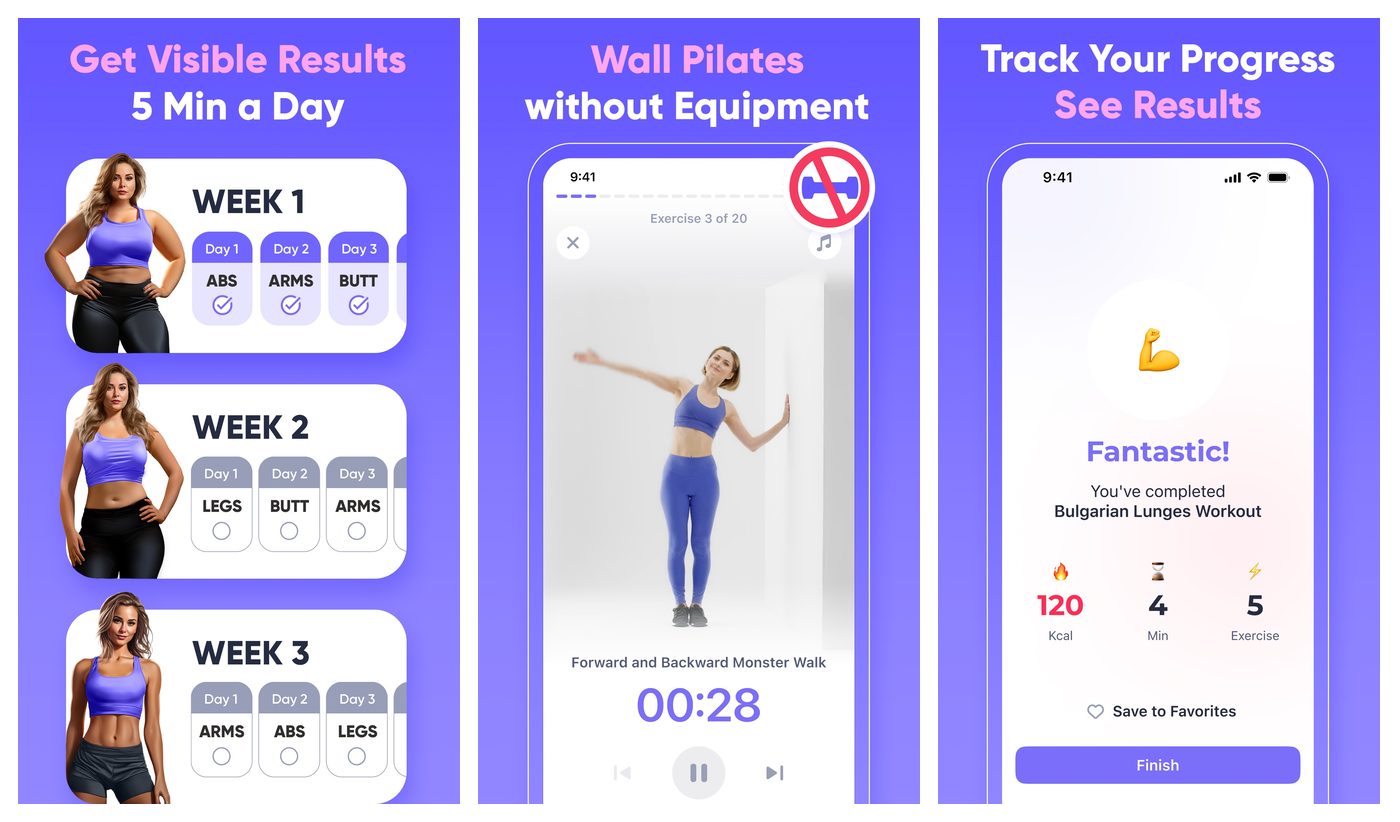
Two things stand out from the store screenshots. The plan is organised around body parts, abs, arms, butt and legs, rather than around movement patterns, strength or balance, which fits the weight-loss framing of the whole product. And the injury setting is visible in the plan itself, where a “personal weight loss program” lists “injured knee” alongside the goal. Whether that setting changes the workouts enough is a question several FitMe reviewers raise.
What Equipment You Need for FitMe
A sturdy chair and a clear stretch of wall, and that is all. FitMe’s copy says its workouts need “ZERO additional equipment”, and for chair yoga, wall Pilates and bed routines that holds. For a woman starting from nothing, not having to buy or set anything up is a real advantage.
A few practical points FitMe does not spell out. Use a solid chair without wheels, set on a surface where it cannot slide. Wall Pilates needs enough clear wall to lie or lean against and a floor that is not slippery. The quiz asks about dumbbells and resistance bands, but we found nothing showing workouts that use them.
A sturdy chair
The one thing you genuinely need. Most sessions are built around a dining chair, a wall or the edge of a bed
Workout Mat
Thicker = better for core
$20 to 30
Resistance Band (strength)
A regular resistance band for strength work, light to heavy, for glute and pulling work
$15 to 20
Starter Dumbbells (up to 10 lb)
A light adjustable pair, a great starting point
~$65 to $80
Tip: two progressively harder dumbbell sessions a week cover the muscle and bone work FitMe’s gentle formats do not. Some of the strongest bone evidence in postmenopausal women comes from supervised heavy resistance and impact training, so treat it as the direction to build towards, and get coaching on form before you load up.8 In one trial in postmenopausal women, lighter weights taken close to failure built at least as much muscle as heavier ones.5
Equipment links may be affiliate links. We earn a small commission at no extra cost to you.
Bottom line on equipment: start FitMe with a chair you already own. If you spend anything, spend it on a pair of dumbbells for strength work on the days you are not using the app.
How We Scored FitMe: the 5.0 / 10 Breakdown
| Category | Weight | Score | Weighted |
|---|---|---|---|
| Time Efficiency | 15% | 7.0 | 1.05 |
| Muscle Potential | 18% | 3.5 | 0.63 |
| Women Over 40 Specificity | 10% | 3.0 | 0.30 |
| Joint Friendliness | 12% | 7.5 | 0.90 |
| Recovery Compatibility | 10% | 7.0 | 0.70 |
| Programme Structure | 12% | 4.5 | 0.54 |
| Value for Money | 8% | 3.5 | 0.28 |
| UX and Design | 8% | 6.0 | 0.48 |
| Nutrition Integration | 7% | 2.0 | 0.14 |
| Total | 100% | 5.0 / 10 |
Scoring notes
Joint friendliness (7.5) is FitMe’s strongest score and it is earned. Seated, lying and wall-supported formats put very little load through knees, hips and ankles, and there is an injury screen at sign-up. It is not higher because the library also contains “fat-burning” and HIT options, and because a meaningful group of reviewers with bad knees or backs say the plan they got did not reflect what they had declared.
Time efficiency (7) is high on friction and lower on stimulus. Ten minutes with a chair and nothing to set up is about as easy as exercise gets. What you get from those ten minutes is gentle, so the minutes are efficient to find rather than efficient to train.
Muscle potential (3.5) is low because we found no external load or equipment-based work. FitMe does list calisthenics programmes, and bodyweight progressions can build some strength, but we could not see how they progress. FitMe’s copy promises to “Build x2 muscle”, with no source.
Value for money (3.5) is scored against the price you are most likely to end up paying. That means the web renewal prices and paid add-ons set out in the pricing section, which are higher than several far richer platforms, along with a capped, conditional guarantee.
Women over 40 (3) is the composite of the twelve capabilities, and it sits in our Low band. The low-impact formats and gentle on-ramp earn real points. The “built for menopause” group scores low: FitMe lists pelvic floor programmes we could not inspect, and the menopause material we found is marketing, on its website and in its sign-up funnel.
Gentle and easy to start, sold with claims we could not find evidence for.
Is FitMe Good for Women Over 40?
As a gentle starting point, yes, particularly if the floor is off limits. As a programme for the changes of perimenopause and menopause, no.
What it gets right is accessibility. A woman who has not exercised for years, who is heavier than she would like, or who has knees and hips that make getting up and down from the floor hard, can start FitMe today in a chair. That is not trivial. Structured chair-based exercise programmes improve grip strength, arm strength and the ability to stand up from a chair in adults over fifty,1 and the most important workout is the one you will actually do.
What it lacks is the training that matters most after forty. The evidence on protecting bone after menopause points to progressive resistance and impact training, worked hard,8 and we found no external load in FitMe. Its seated and lying formats are low impact by design, and we could not see how much impact its calisthenics and high-intensity programmes include. Our guide to low-impact strength training for women over 40 shows how to build that without jumping.
Where FitMe helps: getting moving again from zero · seated and lying options for women who cannot do floor work · gentle mobility and a calm daily routine · sessions short enough to fit around anything.
Who FitMe’s reviewers are
FitMe’s reviewers are mostly seniors, and many of them like it. Of the reviewers in our sample who stated an age, the large majority were 60 or over: about 80 of 89 on Apple and 52 of 56 on Google Play. Only a handful were between 35 and 59, and some of those were men. Just two reviewers mentioned their own menopause, and none mentioned perimenopause. FitMe’s real audience looks like older adults wanting chair exercise, which is a fair audience for it, rather than women navigating perimenopause. For alternatives chosen for this age group, see our best workouts for women over 60.
How FitMe Fits Perimenopause, Menopause & Beyond
Women Over 40 is our most important criterion, and here's the full breakdown behind it.
FitMe is strongest for low-impact and beginner on-ramp, and weakest for bone loading, menopause programming, hormone awareness, menopause education, midlife nutrition, recovery & deload, expert credibility, progressive strength and pelvic floor, in our menopause and midlife capability assessment for women over 40.
At a glance
What the app teaches about perimenopause and/or menopause, not whether the training suits a midlife body.
| Capability | Score | Rating | Why |
|---|---|---|---|
| Right training for a midlife body | |||
| Low-impact | 8/10 | Strong | Chair, bed and wall formats sold as short, gentle, low-impact exercises; some fat-burning and HIT options exist. |
| Progressive strength | 3/10 | Minimal | Calisthenics programmes are listed on FitMeâs website; no external load found and progression could not be seen. |
| Bone loading | 1/10 | None | Seated and lying bodyweight work gives little bone stimulus. FitMe lists calisthenics and high-intensity programmes, but we could not see how much impact they include. âBone healthâ claims are uncited. |
| Recovery & deload | 2/10 | None | No rest-day, deload or readiness logic found; only a generic â3-5 times a weekâ tip. |
| Menopause education and programming* | |||
| Menopause programming | 1/10 | None | No menopause programme among the 21 programmes FitMe lists; its website markets a weight loss plan âat any menopause stageâ. |
| Pelvic floor | 3/10 | Minimal | Pelvic Floor Health for Women and Pelvic Pilates for Women are listed on fit-me.app; content and designer could not be verified, no clinician found. |
| Hormone awareness | 1/10 | None | Only uncited âHormone-friendlyâ, âLose cortisol bellyâ and âhormonal balanceâ diet marketing. |
| Menopause education | 1/10 | None | A fit-me.app weight loss page explains oestrogen and fat changes to âMenopausal womenâ; no menopause education found in the store listings or funnel. |
| Expert credibility | 2/10 | None | Six trainers profiled on fit-me.app, five by first name only with no certifying body; one tai chi instructor fully named with stated martial arts credentials. Misnamed NIH claim and unevidenced doctor-referral claim in the funnel. |
| Whole-woman support | |||
| Mind-body support | 6/10 | Some | Somatic yoga programme, stress-relief goal, chair yoga and seated tai chi per user reports; no meditation found. |
| Beginner on-ramp | 8/10 | Strong | 5 to 10 minute options, chair and bed starts, age bands to 70+, injury screen at sign-up. |
| Midlife nutrition | 1/10 | None | Paid diet PDF claiming âhormonal balanceâ by unnamed nutritionists; nothing midlife-specific found. |
ScaleBest-in-classStrongSomeMinimalNone
What the sources say: Research-based, primary sources only. Assessed 2026-09-22 from FitMeâs Terms of Use (effective 8 June 2026) and Privacy Policy, FitMeâs website fit-me.app (programme list, trainer profiles, cancellation and pricing pages), the quiz.fitme.health funnel copy (1,393 strings) and its pricing API, both app store listings, the iTunes lookup API, the Cyprus company registry, and 4,999 written store reviews sampled and coded in house. A/B cohorts mean not every funnel string reaches every visitor. App not purchased or tested. No competitor or affiliate review site used as a source.
* What the app teaches and programmes around menopause, not whether the training suits a midlife body. Many programmes that score low here are still a good fit, they simply never use the word. A high score is not proof either: a few menopause videos added to a general library lifts this score without changing the training.
These are evidence-informed suitability ratings, not clinical measurements. They combine exercise science with product-specific research and, where indicated, hands-on testing, alongside multi-source verification, and are approximate. Individual response varies. A starting point, not medical advice. How we score menopause fit
What FitMe Offers at Each Menopause Stage
FitMe offers gentle movement at every stage, and nothing built specifically for any of them.
In perimenopause, the appeal is a calm, short routine at a time when sleep, energy and mood can all be unpredictable. Yoga may ease overall menopausal symptoms about as well as other exercise, though the trials have weaknesses,9 and The Menopause Society does not recommend yoga or exercise as a treatment for hot flushes, because the evidence is limited.6 Our yoga for menopause guide compares yoga programmes built with this stage in mind. Beyond a weight loss page on its website, we found nothing in FitMe specific to this stage: no symptom guidance and no menopause programme. The only cycle-related option is a “Period Friendly Workouts” answer in the quiz, aimed at periods rather than perimenopause.
Through menopause and after, the priority shifts towards bone. The Royal Osteoporosis Society’s consensus is that the best exercise for bone combines impact with muscle strengthening, alongside balance training to reduce falls.10 Seated and lying bodyweight work provides very little of either. Our guide to fall prevention exercises for women over 60 covers the balance side. For chair yoga and somatic yoga, we found no bone evidence at all. For Pilates, the Royal Osteoporosis Society says it can help maintain bone strength,10 but a review of three small trials in postmenopausal women found no significant effect on bone density.11
Pelvic floor is where FitMe may offer more than we could see. Its website lists Pelvic Floor Health for Women and Pelvic Pilates for Women programmes, and dedicated pelvic floor muscle training has strong evidence behind it for stress incontinence.12 We could not see what those programmes contain or who designed them, and we found no clinician behind them. If either programme is among those with a free first day, that is a sensible way to judge it before paying, and a women’s health physiotherapist remains the place to go for symptoms.
What the Research Says About FitMe’s Kinds of Exercise
The practices FitMe offers have modest but real evidence for comfort and function, and almost none for the muscle, bone and hormonal claims attached to them. We found no study of FitMe itself.
Chair-based exercise has the best evidence. A review of 25 studies in adults over fifty found chair-based programmes improved strength and chair-stand tests compared with control groups.1 Those were structured programmes, many including resistance elements, not ten minute app sessions, but the direction is encouraging.
Chair yoga specifically has one well-known NIH-funded pilot trial. In 131 older adults with knee or hip osteoarthritis who could not do standing exercise, eight weeks of twice-weekly 45 minute chair yoga reduced how much pain interfered with daily life, and the benefit lasted three months. It did not improve balance.3 FitMe does not name the study behind its “National Institute of Health” line. This is the closest NIH-funded one we found, and it supports a much narrower claim than FitMe makes.
Pilates may also improve muscle strength and balance, according to the Royal Osteoporosis Society, with care around repeated forward bending,10 though a review of three small trials found Pilates did not significantly change bone density in postmenopausal women.11 Wall Pilates, as a method, has no published trials we could find; the evidence comes from mat and equipment Pilates, which is what our best Pilates programmes for women over 40 ranking covers. For somatic yoga, a PubMed search found only small pilot studies in specific patient groups, and none in menopausal women. Our guide to somatic exercises for menopause sets out what that evidence does and does not show.
Yoga in general may help with stress, sleep, balance, knee arthritis pain and menopause symptoms, and may help people with overweight lose weight, according to NIH’s complementary health centre, which also notes that older adults have higher rates of yoga injuries and that learning without supervision carries more risk.4
The dose is the last piece. The World Health Organization recommends 150 to 300 minutes of moderate activity a week plus muscle strengthening on at least two days, and for adults over 65, balance and strength training on three or more days.13 It also says any activity is better than none, which is the fair case for FitMe: ten gentle minutes a day is far better than nothing, and far short of what this age group needs.
FitMe Reviews: What 4,999 App Store and Google Play Reviews Say
The star ratings are excellent and the written reviews are not. The gap is almost entirely about money, and the workouts themselves are liked by the people who get into them.
FitMe scores 4.79 from 78,884 ratings on the US App Store, 4.77 from 5,401 in the UK, and 4.4 from about 27,600 reviews on Google Play, where it has more than 500,000 installs, all checked on 22 September 2026. We then sampled and coded 4,999 written reviews ourselves: 2,157 from the Apple stores in the US, UK, Canada and Australia, and 2,842 English reviews from Google Play. We coded every review against a keyword list for each theme, read a sample of each theme by hand to remove false matches, and counted a review under every theme it raised. The reviews date from October 2023 to September 2026.
The written reviews tell a different story from the headline. They average 3.9 stars on Apple and 3.1 on Google Play, and on Google Play one star reviews are 7% of all US ratings but 1,128 of 2,842 written reviews (40%). Written reviews can skew more critical than star-only ratings, but this gap is wide. Separately, three reviewers said the app asked them for a rating within minutes or days of starting. We report that as an observation, not an accusation.
Money dominates the negative reviews. Billing surprises, difficulty cancelling or refused refunds appear in 71% of one and two star FitMe reviews on both stores: 371 of 520 on Apple and 891 of 1,250 on Google Play. The recurring pattern is a cheap intro that renews at a much higher price, bought on the web after a social media advert and so impossible to cancel from the phone’s subscription settings, followed by add-ons and hard-to-reach support. Several reviewers say they bought on the strength of the money-back guarantee and then met its conditions. One Google Play reviewer wrote, “My 77 yr old mother signed up for a 1 week trial”, before describing a $49.99 charge.
The workouts get warm reviews. Among four and five star reviews on Apple, being gentle, easy and good for beginners is the top theme, in 222 of 1,538 (14%), and comments about joints and pain, mostly positive, come next, in 185 of 1,538 (12%). “I can’t do floor exercises easily and this helps me”, wrote one US reviewer. An Australian reviewer called it “the best gentle exercise for all women struggling the menopause issues”.
Personalisation is the weak point for joints. We found 35 reviews linking the sign-up quiz to a limitation the reviewer had declared, such as bad knees, a bad back or not being able to get on the floor, and 27 of them rated one to three stars, most saying the plan did not reflect it. “I mentioned that I had weak and painful knees and shoulders”, wrote one Canadian reviewer. Others describe signing up for chair yoga from an advert and being given floor work.
Chair yoga and tai chi dominate, and Pilates barely features. Chair yoga is named in 211 of the 4,999 reviews we coded (125 on Apple, 86 on Google Play) and tai chi in 127 (84 and 43). Despite the Google Play title of “Weight Loss & Pilates”, only 12 reviews mention Pilates and two mention wall Pilates.
On Google Play, every review we retrieved carries a developer reply, usually within a day. The replies are polite and templated, direct people to email support, and on billing tend to restate that auto-renewal was disclosed at checkout.
Devices, Platforms and App
FitMe runs on iPhone, iPad and Android phones, with sign-up and checkout in a web browser. It needs iOS 16 or Android 10 or later and supports nine languages, including English, French, German, Italian and Spanish. According to its Privacy Policy it connects to Apple Health and Google Health Connect, and FitMe’s website says the Android app also runs on TVs and tablets. The developer confirms there is no syncing between devices, so progress does not carry over if you switch phones. We found no offline mode, casting or wearable app described in its public materials.
FitMe Specifications
| Specification | FitMe |
|---|---|
| Publisher | Extramile Limited, Cyprus, company HE 445953. Listed by Gismart as a Gismart product |
| App Store | id 6463793132, “FitMe – Lazy Workout at Home” (US) and “FitMe – Easy Workout at Home” (UK), age rating 9+. Several unrelated apps share the FitMe name |
| Google Play | home.fitness.challenge, “FitMe: Weight Loss & Pilates” |
| First released | 28 September 2023 |
| Website | fit-me.app, with sign-up and checkout at quiz.fitme.health and web accounts at account.fitme.health |
| Trainers | Six profiled on FitMe’s website, five by first name only |
| Privacy | Apple’s label lists data used to track you. Google Play’s data safety section declares precise location collection, which Apple’s label does not |
| Governing law | Your home country’s law in the UK and EU. Elsewhere, including the US, binding arbitration in Delaware with a class action waiver |
How Much Does FitMe Cost? Prices in 2026
On the web, where FitMe’s adverts send you, every plan starts with a discounted first period and then renews at $49.99 a month or $69.99 every three months. We read these FitMe prices directly from the plans data FitMe’s own web checkout loads, on 22 September 2026, from a US connection, before tax. All prices in USD.
| Plan | First charge | Then renews at | Over a year after the intro |
|---|---|---|---|
| Web, 7 day intro | $13.98 | $49.99 a month | $599.88 |
| Web, 1 month (pre-selected) | $24.99 | $49.99 a month | $599.88 |
| Web, 3 months | $34.99 | $69.99 every 3 months | $279.96 |
| App Store purchase list (US) | Weekly $9.99; monthly $14.99, $19.99 or $29.99; quarterly $38.99; half-year $59.99; yearly $24.99. Which of these the app shows you could not be confirmed | ||
| Google Play (US) | $9.99 to $49.99 per item | ||
| Hormonal balance diet PDF | $16.48, one-off | ||
| Sugar-free dessert cookbook | $9.99, one-off | ||
| Senior Fitness, Burn Belly Fat, Bubble Butt programmes | Sold as extra subscriptions after checkout. Prices not shown until you reach that step | ||
The 7 day plan is not a weekly subscription. On the web it is a $13.98 introduction that rolls straight into $49.99 a month unless you cancel at least 24 hours before it ends. FitMe’s pricing system also supplies each web plan with a crossed-out price at exactly double the charge, labelled as a 50% discount. We could not verify that it was ever a price anyone paid.
Prices also move. FitMe’s own blog, last updated 17 July 2026, quotes a $9.78 seven day intro, a $19.49 first month and a $36.99 three month plan renewing at $94.85, against the $13.98, $24.99 and $34.99 then $69.99 the checkout served us in September. The $49.99 monthly renewal is the same in both.
There is no free trial of the full plan; the free first day of each listed programme, described above, is the way to try the style before paying. The App Store purchase list is cheaper than the web renewal prices, which is the main reason to buy through the store if you buy at all, though we could not confirm which store price the app presents to a new user. We did not check web prices outside the US.
Not sure FitMe is the right programme for you?
Answer a few questions about your goals, schedule and fitness level, and get matched with programmes that fit.
Can You Get a Refund From FitMe? The Money-Back Guarantee
FitMe advertises a “100% Money-Back Guarantee”. Its Terms of Use cap it at $35, limit it mainly to your first payment, and require proof of an unbroken 30 day streak.
The paywall says: “Complete 30 days of your Personalized Program and GET A FULL REFUND”, and that you will have two months to do it. Section 6 of the Terms, effective 8 June 2026, sets the actual conditions:
- It covers only website purchases made with the promotional offer, so App Store and Google Play purchases do not qualify
- You must finish the challenge within 60 days of buying, completing every daily goal without a break. One missed day disqualifies you
- The rule text says 28 consecutive days, while the examples and the screenshot requirement say 30. The Terms contradict themselves
- You must claim within 30 days of finishing, only through FitMe’s contact form, with screenshots of the “My Program” tab showing 30 of 30 days, a 30 day streak and every day ticked
- The refund covers the first payment only, except that a 7 day intro renewed once can be refunded together with that first renewal. Add-ons are never refunded, and “Refund amount is capped at USD 35.00”
- Once per person, and your subscription keeps renewing unless you cancel it separately
The cap does not affect the $24.99 or $34.99 plans. It does affect the 7 day case, where $63.97 would have been paid and at most $35 is returned. FitMe’s own cancellation guide describes a separate refund for an eligible 7 day intro and its first renewal, covering “the amount actually paid”, requested through its contact form, and does not mention the $35 cap in the Terms. Reviewers describe being told about the guarantee conditions only after asking for their money back, and some describe being offered a partial refund or free months instead.
How to Cancel a FitMe Subscription
How you cancel FitMe depends on where you bought it. Web purchases, which is where FitMe’s adverts lead, do not appear in your Apple or Google subscription settings.
- Bought through the App Store: cancel in your Apple account’s subscription settings, at least 24 hours before renewal. Refunds go through Apple
- Bought through Google Play: cancel in your Google account’s subscription settings. Refunds go through Google
- Bought on the web: FitMe’s cancellation guide on fit-me.app, last updated 3 July 2026, says to log in at account.fitme.health, open the Subscriptions tab and click “Turn off auto-renewal”. Section 6 of FitMe’s Terms names an online contact form instead. We could not check either route without subscribing
FitMe’s Terms state, in capitals, that uninstalling the app or deleting your account does not cancel your subscription. Outside legal cooling-off rights, website refunds are only for a confirmed technical fault, and the Terms rule out refunds for a change of mind or an unused subscription. Billing disputes must be raised in writing within 14 days of the charge. In the UK and EU you have a 14 day right to withdraw, which you can lose if you agree to start the service straight away and acknowledge that you lose the right.
If FitMe charged you after you thought you had cancelled, check where you bought it first, because cancelling in Apple or Google settings does not stop a web subscription. Raise the charge with FitMe in writing within 14 days, as its Terms require.
If you do buy, a calendar reminder two days before the intro ends is the single most useful thing you can do.
How Long Are FitMe Workouts?
About ten minutes a day, which is FitMe’s great strength for starting and its limit for results.
| Per session | Per week | |
|---|---|---|
| FitMe, headline | 10 minutes | About 70 minutes if done daily |
| FitMe, stated range | 5 to 25 minutes | 35 to 175 minutes if done daily |
| WHO guideline, adults | Flexible | 150 to 300 minutes moderate activity, plus strength work on 2 or more days13 |
| WHO guideline, adults over 65 | Flexible | As above, plus balance and strength training on 3 or more days13 |
Gentle chair and bed routines may not reach moderate intensity, so treat FitMe’s minutes as a floor to build on, not as your whole week.
Will You Actually Stick With It?
Starting is easy with FitMe. Staying is harder, and the first renewal is the biggest test.
Ten minutes in a chair removes almost every excuse, and a daily plan removes the decision about what to do. For someone who finds exercise intimidating, gentle and easy is a real adherence feature, and reviewers who stay say exactly that.
A renewal several times the intro price is when many people leave, often angrily. Billing, cancelling and refunds dominate the negative reviews on both stores.
The quiz asks about injuries, but most of the reviewers who linked a declared limitation to their plan said it was not reflected. If you have bad knees or a bad back, check the first day carefully.
Across randomised trials, physical activity apps did not significantly increase daily steps overall, and effects were larger in programmes under three months.14 With no load or progression we could find, gentle routines that felt right in week one can feel too easy by week six.
FitMe Pros and Cons
Real accessibility on one side, and marketing and billing practices on the other.
What works
- Low impact: chair, bed and wall formats for women who cannot do floor work
- About ten minutes, with nothing to buy or set up
- An injury and health screen at sign-up
- The first day of 21 listed programmes is free, according to FitMe’s website
- Named pelvic floor programmes for women are listed, though we could not see their content
- Well liked by beginners and older users who get past the billing, for being gentle and easy to follow
- Chair-based exercise has real evidence for strength and function in older adults
- Apple Health and Google Health Connect integration, per the Privacy Policy
- Actively maintained, with fast replies to reviews
What does not
- Sign-up health claims we could not support (see the claims table above)
- No external load found, and the gentle formats do little for muscle and bone
- No menopause programme found, despite menopause marketing on its website
- Five of six profiled trainers named by first name only, and no clinician found
- High web renewal prices, and web cancellation that happens outside your phone settings
- A “100%” guarantee with strict conditions and a $35 cap
- Reviewers with declared injuries say the plan did not reflect them
- No syncing between devices
- Weight-loss and body-part framing throughout
How FitMe Compares
For gentle, low-impact training, each of the four closest programmes in our library scores higher than FitMe on menopause fit, and Fabulous50s is the strongest alternative.
The four programmes below are the closest comparisons in our library for a woman looking for gentle, low-impact training at home. Details for the others come from our own profiles of them. For our full ranking, see the best workout apps for women over 50.
| FitMe | Reverse Health | BetterMe | Fabulous50s | Lindywell | |
|---|---|---|---|---|---|
| Our score (out of 10) | 5.0 | 5.2 | 5.5 | 7.6 | 6.9 |
| Menopause fit (out of 10) | 3 | 3.7 | 4 | 6.5 | 4.8 |
| Monthly price | $24.99 first month on the web, then $49.99 | $20 to $40, variable | From about $19.99 in the App Store, renewals reported higher | About $14.99, or $119 a year | $37, or $199 a year |
| Free trial | First day of 21 listed programmes free; no full trial | No genuine free trial | 7 days when offered, then charges automatically | 14 days, on the annual plan | 14 days |
| Best for | Chair, wall and bed workouts for absolute beginners | Menopause weight loss with a meal plan | Low-cost beginner workouts and habit coaching | Gentle strength, balance and mobility over 50 | Pilates and breathwork for calm and joints |
| Equipment | A chair and a wall | A mat, a wall or chair, optional light dumbbells | None for many workouts; light dumbbells, a mat, a wall | A mat and light dumbbells; optional bands and a chair | A mat; some series use light dumbbells or a ball |
| Session length | 5 to 25 minutes, 10 as the headline | About 15 to 20 minutes | About 10 to 30 minutes | About 5 to 40 minutes | 5 to 45 minutes |
| Injury modifications | Quiz screen; reviewers dispute it | Partial | Partly | Partial, with all-standing and chair options | Partly |
| Perimenopause content | None found; marketing only | Marketing-focused only | None dedicated | Plain-language menopause education, not clinician-led | Welcoming, some content, not clinical |
| Pelvic floor | Named programmes listed; content unverified | None | Partial, as a paid challenge | One short pelvic floor yoga session | Minimal, through Pilates core work |
| Coaching style | Pre-recorded; most trainers named by first name only | Quiz-personalised on-demand plans | Optional paid one-to-one coaching | On-demand, trainer-led | Warm, clear cueing from certified instructors |
| Nutrition | Paid PDF add-ons | Meal plans, dietitian credentials unverified | Meal plans, recipes and a calorie tracker | Protein-rich meal plans and recipes | Dietitian-designed, non-diet recipes |
| Community | None confirmed | Partial | Limited | Large free online community, plus one in the app | Yes, strong |
| App Store rating (out of 5) | 4.8 from about 79,000 | About 4.3 to 4.5 | 4.7 from about 705,000 | Very few ratings | About 4.9 from about 5,600 |
| Best suited to | Older beginners who cannot get on the floor | Short gentle workouts plus a simple meal plan | Beginners over 40 on a low budget | Women over 50 wanting gentle strength, balance and mobility | Calming, joint-friendly Pilates and wellbeing |
FitMe against Reverse Health, the closest match
These two are close cousins. Both sell short, low-impact, quiz-personalised plans, and neither offers a full free trial. Reverse Health leans harder into menopause marketing and includes meal plans in the subscription, where FitMe sells nutrition as paid PDFs on top. We found no dedicated menopause programming or verified clinical input in either. If you are choosing between them, the purchase route and your ability to cancel matter more than the workouts.
For the same gentle, low-impact audience, Fabulous50s is the stronger choice in our assessment. It adds light dumbbells, balance work, menopause education in plain language and a 14 day free trial on its annual plan, at a lower monthly price than FitMe’s web renewal.
Similar programmes we partner with
Close to FitMe, if it is not quite right for you
These are not part of this review’s score. Each shares a goal or training style with FitMe, and each is worth a look if it is closer to what you need.
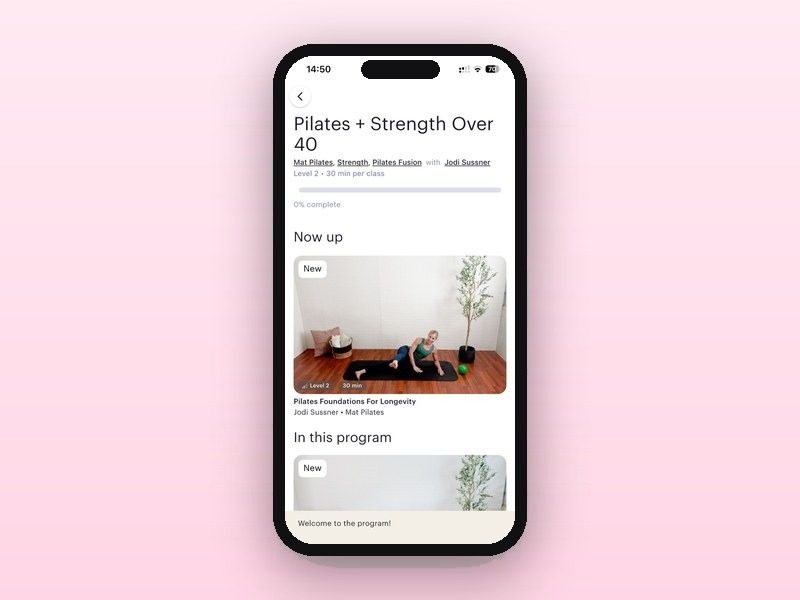
Deep, calming yoga, Pilates, meditation and walking with genuine over-40, menopause and pelvic floor content. Joint-friendly and beginner-welcoming, b…
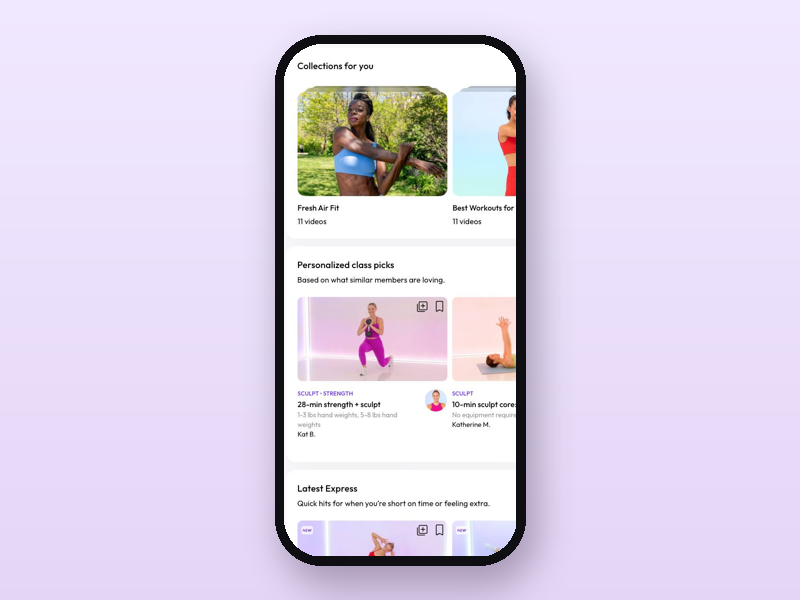
One of the most enjoyable fitness platforms for women in midlife: outstanding filtering, signature 28-minute classes, genuine menopause programming. U…
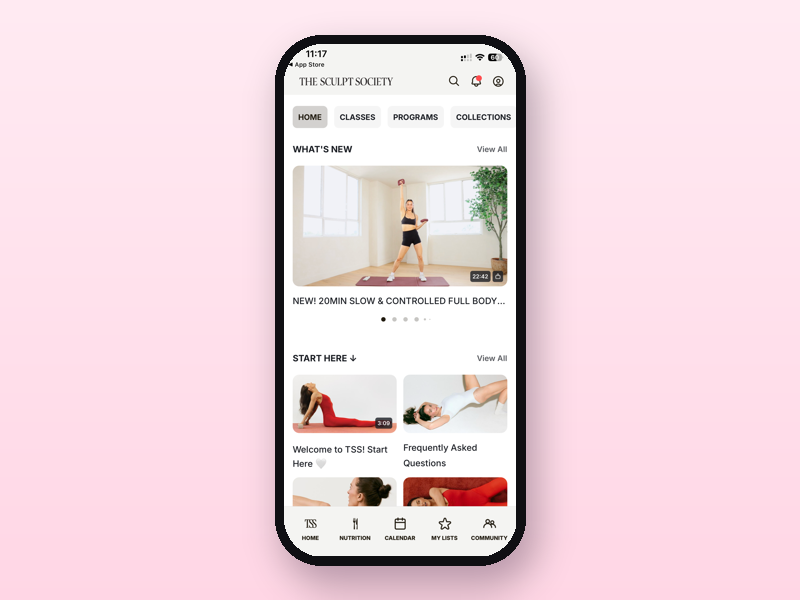
Joyful low-impact dance cardio and sculpt with a doctor-backed midlife programme added in 2026. Excellent for joints and consistency, though light loa…
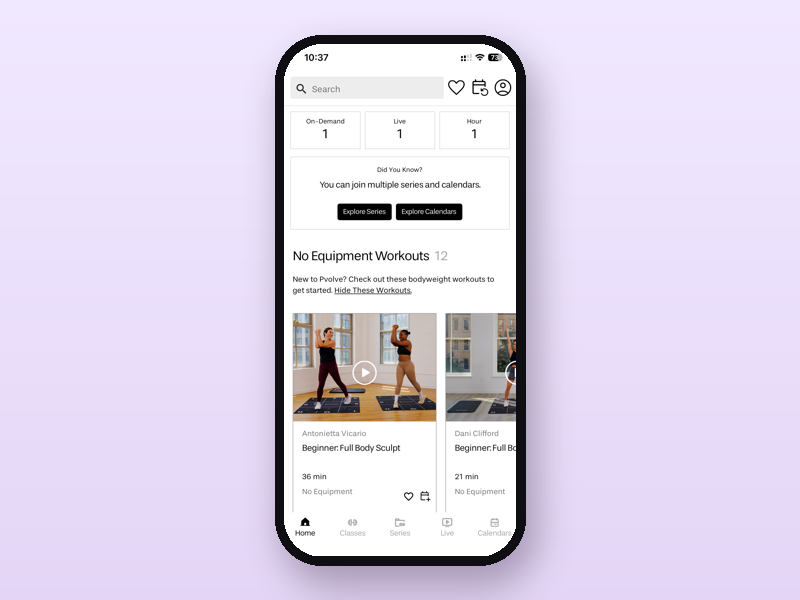
Clinically studied low-impact functional training with a dedicated menopause programme and pelvic floor content, backed by an OBGYN advisory board. Eq…
Affiliate links, at no extra cost to you. I buy my own subscriptions and a commission never moves a score or a position. Full disclosure.
FitMe FAQ
Yes. FitMe is a real app from a registered company, Extramile Limited of Cyprus, rated 4.79 out of 5 from about 79,000 US App Store ratings. The concerns are marketing and billing: FitMe’s sign-up quiz makes health claims we could not support, and billing, cancelling or refunds come up in 71% of the one and two star FitMe reviews we coded.
On the web, FitMe costs $24.99 for the first month on its pre-selected plan, then $49.99 a month. A $13.98 seven day intro also renews at $49.99 a month, and a $34.99 three month plan renews at $69.99 every three months. App Store items range from $9.99 to $59.99. Prices checked in USD on 22 September 2026.
The FitMe app is free to download, and FitMe’s website says the first day of 21 listed programmes is free, along with progress and weight trackers. There is no free trial of the full plan. The cheapest way in on the web was a paid seven day intro, $13.98 on 22 September 2026, which rolls into $49.99 a month unless you cancel at least 24 hours before it ends.
FitMe chair yoga can suit women over 50 as a gentle way to start moving, especially if floor exercise is difficult, and chair-based exercise has evidence for strength and function in older adults. We found no external load in FitMe’s gentle formats, though, so they are unlikely to do much for muscle and bone after menopause.
FitMe’s written reviews suggest seniors are its main audience: of the reviewers in our sample who stated an age, about 80 of 89 on Apple and 52 of 56 on Google Play were 60 or over. Many praise FitMe’s gentle chair and seated sessions. Several with bad knees or backs say their plan did not reflect the limits they declared in the sign-up quiz.
How you cancel FitMe depends on where you bought it. App Store purchases cancel in your Apple account settings and Google Play purchases in your Google account. For web purchases, FitMe’s own guide says to turn off auto-renewal in your account at account.fitme.health, while its Terms name an online contact form. Deleting the app does not cancel. Cancel at least 24 hours before renewal.
FitMe refunds for App Store and Google Play purchases go through Apple or Google, not FitMe. For web purchases, FitMe’s cancellation guide describes refunds for an eligible 7 day intro and its first renewal through its contact form. FitMe’s separate money-back guarantee covers promotional web purchases only, needs an unbroken 30 day streak proved with screenshots, and is capped at $35 in its Terms.
On the web, $49.99 is FitMe’s monthly renewal price. Both the $13.98 seven day intro and the $24.99 first month renew at $49.99 a month unless you cancel at least 24 hours before the period ends, according to the prices FitMe served on 22 September 2026. Uninstalling the FitMe app or deleting your account does not stop the renewal.
FitMe’s paywall says 83% of users see their first weight loss results after four weeks, but gives no source, and we found no study of FitMe itself. FitMe’s plans target belly, arms, butt and legs, yet exercising one area does not burn fat from that area: in a controlled trial, six weeks of abdominal exercises did not reduce belly fat or waist size.
FitMe is published by Extramile Limited, a company registered in Cyprus in April 2023 and named as the operator in FitMe’s Terms and Privacy Policy. Gismart, the studio behind Dancebit, lists FitMe among its products, and FitMe’s sign-up funnel uses Gismart-named servers. FitMe’s legal documents do not mention Gismart, and we found no public record of who owns Extramile.
Neither FitMe nor BetterMe is built for menopause. BetterMe scores somewhat higher for women over 40 in our assessment, mainly because it adds light dumbbell work and meal plans, while FitMe is mostly bodyweight, with nutrition sold as paid add-ons. For low-impact training with some menopause education, Fabulous50s is stronger than either.
Is FitMe Worth It? Final Verdict
5.0 / 10
A gentle, accessible workout app let down by how it is sold, and missing the training women in midlife most need.
FitMe’s workouts are the least of its problems. Gentle chair, wall and bed routines are a reasonable thing to sell to beginners and older adults, and the people who get into them say they like them. What lets the product down is how it is sold: health claims in the sign-up funnel we could not support, and a “100%” guarantee whose $35 cap and first-payment limit appear only in the Terms.
For a woman in perimenopause or menopause, the more important point is what is missing. FitMe does not appear to offer the training this life stage asks for most: progressively harder strength work with load, and impact for bone.
Best for: an older beginner, or anyone who cannot comfortably get down on the floor, who wants ten minutes of gentle seated or lying movement a day, buys through the App Store or Google Play, and manages the renewal date carefully.
Not ideal for: anyone whose goal is muscle, strength or bone; anyone wanting menopause education or expert guidance they can check; anyone with an injury that needs a programme to respect it; and anyone put off by weight-loss framing.
Testing Status
This is a research-based data profile, not a hands-on review. FitMe’s workouts sit behind a paywall, so this assessment uses primary sources only: FitMe’s Terms of Use and Privacy Policy, its website fit-me.app, the web sign-up funnel and pricing FitMe serves publicly, both app store listings, the Apple ratings API, the Cyprus company registry, and 4,999 written reviews we sampled and coded ourselves across the two stores. We did not buy a subscription. What the app contains after purchase is not something we can verify, and we do not claim it either way. Scores are marked research-based and will be updated rather than replaced if we test FitMe directly.
Sources and Further Reading
Primary product sources, checked 22 September 2026: FitMe Terms of Use, effective 8 June 2026, and Privacy Policy, effective 12 February 2026 (quiz.fitme.health); the FitMe web sign-up funnel and its plans data (quiz.fitme.health); FitMe’s website, including its home page, programme list, trainer profiles, cancellation guide, pricing blog and its weight loss, calisthenics and walking pages (fit-me.app), and a second sign-up address it links to, quiz.fitme.expert; the App Store listing, id 6463793132; the Google Play listing, home.fitness.challenge; Gismart’s products page (gismart.com/products); and the Cyprus Registrar of Companies record for Extramile Limited, HE 445953.
- Klempel N, Blackburn NE, McMullan IL, et al. 2021. The effect of chair-based exercise on physical function in older adults: a systematic review and meta-analysis. International Journal of Environmental Research and Public Health 18(4):1902. doi.org/10.3390/ijerph18041902
- Vispute SS, Smith JD, LeCheminant JD, Hurley KS. 2011. The effect of abdominal exercise on abdominal fat. Journal of Strength and Conditioning Research 25(9):2559 to 2564. doi.org/10.1519/JSC.0b013e3181fb4a46
- Park J, McCaffrey R, Newman D, Liehr P, Ouslander JG. 2017. A pilot randomized controlled trial of the effects of chair yoga on pain and physical function among community-dwelling older adults with lower extremity osteoarthritis. Journal of the American Geriatrics Society 65(3):592 to 597. doi.org/10.1111/jgs.14717
- National Center for Complementary and Integrative Health, National Institutes of Health. Yoga: effectiveness and safety. Updated August 2023. nccih.nih.gov (accessed September 2026)
- Carneiro MAS, de Oliveira Júnior GN, de Sousa JFR, et al. 2022. Effects of resistance training at different loads on inflammatory biomarkers, muscle mass, muscular strength, and physical performance in postmenopausal women. Journal of Strength and Conditioning Research 36(6):1582 to 1590. doi.org/10.1519/JSC.0000000000003768
- The North American Menopause Society. 2023. The 2023 nonhormone therapy position statement of The North American Menopause Society. Menopause 30(6):573 to 590. doi.org/10.1097/GME.0000000000002200
- Brown CM, Dulloo AG, Montani JP. 2006. Water-induced thermogenesis reconsidered: the effects of osmolality and water temperature on energy expenditure after drinking. Journal of Clinical Endocrinology and Metabolism 91(9):3598 to 3602. doi.org/10.1210/jc.2006-0407
- Watson SL, Weeks BK, Weis LJ, et al. 2018. High-intensity resistance and impact training improves bone mineral density and physical function in postmenopausal women with osteopenia and osteoporosis: the LIFTMOR randomized controlled trial. Journal of Bone and Mineral Research 33(2):211 to 220. doi.org/10.1002/jbmr.3284
- Cramer H, Peng W, Lauche R. 2018. Yoga for menopausal symptoms: a systematic review and meta-analysis. Maturitas 109:13 to 25. doi.org/10.1016/j.maturitas.2017.12.005
- Brooke-Wavell K, Skelton DA, Barker KL, et al. 2022. Strong, steady and straight: UK consensus statement on physical activity and exercise for osteoporosis. British Journal of Sports Medicine 56(15):837 to 846. doi.org/10.1136/bjsports-2021-104634. See also the Royal Osteoporosis Society, Pilates and osteoporosis (accessed September 2026)
- de Oliveira RG, Anami GEU, Coelho EA, de Oliveira LC. 2022. Effects of Pilates exercise on bone mineral density in postmenopausal women: a systematic review and meta-analysis. Journal of Geriatric Physical Therapy 45(2):107 to 114. doi.org/10.1519/JPT.0000000000000309
- Dumoulin C, Cacciari LP, Hay-Smith EJC. 2018. Pelvic floor muscle training versus no treatment, or inactive control treatments, for urinary incontinence in women. Cochrane Database of Systematic Reviews 10:CD005654. doi.org/10.1002/14651858.CD005654.pub4
- Bull FC, Al-Ansari SS, Biddle S, et al. 2020. World Health Organization 2020 guidelines on physical activity and sedentary behaviour. British Journal of Sports Medicine 54(24):1451 to 1462. doi.org/10.1136/bjsports-2020-102955
- Romeo A, Edney S, Plotnikoff R, et al. 2019. Can smartphone apps increase physical activity? Systematic review and meta-analysis. Journal of Medical Internet Research 21(3):e12053. doi.org/10.2196/12053
Related Guides
What To Do Next
If gentle seated movement is what you want, you do not need FitMe’s renewal risk to get it. Start with our guide to workouts for women over 60, or look at Fabulous50s, which adds light strength, balance work and a free trial on its annual plan.
If you are ready to build the muscle and bone that matter most after 40, our low-impact strength training guide shows how to do it without jumping or heavy impact.