
Free on YouTube, with an optional growwithjo app at $39.99/month or $198.99/year and a 7-day trial · a fast-growing channel of fun, low-impact home cardio from Johanna “Jo” Devries, a certified personal trainer · indoor walking, dance cardio, standing Pilates, Tabata, beginner strength and multi-week strength plans · sessions from about 5 to 60 minutes, easy on the joints and doable in a small space · A mat, and optional light dumbbells or a band.
Grow with Jo Review 2026: Quick Answer
Sample-tested: explored the app, the Menopause & Beyond category, the plans and the nutrition course, and followed along with workouts. Full multi-week test still to come.
Women who want fun, gentle, low-impact home cardio in a small space, who like finding short workouts by time and stacking their own week, especially beginners easing back into movement
Your priority is progressive strength and bone loading, a structured menopause programme with guidance, hormone or in-depth pelvic-floor content, or a weight-neutral approach
A free YouTube channel of low-impact walking, dance cardio and standing Pilates, plus a paid growwithjo app with a menopause category, multi-week strength plans, a calendar, a nutrition course and a community
About 5 to 60 minutes, with easy-to-find 5, 10 and 20 minute options you can stack
A mat and a water bottle; optional light dumbbells, ankle weights or a resistance band
Low, by design, across walking, dance cardio and standing Pilates
Gentle and accessible, with a real 51-video menopause category and some pelvic-floor content, but it is an unstructured library, not a guided menopause programme, and there is no hormone or education content
Mostly on-demand, plus live workouts with Jo in the app; the annual plan adds group calls
YouTube on any device or TV; the app on iOS, Android, Apple TV and Apple Watch, streaming to phone, tablet or TV
Free on YouTube; the growwithjo app is $39.99/month or $198.99/year, with a 7-day trial
The whole YouTube library is free; the app has a 7-day trial
The app auto-renews; cancel anytime from your account dashboard or the app store. Some users report the website cancellation is fiddly
Neutral on HRT; a weight-loss and consistency framing, with no medical or menopause claims
Active, with frequent new videos, challenges, live workouts and regular app updates
6.3 / 10
Quick Verdict
Worth it for women over 40? Yes as free, gentle, low-impact cardio, no as a structured strength or menopause tool.
Grow with Jo earns 6.3/10 after a hands-on look. Its strengths are real: it is genuinely free at its core, it is one of the friendliest low-impact on-ramps on the internet, and the walking, dance cardio and standing Pilates are joint-gentle, small-space and easy to enjoy. Using the app, I liked how easy it is to find workouts by time and stack your own week, and it carries more than I expected: a real 51-video Menopause & Beyond category, multi-week strength plans and a nutrition course. Jo herself is a certified personal trainer and kinesiologist, so this is a real trainer rather than a random influencer. The limits still matter for our audience: it is cardio-led with light strength and no progressive overload, the menopause category is an unstructured library rather than a guided programme, and many videos are follow-along visuals with no voiceover, which beginners who need form cues will feel. Our take: use it for gentle daily cardio and a movement habit you enjoy, and pair it with a dedicated, progressive strength routine for the muscle and bone it does not build.
What this review is. This is a sample-tested review: I spent time in the app, explored the library and the menopause and nutrition sections and followed along with workouts, rather than running a full multi-week plan, so the score is a hands-on look with a longer test still to come. This is education, not medical advice; speak to your clinician, especially about HRT or existing conditions.
Is Grow with Jo right for you?
Grow with Jo is strongest for nutrition support (5.0 out of 10, against a 4.0 average across the 77 programmes scored) and weakest for building bone density (3.5 against 5.1).
| Question | Verdict | Rating | Score |
|---|---|---|---|
| How it suits a perimenopausal body | |||
| Is Grow with Jo good for pelvic floor problems?Based on pelvic floor support and low-impact design | Moderate, but better than mostmost score 4.6/10 | 5.5 / 10 | |
| Is Grow with Jo genuinely built for perimenopause and menopause?Based on menopause programming, hormone awareness, education and expert credibility | Low, about the same as mostmost score 3.3/10 | 3.0 / 10 | |
| Is Grow with Jo good for painful joints?Based on low-impact design and recovery provision | Strong, and better than mostmost score 6.2/10 | 7.0 / 10 | |
| Is Grow with Jo manageable when your energy is low?Based on recovery provision and mind-body support | Moderate, about the same as mostmost score 5.7/10 | 6.0 / 10 | |
| Is Grow with Jo good if you are new to strength training?Based on beginner on-ramp and mind-body support | Strong, and better than mostmost score 6.1/10 | 7.0 / 10 | |
| Is Grow with Jo good for building bone density?Based on bone loading and progressive strength | Low, and worse than mostmost score 5.1/10 | 3.5 / 10 | |
| Does Grow with Jo help with nutrition?Based on midlife nutrition support | Moderate, but better than mostmost score 4.0/10 | 5.0 / 10 | |
| How it performs as a product | |||
| Can you fit Grow with Jo into a busy week?Based on time efficiency | Strong, about the same as mostmost score 7.6/10 | 8.0 / 10 | |
| Is Grow with Jo worth the money?Based on value for money | Moderate, and worse than mostmost score 6.9/10 | 6.0 / 10 | |
Jump to Section
Who Is Behind It
Content and Features
Equipment You Need
Full Scoring
Good for Women Over 40?
Menopause and Midlife Fit
What the Research Says
What Users Report
Devices and App
Pricing 2026
Will You Stick With It?
Pros and Cons
How It Compares
vs Yoga With Adriene
Best Alternatives
FAQ
Verdict
Testing Status
Sources
What Grow with Jo Actually Is
Grow with Jo is, at heart, a free YouTube channel of fun, low-impact home cardio, built by Johanna “Jo” Devries, a certified personal trainer. It grew out of her “Walk the Weight Off” indoor walking workouts, designed during the pandemic to be done in a small apartment without bothering the neighbours, and that idea is still the core: cheerful, follow-along movement you can do in a few square feet, with just a few steps to the left, right, forward and back. Alongside the walking there is dance cardio, standing Pilates, Tabata and low-impact HIIT, and beginner-friendly strength with light weights. Sessions run from about 5 minutes to an hour, the playlists are grouped into beginner, intermediate and advanced, and the tone is warm, upbeat and encouraging rather than drill-sergeant.
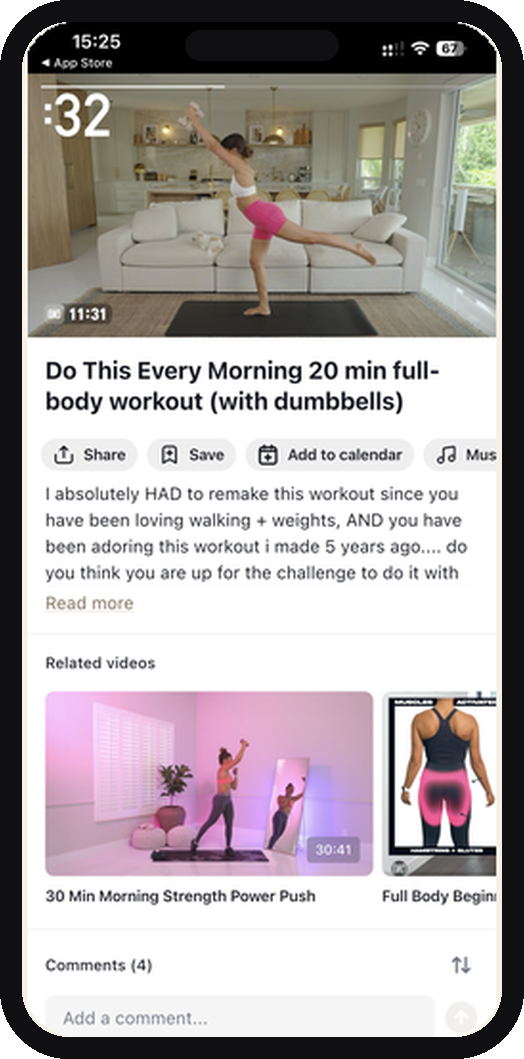
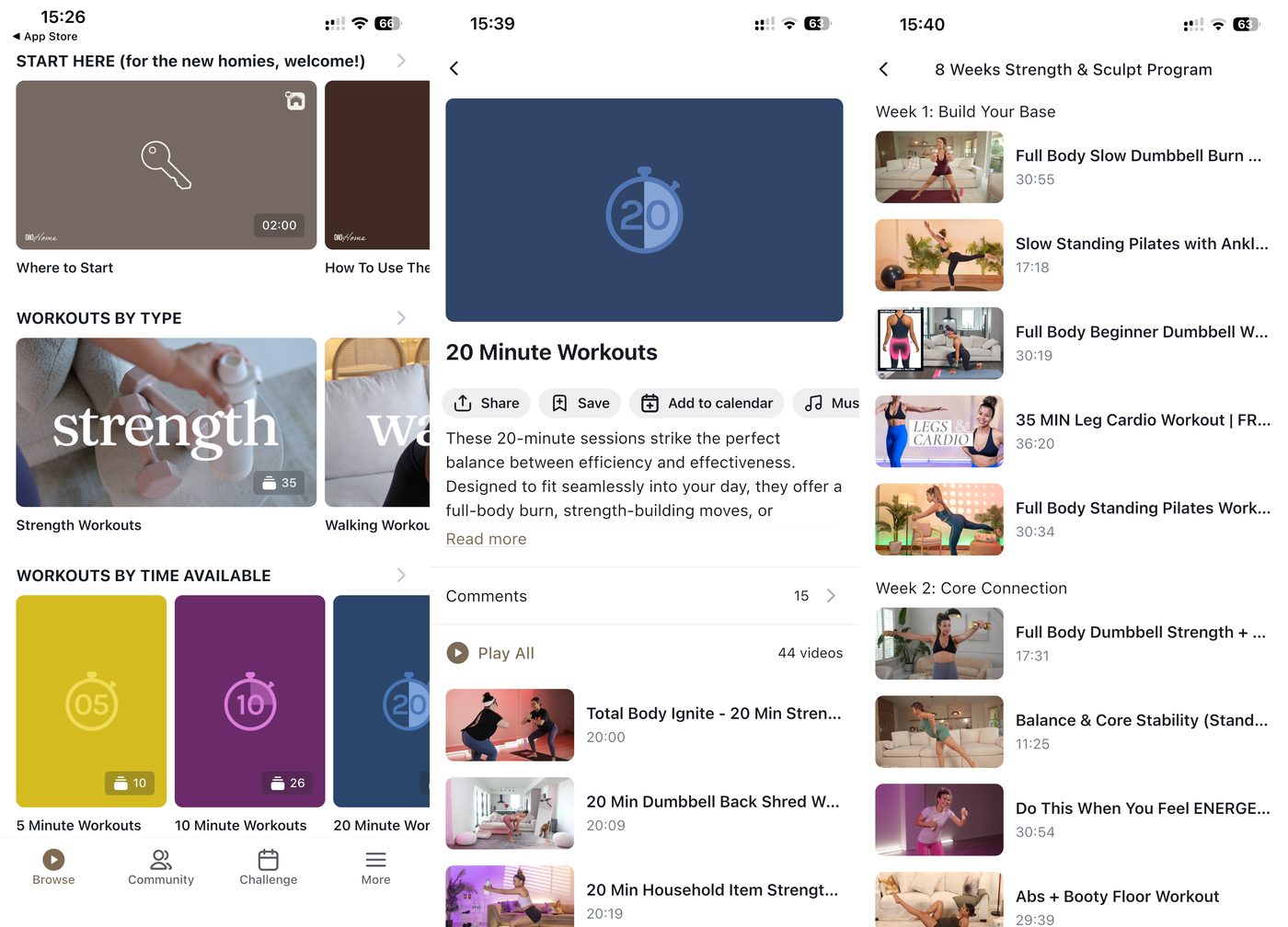
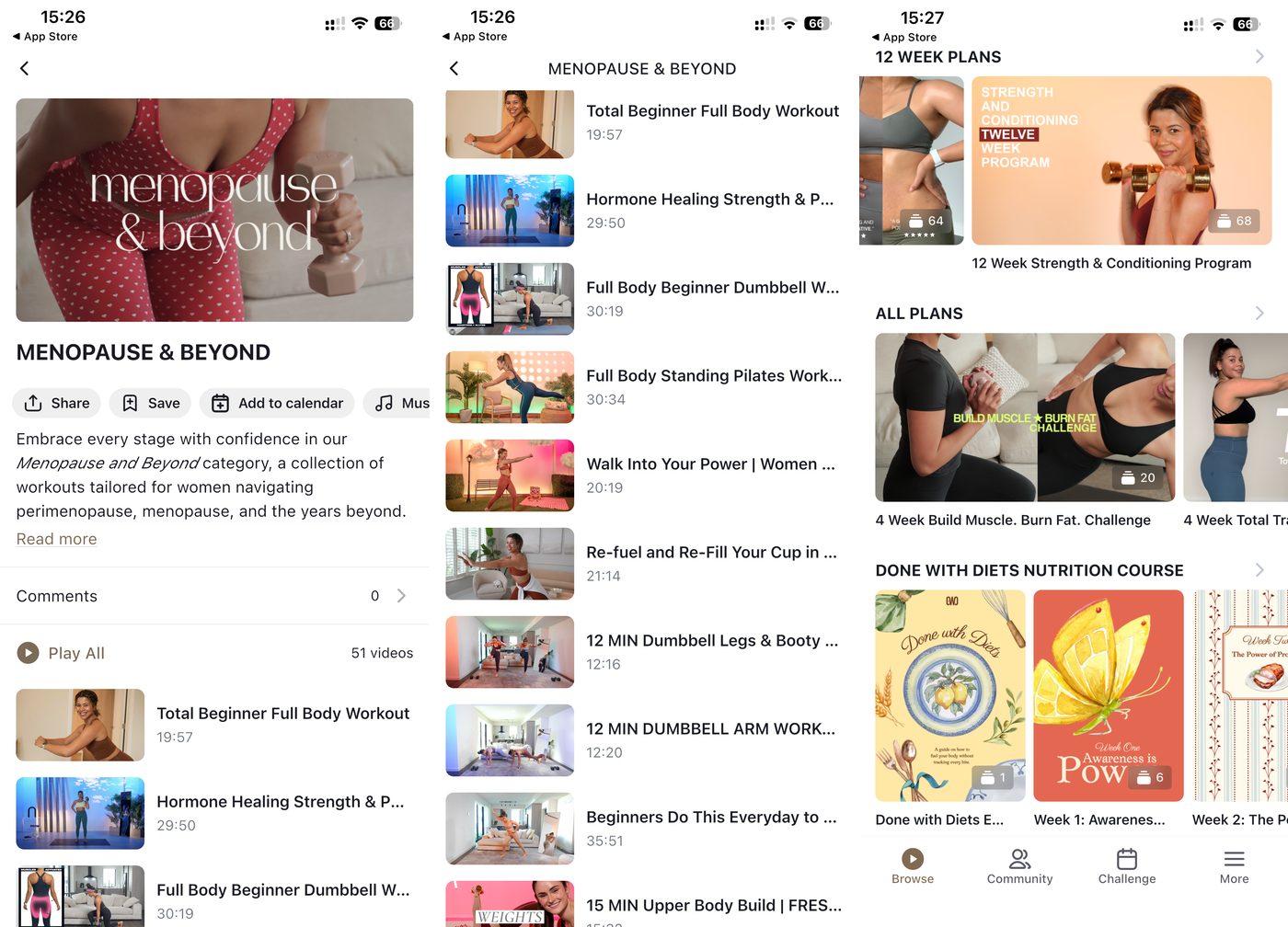
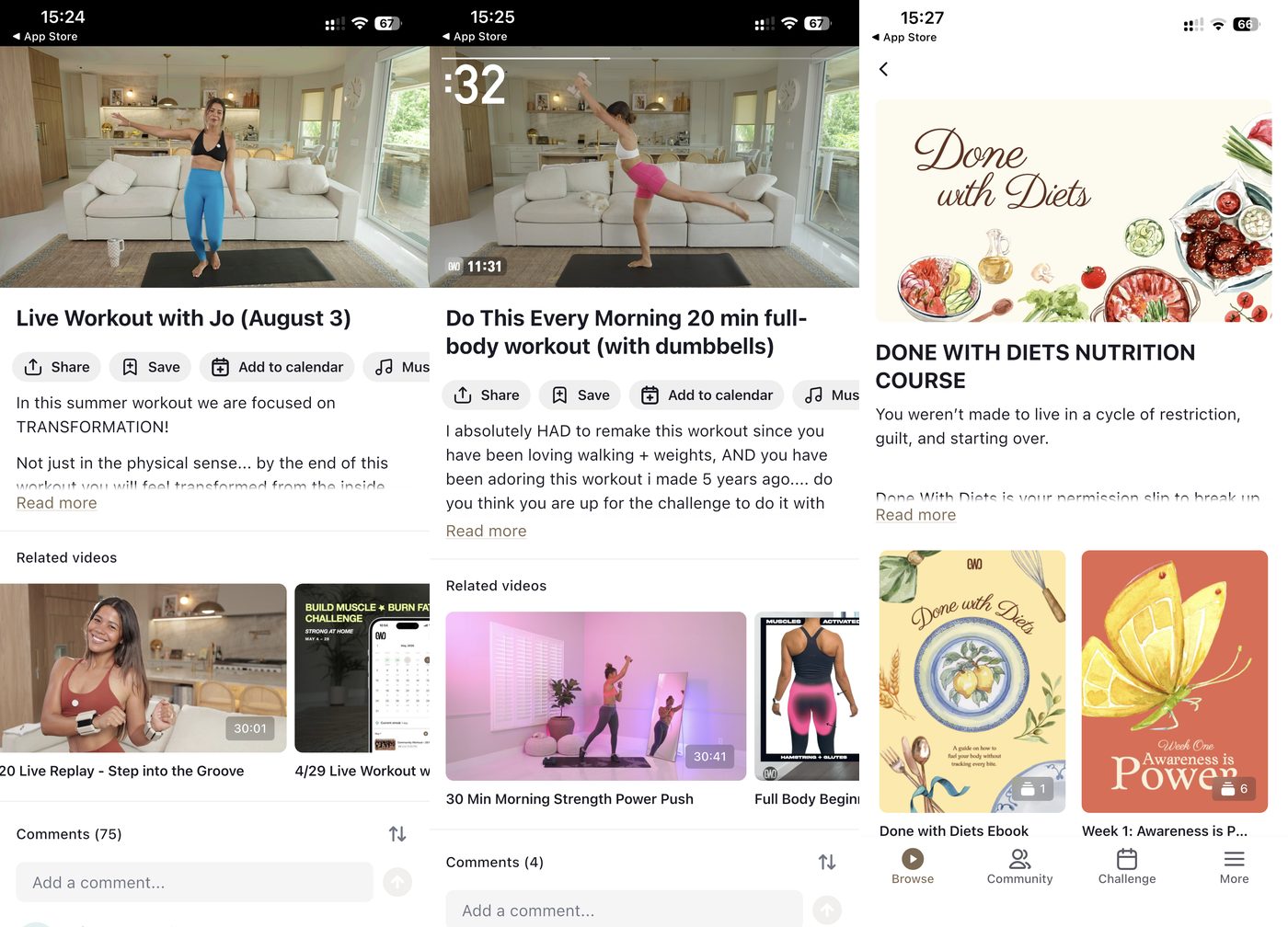
Around the free channel sits a paid growwithjo app, which I spent time in for this review. It adds a monthly workout calendar programmed by Jo, more than 800 on-demand workouts, live workouts, challenges, streak tracking and a members community she calls the “Homies,” and it is better organised than I expected: you can browse by workout type or, usefully, by time, so if you only have 20 minutes you can find and stack sessions to suit your day. It also carries structure that a purely cardio channel would not, including multi-week plans like an 8 Week Strength & Sculpt programme and a 12 Week Strength & Conditioning programme, a 51-video Menopause & Beyond category, and a Done with Diets nutrition course. For this audience it still helps to be precise about what Grow with Jo is and is not. It is a genuinely good, gentle, low-impact cardio brand with a happy, motivating energy, and its accessibility suits many women over 40. What it is not is a structured strength or menopause system: the strength it offers has no progressive overload, and the menopause category, while real and sizeable, is a library of low-impact workouts labelled menopause rather than a guided programme with hormone, symptom or education content. Read it as a fun, low-impact cardio habit with useful extras, to pair with dedicated strength work.
Who Is Behind Grow with Jo? Credibility
Grow with Jo is Johanna Devries, a Canadian trainer who posts as growwithjo. Her fitness credentials are real and better than the influencer norm: she holds a Bachelor of Science in Kinesiology from McMaster University in Hamilton, Ontario, she has worked as a personal trainer and coach since 2013, and she was a team lead in strength and conditioning for her university’s athletics department. She also speaks openly about her own story, gaining about 50 pounds during a pregnancy with a traumatic birth in 2020 and rebuilding from what felt like the beginning again, which is why the brand leans so hard into beginners and gentleness. On the app side, the business is run under Dasilva Digital Empire, reflecting her married name. Her on-screen energy is a genuine part of the draw, and using the app it comes across as a happy, encouraging place to move.
What she is not is a clinician, physician, physiotherapist, registered dietitian or menopause specialist, and there is no medical or menopause advisory board behind the content, and no hormone-health expertise informing it. Her programming also carries a clear weight-loss framing (“Walk the Weight Off,” “weight-loss expert”) and a personal faith element that runs through the community, both of which are worth knowing before you commit. For a midlife audience that means solid trust and safety for general low-impact cardio from a properly qualified trainer, but low authority on menopause-specific medical or training questions. Read her as a credible, well-liked fitness coach for accessible cardio, rather than a source of menopause or clinical guidance.
Content and Features
At a glance: a big, free library of fun, low-impact cardio from a qualified trainer, best-in-class for beginner accessibility, plus a paid app with a browse-by-time library, multi-week strength plans, a 51-video menopause category, a nutrition course and a community. It is cardio-led with no progressive overload, its menopause section is an unstructured library, and many videos are follow-along visuals with no voiceover.
| Format | On-demand, trainer-led follow-along videos on YouTube, plus a paid app with a monthly calendar, live workouts and challenges. Note: many app and channel videos are follow-along visuals with no spoken voiceover, which suits some and not beginners who want form cues. |
| Disciplines | Indoor walking, dance cardio, standing Pilates, Tabata and low-impact HIIT, and beginner-to-intermediate strength with light weights, including multi-week strength plans; all low-impact. |
| Menopause / perimenopause | A genuine 51-video “Menopause & Beyond” category mixing strength, Pilates, stretch and cardio, with some pelvic-floor and joint-gentle content. It is an unstructured library labelled menopause, not a guided programme with hormone, symptom, cycle or education content. |
| Prenatal and postnatal | Pregnancy-friendly and postpartum workouts feature, reflecting Jo’s own story; no confirmed clinical postnatal rehab. |
| Pelvic floor | Some pelvic-floor content sits within the Menopause & Beyond category; there is no separate structured pelvic-floor programme. |
| Recovery and mind | Gentle walking and stretching, plus affirmations, mindset and a mental-wellness emphasis; a decent, if not clinical, recovery and motivation layer. |
| Nutrition | A structured Done with Diets course (an ebook plus weekly modules) explaining how to eat well, plus recipes and, on the annual plan, custom meal maps; weight-loss framed, with no verified registered dietitian. |
| Strength | Beginner-to-intermediate strength with optional light weights and bands, plus 8-week and 12-week strength plans, more than a walking-only channel, but no progressive or heavy loading. |
| Structure | Beginner, intermediate and advanced playlists on YouTube; in the app, browse by type or time, a monthly calendar built by Jo, multi-week plans, challenges and streak tracking. Within categories the selection can feel loosely assembled rather than sequenced. |
| Community | A large free YouTube and social following, and a members community of about 13,000 “Homies” in the app. |
What Equipment Do You Need for Grow with Jo?
Very little, which is a big part of the appeal. Jo’s own guidance is simple: a workout mat and a water bottle, in a small space. Optional but nice to have are a pair of light dumbbells, a set of 2 to 3 pound ankle weights and a resistance band, which she uses to add a little load in the beginner-strength and toning sessions and the multi-week strength plans. Nothing about the core cardio requires equipment, and the walking and dance workouts need only a few square feet. If you want to add the progressive muscle and bone work this cardio-led brand does not really provide, the most useful midlife purchase is a set of adjustable dumbbells for a separate progressive-strength habit, because loading you can build over time is the one thing a low-impact channel cannot do for you.
Recommended spec examples. These picks are curated by specification and feature fit, not personally lab-tested for long-term durability. Prices are examples; verify before buying.
Exercise mat
For the standing Pilates, floor and low-impact sessions.~$20 to $40
Light dumbbells
A light 1 to 5 lb pair for the beginner-strength and dumbbell workouts; add a heavier pair as you progress.from ~$9
Resistance bands
A light band adds gentle resistance to the lower-body and glute work.~$20
Bottom line on equipment: a mat and a water bottle cover Grow with Jo; a resistance band and light dumbbells add a little, and adjustable dumbbells for a separate progressive-strength habit are the buy that matters most for a midlife body.
How We Scored Grow with Jo: the 6.3 / 10 Breakdown
Hands-on scores on our 9 weighted criteria. Women Over 40 is our most heavily weighted menopause criterion, and its full 12-capability breakdown follows in the next section.
| Category | Weight | Score | Reasoning (confidence) |
|---|---|---|---|
| Time Efficiency | 15% | 8 | A deep range of short 5, 10 and 20 minute sessions, easy to find by time and stack into a busy day. (confidence: high) |
| Muscle Potential | 18% | 5 | More real strength than a first look suggests, with dumbbell workouts and 8-week and 12-week plans, but no progressive overload and the selection feels loosely assembled. (confidence: high) |
| Women Over 40 Specificity | 10% | 4.6 | Gentle, accessible and with a real 51-video menopause category, but that category is an unstructured library with no hormone, education or guided programming; full breakdown below. (confidence: high) |
| Joint Friendliness | 12% | 8 | Genuinely low-impact walking, dance and standing Pilates, with modifications and joint-gentle content; a real strength confirmed in testing. (confidence: high) |
| Recovery Compatibility | 10% | 6 | Gentle walking and stretching suit recovery, though the Tabata and HIIT sessions are sweatier than restorative. (confidence: medium) |
| Programme Structure | 12% | 7 | Levelled playlists, a monthly calendar, multi-week plans and browse-by-time in the app give real structure, though within categories the selection can feel loosely sequenced. (confidence: high) |
| Value for Money | 8% | 6 | The free YouTube core is excellent value; the paid app is pricey for follow-along content. (confidence: high) |
| UX and Design | 8% | 6 | A tidy app with useful browse-by-time and casting; the main friction is that many videos have no voiceover, plus marketing emails and fiddly website cancellation. (confidence: high) |
| Nutrition Integration | 7% | 6 | A structured Done with Diets course plus recipes and meal maps, more than most channels, but weight-loss framed with no verified dietitian. (confidence: high) |
| Total | 100% | 6.3 / 10 | Hands-on Score, from a sample test. |
Is Grow with Jo Good for Women Over 40?
For gentle, low-impact cardio, yes, and it is one of the more welcoming places to start. Grow with Jo is joint-friendly and unintimidating, it can be done in a small space with no equipment, and it is genuinely free, which removes almost every barrier to beginning. For a woman in her 40s or 50s who is deconditioned, carrying a bit of joint pain, or simply nervous about exercise, a fun indoor walking session or a standing Pilates routine is a kind, doable first step, and the upbeat coaching and community help the habit stick. It is also a real trainer’s work, not a random trend, which is reassuring.
What I found using it. Grow with Jo has lots of positive energy, and it is a happy app to spend time in, full of different types of workouts from Pilates to strength training. It does include a Menopause & Beyond category, a mix of 51 videos with strength, Pilates and stretch as well as cardio, and it touches pelvic floor and being gentle on the joints. What I liked is that workouts are easy to find by time, so if you have, say, only 20 minutes a day, you can find and stack sessions to suit your needs, and many, many of them are bodyweight. There is also a nutrition section, the Done with Diets course, explaining how to eat healthily. One thing I kept noticing: many of the videos are visual, follow-along workouts without a voiceover. Some people prefer that, but I have mentioned it before, if you are a beginner who needs the moves explained and your posture reminded, this can be a minus.
Who it suits, and what I missed. I would not say Grow with Jo is necessarily the best app for women in peri or menopause. Although there is a menopause category, there are not detailed explanations of the why, the what and sometimes the how, and even inside the menopause section there is not really any guidance on how often or exactly what to do. It is a happy app full of workouts to follow, and if you already know how to assemble your own week, that works well. It is great for low-impact core strength, but there is no progressive overload and the selection can feel randomly put together, just a library of workouts labelled menopause. For a structured, guided approach to the menopause and the progressive strength it does not build, see our low-impact strength guide or a purpose-built option like Pvolve.
What others found too. Independent press, from Today to Bustle, and a large member base describe Grow with Jo the way I did: fun, warm and motivating low-impact cardio that is easy to keep coming back to, with older and midlife women praising the gentleness and the small-space convenience. The recurring caveats match mine: it is cardio-led with light strength, and the paid app is expensive next to a free channel that already gives you most of it.
Who it suits, and what is missing. The gaps are specific and important for this site. First, training. Midlife guidance prioritises progressive resistance to protect muscle and bone, and Grow with Jo, while it has more strength content than I expected, offers no progressive overload, so it does little for the strength and bone density that matter most after 40. Second, the menopause claim. The Menopause & Beyond category is genuinely large and includes some pelvic-floor and joint-gentle work, but it is a labelled library rather than a menopause programme, with no hormone, symptom, cycle or structured education content, so it does not guide you through the transition. Third, the framing. This is a weight-loss-oriented brand, not a weight-neutral one, and it comes with a heavy marketing style and a faith element that will suit some women and not others. It suits a beginner who wants fun, gentle movement and is happy to assemble her own week; it is a weak single choice for someone whose priority is progressive strength or a guided menopause plan.
This is the perimenopause and menopause assessment, and it is separate from the overall score. Twelve things a programme either does for a midlife body or does not, each scored out of 10 with my reasoning next to it. Together they produce a single menopause fit score, and that becomes one of the nine categories in the overall scoring below.
How Grow with Jo Fits Perimenopause, Menopause & Beyond
Women Over 40 is our most important criterion, and here's the full breakdown behind it.
Grow with Jo is strongest for low-impact and beginner on-ramp, and weakest for hormone awareness, bone loading, menopause programming, pelvic floor, menopause education, progressive strength and expert credibility, in our menopause and midlife capability assessment for women over 40.
At a glance
| Capability | Score | Rating | Why |
|---|---|---|---|
| Right training for a midlife body | |||
| Low-impact | 8/10 | Strong | Walking, dance cardio and standing Pilates are genuinely low-impact and joint-gentle, with modifications throughout, confirmed in testing. |
| Progressive strength | 4/10 | Minimal | Beginner-to-intermediate strength with light weights and multi-week plans, more than a walking-only channel, but no progressive overload. |
| Bone loading | 3/10 | Minimal | Weight-bearing walking and light weights give a little stimulus, but nothing like the heavier loading bone needs. |
| Recovery & deload | 6/10 | Some | Gentle walking and stretching suit active recovery, though the Tabata and HIIT sessions are sweatier than restorative. |
| Built for menopause | |||
| Menopause programming | 3/10 | Minimal | A genuine 51-video “Menopause & Beyond” category exists, but it is an unstructured library of low-impact workouts, not a guided menopause programme. |
| Pelvic floor | 3/10 | Minimal | Some pelvic-floor content sits within the menopause category, but there is no dedicated, structured pelvic-floor training. |
| Hormone awareness | 2/10 | None | No cycle, symptom or hormone-phase content, and no symptom tracking. |
| Menopause education | 3/10 | Minimal | Workouts are labelled for menopause, but there is no structured education or guidance on why, what or how often. |
| Expert credibility | 4/10 | Minimal | A certified personal trainer and kinesiologist, real fitness credentials, but not a clinician or menopause specialist and no medical advisory. |
| Whole-woman support | |||
| Mind-body support | 6/10 | Some | Affirmations, a mental-wellness emphasis and a warm, happy community give a genuine motivation and mindset layer. |
| Beginner on-ramp | 8/10 | Strong | Famously approachable, small-space, no-equipment and free, though many videos lack a voiceover, which a true beginner who needs form cues will feel. |
| Midlife nutrition | 5/10 | Some | A structured Done with Diets course, recipes and meal maps, more than most channels, but weight-loss framed and not dietitian-verified. |
ScaleBest-in-classStrongSomeMinimalNone
What the sources say: Sample-tested (a hands-on app session: explored the menopause and nutrition sections and plans and followed along with workouts, iOS, Aug 2026), cross-checked against the free channel, the app-store listings and independent reviews. The Menopause and Beyond category is a genuine 51-video library but is unstructured, not a guided programme.
These are evidence-informed suitability ratings, not clinical measurements. They combine exercise science with product-specific research and, where indicated, hands-on testing, alongside multi-source verification, and are approximate. Individual response varies. A starting point, not medical advice. How we score menopause fit
What the sources say: scores combine a hands-on session with the free channel, the app and store listings, and independent reviews. Low-impact, beginner access and mind-body motivation scored well because they are core, verifiable strengths and a genuine match for a midlife body easing into movement. The built-for-menopause group scored low because, although the menopause category is real and includes some pelvic-floor content, it is an unstructured library with no hormone, symptom or education content, and the creator, while a qualified trainer, is not a clinician or menopause specialist.
These are evidence-informed suitability ratings, not clinical measurements. They combine exercise science with hands-on and feature analysis, and are approximate. Individual response varies. A starting point, not medical advice. How we score menopause fit.
What the Research Says: Grow with Jo’s Approach Checked
Grow with Jo’s low-impact cardio is well matched to some real midlife needs, with clear limits. Walking and aerobic movement genuinely help the midlife body: a 2024 systematic review and meta-analysis found aerobic exercise improved cardiometabolic health in postmenopausal women, including blood pressure and fitness markers, which is exactly the territory of indoor walking and dance cardio.[1] The dose does not need to be heroic, either. A large meta-analysis of 15 international cohorts found that taking more steps a day was linked to progressively lower risk of death, with benefits accruing well before the mythical 10,000, so a daily indoor walk is a legitimately worthwhile habit.[2] Just as important for a brand built on consistency, research on midlife women points to enjoyment, routine and accountability as the things that actually keep women exercising, and a fun, low-barrier, community-backed format like this plays directly to those levers.[3]
The caveat that matters most for our audience is strength and bone. Exercise clearly improves body composition in postmenopausal women, but the muscle gains come specifically from resistance training, which cardio does not supply.[4] For bone, the protective stimulus is progressive, higher-intensity loading: in the LIFTMOR trial, heavy resistance and impact training improved bone density and function in postmenopausal women, whereas light exercise did not, and reviews confirm bone responds to high-magnitude loads.[5][6] Grow with Jo has more strength content than a walking-only channel, but without progressive overload it does not deliver that loading. And because it carries a weight-loss framing, one more finding is worth flagging: when women lose weight, adding resistance training preserves the muscle that dieting alone strips away, so cardio-plus-deficit without strength risks losing the very muscle a midlife woman most needs to keep.[7] The sensible way to use Grow with Jo is as the enjoyable, low-impact cardio side of a midlife routine, paired with a dedicated progressive-strength habit for the muscle and bone it cannot build.
What Users Report: Verified Sentiment
Rating snapshot: the strongest signal here is a big, warm, mostly female following. On the free side, the growwithjo YouTube channel has more than 2 million subscribers and a wider following of several million across social platforms, and independent press reviews from Today, Yahoo and Bustle are consistently positive about the walking workouts. On the paid side, the growwithjo app rates about 4.9 stars on the Apple App Store from roughly 516 ratings, and about 4.9 on Google Play from around 270 reviews on more than 100,000 installs. There is no genuine Trustpilot profile, so we do not publish one. The store ratings are high but come from a committed, self-selected member base, so we read the large free following as the more trustworthy signal and treat the app ratings as a members’ view. My own time in the app matched the positive picture on energy and accessibility, with the no-voiceover format the main thing I would flag.
Consistently praised
- Fun, upbeat, low-impact cardio that is genuinely easy on the joints.
- Approachable for beginners and older or deconditioned women, in a small space.
- Easy to find workouts by time and stack your own week, with a warm community.
- Real results for a subset of committed users, from a free starting point.
Consistently criticised
- Cardio-led, with no progressive strength or bone work.
- Many videos have no voiceover, a minus for beginners who want form cues.
- The paid app is expensive next to a free channel that gives you most of it.
- Aggressive marketing emails, a fiddly website cancellation, and a weight-loss and faith framing that will not suit everyone.
Source and credibility note: figures were read live from the YouTube channel and the Apple and Google Play listings (August 2026) and cross-checked against a hands-on session. Subscriber counts vary by source and platform, so we cite the YouTube channel conservatively as more than 2 million and verify at QA. The app’s 4.9 ratings reflect a committed member base and are easy to leave at a happy moment, so we treat them as a members’ view rather than a neutral one. No genuine Trustpilot profile exists. No dedicated menopause reviews exist; the midlife fit draws on the low-impact design, the hands-on session and older-user comments rather than a guided menopause programme.
Devices, Platforms and App
Grow with Jo is easy to reach. The free channel is on YouTube, so it plays on any phone, tablet, computer or smart TV and casts easily to a screen, which suits a woman who wants to follow a walking workout on the television in her living room. The paid growwithjo app, which is built on a third-party streaming platform, runs on iOS and Android, streams to phone, tablet and TV, and supports Apple TV and Apple Watch, adding the monthly calendar, live workouts, challenges, streak tracking and community on top of the videos. Two things stood out in use. First, the browsing is genuinely handy: you can filter by workout type or by time, so finding a 20-minute session to slot into a busy day is quick. Second, and less ideal, many of the videos are follow-along visuals with no spoken coaching, so you copy Jo on screen rather than being talked through the moves, which is fine if you know the exercises but harder for a true beginner who wants posture reminders. The remaining frictions are commercial rather than technical: the app is priced well above a typical follow-along service, sign-up funnels you into a heavy stream of marketing emails, and some users report the website cancellation is fiddlier than it should be. For a woman over 40 who mostly wants to press play on a free class, the experience could hardly be simpler; the paid app is a nice-to-have rather than a necessity.
Grow with Jo specifications
- Free trial
- 7-day free trial
- Cancellation
- free on YouTube; optional paid app
- Session length
- 15 min to ~1 hour
- Who makes it
- Johanna Devries Da Silva, known as Jo, a certified personal trainer and coach since 2013 specialising in low-impact walk-at-home workouts. She is not a clinician.
- Still maintained
- Active; growwithjo: home workouts iOS v3.35.1 (rel 2026-07-28), id 6477621228, seller Dasilva Digital Empire LLC
- What is included
- On-demand classes: yesLive classes: noRecovery content: partlyMenopause education: noStructured programmes: yesMeditation: partlyNutrition guidance: partly
- Women over 40
- Pelvic floor work: noMenopause clinician involved: noInjury modifications: partlyBone-health focus: noModified progressions: partlyCycle syncing: noPrenatal options: partly
- Devices and access
- Offline downloads: partlyCasting to TV: yesSubtitles: partlyWearable sync: no
- Support
- Clinical advisory board: noCommunity: partlySupplement upsell: no
- Last verified
- 12 August 2026
Grow with Jo Price 2026: What You Actually Pay
| Plan | Cost | Includes |
|---|---|---|
| Free (YouTube) | $0 | The full library of low-impact walking, dance cardio, standing Pilates, Tabata and beginner strength, ad-supported, with no account needed. |
| App monthly | $39.99/month, 7-day trial | The monthly calendar built by Jo, 800-plus on-demand workouts, live workouts, multi-week plans, the menopause category, challenges, streak tracking and the members community. |
| App annual | $198.99/year, 7-day trial | Everything in monthly, at a lower monthly rate, plus live group calls with Jo, the Done with Diets nutrition course, custom meal maps and free access to in-person events. |
| Low-cost access | $4.99 one-off (Apple) | A limited “Unlimited Access” in-app purchase appears on the Apple listing; confirm what it includes at checkout. |
Cost and Cancellation
The value split is worth understanding. The core is genuinely free on YouTube, so you can build a low-impact cardio habit for years without paying at all, which is the smart way to start. The optional growwithjo app is not cheap at $39.99 a month or $198.99 a year, both with a 7-day trial, which is high for follow-along content when the free channel already gives you most of it, so it is really for people who want the calendar, plans, menopause category and community. The app auto-renews, and you can cancel anytime from your account dashboard, or through the App Store or Google Play if you subscribed there; some users report the website cancellation is fiddly and that sign-up triggers a heavy run of marketing emails, so subscribe through the app store if you can and set a reminder before the trial ends. Prices were checked in August 2026 and vary by region; confirm the current figure at checkout.
Will You Actually Stick With It?
Fun, gentle, small-space cardio is very easy to start, and free, so the barrier is tiny.
The core is free on YouTube, so cost is rarely the reason you stop.
The no-voiceover format and loosely assembled categories mean a true beginner may want more instruction than it gives.
Cardio-led with no progressive overload means little muscle or bone building; you must add progressive strength work elsewhere.
Grow with Jo Pros and Cons
Pros
- Genuinely free at its core, with a big library and no equipment
- Fun, low-impact, joint-friendly cardio with a happy, positive energy
- Easy to find workouts by time and stack your own week; small-space friendly
- More than expected: a 51-video menopause category, multi-week strength plans and a nutrition course
- Led by a certified personal trainer and kinesiologist, not just an influencer
- A warm, motivating community that supports consistency
Cons
- Cardio-led, with light strength and no progressive overload
- Does little for muscle or bone, the top midlife priority
- The menopause category is an unstructured library, with no hormone, education or guided programming
- Many videos have no voiceover, harder for beginners who need form cues
- Weight-loss framing rather than weight-neutral, with a faith element
- The paid app is expensive, with aggressive marketing and fiddly website cancellation
- A qualified trainer, but not a clinician or menopause specialist
How Grow with Jo Compares to Similar Platforms
If you are deciding between gentle, at-home options, this is how Grow with Jo sits against the alternatives. Scores come from our independent reviews and update automatically as each is scored; Pvolve is included as the menopause-built contrast, and Yoga With Adriene and FitOn as free options.
| Feature | Grow with Jo | Yoga With Adriene | FitOn | Peloton | Pvolve |
|---|---|---|---|---|---|
| Our score | 6.3 / 10 (hands-on) | 6.8 / 10 | 7.3 / 10 | 7.3 / 10 | 8.3 / 10 |
| Monthly price | Free · app $39.99/mo | Free · membership ~$12.99/mo | Free tier · ~$29.99/yr Pro (verify) | ~$12.99 to $44/mo (verify) | $24.99/mo · equipment from $199 |
| Free option | Entire YouTube library free | Entire YouTube library free | Generous free tier | App tiers | 14-day trial (card required) |
| Best for | Fun, free, low-impact cardio | Gentle, free, mindful yoga | Free, varied at-home workouts | Studio-style cycling and classes | Low-impact functional strength, menopause, joints |
| Impact level | Low | Low | Low to moderate | Moderate to high | Low by design |
| Progressive strength | Light weights only, no overload | None, yoga only | Some, light weights | Yes | Yes, functional |
| Perimenopause content | Real but unstructured menopause library | Thin membership programme only | Minimal | Some women’s-health content | Best in class: Menopause Strong, pelvic floor |
| Expert credibility | Certified PT, not clinical | Certified yoga teacher, not clinical | Good | Good | Strong, women’s-health focus |
| Best suited to | Beginners wanting fun low-impact cardio | Women wanting gentle, free, mindful yoga | Women wanting a free class library | Cycling and studio-class fans | Women ~35+, perimenopause, joint issues |
Competitor prices are approximate; verify on each platform’s website. Scores reflect our independent reviews. See each full review for methodology.
Grow with Jo vs Yoga With Adriene: Which Is Better for Women Over 40?
This is the closest pairing for a woman who mainly wants free, gentle movement she can trust, and they pull in different directions. Yoga With Adriene is a huge free yoga channel built on calm, mindfulness and a warm teacher, best-in-class for stress, flexibility and back care, and it is yoga only, with no cardio and no weights. Grow with Jo is the cardio counterpart: fun, upbeat, low-impact walking and dance that gets your heart rate up and your steps in, with a little beginner strength and multi-week plans on top. Both are genuinely free at their core, both are joint-friendly, and both are led by a qualified but non-clinical creator.
Which is better depends on what your midlife body needs most. If you want to move your heart and legs, lift your mood with something energetic, and build a daily cardio habit, Grow with Jo is the better fit. If you want to calm your nervous system, ease stiffness and stretch, Yoga With Adriene is lovelier. Neither builds meaningful progressive strength or bone, and neither is a guided menopause programme, so whichever you pick, pair it with dedicated progressive-strength work. For genuine menopause programming, pelvic-floor content and the low-impact strength a midlife body needs, a purpose-built option such as Pvolve goes further than either.
If Grow with Jo Is Not Right for You: Best Alternatives
Grow with Jo’s gaps for our audience are progressive strength and bone loading, and a structured, guided menopause approach. If those matter, these published options map to the gaps.
Grow with Jo FAQ
Grow with Jo is a free YouTube channel of fun, low-impact home cardio by Johanna “Jo” Devries, a certified personal trainer. It is built on indoor walking, dance cardio, standing Pilates, Tabata and beginner strength, with sessions from about 5 to 60 minutes. There is also a paid growwithjo app that adds a monthly calendar, more than 800 on-demand workouts, live workouts, multi-week strength plans, a 51-video Menopause & Beyond category, a nutrition course and a members community.
Yes, at its core. The entire growwithjo YouTube library is free and ad-supported, with no account needed, and it is where most people practise. The optional growwithjo app is $39.99 a month or $198.99 a year, both with a 7-day trial, and adds a calendar, plans, the menopause category, challenges, community and, on the annual plan, live calls, a nutrition course and meal maps. Confirm the current app price at checkout.
For gentle, low-impact cardio, yes: it is joint-friendly, small-space, beginner-friendly and free, and testing confirmed a happy, accessible app with a real 51-video Menopause & Beyond category. But it is cardio-led with no progressive overload, so it does little for the muscle and bone a midlife body needs, and that menopause category is an unstructured library rather than a guided programme, with no hormone or education content. Pair it with a dedicated strength habit.
Grow with Jo is Johanna Devries, a Canadian trainer with a Bachelor of Science in Kinesiology from McMaster University who has coached since 2013 and led strength and conditioning for a university athletics department. That is a real fitness qualification, better than the influencer norm, so her low-impact cardio is credible. She is not a clinician, dietitian or menopause specialist, and there is no medical advisory board, so treat menopause-specific claims cautiously. This is a separate creator from the Malaysian trainer Joanna Soh.
Only a little. It offers beginner-to-intermediate strength with light weights and even multi-week strength plans, which is more than a walking-only channel, but there is no progressive overload, and the evidence is clear that building muscle and bone in midlife needs heavier, progressive resistance. Treat Grow with Jo as excellent for low-impact cardio, movement and a daily habit, and add a separate progressive-strength routine, with dumbbells, for the muscle and bone it does not build.
For most women, the free YouTube channel is the better starting point, because it gives you the workouts at no cost. The $39.99 a month app is worth it mainly if you want the browse-by-time library, the calendar, multi-week plans, the menopause category and community, or the annual plan’s live calls and nutrition course. Given the price, the heavy marketing and the no-voiceover format, try the free channel first, and only pay if you know you want the structure and community. This is a sample-tested review; a full multi-week test is still to come.
Final Verdict
Hands-on Score: 6.3 / 10 · Sample-tested
Grow with Jo is one of the more welcoming low-impact cardio brands online, and a hands-on look confirmed it: fun, gentle, joint-friendly movement in a happy, positive app, best-in-class for beginner accessibility, free at its core, small-space friendly, and led by a properly qualified trainer with a warm community around her. It also carries more than I expected, a real 51-video menopause category, multi-week strength plans, easy browse-by-time and a nutrition course. The moderating factors for our audience are clear: it is cardio-led with no progressive overload, so it does little for the strength and bone loading that protect a midlife body, its menopause category is an unstructured library rather than a guided programme, many videos have no voiceover, and it comes with a weight-loss framing and a heavy marketing style.
Grow with Jo is for beginners and returning exercisers who want fun, free, low-impact cardio they can do at home, and who are happy to assemble their own week. Grow with Jo is not for women whose priority is building muscle and bone or following a guided menopause plan, who should pair it with a dedicated progressive-strength habit and, for menopause, a purpose-built option such as Pvolve.
Testing Status
Sample-tested. This review is based on a hands-on session with the growwithjo app (iOS, August 2026), exploring the library, the Menopause & Beyond category, the multi-week plans, the nutrition course and the live workouts, and following along with workouts, plus the free growwithjo channel, the app and store listings, independent press reviews and peer-reviewed science. A full multi-week test, with adherence and progression over time, would move it to Fully tested and may refine the score. Screenshots are my own. How we score and test.
Sources and Further Reading
- Huynh, E. et al. (2024). The effects of aerobic exercise on cardiometabolic health in postmenopausal females: a systematic review and meta-analysis of randomized controlled trials. Women’s Health. Available at: journals.sagepub.com. Aerobic exercise improved cardiometabolic health, including cardiometabolic markers, in postmenopausal women.
- Paluch, A.E. et al. (2022). Daily steps and all-cause mortality: a meta-analysis of 15 international cohorts. The Lancet Public Health. Available at: thelancet.com. More daily steps were associated with progressively lower mortality, with benefits well below 10,000 steps.
- McArthur, D. et al. (2014). Factors influencing adherence to regular exercise in middle-aged women: a qualitative study to inform clinical practice. BMC Women’s Health. Available at: bmcwomenshealth.biomedcentral.com. Routine, intrinsic motivation and accountability to others were key enablers of exercise adherence in women aged 40 to 62.
- Khalafi, M. et al. (2023). The effects of exercise training on body composition in postmenopausal women: a systematic review and meta-analysis. Frontiers in Endocrinology. Available at: frontiersin.org. Exercise reduced fat and visceral fat and increased muscle, with resistance training best for muscle gain.
- Watson, S.L. et al. (2018). High-intensity resistance and impact training improves bone mineral density and physical function in postmenopausal women: the LIFTMOR randomized controlled trial. Journal of Bone and Mineral Research. Available at: pubmed.ncbi.nlm.nih.gov. Heavier, high-intensity loading improved bone density; light exercise did not.
- Kumar, S. et al. (2025). Exercise for postmenopausal bone health: can we raise the bar? Current Osteoporosis Reports. Available at: pmc.ncbi.nlm.nih.gov. Bone responds to high-magnitude loading; low-load movement is not a bone-loading intervention.
- Sardeli, A.V. et al. (2018). Resistance training prevents muscle loss induced by caloric restriction in obese elderly individuals: a systematic review and meta-analysis. Nutrients. Available at: ncbi.nlm.nih.gov. Adding resistance training to a calorie deficit prevented almost all of the lean-mass loss that dieting alone caused.
This is a sample-tested review based on a hands-on session, not a full multi-week test. Pricing and features were verified August 2026 and may have changed. Some affiliate links may be present. This site does not accept payment from platforms reviewed. Education, not medical advice; speak to your clinician, especially about HRT or existing conditions.
Related Guides
What To Do Next
- → Take our 2-minute quiz for a personalised recommendation.
- → See our best workouts for perimenopause rankings.
- → Compare with our Yoga With Adriene review and see how we score every programme.