
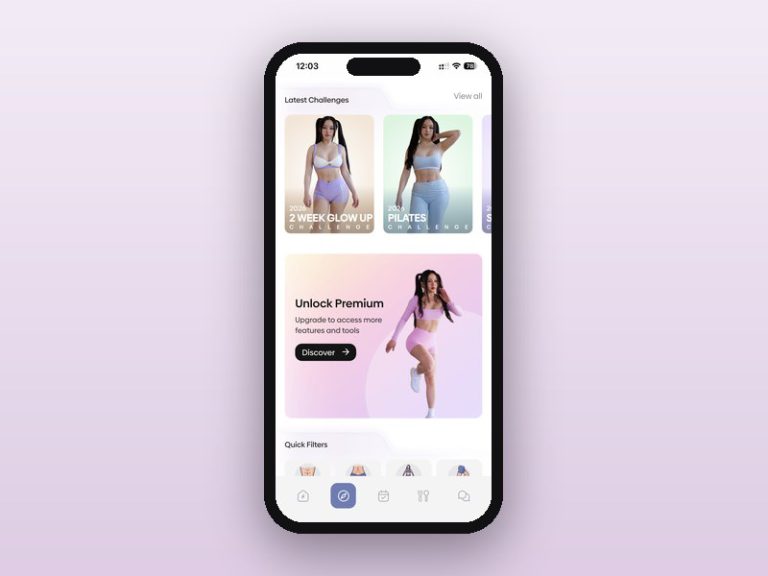
Free on YouTube and free on chloeting.com, with a free ad-supported Core app and an optional in-app Premium reported at about $9.99 a month · the most subscribed fitness channel on YouTube, with more than 25 million subscribers and viral no-equipment challenges such as the Two Week Shred · short, high-intensity, high-impact home HIIT and abs workouts, weight-loss and aesthetic framed · sessions from about 10 to 45 minutes · A mat, and optional light dumbbells.
Researched from: the free YouTube channel and the chloeting.com challenge programs (verified August 2026) · the Core: Fitness & Nutrition app listings on Apple and Google Play · independent first-hand reviews · peer-reviewed exercise and menopause science · Not personally tested. Testing status: Data profile.
Chloe Ting Data Profile 2026: Quick Answer
Data profile: research-based, not personally tested. Hands-on score pending.
Younger or well-conditioned women who want free, short, high-energy HIIT at home and enjoy a challenge format, and who have healthy joints
You want low-impact joint-friendly training, progressive strength and bone work, genuine menopause programming, or a weight-neutral approach rather than a “shred”
A free YouTube fitness channel and free website challenge programs by Chloe Ting, plus a free ad-supported Core app, centred on high-intensity, high-impact home HIIT
About 10 to 45 minutes, often stacked into 2 to 4 short videos a day
Little to none: a mat, and optional light dumbbells for a few programmes
High, with jumping, burpees and plyometrics; low-impact modifications are offered but the default is intense
Weak. No menopause programming, no hormone, pelvic-floor or symptom content, high-impact by default, and aesthetic weight-loss framing
None. On-demand videos and pre-scheduled challenge calendars
YouTube on any device or TV; the Core app on iOS and Android, with Apple Watch and Wear OS heart-rate tracking
Free on YouTube and the website; the Core app is free and ad-supported, with optional Premium reported at about $9.99 a month, varying by region
Almost everything is free: the whole YouTube library, the website challenge programs and the ad-supported app
The free content needs no account or payment; the optional app Premium cancels anytime in your App Store or Google Play settings
Neutral; no menopause or medical claims, but a strong weight-loss and aesthetic emphasis to be mindful of
Active, with new free programmes monthly and a frequently updated app
5.2 / 10
Quick Verdict
Worth it for women over 40? Only for a well-conditioned few, and there are better fits. See the HIIT for perimenopause and high-impact versus low-impact guides.
Chloe Ting earns 5.2/10 on our research-based evaluation, a below-average score for this audience despite huge popularity. The genuine positives are real: the content is almost entirely free across YouTube, the website and the app, the workouts are short and time-efficient, and the challenge format is well-structured, with day-by-day calendars that make it easy to follow. But the training profile is a poor match for a midlife body. It is high-intensity, high-impact HIIT built on jumping, burpees and rapid abs circuits, which asks a lot of joints, and low-impact modifications are offered rather than being the default. It has little progressive strength and almost no bone loading, the two things that matter most after 40, and no menopause programming, hormone, pelvic-floor or symptom content at all. The brand is also aesthetic and weight-loss framed, with rapid-result titles the evidence does not support. Our take: for gentle, joint-friendly training and genuine menopause support there are far better options, several of them also free.
How this profile is different, and a word of caution. We have not personally completed a Chloe Ting challenge. This is a research-based Data Profile built from the free channel and website, the app listings, first-hand independent reviews and the science, scored only where the evidence reliably supports it. Two things to hold in mind for this audience. First, this is high-intensity, high-impact HIIT built around jumping, burpees and rapid abs circuits, so it asks a lot of midlife joints even though low-impact modifications are offered. Second, the brand is built on weight-loss and aesthetic framing, with programme titles such as “Get Abs in 2 Weeks” and “Shred”, and rapid-result promises that the science does not support. We cover it because it has enormous reach and genuinely free, well-structured content, but read this as a careful, eyes-open profile. This is education, not medical advice; speak to your clinician, especially about joints, HRT or existing conditions, and if food, weight or your body feels distressing, please consider reaching out to a qualified professional for support.
Is Chloe Ting right for you?
Chloe Ting is strongest for value for money (9.0 out of 10, against a 6.9 average across the 77 programmes scored) and weakest for painful joints (3.0 against 6.2).
| Question | Verdict | Rating | Score |
|---|---|---|---|
| How it suits a perimenopausal body | |||
| Is Chloe Ting good for pelvic floor problems?Based on pelvic floor support and low-impact design | Low, and worse than mostmost score 4.6/10 | 2.0 / 10 | |
| Is Chloe Ting genuinely built for perimenopause and menopause?Based on menopause programming, hormone awareness, education and expert credibility | Low, and worse than mostmost score 3.3/10 | 1.5 / 10 | |
| Is Chloe Ting good for painful joints?Based on low-impact design and recovery provision | Low, and worse than mostmost score 6.2/10 | 3.0 / 10 | |
| Is Chloe Ting manageable when your energy is low?Based on recovery provision and mind-body support | Low, and worse than mostmost score 5.7/10 | 3.0 / 10 | |
| Is Chloe Ting good if you are new to strength training?Based on beginner on-ramp and mind-body support | Low, and worse than mostmost score 6.1/10 | 4.0 / 10 | |
| Is Chloe Ting good for building bone density?Based on bone loading and progressive strength | Low, and worse than mostmost score 5.1/10 | 2.5 / 10 | |
| Does Chloe Ting help with nutrition?Based on midlife nutrition support | Low, about the same as mostmost score 4.0/10 | 4.0 / 10 | |
| How it performs as a product | |||
| Can you fit Chloe Ting into a busy week?Based on time efficiency | Strong, about the same as mostmost score 7.6/10 | 8.0 / 10 | |
| Is Chloe Ting worth the money?Based on value for money | Strong, and better than mostmost score 6.9/10 | 9.0 / 10 | |
Jump to Section
Who Is Behind It
Content and Features
Equipment You Need
Full Scoring
Good for Women Over 40?
Menopause and Midlife Fit
What the Research Says
What Users Report
Devices and Access
Pricing 2026
Will You Stick With It?
Pros and Cons
How It Compares
vs Fitness Blender
FAQ
Verdict
Testing Status
Sources
What Chloe Ting Actually Is
Chloe Ting is, at heart, a free YouTube fitness channel, and the most subscribed one in the world, with more than 25 million subscribers and billions of views. She rose to fame during the 2020 lockdowns when her “Two Week Shred Challenge” went viral on TikTok and YouTube, and her single video “Get Abs in 2 Weeks” has been watched hundreds of millions of times. The model is unusually generous: the workouts live free on YouTube, and her website, chloeting.com, packages them into free structured challenge programmes, such as the Two Week Shred and the seasonal Summer Shred, each with a day-by-day calendar telling you which videos to do and when. The workouts are short, need little or no equipment, and are built around fast, high-energy circuits of bodyweight cardio and abs work.
Around that free core sits the Core: Fitness & Nutrition app, launched in recent years and published by her company in Singapore. It is free to download and ad-supported, and bundles the challenge programmes with AI meal and calorie tracking, a large food database, workout scheduling, progress photos, streaks, team challenges and Apple Watch or Wear OS heart-rate tracking. An optional Premium subscription removes ads and adds extra features. For this audience it is worth being precise about what Chloe Ting is and is not. It is a genuinely free, well-produced library of short, intense home workouts with a motivating challenge structure. What it is not is a low-impact, strength-led or menopause-aware programme. It is high-intensity, high-impact HIIT aimed largely at a younger audience, framed around weight loss and visible abs, with no menopause, hormone or pelvic-floor content of any kind.
Who Is Behind Chloe Ting? Credibility
Chloe Ting is an Australian fitness content creator, born in Brunei and based more recently in New York, who built the largest fitness following on YouTube. Her verifiable background is worth stating precisely, because it is a mix of real credentials and clear gaps for this audience. On the fitness side, she is a NASM Certified Personal Trainer, a recognised personal-training qualification, and she has an academic and analytical background, with a Bachelor of Commerce and a Master of Philosophy from Monash University and an earlier career as an actuarial analyst. Her content is competently produced and, in 2023, she confirmed she had prevailed in a defamation case against parties who had made false claims about her, so the caricature of her as a fraud is not accurate.
What she is not, and does not claim to be, is a clinician, physician, physiotherapist, registered dietitian or menopause specialist. There is no medical or menopause advisory board behind the programmes, and no hormone-health or pelvic-floor expertise informing them. For a midlife and menopause audience that distinction matters: a personal-training certification is real, but it is general fitness authority, not clinical or menopause-specific authority. She is also candid that her video titles are written for discoverability rather than as literal promises, which is a useful admission but also underlines that the “abs in two weeks” framing is marketing, not a clinical claim. Read her as a highly capable, certified fitness creator making free general workouts, rather than a source of menopause or medical guidance.
Content and Features
At a glance: a huge, genuinely free library of short, high-intensity HIIT and abs workouts, with a well-structured challenge format and a capable free app. It is high-impact by default, thin on progressive strength, and has no menopause, hormone or pelvic-floor content.
| Format | On-demand YouTube videos plus free website challenge programmes with day-by-day calendars; a free ad-supported app; no live classes. |
| Disciplines | Bodyweight HIIT, abs and core circuits, cardio, some standing and low-impact variations, and a growing set of dumbbell and gym programmes in the app. |
| Menopause / perimenopause | None. No menopause programming, hormone content, symptom guidance or education of any kind. |
| Prenatal and postnatal | Some pregnancy and postpartum content exists, but it is limited and not a focus. |
| Pelvic floor | No confirmed dedicated pelvic-floor training or content. |
| Recovery and mind | Some stretch, warm-up and cool-down videos, but the ethos is intensity and “shred” rather than recovery or mindfulness. |
| Nutrition | The app adds AI photo meal tracking, calorie tracking, a large food database and free recipes, framed around weight loss; no registered dietitian and no menopause nutrition. |
| Strength | Mostly bodyweight and high-repetition; some dumbbell and gym programmes exist, but there is little structured progressive overload. |
| Impact | High by default, with jumping, burpees and plyometric moves; low-impact modifications are shown but are the exception, not the rule. |
| Tracking and community | Weight, calories, workouts, progress photos, streaks, leaderboards and team challenges; no cycle or menopause-symptom tracking. |
What Equipment Do You Need for Chloe Ting?
Very little, which is part of the appeal. Most Chloe Ting challenges are pure bodyweight, so a mat is genuinely all you need, and the sessions are designed for a small space at home. A pair of light dumbbells is useful for the handful of programmes that add resistance, and for anyone who wants to build a little strength alongside the cardio. That said, because the workouts are high-impact and light on progressive loading, the more valuable midlife purchase is a set of adjustable dumbbells for a separate, joint-friendlier strength habit, since building and protecting muscle and bone is exactly what this style of training does least.
Recommended spec examples. These picks are curated by specification and feature fit, not personally lab-tested for long-term durability. Prices are examples; verify before buying.
Exercise mat
The challenges are floor-based bodyweight HIIT; a thicker mat softens the jumping impact.~$20 to $40
Light dumbbells
A light 1 to 5 lb pair adds a little load; if strength is the goal, a heavier progressive set elsewhere matters more.from ~$9
Bottom line on equipment: a mat covers almost all of Chloe Ting, but the more valuable midlife buy is a pair of adjustable dumbbells for the progressive, lower-impact strength work these challenges do not prioritise.
How We Scored Chloe Ting: the 5.2 / 10 Breakdown
Research-based scores on our 9 weighted criteria. Because this is a Data Profile rather than a hands-on test, each score carries a confidence level. Women Over 40 is our most heavily weighted menopause criterion, and its full 12-capability breakdown follows in the next section.
| Category | Weight | Score | Reasoning (confidence) |
|---|---|---|---|
| Time Efficiency | 15% | 8 | Short 10 to 45 minute sessions and ready-made calendars make it very easy to fit in. (confidence: high) |
| Muscle Potential | 18% | 3 | Mostly bodyweight and high-repetition, with little progressive overload; modest strength stimulus. (confidence: high) |
| Women Over 40 Specificity | 10% | 2.5 | High-impact by default, no menopause, strength or bone focus, aesthetic framing; full breakdown below. (confidence: medium) |
| Joint Friendliness | 12% | 3 | High-impact HIIT with jumping and burpees; modifications exist but the default is hard on joints. (confidence: high) |
| Recovery Compatibility | 10% | 3 | An intensity-first, “shred” ethos with heavy daily abs volume; limited recovery emphasis. (confidence: medium) |
| Programme Structure | 12% | 7 | Well-structured challenges with day-by-day calendars, scheduled rest days and streaks. (confidence: high) |
| Value for Money | 8% | 9 | Almost everything is free across YouTube, the website and the app; outstanding value. (confidence: high) |
| UX and Design | 8% | 7 | Polished videos and a capable, well-scheduled app, though the free tier is ad-supported and the app is young. (confidence: medium) |
| Nutrition Integration | 7% | 6 | AI meal and calorie tracking and free recipes, but weight-loss framed and with no dietitian. (confidence: medium) |
| Total | 100% | 5.2 / 10 | Research Score; hands-on score pending. |
Is Chloe Ting Good for Women Over 40?
For a well-conditioned woman with healthy joints who enjoys intensity, it can be a fun, free way to sweat, and the accessibility is real. The workouts are short and time-efficient, the challenge calendars remove all the decision-making, and there is a large, free library to work through at no cost. High-intensity interval training also has genuine benefits at midlife, and done sensibly it can improve fitness and help with abdominal and visceral fat. If you already train, love a challenge and your knees, hips and back are happy under impact, Chloe Ting is not without merit as one part of a wider routine.
Who it suits, and what is missing. The gaps are significant for this site, and several are cautions rather than mere limitations. First, impact. Midlife joints, and women managing hip, knee, back or pelvic-floor issues, are exactly who default high-impact HIIT can aggravate, and while modifications are offered, they are not the design. Second, training balance. The style is cardio and abs heavy with little progressive strength and almost no bone loading, which is the opposite of what midlife guidance prioritises. Third, menopause. There is no menopause, hormone, pelvic-floor or symptom content at all, so the specific needs of peri and postmenopause are simply not addressed. Fourth, the framing. This is aesthetic, weight-loss and “shred” led, with rapid-result titles the evidence does not support, which can be a difficult fit for a midlife audience often looking to move away from diet-culture messaging. It suits, at best, a fit and healthy-jointed woman who wants free HIIT; it is a weak single choice as a midlife or menopause programme.
What the wider picture shows. First-hand reviewers, including women who train regularly, describe the challenges as exhausting, very repetitive and tough on the joints, with sensitive knees flaring from daily lunges and jumps, and they typically report feeling fitter and a little stronger rather than the dramatic transformations the titles imply. That is a fair picture: capable, free, motivating content that over-promises on visible results and under-delivers on the strength, bone and menopause needs of a body over 40. Read Chloe Ting as free, energetic general HIIT best suited to younger or well-conditioned users, and steer, for a midlife body, toward lower-impact, strength-led and, ideally, menopause-built options instead.
This is the perimenopause and menopause assessment, and it is separate from the overall score. Twelve things a programme either does for a midlife body or does not, each scored out of 10 with my reasoning next to it. Together they produce a single menopause fit score, and that becomes one of the nine categories in the overall scoring below.
How Chloe Ting Fits Perimenopause, Menopause & Beyond
Women Over 40 is our most important criterion, and here's the full breakdown behind it.
Chloe Ting is strongest for beginner on-ramp, midlife nutrition and low-impact, and weakest for menopause programming, pelvic floor, hormone awareness, menopause education, bone loading, low-impact, progressive strength, recovery & deload, expert credibility, mind-body support and midlife nutrition, in our menopause and midlife capability assessment for women over 40.
At a glance
| Capability | Score | Rating | Why |
|---|---|---|---|
| Right training for a midlife body | |||
| Low-impact | 3/10 | Minimal | High-impact by default, with jumping and burpees; low-impact modifications are shown but are the exception. |
| Progressive strength | 3/10 | Minimal | Mostly bodyweight and high-repetition; some dumbbell programmes, but little structured progressive overload. |
| Bone loading | 2/10 | None | Impact provides some stimulus, but there is no progressive resistance loading to build bone reliably. |
| Recovery & deload | 3/10 | Minimal | Scheduled rest days exist, but the ethos is intensity and heavy daily abs volume, not recovery. |
| Built for menopause | |||
| Menopause programming | 1/10 | None | No menopause-specific programmes or adaptations of any kind. |
| Pelvic floor | 1/10 | None | No dedicated pelvic-floor training, and high-impact work can strain an unsupported pelvic floor. |
| Hormone awareness | 1/10 | None | No cycle, phase or hormone-aware programming or content. |
| Menopause education | 1/10 | None | No menopause education, symptom guidance or related resources. |
| Expert credibility | 3/10 | Minimal | A genuine NASM personal-training certification, but not a clinician, dietitian or menopause specialist, and no medical advisory. |
| Whole-woman support | |||
| Mind-body support | 3/10 | Minimal | Some stretch and cool-down content, but the tone is aesthetic and intensity-led rather than mindful. |
| Beginner on-ramp | 5/10 | Some | Free, no-equipment and well-scheduled, which lowers the barrier, but the high intensity limits it for true beginners. |
| Midlife nutrition | 4/10 | Minimal | AI meal and calorie tracking and free recipes are useful, but weight-loss framed, with no dietitian or menopause nutrition. |
ScaleBest-in-classStrongSomeMinimalNone
What the sources say: Research-based (not personally tested), derived from the free YouTube channel, chloeting.com challenges and the Core app listing. High-impact by default with no menopause, pelvic-floor or progressive-strength programming, so the built-for-menopause and joint scores are low; free access and challenge structure lift value and programme structure.
These are evidence-informed suitability ratings, not clinical measurements. They combine exercise science with product-specific research and, where indicated, hands-on testing, alongside multi-source verification, and are approximate. Individual response varies. A starting point, not medical advice. How we score menopause fit
What the sources say: scores combine the free channel and website, the app listings and first-hand reviews. Beginner access and nutrition tooling scored modestly because free, scheduled, no-equipment content is genuinely accessible. The right-training and built-for-menopause groups scored low because the default is high-impact HIIT with little progressive strength or bone loading, and there is no menopause, hormone or pelvic-floor content, only a general fitness certification behind it.
These are evidence-informed suitability ratings, not clinical measurements. They combine exercise science with published-feature analysis and multi-source verification, and are approximate. Individual response varies. A starting point, not medical advice. How we score menopause fit.
What the Research Says: Chloe Ting’s Approach Checked
The instinct behind Chloe Ting’s content, that midlife women want to act on their midsection, is understandable, because during the menopause transition body composition genuinely shifts toward more central, visceral fat while lean muscle declines, a hormone-related change linked to higher cardiometabolic risk.[1] Where the science is fair to Chloe Ting is that high-intensity interval training does help: a meta-analysis of trials in women found HIIT reduced body weight and total and abdominal fat, though the effect was more evident before than after menopause, so it is helpful rather than a shortcut for a postmenopausal body.[2] The problem is the promise. Targeted abs work does not preferentially burn belly fat: a controlled trial found six weeks of abdominal exercise produced no reduction in abdominal fat compared with a control group, because fat loss depends on an overall energy deficit, not on the muscle you exercise.[3] So “Get Abs in 2 Weeks” is a discoverability title, not a physiological outcome, and Chloe Ting herself acknowledges her titles are written for search rather than as literal claims.
Two further cautions matter for this audience. The first is impact. High-impact movements sharply raise joint forces, with running and hopping increasing knee joint loading by roughly 90 to 130 per cent over walking, which is a real consideration for midlife knees, hips and backs and for anyone with pelvic-floor sensitivity.[4] Modifications reduce this, but they are not the default here. The second is what HIIT alone does not build. The protective stimulus for midlife bone is progressive, higher-load resistance, as the LIFTMOR trial showed, and light or bodyweight exercise did not deliver it.[5] Resistance training reliably improves strength and physical function in older women, which cardio-and-abs HIIT does not replace,[6] and because the brand pairs workouts with a calorie-deficit weight-loss frame, it is worth noting that dieting without strength work sacrifices muscle: adding resistance training to a deficit prevented almost all of the lean-mass loss that dieting alone causes.[7] Exercise does improve body composition in postmenopausal women, but the muscle gains come specifically from resistance training, which this style does least.[8] The upshot for a midlife body is that Chloe Ting can be a source of free cardio conditioning, but it should not be relied on for the strength, bone and menopause needs that matter most, and it should be approached with impact in mind.
What Users Report: Verified Sentiment
Rating snapshot, and what it does and does not tell you: the reach is the headline. The free YouTube channel is the most subscribed fitness channel in the world, with more than 25 million subscribers, and the Core app is well rated, holding about 4.8 stars on Google Play from roughly 7,700 reviews on more than 500,000 installs, and about 4.8 on the Apple App Store, though from only around 100 ratings, because the app is young next to the channel. Those numbers reflect a large, mostly younger and enthusiastic audience. What they do not capture is suitability for a midlife body, because the app store audience skews young and the ratings measure the software and the free content, not whether high-impact HIIT is right for peri or postmenopause.
Consistently praised
- Genuinely free, with a huge library and no equipment needed.
- Short, time-efficient workouts and ready-made challenge calendars.
- Motivating structure, streaks and team challenges that build consistency.
- A capable free app with tracking and scheduling.
Consistently criticised
- Very repetitive, with the same few videos stacked day after day.
- High-intensity and high-impact, hard on sensitive knees and joints.
- Titles and timelines that over-promise on visible results.
- Aesthetic, weight-loss framing rather than a strength or health focus.
Source and credibility note: figures were read from the YouTube channel and the Apple and Google Play listings (August 2026). The huge free following is the strongest signal of reach and engagement, but it is not evidence of midlife suitability. First-hand reviews, including from regular exercisers, repeatedly flag the repetition, the intensity, the impact on knees and the gap between the titles and the actual results. No menopause-specific reviews exist; the midlife assessment draws on the training design and the science rather than a menopause-labelled programme.
Devices, Platforms and Access
Access could hardly be easier. The free workouts are on YouTube, so they play on any phone, tablet, computer or smart TV and cast easily to a screen, and the website hosts the free challenge programmes and calendars. The Core app is on iOS and Android, is free and ad-supported, and adds scheduling, AI meal and calorie tracking, progress photos, streaks, leaderboards and team challenges, with Apple Watch and Wear OS support for heart-rate tracking and the option to play your own music from Spotify or Apple Music over Chloe’s cues. The optional Premium subscription removes ads and unlocks extra features. The one thing to keep in mind is that the app is newer and smaller than the channel, so the biggest, most proven library is still the free YouTube one. For a woman over 40 who mainly wants to follow a free workout on her phone or television, the experience is simple; the paid tier is optional and secondary to a very generous free core.
Chloe Ting specifications
- Free trial
- Yes, Premium free trial (added 2025)
- Cancellation
- free, no subscription (site + YouTube)
- Session length
- ~10 min/video, ~30 min stacked daily
- Who makes it
- Chloe Ting, NASM Certified Personal Trainer ; BCom + MPhil (Monash), ex-actuarial analyst; not a clinician
- Still maintained
- Active; Core by Chloe Ting app v2.1.4 (rel 2026-08-10), id 6446920639
- What is included
- On-demand classes: yesLive classes: noRecovery content: partlyMenopause education: noStructured programmes: yesMeditation: noNutrition guidance: partly
- Women over 40
- Pelvic floor work: noMenopause clinician involved: noInjury modifications: noBone-health focus: noModified progressions: noCycle syncing: noPrenatal options: no
- Devices and access
- Offline downloads: partlyCasting to TV: yesSubtitles: partlyWearable sync: no
- Support
- Clinical advisory board: noCommunity: partlySupplement upsell: no
- Last verified
- 12 August 2026
Chloe Ting Price 2026: What You Actually Pay
| Plan | Cost | Includes |
|---|---|---|
| Free (YouTube and website) | $0 | The full video library and the structured challenge programmes with day-by-day calendars, ad-supported, with no account needed on YouTube. |
| Core app (free) | $0, ad-supported | The programmes plus scheduling, AI meal and calorie tracking, progress tracking, streaks and team challenges. |
| Core Premium | Reported about $9.99/month, with an annual option; varies by region | An ad-free experience and additional features. Sold in-app through the App Store or Google Play; a free trial may be offered. |
Cost and Cancellation
The value here is unusually good, because the core really is free, across YouTube, the website and the ad-supported app, so you can train for a long time without paying at all. The optional Core Premium removes ads and adds features, and is sold in-app on a monthly or annual basis. Exact pricing is shown at checkout and varies by country, and independent listings put it at around $9.99 a month in some regions, so treat that as indicative and confirm the figure in your own App Store or Google Play before subscribing. If you do try Premium, it renews automatically unless cancelled at least 24 hours before the period ends, and you cancel it anytime in your App Store or Google Play subscription settings. Prices were checked in August 2026 and may change; confirm at checkout.
Will You Actually Stick With It?
The core is free, so cost is almost never the reason you stop.
High-impact HIIT is hard on midlife knees, hips, backs and pelvic floor; modifications need active use.
The challenges are very repetitive, stacking the same videos day after day.
Cardio and abs led, so you must add progressive strength work elsewhere.
Chloe Ting Pros and Cons
Pros
- Almost entirely free across YouTube, the website and the app
- Short, time-efficient workouts with no equipment needed
- Well-structured challenges with day-by-day calendars and rest days
- A capable free app with tracking, scheduling and community
- A genuine NASM personal-training certification behind the fitness content
- HIIT has real benefits for fitness and abdominal fat when it suits you
Cons
- High-intensity, high-impact by default, hard on midlife joints
- Little progressive strength and almost no reliable bone loading
- No menopause, hormone, pelvic-floor or symptom content at all
- Aesthetic, weight-loss and “shred” framing with rapid-result titles
- Very repetitive challenge structure
- Not a clinician, dietitian or menopause specialist, and no medical advisory
How Chloe Ting Compares to Similar Platforms
If you are deciding between free and at-home options for a midlife body, this is how Chloe Ting sits against the alternatives. Scores come from our independent reviews and update automatically as each is scored; Pvolve is included as the menopause-built contrast and Fitness Blender and Yoga With Adriene as the free, lower-impact options.
| Feature | Chloe Ting | Pvolve | Fitness Blender | Yoga With Adriene | Peloton |
|---|---|---|---|---|---|
| Our score | 5.2 / 10 (research) | 8.3 / 10 | 7.2 / 10 | 6.8 / 10 | 7.3 / 10 |
| Monthly price | Free · app Premium ~$9.99/mo | $24.99/mo · equipment from $199 | Free core · FB Plus ~$8.99/mo | Free · membership ~$12.99/mo | ~$12.99 to $44/mo (verify) |
| Approach | High-intensity, high-impact HIIT | Functional strength, weight-neutral | Strength and low-impact options | Gentle, mindful yoga | Studio-style classes |
| Impact level | High | Low by design | Varies, low to high | Low | Moderate to high |
| Progressive strength | Minimal | Yes, functional | Yes, with your own weights | None, yoga only | Yes |
| Perimenopause content | None | Best in class: Menopause Strong, pelvic floor | Some, general women’s content | Thin membership program only | Some women’s-health content |
| Expert credibility | NASM CPT; no clinician | Strong, women’s-health focus | Strong: DPTs, dietitians | Trusted yoga teacher, not clinical | Good |
| Free option | Free channel, website and app | 14-day trial | Large free library | Entire YouTube library free | App tiers |
| Best suited to | Younger or well-conditioned women wanting free HIIT | Women ~35+, perimenopause, joints | Women wanting affordable strength | Women wanting gentle, free yoga | Cycling and studio-class fans |
Competitor prices are approximate; verify on each platform’s website. Scores reflect our independent reviews. See each full review for methodology.
Chloe Ting vs Fitness Blender: Which Is Better for Women Over 40?
This is the most instructive pairing, because both are free, at-home and hugely popular, but they suit a midlife body very differently. Fitness Blender offers a large free library with genuine strength routines, clearly labelled low-impact options and difficulty ratings, and it is built by trainers with a health rather than an aesthetic focus. It lets a woman over 40 choose strength, choose low-impact, and progress sensibly, which is much closer to what midlife guidance recommends.
Chloe Ting is free too, and its challenge structure and short sessions are motivating, but the default is high-intensity, high-impact HIIT with little progressive strength, no menopause content, and an aesthetic weight-loss frame. For most women over 40 choosing between them, Fitness Blender is the stronger and safer pick, because it gives you strength and low-impact control that Chloe Ting largely does not. If your priority is genuine menopause programming and pelvic-floor work, a purpose-built option such as Pvolve goes further than either, and for gentle, joint-friendly movement a free option like Yoga With Adriene is kinder to midlife joints. We would not steer a midlife reader to Chloe Ting over these for a primary programme.
If Chloe Ting Is Not Right for You: Best Alternatives
Chloe Ting is hugely popular free HIIT, but it is high-impact by default with no progressive strength and no menopause content. If that is your sticking point, here is where our other reviews point:
- Best for low-impact menopause design: Pvolve stays joint friendly with clinically informed menopause programming.
- Best free strength with real progression: Fitness Blender offers genuine dumbbell strength and a dedicated menopause program, free.
- Best gentle, joint-friendly movement: Find What Feels Good is calming, low impact and beginner friendly for a midlife body.
Chloe Ting FAQ
Chloe Ting is the most subscribed fitness creator on YouTube, with more than 25 million subscribers, known for free, no-equipment challenge workouts such as the Two Week Shred. Her website packages the videos into free structured programmes with day-by-day calendars, and there is a free, ad-supported Core: Fitness & Nutrition app with an optional Premium tier. The workouts are short, high-intensity, high-impact HIIT and abs circuits, framed around weight loss and aesthetics.
Yes, almost entirely. The whole YouTube library is free, the website challenge programmes are free, and the Core app is free to download and ad-supported. There is an optional Core Premium subscription that removes ads and adds features, sold in-app on a monthly or annual basis and reported at around $9.99 a month in some regions, so confirm the current price at checkout. You can follow the programmes without ever paying.
It is a weak fit for most. The workouts are high-intensity and high-impact by default, which is hard on midlife joints and the pelvic floor, and there is little progressive strength, almost no bone loading, and no menopause, hormone or pelvic-floor content. Low-impact modifications are offered but are not the design. For a midlife body, a lower-impact, strength-led or menopause-built option is a better and safer primary choice.
The challenges can improve fitness and are a real workout, but the dramatic timelines in the titles are marketing rather than physiology. Targeted abs work does not preferentially burn belly fat, which depends on an overall energy deficit, and Chloe Ting herself says her titles are written for discoverability, not as literal promises. First-hand reviewers typically report feeling fitter and a little stronger over a couple of weeks, not a two-week transformation.
She is a NASM Certified Personal Trainer, which is a recognised personal-training qualification, and she has an academic and actuarial background. She is not, and does not claim to be, a clinician, physician, physiotherapist, registered dietitian or menopause specialist, and there is no medical or menopause advisory board behind the programmes. So there is genuine general fitness authority, but not clinical or menopause-specific expertise.
For a younger or well-conditioned woman with healthy joints who wants free, short, high-energy HIIT, it is generous and well-structured. For most women over 40, we would look elsewhere: the high impact, the thin strength and bone work, the absence of any menopause content, and the aesthetic weight-loss framing make it a poor primary programme for a midlife body, and several better-suited options are also free. This is a research-based Data Profile; a hands-on test is still to come.
Final Verdict
Research Score: 5.2 / 10 · Hands-on Score: pending
Chloe Ting is one of the most popular free fitness resources in the world, and the generosity is real: the workouts are free across YouTube, the website and the app, they are short and time-efficient, and the challenge structure is genuinely motivating. High-intensity interval training also has real benefits, and for a fit, healthy-jointed woman who enjoys intensity it can be a fun part of a routine. The moderating factors for our audience are important rather than incidental: it is high-impact by default, which asks a lot of midlife joints and the pelvic floor, it does little for progressive strength and bone, it has no menopause, hormone or pelvic-floor content at all, and it is framed around weight loss and rapid aesthetic results the evidence does not support.
Chloe Ting is for younger or well-conditioned women with healthy joints who want free, short, high-energy HIIT and enjoy a challenge format. Chloe Ting is not for women who need low-impact, joint-friendly training, progressive strength and bone work, or genuine menopause programming, who would be far better served by a strength-capable free option such as Fitness Blender, a gentle free option such as Yoga With Adriene, or a menopause-built one such as Pvolve.
Testing Status
Research profile complete (the free YouTube channel and chloeting.com challenge programmes, the Core app listings on Apple and Google Play, first-hand independent reviews, peer-reviewed exercise and menopause science). Hands-on testing: pending. If we follow along with sample challenges, first-person notes, our own screenshots, adherence and a Hands-on Score are added to this same page. How we score and profile.
Sources and Further Reading
- Kodoth, V. et al. (2022). Adverse changes in body composition during the menopausal transition and relation to cardiovascular risk: a contemporary review. Women’s Health Reports. Available at: journals.sagepub.com. Menopause drives a shift toward central, visceral fat and declining lean mass, raising cardiometabolic risk.
- Dupuit, M. et al. (2020). Effect of high intensity interval training on body composition in women before and after menopause: a meta-analysis. Experimental Physiology. Available at: physoc.onlinelibrary.wiley.com. HIIT reduced weight and total and abdominal fat in women, with the effect more evident before than after menopause.
- Vispute, S.S., Smith, J.D., LeCheminant, J.D., Hurley, K.S. (2011). The effect of abdominal exercise on abdominal fat. Journal of Strength and Conditioning Research. Available at: pubmed.ncbi.nlm.nih.gov. Six weeks of abdominal exercise did not reduce abdominal fat; fat loss requires an overall energy deficit, not targeted “spot” training.
- Rowlands, A.V. et al. (2024). Lower limb joint loading during high-impact activities: implication for bone health. JBMR Plus. Available at: academic.oup.com. High-impact activities such as running and hopping sharply increased knee and hip joint forces compared with walking.
- Watson, S.L. et al. (2018). High-intensity resistance and impact training improves bone mineral density and physical function in postmenopausal women: the LIFTMOR randomized controlled trial. Journal of Bone and Mineral Research. Available at: pubmed.ncbi.nlm.nih.gov. Progressive high-load resistance improved bone density and function; light exercise did not.
- Zhou, Y. et al. (2025). Effects of resistance training on muscle mass, strength and physical function in older women with sarcopenia: a systematic review and meta-analysis. Frontiers in Public Health. Available at: frontiersin.org. Resistance training improved strength and physical function in older women, which cardio-led training does not replace.
- Sardeli, A.V. et al. (2018). Resistance training prevents muscle loss induced by caloric restriction in obese elderly individuals: a systematic review and meta-analysis. Nutrients. Available at: ncbi.nlm.nih.gov. Adding resistance training to a calorie deficit prevented almost all of the lean-mass loss that dieting alone caused.
- Khalafi, M. et al. (2023). The effects of exercise training on body composition in postmenopausal women: a systematic review and meta-analysis. Frontiers in Endocrinology. Available at: frontiersin.org. Exercise reduced fat and visceral fat and increased muscle, with resistance training best for muscle gain.
This is a research-based Data Profile, not a hands-on review. Access and features were verified August 2026 and may have changed. Some affiliate links may be present. This site does not accept payment from platforms reviewed. Education, not medical advice; speak to your clinician, especially about joints, HRT or existing conditions. If food, weight or your body feels distressing, please consider reaching out to a qualified professional for support.
Related Guides
What To Do Next
- → Take our 2-minute quiz for a personalised recommendation.
- → See our HIIT for perimenopause guide for how to do intensity safely at midlife.
- → Compare with our Fitness Blender review and see how we score every programme.